
#depin
depin
3.9M views
14,324 Discussing
Hot
Latest


Article
The AI and DePIN Gem That Deserves Your Attention: RENDERRENDER at $1.30: Is This a Hidden Opportunity in the AI and DePIN Sector?
Render (RENDER) is currently trading around $1.30, following a significant decline from its previous highs. While the broader chart still reflects a long-term bearish trend, the current price zone deserves attention from investors looking for potential opportunities in the AI and decentralized computing sectors.
Could RENDER be preparing for a long-term recovery?
Let's take a closer look.
1. What Makes Render Network Interesting?
Render Network is a decentralized GPU computing network that connects GPU providers with users who need computing power.
Its applications include:
AI and machine learning workloads
3D rendering and animation
Digital content creation
GPU-intensive computing
As demand for AI infrastructure and GPU computing continues to attract attention, decentralized computing networks could become an interesting part of this growing industry.
Render is not simply another speculative AI token. It has an actual network designed to facilitate GPU computing services.
2. Tokenomics: Burn and Mint Equilibrium
One of Render's interesting features is its Burn and Mint Equilibrium (BME) model.
Under this model:
Users burn RENDER tokens to pay for network services.
New tokens are issued as rewards for network participants.
The balance between network usage, token burning and emissions plays an important role in the token's economics.
This means that increasing network activity could potentially create more demand for RENDER.
However, actual token value will depend on whether network demand grows enough relative to new token emissions.
3. Technical Analysis: Is RENDER Near a Bottom?
At the time of the chart shared, RENDER was trading around $1.303.
The weekly chart shows a prolonged decline from the $10–$11 region, followed by an extended consolidation around the $1–$2 range.
Important price levels to watch:
Support Zones
$1.15–$1.20: Immediate support
$1.00–$1.10: Major support zone
Resistance Zones
$1.40–$1.50: First resistance
$1.80–$2.00: Major resistance
$2.40–$2.60: Next potential resistance
A weekly close above $1.50, followed by a successful move above $1.80–$2.00, could strengthen the bullish recovery scenario.
On the other hand, losing the $1.15 support area could expose the price to further downside.
These are technical observation zones, not guaranteed price levels.
4. Why Investors Are Watching RENDER
There are several reasons why RENDER deserves attention:
Exposure to the decentralized GPU computing sector.
Potential applications in AI, 3D rendering and digital production.
A token-burning mechanism linked to network usage.
An established network with measurable activity.
Potential to benefit if demand for decentralized computing expands.
Nevertheless, strong technology does not automatically translate into higher token prices. Adoption, competition, token emissions and broader market conditions remain important factors.
5. My Strategy at the Current Price
At approximately $1.30, I believe RENDER deserves attention, but I would avoid investing the entire amount at once.
A gradual accumulation strategy may offer better risk management for long-term investors.
I would closely monitor:
The $1.15–$1.20 support zone.
A possible breakout above $1.50.
Increasing trading volume.
Higher highs and higher lows on the weekly chart.
Confirmation is more important than trying to catch the exact bottom.
Final Thoughts
RENDER combines two interesting narratives: AI infrastructure and decentralized physical infrastructure (DePIN).
Its long-term potential depends on real network adoption and growing demand for GPU computing.
At around $1.30, it may be worth keeping on the watchlist. However, the weekly trend has not yet confirmed a bullish reversal.
The opportunity could be interesting, but patience and risk management are essential.
What do you think?
Is RENDER preparing for a major recovery, or could there be another leg down before the next bull market?
#render r #RenderNetwork #altcoins #DePIN #Crypto #Altcoins
The AI and DePIN Gem That Deserves Your Attention: RENDER
RENDER at $1.30: Is This a Hidden Opportunity in the AI and DePIN Sector?
Render (RENDER) is currently trading around $1.30, following a significant decline from its previous highs. While the broader chart still reflects a long-term bearish trend, the current price zone deserves attention from investors looking for potential opportunities in the AI and decentralized computing sectors.
Could RENDER be preparing for a long-term recovery?
Let's take a closer look.
1. What Makes Render Network Interesting?
Render Network is a decentralized GPU computing network that connects GPU providers with users who need computing power.
Its applications include:
AI and machine learning workloads
3D rendering and animation
Digital content creation
GPU-intensive computing
As demand for AI infrastructure and GPU computing continues to attract attention, decentralized computing networks could become an interesting part of this growing industry.
Render is not simply another speculative AI token. It has an actual network designed to facilitate GPU computing services.
2. Tokenomics: Burn and Mint Equilibrium
One of Render's interesting features is its Burn and Mint Equilibrium (BME) model.
Under this model:
Users burn RENDER tokens to pay for network services.
New tokens are issued as rewards for network participants.
The balance between network usage, token burning and emissions plays an important role in the token's economics.
This means that increasing network activity could potentially create more demand for RENDER.
However, actual token value will depend on whether network demand grows enough relative to new token emissions.
3. Technical Analysis: Is RENDER Near a Bottom?
At the time of the chart shared, RENDER was trading around $1.303.
The weekly chart shows a prolonged decline from the $10–$11 region, followed by an extended consolidation around the $1–$2 range.
Important price levels to watch:
Support Zones
$1.15–$1.20: Immediate support
$1.00–$1.10: Major support zone
Resistance Zones
$1.40–$1.50: First resistance
$1.80–$2.00: Major resistance
$2.40–$2.60: Next potential resistance
A weekly close above $1.50, followed by a successful move above $1.80–$2.00, could strengthen the bullish recovery scenario.
On the other hand, losing the $1.15 support area could expose the price to further downside.
These are technical observation zones, not guaranteed price levels.
4. Why Investors Are Watching RENDER
There are several reasons why RENDER deserves attention:
Exposure to the decentralized GPU computing sector.
Potential applications in AI, 3D rendering and digital production.
A token-burning mechanism linked to network usage.
An established network with measurable activity.
Potential to benefit if demand for decentralized computing expands.
Nevertheless, strong technology does not automatically translate into higher token prices. Adoption, competition, token emissions and broader market conditions remain important factors.
5. My Strategy at the Current Price
At approximately $1.30, I believe RENDER deserves attention, but I would avoid investing the entire amount at once.
A gradual accumulation strategy may offer better risk management for long-term investors.
I would closely monitor:
The $1.15–$1.20 support zone.
A possible breakout above $1.50.
Increasing trading volume.
Higher highs and higher lows on the weekly chart.
Confirmation is more important than trying to catch the exact bottom.
Final Thoughts
RENDER combines two interesting narratives: AI infrastructure and decentralized physical infrastructure (DePIN).
Its long-term potential depends on real network adoption and growing demand for GPU computing.
At around $1.30, it may be worth keeping on the watchlist. However, the weekly trend has not yet confirmed a bullish reversal.
The opportunity could be interesting, but patience and risk management are essential.
What do you think?
Is RENDER preparing for a major recovery, or could there be another leg down before the next bull market?
#render r #RenderNetwork #altcoins #DePIN #Crypto #Altcoins
2
339

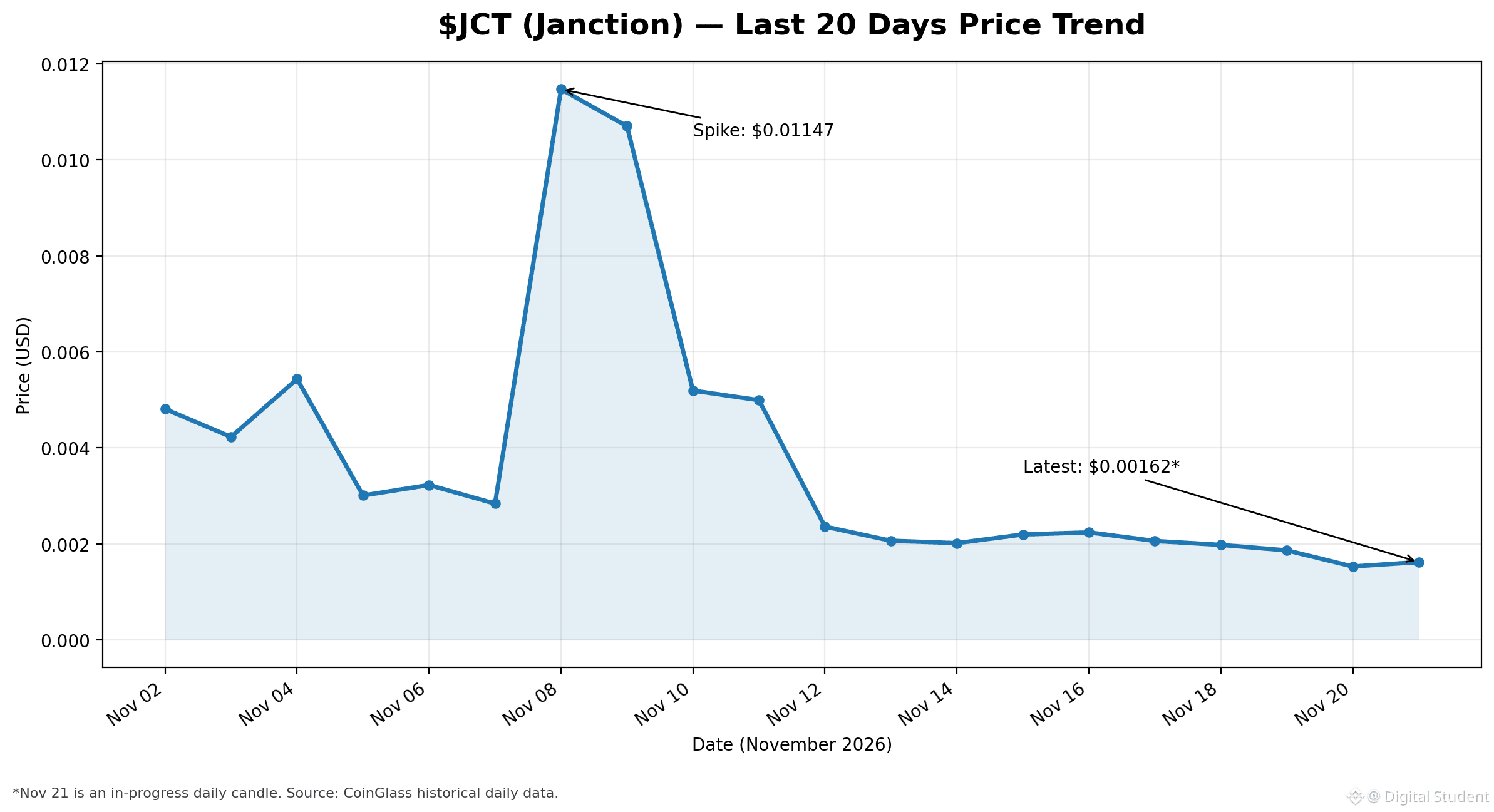
👀 $JCT : Is the AI narrative still alive, or is the hype cooling down?
Janction ($JCT ) is building around decentralized GPU infrastructure and AI computing. 🤖
But here's the interesting part:
📉 Nearly 91% below its recent ATH.
📊 Futures activity is dominating spot volume.
🔥 AI + DePIN narratives still deserve attention.
My biggest question: Can JCT rebuild genuine buying pressure, or was its massive rally just temporary excitement?
I'm watching volume, market structure and real ecosystem growth before making any conclusions.
Hype attracts attention. Real utility keeps it. 👀
#JCT #JANCTION #AI #DePIN #crypto
875

·
--
Article
DePIN Revolution: How Decentralized Hardware is Disrupting Big TechDEPIN REVOLUTION: HOW DECENTRALIZED HARDWARE IS DISRUPTING BIG TECH
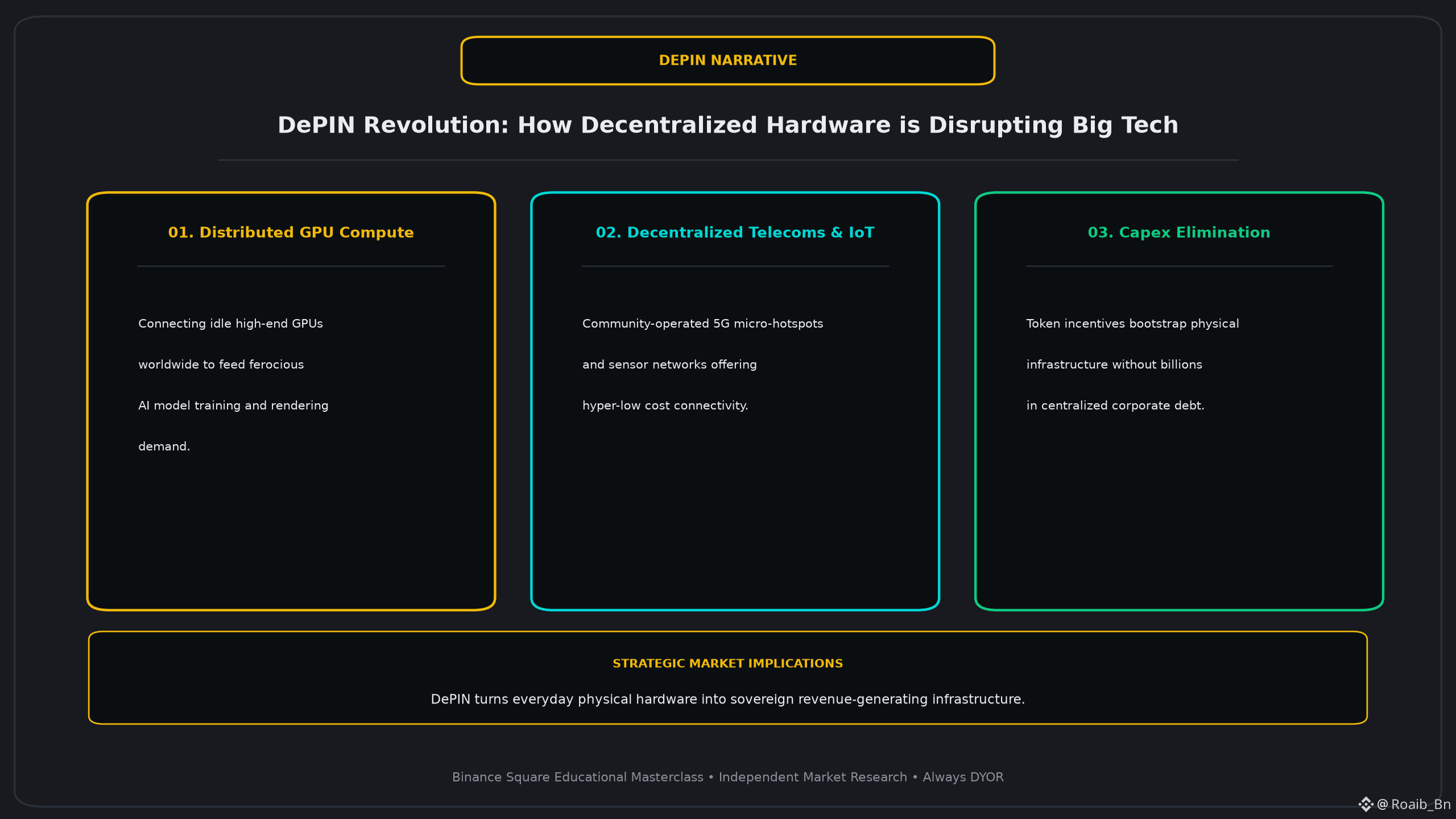
The era of crypto being confined purely to digital spreadsheets and speculative tokens is coming to an end. We are currently witnessing one of the most significant fundamental shifts in the industry: the rise of Decentralized Physical Infrastructure Networks, or DePIN. If you have been watching the markets lately, you know that the narrative has moved beyond simple decentralized finance. We are now talking about the physical world. DePIN is the bridge that connects blockchain incentives with real-world hardware, and it is positioned to disrupt the monopolies held by Big Tech giants in ways we previously thought impossible.
The first major pillar of this revolution is the democratization of high-end compute power. The global demand for GPU resources has reached a fever pitch, driven largely by the relentless expansion of artificial intelligence and complex rendering requirements. Historically, if you needed massive scale, you were at the mercy of centralized cloud providers. However, networks like $RENDER are flipping this model on its head. By connecting idle, high-end GPUs from across the globe into a cohesive network, DePIN allows for a massive supply of compute power at a fraction of the cost. This is not just a theoretical use case; it is a live, functioning marketplace where hardware owners earn rewards while providing a critical service to the AI and film industries.
Beyond compute, we are seeing a radical transformation in telecommunications and the Internet of Things. Traditional telecom companies spend billions of dollars in capital expenditure to build out 5G towers and sensor networks, often passing those massive costs and debts down to the consumer. DePIN projects change the math by crowdsourcing the infrastructure. When individuals host micro-hotspots or sensors in their homes and businesses, they are effectively building a community-operated network. This Capex elimination is the secret weapon of the DePIN narrative. By using token incentives to bootstrap a network, these projects can achieve global scale without the crushing weight of corporate debt that typically limits innovation in the hardware space.
From a strategic perspective, traders should view DePIN as a shift toward tangible utility. While many sectors in crypto are reflexive and rely on internal liquidity, DePIN is fueled by external demand for physical services like data storage, wireless connectivity, and compute. This makes the sector particularly resilient during periods of market consolidation. Many of these projects are building their foundations on $SOL because the network offers the high throughput and low latency required to coordinate millions of hardware-based micro-transactions in real time. For a disciplined trader, the focus should be on the balance between network growth and actual hardware utilization. A network with thousands of nodes is impressive, but a network with thousands of nodes and consistent paying customers is a revolution.
I want to hear your thoughts on how this narrative is unfolding. Are you currently participating in any hardware-based networks, or do you prefer to trade the infrastructure layers that support them? Share your analysis in the comments below.
This analysis is for educational purposes only and does not constitute financial advice. The crypto market involves significant risk, and hardware-based narratives are subject to unique regulatory and technical challenges. Always conduct your own research before making any investment decisions.
$SOL $RENDER #BinanceSquare #DePIN
DePIN Revolution: How Decentralized Hardware is Disrupting Big Tech
DEPIN REVOLUTION: HOW DECENTRALIZED HARDWARE IS DISRUPTING BIG TECH
The era of crypto being confined purely to digital spreadsheets and speculative tokens is coming to an end. We are currently witnessing one of the most significant fundamental shifts in the industry: the rise of Decentralized Physical Infrastructure Networks, or DePIN. If you have been watching the markets lately, you know that the narrative has moved beyond simple decentralized finance. We are now talking about the physical world. DePIN is the bridge that connects blockchain incentives with real-world hardware, and it is positioned to disrupt the monopolies held by Big Tech giants in ways we previously thought impossible.
The first major pillar of this revolution is the democratization of high-end compute power. The global demand for GPU resources has reached a fever pitch, driven largely by the relentless expansion of artificial intelligence and complex rendering requirements. Historically, if you needed massive scale, you were at the mercy of centralized cloud providers. However, networks like $RENDER are flipping this model on its head. By connecting idle, high-end GPUs from across the globe into a cohesive network, DePIN allows for a massive supply of compute power at a fraction of the cost. This is not just a theoretical use case; it is a live, functioning marketplace where hardware owners earn rewards while providing a critical service to the AI and film industries.
Beyond compute, we are seeing a radical transformation in telecommunications and the Internet of Things. Traditional telecom companies spend billions of dollars in capital expenditure to build out 5G towers and sensor networks, often passing those massive costs and debts down to the consumer. DePIN projects change the math by crowdsourcing the infrastructure. When individuals host micro-hotspots or sensors in their homes and businesses, they are effectively building a community-operated network. This Capex elimination is the secret weapon of the DePIN narrative. By using token incentives to bootstrap a network, these projects can achieve global scale without the crushing weight of corporate debt that typically limits innovation in the hardware space.
From a strategic perspective, traders should view DePIN as a shift toward tangible utility. While many sectors in crypto are reflexive and rely on internal liquidity, DePIN is fueled by external demand for physical services like data storage, wireless connectivity, and compute. This makes the sector particularly resilient during periods of market consolidation. Many of these projects are building their foundations on $SOL because the network offers the high throughput and low latency required to coordinate millions of hardware-based micro-transactions in real time. For a disciplined trader, the focus should be on the balance between network growth and actual hardware utilization. A network with thousands of nodes is impressive, but a network with thousands of nodes and consistent paying customers is a revolution.
I want to hear your thoughts on how this narrative is unfolding. Are you currently participating in any hardware-based networks, or do you prefer to trade the infrastructure layers that support them? Share your analysis in the comments below.
This analysis is for educational purposes only and does not constitute financial advice. The crypto market involves significant risk, and hardware-based narratives are subject to unique regulatory and technical challenges. Always conduct your own research before making any investment decisions.
$SOL $RENDER #BinanceSquare #DePIN
15
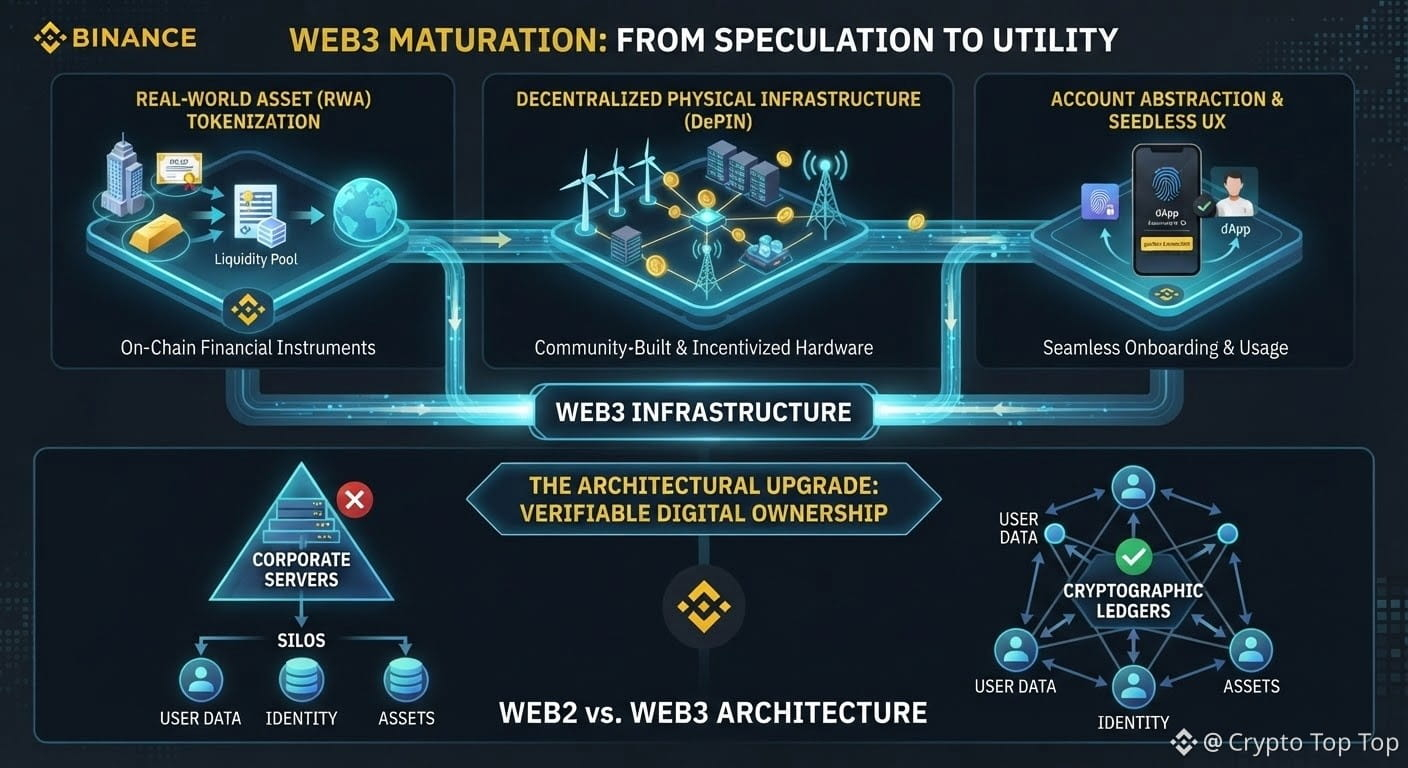
Web3 Is Quietly Shifting From Speculation to Utility. Here Is What Actually Matters. 🌐
For years, Web3 was defined by hype cycles and fragmented user experiences. That era is closing. The projects capturing real capital and user retention today are solving structural problems in how we own data, verify identity, and move value.
Three foundational shifts are driving this maturation:$JCT
1. Real-World Asset (RWA) Tokenization
Traditional financial instruments—treasuries, real estate, and private credit—are moving on-chain. Smart contracts eliminate settlement delays and middleman friction, turning illiquid markets into 24/7 global liquidity pools.
2. Decentralized Physical Infrastructure (DePIN)$AKE
Instead of centralized corporations spending billions to build telecom, cloud storage, or energy grids, token incentives allow everyday participants to deploy and maintain hardware at a fraction of the cost.
3. Account Abstraction & Seedless UX
Mass adoption requires invisible infrastructure. Modern Web3 wallets—including MPC-backed solutions—are replacing clunky 12-word seed phrases with biometric logins and gasless transactions, making decentralized apps feel as seamless as Web2.
The Bottom Line:$JCT
Web3 is no longer about convincing users to "adopt crypto." It is about building faster, fairer, user-owned rails beneath the applications people already use.
Which Web3 sector do you think will onboard the next 100 million users—RWAs, DePIN, or AI-integrated dApps? Share your thesis below. 👇
#Web3 #Blockchain #DeFi
{alpha}(560xea37a8de1de2d9d10772eeb569e28bfa5cb17707)
#DePIN #cryptoeducation
Web3 Is Quietly Shifting From Speculation to Utility. Here Is What Actually Matters. 🌐
For years, Web3 was defined by hype cycles and fragmented user experiences. That era is closing. The projects capturing real capital and user retention today are solving structural problems in how we own data, verify identity, and move value.
Three foundational shifts are driving this maturation:$JCT
1. Real-World Asset (RWA) Tokenization
Traditional financial instruments—treasuries, real estate, and private credit—are moving on-chain. Smart contracts eliminate settlement delays and middleman friction, turning illiquid markets into 24/7 global liquidity pools.
2. Decentralized Physical Infrastructure (DePIN)$AKE
Instead of centralized corporations spending billions to build telecom, cloud storage, or energy grids, token incentives allow everyday participants to deploy and maintain hardware at a fraction of the cost.
3. Account Abstraction & Seedless UX
Mass adoption requires invisible infrastructure. Modern Web3 wallets—including MPC-backed solutions—are replacing clunky 12-word seed phrases with biometric logins and gasless transactions, making decentralized apps feel as seamless as Web2.
The Bottom Line:$JCT
Web3 is no longer about convincing users to "adopt crypto." It is about building faster, fairer, user-owned rails beneath the applications people already use.
Which Web3 sector do you think will onboard the next 100 million users—RWAs, DePIN, or AI-integrated dApps? Share your thesis below. 👇
#Web3 #Blockchain #DeFi
#DePIN #cryptoeducation
1
792

·
--
Bullish
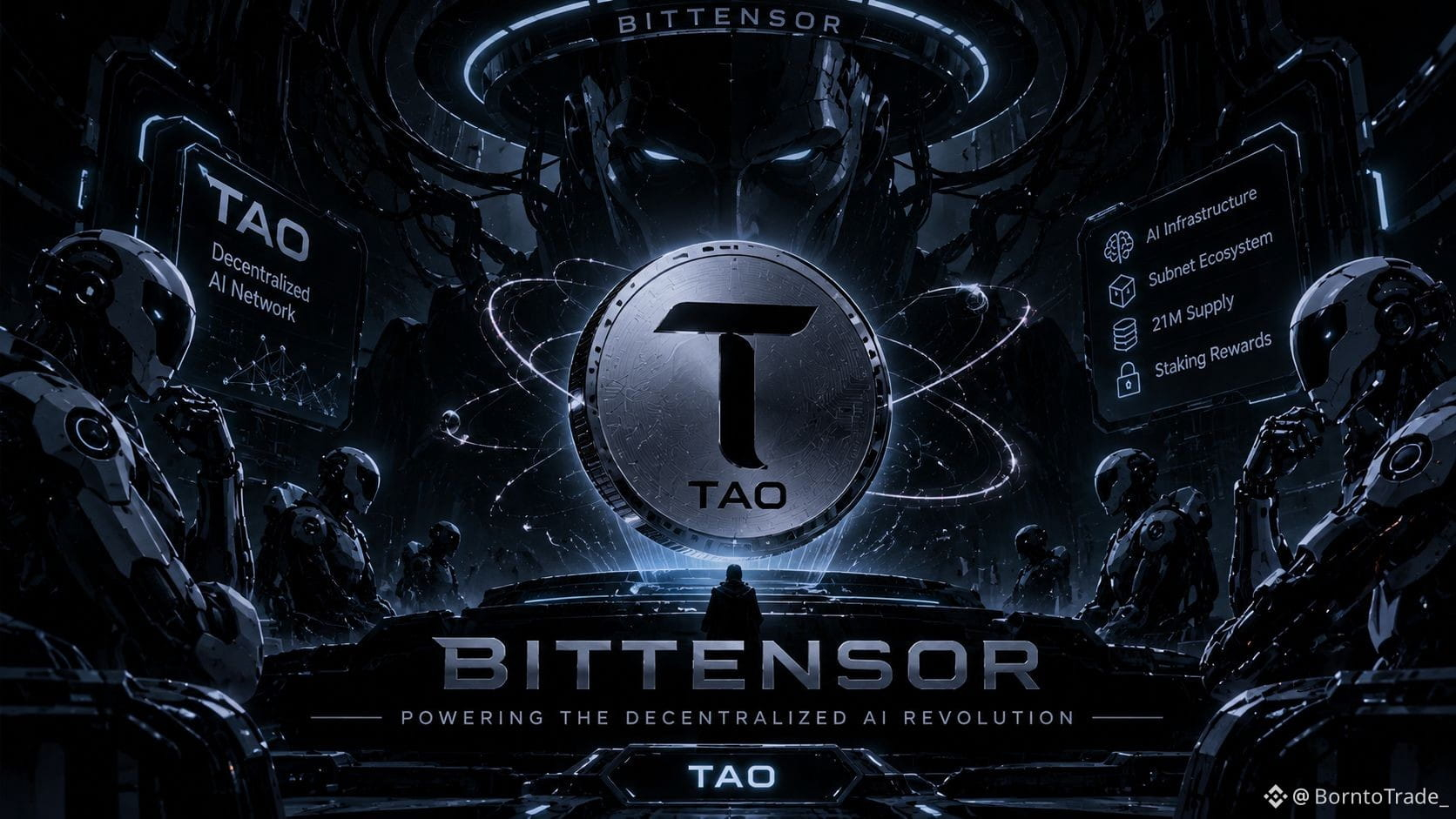
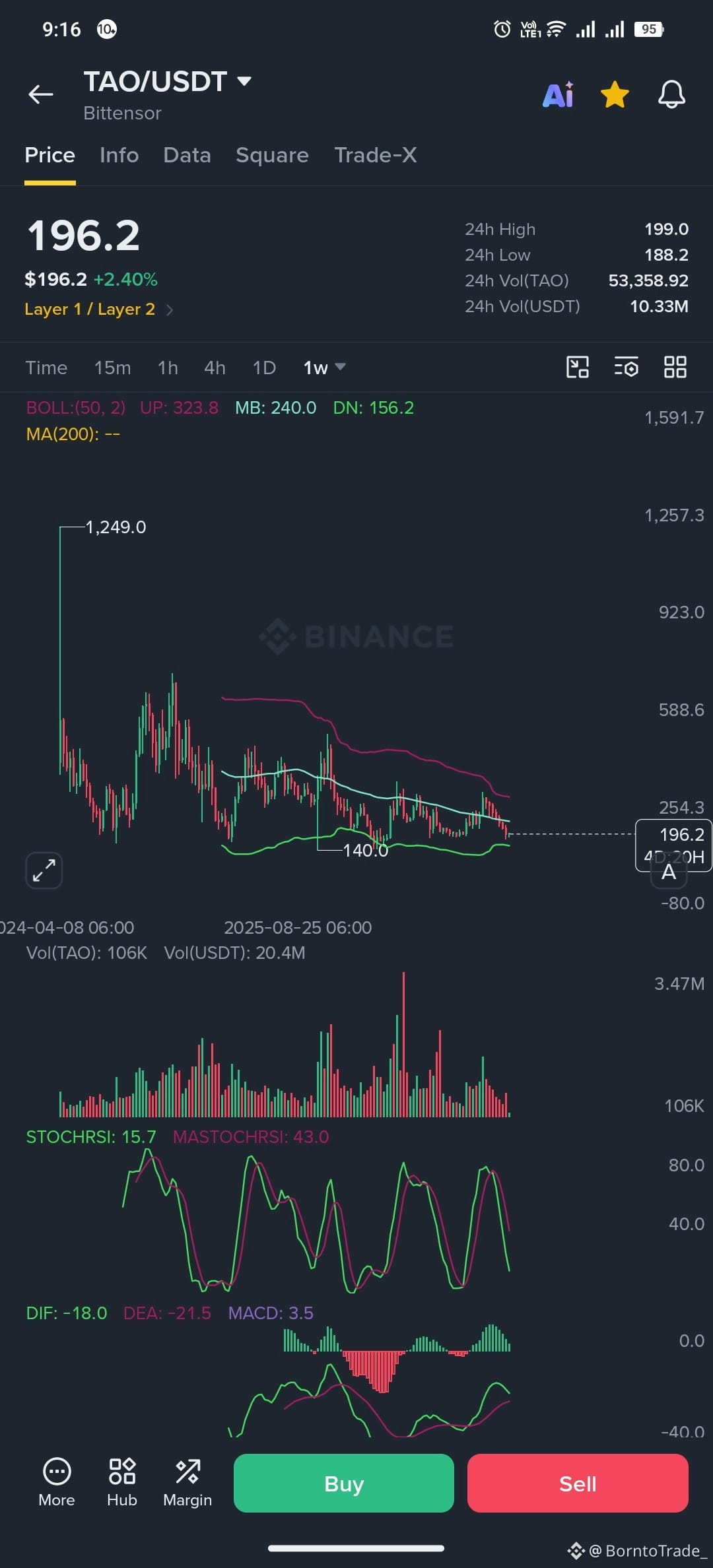
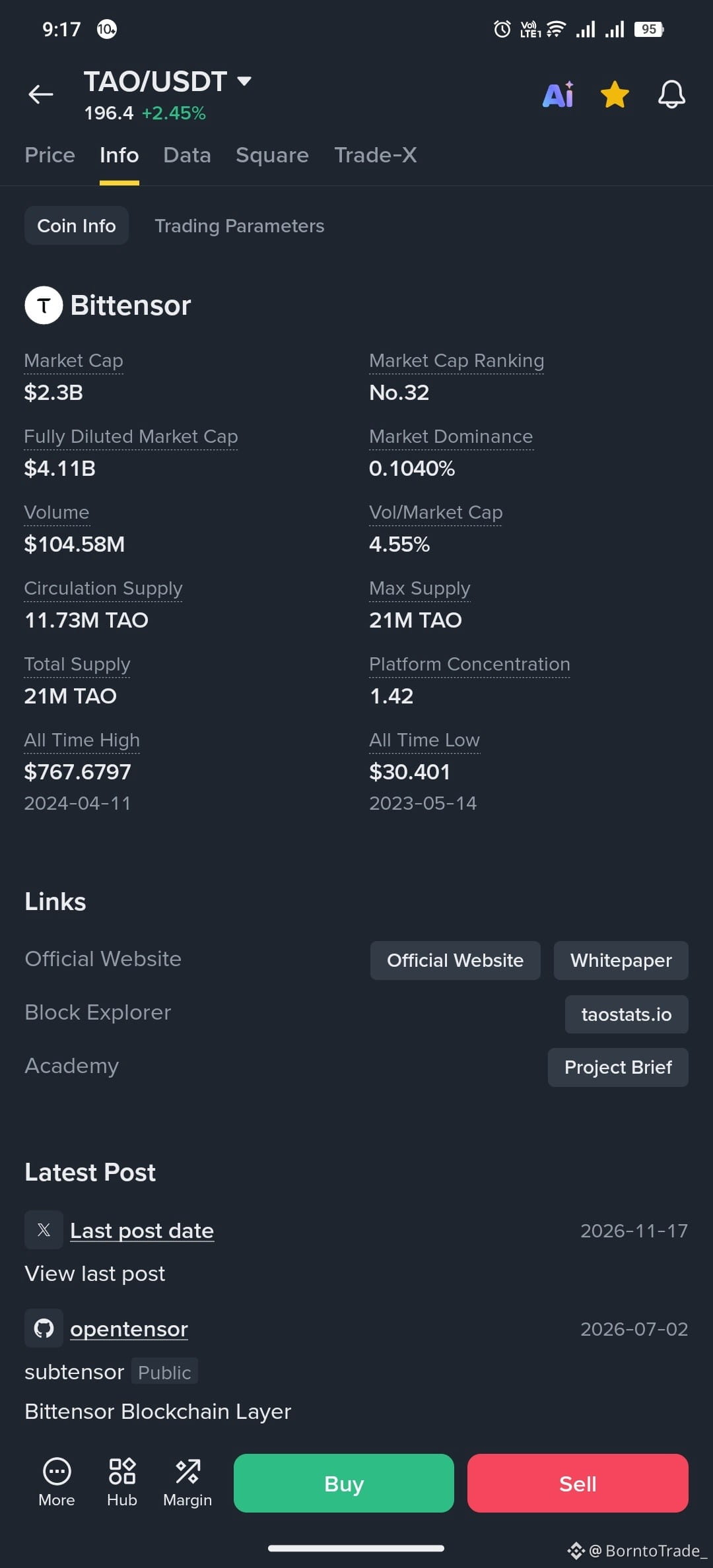
🚀 $TAO – A CRYPTO PROJECT TO WATCH FOR THE NEXT 1–2 YEARS!
While many investors chase meme coins, smart investors should also pay attention to projects building real technology.
Why is $TAO worth watching?
🔥 Decentralized AI infrastructure with real-world potential.
🔥 Growing Subnet ecosystem supporting different AI services.
🔥 Limited maximum supply of only 21 million TAO.
🔥 Staking and network rewards.
🔥 Strong connection with the growing AI industry.
🎯 My 1–2 Year Price Outlook:
🟢 Bullish Target: $400–$600
🚀 Optimistic Target: $700–$900
These are speculative targets, not guaranteed returns.
💡 My Strategy: Consider gradual SPOT accumulation during market corrections instead of chasing pumps. Always manage your risk.
The next big opportunity may come from projects building the future, not just following hype!
👉 Follow @BornToTrade_ for regular crypto market analysis, promising token discoveries, trading insights and important market updates.
#TAO #Bittensor #Aİ #crypto #DePIN #Altcoin #BinanceSquare
{spot}(TAOUSDT)
🚀 $TAO – A CRYPTO PROJECT TO WATCH FOR THE NEXT 1–2 YEARS!
While many investors chase meme coins, smart investors should also pay attention to projects building real technology.
Why is $TAO worth watching?
🔥 Decentralized AI infrastructure with real-world potential.
🔥 Growing Subnet ecosystem supporting different AI services.
🔥 Limited maximum supply of only 21 million TAO.
🔥 Staking and network rewards.
🔥 Strong connection with the growing AI industry.
🎯 My 1–2 Year Price Outlook:
🟢 Bullish Target: $400–$600
🚀 Optimistic Target: $700–$900
These are speculative targets, not guaranteed returns.
💡 My Strategy: Consider gradual SPOT accumulation during market corrections instead of chasing pumps. Always manage your risk.
The next big opportunity may come from projects building the future, not just following hype!
👉 Follow @BornToTrade_ for regular crypto market analysis, promising token discoveries, trading insights and important market updates.
#TAO #Bittensor #Aİ #crypto #DePIN #Altcoin #BinanceSquare
2
879

·
--
Free "earn" apps and DePIN: how to tell real data networks from hype
Many people first meet crypto through a free app that pays small rewards for doing something ordinary, like walking, sharing location, or leaving a phone charging overnight. Most of these apps fall under DePIN (Decentralized Physical Infrastructure Networks): users supply real-world data or hardware, and the network pays them in tokens.
XYO and its COIN app are one of the older examples. Users share location data and earn rewards. Its token is now traded on major exchanges including Kraken, and Revolut added support for it in December 2025. The company has also reported real revenue, around $8.8M in a year. Revenue matters more than any app download count.
Larger DePIN networks like $FIL (storage) and $RENDER (GPU computing) follow the same idea at a bigger scale. Users supply a resource, and customers pay to use it.
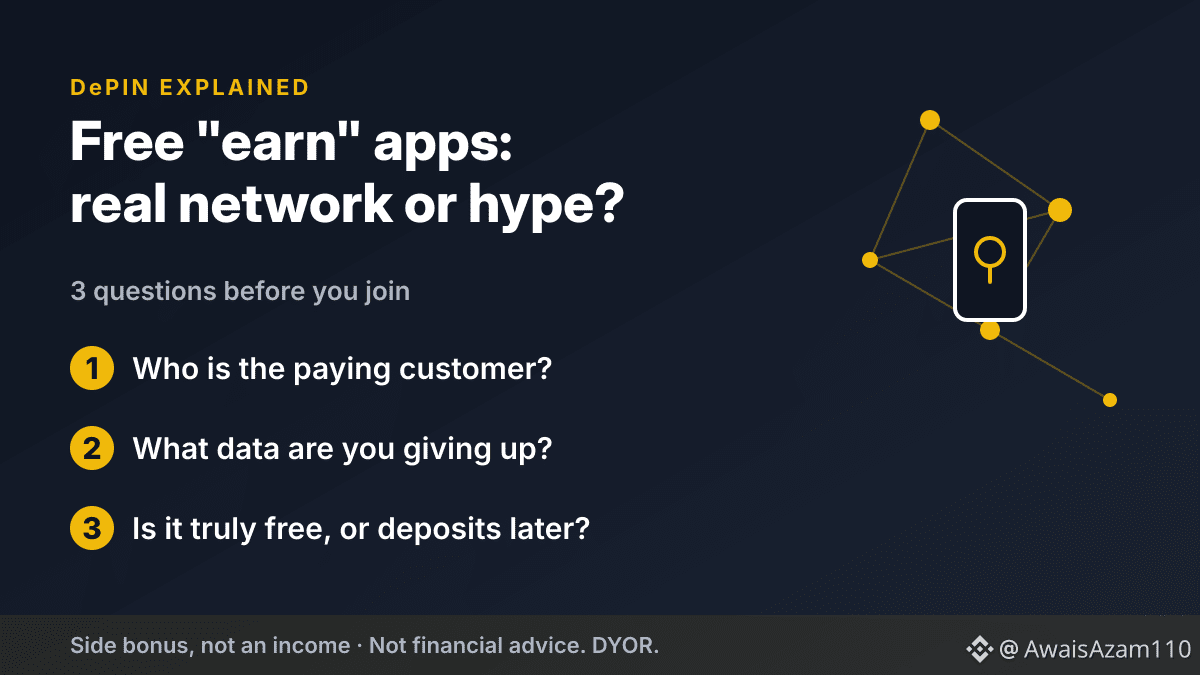
Three questions before you join any DePIN app:
1. Who is the paying customer? If nobody buys the data or service, rewards come only from new token emissions.
2. What are you giving up? Location, bandwidth and personal data all have value. Read the permissions.
3. Is joining truly free? Some apps quietly add deposits or "boost" purchases later.
Free apps can be a fine side bonus. Think of them as small extras, not an income.
#DePIN #CryptoEducation💡🚀 #Web3
Not financial advice. DYOR.
667

·
--
What’s happening with $FIL? Who’s holding, and who’s selling? 📉🤔
Filecoin ($FIL) remains one of the leading projects in decentralized data storage and AI infrastructure, but the market is currently putting the token to the test.
Who’s holding:
🔹 Storage providers and the ecosystem — supporting the network and developing real-world use cases for AI and large datasets.
🔹 Long-term investors — waiting for the impact of the Solstice upgrade, which shifts rewards toward real paying customers rather than just “empty” storage space.
Who’s selling:
🔸 Short-term traders — locking in positions amid widespread caution in the altcoin market.
🔸 Participants from previous cycles — some holders are exiting during local rebounds, putting pressure on the price.
Right now, the market is focused on one thing: can real demand for data storage outweigh selling pressure?
Are you holding $FIL in your portfolio, or watching from the sidelines? Let us know in the comments! 👇
#fil #Filecoin #Write2Earn! #crypto $FIL #DePIN
{spot}(FILUSDT)
$APT
{spot}(APTUSDT)
What’s happening with $FIL ? Who’s holding, and who’s selling? 📉🤔
Filecoin ($FIL ) remains one of the leading projects in decentralized data storage and AI infrastructure, but the market is currently putting the token to the test.
Who’s holding:
🔹 Storage providers and the ecosystem — supporting the network and developing real-world use cases for AI and large datasets.
🔹 Long-term investors — waiting for the impact of the Solstice upgrade, which shifts rewards toward real paying customers rather than just “empty” storage space.
Who’s selling:
🔸 Short-term traders — locking in positions amid widespread caution in the altcoin market.
🔸 Participants from previous cycles — some holders are exiting during local rebounds, putting pressure on the price.
Right now, the market is focused on one thing: can real demand for data storage outweigh selling pressure?
Are you holding $FIL in your portfolio, or watching from the sidelines? Let us know in the comments! 👇
#fil #Filecoin #Write2Earn! #crypto $FIL #DePIN
$APT
1
562

🌐 THE NEXT BIG BLOCKCHAIN USE CASE MAY BE BUILT IN THE REAL WORLD.
What if people could contribute internet connectivity, computing power or wireless coverage and earn rewards through decentralised networks?
That's the idea behind DePIN — Decentralised Physical Infrastructure Networks.
Instead of relying entirely on a few large infrastructure providers, DePIN projects use blockchain-based incentives to coordinate contributions from many participants.
A few projects exploring this space:
📡 $HNT — decentralised wireless connectivity.
🖥️ $RENDER — decentralised GPU rendering and computing.
🌍 $FIL — decentralised data storage.
The opportunity is interesting, but real adoption matters more than token hype.
The important questions are:
- Are people actually using the network?
- Is demand growing beyond incentives?
- Can the project compete with traditional providers?
Which real-world service do you think DePIN could transform first: internet, computing or storage?
#DePIN #blockchain #CryptoInnovation #BinanceSquare
590

·
--
Article
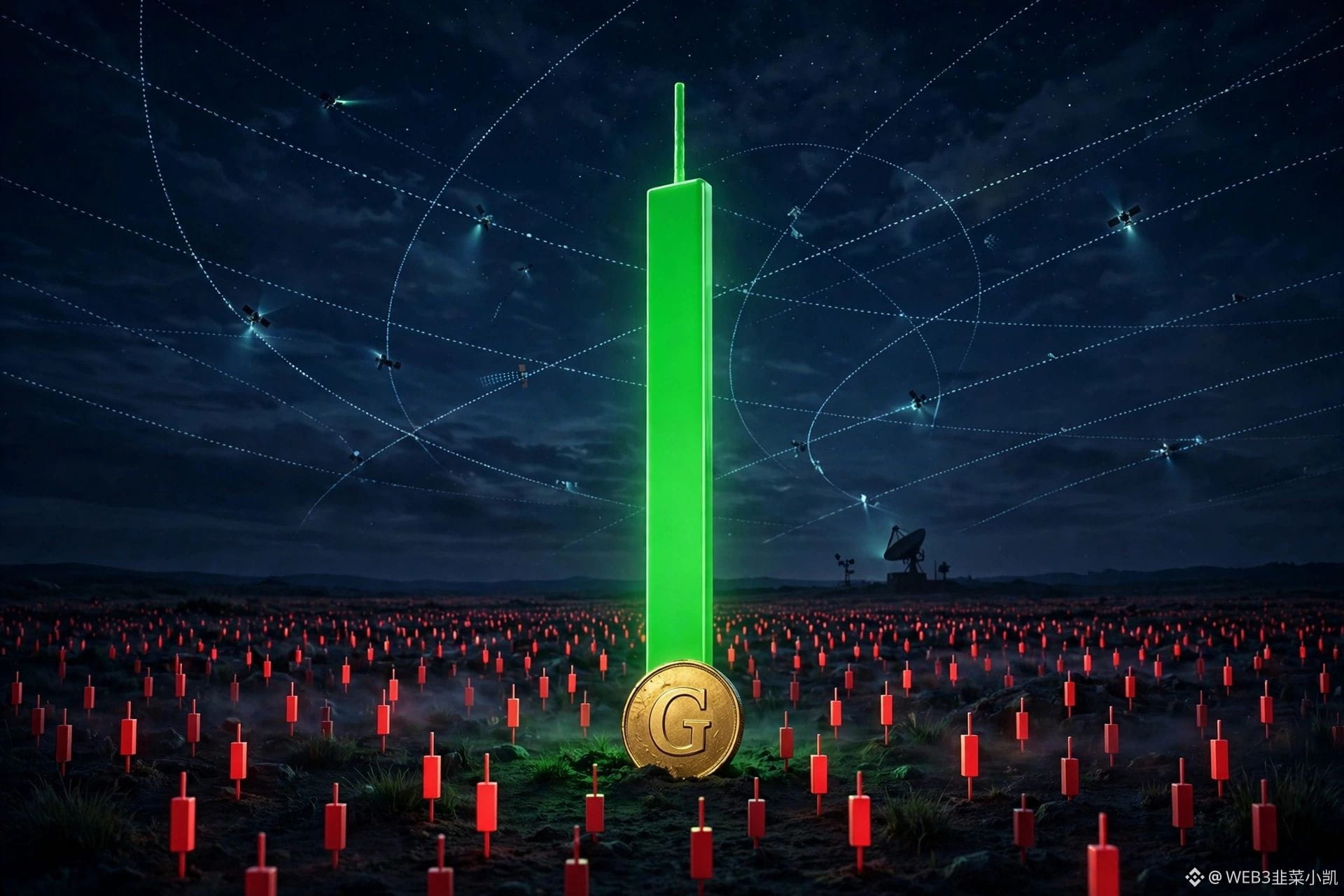
Down 8% yesterday, up 26% today—what does this move in GEOD actually mean?GEOD was down 8% yesterday, closing around $0.184. Today it shot straight up to $0.2228, gaining 26.3% in 24 hours. Same coin, completely different story a day later. Its 24-hour trading volume is $3.25 million, its market cap is $168 million, and it ranks 167th. Here are all the numbers: up 10.7% over 7 days, still down 6.6% over 14 days and down 13.7% over 30 days. It’s still 40% below this year’s January high of $0.3743. Viewed over a one-month period, today’s move looks like a bounce after an extended decline, not a breakout to new highs.
I looked around for a news story that could explain the rise, but couldn’t find one. GEODNET is a decentralized positioning network that provides real-time differential correction data for satellite navigation. The project hasn’t made any recent announcements; there was only a code repository update on November 11, with no details on what changed. Trading volume, on the other hand, has clearly surged—today’s volume is several times higher than usual. The broader market is also rebounding today, with Bitcoin up 5.4% and Ether up 6.5%. The wind is at its back, but GEOD is moving much faster than the broader market. This looks more like a short-term influx of capital giving it a push. I haven’t seen anything on the news front, so I’ll say that plainly rather than make up a reason.
Down 8% yesterday, up 26% today—what does this move in GEOD actually mean?
GEOD was down 8% yesterday, closing around $0.184. Today it shot straight up to $0.2228, gaining 26.3% in 24 hours. Same coin, completely different story a day later. Its 24-hour trading volume is $3.25 million, its market cap is $168 million, and it ranks 167th. Here are all the numbers: up 10.7% over 7 days, still down 6.6% over 14 days and down 13.7% over 30 days. It’s still 40% below this year’s January high of $0.3743. Viewed over a one-month period, today’s move looks like a bounce after an extended decline, not a breakout to new highs.
I looked around for a news story that could explain the rise, but couldn’t find one. GEODNET is a decentralized positioning network that provides real-time differential correction data for satellite navigation. The project hasn’t made any recent announcements; there was only a code repository update on November 11, with no details on what changed. Trading volume, on the other hand, has clearly surged—today’s volume is several times higher than usual. The broader market is also rebounding today, with Bitcoin up 5.4% and Ether up 6.5%. The wind is at its back, but GEOD is moving much faster than the broader market. This looks more like a short-term influx of capital giving it a push. I haven’t seen anything on the news front, so I’ll say that plainly rather than make up a reason.
I looked around for a news story that could explain the rise, but couldn’t find one. GEODNET is a decentralized positioning network that provides real-time differential correction data for satellite navigation. The project hasn’t made any recent announcements; there was only a code repository update on November 11, with no details on what changed. Trading volume, on the other hand, has clearly surged—today’s volume is several times higher than usual. The broader market is also rebounding today, with Bitcoin up 5.4% and Ether up 6.5%. The wind is at its back, but GEOD is moving much faster than the broader market. This looks more like a short-term influx of capital giving it a push. I haven’t seen anything on the news front, so I’ll say that plainly rather than make up a reason.
2

·
--
Base stations depend on GNSS. Can DePIN turn “positioning” into a carrier-grade service?During my years working on IPRAN/5G transmission at a telecom equipment manufacturer, base-station time synchronization was one of the questions I was asked about most often. If GNSS loses lock, an entire TDD network can be affected. So when I came across a “community-built GNSS reference station network” like GEODNET, I first looked at how the network was built, leaving the token price for later.
📍 Key point 1: Look at coverage, not just the number of stations
According to reports, GEODNET had more than 22,000 base stations as of 9/30, distributed across 174 countries. However, GPS World used a coverage map dated 11/10 to calculate the share of each country's land area with a reference station within 25 kilometers: 27.3% in Sweden, 17.1% in Norway, and just 7.0% in Finland. Stations cluster in areas with more users—following the same logic telecom companies use when building sites based on revenue density.
Base stations depend on GNSS. Can DePIN turn “positioning” into a carrier-grade service?
During my years working on IPRAN/5G transmission at a telecom equipment manufacturer, base-station time synchronization was one of the questions I was asked about most often. If GNSS loses lock, an entire TDD network can be affected. So when I came across a “community-built GNSS reference station network” like GEODNET, I first looked at how the network was built, leaving the token price for later.
📍 Key point 1: Look at coverage, not just the number of stations
According to reports, GEODNET had more than 22,000 base stations as of 9/30, distributed across 174 countries. However, GPS World used a coverage map dated 11/10 to calculate the share of each country's land area with a reference station within 25 kilometers: 27.3% in Sweden, 17.1% in Norway, and just 7.0% in Finland. Stations cluster in areas with more users—following the same logic telecom companies use when building sites based on revenue density.
91

·
--
Filecoin may find an entry point in specific use casesAI's demand for data generation, retention, and reuse continues to grow. However, the expansion of hard drive manufacturing capacity is constrained by supply chain bottlenecks, such as those affecting read/write heads, media, and equipment. Manufacturers are more inclined to increase per-drive capacity by boosting areal density (e.g., HAMR) than to significantly increase unit output.
This creates a narrative window for decentralized storage networks such as #Filecoin. However, whether they can truly handle enterprise- and AI-scale workloads also depends on performance (latency and throughput), reliability, compliance, cost, and integration with existing workflows.
Filecoin may find an entry point in specific use cases
AI's demand for data generation, retention, and reuse continues to grow. However, the expansion of hard drive manufacturing capacity is constrained by supply chain bottlenecks, such as those affecting read/write heads, media, and equipment. Manufacturers are more inclined to increase per-drive capacity by boosting areal density (e.g., HAMR) than to significantly increase unit output.
This creates a narrative window for decentralized storage networks such as #Filecoin. However, whether they can truly handle enterprise- and AI-scale workloads also depends on performance (latency and throughput), reliability, compliance, cost, and integration with existing workflows.
This creates a narrative window for decentralized storage networks such as #Filecoin. However, whether they can truly handle enterprise- and AI-scale workloads also depends on performance (latency and throughput), reliability, compliance, cost, and integration with existing workflows.
Ingeborg Kalupa tPwD:
别报什么希望了
3
2
2
2.3k
·
--
Verified
A real-world example of using Filecoin’s decentralized technology to preserve important historical testimoniesStarling Lab operates a Filecoin storage node within the USC Libraries (USC Digital Repository), with a capacity of approximately 22 PB (or 22 PiB)—one of the larger nodes of its kind at an academic institution in its early stages. The node is integrated into USC’s digital repository infrastructure and connected to the Filecoin network, using cryptographic proofs to ensure data persistence and integrity. In addition to materials related to the USC Shoah Foundation, the node stores content such as news photography and 3D/VR scans of historic sites.
The USC Shoah Foundation’s Visual History Archive contains more than 55,000 video testimonies from Holocaust survivors and witnesses (the total has reached approximately 59,000–60,000 in recent years). The collection has since expanded to include documentation of other genocides and mass atrocities.
A real-world example of using Filecoin’s decentralized technology to preserve important historical testimonies
Starling Lab operates a Filecoin storage node within the USC Libraries (USC Digital Repository), with a capacity of approximately 22 PB (or 22 PiB)—one of the larger nodes of its kind at an academic institution in its early stages. The node is integrated into USC’s digital repository infrastructure and connected to the Filecoin network, using cryptographic proofs to ensure data persistence and integrity. In addition to materials related to the USC Shoah Foundation, the node stores content such as news photography and 3D/VR scans of historic sites.
The USC Shoah Foundation’s Visual History Archive contains more than 55,000 video testimonies from Holocaust survivors and witnesses (the total has reached approximately 59,000–60,000 in recent years). The collection has since expanded to include documentation of other genocides and mass atrocities.
The USC Shoah Foundation’s Visual History Archive contains more than 55,000 video testimonies from Holocaust survivors and witnesses (the total has reached approximately 59,000–60,000 in recent years). The collection has since expanded to include documentation of other genocides and mass atrocities.
1
2
1.3k

Verified
Real daily burn for $ATH 🔥
The Aethir network has officially activated a daily burn mechanism funded directly by actual network revenue from GPU rentals—not from the team’s reserves! 📊
A move that ties the token’s value to real-world usage and reduces inflationary pressure—but is it enough to push the price upward under current market conditions? Share your predictions 👇
⚠️Disclaimer: This content is for informational and analytical purposes only and does not constitute financial or investment advice. The cryptocurrency market is highly risky; always do your own research (DYOR) before making any investment decision.
$BNB $BTC
#BinanceSquare
#اليسر_لتعليم_الكريبتو
#Aethir
#AI
#DePIN
{future}(ATHUSDT)
Real daily burn for $ATH 🔥
The Aethir network has officially activated a daily burn mechanism funded directly by actual network revenue from GPU rentals—not from the team’s reserves! 📊
A move that ties the token’s value to real-world usage and reduces inflationary pressure—but is it enough to push the price upward under current market conditions? Share your predictions 👇
⚠️Disclaimer: This content is for informational and analytical purposes only and does not constitute financial or investment advice. The cryptocurrency market is highly risky; always do your own research (DYOR) before making any investment decision.
$BNB $BTC
#BinanceSquare
#اليسر_لتعليم_الكريبتو
#Aethir
#AI
#DePIN
1
3
126
·
--
The Filecoin network currently has verifiable existing capacity and attracts demand through products (such as Filecoin on-chain cloud, warm/cold storage services, and payment channels) and enterprise partnerships.
This differs from the “expand capacity first, then supply” model of traditional centralized manufacturers. Filecoin makes use of deployed idle or rentable space.
#FIL #DePIN #Web3
This differs from the “expand capacity first, then supply” model of traditional centralized manufacturers. Filecoin makes use of deployed idle or rentable space.
#FIL #DePIN #Web3
Tongrun
·
--
Filecoin may find an entry point in specific use cases
AI's demand for data generation, retention, and reuse continues to grow. However, the expansion of hard drive manufacturing capacity is constrained by supply chain bottlenecks, such as those affecting read/write heads, media, and equipment. Manufacturers are more inclined to increase per-drive capacity by boosting areal density (e.g., HAMR) than to significantly increase unit output.
This creates a narrative window for decentralized storage networks such as #Filecoin. However, whether they can truly handle enterprise- and AI-scale workloads also depends on performance (latency and throughput), reliability, compliance, cost, and integration with existing workflows.
This creates a narrative window for decentralized storage networks such as #Filecoin. However, whether they can truly handle enterprise- and AI-scale workloads also depends on performance (latency and throughput), reliability, compliance, cost, and integration with existing workflows.
1
220

·
--
🦈 $SOL SMART MONEY IS ROTATING HARD AWAY FROM MEMES INTO DEPIN INFRASTRUCTURE ⚡
Institutional desks are quietly draining liquidity from static assets and legacy memes, funneling heavy volume straight into high-throughput L1 infrastructure. While retail chases fleeting sentiment, smart money is engineering a structural flight to quality, prioritizing high-velocity ecosystems like $SOL over pure-play bags. 📊
This classic rotation phase highlights a massive shift toward DePIN and AI-agent architecture as traditional finance rails bridge on-chain liquidity. The internal plumbing of the market is flashing clear decoupling signals from $BTC and $ETH dominance anchors. 💡
Are you repositioning your portfolio for this infrastructure wave or holding onto legacy tokens? 👇
⚠️ Not financial advice. Always manage your risk. 🛡️
🏷️ #SOL #MarketStructure #DePIN #SmartMoney
🔥 💎
2

·
--
Bullish
Verified
🐉 $2Z DoubleZero, is building the missing layer of crypto infrastructure, and it is trading 98% below its all-time high.
DoubleZero is a decentralized network of high-performance fiber links contributed by independent operators, built to move blockchain data faster and more reliably than the public internet. Validators and RPC providers pay in 2Z to use the network, and contributors earn 2Z based on performance and reliability.
👉 Price: $0.01687, up 4.6% in 24 hours, down 43% in 30 days
👉 Market cap: $89.8M, rank 269, with $168.6M fully diluted value
👉 Circulating supply: 5.32B of 10B max, about 53% unlocked
👉 All-time high: $0.89 in October 2025, current price is 98% below it
👉 Solana ecosystem project, listed on Binance with a Seed Tag, traded on 20+ exchanges
Why traders are watching it:
👉 Real infrastructure demand: faster block propagation directly improves validator and RPC performance
👉 Revenue-linked token: network usage creates organic demand for 2Z, not just speculation
👉 Deep value zone: a 98% drawdown from ATH with a working network, though remaining unlocks stay an overhang
Entry: $0.01688
TP1: $0.01772 (+5%)
TP2: $0.01857 (+10%)
TP3: $0.01941 (+15%)
TP4: $0.02026 (+20%)
TP5: $0.02110 (+25%)
SL: $0.01604 (-5%)
#BinanceSquare #DePIN #Solana
{future}(2ZUSDT)
🐉 $2Z DoubleZero, is building the missing layer of crypto infrastructure, and it is trading 98% below its all-time high.
DoubleZero is a decentralized network of high-performance fiber links contributed by independent operators, built to move blockchain data faster and more reliably than the public internet. Validators and RPC providers pay in 2Z to use the network, and contributors earn 2Z based on performance and reliability.
👉 Price: $0.01687, up 4.6% in 24 hours, down 43% in 30 days
👉 Market cap: $89.8M, rank 269, with $168.6M fully diluted value
👉 Circulating supply: 5.32B of 10B max, about 53% unlocked
👉 All-time high: $0.89 in October 2025, current price is 98% below it
👉 Solana ecosystem project, listed on Binance with a Seed Tag, traded on 20+ exchanges
Why traders are watching it:
👉 Real infrastructure demand: faster block propagation directly improves validator and RPC performance
👉 Revenue-linked token: network usage creates organic demand for 2Z, not just speculation
👉 Deep value zone: a 98% drawdown from ATH with a working network, though remaining unlocks stay an overhang
Entry: $0.01688
TP1: $0.01772 (+5%)
TP2: $0.01857 (+10%)
TP3: $0.01941 (+15%)
TP4: $0.02026 (+20%)
TP5: $0.02110 (+25%)
SL: $0.01604 (-5%)
#BinanceSquare #DePIN #Solana
1
299

·
--
Considering a SpaceRouter Home Node after SPACE's rally? Decide whether you want other users' web requests leaving through your home IP before staking.
As of 2026-11-17 17:07 UTC+8, Binance's SPACEUSDT perpetual was up 13.4% over 24 hours. SpaceRouter's [operator guide](https://spacerouter.org/node) says your residential IP is visible to destination servers, and residential internet plans may prohibit bandwidth resale or commercial relaying.
Its [terms](https://spacerouter.org/terms) make compliance with your internet service provider's contract your responsibility. Passing network health checks does not establish that your broadband contract permits this use.
If your plan bars this traffic, skip the Home Node. If permission is unclear, ask your provider before activating it. Even on a permitted connection, proceed only if you accept your IP being associated with relayed requests. Rewards require both an active stake and an active node; holding SPACE alone does not qualify.
$SPACE #DePIN #CryptoMarkets
174
🌐 CAN BLOCKCHAIN HELP BUILD THE INFRASTRUCTURE OF TOMORROW?
Crypto isn't only about payments and trading. One interesting area is DePIN — Decentralised Physical Infrastructure Networks.
The concept uses blockchain-based incentives to encourage communities to build and operate real-world infrastructure.
🔍 Three projects worth researching:
📡 $HNT — Decentralised wireless connectivity.
🗺️ $GEOS.US — Geospatial data and location-based infrastructure.
⚡ $AKT — Decentralised cloud computing resources.
💡 Why does DePIN matter?
It explores alternative ways to coordinate resources such as wireless networks, computing power and data infrastructure.
But real adoption depends on actual demand, reliable services, sustainable economics and token utility not just hype.
💬 Your opinion: Which area has the strongest long-term potential: decentralised wireless, cloud computing or location data?
#DePIN #blockchain #CryptoInnovation #crypto #BinanceSquare
1
80

·
--
Ever wondered if your phone or laptop could make money while you sleep? 💤💰
Bless (BLESS) is turning that dream into reality by building a decentralized "supercomputer" powered by everyday devices. Instead of letting your CPU gather dust, Bless lets you contribute spare processing power to a global network — think of it like Airbnb for computing resources. You share idle capacity, and the network uses it for AI training, rendering, or data analysis.
The token just surged over 27% in 24 hours, pushing its market cap to $21M with heavy volume. This signals growing interest in DePIN (Decentralized Physical Infrastructure Networks), a sector merging crypto incentives with real-world hardware. For beginners, it’s an easy entry point: no expensive mining rigs needed, just an app or browser extension.
As big tech centralizes AI compute, projects like Bless offer a community-owned alternative. The real test? Whether everyday users stay active once the hype fades.
#DePIN #PassiveIncome
Would you install an app to rent out your device’s spare power, or do privacy and battery life concerns hold you back? 👇
198
·
--
Topic: Nvidia earnings week × decentralized AI compute ($TAO, $AKT)Topic: Nvidia earnings week × decentralized AI compute ($TAO, $AKT). Forbes reported yesterday (11/16) that paying customers for decentralized compute networks are growing, while the tokens are falling. This can be interpreted through a telecom professional’s lens of “core/edge layering” and “looking at utilization, not the number of base stations,” and it also differs from the commonly seen DePIN wireless themes of the past.
🔌 Nvidia earnings week: a telecom professional looks at “decentralized compute”—customers are buying GPU hours, not tokens.
From my past work experience, when I see news about decentralized AI compute, my first question is never about the token price, but: “Where’s the traffic? Who’s responsible for the SLA?”
Topic: Nvidia earnings week × decentralized AI compute ($TAO, $AKT)
Topic: Nvidia earnings week × decentralized AI compute ($TAO , $AKT). Forbes reported yesterday (11/16) that paying customers for decentralized compute networks are growing, while the tokens are falling. This can be interpreted through a telecom professional’s lens of “core/edge layering” and “looking at utilization, not the number of base stations,” and it also differs from the commonly seen DePIN wireless themes of the past.
🔌 Nvidia earnings week: a telecom professional looks at “decentralized compute”—customers are buying GPU hours, not tokens.
From my past work experience, when I see news about decentralized AI compute, my first question is never about the token price, but: “Where’s the traffic? Who’s responsible for the SLA?”
czmm:
又是这种“客户在涨、币价在跌”的剧本,用电信号角楼的角度看嘛,核心机房和边缘节点中间差了一整条链的流动性,客户买的是GPU小时,狗庄卖的是你的FOMO 😂 #DePIN #去中心化算力 $TAO
1
1
449
Log in to explore more content
Join global crypto users on Binance Square
⚡️ Get latest and useful information about crypto.
💬 Trusted by the world’s largest crypto exchange.
👍 Discover real insights from verified creators.
Email / Phone number
Trending Topics
1
#BTCReboundsAbove$60KAmidWhaleDipBuying
4,086 views
44 Discussing
2
#NvidiaLoses$2.7TrillionInMonthAndAHalf
42,665 views
202 Discussing
3
#GlobalStocksFaceLongestLosingStreakSince2023
390,844 views
2,564 Discussing
4
#BlackRockIBITPostsRecord$541MSingleDayOutflow
56,817 views
139 Discussing
5
#AnthropicPlungesTowardIPOPriceonDay2
206,743 views
1,644 Discussing
6
#TwentyOneCapitalAdds172.25BTC
99,558 views
1,036 Discussing
7
#HKBillWouldExcludeTokenizedDepositsFromVirtualAssets
14,345 views
65 Discussing
8
#HKBillProposesHK$100KFineForUnauthorizedCryptoTitles
3,534 views
30 Discussing
9
#BitMineFaces$10.1BUnrealizedETHLoss
6,889 views
32 Discussing
10
#StrategyReports$35BNetReserves
3,665 views
23 Discussing