
AiCoin官方
24.3k Posts

AiCoin官方
 Square Verified+
Report
Block User
AiCoin是全球领先的数据分析平台,提供专业K线、价格预警、AI分析、链上数据、热点快讯、KOL社区、智能下单及套利工具等服务。
9 Following
12.6K+ Followers
16.3K+ Liked
Posts
All
Quotes
Videos
Live
·
--
Bitcoin has closed down for 7 consecutive weeks—the only longer losing streak since 2013 happened once.
Last week, BTC briefly dipped to $55,000 before recovering to close near $61,000, leaving a long lower wick of about 9%. The sharp drop came on November 21, exactly four years after the previous bear market low.
A long lower wick suggests buyers stepped in at lower prices, but it doesn’t mean the bottom is in. By the definition used in this backtest, there were 22 weekly candles in history that met the criteria of “falling for a month, then closing with a long lower wick”: 12 held their lows a month later; looking out a year, 19 eventually fell below them.
Only 3 held their lows a year later, and they all had one thing in common.
The closest comparison was May 2022, which held for 4 weeks.
Next, watch whether $55,000 holds. If it doesn’t, where is the next area to watch? The video explores this using two different methods.
Historical backtests are for reference only and do not constitute investment advice.
#BTC #LongLowerWick
1
3
2.2k
·
--

Article
Stocks, Gold, and Bitcoin Are All Falling! What Should You Do Now?Recently, when you open a market app, you may notice a frustrating phenomenon:
U.S. stocks are falling, gold is falling, and Bitcoin is falling too. Even assets once considered safe havens haven’t escaped this round of corrections.
Many newcomers may be wondering: If stocks fall, isn’t there still gold? If gold falls, isn’t there still Bitcoin? Why does it seem like everything is falling this time?
What this really reflects is a shift in global market risk appetite. When investors begin to reduce risk across the board, funds may flow out of various assets, including stocks, gold, and cryptocurrencies.
Stocks, Gold, and Bitcoin Are All Falling! What Should You Do Now?
Recently, when you open a market app, you may notice a frustrating phenomenon:
U.S. stocks are falling, gold is falling, and Bitcoin is falling too. Even assets once considered safe havens haven’t escaped this round of corrections.
Many newcomers may be wondering: If stocks fall, isn’t there still gold? If gold falls, isn’t there still Bitcoin? Why does it seem like everything is falling this time?
What this really reflects is a shift in global market risk appetite. When investors begin to reduce risk across the board, funds may flow out of various assets, including stocks, gold, and cryptocurrencies.
1
1.6k
·
--
【AiCoin | 11.23 Snapshot: GENIUS Act to Take Effect in January Next Year, Interest Payments by Stablecoin Issuers Prohibited, Spot Gold Prices Rise Rapidly】1. Trump says he will veto Democrats’ bill to repeal tariffs; Democrats plan to repeal his tariff and tax-cut policies after taking control of Congress in January next year
Democrats plan to repeal Trump’s tariff and tax-cut policies after taking control of Congress next January. U.S. President Trump said he would veto the relevant bill. - Original
2. Financing margin ratio on the Shanghai, Shenzhen and Beijing stock exchanges lowered to 80%
The Shanghai, Shenzhen and Beijing stock exchanges will lower the minimum financing margin ratio from 100% to 80%, effective November 30. In theory, this adjustment could bring in nearly 400 billion yuan in additional funds. The Shenzhen Stock Exchange is seeking public comment on its (Detailed Rules for Market-Making Trading in ChiNext Stocks), with plans to introduce a market-maker system on ChiNext. The Shanghai and Shenzhen stock exchanges have introduced fee reductions, including waiving trading unit usage fees, and extended the waivers of listing fees and bond transaction handling fees through 2028. China Securities Depository and Clearing Corporation will continue to temporarily waive issuer service fees and bond settlement fees for corporate bonds issued by green, technology innovation and private enterprises (excluding convertible bonds) from 2027 through 2028. - Original
【AiCoin | 11.23 Snapshot: GENIUS Act to Take Effect in January Next Year, Interest Payments by Stablecoin Issuers Prohibited, Spot Gold Prices Rise Rapidly】
1. Trump says he will veto Democrats’ bill to repeal tariffs; Democrats plan to repeal his tariff and tax-cut policies after taking control of Congress in January next year
Democrats plan to repeal Trump’s tariff and tax-cut policies after taking control of Congress next January. U.S. President Trump said he would veto the relevant bill. - Original
2. Financing margin ratio on the Shanghai, Shenzhen and Beijing stock exchanges lowered to 80%
The Shanghai, Shenzhen and Beijing stock exchanges will lower the minimum financing margin ratio from 100% to 80%, effective November 30. In theory, this adjustment could bring in nearly 400 billion yuan in additional funds. The Shenzhen Stock Exchange is seeking public comment on its (Detailed Rules for Market-Making Trading in ChiNext Stocks), with plans to introduce a market-maker system on ChiNext. The Shanghai and Shenzhen stock exchanges have introduced fee reductions, including waiving trading unit usage fees, and extended the waivers of listing fees and bond transaction handling fees through 2028. China Securities Depository and Clearing Corporation will continue to temporarily waive issuer service fees and bond settlement fees for corporate bonds issued by green, technology innovation and private enterprises (excluding convertible bonds) from 2027 through 2028. - Original
1
3.5k
·
--
【AiCoin | 11/22 Snapshot: Whales Deposit $270 Million in Stablecoins to Binance in 3 Hours; Mega-Whale Sells 27,700 ETH to Repay Debt; Abu Dhabi Court Freezes $6.5 Billion in Global Assets】1. Trump: Fed interest rates are too high, and its decisions are politically motivated
U.S. President Trump criticized the Fed for keeping interest rates too high and said its decisions are politically motivated, but stated that his remarks were not intended to blame Fed Chair Kevin Warsh. Kevin Warsh faces a dilemma between political demands from the White House and the independence of monetary policy. -Original
2. Glassnode: Bitcoin long liquidation cluster between $59,000 and $62,000 cleared
The largest Bitcoin long liquidation cluster in the $59,000–$62,000 range has been cleared. The dense cluster of long liquidations in this range had persisted for months and was completely cleared yesterday, removing a major source of forced selling below the price. -Original
【AiCoin | 11/22 Snapshot: Whales Deposit $270 Million in Stablecoins to Binance in 3 Hours; Mega-Whale Sells 27,700 ETH to Repay Debt; Abu Dhabi Court Freezes $6.5 Billion in Global Assets】
1. Trump: Fed interest rates are too high, and its decisions are politically motivated
U.S. President Trump criticized the Fed for keeping interest rates too high and said its decisions are politically motivated, but stated that his remarks were not intended to blame Fed Chair Kevin Warsh. Kevin Warsh faces a dilemma between political demands from the White House and the independence of monetary policy. -Original
2. Glassnode: Bitcoin long liquidation cluster between $59,000 and $62,000 cleared
The largest Bitcoin long liquidation cluster in the $59,000–$62,000 range has been cleared. The dense cluster of long liquidations in this range had persisted for months and was completely cleared yesterday, removing a major source of forced selling below the price. -Original
3
3
6.5k
·
--
【AiCoin | 11.21 Snapshot: U.S. spot Bitcoin ETFs see net outflows of $599.87 million today; U.S. Department of Justice and Infiniweb reach agreement in principle in the forfeiture case involving 225 million USDT in assets; Bessent hopes the Fed will not raise rates by 5...】1. BlackRock deposits 5,400 BTC and 71,597 ETH with Coinbase Prime
BlackRock deposited 5,400 BTC and 71,597 ETH with Coinbase Prime, worth $331 million and $125 million, respectively. -Original
2. Tencent-backed GaoTeng International launches a spot Bitcoin ETF on the Hong Kong Stock Exchange
Tencent-backed GaoTeng International launches a spot Bitcoin ETF on the Hong Kong Stock Exchange. -Original
3. Bessent hopes the Fed will not raise rates by 50 basis points in December
On November 21, U.S. Treasury Secretary Bessent said in an interview with CNBC that he hoped the Federal Reserve would not raise rates by 50 basis points at its December 8–9 meeting. Citing energy supply shocks and falling crude oil prices, he urged the central bank to exercise restraint. Bessent said that a Fed governor who currently supports a 50-basis-point rate hike had hoped for a similar-sized rate cut over the past year, but did not identify the governor. He urged the Fed to look ahead. Fed Governor Christopher Waller said a 50-basis-point hike might be necessary in December. Citi expects the Fed to raise rates by 25 basis points in December, then pause, and begin cutting rates later in 2027. -Original
【AiCoin | 11.21 Snapshot: U.S. spot Bitcoin ETFs see net outflows of $599.87 million today; U.S. Department of Justice and Infiniweb reach agreement in principle in the forfeiture case involving 225 million USDT in assets; Bessent hopes the Fed will not raise rates by 5...】
1. BlackRock deposits 5,400 BTC and 71,597 ETH with Coinbase Prime
BlackRock deposited 5,400 BTC and 71,597 ETH with Coinbase Prime, worth $331 million and $125 million, respectively. -Original
2. Tencent-backed GaoTeng International launches a spot Bitcoin ETF on the Hong Kong Stock Exchange
Tencent-backed GaoTeng International launches a spot Bitcoin ETF on the Hong Kong Stock Exchange. -Original
3. Bessent hopes the Fed will not raise rates by 50 basis points in December
On November 21, U.S. Treasury Secretary Bessent said in an interview with CNBC that he hoped the Federal Reserve would not raise rates by 50 basis points at its December 8–9 meeting. Citing energy supply shocks and falling crude oil prices, he urged the central bank to exercise restraint. Bessent said that a Fed governor who currently supports a 50-basis-point rate hike had hoped for a similar-sized rate cut over the past year, but did not identify the governor. He urged the Fed to look ahead. Fed Governor Christopher Waller said a 50-basis-point hike might be necessary in December. Citi expects the Fed to raise rates by 25 basis points in December, then pause, and begin cutting rates later in 2027. -Original
10
1
3.8k
·
--
Bitcoin is experiencing historically extreme oversold conditions: the RSI has stayed below 30 for 8 consecutive days. Of 58 oversold episodes since 2014, most ended within two days. Only 6 lasted through day 8.
The first 5 episodes followed a similar pattern:
A month later, 4 had rebounded;
But none bottomed on day 8. They all fell further afterward—by as little as 4% or as much as 30%—with the low coming 12 to 24 days later.
The 30% drop happened in November 2018, during the most extreme oversold episode ever: the RSI bottomed at 9.6 and stayed oversold for 14 consecutive days.
Could Bitcoin fall that far this time? One point of reference is the 200-week moving average, which has been near the bottom in several past bear markets.
In 2018, when the oversold period began, the price was still 82% above the moving average. It fell more than 40% before reaching it.
This time, the price is already 9% below the moving average. A decline like 2018’s would take it to $43,000—farther from the moving average than it was during the FTX collapse.
What if, as in March 2020 and June 2022, the price falls below the moving average? Where might the bottom be this time? We calculated it using historical data in the video.
For historical reference only. This is not investment advice.
#Bitcoin #BTC #RSI #Oversold #AiCoin
8
1
3
5.7k
·
--
Verified
【Anthropic’s record-breaking IPO! Raises $81.3 billion, surges 34% at opening on its first day, but fails to lift AI stocks】
On November 19, Claude developer Anthropic officially debuted on the Nasdaq under the ticker ANT. Priced at $83 per share, the IPO raised approximately $81.3 billion, setting a global record for IPO size.
On its first day of trading, ANT opened at $111.50 and reached an intraday high of $115.10, at one point gaining about 39% from its offer price. The gains then steadily narrowed, and the stock closed at $97.17, up about 17.1% for the day.
Despite retreating from its highs, Anthropic remained in strong demand among investors, with its valuation briefly exceeding $2 trillion during the session.
Why has Anthropic attracted so much attention from the market?
The key lies in Claude’s commercial potential. As AI becomes integrated into areas such as programming, enterprise operations, and automated workflows, the market is paying increasing attention to the ability of AI models to generate real-world revenue. Claude’s continued expansion in enterprise applications is also giving Anthropic greater room to grow.
The IPO will also provide the company with additional funding for future model development and computing capacity.
However, Anthropic’s listing failed to lift the broader AI sector.
At the close of U.S. markets in the early hours of November 20, all three major indexes fell: the Dow Jones Industrial Average dropped about 2.2%, the S&P 500 fell about 2.1%, and the Nasdaq Composite declined about 2.3%.
Technology stocks generally came under pressure, with Amazon, Google, and Meta all retreating notably. Semiconductor stocks fell even further: AMD dropped nearly 8%, while Nvidia fell more than 3%.
Anthropic set a record with its IPO, while AI-related stocks continued to retreat.
This reflects a shift in what the market is focused on: investors remain optimistic about AI’s long-term prospects, but are becoming more cautious about computing investments, infrastructure costs, and future profitability.
Anthropic’s IPO has set a new capital-markets benchmark for the AI industry. Going forward, however, the market will be more focused on whether AI companies can turn their technological advantages into sustained commercial returns.
The AI growth story is still unfolding, but how far the rally can go will ultimately depend on whether earnings live up to expectations. #Anthropic创纪录上市,1.5万亿美元市值合理吗?
Risk warning: Performance on the first day of an IPO does not indicate its long-term trajectory. The AI sector still faces valuation volatility, technological competition, and uncertainty around commercialization. This article is for market information only and does not constitute investment advice.

2.5k
·
--
【AiCoin | 11/20 Snapshot: BTC’s 22% Drop Caused by Major Exchanges Collectively; Institutional Holdings of U.S. Spot Bitcoin ETPs Reach a Record 356,500 BTC; Russian Central Bank Plans to Allow Investment Funds to Hold Bitcoin Starting in 2027】1. U.S. initial jobless claims for the week came in at 203,000, above the forecast of 197,000; the previous reading was revised up to 202,000.
U.S. initial jobless claims for the week ending November 14 came in at 203,000, compared with expectations of 197,000. The previous reading was revised from 200,000 to 202,000. AI analysis: Initial jobless claims exceeded expectations, and the previous reading was revised upward, indicating a marginal loosening in labor market supply and demand. This data challenges the previous one-sided narrative of an extremely tight labor market, giving the Federal Reserve’s tightening policy some breathing room. Concerns about an overheated labor market have eased, directly reducing the need for further rate hikes. This reading is an early sign of a cooling labor market and will prompt markets to reassess how long interest rates will remain elevated. -Original
【AiCoin | 11/20 Snapshot: BTC’s 22% Drop Caused by Major Exchanges Collectively; Institutional Holdings of U.S. Spot Bitcoin ETPs Reach a Record 356,500 BTC; Russian Central Bank Plans to Allow Investment Funds to Hold Bitcoin Starting in 2027】
1. U.S. initial jobless claims for the week came in at 203,000, above the forecast of 197,000; the previous reading was revised up to 202,000.
U.S. initial jobless claims for the week ending November 14 came in at 203,000, compared with expectations of 197,000. The previous reading was revised from 200,000 to 202,000. AI analysis: Initial jobless claims exceeded expectations, and the previous reading was revised upward, indicating a marginal loosening in labor market supply and demand. This data challenges the previous one-sided narrative of an extremely tight labor market, giving the Federal Reserve’s tightening policy some breathing room. Concerns about an overheated labor market have eased, directly reducing the need for further rate hikes. This reading is an early sign of a cooling labor market and will prompt markets to reassess how long interest rates will remain elevated. -Original
U.S. initial jobless claims for the week ending November 14 came in at 203,000, compared with expectations of 197,000. The previous reading was revised from 200,000 to 202,000. AI analysis: Initial jobless claims exceeded expectations, and the previous reading was revised upward, indicating a marginal loosening in labor market supply and demand. This data challenges the previous one-sided narrative of an extremely tight labor market, giving the Federal Reserve’s tightening policy some breathing room. Concerns about an overheated labor market have eased, directly reducing the need for further rate hikes. This reading is an early sign of a cooling labor market and will prompt markets to reassess how long interest rates will remain elevated. -Original
5.5k
·
--
Bitcoin fell 15% in a week, and gold, silver, and U.S. stocks fell too. This kind of “everything is falling” sell-off has happened for the 6th time this year—the most ever.
It sounds awful, but history tells the exact opposite story.
Since 2014, Bitcoin has fallen more than 12% in a week 39 times:
In the 24 times it fell along with gold and U.S. stocks, prices were up “17 times” a month later;
In the 15 times gold and U.S. stocks rose while only Bitcoin fell, prices were up just 4 times a month later.
The reason is simple: when everything falls together, the whole market is short on cash—even gold gets sold for cash. Once the selling is done, prices bounce back. When only Bitcoin falls, it’s often because something has gone wrong in crypto.
But this pattern only holds over a one-month period, and it failed in February and June this year, too. This time also coincides with Anthropic going public tonight—the biggest IPO in history.
With the whole market falling, have you already sold the Bitcoin you’re holding?
#Bitcoin #BTC #Gold #Anthropic
1
3.7k
·
--
Verified

Article
Holding BTC? Be Careful: The Fed Suddenly Sends a Hawkish Signal, Putting December Policy in FluxThe market had been anticipating rate cuts by the Federal Reserve, but now the policy outlook has taken a new turn.
The minutes from the October meeting, released recently, show that concerns about inflation remain pronounced within the Federal Reserve. Some officials even believe further rate hikes may still be necessary.
This means the rate-cut path the market had previously expected may face greater uncertainty.
What does this mean for people holding BTC and ETH? Why has the AI industry also become a focus for the Federal Reserve?
I. Why is the Federal Reserve suddenly discussing rate hikes again?
At the October 27–28 FOMC meeting, the Federal Reserve voted 10–2 to keep interest rates at 3.75%–4.00%.
Holding BTC? Be Careful: The Fed Suddenly Sends a Hawkish Signal, Putting December Policy in Flux
The market had been anticipating rate cuts by the Federal Reserve, but now the policy outlook has taken a new turn.
The minutes from the October meeting, released recently, show that concerns about inflation remain pronounced within the Federal Reserve. Some officials even believe further rate hikes may still be necessary.
This means the rate-cut path the market had previously expected may face greater uncertainty.
What does this mean for people holding BTC and ETH? Why has the AI industry also become a focus for the Federal Reserve?
I. Why is the Federal Reserve suddenly discussing rate hikes again?
At the October 27–28 FOMC meeting, the Federal Reserve voted 10–2 to keep interest rates at 3.75%–4.00%.
1
2.8k
·
--
The capital-sucking effect is striking: more than $400 billion is lining up to grab shares in Anthropic’s IPO, and $2.8 billion has been pulled straight out of Bitcoin ETFs. Bitcoin has fallen 21% along with it.
The last IPO to suck up this much was the biggest in history, SpaceX: it pulled away $5 billion, and Bitcoin fell 20%.
Anthropic is raising about $60 billion this time, with reported demand nearly 7 times the amount on offer. That much money has to be freed up from somewhere else, and Bitcoin ETFs can be sold at any time, so they naturally take the first hit.
We went through all 29 U.S. IPOs of more than $1 billion since ETFs launched:
Of the 21 IPOs in the $1 billion to $2 billion range, ETFs barely reacted;
Of the 3 IPOs above $10 billion, pre-listing outflows all ranked among the worst 10% in history.
But the outflows lasted only until listing day. Once SK Hynix went public, the outflows stopped; with no major IPOs lined up over the following months, $6.1 billion flowed back into ETFs in two months, and Bitcoin rose 25% in August.
Anthropic goes public today, and for now, nobody else is in line. How long do you think it will take for the $2.8 billion that was pulled out to flow back into Bitcoin?
#Bitcoin #BitcoinETF #Anthropic #IPO
1
2k
·
--
Verified
【AiCoin | 11.19 Snapshot: Spot gold falls to $3,740/oz; Binance obtains court order from Abu Dhabi Global Market (ADGM); MARA and Riot sell off 28,000 BTC】1. Waller says the Fed may raise rates by 50 basis points in December; ECB Vice President says a December rate hike is highly likely
Fed Governor Waller said that to lower inflation, the Fed needs to take more “aggressive” action. It could choose to raise rates by 50 basis points at its December meeting, or use its post-meeting statement to guide the market toward expecting a rate hike. Influenced by these remarks and economic data, the dollar rose to a 19-month high. Juan Perez, senior director of trading at Monex USA in Washington, said the Fed appears determined to raise rates, and market expectations are supporting the dollar’s strength. Pepperstone research strategist Dilin Wu said that for the dollar to rise significantly from current levels, the market would need to start pricing in a more aggressive Fed rate-hiking path in 2027. -Original
【AiCoin | 11.19 Snapshot: Spot gold falls to $3,740/oz; Binance obtains court order from Abu Dhabi Global Market (ADGM); MARA and Riot sell off 28,000 BTC】
1. Waller says the Fed may raise rates by 50 basis points in December; ECB Vice President says a December rate hike is highly likely
Fed Governor Waller said that to lower inflation, the Fed needs to take more “aggressive” action. It could choose to raise rates by 50 basis points at its December meeting, or use its post-meeting statement to guide the market toward expecting a rate hike. Influenced by these remarks and economic data, the dollar rose to a 19-month high. Juan Perez, senior director of trading at Monex USA in Washington, said the Fed appears determined to raise rates, and market expectations are supporting the dollar’s strength. Pepperstone research strategist Dilin Wu said that for the dollar to rise significantly from current levels, the market would need to start pricing in a more aggressive Fed rate-hiking path in 2027. -Original
Fed Governor Waller said that to lower inflation, the Fed needs to take more “aggressive” action. It could choose to raise rates by 50 basis points at its December meeting, or use its post-meeting statement to guide the market toward expecting a rate hike. Influenced by these remarks and economic data, the dollar rose to a 19-month high. Juan Perez, senior director of trading at Monex USA in Washington, said the Fed appears determined to raise rates, and market expectations are supporting the dollar’s strength. Pepperstone research strategist Dilin Wu said that for the dollar to rise significantly from current levels, the market would need to start pricing in a more aggressive Fed rate-hiking path in 2027. -Original
2
3.6k
·
--
Article
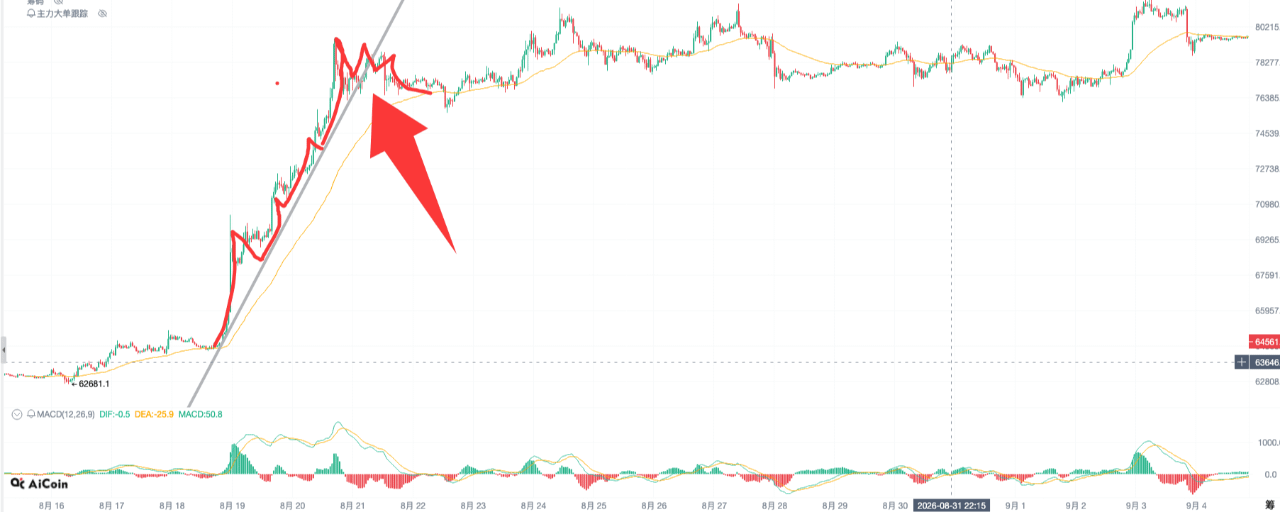
Use the 1-2-3 Rule to Find the Best Entry PointBitcoin has pulled back sharply from its highs, and at a time like this, one question naturally comes to mind: Is a rebound just around the corner? Today, I’ll use the 1-2-3 rule from Dow Theory to break this down. You only need to watch three things: the trendline, the most recent swing highs and lows, and whether the price can break through the key level.
In a downtrend, I start by drawing a descending trendline. After the price has fallen for a while, it rebounds; I mark the rebound high as 1. Then the price pulls back. As long as it doesn’t make a new low, I mark the pullback low as 2. Once the price breaks above the trendline and moves past the high at 1, point 3 is confirmed. If the price breaks below 2 before confirmation, the basis for this rebound no longer holds.
Use the 1-2-3 Rule to Find the Best Entry Point
Bitcoin has pulled back sharply from its highs, and at a time like this, one question naturally comes to mind: Is a rebound just around the corner? Today, I’ll use the 1-2-3 rule from Dow Theory to break this down. You only need to watch three things: the trendline, the most recent swing highs and lows, and whether the price can break through the key level.
In a downtrend, I start by drawing a descending trendline. After the price has fallen for a while, it rebounds; I mark the rebound high as 1. Then the price pulls back. As long as it doesn’t make a new low, I mark the pullback low as 2. Once the price breaks above the trendline and moves past the high at 1, point 3 is confirmed. If the price breaks below 2 before confirmation, the basis for this rebound no longer holds.
In a downtrend, I start by drawing a descending trendline. After the price has fallen for a while, it rebounds; I mark the rebound high as 1. Then the price pulls back. As long as it doesn’t make a new low, I mark the pullback low as 2. Once the price breaks above the trendline and moves past the high at 1, point 3 is confirmed. If the price breaks below 2 before confirmation, the basis for this rebound no longer holds.
4
3.3k
·
--
Verified
#英伟达财报大超预期,q4营收展望1300亿美元 Nvidia revenue surges 103% year over year! Is demand for AI computing power still accelerating?
On November 17, Nvidia announced its results for the third quarter of fiscal 2027, reporting revenue of $115.8 billion, up 103% year over year and setting a new quarterly record.
A few key figures are worth noting:
📊 Revenue: $115.8 billion, up 20% quarter over quarter and 103% year over year.
📊 Data center revenue: $107.6 billion, up 110% year over year, accounting for about 93% of total revenue. Tech giants such as Microsoft, Google, and Amazon continue to build AI infrastructure, and demand for GPUs remains the core driver of Nvidia’s growth.
📊 Net income: $65.3 billion, up 105% year over year; GAAP earnings per share were $2.70.
📊 Gross margin: GAAP gross margin was 74.8% this quarter, with profitability remaining strong.
The guidance for next quarter is even more noteworthy.
Nvidia expects fourth-quarter revenue to reach $130 billion, but its gross margin guidance has fallen to 71%–72%, below this quarter’s level.
Meanwhile, shipments of the next-generation Vera Rubin NVL72 have already begun, and subsequent customer deployments and delivery progress are also worth watching.
This earnings report sends two signals:
On the one hand, demand for AI infrastructure remains robust, and Nvidia’s growth momentum has not noticeably slowed. On the other hand, as the business expands, the market will also need to watch changes in profit margins and whether massive AI investments can continue to translate into revenue.
The key questions to watch are: How long can demand for AI computing power keep growing? Can Nvidia continue to exceed market expectations?
How much room do you think the AI boom has left to grow?
#NVIDIA #AI #AiCoin

1
6.1k
·
--
【AiCoin | 11.18 Snapshot: Wells Fargo holds $2.35 billion in BlackRock Bitcoin ETF; Russia approves retail investors trading BTC, ETH and USDT】1. Wall Street Journal: Huang willing to return to Nvidia as CEO if approved by the board
Huang said in a statement that he would be willing to return to Nvidia (NVDA.O) as CEO if approved by the board. - Original
2. Wells Fargo holds $2.35 billion in BlackRock Bitcoin ETF
Michael Saylor said on X that banks are bringing Bitcoin to their clients. Wells Fargo reported that as of September 30, it held 49.58 million shares of BlackRock's Bitcoin ETF, up 103% from June and worth $2.35 billion. - Original
3. Fed official Hammack says intervention should be considered when the Treasury market is dysfunctional
【AiCoin | 11.18 Snapshot: Wells Fargo holds $2.35 billion in BlackRock Bitcoin ETF; Russia approves retail investors trading BTC, ETH and USDT】
1. Wall Street Journal: Huang willing to return to Nvidia as CEO if approved by the board
Huang said in a statement that he would be willing to return to Nvidia (NVDA.O) as CEO if approved by the board. - Original
2. Wells Fargo holds $2.35 billion in BlackRock Bitcoin ETF
Michael Saylor said on X that banks are bringing Bitcoin to their clients. Wells Fargo reported that as of September 30, it held 49.58 million shares of BlackRock's Bitcoin ETF, up 103% from June and worth $2.35 billion. - Original
3. Fed official Hammack says intervention should be considered when the Treasury market is dysfunctional
1
3.1k
·
--
Stop blindly believing “Be greedy when others are fearful”—it could be this year’s biggest bull trap.
The Bitcoin Fear & Greed Index has fallen below 10 on 31 days so far this year, a record—and 12 more days than in the entire 2022 bear market.
With everyone calling the bottom, we backtested the past 11 instances of “extreme fear”:
Buying on the first day the index fell below 10: prices continued to fall 8 times over the following month.
Holding on for dear life for six months: 5 wins and 5 losses—no better odds than a coin toss.
We also looked at 17 factors, including funding rates, miners, U.S. stocks, and trading volume. We found that 16 were all noise, and only one indicator actually worked—and it pointed in the opposite direction:
When the market is gripped by extreme fear and stablecoins are still seeing net outflows, prices rose after six months in only 2 of the past 7 instances. This time, 5.3% of stablecoins flowed out over 30 days.
Fear isn’t the bottom; it’s just a pause in the decline. The real signal to watch for a bottom is at the end of the video.
#Bitcoin #BTC #FearAndGreedIndex #AiCoin
1
2.8k
·
--
【AiCoin | 11.17 Snapshot: Bank of America increases its Bitcoin holdings by over 580%; Goldman Sachs forecasts gold prices will rise to $4,650 per ounce by the end of 2027; Lighter suspected of being attacked, with 10.39 million USDC stolen and converted to ETH】1. Bank of America increases its Bitcoin holdings by over 580%, with a total value of over $700 million
Bank of America announced that it increased its Bitcoin holdings by more than 580%, bringing their total value to over $700 million. Bank of America has $5 trillion in assets. -Original
2. The U.S. bans China from remotely accessing advanced AI chips
The U.S. bans China from remotely accessing advanced AI chips. -Original
3. Goldman Sachs forecasts gold prices will rise to $4,650 per ounce by the end of 2027
Goldman Sachs said that, driven by continued gold purchases by central banks around the world, gold prices will rise to $4,650 per ounce by the end of 2027. Once the Federal Reserve begins cutting interest rates, gold prices will rise to $5,600 per ounce by the end of 2028. -Original
【AiCoin | 11.17 Snapshot: Bank of America increases its Bitcoin holdings by over 580%; Goldman Sachs forecasts gold prices will rise to $4,650 per ounce by the end of 2027; Lighter suspected of being attacked, with 10.39 million USDC stolen and converted to ETH】
1. Bank of America increases its Bitcoin holdings by over 580%, with a total value of over $700 million
Bank of America announced that it increased its Bitcoin holdings by more than 580%, bringing their total value to over $700 million. Bank of America has $5 trillion in assets. -Original
2. The U.S. bans China from remotely accessing advanced AI chips
The U.S. bans China from remotely accessing advanced AI chips. -Original
3. Goldman Sachs forecasts gold prices will rise to $4,650 per ounce by the end of 2027
Goldman Sachs said that, driven by continued gold purchases by central banks around the world, gold prices will rise to $4,650 per ounce by the end of 2027. Once the Federal Reserve begins cutting interest rates, gold prices will rise to $5,600 per ounce by the end of 2028. -Original
2
5k
·
--
🔥 Three major events are coming this week, and BTC may face a crucial test!
Nvidia’s earnings report, the Fed meeting minutes, and Anthropic’s IPO are all set to land between Tuesday and Thursday.
On the surface, they’re about tech stocks and macro policy, but they all point to one question: Can the market’s risk appetite hold up?
👇 Three key moments to watch:
1️⃣ Tuesday after market close: Nvidia earnings
The market expects revenue of around $108 billion–$111 billion. Beyond revenue and profits, gross margins and guidance for the next quarter deserve closer attention. If AI growth falls short of expectations, tech stocks could remain under pressure, and crypto markets are unlikely to escape the impact.
2️⃣ Wednesday: Fed meeting minutes
The market will be watching the Fed’s views on inflation and the future path of interest rates. If the minutes send a hawkish signal, the dollar and Treasury yields could rise, limiting the room for a rebound in risk assets. BTC is especially sensitive to shifts in liquidity expectations.
3️⃣ This week: Anthropic IPO
The offering is expected to raise up to around $64.4 billion, with a fully diluted valuation of up to around $1.4 trillion. Its market debut will be an important benchmark for valuations across the AI sector. If the market response is lukewarm, concerns about an AI valuation bubble could flare up again.
💡 What should BTC watchers focus on this week?
Can the Nasdaq hold steady after Nvidia reports earnings?
Will the Fed minutes further reinforce hawkish expectations?
Can Anthropic’s IPO sustain market enthusiasm for AI investments?
If the AI sector performs steadily and the Fed doesn’t deliver a more hawkish-than-expected signal, BTC may get a chance to rebound.
Conversely, pressure on tech stocks combined with tighter liquidity expectations could increase the risk of a broader market pullback.
This week, don’t focus only on BTC’s price—the moves in U.S. tech stocks and the Fed matter just as much.
#本周财报与宏观事件密集,市场再迎波动考验 #Anthropic上市倒计时,AI投资热度迎来检验 #加息预期仍强,FOMC纪要会否再添鹰派信号?

1.4k
·
--
Bitcoin has fallen for six consecutive weeks—only the fourth time in 15 years.
It fell 12.6% this week, closing at $65,312 and dropping below the 200-week moving average. The six-week cumulative decline is 24%, and Bitcoin is down about 48% from its all-time high of $126,000.
History offers no single clear signal: of the three previous six-week losing streaks, Bitcoin went on to fall nearly another half in two cases, while in the other it rebounded 17% over the following three months.
So the key question isn’t just “how many weeks has it fallen?” but where this decline has taken it. Bitcoin has rebounded after reaching similar levels in the past, but a rebound doesn’t necessarily mean the bottom is in.
One signal to watch next: can Bitcoin climb back above the 200-week moving average?
Will this mark the start of a rebound, or just a pause in the downtrend?
#Bitcoin #BTC #200-WeekMovingAverage #AiCoin
3
1
3.4k
Log in to explore more content
Join global crypto users on Binance Square
⚡️ Get latest and useful information about crypto.
💬 Trusted by the world’s largest crypto exchange.
👍 Discover real insights from verified creators.
Email / Phone number
Trending Topics
NVIDIAReinstatesJensenHuangasCEO
30,585 views
590 Discussing
TradFi News | Nvidia Board Unanimously Reinstates Jensen Huang as CEO; Shares Jump 30% Premarket
Binance News
·31 Likes
·28.4k views
WillMarketsStageAThanksgivingReliefRally?
132,732 views
1,683 Discussing
WillOctCorePCEShiftFedHikeExpectations?
50,411 views
706 Discussing