

Cindyyy
Research | Sharing | Crypto Investing | ETH ecosystem loyal fan 🍻🍻🍻
41 Following
313 Followers
329 Liked
Posts
All
Quotes
Videos
PINNED

Cindyyy
·
--
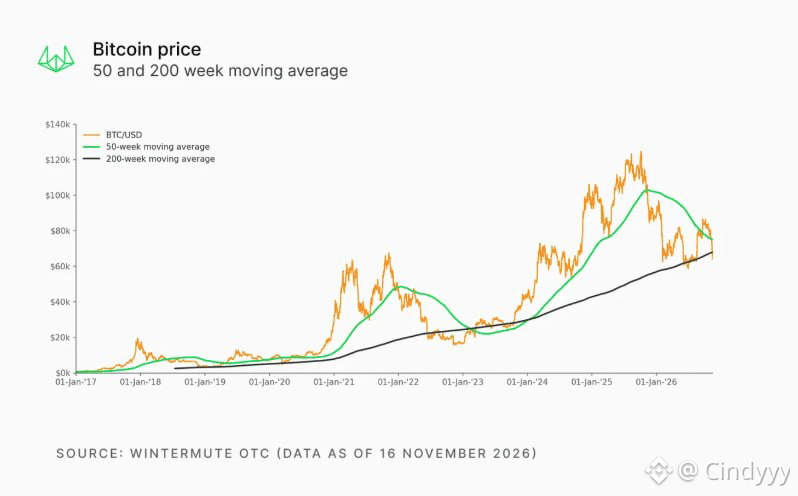
🔥 WINTERMUTE: BITCOIN COULD CONTINUE FALLING TO THE $50,000–$59,000 RANGE
Wintermute says the crypto market has yet to break out of its downtrend. Pressure from interest rates, ETF outflows, and weakening liquidity are making Bitcoin’s outlook increasingly negative.
1. Macro pressure
- The market is pricing in a 92% chance that the Fed will raise interest rates in December.
- The 10-year U.S. Treasury yield has risen to 5.15%, putting pressure on Bitcoin and other risk assets.
2. Crypto flows are weakening
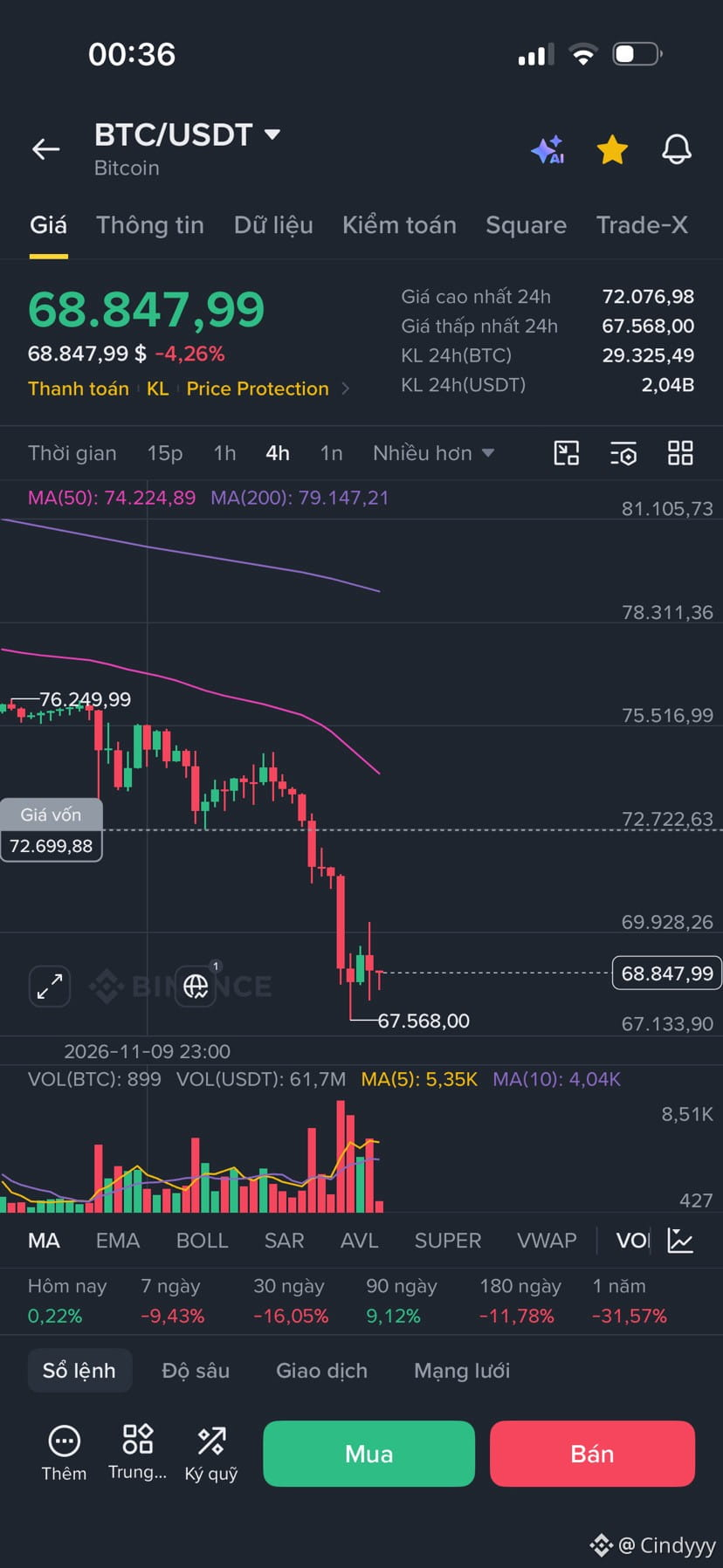
- BTC fell 12.7% for the week to $65.4K, breaking below its 200-week moving average near $68K.
- Bitcoin ETFs have seen approximately $1.9 billion in net outflows since the start of 2026.
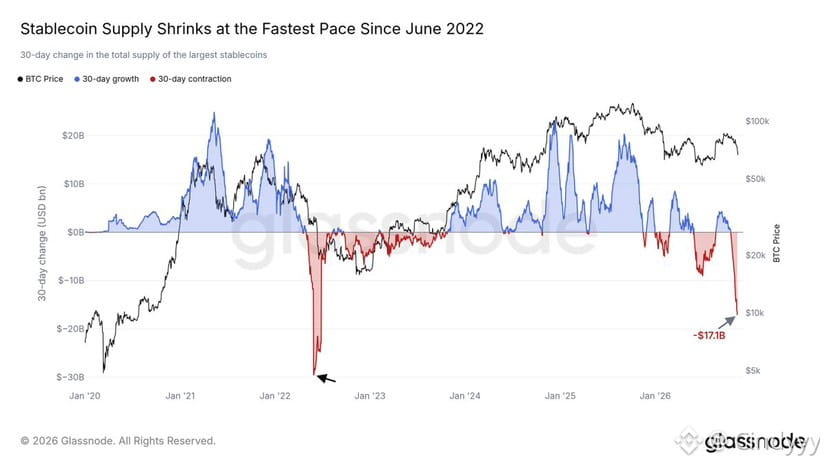
Stablecoin supply fell by $14–16 billion over 30 days, suggesting that new capital has yet to return.
- Liquidations have mainly come from Long positions, but the subsequent rebound has not been confirmed by new inflows.
3. Forecast: $BTC could head toward the $50,000–$59,000 range
- Wintermute believes downward pressure remains and expects BTC could continue facing pressure toward the $50K range.
- The key levels to watch for now are $62K (the recent low) and $60K (an area of concentrated Put options).
- There is not yet enough evidence to confirm that the market has bottomed or that a new uptrend has begun.
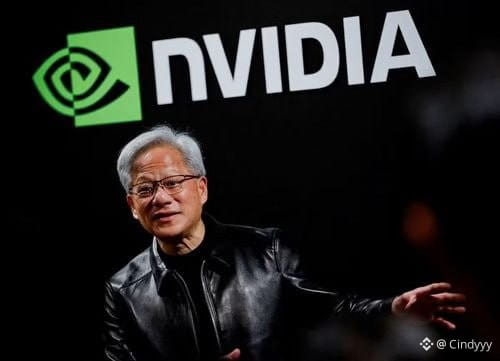
- Factors to watch: Fed meeting minutes, PCE inflation data, and NVIDIA earnings this week.
Summary: Wintermute continues to take a defensive stance. With ETF flows still negative, liquidity weakening, and BTC having fallen below the 200WMA, the risk of a deeper decline to the $50K–$59K range should still be considered. Investors should prioritize risk management rather than rushing to buy the dip.
#Binance
Cindyyy
·
--
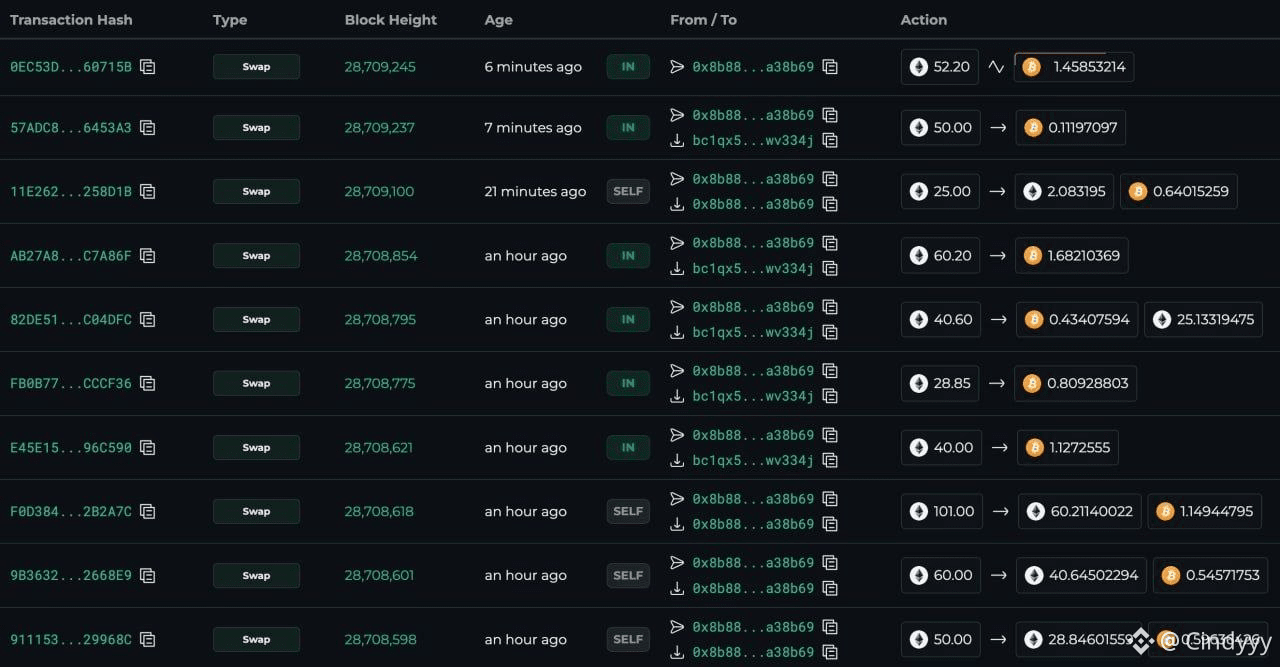
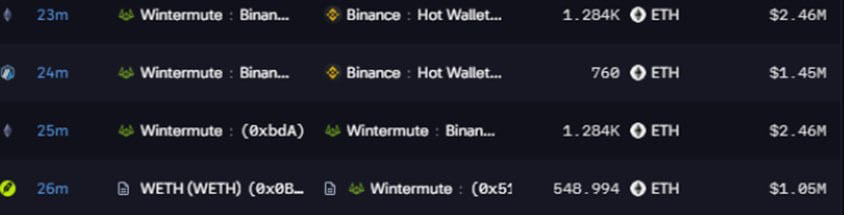
🔥 $ETH barely had time to recover before facing another concern: the hacker's $1.1 billion in assets!
The market has just seen a notable development, as a huge amount of ETH believed to be linked to the Binance hack has begun showing signs of movement.
In just 3 hours, 74,880 ETH ($136.8 million) was transferred and swapped for BTC through THORChain.
This may only be part of the total assets, estimated at more than 600,000 ETH, worth around $1.1 billion.
What has the market on edge isn't just the amount of ETH that has moved, but also the vast amount of assets that could continue putting pressure on the market in the near future.
ETH needs a rebound, not another reason to sell off! 💀
#Binance
Cindyyy
·
--
🔴 $ETH plunges, ETH treasury company forced to SELL AT A LOSS to save its loan!
The market just got another notable twist! BTCS—a company holding a large amount of ETH—has had to sell some ETH at a loss to ease pressure on its Aave loan and avoid the risk of cascading liquidations.
Notably, as of November 9, BTCS had pledged 46,676 ETH (~$100 million) as collateral to borrow $64.1 million.
⚠️ But the risks don’t stop there!
- Loan liquidation price: $1,717/ETH
- ETH price this morning: around $1,900
- Distance to the liquidation threshold: only about 10%.
Meanwhile, BTCS holds a total of 49,571 ETH. This means 94% of the company’s ETH treasury is on Aave as collateral!
Notably, BTCS has yet to disclose exactly how much ETH it sold or the losses it incurred.
Another price drop could sharply increase liquidation pressure. Is this merely a defensive move, or a warning sign of another wave of sell-offs?
#Binance
Verified
Cindyyy
·
--
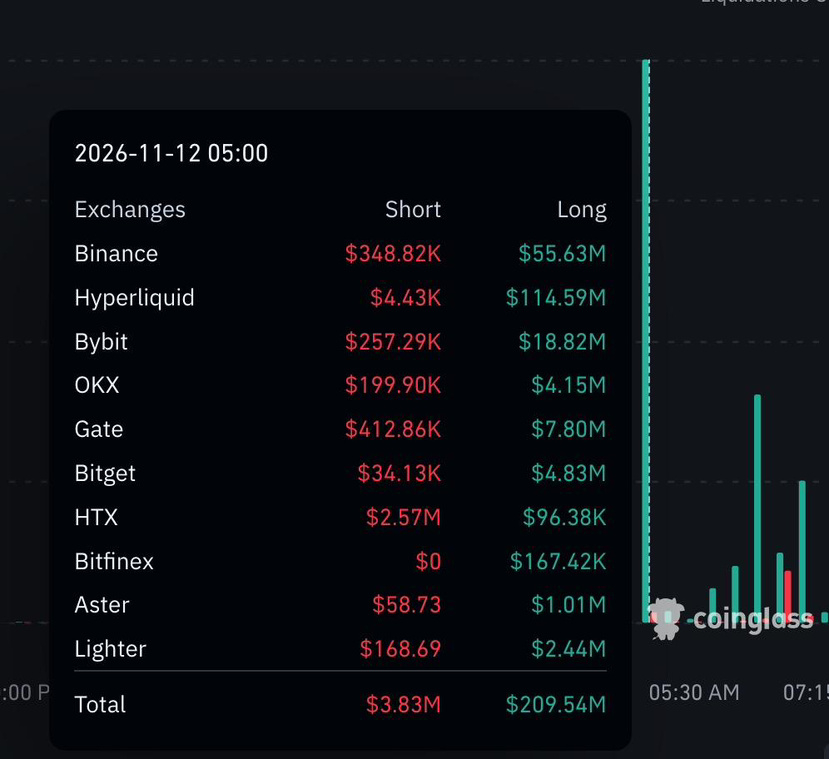
More than $200 million worth of crypto long positions were liquidated within 15 minutes...
Are you all still okay? $BTC
#Binance
Are you all still okay? $BTC
#Binance

Cindyyy
·
--
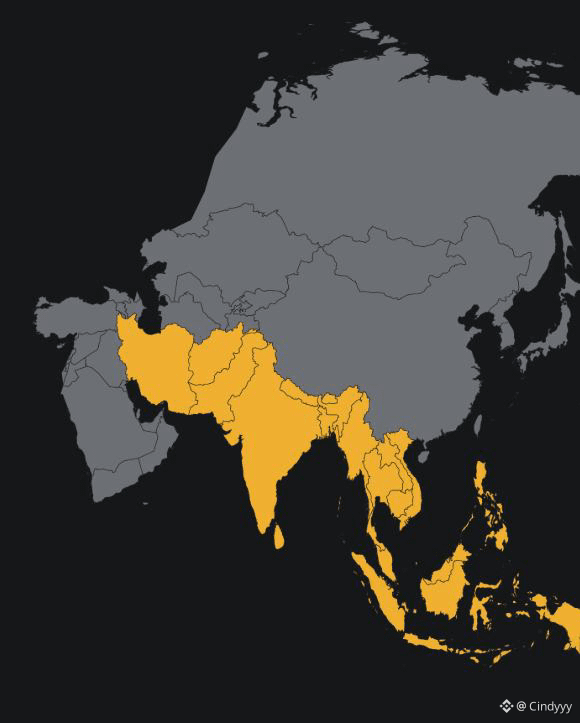
🔴Israeli media: Qatar says it has secured two weeks for U.S.-Iran talks, aiming to delay a U.S. military strike on Iran
On November 11, The Jerusalem Post reported, citing diplomatic sources, that Qatari Prime Minister Mohammed bin Abdulrahman Al Thani told the G7 foreign ministers in Paris that Doha had secured at least two weeks to continue encouraging the U.S. and Iran to reach an understanding and prevent the U.S. from launching another attack on Iran. However, the two sides still have major disagreements, and key issues remain unresolved, including a roadmap for lifting the naval blockade, the nuclear issue, and the release of Iranian assets. Al Thani stressed that the U.S. and Iran need to rebuild mutual trust before they can return to the negotiating table. Earlier, Al Thani had met with Trump and Vice President Vance at the White House.
$BTC #Binance
Log in to explore more content