
贝壳社区-小夜
62 Posts

贝壳社区-小夜
Report
Block User
在学 BSC 链上数据|每周拆 3 个指标|数据附来源,不喊单
16 Following
65 Followers
43 Liked
Posts
All
Quotes
·
--

Article
🚨 $4.86 million in funds transferred out! Chainflip suffers a security incident—can even 150 validator nodes fail to guarantee absolute security?Recently, the cross-chain protocol Chainflip suffered a security incident.
According to public reports, the attacker transferred approximately $4.86 million worth of crypto assets from Chainflip's Ethereum vault, including:
🔹 Approximately 520.2 ETH
🔹 Approximately 3.25 million USDC
🔹 Approximately 758,000 USDT
After the incident, Chainflip activated Full Safe Mode, suspending deposits, withdrawals, cross-chain swaps, and quoting services to prevent further losses.
⚠️ What truly deserves attention is not just the $4.86 million loss, but the underlying security issues.
Chainflip previously used a TSS threshold signature scheme, with 150 validator nodes in the network. Under normal circumstances, a certain number of nodes must jointly participate in signing.
🚨 $4.86 million in funds transferred out! Chainflip suffers a security incident—can even 150 validator nodes fail to guarantee absolute security?
Recently, the cross-chain protocol Chainflip suffered a security incident.
According to public reports, the attacker transferred approximately $4.86 million worth of crypto assets from Chainflip's Ethereum vault, including:
🔹 Approximately 520.2 ETH
🔹 Approximately 3.25 million USDC
🔹 Approximately 758,000 USDT
After the incident, Chainflip activated Full Safe Mode, suspending deposits, withdrawals, cross-chain swaps, and quoting services to prevent further losses.
⚠️ What truly deserves attention is not just the $4.86 million loss, but the underlying security issues.
Chainflip previously used a TSS threshold signature scheme, with 150 validator nodes in the network. Under normal circumstances, a certain number of nodes must jointly participate in signing.
226
·
--
Article
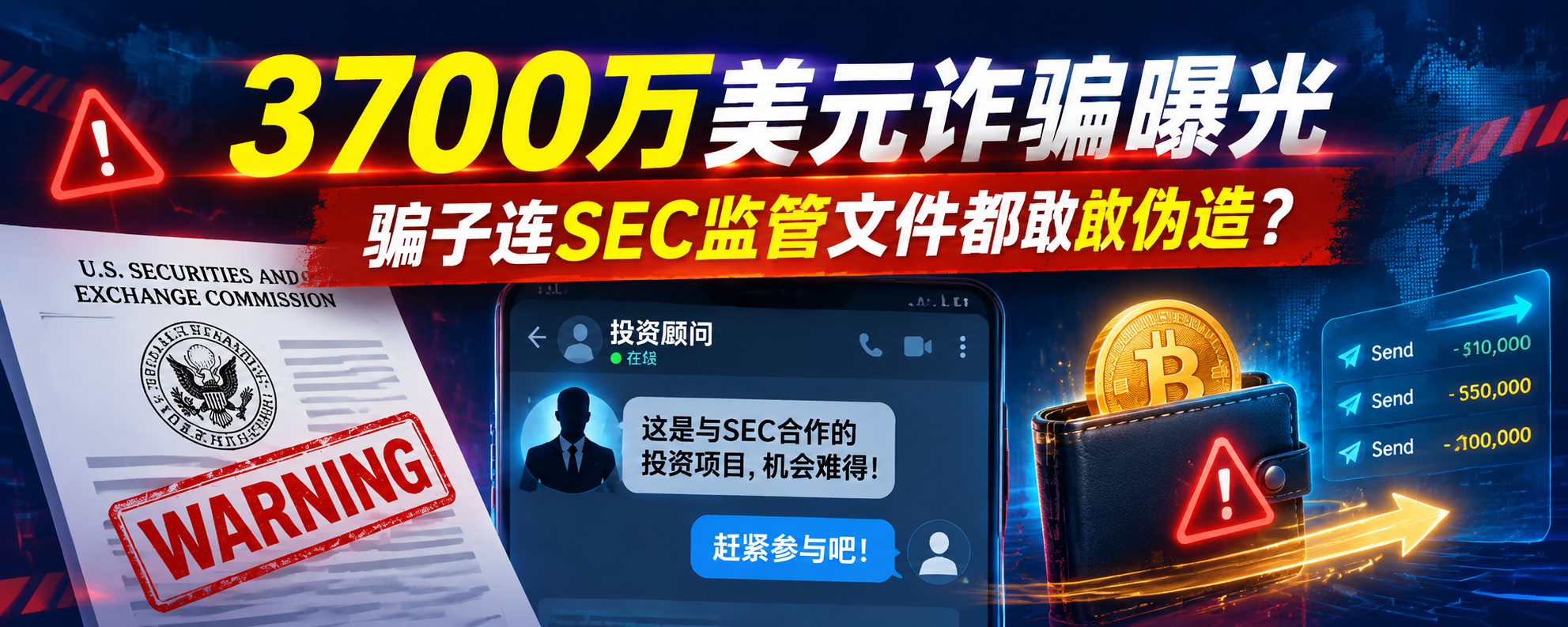
🚨 $37 Million Scam Exposed! Fraudsters Even Dared to Forge SEC Regulatory Documents!Today, I came across a warning that every crypto investor should take seriously.
On November 19, 2026, the U.S. Securities and Exchange Commission (SEC) issued a notice accusing 8 entities of allegedly carrying out investment fraud through fake crypto trading platforms, involving more than $37 million.
The most frightening thing about this scam is that the fraudsters don’t ask you to transfer money right away. Instead, they follow a carefully designed process to gain your trust step by step.
Here’s how they typically operate:
1️⃣ Luring victims through social media
They post investment information on social media platforms to attract potential victims, then direct them to group chats or private messages.
🚨 $37 Million Scam Exposed! Fraudsters Even Dared to Forge SEC Regulatory Documents!
Today, I came across a warning that every crypto investor should take seriously.
On November 19, 2026, the U.S. Securities and Exchange Commission (SEC) issued a notice accusing 8 entities of allegedly carrying out investment fraud through fake crypto trading platforms, involving more than $37 million.
The most frightening thing about this scam is that the fraudsters don’t ask you to transfer money right away. Instead, they follow a carefully designed process to gain your trust step by step.
Here’s how they typically operate:
1️⃣ Luring victims through social media
They post investment information on social media platforms to attract potential victims, then direct them to group chats or private messages.
122
·
--
Article
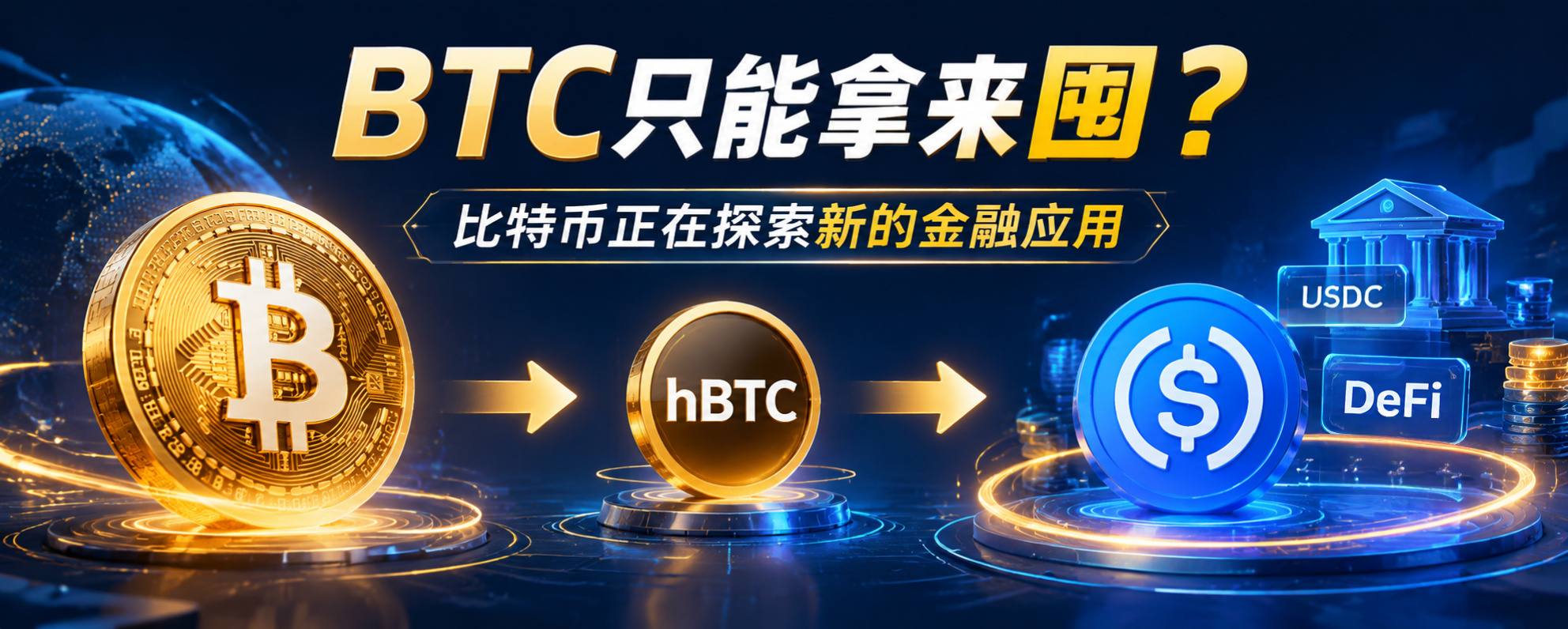
Is hoarding the only thing you can do with BTC? People are now exploring ways to use it for lending.In the past, many people who held BTC did so by simply holding it long term and waiting for its value to rise.
But a new possibility is emerging:
If you don’t sell your BTC, can you put it to work in other financial applications?
On November 19, Sui announced that Hashi had officially launched on mainnet.
This infrastructure is exploring a new way to use BTC.
Simply put:
1. Users connect BTC to the Sui ecosystem through Hashi.
2. They receive hBTC backed 1:1 by BTC.
3. hBTC can be used as collateral for on-chain lending.
4. For example, you can use hBTC as collateral on Fluid to borrow USDC.
This means that, beyond trading and long-term holding, BTC now has another financial use case worth paying attention to.
Is hoarding the only thing you can do with BTC? People are now exploring ways to use it for lending.
In the past, many people who held BTC did so by simply holding it long term and waiting for its value to rise.
But a new possibility is emerging:
If you don’t sell your BTC, can you put it to work in other financial applications?
On November 19, Sui announced that Hashi had officially launched on mainnet.
This infrastructure is exploring a new way to use BTC.
Simply put:
1. Users connect BTC to the Sui ecosystem through Hashi.
2. They receive hBTC backed 1:1 by BTC.
3. hBTC can be used as collateral for on-chain lending.
4. For example, you can use hBTC as collateral on Fluid to borrow USDC.
This means that, beyond trading and long-term holding, BTC now has another financial use case worth paying attention to.
160
·
--

Article
Stablecoins are connecting to banks and Visa’s payment network—but will recipients necessarily receive stablecoins?In the past, when people heard “stablecoins,” their first thoughts might have been trading USDT or USDC, or transferring funds between different exchanges.
But two recent partnerships involving financial institutions have made another use for stablecoins much clearer:
Stablecoins are gradually entering traditional finance’s treasury management and cross-border payment systems.
On November 18, two noteworthy announcements were made in quick succession.
First, DBS and Circle expanded their institutional USDC services.
Singapore’s DBS Bank and Circle, the issuer of USDC, announced a partnership.
Eligible institutional clients can issue and redeem USDC directly through DBS, with 24/7 settlement between US dollars and USDC.
Stablecoins are connecting to banks and Visa’s payment network—but will recipients necessarily receive stablecoins?
In the past, when people heard “stablecoins,” their first thoughts might have been trading USDT or USDC, or transferring funds between different exchanges.
But two recent partnerships involving financial institutions have made another use for stablecoins much clearer:
Stablecoins are gradually entering traditional finance’s treasury management and cross-border payment systems.
On November 18, two noteworthy announcements were made in quick succession.
First, DBS and Circle expanded their institutional USDC services.
Singapore’s DBS Bank and Circle, the issuer of USDC, announced a partnership.
Eligible institutional clients can issue and redeem USDC directly through DBS, with 24/7 settlement between US dollars and USDC.
1
429
·
--

Article
The smart contract wasn’t compromised, so why did users still lose funds?Many people believe that when using a decentralized exchange, as long as the smart contract has no vulnerabilities, their funds are safe.
But a recent security incident at Lighter reminds us:
Smart contract security does not mean account operations are absolutely safe.
On November 16, an account security incident occurred at Lighter, a perpetuals DEX in the Ethereum ecosystem.
Due to a security issue with the API keys of affected accounts, the platform temporarily suspended some operations.
On-chain investigators traced an outflow of approximately 10.39 million USDC.
Later, Lighter’s security committee recovered and returned approximately 5 million USDC. The platform resumed normal deposits and withdrawals on November 17.
The smart contract wasn’t compromised, so why did users still lose funds?
Many people believe that when using a decentralized exchange, as long as the smart contract has no vulnerabilities, their funds are safe.
But a recent security incident at Lighter reminds us:
Smart contract security does not mean account operations are absolutely safe.
On November 16, an account security incident occurred at Lighter, a perpetuals DEX in the Ethereum ecosystem.
Due to a security issue with the API keys of affected accounts, the platform temporarily suspended some operations.
On-chain investigators traced an outflow of approximately 10.39 million USDC.
Later, Lighter’s security committee recovered and returned approximately 5 million USDC. The platform resumed normal deposits and withdrawals on November 17.
1
78
·
--

Article
🚀 Nvidia revenue tops $115.8 billion, the AI boom continues—is a new opportunity on the horizon for the crypto market?Nvidia’s latest earnings report has once again sent shock waves through the global tech market.
Third-quarter revenue reached $115.8 billion, up 103% year over year.
Data center revenue was $107.6 billion, up 110% year over year.
Revenue guidance for the next quarter is even higher, at $130 billion.
These figures show that demand for AI infrastructure remains strong.
But there’s a question worth considering:
If the AI industry continues to thrive, why doesn’t the crypto market necessarily rise in tandem?
I think there are three areas to focus on:
1️⃣ The AI industry is still expanding
Demand for computing power, data centers, and chips continues to grow, keeping the AI supply chain highly attractive to investors.
🚀 Nvidia revenue tops $115.8 billion, the AI boom continues—is a new opportunity on the horizon for the crypto market?
Nvidia’s latest earnings report has once again sent shock waves through the global tech market.
Third-quarter revenue reached $115.8 billion, up 103% year over year.
Data center revenue was $107.6 billion, up 110% year over year.
Revenue guidance for the next quarter is even higher, at $130 billion.
These figures show that demand for AI infrastructure remains strong.
But there’s a question worth considering:
If the AI industry continues to thrive, why doesn’t the crypto market necessarily rise in tandem?
I think there are three areas to focus on:
1️⃣ The AI industry is still expanding
Demand for computing power, data centers, and chips continues to grow, keeping the AI supply chain highly attractive to investors.
271
·
--
🇷🇺 Russia has officially eased restrictions on cryptocurrency investments today, but there’s an important hurdle for ordinary investors!
Starting November 17, new rules approved by the Central Bank of Russia for cryptocurrency investments have officially taken effect.
Ordinary investors can buy the following through eligible intermediaries:
🔹 Bitcoin (BTC)
🔹 Ethereum (ETH)
🔹 Tether (USDT)
However, this opening up does come with some restrictions.
Ordinary investors may not purchase more than 300,000 rubles’ worth of cryptocurrency per year through a single intermediary.
Investors must also pass a relevant test and understand the risks of cryptocurrency investments.
Qualified professional investors, meanwhile, can access a wider range of crypto assets and are not subject to the purchase limit above.
This policy sends a noteworthy signal:
Russia is trying to bring cryptocurrency investment into a more regulated financial framework.
It is opening up compliant investment channels while setting investment thresholds and risk requirements.
This also reflects a broader trend:
Cryptocurrency is gradually entering the formal financial markets of more countries, but liberalization and regulation often go hand in hand.
What do you think of Russia’s policy change?
A: This is an important step toward cryptocurrency going mainstream.
B: The 300,000-ruble limit is still too strict.
C: More countries will adopt similar policies in the future.
Share your thoughts in the comments.
#俄罗斯 #加密货币监管 #Crypto
219
·
--
What does it mean when a DeFi protocol chooses to gradually shut down its lending services after being exploited?
On November 14, HARD Lend, a lending protocol in the Kava ecosystem, suffered a security incident.
The attacker exploited a long-dormant BUSD market, using abnormal collateral valuations and lending calculations to transfer approximately 53.9 million KAVA from the lending pool.
Based on prices before the attack, these assets were worth about $3.76 million.
But what’s really worth paying attention to is the follow-up response announced today.
On November 16, Kava Chain disclosed its latest measures:
1. The vulnerability exploited in the attack has been fixed, and additional safeguards have been put in place.
2. Some of the stolen funds have been frozen. The team is working with exchanges, ecosystem partners, and relevant law enforcement agencies to track down the remaining funds.
3. A governance proposal is planned to permanently stop new lending activity on HARD Lend, with a seven-day vote to decide what happens next.
This means the team isn’t just patching the vulnerability; it’s also considering gradually winding down the legacy lending service.
I think this incident raises three questions for the DeFi industry to consider:
First, should long-dormant markets undergo regular security reviews?
Second, after a protocol suffers a major vulnerability, is fixing it enough?
Third, when the maintenance costs and security risks of an older protocol keep rising, is proactively winding it down a more sensible choice?
DeFi’s development shouldn’t focus only on TVL, yields, and new features.
What truly determines how far a protocol can go also includes risk management, ongoing maintenance, and the ability to handle problems when they arise.
What do you think a DeFi protocol should do after a major security incident: prioritize fixing the issue and continuing operations, or consider gradually shutting down?
Share your thoughts.
$KAVA #DeFi #智能合约安全
#区块链安全
129
·
--
AI agents are starting to pay on our behalf—but this time, it’s not cryptocurrencyOn November 13, OpenAI launched ChatGPT Wallet.
One change worth noting is this:
AI is no longer just helping you find products and compare prices; it’s starting to take part in the actual payment process.
This time, OpenAI has partnered with Visa, Mastercard, and American Express to let AI agents help users complete purchases and payments.
The process is fairly straightforward:
Users first add a bank card.
When an AI agent helps with a purchase, users can review the item, amount, and payment card, then confirm the payment using Face ID, a fingerprint, or another method.
The payment network then generates a payment token to replace the actual card details, reducing the risk of exposing the real card number.
AI agents are starting to pay on our behalf—but this time, it’s not cryptocurrency
On November 13, OpenAI launched ChatGPT Wallet.
One change worth noting is this:
AI is no longer just helping you find products and compare prices; it’s starting to take part in the actual payment process.
This time, OpenAI has partnered with Visa, Mastercard, and American Express to let AI agents help users complete purchases and payments.
The process is fairly straightforward:
Users first add a bank card.
When an AI agent helps with a purchase, users can review the item, amount, and payment card, then confirm the payment using Face ID, a fingerprint, or another method.
The payment network then generates a payment token to replace the actual card details, reducing the risk of exposing the real card number.
OPENAI+0.30%
AXPUS-2.53%
179
·
--
Stocks can now be traded 24/7? But what you’re buying may not be a stockThe lines between traditional finance and crypto markets are shifting once again.
Today, Binance Futures added two perpetual contracts based on U.S. stocks:
NUUSDT: Corresponds to Nu Holdings Ltd. (NYSE: NU)
FRHCUSDT: Corresponds to Freedom Holding Corp. (Nasdaq: FRHC)
According to Binance’s official announcement, both contracts are settled in USDT, support 24-hour trading, offer leverage of up to 20x, and settle funding fees every 8 hours.
But there’s one easily overlooked distinction:
You’re not trading the stock itself, but a perpetual contract that tracks its price.
This means that holding these contracts does not make you a shareholder in the corresponding company or grant you shareholder rights.
Stocks can now be traded 24/7? But what you’re buying may not be a stock
The lines between traditional finance and crypto markets are shifting once again.
Today, Binance Futures added two perpetual contracts based on U.S. stocks:
NUUSDT: Corresponds to Nu Holdings Ltd. (NYSE: NU)
FRHCUSDT: Corresponds to Freedom Holding Corp. (Nasdaq: FRHC)
According to Binance’s official announcement, both contracts are settled in USDT, support 24-hour trading, offer leverage of up to 20x, and settle funding fees every 8 hours.
But there’s one easily overlooked distinction:
You’re not trading the stock itself, but a perpetual contract that tracks its price.
This means that holding these contracts does not make you a shareholder in the corresponding company or grant you shareholder rights.
321
·
--
🔥 Binance has made another move!
This afternoon, Binance will list two U.S. stock-related perpetual contracts: NUUSDT and FRHCUSDT.
This also reflects a trend worth watching:
Crypto trading platforms are continually expanding the boundaries of trading in traditional financial assets.
From BTC and ETH to contracts related to U.S. stocks, the connections between financial markets are growing closer.
For everyday users, what’s worth paying attention to isn’t just the new contracts themselves, but also the direction the industry is heading.
And what makes a project truly worth following over the long term isn’t just short-term buzz, but its ability to keep building.
There are new market trends every day, but building takes long-term commitment.
What new ways do you think the crypto market and traditional finance will come together in the future?
#Binance #CryptoMarket #TradFi #HOLD
70
·
--
Are prediction markets becoming the next battleground for financial trading?In the past, when people heard about prediction markets, they may have thought only of betting on the outcome of an event.
But now, the sector is changing.
On November 10, Reuters reported that the U.S. Commodity Futures Trading Commission (CFTC) had warned prediction market platform Kalshi that it could soon face related charges.
The dispute concerns whether Kalshi properly filed paperwork for some new products, as required by regulators.
In response, Kalshi said the issue primarily involved the filing procedures for a small number of contracts, many of which had never actually gone live, and that the company was addressing the matter.
Are prediction markets becoming the next battleground for financial trading?
In the past, when people heard about prediction markets, they may have thought only of betting on the outcome of an event.
But now, the sector is changing.
On November 10, Reuters reported that the U.S. Commodity Futures Trading Commission (CFTC) had warned prediction market platform Kalshi that it could soon face related charges.
The dispute concerns whether Kalshi properly filed paperwork for some new products, as required by regulators.
In response, Kalshi said the issue primarily involved the filing procedures for a small number of contracts, many of which had never actually gone live, and that the company was addressing the matter.
213
·
--
Fun Crypto Fact | Stablecoins Aren’t Just for Buying and Selling Crypto!When many people hear “stablecoins,” their first thought is USDT or USDC.
But did you know?
Stablecoins are becoming an important payment tool in the blockchain world.
📊 According to the RWA weekly report published by PANews on November 6:
A few interesting figures:
🔹 The total market capitalization of stablecoins is approximately $283.05 billion.
🔹 Monthly transfer volume reached $9.9 trillion, up 46.11% month over month.
🔹 There are approximately 306 million stablecoin holders.
Meanwhile, the number of on-chain holders of RWA (tokenized real-world assets) continues to grow.
What does this tell us?
Stablecoins are not just a medium of exchange on crypto exchanges; they are also expanding into payments, cross-border settlements, and real-world financial applications.
Fun Crypto Fact | Stablecoins Aren’t Just for Buying and Selling Crypto!
When many people hear “stablecoins,” their first thought is USDT or USDC.
But did you know?
Stablecoins are becoming an important payment tool in the blockchain world.
📊 According to the RWA weekly report published by PANews on November 6:
A few interesting figures:
🔹 The total market capitalization of stablecoins is approximately $283.05 billion.
🔹 Monthly transfer volume reached $9.9 trillion, up 46.11% month over month.
🔹 There are approximately 306 million stablecoin holders.
Meanwhile, the number of on-chain holders of RWA (tokenized real-world assets) continues to grow.
What does this tell us?
Stablecoins are not just a medium of exchange on crypto exchanges; they are also expanding into payments, cross-border settlements, and real-world financial applications.
79
·
--
Fun Crypto Facts | Is Gold Going on the Blockchain?When we used to think about buying gold, we pictured gold bars, jewelry stores, and safes.
Now, gold may have a new way to shine: going on the blockchain!
📢 Recently, new developments have emerged in Hong Kong’s fintech sector, with exploration underway into interbank tokenized gold trading and a focus on the development of tokenized gold ETFs.
Behind this is a hot concept: RWA (real-world asset tokenization).
Simply put, it means digitizing real-world assets—such as gold, real estate, and bonds—using blockchain technology.
Imagine this:
In the past, gold had to be transported, stored, and traded in person;
Fun Crypto Facts | Is Gold Going on the Blockchain?
When we used to think about buying gold, we pictured gold bars, jewelry stores, and safes.
Now, gold may have a new way to shine: going on the blockchain!
📢 Recently, new developments have emerged in Hong Kong’s fintech sector, with exploration underway into interbank tokenized gold trading and a focus on the development of tokenized gold ETFs.
Behind this is a hot concept: RWA (real-world asset tokenization).
Simply put, it means digitizing real-world assets—such as gold, real estate, and bonds—using blockchain technology.
Imagine this:
In the past, gold had to be transported, stored, and traded in person;
112
·
--
Crypto Fun Fact: Bulls and Bears—Who's the Market's Fuel?There's a curious phenomenon in the crypto market:
When the market rises:
Bulls: The bull market is here—the opportunity is right in front of us! 🚀
When the market falls:
Bulls: It's fine, just a normal pullback!
When it falls a little further:
Bulls: Trust your own judgment!
When it keeps falling:
Bulls: Wait, where did my margin go? 🤣
The market has taught everyone a lesson lately.
On November 6, crypto liquidations over a 24-hour period exceeded $1.27 billion, including more than $1.1 billion in long positions.
Meanwhile, U.S. spot Bitcoin ETFs saw net outflows of about $430 million in a single day.
This reveals an interesting phenomenon:
Crypto Fun Fact: Bulls and Bears—Who's the Market's Fuel?
There's a curious phenomenon in the crypto market:
When the market rises:
Bulls: The bull market is here—the opportunity is right in front of us! 🚀
When the market falls:
Bulls: It's fine, just a normal pullback!
When it falls a little further:
Bulls: Trust your own judgment!
When it keeps falling:
Bulls: Wait, where did my margin go? 🤣
The market has taught everyone a lesson lately.
On November 6, crypto liquidations over a 24-hour period exceeded $1.27 billion, including more than $1.1 billion in long positions.
Meanwhile, U.S. spot Bitcoin ETFs saw net outflows of about $430 million in a single day.
This reveals an interesting phenomenon:
113
·
--
【Crypto Fun Fact: Turns Out Institutions Chase Rallies and Sell Off Too!】I used to think institutional investors were all pros.
They have research teams, data analysis, and huge amounts of capital.
Retail investors: It’s down—what should I do?
Institutions: Let’s take a look at the data first.
Then something interesting happened recently:
On November 4, U.S. spot Bitcoin ETFs saw net inflows of about $74.6 million.
Then on November 5, everything suddenly changed:
Net outflows of about $430 million!
In just one day, they went from buying like crazy to selling like crazy.
Even more interestingly, U.S. tech stocks fell sharply around the same time, putting pressure on Bitcoin too, and the market saw more than $1 billion in futures liquidations.
【Crypto Fun Fact: Turns Out Institutions Chase Rallies and Sell Off Too!】
I used to think institutional investors were all pros.
They have research teams, data analysis, and huge amounts of capital.
Retail investors: It’s down—what should I do?
Institutions: Let’s take a look at the data first.
Then something interesting happened recently:
On November 4, U.S. spot Bitcoin ETFs saw net inflows of about $74.6 million.
Then on November 5, everything suddenly changed:
Net outflows of about $430 million!
In just one day, they went from buying like crazy to selling like crazy.
Even more interestingly, U.S. tech stocks fell sharply around the same time, putting pressure on Bitcoin too, and the market saw more than $1 billion in futures liquidations.
157
·
--
😂【A Crypto Anecdote: Bitcoin, Aren’t You Supposed to Be Digital Gold?】Someone once asked:
Why buy Bitcoin?
Someone replied: “Because it’s digital gold!”
Then something interesting happened in the market:
Gold: I’m here to hedge risk.
U.S. stocks: I’m here to be volatile.
Bitcoin: Wait, let me see how U.S. stocks are doing first! 🤣
That’s exactly what’s been playing out in the market lately.
On November 5, U.S. tech stocks came under pressure, and Bitcoin weakened along with them, at one point falling about 5% in 24 hours and retreating to around $76,000.
Meanwhile, the market was still digesting policy uncertainty surrounding the U.S. midterm elections, as well as concerns sparked by a security incident at a major trading platform.
😂【A Crypto Anecdote: Bitcoin, Aren’t You Supposed to Be Digital Gold?】
Someone once asked:
Why buy Bitcoin?
Someone replied: “Because it’s digital gold!”
Then something interesting happened in the market:
Gold: I’m here to hedge risk.
U.S. stocks: I’m here to be volatile.
Bitcoin: Wait, let me see how U.S. stocks are doing first! 🤣
That’s exactly what’s been playing out in the market lately.
On November 5, U.S. tech stocks came under pressure, and Bitcoin weakened along with them, at one point falling about 5% in 24 hours and retreating to around $76,000.
Meanwhile, the market was still digesting policy uncertainty surrounding the U.S. midterm elections, as well as concerns sparked by a security incident at a major trading platform.
318
·
--
Democrats Win Midterms, TRUMP Coin Falls 17%, but Bitcoin ReboundsOn November 4, 2026, the results of the U.S. midterm elections became increasingly clear: Democrats won control of both the House and the Senate.
Markets initially fluctuated, but Bitcoin later rebounded from an intraday low of around $75,600, climbing back to near $80,000.
However, one class of assets has not kept pace with the rally.
Trump-related assets are being priced differently.
Official Trump (TRUMP) fell as much as about 17% in 24 hours, dropping from around $1.598 to near $1.303; World Liberty Financial’s WLFI fell more than 7%; and Trump Media & Technology Group (DJT) plunged about 17% at one point during the session, hitting a record low.
Democrats Win Midterms, TRUMP Coin Falls 17%, but Bitcoin Rebounds
On November 4, 2026, the results of the U.S. midterm elections became increasingly clear: Democrats won control of both the House and the Senate.
Markets initially fluctuated, but Bitcoin later rebounded from an intraday low of around $75,600, climbing back to near $80,000.
However, one class of assets has not kept pace with the rally.
Trump-related assets are being priced differently.
Official Trump (TRUMP) fell as much as about 17% in 24 hours, dropping from around $1.598 to near $1.303; World Liberty Financial’s WLFI fell more than 7%; and Trump Media & Technology Group (DJT) plunged about 17% at one point during the session, hitting a record low.
1
60
·
--
Crypto Curiosities | A 2015 Toad That Gained 5,000% in 24 HoursOn November 4, 2026, an unexpected name appeared on GMGN’s “Top Smart Money Net Inflows in 24 Hours” list: Groyper.
The data shows:
24-hour gain: 5034.7%
Smart money net inflow: $2,000
Price: about $0.0002
It made the gainers list and topped the smart money net inflow rankings.
But the most interesting part isn’t the 5,000% gain—it’s the toad behind the story.
What is Groyper?
It’s Pepe’s “smug cousin,” a green toad that originated on 4chan around 2015.
Ten years ago, it was just a meme in internet culture.
Crypto Curiosities | A 2015 Toad That Gained 5,000% in 24 Hours
On November 4, 2026, an unexpected name appeared on GMGN’s “Top Smart Money Net Inflows in 24 Hours” list: Groyper.
The data shows:
24-hour gain: 5034.7%
Smart money net inflow: $2,000
Price: about $0.0002
It made the gainers list and topped the smart money net inflow rankings.
But the most interesting part isn’t the 5,000% gain—it’s the toad behind the story.
What is Groyper?
It’s Pepe’s “smug cousin,” a green toad that originated on 4chan around 2015.
Ten years ago, it was just a meme in internet culture.
295
·
--
A Little Crypto Observation | The Next Community Coin Rivalry May Start with a SloganIn 2026, perhaps the most interesting thing about community coins isn’t how much a particular coin has risen, but that a slogan has started being treated by the community as a creation worth rewarding.
“Why go here and there? Binance has it all.”
This line was originally a slogan promoting a Binance-related product. It was later widely shared and remixed by the crypto community, eventually evolving into the BSC meme coin $币有.
Interestingly, once an ordinary advertising slogan enters the community, it becomes more than just marketing.
It can become a meme, a cultural symbol, or a starting point for creative work the community can make together.
A Little Crypto Observation | The Next Community Coin Rivalry May Start with a Slogan
In 2026, perhaps the most interesting thing about community coins isn’t how much a particular coin has risen, but that a slogan has started being treated by the community as a creation worth rewarding.
“Why go here and there? Binance has it all.”
This line was originally a slogan promoting a Binance-related product. It was later widely shared and remixed by the crypto community, eventually evolving into the BSC meme coin $币有.
Interestingly, once an ordinary advertising slogan enters the community, it becomes more than just marketing.
It can become a meme, a cultural symbol, or a starting point for creative work the community can make together.
446
Log in to explore more content
Join global crypto users on Binance Square
⚡️ Get latest and useful information about crypto.
💬 Trusted by the world’s largest crypto exchange.
👍 Discover real insights from verified creators.
Email / Phone number
Trending Topics
BTCReboundsAbove$60KAmidWhaleDipBuying
1,568 views
30 Discussing
Abraxas Capital, Other Whales Buy the BTC Dip as Bitcoin Briefly Reclaims $60,000
Binance News
·7 Likes
·5.2k views
NvidiaLoses$2.7TrillionInMonthAndAHalf
37,911 views
189 Discussing
GlobalStocksFaceLongestLosingStreakSince2023
368,114 views
2,381 Discussing