
BnFastNews
367 Posts

BnFastNews
Report
Block User
0 Following
28 Followers
40 Liked
Posts
·
--
Verified
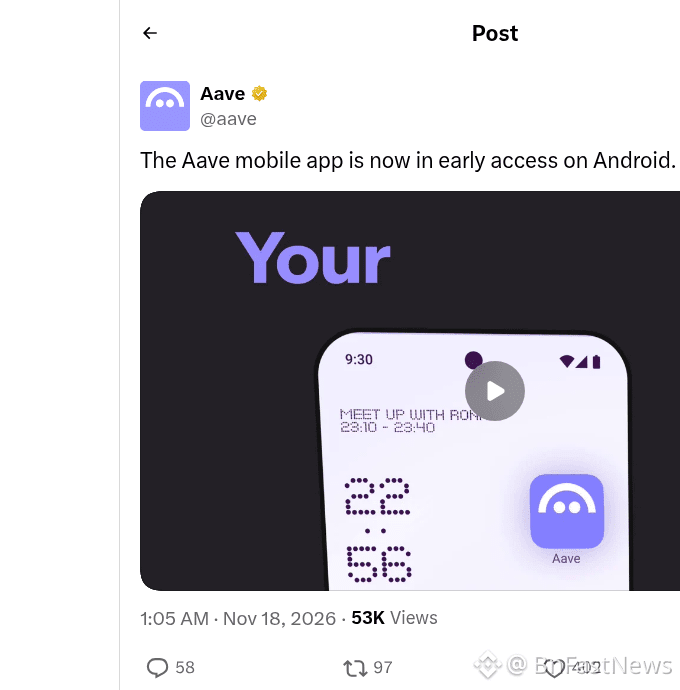
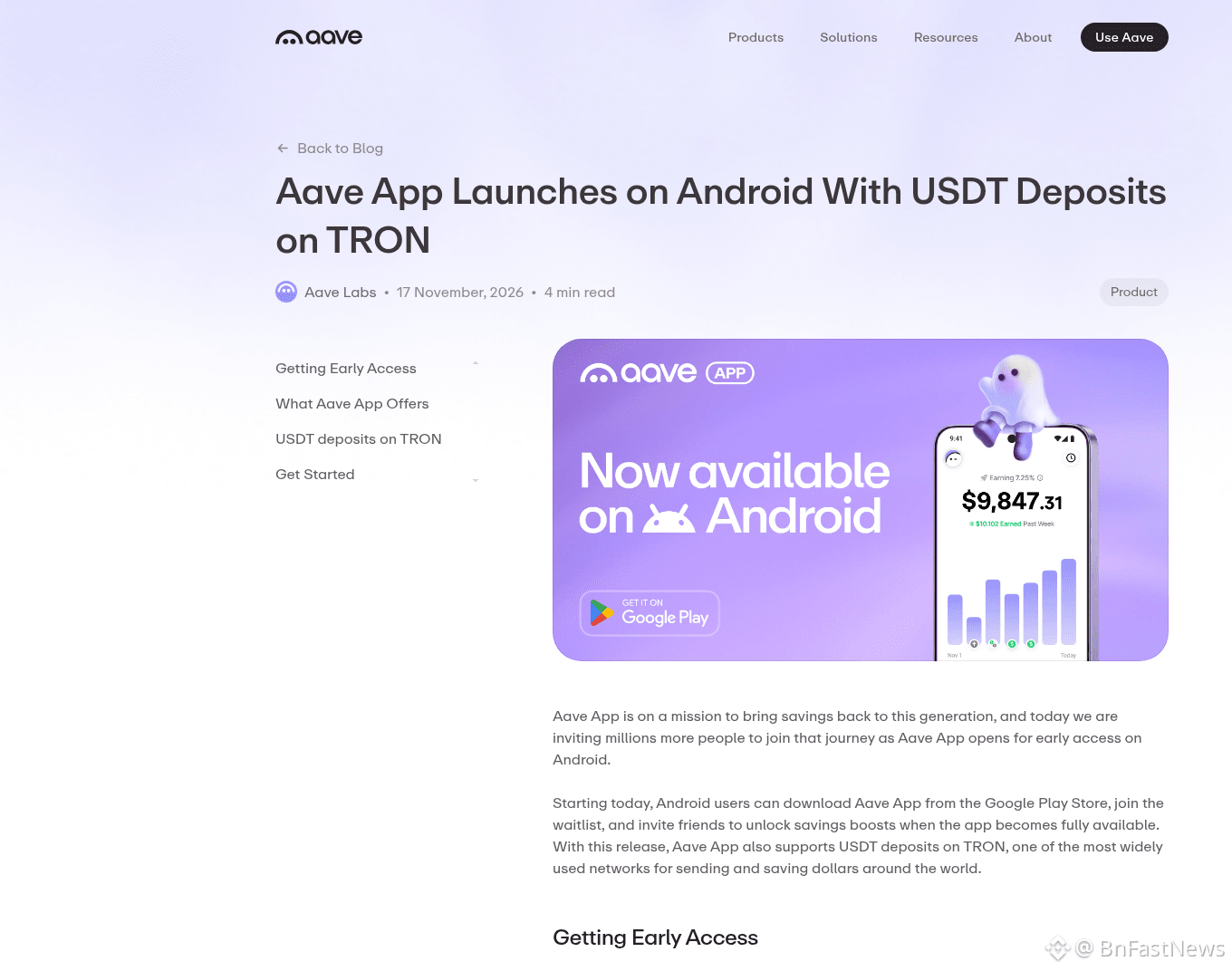
At 1:05 a.m., the official @aave account posted that its mobile app is now available for early access on Android and can be downloaded directly from Google Play. It’s still in the early-access phase, so new users are placed on a waitlist by default. They’ve also issued a limited number of access codes; anyone with a valid code can skip the waitlist, while supplies last.
The product terms in the official blog post published the same day say that savings earn up to 7.25% APY, with interest accruing by the second, no lockup period, and withdrawals available on request at any time. The official terms and regional restrictions apply. The team also added that Android accounts for around 72% of mobile devices worldwide, with an even higher share in places where traditional financial services are less accessible.
The official yield has been clearly stated. What I’m more interested in is how quickly early access can become reliably available once the rollout expands, and which regions still can’t use it. Being able to download it during early access doesn’t mean it’s widely available yet.
#AAVE #DeFi $AAVE
Would you rather first see whether Android early access brings in new users, or are you more interested in how long it’ll be before the app opens to everyone?
1.8k
·
--
Partly True
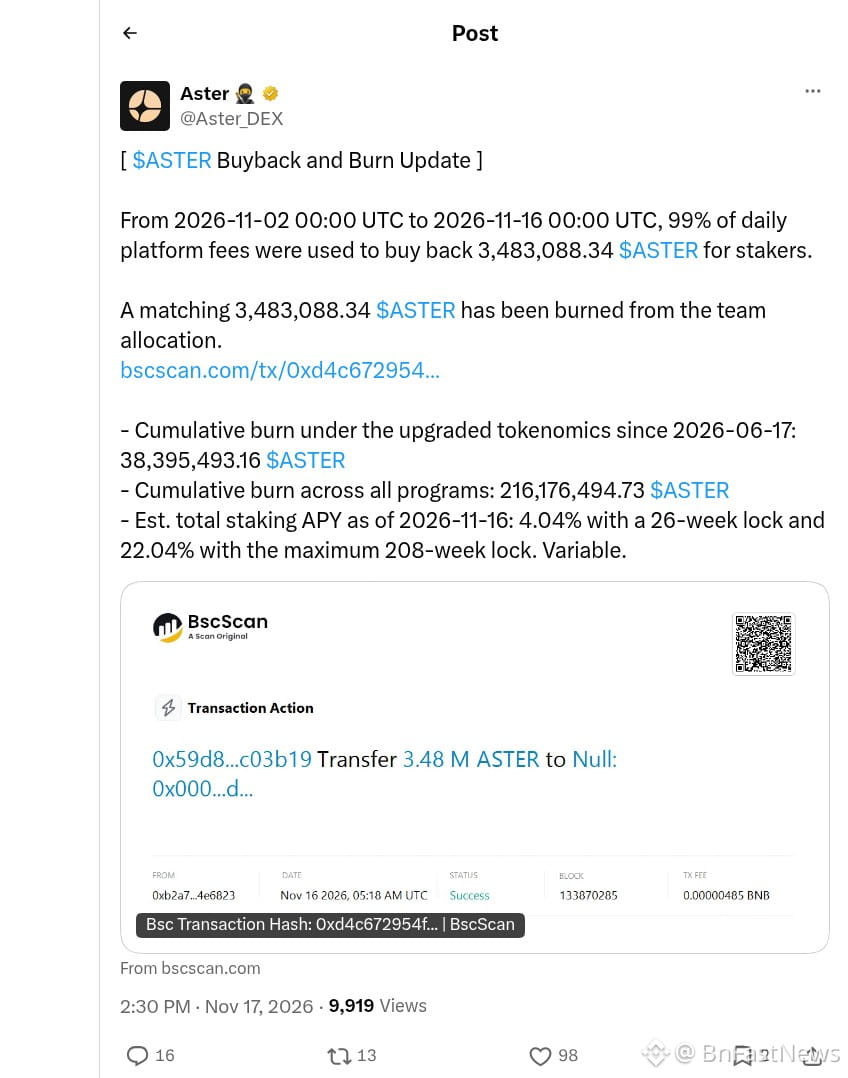
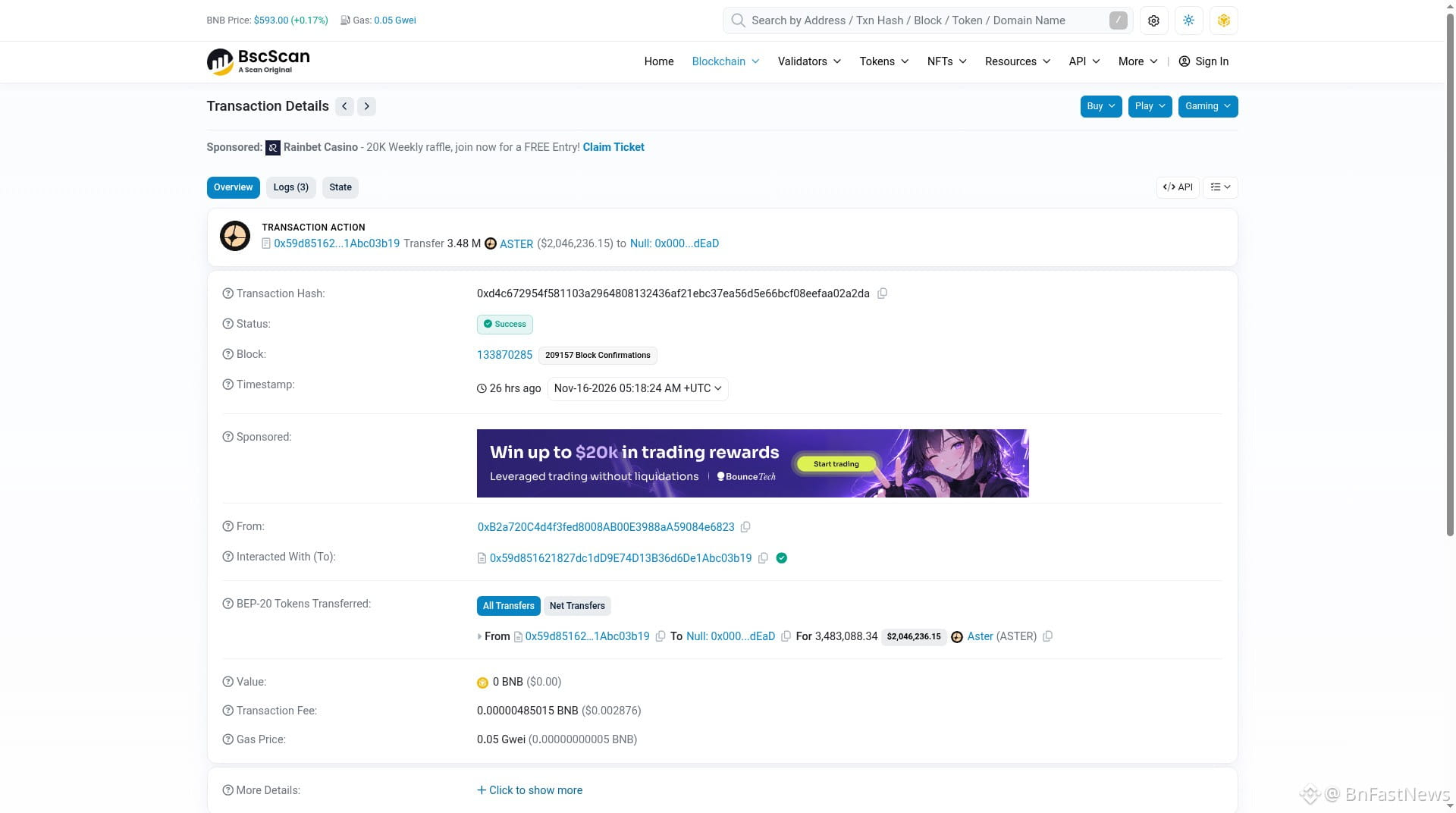
Just after 14:30, @Aster_DEX posted the latest buyback and burn update. The official window ran from November 2 to November 16 at 00:00 UTC: 99% of the platform's daily fees were used to buy back 3,483,088.34 $ASTER, which was distributed to stakers; an equal amount, 3,483,088.34 tokens, was burned from the team's allocation, verifiable on-chain.
The upgraded tokenomics have burned a cumulative 38,395,493.16 tokens since June 17; all plans combined total 216,176,494.73 tokens. One thing I care about is not adding these two figures together: the buyback goes to stakers, while the burn comes from the team's allocation. This round's buyback was higher than the 2,604,529.88 tokens disclosed officially for the previous round.
#ASTER #TokenBurn
Would you rather first verify the on-chain burn from the team's allocation, or are you more interested in whether the next buyback can stay at this level?
Just after 14:30, @Aster_DEX posted the latest buyback and burn update. The official window ran from November 2 to November 16 at 00:00 UTC: 99% of the platform's daily fees were used to buy back 3,483,088.34 $ASTER , which was distributed to stakers; an equal amount, 3,483,088.34 tokens, was burned from the team's allocation, verifiable on-chain.
The upgraded tokenomics have burned a cumulative 38,395,493.16 tokens since June 17; all plans combined total 216,176,494.73 tokens. One thing I care about is not adding these two figures together: the buyback goes to stakers, while the burn comes from the team's allocation. This round's buyback was higher than the 2,604,529.88 tokens disclosed officially for the previous round.
#ASTER #TokenBurn
Would you rather first verify the on-chain burn from the team's allocation, or are you more interested in whether the next buyback can stay at this level?
1k
·
--
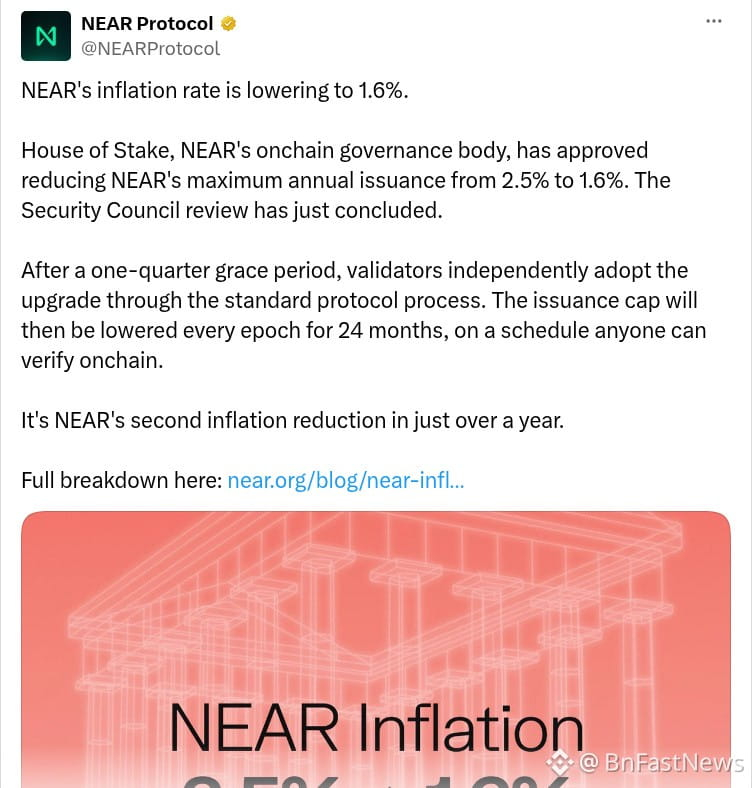
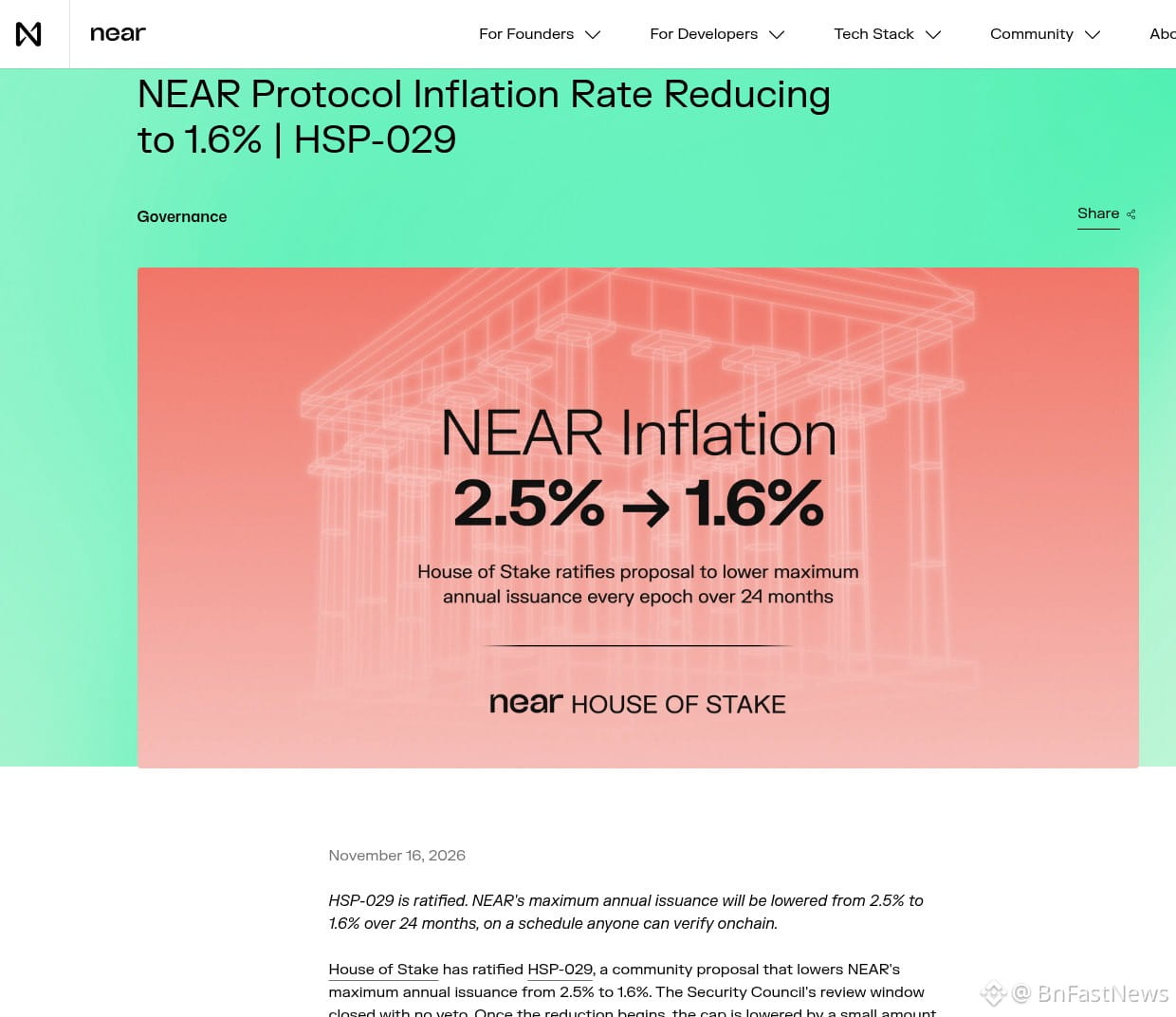
Early this morning, the official team finalized HSP-029: House of Stake approved lowering the annual issuance cap for $NEAR from 2.5% to 1.6%. The Security Council’s 14-day review window closed on November 16 with no veto. When voting ended on November 2, 99.96% of staked votes were in favor, with zero against.
The parameters won’t change right away. First, there will be a full quarter-long buffer period. Then validators will adopt the change through their regular upgrades, after which issuance will decrease a little each epoch until it reaches 1.6% in 24 months. The official team says this is the second reduction in just over a year, and the progress can be verified on-chain.
I’m more interested in what happens in the second half. The decision has been made, but whether it actually takes effect still depends on validators upgrading on schedule. Lower issuance means slower dilution, while staking rewards will also gradually decline. How those two sides balance out will depend on the participation rate at the time.
#NEAR
Which would you rather watch first: whether validators complete the upgrade on time, or whether the staking participation rate changes as a result?
423
·
--
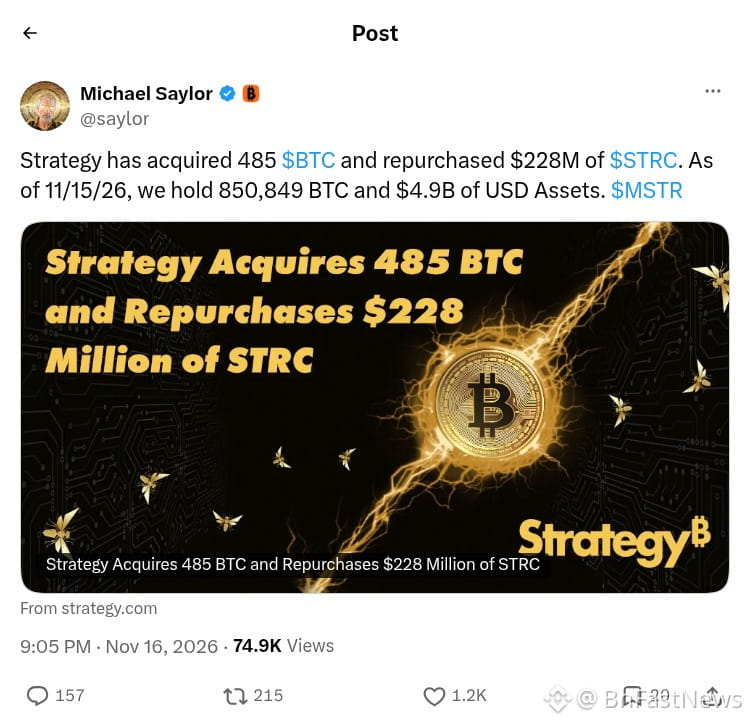
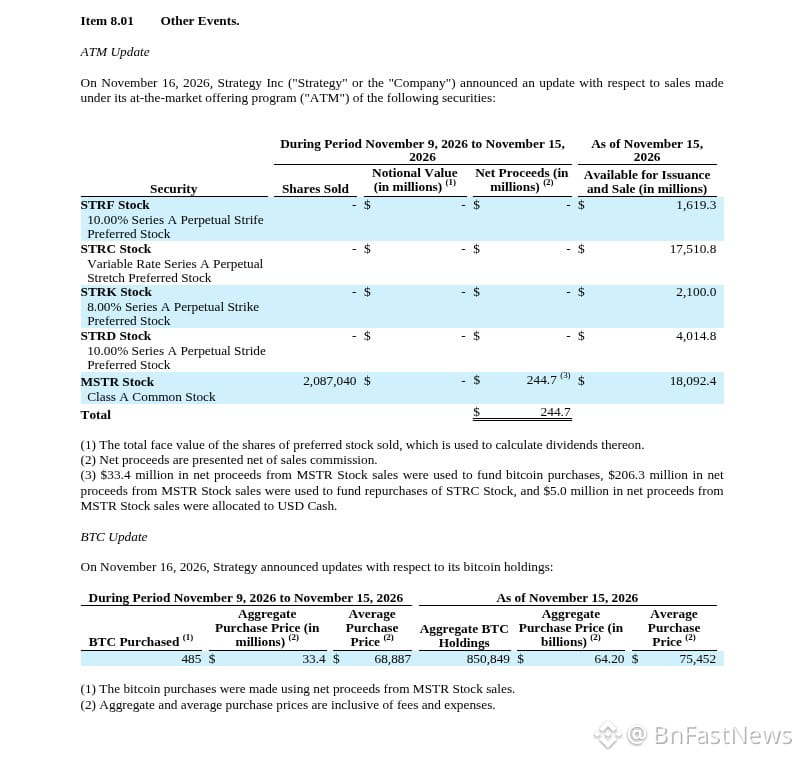
Tonight at 21:00, Strategy reported its regular weekly Bitcoin holdings update to regulators. During the week of November 9–15, it bought another 485 BTC for $33.4 million, at an average purchase price of $68,887. As of the 15th, its total holdings stood at 850,849 BTC, with a cumulative purchase cost of $64.20 billion and an average cost basis of $75,452.
That same week, its common-stock ATM offering raised net proceeds of $244.7 million. Only $33.4 million went toward buying Bitcoin; the other $206.3 million was used to repurchase preferred shares. It still has $4.75 billion in dollar reserves, plus $151.2 million in cash.
Looking at these proportions, Bitcoin purchases are continuing, but the bulk of the funds this week clearly went toward preferred-share buybacks and cash reserves. Do you think this is an intentional effort to manage the pace, or has the financing structure shifted its focus elsewhere?
#比特币 #机构持仓 $BTC
375
·
--
I just checked the timing against the official announcement, and it went live as promised: today at 16:35 (UTC+8), Binance Futures launched a USDT-margined perpetual contract for $TRX , with maximum leverage of 75x.
The announcement was posted on the 11th, and the timing was changed once in the meantime, pushing the launch from the originally scheduled date of the 11th to today. The parameters are quite specific: a minimum order size of 1 token, a minimum notional value of 5, funding settled every 8 hours, a funding rate cap and floor of around 0.4875%, 24/7 trading, and support for Multi-Assets Mode.
Spot trading was already available; this launch adds a futures market for the same asset. I’m more interested in how liquidity and funding rates behave in the first few hours after launch—the announcement also reserves the right to adjust the rates, leverage, and margin requirements based on risk. 75x is just the maximum; when it comes to the actual market, I think these figures are more worth watching than the leverage itself.
#TRX #BinanceFutures
Would you keep an eye on funding rates and liquidity in the first few hours after launch, or do you think adding a USDT-margined perpetual is routine and doesn’t need special attention?
226
·
--
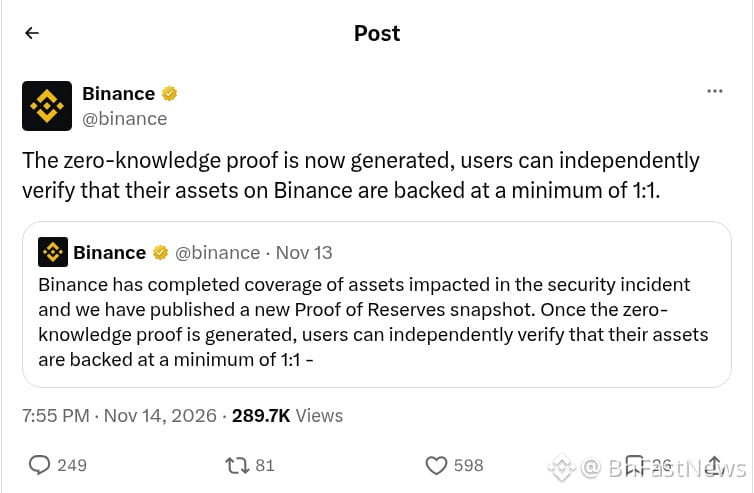
I opened the official post from the 14th confirming it again today. It said: The zero-knowledge proof has been generated, and users can verify for themselves whether the assets held on the platform are backed at a ratio of at least 1:1.
At 8 a.m. on the 12th (UTC+8), they first took a snapshot for a round of proof of reserves covering 198 tokens. At the time, they said the full proof would take about 40 to 50 hours because the computation was substantial. The post that actually announced “generated and independently verifiable” was published on the evening of the 14th.
I just checked the official proof-of-reserves page: the audit time matches 00:00 UTC on the 12th, the verification method is listed as zk-SNARKs, the Merkle root hash has been filled in, and you can click to view the report. Snapshots have been published before, but this time the proof data is on the page, so I think this is what makes it possible to verify things yourself. $BNB
#BNB #Proof of Reserves
Would you actually click through and verify a transaction yourself, or do you think the official announcement that it’s been generated is enough?

170
·
--
Partly True
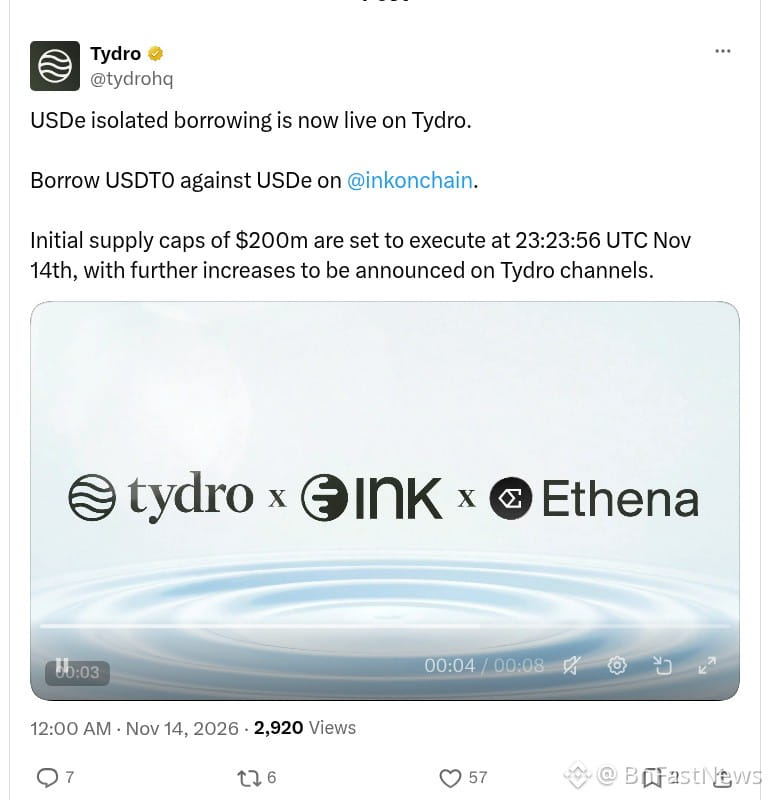
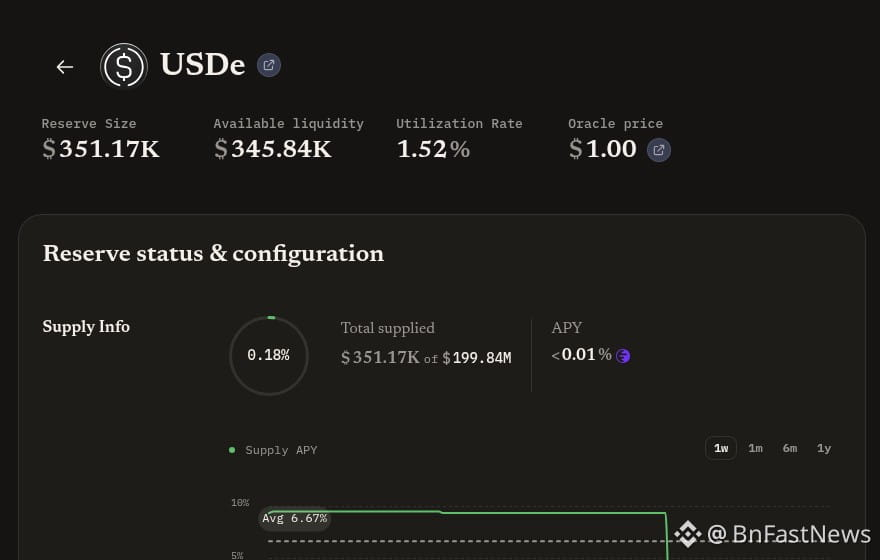
At 7:24 this morning, the officially announced $200 million deposit cap went into effect as scheduled. I just checked the official lending dashboard: the cap is now shown as approximately $199.84 million, with about $351,200 deposited so far. It hasn’t reached the limit, and the market hasn’t been paused.
They said on the 13th that isolated lending was available, allowing users to use this kind of stablecoin as collateral to borrow another USD stablecoin. The initial $200 million cap would take effect at this time today, and any subsequent increases would be announced separately through official channels.
I think deposits can only really start flowing in once the cap is active. But only a small fraction has been used so far. Whether deposits trickle in or quickly approach the limit depends on actual deposits—you can’t judge by the announcement alone. $ENA
#ENA #Stablecoin
How much of this nearly $200 million cap do you think will be used up in the next few days?
2.4k
·
--
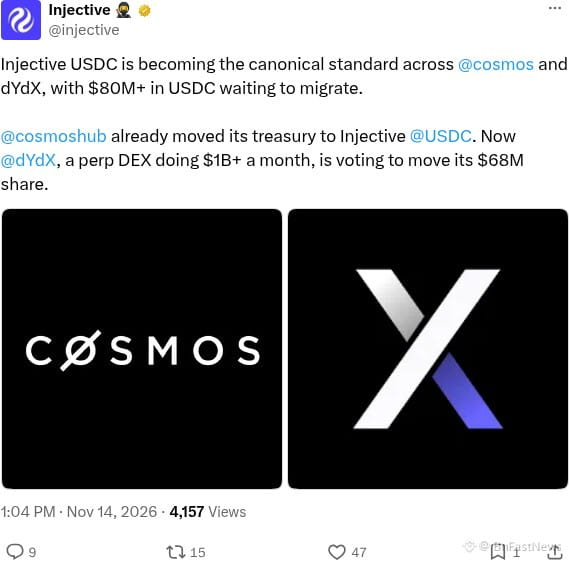
The team posted a new update this afternoon. I read through the original: their dollar stablecoin is becoming a settlement standard across several ecosystems, and more than $80 million is still waiting to migrate. The vault of a leading cross-chain network has already migrated; another perpetuals platform with monthly trading volume of over $1 billion is voting on whether to migrate its $68 million share as well.
My take is that if settlement consolidates in one place, cross-chain transfers will probably route through here more often. But the vote hasn’t concluded yet, and whether the funds actually finish migrating is what we’ll need to watch next. $INJ
#INJ #Stablecoin
Do you care more about the convenience of using a single settlement hub, or are you worried that everyone will end up using the same chain?
445
·
--
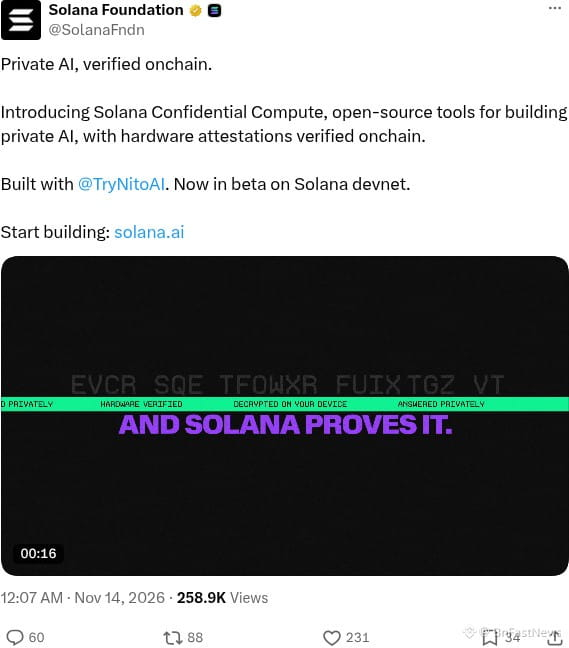
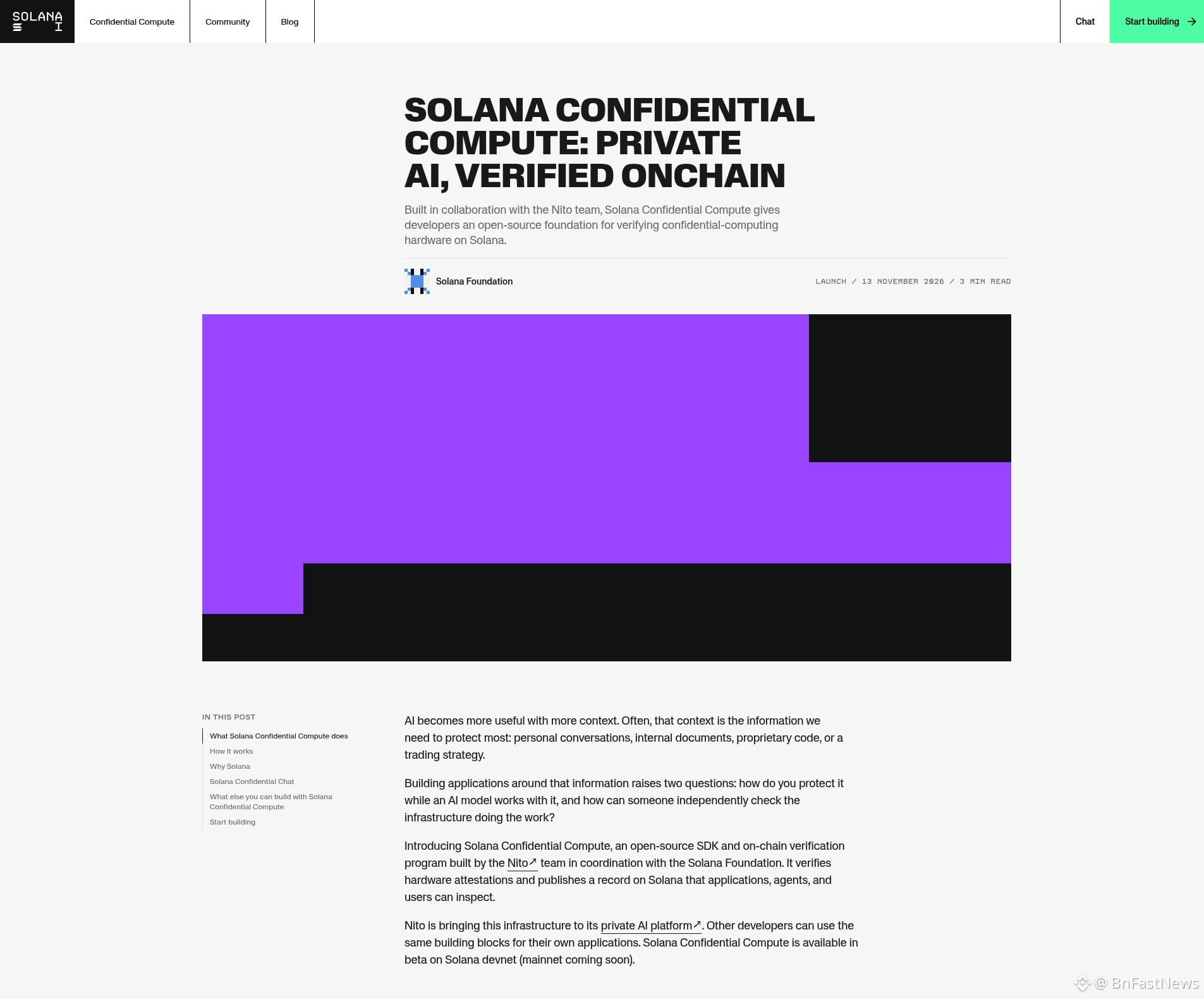
I carefully read the foundation’s post from early this morning: Solana Confidential Compute is now open for testing. The official explanation is quite specific—a set of open-source tools for verifying on-chain whether “this computation ran on encrypted hardware,” so an application can decide whether to trust the result. The computation itself still happens off-chain; only a verifiable record is left on-chain.
They’ve also clearly spelled out the limitations: the verifier is currently available only on devnet, the security audit isn’t finished, and mainnet will have to wait until the audit is complete. For now, they recommend using it only for development. The website also offers a private chat you can try directly, without connecting a wallet. According to the instructions, this chat hasn’t yet gone through the on-chain verifier; the browser verifies the hardware attestation itself.
My take is that building something that can be independently verified is more meaningful than rushing to claim a large-scale launch. I’ll keep the two caveats—devnet and unaudited—in mind. $SOL
#SOL #PrivacyComputing
Would you try the private chat on the website first, or would you rather wait until mainnet launches and the audit is complete?
250
·
--
Verified
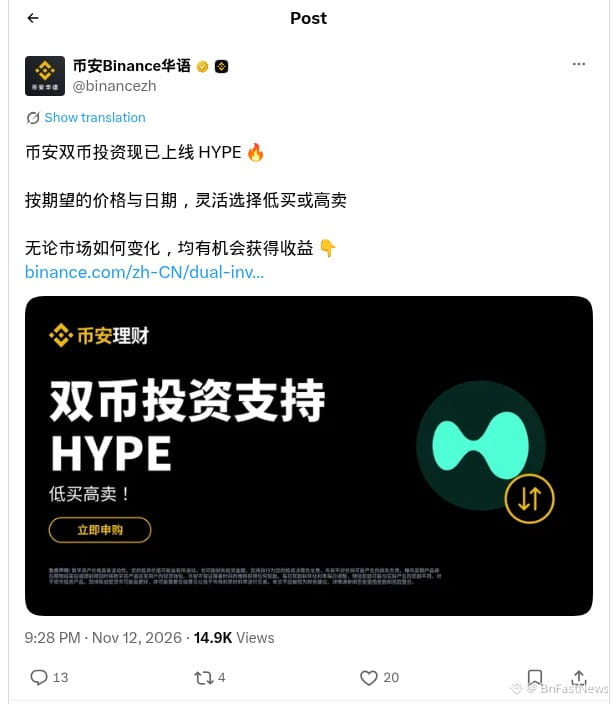
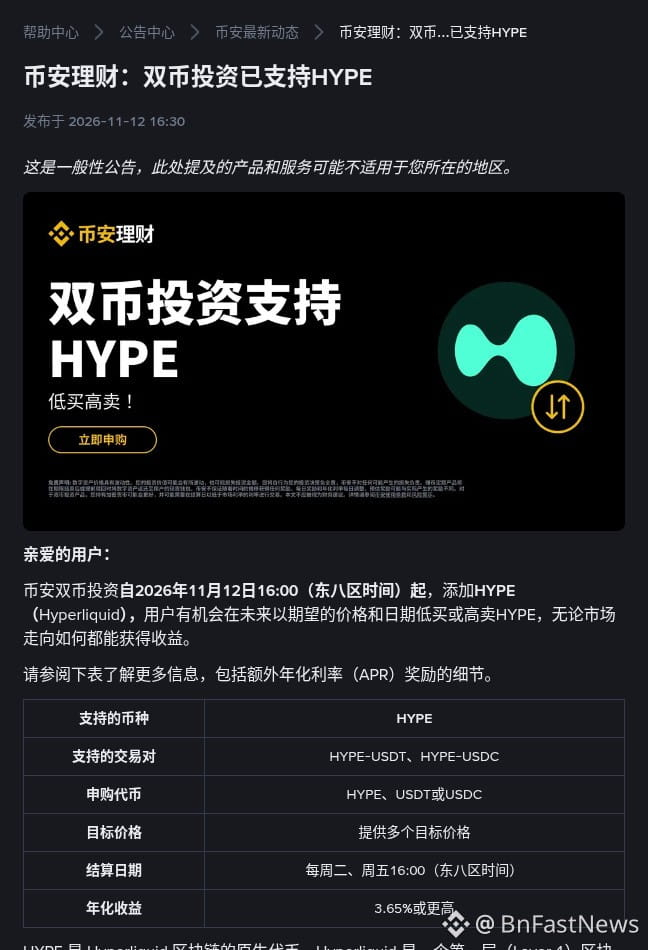
I just checked the Earn page: Binance Dual Investment added $HYPE yesterday at 16:00 (UTC+8). This was announced jointly by the official account and in an announcement—not a market rumor.
The announcement is quite specific: you can subscribe using it or stablecoins, with settlements scheduled for 16:00 every Tuesday and Friday. The stated annualized rate is 3.65% or higher, and several target prices are available. It also notes upfront that the product may not be available in all regions.
My impression is that this is more like integrating an asset that’s already on the platform into an existing Earn product, rather than announcing a new listing. Dual Investment itself involves agreeing on a price and date in advance, then settling at maturity; it’s not the same as spot trading. I’ll first check whether it’s available where I am before deciding whether to use it.
#HYPE #Dual Investment
If you already hold it, would you put some of it into Dual Investment, or do you feel the terms and settlement method aren’t right for you and would rather leave it as is?
2.9k
·
--
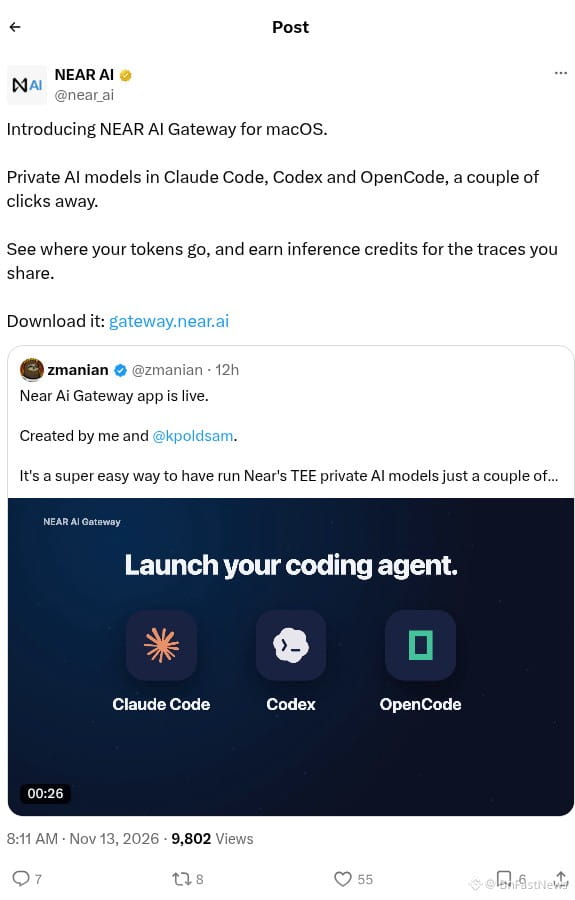
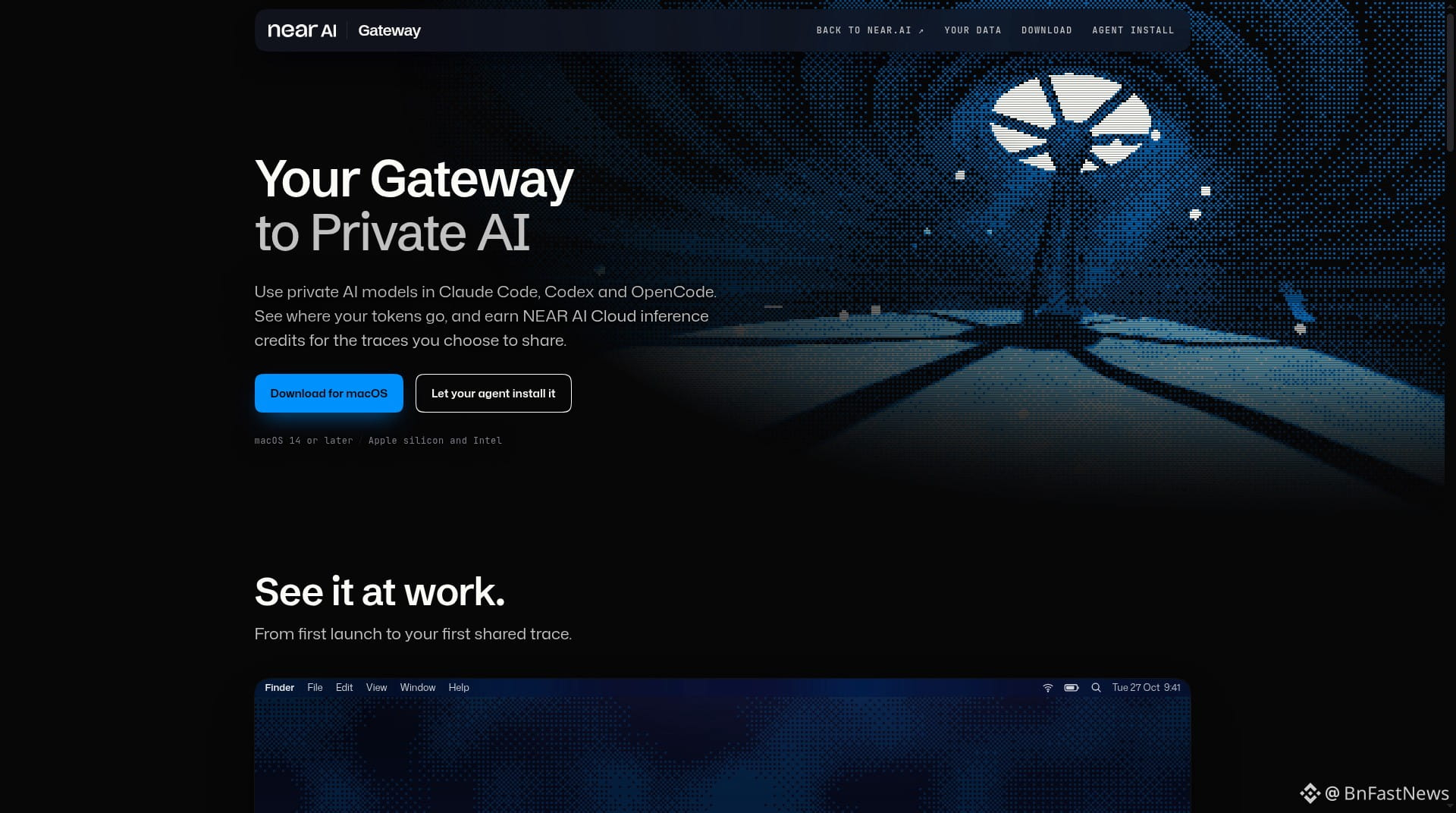
The official team released the macOS version of NEAR AI Gateway this morning, and the download page is now live. It says macOS 14 or later is required.
They’ve spelled it out clearly: you can connect private models to Claude Code, Codex, and OpenCode in just a few steps. Your records are anonymized on your computer first, and only the ones you approve will be shared. You can also earn inference credits for NEAR AI Cloud by sharing those records, which can be used to offset usage costs. $NEAR
I’m most curious about two things next. First, will developers actually install it and connect it to the tools they use every day? Second, will people keep sharing records in exchange for credits, or try it once and drop it?
#NEAR #PrivacyAI
If you already use these coding tools, would you install this to keep your data local, or wait to see if the credits can bring down the cost?
10
·
--
Verified
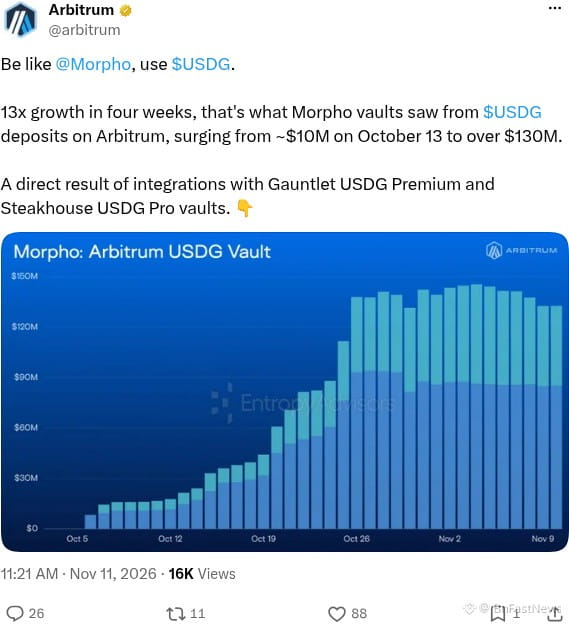
I checked the official updates this morning and saw some pretty solid numbers from Arbitrum overnight: USDG deposits in the stablecoin vault of a leading on-chain lending protocol went from about $10 million on October 13 to over $130 million in four weeks—a 13x increase.
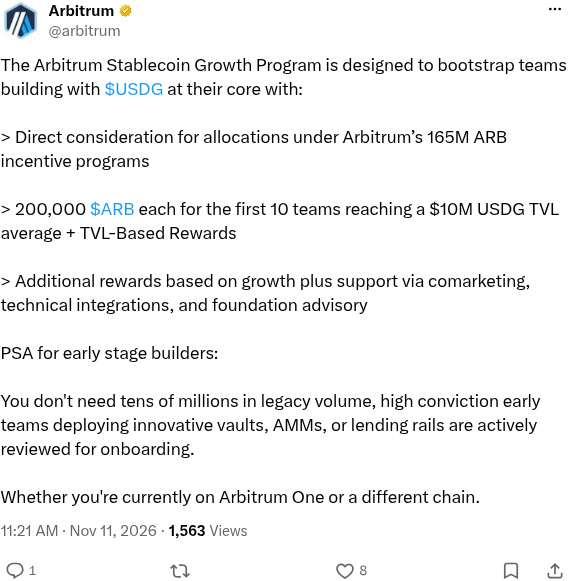
The context is their stablecoin growth program, which launched in mid-October: teams using USDG as their primary stablecoin can each receive an additional 200,000 $ARB if they’re among the first 10 to reach an average USDG TVL of $10 million. The total prize pool is 2 million tokens, and they can also compete for a share of the 165 million tokens in the incentive program.
My take: L2s competing for stablecoin deposits is more promising than simply subsidizing transaction volume. Money needs to stay on-chain for lending and yield opportunities to follow. But what I really want to see is how much of that $130 million will still be there after the rewards are distributed. Hopefully it isn’t just hot money chasing subsidies and leaving once they’ve been claimed. The token price hasn’t really responded, either—it’s still down around 5% over the past 24 hours.
#稳定币 #On-chain yield
How much of the stablecoin deposits attracted by token rewards do you think will stick around?
1
1.1k
·
--
Verified
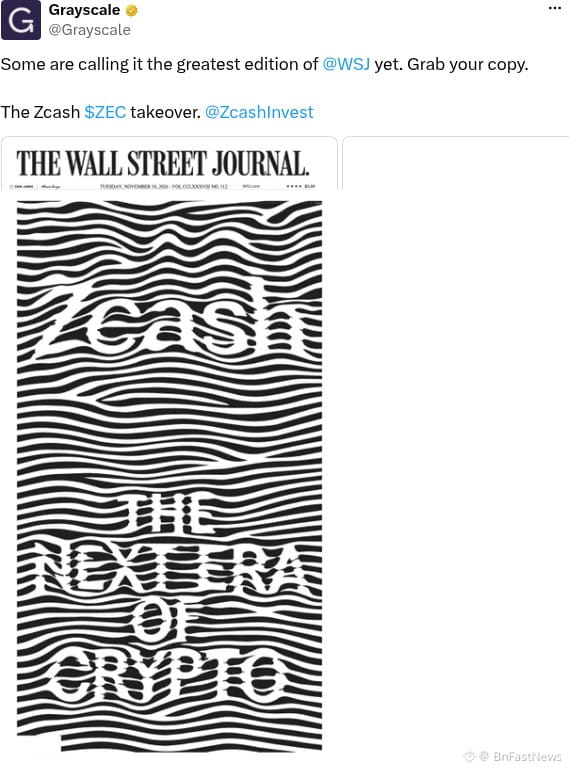
Grayscale just gave The Wall Street Journal’s cover a zebra-stripe makeover, and the press release and official social media posts are out: its new investor education platform is live. The nationwide advertising campaign kicked off with the newspaper cover and will later expand to outdoor, digital, and streaming channels.
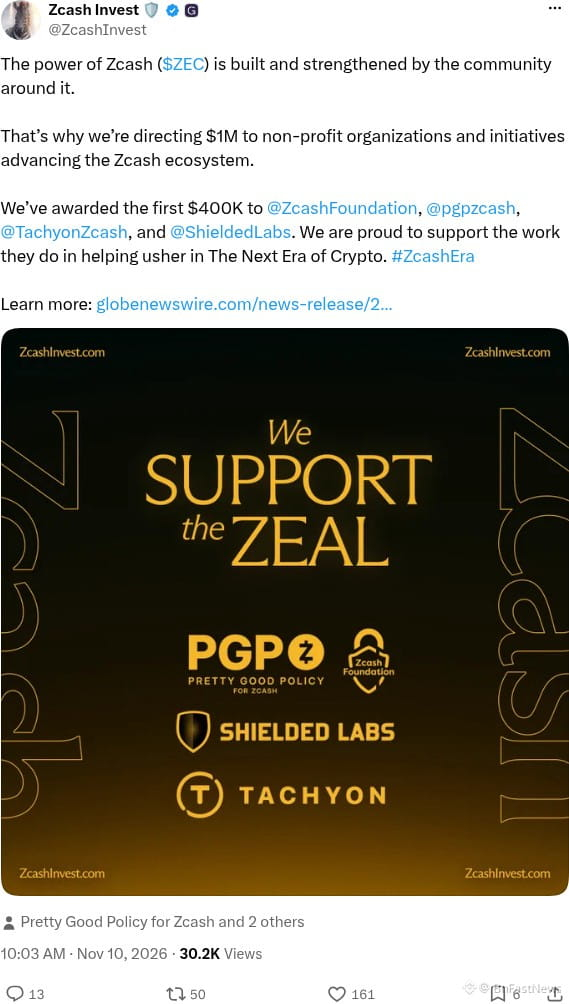
The financial details are fairly specific. They plan to use 100% of the sponsorship fees received by the publicly traded fund in its first year to develop, promote, and educate people about the network. They also plan to donate $1 million to nonprofits in the ecosystem. The first $400,000 has already been disbursed—$100,000 each to four organizations—and the foundation has publicly expressed its thanks.
The press release also says this is a voluntary commitment that can be changed or discontinued. The ads are already running in the newspaper; I’m more interested in whether the funds will continue to be disbursed on schedule.
Do you think “all first-year fees go back to the network” is currently more about building awareness, or will it only count as support for the network once the subsequent grants are actually paid out?
$ZEC
#灰度 #ecosystem grants
594
·
--
Verified
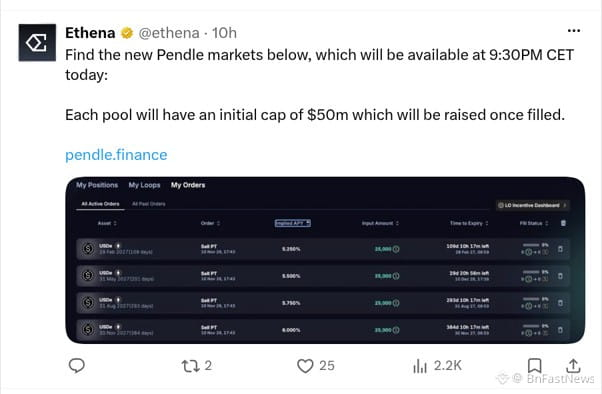
Last night $ENA officially confirmed: fixed-term markets are now live, with terms ranging from 3 to 12 months, and they’re ready to use.
They made two points in particular. First, these markets aren’t sustained by token incentives. Second, for related pools operated by third parties, the official team can now take half of the fees that would otherwise go to the platform treasury. Each pool starts with a cap of $50 million, which will be raised once it’s reached.
What I’m most interested in is what happens next on both fronts: whether the caps will fill up quickly, and whether this revenue-sharing model can generate steady income rather than remain just an announcement.
What do you think: does “no incentives, just fee sharing” mean the product can already stand on its own, or does it only count once the caps are filled?
#Ethena #FixedTerm
1
1
3.4k
·
--
Verified
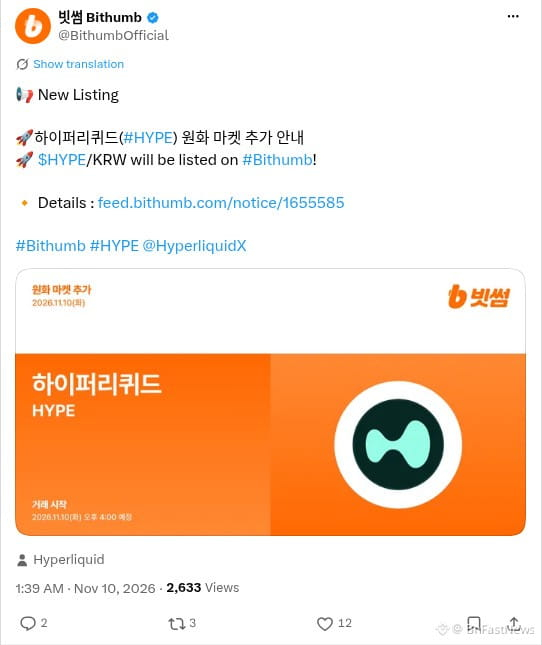
This afternoon, South Korea’s two major exchanges both opened KRW trading channels for $HYPE .
Upbit officially announced that its KRW market would open today at 15:00 KST, along with two trading pairs. Bithumb also announced the launch of its KRW market on the same day, and trading began shortly afterward. Deposits on both platforms are supported only via HyperEVM; other networks are not accepted.
I’m more interested in what happens to trading volume afterward. A KRW channel can make it easier for local funds to participate, but this kind of development is usually anticipated in advance, and a lively opening doesn’t necessarily mean buying demand will last.
Do you think the two exchanges opening on the same day will mainly redirect existing demand, or could it really bring in a new wave of buyers?
#HYPE #Listing
2
1.8k
·
--
Verified
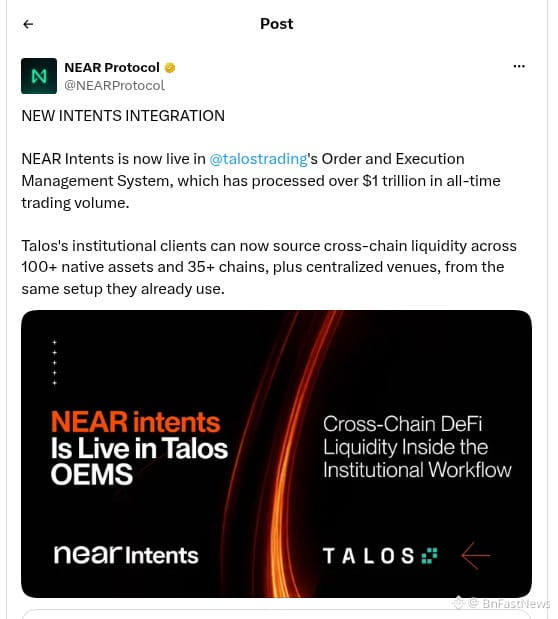
$NEAR posted major news last night: NEAR Intents has been integrated into the institutional trading system Talos and officially launched. The announcement also stated that the system has processed more than $1 trillion in cumulative trading volume.
More practically, institutional clients can now access over 100 assets, more than 35 chains, and cross-chain liquidity from centralized venues directly through their existing order workflows—without having to build a separate setup.
My take is simple: institutions use systems they’ve already refined through daily use. Being able to integrate into those systems makes it more likely they’ll actually place trades through it. The integration itself may not immediately show up in the market; what matters is how many real orders eventually flow through this route.
Do you think being able to access cross-chain liquidity without changing workflows will actually bring in institutional orders, or does it only count once we see the trading volume?
#NEAR #InstitutionalEntry
2.4k
·
--
Verified
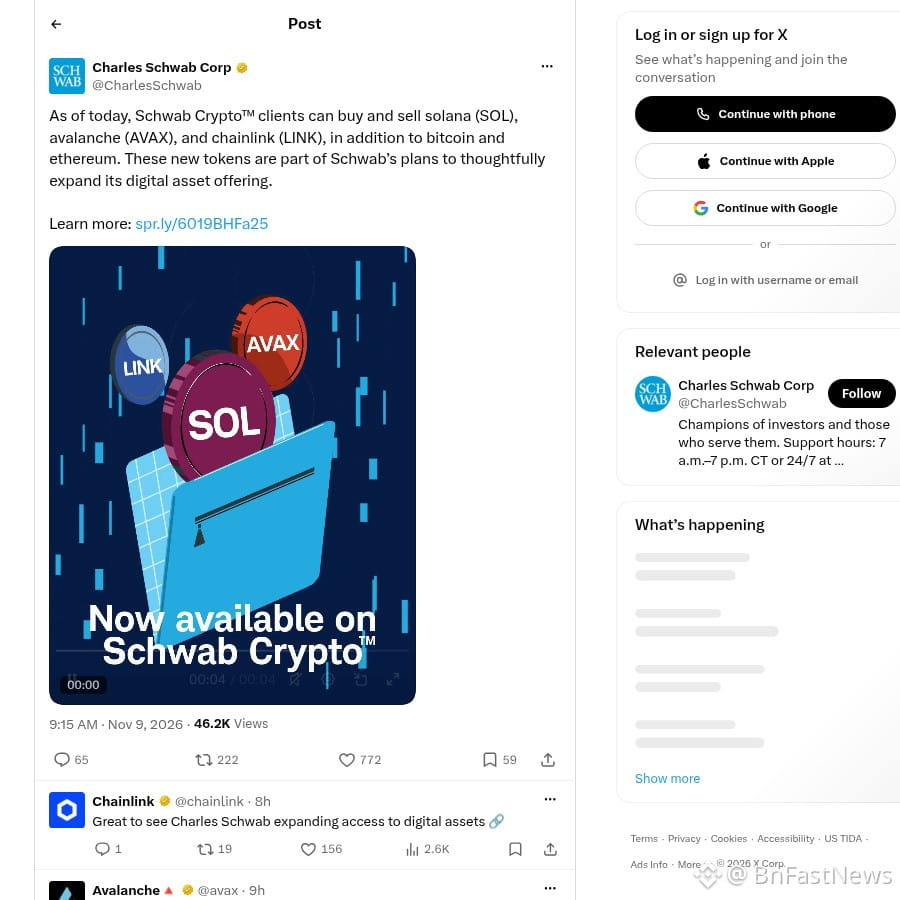
Charles Schwab just officially announced: Starting today, you can buy and sell $SOL directly through a Schwab Crypto account.
This isn’t a small broker dipping its toes in the water. It’s a veteran brokerage firm that manages tens of trillions of dollars in client assets officially adding Solana to its list of tradable assets. Until now, it was mainly Bitcoin and Ethereum. This new option removes one hurdle for users of traditional brokerage accounts: having to open an exchange account and deposit funds first.
My personal take: This kind of access may not immediately send short-term sentiment soaring, but it shows that the channels for compliant funds to flow in and out are widening. Now we’ll have to see how much trading actually takes place and whether more brokerages follow suit.
Would you feel more comfortable getting started if you could buy directly through a traditional brokerage account, or do you find exchanges more convenient?
#Solana #TradFi
322
·
--
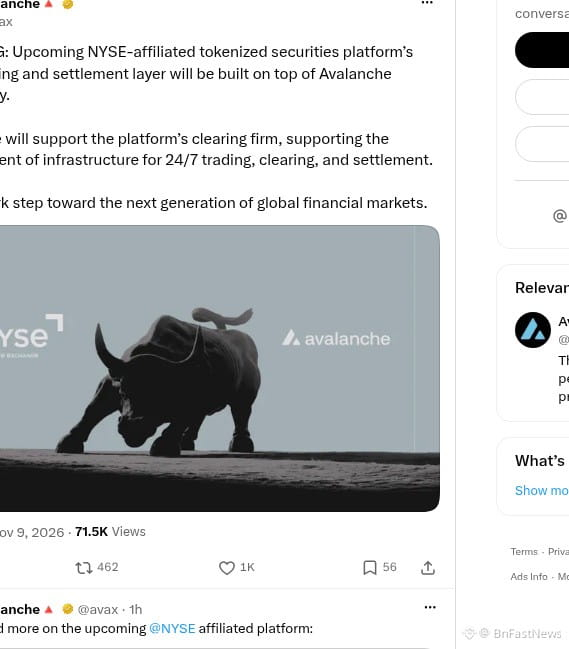
Just announced: A tokenized securities platform affiliated with the New York Stock Exchange will build its core clearing and settlement layer on Avalanche technology.
They were very specific—it will support the platform’s clearing agency and advance infrastructure for 24/7 trading, clearing, and settlement. The clearing and settlement layer has been explicitly tied to this chain, which carries more weight than an ordinary partnership announcement.
This is the part I care about most: a major traditional exchange moving its most critical clearing and settlement operations toward a public blockchain is far more substantial than empty hype. $AVAX moved along with the news, but the announcement itself is the main story.
Do you think this kind of “exchange-grade clearing on-chain” already counts as a milestone, or does it only count once it actually goes live?
#Avalanche #Tokenization
243
·
--
Verified
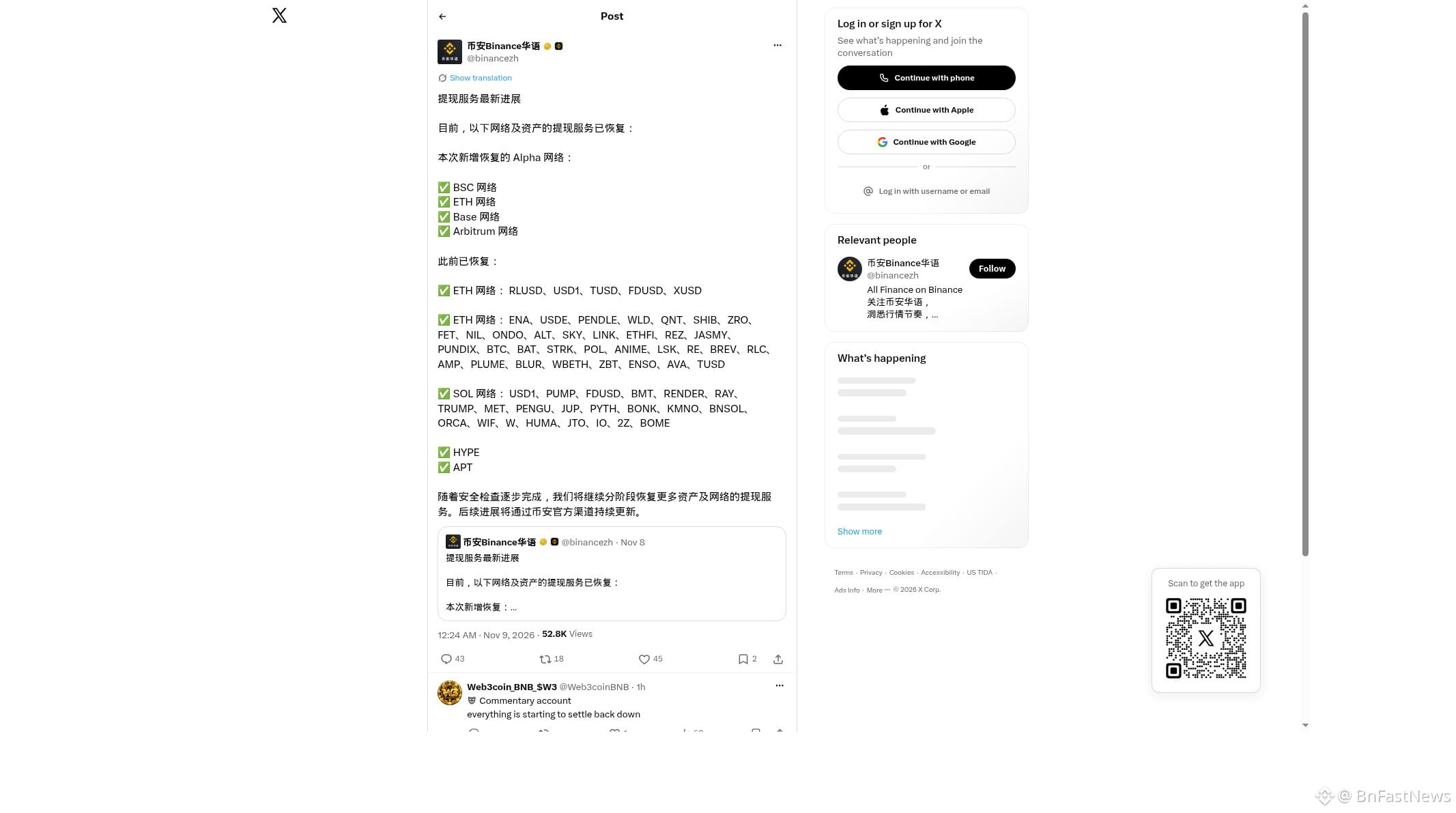
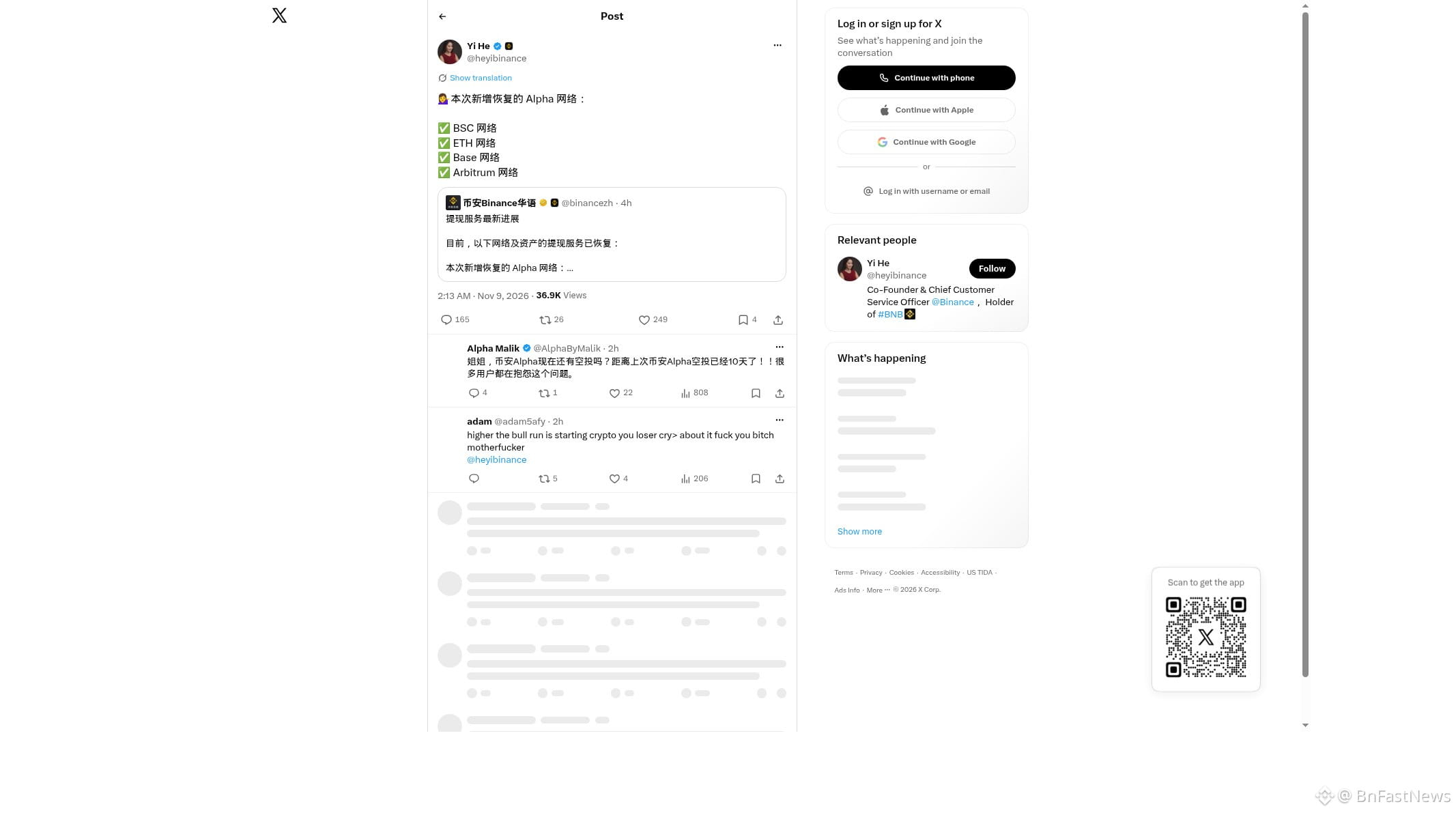
Binance just officially updated: Withdrawals have reopened on several Alpha-related mainnets—this time specifically including BSC, along with a few other commonly used chains.
This isn’t just vague talk about “gradual recovery”; it specifically lists which networks are available for withdrawals again. Security checks are still being carried out in phases, and more networks will be restored later.
I care more about this pace of “opening the channels little by little”—it feels more solid than slogans. $BNB
Do you think restoring withdrawals on Alpha mainnets first makes a real difference to people’s day-to-day use?
#提现恢复 #BinanceAlpha
2
2.3k
·
--
Verified
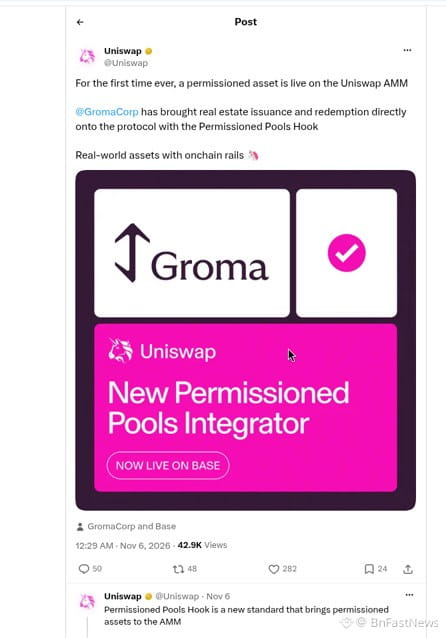
Uniswap officially posted the day before yesterday: for the first time, a “permissioned” asset was actually running on their automated market maker.
They specifically said that real estate issuance and redemption had been directly connected to a permissioned pool Hook on the protocol. Groma also wrote around the same time that verified investors can subscribe for and redeem shares in the trust at net asset value, with the price not determined by buyers and sellers trading against each other in the pool.
The barrier is clear: wallets have to be verified first, so ordinary users can’t just click in and swap. Real estate already has an accredited-investor requirement, and the permissioned pool essentially moves that gate onto the blockchain.
Personally, I’m more interested in two things: whether similar assets will follow, and whether the market sees this as a product milestone or just a weekend announcement.
Do you think permissioned pools like this are bringing real-world assets on-chain in a meaningful way, or will they dilute the spirit of open trading?
$UNI
#Uniswap #PermissionedPool

1
2.6k
Log in to explore more content
Join global crypto users on Binance Square
⚡️ Get latest and useful information about crypto.
💬 Trusted by the world’s largest crypto exchange.
👍 Discover real insights from verified creators.
Email / Phone number
Trending Topics
WillMarketsStageAThanksgivingReliefRally?
51,160 views
883 Discussing
Was $55K the bottom for $BTC ? Honestly... i don't think so 😅
Bitcoin has recovered above $61K after crashing to $55,130... and now everyone is talking about a possible Thanksgiving relief rally.
But buddies... look at the bigger picture.
Bitcoin is still down nearly 30% from $87K, $ETH is struggling around $1,727 after touching $1,538 and $ZEC is barely recovering near $784 after that brutal selloff.
A few green candles won't suddenly fix all this damage 🥲
Now... could we see a Thanksgiving rally? Definitely possible 😁
Especially if buyers keep defending $60K and BTC manages to push back toward $64K-$65K.
But a relief rally and a real market reversal are TWO different things.
I still think another dip below $55K is possible if this recovery loses strength.
That's why i am not chasing this bounce... just accumulating slowly, keeping USDT ready for lower entries.
If we get a proper recovery, good. If we get another dump, i wanna have cash ready 💪🏻
What do you think... Thanksgiving rally or another trap before the next dump? 👀
#WillMarketsStageAThanksgivingReliefRally?
ParvezMayar
·18 Likes
·8.5k views
WillOctCorePCEShiftFedHikeExpectations?
9,976 views
230 Discussing
BessentSoftensStanceOnHuang’sNvidiaReturn
34,753 views
600 Discussing