
KainCripto
440 Posts

KainCripto
Report
Block User
Comentarios y análisis criptográficos.
Todos los comentarios emitidos en este perfil son información y no deben considerarse como consejos de inversión.
36 Following
204 Followers
323 Liked
Posts
Portfolio
All
Quotes
Videos
·
--
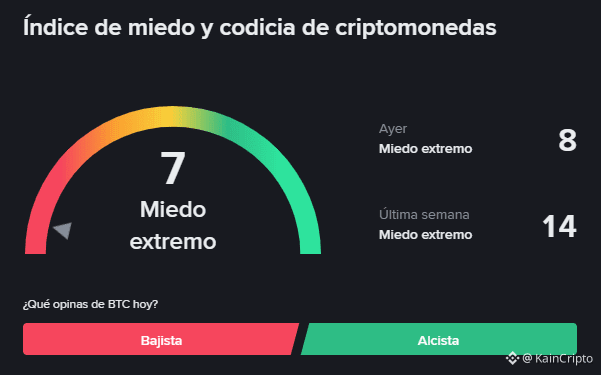
Fear is running rampant, and there are reasons to take a chance and go for a trend reversal. I prefer to take the risk right now.
$BTC $XRP
Fear is running rampant, and there are reasons to take a chance and go for a trend reversal. I prefer to take the risk right now.
$BTC $XRP
$BTC $XRP
180
·
--
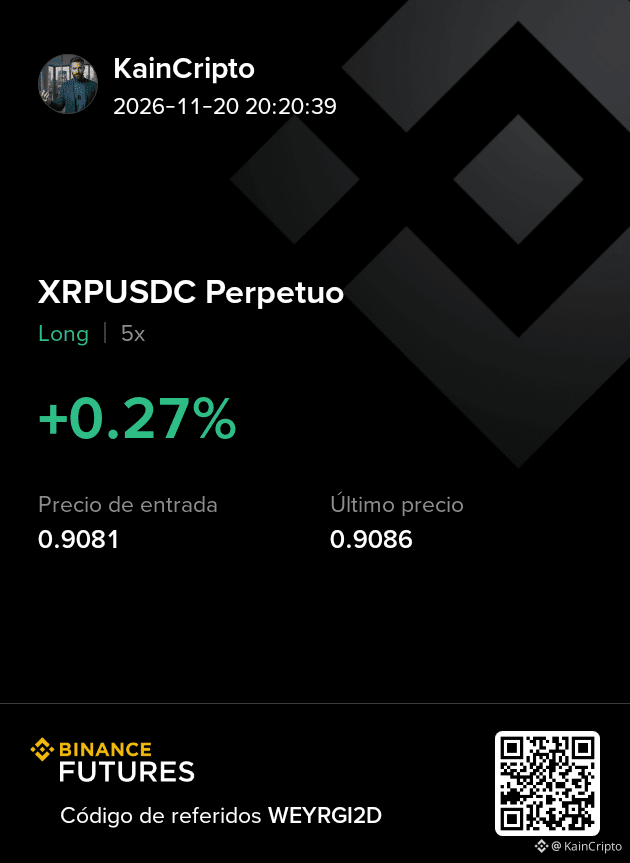
Honestly, I think it's time to start going up. I can't hold myself back.
$XRP $BTC
Honestly, I think it's time to start going up. I can't hold myself back.
$XRP $BTC
$XRP $BTC
4
824
·
--
It might reach 0.19, so it's time to get into this short on $MMT
It might reach 0.19, so it's time to get into this short on $MMT
98
·
--
The decline of $EVAA begins. Always remember to use a stop-loss, and happy profits.
The decline of $EVAA begins. Always remember to use a stop-loss, and happy profits.
175
·
--
Someone made this chart, predicting the price of $XRP , and the first part has been correct. Save it, and we'll see if the rest of the prediction comes true.
Someone made this chart, predicting the price of $XRP , and the first part has been correct. Save it, and we'll see if the rest of the prediction comes true.
482
·
--
💰🚀 Anthropic raises $107.3 billion and reaches a valuation of $1.5 trillion
Anthropic priced its shares at $83 each, above the expected range of $70 to $78. The IPO—the first public sale of a company’s shares—raised $81.3 billion, while a private placement added another $26 billion, according to Bloomberg.
In total, the company and its shareholders raised $107.3 billion. Demand reportedly exceeded the available shares by nearly 7 times, and the public offering surpassed SpaceX’s previous record of $75 billion, not including a possible upsizing.
The shares will trade on the Nasdaq under the ticker ANT. The offering price implies a valuation of nearly $1.5 trillion on a fully diluted basis, meaning it also counts securities that could be issued through options or other rights.
$ANTHROPIC

1
782
·
--
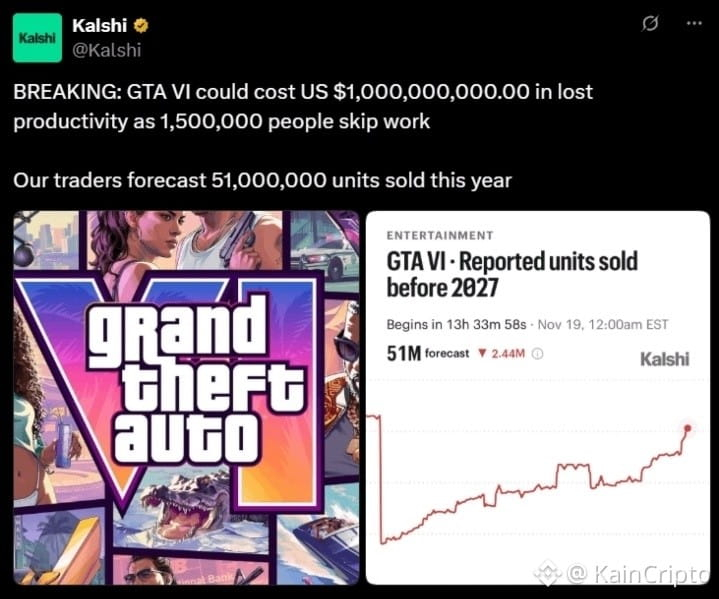
51 million copies sold this year alone, 1,000 million in productivity losses due to the absence of more than 1.5 million employees from work.
$TTWO and this is just the beginning.
51 million copies sold this year alone, 1,000 million in productivity losses due to the absence of more than 1.5 million employees from work.
$TTWO and this is just the beginning.
$TTWO and this is just the beginning.
2.1k
·
--
From Centralized Fragility to Distributed Redundancy: What Does This Episode Really Reveal? Part II
Settlement schedules and operational continuity: The traditional financial system still carries legacy settlement windows and dependencies on centralized maintenance. Distributed networks operate with continuous availability (24/7/365), eliminating the risk that a technical failure during business hours could bring the payments chain to a halt.
Real-time transparency versus crisis opacity: During the critical hours of the banking blackout, a lack of visibility into the source of the problem fueled rumors of systemic collapse on external monitoring platforms. In infrastructure based on distributed ledgers, network status, transaction congestion, and transaction confirmations can be audited in real time by any participant, reducing the information asymmetry that often triggers financial panic.
Toward an inevitable convergence $XRP
However, this episode does not represent the end of traditional banking or an automatic victory for the crypto market, whose own volatility and dependence on macroeconomic liquidity were exposed during those same days. Rather, it points toward a convergence of infrastructures. $USDC
With regulatory frameworks such as the GENIUS Act paving the way for the supervised issuance of payment stablecoins in the United States, major financial institutions now have operational and commercial incentives to adopt interoperable tokenized rails. The future of the payments system does not seem to lie in choosing between the institutional strength of banks and the technical resilience of blockchain, but in integrating both: regulated institutions settling value over distributed networks that do not depend on a single server to keep the financial system running.
We are on the cusp of a shift from traditional banking to banking through blockchain.
151
·
--
From Centralized Fragility to Distributed Redundancy: What Does This Episode Really Reveal?
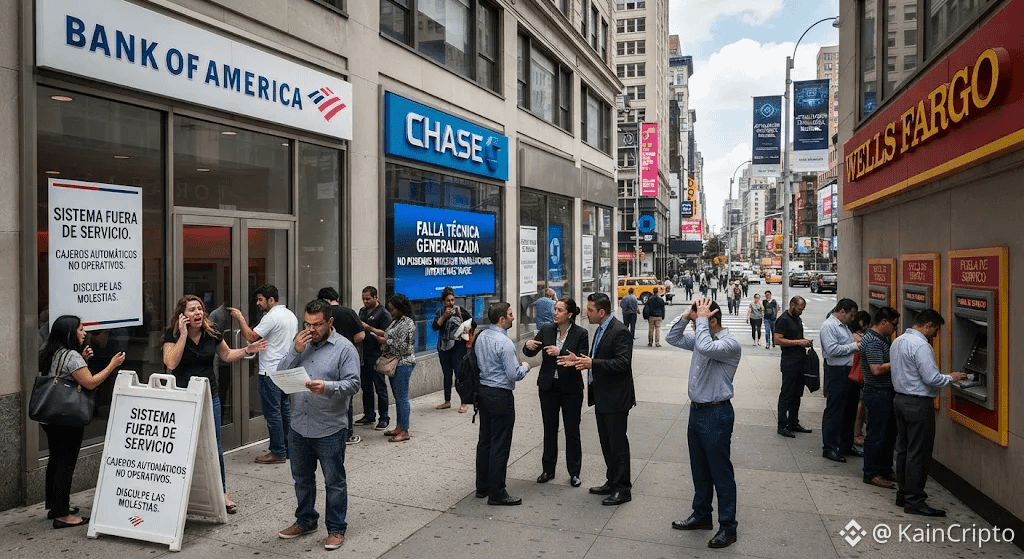
The incident on November 16 was not an insolvency crisis, a classic bank run, or even a sophisticated cyberattack. It was something far more revealing about modern financial architecture: a single point of failure. The fact that a software error in the internal hardware of a single institution—however systemically important it may be, like JPMorgan Chase—managed to slow down or block customer transactions at competing banks shows that the digitalization of traditional banking was built on highly centralized and interdependent rails.
When this architecture is compared with public blockchain networks and digital asset infrastructure, the contrast is no longer merely ideological; it becomes a matter of operational risk engineering:
Single point of failure vs. node redundancy: In traditional banking, validating a balance or authorizing a transfer goes through private central servers (silos). If the master server or interbank clearinghouse experiences a code failure, the user's liquidity is effectively frozen, even if their funds are backed. By contrast, decentralized networks such as Bitcoin or Ethereum operate through thousands of independent nodes distributed globally; the failure of one or several operators does not stop block validation or users' access to their assets through self-custody. $XRP $BTC

219
·
--
The decline in the crypto market is caused by an attack by the US and Israel on Iranian territory; there is even talk of American soldiers on Iranian soil.
Trump is going all in and making markets wobble.
Oil is rising and crypto assets are falling.
$CL $BZ $BTC
The decline in the crypto market is caused by an attack by the US and Israel on Iranian territory; there is even talk of American soldiers on Iranian soil.
Trump is going all in and making markets wobble.
Oil is rising and crypto assets are falling.
$CL $BZ $BTC
Trump is going all in and making markets wobble.
Oil is rising and crypto assets are falling.
$CL $BZ $BTC

146
·
--
Binance is back with the button game, and you can win up to 30,000 $USDC in $ANTHROPIC
the game starts when there are 50,000 participants. Don't miss this opportunity [leer más](https://www.binance.com/game/button/AnthropicButtonGame?ref=GRO_100038835_JAQLV®isterChannel=GRO-BTN-AnthropicButtonGame&utm_source=share)
Binance is back with the button game, and you can win up to 30,000 $USDC in $ANTHROPIC
the game starts when there are 50,000 participants. Don't miss this opportunity leer más
the game starts when there are 50,000 participants. Don't miss this opportunity leer más

1
·
--
Reports of attacks and reactions
· Alleged attack: Media outlets such as the Times of India cited reports that the U.S. launched an airstrike against Sirik in Iran’s southern Hormozgan Province, near the Strait of Hormuz, allegedly targeting a communications tower or military facilities.
· Iran’s retaliation: Iran’s Islamic Revolutionary Guard Corps (IRGC) claimed to have attacked and destroyed a U.S. early-warning radar in Bahrain in retaliation, calling it a “serious warning.”
· Trump’s statements: U.S. President Trump said on the 12th that he would not hesitate to use military force against Iran, even stating that he could do so “right now.” He also revealed that, at the request of countries such as Saudi Arabia, the U.S. had temporarily put plans for large-scale attacks on hold.
The crypto market has suffered a significant price decline in the last few minutes $BTC
$ETH $SOL
131
·
--
How are those profits coming along $KGEN
How are those profits coming along $KGEN
KainCripto
·
--
The short drop is coming to $KGEN
29
·
--
Nvidia CEO Jensen Huang will resign following reports that he had an affair with a fellow executive at the AI giant, and after admitting to having had another affair with a woman who, according to U.S. intelligence agencies, is a Chinese spy. $NVDAB
Nvidia CEO Jensen Huang will resign following reports that he had an affair with a fellow executive at the AI giant, and after admitting to having had another affair with a woman who, according to U.S. intelligence agencies, is a Chinese spy. $NVDAB

150
·
--
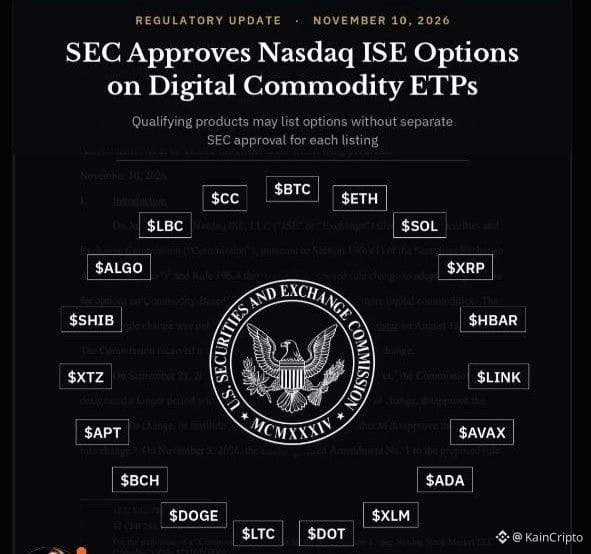
🔥 IMPORTANT 🔥
THE SEC OPENED THE DOOR TO OPTIONS ON ETFs FOR 19 CRYPTOCURRENCIES, AND THERE'S NO NEED TO ASK PERMISSION FOR EACH ONE
BTC, ETH, $SOL , XRP, $ADA , LINK, AVAX, HBAR, DOT, DOGE, and 9 more qualify, recognized as "digital commodities."
Requirement: the crypto must have averaged at least $700 million in trading volume per day over the past year.
Options are the tool big funds use to hedge and trade.
More tools mean more institutional money flowing into crypto.
Which of these 19 do you think benefits the most?
75
·
--
Cardano founder Charles Hoskinson CONFIRMS that $NIGHT can “absolutely” surpass $ADA
“If Midnight grows, I think it will make Cardano grow considerably, because it will bring a lot of new people to Cardano.”
“I can’t imagine a scenario in which Midnight grows while Cardano stagnates. I think a ‘rising tide’ effect takes place.”
“If Midnight grows, I think it will make Cardano grow considerably, because it will bring a lot of new people to Cardano.”
“I can’t imagine a scenario in which Midnight grows while Cardano stagnates. I think a ‘rising tide’ effect takes place.”

1.2k
·
--
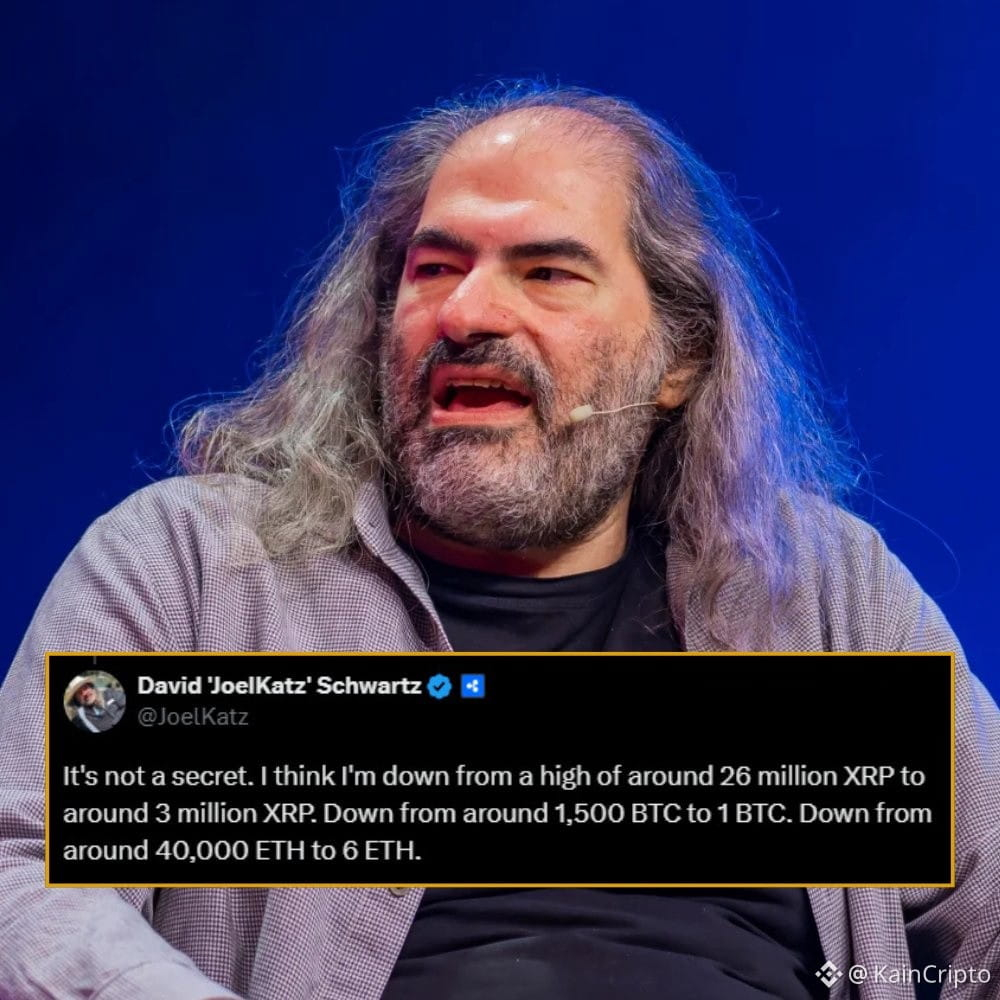
Of 1,500 bitcoins, he has one left. $BTC
David Schwartz, co-creator of XRP, went from 26 million $XRP to about 3. From 40,000 $ETH to 6.
Little by little, following a rule he agreed on with his wife: sell a portion at each all-time high.
Anyone can buy. Almost nobody sells by a rule.
Of 1,500 bitcoins, he has one left. $BTC
David Schwartz, co-creator of XRP, went from 26 million $XRP to about 3. From 40,000 $ETH to 6.
Little by little, following a rule he agreed on with his wife: sell a portion at each all-time high.
Anyone can buy. Almost nobody sells by a rule.
David Schwartz, co-creator of XRP, went from 26 million $XRP to about 3. From 40,000 $ETH to 6.
Little by little, following a rule he agreed on with his wife: sell a portion at each all-time high.
Anyone can buy. Almost nobody sells by a rule.
6
13
12.5k
·
--
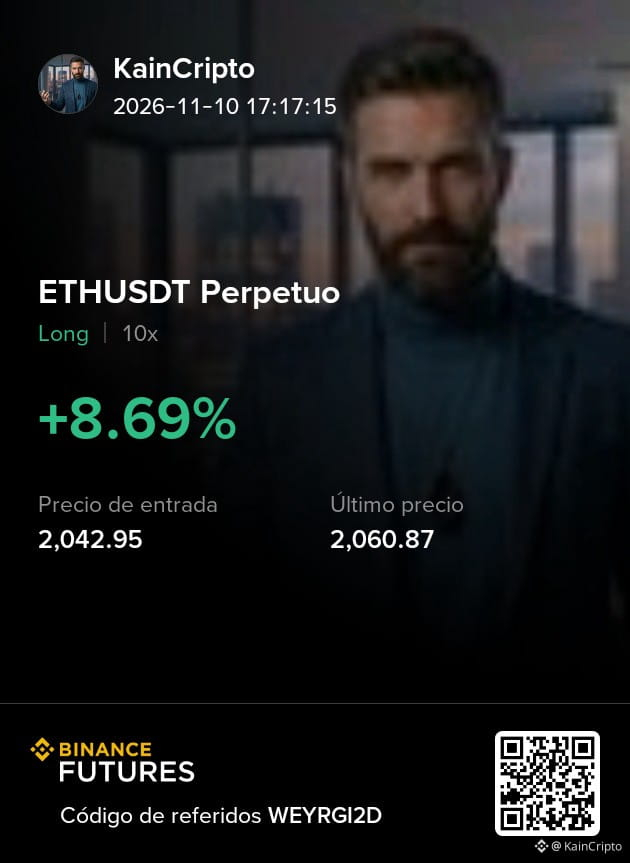
There are opportunities in almost all of them; today I'm going with the classics $ETH
There are opportunities in almost all of them; today I'm going with the classics $ETH
99
·
--
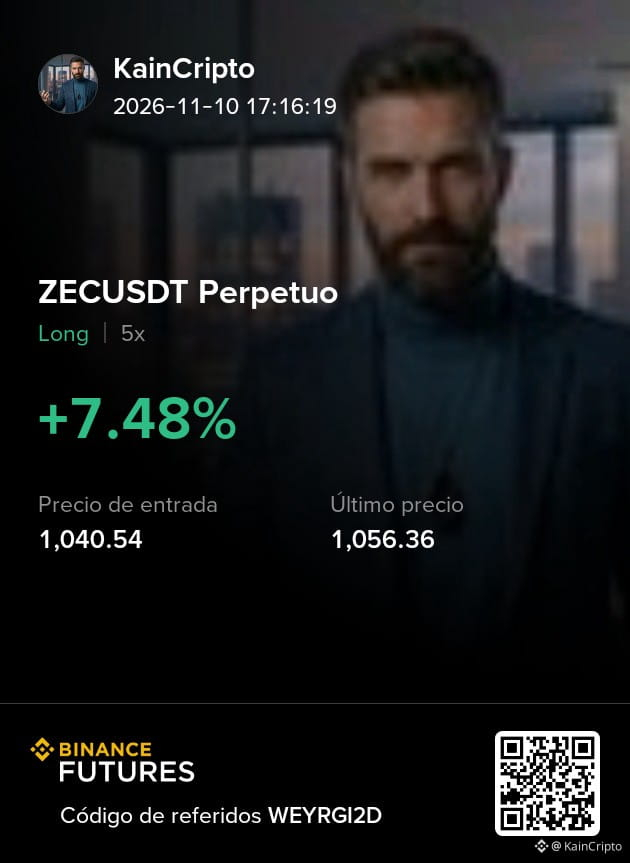
Looks like they'll go up a little. Let's go with $ZEC
Looks like they'll go up a little. Let's go with $ZEC
763
Log in to explore more content
Join global crypto users on Binance Square
⚡️ Get latest and useful information about crypto.
💬 Trusted by the world’s largest crypto exchange.
👍 Discover real insights from verified creators.
Email / Phone number
Trending Topics
NvidiaLoses$2.7TrillionInMonthAndAHalf
8,880 views
89 Discussing
Nvidia’s $2.7 Trillion Wipeout: When Narrative Overrides Numbers 📉
Crypto With Faisal
·5 Likes
·3.8k views
CanBTCReboundAfterFallingBelow60K?
647,612 views
2,756 Discussing
GlobalStocksFaceLongestLosingStreakSince2023
230,023 views
1,876 Discussing