
DevRajCrypto
708 Posts

DevRajCrypto
Report
Block User
🚀 Crypto Educator | Market Intelligence & On-Chain Insights |
📊 BTC • Altcoins • Crypto Trends | Making the market easier to understand |
Open Trade
Occasional Trader
3.5 Years
20 Following
4.7K+ Followers
5.0K+ Liked
Posts
Portfolio
All
Quotes
Videos
PINNED
·
--
Verified
#binancelaunchesbinanceintelligence
Binance just made one shift that I think traders should pay attention to. 👀
I’ve spent a lot of time watching how people trade on Binance. The biggest problem for most retail traders usually isn’t a lack of charts. It’s the gap between information, interpretation and action.
That’s why Binance Intelligence is interesting to me.
Binance has now brought Binance AI, AI Pro and Agent OS under one AI layer. Binance AI is designed to personalize market information, while AI Pro can turn plain-language ideas into visual trading workflows. Agent OS takes it further by giving developers infrastructure to build agents around Binance capabilities.
But here’s my bigger takeaway:
The real competition may no longer be between exchanges. It may be between trading interfaces.
Today, traders open charts → search for information → form a thesis → build a strategy → monitor it.
Tomorrow, the interface could become:
Idea → AI → strategy → execution → monitoring.
That is a much bigger shift than simply putting a chatbot inside an exchange.
And there’s already a signal worth watching: Binance says Agent OS has surpassed 280,000 daily calls since its August launch.
But I’m not automatically bullish on $BNB because of this.
The real test is adoption.
If millions of users start using AI to research, build and monitor trades, Binance could potentially capture much more activity inside its ecosystem.
If AI simply becomes another unused feature, the narrative means very little.
My question: will AI become the new trading interface, or will experienced traders still prefer to make the final call themselves? 👇
$BNB #BinanceIntelligence #AI #crypto #BinanceSquare

9
2
44
45.1k
·
--
# Bitcoin Below $60K: The Bounce Is Not Yet a Sign of Recovery
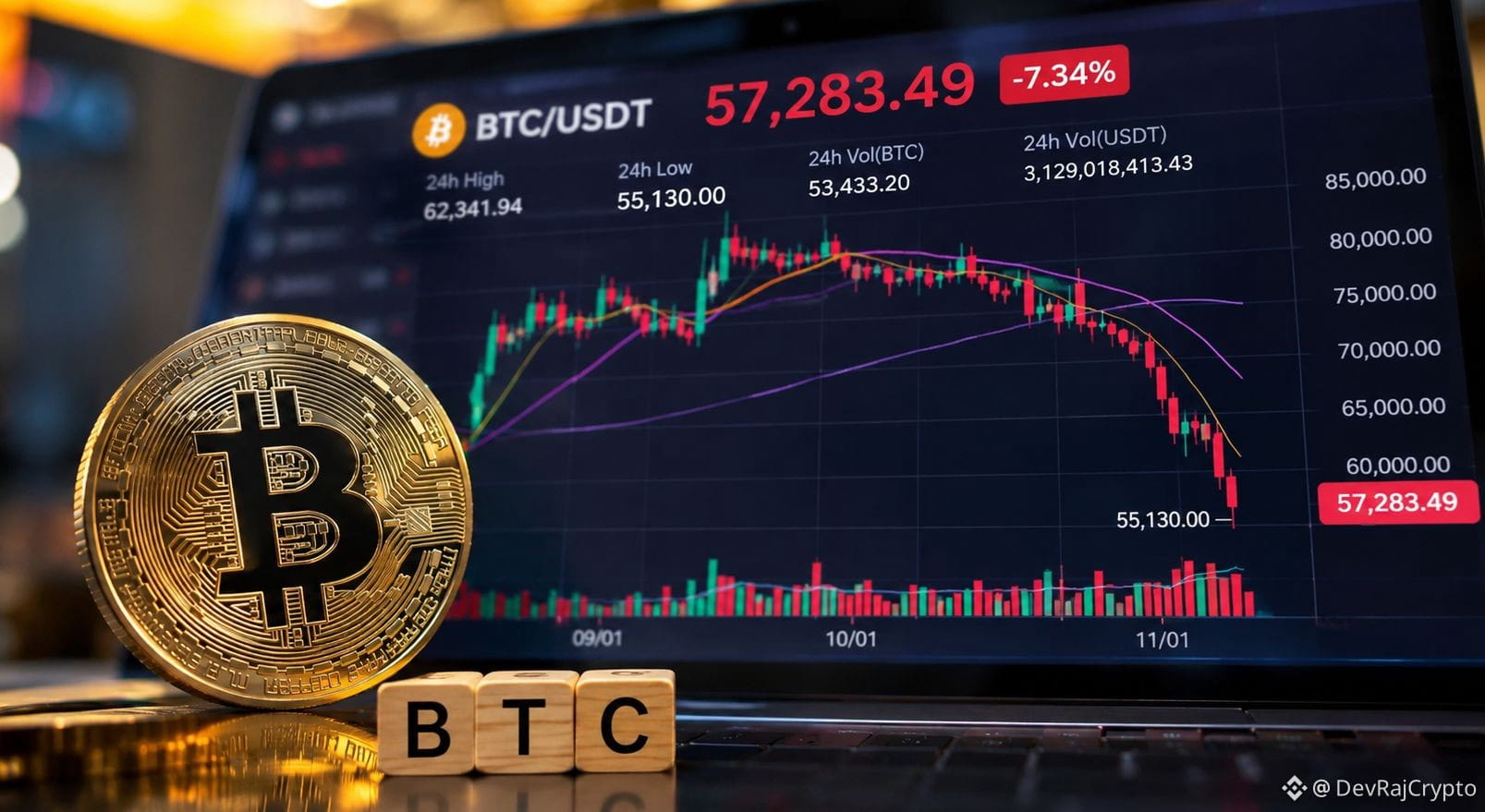
Bitcoin has recovered from its intraday low, but the broader chart still raises an important question: are buyers returning, or is the market simply pausing after an aggressive sell-off?
The November 21 BTC/USDT daily chart shows Bitcoin at $57,283, down 7.34% over 24 hours. It touched $55,130 before recovering.
Three signals deserve closer attention.
1. The trend remains under pressure.
BTC is trading below its seven-day moving average of $62,353, with the longer moving averages also positioned above the current price. The sequence of lower highs and lower lows since October suggests that sellers still have the advantage.
2. Higher volume does not automatically mean capitulation.
Trading activity has increased during the recent decline. But volume alone cannot tell us whether investors are accumulating, sellers are exiting or leveraged positions are being unwound. That distinction requires additional market data.
3. Reclaiming $60K is only an initial test.
A stronger recovery would require sustained buying, higher lows and eventually a reclaim of important moving averages. Without these developments, a bounce could remain temporary.
For traders, the practical implication is to distinguish between a lower entry price and a confirmed change in market direction. Watch price structure, buying participation and volume rather than making decisions around one psychological level.
My assessment: the bearish structure remains intact, but it is not irreversible.
Bitcoin does not need to bounce to prove the sellers are losing control. It needs buyers to demonstrate that they can take control back.
$BTC #bitcoin #CryptoMarket
1
206
·
--
#canbtcreboundafterfallingbelow60k?
# Bitcoin Below $60K: Where Is the Real Demand?
Bitcoin's sharp decline is exposing a critical weakness: buyers have yet to demonstrate enough conviction to absorb sustained selling pressure.
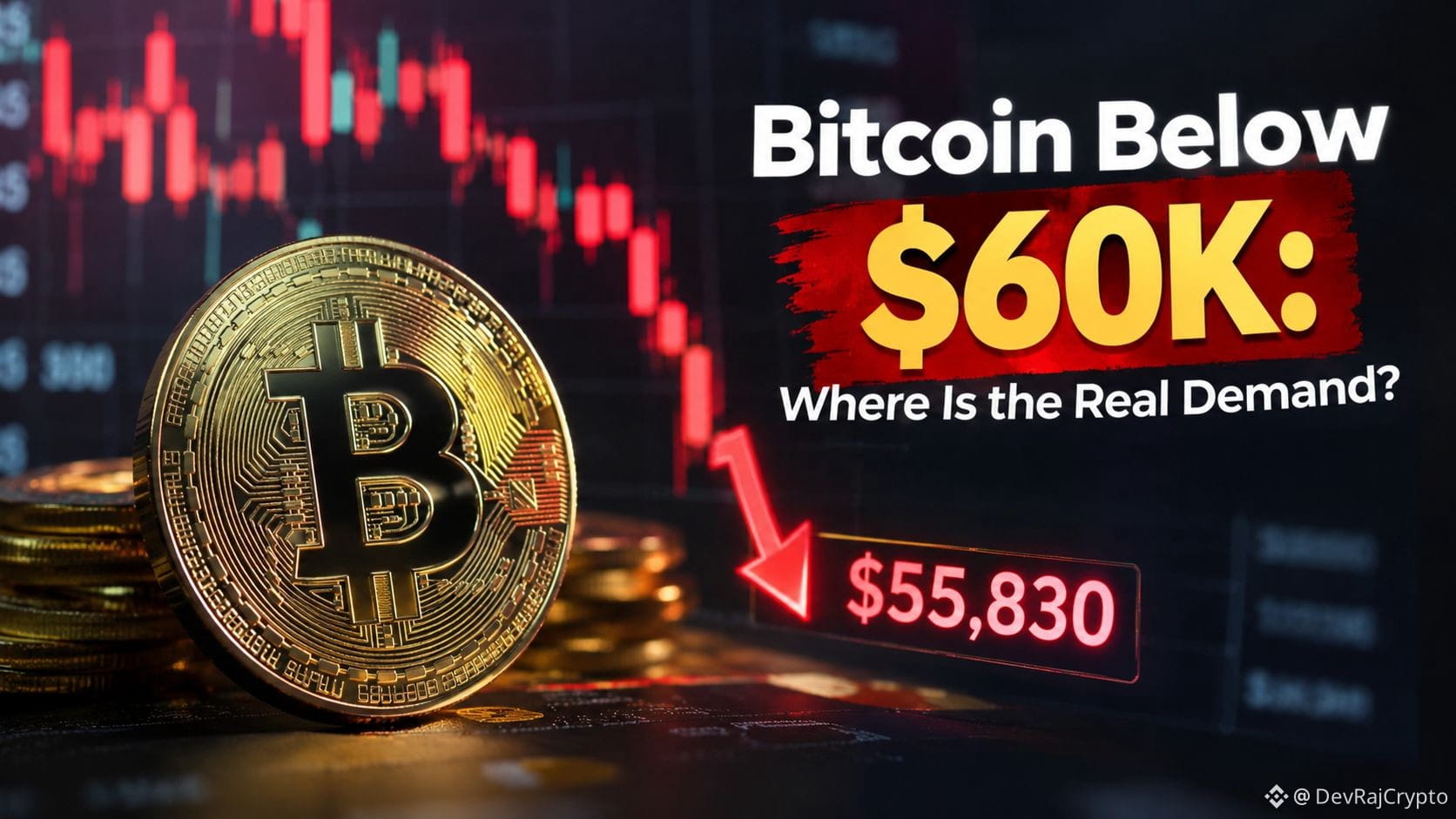
On November 20, BTC fell to $55,830, its lowest level since September 2024, according to Reuters.
ETF flows reveal the pressure. On November 19, US spot Bitcoin ETFs recorded $582.3 million in net outflows. BlackRock's IBIT lost $541.1 million, while Morgan Stanley's MSBT recorded $49.6 million in inflows.
This divergence matters. One fund's outflows do not establish that institutional interest in Bitcoin has disappeared. However, the overall figures show substantial selling pressure.
The broader market adds another concern. On November 20, the Nasdaq fell 5.3% and the S&P 500 declined 3.7%, reflecting a wider retreat from risk assets.
A price bounce is not necessarily a recovery in demand.
Investors should watch sustained ETF flows, spot-market buying and broader market stability rather than rely on one support level or a single green candle.
My view: Bitcoin's recovery needs evidence, not predictions.
The real question is not where Bitcoin finds support, but whether buyers have enough conviction to defend it.
$BTC #bitcoin #CryptoMarket
1
183
·
--
Bitcoin's biggest problem isn't just the decline. It's the distance between current price and the trend buyers need to reclaim.
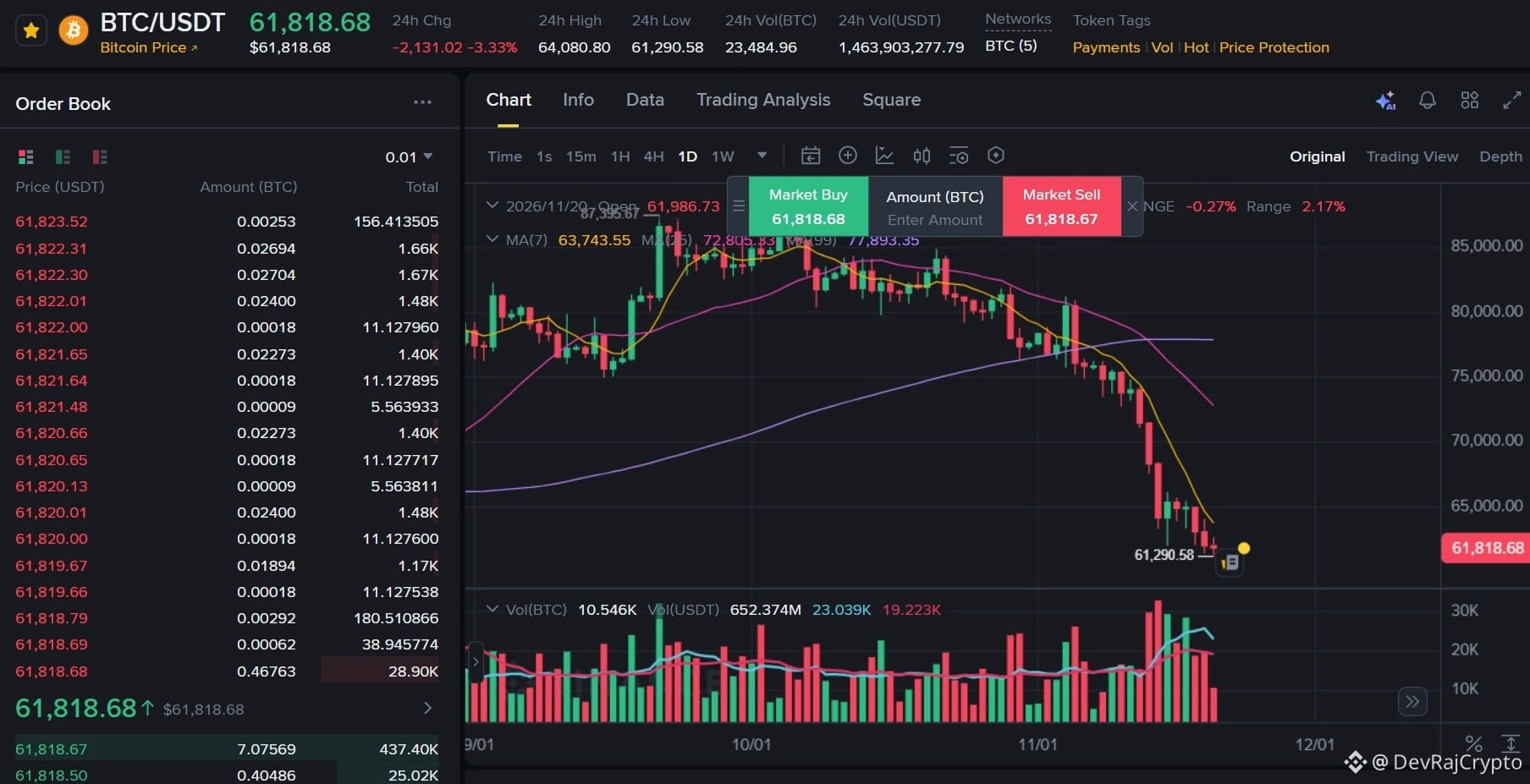
My November 20 Binance chart shows BTC at $61,818, trading below all three daily moving averages:
• MA(7): $63,743
• MA(25): $72,805
• MA(99): $77,893
This is a weak market structure. Even a recovery towards $63,743 would not automatically signal a trend reversal.
My prediction: Bitcoin could attempt a relief bounce, but I remain cautious. If $61,290 fails to hold, the next downside area I would watch is around $60,000. If buyers reclaim $63,743 and sustain momentum, a recovery towards $66,000 becomes possible.
These are scenario levels, not guaranteed targets.
Following crypto markets, I've learnt that a falling price can attract bargain hunters before genuine demand returns.
My view: I would look for sustained buying volume and stronger price structure before calling this a bottom.
Are we close to accumulation, or does Bitcoin have another leg down?
$BTC #bitcoin #CryptoMarketAlert #BİNANCESQUARE
2
94
·
--
#cangta6'slaunchliftttwoshares?
GTA 6 doesn't need to prove people want to play it. It needs to prove Take-Two can turn that demand into a lasting business.
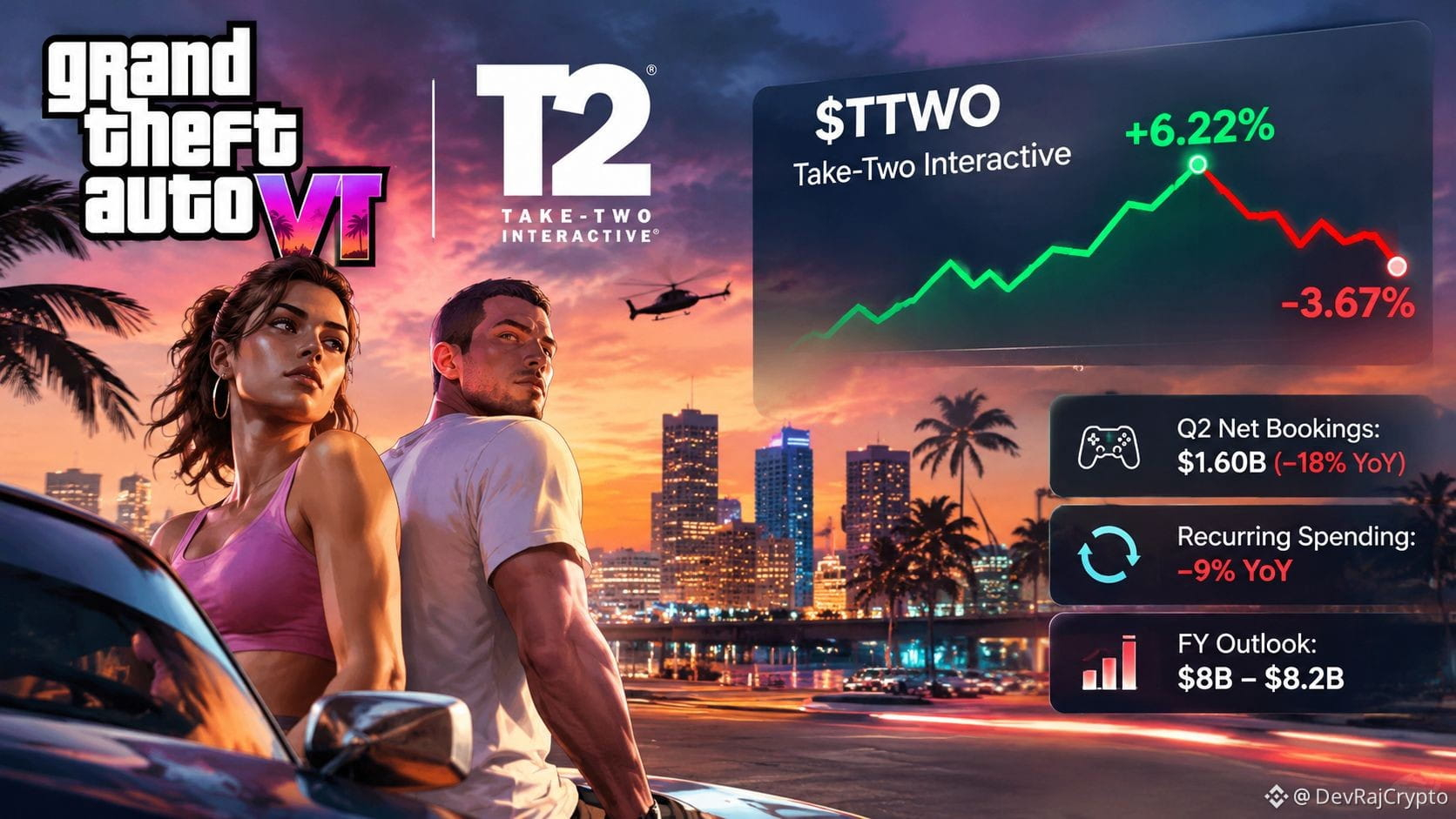
The market has already shown how high expectations are. $TTWO rose 6.22% to $216.61 on November 18, before falling 3.67% after the game's November 19 launch.
But one day's price movement doesn't tell the whole story.
Take-Two's latest Q2 FY2027 results reported $1.60 billion in net bookings, down 18% year on year. Recurring consumer spending also declined 9%. Management maintained its full-year bookings outlook of $8–8.2 billion.
These figures make the next phase particularly important.
Following crypto markets, I've observed how a project can attract enormous attention and trading activity without establishing lasting demand. Gaming faces a similar test.
For Take-Two, the real opportunity lies in player retention, repeat spending and a sustainable GTA ecosystem.
My view: launch success creates the opportunity. Retention turns it into a business.
Will GTA 6 deliver Take-Two's next growth cycle, or are investors already pricing in that future?
$TTWO #GTA6 #gaming #crypto
1
57
·
--
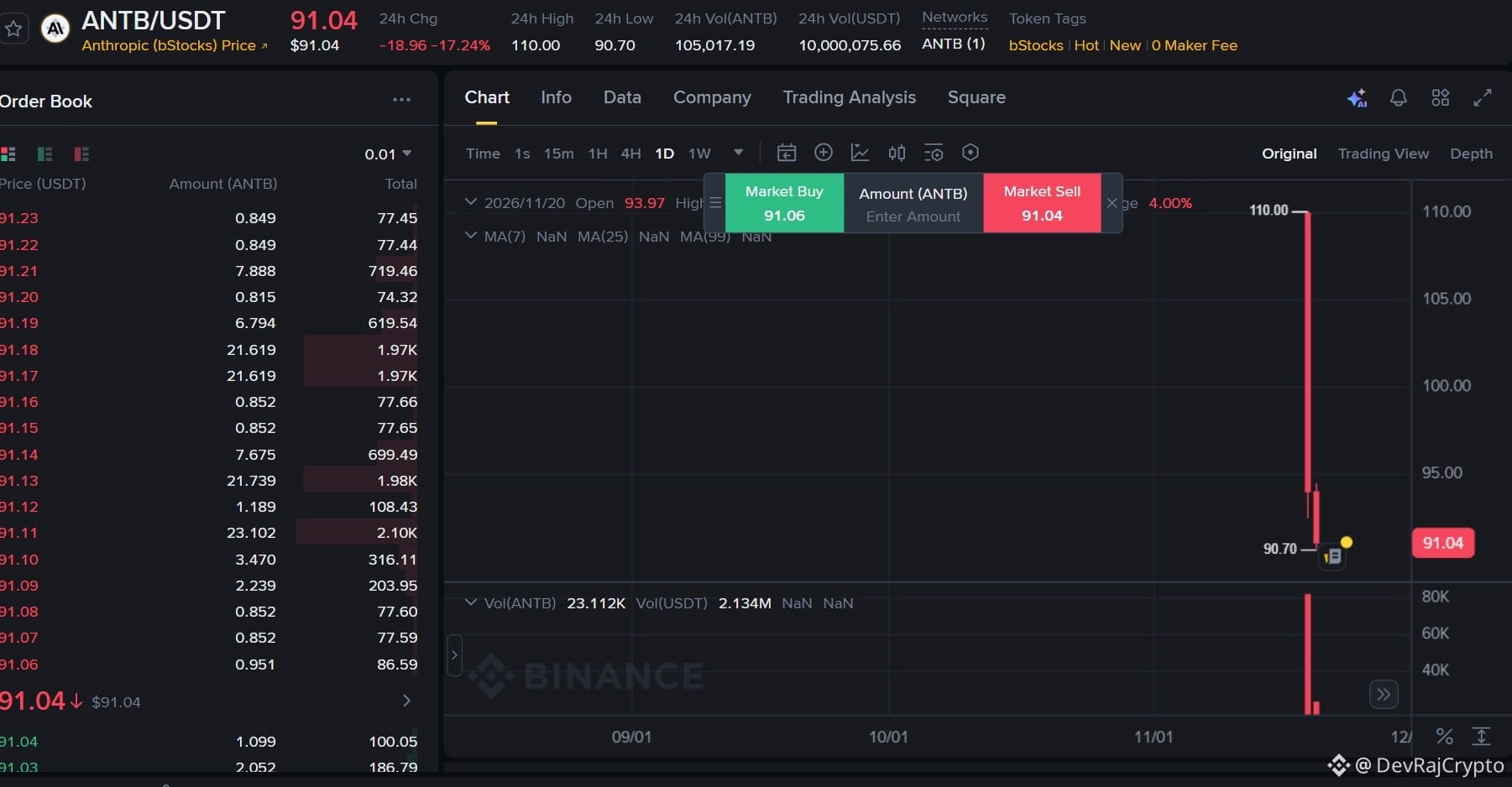
Anthropic's AI story is attracting capital, but ANTB faces a different test: can its tokenized market sustain investor confidence beyond IPO excitement?
My November 20 Binance chart showed:
• Price: $91.04
• 24-hour change: -17.24%
• High: $110 | Low: $90.70
• Volume: approximately $10M USDT.
For context, Anthropic shares debuted at $83, opened at $111.50 and closed at $97.17.
These are different markets. ANTB is a tokenized security, not direct ownership of Anthropic shares. Its price can diverge due to liquidity, trading hours and market demand.
Following crypto markets, I've learned that a strong underlying narrative doesn't guarantee equal performance across related assets.
My prediction: ANTB could remain volatile in the near term. I'd look for stronger alignment with the underlying share price and healthier token-market liquidity before turning bullish.
I wouldn't chase this dip without that confirmation.
Would you buy here or wait?
$ANTB $ANTB
#Anthropic #Aİ #BinanceSquare
1
206
·
--
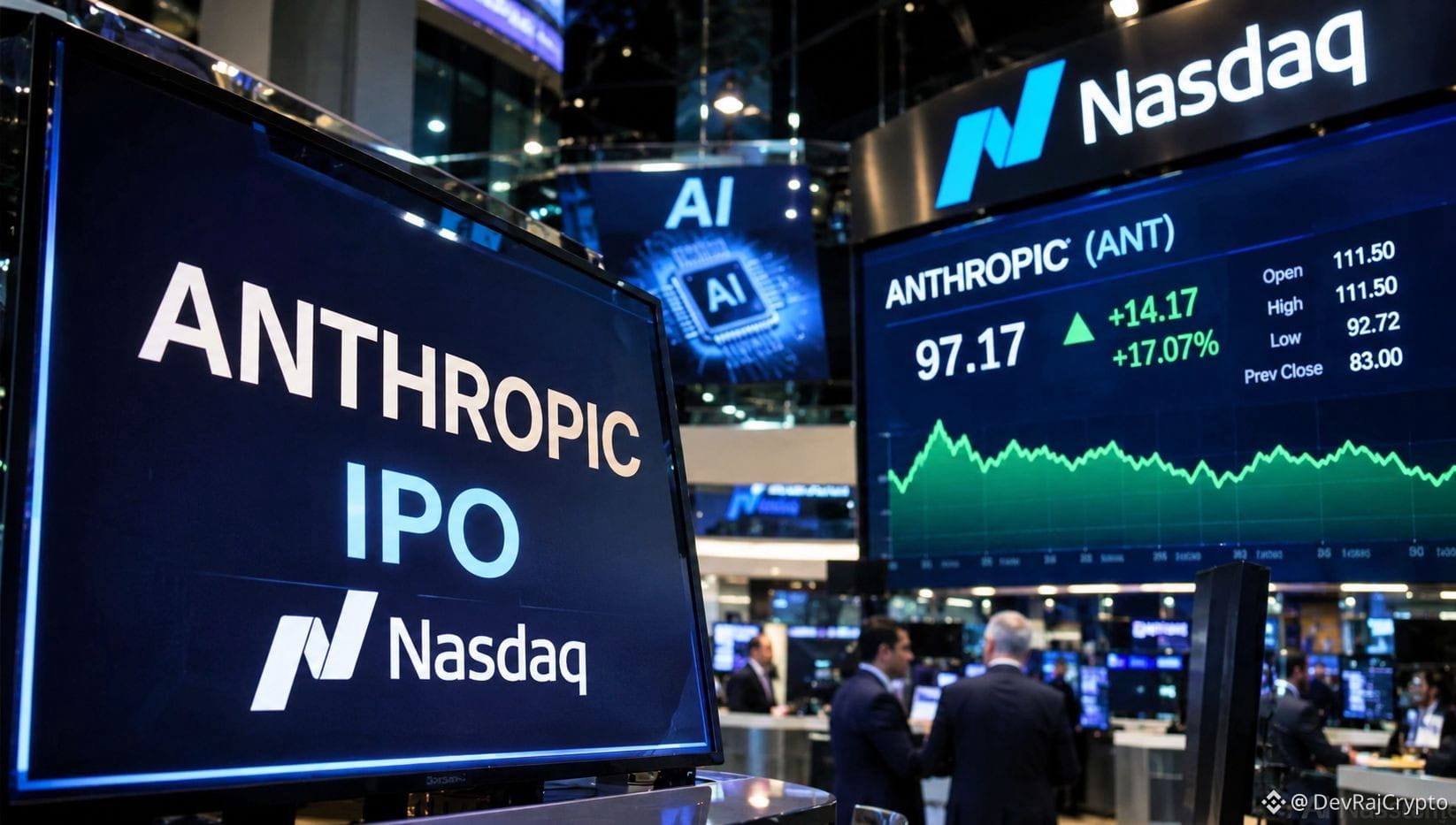
Anthropic’s $1.5 trillion IPO raises a question: how much of AI’s future is already priced in?
Shares were priced at $83, valuing the company at $1.5 trillion fully diluted. Nine-month revenue reached $33.24 billion, against a $1.26 billion GAAP operating loss. Adjusted operating income was $4.1 billion, a non-GAAP measure.
Shares opened at $111.50 and closed at $97.17. That gap shows how quickly IPO enthusiasm can cool.
Following technology and crypto narratives, I watch the gap between adoption and economics. A compelling product attracts capital; lasting value depends on turning revenue into sustainable cash generation.
Anthropic disclosed $900.9 billion in future purchase and lease commitments. These are not existing debt, but underline its infrastructure challenge.
My view: AI’s potential is real. Its valuation still has to be earned.
Is $1.5 trillion justified, or is the market pricing in too much, too soon?
$ANT $NVDA $BTC
#Aİ #IPO #CryptoMarket #BinanceSquare
1
568
·
--
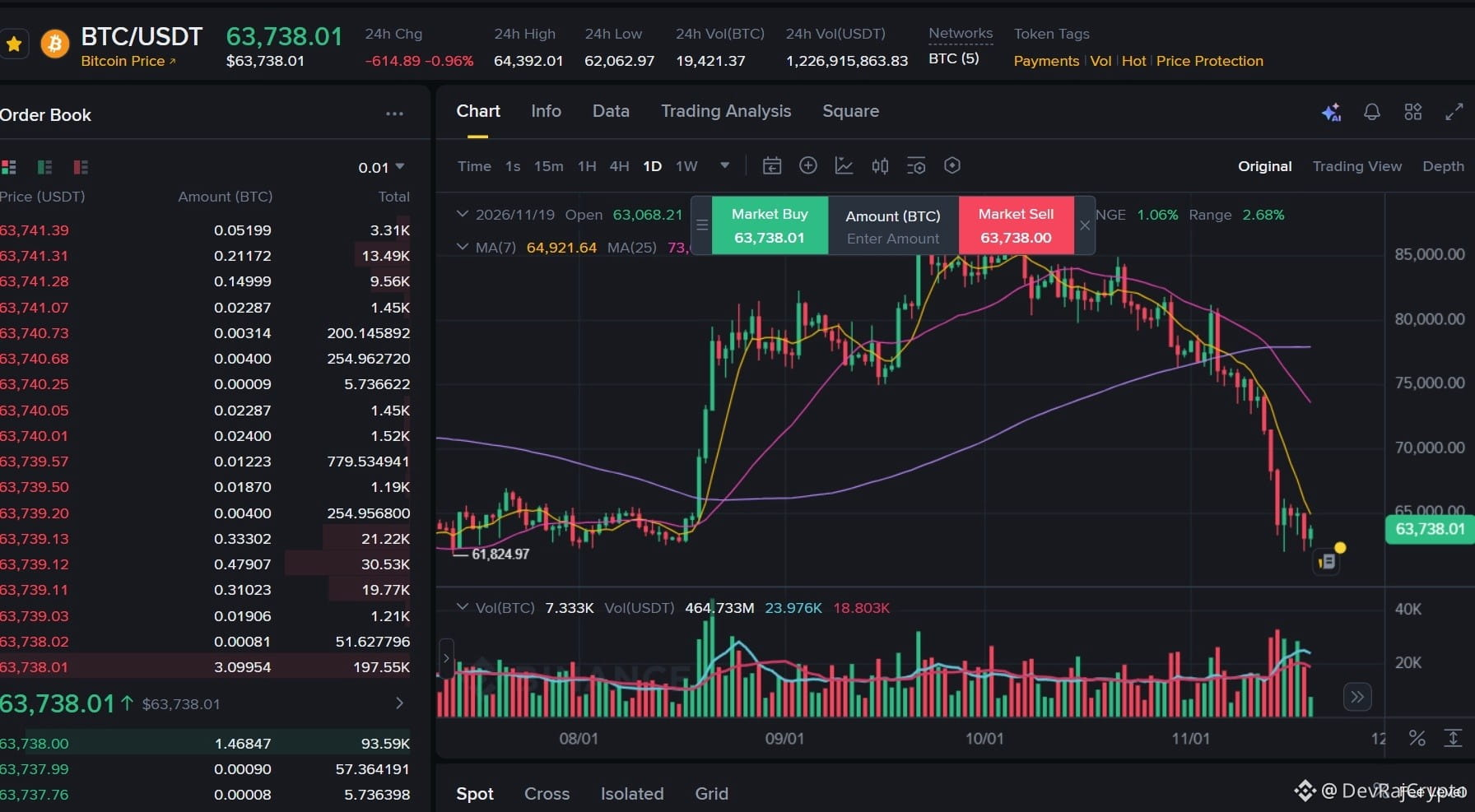
Bitcoin has bounced from its recent low, but its broader daily structure remains weak.
My November 19 Binance chart shows BTC at $63,738, below its key daily moving averages:
• MA(7): $64,922
• Recent swing low: $61,825
Three signals deserve attention.
US spot Bitcoin ETFs recorded $306.4M in outflows on November 18, following $239.9M the previous day.
Meanwhile, almost all Fed participants considered further rate increases likely appropriate under their baseline outlook.
Following crypto markets, one pattern stands out: the first green candles after a sell-off often attract optimism before buyers have regained control.
My view: the real recovery begins when fresh demand consistently absorbs selling pressure and price reclaims important levels.
A relief rally is a price movement. A sustainable recovery requires demand.
Are we seeing early accumulation, or is Bitcoin still searching for committed buyers?
$BTC $ETH
#bitcoin #CryptoMarketAlert #BİNANCESQUARE
1
47
·
--
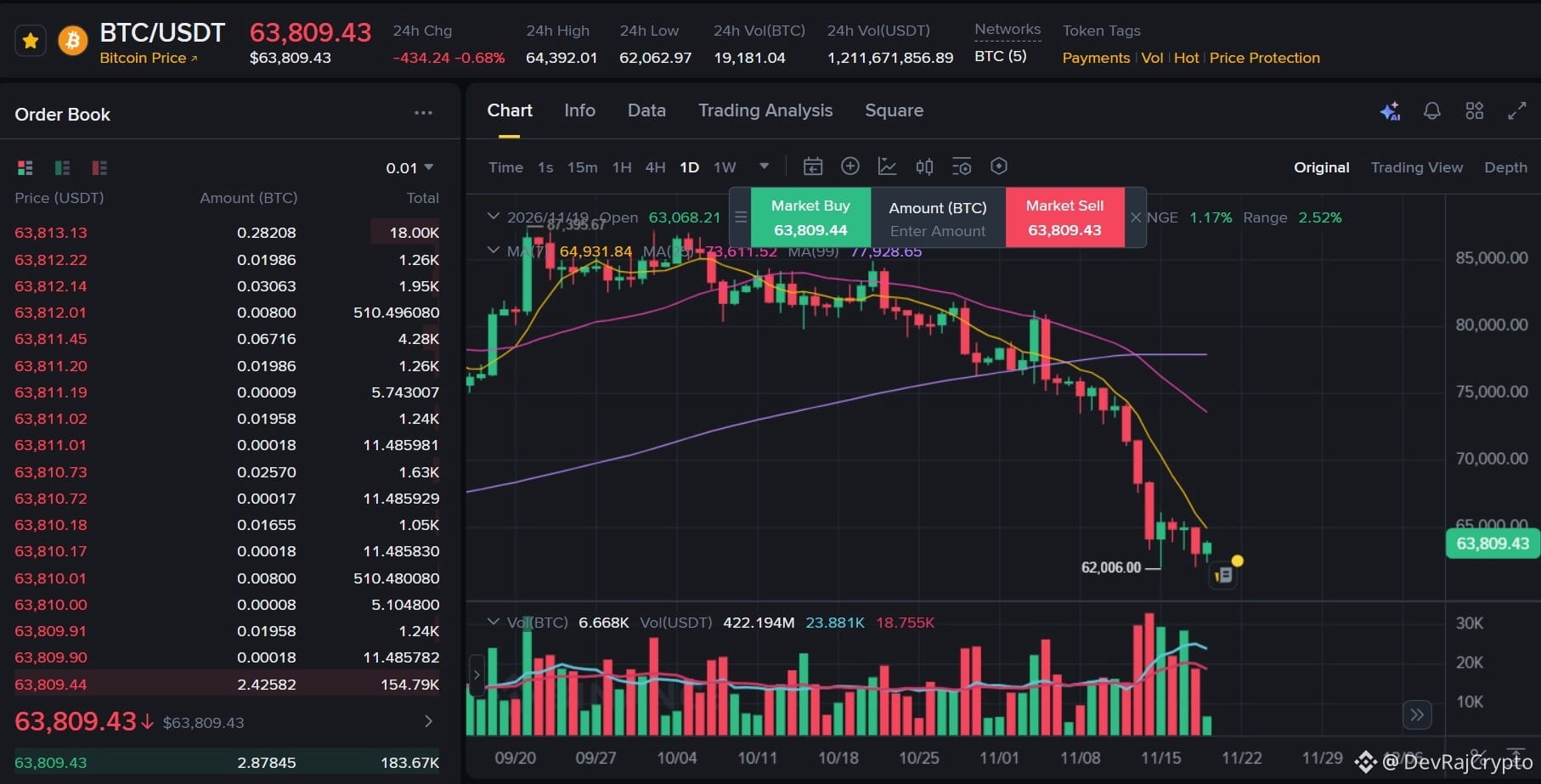
Bitcoin is trading near $63,800. But the bigger concern isn't how far it has fallen. It's whether genuine demand is returning.
My November 19 Binance chart shows BTC below all three daily moving averages:
• MA(7): $64,932
• MA(25): $73,612
• MA(99): $77,929
Three signals deserve attention:
1. US spot Bitcoin ETFs recorded $306.4M in net outflows on November 18, marking a second consecutive session of withdrawals.
2. Almost all Fed participants considered further rate increases likely appropriate under their baseline outlook.
3. BTC remains below its key daily averages, with $62,006 marking a recent swing low.
Following crypto markets, one pattern stands out: traders can mistake a sharp bounce for a genuine recovery.
But a price rebound alone doesn't prove that demand has returned.
My view: watch for sustained buying, improving ETF flows and a reclaim of important technical levels before calling this a reversal.
A relief rally is a price event. A sustainable recovery is a demand event.
Is Bitcoin approaching accumulation, or does the market still need stronger buyers?
$BTC $ETH
#bitcoin #CryptoMarket #BinanceSquare
1
71
·
--
Verified
#nvidiaboardreportedlysplitoverhuang’sreturn
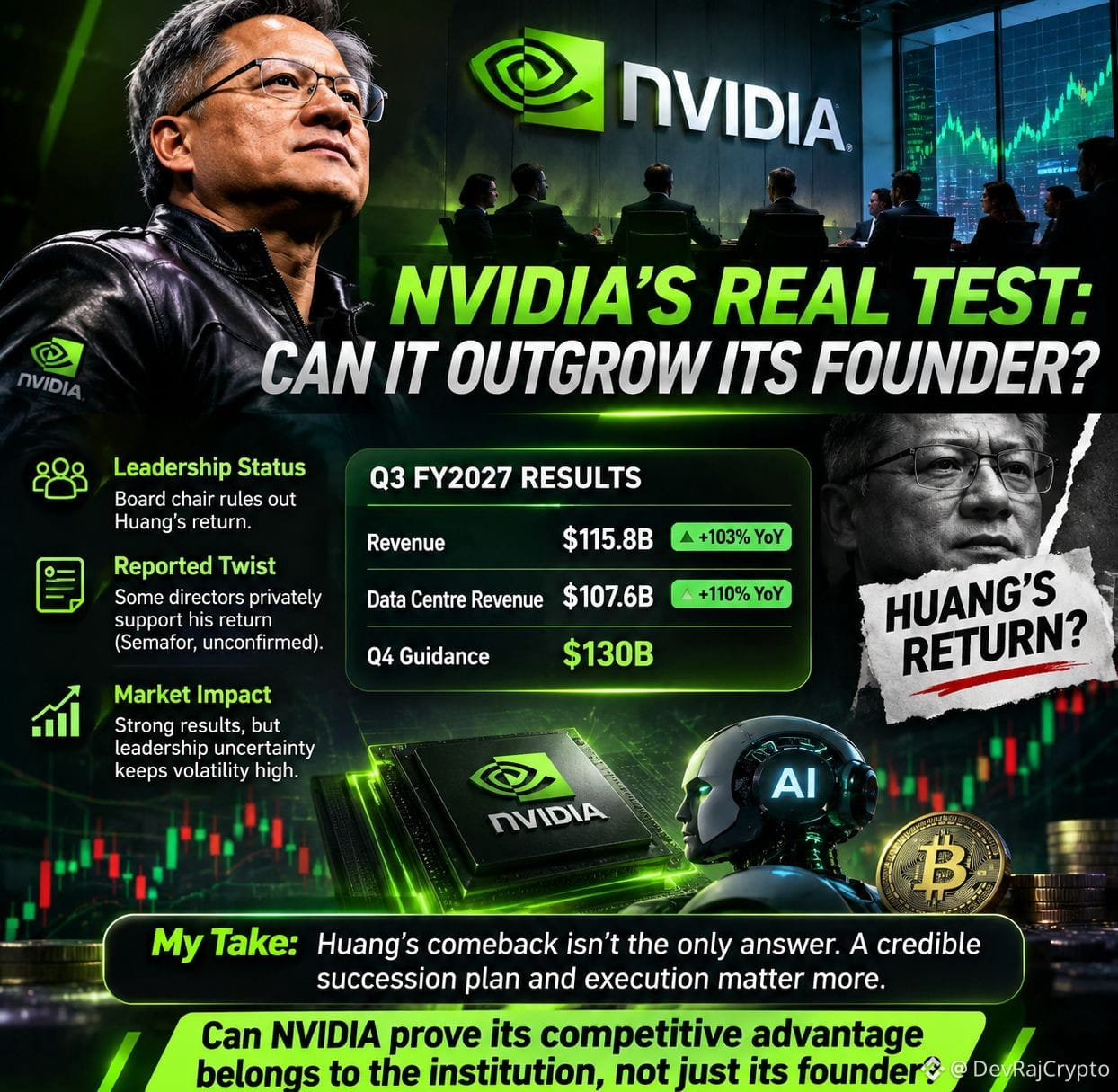
NVIDIA’s biggest test may not be AI competition. It may be proving that its success can outlast its founder.
The leadership story remains contested. Chairman Harvey Jones publicly ruled out reinstating Jensen Huang, while Semafor reported that some directors privately support his return. That reported disagreement remains unconfirmed.
Meanwhile, NVIDIA’s Q3 numbers are extraordinary:
• Revenue: $115.8B, up 103% year on year.
• Data Centre revenue: $107.6B, up 110%.
• Q4 revenue guidance: $130B.
Yet strong fundamentals haven't eliminated leadership uncertainty.
Following AI developments and their influence on crypto narratives, one lesson stands out: market sentiment can move faster than business fundamentals. NVIDIA's leadership uncertainty may influence AI-token sentiment, but it doesn't automatically change individual projects' value.
My view: Huang's return isn't necessarily the answer. A credible succession plan and uninterrupted execution matter more.
Can NVIDIA prove its competitive advantage belongs to the institution, not just its founder?
$NVDA $BTC $ETH
#NVIDIA #Aİ #CryptoMarket
2
1.8k
·
--
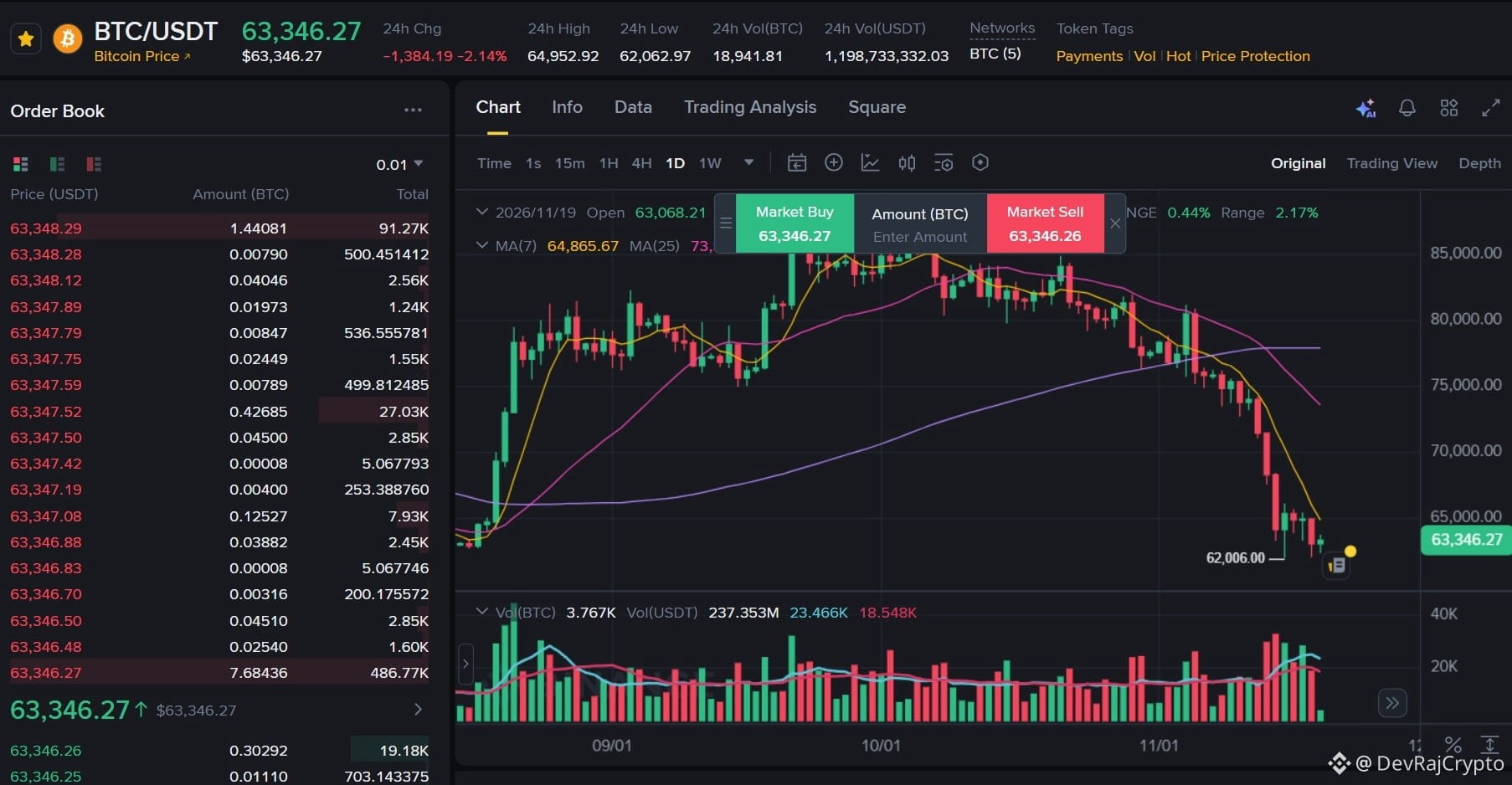
Bitcoin is holding near $63K, but defending support and regaining market control are two different things.
My November 19 Binance chart shows an attempted stabilisation, not a confirmed reversal.
BTC traded at $63,346, down 2.14% over 24 hours, and remained below its 7-day moving average of $64,866. Longer-term moving averages also remained above price.
The immediate battleground is $62K. The 24-hour low was $62,062.97, with another recent low near $62,006. Buyers have defended this area, but that alone doesn't establish an uptrend.
Reclaiming $65K, supported by sustained buying volume and a higher low, would strengthen the recovery case.
Following crypto markets has taught me not to confuse a green candle with a trend reversal. Buyers must defend the ground they regain.
A sustained break below $62K could put $60K in focus.
Are buyers returning, or is this simply another temporary bounce?
$BTC #bitcoin #CryptoMarket #BinanceSquare
1
89
·
--
Verified
#btcremainsunderpressureafterhawkishfomcminutes
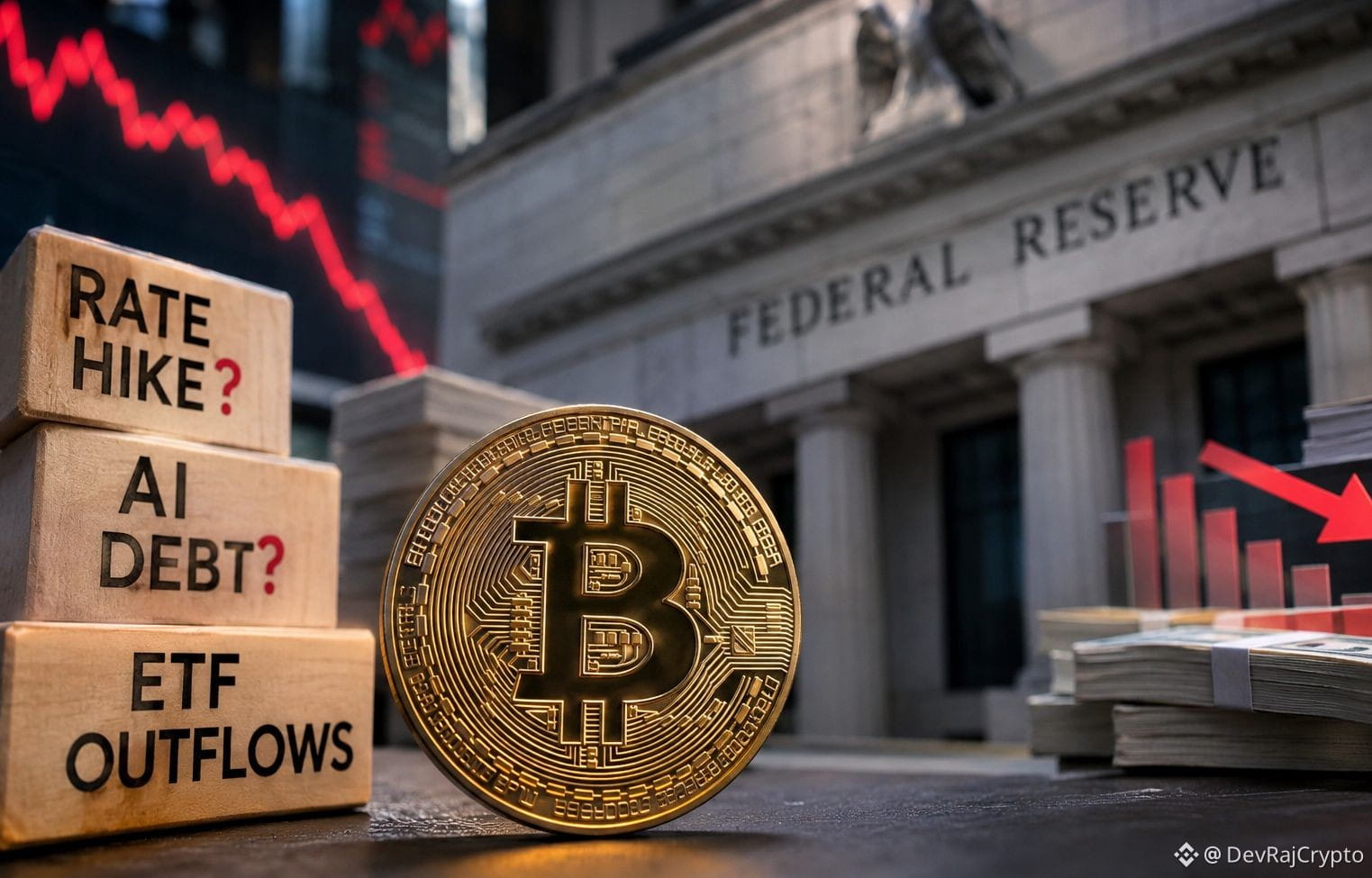
The Fed's latest minutes contain a warning Bitcoin investor shouldn't ignore. And it goes beyond interest rates.
Almost all Fed participants considered further rate increases likely appropriate. A couple even discussed a hike above 25 basis points in December if inflation data proved unfavorable.
But the bigger story is AI-related debt.
The Fed flagged complex financing structures, off-balance-sheet commitments and growing debt behind the AI infrastructure boom.
If borrowing costs rise and expected AI returns disappoint, leveraged investors could face pressure to reduce exposure. Bitcoin has no direct exposure to this debt, but broader risk aversion can still affect crypto.
Meanwhile, US spot Bitcoin ETFs recorded $239.9 million in net outflows on November 17.
From following crypto markets, one lesson stands out: a price bounce doesn't confirm recovery. Sustainable strength requires fresh buyers.
I'm watching ETF flows, spot demand and Bitcoin's ability to hold its market structure.
Is this a temporary correction or a deeper liquidity problem?
$BTC #bitcoin #fomc #CryptoMarket
1
2
949
·
--
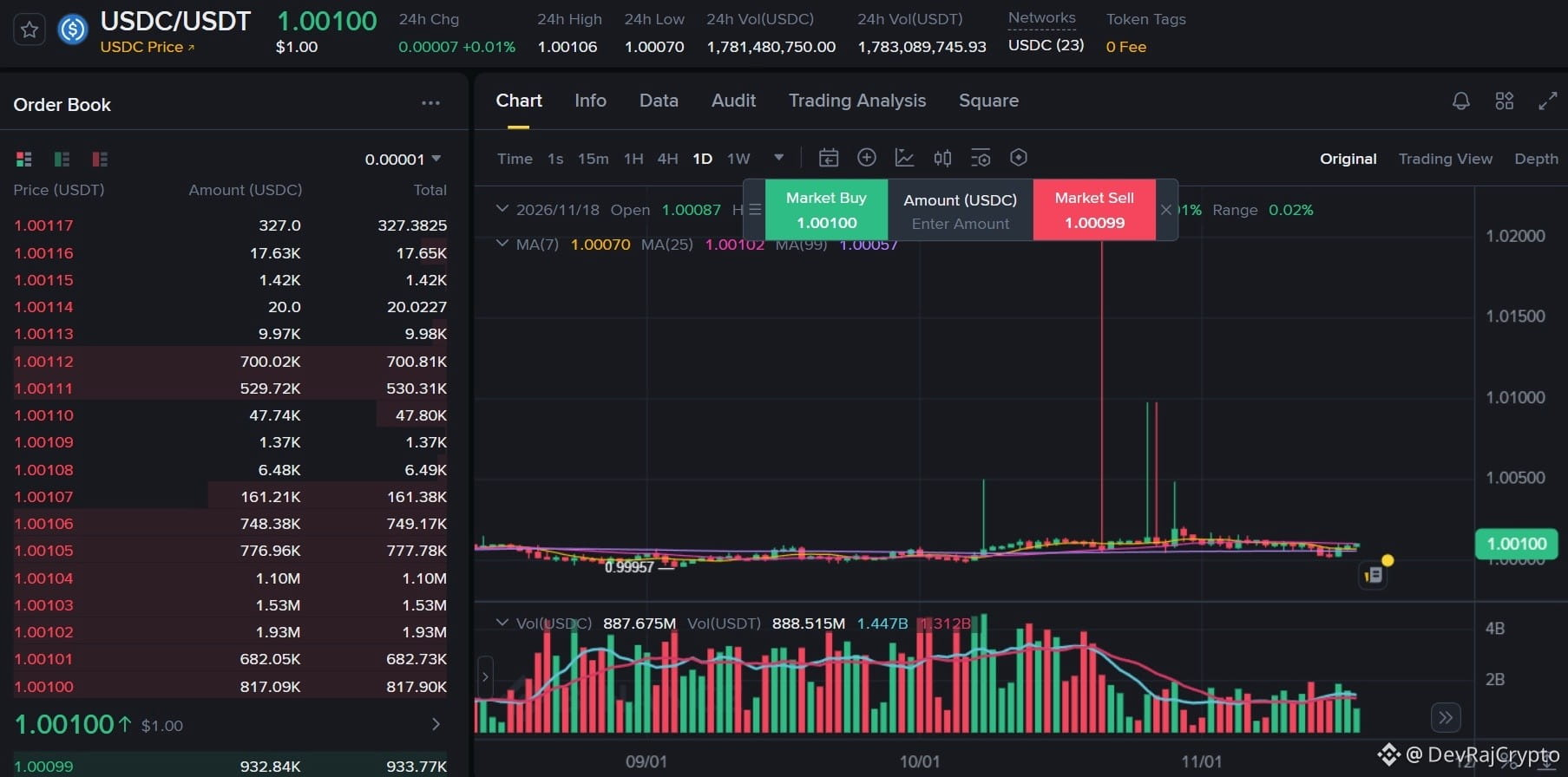
USDC holds 27% of stablecoin supply but generates 79% of transaction volume.
That difference caught my attention.
Circle's Q3 2026 data shows:
• Average circulation: $73.3B, up 8% YoY.
• On-chain volume: $13.9T, up 49%.
• Quarterly turnover: approximately 190x.
The interesting part isn't just the growth. It's how much activity USDC generates relative to its circulating supply.
While analyzing crypto trends for Binance Square, I've learned not to judge an asset by headline numbers alone. Market capitalization shows how much capital is held. Transaction volume shows how frequently value moves. Neither automatically proves real-world adoption.
USDC's volume also includes trading, arbitrage and DeFi transfers, not just payments.
My view: the next stablecoin race will be about turning on-chain activity into reliable financial use cases.
Holding dollars creates liquidity. Moving them efficiently creates utility. Earning trust creates lasting infrastructure.
That's the real test for USDC.
$USDC #Stablecoins #crypto
2
80
·
--
#nvidiaboardnotconsideringhuang’sreturnasceo
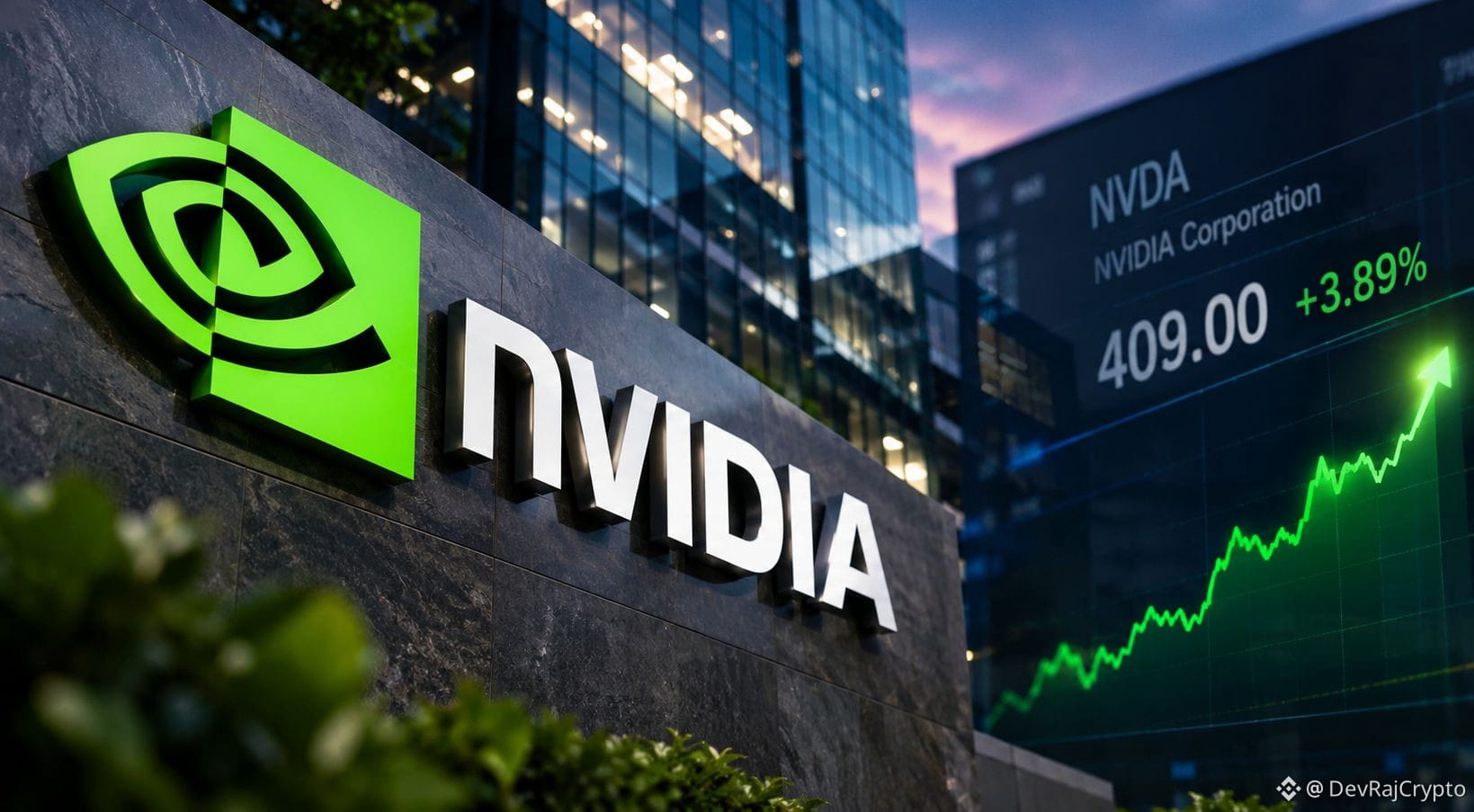
NVIDIA’s AI growth is extraordinary. But can the infrastructure keep up?
Q3 FY2027 results:
• Revenue: $115.8B, up 103% YoY.
• Data Centre: $107.6B, up 110%.
• AI Clouds, Industrial & Enterprise: $47.5B, up 195%.
• Q4 revenue guidance: $130B ±3%.
Yet three challenges could shape its next growth phase.
1. Supply: Commitments rose from $279B to $390B, largely reflecting multi-year memory procurement. These are commitments, not guaranteed future sales.
2. Infrastructure: Chips need electricity, land, cooling, networking and financing. Computing demand means little without capacity to deploy it.
3. Customer returns: Q3 non-GAAP gross margin was 74.9%, with Q4 guidance of 71–72%. Ultimately, customers must generate measurable economic value from AI investments.
My view: NVIDIA's next chapter depends not just on selling more chips, but on making AI infrastructure economically productive.
What becomes the biggest constraint: memory, electricity, financing or customer returns?
$NVDA #NVIDIA #Aİ
2
150
·
--
Bitcoin is bouncing. But are buyers actually back, or is this just temporary relief?
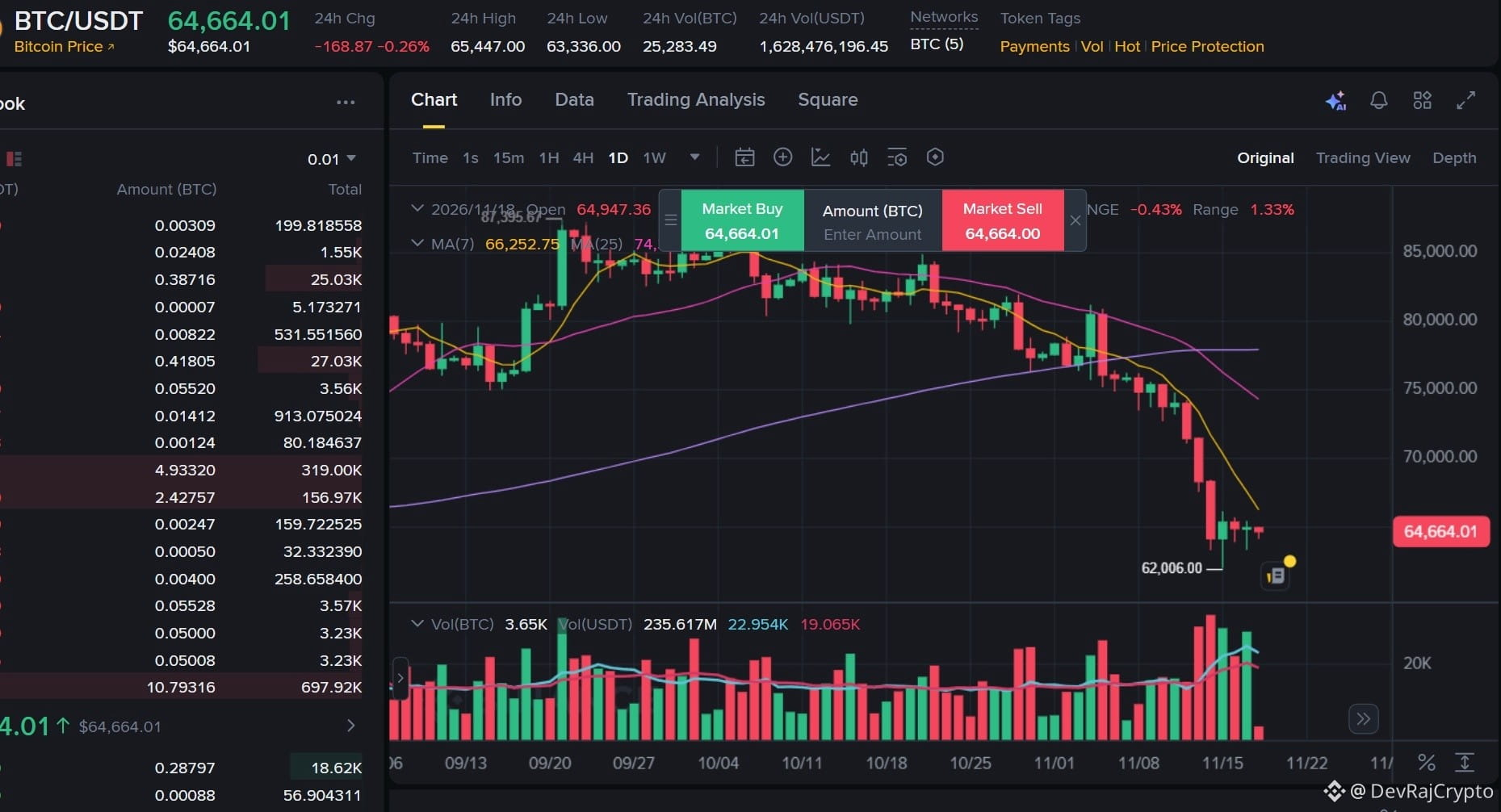
The November 18 chart shows BTC recovering from $62,006 to $64,664. However, price remains below its 7-day moving average ($66,253) and 200-week moving average (approximately $68,039).
Institutional demand raises another concern. US spot Bitcoin ETFs recorded approximately $1.91 billion in outflows across seven consecutive sessions. November 16 brought just $7.9 million in inflows.
Meanwhile, the US Dollar Index reached 103.65, with markets pricing in a 95.7% probability of a December rate hike.
From following crypto markets, I've noticed traders often mistake relief rallies for trend reversals. But price recovery and demand recovery are two different things.
Here's what I'm watching:
• $62,000: Key support.
• $66,253: First recovery test.
• $68,039: Longer-term resistance.
My view: Sustained buying, improving ETF flows and reclaimed moving averages are needed to confirm a recovery.
A bounce shows sellers weakening. Sustained demand shows buyers taking control.
Will BTC reclaim $68K or revisit $62K first?
$BTC #bitcoin #BitcoinAnalysis
2
94
·
--
#nvidiaboardnotconsideringhuang’sreturnasceo
NVIDIA just reported $115.8 billion in quarterly revenue. Yet its biggest test may be proving it can remain exceptional without Jensen Huang.
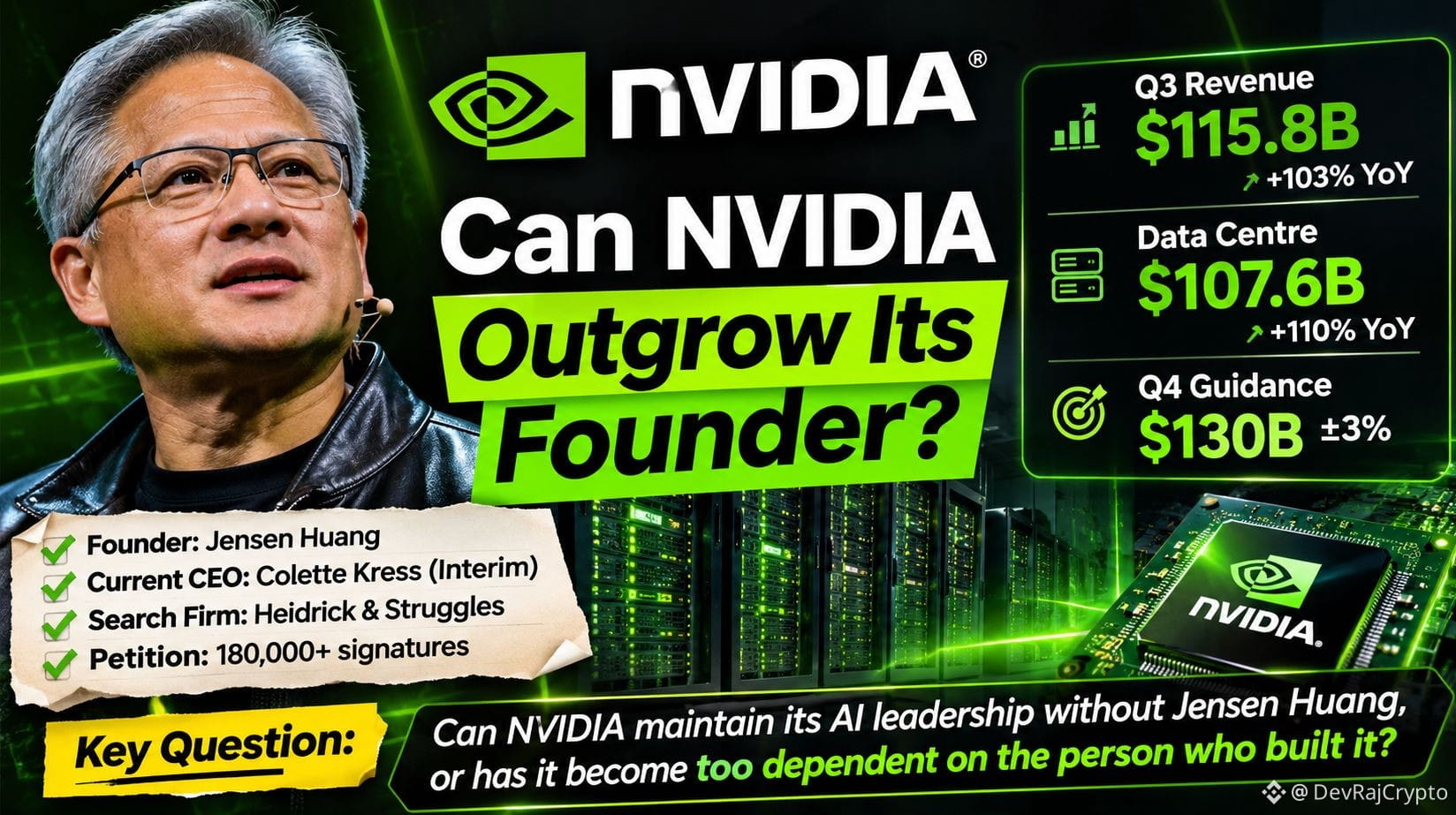
On November 17, board chairman Harvey Jones confirmed that NVIDIA does not intend to reinstate Huang as CEO. CFO Colette Kress is serving as interim CEO while Heidrick & Struggles leads the search for a permanent successor, considering internal and external candidates.
Huang, meanwhile, has said he would be honoured to return if the board believes it is in the company's best interests.
Despite a petition reportedly exceeding 180,000 signatures, public support does not determine corporate leadership. That responsibility rests with the board.
Meanwhile, NVIDIA's business remains strong:
• Quarterly revenue: $115.8 billion, up 103% year-on-year.
• Data Centre revenue: $107.6 billion, up 110%.
• Q4 revenue guidance: $130 billion, plus or minus 3%.
Data Centre now accounts for approximately 93% of quarterly revenue. This highlights where NVIDIA's growth engine lies: sustained demand for AI infrastructure.
From following crypto and technology markets, I've noticed how quickly investors turn leadership headlines into broader market narratives. But uncertainty around a CEO is not automatically a deterioration in business fundamentals.
Equally, strong earnings do not eliminate succession risk.
Huang built more than a chip business. He helped create an ecosystem of developers, software, infrastructure partners and customers. The next CEO must preserve that advantage while maintaining innovation and execution.
My view: investors should watch three things: product roadmap continuity, customer confidence and sustained AI infrastructure demand.
A founder can build an extraordinary company. Its institutional strength is tested when that founder is no longer leading it.
Can NVIDIA maintain its AI leadership without Jensen Huang, or has the company become too dependent on the person who built it?
$NVDA #NVIDIA #Aİ #CryptoMarket
1
10
14.4k
·
--
Bitcoin has recovered nearly $2,800 from its recent low, but I am not convinced the worst of the selling is behind us.
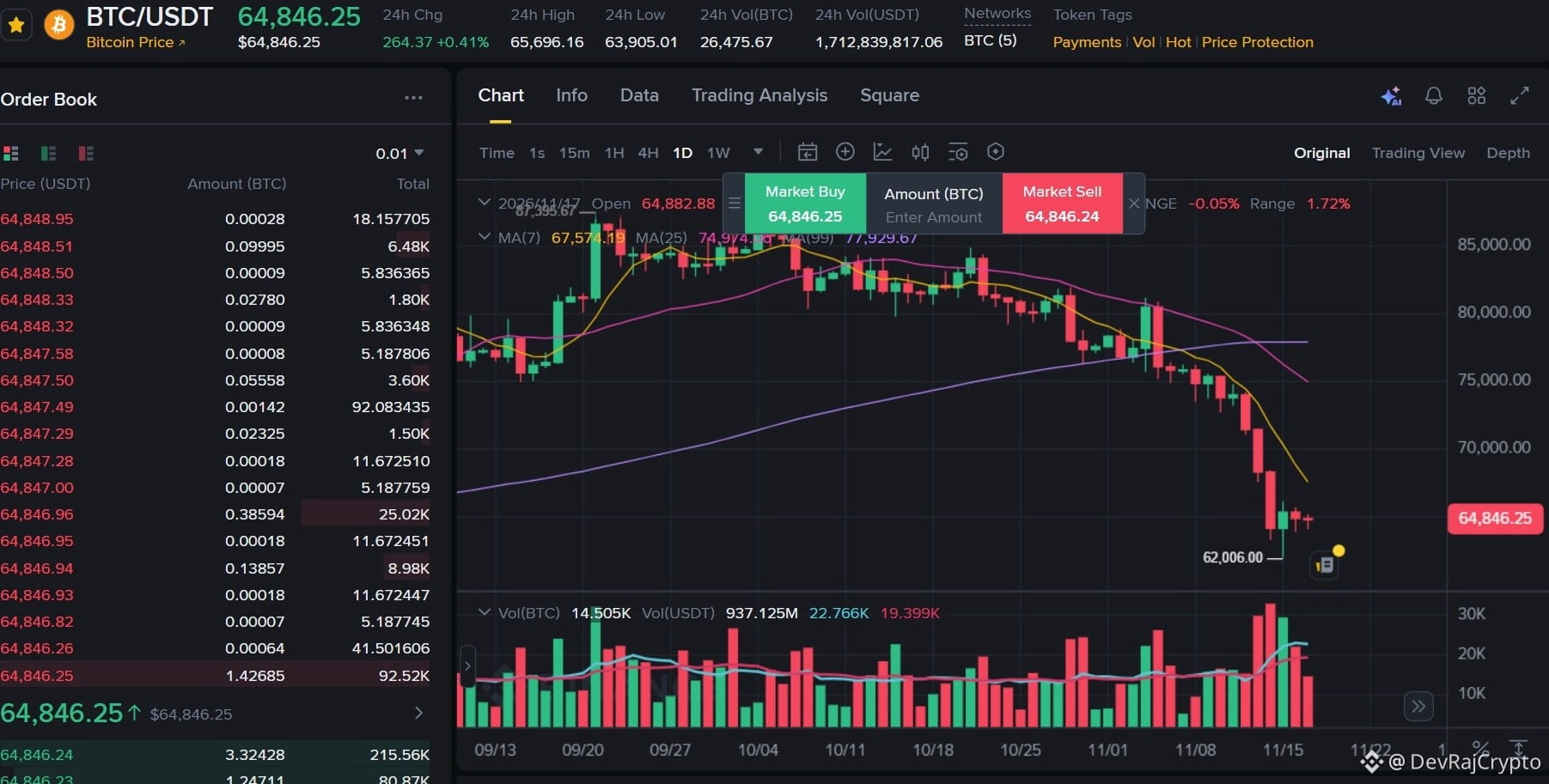
There is something interesting in the BTC/USDT daily chart.
The decline towards $62,006 came with a noticeable expansion in trading volume. Bitcoin then bounced, but the recovery has so far struggled to build sustained upward momentum.
At around $64,846, price remains below all three moving averages:
• 7-day MA: $67,574
• 25-day MA: $74,924
• 99-day MA: $77,930
What does this tell me?
The immediate selling pressure has eased, but the market has not repaired the technical damage caused by the decline.
I am particularly interested in what happens around $65,700 and $67,574.
The first is the recent 24-hour high. The second is the 7-day moving average. Reclaiming both would be a meaningful improvement in short-term structure. But I would also want to see stronger buying participation rather than a brief price spike.
My reading is that Bitcoin is at a point where the next few daily candles matter more than the initial rebound.
If buyers establish higher lows and push through $67,574, I would become more constructive about a recovery. If the price loses momentum and revisits $62,006, the recent bounce will look increasingly fragile.
I am not treating this rebound as a confirmed bottom. I want the market to demonstrate that demand can sustain higher prices.
What is your reading: is Bitcoin beginning to build a base around $62,000, or is this just a pause before another leg down?
$BTC #bitcoin #BTCUSDT #CryptoMarket
2
86
·
--
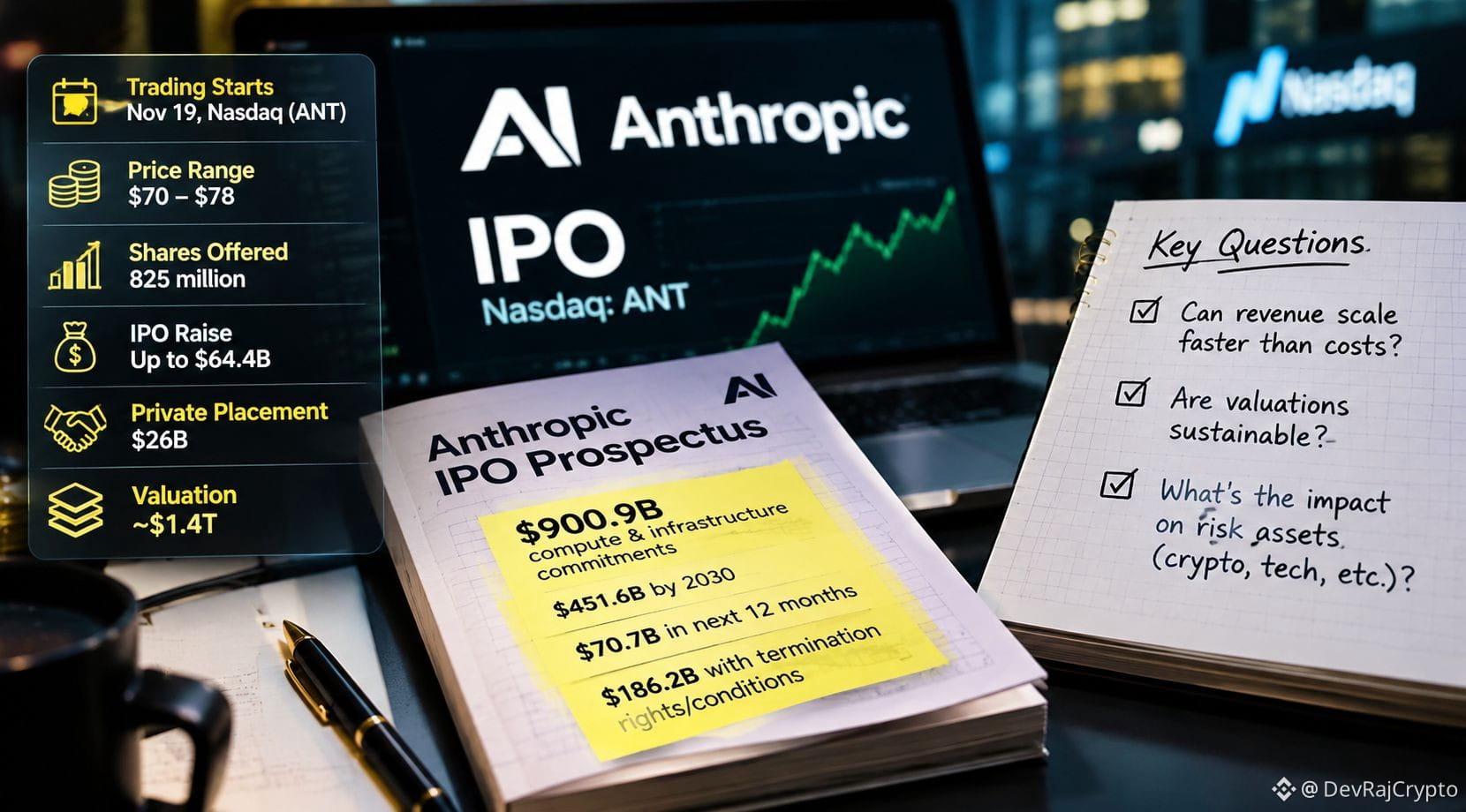
Anthropic's IPO is testing more than investor appetite for AI. It is testing whether AI's economics can justify the enormous capital being committed to it.
The company behind Claude is preparing for its Nasdaq debut on November 19 under ticker ANT.
Key figures:
• 825 million shares at an indicative $70–$78.
• Up to $64.4B from the IPO, plus a separate $26B private placement.
• Potential valuation of approximately $1.4T.
• Reportedly six-times oversubscribed.
But one number deserves more attention: $900.9 billion.
Anthropic's prospectus reports this amount in aggregate compute and infrastructure commitments. Around $451.6B is expected before the end of 2030, with $70.7B due within the following 12 months.
This is not an immediate debt bill. Approximately $186.2B involves termination rights or conditions that must be met before the arrangements begin.
The financial picture is equally important: Anthropic reported $33.2B in revenue during the first nine months of 2026, alongside an operating loss of approximately $1.26B.
My observation: AI demand is growing rapidly, but revenue growth alone doesn't prove a sustainable business model. The real test is whether revenue can outpace infrastructure and development costs.
Also, six-times oversubscription measures demand at the proposed offering terms, not whether the valuation is justified.
For crypto, the connection is broader risk appetite. A shift away from expensive growth valuations could pressure speculative assets, too. However, there is no verified evidence that Bitcoin is being sold specifically to fund this IPO.
My prediction: The debut may generate excitement, but sustained investor confidence will depend on whether AI growth translates into stronger financial performance.
The AI investment story is moving from proving demand to proving economics.
Can AI companies grow into these valuations, or will infrastructure costs eventually force a major reset?
$BTC $NVDA $ANT #CryptoMarket
1
44
·
--
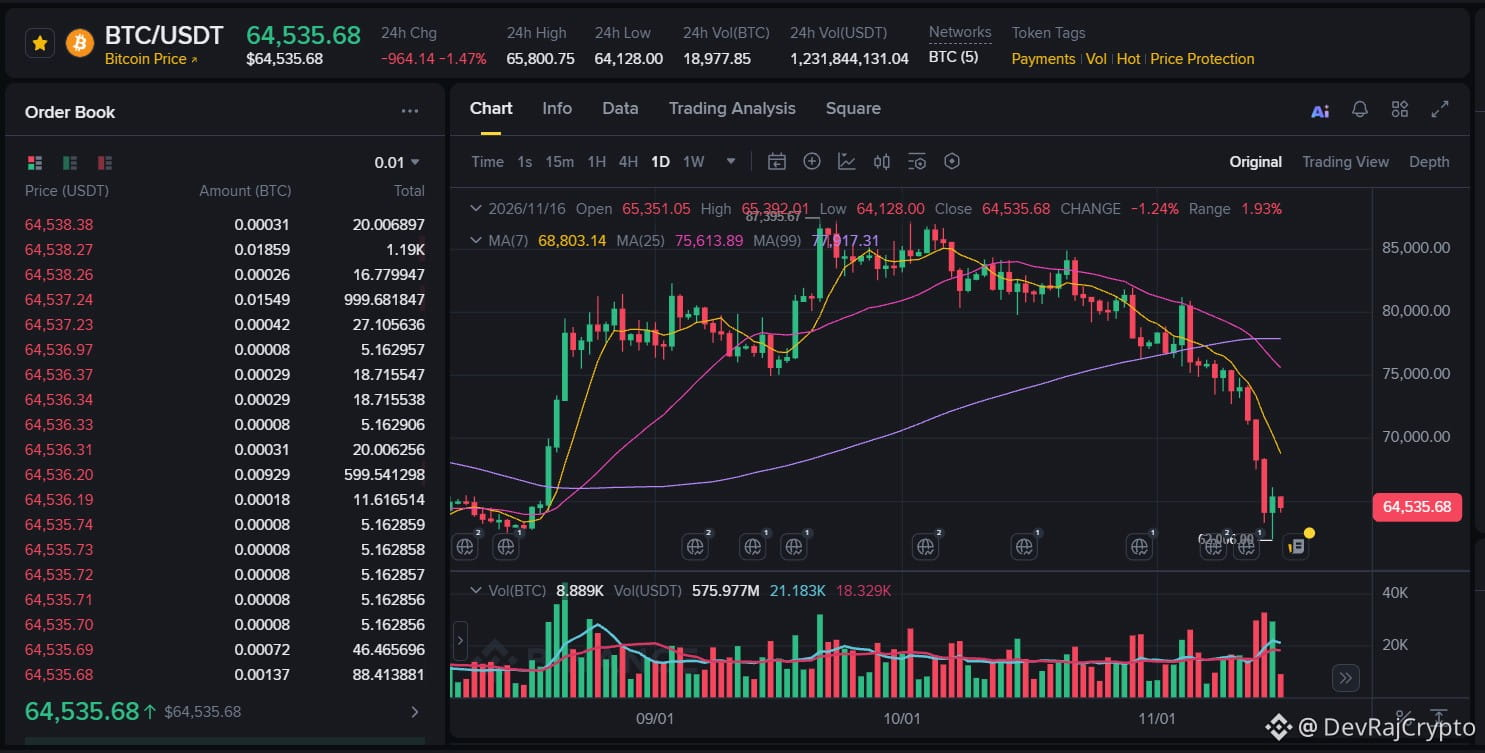
Bitcoin has bounced from the $62,000 area, but I am not convinced the selling pressure is over.
My biggest observation from the BTC/USDT daily chart: price remains significantly below all three moving averages.
At the time of the snapshot, BTC was trading around $64,535.
Here are the levels I'm watching:
• $62,000: Weekend low and key downside support.
• $64,128: Immediate level to defend.
• $68,803: 7-day moving average and first recovery hurdle.
• $75,614 and $77,917: 25-day and 99-day moving averages, marking stronger overhead resistance.
Broader risk aversion and institutional ETF outflows add to the pressure.
But here's what I find important: a sharp bounce after heavy selling does not mean buyers have regained control.
I watch what happens after the rebound. Does buying volume sustain? Can Bitcoin reclaim key moving averages? Do buyers establish higher lows?
My prediction: BTC could attempt a move towards $68,800. Failure to reclaim that level would leave the market vulnerable to another test of $62,000. A sustained move above $68,800 would be an encouraging first signal, not confirmation of a trend reversal.
I'd rather wait for confirmation than mistake a relief bounce for a new uptrend.
**What's your prediction: $68,800 next, or another test of $62,000?**
$BTC #bitcoin #CryptoMarket #BTCUSDT
106
·
--
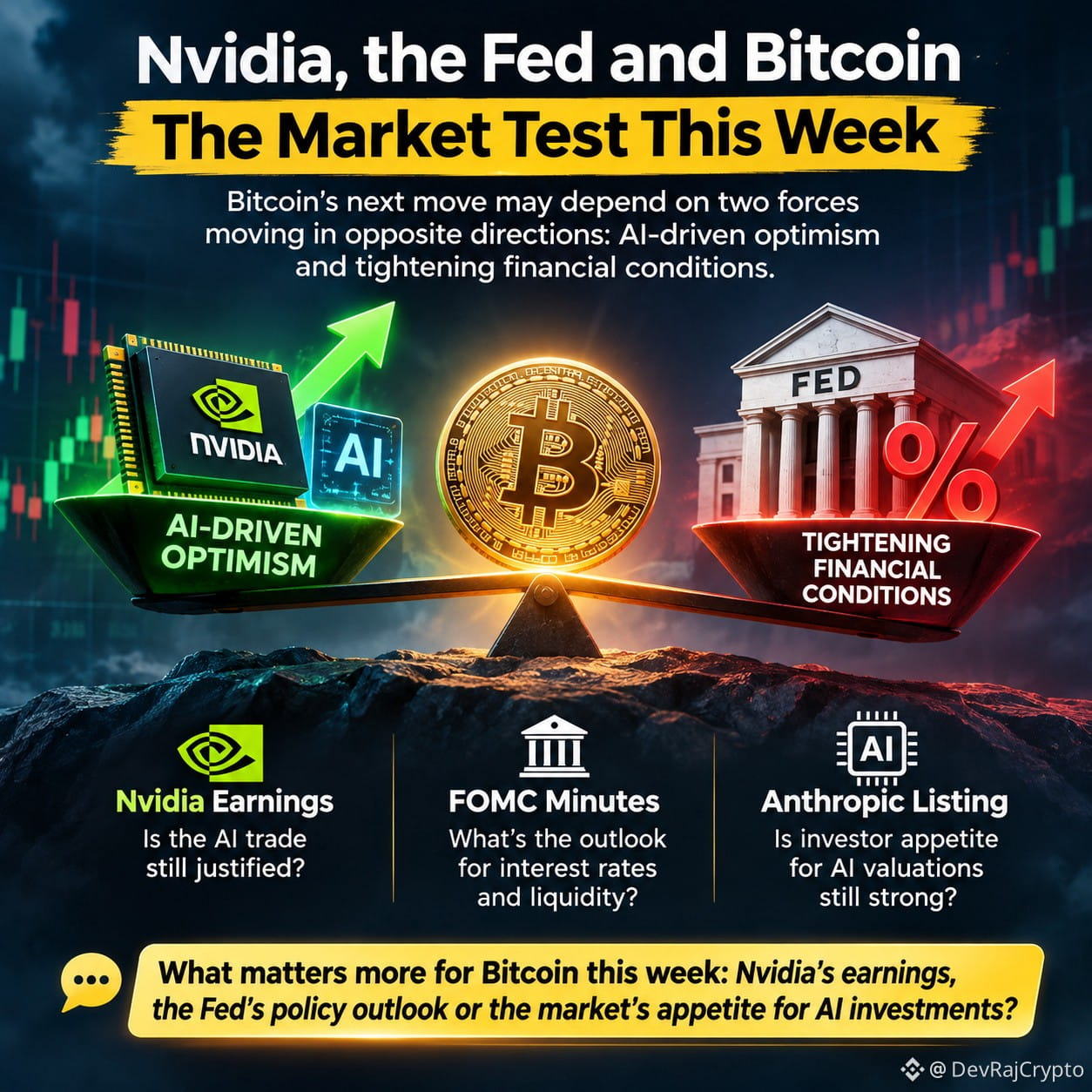
Bitcoin's next move may depend on two forces moving in opposite directions: AI-driven optimism and tightening financial conditions.
This week brings an important test for both.
Three developments deserve particular attention.
1. Nvidia earnings: Is the AI trade still justified?
Nvidia's results on November 17 will offer fresh evidence of demand for AI infrastructure.
But revenue growth alone won't tell the whole story. Investors will be looking closely at forward guidance, margins and whether spending by major technology companies can sustain its current pace.
If results disappoint, pressure could spread across technology stocks and weaken broader risk appetite.
2. FOMC minutes: What happens to liquidity expectations?
The Federal Reserve releases minutes from its October meeting on November 18.
The important question is how policymakers assess persistent inflation, economic resilience and the outlook for interest rates.
Higher-for-longer rates can make investors less willing to hold speculative assets. Bitcoin is not immune to that shift.
3. Anthropic's expected listing: Is AI enthusiasm broadening?
The expected Nasdaq listing on November 19 adds another dimension.
Investor demand will offer a useful indication of appetite for AI businesses and their valuations, particularly when markets are already questioning how much future growth is priced in.
My broader observation:
Strong corporate earnings and a Bitcoin recovery are two different things.
Nvidia could deliver impressive numbers while higher interest-rate expectations continue to weigh on risk assets. Equally, weaker economic data might increase expectations of monetary easing but raise concerns about growth.
For Bitcoin, sustained buying demand, improving institutional flows and stronger price structure would provide more convincing evidence of recovery than a short-lived bounce.
What matters more for Bitcoin this week: Nvidia's earnings, the Fed's policy outlook or the market's appetite for AI investments?
$BTC $NVDA $ETH #bitcoin #CryptoMarket #NVIDIA
1
554
Log in to explore more content
Join global crypto users on Binance Square
⚡️ Get latest and useful information about crypto.
💬 Trusted by the world’s largest crypto exchange.
👍 Discover real insights from verified creators.
Email / Phone number
Trending Topics
CanBTCReboundAfterFallingBelow60K?
355,715 views
1,492 Discussing
Bitcoin News | Bitcoin Falls Below $60,000 for the First Time Since July as IBIT Posts Record $541 Million Outflow
Binance News
·52 Likes
·98.5k views
GlobalStocksFaceLongestLosingStreakSince2023
117,251 views
1,055 Discussing
BlackRockIBITPostsRecord$541MSingleDayOutflow
588 views
15 Discussing