
Easytradingpw
248 Posts

Easytradingpw
Report
Block User
I build XTester Studio and CopyTrader. Sharing strategy research, product development and lessons from building tools for crypto traders.
Occasional Trader
8.7 Years
2 Following
40 Followers
40 Liked
Posts
All
Videos
PINNED
I build software for crypto traders: XTester Studio for strategy research and backtesting, and CopyTrader for traders who want to offer trade copying to their own audience.
Here I'll share what I'm working on, the experiments behind it and the product decisions along the way. That includes how to test a strategy idea, what a backtest can tell you, and the practical work of building a copy-trading service.
If you research strategies or run a trading community, I'd like to hear what takes the most time in your workflow.
My projects: https://easytrading.pw
#Backtesting #CopyTrading
4
3
470
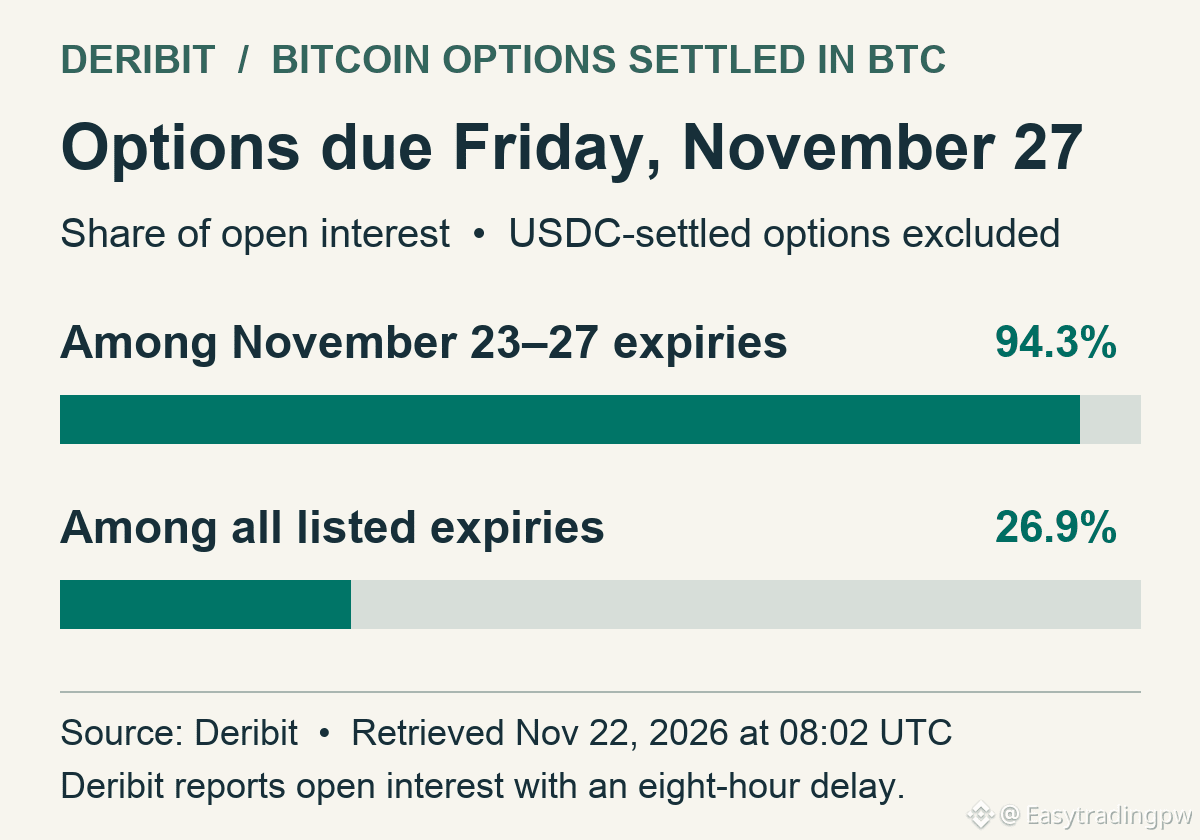
In Deribit’s November 22 snapshot, 94% of open interest in BTC-settled bitcoin options due November 23–27 was in contracts set to expire on Friday, November 27. Across all expiry dates for BTC-settled options, that same Friday expiry made up 27%. Neither figure includes Deribit’s bitcoin options settled in USDC.
The BTC-settled contracts due Friday had 111,976 BTC of open interest, compared with 6,734 BTC due November 23–26 combined. Open interest measures outstanding positions, not how much bitcoin traders will buy or sell on Friday. Positions can still be closed before expiry.
Source: Deribit’s BTC options summary, retrieved November 22, 2026 at 08:02 UTC. Deribit reports open interest with an eight-hour delay.
82
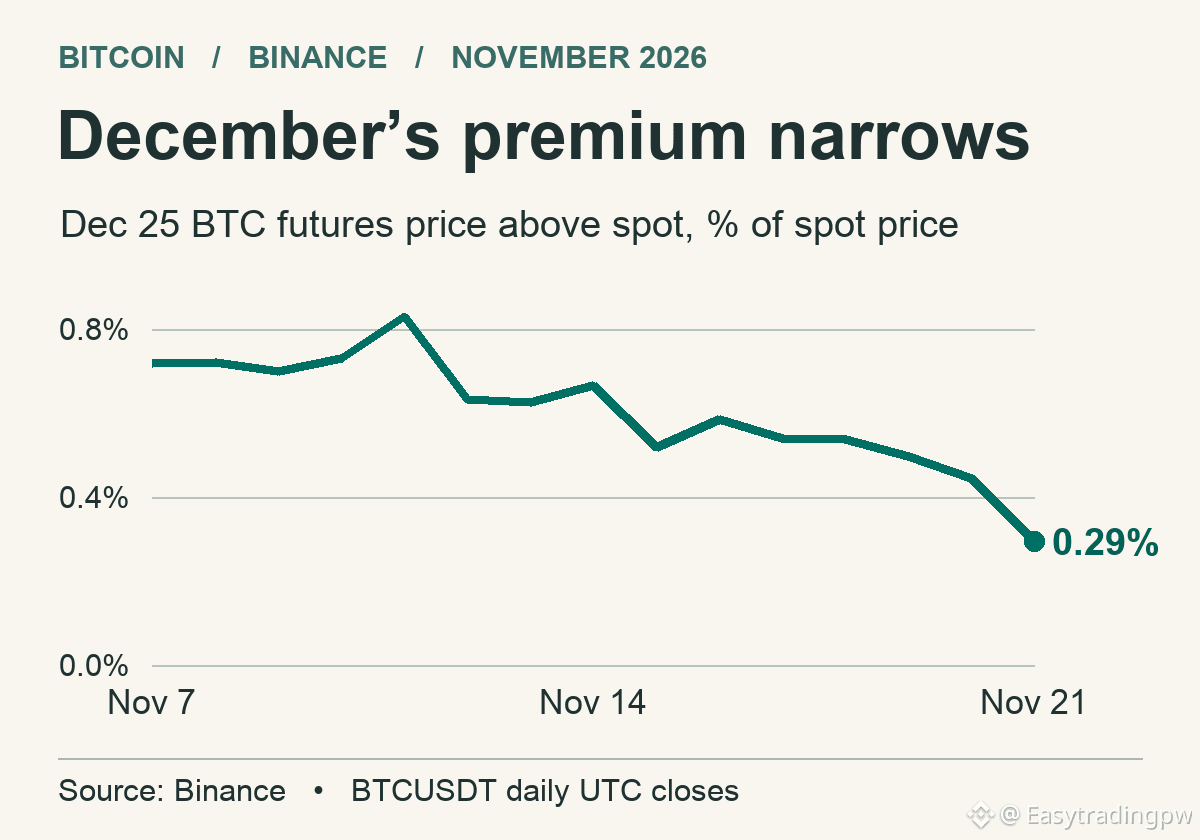
Bitcoin rebounded on Saturday, but December futures ended the day closer to spot. On Binance, the December 25 contract closed just 176.43 USDT above spot on November 21, the smallest gap in 15 daily closes.
Spot bitcoin rose 2.14% on Saturday to 60,215.77 USDT. The futures contract rose too, but by less: 1.99%, to 60,392.20 USDT. That left the futures price 0.29% above spot, down from 0.44% on Friday and 0.66% a week earlier.
The 176.43 USDT gap tells you how far apart the two markets closed on Saturday, not where bitcoin will trade on December 25.
Source: Binance BTC/USDT spot and December 25 BTCUSDT futures, daily UTC closes, November 7–21, 2026.
108
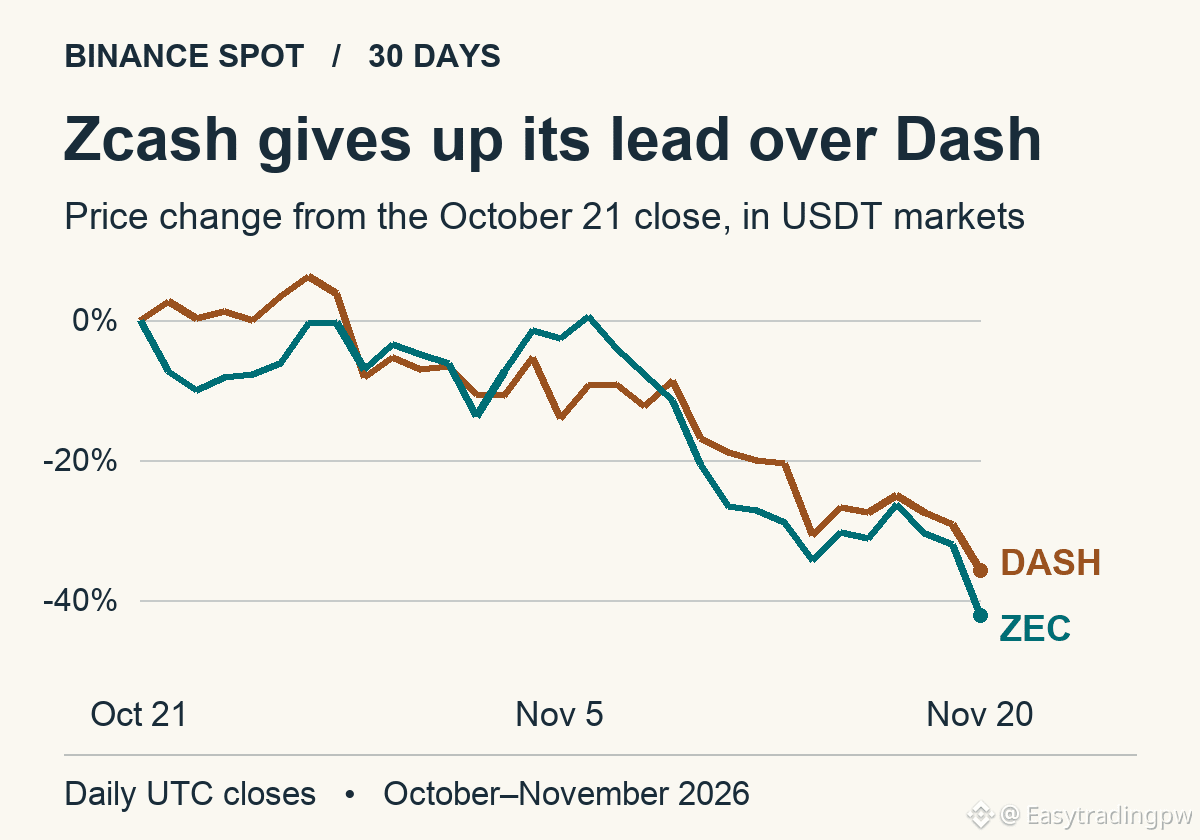
Zcash held up better than Dash in the first half of a 30-day slide. By November 20, it had taken the bigger loss: 42.2% against USDT on Binance spot, compared with 35.8% for Dash.
At the halfway mark on November 5, Zcash was down just 2.6% from its October 21 close, while Dash was down 14.1%. Over the next 15 days Zcash fell from 1,281.11 to 760.30 USDT, a further 40.7%. Dash fell 25.3% over those same days, from 44.45 to 33.20 USDT.
Source: Binance ZEC/USDT and DASH/USDT spot prices at the UTC daily close, October 21–November 20, 2026.
416
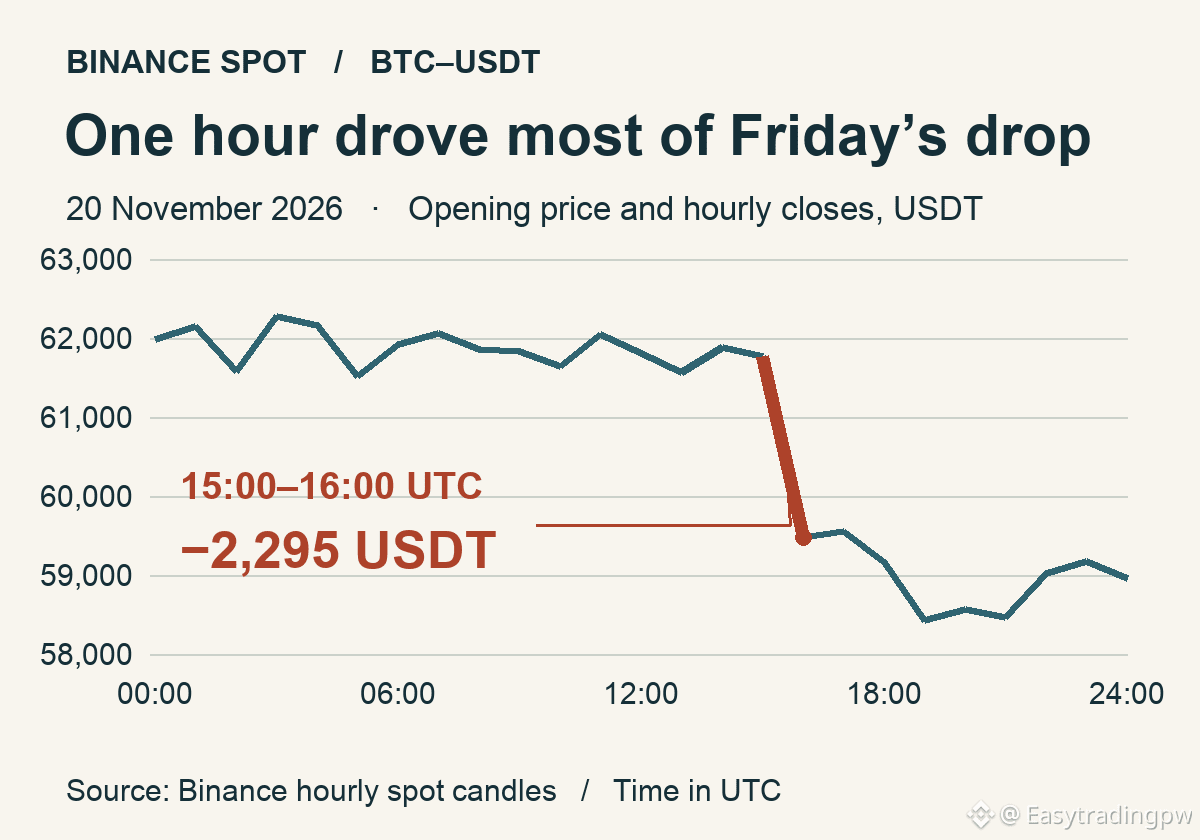
Three quarters of bitcoin’s net decline against USDT on Binance on November 20 came in a single hour. Between 15:00 and 16:00 UTC, BTC fell from 61,770 to 59,475 USDT on the spot market. Nearly 6,000 BTC changed hands in that hour, more than in any other hour from November 14 through 20.
Every subsequent hourly close that Friday was below 60,000 USDT. Bitcoin ended the day at 58,952 USDT, down 4.9% from its opening price of 61,987.
Source: Binance BTC/USDT hourly spot candles, November 14–20, 2026 (UTC).
Every subsequent hourly close that Friday was below 60,000 USDT. Bitcoin ended the day at 58,952 USDT, down 4.9% from its opening price of 61,987.
Source: Binance BTC/USDT hourly spot candles, November 14–20, 2026 (UTC).
112
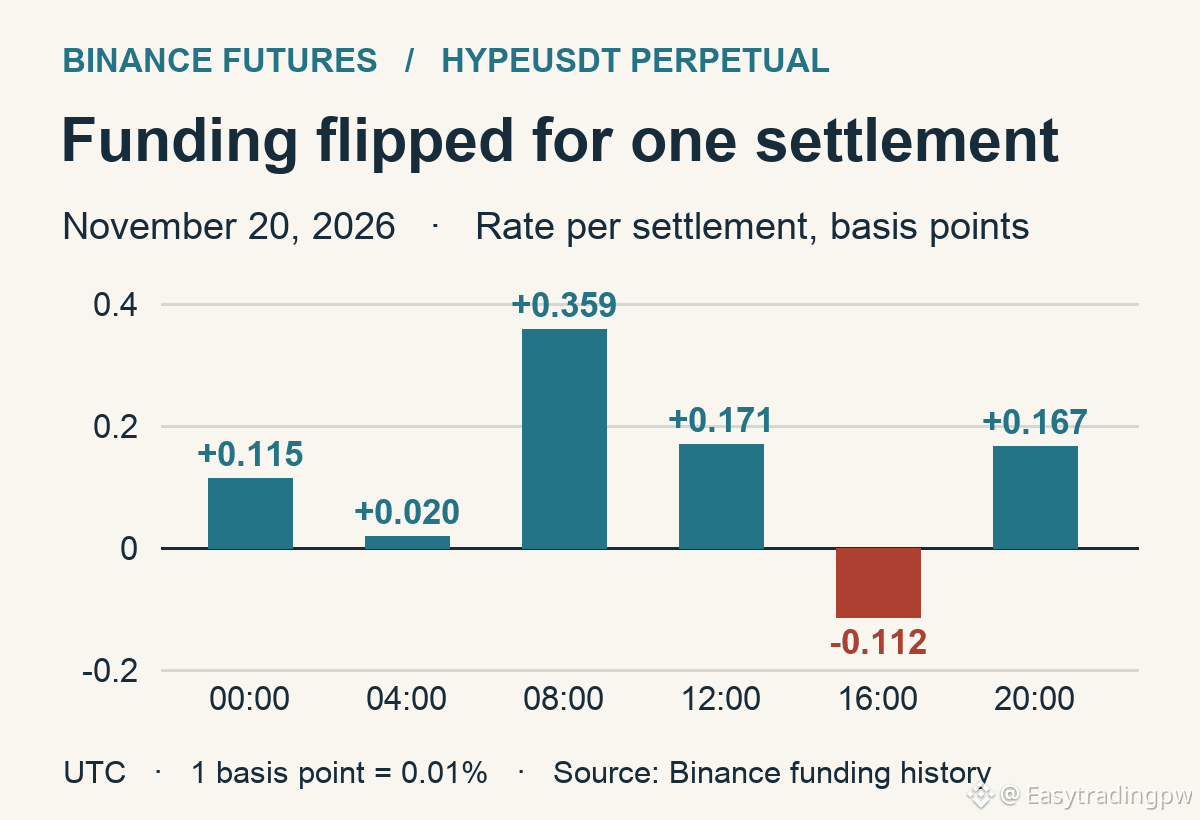
HYPE shorts paid longs at just one of Friday’s six funding settlements on Binance Futures. The 16:00 UTC payment on November 20 broke a run of 38 settlements in which longs paid shorts.
The HYPEUSDT funding rate was −0.001124% at 16:00 UTC. By the next settlement at 20:00 UTC, longs were paying shorts again, at +0.001674%.
Source: Binance Futures, HYPEUSDT funding history, November 14–20 (UTC).
The HYPEUSDT funding rate was −0.001124% at 16:00 UTC. By the next settlement at 20:00 UTC, longs were paying shorts again, at +0.001674%.
Source: Binance Futures, HYPEUSDT funding history, November 14–20 (UTC).
285
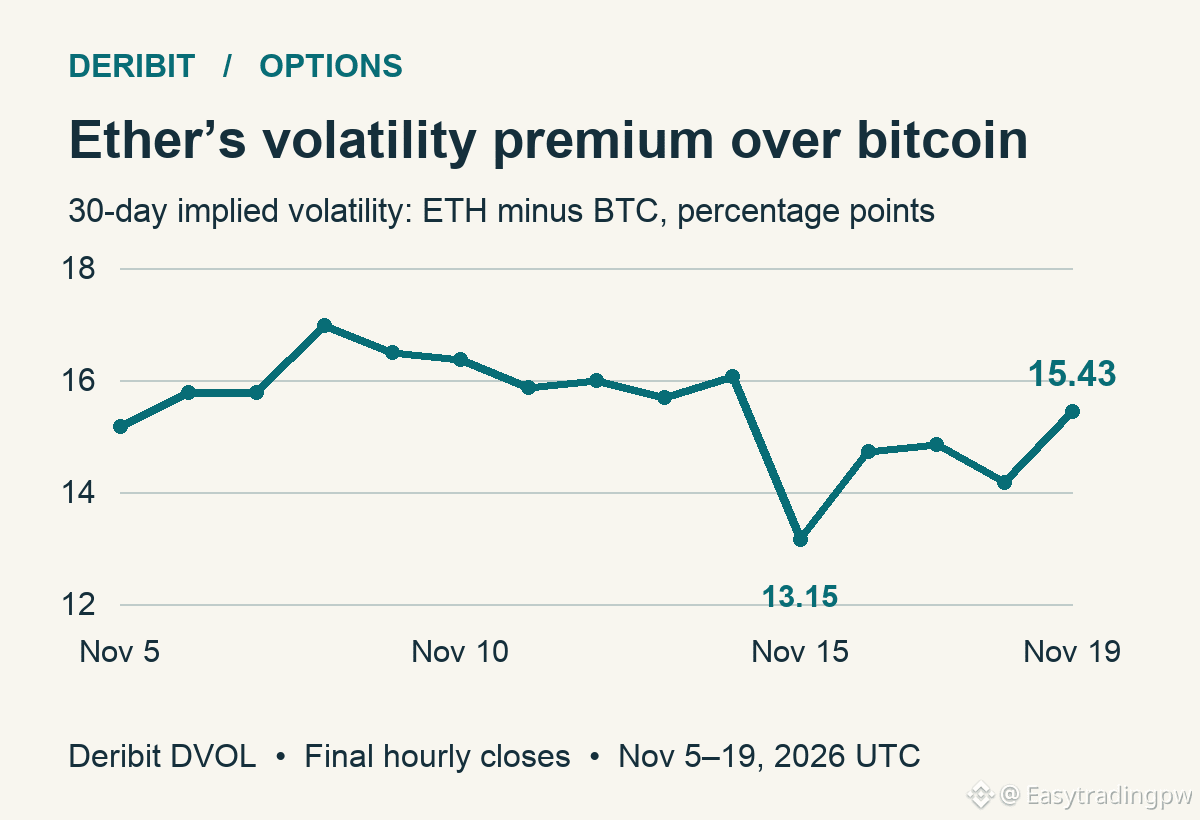
Ether options priced in bigger swings on Thursday, while the outlook for bitcoin barely changed. On Deribit, the gap between their 30-day implied volatility readings widened to 15.43 percentage points on November 19, from 14.17 the day before.
Ether’s volatility index rose 1.44 points to 61.31%; bitcoin’s edged up 0.18 points to 45.88%. The gap has partly recovered from Sunday’s 13.15 points but is still below the 16.07 points seen on Saturday.
These are annualized readings from options prices. They describe the size of the swings traders are pricing in, not whether either coin will rise or fall.
Source: Deribit BTC and ETH DVOL, final hourly close of each UTC day.
78
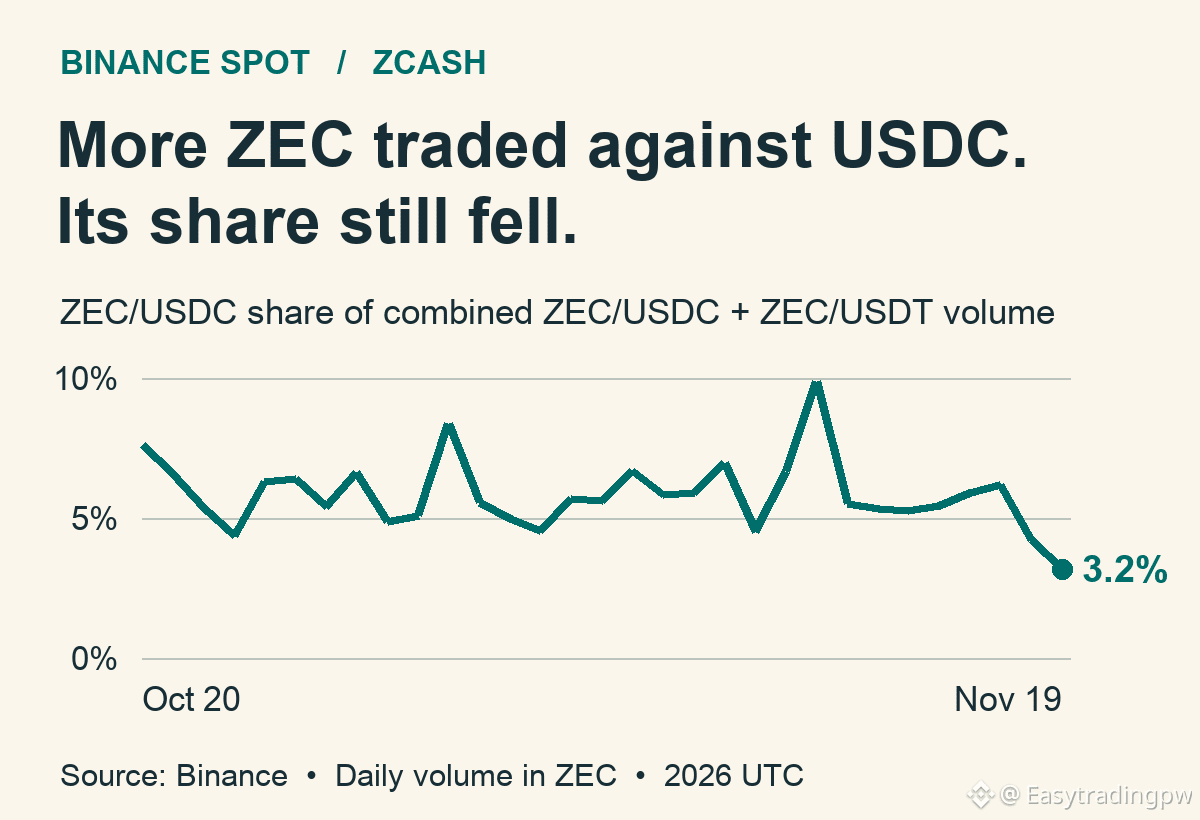
More Zcash traded against USDC on Thursday than on Wednesday. Yet USDC’s share of trading across Binance’s ZEC/USDC and ZEC/USDT spot pairs fell to 3.2%, its lowest in 31 days.
The USDT pair explains the drop. Its November 19 volume jumped 61% to 200,063 ZEC, while volume on the USDC pair rose 19% to 6,598 ZEC. On Wednesday, USDC had accounted for 4.3% of the coins traded across the two pairs.
These are coins changing hands, counted in ZEC on both markets. The figures don’t show traders moving money from one stablecoin to the other.
Source: Binance spot daily candles, October 20–November 19, 2026 (UTC).
1
224
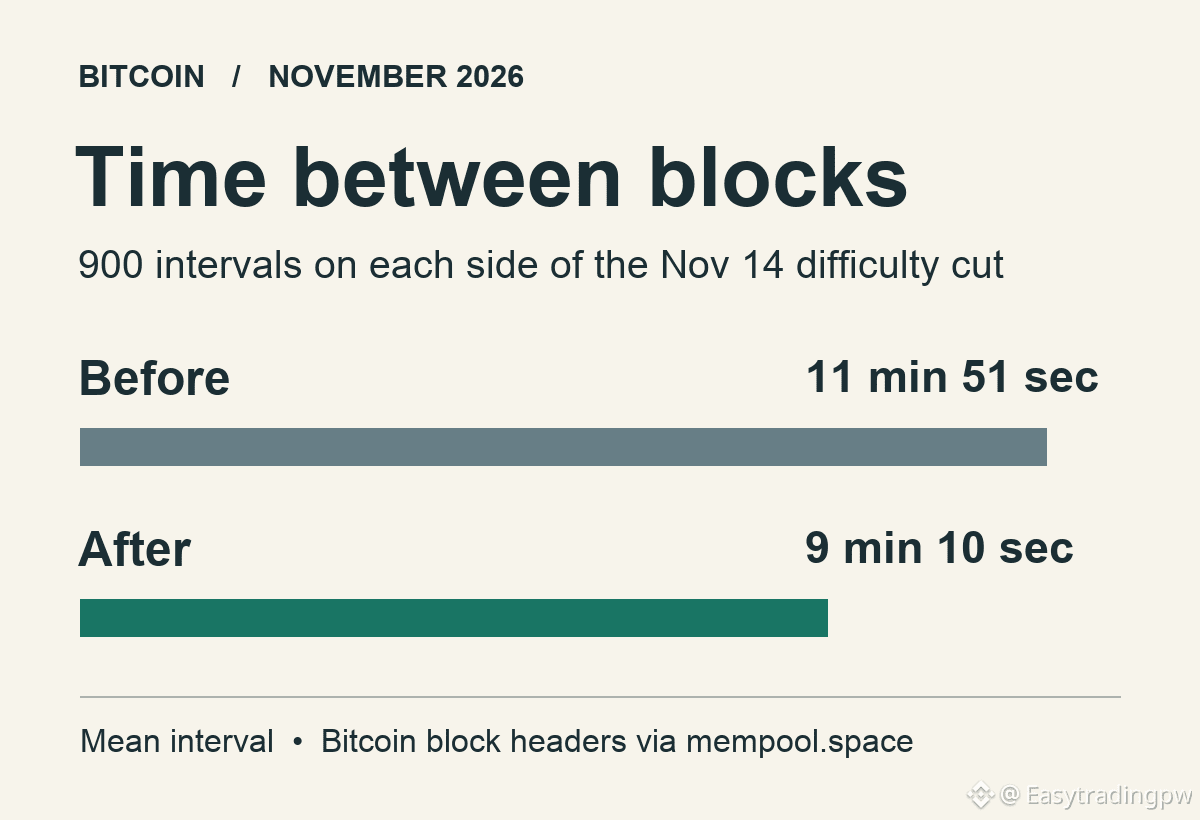
After Bitcoin’s November 14 mining difficulty cut, the average wait between confirmations shortened by 2 minutes and 41 seconds across the next 900 blocks.
The 900 block intervals leading up to the adjustment averaged 11 minutes 51 seconds. The next 900 averaged 9 minutes 10 seconds, ending at block 976,644 on November 19 at 22:25 UTC. Mining difficulty fell 9.13% at the boundary, making it easier for miners to find a valid block.
That shorter interval matters once a payment is in a block: each new block adds another confirmation. It doesn’t tell you how long a payment waited to get into its first block, or when the next block will arrive.
Source: Bitcoin block headers at heights 974,844, 975,744 and 976,644, via mempool.space.
https://mempool.space/block/00000000000000000001822ab24b3603541e155006e696f8273f8e9cad997f0a
161
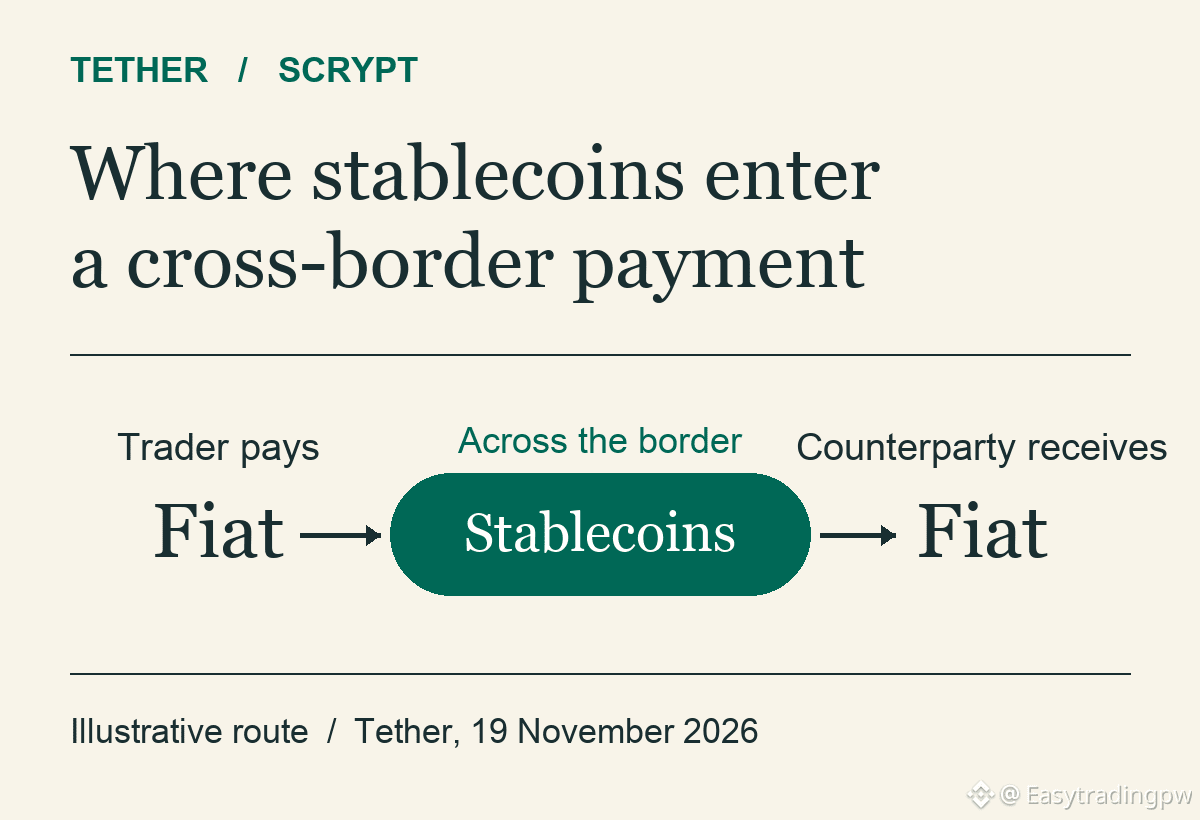
Tether announced a strategic investment in SCRYPT, a Swiss stablecoin trading firm. SCRYPT plans to expand into payments that banks, brokers and fintechs can make on behalf of their customers.
Tether gives the example of a commodity trader settling with a counterparty in another time zone. The trader pays in fiat, stablecoins carry the value across the border, and the counterparty receives fiat.
SCRYPT already offers institutions round-the-clock trading and currency exchange. Its expansion plans include fiat accounts and third-party payments. Tether’s November 19 announcement gave neither an investment amount nor a launch date for those services.
1
91
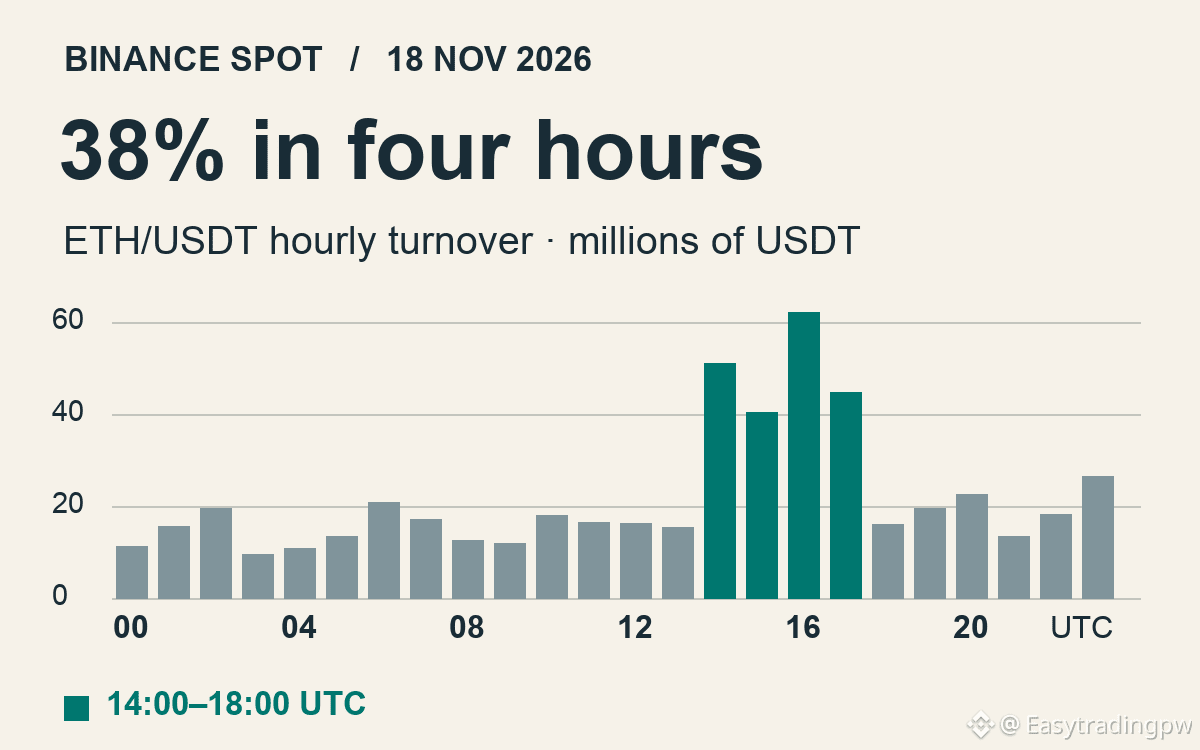
Four hours accounted for 38% of Wednesday’s ETH/USDT spot turnover on Binance.
Between 14:00 and 18:00 UTC on November 18, traders exchanged 198.1 million USDT worth of ether on the pair, out of 522.1 million for the full day. Those were also the day’s four busiest hours.
The busiest hour started at 16:00 UTC. In that hour, 62.2 million USDT worth of ether changed hands and the pair hit its daily low of 1,732.83 USDT. The 62.2 million measures trades between buyers and sellers, not money leaving ether.
1
92
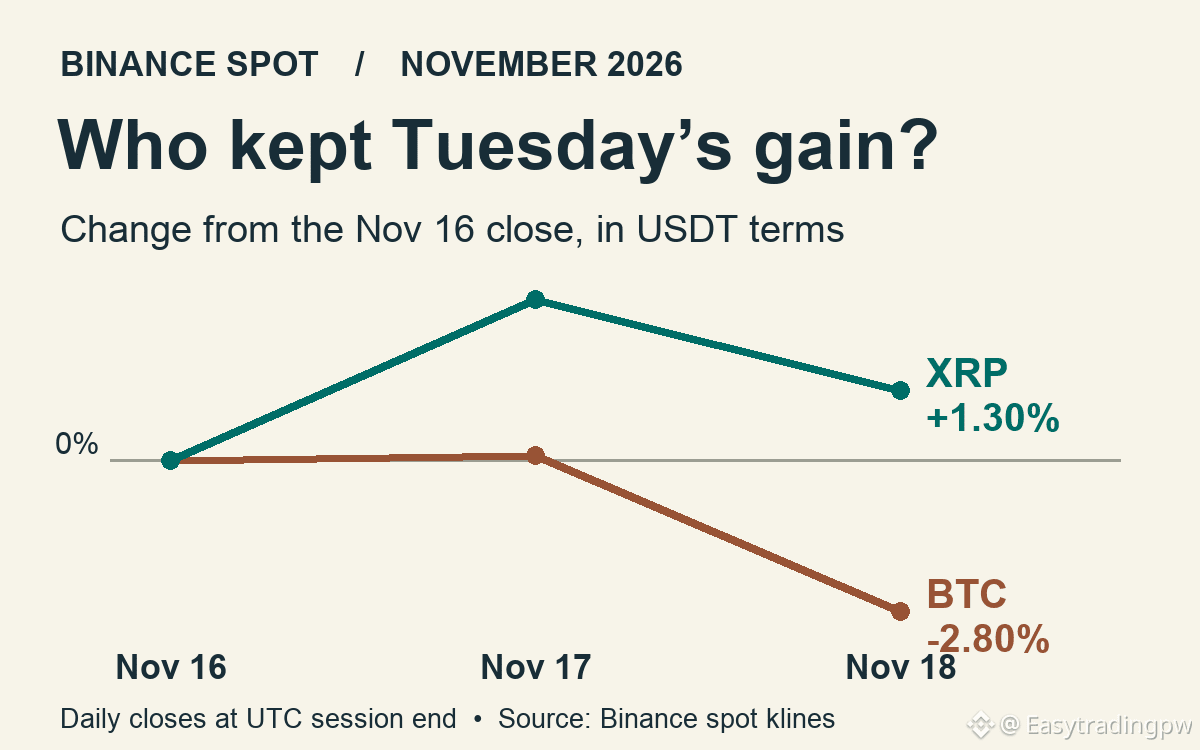
XRP and bitcoin both fell on November 18, but only XRP kept part of Tuesday’s gain.
On Binance spot, XRP closed Wednesday at 0.9677 USDT, down 1.63% from Tuesday. That still left it 1.30% above Monday’s close of 0.9553 USDT: XRP had gained nearly 3% on Tuesday.
Bitcoin had much less of a cushion. It gained just 0.10% on Tuesday, then fell 2.89% on Wednesday to close at 63,068.22 USDT. That put it 2.80% below Monday’s close.
The distinction is in the starting point: XRP lost value against USDT on Wednesday even as it finished the two sessions ahead. All figures use completed UTC daily closes on Binance’s XRP/USDT and BTC/USDT spot pairs.
124
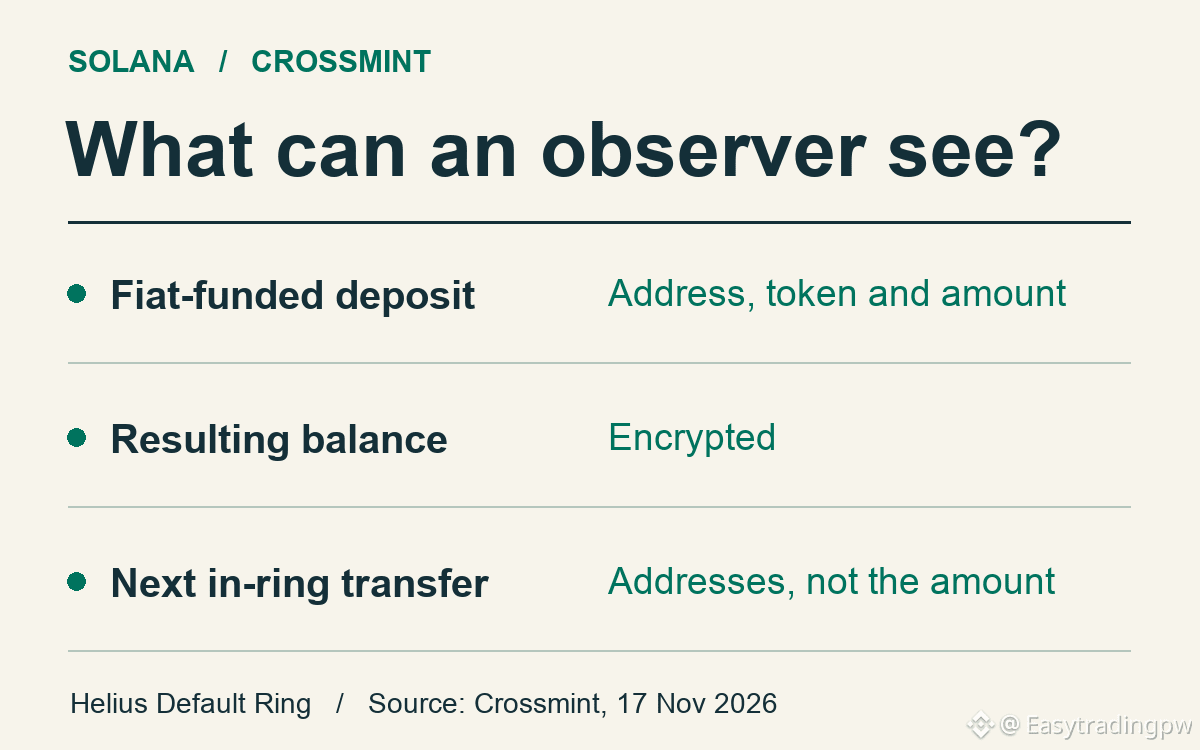
Solana users can now buy USDC or EURC with fiat through Crossmint and receive it directly in an encrypted balance. The deposit itself is still public: anyone can see the recipient address, the token and how much went in.
Crossmint announced the service on November 17 after completing a USDC purchase on November 13. The stablecoins go straight into a registered Helius Private Wallet, so the buyer doesn’t have to receive them in a public account and move them in a second transaction.
The distinction matters for a business funding its treasury: someone looking up the deposit can see what the business just added, but can’t read its total balance from that transaction. Later transfers within the default Privacy Ring hide the amounts, not the counterparty addresses.
Crossmint checks for the private wallet before payment. If it’s missing at delivery, Crossmint refunds the buyer rather than sending the funds to a public wallet.
Source: Crossmint, November 17, 2026.
https://www.crossmint.com/announcement/confidential-onramping-solana
#Solana #Stablecoins
129
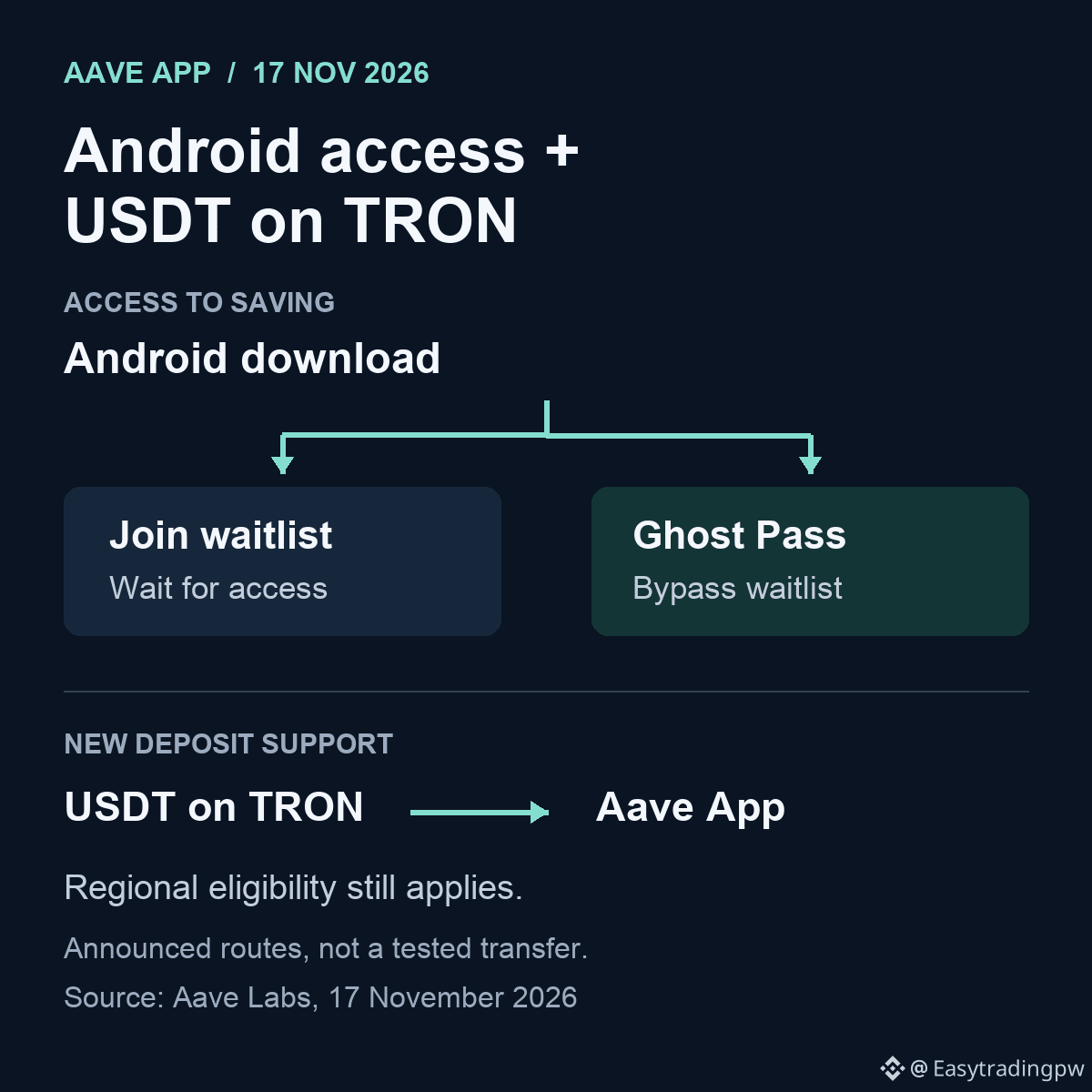
Aave App now accepts USDT deposits on TRON and has opened early access on Android, Aave Labs announced on November 17.
Android users can download the app from Google Play and join the waitlist. A Ghost Pass code shared by an early user lets them skip the waitlist and start saving.
The app has no lock-up period, and users can request a withdrawal at any time. Availability varies by region. Aave is not a bank, funds are not government-insured, and savings rates are variable and not guaranteed.
Source: Aave Labs, November 17, 2026.
https://aave.com/blog/aave-app-android
#Aave #USDT
2
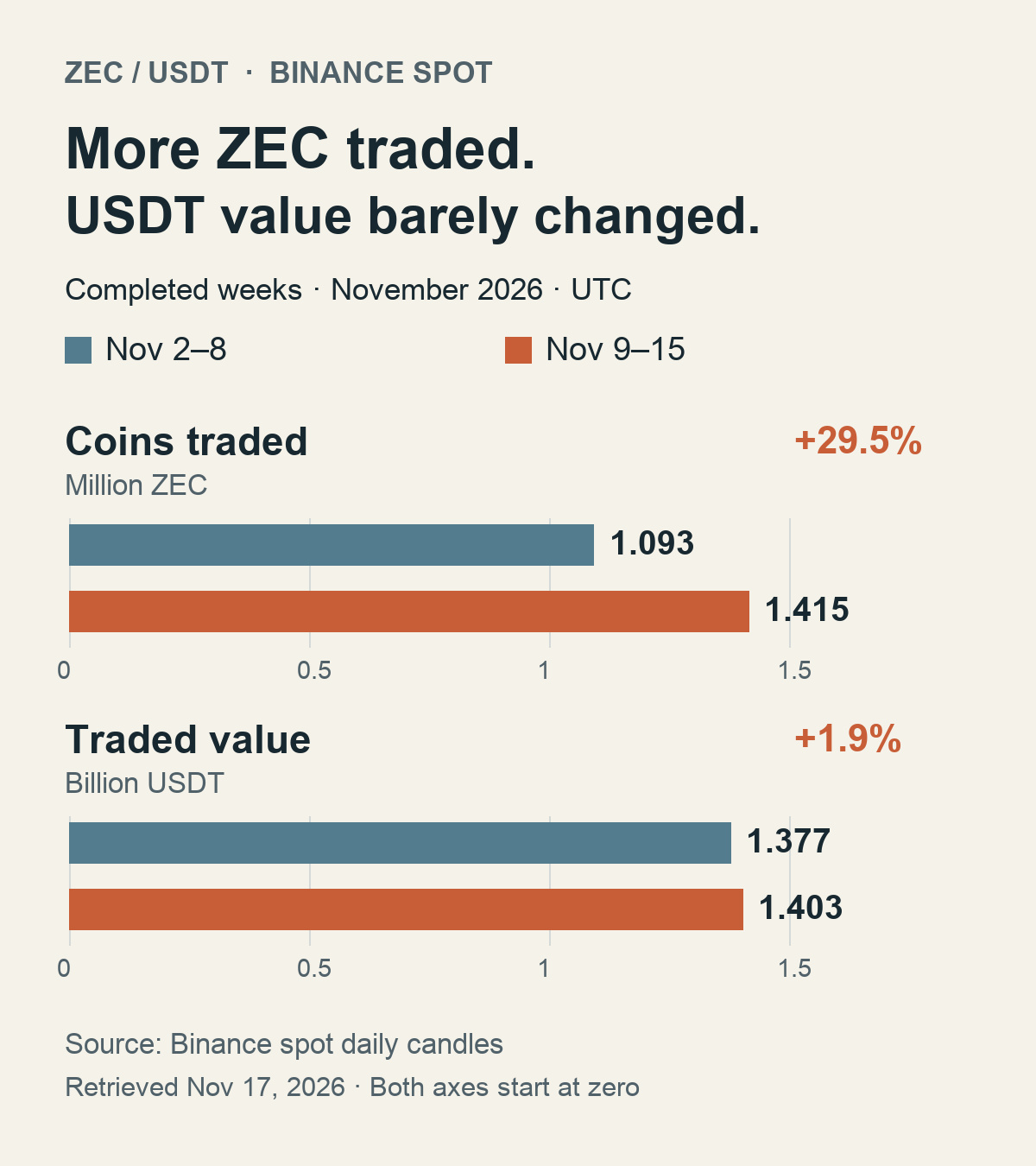
Zcash's weekly trading volume rose 29.5% in coins, but just 1.9% in USDT on Binance spot.
Across November 9–15, the ZEC/USDT pair traded 1.415 million ZEC, up from 1.093 million the previous week. Its traded value barely moved: 1.403 billion USDT versus 1.377 billion.
Lower prices account for the gap. Dividing each week's USDT turnover by its ZEC volume gives a volume-weighted average execution price of about 991 USDT, down from 1,260. More coins changed hands at a substantially lower average price.
So a chart showing nearly flat USDT turnover would miss the increase in the quantity of ZEC traded. These are two measures of the same completed trades, not conflicting accounts of activity or evidence of net buying.
Chart: Binance ZEC/USDT spot, November 2–8 versus November 9–15, 2026 UTC. Both are complete Monday–Sunday weeks. Source: Binance daily candles, retrieved November 17. One pair on one venue, not total Zcash trading.
#Zcash #ZEC
171
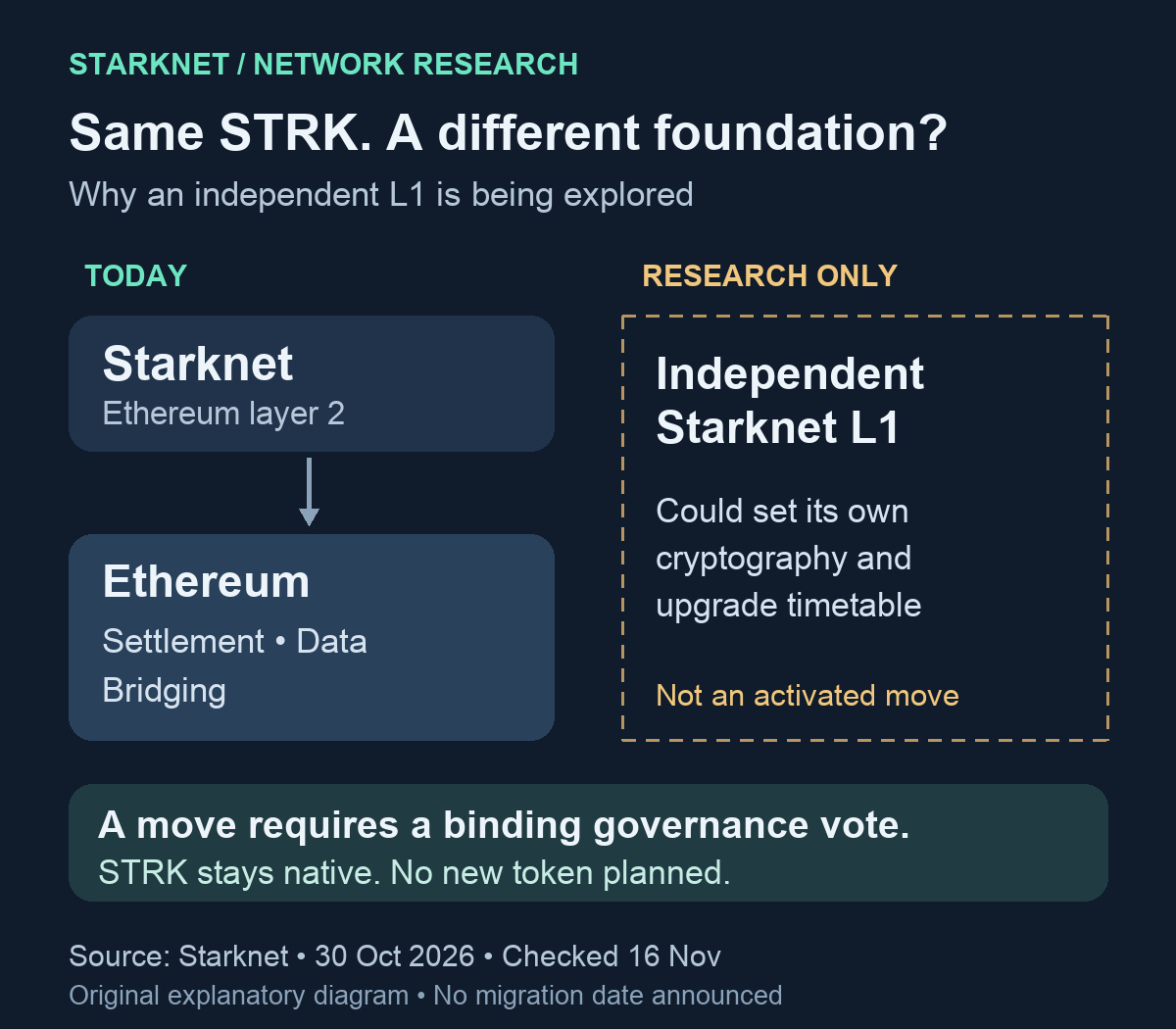
Starknet can change how its accounts approve transactions, but it still depends on Ethereum to complete a transition to quantum-resistant security. That dependency is why it is researching an independent blockchain.
In its October 30 explanation, Starknet describes two parts of the problem. Its programmable accounts can change their signing rules without moving the address, balances or history. The network underneath those accounts still settles transactions on Ethereum, publishes data there and bridges through it. Starknet says all three depend on cryptography that would also need to change.
Running that infrastructure itself would let Starknet choose its own cryptography and upgrade timetable. For someone holding assets on the network, an account upgrade alone therefore would not establish that the whole system had become quantum-resistant.
This remains a research direction. Starknet says STRK would stay the native token, no new token is planned and existing Ethereum bridges stay open. Any move to an independent layer-1 network would require a binding governance vote.
Source: Starknet, October 30, 2026; checked November 16.
https://www.starknet.io/blog/account-abstraction-post-quantum-starknet/
#Starknet #STRK
275
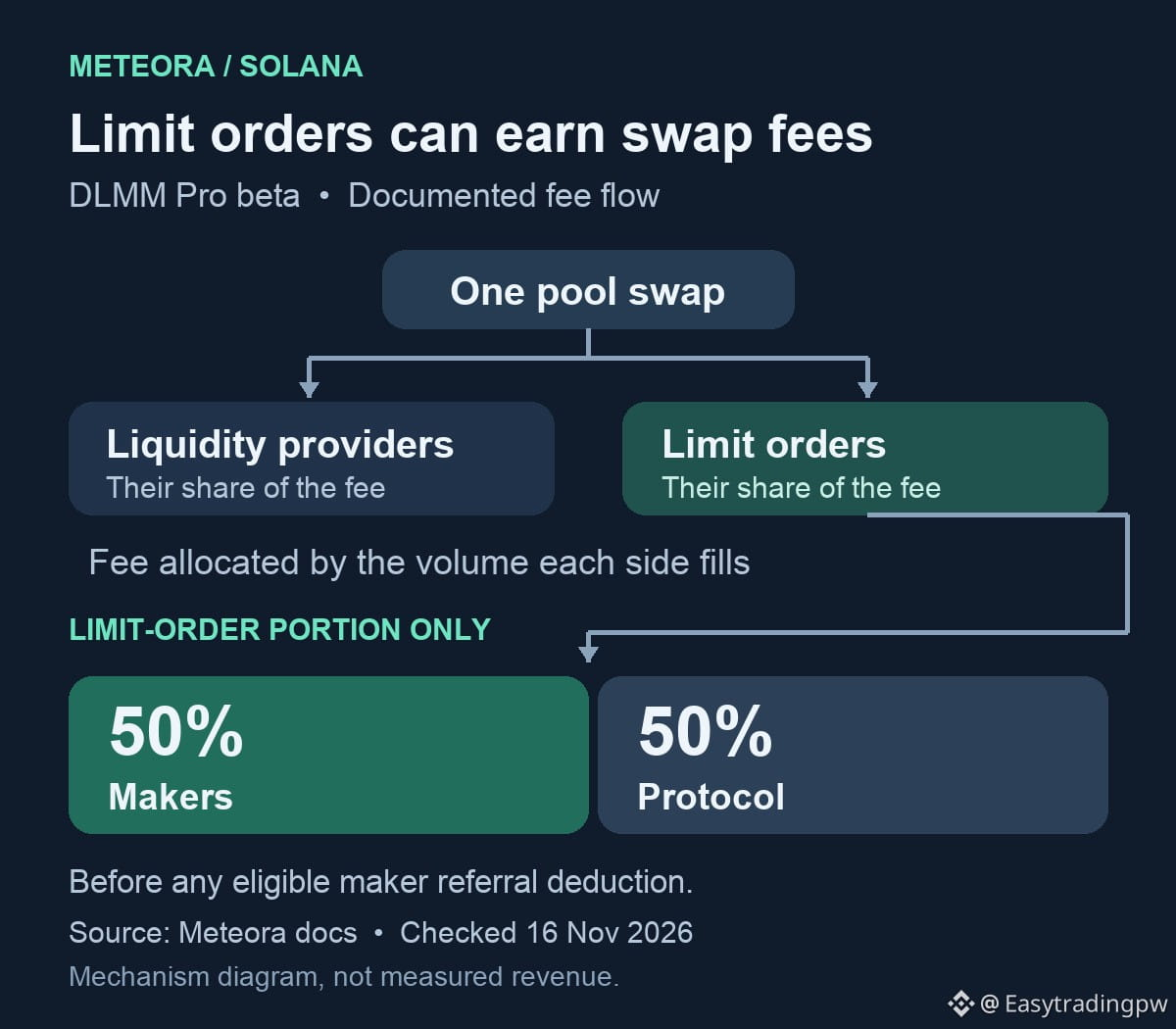
Solana traders can earn a share of swap fees from limit orders in Meteora’s DLMM Pro beta, rather than having to supply liquidity across a price range.
Meteora’s documentation lists DLMM Pro on mainnet and devnet. Buy and sell orders sit inside the same pool as liquidity-provider positions. A swap can trade against both, filling resting orders when it reaches their price.
The fee split follows the trading: fees are first divided between liquidity providers and limit orders according to the volume each fills. Half of the limit-order portion goes to makers and half to the protocol. That is not half of every fee earned by the pool. An eligible referral can also take 20% of an order’s maker-fee share.
For traders placing bids or offers, this adds fee income to the execution proceeds. Collection is a separate step: filled proceeds stay in the pool until the owner cancels the order at its price levels. This collects the proceeds without reversing completed trades. A pool’s launch rules can delay when withdrawals, including that collection, become available.
DLMM Pro is a separate program from the original DLMM, not an automatic upgrade of its pools. Meteora labels it beta and warns of breaking changes.
Sources: Meteora documentation, checked November 16, 2026.
https://docs.meteora.ag/core-products/dlmm-pro/what-is-dlmm-pro
https://docs.meteora.ag/core-products/dlmm-pro/limit-orders
#Solana #DeFi
169
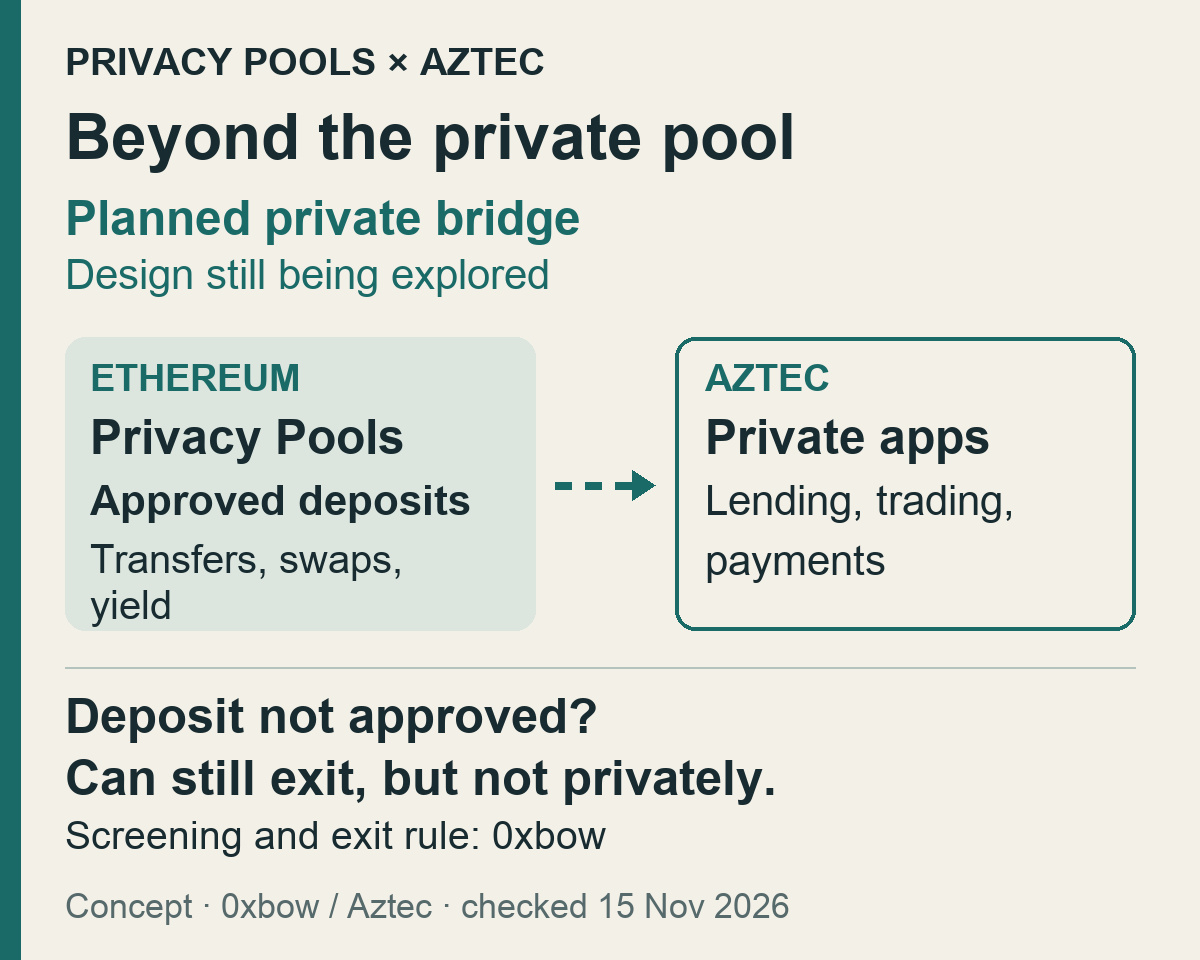
Assets held privately in Privacy Pools could become usable in Aztec lending, trading and payment apps without first returning to public transactions.
0xbow and Aztec plan to connect the pool to apps on Aztec, an Ethereum layer-2 network. Today, Privacy Pools supports private transfers, swaps and yield on Ethereum, but 0xbow says using those assets outside the pool means returning to transparent transactions.
0xbow screens which deposits qualify for the pool's approved set. Its announcement says a deposit that fails that check can still be withdrawn, but not privately; the screening provider does not hold the user's funds or keys.
Both teams say they are still exploring the implementation's design and scope.
Sources: 0xbow and Aztec announcements, checked November 15, 2026.
https://0xbow.io/blog/privacy-pools-is-coming-to-aztec
https://aztec.network/blog/privacy-pools-to-deploy-on-aztec
#Ethereum #Aztec
119
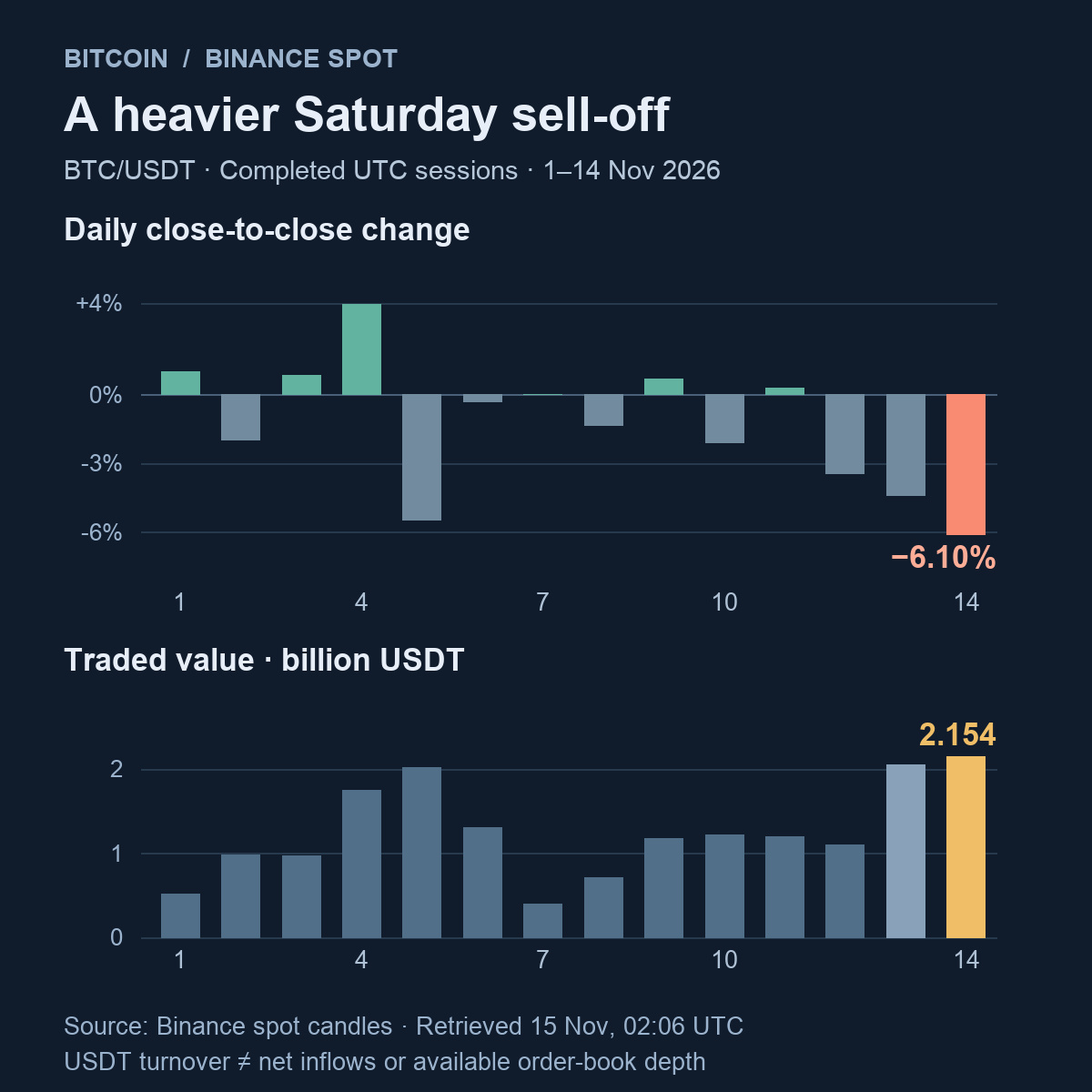
Bitcoin’s Saturday sell-off was the largest daily decline of November’s first 14 sessions on Binance’s BTC/USDT spot pair. It also had the highest traded value of those sessions.
BTC closed November 14 at 64,150 USDT, down 6.10% from Friday’s close. Turnover reached 2.154 billion USDT—5.1% above Friday and 5.44 times the previous Saturday’s total.
The sell-off intensified into the weekend: Saturday’s loss was larger than Friday’s 4.40%, and more USDT changed hands. That measures completed trading, not the orders available to absorb the next sale.
Chart: Binance BTC/USDT spot, November 1–14, 2026 UTC. Daily returns are close-to-close; traded value is quote-asset volume in USDT. November 15’s unfinished session is excluded. Source: Binance spot candles, retrieved November 15 at 02:06 UTC.
#Bitcoin #BTC
143
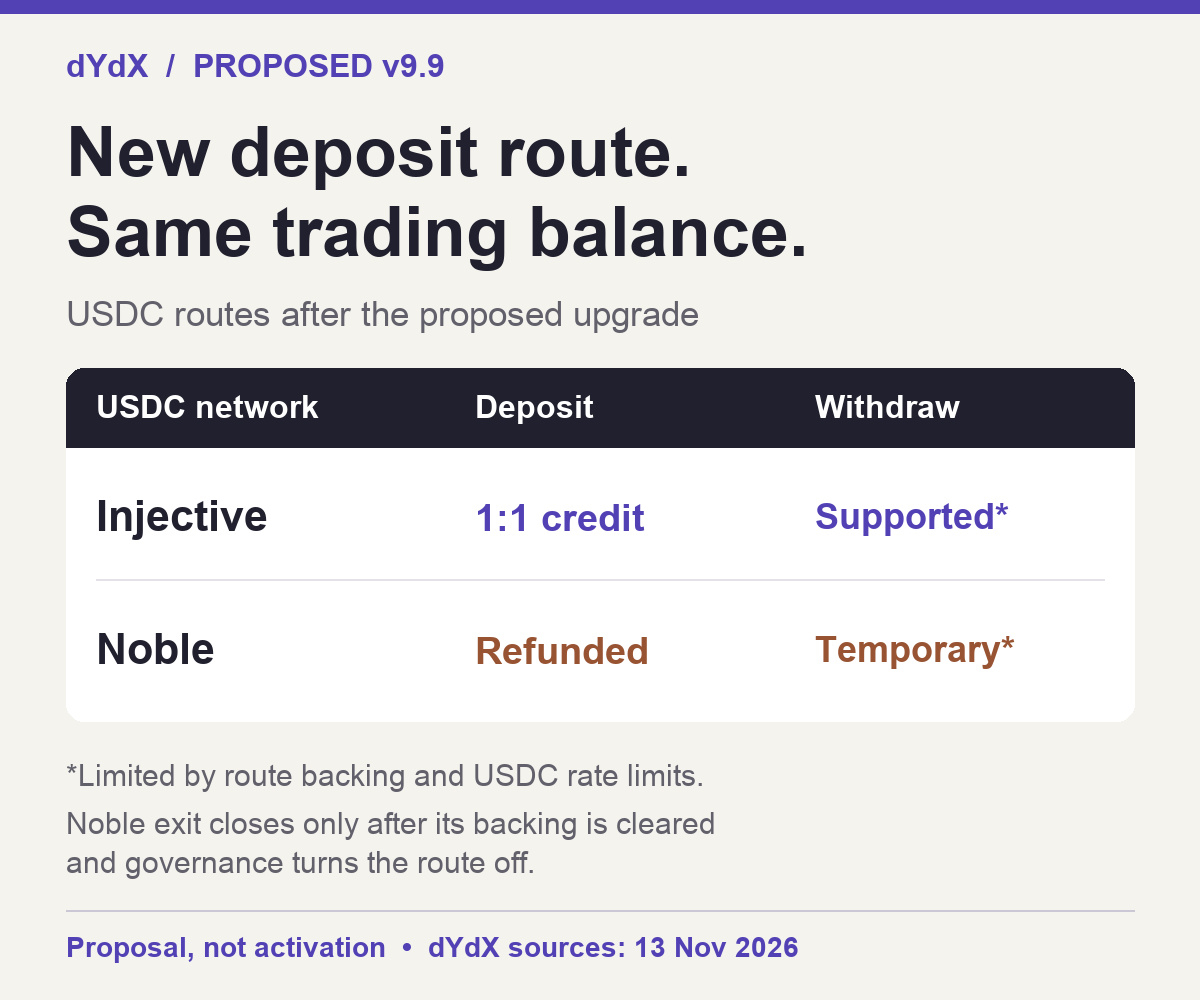
dYdX traders would keep their USDC balances and open positions under the proposed v9.9 upgrade, while new deposits would move to Injective.
The Operations subDAO’s November 13 proposal sets out how dYdX would replace its Noble USDC backing as Circle retires support for USDC on Noble. The release notes say balances, positions, orders and MegaVault shares would remain unchanged.
Once the upgrade takes effect, USDC sent through Noble would be rejected and refunded on Noble, including transfers using its auto-forwarding addresses. Injective deposits would be credited one-for-one to the existing dYdX USDC balance.
Withdrawals would initially have two routes: Noble and Injective. Each would be limited by the backing available on that route and the existing USDC rate limit. Governance could close the Noble route only after its remaining backing is cleared.
That means a saved Noble deposit route could stop working even while the trading account and its positions carry on unchanged.
This is still a proposal. The subDAO targets a November 16 vote outcome and a November 17 upgrade; the published schedule is not confirmation of approval or activation.
Sources: dYdX Operations subDAO proposal and v9.9.0 release notes, November 13, 2026.
https://dydx.forum/t/drc-proposal-for-dydx-protocol-upgrade-to-v9-9/5352
https://github.com/dydxprotocol/v4-chain/releases/tag/protocol/v9.9.0
#dYdX #USDC
378
Log in to explore more content
Join global crypto users on Binance Square
⚡️ Get latest and useful information about crypto.
💬 Trusted by the world’s largest crypto exchange.
👍 Discover real insights from verified creators.
Email / Phone number
Trending Topics
NVIDIAReinstatesJensenHuangasCEO
7,467 views
356 Discussing
TradFi News | Nvidia Board Unanimously Reinstates Jensen Huang as CEO; Shares Jump 30% Premarket
Binance News
·19 Likes
·20.2k views
WillMarketsStageAThanksgivingReliefRally?
107,806 views
1,551 Discussing
WillOctCorePCEShiftFedHikeExpectations?
39,659 views
622 Discussing