
moontrail
315 Posts

moontrail
Report
Block User
Hey there! Just a friendly crypto explorer here, learning and growing every day. Ready to dive into the world of coins and make some smart moves..
Open Trade
High-Frequency Trader
1.9 Years
11 Following
2.0K+ Followers
435 Liked
Posts
Portfolio
All
Quotes
Live
PINNED
·
--
Article
What Will Drive Crypto and Stocks’ Next Rebound?Financial markets are going through a challenging phase, with cryptocurrency and traditional stocks facing pressure from inflation concerns, tighter monetary policy, institutional outflows, and uncertainty surrounding technology investments. However, market corrections can also create the conditions for a new recovery. The important question is: What could trigger the next major rebound, and what signals should investors watch?
In my view, the next market recovery will depend on several interconnected factors rather than a single bullish announcement.
1. Federal Reserve Policy and Interest Rates
Monetary policy remains one of the biggest drivers of global financial markets. Higher interest rates generally make borrowing more expensive and reduce the attractiveness of riskier assets.
If inflation begins to cool and central banks become less aggressive, market sentiment could gradually improve. A shift toward easier monetary conditions could encourage capital to return to equities and digital assets.
For now, inflation and interest-rate expectations remain important risks that markets must overcome.
2. Institutional Capital Could Change Market Direction
Institutional participation has become increasingly important for Bitcoin and the broader crypto ecosystem.
However, recent ETF outflows indicate that institutional demand cannot be taken for granted. According to Binance Research's November market review, Bitcoin spot ETFs recorded approximately $516 million in net outflows, while Ether ETFs experienced around $1.6 billion in outflows.
A sustained return of institutional inflows could become an important signal of improving confidence.
3. AI Growth and Corporate Earnings
Artificial intelligence continues to influence stock market valuations and investment expectations.
But investors are becoming more selective. Spending billions on AI infrastructure does not automatically guarantee profitability. Companies must demonstrate that their investments are generating sustainable revenue and stronger earnings.
If major technology companies deliver solid earnings, improve profitability, and demonstrate real demand for AI products, technology stocks could regain momentum. This could also improve broader market sentiment.
4. Global Liquidity and Economic Stability
Liquidity is another critical factor.
When financial conditions improve, investors generally have more confidence in allocating capital toward growth-oriented assets. Conversely, tightening financial conditions can put pressure on both stocks and cryptocurrencies.
A slowdown in monetary tightening, improving credit conditions, and stronger economic confidence could support a broader recovery.
5. Regulatory Clarity and Crypto Adoption
The long-term crypto outlook also depends on regulatory developments and real-world adoption.
Clearer regulations, institutional infrastructure, tokenization, stablecoin development, and expanding blockchain applications could strengthen confidence in the digital asset industry.
The more useful blockchain technology becomes, the stronger the foundation for sustainable growth could become.
6. Market Sentiment and Technical Confirmation
Market psychology often determines how quickly a recovery develops.
During uncertain periods, fear and excessive leverage can increase volatility. A healthier recovery would ideally involve improving trading volume, stronger market breadth, reduced selling pressure, and sustained demand.
For Bitcoin and major stock indices, reclaiming important technical levels and maintaining them could provide additional confirmation that market momentum is improving.
My Final Outlook
I believe the next major rebound in crypto and stocks will depend on the combination of three powerful forces: improving liquidity, stronger institutional demand, and sustainable corporate earnings.
The market does not necessarily need every economic indicator to turn positive simultaneously. However, a consistent improvement across these areas could create a stronger foundation for recovery.
At the same time, persistent inflation, higher interest rates, geopolitical uncertainty, and disappointing earnings could delay that recovery.
The next rebound should therefore be judged by real economic improvements and sustained market participation, not simply temporary price movements.
One thing is clear: the strongest recovery will be the one supported by fundamentals, liquidity, and genuine demand—not just hype.
Disclaimer: This article is for educational and informational purposes only. It does not constitute financial or investment advice.
#WhatWillDriveCryptoandStocks’NextRebound? #cryptouniverseofficial #squarecreator #CryptoNewsCommunity #Binance
What Will Drive Crypto and Stocks’ Next Rebound?
Financial markets are going through a challenging phase, with cryptocurrency and traditional stocks facing pressure from inflation concerns, tighter monetary policy, institutional outflows, and uncertainty surrounding technology investments. However, market corrections can also create the conditions for a new recovery. The important question is: What could trigger the next major rebound, and what signals should investors watch?
In my view, the next market recovery will depend on several interconnected factors rather than a single bullish announcement.
1. Federal Reserve Policy and Interest Rates
Monetary policy remains one of the biggest drivers of global financial markets. Higher interest rates generally make borrowing more expensive and reduce the attractiveness of riskier assets.
If inflation begins to cool and central banks become less aggressive, market sentiment could gradually improve. A shift toward easier monetary conditions could encourage capital to return to equities and digital assets.
For now, inflation and interest-rate expectations remain important risks that markets must overcome.
2. Institutional Capital Could Change Market Direction
Institutional participation has become increasingly important for Bitcoin and the broader crypto ecosystem.
However, recent ETF outflows indicate that institutional demand cannot be taken for granted. According to Binance Research's November market review, Bitcoin spot ETFs recorded approximately $516 million in net outflows, while Ether ETFs experienced around $1.6 billion in outflows.
A sustained return of institutional inflows could become an important signal of improving confidence.
3. AI Growth and Corporate Earnings
Artificial intelligence continues to influence stock market valuations and investment expectations.
But investors are becoming more selective. Spending billions on AI infrastructure does not automatically guarantee profitability. Companies must demonstrate that their investments are generating sustainable revenue and stronger earnings.
If major technology companies deliver solid earnings, improve profitability, and demonstrate real demand for AI products, technology stocks could regain momentum. This could also improve broader market sentiment.
4. Global Liquidity and Economic Stability
Liquidity is another critical factor.
When financial conditions improve, investors generally have more confidence in allocating capital toward growth-oriented assets. Conversely, tightening financial conditions can put pressure on both stocks and cryptocurrencies.
A slowdown in monetary tightening, improving credit conditions, and stronger economic confidence could support a broader recovery.
5. Regulatory Clarity and Crypto Adoption
The long-term crypto outlook also depends on regulatory developments and real-world adoption.
Clearer regulations, institutional infrastructure, tokenization, stablecoin development, and expanding blockchain applications could strengthen confidence in the digital asset industry.
The more useful blockchain technology becomes, the stronger the foundation for sustainable growth could become.
6. Market Sentiment and Technical Confirmation
Market psychology often determines how quickly a recovery develops.
During uncertain periods, fear and excessive leverage can increase volatility. A healthier recovery would ideally involve improving trading volume, stronger market breadth, reduced selling pressure, and sustained demand.
For Bitcoin and major stock indices, reclaiming important technical levels and maintaining them could provide additional confirmation that market momentum is improving.
My Final Outlook
I believe the next major rebound in crypto and stocks will depend on the combination of three powerful forces: improving liquidity, stronger institutional demand, and sustainable corporate earnings.
The market does not necessarily need every economic indicator to turn positive simultaneously. However, a consistent improvement across these areas could create a stronger foundation for recovery.
At the same time, persistent inflation, higher interest rates, geopolitical uncertainty, and disappointing earnings could delay that recovery.
The next rebound should therefore be judged by real economic improvements and sustained market participation, not simply temporary price movements.
One thing is clear: the strongest recovery will be the one supported by fundamentals, liquidity, and genuine demand—not just hype.
Disclaimer: This article is for educational and informational purposes only. It does not constitute financial or investment advice.
#WhatWillDriveCryptoandStocks’NextRebound? #cryptouniverseofficial #squarecreator #CryptoNewsCommunity #Binance
1
1
108


·
--
🎙️ The opportunity to build positions in BNB and BNCB on dips is here, guys.

End
02 h 10 m 17 s
5.3k
6
11

·
--
US PPI coming in slightly cooler than expected may ease some of the immediate pressure on BTC.
The logic is straightforward: softer producer inflation can reduce fears of a more aggressive Fed response, which may help liquidity-sensitive assets like Bitcoin find short-term relief. But this is only one data point—not a full all-clear signal.
BTC still depends on the broader picture: inflation trends, Treasury yields, the US dollar, ETF/spot demand, and leverage across crypto markets. A small PPI miss can improve sentiment, but sustained strength needs follow-through from those factors too.
For now, macro pressure may be easing at the margin—but volatility is likely to remain elevated.
#Bitcoin #BTC #Inflation #CryptoMarkets
#USPPIMissMayEaseBTCPressure
1
158
·
--
Article
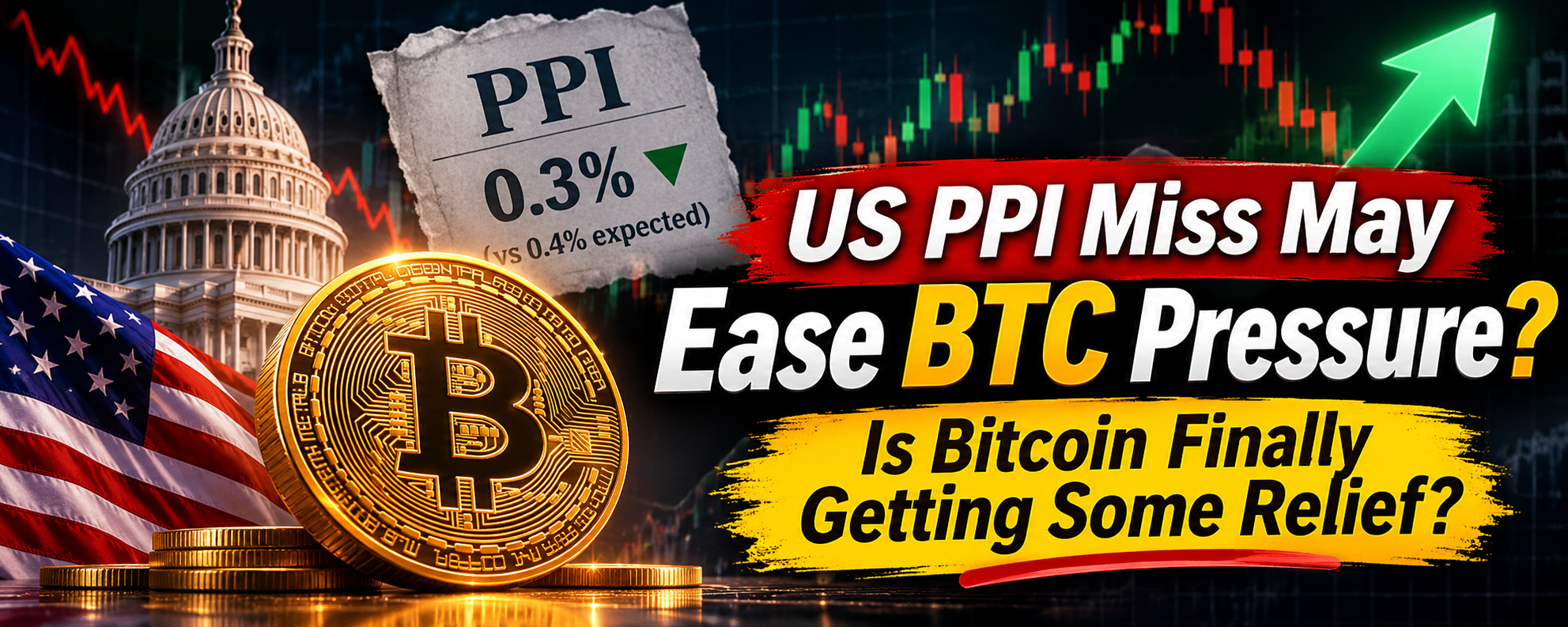
US PPI Miss May Ease BTC Pressure: Is Bitcoin Finally Getting Some Relief?The latest US Producer Price Index (PPI) report has delivered a small but potentially important development for financial markets, offering Bitcoin investors a reason for cautious optimism.
In October, US producer prices increased by 0.3% month-over-month, coming in below economists' expectations of 0.4%. Annual PPI reached 6.5%, slightly below the 6.6% forecast. Although the difference appears modest, softer-than-expected inflation could help reduce some of the pressure currently facing risk assets, including Bitcoin.
Why Does PPI Matter for Bitcoin?
PPI measures changes in the prices businesses receive for their goods and services. It is an important indicator because rising production costs can eventually contribute to higher consumer prices.
When inflation shows signs of cooling, markets may become more optimistic about the Federal Reserve's future monetary policy. Lower expectations for interest rates can weaken the US dollar and improve sentiment toward risk-sensitive assets such as Bitcoin.
However, the latest report is not entirely positive. Annual producer inflation increased from 6.3% to 6.5%, highlighting that underlying inflationary pressure remains a concern.
Can This Reduce Bitcoin's Selling Pressure?
Bitcoin has recently faced considerable selling pressure, with BTC falling below the $70,000 level and briefly approaching $67,500.
Following the softer-than-expected PPI release, Bitcoin experienced a short-term recovery toward $70,000. This suggests that even a modest improvement in inflation expectations can influence market sentiment.
Nevertheless, one economic report is not enough to confirm a sustainable bullish reversal. Investors still need to consider Federal Reserve expectations, Treasury yields, dollar strength, institutional demand and broader market conditions.
What Should the Market Watch Next?
The next major question is whether upcoming economic indicators will confirm that inflation is gradually cooling.
If inflation continues to moderate, it could improve the outlook for risk assets and potentially help Bitcoin regain market confidence. On the other hand, persistent inflation could keep monetary policy restrictive and limit BTC's recovery.
My Take
I believe the latest US PPI miss is a small positive development for Bitcoin, but the bigger picture remains uncertain.
The market needs more than one softer inflation reading to establish a convincing recovery. Bitcoin's ability to regain important price levels, combined with improving macroeconomic conditions and stronger buying demand, will be essential.
For now, I see this report as a potential source of short-term relief rather than confirmation of a new bullish trend.
The key takeaway: Inflation may be easing at the margin, but Bitcoin still needs stronger confirmation before the market can confidently call a reversal.
#Bitcoin #BTC #CryptoMarket
#USInflationData
US PPI Miss May Ease BTC Pressure: Is Bitcoin Finally Getting Some Relief?
The latest US Producer Price Index (PPI) report has delivered a small but potentially important development for financial markets, offering Bitcoin investors a reason for cautious optimism.
In October, US producer prices increased by 0.3% month-over-month, coming in below economists' expectations of 0.4%. Annual PPI reached 6.5%, slightly below the 6.6% forecast. Although the difference appears modest, softer-than-expected inflation could help reduce some of the pressure currently facing risk assets, including Bitcoin.
Why Does PPI Matter for Bitcoin?
PPI measures changes in the prices businesses receive for their goods and services. It is an important indicator because rising production costs can eventually contribute to higher consumer prices.
When inflation shows signs of cooling, markets may become more optimistic about the Federal Reserve's future monetary policy. Lower expectations for interest rates can weaken the US dollar and improve sentiment toward risk-sensitive assets such as Bitcoin.
However, the latest report is not entirely positive. Annual producer inflation increased from 6.3% to 6.5%, highlighting that underlying inflationary pressure remains a concern.
Can This Reduce Bitcoin's Selling Pressure?
Bitcoin has recently faced considerable selling pressure, with BTC falling below the $70,000 level and briefly approaching $67,500.
Following the softer-than-expected PPI release, Bitcoin experienced a short-term recovery toward $70,000. This suggests that even a modest improvement in inflation expectations can influence market sentiment.
Nevertheless, one economic report is not enough to confirm a sustainable bullish reversal. Investors still need to consider Federal Reserve expectations, Treasury yields, dollar strength, institutional demand and broader market conditions.
What Should the Market Watch Next?
The next major question is whether upcoming economic indicators will confirm that inflation is gradually cooling.
If inflation continues to moderate, it could improve the outlook for risk assets and potentially help Bitcoin regain market confidence. On the other hand, persistent inflation could keep monetary policy restrictive and limit BTC's recovery.
My Take
I believe the latest US PPI miss is a small positive development for Bitcoin, but the bigger picture remains uncertain.
The market needs more than one softer inflation reading to establish a convincing recovery. Bitcoin's ability to regain important price levels, combined with improving macroeconomic conditions and stronger buying demand, will be essential.
For now, I see this report as a potential source of short-term relief rather than confirmation of a new bullish trend.
The key takeaway: Inflation may be easing at the margin, but Bitcoin still needs stronger confirmation before the market can confidently call a reversal.
#Bitcoin #BTC #CryptoMarket
#USInflationData
1
71
·
--

Article
SEC Proposes New Crypto Custody Rules 🚨The U.S. SEC has taken another major step toward creating a clearer regulatory framework for crypto custody.
On October 1, 2026, the SEC proposed new rules covering how registered investment advisers and regulated funds can custody crypto assets. The proposal is designed to address the difficulties created by applying traditional custody rules to an asset class built around blockchain technology.
🔐 What is changing?
One of the most interesting parts of the proposal is that self-custody could be permitted in certain circumstances, provided specific safeguards and conditions are met.
The proposal would also allow state-chartered trust companies to serve as custodians for crypto assets, again subject to regulatory conditions.
This is important because crypto custody is fundamentally different from holding traditional assets. Private keys, cybersecurity, blockchain transactions and asset segregation all create operational challenges that older custody frameworks were not specifically designed to address.
📊 Why does this matter for crypto?
In my view, the biggest takeaway is regulatory clarity.
For years, institutions interested in crypto have had to navigate uncertainty around how digital assets can legally and safely be held. The SEC says this proposal is intended to provide investment advisers and regulated funds with a clearer compliance pathway while maintaining protections against loss, theft, misuse and misappropriation.
If finalized, clearer custody rules could make it easier for regulated financial institutions and investment advisers to participate in crypto markets.
But there is an important distinction: this is still a proposal, not a final rule. The SEC is accepting public comments for 60 days after publication in the Federal Register.
🧠 My takeaway
Crypto regulation is gradually moving from uncertainty toward defined frameworks.
The SEC's latest custody proposal doesn't mean that crypto has suddenly become risk-free. Instead, it shows that regulators are increasingly trying to build rules around the realities of digital assets rather than simply applying traditional financial infrastructure to them.
For me, the key things to watch next are:
🔹 Final custody rules
🔹 Institutional adoption
🔹 Self-custody requirements
🔹 Growth of regulated crypto funds
🔹 How traditional financial institutions respond
Crypto is evolving — and regulation is becoming an increasingly important part of that evolution.
#SEC #cryptouniverseofficial
#ETFvsBTC
SEC Proposes New Crypto Custody Rules 🚨
The U.S. SEC has taken another major step toward creating a clearer regulatory framework for crypto custody.
On October 1, 2026, the SEC proposed new rules covering how registered investment advisers and regulated funds can custody crypto assets. The proposal is designed to address the difficulties created by applying traditional custody rules to an asset class built around blockchain technology.
🔐 What is changing?
One of the most interesting parts of the proposal is that self-custody could be permitted in certain circumstances, provided specific safeguards and conditions are met.
The proposal would also allow state-chartered trust companies to serve as custodians for crypto assets, again subject to regulatory conditions.
This is important because crypto custody is fundamentally different from holding traditional assets. Private keys, cybersecurity, blockchain transactions and asset segregation all create operational challenges that older custody frameworks were not specifically designed to address.
📊 Why does this matter for crypto?
In my view, the biggest takeaway is regulatory clarity.
For years, institutions interested in crypto have had to navigate uncertainty around how digital assets can legally and safely be held. The SEC says this proposal is intended to provide investment advisers and regulated funds with a clearer compliance pathway while maintaining protections against loss, theft, misuse and misappropriation.
If finalized, clearer custody rules could make it easier for regulated financial institutions and investment advisers to participate in crypto markets.
But there is an important distinction: this is still a proposal, not a final rule. The SEC is accepting public comments for 60 days after publication in the Federal Register.
🧠 My takeaway
Crypto regulation is gradually moving from uncertainty toward defined frameworks.
The SEC's latest custody proposal doesn't mean that crypto has suddenly become risk-free. Instead, it shows that regulators are increasingly trying to build rules around the realities of digital assets rather than simply applying traditional financial infrastructure to them.
For me, the key things to watch next are:
🔹 Final custody rules
🔹 Institutional adoption
🔹 Self-custody requirements
🔹 Growth of regulated crypto funds
🔹 How traditional financial institutions respond
Crypto is evolving — and regulation is becoming an increasingly important part of that evolution.
#SEC #cryptouniverseofficial
#ETFvsBTC
1
90
·
--
BTC at a Critical Macro Crossroads
Bitcoin is back in the spotlight as $BTC trades around the $76K area, with volatility picking up across the crypto market.
The biggest catalyst today isn't just the chart — it's macro. 👀
🇺🇸 The Fed decision is in focus
Markets are watching the Federal Reserve closely as inflation and rising Treasury yields have increased expectations for a rate hike. Higher rates can put pressure on risk assets, including crypto. �
Reuters +1
🏛️ Crypto regulation also matters
The U.S. Senate recently failed to advance the CLARITY Act, adding another layer of uncertainty for the digital-asset market. Bitcoin and crypto-related stocks reacted lower following the vote. �
Reuters
📊 What I'm watching: • BTC's reaction around the $75K–$76K zone
• Whether buyers can reclaim $80K
• Fed language and the rate decision
• ETH & major altcoins for signs of relative strength
• Volume during any BTC breakout or breakdown
This is one of those moments where volatility can create opportunities — but also traps. ⚠️
I’m watching the levels, not chasing the candles.
What do you think — will BTC reclaim $80K after the Fed decision, or do we see another correction first? 👇
#Bitcoin #BinanceSquareTalks #CryptoMarket
1
97
·
--


大丽7613
·
--
[Replay] 🎙️ 一起实盘操作,Let's conduct live trading together
02 h 26 m 53 s · 22.6k listens
1
79
·
--
Congratulations Dali
@Square-Creator-461318f96fe7
Congratulations Dali
@大丽7613
@大丽7613
大丽7613
·
--
$BNB
Record your sprint on the Binance Square to 70K—keep it up ✊✊✊ Thanks to everyone who has supported us all along! Next, we’ll continue our journey with Binance
Record your sprint on the Binance Square to 70K—keep it up ✊✊✊ Thanks to everyone who has supported us all along! Next, we’ll continue our journey with Binance


1
120
·
--
$HOME give me a big loss I buy it when it's $0.04 and now it's price is $0.01
{spot}(HOMEUSDT)
$HOME give me a big loss I buy it when it's $0.04 and now it's price is $0.01
1
1
328
·
--
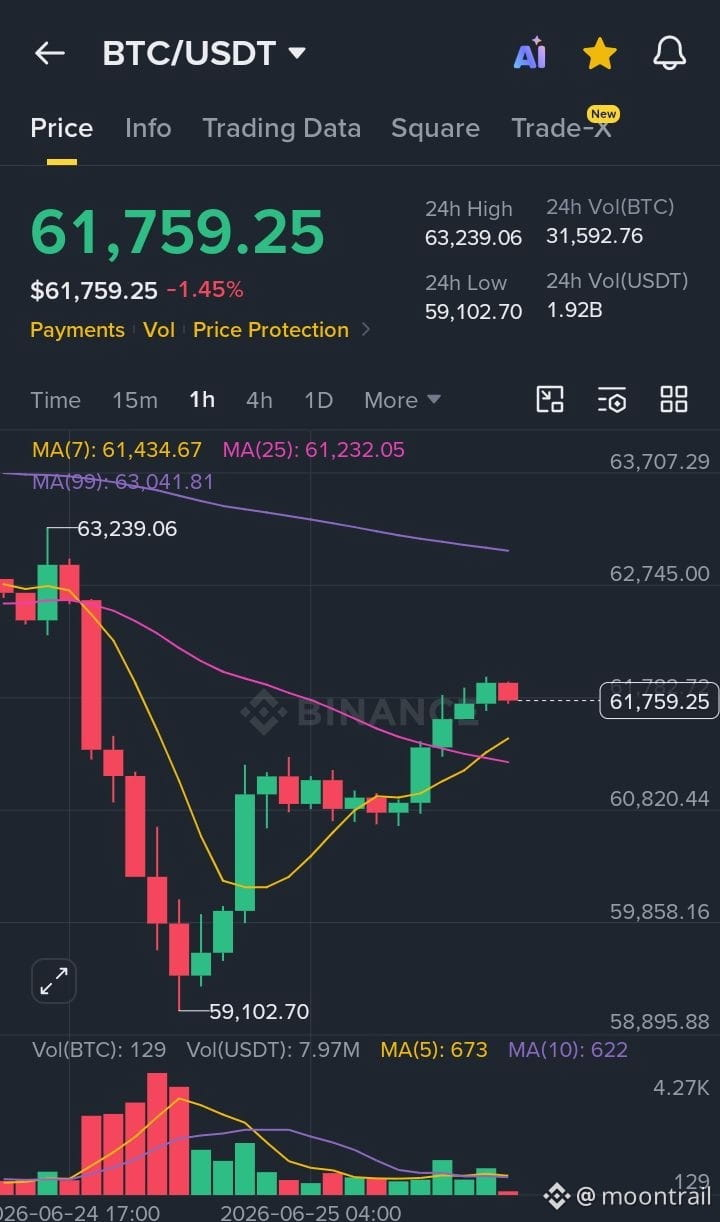
Everyone’s calling this a dead cat bounce — but $BTC/USDT just flashed my LONG trigger.
$BTC - LONG Setup
Entry: 61,577.27 – 61,677.25
Stop Loss: 60,420.38
Take Profit:
• TP1: 62,532.42
• TP2: 63,135.85
• TP3: 64,041.01
Why I’m taking this setup:
• The 4H signal triggered at 61,627 with 86% confidence, while the 15M RSI is at 68.6 — strong momentum, but not overheated yet.
• The daily trend is still bearish, which is exactly why this move could squeeze hard if shorts are overcrowded.
• Price is holding near the 1H ATR band (503), giving a tight and defined entry zone.
• TP1 is just 1.5% away, making this a solid risk-to-reward play for a short-term continuation move.
The real question:
Is this just a fake pump designed to trap longs before the next leg down — or are we catching the early signs of a trend reversal?
What’s your take?
Bull trap or trend flip?
Trade here 👇️
{spot}(BTCUSDT)
Everyone’s calling this a dead cat bounce — but $BTC /USDT just flashed my LONG trigger.
$BTC - LONG Setup
Entry: 61,577.27 – 61,677.25
Stop Loss: 60,420.38
Take Profit:
• TP1: 62,532.42
• TP2: 63,135.85
• TP3: 64,041.01
Why I’m taking this setup:
• The 4H signal triggered at 61,627 with 86% confidence, while the 15M RSI is at 68.6 — strong momentum, but not overheated yet.
• The daily trend is still bearish, which is exactly why this move could squeeze hard if shorts are overcrowded.
• Price is holding near the 1H ATR band (503), giving a tight and defined entry zone.
• TP1 is just 1.5% away, making this a solid risk-to-reward play for a short-term continuation move.
The real question:
Is this just a fake pump designed to trap longs before the next leg down — or are we catching the early signs of a trend reversal?
What’s your take?
Bull trap or trend flip?
Trade here 👇️
1
118
·
--
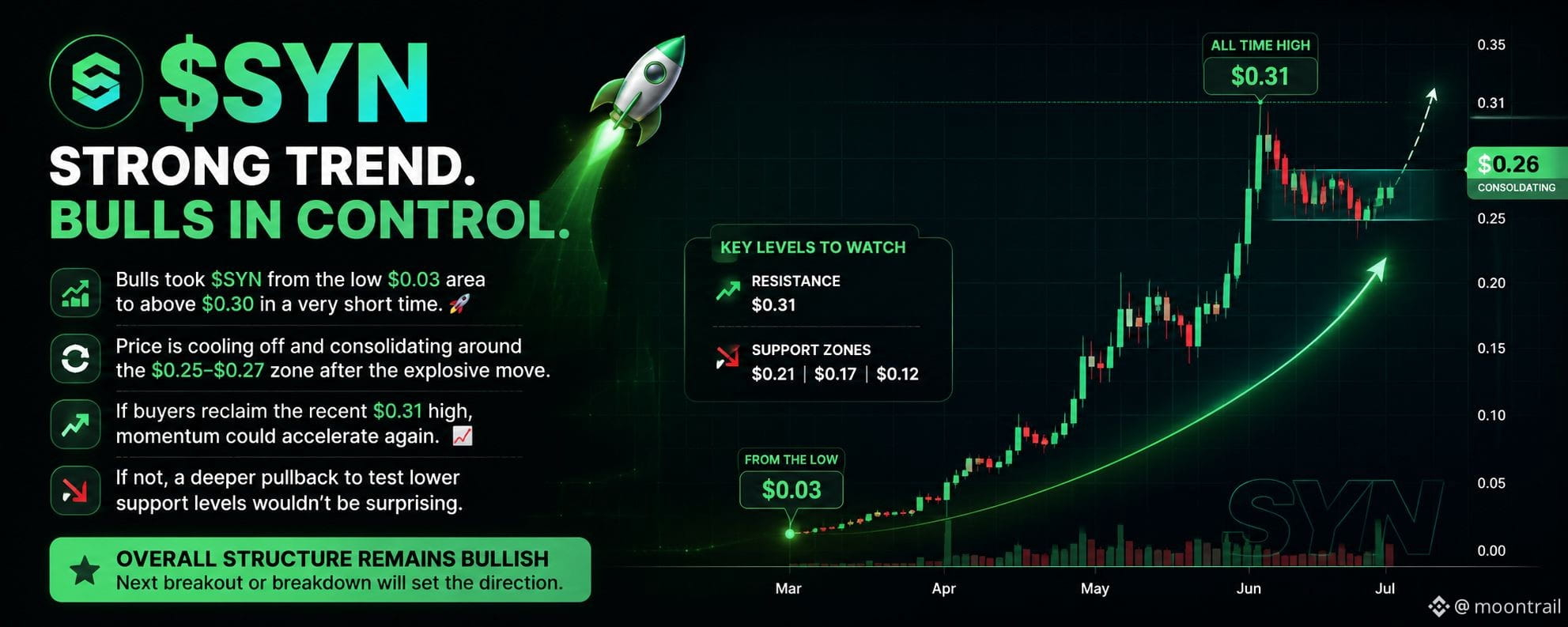
I’ve been keeping an eye on $SYN lately, and the price action has definitely caught attention. 👀
After a strong breakout, bulls took control and drove the token from the low $0.03 range to above $0.30 in a remarkably short period. 🚀
Now, the market appears to be entering a healthy consolidation phase, with price holding around the $0.25–$0.27 area as traders assess the next move.
A decisive breakout above the recent $0.31 high could reignite bullish momentum and open the door for further upside. 📈
On the other hand, failure to reclaim that level may lead to a deeper pullback toward key support zones before the next trend develops.
For now, the overall structure remains bullish, but the next breakout or breakdown will likely determine the short-term direction. 📊
{spot}(SYNUSDT)
{spot}(REUSDT)
I’ve been keeping an eye on $SYN lately, and the price action has definitely caught attention. 👀
After a strong breakout, bulls took control and drove the token from the low $0.03 range to above $0.30 in a remarkably short period. 🚀
Now, the market appears to be entering a healthy consolidation phase, with price holding around the $0.25–$0.27 area as traders assess the next move.
A decisive breakout above the recent $0.31 high could reignite bullish momentum and open the door for further upside. 📈
On the other hand, failure to reclaim that level may lead to a deeper pullback toward key support zones before the next trend develops.
For now, the overall structure remains bullish, but the next breakout or breakdown will likely determine the short-term direction. 📊
1
130
·
--
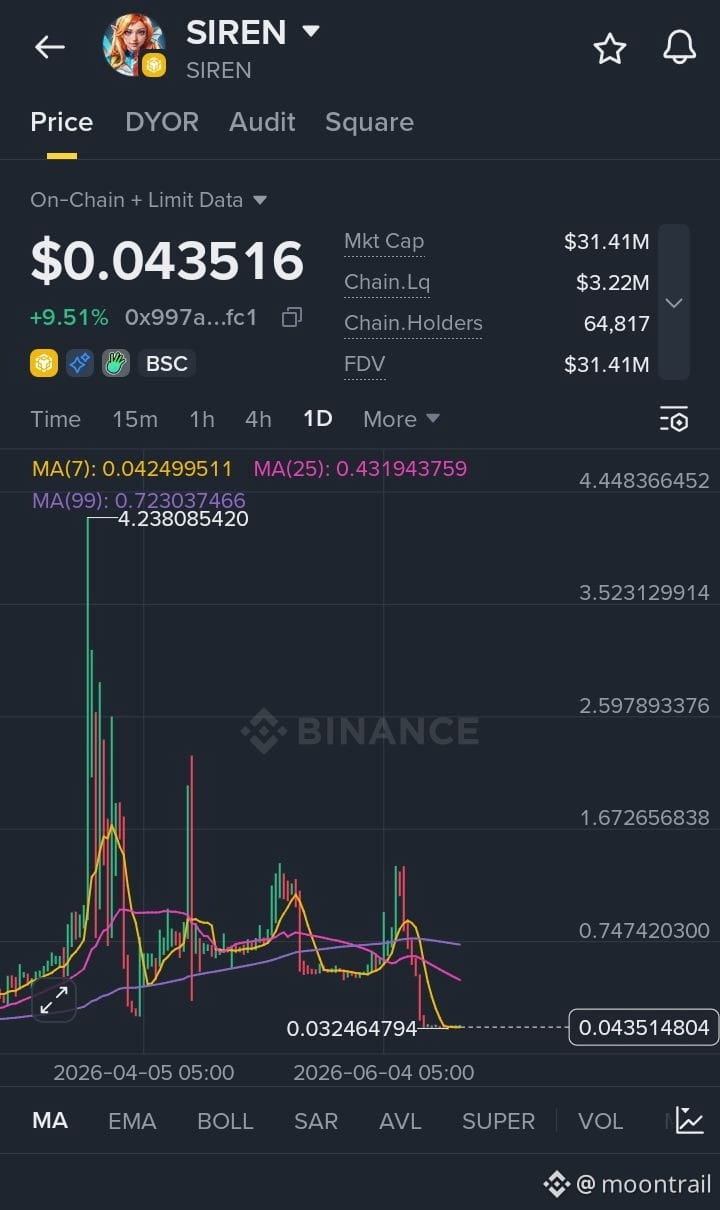
SIREN previously found support and consolidated around 0.10 before starting a fresh leg of sustained decline.
Whales love pulling tricks around key round numbers and zero-heavy levels to bait bulls in — MYX may be setting up to follow SIREN’s playbook.
#MYX
SIREN previously found support and consolidated around 0.10 before starting a fresh leg of sustained decline.
Whales love pulling tricks around key round numbers and zero-heavy levels to bait bulls in — MYX may be setting up to follow SIREN’s playbook.
#MYX
Whales love pulling tricks around key round numbers and zero-heavy levels to bait bulls in — MYX may be setting up to follow SIREN’s playbook.
#MYX
2
1
6
1k
·
--

Article
Oil Prices Fall as Markets Weigh Demand Concerns and Supply Outlook#OilPriceFalls
Oil prices moved lower as traders reacted to a mix of weak demand signals, shifting supply expectations, and broader uncertainty in global financial markets. The decline reflects concerns that slowing economic activity in major consuming countries could reduce fuel demand, even as producers continue to watch inventories, geopolitical developments, and output policy closely.
Analysts say one of the main drivers behind the pullback is concern over global demand. When investors see signs of softer manufacturing activity, weaker freight movement, or slower consumer spending, oil often comes under pressure. Crude prices are especially sensitive to expectations around growth in large economies such as the United States, China, and the eurozone.
At the same time, supply-side factors are also shaping sentiment. If markets believe major producers may keep output steady or increase production, prices can weaken further. Even the perception of stronger future supply can weigh on crude benchmarks, particularly when inventories appear comfortable and immediate shortages are not visible.
Currency movements and interest-rate expectations have added another layer of pressure. A stronger U.S. dollar can make oil more expensive for buyers using other currencies, which may reduce demand. Higher interest rates also tend to dampen economic momentum, contributing to a more cautious outlook for energy consumption.
Despite the latest fall, market volatility remains high. Oil prices can shift quickly in response to refinery disruptions, shipping risks, weather events, and unexpected geopolitical tensions. For that reason, traders are likely to remain focused on upcoming economic data, inventory reports, and policy signals from major oil-producing nations.
In the near term, the direction of oil prices will depend on whether demand concerns continue to outweigh supply risks. If economic data improves, prices could stabilize. But if growth worries deepen and supply remains sufficient, the market may face continued downward pressure.
#OilPriceFalls
Oil Prices Fall as Markets Weigh Demand Concerns and Supply Outlook
#OilPriceFalls
Oil prices moved lower as traders reacted to a mix of weak demand signals, shifting supply expectations, and broader uncertainty in global financial markets. The decline reflects concerns that slowing economic activity in major consuming countries could reduce fuel demand, even as producers continue to watch inventories, geopolitical developments, and output policy closely.
Analysts say one of the main drivers behind the pullback is concern over global demand. When investors see signs of softer manufacturing activity, weaker freight movement, or slower consumer spending, oil often comes under pressure. Crude prices are especially sensitive to expectations around growth in large economies such as the United States, China, and the eurozone.
At the same time, supply-side factors are also shaping sentiment. If markets believe major producers may keep output steady or increase production, prices can weaken further. Even the perception of stronger future supply can weigh on crude benchmarks, particularly when inventories appear comfortable and immediate shortages are not visible.
Currency movements and interest-rate expectations have added another layer of pressure. A stronger U.S. dollar can make oil more expensive for buyers using other currencies, which may reduce demand. Higher interest rates also tend to dampen economic momentum, contributing to a more cautious outlook for energy consumption.
Despite the latest fall, market volatility remains high. Oil prices can shift quickly in response to refinery disruptions, shipping risks, weather events, and unexpected geopolitical tensions. For that reason, traders are likely to remain focused on upcoming economic data, inventory reports, and policy signals from major oil-producing nations.
In the near term, the direction of oil prices will depend on whether demand concerns continue to outweigh supply risks. If economic data improves, prices could stabilize. But if growth worries deepen and supply remains sufficient, the market may face continued downward pressure.
#OilPriceFalls
2
211
·
--
$SOL
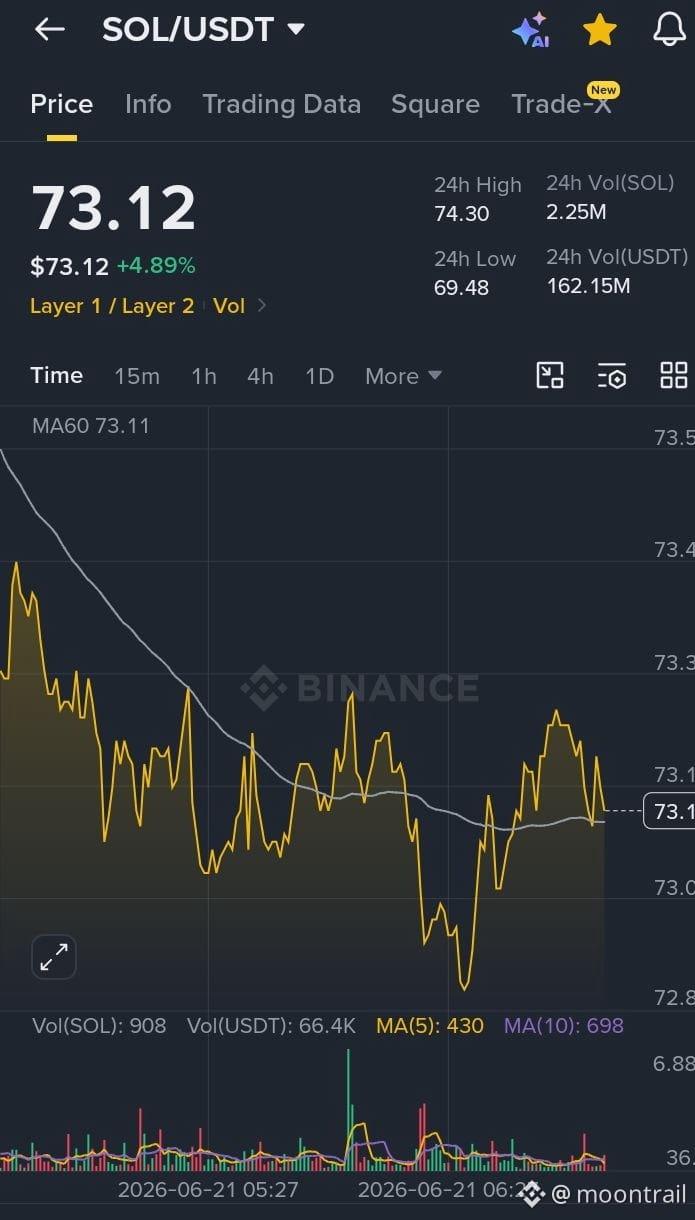
Solana is back in focus as the #SolanaProposalToDoubleSOLInflationDecay sparks debate across the crypto community.
If passed, the proposal could significantly change how SOL inflation declines over time, with potential effects on staking rewards, token supply dynamics, and long-term ecosystem incentives.
For investors, validators, and builders, this is more than just a technical update — it’s a reminder that tokenomics shape network behavior.
Will faster inflation decay strengthen SOL’s long-term value, or create new trade-offs for participation and rewards?
{spot}(SOLUSDT)
$SOL
Solana is back in focus as the #SolanaProposalToDoubleSOLInflationDecay sparks debate across the crypto community.
If passed, the proposal could significantly change how SOL inflation declines over time, with potential effects on staking rewards, token supply dynamics, and long-term ecosystem incentives.
For investors, validators, and builders, this is more than just a technical update — it’s a reminder that tokenomics shape network behavior.
Will faster inflation decay strengthen SOL’s long-term value, or create new trade-offs for participation and rewards?
2
1
212
·
--
Article
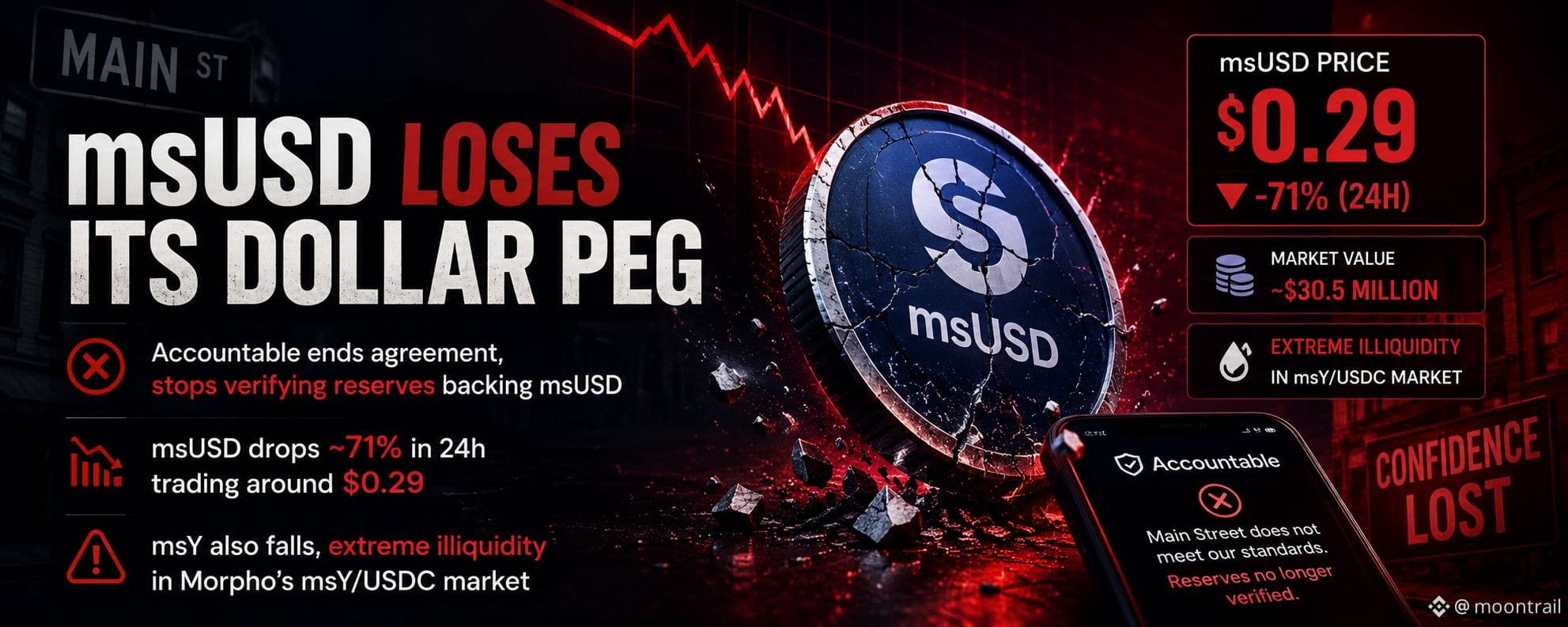
"Main Street USD (msUSD) lost its dollar peg after Accountable ended its agreement with the protocol"Main Street USD (msUSD) lost its dollar peg after Accountable ended its agreement with the protocol, sending the token to around $0.29. According to NS3.AI, msUSD is down roughly 71% over 24 hours, with a market value near $30.5 million. Accountable said Main Street could not meet its standards, and its dashboard no longer verifies the reserves backing msUSD" means that msUSD, which is supposed to stay close to $1 like a stablecoin, suddenly lost market confidence and fell to about $0.29.
In simple terms, the key issue is that Accountable stopped supporting or verifying Main Street’s reserve backing. For a dollar-pegged token, users need to trust that there are real assets or reserves behind it. Once Accountable said Main Street no longer met its standards and removed reserve verification from its dashboard, the market likely saw that as a serious warning sign. As a result, many holders may have rushed to sell, which pushed the price down sharply.
The line about msUSD being down around 71% in 24 hours shows how severe and fast the collapse was. The $30.5 million market value refers to the total value of all msUSD tokens in circulation at the new lower price.
The added context about msY also falling and extreme illiquidity in Morpho’s msY/USDC market suggests the problem may not be limited to one token. Illiquidity means there were not enough buyers and sellers in the market, so prices could drop very quickly when people tried to exit.
#msUSDDepegsFallsTo$0.29
"Main Street USD (msUSD) lost its dollar peg after Accountable ended its agreement with the protocol
"Main Street USD (msUSD) lost its dollar peg after Accountable ended its agreement with the protocol, sending the token to around $0.29. According to NS3.AI, msUSD is down roughly 71% over 24 hours, with a market value near $30.5 million. Accountable said Main Street could not meet its standards, and its dashboard no longer verifies the reserves backing msUSD" means that msUSD, which is supposed to stay close to $1 like a stablecoin, suddenly lost market confidence and fell to about $0.29.
In simple terms, the key issue is that Accountable stopped supporting or verifying Main Street’s reserve backing. For a dollar-pegged token, users need to trust that there are real assets or reserves behind it. Once Accountable said Main Street no longer met its standards and removed reserve verification from its dashboard, the market likely saw that as a serious warning sign. As a result, many holders may have rushed to sell, which pushed the price down sharply.
The line about msUSD being down around 71% in 24 hours shows how severe and fast the collapse was. The $30.5 million market value refers to the total value of all msUSD tokens in circulation at the new lower price.
The added context about msY also falling and extreme illiquidity in Morpho’s msY/USDC market suggests the problem may not be limited to one token. Illiquidity means there were not enough buyers and sellers in the market, so prices could drop very quickly when people tried to exit.
#msUSDDepegsFallsTo$0.29
3
117
Log in to explore more content
Join global crypto users on Binance Square
⚡️ Get latest and useful information about crypto.
💬 Trusted by the world’s largest crypto exchange.
👍 Discover real insights from verified creators.
Email / Phone number
Trending Topics
WillMarketsStageAThanksgivingReliefRally?
37,533 views
689 Discussing
Was $55K the bottom for $BTC ? Honestly... i don't think so 😅
Bitcoin has recovered above $61K after crashing to $55,130... and now everyone is talking about a possible Thanksgiving relief rally.
But buddies... look at the bigger picture.
Bitcoin is still down nearly 30% from $87K, $ETH is struggling around $1,727 after touching $1,538 and $ZEC is barely recovering near $784 after that brutal selloff.
A few green candles won't suddenly fix all this damage 🥲
Now... could we see a Thanksgiving rally? Definitely possible 😁
Especially if buyers keep defending $60K and BTC manages to push back toward $64K-$65K.
But a relief rally and a real market reversal are TWO different things.
I still think another dip below $55K is possible if this recovery loses strength.
That's why i am not chasing this bounce... just accumulating slowly, keeping USDT ready for lower entries.
If we get a proper recovery, good. If we get another dump, i wanna have cash ready 💪🏻
What do you think... Thanksgiving rally or another trap before the next dump? 👀
#WillMarketsStageAThanksgivingReliefRally?
ParvezMayar
·14 Likes
·5.9k views
WillOctCorePCEShiftFedHikeExpectations?
3,157 views
88 Discussing
BessentSoftensStanceOnHuang’sNvidiaReturn
24,671 views
463 Discussing