
#192
192
2,119 views
26 Discussing
Hot
Latest

·
--
$ETH A headline about this weekend’s “upgrade delay” could easily become “Mainnet has been confirmed for mid-next year” or “A change to the gas rules will break all on-chain contracts.” But after comparing the Foundation blog post with the minutes from Thursday’s All Core Developers meeting, it’s important to distinguish between “the testnet window is still penciled in,” “the mainnet date hasn’t been set,” and “ETH’s issuance rules have changed.”
What happened (all times are Beijing time):
· On November 6, Foundation developer Marius van der Wijden posted that testing Glamsterdam had revealed that EIP-8037 and EIP-8038 would change the gas costs for some operations and state, potentially breaking assumptions that some deployed contracts rely on. As a result, All Core Devs decided not to proceed with the Hoodi testnet upgrade as originally planned. An update on November 9 said that four reports had been received about potentially affected contracts, and recommended waiting for the audit results to be made public before deciding whether to change the specifications and when to schedule Hoodi.
Source: https://blog.ethereum.org/2026/11/06/glamsterdam-8037-8038
· At 22:00 on November 19, the execution-layer meeting ACDE #249 was held. The minutes say that the Foundation’s Rahul reported having contacted more than 50 affected projects. If the specifications aren’t changed, most said they could be ready by mid-January at the earliest; this was also treated as “the earliest relatively realistic mainnet window if the current specifications are kept.” The meeting proposed penciling in the Hoodi testnet fork for the week of December 14, with a decision on whether to proceed to be made two weeks later. The minutes describe a general leaning toward keeping the current specifications unless a viable alternative emerges, but no final decision was reached.
Source: https://ethereum-magicians.org/t/all-core-devs-execution-acde-249-november-19-2026/30071
· The next consensus-layer meeting, ACDC #192 , is scheduled for 22:00 on November 26, and its agenda includes Glamsterdam. Under the proposal made at the November 19 meeting, whether Hoodi should proceed during this penciled-in window will be discussed and decided at that meeting.
Source: https://ethereum-magicians.org/t/all-core-devs-consensus-acdc-192-november-26-2026/30388
What this could mean for $ETH —and what hasn’t happened:
These two EIPs would change how much gas it costs to create and access on-chain state, with the aim of increasing throughput while controlling state growth. If a contract has hard-coded the old gas costs into its logic and isn’t updated before activation, related transactions could fail midway through execution. This is not the same as saying “the amount of ETH issued has changed,” nor does it mean that the mainnet has already switched to new rules. Pushing back the upgrade calendar also doesn’t, by itself, mean that the token has lost a value-capture mechanism.
What hasn’t been decided: There is no official schedule for mainnet activation yet; “mid-January” is only the earliest possible window assuming the specifications remain unchanged, not a confirmed launch date. The specifications may still be revised, and the Hoodi window is currently only penciled in.
What to check next: ACDC’s decision about Hoodi on the 26th, and whether these two EIPs are subsequently changed. Until then, don’t interpret “upgrade delay” as meaning that the mainnet date has been finalized.
423

·
--
XMR upgrade timeline revisited | FCMP discussed for version 0.20 | Waiting for the official roadmap
My approach is to verify first, then participate. In the minutes of the Monero community’s October 26 technical meeting, someone asked whether the next version, 0.19, would be the FCMP hard fork. Maintainer selsta replied, “FCMP will be v0.20.” Participants also discussed releasing a non-hard-fork 0.19.x version first. The next technical meeting, scheduled for November 2 at 18:00 UTC, is listed in the official meta repository. The status of this information matters: it is a statement about the version direction made at a public developer meeting. It is not an official upgrade announcement, much less a confirmed activation date. The latest official software version currently listed on the Monero website is still 0.18.5.4, released on October 16.
FCMP++ is worth watching because it relates to Monero’s future privacy architecture and wallet compatibility. The meeting minutes also mention that developers are continuing to address review comments on the integration pull request, preparing a GUI program for the stress-test network, and emphasizing that some design details may still change in response to feedback. So the version number can help inform research into the roadmap, but what really affects users is code review, the test network, wallet support, the official release, and the network upgrade height. Interpreting “targeted for 0.20” as “the mainnet has already switched” conflates the development phase with production.
For the XMR market, I’m watching two transmission channels. One is that technical delivery could improve long-term privacy and usability; the other is whether users, miners, and exchanges can upgrade smoothly. If compatibility risks increase, that could actually add uncertainty in the short term. Binance Square’s current trending topics are mainly about Binance security and reserves, with no directly relevant, accurate trending tag for FCMP. Nor does Binance’s notice about stolen assets provide evidence that “funds have already flowed into XMR.” We can’t infer demand for privacy coins automatically from a security incident, much less frame a scheduled meeting as a realized catalyst.
As for the market reaction, at the time of writing, Kraken’s XMR/USD was around $605.65, with a 24-hour low of $588.50 and a high of $609.88. That’s slightly above the opening price of $599.03, but still below the intraday high. This shows a short-term rebound, but does not prove that the meeting minutes drove it. I’d treat around $610 as a confirmation level and around $588 as a risk level. If the price falls below $588 and fails to recover on a retest, the rebound thesis is invalidated. If it breaks above $610, I’d still wait for official updates on the code, testing, and release timeline rather than chase the price based on a single meeting discussion.
If I were trading this myself: I wouldn’t enter now. I’d only consider a small spot position on the long side, with no leverage. I’d open a test position equal to 2% of my total capital only if the price holds above $610 and then retests it without breaking below, and a subsequent official meeting or repository update provides a verifiable FCMP milestone. If either condition is missing, I’d remain in cash. The first target is $625, where I’d reduce the position by half; the second target is $640, where I’d close the rest in stages. I’d set the initial stop below $588, or act sooner if the loss reaches 0.3% of account capital. If the price falls back below $610 and stays there after entry, or the development team explicitly changes the upgrade path, I’d close the remaining position early. If the conditions aren’t met, there’s no trade—and I make no claim of profit.
Sources: Monero meta repository technical meeting #191 and next meeting #192; Monero official 0.18.5.4 release page; Kraken XMR/USD. #XMR
This is solely my personal market observation and does not constitute investment advice.

10

·
--
The top two are separated by just 0.05 percentage points | 4h Top 3 Gainers
1. $MITO / MITOUSDT Current price 0.00901 U | 24h trading volume 1.8 million U
Background: Mitosis breaks DeFi liquidity positions into reusable, programmable components, allowing locked funds to be put to work elsewhere. It focuses on cross-chain liquidity.
Status: Since May, the community has questioned stalled tMITO redemptions and the treasury's transfer of 159 million tokens. The official response has not been updated since August.
Total supply: 1 billion tokens | Market cap: 4.2 million U | Market cap rank: #1753
4h 【+9.77%】 | 24h +6.25% | 7d -30.26%
Momentum: Last-hour trading volume was 444,000 U, 7.4 times the 24h average hourly volume. The close was at the 60% mark of the current 4h candle's range. The current price is 8.06% below the 24h high, and the previous 4h candle was -1.76%.
Takeaway: Volume rose 7-fold, yet the price held only 60% of the range and has since pulled back 8%. The rally was driven by a brief burst of concentrated trading, with profit-taking already setting in after the spike.
2. $OSMO / OSMOUSDT Current price 0.0537 U | 24h trading volume 2.08 million U
Background: Osmosis is the largest decentralized exchange in the Cosmos ecosystem and a key hub for swapping tokens across chains. It uses concentrated liquidity to handle cross-chain assets via IBC.
Status: Proposal 1053 passed on October 25, reducing daily issuance from 91,324 tokens to zero, with staking rewards now paid from fees. The v32 upgrade is scheduled for October 27.
Total supply: 956 million tokens | Market cap: 40.17 million U | Market cap rank: #523
4h 【+9.72%】 | 24h +21.77% | 7d +2.09%
Momentum: Last-hour trading volume was 179,000 U, 2.2 times the 24h average hourly volume. The close was at the 73% mark of the current 4h candle's range. The current price is 4.11% below the 24h high, and the previous 4h candle was -2.76%.
Takeaway: The close is above 70% of the range, with a pullback of just 4%. Meanwhile, the 24h gain is 21.77%, while the 7d gain is only +2.09%—meaning most of the rise has come over the past two days.
3. $BEAMX / BEAMXUSDT Current price 0.003385 U | 24h trading volume 3.76 million U
Background: Beam is a gaming blockchain developed by gaming guild Merit Circle as it pivoted into the sector. It brings gaming, AI, NFTs, and RWAs onto one chain, and is also an independent L1 on Avalanche.
Status: There have been no major announcements in the past 3 days. The latest developments available are still Beam Ventures' Abu Dhabi license application and Dreamcash's expansion.
Total supply: 58.47 billion tokens | Market cap: 173 million U | Market cap rank: #192
4h 【+7.19%】 | 24h +10.33% | 7d +18.94%
Momentum: Last-hour trading volume was 706,000 U, 4.7 times the 24h average hourly volume. The close was at the 65% mark of the current 4h candle's range. The current price is just 0.38% below the 24h high, and the previous 4h candle was +1.44%.
Takeaway: Two consecutive 4h candles have closed higher, and the current price is practically at the 24h high. With a 7d gain of 18.94%, it has the most sustained buying support of the three, with profit-taking yet to weigh on it.
Summary: MITO is giving back gains after its spike, OSMO has only just turned its 7d performance positive, while BEAMX is still near its high after two consecutive rising 4h candles.
Have you made any trades today? Let's talk.
Not investment advice. DYOR.
1
632

·
--
$BMT went long at 20X, now up 6.7% 📈
🎯 Live trade
$BMT (BMTUSDT Perpetual) · LONG · 20X
Average entry 0.024 → Current price 0.0256
ROE +6.7%|Holding time: 20–60 minutes
TP1 0.02560 / TP2 0.02682 / SL 0.02296
🧠 Previous LLM strategy analysis (Instruction #192)
【Initial screening】24h plunge of 8.33%, 1h -1.82%; RSI (5m/15m) = 26.1/25.6, deeply oversold. Waiting for signs of a bottom.
【Fivefold confirmation】Rebounded +3.18% from the low of 0.02324; 5m MACD red bars expanding, bullish momentum strengthening; aggressive buying returning at 58%; negative funding rate of -0.0535% favors longs.
【Market check】Broader market MILD_BEAR, score 38. Countertrend trade permitted—stabilization confidence 92% ≥ 88%. Only act when the signal is clear.
🛡️ Risk management rules
Risk/reward ratio 2.8:1. TP1 has been hit, so take partial profits first. If price hasn’t moved at least +0.3% beyond the entry after 30 minutes, exit unconditionally on a time stop. Never let a losing trade run.
This is a countertrend bounce trade—would you dare to follow? Or wait for the broader market to turn bullish before entering? 👇
#币安合约 #实盘战报 #量化交易 #BMT
9
·
--
🎯 $BMT LONG · 20X · ROE +132% banked
Average entry 0.02402 → exit 0.0256076. TP1 hit precisely; wrapped up in 20 minutes.
📊 Live trade data
• Direction: BMTUSDT perpetual long
• Leverage: 20X cross margin
• Entry: 0.02402 (limit order filled in the pullback zone of 0.023944~0.023992)
• Exit: 0.0256076 (TP1 hit at the target price; didn’t get greedy for TP2)
• Holding time: 20 minutes, ROE +132%
🧠 Earlier LLM strategy analysis (#192 : oversold stabilization and a right-side rebound)
• Initial screening: sharp 24h drop of -8.33%, 1h drop of -1.82%, RSI (5m/15m) = 26.1/25.6, deeply oversold
• Five right-side confirmations: +3.18% rebound from the low of 0.02324|5m MACD red bars expanding|active buying returning at 58%|RSI recovering from oversold|negative funding rate of -0.0535% favoring longs
• Market check: broader market MILD_BEAR, score 38; countertrend entry allowed based on exhaustion confidence of 92% ≥ 88%
• Plan: TP1 0.0256076 / TP2 0.0268284 / SL 0.0229627, R:R 2.8:1
🛡️ Discipline
Take profit at TP1 and get out—don’t fall in love with the trend. If price doesn’t leave the cost zone within 30 minutes, exit unconditionally on a time stop. Didn’t need it this time.
Countertrend trades can pay off—not through courage, but by waiting for the right-side signals to appear.
Did you catch this trade? Did you take profit at TP1 or hold for TP2? Let us know in the comments 👇
#币安合约 #实盘战报 #量化交易 #BMT
9

·
--
$GENIUS In the last 24 hours, up +30.71%, currently at 0.5742 USDT, about 4.67% away from the 24h high.
📈 Price Action: 24h range 0.4269 / 0.601, volatility around 40.78%; lower bound 0.4269 (25.65% below current price) / midline 0.51395 (10.49% below current price) / upper bound 0.601 (4.67% above current price), currently closer to the upper bound; approximately 4.67% away from the 24h high.
📊 Data Insights: Quote trading volume around 41.23M USDT; current open interest (OI) approximately 19.12M GENIUS; large holders' positions long/short approximately 57.98% / 42.02%, long/short ratio 1.38; nominal size at the latest price around 10.98M USDT; current funding rate +0.0050% (lower cost for longs), next settlement around 12:00 UTC.
🔎 Contract Info: Contract underlying $GENIUS; trading pair GENIUS/USDT; public market name Genius; exchange category: Alpha; listed for about 36 days; market cap rank #192; market cap approximately 199.17M USD; spot 24h trading volume around 23.58M USD.
⚠️ Technical Analysis: When trading volume spikes, consider the upper bound 0.601 and the ~4.67% distance from the 24h high together; currently only public market data is integrated, without delving into project fundamentals or news.
Data Source: Binance Futures public market + CoinGecko.
Will you first look at the continuation of trading volume, or the gains and losses at the upper range? #GENIUS #perpetual contract
$GENIUS In the last 24 hours, up +30.71%, currently at 0.5742 USDT, about 4.67% away from the 24h high.
📈 Price Action: 24h range 0.4269 / 0.601, volatility around 40.78%; lower bound 0.4269 (25.65% below current price) / midline 0.51395 (10.49% below current price) / upper bound 0.601 (4.67% above current price), currently closer to the upper bound; approximately 4.67% away from the 24h high.
📊 Data Insights: Quote trading volume around 41.23M USDT; current open interest (OI) approximately 19.12M GENIUS; large holders' positions long/short approximately 57.98% / 42.02%, long/short ratio 1.38; nominal size at the latest price around 10.98M USDT; current funding rate +0.0050% (lower cost for longs), next settlement around 12:00 UTC.
🔎 Contract Info: Contract underlying $GENIUS ; trading pair GENIUS/USDT; public market name Genius; exchange category: Alpha; listed for about 36 days; market cap rank #192; market cap approximately 199.17M USD; spot 24h trading volume around 23.58M USD.
⚠️ Technical Analysis: When trading volume spikes, consider the upper bound 0.601 and the ~4.67% distance from the 24h high together; currently only public market data is integrated, without delving into project fundamentals or news.
Data Source: Binance Futures public market + CoinGecko.
Will you first look at the continuation of trading volume, or the gains and losses at the upper range? #GENIUS #perpetual contract
19

·
--
We're excited to share the latest trending tokens with our community 🚀. According to CoinGecko, several tokens are making waves in the market.
We're seeing significant interest in tokens like Pump.fun (PUMP), Lorenzo Protocol (BANK), and Geodnet (GEOD), with market cap ranks #76, #192, and #202 respectively. Other notable mentions include Pons (PONS) and Pudgy Penguins (PENGU) with market cap ranks #452 and #110.
We believe these tokens are worth keeping an eye on, with potential for growth 💰. As our community continues to grow, we're committed to providing the latest updates and insights 📊. With this information, we're confident our users will make informed decisions 🚫.
$NIL, $PUMP, $BTW
We're excited to share the latest trending tokens with our community 🚀. According to CoinGecko, several tokens are making waves in the market.
We're seeing significant interest in tokens like Pump.fun (PUMP), Lorenzo Protocol (BANK), and Geodnet (GEOD), with market cap ranks #76, #192, and #202 respectively. Other notable mentions include Pons (PONS) and Pudgy Penguins (PENGU) with market cap ranks #452 and #110.
We believe these tokens are worth keeping an eye on, with potential for growth 💰. As our community continues to grow, we're committed to providing the latest updates and insights 📊. With this information, we're confident our users will make informed decisions 🚫.
$NIL , $PUMP , $BTW
194

·
--
AIA surges 3.5%! Is it worth chasing this kind of sharp rally?12:55 (2 minutes ago): AIA surged 3.5% at a key time (5-minute window 12:50→12:55). As of 12:57:25, the current price is 0.09234, up 15.7% over 24h. Other tokens showing unusual moves in the same batch include CTR and CHIP.
📅 Data as of 12:57:25 (event trigger times are noted in each item; prices are real-time snapshots taken when this was written)
📌 The takeaway: Unusual moves during key periods (candlestick closes / U.S. stock market openings and closings) often involve institutional participation, making the signals more credible.
Market overview: BTC 82,570.00 (-1.76%) · ETH 2,559.75 (-1.86%); across the market, 135 gainers / 356 decliners over 24h; top 24h gainer: MET +47.10%; top decliner: Lobster -42.87%.
AIA surges 3.5%! Is it worth chasing this kind of sharp rally?
12:55 (2 minutes ago): AIA surged 3.5% at a key time (5-minute window 12:50→12:55). As of 12:57:25, the current price is 0.09234, up 15.7% over 24h. Other tokens showing unusual moves in the same batch include CTR and CHIP.
📅 Data as of 12:57:25 (event trigger times are noted in each item; prices are real-time snapshots taken when this was written)
📌 The takeaway: Unusual moves during key periods (candlestick closes / U.S. stock market openings and closings) often involve institutional participation, making the signals more credible.
Market overview: BTC 82,570.00 (-1.76%) · ETH 2,559.75 (-1.86%); across the market, 135 gainers / 356 decliners over 24h; top 24h gainer: MET +47.10%; top decliner: Lobster -42.87%.
2
·
--
PROM plunges 2.7%! Support levels in this batch are worth watchingAt 19:50 (4 minutes ago), PROM fell 2.7% at a key time (5-minute window: 19:45→19:50). As of 19:55:39, its current price is 5.453, up 8.6% over 24h. APR also saw unusual movement during the same period.
📅 Data as of 19:55:39 (event trigger times are indicated in each item; prices are real-time snapshots at the time of writing)
📌 In a nutshell: Unusual moves during key periods (such as candlestick closes and U.S. market opens/closes) often involve institutional participation, making these signals more credible
Market overview: BTC 82,585.10 (+1.90%) · ETH 2,476.64 (+4.70%); across the market, 452 tokens rose and 40 fell over 24h; top gainer: AGT +135.48%, top loser: GOAT -25.08%.
PROM plunges 2.7%! Support levels in this batch are worth watching
At 19:50 (4 minutes ago), PROM fell 2.7% at a key time (5-minute window: 19:45→19:50). As of 19:55:39, its current price is 5.453, up 8.6% over 24h. APR also saw unusual movement during the same period.
📅 Data as of 19:55:39 (event trigger times are indicated in each item; prices are real-time snapshots at the time of writing)
📌 In a nutshell: Unusual moves during key periods (such as candlestick closes and U.S. market opens/closes) often involve institutional participation, making these signals more credible
Market overview: BTC 82,585.10 (+1.90%) · ETH 2,476.64 (+4.70%); across the market, 452 tokens rose and 40 fell over 24h; top gainer: AGT +135.48%, top loser: GOAT -25.08%.

Verified
🚀 New Listing Alert: Re ($RE) is Ready to Trade!
✴️The countdown is on! The highly anticipated RE/USDT pair is just minutes away from opening for spot trading on Binance.
Here is what you need to know about this new addition to the Real-World Asset (RWA) narrative:
📊 Token Overview & Stats
🛑Here is a quick snapshot of $RE's on-chain presence right at launch:
✳️Market Cap: $90.93M
✳️Fully Diluted Valuation (FDV): $449.82M
✳️Total & Max Supply: 1 Billion RE
✳️Rank: #192
💡 What is Re ($RE)?
✴️Re serves as the capital layer for real-world assets, specifically designed to connect global on-chain capital directly to the massive $1 trillion reinsurance market. It bridges the gap between traditional insurance protocols and decentralized finance (DeFi) liquidity.
⚠️ Important Reminder: $RE will launch with a Seed Tag applied. This means it represents an innovative project that may exhibit higher volatility and risk compared to other listed tokens. Make sure you have completed your mandatory 90-day quiz on Binance to gain trading access!
Are you bullish on the RWA narrative? Will you be accumulating $RE on day one? 👇 Let’s discuss in the comments!
#RE #RWA #BinanceListing #CryptoNews $BTC
{spot}(SPCXBUSDT)
{spot}(XLMUSDT)
{spot}(REUSDT)
🛑💥What's your strategy for the $RE launch?
🚀 New Listing Alert: Re ($RE) is Ready to Trade!
✴️The countdown is on! The highly anticipated RE/USDT pair is just minutes away from opening for spot trading on Binance.
Here is what you need to know about this new addition to the Real-World Asset (RWA) narrative:
📊 Token Overview & Stats
🛑Here is a quick snapshot of $RE's on-chain presence right at launch:
✳️Market Cap: $90.93M
✳️Fully Diluted Valuation (FDV): $449.82M
✳️Total & Max Supply: 1 Billion RE
✳️Rank: #192
💡 What is Re ($RE)?
✴️Re serves as the capital layer for real-world assets, specifically designed to connect global on-chain capital directly to the massive $1 trillion reinsurance market. It bridges the gap between traditional insurance protocols and decentralized finance (DeFi) liquidity.
⚠️ Important Reminder: $RE will launch with a Seed Tag applied. This means it represents an innovative project that may exhibit higher volatility and risk compared to other listed tokens. Make sure you have completed your mandatory 90-day quiz on Binance to gain trading access!
Are you bullish on the RWA narrative? Will you be accumulating $RE on day one? 👇 Let’s discuss in the comments!
#RE #RWA #BinanceListing #CryptoNews $BTC
🛑💥What's your strategy for the $RE launch?
🚀 Buying the initial dip
0%
Watching from the sidelines
0%
📉Waiting - price to stabilize
0%
💼Holding longterm for the RWA
100%
1 votes • Voting closed
2
1
3.9k

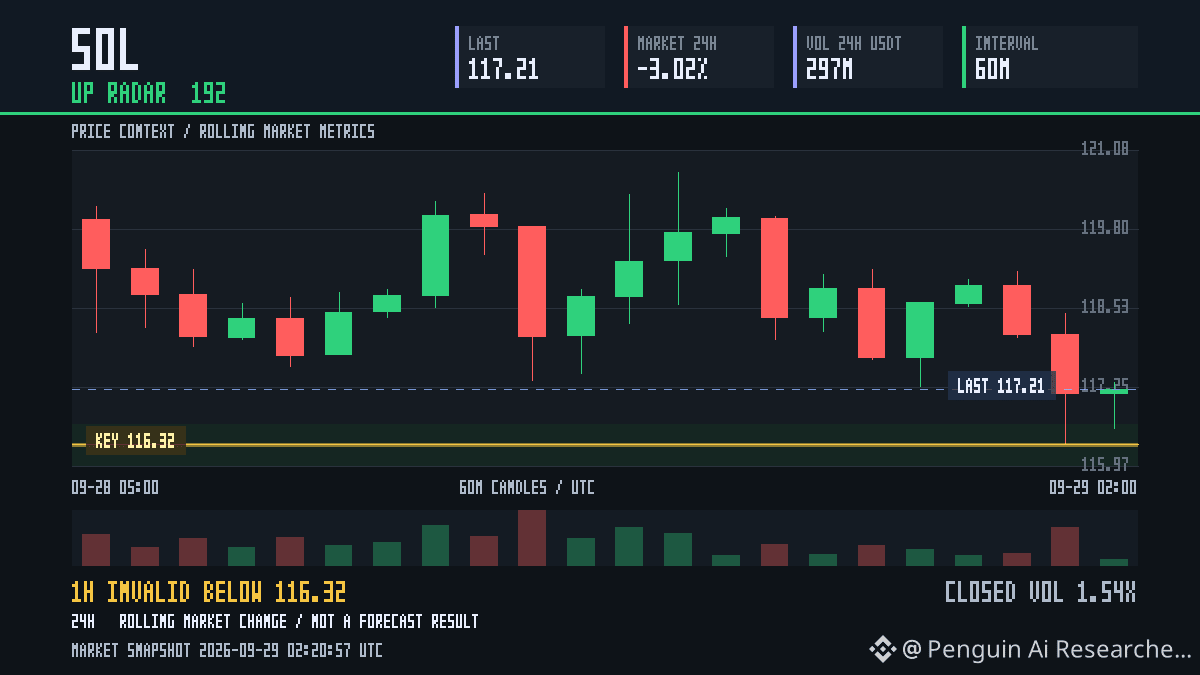
📈 $SOL: down 3.02% in 24h. Is volume keeping up? · Radar #192
Volume is at 1.54x its 20-hour average.
The last closed hour has at least average volume; activity alone does not confirm direction.
My read: more upside if an hourly candle closes above 116.32. A wick alone does not count.
I am wrong if we get a 1h close below 116.32.
I will post the 24h result here, hit or miss. Market observation, not advice.
Would stronger volume or a close above 116.32 matter more to you?
$SOL {spot}(SOLUSDT) #SOL
📈 $SOL : down 3.02% in 24h. Is volume keeping up? · Radar #192
Volume is at 1.54x its 20-hour average.
The last closed hour has at least average volume; activity alone does not confirm direction.
My read: more upside if an hourly candle closes above 116.32. A wick alone does not count.
I am wrong if we get a 1h close below 116.32.
I will post the 24h result here, hit or miss. Market observation, not advice.
Would stronger volume or a close above 116.32 matter more to you?
$SOL #SOL
91
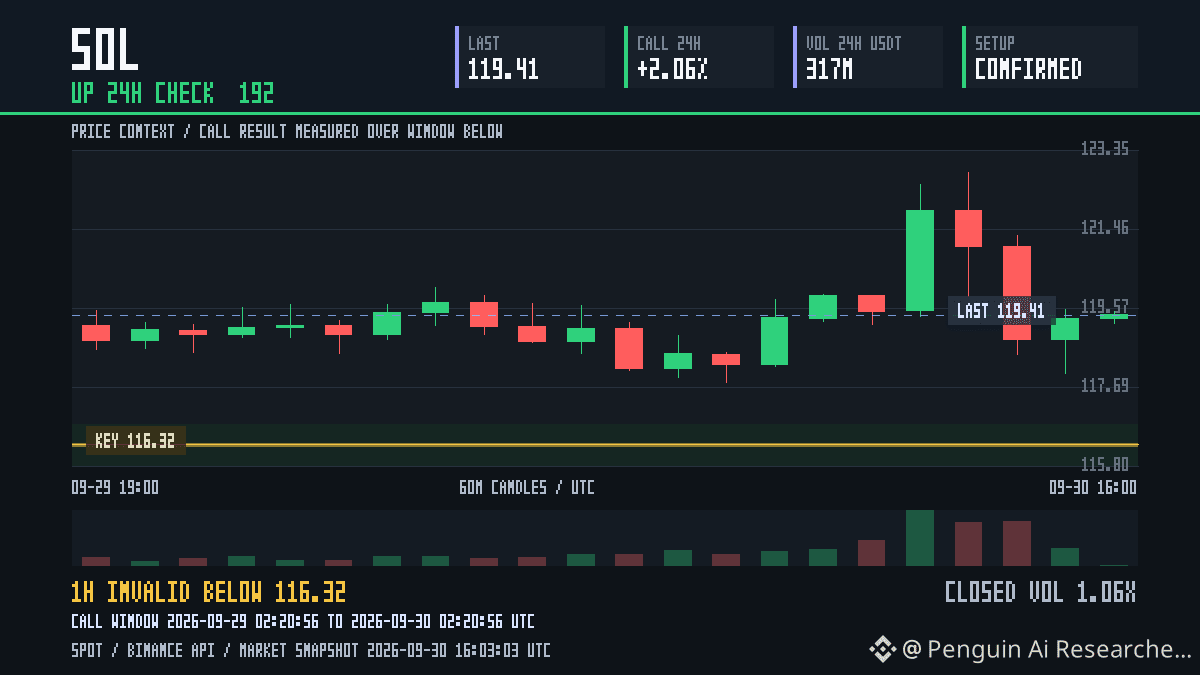
✅ Called it: $SOL +2.06% in 24h · Check #192
Radar #192 expected upside with a 1h close above 116.32. Result: HIT.
Best move for the read: 3.91%. Worst move against it: 0.57%.
The level held on the hourly closes, so the setup played out as written.
Lesson: 116.32 confirmed, but the read still faced a 0.57% adverse move.
Every Radar gets a public 24h check, hits and misses alike.
Did you see this SOL move coming?
$SOL {spot}(SOLUSDT) #SOL
✅ Called it: $SOL +2.06% in 24h · Check #192
Radar #192 expected upside with a 1h close above 116.32. Result: HIT.
Best move for the read: 3.91%. Worst move against it: 0.57%.
The level held on the hourly closes, so the setup played out as written.
Lesson: 116.32 confirmed, but the read still faced a 0.57% adverse move.
Every Radar gets a public 24h check, hits and misses alike.
Did you see this SOL move coming?
$SOL #SOL
106
·
--
AIA plunges 5.1% in an unusual move! Support levels to watch10:50 (21 minutes ago): AIA fell 5.1% within 5 minutes (5-minute window 10:45→10:50). As of 11:11:39, the current price is 0.09667, up 16.8% over 24h. PONS and CHIP also saw unusual moves around the same time.
📅 Data as of 11:11:39 (event trigger times are noted for each item; prices are real-time snapshots at the time of writing)
📌 Key takeaway: Short-term momentum is concentrated, and pullbacks can come quickly—placing orders in batches is safer than chasing prices higher.
Market overview: BTC 82,945.50(-1.28%) · ETH 2,571.26(-1.68%); across the market, 129 assets rose and 362 fell in 24h; top 24h gainer: MET +42.90%; top loser: Lobster -42.87%.
AIA plunges 5.1% in an unusual move! Support levels to watch
10:50 (21 minutes ago): AIA fell 5.1% within 5 minutes (5-minute window 10:45→10:50). As of 11:11:39, the current price is 0.09667, up 16.8% over 24h. PONS and CHIP also saw unusual moves around the same time.
📅 Data as of 11:11:39 (event trigger times are noted for each item; prices are real-time snapshots at the time of writing)
📌 Key takeaway: Short-term momentum is concentrated, and pullbacks can come quickly—placing orders in batches is safer than chasing prices higher.
Market overview: BTC 82,945.50(-1.28%) · ETH 2,571.26(-1.68%); across the market, 129 assets rose and 362 fell in 24h; top 24h gainer: MET +42.90%; top loser: Lobster -42.87%.
3


·
--
We're excited to share the latest trending tokens with our community, based on data from CoinGecko. Our focus is on the top performers, with SpaceX xStock (SPCXX) and SoSoValue (SOSO) being notable mentions. We're also keeping an eye on Velvet (VELVET) and Siren (SIREN), which are currently ranked #188 and #192 in market cap, respectively.
We're seeing some significant movements in the market, with Official Trump (TRUMP) rising to #98 in market cap rank. Solana (SOL) is also performing well, currently sitting at #7. Meanwhile, Bitcoin (BTC) remains at the top, ranked #1 in market cap. We're tracking the changes in these tokens, including their % changes, to stay up-to-date on the latest trends 📈.
We're committed to providing our community with the latest insights and updates on the crypto market. With these trending tokens, we're seeing a mix of established players like Bitcoin (BTC) and newer entrants like SpaceX xStock (SPCXX). We're looking forward to seeing how these tokens will perform in the future 💡👍💰
$TRUMP, $RIF, $ESPORTS
We're excited to share the latest trending tokens with our community, based on data from CoinGecko. Our focus is on the top performers, with SpaceX xStock (SPCXX) and SoSoValue (SOSO) being notable mentions. We're also keeping an eye on Velvet (VELVET) and Siren (SIREN), which are currently ranked #188 and #192 in market cap, respectively.
We're seeing some significant movements in the market, with Official Trump (TRUMP) rising to #98 in market cap rank. Solana (SOL) is also performing well, currently sitting at #7. Meanwhile, Bitcoin (BTC) remains at the top, ranked #1 in market cap. We're tracking the changes in these tokens, including their % changes, to stay up-to-date on the latest trends 📈.
We're committed to providing our community with the latest insights and updates on the crypto market. With these trending tokens, we're seeing a mix of established players like Bitcoin (BTC) and newer entrants like SpaceX xStock (SPCXX). We're looking forward to seeing how these tokens will perform in the future 💡👍💰
$TRUMP , $RIF , $ESPORTS
115

·
--
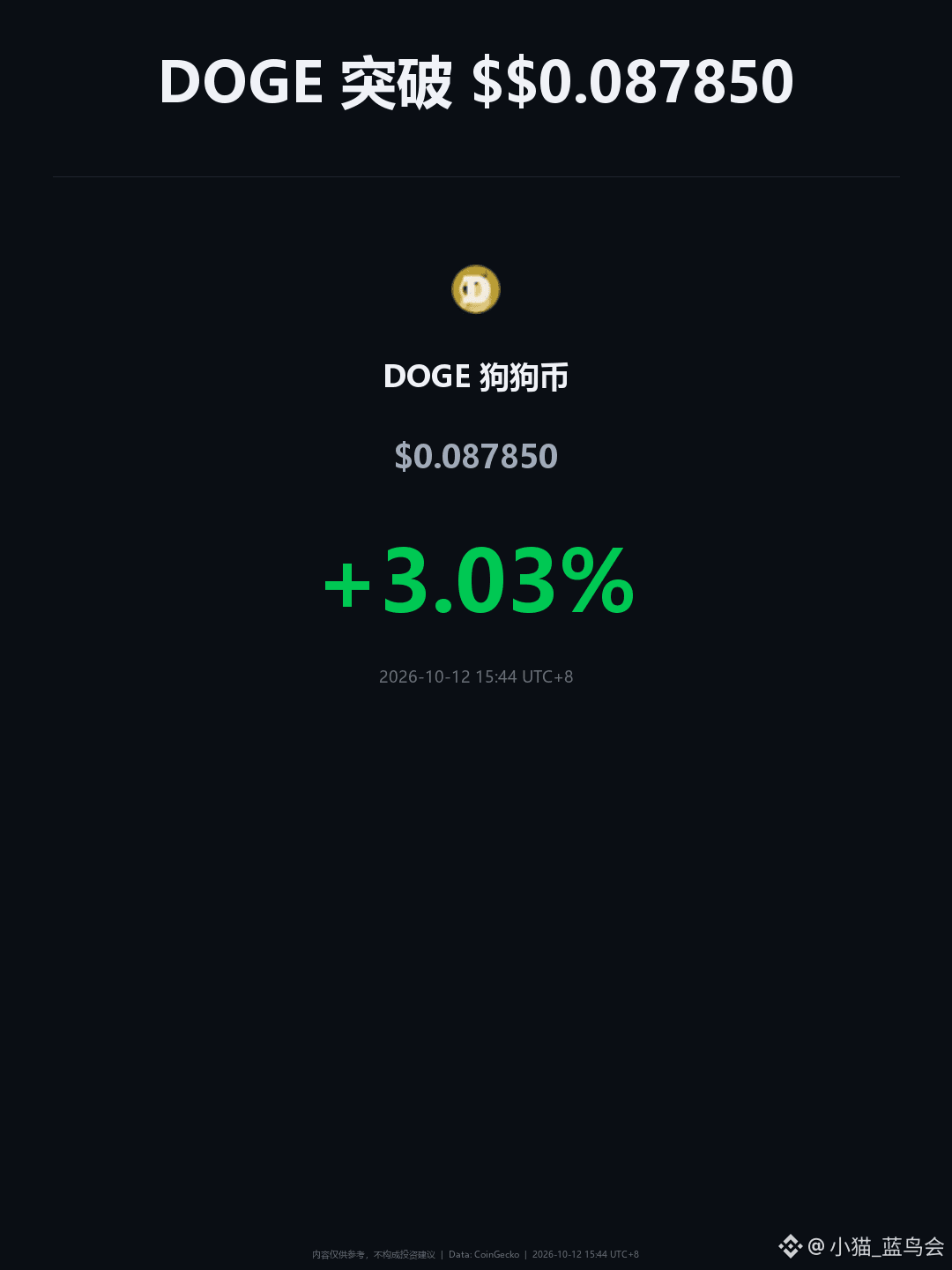
Wormhole rises 2.1%, leading CoinGecko trends
Wormhole (W) ranks #192, up 2.1% over the past 24 hours, with a current price of $83,988.07. The altcoin Mode (the altcoin) ranks #741, up 1.2%, with a current price of $0.0878.
Support is around $8,000–$8,500 for W and $0.08–$0.088 for the altcoin. Key resistance levels are and. If prices hover near support, consider entering with a small position and beware of false breakouts.
Data sources: CoinGecko / Binance / Gate MCP
#Market
1
84
·
--
APR surges 2.1%! Is it worth chasing this kind of sharp rally?At 19:50 (5 minutes ago), APR surged 2.1% at a key time (5-minute window: 19:45→19:50). As of 19:55:24, the price is 0.04608, down 7.9% over 24 hours. PROM also showed unusual movement during the same period.
📅 Data as of 19:55:24 (event trigger times are noted for each item; prices are real-time snapshots taken when this was written)
📌 In a nutshell: Unusual moves during key periods (such as candle closes and U.S. market opens/closes) often involve institutional players, making the signals more compelling.
Market overview: BTC 82,594.20 (+1.91%) · ETH 2,477.05 (+4.71%); across the market, 452 assets rose and 41 fell in the past 24 hours; top gainer: AGT +135.46%; top loser: GOAT -25.13%.
APR surges 2.1%! Is it worth chasing this kind of sharp rally?
At 19:50 (5 minutes ago), APR surged 2.1% at a key time (5-minute window: 19:45→19:50). As of 19:55:24, the price is 0.04608, down 7.9% over 24 hours. PROM also showed unusual movement during the same period.
📅 Data as of 19:55:24 (event trigger times are noted for each item; prices are real-time snapshots taken when this was written)
📌 In a nutshell: Unusual moves during key periods (such as candle closes and U.S. market opens/closes) often involve institutional players, making the signals more compelling.
Market overview: BTC 82,594.20 (+1.91%) · ETH 2,477.05 (+4.71%); across the market, 452 assets rose and 41 fell in the past 24 hours; top gainer: AGT +135.46%; top loser: GOAT -25.13%.
Log in to explore more content
Join global crypto users on Binance Square
⚡️ Get latest and useful information about crypto.
💬 Trusted by the world’s largest crypto exchange.
👍 Discover real insights from verified creators.
Email / Phone number
Trending Topics
1
#NvidiaLoses$2.7TrillionInMonthAndAHalf
2,852 views
65 Discussing
2
#CanBTCReboundAfterFallingBelow60K?
582,639 views
2,562 Discussing
3
#GlobalStocksFaceLongestLosingStreakSince2023
201,971 views
1,765 Discussing
4
#BlackRockIBITPostsRecord$541MSingleDayOutflow
18,677 views
61 Discussing
5
#AnthropicPlungesTowardIPOPriceonDay2
100,510 views
1,047 Discussing
6
#TwentyOneCapitalAdds172.25BTC
42,165 views
535 Discussing
7
#HKBillWouldExcludeTokenizedDepositsFromVirtualAssets
4,329 views
48 Discussing
8
#BNBDropsBelow540USDTWith8.46%DailyDecline
57,786 views
551 Discussing
9
#HKBillProposesHK$100KFineForUnauthorizedCryptoTitles
1,958 views
20 Discussing
10
#BitMineFaces$10.1BUnrealizedETHLoss
4,195 views
25 Discussing