
#amber
amber
39,712 views
28 Discussing
Hot
Latest

On Amber, stop getting hung up on whether the anonymous letter is real. Just compare the company’s two statements side by side.
On 11/16, it said: the allegations were untrue, operations were normal, and all business activities were proceeding in an orderly manner.
On 11/19, at around 1:30 p.m. Beijing time, a new line emerged: resources would be redirected toward AI investment and incubation, and the company would “orderly optimize and adjust the scale of its market-making and trading businesses and the capital allocated to them.” Some employees would be affected. It continued to deny the allegations.
In trader speak: market making is shrinking, proprietary trading is shrinking, capital is being pulled back, and people are being laid off. Three days ago, everything was normal; three days later, it’s a strategic transformation. Of course, a company can operate normally while downsizing. I’m not saying either statement is false, but the timing speaks for itself.
The claims in the anonymous letter—that a co-founder traded on HTX with client funds, that Fixed Earn funds were lent to market makers, and that unsecured consumer loans were packaged as RWAs—have not been independently verified. Amber has consistently denied them, and I’m not drawing any conclusions on that front.
What I care about is the mechanism. Fixed returns on CeFi products don’t come out of thin air. A common practice in the industry is to lend users’ crypto to market-making or trading desks, or use it for lending, and earn the spread. Outsiders can’t see exactly how Amber Premium (formerly WhaleFin) allocates its Fixed Earn funds. But if the capital behind its market-making and trading is shrinking, the sources of this kind of yield are shrinking too, regardless of whether the letter’s claims are true.
So if you really have money in there, don’t focus on the PR statements. Watch three things: whether Fixed Earn rates are quietly lowered, whether the terms or redemption rules change, and whether withdrawals start taking longer to arrive. Those are things no statement can cover up.
One other point that’s easy to overlook: when market makers pull back, the first thing to thin out is the order-book depth for the smaller tokens they make markets in. Public information on which projects have market-making agreements with Amber is incomplete, so I won’t name names. But if you suddenly see the depth of certain altcoins collapse and spreads widen, don’t rush to claim someone is dumping. The market maker may simply have pulled out.
As for the move into AI: market making is a fast-turnover business that earns fees every day; early-stage AI investing means tying up capital for years. A company that’s just been questioned about where client funds are going, moving capital into less liquid investments—that’s a direction I find hard to understand.
#Amber
3

·
--
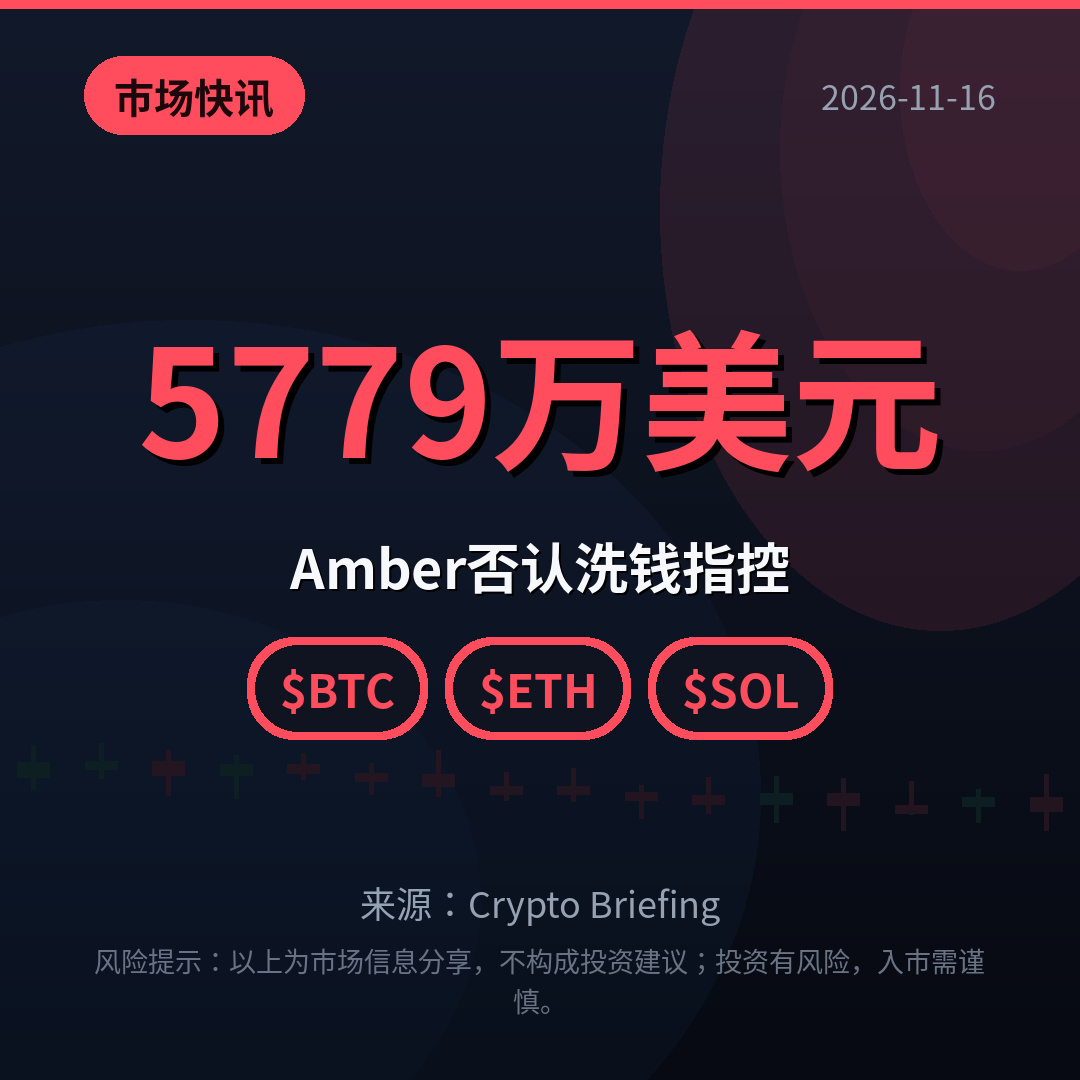
【Market Update】Amber Denies Money Laundering Allegations
Since November 14, an 11-page whistleblower letter has circulated, accusing Amber of suspected money laundering, misappropriating customer funds, and lending to related parties, while also questioning its Hong Kong license. Amber denied the allegations, condemned the privacy breach, and said it would preserve evidence and pursue legal action. Disclosures show that unsecured loans to related parties peaked at US$57.79 million as of June. There are currently no regulatory investigations or customer runs.
What do you think?
$BTC $ETH $SOL
#币安广场 #Amber #Compliance
(Source: Crypto Briefing)
⚠️ Risk warning: The above is shared for market information purposes only and does not constitute investment advice. Investing involves risks; please exercise caution.
7


·
--
Which of these three coins is your favorite?🚀 $APM , $ONE & $AVA Breakout Alert! 🔥
Volume is surging as $APM, $ONE, and AVA reclaim critical levels. Massive upside momentum ahead—watch closely! 📈#AMBER 💎#clarityactoddshalveonpolymarket #CLARITYActPassesSenateCommittee
Which of these three coins is your favorite?🚀 $APM , $ONE & $AVA Breakout Alert! 🔥
Volume is surging as $APM , $ONE , and AVA reclaim critical levels. Massive upside momentum ahead—watch closely! 📈#AMBER 💎#clarityactoddshalveonpolymarket #CLARITYActPassesSenateCommittee
Volume is surging as $APM , $ONE , and AVA reclaim critical levels. Massive upside momentum ahead—watch closely! 📈#AMBER 💎#clarityactoddshalveonpolymarket #CLARITYActPassesSenateCommittee
$APM
27%
$ONE
61%
$AVA
12%
33 votes • Voting closed
1
1
1.3k
Log in to explore more content
Join global crypto users on Binance Square
⚡️ Get latest and useful information about crypto.
💬 Trusted by the world’s largest crypto exchange.
👍 Discover real insights from verified creators.
Email / Phone number
Trending Topics
1
#WillMarketsStageAThanksgivingReliefRally?
32,422 views
595 Discussing
2
#WillOctCorePCEShiftFedHikeExpectations?
492 views
43 Discussing
3
#BessentSoftensStanceOnHuang’sNvidiaReturn
21,543 views
417 Discussing
4
#EvolveAtBinanceBlockchainWeek
20,730 views
268 Discussing
5
#MuskWarnsOfAICashCrunch
19,087 views
314 Discussing
6
#SouthKoreaToTightenOversightOfCryptoTransfersAbroad
1,854 views
37 Discussing
7
#RussiaAllowsExchangesToOfferCryptoTrading
11,754 views
178 Discussing
8
#UKToBarCryptoExchangesFromMakingMarketsOnTheirOwnPlatforms
608 views
21 Discussing
9
#UKTreasurySignsCryptoMarketMakingExemptionRules
3,650 views
128 Discussing
10
#BTCReboundsAbove$60KAmidWhaleDipBuying
142,879 views
446 Discussing