
#australiaproposescryptotransactionreportinglaw
australiaproposescryptotransactionreportinglaw
158,024 views
1,340 Discussing
Hot
Latest

·
--
australia wants every crypto trade reported to the tax office 👀
📝 draft law based on OECD rules
📅 exchanges report from 2027
🌍 data shared with other countries by 2028
so the “nobody knows what i trade” era is ending. not just australia, this is coming everywhere
$BTC
{future}(BTCUSDT)
$ETH
{future}(ETHUSDT)
holders, honest question:
🅰️ fine, regulation = adoption
🅱️ this kills the whole point of crypto
where do you stand? 👇
#AustraliaProposesCryptoTransactionReportingLaw #BitcoinRecoversTo82K
australia wants every crypto trade reported to the tax office 👀
📝 draft law based on OECD rules
📅 exchanges report from 2027
🌍 data shared with other countries by 2028
so the “nobody knows what i trade” era is ending. not just australia, this is coming everywhere
$BTC
$ETH
holders, honest question:
🅰️ fine, regulation = adoption
🅱️ this kills the whole point of crypto
where do you stand? 👇
#AustraliaProposesCryptoTransactionReportingLaw #BitcoinRecoversTo82K
1
104

·
--
#australiaproposescryptotransactionreportinglaw BREAKING: Australia Unveils Draft Crypto Tax Reporting Law
Australia has dropped a major bombshell for crypto users. On 15 October 2026 the Treasury released draft legislation (Treasury Laws Amendment Bill 2026: Tax Information Reporting) that will force crypto platforms to report Australian residents’ transactions straight to the ATO. The rules form part of the OECD’s Crypto-Asset Reporting Framework (CARF) plus a new domestic reporting regime. Obligations are expected to start from July 2027, with the first reports and international data exchanges targeted for 2028. Public consultation is open until 28 October 2026. The government estimates an extra A$170 million in tax over two years. The bill is still only a proposal and is not yet law.$UB $WLD $RIVER
Australia has dropped a major bombshell for crypto users. On 15 October 2026 the Treasury released draft legislation (Treasury Laws Amendment Bill 2026: Tax Information Reporting) that will force crypto platforms to report Australian residents’ transactions straight to the ATO. The rules form part of the OECD’s Crypto-Asset Reporting Framework (CARF) plus a new domestic reporting regime. Obligations are expected to start from July 2027, with the first reports and international data exchanges targeted for 2028. Public consultation is open until 28 October 2026. The government estimates an extra A$170 million in tax over two years. The bill is still only a proposal and is not yet law.$UB $WLD $RIVER
341
·
--
#australiaproposescryptotransactionreportinglaw JUST IN:
🇦🇺
AUSTRALIA INTRODUCES LEGISLATION REQUIRING CRYPTO TRANSACTION REPORTING
AND INTERNATIONAL TAX INFORMATION SHARING.
UNDER THE BILL,
CRYPTO PLATFORMS WOULD BE REQUIRED TO REPORT TRANSACTIONS INVOLVING AUSTRALIAN RESIDENTS TO TAX AUTHORITIES STARTING JULY 2027.$SENT $KORU $RIVER
🇦🇺
AUSTRALIA INTRODUCES LEGISLATION REQUIRING CRYPTO TRANSACTION REPORTING
AND INTERNATIONAL TAX INFORMATION SHARING.
UNDER THE BILL,
CRYPTO PLATFORMS WOULD BE REQUIRED TO REPORT TRANSACTIONS INVOLVING AUSTRALIAN RESIDENTS TO TAX AUTHORITIES STARTING JULY 2027.$SENT $KORU $RIVER
1.2k

·
--
Bullish
#australiaproposescryptotransactionreportinglaw #INJ
🚨 AUSTRALIA TIGHTENS CRYPTO TAX RULES! 🇦🇺📊
Crypto transactions are facing greater scrutiny as Australia moves toward mandatory reporting! 🧮👇
📌 The Timeline:
July 2027: Crypto service providers are expected to begin reporting Australian residents’ transaction data.
2028: Automatic international data sharing is planned under the OECD’s Crypto-Asset Reporting Framework (CARF).
October 28, 2026: Deadline for public consultation on the draft legislation.
🔍 What It Means:
Crypto exchanges and service providers could be required to share user transaction information with tax authorities, increasing transparency and helping combat cross-border tax evasion.
🌍 The Big Question:
Will stricter crypto tax surveillance push traders toward decentralized platforms, or will it strengthen trust in the crypto market?
💬 What’s your take? Drop your thoughts below! 👇 "CLICK ON THE BELOW YELLOW COIN TAG TO GO TO DESIRED TRADING PAGE TO GET BENEFIT TRADE"$INJ $AGT $ICNT
{future}(ICNTUSDT)
{future}(AGTUSDT)
{spot}(INJUSDT)
#australiaproposescryptotransactionreportinglaw #INJ
🚨 AUSTRALIA TIGHTENS CRYPTO TAX RULES! 🇦🇺📊
Crypto transactions are facing greater scrutiny as Australia moves toward mandatory reporting! 🧮👇
📌 The Timeline:
July 2027: Crypto service providers are expected to begin reporting Australian residents’ transaction data.
2028: Automatic international data sharing is planned under the OECD’s Crypto-Asset Reporting Framework (CARF).
October 28, 2026: Deadline for public consultation on the draft legislation.
🔍 What It Means:
Crypto exchanges and service providers could be required to share user transaction information with tax authorities, increasing transparency and helping combat cross-border tax evasion.
🌍 The Big Question:
Will stricter crypto tax surveillance push traders toward decentralized platforms, or will it strengthen trust in the crypto market?
💬 What’s your take? Drop your thoughts below! 👇 "CLICK ON THE BELOW YELLOW COIN TAG TO GO TO DESIRED TRADING PAGE TO GET BENEFIT TRADE"$INJ $AGT $ICNT

1
2.8k

·
--
#australiaproposescryptotransactionreportinglaw
🇦🇺 Australia Proposes New Crypto Reporting Law: What It Means for Traders
Australia has officially released draft legislation introducing a comprehensive crypto transaction reporting regime aligned with the OECD’s Crypto-Asset Reporting Framework (CARF).
Here are the key takeaways from the proposal:
Mandatory Reporting: Digital asset service providers and exchanges will be required to collect and report detailed customer transaction data (both domestic and cross-border) involving Australian residents to the ATO.
Timeline: The rules are set to officially take effect in July 2027, with the first round of reporting and international data-sharing scheduled for 2028.
Public Consultation: Feedback on the draft legislation is open until October 28, 2026.
💡 Market Impact & What Traders Should Do:
Compliance & Costs: Increased operational requirements will likely raise compliance costs for domestic platforms, but clear regulatory guidelines also pave the way for long-term legal certainty and institutional capital.
Trading Friction: In the short term, stricter reporting could shift some volume toward decentralized finance (DeFi) platforms or self-custody solutions as users rebalance their holdings.
Keep Records: Active traders should maintain clean, organized records of all buys, sells, and transfers to save themselves major stress at tax time.
Clearer rules ultimately help build long-term mainstream trust in crypto, but the compliance burden is real.
Where do you stand? Does tighter regulation create a safer market, or is it too much control? Let’s discuss in the comments! 👇
#AustraliaProposesCryptoTransactionReportingLaw #CryptoRegulation #CryptoNews
$BTC

5
3
8k

·
--
#australiaproposescryptotransactionreportinglaw
The Australian Treasury has introduced draft legislation requiring digital asset service providers (DASPs) and exchanges to collect and report detailed customer transaction data. Designed to align Australia with the OECD’s Crypto-Asset Reporting Framework (CARF), the proposed framework mandates mandatory reporting on local transactions starting in July 2027, with global automated tax information exchanges set to commence by 2028.
Market Analysis & Structural Assessment
Global adoption of standardized tax reporting frameworks narrows jurisdictional arbitrage and formalizes institutional compliance structures.
While heightened compliance requirements introduce operational costs for domestic exchange operators, clear regulatory guidelines provide long-term legal certainty for institutional capital. In the short term, increased reporting friction can prompt self-custody migration or shift liquidity toward decentralized finance (DeFi) platforms as high-net-worth traders rebalance holdings ahead of formal enforcement deadlines.
Lower Timeframe Zone ($BTC): $80,200–$81,500 serves as the primary structural demand floor. Maintaining stability above this support floor is essential to sustain broader market consolidation as global regulatory frameworks mature.
Highlighted Tradeable Assets (Regulatory Sensitivity & Liquid Benchmarks):
$BTC (Bitcoin): Core digital reserve asset; tracking global regulatory compliance updates, on-chain capital flows, and macroeconomic risk sentiment.
$UNI (Uniswap): Premier decentralized exchange protocol; evaluating potential volume rotation toward non-custodial DEX venues following centralized compliance mandates.
$ETH (Ethereum): Benchmark smart-contract platform; observing Layer-1 liquidity retention and institutional staking engagement under developing tax oversight frameworks.
Share your analysis in the comments below! 👇
{spot}(BTCUSDT)
{spot}(UNIUSDT)
{spot}(ETHUSDT)
#MarketAnalysis
#CryptoRegulation #AustraliaCrypto #cryptotrading
#australiaproposescryptotransactionreportinglaw
The Australian Treasury has introduced draft legislation requiring digital asset service providers (DASPs) and exchanges to collect and report detailed customer transaction data. Designed to align Australia with the OECD’s Crypto-Asset Reporting Framework (CARF), the proposed framework mandates mandatory reporting on local transactions starting in July 2027, with global automated tax information exchanges set to commence by 2028.
Market Analysis & Structural Assessment
Global adoption of standardized tax reporting frameworks narrows jurisdictional arbitrage and formalizes institutional compliance structures.
While heightened compliance requirements introduce operational costs for domestic exchange operators, clear regulatory guidelines provide long-term legal certainty for institutional capital. In the short term, increased reporting friction can prompt self-custody migration or shift liquidity toward decentralized finance (DeFi) platforms as high-net-worth traders rebalance holdings ahead of formal enforcement deadlines.
Lower Timeframe Zone ($BTC ): $80,200–$81,500 serves as the primary structural demand floor. Maintaining stability above this support floor is essential to sustain broader market consolidation as global regulatory frameworks mature.
Highlighted Tradeable Assets (Regulatory Sensitivity & Liquid Benchmarks):
$BTC (Bitcoin): Core digital reserve asset; tracking global regulatory compliance updates, on-chain capital flows, and macroeconomic risk sentiment.
$UNI (Uniswap): Premier decentralized exchange protocol; evaluating potential volume rotation toward non-custodial DEX venues following centralized compliance mandates.
$ETH (Ethereum): Benchmark smart-contract platform; observing Layer-1 liquidity retention and institutional staking engagement under developing tax oversight frameworks.
Share your analysis in the comments below! 👇
#MarketAnalysis
#CryptoRegulation #AustraliaCrypto #cryptotrading

9
16.9k

·
--
#AustraliaProposesCryptoTransactionReportingLaw
🇦🇺 Australia moves to put crypto trades on the tax office's radar
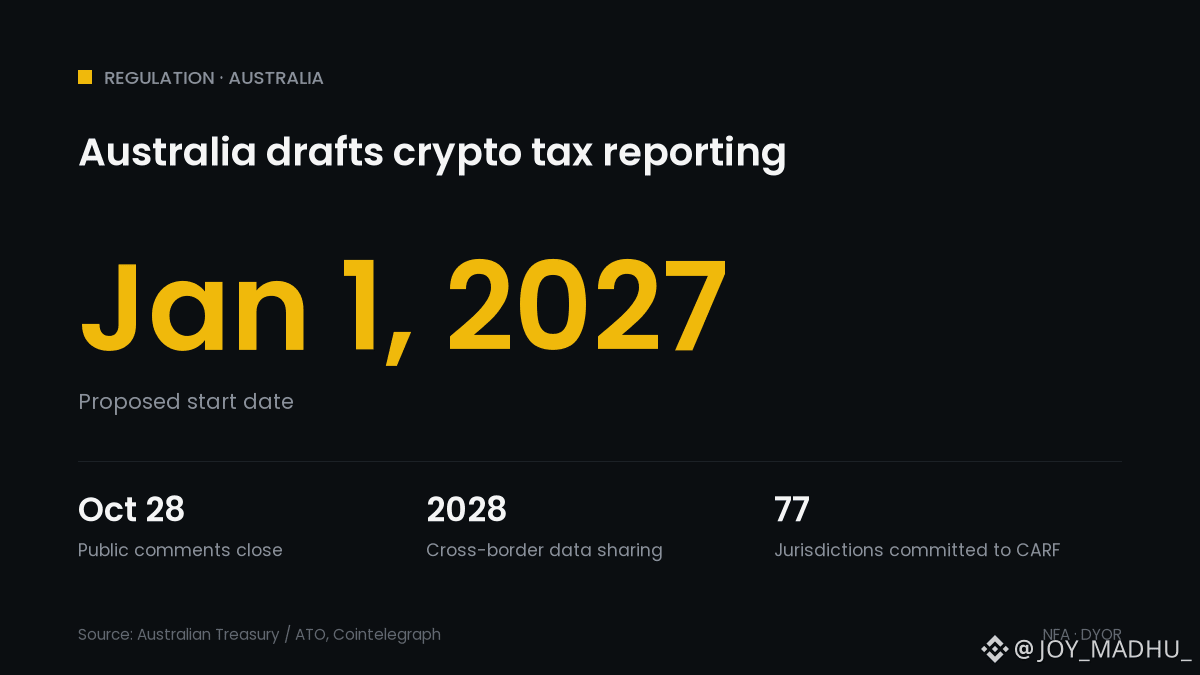
📅 Treasury released a draft bill on Oct 15. Public comments close Oct 28.
📊 It would adopt the OECD's Crypto-Asset Reporting Framework (CARF) plus a new domestic reporting regime.
🔍 Crypto service providers would report customer identity, tax residency and transaction values to the ATO.
📅 Proposed start: Jan 1, 2027. First cross-border data exchanges expected in 2028.
🌍 Australia is one of 77 jurisdictions committed to CARF.
⚠️ It's an exposure draft, not law yet.
What it means for crypto: less room for unreported gains, but clearer rules can also make it easier for institutions to join in.
Will tax transparency push users toward regulated platforms, or away from them? 👇
$BTC $ETH
#AustraliaProposesCryptoTransactionReportingLaw #CARF #CryptoTax #Regulation
77

·
--
Bullish
Australia is looking at a new crypto transaction reporting law, and honestly, it's not surprising anymore. Over the past year or so, regulators have been pushing hard for more visibility on how digital assets move, mostly for tax and anti-money-laundering reasons. Australia has already been working on OECD-style crypto reporting rules and a stricter travel rule for exchanges.
What does it mean for normal traders like us? Exchanges will probably have to collect and share more data, so KYC and transaction records will matter more than ever. If you trade actively, keep your own records: buys, sells, transfers, everything. It'll save you a lot of stress at tax time.
I don't see this as bad news. Clear rules usually bring bigger players and more trust into the market over time. But the compliance burden is real, especially for smaller platforms.
Where do you stand? More regulation = safer market, or too much control?
#AustraliaProposesCryptoTransactionReportingLaw #CryptoRegulation
Note: mujhe is specific proposal ki latest details nahi mili, isliye maine post general rakhi hai taake koi galat claim na ho. Agar aapke paas news link hai to bhej dein, main usi ke hisaab se facts add kar dunga. Hinglish ya Urdu version chahiye to bata dein.
1
137

·
--
Australia plans to advance crypto transaction reporting rules: regulatory signals are getting stronger—what should BTC and ETH watchers look at first?Australia plans to advance crypto transaction reporting rules: regulatory signals are getting stronger—what should BTC and ETH watchers look at first?
Binance Square’s real-time trending list showed #AustraliaProposesCryptoTransactionReportingLaw at No. 8, with 923 discussions, as of 22:30 Beijing time on October 16. The actual development behind the trend is that on October 15, Australia’s Treasury released a draft on crypto-asset tax transparency, proposing to incorporate the OECD Crypto-Asset Reporting Framework (CARF) into Australian law and establish a domestic reporting regime covering transactions by Australian residents. The public consultation closes on October 28.
First, let’s be clear about the status: this is still a draft for consultation, not a final law that has taken effect. Its most immediate impact is not to change the supply and demand of BTC or ETH overnight, but to raise compliance expectations for trading platforms, custodians, and related service providers regarding customer identities, transaction records, and the organization of cross-border information. For ordinary traders, the key issue is not whether “prices will rise or fall as soon as the policy is announced,” but whether records of transactions across platforms and wallets will need to be kept more completely, and whether they will be able to explain every purchase, sale, conversion, and transfer when filing taxes.
Australia plans to advance crypto transaction reporting rules: regulatory signals are getting stronger—what should BTC and ETH watchers look at first?
Australia plans to advance crypto transaction reporting rules: regulatory signals are getting stronger—what should BTC and ETH watchers look at first?
Binance Square’s real-time trending list showed #AustraliaProposesCryptoTransactionReportingLaw at No. 8, with 923 discussions, as of 22:30 Beijing time on October 16. The actual development behind the trend is that on October 15, Australia’s Treasury released a draft on crypto-asset tax transparency, proposing to incorporate the OECD Crypto-Asset Reporting Framework (CARF) into Australian law and establish a domestic reporting regime covering transactions by Australian residents. The public consultation closes on October 28.
First, let’s be clear about the status: this is still a draft for consultation, not a final law that has taken effect. Its most immediate impact is not to change the supply and demand of BTC or ETH overnight, but to raise compliance expectations for trading platforms, custodians, and related service providers regarding customer identities, transaction records, and the organization of cross-border information. For ordinary traders, the key issue is not whether “prices will rise or fall as soon as the policy is announced,” but whether records of transactions across platforms and wallets will need to be kept more completely, and whether they will be able to explain every purchase, sale, conversion, and transfer when filing taxes.
40

·
--
Australia’s proposed new cryptocurrency transaction reporting laws aim to combat money laundering and the financing of terrorist activities by requiring cryptocurrency service providers to report large transactions. This move responds to the global trend toward tighter regulation of the crypto sector, but could increase compliance costs and affect the user experience. I believe this measure is necessary, but regulation must be balanced with industry development. Data from Australia’s Financial Crimes and Counter-Terrorism Financing Commission (ACCCFT) shows that the risk of money laundering involving cryptocurrencies is increasing. The regulations are expected to take effect in 2025.#AustraliaProposesCryptoTransactionReportingLaw $BTC
#BTC
#BTC
49
·
--
#australiaproposescryptotransactionreportinglaw 🇦🇺
JUST IN: Australia has introduced draft legislation to adopt the OECD’s crypto tax reporting framework, enabling countries to exchange crypto transaction information.$TIA $INIT $AKE
#australiaproposescryptotransactionreportinglaw 🇦🇺
JUST IN: Australia has introduced draft legislation to adopt the OECD’s crypto tax reporting framework, enabling countries to exchange crypto transaction information.$TIA $INIT $AKE
JUST IN: Australia has introduced draft legislation to adopt the OECD’s crypto tax reporting framework, enabling countries to exchange crypto transaction information.$TIA $INIT $AKE

79

·
--
$BTC | A proposal to tighten crypto transaction reporting in Australia is circulating this week. On the desk the real risk was never non-disclosure. It was incomplete disclosure. The ATO already runs a data-matching program, pulling records straight from exchanges. What changes is the cost of a gap between your records and what gets reported. SatoshiMacro's review of Summ notes it pulls from 3,500+ sources, including 1,500+ DeFi protocols and 30+ L2 chains, into a myTax-aligned report, not a CSV. My read: the software gap matters more than the law. Most under-reporting isn't evasion, it's a wallet nobody imported. Limitation: our review is desk research, not a live test.
https://satoshimacro.com/reviews/crypto/summ-review/?utm_source=binance_square&utm_medium=social&utm_campaign=autopilot_trend
#SatoshiMacro #AustraliaProposesCryptoTransactionReportingLaw #CryptoTax #Bitcoin
https://satoshimacro.com/reviews/crypto/summ-review/?utm_source=binance_square&utm_medium=social&utm_campaign=autopilot_trend
#SatoshiMacro #AustraliaProposesCryptoTransactionReportingLaw #CryptoTax #Bitcoin
88
·
--
#australiaproposescryptotransactionreportinglaw 🇦🇺
BREAKING: Australia has released draft legislation mandating cryptocurrency transaction reporting
and international tax information sharing.
Crypto service providers would be required to report qualifying transactions involving Australian residents starting July 2027.$AGT $SIREN $CYPH
BREAKING: Australia has released draft legislation mandating cryptocurrency transaction reporting
and international tax information sharing.
Crypto service providers would be required to report qualifying transactions involving Australian residents starting July 2027.$AGT $SIREN $CYPH
108
·
--
#australiaproposescryptotransactionreportinglaw ATO + CARF = Your On-Chain Activity Is Getting Reported
Aussie degens, take note. Treasury just dropped the draft CARF + domestic crypto reporting bill. Exchanges and service providers will have to send your transaction data (for Australian residents) to the ATO. Timeline: rules from July 2027, first reports and global swaps in 2028. They’re banking on ~A$170m extra tax. Still only a draft — comments close 28 Oct. Whether you see it as necessary transparency or another step toward full surveillance, the writing is on the wall. Stay informed and keep good records.$NEAR $SENT $POPCAT
Aussie degens, take note. Treasury just dropped the draft CARF + domestic crypto reporting bill. Exchanges and service providers will have to send your transaction data (for Australian residents) to the ATO. Timeline: rules from July 2027, first reports and global swaps in 2028. They’re banking on ~A$170m extra tax. Still only a draft — comments close 28 Oct. Whether you see it as necessary transparency or another step toward full surveillance, the writing is on the wall. Stay informed and keep good records.$NEAR $SENT $POPCAT
128

·
--
🚨 AUSTRALIA WANTS MORE TRANSPARENCY IN CRYPTO
TRANSACTIONS — WHAT INVESTORS NEED TO KNOW! 🇦🇺
Crypto investors, a major regulatory shift is taking shape in Australia. And this time, the focus is on who reports crypto transactions and how tax authorities access that information. 👀
Australia’s Treasury released draft legislation for consultation on October 15, 2026, proposing a framework that brings the OECD’s Crypto-Asset Reporting Framework (CARF) into Australian law and introduces domestic reporting requirements for transactions involving Australian residents. The consultation is scheduled to close on October 28, 2026.
📌 Why does this matter?
🔹 Greater tax visibility: Crypto-related information could become easier for tax authorities to obtain and exchange internationally.
🔹 More reporting responsibilities: Relevant crypto-asset service providers may face additional obligations to report transaction-related information.
🔹 Compliance becomes more important: Investors should keep accurate records of crypto purchases, sales, transfers and taxable events.
🔹 Not a crypto ban: The proposal focuses on tax transparency and reporting, not banning Bitcoin or other digital assets.
⚠️ The bigger picture: As governments build clearer crypto reporting frameworks, the industry is moving toward greater accountability. That could support regulatory trust, but it also raises important questions about privacy, implementation costs and how reporting rules will work in practice.
Remember: This is a draft legislative proposal under consultation, not a reason to assume every transaction is already subject to a new reporting rule.
💬 Your turn: Does stronger crypto tax reporting make the market safer and more legitimate, or does it risk putting too much financial information in government hands?
#australiaproposescryptotransactionreportinglaw $DOT $BAT $INJ
{future}(INJUSDT)
{future}(BATUSDT)
{future}(DOTUSDT)
🚨 AUSTRALIA WANTS MORE TRANSPARENCY IN CRYPTO
TRANSACTIONS — WHAT INVESTORS NEED TO KNOW! 🇦🇺
Crypto investors, a major regulatory shift is taking shape in Australia. And this time, the focus is on who reports crypto transactions and how tax authorities access that information. 👀
Australia’s Treasury released draft legislation for consultation on October 15, 2026, proposing a framework that brings the OECD’s Crypto-Asset Reporting Framework (CARF) into Australian law and introduces domestic reporting requirements for transactions involving Australian residents. The consultation is scheduled to close on October 28, 2026.
📌 Why does this matter?
🔹 Greater tax visibility: Crypto-related information could become easier for tax authorities to obtain and exchange internationally.
🔹 More reporting responsibilities: Relevant crypto-asset service providers may face additional obligations to report transaction-related information.
🔹 Compliance becomes more important: Investors should keep accurate records of crypto purchases, sales, transfers and taxable events.
🔹 Not a crypto ban: The proposal focuses on tax transparency and reporting, not banning Bitcoin or other digital assets.
⚠️ The bigger picture: As governments build clearer crypto reporting frameworks, the industry is moving toward greater accountability. That could support regulatory trust, but it also raises important questions about privacy, implementation costs and how reporting rules will work in practice.
Remember: This is a draft legislative proposal under consultation, not a reason to assume every transaction is already subject to a new reporting rule.
💬 Your turn: Does stronger crypto tax reporting make the market safer and more legitimate, or does it risk putting too much financial information in government hands?
#australiaproposescryptotransactionreportinglaw $DOT $BAT $INJ

1.2k

·
--
#AustraliaProposesCryptoTransactionReportingLaw
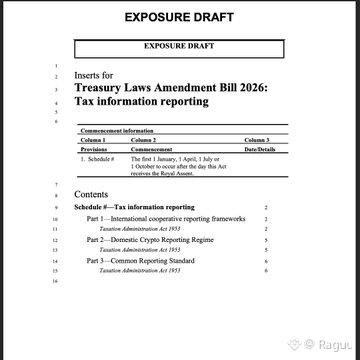
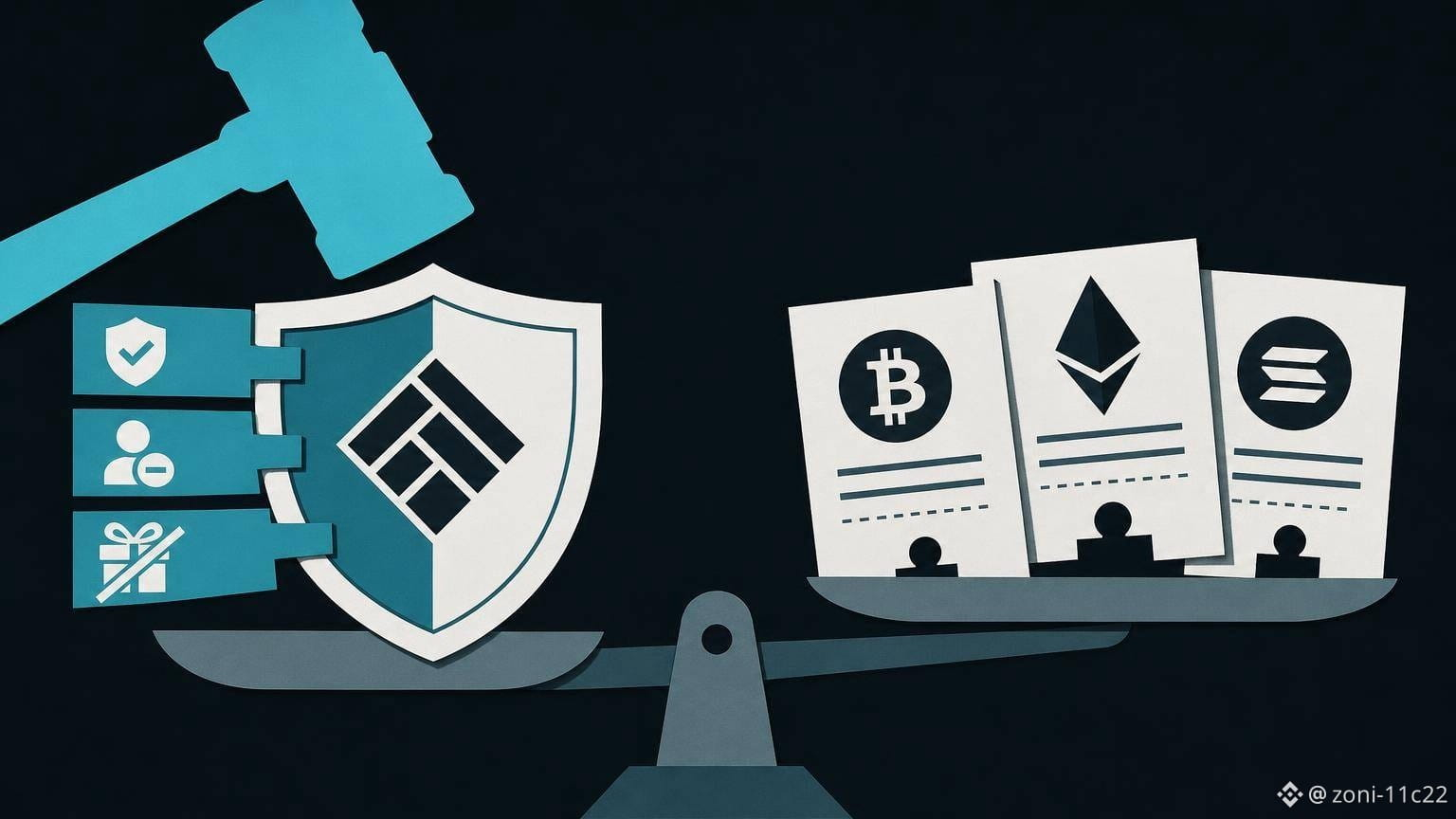
Australia has officially released a draft bill to establish a sweeping crypto transaction reporting regime and integrate the Organisation for Economic Co-operation and Development’s (OECD) Crypto-Asset Reporting Framework (CARF) into domestic law. [1]
The draft bill, titled the Treasury Laws Amendment Bill 2026: Tax information reporting, aims to crack down on global tax evasion by enforcing strict information transparency across digital asset platforms. [1, 2]
$ADA
{future}(ADAUSDT)
$SUI
{future}(SUIUSDT)
$XRP
{future}(XRPUSDT)
#CryptoTransactions
#AustralianStocks
#AustraliaCrypto
#AustraliaProposesCryptoTransactionReportingLaw
Australia has officially released a draft bill to establish a sweeping crypto transaction reporting regime and integrate the Organisation for Economic Co-operation and Development’s (OECD) Crypto-Asset Reporting Framework (CARF) into domestic law. [1]
The draft bill, titled the Treasury Laws Amendment Bill 2026: Tax information reporting, aims to crack down on global tax evasion by enforcing strict information transparency across digital asset platforms. [1, 2]
$ADA
$SUI
$XRP
#CryptoTransactions
#AustralianStocks
#AustraliaCrypto

203

#AustraliaProposesCryptoTransactionReportingLaw 🚨 AUSTRALIA'S NEW CRYPTO PROPOSAL: IS YOUR TRADING ACTIVITY ABOUT TO FACE MORE SCRUTINY? 👀
Australia has introduced draft legislation that could bring crypto transactions under a more structured reporting system.
Here's why traders should pay attention:
🔎 More transparency: The proposal aims to improve tax reporting for crypto assets.
🌏 Global information sharing: Australia plans to implement the OECD Crypto-Asset Reporting Framework.
⚠️ The big question: What could this mean for crypto users' privacy and tax obligations?
Important: This is a draft proposal under consultation—not a final law. The exact requirements will depend on the final rules.
📊 Coins on my market watchlist today:
🔥 $INJ — Injective
🚀 $ZRO — LayerZero
🌌 $TIA — Celestia
{spot}(INJUSDT)
{future}(ZROUSDT)
{future}(TIAUSDT)
All three appeared among reported 24-hour gainers, but momentum can reverse quickly. Check live price, volume and risk before trading.
👇 Let's discuss!
Do you think stricter reporting will make crypto more trusted—or raise privacy concerns?
💬 Share your opinion below!
#AustraliaProposesCryptoTransactionReportingLaw #CryptoRegulation #INJ #CryptoMarketWatch
#AustraliaProposesCryptoTransactionReportingLaw 🚨 AUSTRALIA'S NEW CRYPTO PROPOSAL: IS YOUR TRADING ACTIVITY ABOUT TO FACE MORE SCRUTINY? 👀
Australia has introduced draft legislation that could bring crypto transactions under a more structured reporting system.
Here's why traders should pay attention:
🔎 More transparency: The proposal aims to improve tax reporting for crypto assets.
🌏 Global information sharing: Australia plans to implement the OECD Crypto-Asset Reporting Framework.
⚠️ The big question: What could this mean for crypto users' privacy and tax obligations?
Important: This is a draft proposal under consultation—not a final law. The exact requirements will depend on the final rules.
📊 Coins on my market watchlist today:
🔥 $INJ — Injective
🚀 $ZRO — LayerZero
🌌 $TIA — Celestia
All three appeared among reported 24-hour gainers, but momentum can reverse quickly. Check live price, volume and risk before trading.
👇 Let's discuss!
Do you think stricter reporting will make crypto more trusted—or raise privacy concerns?
💬 Share your opinion below!
#AustraliaProposesCryptoTransactionReportingLaw #CryptoRegulation #INJ #CryptoMarketWatch

80

·
--

Article
Australia Proposes Crypto Tax Rules, Bitcoin Still Stuck Below 82,843Australia has just released a draft of rules that could change how crypto transactions are reported to tax authorities. The Treasury Laws Amendment Bill 2026 was published on October 15, 2026, and public consultation closes on October 28, 2026. This means it is still at the feedback stage, not yet in force.
The details are dense, but the basic idea is simple. Australia is adopting the OECD’s crypto-asset reporting framework, known as CARF. Under the rules, transactions involving crypto assets by Australian residents must be reported, and the data will then be automatically exchanged between countries starting in 2028. This will make cross-border transaction trails much easier for tax authorities to track.
Australia Proposes Crypto Tax Rules, Bitcoin Still Stuck Below 82,843
Australia has just released a draft of rules that could change how crypto transactions are reported to tax authorities. The Treasury Laws Amendment Bill 2026 was published on October 15, 2026, and public consultation closes on October 28, 2026. This means it is still at the feedback stage, not yet in force.
The details are dense, but the basic idea is simple. Australia is adopting the OECD’s crypto-asset reporting framework, known as CARF. Under the rules, transactions involving crypto assets by Australian residents must be reported, and the data will then be automatically exchanged between countries starting in 2028. This will make cross-border transaction trails much easier for tax authorities to track.
The details are dense, but the basic idea is simple. Australia is adopting the OECD’s crypto-asset reporting framework, known as CARF. Under the rules, transactions involving crypto assets by Australian residents must be reported, and the data will then be automatically exchanged between countries starting in 2028. This will make cross-border transaction trails much easier for tax authorities to track.
253


Article
Analysis and Strategy: #AustraliaProposesCryptoTransactionReportingLaw#AustraliaProposesCryptoTransactionReportingLaw
🇦🇺 Australia Proposes Strict Crypto Transaction Reporting Law: What Does It Mean for the Market and Privacy? (#AustraliaProposesCryptoTransactionReportingLaw)
The Australian government has introduced a key legislative proposal focused on financial transparency and the mandatory reporting of cryptocurrency transactions. This measure aims to align Australian regulation with international standards set by the Financial Action Task Force (FATF) and to strengthen anti-money laundering (AML) frameworks.
---
1\. What Does the New Legislative Proposal in Australia Entail? ⚖️
The proposed legislation introduces more rigorous compliance controls for Virtual Asset Service Providers (VASPs):
* **Automatic Transaction Reporting:** A requirement for exchanges and regulated platforms to report movements exceeding specific thresholds to financial intelligence agencies (such as AUSTRAC).
* **Strict Adoption of the "Travel Rule":** An obligation to share identifying information between the sender and the receiver during cryptocurrency transfers.
* **Oversight of Cross-Border Transactions:** Increased scrutiny of capital flows to and from private wallets or non-cooperative jurisdictions.
---
2\. Macro Impact and Privacy in the Crypto Ecosystem 🌍
While the regulation seeks to combat illicit activities and protect consumers, it has sparked a significant debate within the market:
* **Institutional Entry:** A clear legal framework encourages adoption by Australian banks and investment funds, reducing legal uncertainty.
* **Privacy Challenges:** Enhanced tracking may drive privacy-focused users toward decentralized exchanges (DEXs) and self-custody wallets.
* **Ripple Effect in the APAC Region:** Australia joins countries like Singapore, Japan, and South Korea in tightening regulatory oversight of centralized exchanges.
---
3\. Binance Positioning Strategy 🎯
In light of the global regulatory landscape, here is how a resilient operational strategy can be structured:
1. **Compliant Platforms (Binance Spot):** Robust regulatory compliance and verified KYC processes make leading platforms like Binance a safe haven for institutional liquidity in key pairs (**$BTC**, **$ETH**, **$SOL**).$BTC $ETH $SOL
{future}(SOLUSDT)
{future}(ETHUSDT)
{future}(BTCUSDT)
2. **Diversification and Self-Custody:** Integrate the use of the **Binance Web3 Wallet** for managing DeFi assets while maintaining transparency in personal tax records.
3. **Volatility Monitoring:** Regulatory news often triggers temporary drops driven by fear (FUD). Setting limit orders at key support zones allows you to capitalize on pullbacks caused by regulatory panic.#writetoearn
Analysis and Strategy: #AustraliaProposesCryptoTransactionReportingLaw
#AustraliaProposesCryptoTransactionReportingLaw
🇦🇺 Australia Proposes Strict Crypto Transaction Reporting Law: What Does It Mean for the Market and Privacy? (#AustraliaProposesCryptoTransactionReportingLaw)
The Australian government has introduced a key legislative proposal focused on financial transparency and the mandatory reporting of cryptocurrency transactions. This measure aims to align Australian regulation with international standards set by the Financial Action Task Force (FATF) and to strengthen anti-money laundering (AML) frameworks.
---
1\. What Does the New Legislative Proposal in Australia Entail? ⚖️
The proposed legislation introduces more rigorous compliance controls for Virtual Asset Service Providers (VASPs):
* **Automatic Transaction Reporting:** A requirement for exchanges and regulated platforms to report movements exceeding specific thresholds to financial intelligence agencies (such as AUSTRAC).
* **Strict Adoption of the "Travel Rule":** An obligation to share identifying information between the sender and the receiver during cryptocurrency transfers.
* **Oversight of Cross-Border Transactions:** Increased scrutiny of capital flows to and from private wallets or non-cooperative jurisdictions.
---
2\. Macro Impact and Privacy in the Crypto Ecosystem 🌍
While the regulation seeks to combat illicit activities and protect consumers, it has sparked a significant debate within the market:
* **Institutional Entry:** A clear legal framework encourages adoption by Australian banks and investment funds, reducing legal uncertainty.
* **Privacy Challenges:** Enhanced tracking may drive privacy-focused users toward decentralized exchanges (DEXs) and self-custody wallets.
* **Ripple Effect in the APAC Region:** Australia joins countries like Singapore, Japan, and South Korea in tightening regulatory oversight of centralized exchanges.
---
3\. Binance Positioning Strategy 🎯
In light of the global regulatory landscape, here is how a resilient operational strategy can be structured:
1. **Compliant Platforms (Binance Spot):** Robust regulatory compliance and verified KYC processes make leading platforms like Binance a safe haven for institutional liquidity in key pairs (**$BTC **, **$ETH **, **$SOL **).$BTC $ETH $SOL
2. **Diversification and Self-Custody:** Integrate the use of the **Binance Web3 Wallet** for managing DeFi assets while maintaining transparency in personal tax records.
3. **Volatility Monitoring:** Regulatory news often triggers temporary drops driven by fear (FUD). Setting limit orders at key support zones allows you to capitalize on pullbacks caused by regulatory panic.#writetoearn
1
842
·
--
#australiaproposescryptotransactionreportinglaw Australia Takes Next Step Toward Fairer Crypto Tax System
Good news for tax integrity: Australia has published draft rules that will bring crypto transactions into the same transparency framework used for traditional finance. By adopting the OECD Crypto-Asset Reporting Framework and creating a domestic reporting regime, the government aims to help taxpayers meet their obligations and close gaps. Platforms will report Australian residents’ activity, with the system expected to begin operating from July 2027 and international exchanges from 2028. The measure is estimated to deliver A$170 million in extra revenue. Public input is welcome until 28 October 2026.$NEAR $USAR $MARSCOIN
Good news for tax integrity: Australia has published draft rules that will bring crypto transactions into the same transparency framework used for traditional finance. By adopting the OECD Crypto-Asset Reporting Framework and creating a domestic reporting regime, the government aims to help taxpayers meet their obligations and close gaps. Platforms will report Australian residents’ activity, with the system expected to begin operating from July 2027 and international exchanges from 2028. The measure is estimated to deliver A$170 million in extra revenue. Public input is welcome until 28 October 2026.$NEAR $USAR $MARSCOIN
1
504
Log in to explore more content
Join global crypto users on Binance Square
⚡️ Get latest and useful information about crypto.
💬 Trusted by the world’s largest crypto exchange.
👍 Discover real insights from verified creators.
Email / Phone number
Trending Topics
1
#NVIDIAReinstatesJensenHuangasCEO
19,475 views
511 Discussing
2
#WillMarketsStageAThanksgivingReliefRally?
121,433 views
1,633 Discussing
3
#WillOctCorePCEShiftFedHikeExpectations?
45,709 views
674 Discussing
4
#BitcoinEndsRecord17DayStreakOfLowerHighs
3,764 views
166 Discussing
5
#TradersPriceOut50bpDecemberFedHike
3,583 views
112 Discussing
6
#EvolveAtBinanceBlockchainWeek
102,513 views
945 Discussing
7
#TrumpBackedAmericanBitcoinRaisesHoldingsToOver8500BTC
756 views
28 Discussing
8
#MuskWarnsOfAICashCrunch
56,660 views
675 Discussing
9
#TradFiForBeginners
1.1M views
5,961 Discussing
10
#SkyPSMUSDCLiquidityReboundsTo$1.77B
432 views
9 Discussing