
#bce
bce
66,651 views
103 Discussing
Hot
Latest


Article
A bond on Ethereum paid for with ECB money: how Pontes worksA German public bank has issued a bond on the public Ethereum network, and the buyer paid for it with money from the European Central Bank. The technology that makes this possible is called Pontes.
🔹 On November 17, NRW.BANK, the public development bank of North Rhine-Westphalia, announced that it had issued the bond. DZ BANK bought it, and payment was made in central bank money, without stablecoins or conventional transfers.
🔹 According to NRW.BANK, the transaction was completed in less than an hour, whereas a traditional issuance can take several days. The statement does not disclose the amount.
A bond on Ethereum paid for with ECB money: how Pontes works
A German public bank has issued a bond on the public Ethereum network, and the buyer paid for it with money from the European Central Bank. The technology that makes this possible is called Pontes.
🔹 On November 17, NRW.BANK, the public development bank of North Rhine-Westphalia, announced that it had issued the bond. DZ BANK bought it, and payment was made in central bank money, without stablecoins or conventional transfers.
🔹 According to NRW.BANK, the transaction was completed in less than an hour, whereas a traditional issuance can take several days. The statement does not disclose the amount.
1
440


Article
The Central Bank introduces changes to deposits of USD 50 and USD 100 banknotes to preventThe Central Bank introduces changes to deposits of USD 50 and USD 100 banknotes to prevent money laundering in Ecuador
To exchange high-denomination banknotes at the BCE, citizens must provide identification, declare the lawful source of the funds, and record the serial numbers of the banknotes received.
On October 27, 2026, the Central Bank of Ecuador (BCE) issued an administrative resolution introducing changes to deposits of USD 50 and USD 100 banknotes by banks and cooperatives. This is intended to strengthen controls to prevent money laundering and the financing of crimes.
The Central Bank introduces changes to deposits of USD 50 and USD 100 banknotes to prevent
The Central Bank introduces changes to deposits of USD 50 and USD 100 banknotes to prevent money laundering in Ecuador
To exchange high-denomination banknotes at the BCE, citizens must provide identification, declare the lawful source of the funds, and record the serial numbers of the banknotes received.
On October 27, 2026, the Central Bank of Ecuador (BCE) issued an administrative resolution introducing changes to deposits of USD 50 and USD 100 banknotes by banks and cooperatives. This is intended to strengthen controls to prevent money laundering and the financing of crimes.
21

Article
ECB calls on banks to change their governance model to adapt to AIThe institutions sent their action plan last week to address the emergence of Mythos
Pedro Machado, one of the heads of Europe’s Single Resolution Board, at the FROB headquarters.
The European Central Bank (ECB) has identified artificial intelligence (AI) as one of the main risks facing institutions in the euro area. Pedro Machado, a member of the institution’s Supervisory Board, has called on the sector to change its internal governance protocols to adapt to the emergence of this new technology, at a conference he opened in Madrid on Friday.
ECB calls on banks to change their governance model to adapt to AI
The institutions sent their action plan last week to address the emergence of Mythos
Pedro Machado, one of the heads of Europe’s Single Resolution Board, at the FROB headquarters.
The European Central Bank (ECB) has identified artificial intelligence (AI) as one of the main risks facing institutions in the euro area. Pedro Machado, a member of the institution’s Supervisory Board, has called on the sector to change its internal governance protocols to adapt to the emergence of this new technology, at a conference he opened in Madrid on Friday.
153

·
--
Crypto: The ECB steps up preparations for the digital euro
The European Central Bank is still targeting 2029 for a possible launch of the digital euro. In a speech delivered on November 5, 2026, Piero Cipollone, a member of the ECB’s Executive Board, confirmed a twelve-month pilot program starting in the second half of 2027. Thirty-six payment service providers will take part in the tests. However, the final launch will depend on the adoption of European legislation, which is expected before the end of the year.
The ECB is targeting a possible first issuance of the digital euro in 2029.
A twelve-month pilot will begin in the second half of 2027 with 36 providers.
Thirteen eurozone countries rely entirely on foreign players for in-store card payments.
The ECB maintains its 2029 launch target
Piero Cipollone confirmed the timeline on Thursday during a conference dedicated to payment infrastructures. The ECB had already announced the first stages of the digital euro project for 2027. His latest speech provides details on the conditions needed for issuance in 2029.
The timeline first depends on European institutions. The Council of the European Union adopted its position in December 2025. The European Parliament followed in July 2026. Both institutions are now negotiating with the European Commission as part of interinstitutional discussions.
The aim is still to reach an agreement before December 31. If this timeline is met, the ECB could be technically ready to issue the digital euro in 2029. However, the final decision will rest with its Governing Council, following the adoption of the regulation.
No issuance has yet been authorized. The digital euro will take the form of electronic money issued directly by the Eurosystem. Unlike private cryptocurrencies, its value would not fluctuate freely on crypto markets.
$EUR
{spot}(EURUSDT)
$BCE.US
{stock_us}(BCE.US)
$WIF
{spot}(WIFUSDT)
#BCE
Crypto: The ECB steps up preparations for the digital euro
The European Central Bank is still targeting 2029 for a possible launch of the digital euro. In a speech delivered on November 5, 2026, Piero Cipollone, a member of the ECB’s Executive Board, confirmed a twelve-month pilot program starting in the second half of 2027. Thirty-six payment service providers will take part in the tests. However, the final launch will depend on the adoption of European legislation, which is expected before the end of the year.
The ECB is targeting a possible first issuance of the digital euro in 2029.
A twelve-month pilot will begin in the second half of 2027 with 36 providers.
Thirteen eurozone countries rely entirely on foreign players for in-store card payments.
The ECB maintains its 2029 launch target
Piero Cipollone confirmed the timeline on Thursday during a conference dedicated to payment infrastructures. The ECB had already announced the first stages of the digital euro project for 2027. His latest speech provides details on the conditions needed for issuance in 2029.
The timeline first depends on European institutions. The Council of the European Union adopted its position in December 2025. The European Parliament followed in July 2026. Both institutions are now negotiating with the European Commission as part of interinstitutional discussions.
The aim is still to reach an agreement before December 31. If this timeline is met, the ECB could be technically ready to issue the digital euro in 2029. However, the final decision will rest with its Governing Council, following the adoption of the regulation.
No issuance has yet been authorized. The digital euro will take the form of electronic money issued directly by the Eurosystem. Unlike private cryptocurrencies, its value would not fluctuate freely on crypto markets.
$EUR
$BCE.US
$WIF
#BCE

137

Article
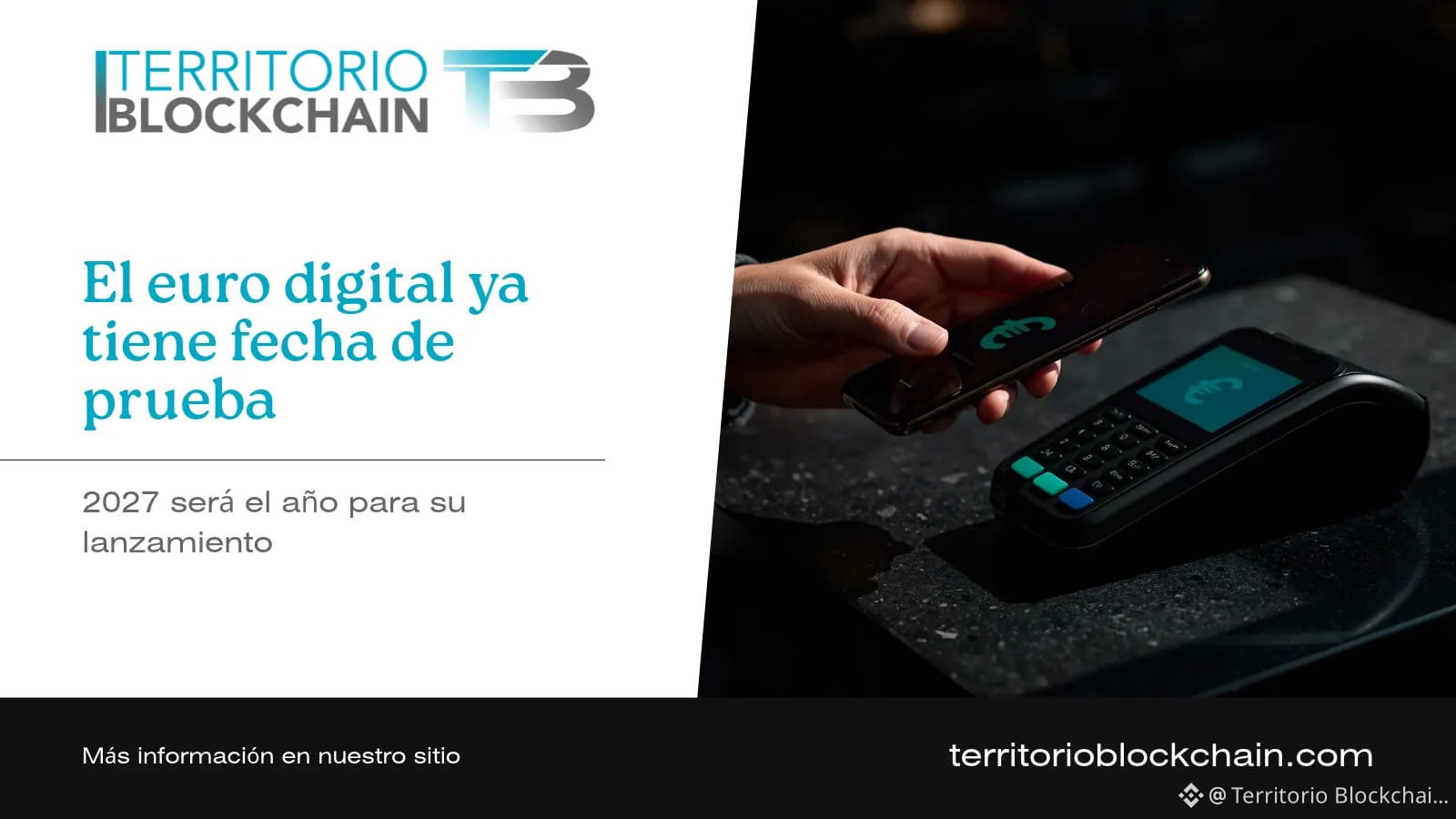
Who protects your purchases if you pay with the digital euro?If you pay by card and your order doesn’t arrive, you usually get your money back. With the digital euro advocated by the European Council, maybe not.
In the new episode of Territorio Bitcoin, I review the three battles being wrapped up in Brussels before the end of the year that will determine what the digital euro will look like in your day-to-day life:
• Refunds: what happens when a purchase goes wrong.
• Fees: who pays for each payment.
• The per-person limit: how many digital euros you’ll be able to hold.
Full episode (22 minutes) on Territorio Bitcoin, the Territorio Blockchain podcast, on iVoox.
Who protects your purchases if you pay with the digital euro?
If you pay by card and your order doesn’t arrive, you usually get your money back. With the digital euro advocated by the European Council, maybe not.
In the new episode of Territorio Bitcoin, I review the three battles being wrapped up in Brussels before the end of the year that will determine what the digital euro will look like in your day-to-day life:
• Refunds: what happens when a purchase goes wrong.
• Fees: who pays for each payment.
• The per-person limit: how many digital euros you’ll be able to hold.
Full episode (22 minutes) on Territorio Bitcoin, the Territorio Blockchain podcast, on iVoox.
1
322
Article
Digital euro: ECB prepares pilot with real payments in 2027 and targets 2029 for launchThe digital euro now has a timeline. Piero Cipollone, a member of the ECB’s Executive Board responsible for payments, said in an interview with Milano Finanza (published by the ECB on October 24) that a pilot will begin in 2027, in which ECB staff and staff from national central banks will make real payments.
The underlying issue is sovereignty. Today, cash is the only central bank money citizens can use, and we are paying more and more online. Two out of every three card payments go through non-European networks.
Digital euro: ECB prepares pilot with real payments in 2027 and targets 2029 for launch
The digital euro now has a timeline. Piero Cipollone, a member of the ECB’s Executive Board responsible for payments, said in an interview with Milano Finanza (published by the ECB on October 24) that a pilot will begin in 2027, in which ECB staff and staff from national central banks will make real payments.
The underlying issue is sovereignty. Today, cash is the only central bank money citizens can use, and we are paying more and more online. Two out of every three card payments go through non-European networks.
The underlying issue is sovereignty. Today, cash is the only central bank money citizens can use, and we are paying more and more online. Two out of every three card payments go through non-European networks.
149

·
--
Bearish
Lagarde warns that higher financing costs will weigh on consumers’ energy consumption
Macroeconomic allocation managers are reassessing energy demand forecasts following public remarks over the weekend by European Central Bank President #BCE , Christine Lagarde.
In a speech on Saturday about volatility across asset classes, Lagarde noted that the recent sell-off in sovereign bond markets is actively pushing up financing costs across the single-currency bloc, tightening financial conditions and constraining overall economic growth.
Lagarde warned that this market-driven tightening will make it significantly harder than #BCE had projected last month for European households and industrial companies to absorb higher fuel and energy bills resulting from the ongoing conflicts in the Middle East.
With the #BCE widely expected to deliver another rate hike in December—taking its policy rate into restrictive territory at 2.75%—high capital costs are expected to weigh on gas-powered industrial activity for the rest of the year

1
219

🇪🇺 The ECB selects the 36 giants that will test the Digital Euro.
The European Central Bank (ECB) has just taken the most important step to date on its path toward creating a Central Bank Digital Currency (CBDC).
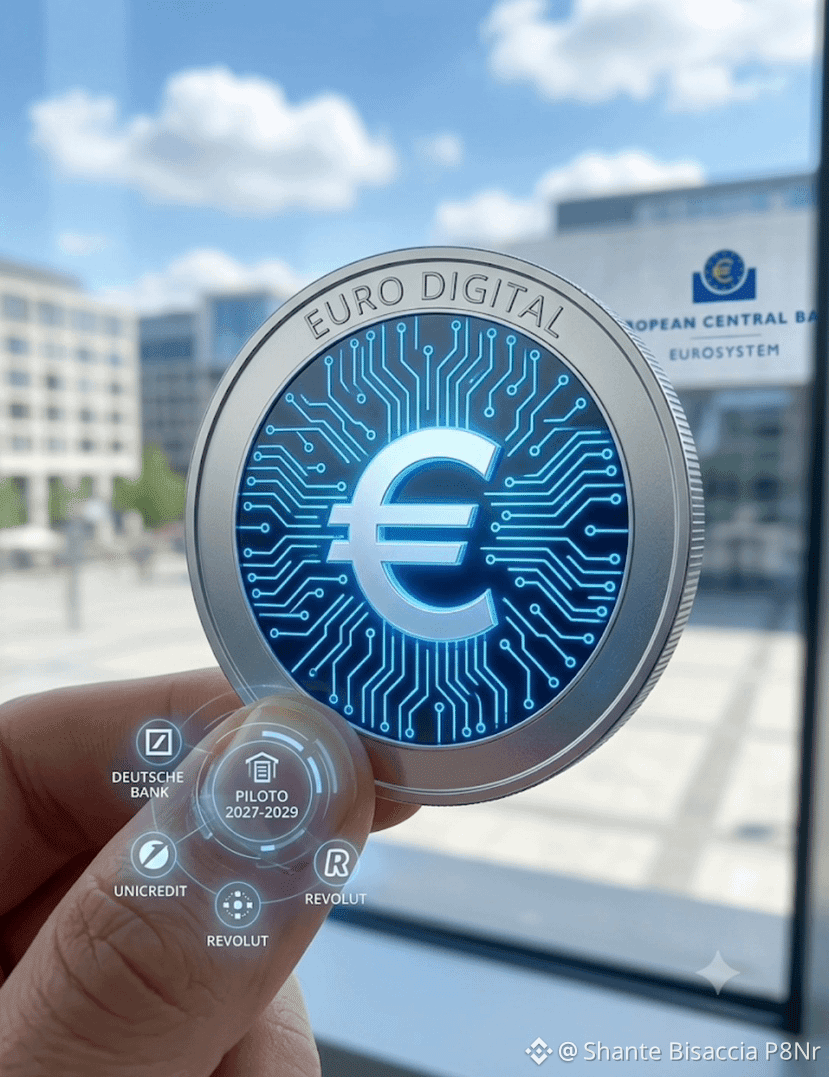
After a rigorous selection process started in March 2026, the Eurosystem has formally chosen 36 payment service providers (PSPs) to lead the technical tests of its beta version.
The Timeline:
• Pilot Start: Second half of 2027
(duration: 12 months).
• Testing Phase: A “beta” digital euro will be used that will not have the status of
legal tender. It will be used to evaluate
usability, transactions in stores,
online and offline
transfers (offline).
• Possible Official Launch: The ECB
aims for a first issuance in the year
2029 (subject to approval of the
European regulatory framework).
🏦 Tradition and Fintech side by side: The Chosen Ones:
The ECB has sought a market balance by selecting both traditional banks and disruptors from the modern payments ecosystem. Among the 36 firms stand out:
• Traditional banking: Deutsche Bank (Germany) and UniCredit (Italy).
• Neobanks and Fintechs: Revolut (Ireland/Global)
• Bulk Payments Processors: Stripe (European subsidiary), Adyen, SumUp and Worldline.
💡 What does this mean for the crypto and Web3 market?
1️⃣ Direct competition for Stablecoins in Euros: Private stablecoins like EURC will face a strong institutional competitor on the continent.
2️⃣ Infrastructure Adoption: The fact that pro-crypto firms and fintechs like Revolut are included in the pilot will speed up users’ familiarity with advanced interfaces and digital wallets.
3️⃣ Regulatory Acceleration: This pilot will force the European Union to legislate at a rapid pace the interoperability of traditional networks with decentralized Web3 environments.
We’ll have to wait and see whether the Digital Euro will coexist in harmony with stablecoins and Bitcoin.
#CBDC #BCE #EuroDigital
2
147
·
--
The ECB ramps up with the digital euro through a banking test in Italy
The digital euro takes a more concrete step in Italy. Starting June 3, 2026, nine Italian banks are testing the Eur.Bank architecture, while the ECB awaits feedback from payment providers by the end of June.
In short
The digital euro enters a phase of technical testing in Italy.
Nine banks are experimenting with the Eur.Bank architecture ahead of the feedback expected from the ECB.
The project aims to strengthen European sovereignty in digital payments.
The digital euro moves to banking tests
The digital euro is no longer just a topic discussed at European conferences. It enters the testing systems of banks. In Italy, nine entities have begun experimenting with the Eur.Bank architecture, still within a technical framework. This project is also part of a broader debate on the tokenized SEPA, which has become strategic for Rome and Brussels.
Let's be clear. This is not a public launch. No Italian citizen is yet receiving an official digital euro wallet. Banks are primarily testing pathways, connections, flows, and the ability of infrastructures to communicate with the future standards of the Eurosystem.
This detail changes everything. Europe is not just testing a currency. It is testing a public payment model capable of functioning in the digital economy. Behind the lines of code lies a question of sovereignty.
$NVDAB
{spot}(NVDABUSDT)
$BCH
{spot}(BCHUSDT)
$IO
{spot}(IOUSDT)
#BCE
The ECB ramps up with the digital euro through a banking test in Italy
The digital euro takes a more concrete step in Italy. Starting June 3, 2026, nine Italian banks are testing the Eur.Bank architecture, while the ECB awaits feedback from payment providers by the end of June.
In short
The digital euro enters a phase of technical testing in Italy.
Nine banks are experimenting with the Eur.Bank architecture ahead of the feedback expected from the ECB.
The project aims to strengthen European sovereignty in digital payments.
The digital euro moves to banking tests
The digital euro is no longer just a topic discussed at European conferences. It enters the testing systems of banks. In Italy, nine entities have begun experimenting with the Eur.Bank architecture, still within a technical framework. This project is also part of a broader debate on the tokenized SEPA, which has become strategic for Rome and Brussels.
Let's be clear. This is not a public launch. No Italian citizen is yet receiving an official digital euro wallet. Banks are primarily testing pathways, connections, flows, and the ability of infrastructures to communicate with the future standards of the Eurosystem.
This detail changes everything. Europe is not just testing a currency. It is testing a public payment model capable of functioning in the digital economy. Behind the lines of code lies a question of sovereignty.
$NVDAB
$BCH
$IO
#BCE

113

·
--
#💶 #Macroeconomia #BCE
🚨 IMMINENT DECISION! THE ECB IS PREPARING FOR A RATE HIKE TONIGHT 📉🏛️
Attention traders! Analysts at TD Securities report that the market has already priced in a 25 basis point increase in interest rates by the European Central Bank (ECB) for their meeting tonight, a pivotal move to curb inflation that could bolster the euro's value in the short term. 💶⚡
Strategists note that the ECB will maintain a neutral stance, fully reliant on macroeconomic data, evaluating growth and inflation risks meeting by meeting. This cautious yet firm approach keeps global financial market liquidity on edge. Will this traditional rate hike trigger a capital flight into cryptocurrency markets? Check the chart below right now and monitor the market impact in real-time! ⬇️📊👀
$BTC
{spot}(BTCUSDT)
$EUR
{spot}(EURUSDT)
$ETH
{spot}(ETHUSDT)
#💶 #Macroeconomia #BCE
🚨 IMMINENT DECISION! THE ECB IS PREPARING FOR A RATE HIKE TONIGHT 📉🏛️
Attention traders! Analysts at TD Securities report that the market has already priced in a 25 basis point increase in interest rates by the European Central Bank (ECB) for their meeting tonight, a pivotal move to curb inflation that could bolster the euro's value in the short term. 💶⚡
Strategists note that the ECB will maintain a neutral stance, fully reliant on macroeconomic data, evaluating growth and inflation risks meeting by meeting. This cautious yet firm approach keeps global financial market liquidity on edge. Will this traditional rate hike trigger a capital flight into cryptocurrency markets? Check the chart below right now and monitor the market impact in real-time! ⬇️📊👀
$BTC
$EUR
$ETH
1
120


Article
Geopolitical risk amplifies consumers' inflation fears, ECB survey showsThe European Central Bank's Consumer Expectations Survey revealed on Friday that recurring geopolitical shocks are intensifying households' concerns about stagflation, with the recent conflict in Iran causing significant revisions in inflation and growth expectations. $ALLO
The data from the March 2026 survey showed that consumers have revised their average inflation expectations up by about 2.5 percentage points following the start of the war in Iran in February, while growth expectations dipped approximately 1.2 percentage points. The median inflation expectations rose by 1.5 percentage points during the same period.
Geopolitical risk amplifies consumers' inflation fears, ECB survey shows
The European Central Bank's Consumer Expectations Survey revealed on Friday that recurring geopolitical shocks are intensifying households' concerns about stagflation, with the recent conflict in Iran causing significant revisions in inflation and growth expectations. $ALLO
The data from the March 2026 survey showed that consumers have revised their average inflation expectations up by about 2.5 percentage points following the start of the war in Iran in February, while growth expectations dipped approximately 1.2 percentage points. The median inflation expectations rose by 1.5 percentage points during the same period.
The data from the March 2026 survey showed that consumers have revised their average inflation expectations up by about 2.5 percentage points following the start of the war in Iran in February, while growth expectations dipped approximately 1.2 percentage points. The median inflation expectations rose by 1.5 percentage points during the same period.
200

·
--
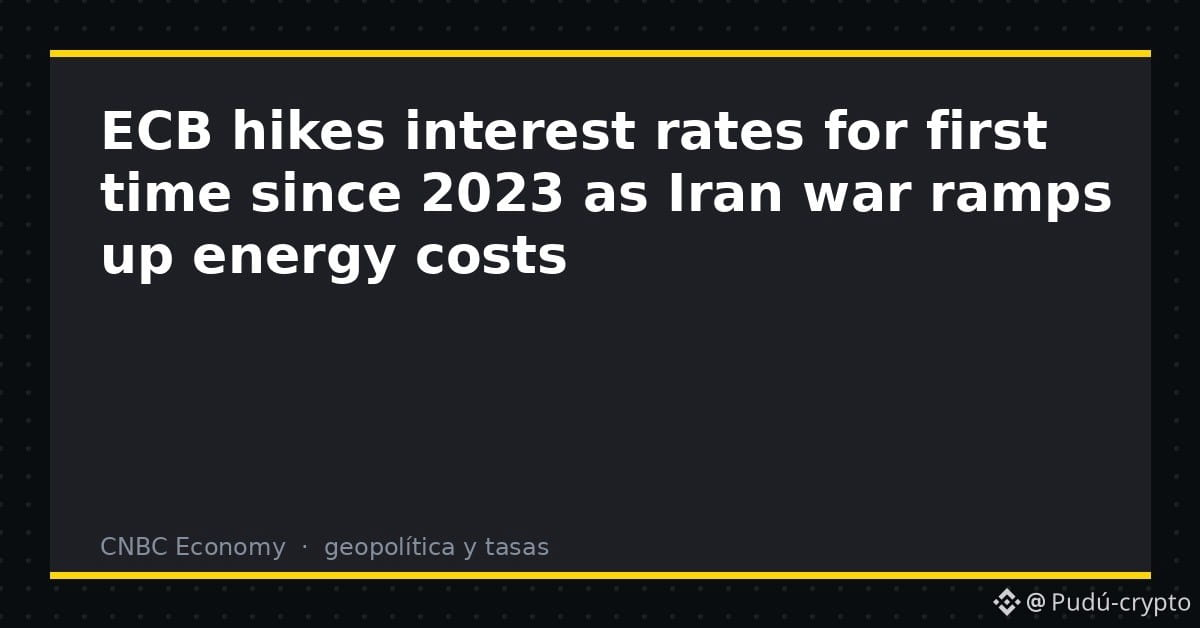
The ECB raised rates for the first time since 2023.
The underlying reason: the war in Iran continues to pressure energy costs.
This isn’t an isolated decision.
They also increased their inflation forecasts and cut their growth expectations.
That’s what catches my attention the most.
Raising rates when the economy is slowing isn’t typical.
But inflation won’t give any respite.
$XAU usually moves in these kinds of tensions.
Not because of the rate itself, but because of the full cocktail: war + energy + uncertainty.
Do you think this changes the outlook for gold?
#BCE #Inflation
164
·
--
Bullish
Disputed
FINISHED JUST ARRIVING $AKE
On July 24, the European Central Bank (ECB) will hold a meeting, where all analysts expect interest rates to be kept at 2%. $RIF
This is the first consecutive cut in interest rates, which were reduced in September 2024. Expectations are that the ECB may carry out another 25-basis-point cut by the end of the year, which could lead to an interest rate of 1.75%. $ZAMA
{spot}(RIFUSDT)
{spot}(ZAMAUSDT)
{future}(AKEUSDT)
#BCE #OilTops$100 #bullish #KazakhstanApprovesStrategicDigitalMiningProgram #USJoblessClaimsFallTo187KLowestSince1969
FINISHED JUST ARRIVING $AKE
On July 24, the European Central Bank (ECB) will hold a meeting, where all analysts expect interest rates to be kept at 2%. $RIF
This is the first consecutive cut in interest rates, which were reduced in September 2024. Expectations are that the ECB may carry out another 25-basis-point cut by the end of the year, which could lead to an interest rate of 1.75%. $ZAMA
#BCE #OilTops$100 #bullish #KazakhstanApprovesStrategicDigitalMiningProgram #USJoblessClaimsFallTo187KLowestSince1969
511
·
--
Bullish
LATEST NEWS:
🇪🇺Isabel Schnabel, member of the Executive Board of the ECB, stated in Jackson Hole that central bank money NEEDS TO MIGRATE to blockchain infrastructure.
This shift would allow banks to settle tokenized assets instantly through smart contracts, modernizing financial settlement to monetary policy.
$ZKC $UAI $SKR 👀👀👀👀👀
{future}(SKRUSDT)
{future}(UAIUSDT)
{spot}(ZKCUSDT)
#CryptoNewss #BCE #Stablecoins #Europe #bullish
LATEST NEWS:
🇪🇺Isabel Schnabel, member of the Executive Board of the ECB, stated in Jackson Hole that central bank money NEEDS TO MIGRATE to blockchain infrastructure.
This shift would allow banks to settle tokenized assets instantly through smart contracts, modernizing financial settlement to monetary policy.
$ZKC $UAI $SKR 👀👀👀👀👀
#CryptoNewss #BCE #Stablecoins #Europe #bullish

367
·
--
BCE: the large-scale test of the digital euro is being prepared for 2027
The European Central Bank is moving on to merchants. Starting September 15, it will accept applications from e-commerce and mobile commerce companies to test the digital euro. The pilot will begin in the second half of 2027 and last 12 months. It will bring together merchants, banks, payment providers, and members of the Eurosystem. A possible issuance is planned for 2029, provided the European legislative framework is adopted.
Merchants can apply until October 27, 2026.
The pilot will last one year starting in the second half of 2027.
The ECB has already selected 36 payment service providers.
The ECB is now looking for merchants
The project had already cleared an initial stage in July. The ECB then selected 36 payment service providers, after receiving more than 50 applications. Since then, banks and non-bank players have been preparing the necessary infrastructure for the pilot. Cointribune detailed this selection in its article about the 36 partners chosen to test the digital euro.
Now the missing piece is merchants. The ECB is targeting companies that sell online or through mobile applications in the euro area. Candidates have until October 27 at 5:00 p.m. CET to submit their application. An information session is scheduled for October 6.
Selected companies will have to accept payments with the digital euro’s beta version. They will work with one of the providers already selected by the Eurosystem. The ECB will pay particular attention to their market presence, operational capability, and their ability to integrate the new means of payment.
The test will no longer be limited to checking code. A purchase will be carried out. A merchant must receive it. A refund may be processed. And teams will be able to observe where the bottlenecks occur.
$BCEM.ETF
{etf_us}(BCEM.ETF)
$ELON
{alpha}(560xe07ae3a6f1bd86b92b563084e286757eb34878d7)
$TRAX.US
{stock_us}(TRAX.US)
#BCE
BCE: the large-scale test of the digital euro is being prepared for 2027
The European Central Bank is moving on to merchants. Starting September 15, it will accept applications from e-commerce and mobile commerce companies to test the digital euro. The pilot will begin in the second half of 2027 and last 12 months. It will bring together merchants, banks, payment providers, and members of the Eurosystem. A possible issuance is planned for 2029, provided the European legislative framework is adopted.
Merchants can apply until October 27, 2026.
The pilot will last one year starting in the second half of 2027.
The ECB has already selected 36 payment service providers.
The ECB is now looking for merchants
The project had already cleared an initial stage in July. The ECB then selected 36 payment service providers, after receiving more than 50 applications. Since then, banks and non-bank players have been preparing the necessary infrastructure for the pilot. Cointribune detailed this selection in its article about the 36 partners chosen to test the digital euro.
Now the missing piece is merchants. The ECB is targeting companies that sell online or through mobile applications in the euro area. Candidates have until October 27 at 5:00 p.m. CET to submit their application. An information session is scheduled for October 6.
Selected companies will have to accept payments with the digital euro’s beta version. They will work with one of the providers already selected by the Eurosystem. The ECB will pay particular attention to their market presence, operational capability, and their ability to integrate the new means of payment.
The test will no longer be limited to checking code. A purchase will be carried out. A merchant must receive it. A refund may be processed. And teams will be able to observe where the bottlenecks occur.
$BCEM.ETF
$ELON
$TRAX.US
#BCE

238

·
--
🏦 ECB RAISES INTEREST RATES FOR THE FIRST TIME IN 3 YEARS
The European Central Bank raised its deposit rate from 2% to 2.25% to curb inflation driven by rising oil prices due to the war in Iran.
📊 Why did it rise?
Inflation in the Eurozone surpassed 3%, above the ECB's target of 2% The oil shock from the Middle East conflict is pushing prices higher This is the first rate hike in nearly 3 years
📈 New ECB projections:
Inflation 2026: 3% (previously 2.6%) Inflation 2027: 2.3% (previously 2%) GDP Growth 2026: 0.8% (revised down from 0.9%)
💱 Market impact:
EUR/USD: 1.154 (+0.03%) Brent Oil: no significant changes
💡 What does it mean for crypto? Higher rates = lower liquidity in the markets = potential bearish pressure on risk assets like Bitcoin and altcoins. Definitely something to keep an eye on.
💬 Do you think the ECB rate hike will affect BTC's price? Comment below 👇
#BCE #TiposDeInterés #CryptoNews #BinanceSquare #EUR
1
158

·
--
The European Central Bank has taken a decisive step in financial infrastructure with the launch of Pontes, an initiative designed to settle tokenized assets without relying on stablecoins. This move aims to integrate distributed ledger technology into the traditional financial system in a controlled manner, with full implementation projected for 2028. Why does it matter? It shows that the central bank prefers to build its own digital settlement rails rather than adopt private assets, setting the pace for institutional tokenization in Europe. We will monitor adoption and the participants that join in the upcoming phases. 🌐💶 #Tokenizacion #BCE #Macroeconomia $BTC $ETH
The European Central Bank has taken a decisive step in financial infrastructure with the launch of Pontes, an initiative designed to settle tokenized assets without relying on stablecoins. This move aims to integrate distributed ledger technology into the traditional financial system in a controlled manner, with full implementation projected for 2028. Why does it matter? It shows that the central bank prefers to build its own digital settlement rails rather than adopt private assets, setting the pace for institutional tokenization in Europe. We will monitor adoption and the participants that join in the upcoming phases. 🌐💶 #Tokenizacion #BCE #Macroeconomia $BTC $ETH
43
📊 Hernández de Cos and stablecoins: the favorite for the ECB
Merz will present the German proposal next week, Berlin denies that a deal has been finalized, and a decision is expected at the summit on November 26 and 27.
⚡️ VIRTUAL drops 7.39% and tests USD 0.4523692 support on November 14, 2026
VIRTUAL lost 7.39% against the previous close and is trading below all available moving averages, although the RSI and stochastic indicate oversold conditions that could favor tactical rebounds. Volume increased compared with its 30-day average, but there is no consistent data confirming liquidations, funding, or a catalyst specific to the protocol; the general weakness in cryptocurrencies is a plausible factor, not a…
📰 The cryptocurrency market falls 4.6% as tighter financial conditions weigh on risk assets
The global cryptocurrency market fell 4.62% in 24 hours to $2.21 trillion on Saturday, as tighter financial conditions drove investors away from risky assets in general.
Bitcoin fell 5.03% to $65,139.39, extending its weekly loss to nearly 14%. Ether fell 5.5% to $1,817.97; Solana plunged 9.08% to $72.28; BNB fell 7.06% to $585.70; and XRP lost 5.98% to trade at $0.9549.
#BCE #short #Europe #mercado #market $VIRTUAL $BTC $SOL
{spot}(BNBUSDT)
{spot}(XRPUSDT)
📊 Hernández de Cos and stablecoins: the favorite for the ECB
Merz will present the German proposal next week, Berlin denies that a deal has been finalized, and a decision is expected at the summit on November 26 and 27.
⚡️ VIRTUAL drops 7.39% and tests USD 0.4523692 support on November 14, 2026
VIRTUAL lost 7.39% against the previous close and is trading below all available moving averages, although the RSI and stochastic indicate oversold conditions that could favor tactical rebounds. Volume increased compared with its 30-day average, but there is no consistent data confirming liquidations, funding, or a catalyst specific to the protocol; the general weakness in cryptocurrencies is a plausible factor, not a…
📰 The cryptocurrency market falls 4.6% as tighter financial conditions weigh on risk assets
The global cryptocurrency market fell 4.62% in 24 hours to $2.21 trillion on Saturday, as tighter financial conditions drove investors away from risky assets in general.
Bitcoin fell 5.03% to $65,139.39, extending its weekly loss to nearly 14%. Ether fell 5.5% to $1,817.97; Solana plunged 9.08% to $72.28; BNB fell 7.06% to $585.70; and XRP lost 5.98% to trade at $0.9549.
#BCE #short #Europe #mercado #market $VIRTUAL $BTC $SOL

22

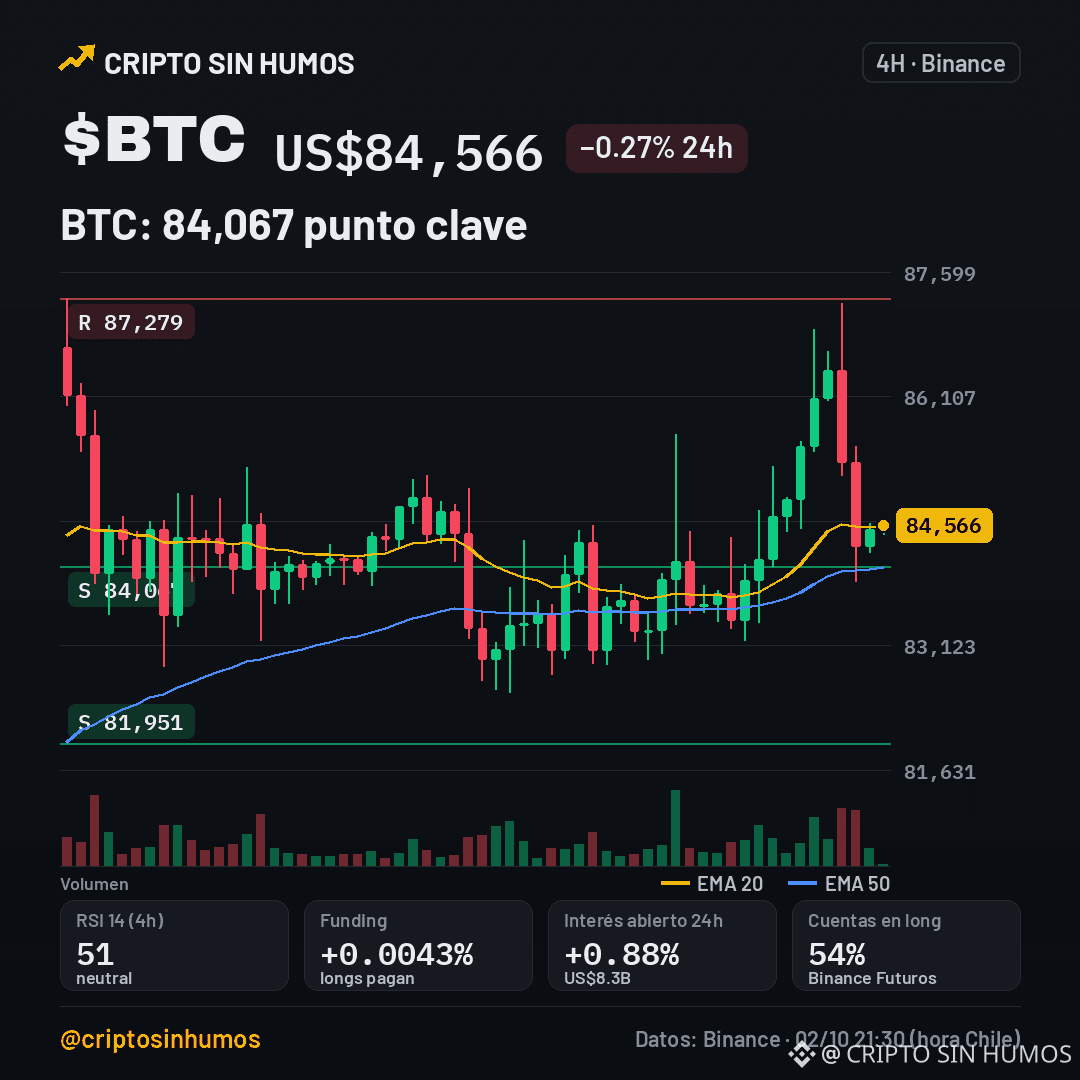
$BTC bajo pressure en 84,067: ¿change of direction?
$BTC in focus: CriptoNoticias reported that the ECB is analyzing three paths to move money from the central bank to the blockchain. The measure has not been confirmed yet, so let’s take it with caution.
My take: if the ECB opens a real door, it could reinforce the perception of BTC as a safe haven amid monetary policies and generate institutional capital inflows. That smells like momentum, but it’s not certain.
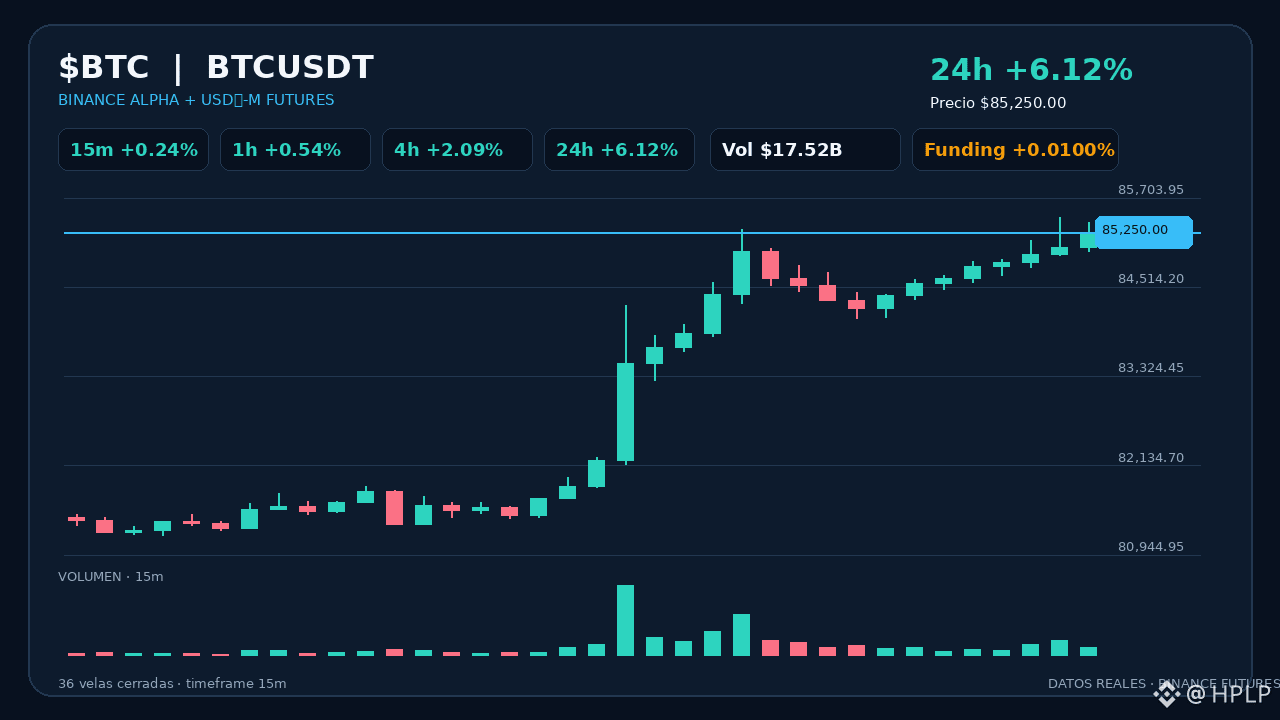
On the 4h chart, we see the current price at US$84,566, the EMA20 at 84,545, and the EMA50 at 84,058, with an upward trend and an RSI of 51.4. The key levels are support at 84,067 and resistance at 87,279; breaking above 87,279 would confirm strength, while falling below 84,067 would invalidate the bullish bias.
Does it break 87,279 or revert back to 84,067? 🟢/🔴
#BTC #BCE #Blockchain
Not financial advice. Verify before investing.
473
Log in to explore more content
Join global crypto users on Binance Square
⚡️ Get latest and useful information about crypto.
💬 Trusted by the world’s largest crypto exchange.
👍 Discover real insights from verified creators.
Email / Phone number
Trending Topics
1
#NvidiaLoses$2.7TrillionInMonthAndAHalf
26,385 views
150 Discussing
2
#CanBTCReboundAfterFallingBelow60K?
827,535 views
3,094 Discussing
3
#GlobalStocksFaceLongestLosingStreakSince2023
307,881 views
2,066 Discussing
4
#BlackRockIBITPostsRecord$541MSingleDayOutflow
38,480 views
110 Discussing
5
#AnthropicPlungesTowardIPOPriceonDay2
157,660 views
1,248 Discussing
6
#TwentyOneCapitalAdds172.25BTC
73,480 views
696 Discussing
7
#HKBillWouldExcludeTokenizedDepositsFromVirtualAssets
10,223 views
51 Discussing
8
#BNBDropsBelow540USDTWith8.46%DailyDecline
84,373 views
672 Discussing
9
#HKBillProposesHK$100KFineForUnauthorizedCryptoTitles
2,857 views
25 Discussing
10
#BitMineFaces$10.1BUnrealizedETHLoss
5,908 views
29 Discussing