
#btcfi
btcfi
864,508 views
4,100 Discussing
Hot
Latest

$BARD
{spot}(BARDUSDT)
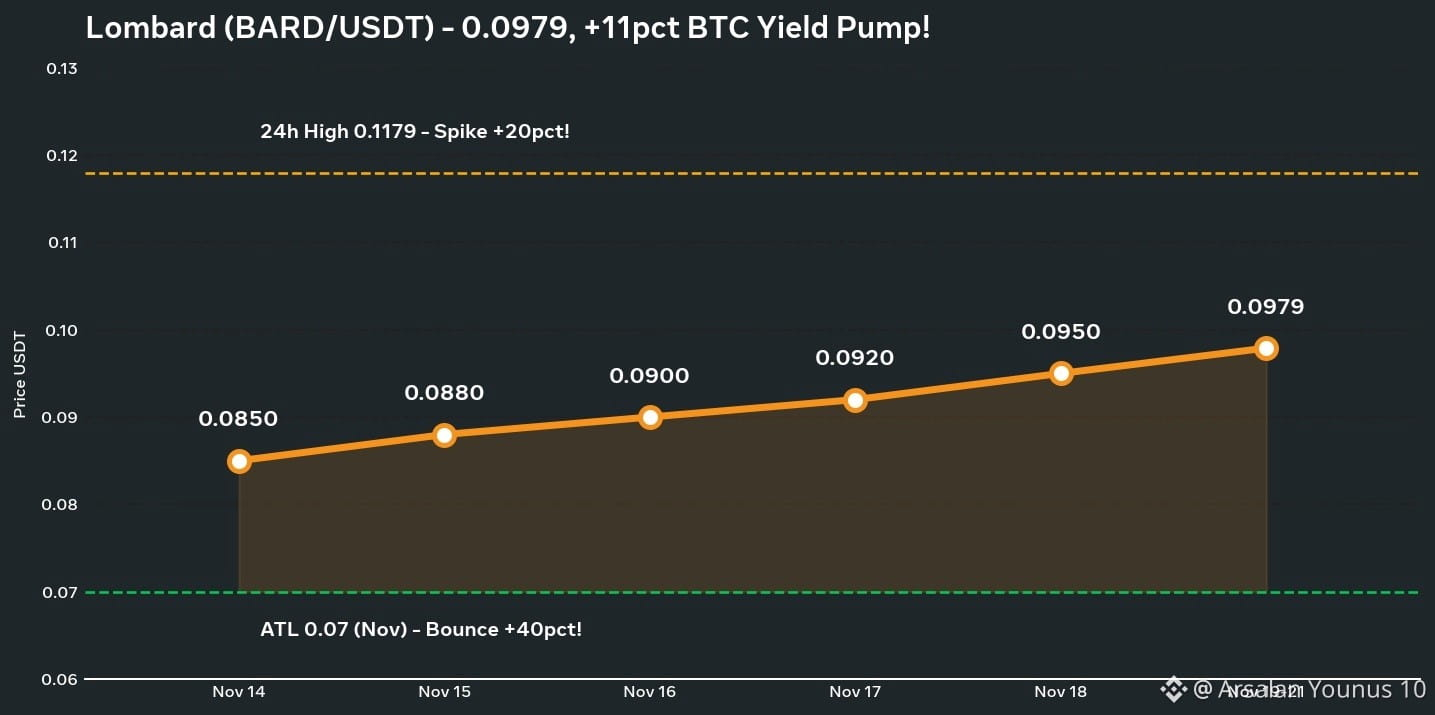
$0.0979 — +11% Today! The BTC Yield Token That's Bouncing +40% From ATL!*
> Lombard (BARD/USDT) is trading at *∼$0.0979*, up *+11.19% today*, *+15.03% on Binance* — Range today: *$0.0862 -> $0.1179*
> *What is BARD?
> Lombard is *BTC Liquid Staking*.
> Normal BTC: You hold BTC, you earn 0%. It just sits there.
> Lombard: You deposit BTC, you get *LBTC* (Liquid Bitcoin). LBTC = BTC + yield. You can use LBTC in DeFi, lending, restaking, while still earning BTC yield. That's BTCFi.
> Lombard built *LBTC*, the #1 yield-bearing BTC token — *$1.5B+ TVL at peak*, live on *7 chains* (Ethereum, BNB, Base, etc). Built on *Babylon* BTC staking. BARD = Governance + fee sharing for Lombard. Binance HODLer Airdrop + Alpha token (Sep 2025).
> *Why Bouncing +11%?*
> 1. ATL Bounce: Hit *$0.070 ATL (Nov)*, bounced *+40% to $0.0979* — Classic capitulation + reversal
> 2. Perp Volume Explosion: Perp volume *$242M* — That's *6.8x its $35.6M market cap* traded in ONE day! Spot volume only $23.9M, perp is 10x spot = Futures-driven pump, not spot buying
> 3. BTCFi Narrative: BTC is king again, BTCFi is the narrative. Lombard is the *purest BTCFi play* on Binance — LBTC, Babylon, BTC yield, all in one token
> *Key Levels:*
> Support: $0.0900 -> *$0.0862* (24h Low) -> $0.0700 (ATL)
> Resistance: $0.1000 (Psychological) -> *$0.1179* (24h High) -> $0.1300
> *Stats:*
> Market Cap: *$35.6M* | Rank #440
> FDV: *$97M*
> 24h Volume: *$23.9M Spot + $242M Perp*
> Circulating: 363.8M / 1B BARD (36.4%)
> ATH: *$0.26 (Sep 2025)* — Now *-62% down*
> ATL: *$0.070 (Nov 2026)* — Now *+40% up*
> LBTC TVL: *$1.5B+ at peak* | Chains: 7
> Launch: *Sep 2025, Binance HODLer Airdrop*
> *Trade Idea:*
> Accumulate $0.086-$0.090 zone. Break $0.10 = Run to $0.117. Lose $0.086 = Drop to $0.070 ATL. This is a BTCFi bounce trade — If BTC pumps, BARD pumps harder. If BTC dumps, BARD dumps harder.
#Bard #BTCFi #BinanceSquare #TwentyOneCapitalAdds172.25BTC
$BARD
$0.0979 — +11% Today! The BTC Yield Token That's Bouncing +40% From ATL!*
> Lombard (BARD/USDT) is trading at *∼$0.0979*, up *+11.19% today*, *+15.03% on Binance* — Range today: *$0.0862 -> $0.1179*
> *What is BARD?
> Lombard is *BTC Liquid Staking*.
> Normal BTC: You hold BTC, you earn 0%. It just sits there.
> Lombard: You deposit BTC, you get *LBTC* (Liquid Bitcoin). LBTC = BTC + yield. You can use LBTC in DeFi, lending, restaking, while still earning BTC yield. That's BTCFi.
> Lombard built *LBTC*, the #1 yield-bearing BTC token — *$1.5B+ TVL at peak*, live on *7 chains* (Ethereum, BNB, Base, etc). Built on *Babylon* BTC staking. BARD = Governance + fee sharing for Lombard. Binance HODLer Airdrop + Alpha token (Sep 2025).
> *Why Bouncing +11%?*
> 1. ATL Bounce: Hit *$0.070 ATL (Nov)*, bounced *+40% to $0.0979* — Classic capitulation + reversal
> 2. Perp Volume Explosion: Perp volume *$242M* — That's *6.8x its $35.6M market cap* traded in ONE day! Spot volume only $23.9M, perp is 10x spot = Futures-driven pump, not spot buying
> 3. BTCFi Narrative: BTC is king again, BTCFi is the narrative. Lombard is the *purest BTCFi play* on Binance — LBTC, Babylon, BTC yield, all in one token
> *Key Levels:*
> Support: $0.0900 -> *$0.0862* (24h Low) -> $0.0700 (ATL)
> Resistance: $0.1000 (Psychological) -> *$0.1179* (24h High) -> $0.1300
> *Stats:*
> Market Cap: *$35.6M* | Rank #440
> FDV: *$97M*
> 24h Volume: *$23.9M Spot + $242M Perp*
> Circulating: 363.8M / 1B BARD (36.4%)
> ATH: *$0.26 (Sep 2025)* — Now *-62% down*
> ATL: *$0.070 (Nov 2026)* — Now *+40% up*
> LBTC TVL: *$1.5B+ at peak* | Chains: 7
> Launch: *Sep 2025, Binance HODLer Airdrop*
> *Trade Idea:*
> Accumulate $0.086-$0.090 zone. Break $0.10 = Run to $0.117. Lose $0.086 = Drop to $0.070 ATL. This is a BTCFi bounce trade — If BTC pumps, BARD pumps harder. If BTC dumps, BARD dumps harder.
#Bard #BTCFi #BinanceSquare #TwentyOneCapitalAdds172.25BTC
263

·
--
Hashi is live on Sui mainnet. It keeps BTC on the Bitcoin network and mints hBTC on Sui 1:1, so holders can use it as collateral, starting with stablecoin borrowing on Fluid. Security comes from a validator MPC committee plus a guardian co-signer and a withdrawal rate limiter, and more than 20 partners are building around it. The minimum deposit is 0.0003 BTC. #Bitcoin #Sui #BTCfi
Hashi is live on Sui mainnet. It keeps BTC on the Bitcoin network and mints hBTC on Sui 1:1, so holders can use it as collateral, starting with stablecoin borrowing on Fluid. Security comes from a validator MPC committee plus a guardian co-signer and a withdrawal rate limiter, and more than 20 partners are building around it. The minimum deposit is 0.0003 BTC. #Bitcoin #Sui #BTCfi
Piaary Adil:
$BTC on Sui is real Btc real Btc as collateral not just wrapped hype.
Price is down at 0.678 support but this news + 20 partners building is exactly what $SUI needed for a bounce.#sui链 #BinanceSquare
1
2
288

$SUI just flipped Hashi to mainnet, its native bitcoin finance protocol, and honestly this is the kind of boring infra news I like more than another meme pump.
Per The Block: deposited BTC stays on the Bitcoin network and hBTC gets minted 1:1 on Sui, secured by validators instead of a single custodian. Fluid is already taking hBTC as collateral for USDC loans, 20+ partners are lined up, and Anchorage Digital is in with $500M+ in capital commitments announced back in October.
Why I care: BTC sitting idle is the biggest pool of capital in crypto. If even a slice of it starts borrowing on Sui, that is real TVL and fees for $SUI, not just narrative. The catch is timing, launching into a seven-week BTC losing streak (CoinDesk) means early deposits might start small.
Would you actually bridge BTC into hBTC, or does any wrapped BTC still feel like too much trust? 🤔
Not financial advice, just my read.
Source: The Block
#SUI #Bitcoin #BTCFi #DeFi
$SUI just flipped Hashi to mainnet, its native bitcoin finance protocol, and honestly this is the kind of boring infra news I like more than another meme pump.
Per The Block: deposited BTC stays on the Bitcoin network and hBTC gets minted 1:1 on Sui, secured by validators instead of a single custodian. Fluid is already taking hBTC as collateral for USDC loans, 20+ partners are lined up, and Anchorage Digital is in with $500M+ in capital commitments announced back in October.
Why I care: BTC sitting idle is the biggest pool of capital in crypto. If even a slice of it starts borrowing on Sui, that is real TVL and fees for $SUI , not just narrative. The catch is timing, launching into a seven-week BTC losing streak (CoinDesk) means early deposits might start small.
Would you actually bridge BTC into hBTC, or does any wrapped BTC still feel like too much trust? 🤔
Not financial advice, just my read.
Source: The Block
#SUI #Bitcoin #BTCFi #DeFi
101


·
--
₿ Sui's Hashi goes live on mainnet, putting bitcoin to work in DeFi
Hashi, Sui's bitcoin finance protocol, is now live on mainnet: deposited BTC stays on the Bitcoin network while hBTC is minted 1:1 on Sui, secured by validators rather than a single custodian. Lender Fluid already accepts hBTC as collateral for USDC loans, and more than 20 partners, including Anchorage Digital, HoneyB and Upshift, are building around it. Institutions can reach hBTC via Anchorage's Porto wallet, with BitGo support due in early 2027; launch partners had committed more than $500 million in capital.
⭐ The race to turn idle BTC into DeFi collateral is heating up, and Hashi puts Sui in direct competition with wrapped-bitcoin products on other chains.
#Sui #Bitcoin #BTCfi #DeFi

50

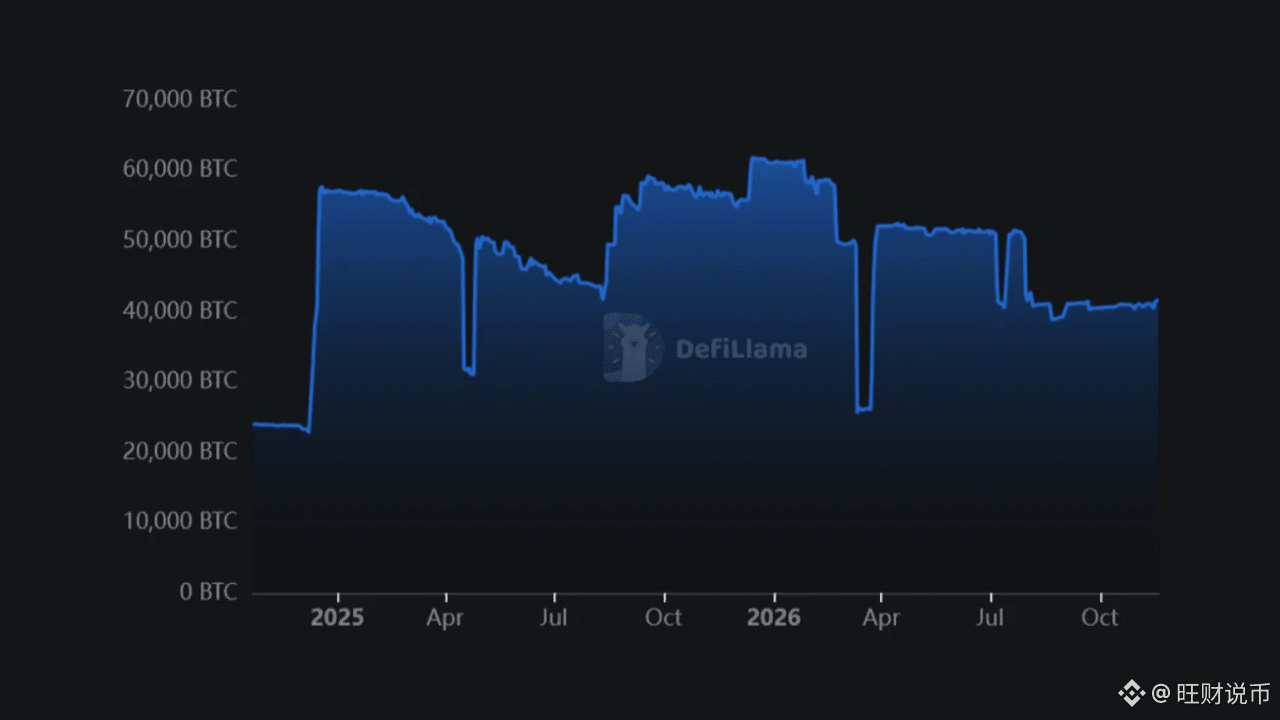
The pioneer of Bitcoin staking is shutting down. On November 17, Babylon co-founder Fisher Yu posted on the official forum, proposing that the Bitcoin staking business be wound down by the end of the year and that the project pivot entirely to trustless Bitcoin vaults (TBV). The numbers are striking: about 41,600 $BTC are still locked on the platform, worth nearly $2.6 billion, with around 80% delegated to two service providers operated by Kraken. Annualized staking yields are now just 0.03%–0.5%, and after the shutdown, $BABY inflation will drop from 5.5% to 2%. Note that this is still only at the discussion stage: there has been no vote or implementation timeline, and the coins will not be unlocked immediately. Aave is set to take over: on November 9, a proposal passed unanimously to let users borrow stablecoins on Aave V4 using native BTC as collateral through TBV, with no wrapping or cross-chain transfers required. The staking era offered annualized yields of 0.04%; the lending era is a bet on the scale of BTC collateral. #Babylon #BTCFi
The pioneer of Bitcoin staking is shutting down. On November 17, Babylon co-founder Fisher Yu posted on the official forum, proposing that the Bitcoin staking business be wound down by the end of the year and that the project pivot entirely to trustless Bitcoin vaults (TBV). The numbers are striking: about 41,600 $BTC are still locked on the platform, worth nearly $2.6 billion, with around 80% delegated to two service providers operated by Kraken. Annualized staking yields are now just 0.03%–0.5%, and after the shutdown, $BABY inflation will drop from 5.5% to 2%. Note that this is still only at the discussion stage: there has been no vote or implementation timeline, and the coins will not be unlocked immediately. Aave is set to take over: on November 9, a proposal passed unanimously to let users borrow stablecoins on Aave V4 using native BTC as collateral through TBV, with no wrapping or cross-chain transfers required. The staking era offered annualized yields of 0.04%; the lending era is a bet on the scale of BTC collateral. #Babylon #BTCFi
443

·
--
🚨 Babylon co-founder proposes ending Bitcoin staking by year-end: What will happen to 41,600 BTC (about $2.6 billion)?
📌 Event: On November 17, co-founder Fisher Yu proposed on the forum ending BTC staking before the end of 2026, zeroing out rewards and stopping new staking, while shifting focus to TBV (Bitcoin-collateralized lending, integrated with Aave).
📊 Data (sources: Bitcoin.com/DefiLlama):
• About 41,600 BTC currently staked
• About 80% delegated to two nodes operated by Kraken
• Staking yields have fallen to 0.03%-0.5%
• BABY inflation will drop from 5.5% to 2%
⚠️ Note: This is currently only a forum discussion; no voting date has been set, and current stakers can still unstake under the existing rules.
🧠 My take: With BTC around 62,000 and the fear index at 12, the “staking” story is running out of steam as yields approach zero. The market would rather hear the narrative of “borrowing money without selling your coins.” But if over 40,000 BTC are unstaked all at once, that could create significant short-term psychological pressure.
Do you think this signals a shift in BTC DeFi, or is it another case of a narrative losing momentum? Let’s discuss in the comments 👇
$BTC $BABY $AAVE
#比特币 #Babylon #BTCFi
For personal opinions only; not investment advice
43

·
--
【Will Babylon, which has over 40,000 Bitcoin staked, shut down staking? Co-founder proposes zeroing rewards and accepting no new deposits by year-end】
Babylon co-founder Fisher Yu proposed on the forum on November 17 that Bitcoin staking be halted by the end of this year: staking rewards would be set to zero, no new stakes would be accepted, and existing stakes could still be redeemed under the original rules (with funds arriving in about 50 hours). The team would shift its focus to a new product that lets users "collateralize BTC on Aave and borrow stablecoins without BTC ever leaving the Bitcoin chain." BABY's annual inflation rate would also drop from 5.5% to 2%. On November 18, the protocol still held about 41,600 BTC, worth around $2.58 billion. This is only a proposal for now; it has not been put to a vote, and no specific date has been set.
$BABY
#Babylon #比特币质押 #BTCFi
1
213

Babylon co-founder Fisher Yu himself proposed shutting down BTC staking by year-end. I think this post is more honest than any bullish news: the yield from BTC staking was essentially funded by issuing more BABY, using dilution of BABY holders to subsidize BTC deposits. Now they’re admitting they can’t afford to keep doing it.
First, the facts. On November 17, he posted on the Babylon forum, proposing that before year-end they reduce BTC staking and co-staking rewards to zero, disable staking finality, and stop accepting new staking registrations, while allowing existing stakers to unstake as usual under the current rules. The reasons: first, the team wants to focus entirely on TBV (a trust-minimized Bitcoin vault; it has passed Aave governance and can use native BTC to borrow stablecoins on Aave V4); second, BABY’s annual inflation can be cut from 5.5% to 2%. For now, this is only a forum discussion—there’s been no vote and no implementation timeline.
Let’s do the math. Under the plan approved last October, the 5.5% inflation was distributed as follows: 1% to BTC stakers, an additional 2.35% to BTC stakers who also staked BABY, 2% to BABY stakers, and 0.075% each to FP and validators. Cutting it to 2% removes exactly the entire 3.5% that went to the BTC side. In other words, BTC stakers were never earning some kind of “Bitcoin security service fee”—they were earning newly issued tokens, and most people sold them as soon as they claimed them.
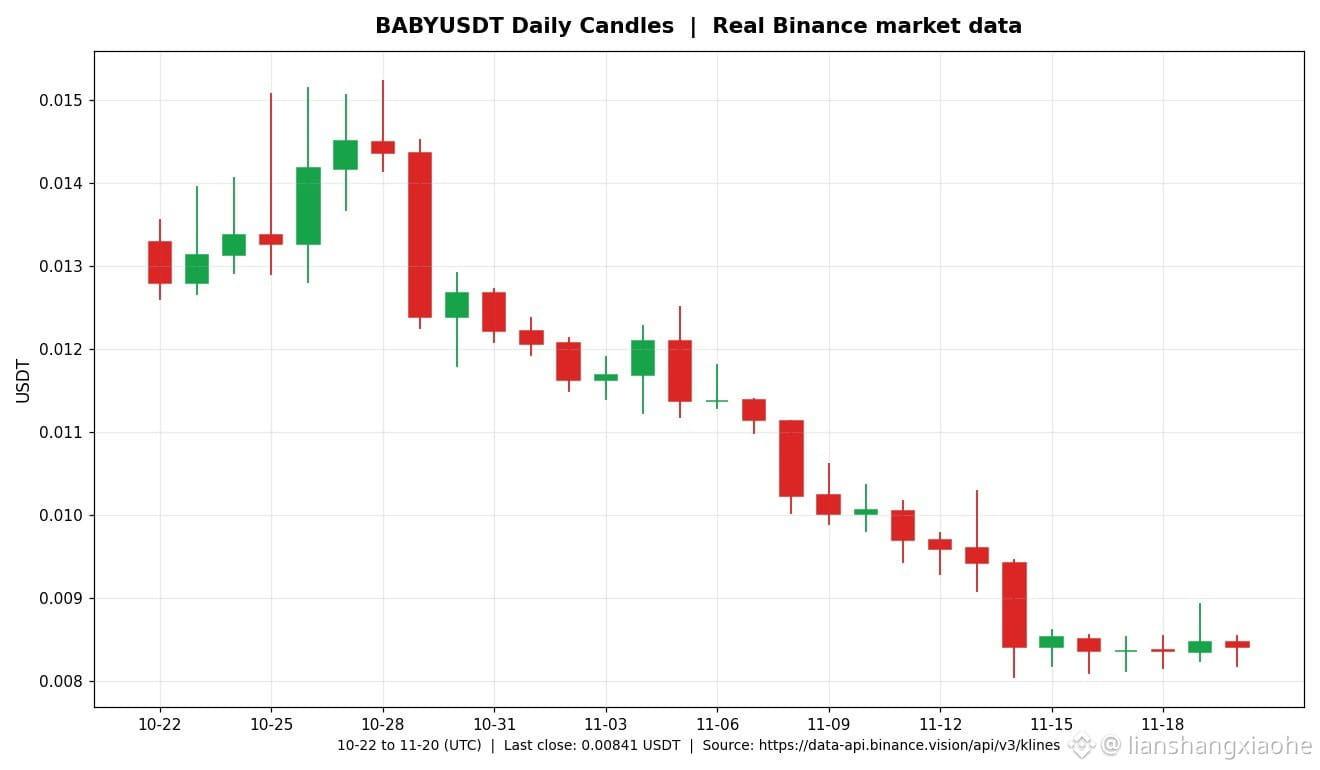
What’s interesting is the market reaction. Around the time the proposal came out, BABY’s daily price went from 0.00836 to 0.00826 now (Binance spot). Inflation has been cut by more than 60%, yet the price hasn’t budged. My read is that the effects cancel each other out: getting rid of constant selling pressure is good, but BABY has also lost its main use case. The co-staking requirement was 20,000 BABY for every 1 BTC, worth only about $166 at the current price. For a BTC worth over $60,000, that “must-have” demand was symbolic to begin with. Canceling it won’t eliminate much real buying demand—and, conversely, it shows that the demand attributed to this use case was overstated from the start.
Then there are the 41,520 BTC still staked, worth about $2.59 billion at a price of $62,443. Once rewards go to zero, they have no reason to stay, so they’ll likely be unstaked over time. How much that number falls will show the actual demand for the narrative that “Bitcoin staking provides security to other chains.” My guess is: not much will be left.
From here, BABY’s valuation depends entirely on TBV: the private, permissioned mainnet is reportedly scheduled for the end of November, while the permissionless version won’t arrive until early 2027. As for Aave’s revenue sharing, they’ve only said that “a portion” will go toward AAVE and BABY buybacks; I didn’t see the percentage in the post. Until TBV generates real borrowing volume and revenue, don’t treat “inflation cut by 60%” as bullish news and start shilling the token. The part they’re cutting was a cost paid to BTC depositors, not something being handed to you for free.
Sources: Babylon forum post “On sunsetting Bitcoin staking” (11/17); co-staking tokenomics proposal and October on-chain vote; Binance BABYUSDT market data (around 6 a.m. on 11/19, UTC+8)
#Babylon #BTCFi
6
·
--
🏦 Borrow stablecoins using BTC directly as collateral—without bridging or wrapping? Aave voting is live today!
📌 The Aave DAO has put Babylon’s “native BTC collateral” proposal up for a Snapshot vote, running 11/6–11/9 (Eastern Time, starting and ending at 9:03).
🔐 BTC stays in a Taproot vault on the Bitcoin network, with no custodial wrapper like WBTC. Aave V4 would record only a non-transferable accounting token.
📊 LlamaRisk recommends an initial cap of 300 BTC and a 78% collateral ratio.
⚠️ But note: passing the vote ≠ launch. On-chain governance voting, a new audit, and final parameters are still needed. Some forum users have also raised concerns about emergency pauses and control of the vault. Recovering collateral during liquidation could take days—that’s the biggest risk.
💬 At around $BTC $75,773 (24h -5.5%), the market is weak, but the BTCFi narrative is moving forward. Will earning yield on “idle BTC” be a long-term positive—or a new source of risk?
Would you borrow against native BTC? Share your thoughts in the comments 👇
$BTC $ETH #Aave #BTCFi #Babylon
Personal opinion only; not investment advice
15

·
--
Article
After 97M CORE Were Stolen: A BTCFi Security Incident That Has Not Yet Escalated into Systemic BTC RiskAfter 97M CORE Were Stolen: A BTCFi Security Incident That Has Not Yet Escalated into Systemic BTC Risk
Around 04:21 Beijing time on November 2, `#B14gReportsUnauthorizedTransferOfAbout97MCORE` appeared at No. 9 on the Binance Square trending list, with the page showing about 150 people discussing it. The incident deserves attention, but the first step is to clarify the amount and the scope of its impact: public on-chain investigations show that a b14g-related staking contract transferred about 97.046 million CORE in a single transaction on October 31, worth approximately $1.47 million at the time—not “$97 million.” About 68 million CORE remain on the Core chain. This is a b14g-related CORE staking incident; it should not yet be described as a breach of the Core mainnet or the BTC network.
After 97M CORE Were Stolen: A BTCFi Security Incident That Has Not Yet Escalated into Systemic BTC Risk
After 97M CORE Were Stolen: A BTCFi Security Incident That Has Not Yet Escalated into Systemic BTC Risk
Around 04:21 Beijing time on November 2, `#B14gReportsUnauthorizedTransferOfAbout97MCORE` appeared at No. 9 on the Binance Square trending list, with the page showing about 150 people discussing it. The incident deserves attention, but the first step is to clarify the amount and the scope of its impact: public on-chain investigations show that a b14g-related staking contract transferred about 97.046 million CORE in a single transaction on October 31, worth approximately $1.47 million at the time—not “$97 million.” About 68 million CORE remain on the Core chain. This is a b14g-related CORE staking incident; it should not yet be described as a breach of the Core mainnet or the BTC network.
Around 04:21 Beijing time on November 2, `#B14gReportsUnauthorizedTransferOfAbout97MCORE` appeared at No. 9 on the Binance Square trending list, with the page showing about 150 people discussing it. The incident deserves attention, but the first step is to clarify the amount and the scope of its impact: public on-chain investigations show that a b14g-related staking contract transferred about 97.046 million CORE in a single transaction on October 31, worth approximately $1.47 million at the time—not “$97 million.” About 68 million CORE remain on the Core chain. This is a b14g-related CORE staking incident; it should not yet be described as a breach of the Core mainnet or the BTC network.
311

$SOLV — Is This the Start of a Bigger Move? 📈
SOLV is trading around $0.005044, up 10.42% in the screenshot.
📰 Latest update — October 30, 2026: A new report highlighted Solv Protocol’s BTCFi opportunities, but also warned about smart-contract, collateral, and cross-chain risks.
🔹 May 7, 2026: Solv announced its migration of $700M+ in tokenized Bitcoin to Chainlink CCIP to strengthen cross-chain security.
⚠️ The project still faces questions around security and a disputed BTC+ redemption case.
Can SOLV maintain this momentum? What do you think?
#solv #SolvProtocol #BTCFi #crypto
1
170


🏦 $BANK - Lorenzo Protocol - $0.0264 - Near Historical Low, Instant Trading
*Live price now: $0.0264 - $0.02705*
*Live figures:*
- Current: *$0.0264 - $0.02688* - *-8.42% to -9.33% today* 🔴
*My exclusive analysis:*
> *BANK $0.0264 - Bottom of the bottom - Don't miss it*
> *Support:* Today's low $0.02656 - $0.02660 - *$0.02233 ATL*
- If it breaks $0.0264 → $0.02233 (-15%) - historical low to buy
> *Resistance:* Today's high $0.02973 - Open $0.02954 - break above it → $0.033 (+25%) - $0.04 (+51%)
> *My predictions:*
> - Short term: $0.0264-$0.0297 - Holding above $0.0266 is positive - RSI 49 Neutral - MACD Bullish - Death cross is present, but will break
> - If it rebounds from $0.0264 → target $0.0297 (+12.5%) - $0.04 (+51%) - $0.06 (+127%) - $0.08 (+203%)
> - ATH $0.5509 → long-term target +1,986% from $0.0264 - realistic target $0.10 (+278%)
> - Stop: $0.02233 ATL (-15.4%) - Very low risk
> - RVOL ×2.19 - High volume on the decline - whale accumulation signal - OI $10.88M - Funding +0.0063% - Strong longs
> - 7 days +2.92% - despite today's decline - relative strength
> *Summary:*
BANK is a strong BTCFi project - $21M market cap - down 95% from $0.55 - about 19% above ATL $0.02233 - $31M volume - $10M OI - RSI 49 - MACD rising - only -15% left to the absolute bottom - a historic buying opportunity - $0.0264 is excellent support - $0.04 target nearby, +51% - hold
#BANK #Lorenzo #BitcoinDeFi #BTCFi #قاع_تاريخي
$BANK
{spot}(BANKUSDT)
🏦 $BANK - Lorenzo Protocol - $0.0264 - Near Historical Low, Instant Trading
*Live price now: $0.0264 - $0.02705*
*Live figures:*
- Current: *$0.0264 - $0.02688* - *-8.42% to -9.33% today* 🔴
*My exclusive analysis:*
> *BANK $0.0264 - Bottom of the bottom - Don't miss it*
> *Support:* Today's low $0.02656 - $0.02660 - *$0.02233 ATL*
- If it breaks $0.0264 → $0.02233 (-15%) - historical low to buy
> *Resistance:* Today's high $0.02973 - Open $0.02954 - break above it → $0.033 (+25%) - $0.04 (+51%)
> *My predictions:*
> - Short term: $0.0264-$0.0297 - Holding above $0.0266 is positive - RSI 49 Neutral - MACD Bullish - Death cross is present, but will break
> - If it rebounds from $0.0264 → target $0.0297 (+12.5%) - $0.04 (+51%) - $0.06 (+127%) - $0.08 (+203%)
> - ATH $0.5509 → long-term target +1,986% from $0.0264 - realistic target $0.10 (+278%)
> - Stop: $0.02233 ATL (-15.4%) - Very low risk
> - RVOL ×2.19 - High volume on the decline - whale accumulation signal - OI $10.88M - Funding +0.0063% - Strong longs
> - 7 days +2.92% - despite today's decline - relative strength
> *Summary:*
BANK is a strong BTCFi project - $21M market cap - down 95% from $0.55 - about 19% above ATL $0.02233 - $31M volume - $10M OI - RSI 49 - MACD rising - only -15% left to the absolute bottom - a historic buying opportunity - $0.0264 is excellent support - $0.04 target nearby, +51% - hold
#BANK #Lorenzo #BitcoinDeFi #BTCFi #قاع_تاريخي
$BANK
1
365
·
--
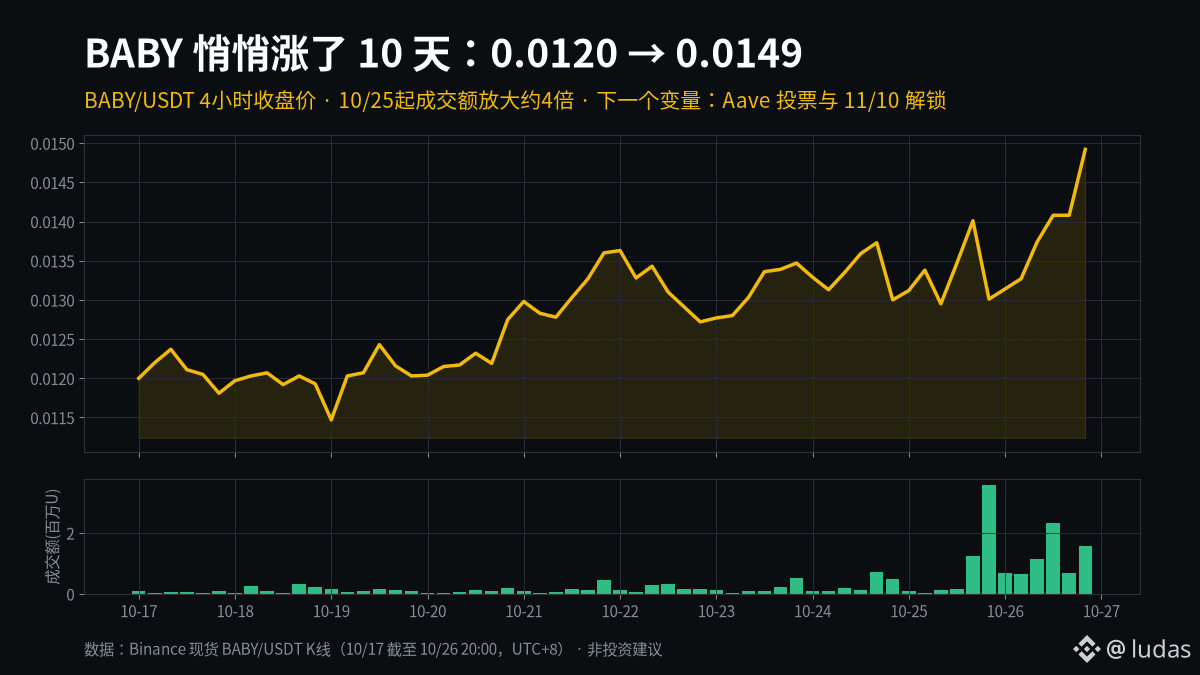
BABY hasn’t been making many headlines, but it’s been quietly rising for 10 days 👀
📊 Binance spot: closed at 0.01203 on 10/17 → now around 0.0149, +13.9% in 24h and about +24% over 10 days
🔥 Trading volume on 10/25 was about 6.42 million U, nearly 4x the previous day’s 1.68 million; today it’s still around 5.74 million
🧵 Background (Alea Research): At the end of Q3, Babylon had 40,481 BTC staked on the Bitcoin network. On 10/14, a proposal to use native BTC as collateral on Aave V4 entered the final comment stage (ARFC); it still needs to pass a Snapshot vote and an on-chain vote
⚠️ Countervailing factors (CoinGecko): About 136 million tokens (roughly 1.2% of the total supply) unlock on 11/10; the team plans to submit tokenomics changes by the end of November
My take: This move looks more like the market is pricing in the expectation that “BTC-backed lending can generate real revenue for BABY” ahead of time. I haven’t seen any single official announcement of positive news. The voting timeline and the 11/10 unlock are the two dates to watch next. Not investment advice.
Do you think native BTC coming to Aave could be a turning point for BTCFi? Let’s discuss in the comments 👇
If you found this useful, leave a like~
$BABY $AAVE $BTC
#BTCFi #Babylon #Altcoins
531

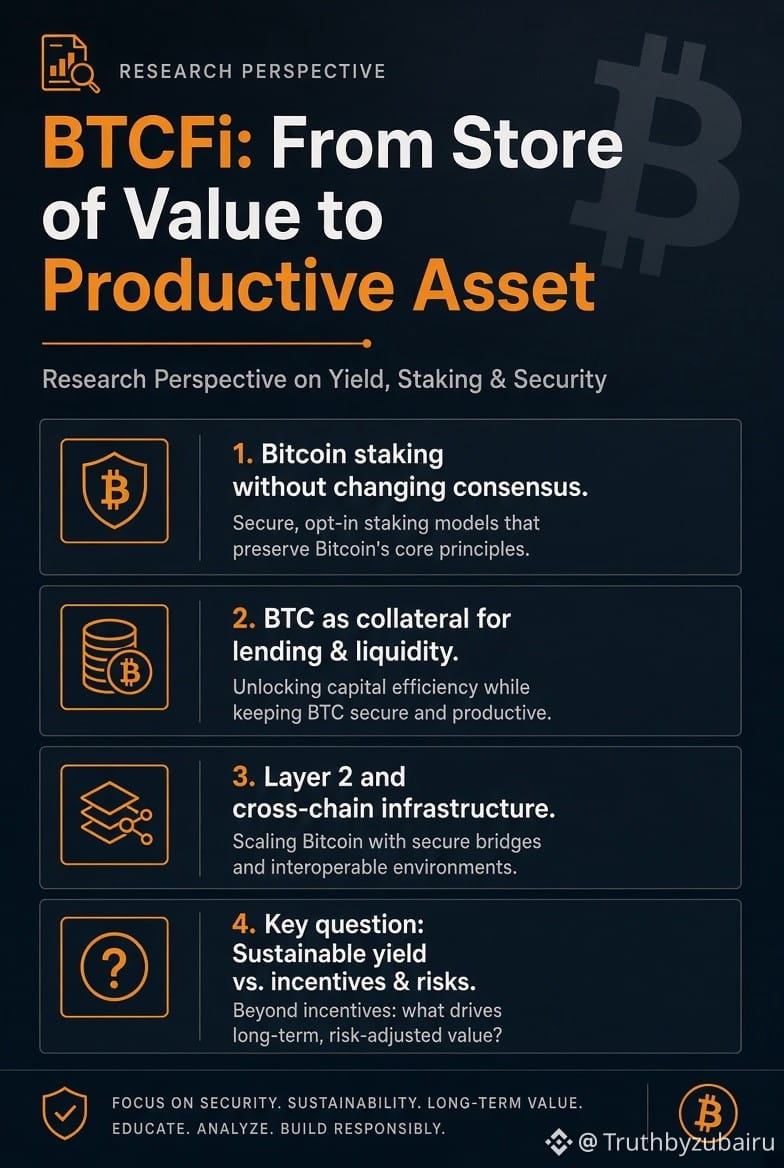
What really BTCFi means?
1. Bitcoin staking without changing consensus.
Secure, opt-in staking models that reserve Bitcoin's core principles.
2. $BTC as colleteral for lending and liquidity.
Unlocking capital and efficiency while keeping BTC secure and productive.
3. Layer 2 and cross-chain infrastructure.
Scaling Bitcoin with secure bridges and interoperable environments.
4. Key Question: Sustainable yield vs incentive & risk.
Beyond incentive: what drives long-term, risk-adjusted value?
#BTCFi
1
72

Article
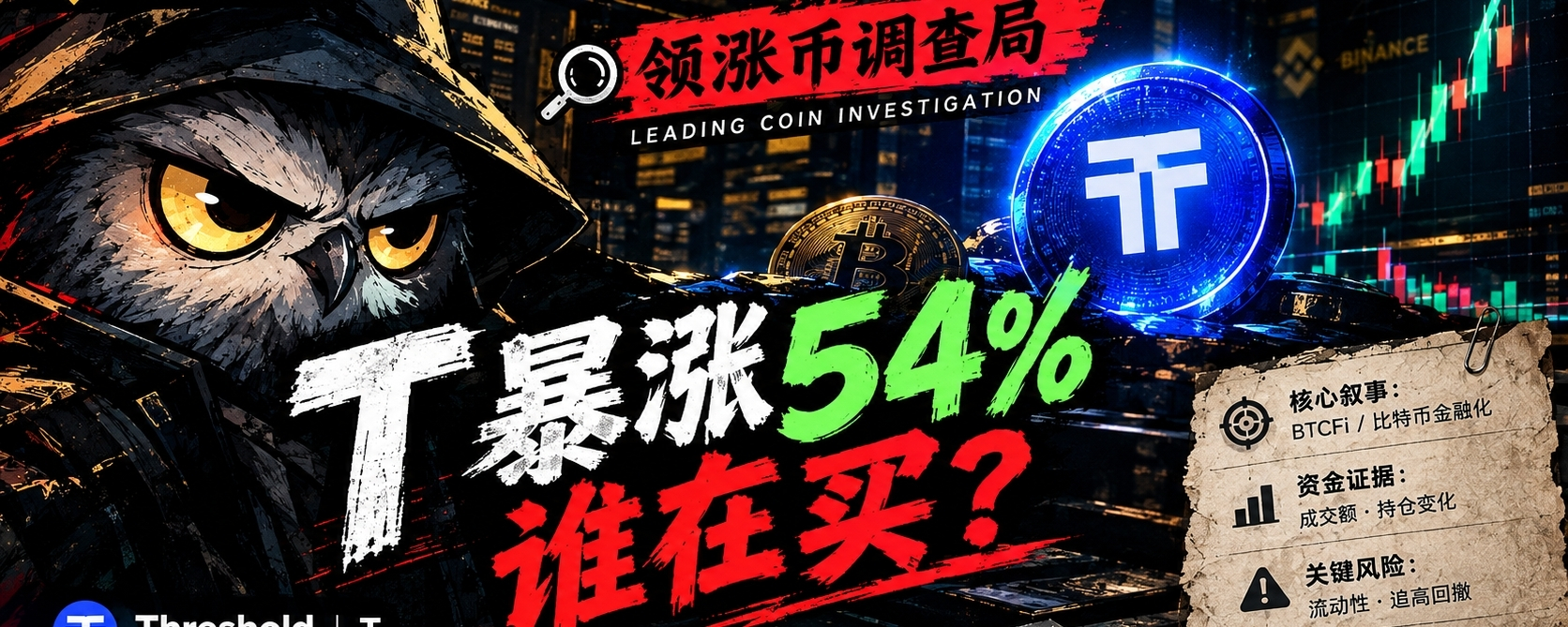
Market Movers Investigation #1 | T Surges 54% Overnight: Narrative-Fueled Rally or a Fund-Led Trap?Before trading a market-leading coin, take a closer look. Understand its background, follow the money, and trade only after thinking it through.
Today’s subject of investigation: Threshold (T).
At 9:30 on October 25, T/USDT was trading at 0.00727 USDT on Binance’s spot market, up 54.35% over 24 hours. It hit a high of 0.00791 USDT, with trading volume of approximately 5.5609 million USDT.
One big bullish candle has put a long-dormant project back on traders’ radar.
But don’t rush to declare the bull market back.
A sudden surge in an altcoin can have several explanations: a new project catalyst, funds speculating on a narrative, a wave of short covering, or a small amount of capital moving limited liquidity.
Market Movers Investigation #1 | T Surges 54% Overnight: Narrative-Fueled Rally or a Fund-Led Trap?
Before trading a market-leading coin, take a closer look. Understand its background, follow the money, and trade only after thinking it through.
Today’s subject of investigation: Threshold (T).
At 9:30 on October 25, T/USDT was trading at 0.00727 USDT on Binance’s spot market, up 54.35% over 24 hours. It hit a high of 0.00791 USDT, with trading volume of approximately 5.5609 million USDT.
One big bullish candle has put a long-dormant project back on traders’ radar.
But don’t rush to declare the bull market back.
A sudden surge in an altcoin can have several explanations: a new project catalyst, funds speculating on a narrative, a wave of short covering, or a small amount of capital moving limited liquidity.
1
523

·
--
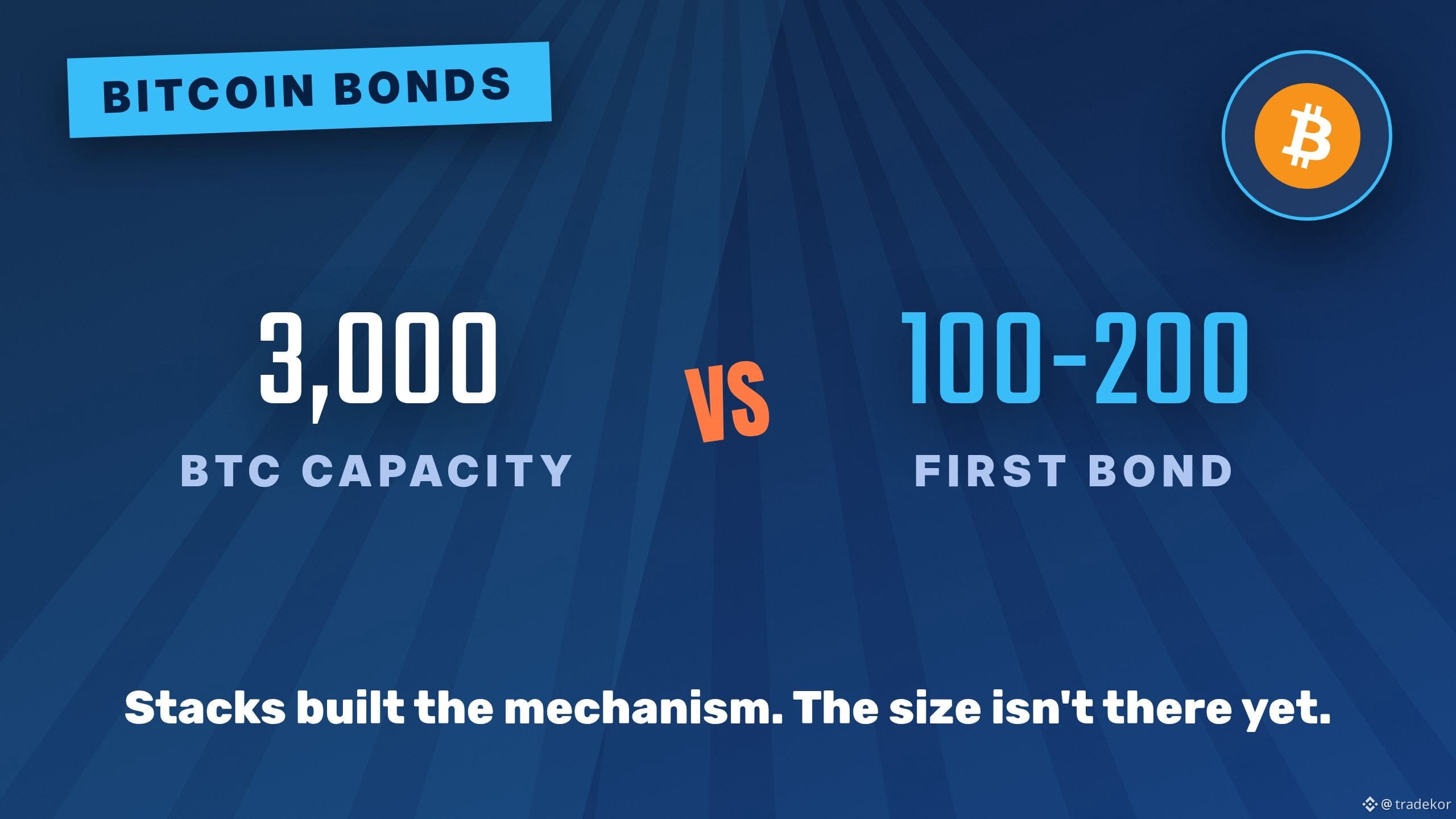
Stacks built 3,000 BTC of Bitcoin-staking capacity. The first bond opens for 100-200 — and that gap is the whole story.
The bull case: $STX now has a protocol-level job it did not have before. PoX-5 activated at Bitcoin block 960,230, enabling Bitcoin Bonds — pair $BTC held on Bitcoin L1 with STX on Stacks, earn roughly 3% APY paid in BTC, with a 5% minimum STX pairing ratio. No wrapping, no bridging, no custodian holding keys. Yield comes from miners competing to produce Stacks blocks, not emissions. If BTC yield demand scales, that 5% ratio is forced, recurring STX buying. The upgrade vote passed with 99%.
The bear case: the Genesis Bond slipped from late August to September 10 at block 966,350, and targets only 100-200 BTC against a 3,000 BTC bootstrap cap. That is under 7% of capacity, restricted to institutional and whitelisted participants. A 5% pairing ratio on 200 BTC is a rounding error against STX's float — the structural bid people are pricing does not exist yet at this size. The bootstrap phase also runs about 12 months with the Stacks Endowment setting capacity and yield by hand.
Our read: the mechanism is real and unusually honest about where yield comes from. The size is not. Falsifiable — watch the second and third bonds. If allocation climbs toward the cap and opens past whitelists, the demand thesis has a floor under it. If it stalls near Genesis size through the bootstrap year, this was a well-engineered product that never found its buyers.
Not financial advice. DYOR.
#Stacks #Bitcoin #BTCfi #STX
125

·
--
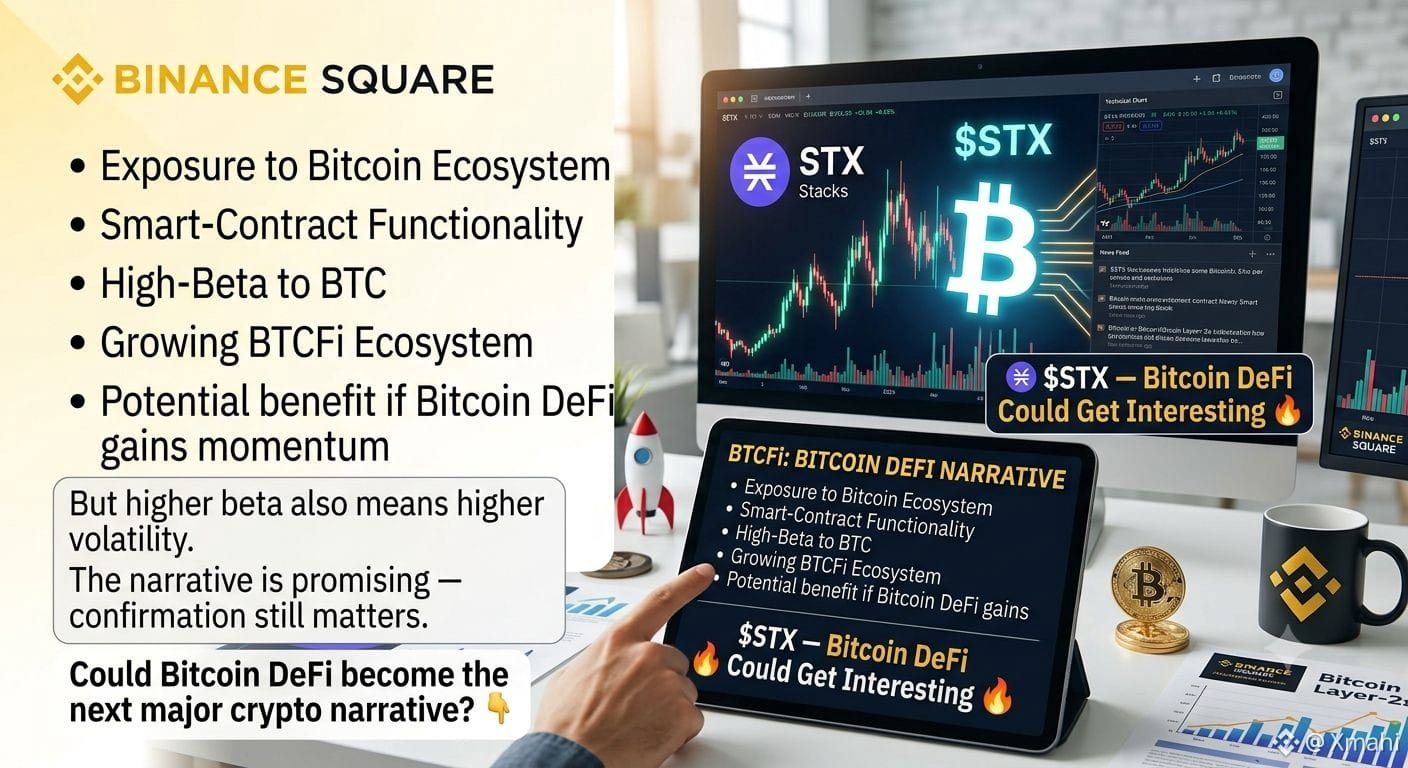
$STX — Bitcoin DeFi Could Get Interesting 🔥
$STX is one of the projects worth watching as attention rotates toward Bitcoin-based DeFi.
Recent market activity has highlighted STX as a higher-beta way to express the BTCFi narrative.
💡 Why it’s interesting: • Bitcoin ecosystem exposure
• Smart-contract functionality
• Growing BTCFi narrative
• Potential benefit if Bitcoin DeFi gains momentum
But higher beta also means higher volatility.
The narrative is promising — confirmation still matters.
Could Bitcoin DeFi become the next major crypto narrative? 👇
#STX #Stacks #BTCFi #Bitcoin
{spot}(STXUSDT)
{spot}(BTCUSDT)
$STX — Bitcoin DeFi Could Get Interesting 🔥
$STX is one of the projects worth watching as attention rotates toward Bitcoin-based DeFi.
Recent market activity has highlighted STX as a higher-beta way to express the BTCFi narrative.
💡 Why it’s interesting: • Bitcoin ecosystem exposure
• Smart-contract functionality
• Growing BTCFi narrative
• Potential benefit if Bitcoin DeFi gains momentum
But higher beta also means higher volatility.
The narrative is promising — confirmation still matters.
Could Bitcoin DeFi become the next major crypto narrative? 👇
#STX #Stacks #BTCFi #Bitcoin
174

🚀 STX in BTC ecosystem? Leading L2 still undervalued
Trading around $0.18, down from highs but building real DeFi on Bitcoin. Stacks brings smart contracts, NFTs, and dApps secured by BTC.
Key strength: PoX consensus ties it directly to Bitcoin miners, growing TVL and usage in BTCFi.
BTC L2 narrative heating up with more adoption. Perfect for ecosystem rotation.
Risk: Slow macro and competition. But solid long-term utility.
Holding STX or other BTC plays? Drop your pick 👇
DYOR. NFA.
━━━━━━━━━━━━━━━━━
#STX #Stacks #BTC #BTCFi $STX $BTC
117
Stacks just put 735 BTC to work
Bitcoin Staking on Stacks has pulled in about 735 $BTC across its first two bonds. The Genesis Bond filled all 230 BTC in September, and Bond 2 took 505 BTC after opening Oct 8. $STX staked is up 25% to 493M. The Genesis target yield is around 3%, paid weekly in BTC, and new bonds open monthly.
Would you lock BTC for 3%?
#Stacks #BitcoinStaking #BTCFi
Source: Stacks Q3 2026 ecosystem report, Genesis Bond recap
{spot}(STXUSDT)
Stacks just put 735 BTC to work
Bitcoin Staking on Stacks has pulled in about 735 $BTC across its first two bonds. The Genesis Bond filled all 230 BTC in September, and Bond 2 took 505 BTC after opening Oct 8. $STX staked is up 25% to 493M. The Genesis target yield is around 3%, paid weekly in BTC, and new bonds open monthly.
Would you lock BTC for 3%? #Stacks #BitcoinStaking #BTCFi
Source: Stacks Q3 2026 ecosystem report, Genesis Bond recap
283
Log in to explore more content
Join global crypto users on Binance Square
⚡️ Get latest and useful information about crypto.
💬 Trusted by the world’s largest crypto exchange.
👍 Discover real insights from verified creators.
Email / Phone number
Trending Topics
1
#BTCReboundsAbove$60KAmidWhaleDipBuying
0 views
0 Discussing
2
#NvidiaLoses$2.7TrillionInMonthAndAHalf
31,852 views
168 Discussing
3
#GlobalStocksFaceLongestLosingStreakSince2023
338,877 views
2,196 Discussing
4
#BlackRockIBITPostsRecord$541MSingleDayOutflow
44,222 views
121 Discussing
5
#AnthropicPlungesTowardIPOPriceonDay2
175,356 views
1,351 Discussing
6
#TwentyOneCapitalAdds172.25BTC
81,154 views
783 Discussing
7
#HKBillWouldExcludeTokenizedDepositsFromVirtualAssets
11,937 views
57 Discussing
8
#BNBDropsBelow540USDTWith8.46%DailyDecline
91,486 views
735 Discussing
9
#HKBillProposesHK$100KFineForUnauthorizedCryptoTitles
3,183 views
29 Discussing
10
#BitMineFaces$10.1BUnrealizedETHLoss
6,398 views
32 Discussing