
#crossborderpayments
crossborderpayments
76,113 views
395 Discussing
Hot
Latest
Most conversations about cross-border payments focus on the fee. The bigger cost is the gap.
A freelancer finishes the work on a Tuesday and sends the invoice. The client pays the same morning. The money still isn't usable. It travels through correspondent banks that don't work weekends, or it arrives as a stablecoin transfer between two people who have never met — where one side is waiting on the other to release funds held in trust.
By the time it lands, three days have passed and the number is smaller than the invoice.
Stablecoins over a fast network remove most of that gap: confirmation in seconds rather than days, a fraction of the cost of a traditional international transfer, and no anonymous counterparty deciding when to release.
If you invoice abroad, the metric worth tracking isn't the headline fee. It's how long your money spends in transit.
#Stablecoins #CrossBorderPayments
28

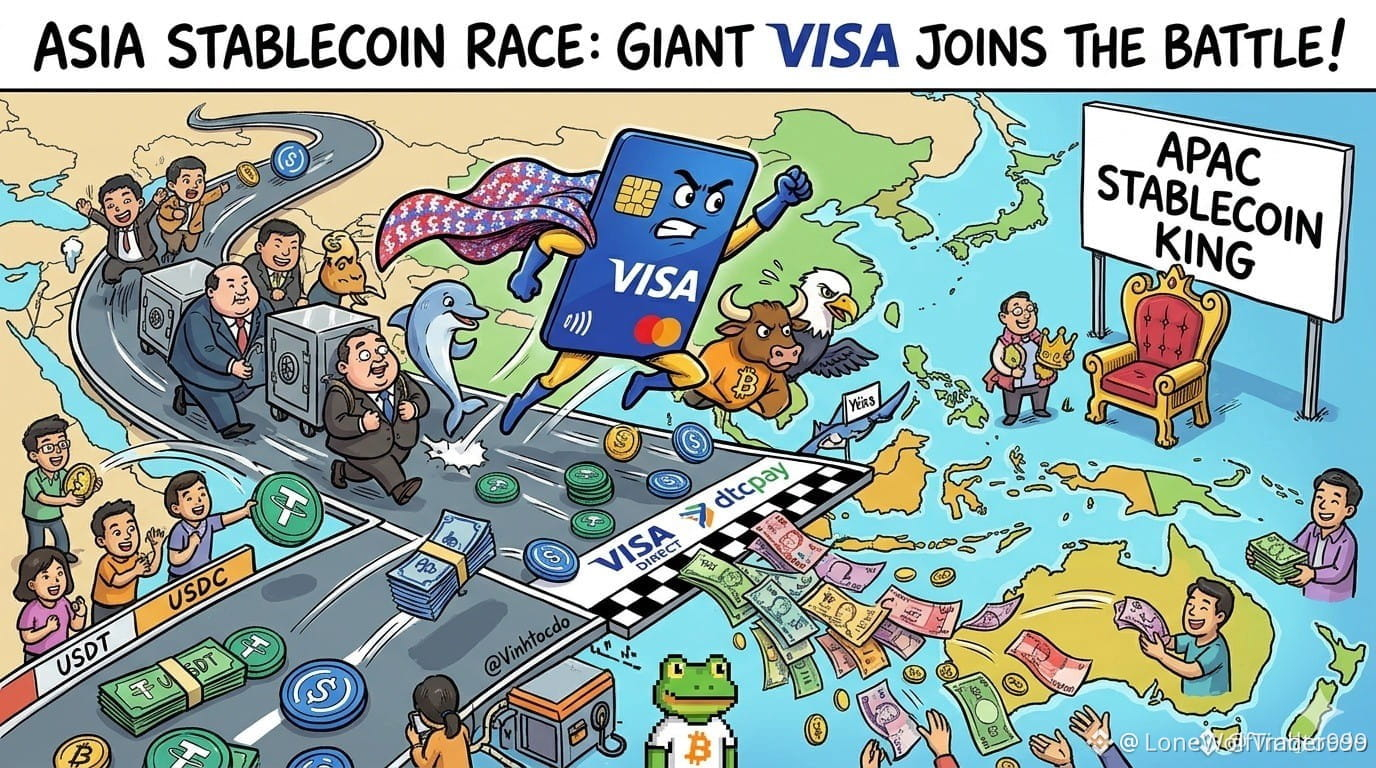
⚡ $SOL READY AS PAYMENT GIANTS UNLOCK THE ASIAN STABLECOIN GATEWAY! 🌏
Institutional heavyweights are officially rewriting cross-border liquidity rails across Asia. When payment titans start routing stablecoins directly through localized pilot programs, the velocity of capital movement shifts into warp speed. 🌊
Smart money is already positioning ahead of the structural shift, quietly accumulating infrastructure and settlement layers. Do not chase green candles blindly, but track where institutional order flow is carving out new liquidity highways. 📊
💬 Which payment ecosystem will capture the lion's share of this multi-billion dollar corridor expansion? 👇
⚠️ Not financial advice. Always manage your risk. 🛡️
🏷️ $SOL #Stablecoins #CrossBorderPayments #DeFi #Crypto
🔥 💎
1

·
--
The next blockchain breakthrough might happen behind the scenes of global payments🌍
On November 13, the Bank of England, the Monetary Authority of Singapore, and the Bank of Thailand published findings from Project Meridian FX APAC.
The project tested how traditional payment infrastructure and distributed ledger technology could coordinate cross-border foreign exchange settlements.
Two concepts are especially interesting:
🔹 Payment-versus-Payment (PvP): One currency transfer takes place only if the corresponding transfer of the other currency also happens.
🔹 Multilateral Netting: Financial institutions can offset payments against each other, potentially reducing the liquidity needed for settlement.
Why does this matter?
International payments involve different currencies, jurisdictions, banking systems, and operating hours.
Coordinating these systems more effectively could help reduce settlement risk and improve the efficiency of financial infrastructure.
But there's an important distinction: this was a technical trial, not the launch of a fully operational global payment network.
The central banks also identified important challenges involving operational resilience, legal responsibility, governance, settlement finality, and cross-border data sharing.
The Bank of England says the findings will inform further work as it plans a live synchronisation interface in 2028.
My perspective: The real opportunity for blockchain isn't necessarily replacing existing financial infrastructure. It may be connecting different systems in a safer and more efficient way.
💬 Which matters most for the future of international payments: speed, lower settlement risk, or compatibility between systems?
🔶 Join my My Crypto Space community and let's explore these developments together.
Follow me for more blockchain and technology insights!
#CrossBorderPayments #Blockchain #FinancialInfrastructure #DigitalAssets $BNB
@Binance_Academy @Binancearabic
The next blockchain breakthrough might happen behind the scenes of global payments🌍
On November 13, the Bank of England, the Monetary Authority of Singapore, and the Bank of Thailand published findings from Project Meridian FX APAC.
The project tested how traditional payment infrastructure and distributed ledger technology could coordinate cross-border foreign exchange settlements.
Two concepts are especially interesting:
🔹 Payment-versus-Payment (PvP): One currency transfer takes place only if the corresponding transfer of the other currency also happens.
🔹 Multilateral Netting: Financial institutions can offset payments against each other, potentially reducing the liquidity needed for settlement.
Why does this matter?
International payments involve different currencies, jurisdictions, banking systems, and operating hours.
Coordinating these systems more effectively could help reduce settlement risk and improve the efficiency of financial infrastructure.
But there's an important distinction: this was a technical trial, not the launch of a fully operational global payment network.
The central banks also identified important challenges involving operational resilience, legal responsibility, governance, settlement finality, and cross-border data sharing.
The Bank of England says the findings will inform further work as it plans a live synchronisation interface in 2028.
My perspective: The real opportunity for blockchain isn't necessarily replacing existing financial infrastructure. It may be connecting different systems in a safer and more efficient way.
💬 Which matters most for the future of international payments: speed, lower settlement risk, or compatibility between systems?
🔶 Join my My Crypto Space community and let's explore these developments together.
Follow me for more blockchain and technology insights!
#CrossBorderPayments #Blockchain #FinancialInfrastructure #DigitalAssets $BNB
@Binance Academy @Binance MENA

2
166

·
--
China and Oman sign agreement to expand cooperation on digital currencies and cross-border payments.
Countries keep building their own payment rails.
Bullish step for crypto adoption or just another state backed CBDC push?
What do u think?
$BTC
{spot}(BTCUSDT)
$BNB
{spot}(BNBUSDT)
$ETH
{spot}(ETHUSDT)
#CBDC #CrossBorderPayments #crypto
China and Oman sign agreement to expand cooperation on digital currencies and cross-border payments.
Countries keep building their own payment rails.
Bullish step for crypto adoption or just another state backed CBDC push?
What do u think?
$BTC
$BNB
$ETH
#CBDC #CrossBorderPayments #crypto
Countries keep building their own payment rails.
Bullish step for crypto adoption or just another state backed CBDC push?
What do u think?
$BTC
$BNB
$ETH
#CBDC #CrossBorderPayments #crypto
123

·
--
Standard Chartered Bank is leading efforts to launch a retail stablecoin. The grand strategy for compliance on public blockchains is only just getting started. The fact that they’re not rushing to launch suggests they’re gearing up for something big, targeting the biggest growth opportunity in cross-border payments. Institutions are making long-term moves—don’t be fooled by the slow pace; what matters is where they place their pieces.
#Stablecoin #CrossBorderPayments
#Stablecoin #CrossBorderPayments

61

·
--
The Monetary Authority of Singapore announced on the 23rd that Bank Negara Malaysia and the Bank of Thailand have joined Project BLOOM. This tripartite initiative aims to advance cross-border digital currency settlements alongside partners like Mastercard, Visa, Ripple, and the World Bank Group.
This collaboration marks a key milestone for regional financial infrastructure, focusing on CBDC acceptance, system interoperability, and risk compliance. The integration of traditional payment giants and blockchain firms highlights a decisive shift toward institutional distributed ledger adoption.
Streamlining regional remittances and foreign exchange settlements establishes strong regulatory frameworks for cross-border capital flows across Southeast Asia.
For enterprise crypto networks like Ripple ($XRP), this pilot validates real-world utility in sovereign settlement rails, strengthening institutional adoption. #CBDC #CrossBorderPayments #DigitalAssets
The Monetary Authority of Singapore announced on the 23rd that Bank Negara Malaysia and the Bank of Thailand have joined Project BLOOM. This tripartite initiative aims to advance cross-border digital currency settlements alongside partners like Mastercard, Visa, Ripple, and the World Bank Group.
This collaboration marks a key milestone for regional financial infrastructure, focusing on CBDC acceptance, system interoperability, and risk compliance. The integration of traditional payment giants and blockchain firms highlights a decisive shift toward institutional distributed ledger adoption.
Streamlining regional remittances and foreign exchange settlements establishes strong regulatory frameworks for cross-border capital flows across Southeast Asia.
For enterprise crypto networks like Ripple ($XRP ), this pilot validates real-world utility in sovereign settlement rails, strengthening institutional adoption. #CBDC #CrossBorderPayments #DigitalAssets
84

·
--
The Monetary Authority of Singapore (MAS) announced on October 23 that Bank Negara Malaysia and the Bank of Thailand have officially joined the BLOOM digital currency initiative. The project aims to standardize and connect cross-border payment infrastructure, with major financial institutions such as Mastercard, Visa, Ripple, and the World Bank taking part.
This move marks an important step toward institutionalizing digital currencies in Southeast Asia. Rather than operating in fragmented systems, the region’s three leading economies are building a shared framework for risk management and identity verification to optimize international payment flows.
This connectivity will significantly reduce intermediary costs and the time needed to process commercial transactions between countries. In the long term, intergovernmental digital payment infrastructure will strengthen confidence in advanced financial technology solutions and promote capital flows across the region.
For the crypto market, the direct involvement of major organizations such as Ripple ($XRP) in central bank infrastructure is a positive signal for real-world utility. Cross-border digital payment flows will pave the way for wider adoption of compliant blockchain solutions.
#CBDC #CrossBorderPayments #Fintech
The Monetary Authority of Singapore (MAS) announced on October 23 that Bank Negara Malaysia and the Bank of Thailand have officially joined the BLOOM digital currency initiative. The project aims to standardize and connect cross-border payment infrastructure, with major financial institutions such as Mastercard, Visa, Ripple, and the World Bank taking part.
This move marks an important step toward institutionalizing digital currencies in Southeast Asia. Rather than operating in fragmented systems, the region’s three leading economies are building a shared framework for risk management and identity verification to optimize international payment flows.
This connectivity will significantly reduce intermediary costs and the time needed to process commercial transactions between countries. In the long term, intergovernmental digital payment infrastructure will strengthen confidence in advanced financial technology solutions and promote capital flows across the region.
For the crypto market, the direct involvement of major organizations such as Ripple ($XRP ) in central bank infrastructure is a positive signal for real-world utility. Cross-border digital payment flows will pave the way for wider adoption of compliant blockchain solutions.
#CBDC #CrossBorderPayments #Fintech
178

·
--
Article
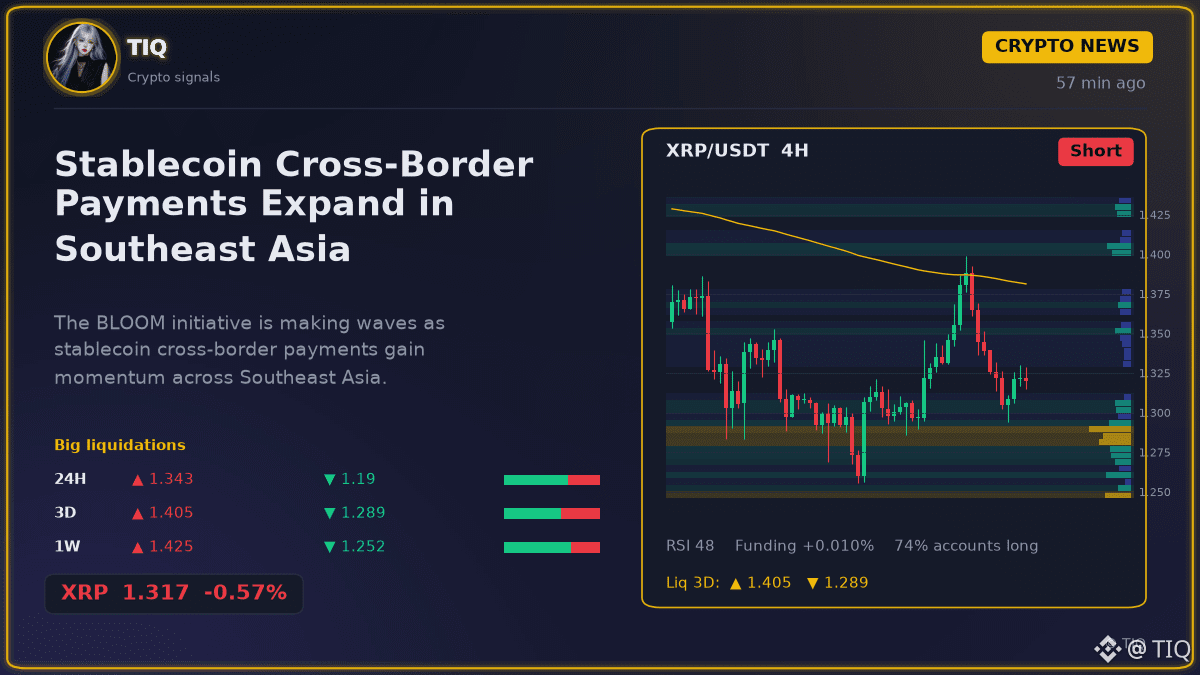
Stablecoin Cross-Border Payments Expand in Southeast AsiaThe BLOOM initiative is making waves as stablecoin cross-border payments gain momentum across Southeast Asia.
It looks like the financial landscape in Asia is getting a serious upgrade. Singapore’s central bank originally launched the BLOOM initiative to test how stablecoins and tokenized deposits could make cross-border settlements faster and more efficient. Now, the central banks of Malaysia and Thailand have officially joined the project to expand these digital payment experiments.
This isn't just a small local test. The initiative involves heavy hitters like Ripple, Visa, and Mastercard, who are all working together to refine the technical infrastructure for these transactions. By bringing in more regional players, the project aims to create a more seamless way for money to move across borders
Why it matters 💡
This expansion suggests that stablecoins are becoming a serious tool for institutional cross-border settlements. It is worth keeping an eye on how these pilot programs evolve, as they could set the standard for how digital assets are integrated into mainstream banking infrastructure globally.
4H signal view on $XRP 📊
Short 🔴
Entry 1.341 - 1.347
TP 1.327 - 1.318 - 1.31
SL 1.361
No fresh signal, direction follows MACD momentum.
RSI 48 still has room to move. MACD momentum is leaning down. Price is on the right side of EMA200.
#XRP #Stablecoin #CrossBorderPayments #Blockchain #Fintech
ℹ️ News roundup from public sources, not financial advice.
Stablecoin Cross-Border Payments Expand in Southeast Asia
The BLOOM initiative is making waves as stablecoin cross-border payments gain momentum across Southeast Asia.
It looks like the financial landscape in Asia is getting a serious upgrade. Singapore’s central bank originally launched the BLOOM initiative to test how stablecoins and tokenized deposits could make cross-border settlements faster and more efficient. Now, the central banks of Malaysia and Thailand have officially joined the project to expand these digital payment experiments.
This isn't just a small local test. The initiative involves heavy hitters like Ripple, Visa, and Mastercard, who are all working together to refine the technical infrastructure for these transactions. By bringing in more regional players, the project aims to create a more seamless way for money to move across borders
Why it matters 💡
This expansion suggests that stablecoins are becoming a serious tool for institutional cross-border settlements. It is worth keeping an eye on how these pilot programs evolve, as they could set the standard for how digital assets are integrated into mainstream banking infrastructure globally.
4H signal view on $XRP 📊
Short 🔴
Entry 1.341 - 1.347
TP 1.327 - 1.318 - 1.31
SL 1.361
No fresh signal, direction follows MACD momentum.
RSI 48 still has room to move. MACD momentum is leaning down. Price is on the right side of EMA200.
#XRP #Stablecoin #CrossBorderPayments #Blockchain #Fintech
ℹ️ News roundup from public sources, not financial advice.
263

·
--
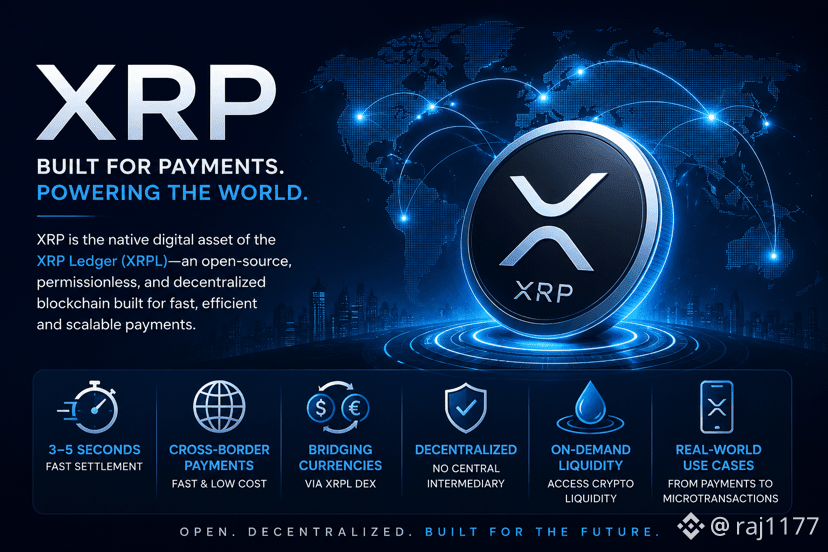
$XRP Fast, Efficient & Built for Global Payments
XRP is the native digital asset of the XRP Ledger (XRPL), an open-source, permissionless, and decentralized blockchain designed for payments.
⚡ Transactions settle in just 3–5 seconds
🌍 Enables fast, low-cost cross-border payments
🔄 Bridges different currencies through XRPL’s native DEX
🏦 No central intermediary required
💧 Provides on-demand crypto liquidity for global transfers
Since 2012, XRP has been helping power real-world financial use cases, from international payments to microtransactions, making value move as seamlessly as information.
#XRP #XRPL #DigitalAssets #CrossBorderPayments #BinanceSquare $XRP
{spot}(XRPUSDT)
$XRP Fast, Efficient & Built for Global Payments
XRP is the native digital asset of the XRP Ledger (XRPL), an open-source, permissionless, and decentralized blockchain designed for payments.
⚡ Transactions settle in just 3–5 seconds
🌍 Enables fast, low-cost cross-border payments
🔄 Bridges different currencies through XRPL’s native DEX
🏦 No central intermediary required
💧 Provides on-demand crypto liquidity for global transfers
Since 2012, XRP has been helping power real-world financial use cases, from international payments to microtransactions, making value move as seamlessly as information.
#XRP #XRPL #DigitalAssets #CrossBorderPayments #BinanceSquare $XRP
73

·
--
Ripple just made one of the most significant moves in this cycle — and most people are still debating FOMC.
Ripple invested in Flutterwave, valuing it at $3.2B, and is plugging $XRP Ledger + RLUSD directly into cross-border payments across Africa. We're talking about a continent with 600M+ unbanked adults, fragmented FX corridors, and some of the highest remittance fees on the planet.
This isn't a whitepaper. It's a live deployment.
While $ETH is capturing RWA tokenization and $BNB burns keep compounding — $XRP is quietly becoming the institutional cross-border layer for markets that actually need it most. Emerging market settlement corridors don't care about US regulatory drama. They care about final settlement speed and cost.
The Clarity Act, GENIUS Act, and now Ripple-Flutterwave are all pointing at the same thing: the real-world utility race is already underway. The winners won't be the loudest narratives — they'll be the rails people are actually using.
Pay attention to where the volume is being built, not just where the price is moving.
#XRP #CrossBorderPayments #CryptoAdoption #Web3
89

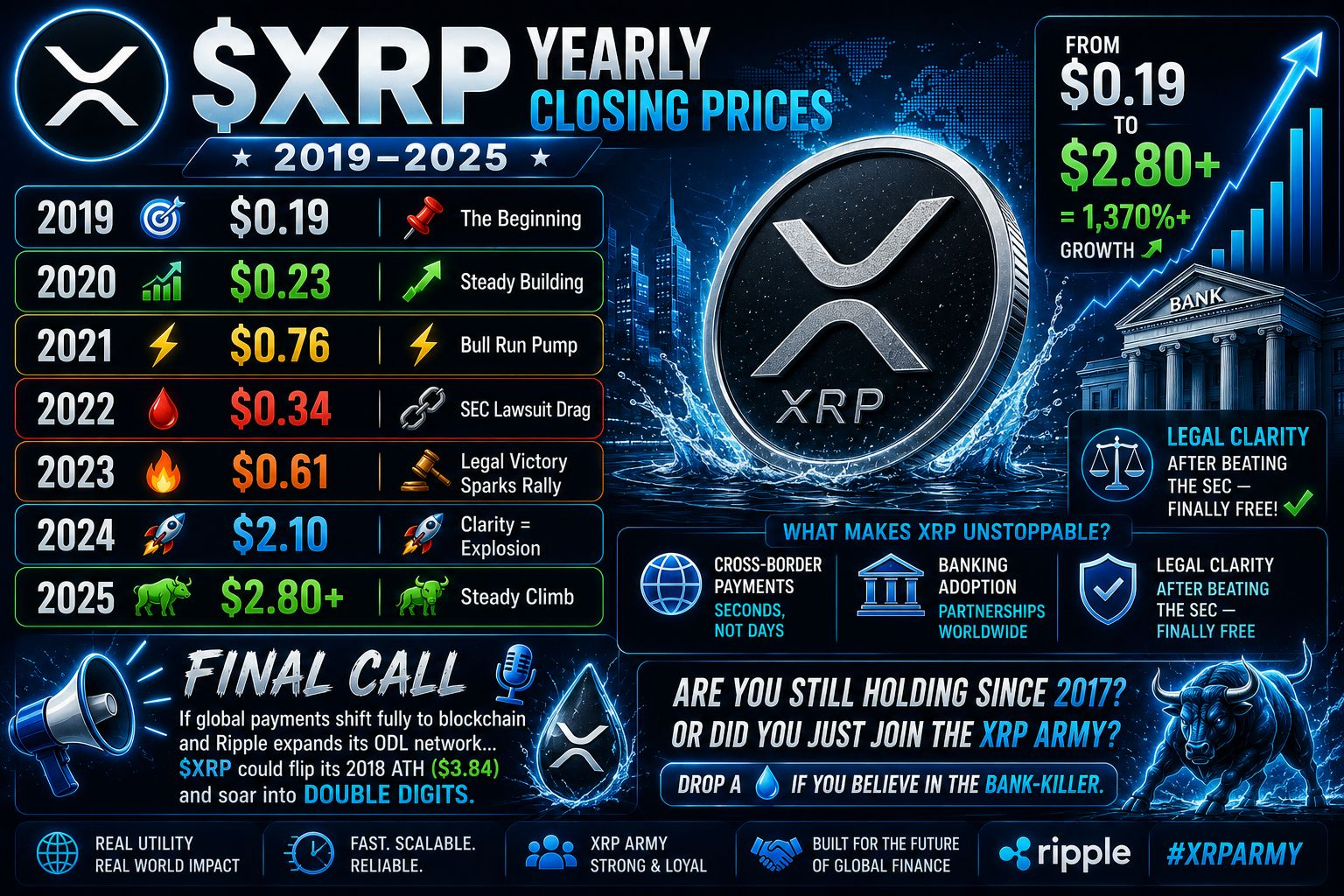
💧 $XRP YEARLY CLOSING PRICES (2019–2025)
2019 — $0.19 📍
2020 — $0.23 📈
2021 — $0.76 ⚡ (bull run pump)
2022 — $0.34 🩸 (SEC lawsuit drag)
2023 — $0.61 🔥 (legal victory sparks rally)
2024 — $2.10 🚀 (clarity = explosion)
2025 — $2.80+ 🐂 (steady climb)
⚖️ From $0.19 → $2.80+ = 1,370%+ growth 📈
⚙️ What makes XRP unstoppable?
🌍 Cross-border payments (seconds, not days)
🏦 Banking adoption (partnerships worldwide)
⚖️ Legal clarity after beating the SEC — finally free
FINAL CALL 🎙️
If global payments shift fully to blockchain and Ripple expands its ODL network…
$XRP could flip its 2018 ATH ($3.84) and soar into double digits. 💧💣
Are you still holding since 2017? Or did you just join the XRP army? 👇
Drop a 💧 if you believe in the bank-killer.
#xrp #CrossBorderPayments
85

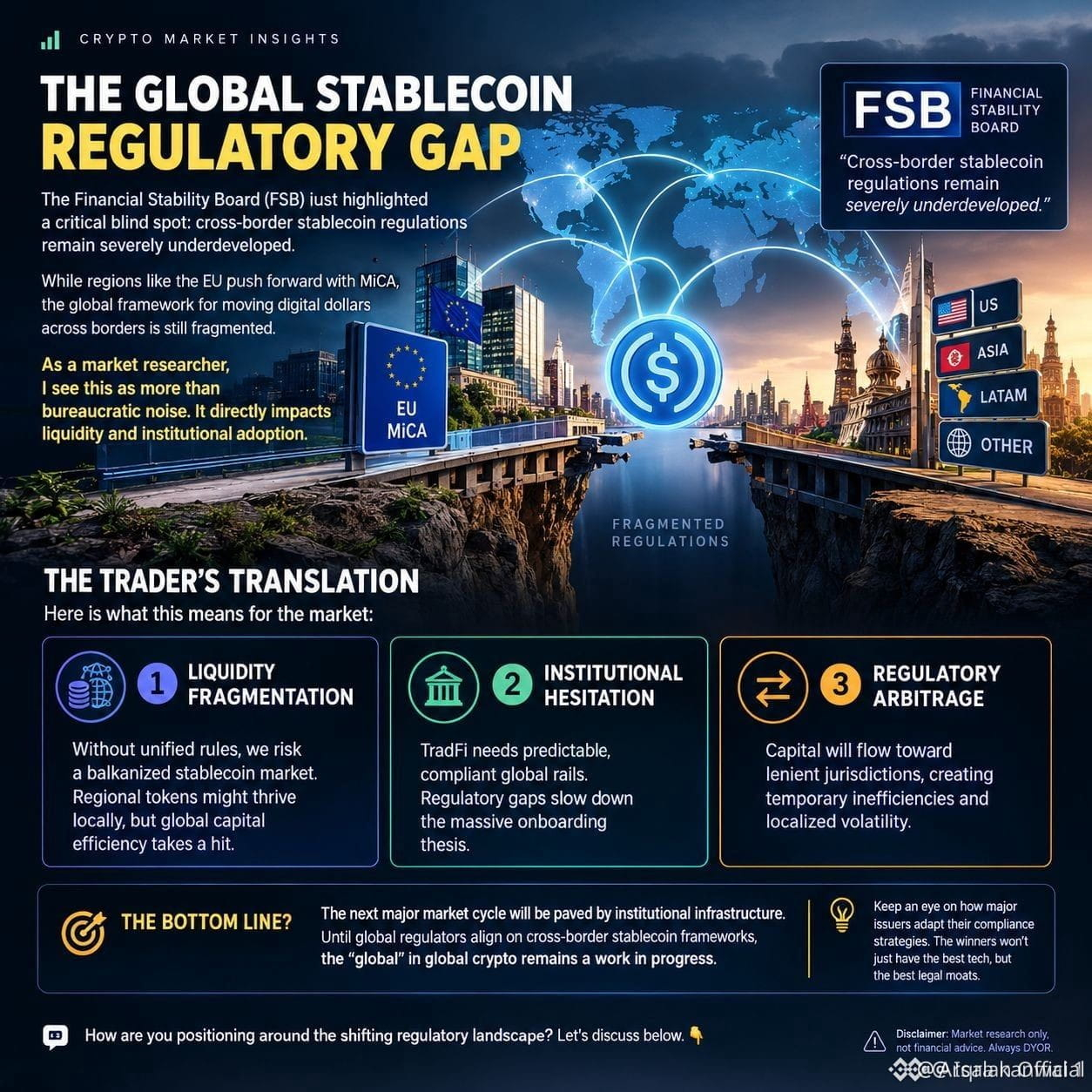
#FSBWarnsCrossBorderStablecoinRules RemainUnderdeveloped Financial Stability Board (FSB) warns that cross-border stablecoin regulations remain underdeveloped, highlighting gaps in international coordination and oversight. 🌍💵 As stablecoins expand across global markets, consistent rules could become increasingly important for transparency, financial stability, and consumer protection. The regulatory direction may shape the future of digital payments worldwide. 📊
Hashtags
\#StablecoinRegulation #GlobalCryptoPolicy #FinancialStabilityBoard #CrossBorderPayments
Tokens
$USDT · $USDC · $DAIO.US
Hashtags
\#StablecoinRegulation #GlobalCryptoPolicy #FinancialStabilityBoard #CrossBorderPayments
Tokens
$USDT · $USDC · $DAIO.US
USDC-0.06%
DAIOUS-2.46%
1
71

·
--
A recent Visa study found that if stablecoins have bank-level fraud protection and deposit insurance, US users' willingness to use stablecoins for cross-border transfers will jump significantly from 36% to 56%!Looks like people don't dislike stablecoins— they just want more peace of mind. #稳定币 #跨境支付 $USDT $USDC
Visa study shows US willingness to use stablecoins for cross-border transfers jumps from 36% to 56% when paired with bank-level fraud protection and deposit insurance. It's not about if people want stablecoins, it's about the safety net! #Stablecoins #CrossBorderPayments $USDT $USDC
Visa study shows US willingness to use stablecoins for cross-border transfers jumps from 36% to 56% when paired with bank-level fraud protection and deposit insurance. It's not about if people want stablecoins, it's about the safety net! #Stablecoins #CrossBorderPayments $USDT $USDC
57

·
--
"It's not that Swift couldn't handle the decentralized memepool, but this blockchain ledger thing is low-key fire. Swift just launched a blockchain-based ledger for 17 banks to pilot 24/7 cross-border payments using tokenized deposits. This basically means banks get to be part of the blockchain squad and make cross-border payments less cringey #BlockchainForBanks #CrossBorderPayments #TokenizedDeposits.
The alpha is that this is a big deal, folks. It shows the banks are finally taking our 'decentralize and survive' advice. The punchline insight? Centralized powers are slowly embracing the decentralized ethos and that's like, totally a meme.
So, what do you think? Is this the beginning of banks finally getting with the blockchain times, or are they just trying to stay relevant?"
50
·
--
"XRP price skyrockets 16% as SWIFT reveals plans to integrate blockchain payments with Ripple-linked banks, a development that could unlock a potential $100B market for cryptocurrencies in cross-border payments."
This explosive news comes as SWIFT, the dominant interbank messaging network, announced a pilot project to evaluate the use of distributed ledger technology for international payments across 17 banks, including several with Ripple ties. The implications are profound: if successful, this could be a game-changer for the crypto market, tapping into a massive market for cross-border payments valued at over $100B annually.
Smart money is already betting big on XRP, with many analysts and traders expecting a significant price surge as the news breaks. As the market adjusts to this seismic shift, a key level to watch is $0.40, the 200-day moving average that XRP recently broke through.
Will we see XRP reach new heights in the coming days? #XRP #CrossBorderPayments #BlockchainAdoption
94
·
--
Major financial move between South Korea and Japan! Shinhan Bank and SBI are joining forces to test the use of yen stablecoins for tourist spending. This could be a game-changer for cross-border payments! Imagine tourists from both countries spending seamlessly with stablecoins, doubling the efficiency of trade settlements, and taking financial cooperation a concrete step forward.
$JPY #跨境支付 #Stablecoins
Shinhan & SBI are shaking up Japan-Korea financial cooperation! They're testing yen stablecoins for tourist spending - imagine seamless travel payments and faster trade settlements between these two economies. This could be a game-changer for cross-border finance!
$JPY #CrossBorderPayments #Stablecoins
7
·
--
Long-term conviction does not come from price action — it comes from understanding what problem a network actually solves.
Take cross-border settlement. The legacy correspondent banking system moves roughly $150 trillion per year across borders, but it is slow, opaque, and riddled with intermediary fees. Funds hop through multiple correspondent banks, each adding 1–3 business days and a small toll. For an SME in Southeast Asia paying a supplier in Europe, that friction is a real cost.
This is where crypto settlement rails become genuinely interesting from a first-principles perspective. A blockchain capable of 3–5 second finality, sub-cent transaction fees, and 24/7 liquidity bridging carries real structural advantages over the SWIFT model. It does not need speculative demand to justify its existence — the use case is already there and already large.
$XRP was purpose-built for exactly this: on-demand liquidity for FX corridors, eliminating the need for pre-funded nostro accounts. $BTC is increasingly used as a neutral settlement layer between jurisdictions that lack bilateral trust. $DOT is building the interoperability standard that lets different financial systems communicate without central intermediaries.
The question is not "will blockchain replace SWIFT?" but "which corridor goes first?"
Conviction is built on real-world utility at scale. Follow the payments.
#CrossBorderPayments #CryptoSettlement #LongTermConviction #DeFi #BinanceSquare
1
108
·
--
Correspondent banking is one of the most expensive, slowest systems in global finance — yet it moves trillions of dollars every year.
A cross-border wire can take 3–5 business days, cost 25–45 USD in fees, and route through multiple intermediary banks. The real hidden cost is even larger: pre-funded nostro accounts sitting idle in dozens of currencies just to keep the rails alive. The IMF estimates 27 trillion USD in nostro capital is locked globally at any given time. That is an enormous inefficiency waiting to be displaced.
This is the specific problem $XRP and Ripple's network were built to solve. Instead of locking up capital in nostro accounts, a financial institution can source on-demand liquidity, bridge the transaction in seconds, and settle — no pre-positioned capital required.
What makes institutional adoption realistic now is regulatory clarity. Ripple's legal resolution with the SEC removed the primary compliance blocker keeping banks on the sidelines. The post-settlement environment is structurally different from two years ago.
$BTC proved borderless value transfer works. $ETH proved smart contract settlement is programmable. $XRP's thesis is narrower: make the existing correspondent banking infrastructure 60–80% cheaper to run.
Narrower institutional theses with clear counterparties tend to close faster than broad platform bets. Watch actual corridor volumes, not just partnership announcements.
#CrossBorderPayments #CryptoAdoption #RippleEffect #Blockchain
Correspondent banking is one of the most expensive, slowest systems in global finance — yet it moves trillions of dollars every year.
A cross-border wire can take 3–5 business days, cost 25–45 USD in fees, and route through multiple intermediary banks. The real hidden cost is even larger: pre-funded nostro accounts sitting idle in dozens of currencies just to keep the rails alive. The IMF estimates 27 trillion USD in nostro capital is locked globally at any given time. That is an enormous inefficiency waiting to be displaced.
This is the specific problem $XRP and Ripple's network were built to solve. Instead of locking up capital in nostro accounts, a financial institution can source on-demand liquidity, bridge the transaction in seconds, and settle — no pre-positioned capital required.
What makes institutional adoption realistic now is regulatory clarity. Ripple's legal resolution with the SEC removed the primary compliance blocker keeping banks on the sidelines. The post-settlement environment is structurally different from two years ago.
$BTC proved borderless value transfer works. $ETH proved smart contract settlement is programmable. $XRP 's thesis is narrower: make the existing correspondent banking infrastructure 60–80% cheaper to run.
Narrower institutional theses with clear counterparties tend to close faster than broad platform bets. Watch actual corridor volumes, not just partnership announcements.
#CrossBorderPayments #CryptoAdoption #RippleEffect #Blockchain
125

·
--
J.P. Morgan expands blockchain settlement network
J.P. Morgan just added five Asia-Pacific currencies to its Kinexys blockchain platform. Institutional clients can now settle payments and foreign exchange transactions 24/7 without traditional banking hours.
This isn't speculation — it's production infrastructure. The new currencies include Singapore dollar, Australian dollar, Japanese yen, Chinese renminbi, and Hong Kong dollar. Settlement times dropped from days to minutes.
Traditional cross-border payments still rely on SWIFT messaging and correspondent banking chains. Each hop adds delay, cost, and counterparty risk. Kinexys bypasses this entirely by using distributed ledger technology for real-time finality.
The implications extend beyond speed. Banks operating Kinexys nodes maintain control over their liquidity while accessing a shared settlement layer. No central intermediary holds funds. No single point of failure exists.
Major asset managers and custodians are already testing tokenized fund settlements on the same network. The boundary between traditional finance and blockchain infrastructure keeps dissolving.
Will the SWIFT system cord survive another decade? Drop your take below. 👇
#JPMorganKinexys #CrossBorderPayments #TokenizedSettlement
34


·
--
A Borderless.xyz report shows that sending a $200 remittance via stablecoin rails costs a median of 1%, or $2, compared with 6.36%, or $12.72, for traditional transfers, making stablecoin remittances roughly 84% cheaper. In Sub‑Saharan Africa the stablecoin cost is 2.9% versus 8.46% for traditional routes; in Latin America it is 1.25% versus 5.64%. A $10,000 stablecoin transfer to the eurozone can be as low as $26 through the cheapest provider, versus $52 at the median provider, while a traditional bank wire for the same amount ranges from $135 to $150. Settlement times are minutes on networks like Brazil’s PIX (two minutes median), Mexico’s SPEI (three minutes) and Colombia’s PSE (two minutes), though completion rates vary—98.6% for SPEI, 97.8% for PIX, 79% for PSE and 73% for Costa Rica’s SINPE. Traditional SWIFT transfers usually arrive the next business day, with the slowest 10% taking three days.
#StablecoinRemittances #CrossBorderPayments #BorderlessReport
#StablecoinRemittances #CrossBorderPayments #BorderlessReport

50
Log in to explore more content
Join global crypto users on Binance Square
⚡️ Get latest and useful information about crypto.
💬 Trusted by the world’s largest crypto exchange.
👍 Discover real insights from verified creators.
Email / Phone number
Trending Topics
1
#WillMarketsStageAThanksgivingReliefRally?
5,948 views
166 Discussing
2
#BessentSoftensStanceOnHuang’sNvidiaReturn
4,815 views
107 Discussing
3
#MuskWarnsOfAICashCrunch
4,854 views
101 Discussing
4
#RussiaAllowsExchangesToOfferCryptoTrading
81 views
26 Discussing
5
#UKToBarCryptoExchangesFromMakingMarketsOnTheirOwnPlatforms
81 views
9 Discussing
6
#UKTreasurySignsCryptoMarketMakingExemptionRules
883 views
58 Discussing
7
#BTCReboundsAbove$60KAmidWhaleDipBuying
117,373 views
435 Discussing
8
#SolanaSets2027RoadmapToDoubleComputeCapacity
102,279 views
1,334 Discussing
9
#CaliforniaNvidiaProbeExaminesPotentialCriminalViolations
28,652 views
186 Discussing
10
#BlackRockLaunchesHKDollarDigitalLiquidityFund
88,111 views
974 Discussing