
#dpanda
dpanda
2,456 views
17 Discussing
Hot
Latest

·
--
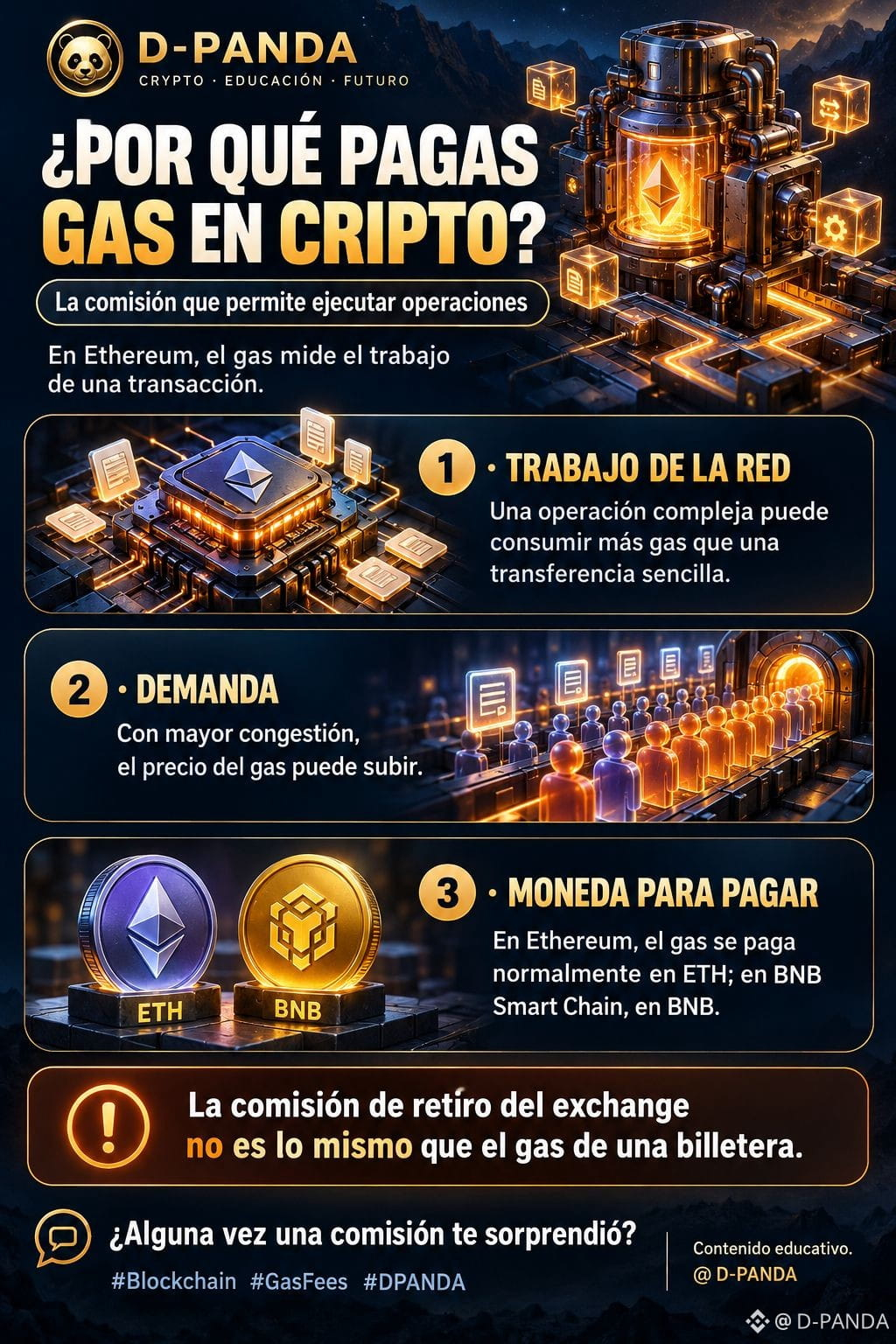
⛽ In crypto, “gas” isn’t a currency: on networks like Ethereum, it’s the unit that measures the work required to execute an operation.
The fee depends on the gas used and its price. That’s why a simple transfer can cost less than interacting with a complex smart contract.
Also, when demand on the network increases, fees can go up.
Example: having USDT in an Ethereum wallet doesn’t mean you can simply send it. You usually need ETH to pay for gas, unless your wallet offers an alternative mechanism.
On BNB Smart Chain, fees are paid in BNB.
🐼 D-PANDA tip: check the estimate before confirming. Also distinguish between the gas for an operation from your wallet and the withdrawal fee set by an exchange.
Have you ever had tokens but no balance to pay the fee?👇
#Blockchain #GasFees #DPANDA #BTC
107
·
--
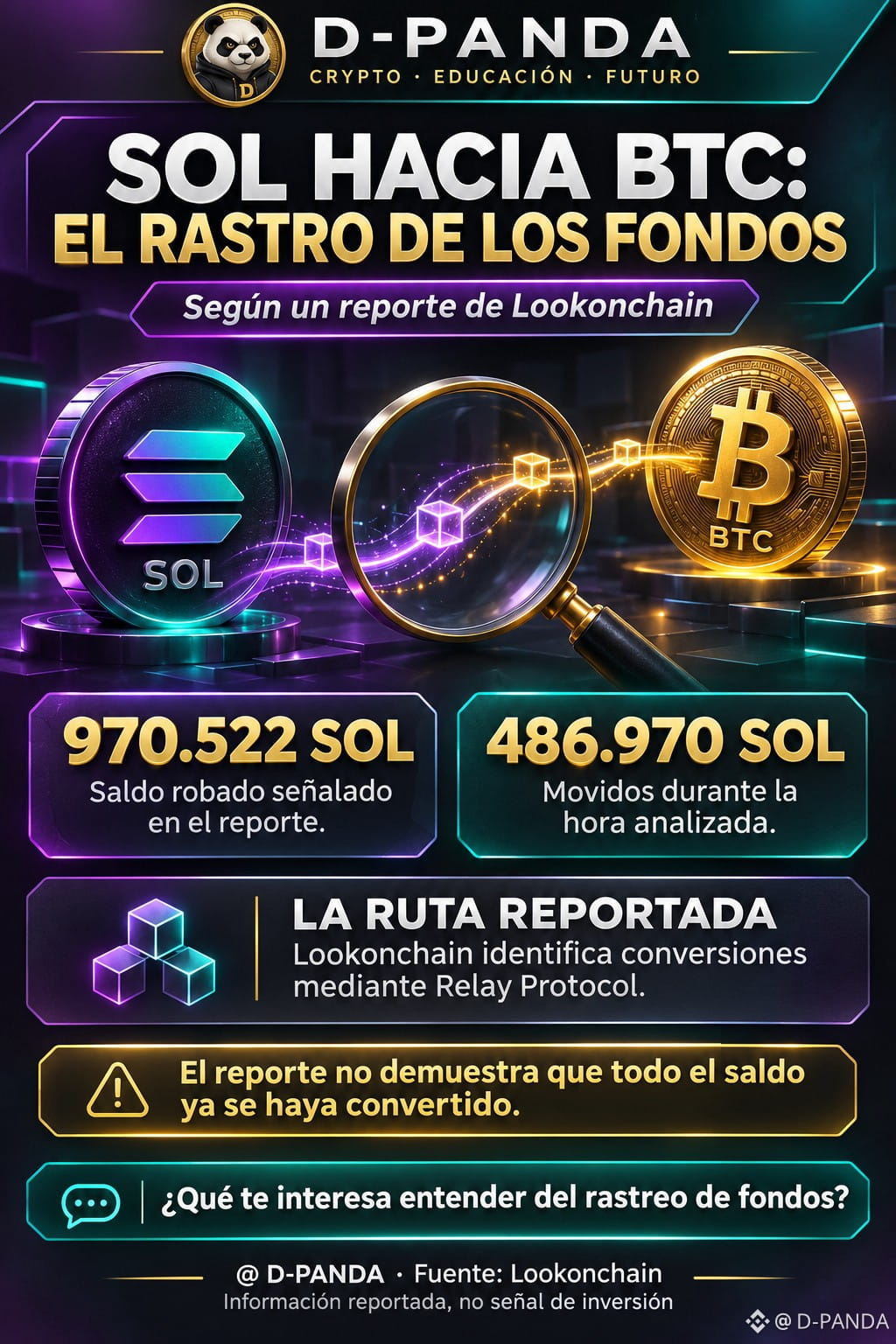
🐼 SOL to BTC: what do movements linked to the Binance attack show?
According to Lookonchain, the attacker was converting stolen SOL to Bitcoin through Relay Protocol.
The report gives two different figures:
🔹 970.522 SOL: the identified stolen balance, valued at approximately US$95.9 million at the time.
🔹 486.970 SOL: the amount moved during the hour analyzed, equivalent to about US$46.4 million at the time.
These are stages of the same tracking process, not amounts we should add together.
It is also worth distinguishing between moving funds and identifying a completed conversion: the report does not prove that the entire balance has already ended up in BTC.
Does this foreshadow a rise in Bitcoin or a drop in Solana? These movements alone do not allow us to draw that conclusion.
The news is about tracking stolen funds. It is not a Binance purchase or an investment signal.
What would you like to understand better: how these wallets are identified or how movements between networks are tracked?
Source: Lookonchain.
$SOL $BTC #SeguridadCripto #Binance #DPANDA
131
·
--
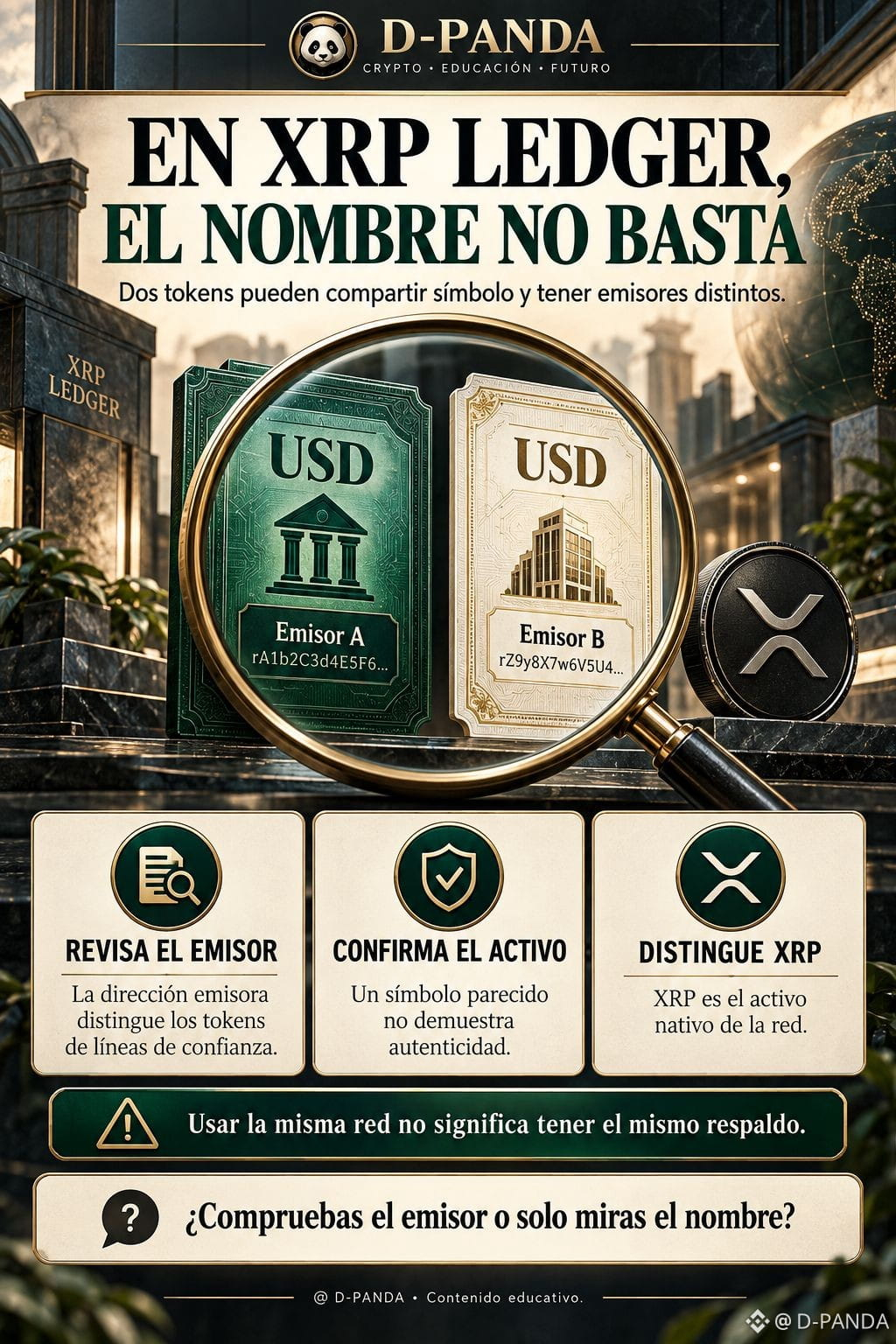
🐼 You see a token called “USD” in a wallet. Is that enough to know what you’re receiving?
On the XRP Ledger, two trust line tokens can share the same currency code and have different issuers.
Example: “USD” from issuer A and “USD” from issuer B are distinct assets. The name alone doesn’t prove they have the same backing or terms.
To identify them, check the currency code and issuer address, and compare them with the project’s official information.
There’s also an important distinction: $XRP is the network’s native asset. Tokens issued by third parties on the XRP Ledger don’t become XRP just by using that blockchain.
A familiar name or similar-looking logo may catch your eye. Identifying the asset requires an additional check.
Do you check the issuer before accepting a token, or do you only look at its name?
$XRP #CryptoSecurity #DPANDA
300
·
--
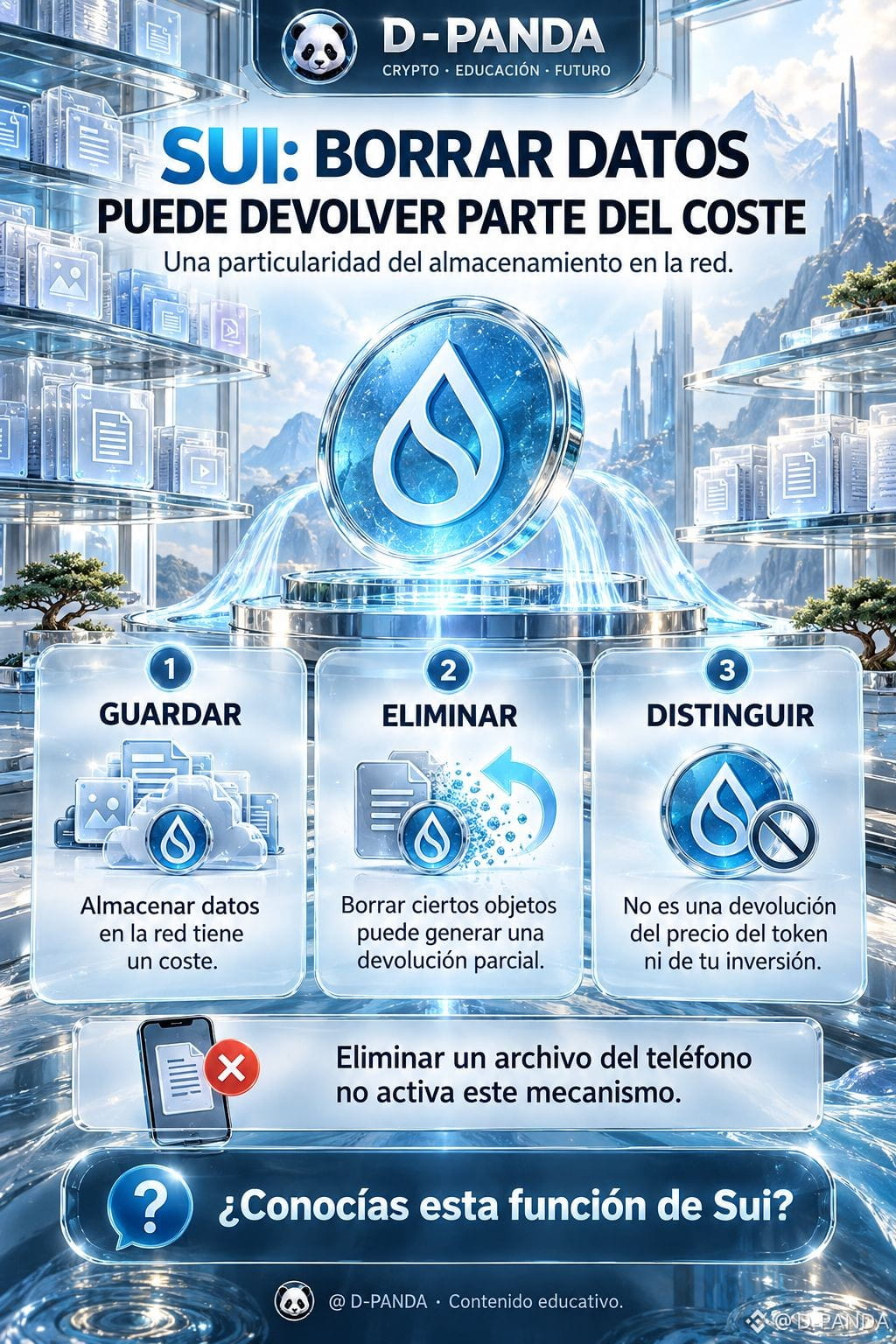
🐼 Can a blockchain refund part of what you paid to store data?
On Sui, there’s a mechanism called a “storage rebate”: when certain objects stored on the network are deleted, part of the associated storage cost may be refunded.
The idea is simple: keeping data takes up resources. If it’s no longer needed and is deleted through a valid operation, part of that cost may be released.
Keep in mind the difference: deleting a photo from your phone or removing a token from your wallet screen won’t trigger this refund.
It also doesn’t mean you’ll get back the money you paid to buy a token or an NFT. This is a storage mechanism, not a guarantee about your investment.
If you’re learning about $SUI, this detail helps explain how its design encourages more efficient use of the network.
Did you know about this feature?
#EducacionCripto #DPANDA $SUI
🐼 Can a blockchain refund part of what you paid to store data?
On Sui, there’s a mechanism called a “storage rebate”: when certain objects stored on the network are deleted, part of the associated storage cost may be refunded.
The idea is simple: keeping data takes up resources. If it’s no longer needed and is deleted through a valid operation, part of that cost may be released.
Keep in mind the difference: deleting a photo from your phone or removing a token from your wallet screen won’t trigger this refund.
It also doesn’t mean you’ll get back the money you paid to buy a token or an NFT. This is a storage mechanism, not a guarantee about your investment.
If you’re learning about $SUI , this detail helps explain how its design encourages more efficient use of the network.
Did you know about this feature?
#EducacionCripto #DPANDA $SUI
351
·
--
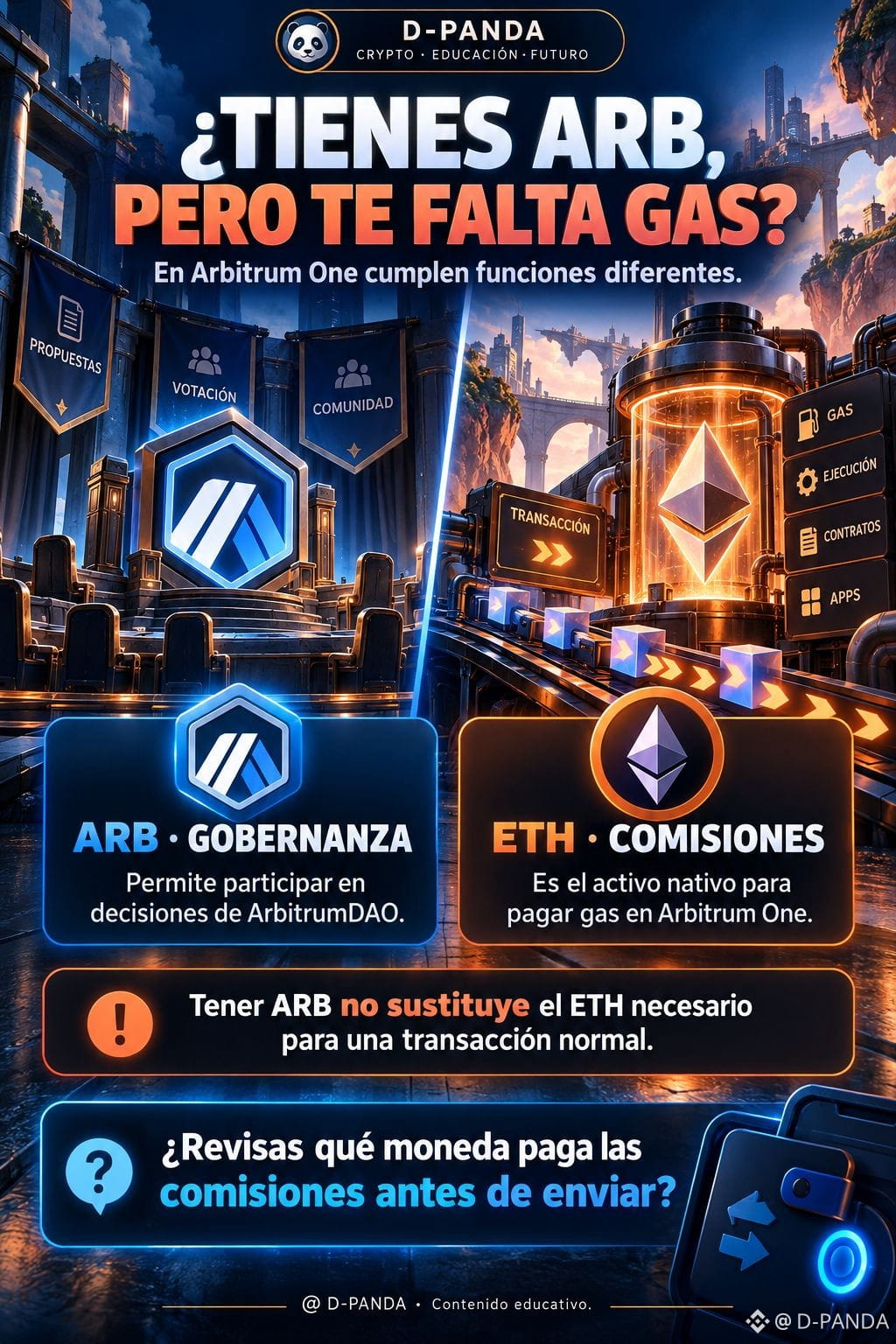
You have ARB in your wallet, try to send it, and see “insufficient balance for gas.” How can that happen if you have coins?
Because on Arbitrum One, they serve different purposes:
🔹 ARB lets you participate in ArbitrumDAO governance: proposals and decisions about the ecosystem.
🔹 ETH is the asset used to pay fees for regular network transactions.
That’s why having $ARB does not replace the ETH needed to execute a transaction.
Also, that ETH must be available on the correct network. Having it on Ethereum mainnet doesn’t automatically put it on Arbitrum One.
This applies to transactions made from your own wallet. Withdrawals from an exchange have their own conditions and fees.
Before sending, check three things: the asset, the network, and the currency needed to pay for gas.
Have you ever had tokens available but no balance to move them?
#Arbitrum $ARB #DPANDA
160
·
--
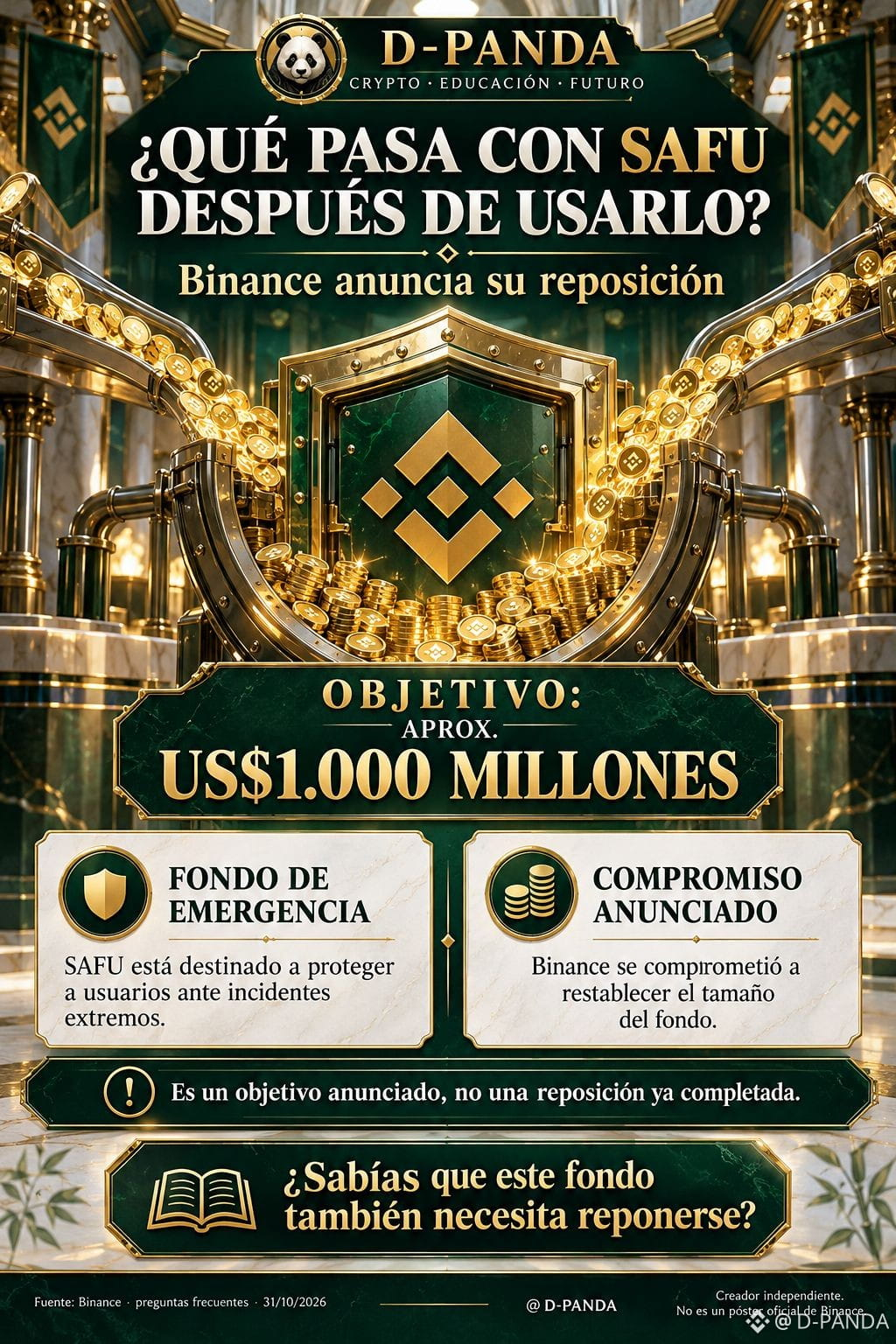
🐼 If you use your emergency fund, what do you do next? Replenish it.
That same question has an interesting answer in Binance’s October 31 update.
The platform committed to replenishing SAFU until it reaches an approximate size of US$1 billion again.
Why does it matter?
SAFU is an emergency reserve intended to protect users in extreme situations. Replenishing it aims to keep resources available to respond to future incidents.
It’s a commitment that goes beyond addressing the current problem: it also involves rebuilding that safety net.
Precision matters: Binance announced its replenishment goal; that doesn’t mean it’s already been completed or that the fund eliminates all risks.
Did you know that, in addition to covering the affected assets, Binance had announced it would replenish this fund?
#binance #SAFU #DPANDA $BNB
61
·
--
Bullish
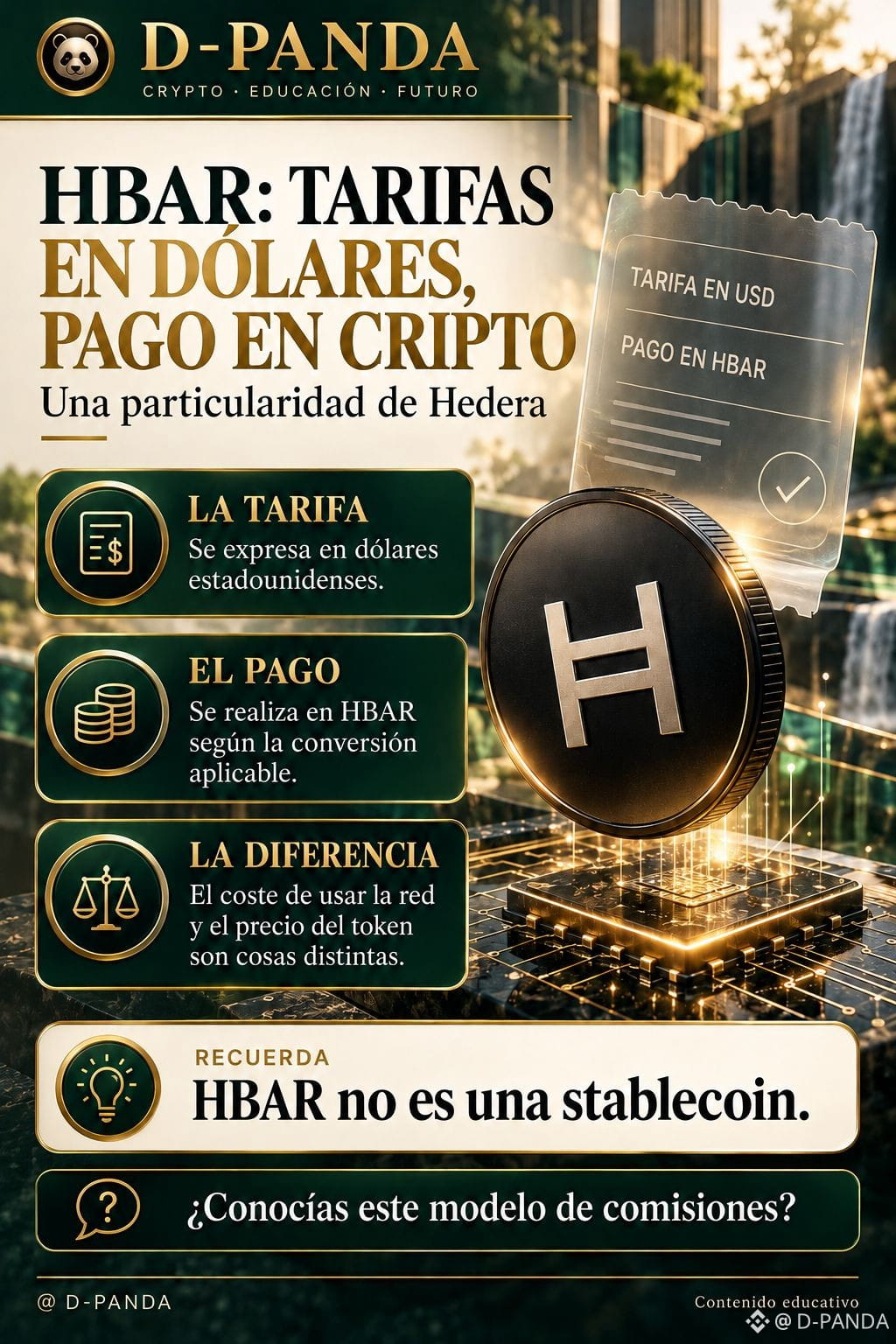
A network can calculate its fees in dollars and charge them in cryptocurrency. Hedera works this way.
Its fees are expressed in U.S. dollars, but paid in HBAR according to the applicable conversion rate.
What’s interesting about this? It helps people using the network estimate their costs in a familiar unit, even when the token price changes.
These are two different things: how much it costs to execute a transaction and how much HBAR is worth on the market.
This doesn’t make $HBAR a stablecoin or guarantee that its price will rise.
When researching a cryptocurrency, understanding what it’s used for and how transactions are charged tells you more than its price alone.
Did you already know about this model, or did you think all networks calculated their fees the same way?
#Hedera #CryptoEducation #DPANDA $HBAR
1
1.4k
·
--
Bullish
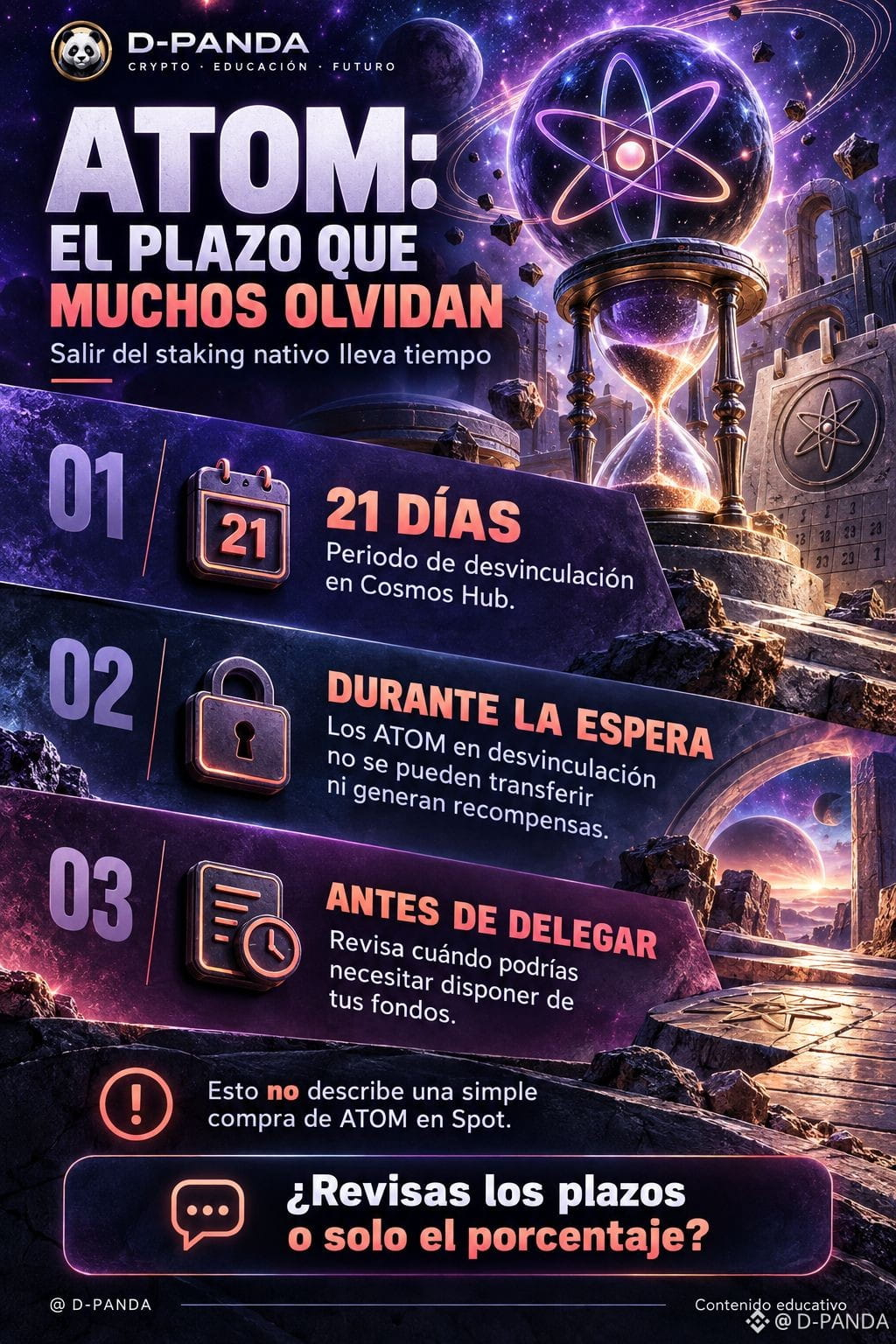
Before staking, there’s one question worth considering: when can I access my coins again?
With native Cosmos Hub staking, unbonding ATOM from a delegation involves a 21-day unbonding period.
During this waiting period, the ATOM being unbonded cannot be transferred and stops earning rewards.
A simple example: if you start unbonding today, that balance won’t be available to send tomorrow.
This applies to native staking. Buying $ATOM on Spot does not by itself trigger this waiting period.
It’s also worth reviewing the terms of the service you use and the validator risks.
Knowing the timeframe before delegating can help you avoid surprises when you need access to your funds.
Do you review the unbonding terms, or do you usually look at the percentage first?
#Cosmos #Staking #DPANDA $ATOM
241
·
--
Did you think staking always meant leaving your coins locked up?
Cardano has an interesting feature: when you natively delegate ADA from your own wallet, the coins remain under your control and you can move them.
Delegating lets you participate in network security through a pool without handing your ADA over to its operator.
It’s a good idea to review the pool’s fees and performance: rewards vary, and the price of ADA can also fall.
There’s an important difference to know: a product offered by an exchange may have its own terms. Native delegation and platform products don’t always work the same way.
If you’re researching $ADA, understanding this mechanism can help you learn more about the project.
When comparing staking options, what matters more to you: rewards or having access to your coins?
#Cardano #CryptoEducation #DPANDA $ADA
Did you think staking always meant leaving your coins locked up?
Cardano has an interesting feature: when you natively delegate ADA from your own wallet, the coins remain under your control and you can move them.
Delegating lets you participate in network security through a pool without handing your ADA over to its operator.
It’s a good idea to review the pool’s fees and performance: rewards vary, and the price of ADA can also fall.
There’s an important difference to know: a product offered by an exchange may have its own terms. Native delegation and platform products don’t always work the same way.
If you’re researching $ADA , understanding this mechanism can help you learn more about the project.
When comparing staking options, what matters more to you: rewards or having access to your coins?
#Cardano #CryptoEducation #DPANDA $ADA

4
1.1k
·
--
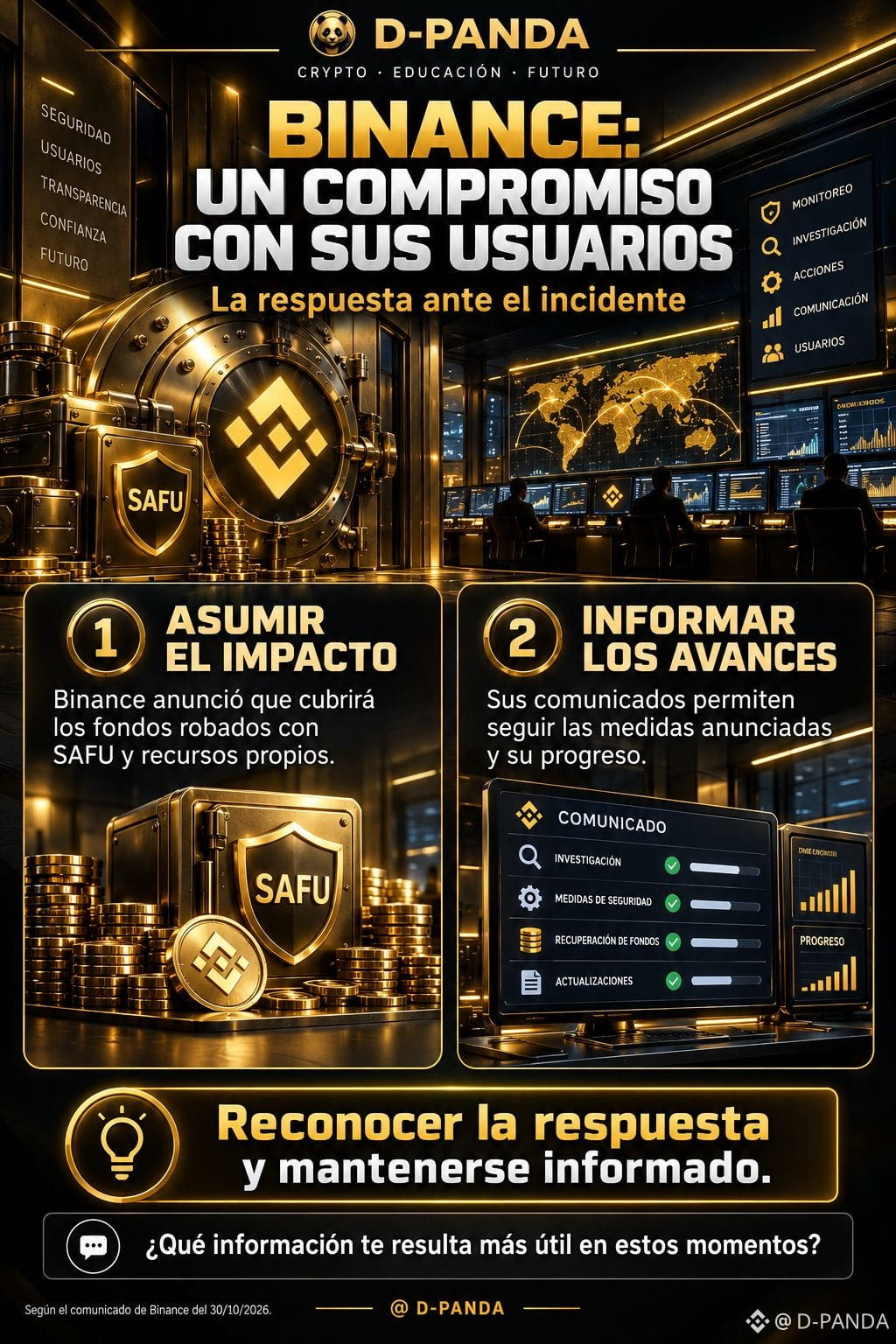
In difficult times, a company's response is especially valuable to its users.
In its October 30 announcement, Binance said it would cover the funds stolen during the incident using SAFU and its own resources.
That commitment deserves recognition: it addresses how to manage the impact and protect those who use the platform.
Its updates also make it possible to follow the announced measures and learn about the next steps. Staying informed through those channels helps people understand the process more calmly.
As a user, I appreciate that the actions are being communicated, and I’ll keep an eye on developments. Every commitment fulfilled helps strengthen trust.
What information is most useful to you right now: security, protection of funds, or how the services are operating?
#Binance #CryptoCommunity #DPANDA $BNB $BTC $USDT
155
·
--
Bullish
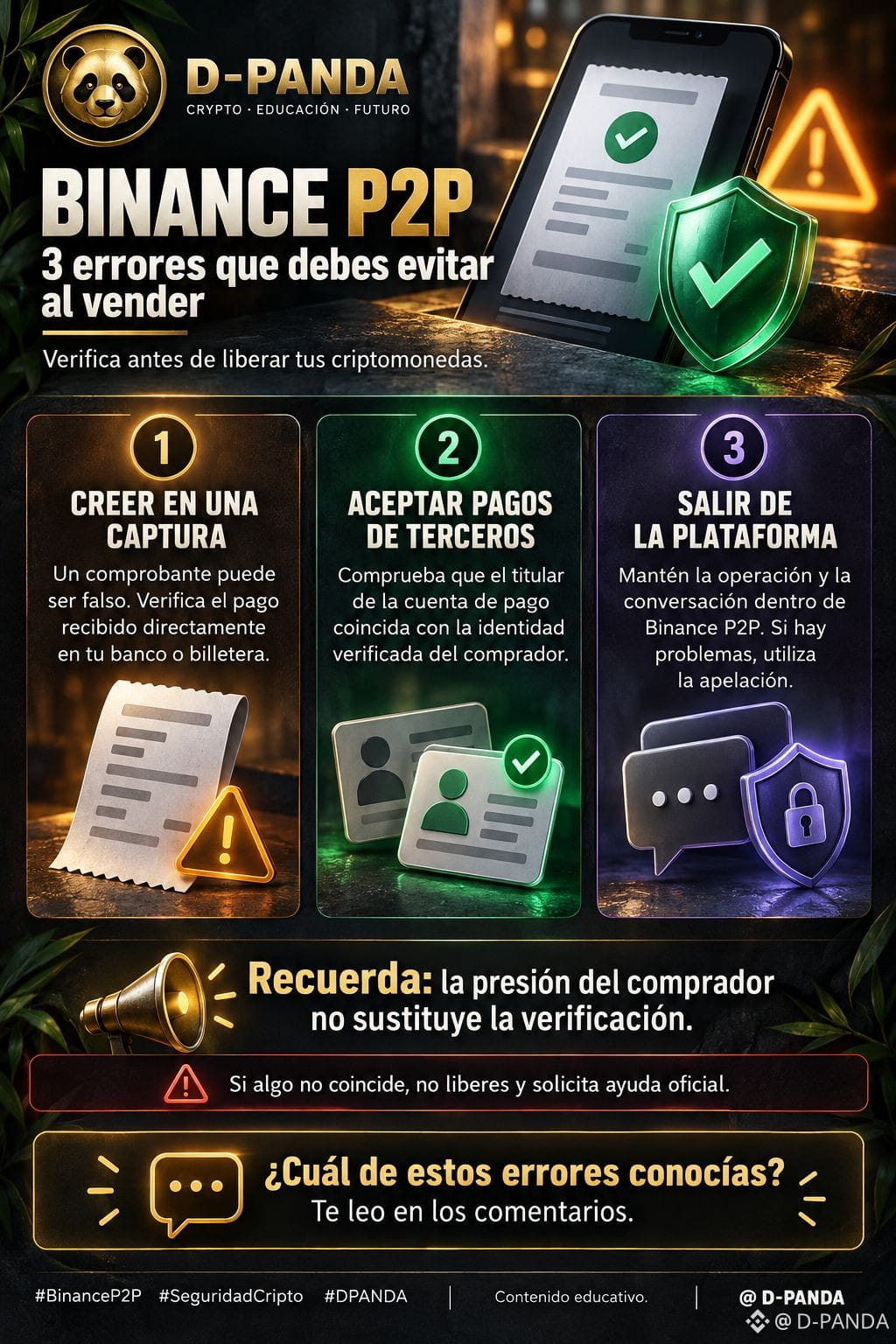
🔐 Binance P2P: 3 mistakes to avoid when selling cryptocurrency.
On P2P, you buy or sell directly with other users. That’s why there are checks you shouldn’t skip before releasing your crypto.
1️⃣ TRUSTING A SCREENSHOT
A screenshot of a transfer, an email, or a “payment sent” message doesn’t prove that you received the money.
Go directly to your bank or wallet and check that the funds have arrived and are available. If you can’t verify this, don’t release your crypto.
2️⃣ ACCEPTING THIRD-PARTY PAYMENTS
Make sure the account holder sending the payment matches the buyer’s verified identity.
If they tell you, “A friend will pay you,” don’t treat it as a minor detail. Third-party payments violate Binance P2P policies. If you’ve already received one, contact official support before continuing.
3️⃣ CONTINUING OFF THE PLATFORM
Keep the transaction and conversation on Binance P2P. Don’t switch to WhatsApp or Telegram just because someone promises better terms.
If there’s a problem, keep the evidence and use the order appeal process.
#
🐼 Example: the buyer sends a screenshot and pressures you to release your crypto, but the money doesn’t appear in your account. The right response is to verify and ask for help, not give in to the pressure.
These checks reduce risks, but don’t eliminate them completely.
$
💬 Which of these mistakes did you know about? Share tips without posting personal information.
#BinanceP2P #CryptoSecurity #DPANDA #BTC
142
·
--
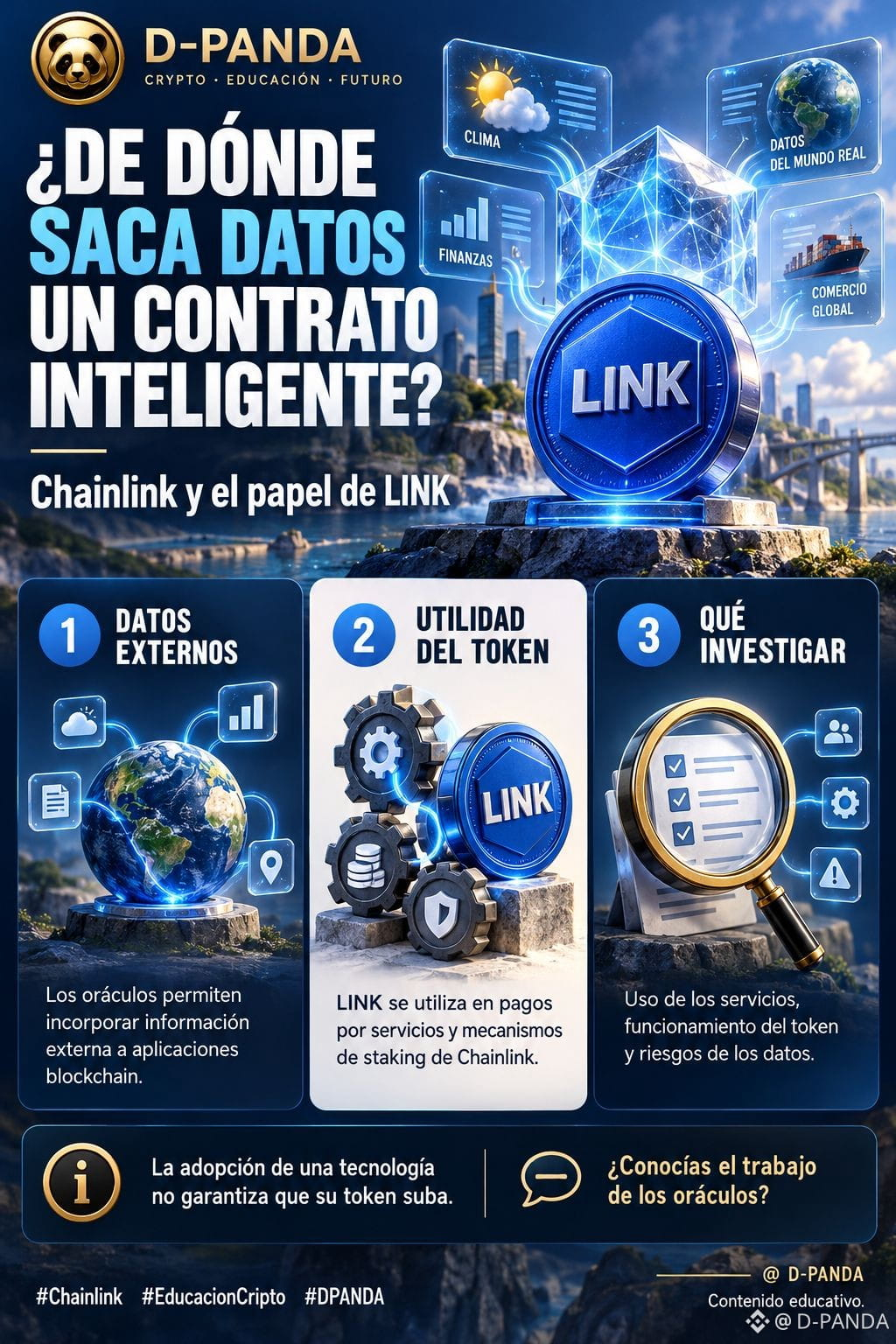
A smart contract can execute instructions, but how does it know what an asset outside its blockchain is worth?
That’s where oracles come in. Chainlink develops services that let blockchain applications incorporate external information.
Think of it this way: a lending protocol needs prices to assess collateral. If it receives incorrect or outdated data, its decisions can also go wrong. The quality of that information matters.
And what role does $LINK play? It’s used within the Chainlink economy for payments for services and staking mechanisms that support the security of certain services.
When researching the project, it’s worth looking beyond the announcements: which services are being used, how they work, and how they relate to demand for the token.
A technology having utility doesn’t guarantee that its price will rise.
You can look up LINK by its ticker and review its market before making a decision. Did you already know what oracles were used for?
#Chainlink #EducacionCripto #DPANDA $LINK
139
·
--
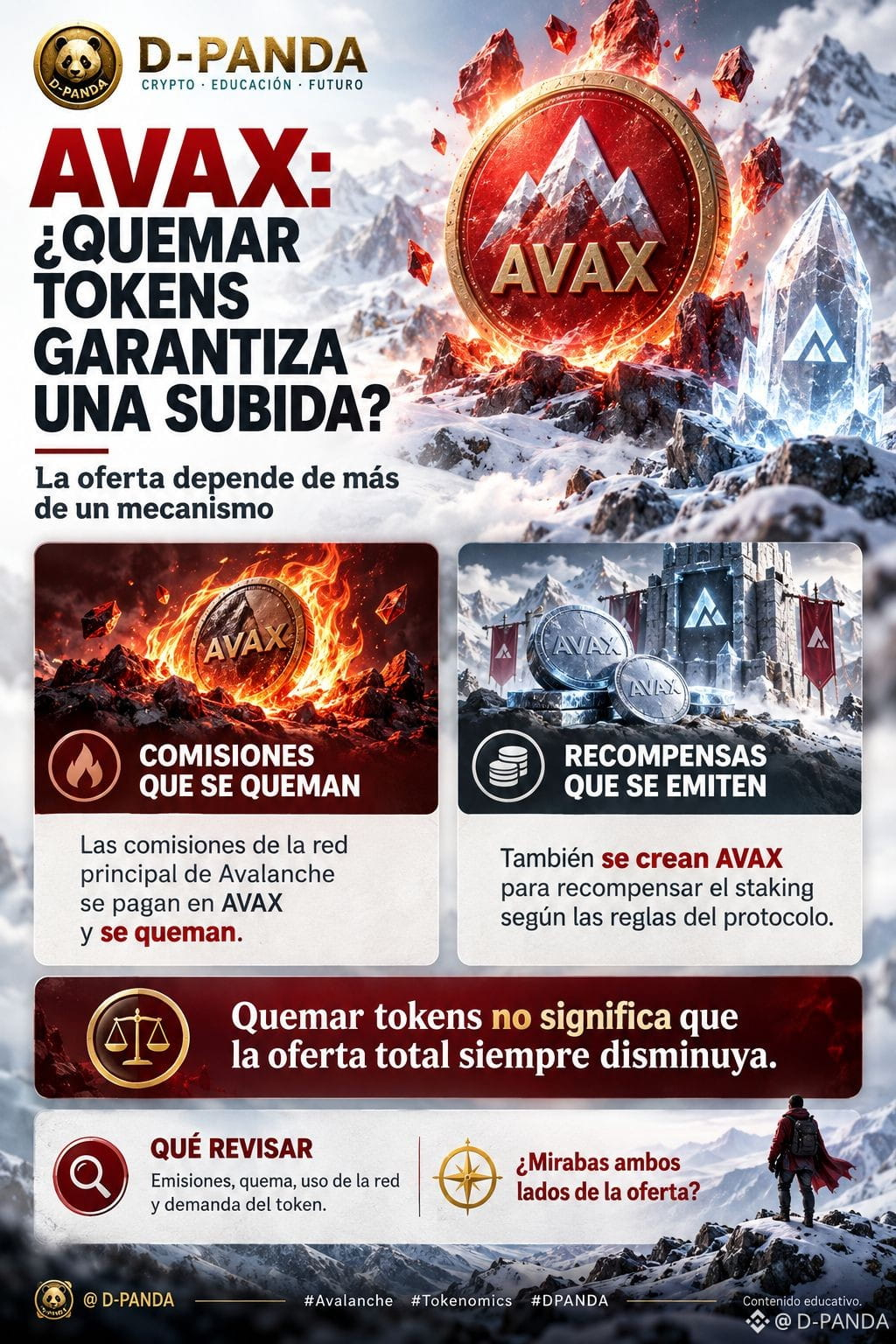
“This project burns tokens, so its price has to go up.” It sounds logical, but there’s a part of the story missing.
On Avalanche, mainnet fees are paid in $AVAX and burned. This removes tokens from the supply.
At the same time, the protocol issues staking rewards. So, to understand how the supply changes, you need to look at both what’s destroyed and what’s created.
Imagine a water tank: it’s not enough to look at how much flows out; you also need to know how much flows in.
With $AVAX , it’s worth looking into issuance, burned fees, and network usage. Even a reduction in supply doesn’t guarantee a price increase: demand matters too.
You can open its tag to check the market and compare these fundamentals with its valuation.
What do you check first: the burn or the issuance?
#Avalanche #Tokenomics #DPANDA $
367
·
--
Bullish
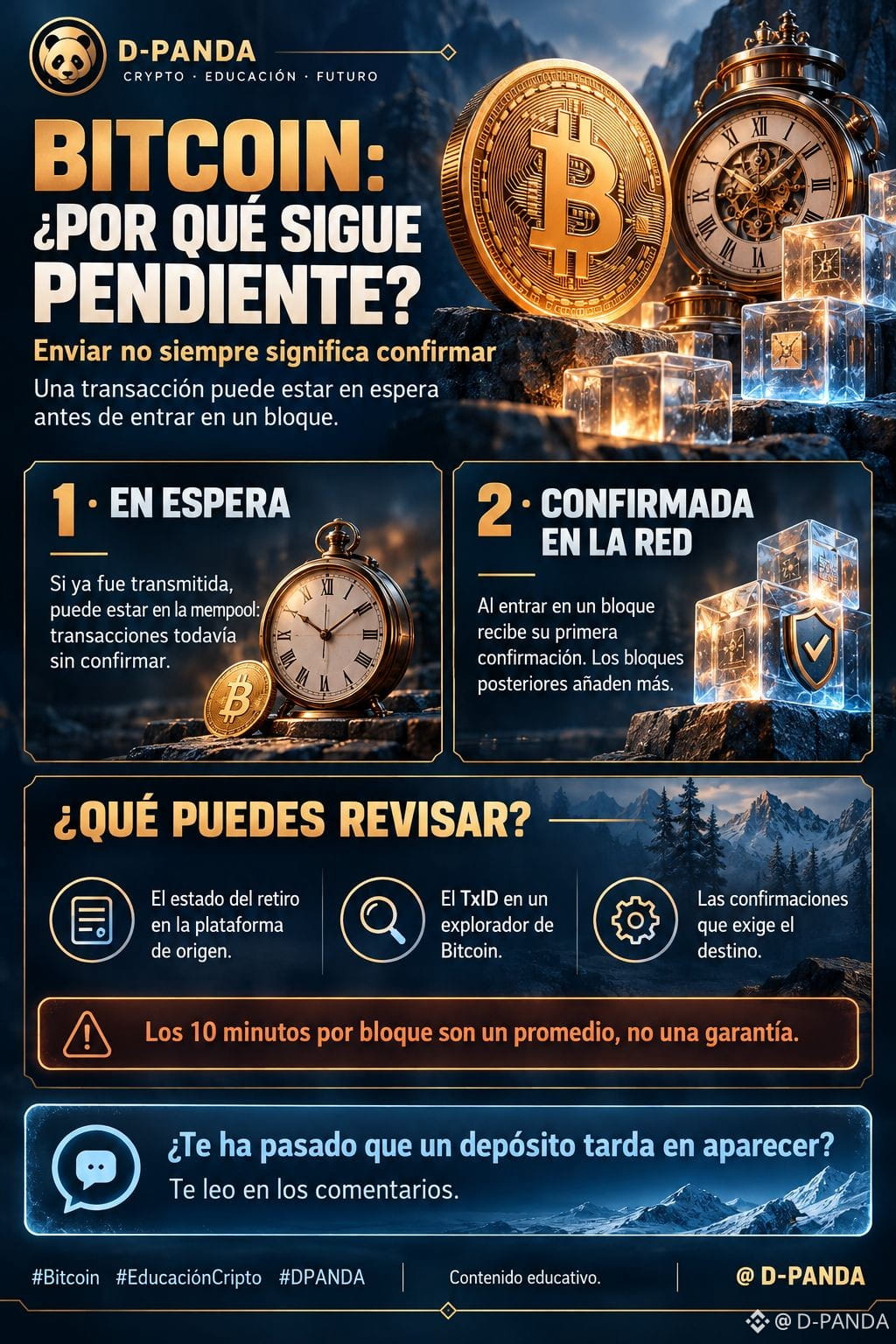
You sent Bitcoin, but it still hasn’t appeared at the destination. Does that mean it’s lost? Not necessarily.
With $BTC , there’s a difference between requesting a withdrawal, broadcasting the transaction to the network, and receiving confirmations.
If the platform is still processing the withdrawal, it may not have sent it to the blockchain yet.
Once broadcast, the transaction may remain pending in the mempool. When it’s included in a block, it gets its first confirmation; subsequent blocks add more.
Also, each receiving platform requires a certain number of confirmations before crediting or unlocking a deposit.
So before jumping to conclusions, check:
• The withdrawal status on the sending platform.
• The TxID in a Bitcoin explorer.
• The number of confirmations required by the destination.
One more thing: the famous “10 minutes for Bitcoin” is an average time between blocks, not a promise that your transaction will arrive within that time.
If it has already met the destination’s requirements and still hasn’t been credited, contact its official support team with the TxID.
Have you ever had a deposit take a while and not known where to check?
#Bitcoin #CryptoEducation #DPANDA $AAPLB $BTC
90
·
--
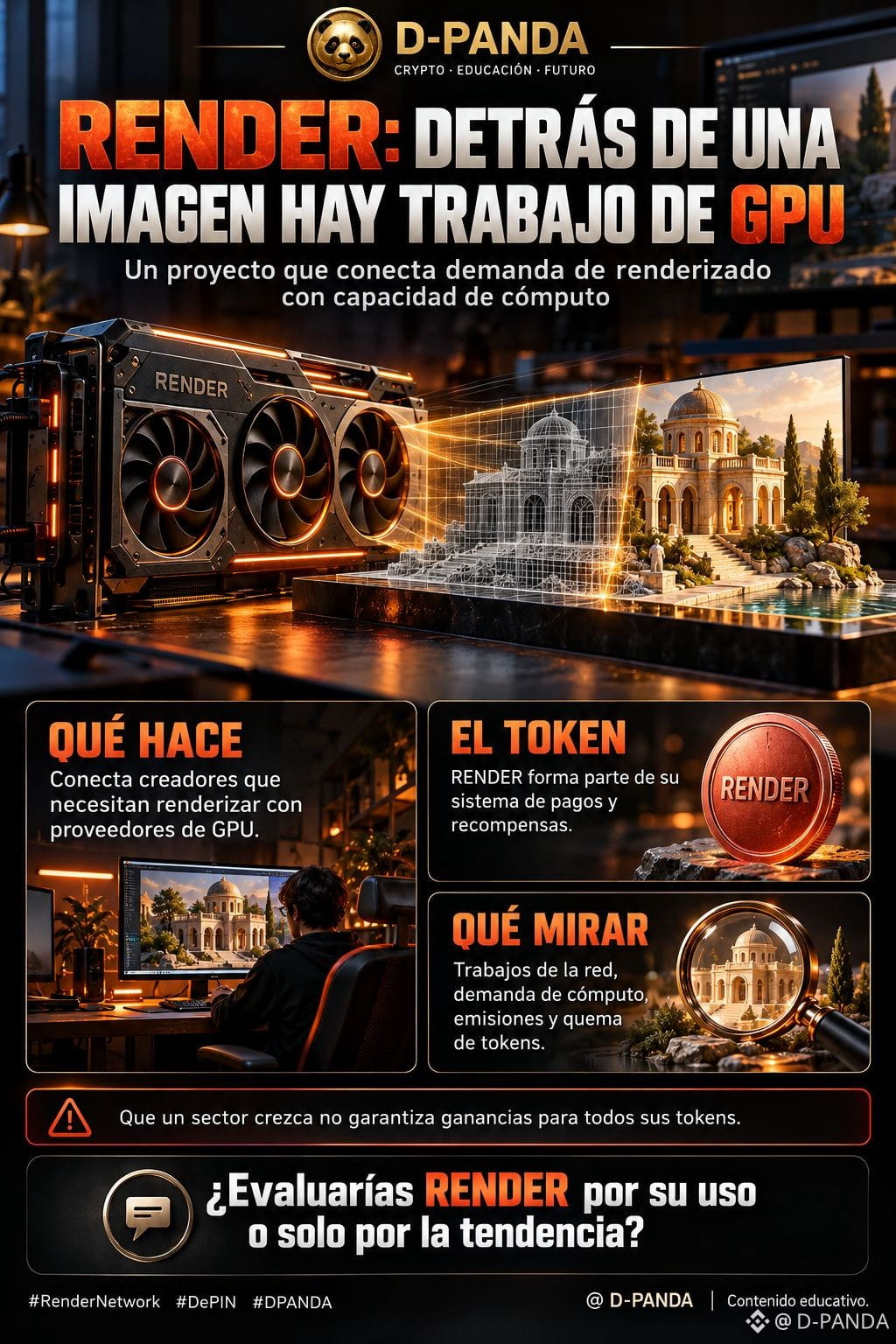
A 3D scene can look simple on screen and require a lot of GPU work to produce.
Render Network connects creators who need rendering capacity with GPU providers. Imagine a studio that needs to process an animation and is looking for extra capacity to finish it.
$RENDER participates in the economy of that network. Its model includes token burns linked to work performed and emissions intended to reward providers.
That raises an interesting question: how are completed jobs, rewards issued, and tokens burned related?
These are details worth investigating before settling for labels like “AI” or “DePIN.”
Buying RENDER also doesn’t mean owning a GPU or automatically earning rendering income. Its price can fall even as the tech sector grows.
You can open RENDER from its label to check the market. What would you be interested in looking at first: network usage or its token economy?
#RenderNetwork #DePIN #DPANDA $RENDER
138
·
--
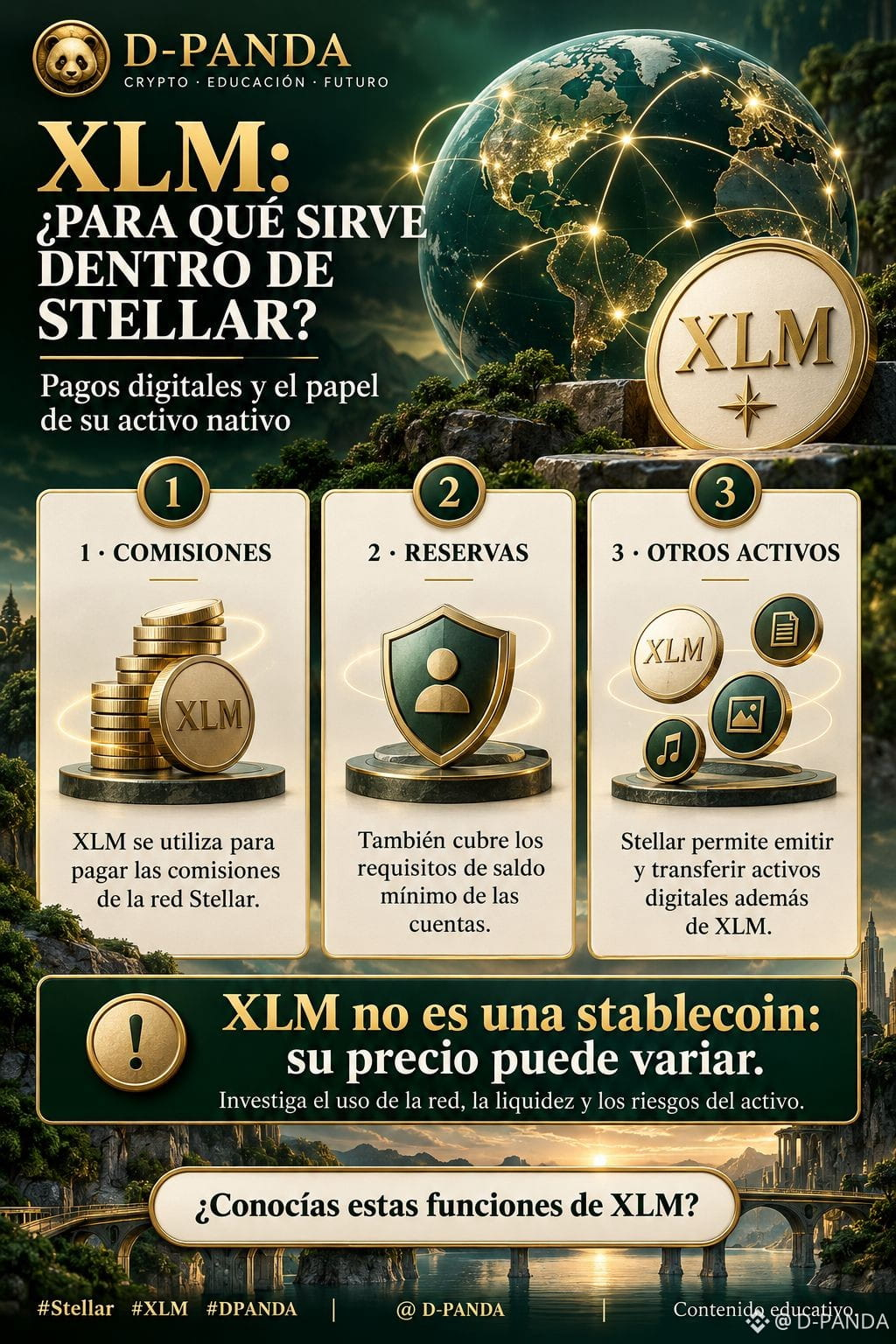
A network can move digital assets other than its own currency. Stellar is one example.
Within Stellar, $XLM has specific functions: paying fees and meeting accounts’ minimum balance requirements.
The network also allows other assets to be issued and transferred. So using an asset on Stellar does not mean that asset is XLM.
For example, an application can facilitate sending a token that represents dollars, while network fees are paid in XLM. These are different functions.
There is also an important distinction: XLM does not maintain a fixed price against the dollar. Its value can rise or fall.
To research it, look into which applications use Stellar, how its native asset works, and what liquidity the market has.
You can view XLM from its label and explore this data before deciding. A low price per unit, on its own, does not show that it is undervalued.
Did you know the difference between Stellar and XLM?
#Stellar $XLM #DPANDA
1
672
Log in to explore more content
Join global crypto users on Binance Square
⚡️ Get latest and useful information about crypto.
💬 Trusted by the world’s largest crypto exchange.
👍 Discover real insights from verified creators.
Email / Phone number
Trending Topics
1
#BTCReboundsAbove$60KAmidWhaleDipBuying
4,086 views
44 Discussing
2
#NvidiaLoses$2.7TrillionInMonthAndAHalf
42,665 views
202 Discussing
3
#GlobalStocksFaceLongestLosingStreakSince2023
390,844 views
2,564 Discussing
4
#BlackRockIBITPostsRecord$541MSingleDayOutflow
56,817 views
140 Discussing
5
#AnthropicPlungesTowardIPOPriceonDay2
206,743 views
1,657 Discussing
6
#TwentyOneCapitalAdds172.25BTC
99,558 views
1,049 Discussing
7
#HKBillWouldExcludeTokenizedDepositsFromVirtualAssets
14,345 views
65 Discussing
8
#HKBillProposesHK$100KFineForUnauthorizedCryptoTitles
3,534 views
30 Discussing
9
#BitMineFaces$10.1BUnrealizedETHLoss
6,889 views
32 Discussing
10
#StrategyReports$35BNetReserves
3,665 views
23 Discussing