
#ens
ens
1.1M views
3,688 Discussing
Hot
Latest

·
--
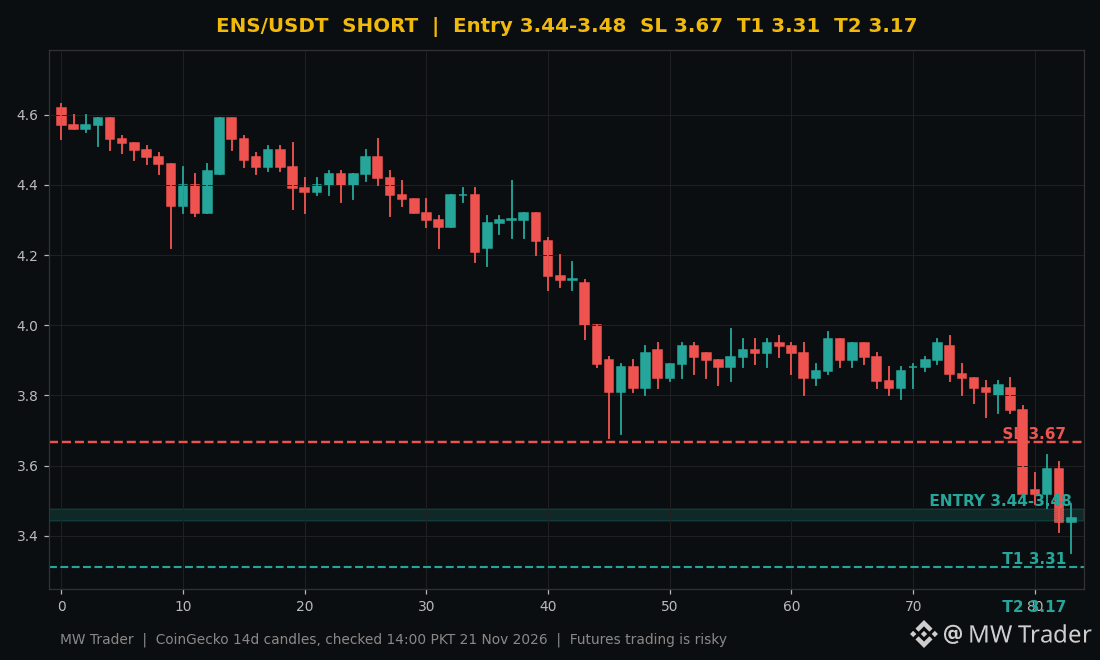
$ENS #ENS 📉 Ethereum Name Service is down 10.33 percent in 24 hours, and it just broke under $3.50.
Direction: SHORT 🔴
Entry zone: 3.44 to 3.48
Stop loss: 3.67
Target 1: 3.31
Target 2: 3.17
Ethereum Name Service is trading near $3.45 after losing 10.33 percent in 24 hours, according to CoinGecko, with a 24 hour range of $3.35 to $3.82. It fell about 4 percent in the last two hours alone, which tells me sellers are still in control and no dip buyer has stepped in with size. My plan is short the bounce into the $3.44 to $3.48 zone, stop above $3.67, first target $3.31, second target $3.17. 📉
Would you short ENS under $3.50, or wait for a bounce back toward $3.67 first? 🤔
Futures trading is risky, trade small, manage risk, do your own research. ⚠️
Follow for more trades.
#EthereumNameService #Crypto #FuturesTrading #TradingSignals
4


·
--
If you want to register an .eth name, why don’t you need to buy #ENS first?
This is a more worthwhile question to ask when researching ENS than how much more domain names have sold for.
ENS initially addressed the problem of wallet addresses being too hard to remember: it turned a long string of characters into an easy-to-recognize name, then used a resolver to point it to an address and other records. Having to copy an address one less time is a practical use. But a name can also have incorrect records set or be spoofed; being readable doesn’t automatically make it trustworthy.
The ENS token later took on a governance role, allowing holders to participate in protocol and treasury decisions through delegation, voting, and other means. Owning an .eth name and holding ENS tokens are two different kinds of rights.
The payment page makes this distinction clear. The current official help page says that registration and renewal can be paid for with USDC on supported networks. The ENS App also accepts ETH on Ethereum and converts it. Users can get what they came for without going through the ENS token.
Removing one hurdle to buying tokens makes the product easier to use, but holders still need to ask: how can sustained demand for governance rights be created?
The official website now displays more than 35 million registered names, but that large number can’t be directly described as 35 million paying users, much less as the number of active wallets. One person can own multiple names, and the figures for subnames and paid .eth registrations should also be kept separate. Comparable data on active usage and renewal rates was not available for this article.
{future}(ENSUSDT)
Community building is about more than profile pictures. The public governance process lists channels for discussion, delegation, working groups, and proposal grants, making it possible to examine how funds are used for development and public goods. However, registration revenue going to the DAO doesn’t mean ordinary token holders automatically receive dividends.
On the market, CoinGecko shows a price of about $3.59, down 5.7% over 24 hours, with roughly $10.41 million in trading volume. A product’s usability and selling pressure on its token can lead the market to different conclusions.
All! What’s more worth evaluating with ENSv2 is whether user migration, renewals, and app integrations are smooth. If payments become more convenient and real-world usage continues to grow, the product is making progress. Whether the token benefits as well depends on how governance participation and treasury rules change. A record-high number of registered names alone isn’t enough to conclude that this will happen.
If you want to register an .eth name, why don’t you need to buy #ENS first?
This is a more worthwhile question to ask when researching ENS than how much more domain names have sold for.
ENS initially addressed the problem of wallet addresses being too hard to remember: it turned a long string of characters into an easy-to-recognize name, then used a resolver to point it to an address and other records. Having to copy an address one less time is a practical use. But a name can also have incorrect records set or be spoofed; being readable doesn’t automatically make it trustworthy.
The ENS token later took on a governance role, allowing holders to participate in protocol and treasury decisions through delegation, voting, and other means. Owning an .eth name and holding ENS tokens are two different kinds of rights.
The payment page makes this distinction clear. The current official help page says that registration and renewal can be paid for with USDC on supported networks. The ENS App also accepts ETH on Ethereum and converts it. Users can get what they came for without going through the ENS token.
Removing one hurdle to buying tokens makes the product easier to use, but holders still need to ask: how can sustained demand for governance rights be created?
The official website now displays more than 35 million registered names, but that large number can’t be directly described as 35 million paying users, much less as the number of active wallets. One person can own multiple names, and the figures for subnames and paid .eth registrations should also be kept separate. Comparable data on active usage and renewal rates was not available for this article.
Community building is about more than profile pictures. The public governance process lists channels for discussion, delegation, working groups, and proposal grants, making it possible to examine how funds are used for development and public goods. However, registration revenue going to the DAO doesn’t mean ordinary token holders automatically receive dividends.
On the market, CoinGecko shows a price of about $3.59, down 5.7% over 24 hours, with roughly $10.41 million in trading volume. A product’s usability and selling pressure on its token can lead the market to different conclusions.
All! What’s more worth evaluating with ENSv2 is whether user migration, renewals, and app integrations are smooth. If payments become more convenient and real-world usage continues to grow, the product is making progress. Whether the token benefits as well depends on how governance participation and treasury rules change. A record-high number of registered names alone isn’t enough to conclude that this will happen.
283
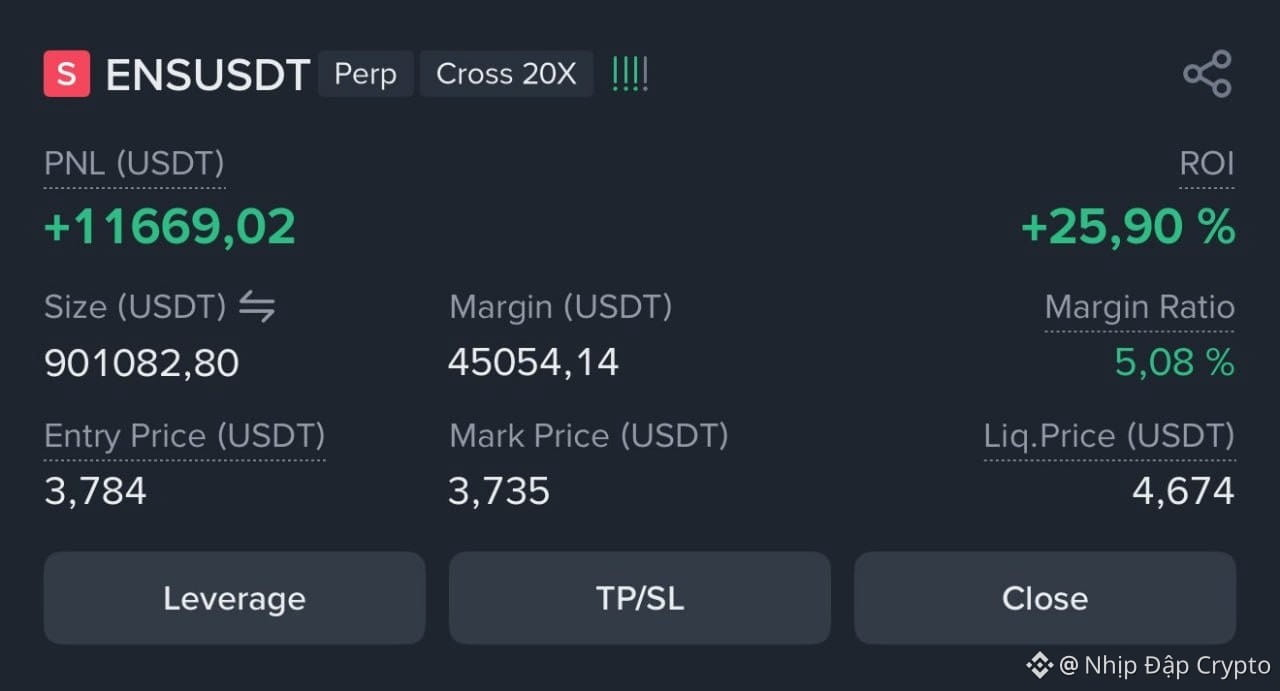
Just opened the chart and $ENS has already hit the first target, everyone. ✅
Stick to the plan: at this level, I’m taking some profits off the table.
With the money already pocketed, I can stay relaxed whether the price keeps moving or reverses—there’s no need to rush.
Tap $ENS to check the chart and see how the price is reacting right now. 👀
#ENS #Futures #CryptoVN
Stick to the plan: at this level, I’m taking some profits off the table.
With the money already pocketed, I can stay relaxed whether the price keeps moving or reverses—there’s no need to rush.
Tap $ENS to check the chart and see how the price is reacting right now. 👀
#ENS #Futures #CryptoVN
75
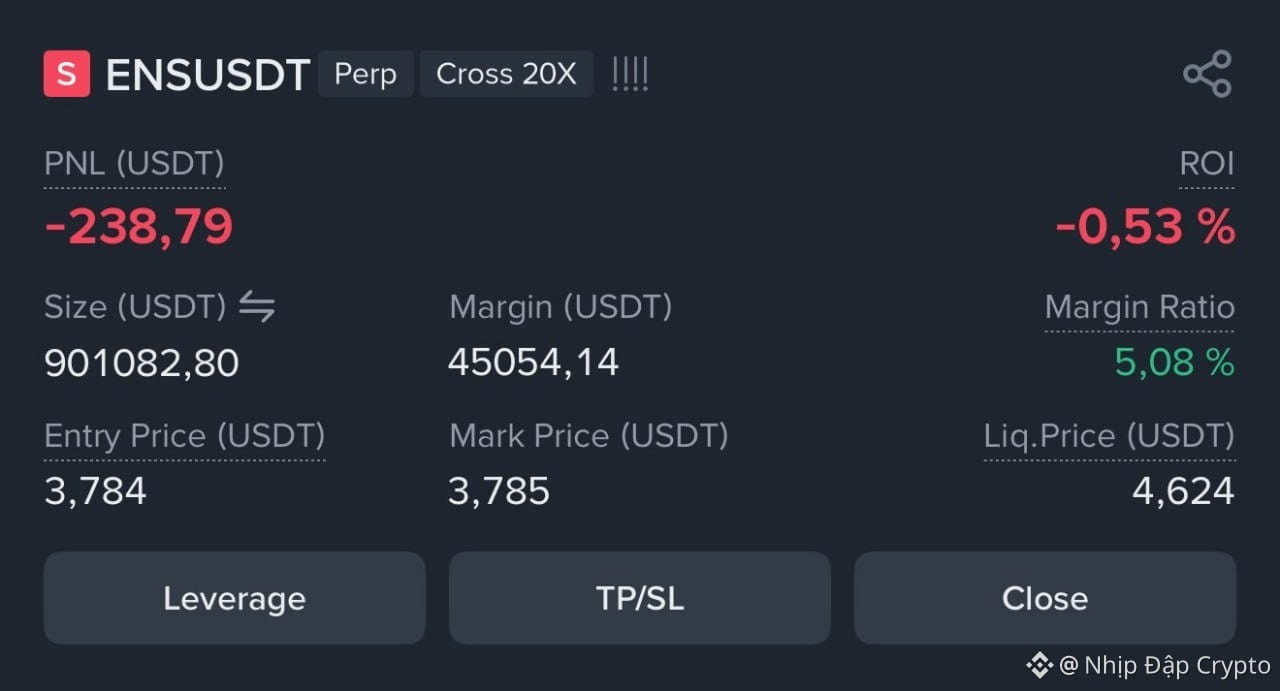
I just entered SHORT $ENS at 3.784. 📉
Targets, in order: 3.747, 3.676, 3.613, and further out, 3.388.
Stop-loss set at 3.974, equivalent to -5.02%.
RR to the final target is 2.08 — more than twice the risk taken.
After taking profit at the first target, 3.747, I’ll move the stop to the entry price. From then on, the trade can only win or break even; there’s no reason to let it turn into a loss.
I won’t move the 3.974 level on a whim. Stop-loss discipline isn’t for showing off; it’s so there’s still money left to trade another day.
Tap $ENS to check the chart and see how the price reacts. 👀
#ENS #Futures #CryptoVN
76

·
--
Web3 identity is changing the way we interact online. Social graphs, like those on Facebook, are being decentralized. Decentralized domain naming, such as Ethereum Name Service or ENS, allows users to claim a unique name. This name can be used to receive $ETH and other cryptocurrencies. For example, alice.eth can receive $ETH. ENS has over 2 million registered names. Decentralized identity solutions are growing in popularity, with some sitting at high adoption rates. $BTC and $ETH are leading the way in decentralized identity. Decentralized social graphs are the future of online interaction. DeFi applications are also using ENS to simplify user experience. Decentralized identity is at the forefront of innovation. #Web3Identity #DecentralizedDomainNaming #ENS
Web3 identity is changing the way we interact online. Social graphs, like those on Facebook, are being decentralized. Decentralized domain naming, such as Ethereum Name Service or ENS, allows users to claim a unique name. This name can be used to receive $ETH and other cryptocurrencies. For example, alice.eth can receive $ETH . ENS has over 2 million registered names. Decentralized identity solutions are growing in popularity, with some sitting at high adoption rates. $BTC and $ETH are leading the way in decentralized identity. Decentralized social graphs are the future of online interaction. DeFi applications are also using ENS to simplify user experience. Decentralized identity is at the forefront of innovation. #Web3Identity #DecentralizedDomainNaming #ENS
150

🚨🔥 Free trade — don’t miss it 🔥🚨
💎 #ENS / USDT
📊 Type: Buy - LONG 🟢
⚡ Leverage: 20X
🟢 Entry zone: 3.951
💰 Use 100% of the allocation assigned to this trade
🎯 *Targets:*
1️⃣ First target: 4.011
2️⃣ Second target: 4.071
3️⃣ Third target: 4.149
4️⃣ Fourth target: 4.240
🛑 Stop loss: 3.810
⚠️ Important notice:
Stick to capital management 💼
Don’t risk an amount you can’t afford to lose 🙏
🔥 Follow the trade and stick to the plan. God willing, we’ll reach the targets 🚀
$ENS #ENS #ENS.智能策略库🏆🏆 #ENS/USDT✅✅✅✅✅ #ENS.智能策略库🏆🏆 $ENS $AMZNB
152

·
--
Bullish
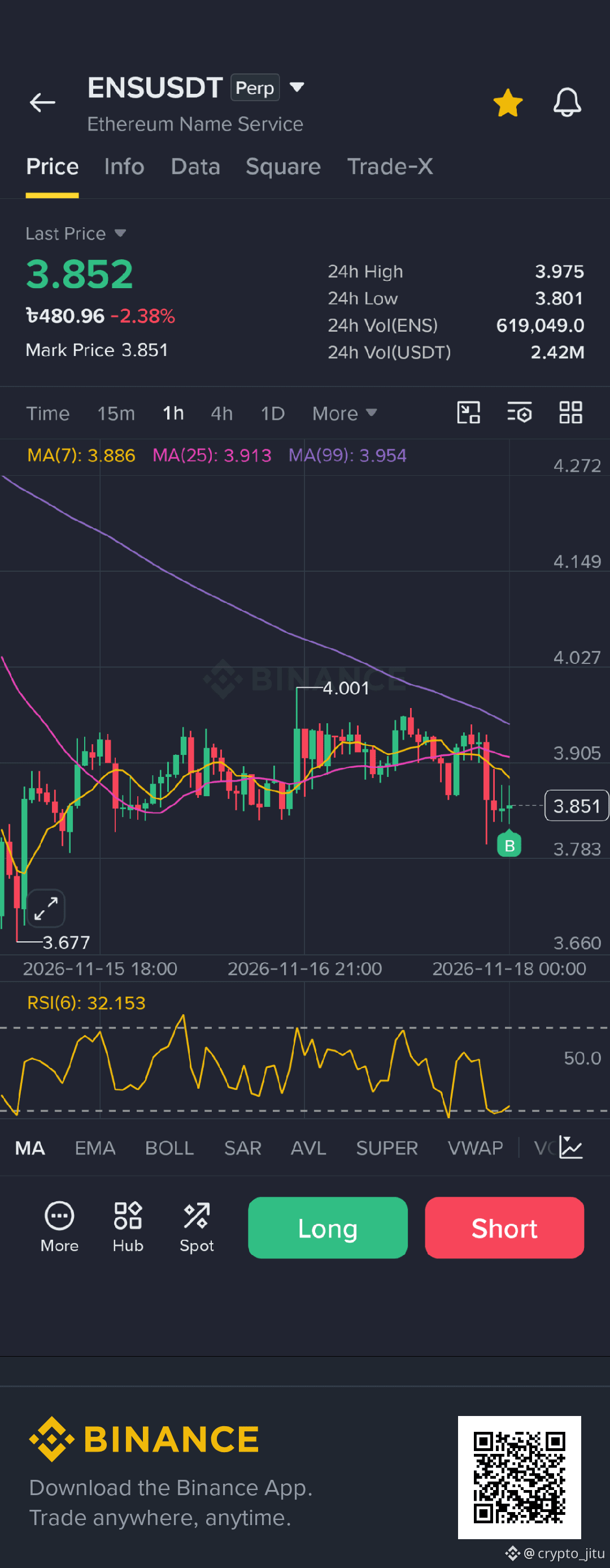
$ENS Buy Long
TP : 3.944, 4.020, 4.100, 🚀
Stop loss : 3.790
Leverage: 50x
#ENS #Crypto #TradingSignal #Long #Binance
Trade here $ENS 👇
{future}(ENSUSDT)
$ENS Buy Long
TP : 3.944, 4.020, 4.100, 🚀
Stop loss : 3.790
Leverage: 50x
#ENS #Crypto #TradingSignal #Long #Binance
Trade here $ENS 👇
TP : 3.944, 4.020, 4.100, 🚀
Stop loss : 3.790
Leverage: 50x
#ENS #Crypto #TradingSignal #Long #Binance
Trade here $ENS 👇
1
197

🚀 $ENS /USDT – BULLISH REVIVAL OR BEARISH TRAP? KEY BREAKOUT LEVEL AT $4.00!
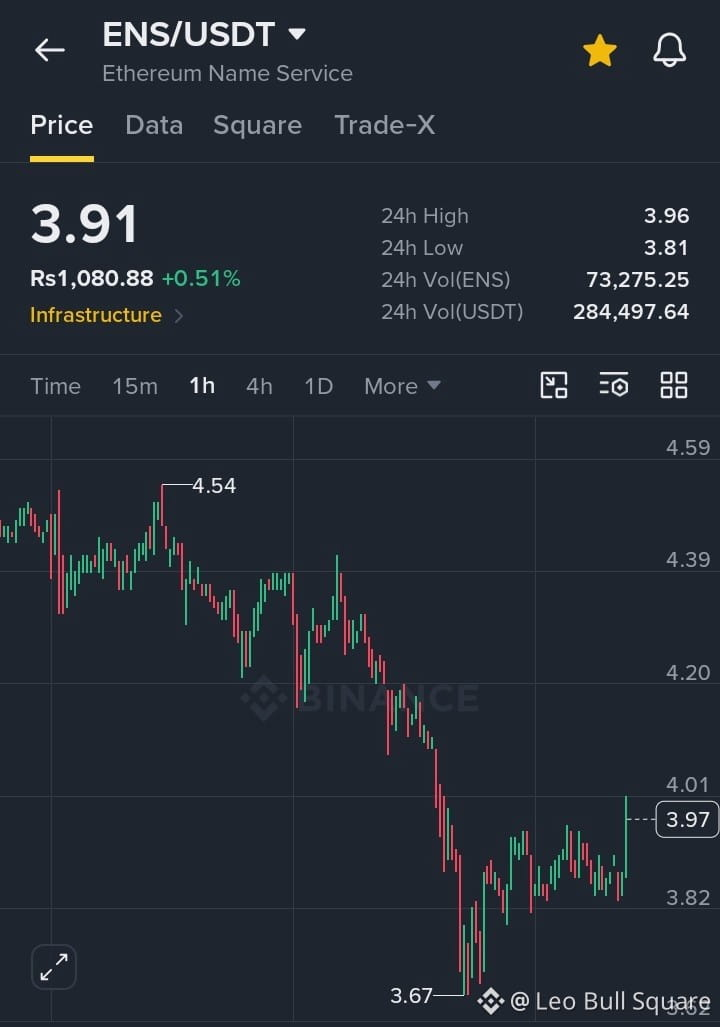
$ENS is trading at $3.91 (+0.51%), attempting a short-term recovery after a sharp bearish decline from $4.54 to $3.67. On the 1H timeframe, price is consolidating between $3.81–$3.96, with the latest bullish candle showing renewed buying interest. Immediate resistance stands at $3.96–$4.01; a strong volume-backed breakout above this zone could open the door toward $4.20 and $4.39. However, rejection near $4.00 could trigger another bearish move toward $3.82, with $3.67 as major downside support. Watch for a decisive breakout, volume expansion, and confirmation candles before entering. The next move could determine ENS's short-term direction! ⚡
#ENS
{spot}(ENSUSDT)
🚀 $ENS /USDT – BULLISH REVIVAL OR BEARISH TRAP? KEY BREAKOUT LEVEL AT $4.00!
$ENS is trading at $3.91 (+0.51%), attempting a short-term recovery after a sharp bearish decline from $4.54 to $3.67. On the 1H timeframe, price is consolidating between $3.81–$3.96, with the latest bullish candle showing renewed buying interest. Immediate resistance stands at $3.96–$4.01; a strong volume-backed breakout above this zone could open the door toward $4.20 and $4.39. However, rejection near $4.00 could trigger another bearish move toward $3.82, with $3.67 as major downside support. Watch for a decisive breakout, volume expansion, and confirmation candles before entering. The next move could determine ENS's short-term direction! ⚡
#ENS

follow for more
From Leo Bull Square
KMD7575:
Gold
5
12
98

·
--
Latest update: Author: Deep Tide TechFlow. On November 17, according to a disclosure on the official ENS network, the Ethereum Name Service DAO officially opened on-chain voting on Social Proposal No. 7.5, which proposes restructuring the governance authority over the core treasury document, the Investment Policy Statement (IPS).
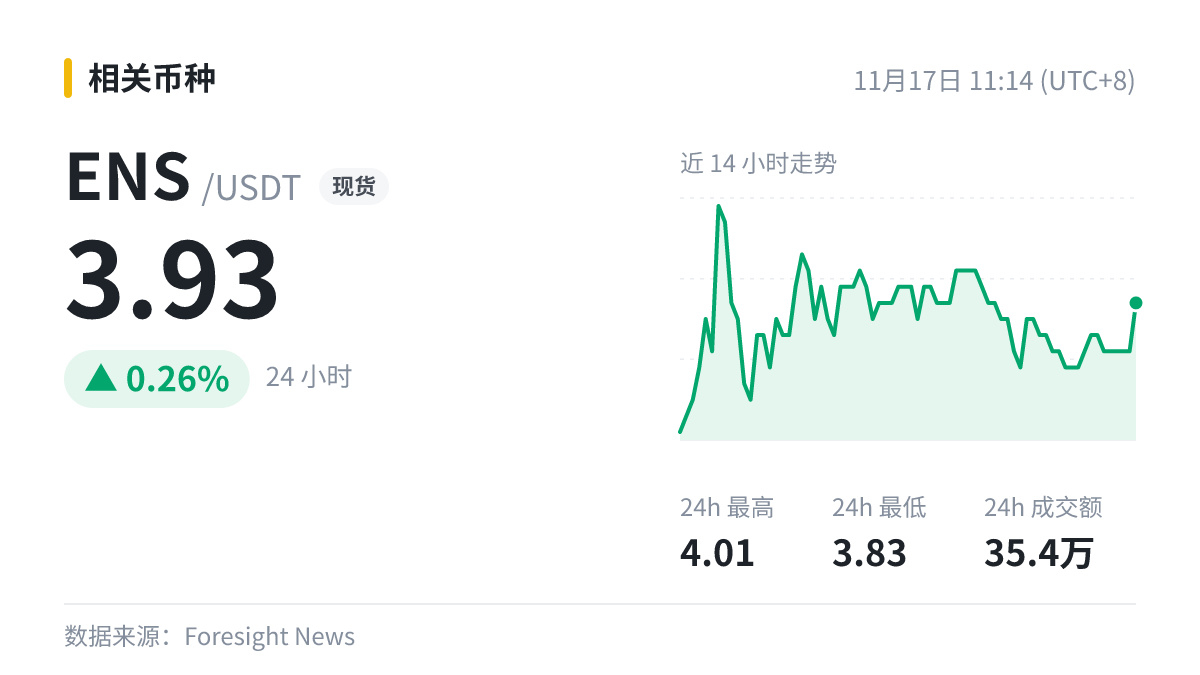
Overall sentiment is neutral. $ENS is currently at 3.93.
The more a story floods your feed, the more you need to watch the top-tier capital. Which side are you on?
#ENS
Overall sentiment is neutral. $ENS is currently at 3.93.
The more a story floods your feed, the more you need to watch the top-tier capital. Which side are you on?
#ENS
5

·
--
A big-money perspective: “ENS DAO plans to transfer treasury management authority to the Foundation Board, while the community retains final veto power.”
This is routine news, with limited impact on market movements.
$ENS is worth keeping an eye on. What’s your intuition?
#ENS
The data comes from public information; please verify it yourself.
This is routine news, with limited impact on market movements.
$ENS is worth keeping an eye on. What’s your intuition?
#ENS
The data comes from public information; please verify it yourself.
7

·
--
Today's quick update: ENS DAO plans to delegate treasury investment decisions to the foundation's board, so future changes to asset allocation won't require a vote each time.
Both bulls and bears are pondering this.
I'm always in the front row when it comes to following the news, but always the last to place an order. I just can't kick this habit.
$ENS (24h +1.02%)
#ENS
Just one person's opinion—take it with a grain of salt. This is not a recommendation.
Both bulls and bears are pondering this.
I'm always in the front row when it comes to following the news, but always the last to place an order. I just can't kick this habit.
$ENS (24h +1.02%)
#ENS
Just one person's opinion—take it with a grain of salt. This is not a recommendation.
5

ENS DAO is voting on a proposal that almost nobody is talking about, but for ENS holders it matters more than most good or bad news: from now on, you basically won’t get to vote on how the treasury is invested.
Proposal [7.5] IPS Amendment No. 2 is up for a Snapshot vote from 11/16 18:30 to 11/21 18:30 (UTC). The gist is simple: the Investment Policy Statement (IPS) can be amended with approval from 4 of the 5 ENS Foundation board members, after 7 days of public notice on the forum, with disclosure within 14 days of the change. Asset allocation, strategy, fee terms with the asset manager, and whether to replace the asset manager will all be up to the board. The DAO will retain control only over the minimum operating reserve, this amendment rule itself, and the ability to submit a Social proposal to overturn it.
To be fair, the real transfer of power happened with the “Next Era” proposal on August 11. It was executed onchain, and the treasury Safe has long been under the Foundation’s timelock. This amendment is just paperwork. Having to run a Snapshot vote for every portfolio adjustment really is stupid.
But there are a few things worth keeping an eye on.
How much money is involved? The asset manager kpk’s own monthly report says the treasury had $90.71 million in AUM at the end of October, 45.5% of it in ETH. ENS’s market cap is currently around $167 million (CoinGecko, around 11:45 UTC+8). A pool worth nearly half the market cap is shifting from token-holder votes to the hands of five people. ENS itself doesn’t distribute treasury funds, so governance rights are one of the few “benefits” it offers—and this makes them weaker still.
Who’s backing it? The first person to explicitly support it on the forum was kpk—the very party that will negotiate fees and terms with the board going forward, without needing the DAO’s approval. In October, it moved about $6.6 million from Aave, Compound, and other platforms into a set of higher-yield products, including its own KPK USDC Yield V2 vault, where the treasury has $8.85 million. The yield went from about 4.5% to about 6%. The move itself may be perfectly reasonable, but “using your own product while helping set the rules that govern you” is a structure that deserves scrutiny. I couldn’t find the fees this vault charges the treasury specified in the monthly report.
What’s on paper and what happens onchain aren’t the same thing, either. The 4/5 threshold is in the board charter; onchain execution relies on a 3/5 multisig and a 9-day timelock, during which the security council can cancel it. That’s the Foundation’s own explanation on the forum. In plain English, 4/5 depends on self-restraint; the contracts only require 3/5.
Voting status: As of around 11:45 UTC+8, 12 addresses had voted, with about 180,000 ENS all in favor and none opposed. The Social proposal has no quorum requirement. At the same time, Amendment No. 1 is also up for a vote. It would allow the treasury to sell covered calls and cash-secured puts, with the board likewise making the final call on execution.
I don’t think this is a rug pull; the Foundation has left the DAO a way to overturn it. But in a DAO where 12 addresses vote, “you can overturn it” is pretty much the same as nothing. If you’re betting on ENS for its governance value, it’s time to recalculate how much that’s worth.
#ENS
8

·
--
📢 ENS DAO proposal would give the Foundation Board authority to amend the fund’s investment policy, while the DAO retains veto power over key matters
Influencers read it and thought: neutral, keep following.
Whales read it and quietly did the math.
I read it, bookmarked it, then scrolled to the next post.
$ENS is worth adding to your watchlist. Don’t just laugh—tell us in the comments how you feel about your current position.
#ENS
Influencers read it and thought: neutral, keep following.
Whales read it and quietly did the math.
I read it, bookmarked it, then scrolled to the next post.
$ENS is worth adding to your watchlist. Don’t just laugh—tell us in the comments how you feel about your current position.
#ENS
3

·
--
【Key Points】The ENS community has released a proposal to allow the ENS Foundation to amend its donation policy
· Nature: Neutral
· Source: Foresight News
· Related: $ENS (24h +0.26%)
· What to watch: Whether other media outlets follow up with coverage
#ENS
【Key Points】The ENS community has released a proposal to allow the ENS Foundation to amend its donation policy
· Nature: Neutral
· Source: Foresight News
· Related: $ENS (24h +0.26%)
· What to watch: Whether other media outlets follow up with coverage
#ENS
· Nature: Neutral
· Source: Foresight News
· Related: $ENS (24h +0.26%)
· What to watch: Whether other media outlets follow up with coverage
#ENS
2

·
--
The project team has made a new move. How will the whales react?
“ENS community proposes allowing the ENS Foundation to modify its donation policy”
Keep an eye on the project team's wallet for any unusual activity.
$ENS Stay alert. Follow me so you don't miss any unusual activity.
#ENS
The project team has made a new move. How will the whales react?
“ENS community proposes allowing the ENS Foundation to modify its donation policy”
Keep an eye on the project team's wallet for any unusual activity.
$ENS Stay alert. Follow me so you don't miss any unusual activity.
#ENS
“ENS community proposes allowing the ENS Foundation to modify its donation policy”
Keep an eye on the project team's wallet for any unusual activity.
$ENS Stay alert. Follow me so you don't miss any unusual activity.
#ENS
68

·
--
🏷️ Why does a wallet show 0x… if you’ve already set up an .eth name?
When reviewing a transfer of $ETH , a readable name helps identify the address. But to display it as the primary name, ENS checks the relationship in both directions.
🧩 Fictional example: address A points to «taller-ejemplo.eth», but that name returns address B. Since they don’t match, a wallet that performs this verification must show A instead of the name.
🛡️ Even if both directions match, that only links the name to the address on that network. It doesn’t confirm who is behind it.
Sources: [Binance Academy](https://www.binance.com/es/academy/articles/what-is-ethereum-name-service-ens) and ENS Docs (“Primary Names”).
The author may receive rewards from Binance.
#ENS
#Ethereum
#AIGeneratedContent
🏷️ Why does a wallet show 0x… if you’ve already set up an .eth name?
When reviewing a transfer of $ETH , a readable name helps identify the address. But to display it as the primary name, ENS checks the relationship in both directions.
🧩 Fictional example: address A points to «taller-ejemplo.eth», but that name returns address B. Since they don’t match, a wallet that performs this verification must show A instead of the name.
🛡️ Even if both directions match, that only links the name to the address on that network. It doesn’t confirm who is behind it.
Sources: Binance Academy and ENS Docs (“Primary Names”).
The author may receive rewards from Binance.
#ENS
#Ethereum
#AIGeneratedContent
149

ENS is the funny one today 😄
Your .eth name costs about $5 a year to keep. The token that runs the whole naming system? Just $4.37.
$ENS is trading ~$4.37, almost flat over 24h (-0.3%), in a $4.20–$4.41 range. Down ~5% this week and still ~95% below its $83.40 ATH from Nov 2021. Market cap ~$185M, 24h volume ~$7.3M.
Support $4.20, resistance $4.41. Hold $4.20 and the name game stays alive — lose it and the $3.77 all-time low starts staring back.
BTC is doing the dragging again — ~$70,170, -5% today, RSI 28.6 (oversold), spot ETF outflows now 6 straight days. October PPI prints today at 8:30 AM ET.
Not financial advice. DYOR.
#Ethereum #ENS #Crypto
43
·
--
Web3 identity changes how you interact with crypto. Instead of long, confusing strings of numbers, you use a human-readable name. This is where Ethereum Name Service comes in. ENS lets you claim a name like user.eth. It acts as a decentralized domain. Think of it as a web address for your wallet. This connects to social graphs. In Web2, platforms own your follower data. In Web3, you control it. Your social connections exist on-chain. This data is portable and verifiable. You can switch apps without losing your network. Why does this matter? It reduces friction. Sending $ETH to a friend becomes easy. You just type their name. Security also improves. Visual brand recognition helps prevent scams. People recognize trusted handles instantly. The ENS ecosystem supports over 3 million registered names. This shows strong adoption. It bridges the gap between complex blockchain tech and casual users. By anchoring identity in $ETH, ENS creates a universal standard. It empowers users to own their digital footprint. This shift is fundamental to the future of decentralized finance and social interaction. Web3 #ENS #Ethereum
Web3 identity changes how you interact with crypto. Instead of long, confusing strings of numbers, you use a human-readable name. This is where Ethereum Name Service comes in. ENS lets you claim a name like user.eth. It acts as a decentralized domain. Think of it as a web address for your wallet. This connects to social graphs. In Web2, platforms own your follower data. In Web3, you control it. Your social connections exist on-chain. This data is portable and verifiable. You can switch apps without losing your network. Why does this matter? It reduces friction. Sending $ETH to a friend becomes easy. You just type their name. Security also improves. Visual brand recognition helps prevent scams. People recognize trusted handles instantly. The ENS ecosystem supports over 3 million registered names. This shows strong adoption. It bridges the gap between complex blockchain tech and casual users. By anchoring identity in $ETH , ENS creates a universal standard. It empowers users to own their digital footprint. This shift is fundamental to the future of decentralized finance and social interaction. Web3 #ENS #Ethereum
122

Exactly 5 years ago, on 11/11/2021, ENS peaked at $85.69 as the .eth domain craze exploded. Today, $ENS Perpetual is trading around $4.36, down about 3.4% in 24 hours and nearly 30% over 30 days. .eth domains remain familiar to Ethereum wallets, but the governance token is nearly 95% cheaper than it was at that peak.
#ENS #Ethereum #Crypto
#ENS #Ethereum #Crypto
34
Log in to explore more content
Join global crypto users on Binance Square
⚡️ Get latest and useful information about crypto.
💬 Trusted by the world’s largest crypto exchange.
👍 Discover real insights from verified creators.
Email / Phone number
Trending Topics
1
#NvidiaLoses$2.7TrillionInMonthAndAHalf
18,753 views
118 Discussing
2
#CanBTCReboundAfterFallingBelow60K?
758,551 views
2,971 Discussing
3
#GlobalStocksFaceLongestLosingStreakSince2023
275,478 views
1,983 Discussing
4
#BlackRockIBITPostsRecord$541MSingleDayOutflow
32,865 views
90 Discussing
5
#AnthropicPlungesTowardIPOPriceonDay2
140,758 views
1,207 Discussing
6
#TwentyOneCapitalAdds172.25BTC
64,345 views
660 Discussing
7
#HKBillWouldExcludeTokenizedDepositsFromVirtualAssets
8,181 views
50 Discussing
8
#BNBDropsBelow540USDTWith8.46%DailyDecline
76,961 views
649 Discussing
9
#HKBillProposesHK$100KFineForUnauthorizedCryptoTitles
2,575 views
22 Discussing
10
#BitMineFaces$10.1BUnrealizedETHLoss
5,418 views
28 Discussing