
#gate
gate
204,546 views
303 Discussing
Hot
Latest

·
--
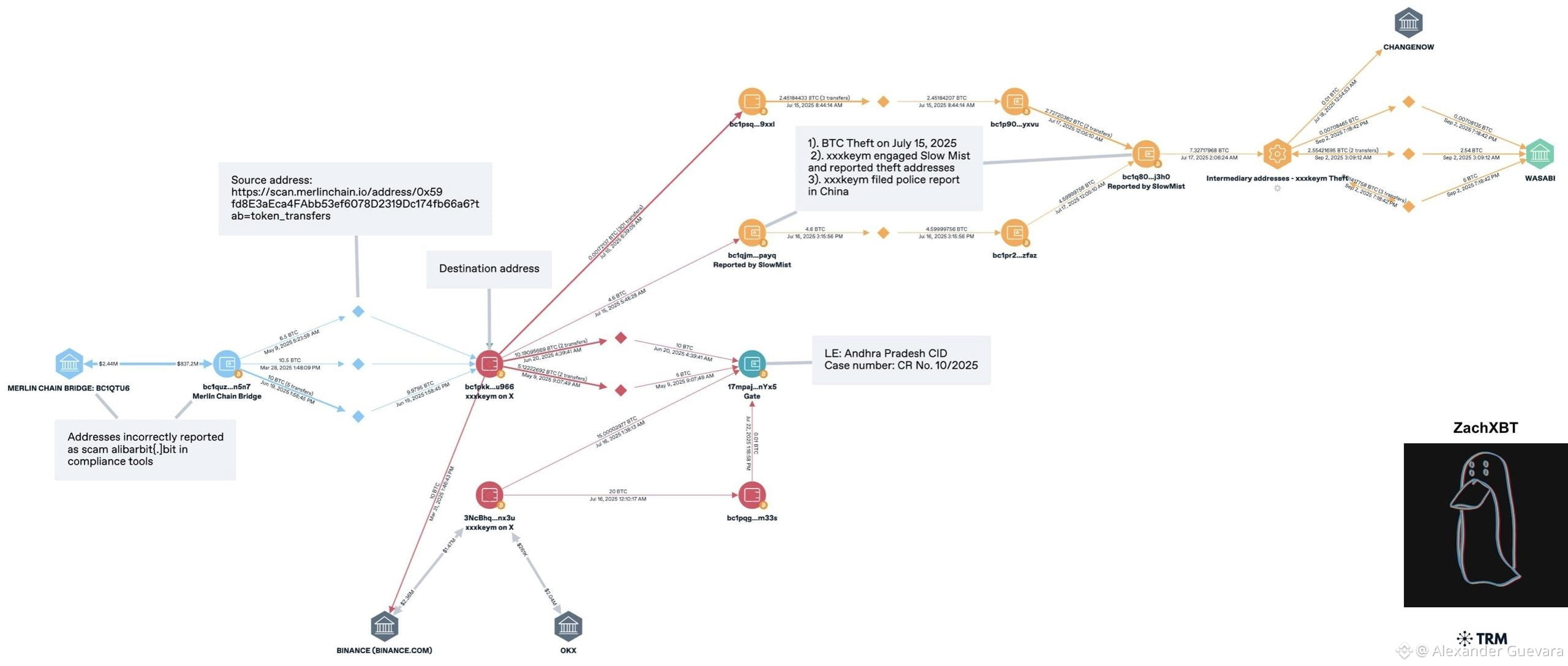
Recently, ZachXBT publicly alleged that Gate had frozen around $3 million in assets belonging to Chinese users. The incident reportedly began when Indian police mistakenly identified the address of a cross-chain bridge as an account involved in a pig-butchering scam, triggering a mistaken freeze.
Binance founder CZ once explained that when law enforcement agencies issue freezing orders, they often do not know how much money is in the account and cannot accurately distinguish between illicit funds related to a case and legitimate funds. The process is to impose a freeze first, then conduct a more detailed review and determine the nature of the funds later. This approach poses a serious risk to individual users. If they face this kind of heavy-handed enforcement without a rigorous adjudication process, retail investors can be left with no clear way to seek redress. For users with substantial assets, choosing a major exchange with better liquidity and a more mature framework for managing compliance and legal risks is a necessary way to reduce these kinds of uncontrollable risks.
I also keep all my large holdings on Binance. As the world's largest exchange, Binance also has the largest, most comprehensive, and most transparent reserves.
If your assets were frozen on a non-mainstream platform for a similar reason, would you choose to take legal action or apply pressure through public opinion?
#Gate #加密资产安全 #交易所

咸菜ing:
意思是这钱冲到币安然后印度政府通知币安冻结,币安是不会冻结了是吗😀
1
1
83

Indian authorities accused of improperly freezing $3 million in cryptocurrency
A Chinese investor, xxxkeym, has had his account at #Gate frozen since July 2025 due to an alleged $1.7 million pig-butchering scam investigated by the Andhra Pradesh Criminal Investigation Department.
Investigators flagged a 15 BTC deposit from his wallet 3NcBhqK to Gate address 17mpajZ6Nq3dG3T6wUhaXxYF4Qy9HJnYx5.
But reportedly, those coins came from his own withdrawals from Binance and #OKX in January 2023, and had remained untouched for years.
Another 15 BTC arrived at G@t3 from his wallet, which had received funds from bc1quzwk. and bc1qtu66...
Reportedly, those two addresses were labeled as belonging to the scam, but an independent investigation identifies them as Merlin Chain bridge wallets.
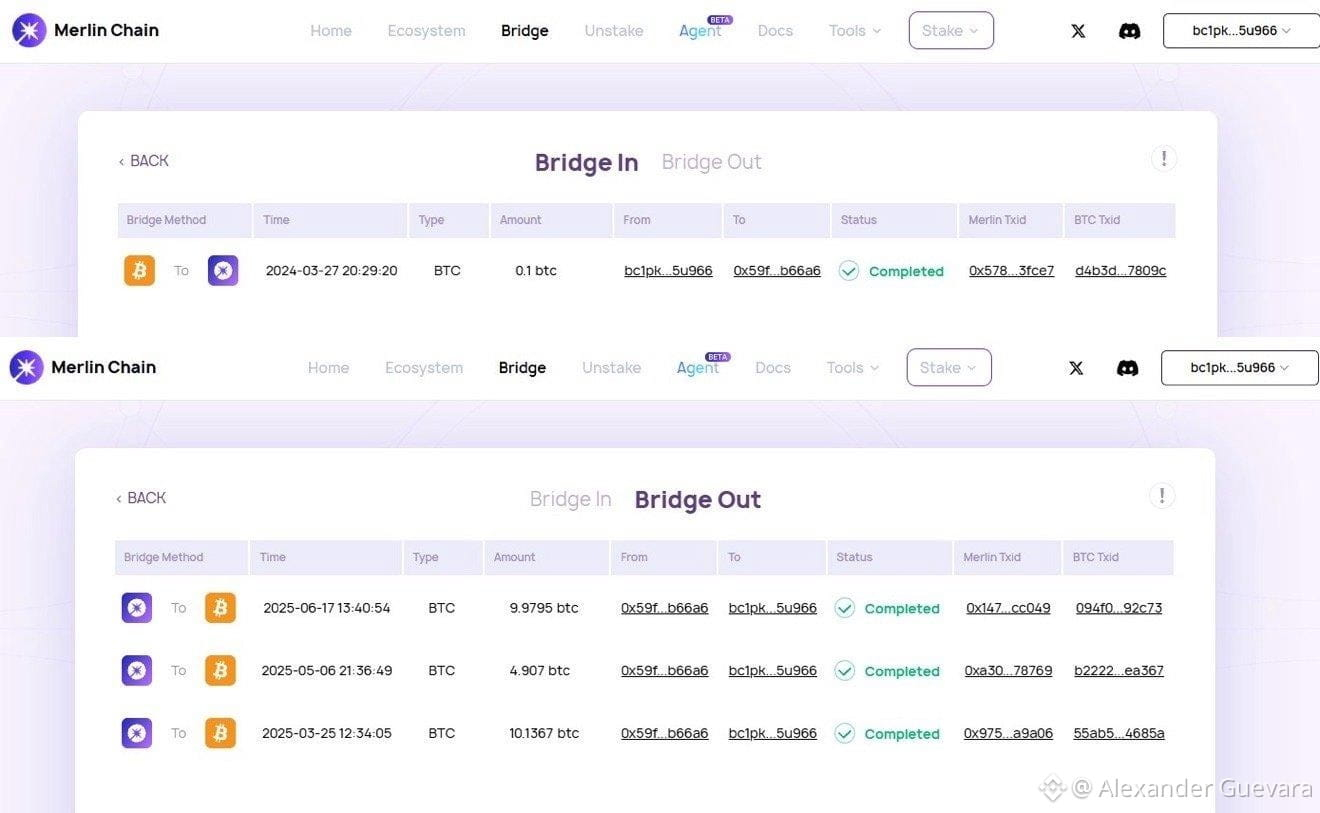
The investor had deposited 50 #BTC into Merlin in March 2024, more than a year before the alleged theft. His subsequent withdrawals from Merlin match the BTC payments made from those addresses
• March 2025: 10,1368 BTC • May 2025: 4,9071 BTC • June 2025: 9,9796 BTC
Despite this, #Gate.io froze his entire account; at the time, it was worth around $3 million and reportedly is now worth approximately $1.5 million.
In March 2026, the Andhra Pradesh CID filed charges and, reportedly, an Indian court ordered the frozen funds to be transferred to the claimant.
Separately, the investor reported losing 7 BTC in a private key deal in July 2025 and hired SlowMist to investigate the matter.
Did authorities #India mistake a cryptocurrency bridge for a scam and freeze $3 million in innocent funds?
$BTC
{web3_wallet_create}(10x75231f58b43240c9718dd58b4967c5114342a86c)
{web3_wallet_create}(10xe66747a101bff2dba3697199dcce5b743b454759)
Indian authorities accused of improperly freezing $3 million in cryptocurrency
A Chinese investor, xxxkeym, has had his account at #Gate frozen since July 2025 due to an alleged $1.7 million pig-butchering scam investigated by the Andhra Pradesh Criminal Investigation Department.
Investigators flagged a 15 BTC deposit from his wallet 3NcBhqK to Gate address 17mpajZ6Nq3dG3T6wUhaXxYF4Qy9HJnYx5.
But reportedly, those coins came from his own withdrawals from Binance and #OKX in January 2023, and had remained untouched for years.
Another 15 BTC arrived at G@t3 from his wallet, which had received funds from bc1quzwk. and bc1qtu66...
Reportedly, those two addresses were labeled as belonging to the scam, but an independent investigation identifies them as Merlin Chain bridge wallets.
The investor had deposited 50 #BTC into Merlin in March 2024, more than a year before the alleged theft. His subsequent withdrawals from Merlin match the BTC payments made from those addresses
• March 2025: 10,1368 BTC • May 2025: 4,9071 BTC • June 2025: 9,9796 BTC
Despite this, #Gate.io froze his entire account; at the time, it was worth around $3 million and reportedly is now worth approximately $1.5 million.
In March 2026, the Andhra Pradesh CID filed charges and, reportedly, an Indian court ordered the frozen funds to be transferred to the claimant.
Separately, the investor reported losing 7 BTC in a private key deal in July 2025 and hired SlowMist to investigate the matter.
Did authorities #India mistake a cryptocurrency bridge for a scam and freeze $3 million in innocent funds?
$BTC
42

Indian police treating a cross-chain bridge like a pig-butchering scam is more frightening than the “freeze” itself.
The day before yesterday, I wrote about the case where an Indian court ordered the transfer of 15 BTC belonging to a Gate user. At the time, I guessed that dust from address poisoning might have been deposited along with it, triggering risk controls. Today, ZachXBT’s explanation (with a funds-flow chart from TRM) is even more outlandish: he traced the user’s BTC back to withdrawals from OKX and Binance years ago, as well as withdrawals from the Merlin Chain bridge. The address deemed “scam-related” was actually the Merlin bridge’s address, mislabeled in compliance tools as the scam platform alibarbit. I take back my dust theory—Zach’s version makes more sense.
The Merlin bridge records he posted show that the user withdrew 10.1367, 4.907, and 9.9795 BTC from the bridge on March 25, May 6, and June 17, 2025, respectively. What is a cross-chain bridge? It’s a shared pool where the money of thousands of people flows in and out. If you treat the bridge’s address as a scammer’s address and use a “if it touched it, it counts” logic, then anyone who withdraws coins from the bridge can be labeled as downstream from illicit funds. That’s not tracing; it’s guilt by association.
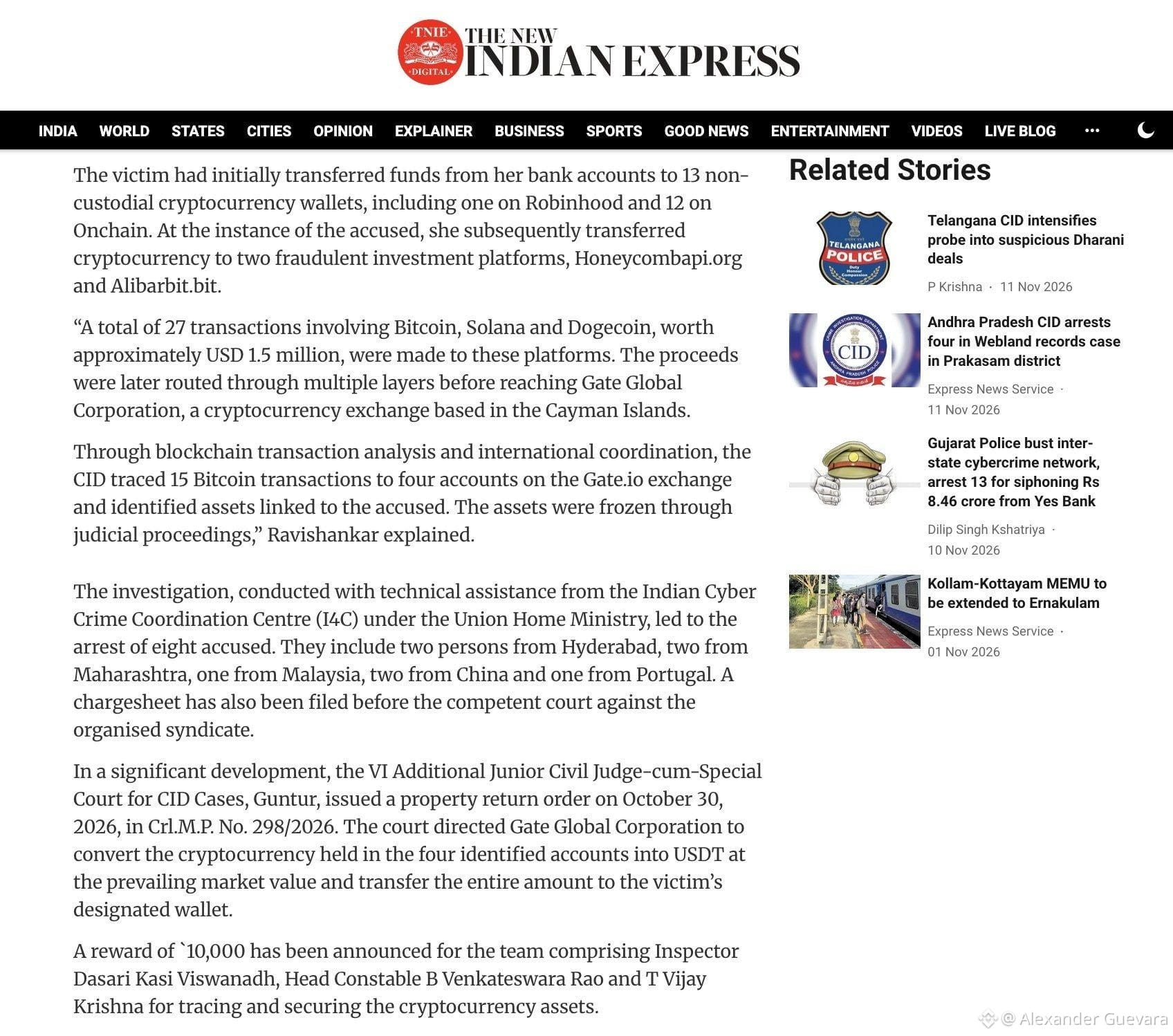
Now look at the process. According to the Indian Express report cited by Zach, the victim transferred around $1.5 million to two fake platforms in 27 transactions, and the CID “traced” 15 BTC transactions across four accounts on Gate. On October 30 this year, a court in Guntur ordered all the coins in those four UIDs to be converted to USDT at market rates and sent to the victim’s TRC20 address. The affected user made a deposit on July 16, 2025, and the account was frozen just four days later. It’s been frozen for more than 16 months now, and Zach says the assets’ value has fallen from $3 million to around $1.5 million. Who’s responsible for that 50% drop during the freeze?
The real problem is that labels reinforce themselves: a data provider mislabels an address, the exchange freezes funds based on that label, the police use exchange data as evidence, and the court rules based on the police’s materials. At every stage, someone says, “I relied on what came before me,” yet there’s no sign that anyone went back to verify it on-chain. Zach himself says Gate cooperated from the outset and is now in a bit of a bind.
There’s a very practical lesson here for ordinary users: if you withdraw directly from a bridge, mixing pool, or popular protocol to a CEX, you inherit not just the coins but also whatever labels data providers have attached to that address. Keep the txid and source records for every cross-chain transaction. The strongest evidence this guy has right now is those Merlin withdrawal records.
Gate says the assets haven’t actually been handed over yet. Whether it fights the case in court or simply complies—that’s when we’ll really see where the exchange stands.
#Gate #ZachXBT
1
13

·
--
Gate issues statement on Indian police judicial freeze: affected funds remain on the platform and have not been transferred; this is not a platform-wide hack or suspension of deposits and withdrawals
Gate issued an explanation today regarding the judicial freeze by Indian police of some users’ assets. The company stressed that this is a judicial freeze, not a platform hack, and that it has not announced a platform-wide suspension of deposits and withdrawals. As of the statement’s publication, the affected funds remain in the platform’s custody, and no assets have been handed over to the police.
What happened: Gate said that since receiving a freeze request from Indian police in September 2025, its anti-money laundering team and legal department have been requesting additional evidence and reviewing the matter on a case-by-case basis. After receiving a request to transfer the assets in April 2026, the platform did not agree to carry it out and instead continued to request further documentation. The case is still under judicial review. The platform has hired a local law firm to communicate with the police and courts. It also stated that, as a third party, it cannot defend users or file objections on their behalf, but will continue to provide legal support.
Who is affected: Only the users covered by this particular judicial freeze request are involved. This does not mean that all Gate accounts have been frozen or that assets have been transferred. If you have not received an official notice and your account has not been restricted, you do not need to interpret this statement as a platform-wide security incident. If your account has been restricted or you have received an official email, verify it only through Gate’s official channels. Do not trust “appeal assistance” offered in private messages or links asking you to transfer assets.
What remains to be confirmed: The outcome of the judicial review and whether the affected funds will later be ordered to be transferred are both still unresolved. “Not yet transferred” reflects the platform’s position as of the statement’s publication; it is not a guarantee of the final outcome.
Have you recently received an official freeze notice or request for judicial assistance concerning your Gate account?
This is not investment advice.
Sources: Gate official news, “Gate: Indian Police Asset Freeze Case Remains Under Review; No Assets Transferred to Date” (https://www.gate.com/zh/news/detail/gate-india-police-asset-freeze-case-remains-under-review-no-assets-25636487); Odaily Newsflash (2026-11-15 14:39 HKT, https://www.odaily.news/zh-CN/newsflash/534759); Wu Says X (around 18:26 HKT, https://x.com/wublockchain12/status/2121912612657250490) · 2026-11-15 Hong Kong time
#Gate #司法冻结 #资金安全 #夯B媒体

85

·
--
I came across an official statement from Gate. They said the case related to the Indian police’s asset freeze is still under judicial review, and no related assets have been transferred to date.
The statement said that after receiving a freeze request in September 2025, the platform’s anti-money laundering and legal teams had been asking the police to provide additional evidence and reviewing the matter on a case-by-case basis. They received another transfer request in April this year, but did not commit to carrying it out and instead continued to request more supporting documents.
The funds in question are still being held by the platform, which has declined to transfer them while users pursue their defense. The statement also mentioned that local lawyers have been engaged to communicate with the police and courts and help users seek legal remedies.
#Gate
25

·
--
A user was notified on November 12 that 15 [units] held on Gate, $BTC , had been approved for transfer to the complainant by a court in Andhra Pradesh, India. Gate responded on November 15 that, based on an official letter from local judicial authorities, the platform could not unfreeze the assets on its own. They were worth more than $3 million when frozen and are now worth about $1.6 million.
India’s CID was investigating a $1.5 million fraud case and traced it to four accounts on Gate. Once the letter arrived, the platform had few options.
#Gate #资产划扣 #ExchangeSecurity
India’s CID was investigating a $1.5 million fraud case and traced it to four accounts on Gate. Once the letter arrived, the platform had few options.
#Gate #资产划扣 #ExchangeSecurity
316

Gate CEO: Crypto exchanges must prove they are solvent after hacks like Binance
• Gate’s CEO says the exchange holds enough assets in cold wallets to cover customer balances, even if its hot wallets are attacked.
• An independent audit is underway.
• The remarks come as crypto exchanges face pressure to prove they are solvent after major hacks, such as Binance.
#BinanceSquare #CryptoNews #Gate #CryptoExchange #Security
$btc $eth
vlikevn Titanbot
Source: CoinDesk
173

·
--
Gate’s boss puts it bluntly: exchanges still have to prove their vaults are locked up tight. Just shouting “secure” isn’t enough—if users’ assets aren’t protected, they’ll run at the first sign of trouble. Trust is built on transparency. The whole industry should take notes and stop putting on a show.
#Gate #Crypto #Transparency
#Gate #Crypto #Transparency

17

·
--
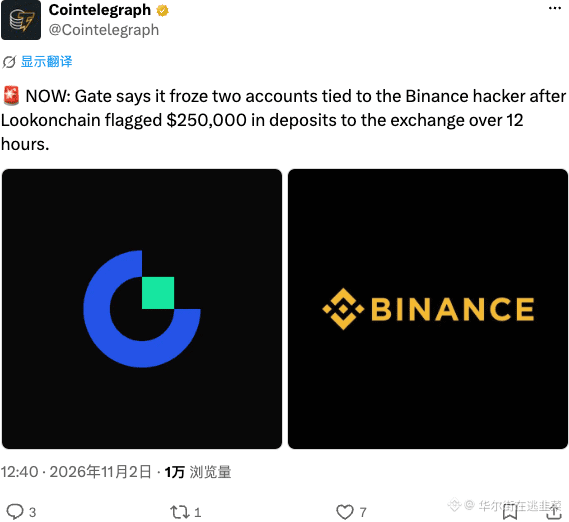
📰 Gate blocks two accounts amid Binance hack investigation
On November 2, the Gate exchange confirmed that it had frozen two linked accounts and launched a review. Earlier, Lookonchain reported transfers of about $250,000 in USDD to Gate from addresses that analysts link to the attack on Binance.
An important detail: $250,000 is an estimate of the tracked transfers, not a confirmed amount of funds frozen or recovered. Gate says it will cooperate with the investigation but has not yet reported any findings.
#Binance #Gate
21

·
--
【Binance hacker runs to Gate to cash out? $250,000 deposited and frozen】
Over the past 12 hours, the Binance hacker deposited about $250,000 into Gate in several transactions. Gate quickly identified and froze two related accounts, and said it would fully cooperate with law enforcement investigations. The path to laundering stolen funds through exchanges is getting narrower.
$GT $BNB
#币安被盗 #朝鲜黑客 #Gate
139
·
--
The Binance hacker’s $250,000 in stolen funds had just been transferred to Gate. Lookonchain spotted it, and the account was frozen immediately. What teamwork—Binance next door would be moved to tears.
$BTC #Gate
The Binance hacker’s $250,000 in stolen funds had just been transferred to Gate. Lookonchain spotted it, and the account was frozen immediately. What teamwork—Binance next door would be moved to tears.
$BTC #Gate
$BTC #Gate
86

·
--
Gate freezes two accounts linked to the Binance attacker, expanding recovery efforts from frozen funds to exchange accounts
- PANews reported on November 2 that Gate announced it had identified and frozen two accounts linked to the Binance attacker. The relevant information has entered the due diligence process, and Gate will fully cooperate with law enforcement and subsequent investigations.
- Background: According to Lookonchain, the Binance attacker deposited $250,000 to Gate in the past 12 hours (reported by PANews around 10:55 on November 2). The freeze came shortly after this deposit, indicating that interception efforts between exchanges are accelerating.
- Context: The FBI has officially attributed the approximately $6.3 billion Binance theft to North Korea’s TraderTraitor. Binance says it has replenished approximately $6 billion (about 95%), and all of the first 15 on-chain withdrawals have been restored. Tether and Circle had previously frozen more than $2.38 billion in stablecoins; Gate is another exchange to step in and block the funds.
- Possible impact: The attacker’s options for moving stolen funds into centralized exchanges are narrowing, raising the cost of money laundering. However, the freeze applies to “related accounts,” and the amount has not been disclosed. This does not mean the stolen funds have been recovered; details of any subsequent seizures by law enforcement remain to be seen.
My take: Short-term outlook for $BNB is neutral. Exchanges coordinating to freeze accounts is a positive sign for fund recovery and could help restore market confidence, but the amount frozen has not been disclosed and money laundering of the stolen funds is still ongoing, so short-term volatility risks remain.
$BTC $BNB $ETH
#币安被盗 #Gate #ExchangeSecurity
Source: PANews, November 2 (Gate announcement; earlier information based on Lookonchain monitoring).
Tap the tag to view real-time market data: With exchanges coordinating to freeze funds, how much of the stolen money do you think can still be recovered? For reference only; this is not investment advice.
26

·
--
🚀 Gate officials revealed on X that they have identified and frozen two accounts suspected of being linked to the Binance hack. The relevant information is now undergoing due diligence, and Gate has pledged to cooperate with law enforcement. 🕵️♀️
🔍 Over the past 12 hours, Lookonchain observed the hacker depositing approximately $250,000 into a Gate account. It remains unclear where the funds ultimately went or whether they have been recovered. We can only confirm that the freezing action is underway; the results of the ongoing investigation have yet to be announced.
🧩 This situation is a reminder to the community that even when platforms respond quickly, it often takes longer for the full picture of a hacking incident to emerge. For updates, reports from Gate’s official channels will be the most direct source of evidence.
💬 How do you think platforms should further improve account security to prevent similar deposit vulnerabilities from being exploited?
This is not investment advice.
#Gate #Binance黑客 #区块链安全 #加密社区 #Write2Earn

36

·
--
🚨 $GATE EQUITY VOLUME SURGES PAST $20B – SMART MONEY REPOSITIONING! 📈
📊 CryptoQuant data shows equity‑based assets on the platform exploding from near‑zero to over $20 B weekly by August 2026, now hovering above $15 B. 🦈 Smart money is clearly reallocating into TradFi products as crypto futures dip below their historic $60 B peaks, indicating a diversification drive within the same app.
⚡ The shift isn’t just volume; it’s a structural rebalancing. Users must audit the product terms—rights, pricing mechanisms, and settlement nuances differ from traditional brokerages. Ignoring the fine print can turn a seemingly identical screen into a hidden risk.
💬 How are you adjusting your exposure to these emerging equity layers on the platform? 👇
⚠️ Not financial advice. Always manage your risk. 🛡️
🏷️ #GATE #EquityVolume #Diversification #SmartMoney #Crypto
🦈 🔥
16

·
--
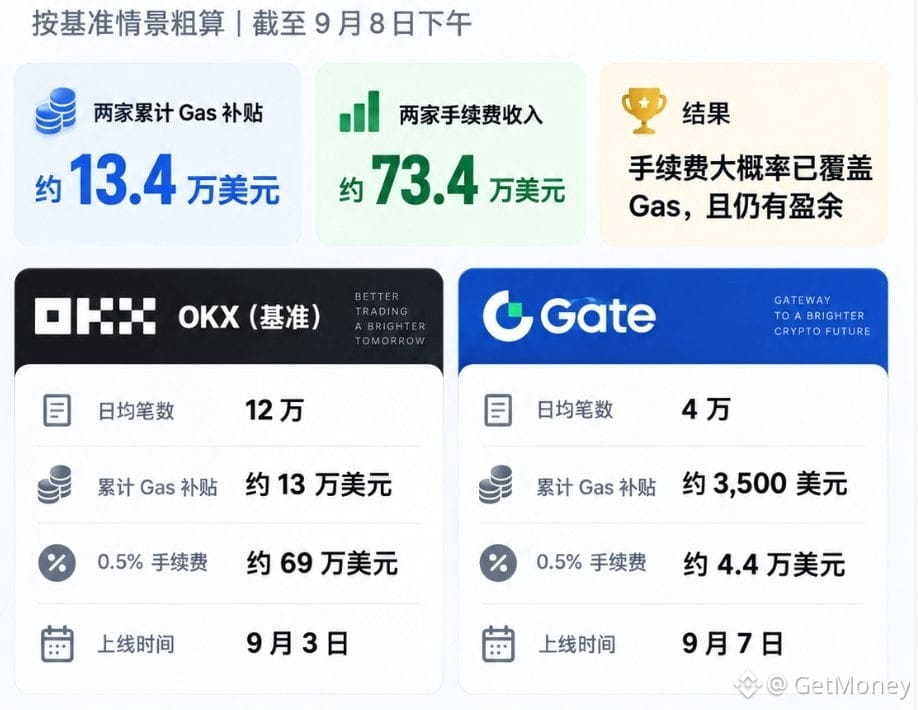
📰 After OKX and Gate integrated Robinhood Chain, their featured “zero gas” trading looks like they’re burning money to subsidize users. But the books may not be that bad.
Roughly estimating from the trading volume, number of trades, and average gas fees up to the afternoon of September 8, the total subsidies from both platforms add up to about $130,000 to $150,000. Most of it comes from OKX. Since Gate’s rollout is still relatively recent, its share is smaller.
🔥 On the other hand, Swap itself charges fees. At a 0.5% rate, fee revenue in the same period has already exceeded $700,000—so just this item alone would likely cover the gas costs.
Here’s a straightforward example: for a $100 Meme Swap, the platform charges a $0.5 fee. The gas paid on the user’s behalf might only be $0.1 to $0.2. Honestly, this feels more like taking a small portion out of the fees to eliminate the on-chain cost that users hate the most.
💡 Users don’t need to withdraw, and they don’t have to prepare extra ETH. Their funds stay in the exchange account; later they can continue with spot, derivatives, wealth management, and even generate new deposits and trades. The exchange spends on the order of tens of thousands of dollars, but gets the trading entry, user retention, and funds sticking around—on paper, that deal really does look worthwhile.
🤔 Do you think this “zero gas” is genuine user benefit, or is it the exchange using a small cost to buy user retention? #RobinhoodChain #OKX #Gate #Meme trading

161

·
--
Another exchange has decided the future is a money app, not an order book.
Per CoinDesk, Gate unveiled Gate Money in Singapore: one account to hold and convert cash, crypto, stocks and gold, with a card to spend from any of them. CEO Lin Han put it bluntly: "You can buy a cup of coffee with Nvidia stock." Gate has over 60 million users and about $2 billion in daily volume, per CoinDesk, and Han named Revolut, Cash App and Wise as the real competitors.
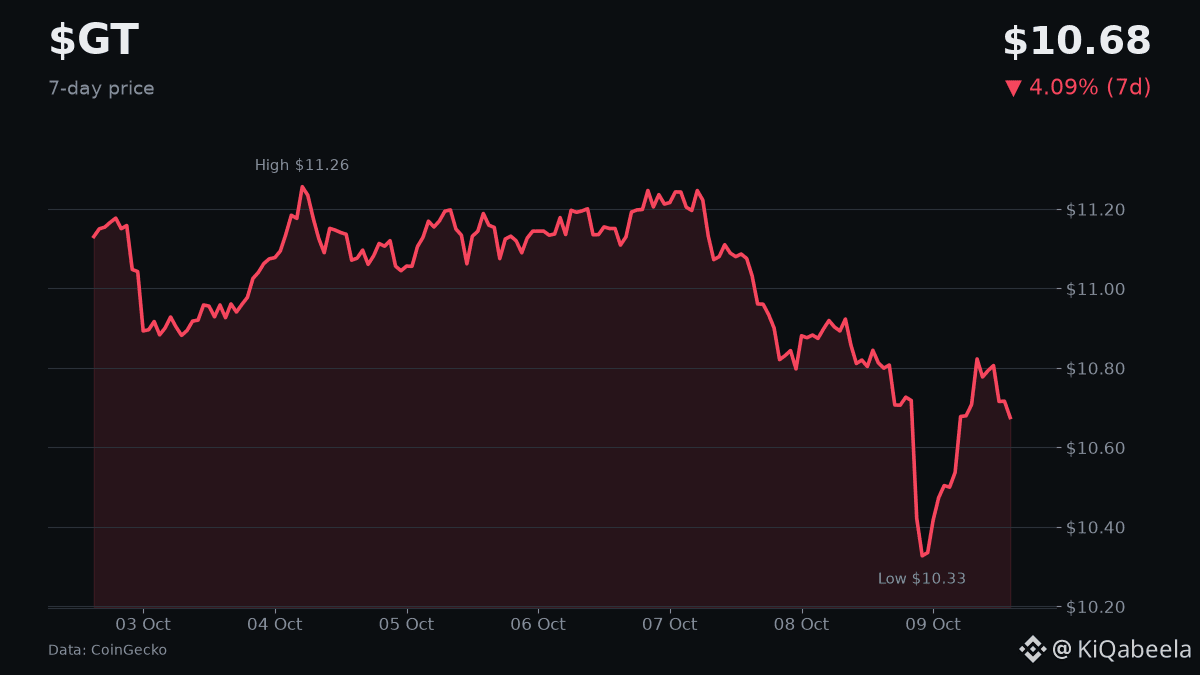
The open question is pricing: Gate did not explain how it values a stock conversion when the stock market is closed. $GT trades near $10.79, down about 2.6%, per CoinGecko.
💬 Do you want your exchange to become your bank, or to stay an exchange?
#Gate #SuperApp
53


·
--
I looked closely at Gate’s official timeline, and the more I read, the more it looks like a "slow-knife" social engineering attack, rather than the platform being breached.
Revisiting a few key points:
· 7/4 A new device initiated a reset of the phone + email; verification passed
· 7/5 Unbound the phone; face + historical transaction records were re-verified a second time
· 7/6 Reset the Google Authenticator and password; the whole process was checked
· 7/7 The attacker logged in using "old device + old password" and withdrew in batches to a new address
· 7/8 Only then did the user notice the abnormality and report it to customer service
Gate says its preliminary assessment is that this is an isolated case, with no evidence of a system vulnerability. It may be related to user information leakage, pending further investigation and details.
My observations are threefold:
1. From the re-linking to the withdrawals, there was a three-day gap—most likely the attacker had complete identity information (documents, historical orders, even face materials), allowing them to bypass risk controls all the way;
2. "Old device + old password" could directly place orders and initiate withdrawals, suggesting that while device fingerprinting and address whitelisting mechanisms work, there is still room for optimization in extreme scenarios;
3. What ordinary users can do is actually quite simple—withdrawal address whitelisting + time-lock/lock-up, a separate email account, switch off SMS 2FA and use a hardware key instead, and don’t leave the front/back of your ID card and selfies in chat logs.
No matter how the final assessment is made, this incident is a reminder: for CEX security, half of the boundary is on the platform, and half is in your own hands.
#Gate #交易所安全 #Self-custody
109

Gate Responds to the Asset Theft Incident: Preliminary Assessment Finds It a Single Case, Not a Systemic Vulnerability
After reading Gate’s disclosed timeline, to be honest, it’s more alarming than a simple “theft.”
Key points in the timeline:
· 7/4 The user resets the phone and email on a new device; verification passes
· 7/5 Unbinds the phone; after passing face verification + a second confirmation using historical transaction records
· 7/6 Resets the Google Authenticator and password; verification passes throughout
· 7/7 Logs in on the old device using the old password, withdrawing in batches to a new address
· 7/8 The user only reports the theft
Gate’s initial assessment is that this is an individual case. The website is operating normally, and they believe the likelihood is that sensitive information was leaked on the user side; details will be disclosed after further investigation.
My perspective: in this process, every layer of platform risk control is triggered—face verification, historical transactions, and a second verification step, none are missed. The issue seems to lie at the source instead—devices, passwords, and email may already have been simultaneously controlled. The attacker appears to have gone through the process “with a complete identity.”
Three reminders for yourself:
1. Use an independently secured, strong password for your email + 2FA—it's the master key to all your accounts
2. Regularly back up and review your bound devices for the Google Authenticator; don’t let “resetting on a new device” become a blind spot
3. Store large-value assets in layers; keep on exchanges only the portion used for trading
Before Gate formally discloses the details, don’t jump to conclusions—just audit the security settings on your own account. You can only benefit from doing so.
#Gate #账户安全 #加密安全
167

·
--
Article
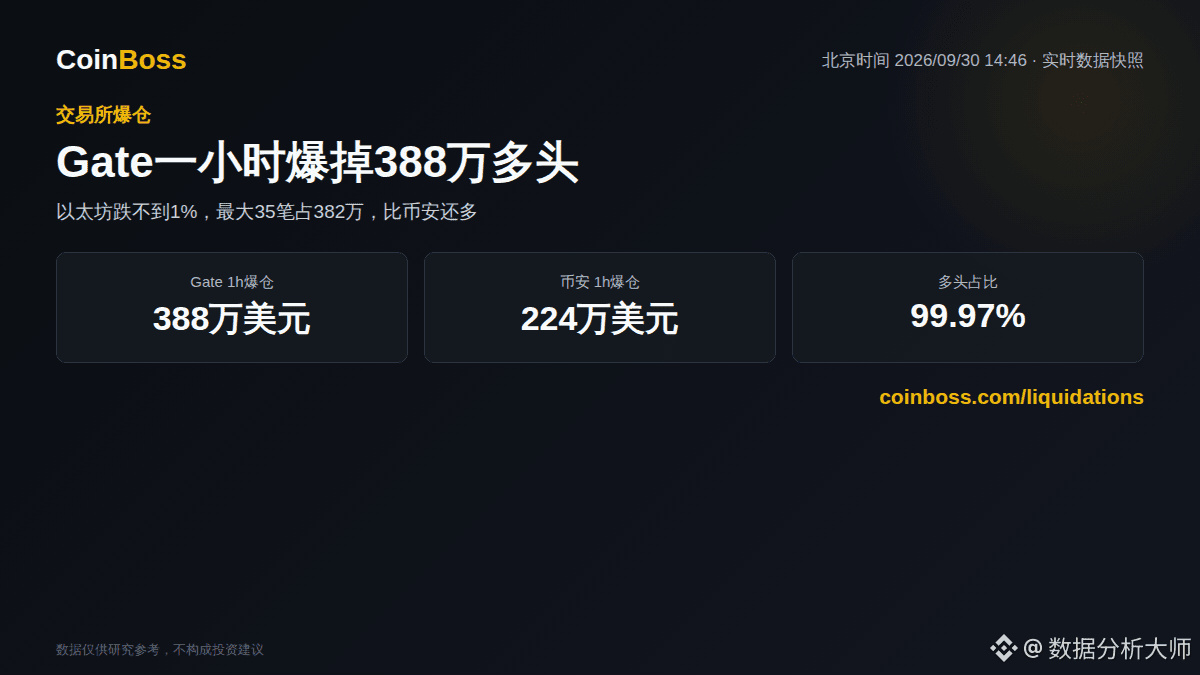
Ethereum dropped less than 1%, and Gate wiped out more than $3.88 million in longs within an hourIn the past hour, Gate became a major disaster zone for longs: $3.88 million liquidated, more than Binance’s $2.24 million, and almost all of it was long positions. Usually, Gate is only about one-fifth of Binance.
The concentration is even more striking. Out of 186 trades, the largest 35 accounted for $3.82 million. Of those, 29 involved Ethereum, with prices squeezed between 2658 and 2669. They were closed off in chunks of $100k and $200k at a time. It looks like several large positions were liquidated step by step—not a retail panic stampede.
Over the past hour, Ethereum fell from 2679 back to 2658, dropping less than 1%. Leverage is high enough—this pullback is already sufficient.
$ETH #以太坊 #爆仓 #Gate
When you open a long position on Ethereum, what leverage do you usually use—how many times?
Ethereum dropped less than 1%, and Gate wiped out more than $3.88 million in longs within an hour
In the past hour, Gate became a major disaster zone for longs: $3.88 million liquidated, more than Binance’s $2.24 million, and almost all of it was long positions. Usually, Gate is only about one-fifth of Binance.
The concentration is even more striking. Out of 186 trades, the largest 35 accounted for $3.82 million. Of those, 29 involved Ethereum, with prices squeezed between 2658 and 2669. They were closed off in chunks of $100k and $200k at a time. It looks like several large positions were liquidated step by step—not a retail panic stampede.
Over the past hour, Ethereum fell from 2679 back to 2658, dropping less than 1%. Leverage is high enough—this pullback is already sufficient.
$ETH #以太坊 #爆仓 #Gate
When you open a long position on Ethereum, what leverage do you usually use—how many times?
247
Log in to explore more content
Join global crypto users on Binance Square
⚡️ Get latest and useful information about crypto.
💬 Trusted by the world’s largest crypto exchange.
👍 Discover real insights from verified creators.
Email / Phone number
Trending Topics
1
#CanBTCReboundAfterFallingBelow60K?
272,929 views
1,292 Discussing
2
#GlobalStocksFaceLongestLosingStreakSince2023
92,503 views
933 Discussing
3
#AnthropicPlungesTowardIPOPriceonDay2
45,433 views
491 Discussing
4
#TwentyOneCapitalAdds172.25BTC
876 views
72 Discussing
5
#HKBillWouldExcludeTokenizedDepositsFromVirtualAssets
232 views
11 Discussing
6
#BNBDropsBelow540USDTWith8.46%DailyDecline
20,454 views
182 Discussing
7
#HKBillProposesHK$100KFineForUnauthorizedCryptoTitles
702 views
12 Discussing
8
#BitMineFaces$10.1BUnrealizedETHLoss
1,554 views
15 Discussing
9
#StrategyReports$35BNetReserves
1,098 views
15 Discussing
10
#MorganStanleyEndsAnthropicStockSupportAfterOneDay
9,319 views
120 Discussing