
#liberdus
liberdus
104,257 views
286 Discussing
Hot
Latest
·
--
Bullish
🚨 $NEAR is putting an important decision in the hands of its governance process. But what about the platforms we use to communicate every day?
A new proposal on NEAR, HSP-029, has entered the voting phase.
It aims to gradually reduce the network's maximum annual token issuance rate from 2.5% to 1.6% over 24 months.
The important part isn't just the proposed change.
It's the process behind it: governance gives the community a role in decisions that shape the network.
And that raises a bigger question about the digital world:
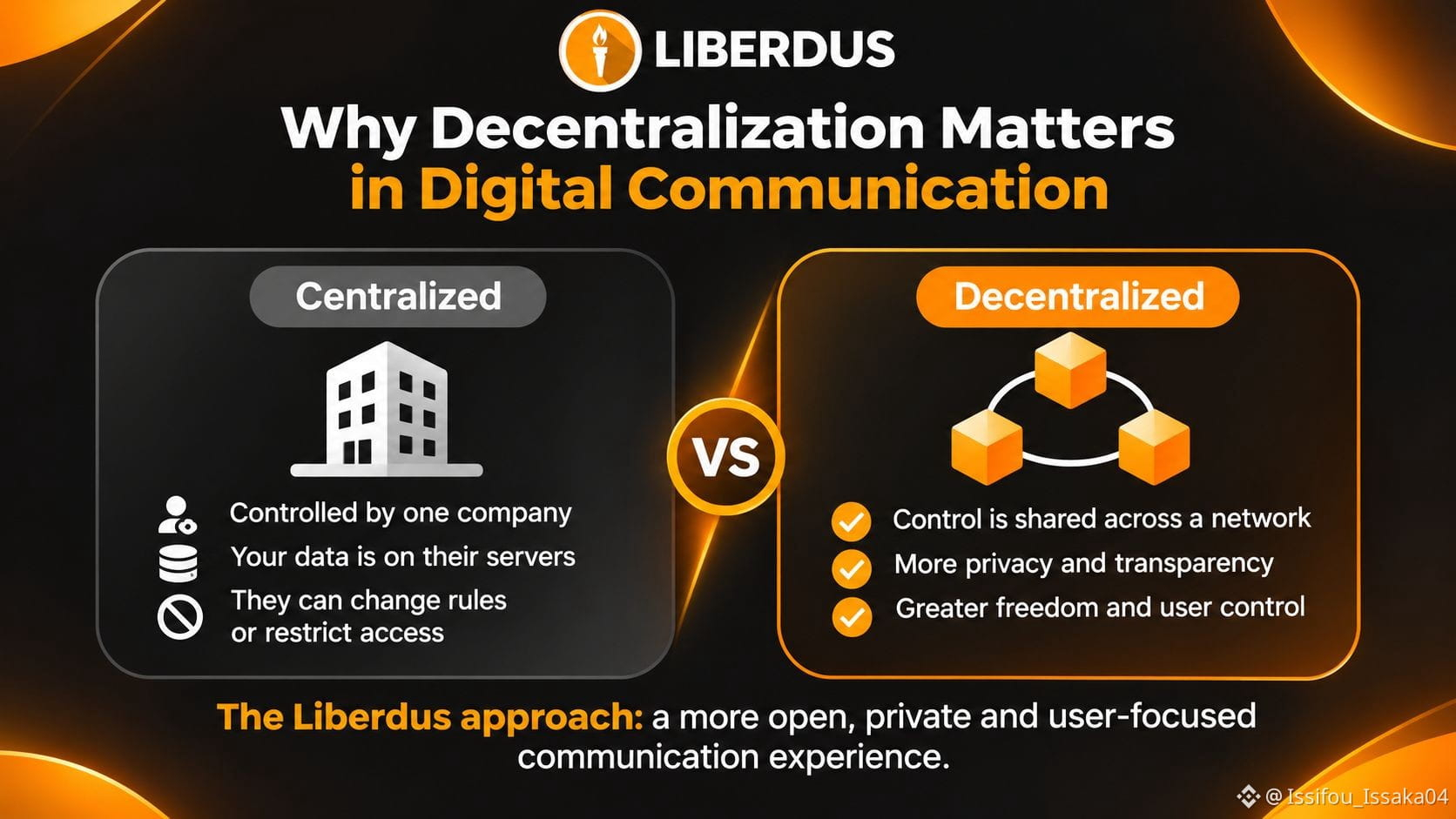
Why should users have so little control over the platforms they depend on?
Think about the messaging apps we use every day.
Your conversations, access and digital experience are often managed by a single company.
If that company changes its rules, restricts your account or shuts down its services, you have very little say.
That's the challenge of centralized communication.
Decentralization offers another path.
Instead of placing all the power in one organization, control and infrastructure can be distributed across a network.
The goal is to reduce dependence on a single authority and give users more freedom.
This is the direction #Liberdus is building toward.
By combining decentralized technology with private messaging and Web3 functionality, Liberdus aims to create a communication experience that puts users first.
Because decentralization shouldn't stop at financial transactions.
It should also shape how we connect, communicate and interact online.
Less dependence. More freedom. More control.
The future of communication should belong to its users. 🔥
#NEAR #decentralization
2
306

·
--
Bullish
One thing Web3 still struggles with is making different services work together seamlessly.
You have one application for messaging, another for payments, and several others for managing assets across different networks.
#Liberdus is taking a different approach.
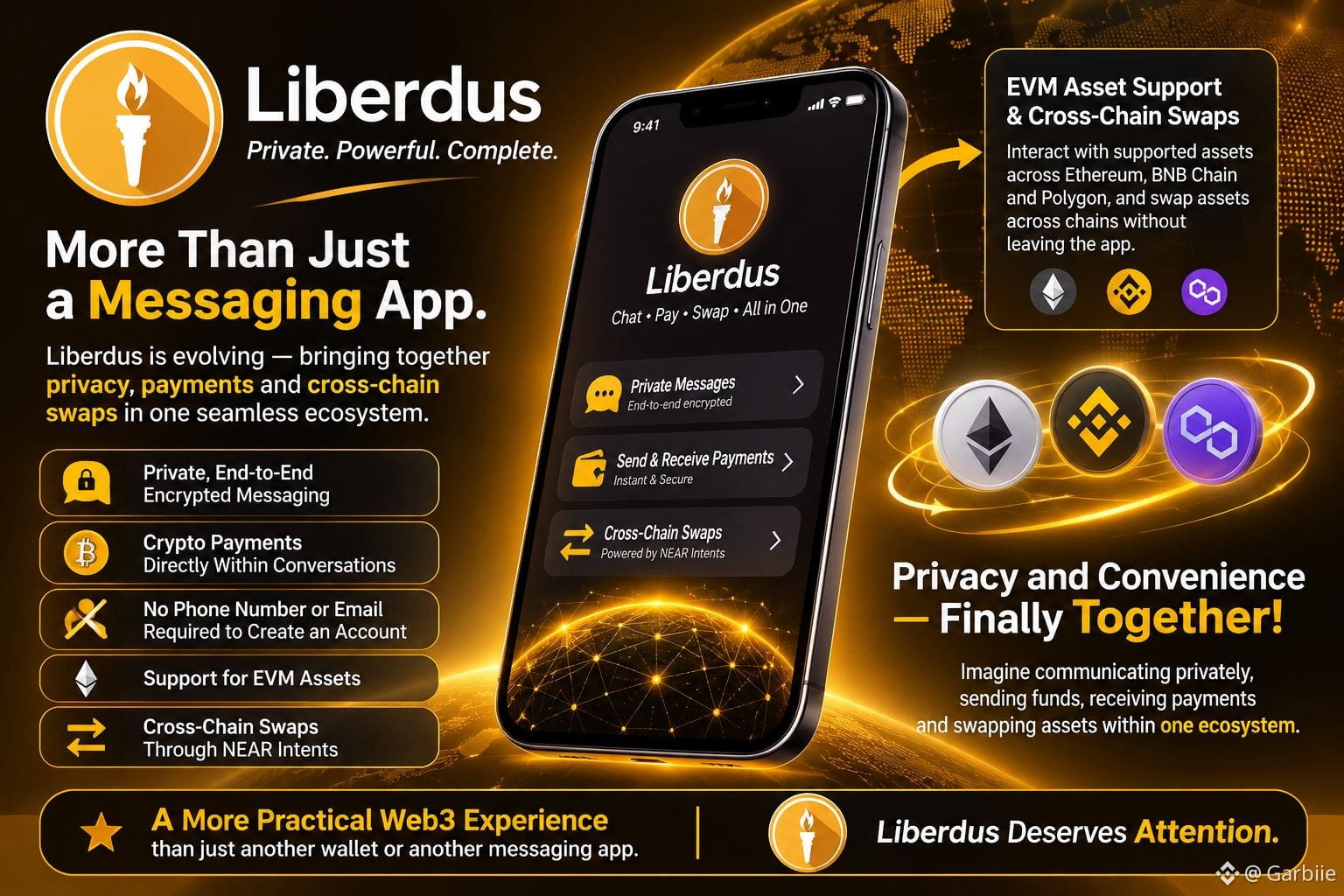
Alongside its private messaging and crypto payment features, it now supports EVM assets and cross-chain swaps through $NEAR
{future}(NEARUSDT)
Intents.
That brings support for assets across networks such as $ETH
{future}(ETHUSDT)
, BNB Chain and Polygon into the experience.
What makes this interesting to me is the combination:
You can communicate privately, send and receive crypto, and interact with supported assets across chains.
And you don't need to provide a phone number or email just to get started.
I think privacy should be part of the everyday Web3 experience, not something users have to sacrifice for convenience.
The real value here is not simply adding more features. It's making them useful together.
That's what makes Liberdus interesting to follow.
One thing Web3 still struggles with is making different services work together seamlessly.
You have one application for messaging, another for payments, and several others for managing assets across different networks.
#Liberdus is taking a different approach.
Alongside its private messaging and crypto payment features, it now supports EVM assets and cross-chain swaps through $NEAR
Intents.
That brings support for assets across networks such as $ETH
, BNB Chain and Polygon into the experience.
What makes this interesting to me is the combination:
You can communicate privately, send and receive crypto, and interact with supported assets across chains.
And you don't need to provide a phone number or email just to get started.
I think privacy should be part of the everyday Web3 experience, not something users have to sacrifice for convenience.
The real value here is not simply adding more features. It's making them useful together.
That's what makes Liberdus interesting to follow.
1
305

·
--
Liberdus Is Connecting More Than Just Messages
One thing I've noticed about crypto is how often we have to switch between different platforms to get things done.
Messaging happens in one app, managing assets in another, and swapping between blockchains somewhere else.
@liberdus is exploring a different experience.
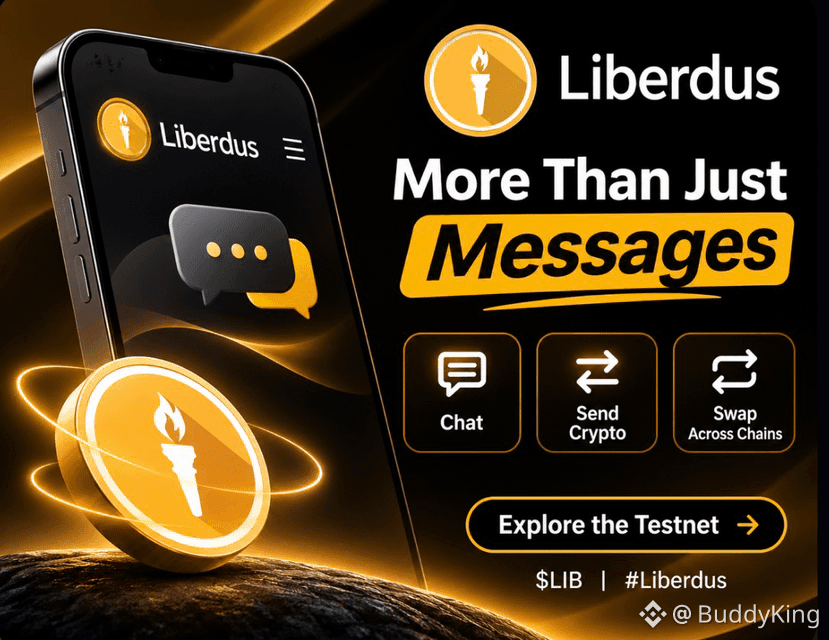
Its latest Testnet update introduces three important developments:
• LDAO: Updated decentralized governance, giving the community more opportunities to participate.
• EVM Assets: Support for assets across Ethereum, Polygon, and BNB ecosystems.
• NEAR Intents: Cross-chain swaps across supported networks.
What interests me most is how these features connect.
Imagine messaging someone, sending supported crypto assets, and swapping between supported networks without leaving the same application.
$LIB remains part of the ecosystem, but the vision is clearly expanding beyond one token.
I think interoperability could make crypto more practical when combined with a simple messaging experience.
Of course, the real test is security, reliability, and how smoothly everything works for everyday users.
One question: Would you prefer managing your crypto across multiple apps or having messaging, transfers, and swaps connected in one place?
Explore the Testnet: https://liberdus.com/test/
#Liberdus $HUMA
$RARE #GlobalStocksFaceLongestLosingStreakSince2023
435

·
--
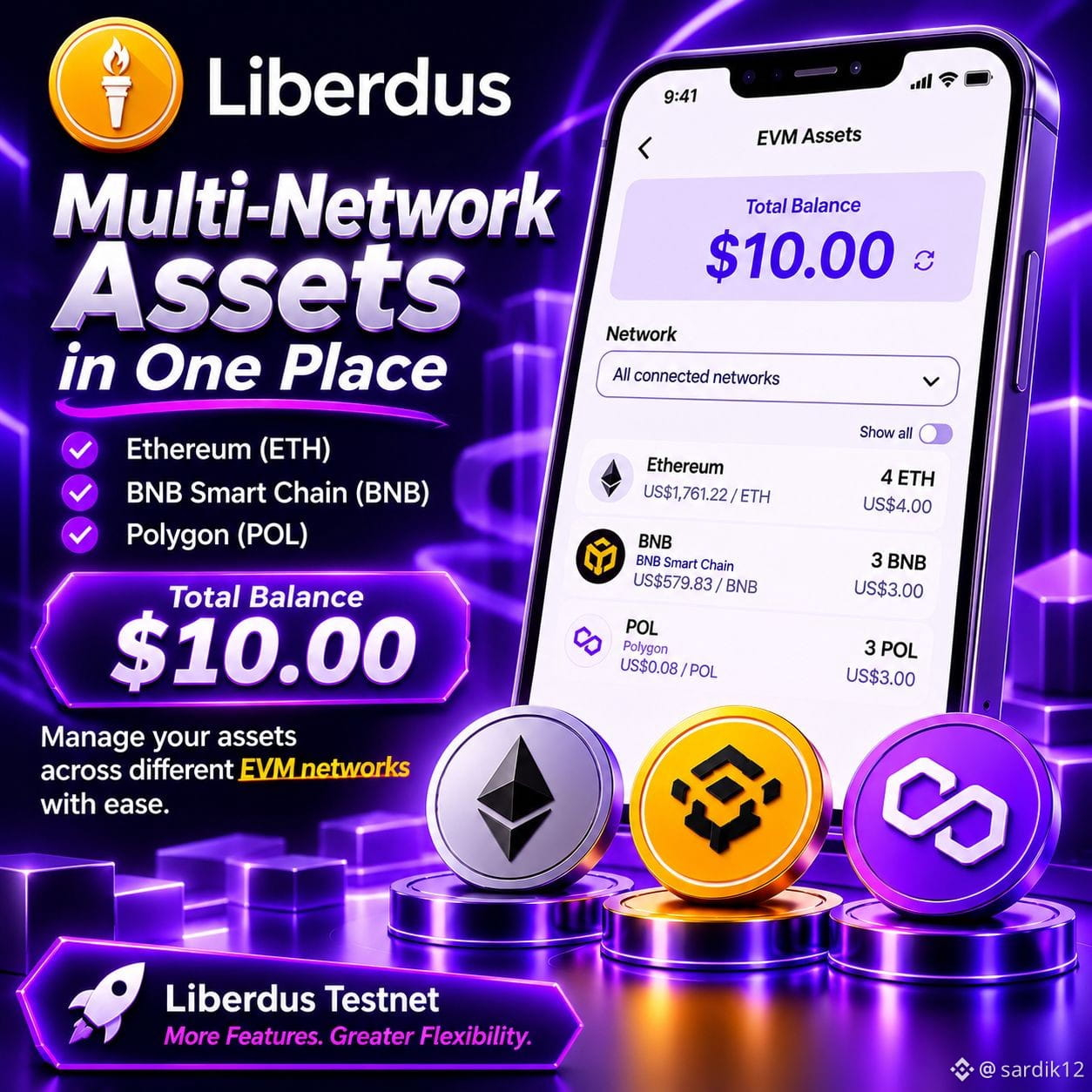
Managing assets across multiple blockchains can get complicated.
Liberdus is making an interesting move with its new EVM Assets feature, now live on Testnet.
The interface brings $ETH , $BNB Smart Chain and $MATIC assets into one view.
Users can see their total balance, select connected networks and check individual token balances and USD values.
It's a useful step toward making multi-chain asset management easier to navigate.
Would you prefer managing assets from different networks in one interface?
#Liberdus #evm #Web3
1
1
180

·
--
One thing I've learned about Web3 is that not every interesting project needs to make noise every day.
Sometimes, the real opportunity is in understanding what a team is actually building.
Take #Liberdus for example.
It's not just another crypto $BTC project chasing attention. Its goal is to combine private messaging with cryptocurrency payments in a decentralized environment.
No traditional phone-number registration, no dependence on centralized messaging servers, and a focus on quantum-resistant security.
I like the idea of making blockchain useful beyond trading charts.
The next generation of Web3 adoption needs applications people can actually use.
That's the bigger picture I'm watching with Liberdus.
$MMT $ZKC #CanNvidia’sDataCenterGrowthContinue?
449

·
--
Privacy Should Be a Priority in Web3 🔐
Our daily conversations happen online, making privacy and security more important than ever.
End-to-end encryption helps protect communication by ensuring that only the intended participants can read their messages.
This is one reason #Liberdus (LIB) stands out to me. It combines encrypted communication with decentralized messaging, giving users more control over their digital conversations.
I believe digital freedom should also mean having the confidence to communicate privately.
As Web3 continues to grow, privacy should remain a priority, not an afterthought.
Explore #LIB and always DYOR.
$BTC $ETH $BNB #CanNvidia’sDataCenterGrowthContinue? #NvidiaBoardNotConsideringHuang’sReturnasCEO
1
181
·
--
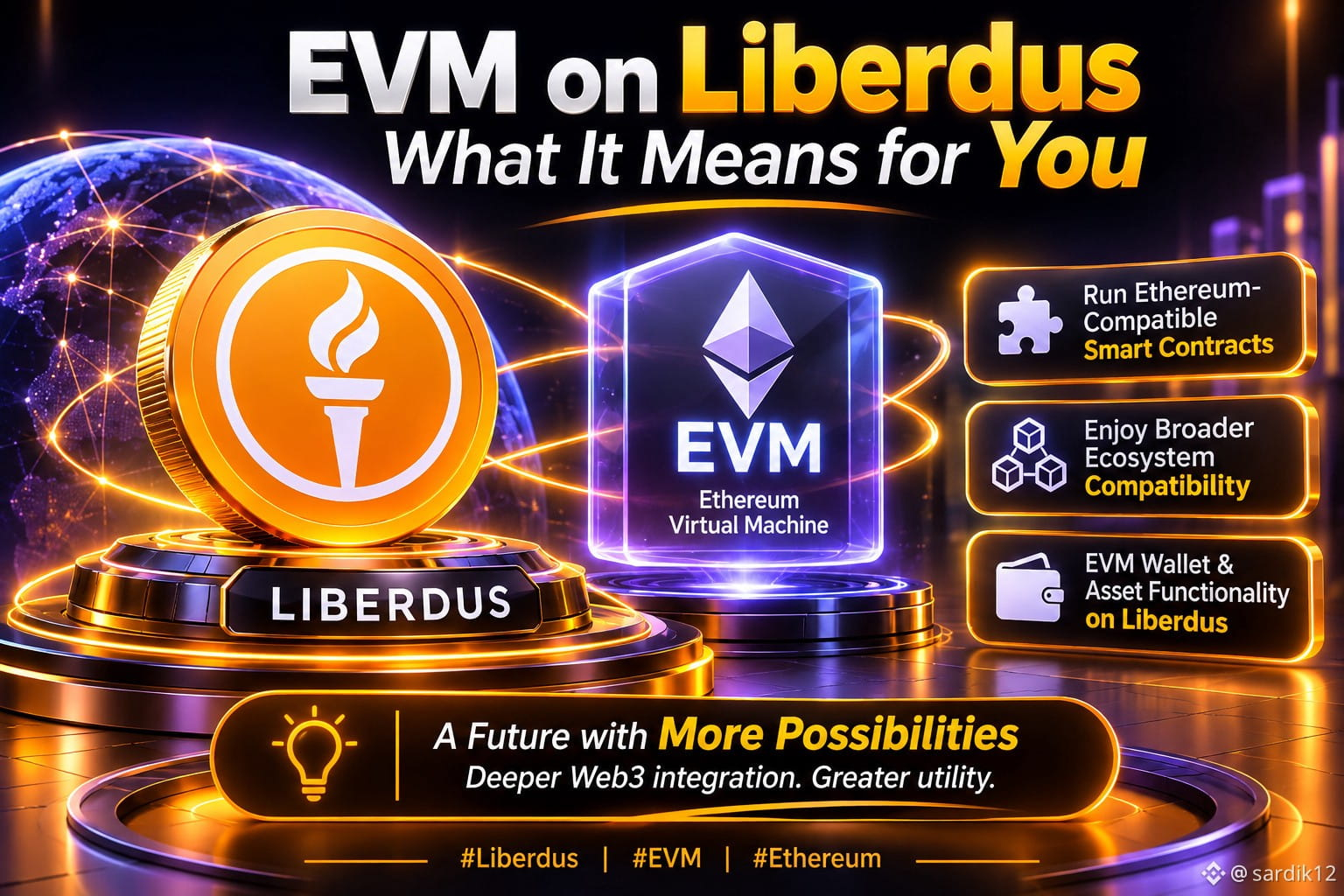
Why does EVM compatibility matter to Web3 users?
EVM allows Ethereum-compatible smart contracts to run, helping developers connect applications to a wider ecosystem.
Liberdus plans to introduce EVM wallet and asset functionality.
This could give users more ways to interact with digital assets while bringing communication and asset management closer together.
The real value will depend on how well these features work in practice.
#Liberdus #EVM #Ethereum #Web3
$FF $ETH
1
258
·
--
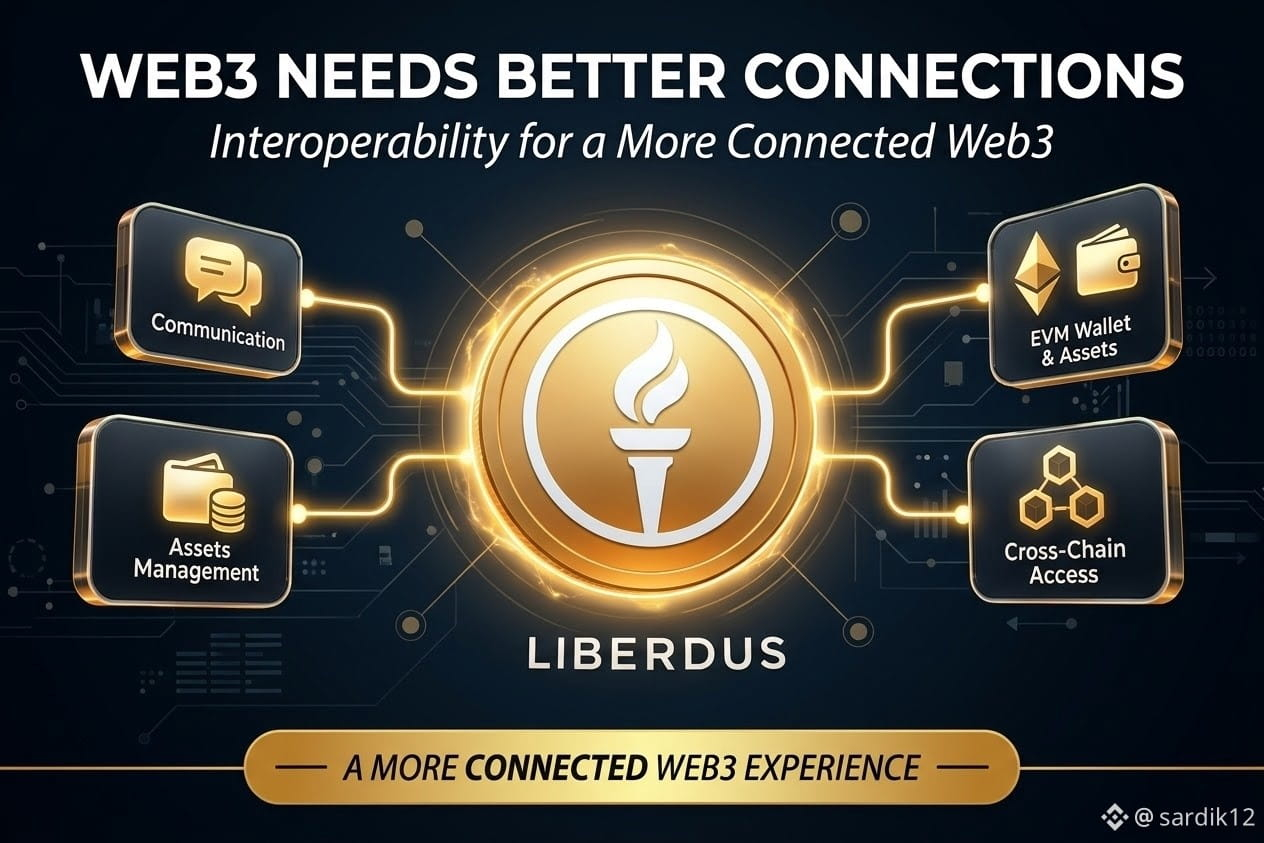
Web3 Needs Better Connections, Not Just More Applications.
One challenge with Web3 is that users still have to move between different applications to communicate, manage assets and complete transactions.
This creates unnecessary friction.
That's why interoperability matters.
Liberdus is preparing EVM wallet and asset functionality, which could make it easier to connect its ecosystem with Ethereum-compatible applications and digital assets.
But the real test isn't simply adding another wallet. It's making these connections useful and easy to navigate.
If users can interact with different applications and assets without unnecessary complications, that would be a meaningful improvement.
Web3 needs applications that work together, not isolated services.
#Liberdus #Web3 #EVM
$DELLB $KITE
1
139
·
--
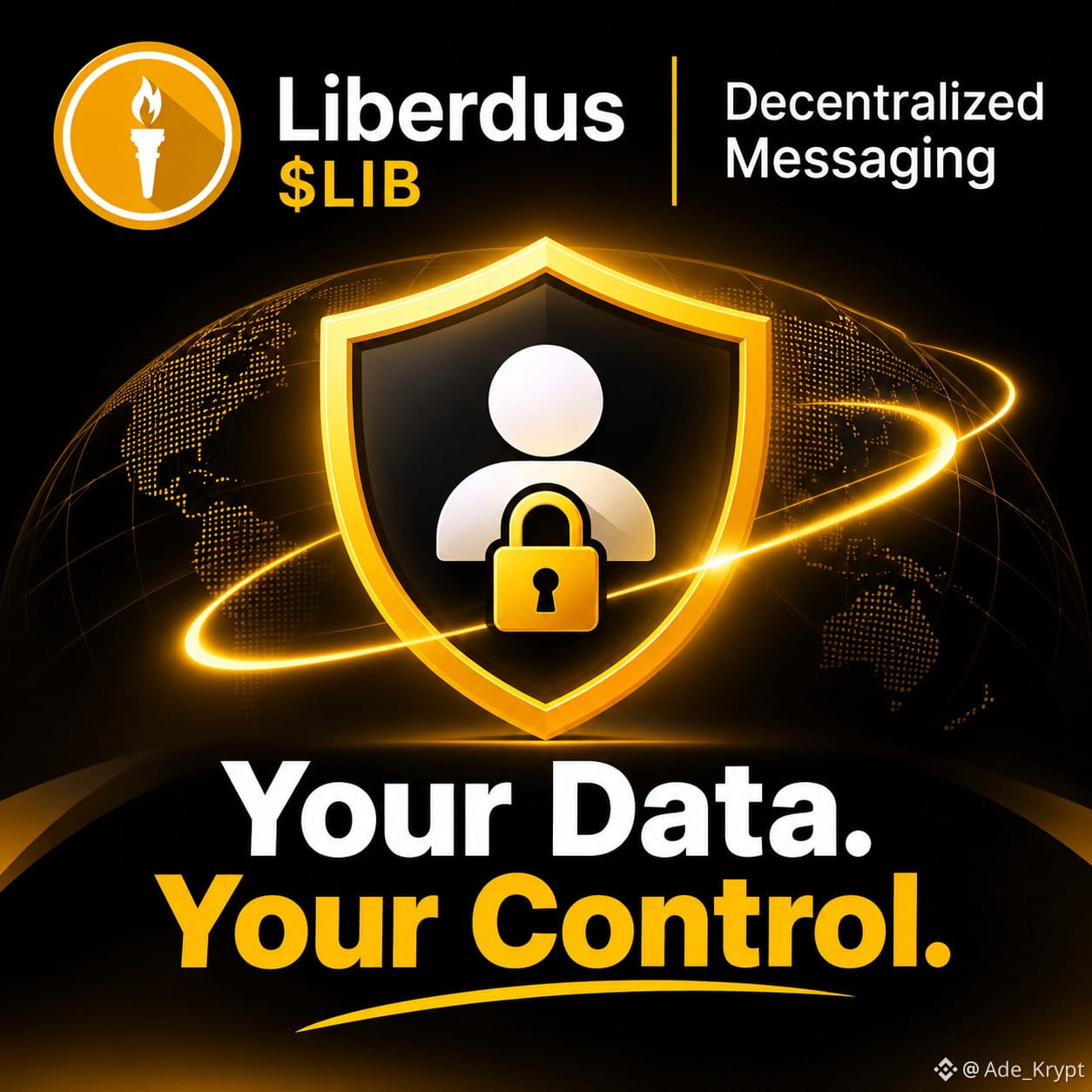
Your Data. Your Identity. Your Control.
Privacy should be a fundamental part of Web3, not an option.
Every day, we share personal information and private conversations online. But who really controls that data?
This is where #Liberdus stands out.
With decentralized messaging, end-to-end encryption, and no phone number or email registration, Liberdus is exploring a better way to communicate while protecting digital identities.
Just as $BTC represents financial freedom, $LIB is focused on greater freedom in digital communication.
The future of Web3 should give users more control, not demand more personal information.
Privacy matters. Ownership matters. Freedom matters.
$BNB $XRP #KavaSaysAbnormalActivityLimitedToKavaLend #CryptoSelloffTriggersMultipleWhaleLiquidations
172
·
--
Bullish
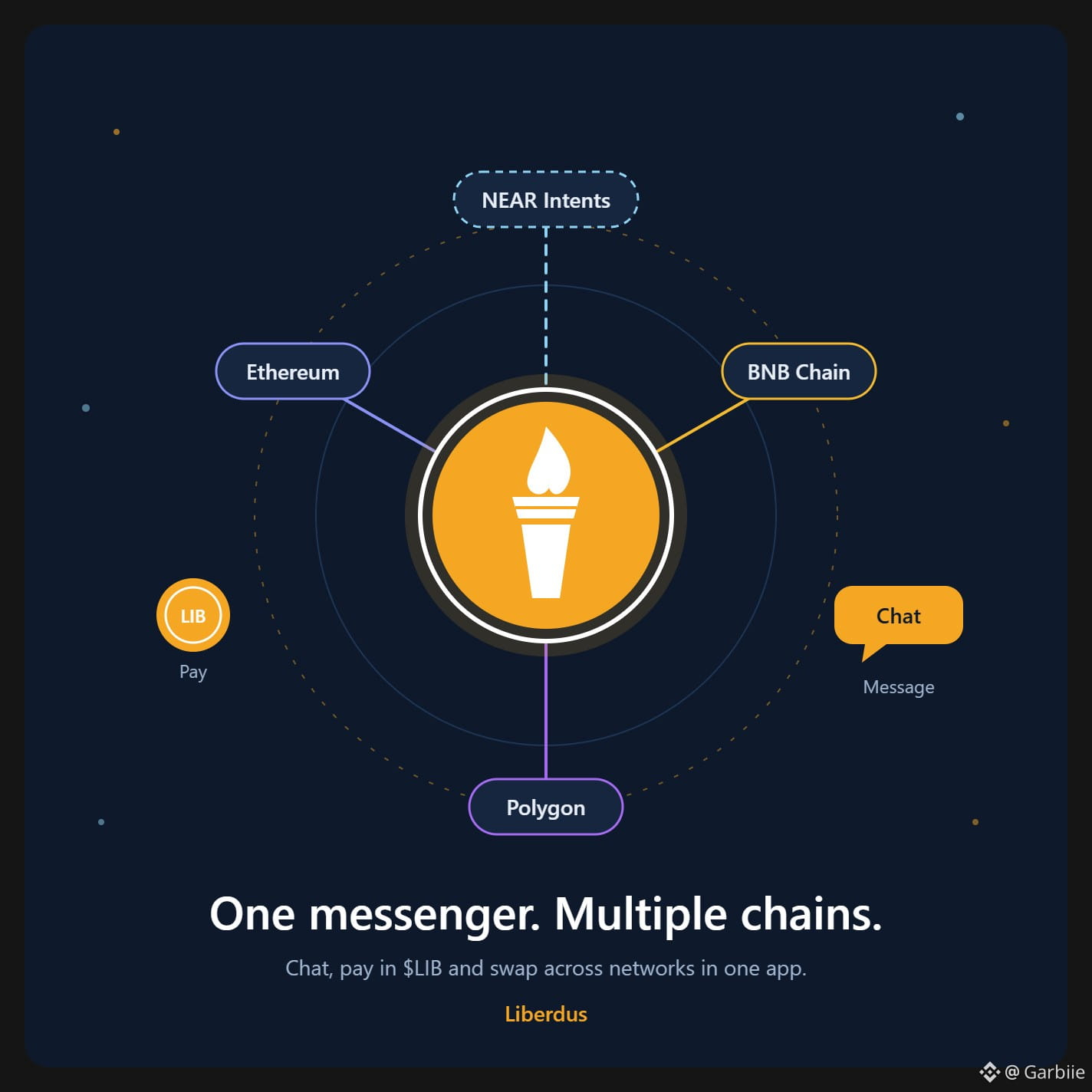
Imagine being able to chat, send crypto and swap assets across different blockchains without jumping between several apps.
That's the experience Liberdus brings to the table.
It's not just another messaging application. You can communicate, make payments using $LIB and swap assets across $ETH , $BNB
{future}(BNBUSDT)
Chain and Polygon, all within the same app.
There's also NEAR Intents, offering a separate pathway for cross-chain swaps and expanding the range of assets users can access.
I like the direction this takes crypto.
We've spent years dealing with fragmented ecosystems, multiple wallets, different interfaces and unnecessary steps just to get simple things done.
Bringing communication and multi-chain transactions closer together makes a lot of sense.
Crypto needs more experiences that connect its different parts instead of keeping everything isolated.
#Liberdus is an interesting step in that direction.
Imagine being able to chat, send crypto and swap assets across different blockchains without jumping between several apps.
That's the experience Liberdus brings to the table.
It's not just another messaging application. You can communicate, make payments using $LIB and swap assets across $ETH , $BNB
Chain and Polygon, all within the same app.
There's also NEAR Intents, offering a separate pathway for cross-chain swaps and expanding the range of assets users can access.
I like the direction this takes crypto.
We've spent years dealing with fragmented ecosystems, multiple wallets, different interfaces and unnecessary steps just to get simple things done.
Bringing communication and multi-chain transactions closer together makes a lot of sense.
Crypto needs more experiences that connect its different parts instead of keeping everything isolated.
#Liberdus is an interesting step in that direction.
335
·
--
Article
Liberdus: Can One Platform Make Web3 Easier to Use?One thing I keep thinking about in Web3 is how fragmented the experience still feels.
We use one app to communicate, another to send crypto, and sometimes several more just to move assets between different blockchains. Each tool may solve a specific problem, but switching between them can make the experience confusing, especially for people who are finding their way into Web3.
Shouldn't these activities feel more connected?
This is one reason #Liberdus has caught my attention. Its vision brings communication and crypto functionality into a more unified experience, with privacy and decentralization at the centre.
Some of the features that make the project interesting include:
🔐 Private, encrypted messaging for conversations.
💸 Built-in crypto payments that connect communication with value transfer.
🌐 Decentralized infrastructure, aiming to give users more control over their digital interactions.
🔄 NEAR Intents integration, designed to make cross-chain swaps smoother and reduce some of the friction involved in moving between networks.
For me, the bigger story is not simply that a project has several features. It is whether those features work together in a way that makes everyday tasks easier.
That distinction matters. Web3 does not need more complicated dashboards or products that only make sense to experienced crypto users. It needs practical tools that people can understand, trust, and return to.
At the same time, a good vision is only the starting point. Security, reliability, product execution, user experience, and adoption will matter far more than announcements or promises. The real test is whether people choose to use the platform because it solves a problem for them.
I am interested in seeing how Liberdus develops and whether it can turn this vision into a useful experience.
Web3's next step should be less friction and more freedom.
Keeping an eye on Liberdus.
#HuangExitNvidiaStrategyInFocus $BARD $DODO
Liberdus: Can One Platform Make Web3 Easier to Use?
One thing I keep thinking about in Web3 is how fragmented the experience still feels.
We use one app to communicate, another to send crypto, and sometimes several more just to move assets between different blockchains. Each tool may solve a specific problem, but switching between them can make the experience confusing, especially for people who are finding their way into Web3.
Shouldn't these activities feel more connected?
This is one reason #Liberdus has caught my attention. Its vision brings communication and crypto functionality into a more unified experience, with privacy and decentralization at the centre.
Some of the features that make the project interesting include:
🔐 Private, encrypted messaging for conversations.
💸 Built-in crypto payments that connect communication with value transfer.
🌐 Decentralized infrastructure, aiming to give users more control over their digital interactions.
🔄 NEAR Intents integration, designed to make cross-chain swaps smoother and reduce some of the friction involved in moving between networks.
For me, the bigger story is not simply that a project has several features. It is whether those features work together in a way that makes everyday tasks easier.
That distinction matters. Web3 does not need more complicated dashboards or products that only make sense to experienced crypto users. It needs practical tools that people can understand, trust, and return to.
At the same time, a good vision is only the starting point. Security, reliability, product execution, user experience, and adoption will matter far more than announcements or promises. The real test is whether people choose to use the platform because it solves a problem for them.
I am interested in seeing how Liberdus develops and whether it can turn this vision into a useful experience.
Web3's next step should be less friction and more freedom.
Keeping an eye on Liberdus.
#HuangExitNvidiaStrategyInFocus $BARD $DODO
1
291
·
--
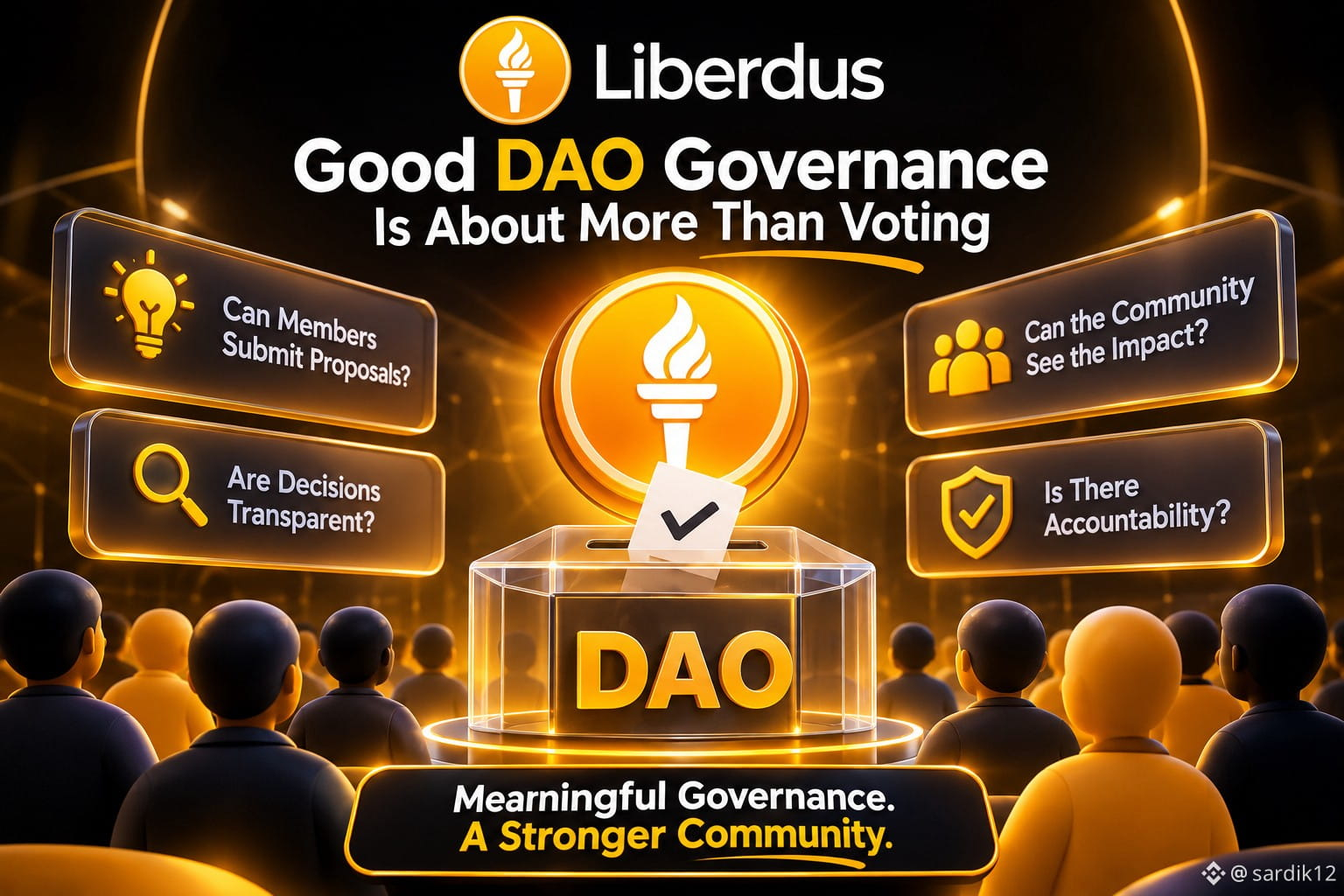
A DAO is not truly community-driven just because members can vote.
The real test is whether they can submit proposals, influence decisions, and hold the process accountable.
As Liberdus prepares its DAO features for testnet, governance is worth watching.
Voting is important, but community influence matters more.
What makes a DAO trustworthy to you?
#Liberdus #DAO #Governance
$SPCXB $HYPE
324
·
--
Bullish
🚀 AI infrastructure is getting bigger. But the next challenge is making technology easier to use.
NVIDIA is back in the spotlight as demand for AI computing continues to grow.
CoreWeave just reported a massive 168% year-over-year revenue increase, reaching $3.66 billion in Q3 2026.
Its revenue backlog also climbed to approximately $132.5 billion.
These numbers highlight how much investment is flowing into the infrastructure powering the next generation of technology.
But here's something worth thinking about:
Powerful technology means little if using it feels unnecessarily complicated.
The same challenge exists in Web3.
Crypto should feel as simple as sending a message.
No complicated bridges. No juggling multiple wallets. No unnecessary friction.
That's exactly the direction #Liberdus is exploring with NEAR Intents.
Imagine sending supported assets across different blockchains directly from your messaging app, while keeping communication and payments in one place.
Less complexity. More accessibility. A smoother Web3 experience.
Because the next generation of technology shouldn't just be more powerful.
It should make everyday interactions easier.
Liberdus is bringing conversations and crypto closer together. 🔥
#NVIDIA #NVDA #AI #NEAR

1
429
·
--
Decentralization isn't just about who runs the network. It's also about who gets a say in its future.
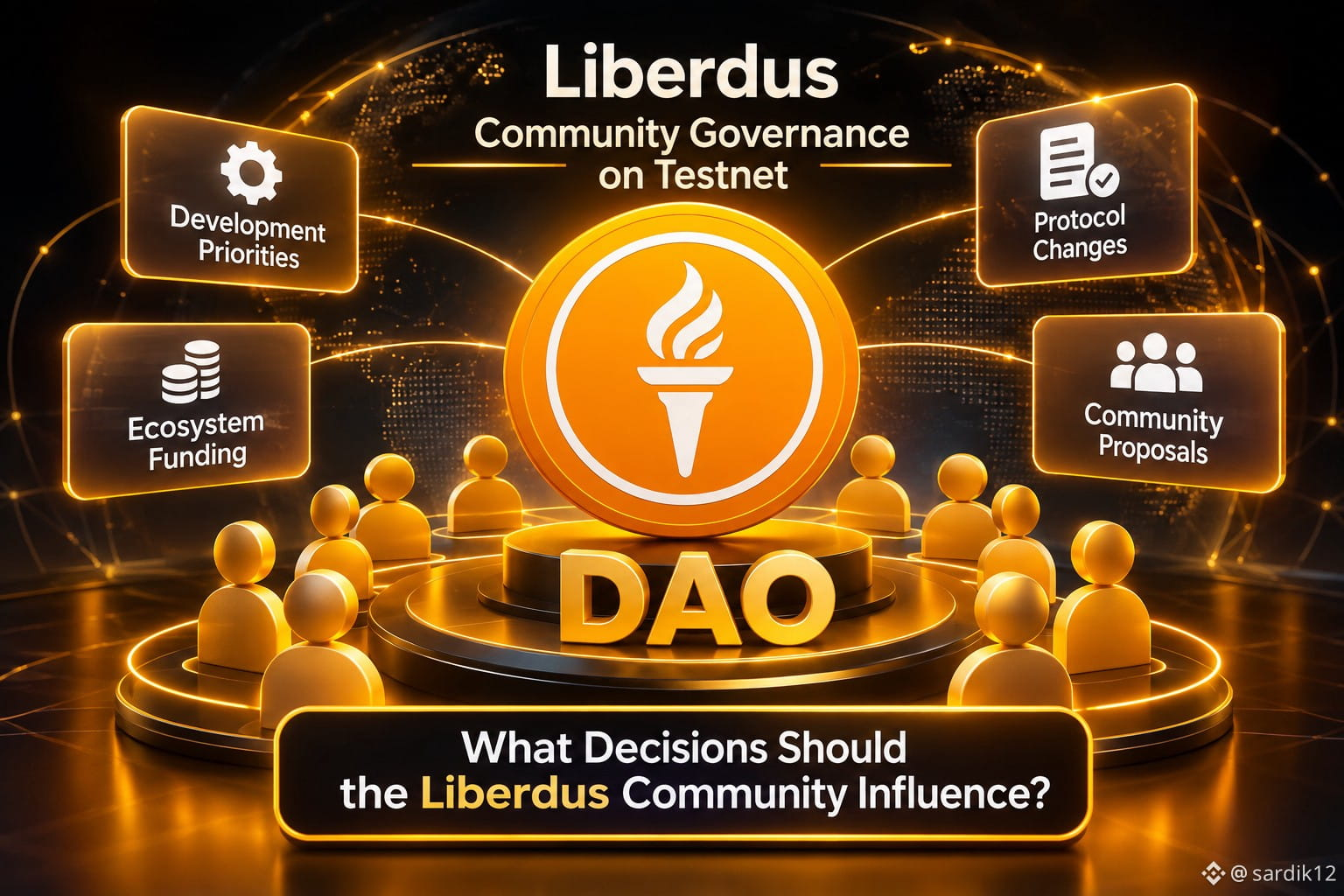
#Liberdus is preparing to introduce DAO features on its testnet, bringing community governance into focus.
But voting alone doesn't make a DAO effective. The real question is whether members can influence meaningful decisions.
Development priorities, ecosystem funding and protocol changes are areas worth discussing.
A decentralized network should give its community a voice, not just access.
What decisions should the Liberdus community be allowed to influence?
#Liberdus #DAO #Web3 $XRP $ETH
1
149
·
--
Bullish
⚡ Ethereum is becoming more active and cheaper to use. But are digital platforms giving users more control over their time?
Here's something interesting about $ETH :
Ethereum transactions increased by 54%, while average fees dropped by 58% compared with the previous year.
More activity. Lower costs. A more accessible network.
But there's another side of the digital experience we rarely discuss.
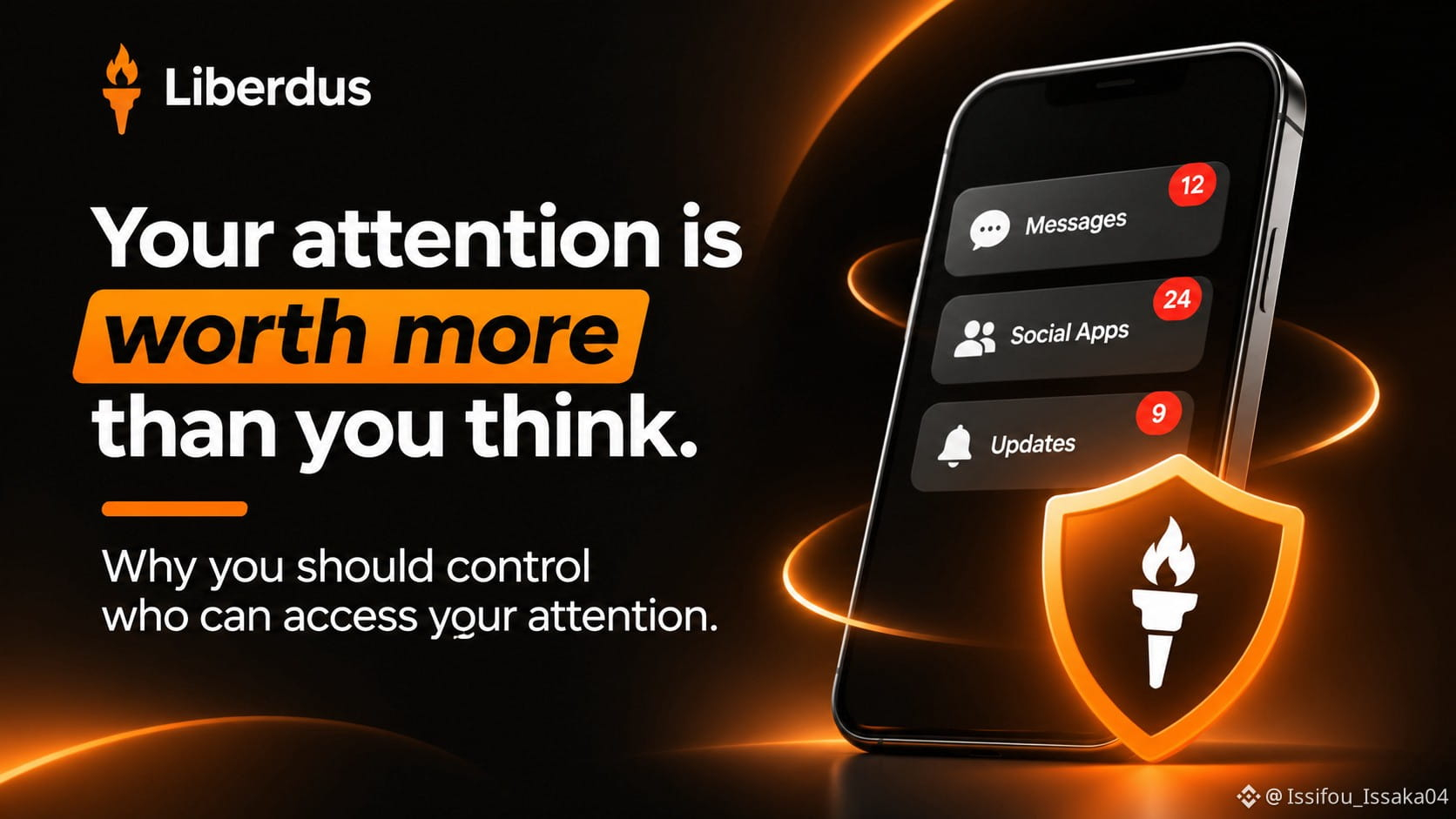
What about the cost of our attention?
Every notification, alert and message competes for something valuable: our time.
You open your phone to reply to one message, then another notification appears. You check it, scroll a little, and suddenly 20 minutes are gone.
The problem isn't technology itself.
It's when platforms decide how and when they get access to your attention.
Your time becomes something to capture. Your activity becomes something to analyze. Your habits become valuable data.
That's why digital freedom should also mean having control over your interactions.
This is one of the reasons I find #Liberdus interesting.
By focusing on private, decentralized communication, Liberdus supports a vision where users have more control over their digital interactions.
Because technology should serve your needs, not constantly compete for your attention.
Your attention belongs to you. Your conversations belong to you. Your digital life should too. 🔐
#Ethereum #ETH #Privacy
1
144

·
--
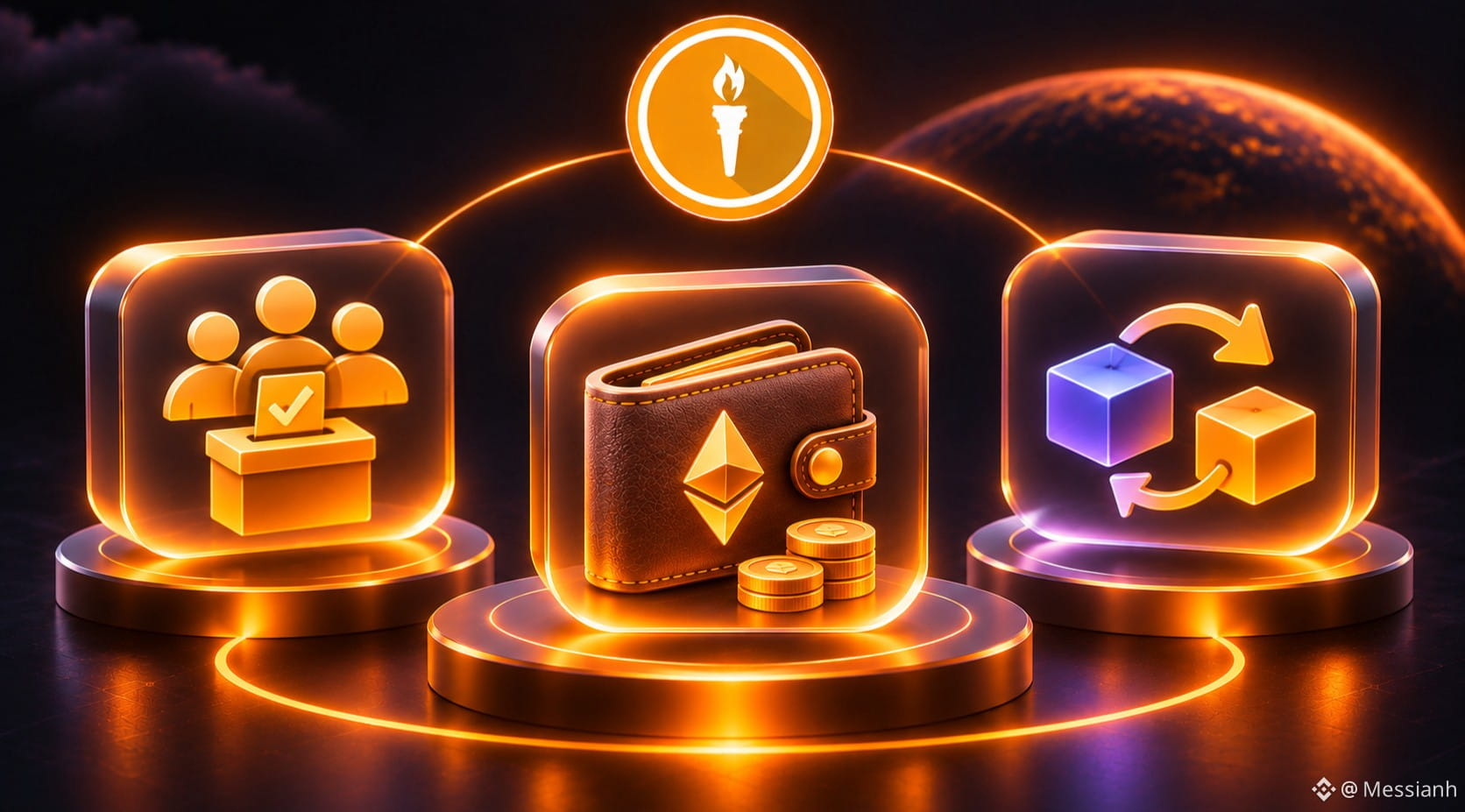
Web3 is evolving. And ecosystems need to evolve with it. Three interesting developments are being prepared for Liberdus:
🔸 DAO Features
Bringing decentralized governance closer to the community, with DAO features planned for Testnet.
🔸 EVM Wallet & Asset Launch
Expanding the ecosystem with an EVM Wallet and the introduction of digital assets.
🔸 NEAR Intents
Exploring cross-chain interoperability to make interactions between different blockchain ecosystems easier.
Three developments. Three different challenges. Governance. Digital asset management. Interoperability.
The goal is to keep building an ecosystem that gives users more ways to participate and interact with Web3.
Which of these developments are you most interested in exploring?
#Liberdus #Web3 #NvidiaInvestigatesAfterHuang’sAffairApology $PEPE
{spot}(PEPEUSDT)
Web3 is evolving. And ecosystems need to evolve with it. Three interesting developments are being prepared for Liberdus:
🔸 DAO Features
Bringing decentralized governance closer to the community, with DAO features planned for Testnet.
🔸 EVM Wallet & Asset Launch
Expanding the ecosystem with an EVM Wallet and the introduction of digital assets.
🔸 NEAR Intents
Exploring cross-chain interoperability to make interactions between different blockchain ecosystems easier.
Three developments. Three different challenges. Governance. Digital asset management. Interoperability.
The goal is to keep building an ecosystem that gives users more ways to participate and interact with Web3.
Which of these developments are you most interested in exploring?
#Liberdus #Web3 #NvidiaInvestigatesAfterHuang’sAffairApology $PEPE
2
132
·
--
Crypto $BTC doesn't need another project chasing attention. It needs projects solving problems people experience every day.
That's where #Liberdus deserves a closer look.
Imagine combining private decentralized communication with crypto payments in one ecosystem.
No unnecessary complexity. More control over your digital interactions and assets.
What catches my attention is the bigger vision: making crypto easier to access while keeping decentralization at the center.
With Shardus technology powering its architecture, Liberdus is exploring a different approach to scalability.
I'm particularly interested in how its multi-asset expansion develops.
Adoption won't come from promises alone. It will come when using crypto feels as natural as sending a regular message.
That's the kind of progress worth watching...
$INIT $SOXLB #BitcoinFiveWeeklyLosses

249
Article
The Internet Was Built to Connect Us, Not Expose Us.Remember when the internet felt like a place to explore, share ideas and connect with people?
You could communicate, discover new communities and exchange information without feeling like every action was being recorded.
The original promise of the internet was simple: bring people closer together.
But somewhere along the way, things started to change.
Today, connecting to a platform often means giving something in return. Your email address, phone number, personal information, location and sometimes even access to your contacts.
And that's just the beginning.
When connection became data collection
Modern digital platforms have built powerful ecosystems around our daily activities.
Every message, search, click and interaction can generate valuable information.
This data helps companies understand user behavior, personalize experiences and generate revenue through advertising and other business models.
But there's an important question we rarely ask:
How much personal information should we have to give away just to use the internet?
Think about messaging apps.
You want to talk to a friend, share an idea or join a community. Yet, many platforms require personal identification before you can even get started.
Your conversations may feel private, but the digital infrastructure behind them can involve data collection, centralized storage and access policies that users don't always understand.
Convenience has become the priority. Privacy often comes second.
Privacy is not about hiding something
One common misconception is that people only need privacy when they have something to hide.
That's simply not true.
Privacy is about having control over your personal information.
It's about deciding what you share, who gets access to it and how your digital identity is used.
You don't leave your house and hand your personal documents to everyone you meet. So why should communicating online require giving away more information than necessary?
Privacy should be a basic part of the digital experience, not a premium feature or an afterthought.
A different direction for digital communication
This is where projects like Liberdus become interesting.
Liberdus is building a decentralized communication ecosystem designed to put privacy and user control back at the center of the experience.
Its vision includes:
• No mandatory phone number: Users can create accounts without linking their communication identity to a phone number.
• End-to-end encryption: Protecting conversations from unwanted access.
• Decentralized infrastructure: Reducing dependence on centralized platforms.
• Open-source development: Allowing independent scrutiny of the code.
• Integrated crypto payments: Bringing communication and digital transactions closer together.
The bigger idea is not simply to create another messaging application.
It's to rethink how people should communicate and interact in a digital world where personal information has become increasingly valuable.
The internet deserves a better balance
Technology should make communication easier, not make people feel exposed.
We shouldn't have to choose between convenience and privacy. We shouldn't need to surrender our personal information every time we want to connect with someone.
The internet was built to bring people together.
Perhaps it's time we started building it around that original purpose again.
Connect freely. Communicate privately. Stay in control.
That's the future Liberdus wants to help build.
#Liberdus #web #Privacy
The Internet Was Built to Connect Us, Not Expose Us.
Remember when the internet felt like a place to explore, share ideas and connect with people?
You could communicate, discover new communities and exchange information without feeling like every action was being recorded.
The original promise of the internet was simple: bring people closer together.
But somewhere along the way, things started to change.
Today, connecting to a platform often means giving something in return. Your email address, phone number, personal information, location and sometimes even access to your contacts.
And that's just the beginning.
When connection became data collection
Modern digital platforms have built powerful ecosystems around our daily activities.
Every message, search, click and interaction can generate valuable information.
This data helps companies understand user behavior, personalize experiences and generate revenue through advertising and other business models.
But there's an important question we rarely ask:
How much personal information should we have to give away just to use the internet?
Think about messaging apps.
You want to talk to a friend, share an idea or join a community. Yet, many platforms require personal identification before you can even get started.
Your conversations may feel private, but the digital infrastructure behind them can involve data collection, centralized storage and access policies that users don't always understand.
Convenience has become the priority. Privacy often comes second.
Privacy is not about hiding something
One common misconception is that people only need privacy when they have something to hide.
That's simply not true.
Privacy is about having control over your personal information.
It's about deciding what you share, who gets access to it and how your digital identity is used.
You don't leave your house and hand your personal documents to everyone you meet. So why should communicating online require giving away more information than necessary?
Privacy should be a basic part of the digital experience, not a premium feature or an afterthought.
A different direction for digital communication
This is where projects like Liberdus become interesting.
Liberdus is building a decentralized communication ecosystem designed to put privacy and user control back at the center of the experience.
Its vision includes:
• No mandatory phone number: Users can create accounts without linking their communication identity to a phone number.
• End-to-end encryption: Protecting conversations from unwanted access.
• Decentralized infrastructure: Reducing dependence on centralized platforms.
• Open-source development: Allowing independent scrutiny of the code.
• Integrated crypto payments: Bringing communication and digital transactions closer together.
The bigger idea is not simply to create another messaging application.
It's to rethink how people should communicate and interact in a digital world where personal information has become increasingly valuable.
The internet deserves a better balance
Technology should make communication easier, not make people feel exposed.
We shouldn't have to choose between convenience and privacy. We shouldn't need to surrender our personal information every time we want to connect with someone.
The internet was built to bring people together.
Perhaps it's time we started building it around that original purpose again.
Connect freely. Communicate privately. Stay in control.
That's the future Liberdus wants to help build.
#Liberdus #web #Privacy
1
58
·
--
Bullish
Crypto is moving beyond just buying, selling and holding tokens.
One thing that still makes Web3 unnecessarily complicated is having to jump between different platforms to do simple things.
Want to message someone privately? Open one app.
Want to send crypto? Open another.
Need to swap assets across chains? Now you're dealing with bridges and extra steps.
#Liberdus is bringing these experiences closer together.
Its NEAR Intents integration adds cross-chain swapping to an ecosystem that already combines private messaging and crypto payments.
Gasless transactions across supported networks make the experience even more interesting.
And this is happening while $HYPE and other major crypto projects are attracting attention on Binance Square.
For me, the bigger conversation isn't just about which token is trending today.
It's about which projects are making Web3 genuinely easier to use.
Liberdus deserves a place in that conversation.

357
·
--
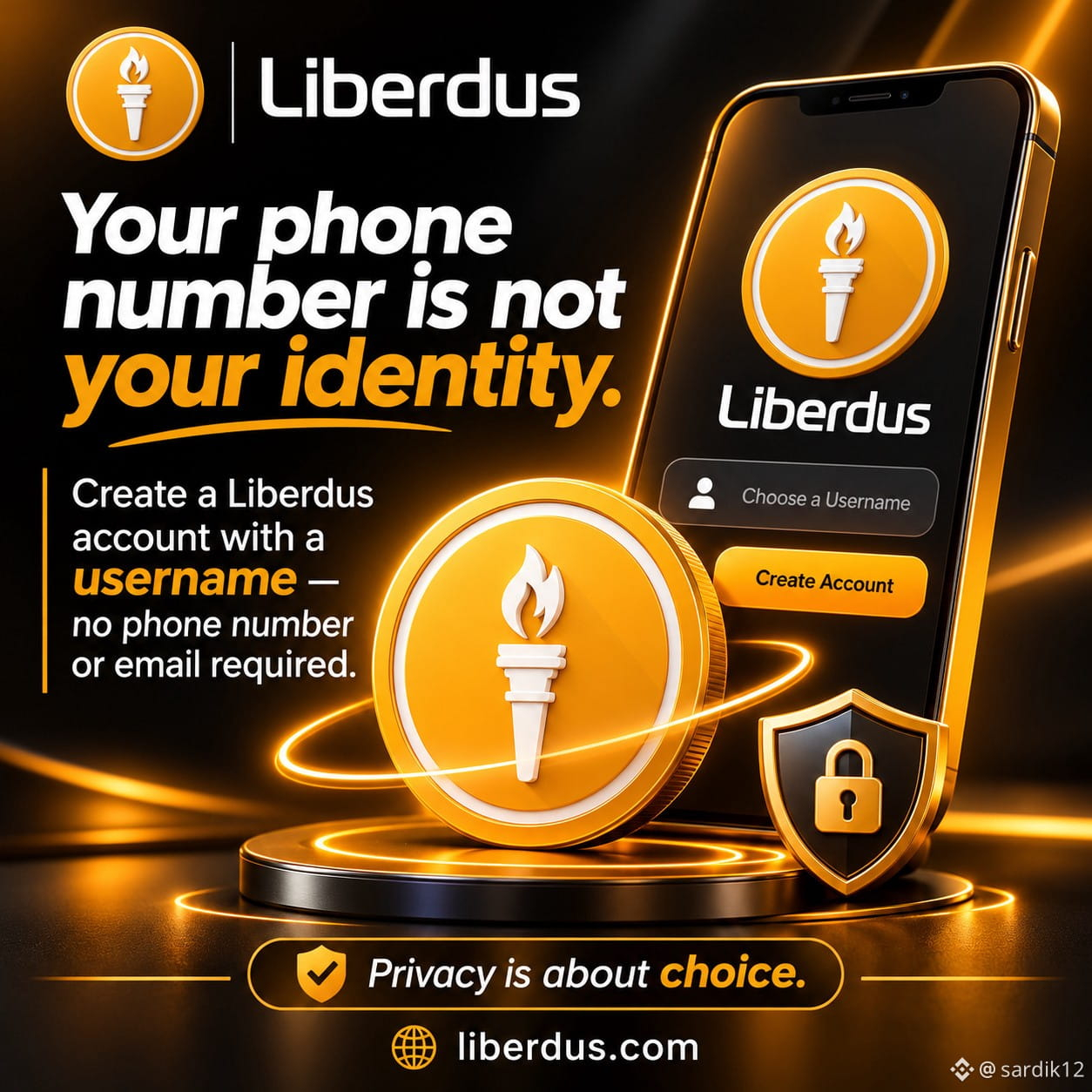
Your phone number is not your identity. 🔐
Think about how many apps ask for your phone number or email before you can even start using them.
We've accepted this as normal, but is it always necessary?
@Liberdus offers another approach: create an account with a username, without providing a phone number or email during registration.
It's a simple feature, but it highlights something important about digital privacy: users should have choices about the personal information they share.
Privacy isn't about hiding. It's about control.
Would you use a messenger that lets you register without your phone number or email? Why?
#Liberdus #Privacy #Web3
$XRP $SOL
261
Log in to explore more content
Join global crypto users on Binance Square
⚡️ Get latest and useful information about crypto.
💬 Trusted by the world’s largest crypto exchange.
👍 Discover real insights from verified creators.
Email / Phone number
Trending Topics
1
#BTCReboundsAbove$60KAmidWhaleDipBuying
15,359 views
121 Discussing
2
#SolanaSets2027RoadmapToDoubleComputeCapacity
2,143 views
115 Discussing
3
#CaliforniaNvidiaProbeExaminesPotentialCriminalViolations
1,797 views
34 Discussing
4
#BlackRockLaunchesHKDollarDigitalLiquidityFund
3,847 views
131 Discussing
5
#NvidiaLoses$2.7TrillionInMonthAndAHalf
50,580 views
243 Discussing
6
#GlobalStocksFaceLongestLosingStreakSince2023
434,724 views
2,829 Discussing
7
#BlackRockIBITPostsRecord$541MSingleDayOutflow
66,752 views
156 Discussing
8
#AnthropicPlungesTowardIPOPriceonDay2
236,569 views
1,841 Discussing
9
#TwentyOneCapitalAdds172.25BTC
116,271 views
1,216 Discussing
10
#HKBillWouldExcludeTokenizedDepositsFromVirtualAssets
15,237 views
85 Discussing