
#macrorisk
macrorisk
312,677 views
854 Discussing
Hot
Latest

🚨 $BTC FACING STRUCTURAL STRESS AS PRIVATE CREDIT AND LEVERAGE UNWIND ⚠️
The Federal Reserve is flagging a systemic overhang hiding in plain sight. Behind the parabolic capital flows into technological infrastructure lies a heavy layer of private credit leverage and institutional debt. 📊
When borrowing costs remain elevated alongside stubborn inflation, stretched valuations leave zero margin for error. If high-beta assets face forced deleveraging, expect a swift liquidity flush across $BTC and $ETH as margin structures test their ultimate limits. ⚡
Are institutional desks preparing for a major liquidity sweep before the next structural expansion? 👇
⚠️ Not financial advice. Always manage your risk. 🛡️
🏷️ #BTC #MacroRisk #MarketStructure #Crypto
🦈 📉
6

Article
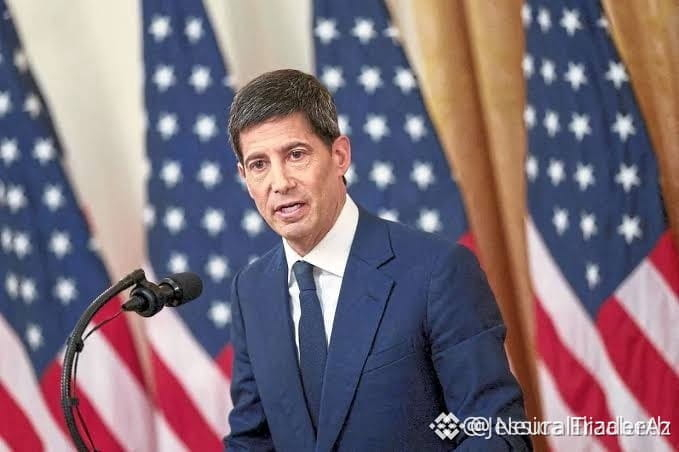
Fed Warns AI Agents Could Trigger Instant Bank RunsFederal Reserve Governor Michael Barr has issued a stark warning regarding the systemic implications of autonomous AI agents in the financial sector. The speed at which these agents can execute transactions poses a novel threat to banking stability.
Unlike traditional bank runs which unfold over days or even hours, AI driven liquidity drains could occur within minutes. This compressed timeframe leaves central banks and commercial institutions with almost no reaction time to stabilize markets or provide emergency liquidity.
For institutional players, this signals a transition into an era of extreme volatility where algorithmic speed dictates the pace of capital flight. We are moving from human driven panic to machine accelerated insolvency risks.
#MacroRisk #FederalReserve
Fed Warns AI Agents Could Trigger Instant Bank Runs
Federal Reserve Governor Michael Barr has issued a stark warning regarding the systemic implications of autonomous AI agents in the financial sector. The speed at which these agents can execute transactions poses a novel threat to banking stability.
Unlike traditional bank runs which unfold over days or even hours, AI driven liquidity drains could occur within minutes. This compressed timeframe leaves central banks and commercial institutions with almost no reaction time to stabilize markets or provide emergency liquidity.
For institutional players, this signals a transition into an era of extreme volatility where algorithmic speed dictates the pace of capital flight. We are moving from human driven panic to machine accelerated insolvency risks.
#MacroRisk #FederalReserve
16

🚨 $BTC SLIPS BELOW $77K AS JOB DATA REIGNS ⚡
Entry: 77,500 ⚡
🔴 The 57‑year‑low jobless claims have snapped the Fed’s easing hopes, turning the market into a full‑blown macro risk‑off. 📊 Liquidity swept $370 M of levered positions in just 60 minutes, flooding sell pressure across the board. 🌊
💡 BTC’s breach of $77,000 and the looming $75,700 low signal a fragile rebound that could tumble into the $76‑$77 k zone if buyers don’t step up. 👇 Are you betting on a quick bounce back or bracing for a deeper dip?
⚠️ Not financial advice. Always manage your risk. 🛡️
🏷️ #BTC #ShortSetup #MacroRisk #Crypto
🔥 💎
15

·
--
Iran’s Islamic Revolutionary Guard Corps (IRGC) Public Relations Department recently issued a statement saying that its air defense forces had successfully intercepted and shot down an advanced MQ-1 drone in the airspace east of the Strait of Hormuz, near the Strait of Siri Island. This is the 14th unmanned reconnaissance aircraft of the same type recorded as having been shot down in the region recently, marking a renewed escalation in the military standoff at a strategic chokepoint in the Middle East.
The Strait of Hormuz handles nearly one-fifth of global seaborne crude oil trade, and any direct military exchange in the area is far from an isolated event. Markets had generally expected geopolitical tensions to remain at a manageable level of deterrence, but the direct use of live fire to intercept a military-grade drone has significantly increased the tail risk of strategic miscalculation and a wider conflict.
The escalation in geopolitical conflict poses a direct threat to crude oil supply chains, driving crude prices and traditional safe-haven assets such as gold higher in the short term. Meanwhile, fears that energy supply disruptions could reignite inflation may force central banks around the world to extend restrictive high-interest-rate cycles, weighing on the valuations of macro risk assets such as U.S. Treasuries and equities.
For crypto markets, extreme geopolitical crises often trigger a broad market liquidity drain and deleveraging in their initial stages. Investors should be alert to a deep pullback in $BTC as macro risk appetite cools, and avoid blindly betting on a rebound until the situation becomes clearer. ⚠️
#Geopolitics #MiddleEast #MacroRisk
328

·
--
🚨 $85 BILLION WIPED FROM CRYPTO AS GEOPOLITICAL SHOCKS SLAM $BTC ! 🩸
Geopolitical headlines just triggered a sharp $85 billion liquidation cascade across the board, with panic sellers dumping spot while smart money quietly bids key order blocks. 🌊 Volatility is spiking as macro tensions test the structural resilience of $BTC at critical levels. 📊
When news-driven flash drops flush out overleveraged late longs, order flow usually resets before the broader trend asserts itself. 💡 Disciplined traders track key demand zones rather than reacting to emotional market headlines. 💬 Are you taking shelter on the sidelines or hunting high-conviction discount bids right now? 👇
⚠️ Not financial advice. Always manage your risk. 🛡️
🏷️ #BTC #CryptoNews #MarketCorrection #MacroRisk
📉 👁️
10
·
--
According to a report published today by The Wall Street Journal, the U.S. government has used diplomatic and military channels to warn several Gulf Arab states to prepare for a possible “short and intense” U.S. military strike on Iran after the midterm elections. The U.S. is currently speeding up the deployment of Patriot air defense systems from the mainland, adjusting the positioning of forces stationed on the front lines, and replenishing ammunition stockpiles. A new carrier strike group and a Marine battalion are also expected to head to the Middle East next month.
This geopolitical signal points to a substantial risk of escalation in the Middle East conflict. Although no final decision on military action has been made, the U.S. inclination to include Iranian infrastructure and nuclear facilities on its list of potential targets has completely upended the market’s earlier optimistic expectation that geopolitical tensions would gradually ease, casting a shadow over global energy supply chains and the macroeconomic outlook.
Rising risk aversion could quickly spill over into traditional financial markets. Concerns about crude oil supplies may drive up energy prices and exacerbate inflationary pressures, while U.S. Treasury yields and the dollar index could find support from safe-haven buying. Global equity risk assets, meanwhile, face intense pressure from valuation-driven corrections.
For cryptocurrency markets, escalating geopolitical crises often first trigger liquidity withdrawals and deleveraging. Investors should remain highly alert to the downside impact of macroeconomic black swan events and, until uncertainty has fully cleared, guard against liquidity crunches in core assets such as $BTC .
#Geopolitics #MiddleEast #MacroRisk
59

🦈 $XAG $XAUT $DOGE : MACRO SHOCKS TESTING RESILIENCE 🚨
📊 Global wars, election cycles, and central‑bank meetings are hammering liquidity pools, forcing smart‑money to hunt deeper order blocks. 🌊 Each GDP release and inflation print reshapes the demand‑supply balance, yet the metal‑backed tokens keep carving higher‑timeframe bullish structures. 💡 The confluence of these macro anchors creates a classic “inefficiency fill” window for disciplined players.
🤔 Are you positioning to ride the institutional re‑accumulation or waiting for the next liquidity sweep? 👇
⚠️ Not financial advice. Always manage your risk. 🛡️
🏷️ #XAG #XAUT #DOGE #MacroRisk #SmartMoney
🚀 ⚡
26
·
--
Ukrainian President Zelenskyy said in his latest update that Russian forces fired 16 ballistic missiles into Ukraine and deployed more than 280 drones over the past night. At the same time, Zelenskyy publicly criticized delays in the delivery of air-defense interceptor missiles, saying they directly weakened frontline defenses and advanced the other side’s strategic objectives.
The ongoing escalation of large-scale airstrikes and disruptions in the supply chain for Western military aid highlight that the geopolitical conflict in Eastern Europe is entering a dangerous new phase of attrition warfare. Markets’ previous complacency about the conflict becoming normalized may be forced to shift, putting safe-haven premiums under renewed pressure to reprice.
A substantial rise in geopolitical risks is pushing up global stagflation expectations and increasing volatility in commodity and crude oil prices. The U.S. dollar index and Treasury yields are gaining safe-haven support, while valuations of high-risk assets will continue to face the dual pressures of tightening liquidity and risk aversion.
For crypto markets, liquidity outflows triggered by geopolitical crises often take effect before safe-haven narratives do. Against a backdrop of sharply rising macroeconomic uncertainty, risk assets such as $BTC are particularly vulnerable to near-term pressure, and investors should beware of sharp deleveraging risks.
#Geopolitics #UkraineCrisis #MacroRisk
743
·
--
According to two U.S. officials, U.S. forces deployed in the Middle East have completed preparations for a large-scale military operation and could launch a new round of high-intensity strikes against Iran within 96 hours of receiving an order from U.S. President Donald Trump. Unlike previous conventional defensive operations, which were limited to suppressing radar systems and missile launch sites, the scope of the current operational plan would be significantly broader, aiming to strike key strategic targets in depth.
This potential military escalation has completely upended market expectations that the fragile balance in the Middle East would hold. If the U.S. military formally launches a full-scale attack, energy supply chains and vital shipping lanes in the Persian Gulf would face a direct risk of disruption, sharply increasing the likelihood that geopolitical tensions could escalate from localized friction into systemic confrontation.
Macroeconomic markets have rapidly priced in the risk. Oil prices face significant upward pressure, as tighter energy supplies would directly raise inflation expectations and limit central banks’ room to cut interest rates. Surging demand for safe-haven assets is strengthening the U.S. dollar and gold, while valuations of global risk assets are likely to come under severe pressure.
For crypto assets, tightening liquidity and spreading risk aversion are significant headwinds. As macro-geopolitical crises intensify, risk assets such as $BTC are often among the first to face deleveraging-driven sell-offs. Investors should be highly alert to the risk of short-term liquidity cascades and market declines.⚠️
#Geopolitics #MiddleEastCrisis #MacroRisk
49
🚨 $BTC FACES POTENTIAL $10K SLIDE AS MACRO STRESS MOUNTS 📉
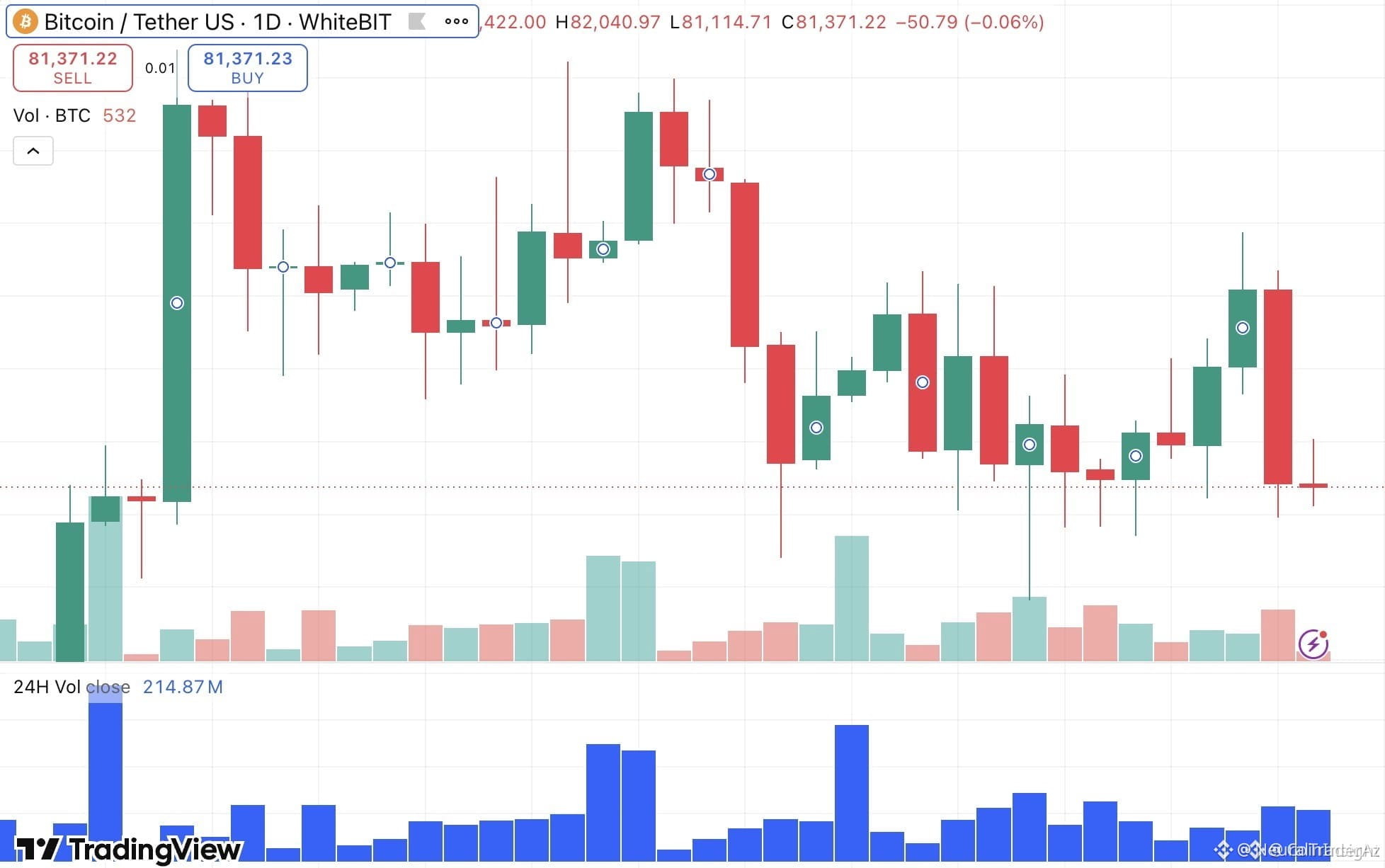
📊 Bloomberg’s Mike McGlone warns that a 20% equity correction could trigger a massive risk‑off, pulling $BTC toward the $10,000 abyss. The 50‑week EMA is slipping near $76k, a fragile support that has already been tested by the $66k‑$87k rally.
🦈 Smart money appears to be hoarding liquidity beneath that moving average, ready to sweep the market if Fed‑driven rate hikes intensify. Volume spikes and order‑block re‑entries could spell a swift bearish thrust. 📈
💬 Do you see $BTC breaking below $76k or holding the line? 👇
⚠️ Not financial advice. Always manage your risk. 🛡️
🏷️ #BTC #MacroRisk #BearishSetup #Crypto
🦈 🔥
7
·
--
Yemen’s Houthi forces recently issued an official statement announcing three major military operations targeting key sites inside Saudi Arabia. The group launched dozens of ballistic missiles, focusing on King Khalid International Airport in the Saudi capital, Riyadh; King Khalid Air Base in Al Khobar; and the Southern Naval Base in the Jizan region. The attacks were carried out in retaliation for previous Saudi-led coalition airstrikes on areas under Houthi control.
The attack directly targeting Saudi Arabia’s core transport hubs and military infrastructure marks a substantial escalation in Middle East geopolitical tensions. Markets had significantly underpriced the tail risk of a wider regional conflict. Strikes of this kind against key hubs not only pose a serious threat to shipping security in the Red Sea and surrounding waters, but also directly threaten energy infrastructure in the Gulf region.
The sudden rise in geopolitical risk is likely to increase the risk premium on global crude oil, potentially further intensifying persistent inflation. As risk aversion spreads, traditional safe-haven assets such as the US dollar and gold are likely to attract capital, while renewed fears of rising inflation could dampen expectations for interest rate cuts by major central banks, keeping global sovereign bond yields volatile at elevated levels.
For cryptocurrency markets, pressure on both liquidity and risk appetite is likely to cause significant disruption. Against a backdrop of intersecting macroeconomic stagflation risks and geopolitical uncertainty, investors should remain highly cautious. High-beta risk assets such as $BTC may face short-term correction pressure as capital flows back into safe-haven assets. 📉
#Geopolitics #CrudeOil #MacroRisk
33
·
--
The U.S. Embassy in Saudi Arabia recently issued an official emergency security alert on its website, explicitly ordering nonessential embassy personnel to leave the country. This high-level diplomatic precaution directly confirms that security conditions in the heart of the Middle East are facing a serious and substantial deterioration. Against the backdrop of a recent attack on the Riyadh hub and ongoing military threats from Houthi forces, the embassy evacuation is no routine precaution—it is a clear signal that geopolitical conflict has entered a high-risk window.
This development has significantly upended market optimism about an easing of tensions, bringing extreme uncertainty to the restructuring of global energy supply chains. As a key global oil producer, Saudi Arabia’s rising security risks are directly increasing the risk premium associated with disruptions to crude production and transportation. If the conflict escalates further, persistent global inflation and imported inflationary pressures are bound to resurface, further complicating the monetary policy decisions facing major central banks.
In traditional financial markets, risk-aversion is rapidly taking hold. Safe-haven commodities such as crude oil and gold are receiving strong support, while volatility in the U.S. Dollar Index and Treasury yields is also intensifying. The prospect of a second, sharp surge in energy prices is eroding market expectations for an easing liquidity cycle, placing broad valuation pressure on global risk assets.
For cryptocurrency markets, the sudden escalation of the Middle East geopolitical crisis will directly weigh on risk appetite in the short term. Amid renewed inflation expectations and concerns about tighter liquidity, major assets such as $BTC may face selling pressure from deleveraging and liquidity outflows. The risk of market panic spreading further warrants close attention.⚠️
#Geopolitics #CrudeOil #MacroRisk
470
·
--
Reuters recently cited Iranian senior security officials as saying that if the US and Israel launch another military strike against Iran, Tehran has drawn up a retaliation plan targeting undersea fiber-optic cables in the Persian Gulf and the Strait of Hormuz. Iran has even warned that it would prevent repairs to cables during wartime and could include related AI facilities and data centers among its targets.
This potential threat pushes the scope of traditional geopolitical conflict beyond energy supplies, bringing physical communications and digital infrastructure directly into the line of fire. Although the Strait of Hormuz carries a limited share of global traffic, any disruption to the Gulf region’s financial transactions, cloud services, and logistics data networks could have significant spillover effects beyond the region and create systemic risks.
As the prospect of conflict in the Middle East escalates into infrastructure warfare, risk appetite across macro markets is expected to tighten further. Geopolitical premiums in crude oil may rise again, while increased safe-haven demand could drive up the US dollar and gold, limiting the scope for global risk assets to recover their valuations and raising the risk of a sharp increase in market volatility.
For crypto markets, the physical stability of liquidity and computing-power networks remains vulnerable to macroeconomic pressures. Should regional network disruptions coincide with spreading risk aversion, digital assets, including $BTC , will inevitably face downward selling pressure. Investors should remain highly cautious about sudden changes in liquidity. ⚠️
#Geopolitics #MiddleEast #MacroRisk
138
·
--
In the early hours of October 23, multiple powerful explosions rang out across central Riyadh, the capital of Saudi Arabia. Residents' mobile phones successively received official emergency air defense alerts. This sudden security incident shows that the Middle East's central energy hub and the strategic depth of its capital are now directly exposed to the threat of attack. The rapid deterioration of the situation has not only shattered the region's already fragile balance, but also marks the substantive spread of military confrontation across a wider area.
From a macroeconomic perspective, Saudi Arabia is a key pillar of the global crude oil supply chain, so security threats on its own territory could have a highly disruptive impact on global commodity markets. The market had generally expected the regional conflict to remain confined to peripheral areas, but an attack on a major oil-producing nation would fundamentally reshape risk premiums. With global inflation still proving sticky, the potential threat of energy supply disruptions would significantly raise the likelihood of stagflation and greatly increase the risk of a hard economic landing.
In traditional financial markets, a sharp rise in risk aversion would prompt capital to rapidly move into safe-haven assets, putting international crude prices under intense, sudden upward pressure in the short term. A surge in oil prices would directly worsen inflation prospects across major economies, in turn supporting the U.S. dollar index and benchmark Treasury yields at higher levels for longer. If energy supplies are materially disrupted, central banks would have less room to ease policy, and tightening liquidity would broadly weigh on risk-asset valuations.
In the cryptocurrency market, a sudden geopolitical black swan event typically triggers indiscriminate liquidity outflows first, rather than immediately spurring safe-haven buying. Major crypto assets, including $BTC , face short-term downside risks from liquidity withdrawals and the liquidation of leveraged long positions, while market risk appetite is likely to take a severe hit. With both an energy crisis and interest-rate uncertainty looming, investors should exercise extreme caution and watch for a sustained correction as the macro liquidity environment deteriorates.
#Geopolitics #CrudeOil #MacroRisk
488
·
--
European sovereign debt markets showed signs of a sharp deterioration today. The spread between French and German 10-year government bonds widened rapidly to 161 basis points, setting a new high since the European sovereign debt crisis in November 2011. Meanwhile, the Belgium-Germany spread also climbed to 104.08 basis points, reaching a near 13-year high.
As core eurozone countries, France and Germany, along with Belgium and Germany, have seen their spreads widen sharply in tandem, signaling a concentrated surge in market concerns about the fiscal sustainability of non-German core members. This not only means a substantial repricing of sovereign risk premiums between Europe’s second-tier economies and its core, but also exposes deep-seated institutional investor wariness about pressure on European public debt.
Widening sovereign spreads are intensifying potential capital pressures on Europe’s banking sector and weighing heavily on the overall valuation of euro-denominated assets, in turn driving up the safe-haven premium in the global financial system. Against a backdrop of structurally rising borrowing costs, global liquidity conditions face the real prospect of tightening further.
For crypto assets, although cracks in traditional sovereign credit theoretically strengthen the decentralization narrative, risk assets generally face forced position cuts in the early stages of liquidity tightening and safe-haven-driven markets. If pressure on European debt spreads, crypto markets, led by $BTC , may remain under pressure in the short term.
#EuropeanDebt #BondYields #MacroRisk
14
·
--
Against the backdrop of escalating military conflicts in the Middle East, preliminary monitoring data released by commodities transportation intelligence company Kpler on Tuesday showed that traffic volume through the key energy corridor, the Strait of Hormuz, fell sharply earlier this week. According to statistics, on Monday only four cargo ships transited the strait, a significant drop from the 10 ships the previous day. This figure included two outbound cargo vessels and two inbound tankers operating empty, and some ships may have already shut down automatic identification systems to evade tracking.
As the lifeline of global crude oil transport, the sudden plunge in traffic through the Strait of Hormuz is by no means an unusual signal. The market had previously been harboring hopes that geopolitical conflicts would not materially spill over into the world’s main energy artery. In practice, the contraction in transit data confirms that the shipping-risk premium is rising rapidly, and the potential threat of supply-chain disruption is significantly intensifying.
This development directly increases the inflation risk on the supply side for commodities such as crude oil, causing market risk-aversion sentiment to heat up quickly. A potential rebound in energy prices would seriously hinder major central banks’ efforts to fight inflation. U.S. Treasury yields and the U.S. dollar index may remain at elevated levels due to sticky inflation expectations, thereby broadly suppressing the valuation outlook for global risk assets.
For the cryptocurrency market, the meaningful escalation of tensions in the Middle East often first triggers a return of liquidity to traditional safe-haven assets. Under the dual pressure of macro stagflation fears and geopolitical risk, risk assets such as $BTC may face capital outflows and sharp volatility in the short term. Investors should remain highly alert to the downside risks brought about by tighter liquidity. #Geopolitics #CrudeOil #MacroRisk
120

·
--
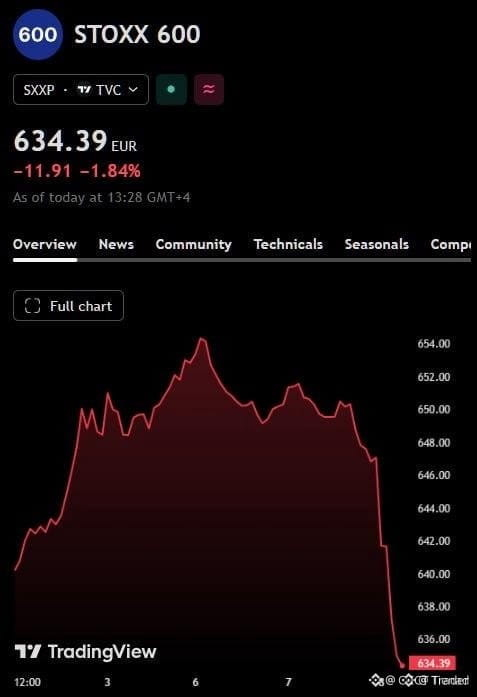
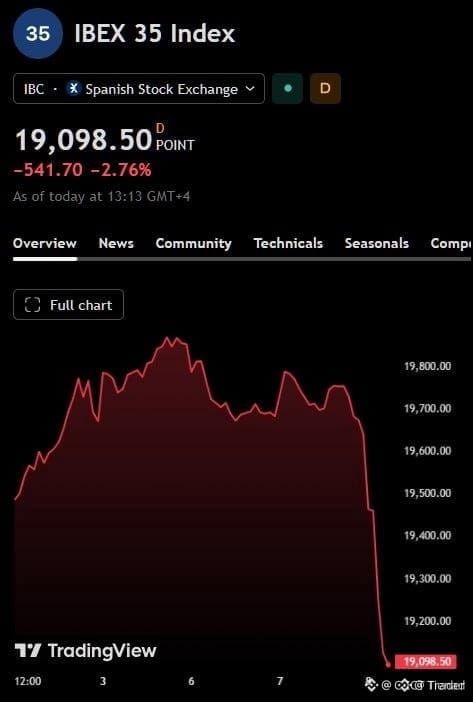
GEOPOLITICAL SHOCK HITS $SPELL $UTK $EVAA AS US-SPAIN TRADE ENDS 🔥
The announcement of a US trade halt with Spain has sent European stocks into a sharp decline, and the risk-off sentiment is spilling into crypto. $SPELL , $UTK , and $EVAA are seeing increased volatility as traders reassess exposure to macro-sensitive altcoins.
This is a liquidity-driven move — order flow suggests sellers are in control until a clear support level is established. Volume is picking up on lower timeframes, confirming active participation. The absence of a catalyst for reversal means caution is warranted. Are you reducing altcoin positions or waiting for a sweep of liquidity below current levels?
Not financial advice. Always manage your risk.
#SPELL #UTK #EVAA #MacroRisk #TradeWar
⚡
178
·
--
FED'S WALLER HINTS AT RATE HIKE – $BTC ON EDGE 🔥
Fed Governor Waller just confirmed that core inflation has risen broadly and the FOMC may need to raise rates soon. This is a direct shift in tone from recent dovish chatter. Rate hikes historically tighten liquidity, putting pressure on risk assets like crypto—especially after the recent rally.
The market has not fully repriced this hawkish surprise yet. Volume on $BTC futures just spiked 8% in the last hour as traders scramble to assess impact. Structure is fragile here. How are you positioning for a potential rate shock?
Not financial advice. Always manage your risk.
#BTC #MacroRisk #FedPolicy #CryptoMarkets
⚡
28

$BTC FACES MACRO HEADWINDS AS HORMUZ CONFLICT RISKS ESCALATION ⚠️
One side has the will to continue, the other to undermine — a formula for sustained conflict according to a senior maritime security analyst. The Strait of Hormuz disruption threatens global fuel and food costs, which historically translates into risk-off flows across crypto.
This isn't a technical setup — it's a structural macro shift that demands your attention. If energy prices spike, liquidity tends to leave high-beta assets like crypto first. Are you positioned for prolonged uncertainty?
Not financial advice. Always manage your risk.
#BTC #Geopolitics #MacroRisk #EnergyCrisis
⚠️
7
$BTC FEELS THE RIPPLE EFFECTS FROM KOREA'S SEMICONDUCTOR VOLATILITY 🔥
South Korea just triggered its sixth circuit breaker of the year as the KOSPI dropped 15.6% from June highs — driven by AI sector profit-taking and a regulatory crackdown on single-stock leveraged ETFs linked to Samsung and SK Hynix. This concentrated risk in the semiconductor industry is spilling into global risk assets, including crypto.
Liquidity conditions are tightening as Korean authorities monitor market stability. When chip stocks sneeze, correlated assets often catch a cold. Are you factoring in this external macro headwind into your position sizing?
Not financial advice. Always manage your risk.
#BTC #MacroRisk #Volatility #Crypto #Korea
🔥
146
Log in to explore more content
Join global crypto users on Binance Square
⚡️ Get latest and useful information about crypto.
💬 Trusted by the world’s largest crypto exchange.
👍 Discover real insights from verified creators.
Email / Phone number
Trending Topics
1
#WillMarketsStageAThanksgivingReliefRally?
5,948 views
166 Discussing
2
#BessentSoftensStanceOnHuang’sNvidiaReturn
4,283 views
102 Discussing
3
#MuskWarnsOfAICashCrunch
4,854 views
101 Discussing
4
#RussiaAllowsExchangesToOfferCryptoTrading
81 views
26 Discussing
5
#UKToBarCryptoExchangesFromMakingMarketsOnTheirOwnPlatforms
81 views
9 Discussing
6
#UKTreasurySignsCryptoMarketMakingExemptionRules
883 views
58 Discussing
7
#BTCReboundsAbove$60KAmidWhaleDipBuying
116,600 views
434 Discussing
8
#SolanaSets2027RoadmapToDoubleComputeCapacity
101,542 views
1,328 Discussing
9
#CaliforniaNvidiaProbeExaminesPotentialCriminalViolations
28,652 views
186 Discussing
10
#BlackRockLaunchesHKDollarDigitalLiquidityFund
88,111 views
974 Discussing