
#pythusdt
pythusdt
587,922 views
1,601 Discussing
Hot
Latest

·
--
PYTHUSDT Market Structure Analysis
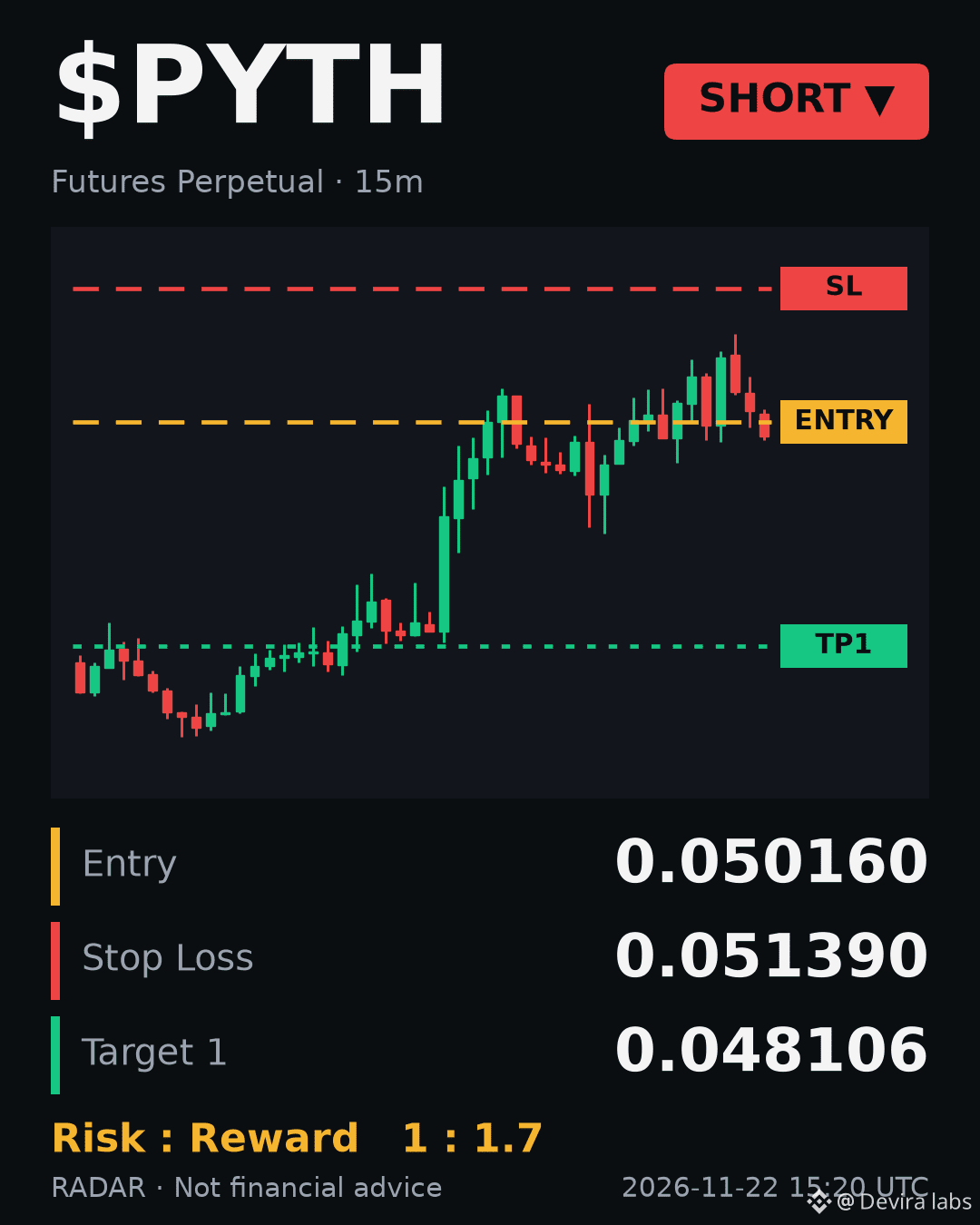
$PYTH
Market Context:
- Current Trend: Range-bound consolidation
- Condition: Sideways price action around 0.05016
- Observation: Structure indicates neutral regime behavior
Technical Levels:
- Support Zone: Lower range boundary
- Resistance Zone: Upper range boundary
- Trend Direction: Neutral
Scenario:
Bullish Scenario:
- Acceptance and expansion above the upper range boundary
Bearish Scenario:
- Sustained breakdown below the lower range support
Risk:
- False breakouts and prolonged chop within the current range
This analysis is for educational purposes only, not financial advice. Always manage your own risk.
#RADAR #Crypto #PYTHUSDT
2

Pear 🍐 The market’s steady growth is creating a vast financial canopy, sheltering my life.
📈 LONG $PYTH
Entry: 0.0522
TP: 0.0548 | SL: 0.0469
👓 The vision of a fully decentralized internet is gradually coming into focus.
📊 The Chande Momentum Oscillator indicates strong buying pressure.
🔥 Market opportunities are endless; protect your capital first.
🌸 May you always maintain an optimistic mindset amid all price fluctuations.
#PYTHUSDT $PYTHUSDT
59

·
--
$PYTH
{future}(PYTHUSDT)
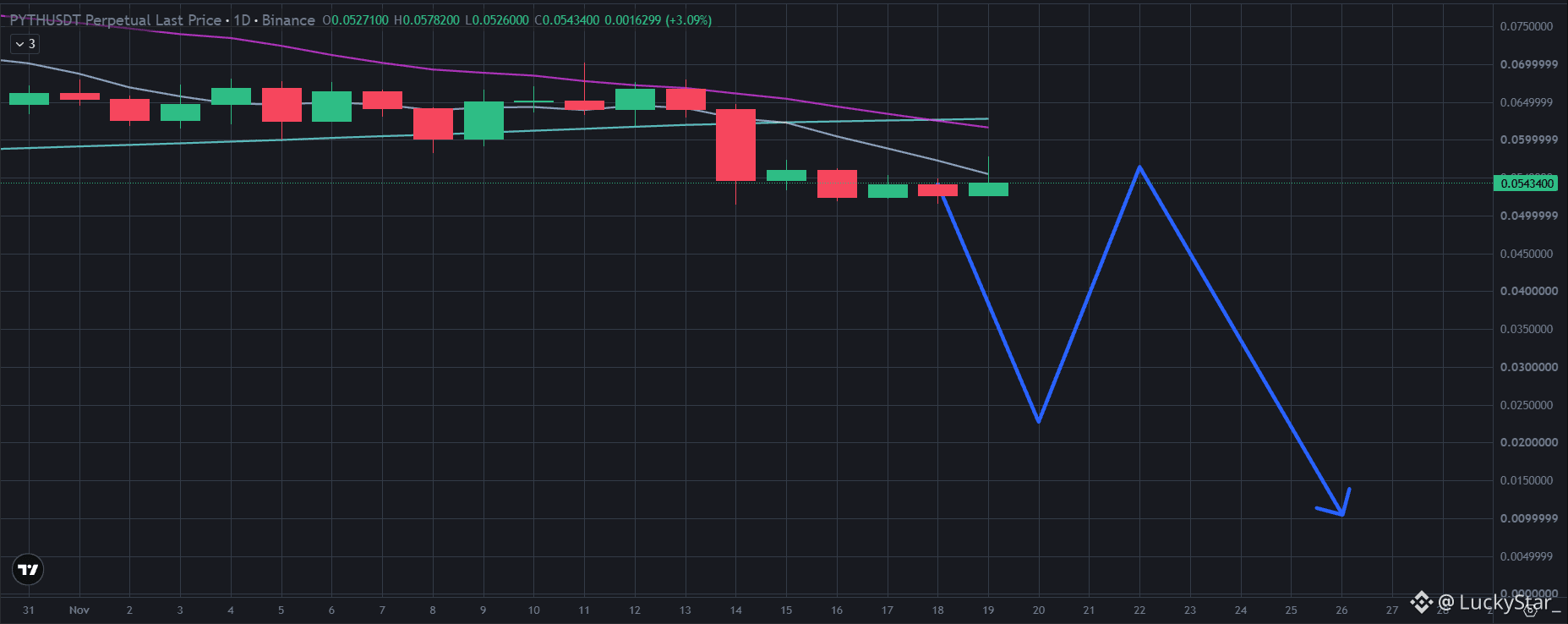
SHORT SETUP
🚀 The price is approaching a moment that could become a turning point.
The current chart structure indicates that sellers are dominating.
If momentum holds, the price could continue to move lower.
It is likely that sellers will find resistance at current levels.
If the rejection continues, the price could reverse lower to support.
#PYTH #PYTHUSDT #PYTHUSDT📈
$PYTH
SHORT SETUP
🚀 The price is approaching a moment that could become a turning point.
The current chart structure indicates that sellers are dominating.
If momentum holds, the price could continue to move lower.
It is likely that sellers will find resistance at current levels.
If the rejection continues, the price could reverse lower to support.
#PYTH #PYTHUSDT #PYTHUSDT📈
16

PYTH is ripping lower, the bears are hammering the last swing and the momentum’s screaming short.
🔴 $PYTH SHORT 📉 — Trade Plan
• Entry: $0.054975 – $0.055085
• Stop: $0.056681 (-3.0%)
• Target 1: $0.054205 (+1.5%)
• Target 2: $0.052278 (+5.0%)
• R/R 1:1.7 | Confidence 64%
A clean CHoCH broke the down‑trend line, CVD turned negative confirming sell pressure, while a fresh FVG lines up with an OB that just got swept, giving a tight POI confluence.
A 3.0 % stop is relatively tight, so keep leverage modest – around 3‑5×.
Take the first profit target as soon as price reaches the next resistance level.
Not financial advice — trade only what you can afford to lose 🙏
$PYTH #PYTHUSDT #ICP #TradingSignals #Write2Earn
33
PYTH is crumbling under the recent sell‑off, looks primed for a short swing. Momentum's already flipping.
🔴 $PYTH SHORT 📉
Entry → $0.052088-$0.052192
Stop → $0.053704 (-3.0%)
TP1 → $0.051358 (+1.5%)
TP2 → $0.049533 (+5.0%)
R/R 1:1.7 • Confidence 64%
We got a clear CHoCH on the 15‑min chart, the CVD is diving, a fresh FVG lines up with an OB, and the price just swept a liquidity pool, giving a POI confluence where the OB and FVG overlap. All that points to a short bias until the next swing high.
A 3 % stop is a bit tight for this volatility, so stick to 2‑3x leverage.
Take half profit around the first target and let the rest run to the 1.7R zone.
As always: manage your risk, this is not financial advice 🙏
$PYTH #PYTHUSDT #BinanceBlockchainWeek #TradingSignals #Write2Earn
19

·
--
Verified
#PYTHUSDT The customers most worth studying may not trade crypto at all...
332 paying accounts are worth a closer look than hundreds of thousands of followers! 😉
{future}(PYTHUSDT)
In its October report released on November 3, Pyth disclosed this figure, along with an annualized paid subscription run rate of $13.67 million. To be clear about what that means: it is the annualized value based on the subscription pace, not $13.67 million earned in October, and certainly not profit. It is a figure disclosed by the project.
The pain point it originally set out to solve was straightforward: on-chain lending, trading, and liquidations need to know market prices from the outside world. Smart contracts can’t look at exchange screens, so Pyth lets data providers publish price quotes for applications to use and verify. PYTH, meanwhile, plays a role in network governance and is used for incentives for the ecosystem, data publishers, and others. The token and the data service itself shouldn’t be conflated as one product.
Now it is starting to reach into the traditional financial data business. An announcement on November 11 said that Pyth’s data marketplace had added NYSE BQT market data, covering data from five stock exchanges in the NYSE Group. But customers still need to obtain a license directly from the NYSE and comply with its data agreements. Getting connected to a market-data feed does not mean you have the right to resell the data however you like.
The value of this pipeline ultimately depends on who is willing to keep paying for it. The growth in paying accounts and increased purchases from existing customers disclosed in the October report are closer to commercial validation than simply adding support for more chains.
The token price has yet to deliver an equally exciting answer. CoinGecko shows a price of about $0.05447, up 3.1% over 24 hours, with roughly $23.33 million in trading volume. Product growth and short-term price action can be completely out of sync.
PYTH already has a transmission path worth tracking. Approved OP-PIP-136 directs eligible product funds received by the DAO toward accumulating PYTH reserves. Note that this applies to the portion received by the DAO, not all product sales. The repurchased tokens go into the treasury; that doesn’t mean they are burned or that holders receive dividends.
Over the next three months, to assess whether this business can support token demand, we need to connect subscription renewals, actual funds received by the DAO, and token purchases. If annualized subscriptions grow but the treasury is slow to receive the money, the story is still missing a link. If real payments keep coming in and tokens are bought according to the rules, growth could translate into market demand. Further down the road, there is also the unlock scheduled for May 2027, so any new demand will have to contend with new supply. That’s all!
#PYTHUSDT The customers most worth studying may not trade crypto at all...
332 paying accounts are worth a closer look than hundreds of thousands of followers! 😉
In its October report released on November 3, Pyth disclosed this figure, along with an annualized paid subscription run rate of $13.67 million. To be clear about what that means: it is the annualized value based on the subscription pace, not $13.67 million earned in October, and certainly not profit. It is a figure disclosed by the project.
The pain point it originally set out to solve was straightforward: on-chain lending, trading, and liquidations need to know market prices from the outside world. Smart contracts can’t look at exchange screens, so Pyth lets data providers publish price quotes for applications to use and verify. PYTH, meanwhile, plays a role in network governance and is used for incentives for the ecosystem, data publishers, and others. The token and the data service itself shouldn’t be conflated as one product.
Now it is starting to reach into the traditional financial data business. An announcement on November 11 said that Pyth’s data marketplace had added NYSE BQT market data, covering data from five stock exchanges in the NYSE Group. But customers still need to obtain a license directly from the NYSE and comply with its data agreements. Getting connected to a market-data feed does not mean you have the right to resell the data however you like.
The value of this pipeline ultimately depends on who is willing to keep paying for it. The growth in paying accounts and increased purchases from existing customers disclosed in the October report are closer to commercial validation than simply adding support for more chains.
The token price has yet to deliver an equally exciting answer. CoinGecko shows a price of about $0.05447, up 3.1% over 24 hours, with roughly $23.33 million in trading volume. Product growth and short-term price action can be completely out of sync.
PYTH already has a transmission path worth tracking. Approved OP-PIP-136 directs eligible product funds received by the DAO toward accumulating PYTH reserves. Note that this applies to the portion received by the DAO, not all product sales. The repurchased tokens go into the treasury; that doesn’t mean they are burned or that holders receive dividends.
Over the next three months, to assess whether this business can support token demand, we need to connect subscription renewals, actual funds received by the DAO, and token purchases. If annualized subscriptions grow but the treasury is slow to receive the money, the story is still missing a link. If real payments keep coming in and tokens are bought according to the rules, growth could translate into market demand. Further down the road, there is also the unlock scheduled for May 2027, so any new demand will have to contend with new supply. That’s all!
1
801

·
--
Verified
Pyth booth is at Solana Breakpoint 2026 in London
London is calling and this is where institutional data conversations actually happen 🇬🇧
More and more paying accounts for $PYTH bullishhh
accumulation phase
#PYTHUSDT #PythNetwork #SolanaBreakpoint
Pyth booth is at Solana Breakpoint 2026 in London
London is calling and this is where institutional data conversations actually happen 🇬🇧
More and more paying accounts for $PYTH bullishhh
accumulation phase
#PYTHUSDT #PythNetwork #SolanaBreakpoint
London is calling and this is where institutional data conversations actually happen 🇬🇧
More and more paying accounts for $PYTH bullishhh
accumulation phase
#PYTHUSDT #PythNetwork #SolanaBreakpoint

nzekanze 001:
The future of Pyth is so Bright like a fat booty
1
4
2k
PYTH is ripping through the 0.75 zone, the price screaming for a fresh leg up.
🟢 $PYTH LONG 📈
Entry → $0.051968-$0.052072
Stop → $0.050459 (-3.0%)
TP1 → $0.052800 (+1.5%)
TP2 → $0.054621 (+5.0%)
R/R 1:1.7 • Confidence 64%
A clean CHoCH broke the down swing, CVD surged bullish, and the FVG aligns with an order block that just swiped liquidity – the confluence is screaming a long entry. The liquidity sweep left a fresh POI right at the breakout, giving us a tight entry window.
A 3.0% stop is tight on this volatility, so keep leverage modest – 2‑3x max.
Take half profit at the first target as the price hits the next resistance.
Not financial advice — always manage your own risk 🙏
$PYTH #PYTHUSDT #Ethereum #TradingSignals #Write2Earn
15

$PYTH 🚀 PYTH Network – Latest Analysis

November 14, 2026 · Latest available market snapshot: Nov 13
$0.067
Approximately +5% in 24 hours
Key technical levels:
Support: $0.0645
Resistance: $0.0681
Next resistance: $0.0707
Market outlook: PYTH is showing positive momentum. A breakout above $0.0681 could open the way toward $0.0707. Losing $0.0645 may bring renewed selling pressure.
Catalyst: Pyth's NYSE real-time market-data distribution announcement could support market sentiment. #PYTHUSDT #PythNetwork #PYTH/USDT.
{spot}(PYTHUSDT)
$PYTH 🚀 PYTH Network – Latest Analysis

November 14, 2026 · Latest available market snapshot: Nov 13
$0.067
Approximately +5% in 24 hours
Key technical levels:
Support: $0.0645
Resistance: $0.0681
Next resistance: $0.0707
Market outlook: PYTH is showing positive momentum. A breakout above $0.0681 could open the way toward $0.0707. Losing $0.0645 may bring renewed selling pressure.
Catalyst: Pyth's NYSE real-time market-data distribution announcement could support market sentiment. #PYTHUSDT #PythNetwork #PYTH/USDT.
379
·
--
$PYTHUSDT
$PYTH
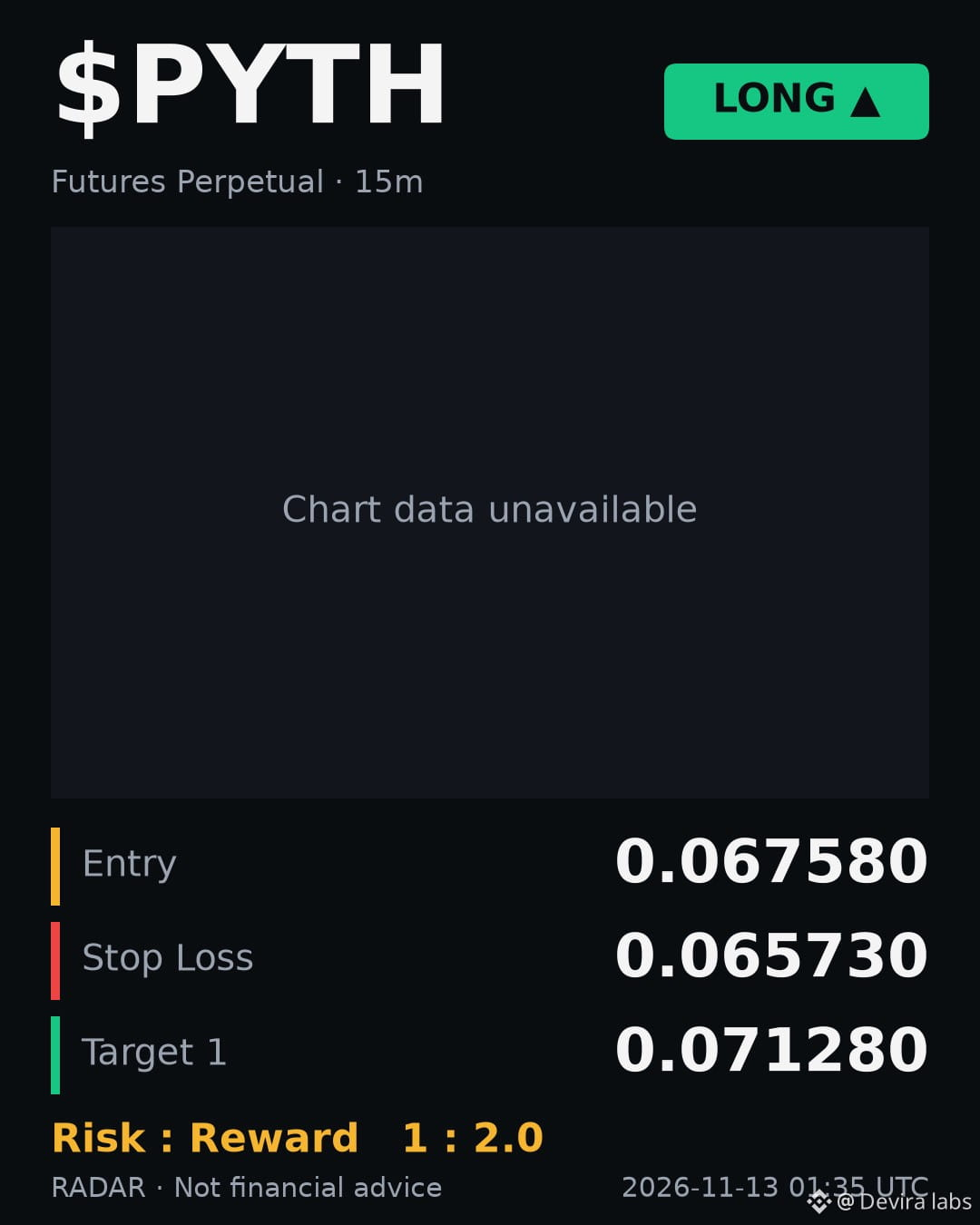
PYTH is showing moderate potential as price action continues to hold within its current range.
Conditions point toward a measured long setup toward higher levels, though sustained follow-through will still require solid confirmation.
Entry: 0.06758
SL: 0.06573
TP: 0.07128
R:R: 1:2.0
Risk:
• Persistent range-bound conditions could cap upside potential before confirmation arrives.
Are you waiting for a confirmed range breakout, or taking the setup from here?
This is my personal trading plan, not financial advice. Risk management comes first.
#RADAR #Crypto #PYTHUSDT
81

·
--
Shorting PYTH at 0.06864 with 75x leverage: Analyst Mia’s breakdown of the TP2 trigger and 513% profit
In high-leverage derivatives trading on cryptocurrency altcoins, when a downtrend continues smoothly and breaks through key targets, entering a 75x leveraged short position at an average price of 0.06864 USDT and riding the market down to 0.06394 USDT to successfully trigger the second take-profit target, TP2, and secure an impressive +513.54% return is a textbook example of combining high-leverage trend shorts with disciplined, multi-level profit-taking. According to the latest live-trading report posted by analyst Mia, it demonstrates her exceptional ability to snipe short entries in altcoins and hit targets.
Chat records and the live-trading poster show Mia explicitly announcing, “#PYTH TP2 triggered,” and tracing the signal back to a “#PYTH market short at 0.06864” from CPO, a whale-level trader. The poster shows a PYTHUSDT 75x perpetual short position, opened at an average price of 0.06864 USDT and closed after the price fell to 0.06394 USDT, with the return surging to +513.54%. By precisely capturing the altcoin’s downward swing, Mia once again demonstrated her top-tier ability to capitalize on high-leverage short trades.
Key points from the trade and risk-management review:
Precise market short entry (entered at 0.06864): Decisively entered a short position near the high, perfectly matching the main downward wave in the altcoin’s weak price action.
Decisive trigger of the multi-level take-profit target (TP2): Rode the trend through the second take-profit target (TP2), locking in a +513.54% return with high leverage.
High leverage aligned with the trend: Backed by strong bearish momentum, the 75x leverage efficiently amplified the capital.
When PYTH hit TP2 and secured a 513% return, would you prefer to take profits decisively at precise targets during a high-leverage short swing, like Mia, or keep holding in pursuit of a higher target? Share your thoughts in the comments.
$PYTH
{spot}(PYTHUSDT)
$BTC
{spot}(BTCUSDT)
#PYTHUSDT #止盈战报 #行情复盘
Shorting PYTH at 0.06864 with 75x leverage: Analyst Mia’s breakdown of the TP2 trigger and 513% profit
In high-leverage derivatives trading on cryptocurrency altcoins, when a downtrend continues smoothly and breaks through key targets, entering a 75x leveraged short position at an average price of 0.06864 USDT and riding the market down to 0.06394 USDT to successfully trigger the second take-profit target, TP2, and secure an impressive +513.54% return is a textbook example of combining high-leverage trend shorts with disciplined, multi-level profit-taking. According to the latest live-trading report posted by analyst Mia, it demonstrates her exceptional ability to snipe short entries in altcoins and hit targets.
Chat records and the live-trading poster show Mia explicitly announcing, “#PYTH TP2 triggered,” and tracing the signal back to a “#PYTH market short at 0.06864” from CPO, a whale-level trader. The poster shows a PYTHUSDT 75x perpetual short position, opened at an average price of 0.06864 USDT and closed after the price fell to 0.06394 USDT, with the return surging to +513.54%. By precisely capturing the altcoin’s downward swing, Mia once again demonstrated her top-tier ability to capitalize on high-leverage short trades.
Key points from the trade and risk-management review:
Precise market short entry (entered at 0.06864): Decisively entered a short position near the high, perfectly matching the main downward wave in the altcoin’s weak price action.
Decisive trigger of the multi-level take-profit target (TP2): Rode the trend through the second take-profit target (TP2), locking in a +513.54% return with high leverage.
High leverage aligned with the trend: Backed by strong bearish momentum, the 75x leverage efficiently amplified the capital.
When PYTH hit TP2 and secured a 513% return, would you prefer to take profits decisively at precise targets during a high-leverage short swing, like Mia, or keep holding in pursuit of a higher target? Share your thoughts in the comments.
$PYTH
$BTC
#PYTHUSDT #止盈战报 #行情复盘
528
PYTH is cracking under bearish pressure as it tests the 3% lower swing, and the next move could lock in a clean short. Volume is drying up while the market eyes the next resistance.
🔴 $PYTH SHORT 📉
Entry → $0.065584-$0.065716
Stop → $0.067619 (-3.0%)
TP1 → $0.064665 (+1.5%)
TP2 → $0.062367 (+5.0%)
R/R 1:1.7 • Confidence 64%
The market structure broke lower on a classic CHoCH and the CVD turned negative confirming the sell‑off. A fresh FVG sits right under the broken OB, creating a POI where the order block and gap overlap, so the short entry feels tight.
A 3 % stop is relatively tight on this swing, so keep leverage around 3‑5× to stay safe.
Take half off the table when price hits the first target to lock in risk‑reward before the next pullback.
Not financial advice — trade only what you can afford to lose 🙏
$PYTH #PYTHUSDT #INIT #TradingSignals #Write2Earn
10
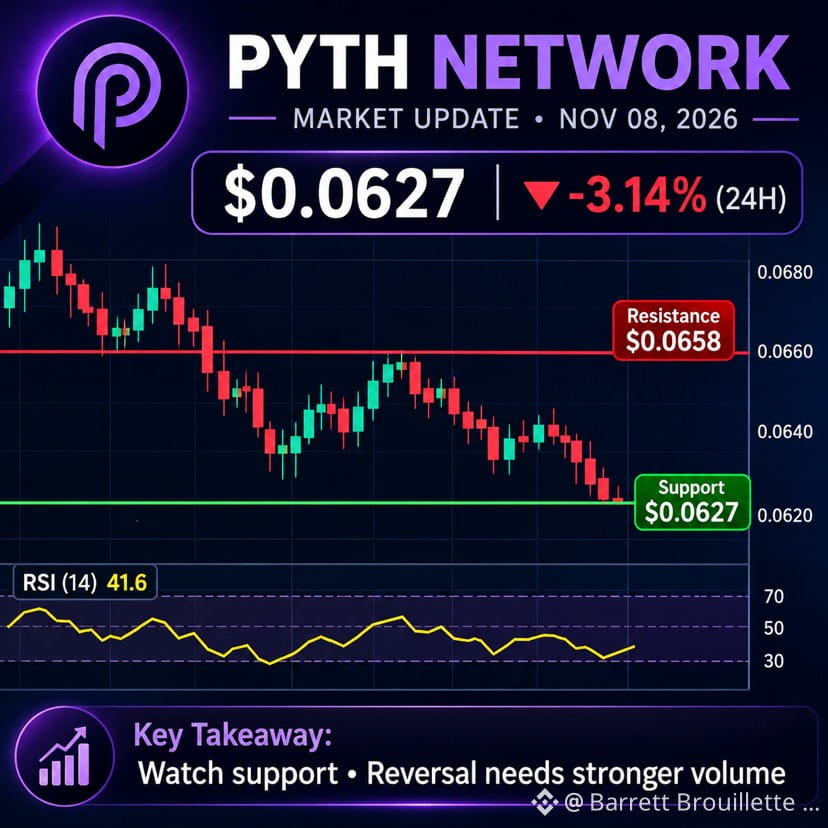
$PYTH PYTH Network – Latest Market Analysis
November 8, 2026
$0.0627
Market outlook: Short-term bearish.
Support: $0.0627
Resistance: $0.0658
RSI: 41.6 – weak momentum.
Bullish signal: A breakout above $0.0658 could open the way for recovery.
Bearish signal: Losing $0.0627 may trigger further downside.
My view: PYTH needs stronger buying volume to confirm a bullish reversal. Watch support carefully before entering a trade
#PYTHUSDT
{spot}(PYTHUSDT)
$PYTH PYTH Network – Latest Market Analysis
November 8, 2026
$0.0627
Market outlook: Short-term bearish.
Support: $0.0627
Resistance: $0.0658
RSI: 41.6 – weak momentum.
Bullish signal: A breakout above $0.0658 could open the way for recovery.
Bearish signal: Losing $0.0627 may trigger further downside.
My view: PYTH needs stronger buying volume to confirm a bullish reversal. Watch support carefully before entering a trade
#PYTHUSDT
139
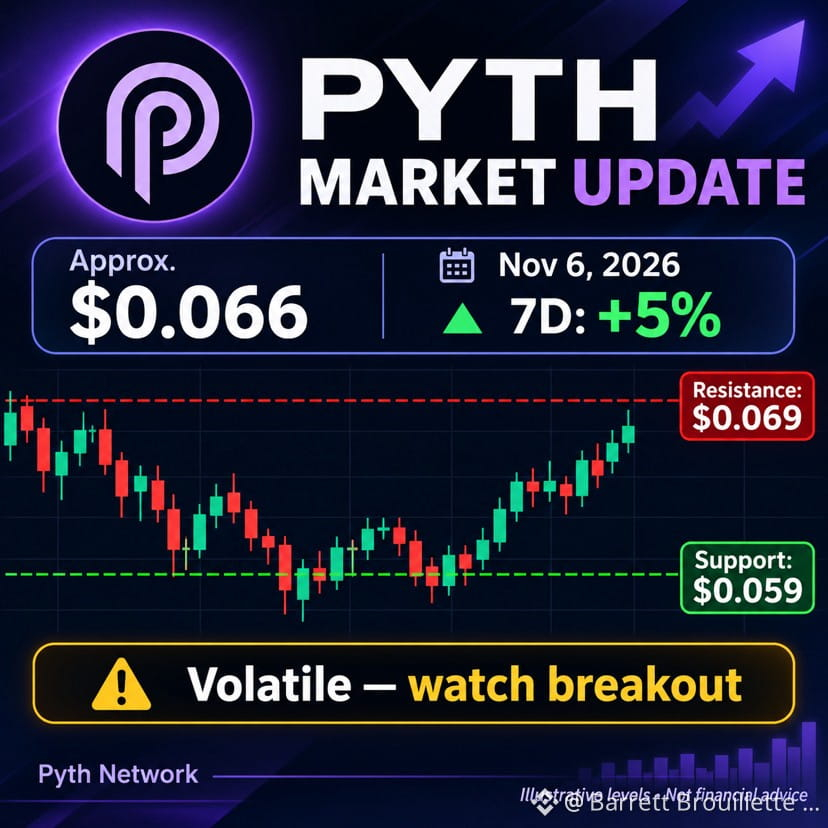
$PYTH PYTH Latest Market Analysis – November 6, 2026
Current price: ~$0.066
Market outlook: Cautiously bullish, but volatility remains high.
Resistance: $0.069
Support: $0.059
Bullish target: $0.075
Bearish risk: A break below $0.059 could trigger further downside.
My view: PYTH is showing signs of recovery. A strong breakout above $0.069 could strengthen bullish momentum. Watch volume before entering.
Source:  Price levels are approximate and can change quickly.
Disclaimer: Not financial advice. DYOR.
#PYTHUSDT
{spot}(PYTHUSDT)
$PYTH PYTH Latest Market Analysis – November 6, 2026
Current price: ~$0.066
Market outlook: Cautiously bullish, but volatility remains high.
Resistance: $0.069
Support: $0.059
Bullish target: $0.075
Bearish risk: A break below $0.059 could trigger further downside.
My view: PYTH is showing signs of recovery. A strong breakout above $0.069 could strengthen bullish momentum. Watch volume before entering.
Source:  Price levels are approximate and can change quickly.
Disclaimer: Not financial advice. DYOR.
#PYTHUSDT
269
·
--
$PYTH
{future}(PYTHUSDT)
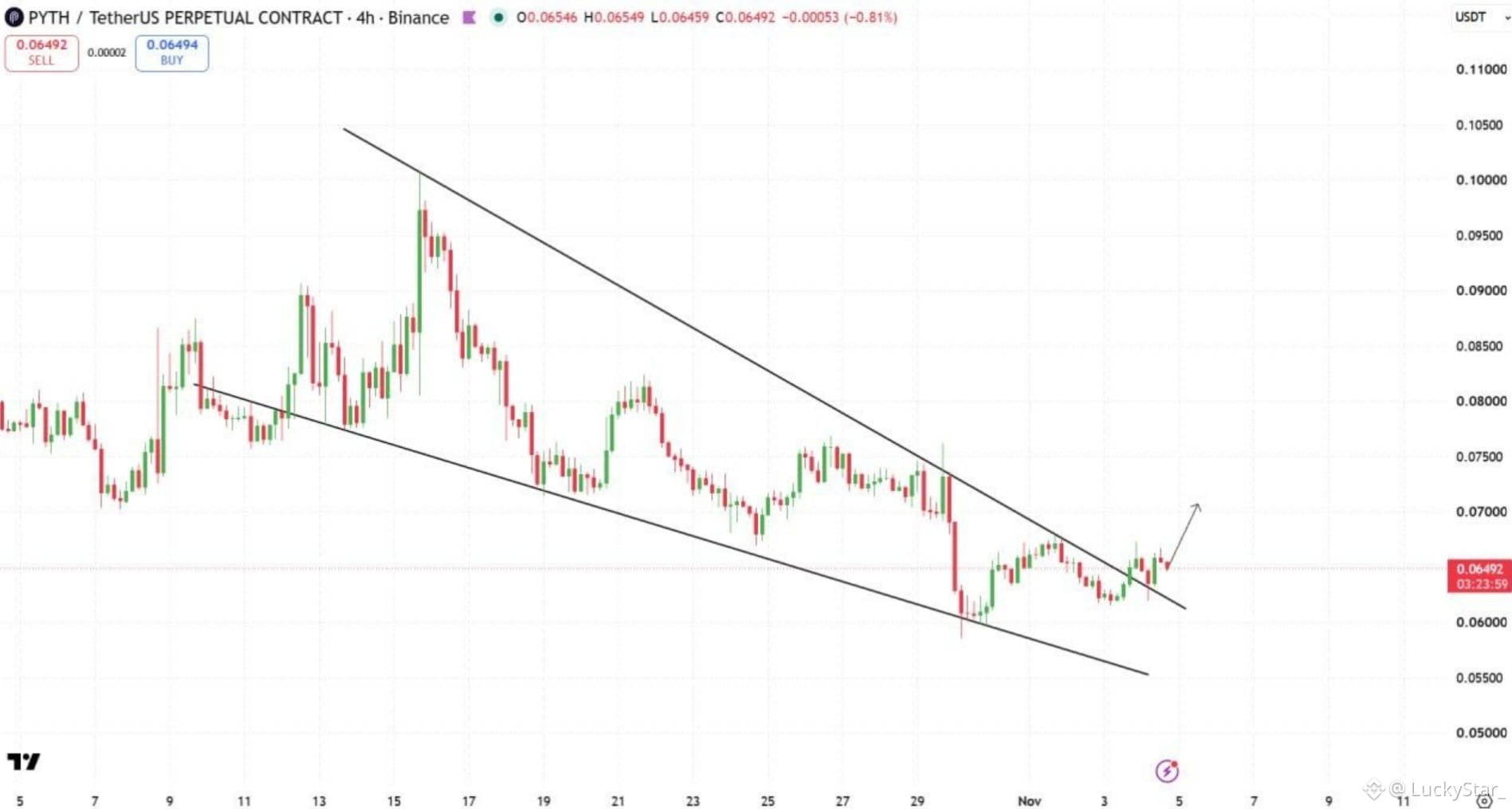
PYTHUSDT looks bullish after that breakout. We could see a pump coming, so track it.
#PYTH #PYTHUSDT #PYTHUSDT📈
$PYTH
PYTHUSDT looks bullish after that breakout. We could see a pump coming, so track it.
#PYTH #PYTHUSDT #PYTHUSDT📈
PYTHUSDT looks bullish after that breakout. We could see a pump coming, so track it.
#PYTH #PYTHUSDT #PYTHUSDT📈
34
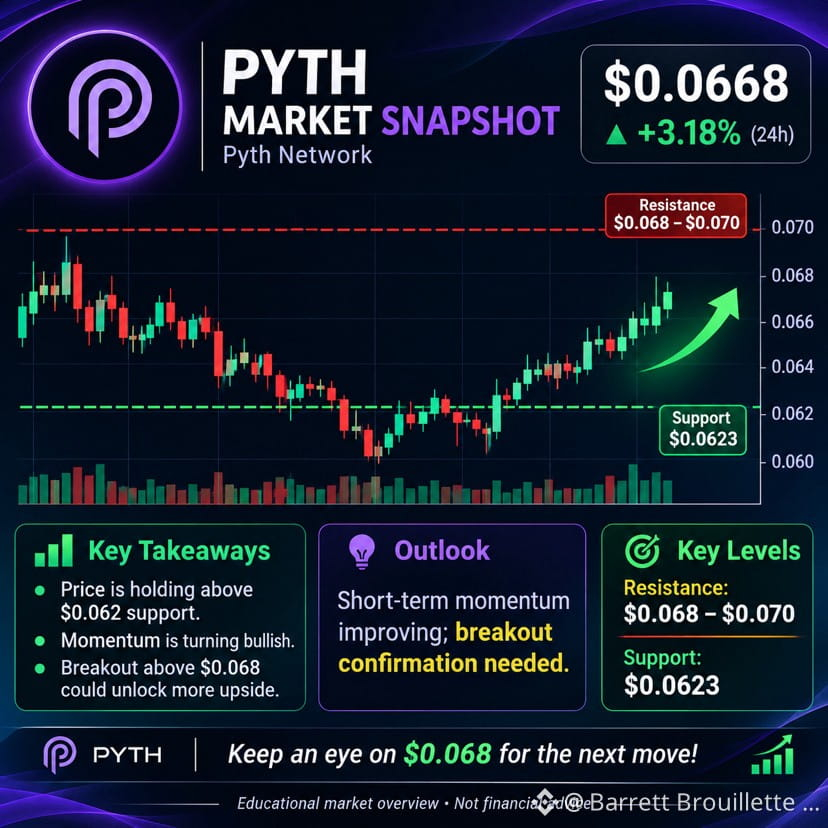
$PYTH 📊 PYTH (Pyth Network) Latest Analysis
Current price: $0.0668
24H change: +3.18%
PYTH is showing signs of recovery, with buyers pushing the price higher. A breakout above $0.068 could open the way toward $0.070. However, rejection at resistance may trigger another pullback.
Key levels:
Support: $0.0623
Resistance: $0.068–$0.070
Bullish target: $0.075
Outlook: Cautiously bullish. Watch for a confirmed breakout above $0.068.
Market data: November 5, 2026.  Not financial advice.
#PYTHUSDT
{spot}(PYTHUSDT)
$PYTH 📊 PYTH (Pyth Network) Latest Analysis
Current price: $0.0668
24H change: +3.18%
PYTH is showing signs of recovery, with buyers pushing the price higher. A breakout above $0.068 could open the way toward $0.070. However, rejection at resistance may trigger another pullback.
Key levels:
Support: $0.0623
Resistance: $0.068–$0.070
Bullish target: $0.075
Outlook: Cautiously bullish. Watch for a confirmed breakout above $0.068.
Market data: November 5, 2026.  Not financial advice.
#PYTHUSDT
169
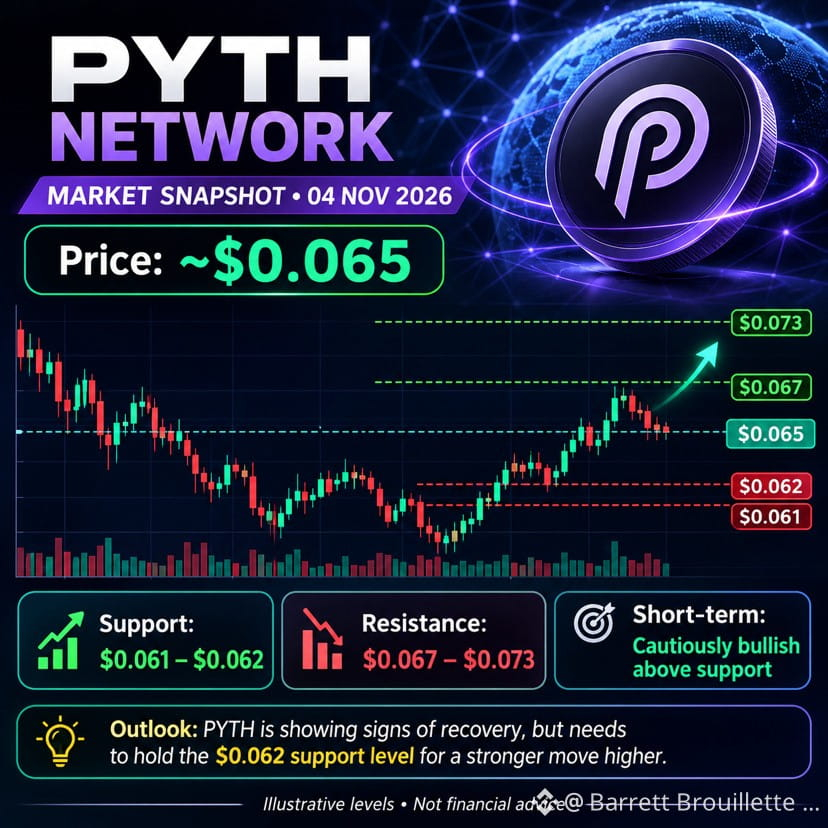
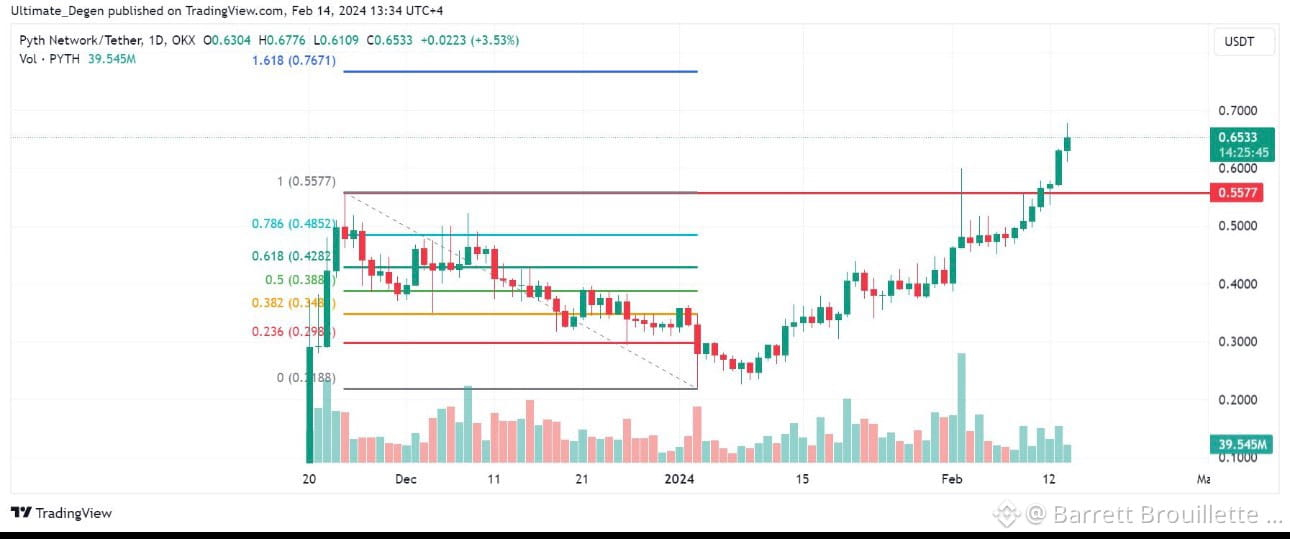
$PYTH 📊 PYTH Network – Latest Analysis
November 4, 2026
$0.065
Support: $0.061–$0.062
Resistance: $0.067–$0.073
Bullish target: $0.073
Bearish risk: Below $0.061
Market outlook: PYTH is showing signs of recovery. If buyers defend $0.062, price could test $0.067 and potentially $0.073. A break below support may bring further downside.
Price is approximate and varies by exchange. 
Trading view: Cautiously bullish above support. Wait for confirmation before entering.
#PYTHUSDT #PYTH.智能策略库🥇🥇#PYTH
{spot}(PYTHUSDT)
$PYTH 📊 PYTH Network – Latest Analysis
November 4, 2026
$0.065
Support: $0.061–$0.062
Resistance: $0.067–$0.073
Bullish target: $0.073
Bearish risk: Below $0.061
Market outlook: PYTH is showing signs of recovery. If buyers defend $0.062, price could test $0.067 and potentially $0.073. A break below support may bring further downside.
Price is approximate and varies by exchange. 
Trading view: Cautiously bullish above support. Wait for confirmation before entering.
#PYTHUSDT #PYTH.智能策略库🥇🥇#PYTH
1
393
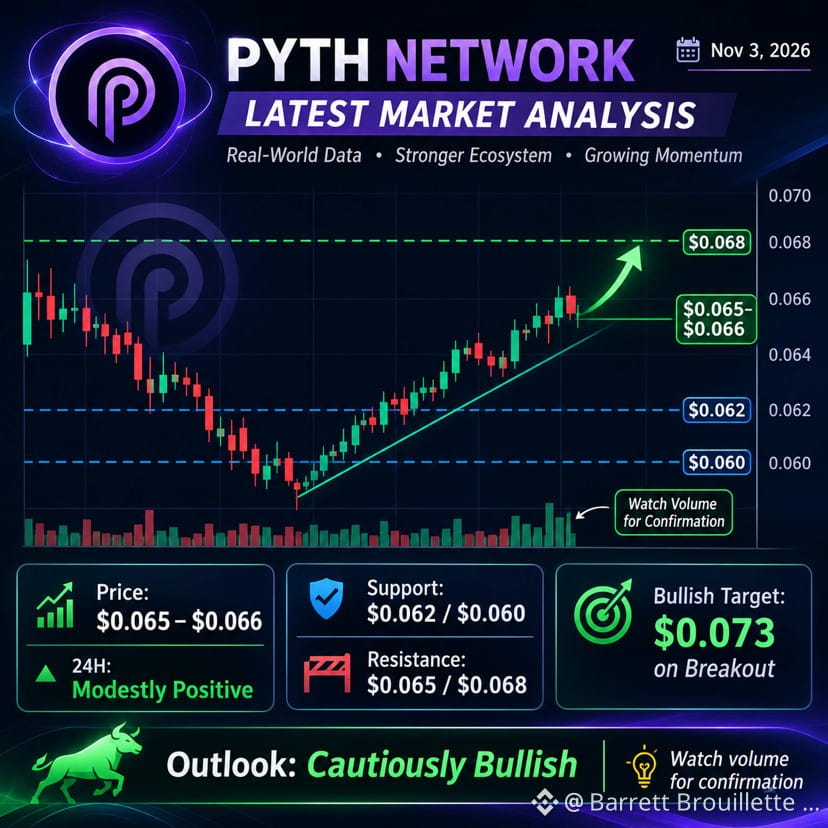
$PYTH PYTH Network – Latest Analysis
November 3, 2026
$0.065–$0.066
Market trend: Short-term recovery, but weekly trend remains weak.
Support: $0.062 – $0.060
Resistance: $0.065 – $0.068
Bullish target: $0.073 if resistance breaks.
Outlook: Cautiously bullish. Watch trading volume for confirmation
#PYTHUSDT #PYTH.智能策略库🥇🥇
{spot}(PYTHUSDT)
$PYTH PYTH Network – Latest Analysis
November 3, 2026
$0.065–$0.066
Market trend: Short-term recovery, but weekly trend remains weak.
Support: $0.062 – $0.060
Resistance: $0.065 – $0.068
Bullish target: $0.073 if resistance breaks.
Outlook: Cautiously bullish. Watch trading volume for confirmation
#PYTHUSDT #PYTH.智能策略库🥇🥇
November 3, 2026
$0.065–$0.066
Market trend: Short-term recovery, but weekly trend remains weak.
Support: $0.062 – $0.060
Resistance: $0.065 – $0.068
Bullish target: $0.073 if resistance breaks.
Outlook: Cautiously bullish. Watch trading volume for confirmation
#PYTHUSDT #PYTH.智能策略库🥇🥇
229
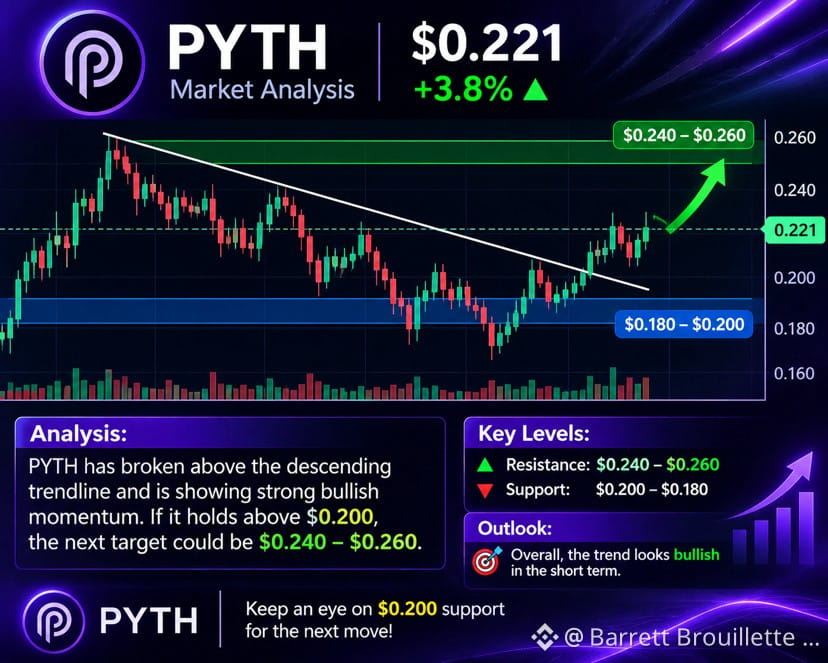
$PYTH 📊 PYTH (Pyth Network) – Latest Analysis
Date: November 3, 2026
Market Outlook: PYTH traders should watch the key support and resistance zones closely. A breakout above resistance could signal bullish momentum, while losing support may lead to further downside.
* 🟢 Bullish: Strong buying volume and a resistance breakout.
* 🔴 Bearish: Weak volume and a breakdown below support.
* 🎯 Strategy: Wait for confirmation before entering a trade.
Note: Live price and verified support/resistance levels are not available in this update. This is not a guaranteed trading signal.
#PYTHUSDT #PYTH
{spot}(PYTHUSDT)
$PYTH 📊 PYTH (Pyth Network) – Latest Analysis
Date: November 3, 2026
Market Outlook: PYTH traders should watch the key support and resistance zones closely. A breakout above resistance could signal bullish momentum, while losing support may lead to further downside.
* 🟢 Bullish: Strong buying volume and a resistance breakout.
* 🔴 Bearish: Weak volume and a breakdown below support.
* 🎯 Strategy: Wait for confirmation before entering a trade.
Note: Live price and verified support/resistance levels are not available in this update. This is not a guaranteed trading signal.
#PYTHUSDT #PYTH
1
484

·
--
A NEW DATA MARKET OPENS UP — PYTH is expanding its reach.
$PYTH
{spot}(PYTHUSDT)
Pyth introduced real-time US Treasury yield feeds on October 29, adding financial data for seven maturities and targeting tokenized-finance use cases. Its network also reported securing more than $3.1 billion in on-chain assets. These developments strengthen the project's infrastructure narrative, but traders should still separate adoption progress from short-term price direction. Watch volume, support and resistance, and whether buyers can maintain momentum after the recent market volatility. A disciplined entry is better than chasing a headline.
#PYTH #PythNetwork #PYTHUSDT #Oracle #CryptoTrading
A NEW DATA MARKET OPENS UP — PYTH is expanding its reach.
$PYTH
Pyth introduced real-time US Treasury yield feeds on October 29, adding financial data for seven maturities and targeting tokenized-finance use cases. Its network also reported securing more than $3.1 billion in on-chain assets. These developments strengthen the project's infrastructure narrative, but traders should still separate adoption progress from short-term price direction. Watch volume, support and resistance, and whether buyers can maintain momentum after the recent market volatility. A disciplined entry is better than chasing a headline.
#PYTH #PythNetwork #PYTHUSDT #Oracle #CryptoTrading
9
Log in to explore more content
Join global crypto users on Binance Square
⚡️ Get latest and useful information about crypto.
💬 Trusted by the world’s largest crypto exchange.
👍 Discover real insights from verified creators.
Email / Phone number
Trending Topics
1
#WillMarketsStageAThanksgivingReliefRally?
59,398 views
949 Discussing
2
#WillOctCorePCEShiftFedHikeExpectations?
13,836 views
259 Discussing
3
#BessentSoftensStanceOnHuang’sNvidiaReturn
39,829 views
630 Discussing
4
#EvolveAtBinanceBlockchainWeek
51,297 views
532 Discussing
5
#MuskWarnsOfAICashCrunch
30,212 views
469 Discussing
6
#SouthKoreaPlansToReleaseDigitalAssetBasicActDraft
747 views
25 Discussing
7
#ChinaKoreaTaiwanPrepareStockRescuesAheadOfMonday
4,940 views
41 Discussing
8
#SouthKoreaToTightenOversightOfCryptoTransfersAbroad
3,621 views
42 Discussing
9
#TrumpToGive18KGoldWatchesToTopFourTRUMPHolders
1,139 views
19 Discussing
10
#RussiaAllowsExchangesToOfferCryptoTrading
22,736 views
230 Discussing