
#papertrade
papertrade
3,742 views
63 Discussing
Hot
Latest

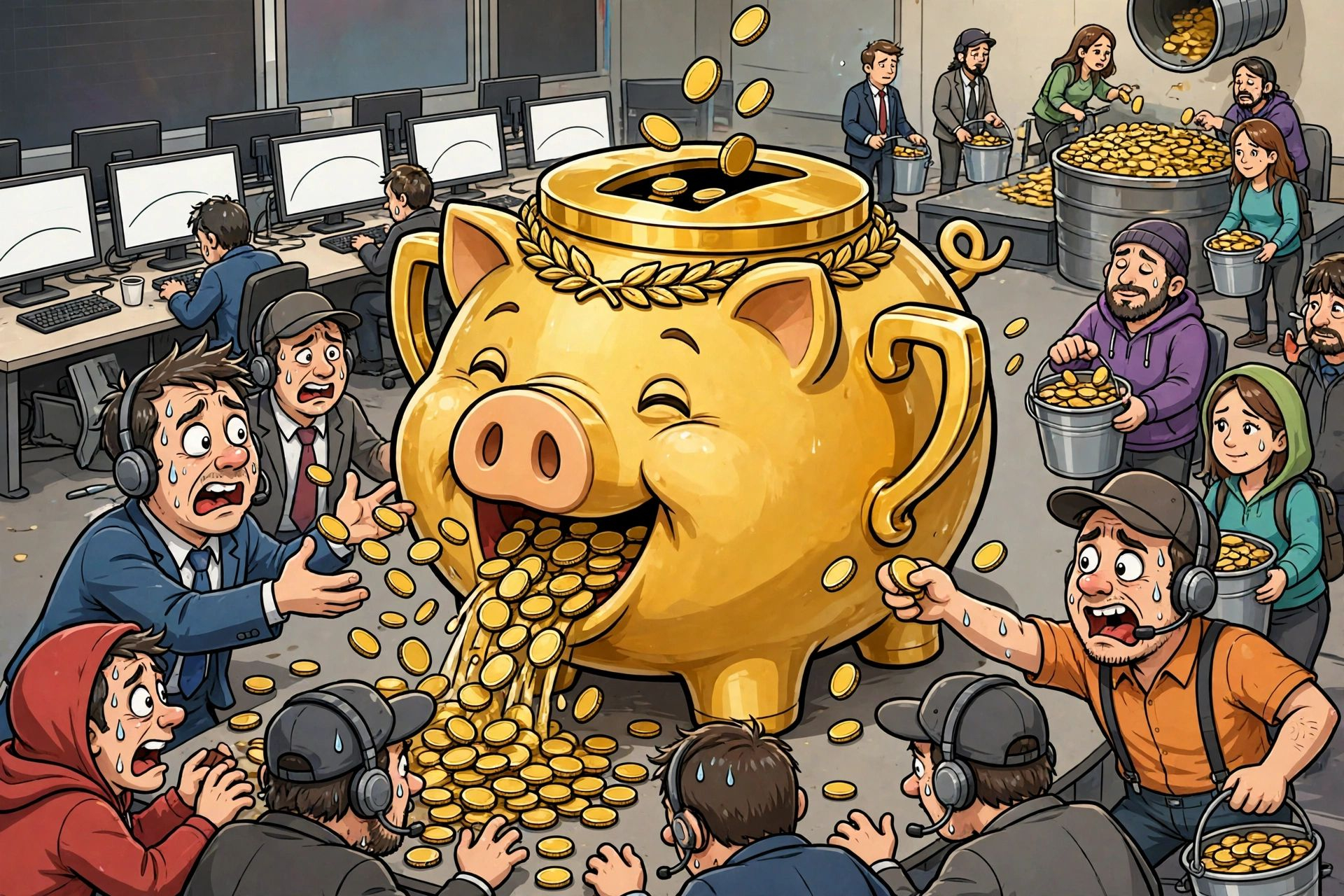
First, the impressive part: Papertrade brought in $8.94 million in 7 days, ranking fifth across all protocols. The only ones ahead are the four big names: Tether, Circle, Hyperliquid, and Pump.fun. And it all comes from betting on whether $BTC $ETH goes up or down. Pretty wild, right? Now for the ugly part: just two days ago, it was at $13.38 million on the same leaderboard—down by a third. Daily revenue peaked at $7.49 million, but by October 17 it was down to just $890,000. Trading volume has plunged 90% from its October 10 peak. And here’s the most painful twist: where does this revenue come from? A 2% closing fee, a 2% liquidation fee, and overflow above the pool’s $5 million cap—all paid out of the principal lost by liquidated traders. This so-called fifth-place ranking was built on other people’s losses. Pick a side in the comments: A) That’s a business model. B) That’s fleecing retail traders and paying out the proceeds. Sound off!
$SOL
#Papertrade #Revenue leaderboard
$SOL
#Papertrade #Revenue leaderboard
8

·
--
【Market Flash】Changing the rules as soon as the funds arrive? Delphi Pagoulatos slams Papertrade: “It’s not exactly a rug pull—it’s basically entrapment!”
PAPER promised transfers and received $140 million in deposits, then changed its tune on October 19, saying “transfers are temporarily unavailable” to prevent manipulation. Meanwhile, distributions plunged from $1.3 million to $88,000.
Protecting users or cashing in on them? Comment 1 or 2!
$PAPER $HYPE $ETH
#Papertrade #Hyperliquid #DeFi
(Source: Unchained)
⚠️Risk warning: The above is shared for market information purposes only and does not constitute investment advice. Investing involves risk; exercise caution when entering the market.
333

“Lose money, get tokens” is basically casino cashback dressed up as tokenomics.
Papertrade is part of the Hyperliquid ecosystem, offering BTC and ETH perpetuals with up to 1,000x leverage. If you lose, they mint PAPER for you, which you can stake to earn a share of the USDC pool. Sounds like a consolation prize, but in practice it encourages you to lose even more.
The launch numbers were certainly impressive: an X news roundup put first-day revenue at around $25 million, while Laura Shin reported that it attracted $140 million in pre-deposits. Then, on October 19, the team announced that PAPER could not yet be transferred, with no timeline for when that would change. They said it was to prevent people from shorting it elsewhere to attack the project.
As a result, staking rewards plunged 93% overnight, daily revenue fell from several million to under $200,000, and TVL shrank from over $100 million to just over $30 million.
The wildest part is that they changed the rules three times in a single week: on the 17th, they raised the staking reward cap; on the 19th, they announced that tokens were non-transferable; and on the 20th, they added new fees and changed the emissions curve. The team even admitted that, apart from using Rollbit as a reference, they had basically no real-world data for the launch parameters.
In other words: the rules you saw when you deposited your money aren’t the rules you’re playing by now.
A non-transferable token only has value within the platform, and the platform decides what that value is. Put simply, PAPER right now is just casino points. If you’re thinking of farming it, ask yourself first: are you mining, or just paying tuition to the house?
#Papertrade #Hyperliquid
5

·
--
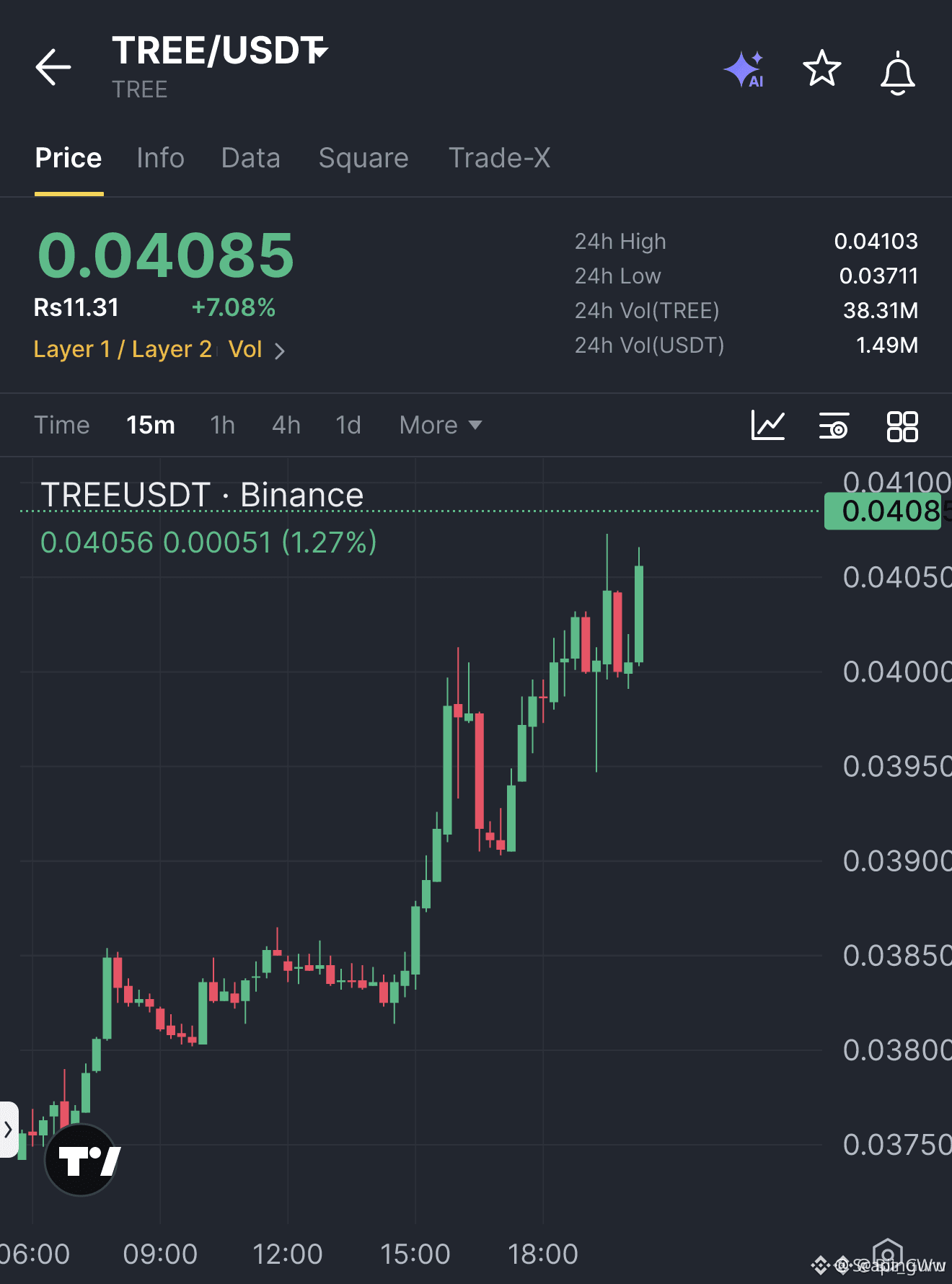
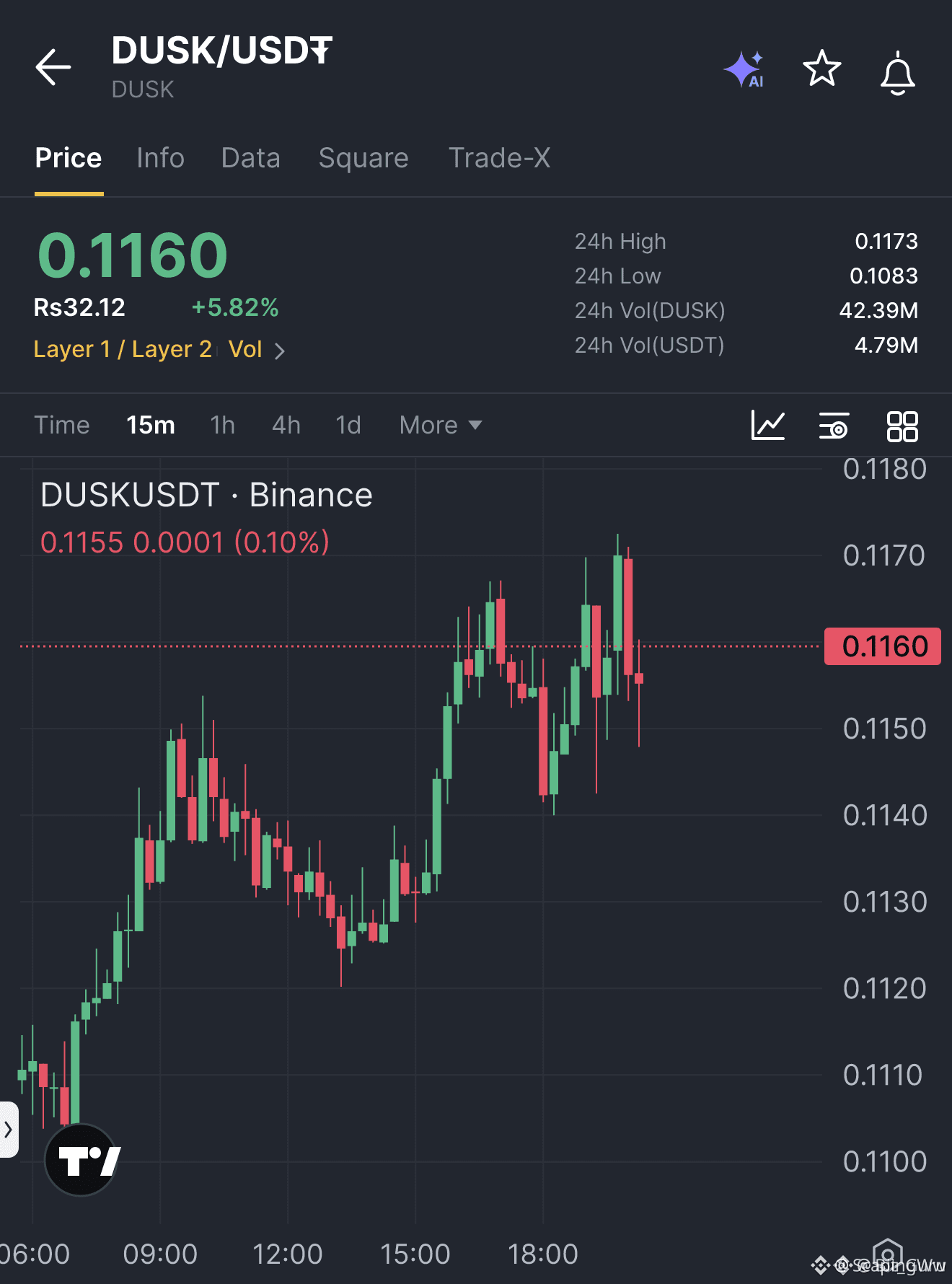
🚀 $TREE SURGES TO TP1 – PAPER WIN UNVEILS SMART MONEY PLAY!
Entry: 0.03914 ⚡
Target: 0.04064 🚀
Stop Loss: 0.03814 ⚠️
The 1‑minute futures candles painted a clean demand block at 0.03914, where smart money snapped up liquidity and thrust $TREE up to 0.04064 in record time. 📊 The price danced off the block, confirming the paper entry’s edge.
A tight stop at 0.03814 kept risk under control, while the rapid target hit highlighted why a time‑boxed window is vital – the setup folded once the liquidity sweep faded. 🦈⚡
💬 Did you stick to the original plan or wait for a second wave?
⚠️ Not financial advice. Always manage your risk. 🛡️
🏷️ #TREE #PaperTrade #SmartMoney #Crypto
🦈 💎
8
📉 Down 93% in a day: What does PaperTrade’s “cliff-drop” in staking revenue tell us?
PaperTrade has been back on the timeline these past couple of days, this time because the numbers look bad.
According to data shared by @ryandcrypto:
🔹 Staking revenue was about $2.1 million on Sunday
🔹 About $1.28 million on Monday
🔹 Just around $84,500 in the two hours before Tuesday’s close, down about 93% for the day
Another user, @ftosol, added a few more figures: traders’ cumulative P&L was about -$65 million, TVL had fallen about 40% from roughly $69 million, and open interest was down more than 80%.
For context: PaperTrade uses a “lose money to mint” model, where trading losses can be exchanged for PAPER. Stakers earn a share of the USDC generated from traders’ losses, and the contracts offer leverage of up to 1,000x. Citing risks such as oracle manipulation, the project team made PAPER non-transferable, and the volume-farming frenzy cooled off almost immediately.
My take:
A large part of that previous “daily revenue” in the millions was propped up by people deliberately losing money to get tokens. Once the tokens couldn’t be transferred or sold, that crowd left. It’s not that the platform suddenly got worse; the retreat of incentives has exposed the real demand.
When you see any “high-yield” project, first ask: Is this money coming from real users, or are they being lured in by token subsidies?
One more warning: lots of accounts on the timeline are copying and pasting the same “PAPER ICO free registration” promo. Don’t click links blindly—verify through official channels first.
Do you think the activity that remains after the hype fades can support PAPER’s value?
#PaperTrade #DeFi #永续合约 #CryptoSafety
8

·
--
Papertrade’s leverage tide has gone out
24-hour notional trading volume was $678 billion. Open interest shrank from $3.3 billion to $1.3 billion, shedding 60% in 12 hours. Margin fell in tandem, from $20.29 million to $14.34 million—a 30% drop.
With high leverage and zero fees, traders bet directly against the protocol’s LPs, and the positions built up at the peak are being rapidly unwound. PAPER can only be minted from user losses or liquidations. With OI dropping so quickly, staked positions and future minting will shrink too.
Would you dare place orders here to take the other side of the LPs, or wait until OI is back at $2 billion?
$HYPE $BTC $ETH
#HyperEVM #Papertrade
2

·
--
💸 $6.01M in daily revenue, surpassing Hyperliquid to rank third: Papertrade’s money is almost too hot to handle
Guys, this “casino” called Papertrade posted an outrageous report card last night—
First, the numbers (Foresight citing Lookonchain, as of the time of monitoring):
① $6.01 million in protocol revenue over 24 hours, surpassing Hyperliquid to rank third
② $910 billion in nominal daily trading volume
③ $28.4 billion in liquidations
Now the other side of the story (ChainCatcher): a trader wash-traded $2.84 billion on Papertrade, taking a net loss of $637,000.
What does this mean? Let’s break it down:
First, that $6.01 million is protocol revenue reported by data platforms, not audited profit. Given the high leverage and wash-trading incentives, whether this revenue is sustainable is an open question. Once the incentives stop, will trading volume and revenue be exposed for what they really are?
Second, $2.84 billion in wash trading and an actual loss of $637,000 puts the cost of wash trading at about 0.022% ($637,000 ÷ $2.84 billion, my own calculation). Someone was willing to lose $637,000 of real money to generate trading volume, which suggests the incentives behind the wash trading are worth that much. Take nominal trading volume with a grain of salt.
Third, this is the complete opposite of what was happening three days ago. In the early hours of October 11, this feed tracked “$8 billion in nominal volume that was actually PAPER wash trading, with users losing a total of $4.73 million.” Back then, everyone mocked the wash trading; today, it’s “$6.01 million in daily revenue, surpassing Hyperliquid.” The same protocol was mocked for wash trading three days ago, and today it ranks third by fee revenue. That reversal is a signal in itself: stop dismissing it with the two words “wash-trading scam.”
Bottom line: the $6.01 million in revenue recorded by data platforms isn’t made up, but its composition and sustainability still need to be examined—how much comes from genuine trading, and how much from wash-trading incentives? We won’t know until the incentives are turned off. If you’re thinking of jumping in, first figure out whether you’re trading or just handing the protocol fee money.
This is not investment advice.
What share of Papertrade’s $6.01 million do you think came from wash trading? See you in the comments 👇
#Papertrade #Hyperliquid
27

·
--
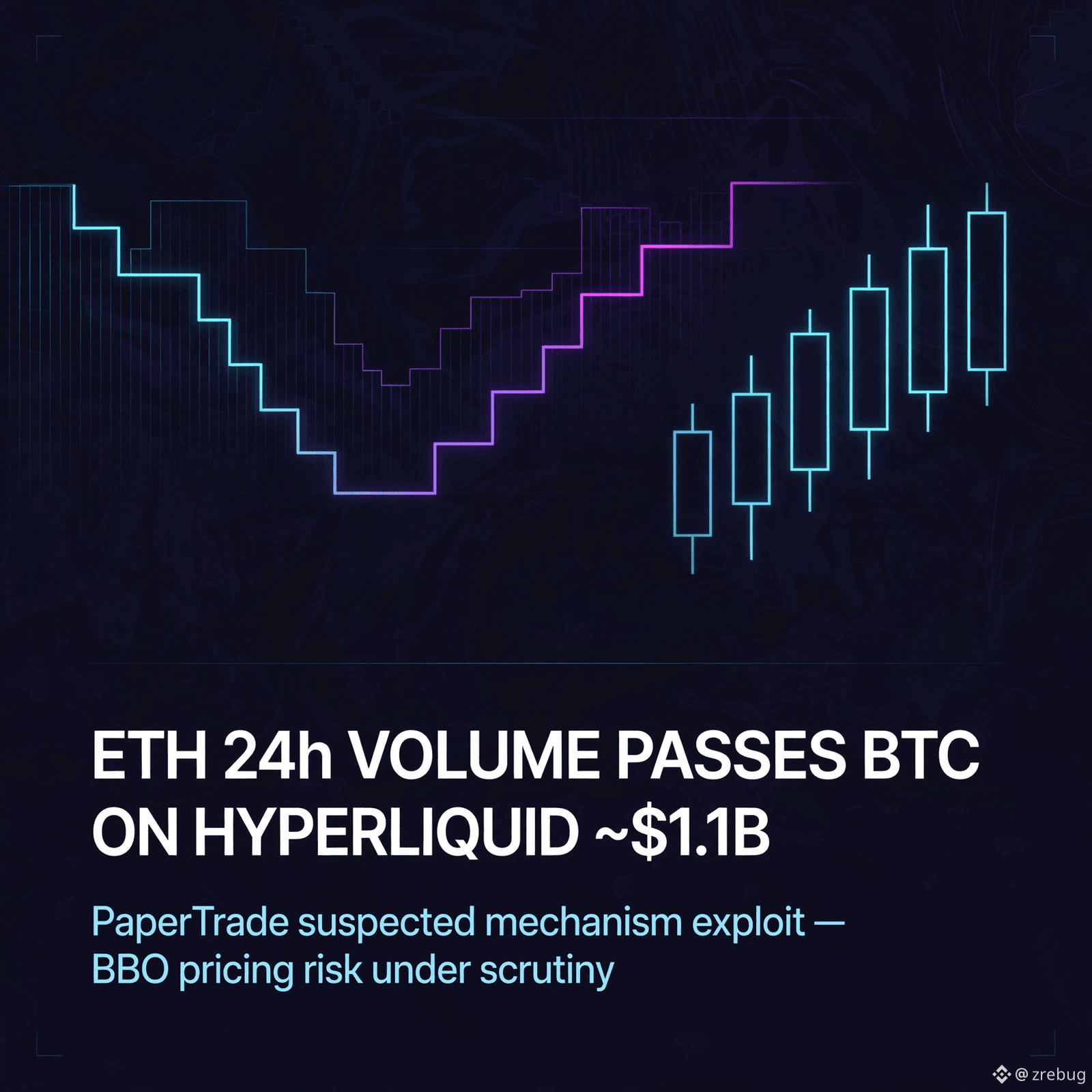
On-chain anomaly worth watching: ETH trading volume on Hyperliquid has overtaken BTC over the past 24 hours, reaching about $1.1B, per Hyperliquid News data reported by PANews on Oct 11.
The twist: analysts suspect the spike is tied to a possible mechanism exploit at PaperTrade, a protocol built on Hyperliquid's order book. Trader Rune flagged on X that PaperTrade's own docs disclose a known "attack" risk — its pricing relies on the BBO (best bid and offer), a path that can be manipulated to move prices.
Volume surges usually mean bullish hype; this one might be an exploit trail. Watch PaperTrade's response and whether volume normalizes. Not financial advice.
---
An on-chain anomaly worth watching: According to Hyperliquid News data, reported by PANews on Oct 11, ETH's trading volume on Hyperliquid over the past 24 hours has overtaken BTC's, reaching about $1.1 billion. But this surge in volume may not be driven by bullish sentiment—the market suspects it may be related to a possible mechanism exploit at PaperTrade. Trader Rune pointed out on X that PaperTrade's official documentation had already disclosed an "attack" risk in its pricing mechanism: pricing relies on the best bid and offer (BBO) in Hyperliquid's order book, creating a potential path for price manipulation.
A surge in trading volume is usually a sign of heightened interest, but this time it may be a trail left by an attack. Watch how PaperTrade responds and whether trading volume falls back. Not investment advice; for informational purposes only.
$ETH $BTC
#Hyperliquid #DeFi #PaperTrade
357

·
--
📰 PaperTrade co-founder Jez’s journey is pretty counterintuitive: he’s been liquidated multiple times, but also bounced back through spot trading. Looking back, his first piece of advice for ordinary traders isn’t “find a more accurate direction”—it’s to avoid rushing into derivatives.
He says that even if you get the direction right, 8x leverage can still turn random fluctuations into negative expected returns. Leverage also has a very practical downside: once you open a large position, it’s easy to keep adding to it. Honestly, getting the direction right doesn’t mean your account will survive long enough for your thesis to play out.
🔥 As for growing a small account, Jez’s answer is just as direct: focus on one or two opportunities you truly believe in. Diversification is more about protecting your account; it doesn’t necessarily help you grow it. But this approach clearly isn’t something everyone can copy. He stresses that strong conviction should come from understanding the asset—not from going all in because the chat is buzzing.
💡 He also advises against quitting your job just to trade. Treat your salary as a steady source of capital, and keep your powder dry until the right opportunity comes along. You can start by asking yourself: “If I could make only one trade this year, would I choose this one?” If the answer is no, it may just be a marginal opportunity.
👀 Jez believes it’s hard to talk people out of speculative urges in the market. Rather than pretending nobody will gamble, it’s better to build better products. He also spoke about his own shift from trading to building PaperTrade, and noted that spending a year or two on a project that doesn’t work out can sometimes hurt more than a bad trade.
🤔 This is his own journey, not a formula that works for everyone. Which do you agree with more: starting with spot and patiently waiting for opportunities, or concentrating your bets on assets you have strong conviction in?
#加密交易 #现货交易 #衍生品 #PaperTrade

25

·
--
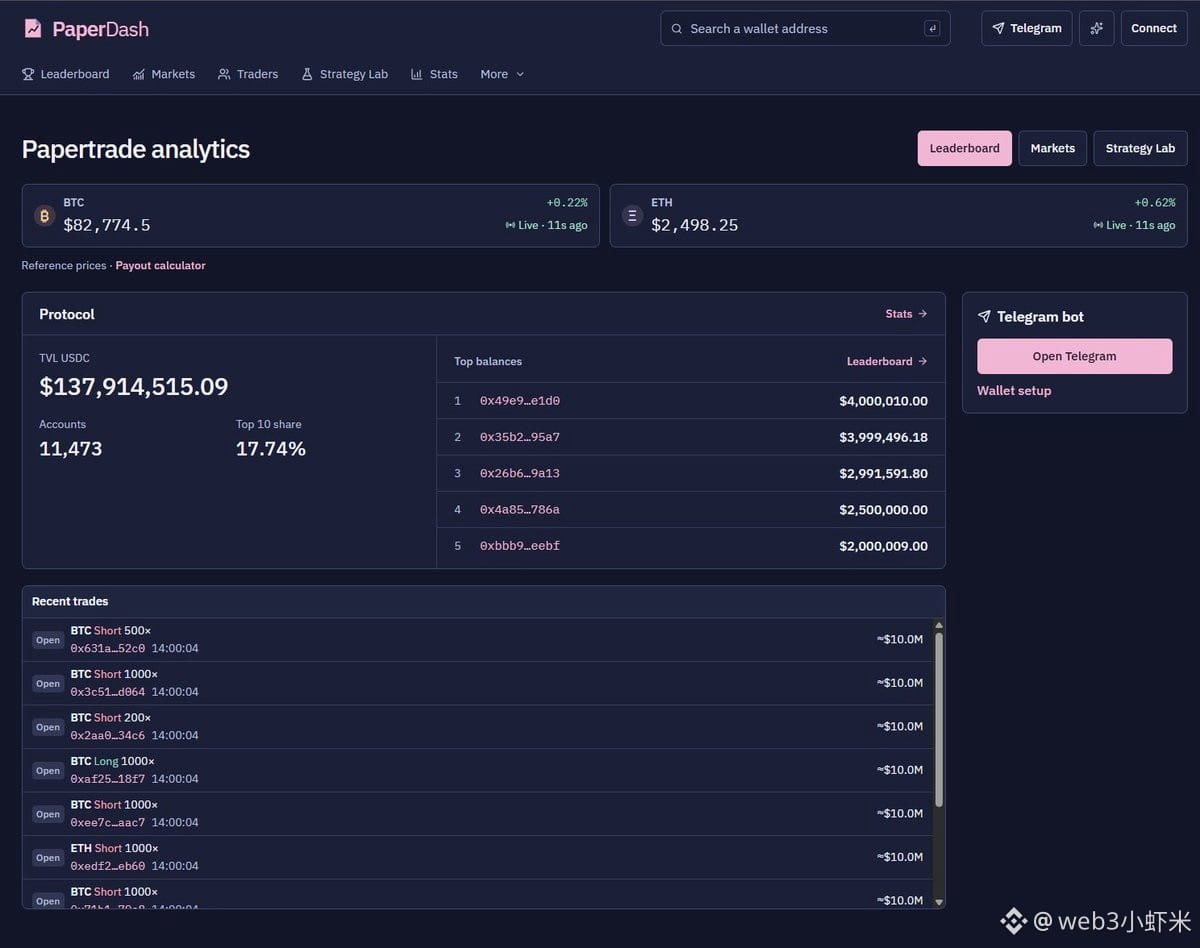
Came across Papertrade: synthetic perpetuals on HyperEVM just opened—and the team initially disabled deposits and opened trading. Pre-deposits reportedly reached around $120 million, across more than 10,000 accounts.
The setup is pretty wild: up to around 1,000x leverage, trading against a shared liquidity pool, and no traditional order book. The losing side mints $PAPER. The maximum atomic position per trade is around $10 million, with roughly $1 billion of room for new open interest in each market direction.
A high-leverage testing ground. Right now, whether it’s crowded at launch is more worth watching than the narrative.
#Papertrade #Hyperliquid $HYPE
215

·
--
Verified
The launch was loose as a sieve, and the house came first to run up the market
Papertrade was accused of manipulation and a loophole, and the official explanation was that the initial position limits were set too wide. Last night, someone on Hyperliquid used BTC and ETH BBO to pull off a move, and only now are they starting to tighten the parameters. Slow queueing can even be spun as built-in anti-manipulation — this mouth can draw more than a candlestick chart.
The parameters have been tightened to the point of being “almost never profitable,” which basically means: retail can come on in, and if you lose you’re paying tuition to the protocol; if you win, come back next lifetime to withdraw it.
Brothers who got stop-loss hunted by BTC and ETH wicks on Hyperliquid last night, gather up and report in. Where did you place your orders, and how much did you get swept for?
$BTC $ETH $HYPE #Hyperliquid #Papertrade
563

·
--
Papertrade positions shrink by 60% in one day
- In its first 24 hours, notional trading volume reached $678 billion, while open interest fell from $3.3 billion to $1.3 billion
- Margin dropped from $20.29 million to $14.34 million, a decrease of about 30%
This high-leverage betting market on HyperEVM is cooling off fast. PAPER is minted entirely from user losses and liquidations. If you’re still holding a position, can you handle these margin levels?
$PAPER $HYPE $ETH
#Papertrade #HyperEVM
77

·
--
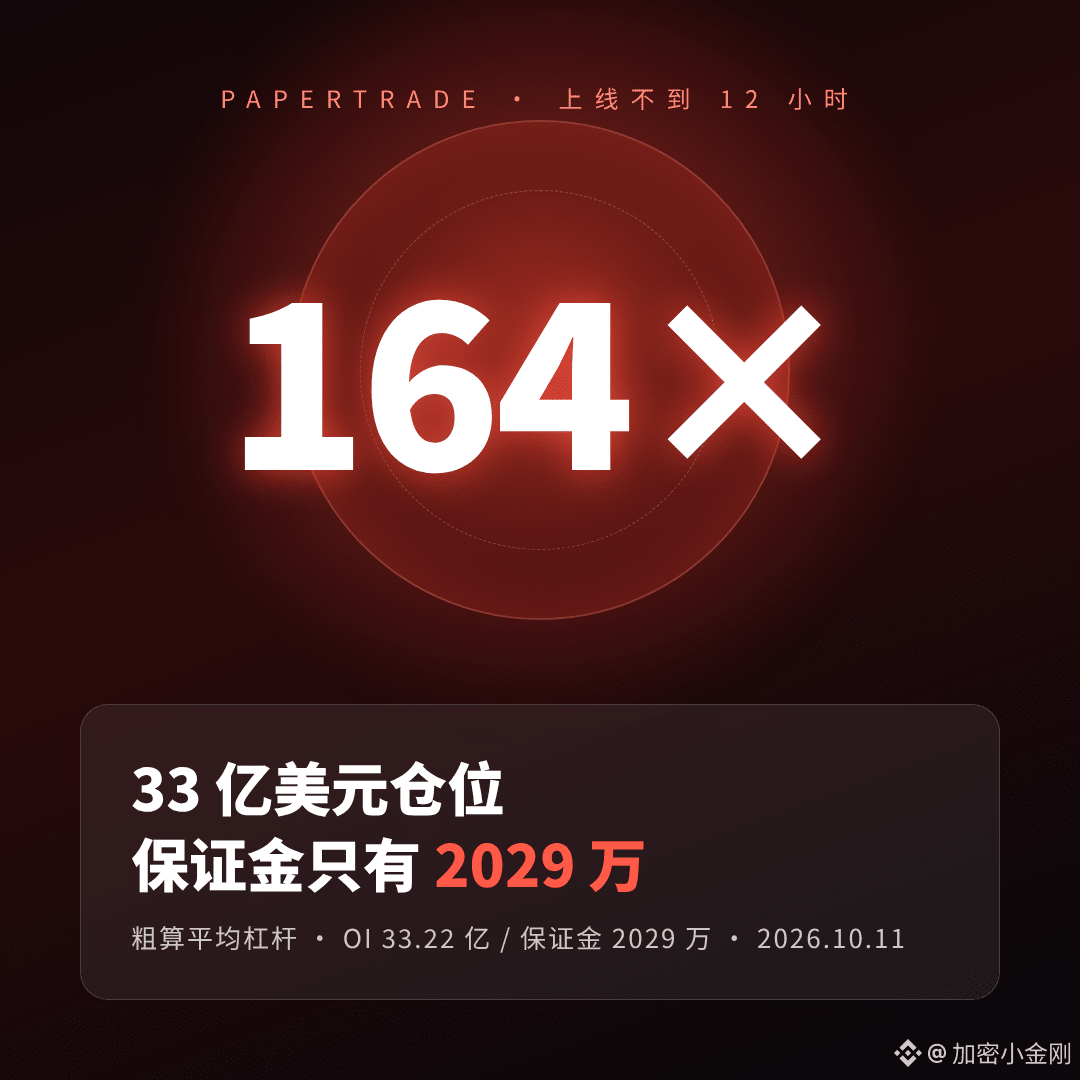
Less than 12 hours after Papertrade went live: $3.3 billion in positions, backed by just $20.29 million in margin 🧮
Papertrade, a synthetic perpetuals protocol on HyperEVM that launched at 10:00 p.m. last night, showed these figures on its official website this morning:
📊 Cumulative notional trading volume: over $573 billion
📊 Open interest: $3.322 billion
📊 Margin backing all positions: $20.29 million
Divide $3.322 billion by $20.29 million, and the average leverage comes out to roughly 164x.
First, here’s how it works 👇
1️⃣ Prices are taken from the midpoint of Hyperliquid’s order book BBO. There’s no matching engine; users trade directly against the protocol’s LPs.
2️⃣ It touts high leverage, zero slippage, and no funding fees.
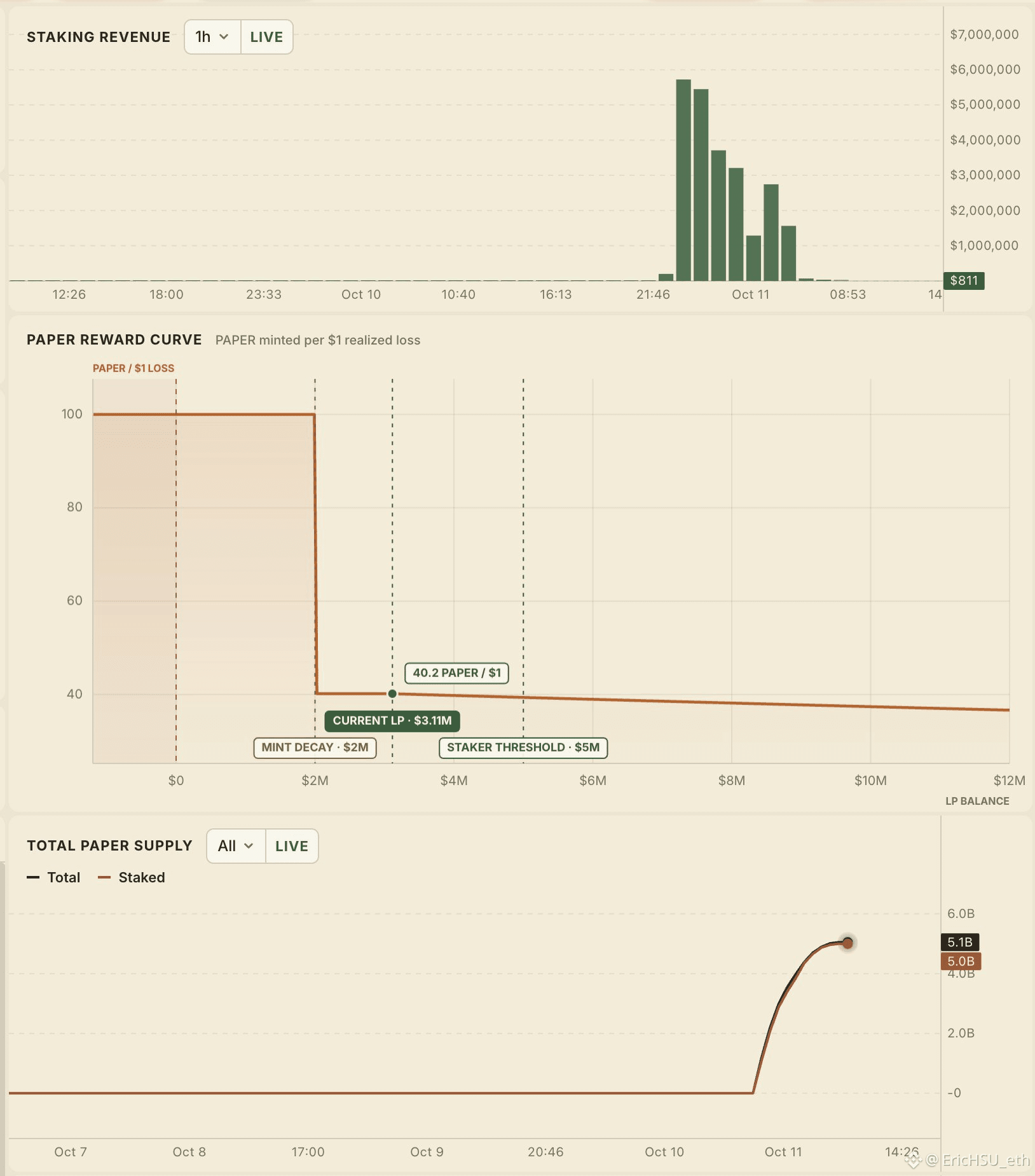
3️⃣ PAPER had a zero initial supply, with no premine or allocations for the team or VCs. The only way to mint it is through user losses or liquidations. When LP liquidity is below $2 million, every $1 lost mints 100 tokens. LP liquidity is now above $2 million, so emissions have started to taper off.
In other words, to get PAPER, you first have to lose money. Within an hour of launch, users had already lost a cumulative $4.73 million.
Now, the issue that surfaced today ⚠️
Trader Rune pointed out that Papertrade’s own official documentation says attackers can manipulate prices using the BBO on Hyperliquid’s order book. This attack vector has yet to be addressed.
Community member boblob shared two wallets that allegedly used trades worth around $20 million to move ETH’s price on Hyperliquid by 10–20 basis points.
Ten basis points might sound small, but at 164x leverage, that translates to a gain or loss of around 16%.
My take:
🔸 Most of that $573 billion in notional trading volume comes from farming PAPER, and has little to do with genuine trading demand.
🔸 Loss-mining puts users and LPs directly at odds. If the price source gets manipulated, LP funds are the first to take the hit.
🔸 It’s still unclear whether or how the protocol team will fix this.
For those with small amounts of capital:
If you’re looking to speculate on PAPER, treat that money like a lottery-ticket budget. If you’re providing LP liquidity, understand that you’re taking the other side of trades from players using over 100x leverage—and the price-source risk is already spelled out in the documentation. Also, PAPER couldn’t be freely transferred during its initial launch period and was mainly used for staking, so its liquidity is another question mark.
Would you use over 100x leverage to trade a token that you have to lose money to mine?
These are only my personal views and do not constitute investment advice. DYOR.
#Hyperliquid #Papertrade #永续合约 #DeFi
83
·
--
⚠️ It racked up $573 billion in volume in one day—and two wallets used $20 million to break it
Friends, that 1,000x-leverage casino, papertrade, that launched last night just got a sequel—and it’s a bloodbath.
Remember how it launched at 22:00 last night and posted $80 billion in notional trading volume in just one hour (with users collectively losing $4.73 million to farm $PAPER points)? The latest figures this morning: cumulative notional trading volume has hit $573 billion, with $3.3 billion in open interest (ChainCatcher, citing the official website).
Then, just moments ago at 10:42, an on-chain tip came in: two wallets are using around $20 million worth of “blades” to move the price of ETH by 10–20 basis points on Hyperliquid, then opening nine-figure long positions on papertrade to pocket the price difference—the protocol’s mechanics have become an ATM (Newsliquid live feed, X user @newmichwill; Curve founder Michael Egorov reposted with the comment, “This kind of 1,000x leverage really isn’t a good idea”).
Put these three things together, and it’s pretty grim:
1️⃣ Wash traders lose real money to earn points (lose $1 to mint; when LP is below $2 million, the minting rate is 1:100)
2️⃣ Big wallets use $20 million worth of blades to slice straight through the wash traders
3️⃣ You think you’re witnessing the future of finance, but really you’re watching a pig-butchering scam unfold live
Don’t say I’m fearmongering: 1,000x leverage + multisig administrators + a 7-day upgrade timelock—that setup basically means “I make the rules.” I wrote “not recommended” in yesterday’s post; today’s exposed vulnerability only confirms it.
ETH is currently at $2,510.4, BTC at $83,066.6 (checked live on Kraken this round at 10:43), and the broader market is steady—which means this slaughter has nothing to do with the market. The protocol’s design was simply seen through.
💬 Let’s talk in the comments: With a new project offering 1,000x leverage, would you jump in on day one, or wait a month and see if it’s still alive?
$ETH $PAPER #papertrade #BinanceSquare
205

·
--
GM☕️ I thought I could make a bundle off PAPER. Well, so much for that—the contract has been live for barely two days, and now trading is disabled again 😂
The project team is worried that someone might attack the liquidity pool while shorting PAPER, profiting on both sides. I understand the risk-management concerns, but from a player’s perspective, the expectation I had based on being able to sell later is now on hold again 🫠.
Oh well, I’ll put that dream of making a bundle on the back burner for now and keep slowly collecting Fee Rewards 🤡
#PAPERTRADE
110

·
--
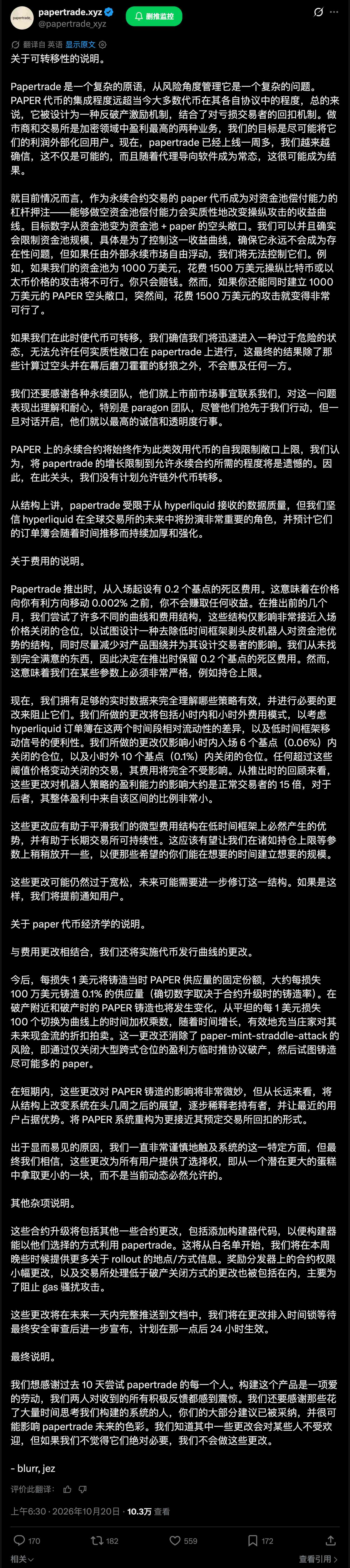
Papertrade changes the rules for mining through losses: $PAPER transfers blocked, existing users “slowly diluted”“The more you lose trading, the more coins you mine.” This design had been running for 10 days when the rules were changed.
Papertrade is a perpetuals DEX running on HyperEVM: users bet against Hyperliquid’s prices and the protocol’s bankroll, and money lost is used to mint $PAPER—effectively a rebate for losers. On the morning of October 20, Beijing time, the official team announced three changes in a lengthy post.
First, transfers. There are currently no plans to allow free transfers outside the contract. The reason is that once $PAPER can be shorted on external perpetual markets, attackers could profit on both sides by “shorting PAPER + manipulating the price of $BTC / $ETH to drain the bankroll.” The official team gave this example: with a $10 million bankroll, spending $15 million to manipulate the price would lose money; but if you could also place a $10 million PAPER short, the trade would become profitable.
Papertrade changes the rules for mining through losses: $PAPER transfers blocked, existing users “slowly diluted”
“The more you lose trading, the more coins you mine.” This design had been running for 10 days when the rules were changed.
Papertrade is a perpetuals DEX running on HyperEVM: users bet against Hyperliquid’s prices and the protocol’s bankroll, and money lost is used to mint $PAPER—effectively a rebate for losers. On the morning of October 20, Beijing time, the official team announced three changes in a lengthy post.
First, transfers. There are currently no plans to allow free transfers outside the contract. The reason is that once $PAPER can be shorted on external perpetual markets, attackers could profit on both sides by “shorting PAPER + manipulating the price of $BTC / $ETH to drain the bankroll.” The official team gave this example: with a $10 million bankroll, spending $15 million to manipulate the price would lose money; but if you could also place a $10 million PAPER short, the trade would become profitable.
159
·
--
🚨 $PAPERTRADE REVENUE PLUMMETS 83% AS PEAK VOLUME EVAPORATES BY 90%! 📉
The speculative storm is facing a sharp reality check on-chain. 📊 After recently challenging global heavyweights, $PAPERTRADE saw daily protocol revenue slide 83% to $890,000 as 24-hour volume shrank 43% to $54.23 billion.
The broader cooldown is striking: daily volume has bled 90% from its October 10 peak of $564.23 billion. 🌊 With transactions dropping 40% to 135,227 and new account creation sliding 53% to 622, retail velocity has paused while the market digests the initial euphoria.
💡 In volatile cycles, aggressive contractions like this separate structural utility from transient hype. 🤔 Is this just a healthy liquidity reset before the next wave, or is the speculative momentum spent? 👇
⚠️ Not financial advice. Always manage your risk. 🛡️
🏷️ #PAPERTRADE #DeFi #OnChain #CryptoData #MarketPulse
🔍 ⚖️
15
·
--
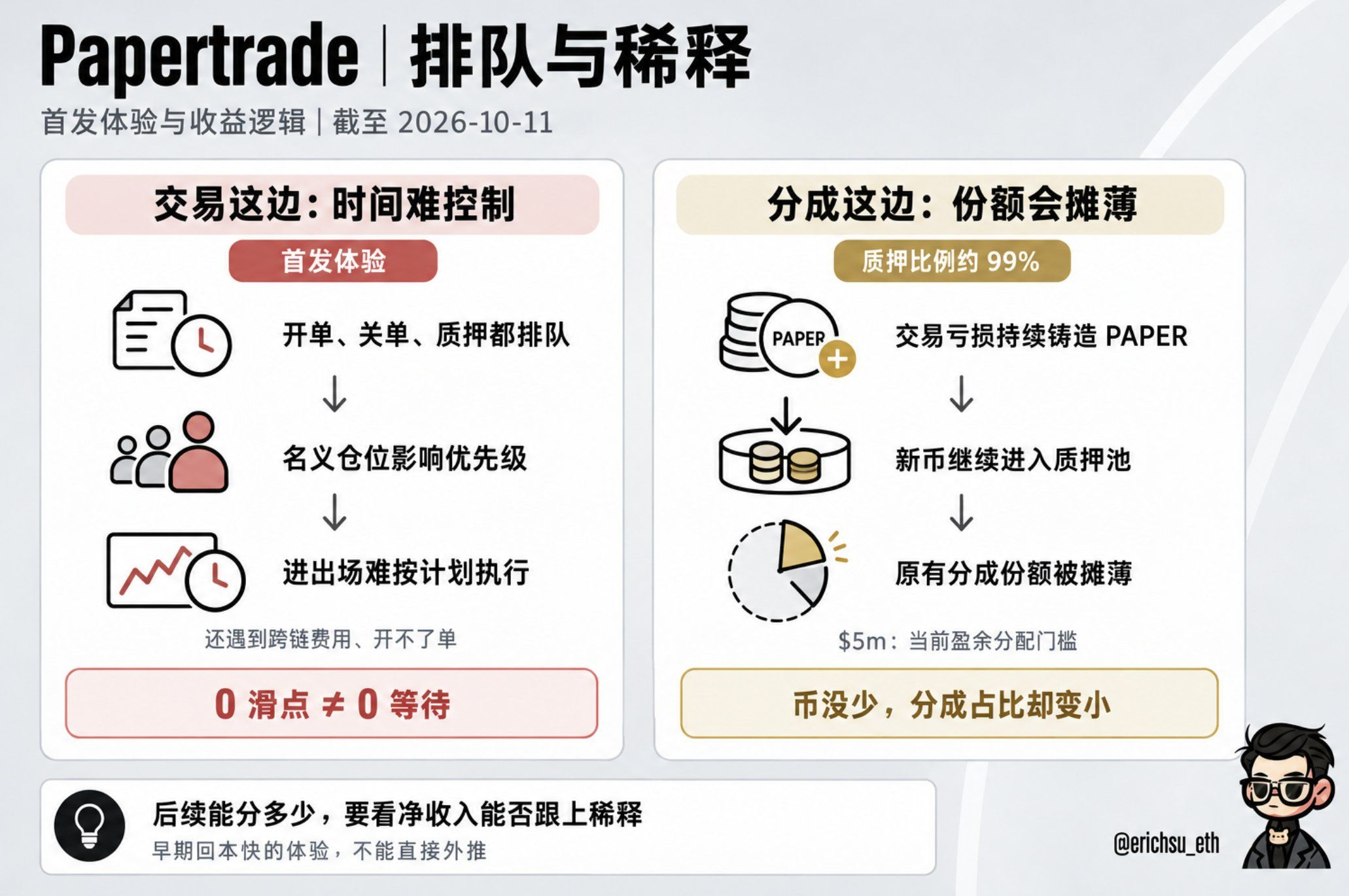
GM☕️ Last night I tried out papertrade_xyz, and everything—opening positions, closing positions, and staking—required waiting in a queue 😂
Large positions got to the front of the line. My position was small, so I spent almost the whole night waiting at the back and only managed to get a few trades through after midnight. There was zero trading strategy involved—it was basically opening a position and leaving it to fate……
The idea of minting PAPER by losing money, then staking it to share in the platform’s revenue, is pretty clever. But with the queues, you couldn’t open trades even when you wanted to. A bunch of issues cropped up on the very first night, and the advertised zero slippage meant nothing when the queues took so long (I once waited so long to close a position that I got liquidated 😂).
As for returns, early stakers in Paper recouped their costs very quickly—but only if they managed to stake early.
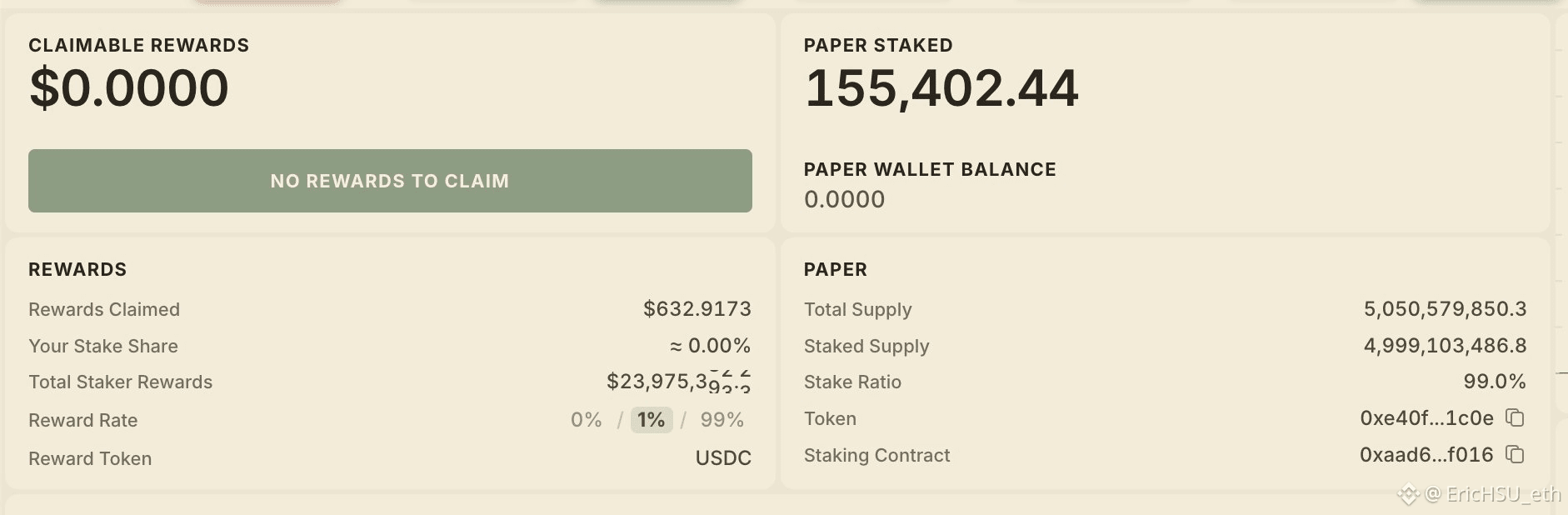
I added it all up: last night I spent about 1000u to get 150k Paper, then gradually queued up to stake it (I didn’t stake the last batch until I got up this morning). The fees I claimed this morning came to around 600u, but staking returns already seem to be dropping sharply.
PAPER is being issued quickly, and a large share is being staked. As more tokens enter the staking pool, the original share of revenue gets diluted. The number of tokens hasn’t gone down, but the share each person receives keeps shrinking.
How much people can earn going forward depends on whether the platform’s net revenue can keep up with the dilution. If revenue mainly comes from people willingly losing money to earn PAPER, I don’t think this model can last long term.
Researching trading was already hard enough—now I have to figure out queues too 🫠.
#Papertrade
1
225

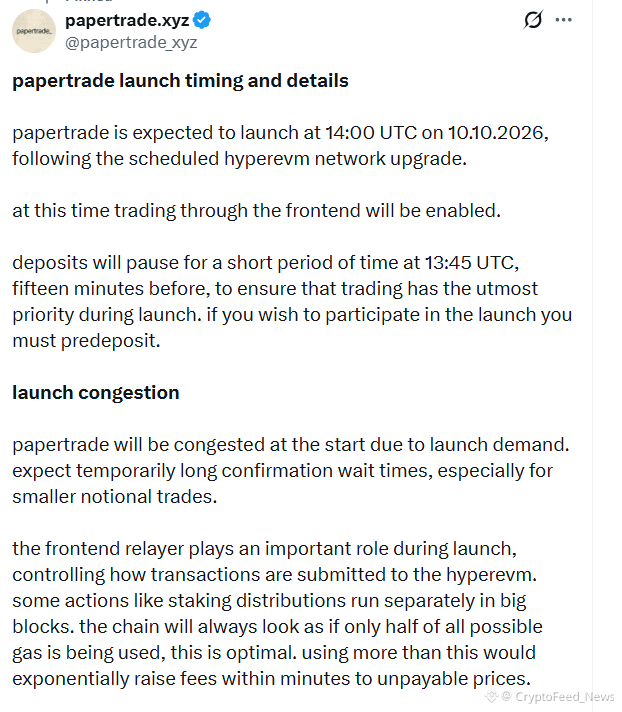
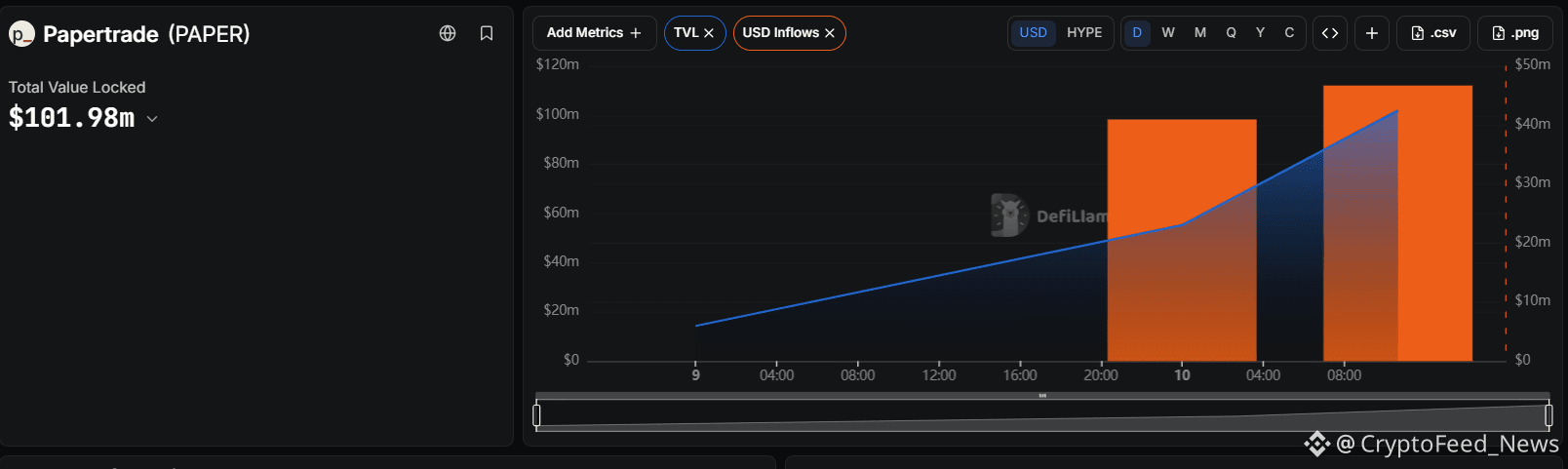
🚀 #PaperTrade opens trading on October 10, offering up to 1,000x leverage on HyperEVM. DefiLlama tracked roughly $102M in deposits ahead of launch.
⚠️ Key details traders should know:
🔹 Payout queue: If the pool cannot cover a winning trade’s profit, the unpaid amount becomes a claim in a queue. Traders get their original collateral back, but profits may be delayed.
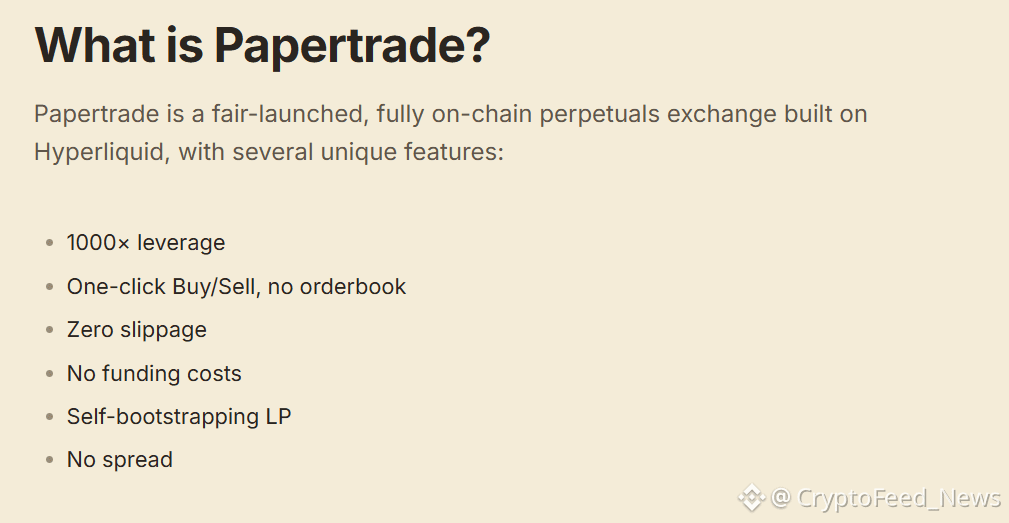
🔹 Synthetic positions: Papertrade uses $HYPE midpoint prices, but its own pool acts as the counterparty. Trades aren’t matched directly on #Hyperliquid .
🔹 #paper token: Realized trading losses drive token issuance. Staking rewards depend on eligibility, available pool capital, and payout-queue status.
With extreme leverage and potentially delayed profit payments, pool liquidity and settlement rules are crucial risks to watch.
1
156

·
--
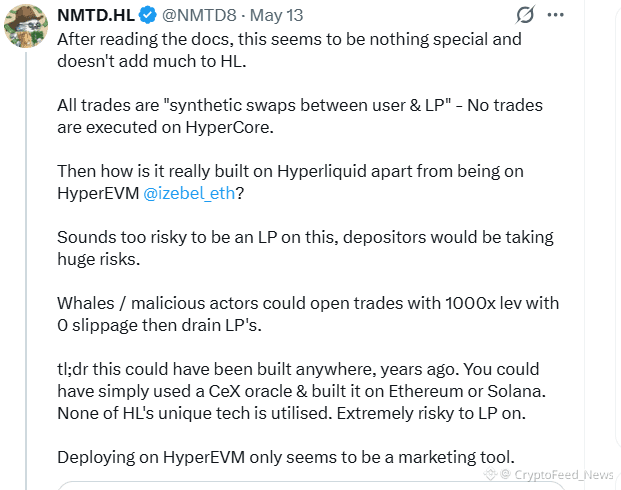
📊 Analysis: Papertrade is not connected to Hyperliquid’s official oracle price feeds, creating a flaw in its pricing mechanism. A trader exploited this discrepancy to manipulate the market, making approximately $1.28 million.
Core risk: When prices in simulated or paper trading diverge from the real market, they are highly susceptible to arbitrage and manipulation.
#Hyperliquid #Papertrade #Oracle #TradingSecurity
Core risk: When prices in simulated or paper trading diverge from the real market, they are highly susceptible to arbitrage and manipulation.
#Hyperliquid #Papertrade #Oracle #TradingSecurity
150
Log in to explore more content
Join global crypto users on Binance Square
⚡️ Get latest and useful information about crypto.
💬 Trusted by the world’s largest crypto exchange.
👍 Discover real insights from verified creators.
Email / Phone number
Trending Topics
1
#WillMarketsStageAThanksgivingReliefRally?
360 views
18 Discussing
2
#BessentSoftensStanceOnHuang’sNvidiaReturn
52 views
3 Discussing
3
#MuskWarnsOfAICashCrunch
0 views
1 Discussing
4
#BTCReboundsAbove$60KAmidWhaleDipBuying
107,959 views
424 Discussing
5
#SolanaSets2027RoadmapToDoubleComputeCapacity
91,979 views
1,227 Discussing
6
#CaliforniaNvidiaProbeExaminesPotentialCriminalViolations
25,958 views
182 Discussing
7
#BlackRockLaunchesHKDollarDigitalLiquidityFund
78,757 views
890 Discussing
8
#NvidiaLoses$2.7TrillionInMonthAndAHalf
90,937 views
344 Discussing
9
#GlobalStocksFaceLongestLosingStreakSince2023
627,289 views
3,621 Discussing
10
#BlackRockIBITPostsRecord$541MSingleDayOutflow
107,217 views
188 Discussing