
#seastock
seastock
14,266 views
269 Discussing
Hot
Latest

·
--
Article
From Crypto to Stocks: Expand Your Investment Journey with Binance@BinanceBurmese
#SEAstock
#SEABstock
As digital asset ecosystems evolve, cryptocurrency investors are increasingly seeking strategies to diversify their financial holdings and reduce concentrated market volatility. While crypto assets provide innovative financial utilities, high-growth potential, and decentralized mechanics, integrating traditional financial instruments—such as US Stocks—offers a powerful way to stabilize long-term portfolio growth. Binance provides an exceptional platform for global investors to seamlessly bridge the gap between blockchain-based investments and traditional equity markets through resources, trading tools, and educational frameworks like BStocks. Transitioning from crypto to stocks is not merely about spreading risk; it represents a foundational shift toward building comprehensive, resilient, and multi-asset wealth.
Understanding the fundamental mechanics that separate traditional stock markets from cryptocurrency markets is essential for any modern investor seeking a balanced asset structure. The cryptocurrency market operates continuously—24 hours a day, 7 days a week, 365 days a year—leading to intense price volatility over short timeframes. Conversely, traditional US stock markets operate within standard business hours on weekdays. Stocks generally exhibit less extreme intraday price swings compared to lower-cap crypto tokens, providing a calmer investment environment for conservative asset allocators.
Furthermore, crypto assets often derive value from protocol utility, network activity, adoption rates, and general market sentiment. In contrast, corporate stocks reflect direct ownership in established real-world corporations. Their valuations depend on audited revenues, quarterly earnings reports, corporate management strategies, and physical or intellectual property. Additionally, crypto assets generate passive yield through staking, lending, or liquidity provisioning. Traditional stocks provide income through dividend payments—a portion of company profits distributed directly to shareholders on a regular, predictable schedule. By combining both asset classes into a unified investment model, investors can capture the high-growth potential of digital finance while maintaining the steady, audited stability of traditional corporations.
If you are ready to transition your mindset from pure crypto trading to stock market investing, follow a disciplined beginner framework:
Master Fundamental Terminology: Familiarize yourself with key financial metrics such as Market Capitalization, Price-to-Earnings (P/E) Ratio, Dividend Yield, Earnings Per Share (EPS), and Debt-to-Equity ratios.
Monitor Global Macroeconomic News: Keep track of major economic announcements, including Federal Reserve interest rate policy changes, Consumer Price Index (CPI) inflation metrics, and major corporate earnings releases.
Utilize Binance Square Educational Hubs: Explore guided articles, market insights, and community discussions directly on Binance Square to learn how equities, tokenized assets, and broad financial markets interact.
Implement Disciplined Portfolio Sizing: Avoid over-concentrating capital into a single stock or token. Allocate capital across diverse sectors—such as technology, healthcare, energy, and consumer goods—to insulate yourself against sudden sector-specific downturns.
In this context, BStocks serve as a vital link connecting Web3 users with global equity markets directly within the Binance ecosystem. Acquiring full shares of top-tier US corporations like Apple, Microsoft, or Nvidia can require substantial upfront capital. BStocks frameworks enable fractional share exposure, allowing investors to purchase small fractions of high-value stock shares according to their budget limits starting from small amounts. Rather than managing disparate accounts across traditional brokers, users can analyze, track, and manage their multi-asset trajectory directly within the Binance interface. This integration provides enhanced liquidity and convenience, making it easy for Web3 users to reallocate profits between crypto assets and traditional equity markets in just a few clicks. However, thorough fundamental analysis (DYOR) is just as necessary in stock markets as it is in crypto. Always review corporate debt levels, quarterly guidance, competitive moat, and market positioning before committing capital.
Beginning a financial journey in cryptocurrency teaches valuable lessons in chart reading, risk assessment, and market timing. However, learning about stock market fundamentals through Binance opens up a deeper perspective on global macroeconomic cycles. Allocating capital across both digital assets and equities balances overall portfolio volatility while building lasting financial discipline. Combining tech-forward crypto exposure with time-tested equity investments creates a robust financial foundation for long-term wealth accumulation. Expanding your investment perspective from cryptocurrency to US Stocks represents a meaningful milestone in financial maturity. Leverage the power of Binance Square to access high-quality educational content, stay informed on market updates, and take calculated steps toward multi-asset investment success today.Thank You.
$TSMB
From Crypto to Stocks: Expand Your Investment Journey with Binance
@Binance Burmese
#SEAstock
#SEABstock
As digital asset ecosystems evolve, cryptocurrency investors are increasingly seeking strategies to diversify their financial holdings and reduce concentrated market volatility. While crypto assets provide innovative financial utilities, high-growth potential, and decentralized mechanics, integrating traditional financial instruments—such as US Stocks—offers a powerful way to stabilize long-term portfolio growth. Binance provides an exceptional platform for global investors to seamlessly bridge the gap between blockchain-based investments and traditional equity markets through resources, trading tools, and educational frameworks like BStocks. Transitioning from crypto to stocks is not merely about spreading risk; it represents a foundational shift toward building comprehensive, resilient, and multi-asset wealth.
Understanding the fundamental mechanics that separate traditional stock markets from cryptocurrency markets is essential for any modern investor seeking a balanced asset structure. The cryptocurrency market operates continuously—24 hours a day, 7 days a week, 365 days a year—leading to intense price volatility over short timeframes. Conversely, traditional US stock markets operate within standard business hours on weekdays. Stocks generally exhibit less extreme intraday price swings compared to lower-cap crypto tokens, providing a calmer investment environment for conservative asset allocators.
Furthermore, crypto assets often derive value from protocol utility, network activity, adoption rates, and general market sentiment. In contrast, corporate stocks reflect direct ownership in established real-world corporations. Their valuations depend on audited revenues, quarterly earnings reports, corporate management strategies, and physical or intellectual property. Additionally, crypto assets generate passive yield through staking, lending, or liquidity provisioning. Traditional stocks provide income through dividend payments—a portion of company profits distributed directly to shareholders on a regular, predictable schedule. By combining both asset classes into a unified investment model, investors can capture the high-growth potential of digital finance while maintaining the steady, audited stability of traditional corporations.
If you are ready to transition your mindset from pure crypto trading to stock market investing, follow a disciplined beginner framework:
Master Fundamental Terminology: Familiarize yourself with key financial metrics such as Market Capitalization, Price-to-Earnings (P/E) Ratio, Dividend Yield, Earnings Per Share (EPS), and Debt-to-Equity ratios.
Monitor Global Macroeconomic News: Keep track of major economic announcements, including Federal Reserve interest rate policy changes, Consumer Price Index (CPI) inflation metrics, and major corporate earnings releases.
Utilize Binance Square Educational Hubs: Explore guided articles, market insights, and community discussions directly on Binance Square to learn how equities, tokenized assets, and broad financial markets interact.
Implement Disciplined Portfolio Sizing: Avoid over-concentrating capital into a single stock or token. Allocate capital across diverse sectors—such as technology, healthcare, energy, and consumer goods—to insulate yourself against sudden sector-specific downturns.
In this context, BStocks serve as a vital link connecting Web3 users with global equity markets directly within the Binance ecosystem. Acquiring full shares of top-tier US corporations like Apple, Microsoft, or Nvidia can require substantial upfront capital. BStocks frameworks enable fractional share exposure, allowing investors to purchase small fractions of high-value stock shares according to their budget limits starting from small amounts. Rather than managing disparate accounts across traditional brokers, users can analyze, track, and manage their multi-asset trajectory directly within the Binance interface. This integration provides enhanced liquidity and convenience, making it easy for Web3 users to reallocate profits between crypto assets and traditional equity markets in just a few clicks. However, thorough fundamental analysis (DYOR) is just as necessary in stock markets as it is in crypto. Always review corporate debt levels, quarterly guidance, competitive moat, and market positioning before committing capital.
Beginning a financial journey in cryptocurrency teaches valuable lessons in chart reading, risk assessment, and market timing. However, learning about stock market fundamentals through Binance opens up a deeper perspective on global macroeconomic cycles. Allocating capital across both digital assets and equities balances overall portfolio volatility while building lasting financial discipline. Combining tech-forward crypto exposure with time-tested equity investments creates a robust financial foundation for long-term wealth accumulation. Expanding your investment perspective from cryptocurrency to US Stocks represents a meaningful milestone in financial maturity. Leverage the power of Binance Square to access high-quality educational content, stay informed on market updates, and take calculated steps toward multi-asset investment success today.Thank You.
$TSMB
7
1
6
230

·
--

Article
Bstock market🚀 BStocks 101: How to Get Started with US Stocks on Binance
If you’ve ever wanted to invest in US stocks but didn’t know where to begin, BStocks on Binance make it easier than ever! 📈 Through Binance’s ecosystem, you can gain exposure to major US companies without needing a traditional brokerage account.
🔹 What are BStocks?
BStocks (Blockchain Stocks) are tokenized representations of real-world stocks. They allow you to trade popular US equities in a crypto-friendly environment, combining the flexibility of blockchain with the value of traditional markets.
🔹 How to get started:
Create and verify your Binance accountDeposit funds (USDT or other supported assets)Explore available BStocks pairsStart small and learn market movementsUse charts, news, and risk management tools
🔹 Why learn US stocks through Binance?
Easy access for global users 🌍Trade anytime with crypto convenience ⏱️Diversify beyond crypto into traditional marketsGreat for beginners learning price action and fundamentals
💡 Tip: Start by following big names like tech or energy stocks and observe how global news impacts prices. Learning this connection will level up your trading skills fast. Trading BStocks is not just about profit—it’s about understanding how global markets work. Start your journey today and grow step by step!
@BinanceKhmer
#Bstock #BStock
#SEAstock
Bstock market
🚀 BStocks 101: How to Get Started with US Stocks on Binance
If you’ve ever wanted to invest in US stocks but didn’t know where to begin, BStocks on Binance make it easier than ever! 📈 Through Binance’s ecosystem, you can gain exposure to major US companies without needing a traditional brokerage account.
🔹 What are BStocks?
BStocks (Blockchain Stocks) are tokenized representations of real-world stocks. They allow you to trade popular US equities in a crypto-friendly environment, combining the flexibility of blockchain with the value of traditional markets.
🔹 How to get started:
Create and verify your Binance accountDeposit funds (USDT or other supported assets)Explore available BStocks pairsStart small and learn market movementsUse charts, news, and risk management tools
🔹 Why learn US stocks through Binance?
Easy access for global users 🌍Trade anytime with crypto convenience ⏱️Diversify beyond crypto into traditional marketsGreat for beginners learning price action and fundamentals
💡 Tip: Start by following big names like tech or energy stocks and observe how global news impacts prices. Learning this connection will level up your trading skills fast. Trading BStocks is not just about profit—it’s about understanding how global markets work. Start your journey today and grow step by step!
@Binance Khmer
#Bstock #BStock
#SEAstock
107


Article
📈 You Know Binance for Crypto. But What If Your Next Investment Lesson Starts With US Stocks?You know Binance for Crypto. But what if your next investment lesson starts with US Stocks? 📈👀
If you already understand Bitcoin and other digital assets, exploring the stock market can be a completely different learning experience. And for eligible Binance users, BStocks can be another way to explore exposure to US Stocks within the Binance ecosystem.
But before jumping in, there are a few important things to understand.
🔹 1. Stocks are different from Crypto
Crypto markets can trade 24/7, while traditional US stock markets operate during specific market hours. Stock prices are also heavily influenced by company earnings, economic data, interest rates, and major business news.
🔹 2. Know what you are buying
Seeing a famous company everywhere doesn’t automatically make its stock a good investment. Before investing, learn about the company, its business model, financial performance, valuation, and future growth potential.
🔹 3. Understand risk
Stocks can rise, but they can also fall. Even large and well-known companies can experience significant price drops. Never assume that a familiar company means a risk-free investment.
🔹 4. Think about diversification
Putting all your money into one company means your portfolio depends heavily on that company. Learning about different companies, sectors, and diversification can help you understand how investors manage risk.
🔹 5. BStocks can be another learning opportunity
For Binance users interested in US Stocks, BStocks can provide another way to explore the stock market. However, availability, product structure, fees, and risks can vary by region and product, so always check the details before participating.
The most important lesson is simple:
Don’t invest in something just because it’s popular. Understand it first. 🧠📊
Crypto and Stocks are different markets, but learning about both can help you become a more informed market participant.
Would you explore US Stocks after learning about Crypto? 👀
@BinanceKhmer
#SEAstock #Binance #bstock
📈 You Know Binance for Crypto. But What If Your Next Investment Lesson Starts With US Stocks?
You know Binance for Crypto. But what if your next investment lesson starts with US Stocks? 📈👀
If you already understand Bitcoin and other digital assets, exploring the stock market can be a completely different learning experience. And for eligible Binance users, BStocks can be another way to explore exposure to US Stocks within the Binance ecosystem.
But before jumping in, there are a few important things to understand.
🔹 1. Stocks are different from Crypto
Crypto markets can trade 24/7, while traditional US stock markets operate during specific market hours. Stock prices are also heavily influenced by company earnings, economic data, interest rates, and major business news.
🔹 2. Know what you are buying
Seeing a famous company everywhere doesn’t automatically make its stock a good investment. Before investing, learn about the company, its business model, financial performance, valuation, and future growth potential.
🔹 3. Understand risk
Stocks can rise, but they can also fall. Even large and well-known companies can experience significant price drops. Never assume that a familiar company means a risk-free investment.
🔹 4. Think about diversification
Putting all your money into one company means your portfolio depends heavily on that company. Learning about different companies, sectors, and diversification can help you understand how investors manage risk.
🔹 5. BStocks can be another learning opportunity
For Binance users interested in US Stocks, BStocks can provide another way to explore the stock market. However, availability, product structure, fees, and risks can vary by region and product, so always check the details before participating.
The most important lesson is simple:
Don’t invest in something just because it’s popular. Understand it first. 🧠📊
Crypto and Stocks are different markets, but learning about both can help you become a more informed market participant.
Would you explore US Stocks after learning about Crypto? 👀
@Binance Khmer
#SEAstock #Binance #bstock
94
·
--

Article
BStocks 101: How to get started and learn about US Stocks through Binance 📈If you are familiar with crypto but curious about US Stocks, BStocks can be a useful starting point to explore a different type of market through Binance. Before getting started, beginners should first learn the basics: what stocks are, how stock prices move, and what factors can affect a company’s value. It is also important to understand the risks, do your own research, and avoid making decisions based only on hype. Start small, learn consistently, and build your knowledge step by step. Investing is not about getting rich quickly—it is about understanding what you are doing before taking a risk. @BinanceKhmer #SEAstock
BStocks 101: How to get started and learn about US Stocks through Binance 📈
If you are familiar with crypto but curious about US Stocks, BStocks can be a useful starting point to explore a different type of market through Binance. Before getting started, beginners should first learn the basics: what stocks are, how stock prices move, and what factors can affect a company’s value. It is also important to understand the risks, do your own research, and avoid making decisions based only on hype. Start small, learn consistently, and build your knowledge step by step. Investing is not about getting rich quickly—it is about understanding what you are doing before taking a risk. @Binance Khmer #SEAstock
2
103

·
--
How bStocks Works and What Beginners Should KnowFor many Crypto users, getting started with stocks can feel like stepping into another world of finance. Traditional stocks are generally traded through stock exchanges and brokerage accounts, while Crypto runs on Blockchain networks and can be traded 24/7.
How bStocks Works and What Beginners Should Know
For many Crypto users, getting started with stocks can feel like stepping into another world of finance. Traditional stocks are generally traded through stock exchanges and brokerage accounts, while Crypto runs on Blockchain networks and can be traded 24/7.
21

·
--
Article
BStocks 101: A Beginners Guide to Exploring US Stocks on BinanceFor many crypto users, the world of traditional stocks can feel unfamiliar at first. We are used to seeing crypto prices move 24/7, but the stock market works differently. With Binance introducing ways for users to explore Stocks and BStocks, this can be an interesting opportunity to learn about another major part of the financial market.
In this article, I want to explain some basic concepts about US Stocks and BStocks in a simple way for beginners.
What Are Stocks?
A stock represents an ownership intest in a company. When you buy shares of a public company, you are purchasing an investment linked to that company’s value and performance.
For example, companies such as Apple, Microsoft, Amazon, and other publicly traded businesses have shares that can be bought and sold in financial markets.
Stock prices can move because of many factors, including company earnings, economic data, interest rates, industry developments, investor expectations, and market sentiment.
This is one reason why learning the basics is important before putting money into any investment.
What Are BStocks?
BStocks are designed to provide users with access to stock-related products through the Binance ecosystem. For someone who is already familiar with Binance and crypto, having stock-related products available in a familiar environment may make it easier to begin learning about traditional markets.
However, beginners should still understand that Stocks and BStocks are not the same thing as buying cryptocurrency.
The underlying structure, trading hours, market behavior, risks, and product terms can be different. Before trading, users should always check the specific product information and eligibility available in their region.
Stocks vs Crypto: What Is Different?
One of the biggest differences is market hours.
Crypto markets generally operate 24 hours a day, seven days a week. Traditional US stock markets operate according to scheduled market hours, with holidays and other closures.
Another important difference is what drives the market.
Crypto prices can be strongly affected by market sentiment, liquidity, adoption, regulations, and developments within the crypto ecosystem. Stock prices are also influenced by sentiment, but company earnings, revenue, business growth, economic conditions, interest rates, and industry performance can play major roles.
Neither market should simply be considered “easy money.” Both involve risk.
What Should Beginners Learn First?
If you are a crypto user interested in exploring Stocks, I think a good starting point is education rather than immediately focusing on making profits.
Here are some useful things to learn:
Understand what a stock represents.Learn how stock prices move.Understand market orders and limit orders.Learn about market hours.Understand basic company financial information.Learn how earnings reports can affect prices.Understand the risks of volatility.Check fees, product terms, and eligibility before trading.Never use money you cannot afford to lose.Keep learning from reliable sources.
From Crypto to Stocks
Crypto users already have experience watching charts, understanding volatility, and following market news. Some of these skills can be useful when learning about Stocks, but they should not be applied blindly.
For example, a crypto trader may be comfortable watching support and resistance or studying price action. However, stock investors may also need to pay attention to company fundamentals, earnings, revenue, valuation, economic data, and sector performance.
This makes learning Stocks an opportunity to expand your financial knowledge rather than simply replacing one market with another.
My Takeaway
The most important lesson for me is that understanding an investment product should come before taking unnecessary risks. Whether someone is interested in Crypto, Stocks, or BStocks, learning how the product works is an important first step.
For beginners, the goal should not be to find a shortcut to profit. A better approach is to understand the market, learn how risks work, start carefully, and continue improving your knowledge.
If you are already a Binance user and curious about US Stocks, exploring educational resources about Stocks and BStocks can be a useful way to broaden your understanding of different financial markets.
Always do your own research and carefully review the specific product information before making any investment decision.
What do you think—would you be interested in learning about US Stocks alongside Crypto? 📈
@BinanceBurmese
#SEAstock #Binance #BStocks #Investing #FinancialEducation
BStocks 101: A Beginners Guide to Exploring US Stocks on Binance
For many crypto users, the world of traditional stocks can feel unfamiliar at first. We are used to seeing crypto prices move 24/7, but the stock market works differently. With Binance introducing ways for users to explore Stocks and BStocks, this can be an interesting opportunity to learn about another major part of the financial market.
In this article, I want to explain some basic concepts about US Stocks and BStocks in a simple way for beginners.
What Are Stocks?
A stock represents an ownership intest in a company. When you buy shares of a public company, you are purchasing an investment linked to that company’s value and performance.
For example, companies such as Apple, Microsoft, Amazon, and other publicly traded businesses have shares that can be bought and sold in financial markets.
Stock prices can move because of many factors, including company earnings, economic data, interest rates, industry developments, investor expectations, and market sentiment.
This is one reason why learning the basics is important before putting money into any investment.
What Are BStocks?
BStocks are designed to provide users with access to stock-related products through the Binance ecosystem. For someone who is already familiar with Binance and crypto, having stock-related products available in a familiar environment may make it easier to begin learning about traditional markets.
However, beginners should still understand that Stocks and BStocks are not the same thing as buying cryptocurrency.
The underlying structure, trading hours, market behavior, risks, and product terms can be different. Before trading, users should always check the specific product information and eligibility available in their region.
Stocks vs Crypto: What Is Different?
One of the biggest differences is market hours.
Crypto markets generally operate 24 hours a day, seven days a week. Traditional US stock markets operate according to scheduled market hours, with holidays and other closures.
Another important difference is what drives the market.
Crypto prices can be strongly affected by market sentiment, liquidity, adoption, regulations, and developments within the crypto ecosystem. Stock prices are also influenced by sentiment, but company earnings, revenue, business growth, economic conditions, interest rates, and industry performance can play major roles.
Neither market should simply be considered “easy money.” Both involve risk.
What Should Beginners Learn First?
If you are a crypto user interested in exploring Stocks, I think a good starting point is education rather than immediately focusing on making profits.
Here are some useful things to learn:
Understand what a stock represents.Learn how stock prices move.Understand market orders and limit orders.Learn about market hours.Understand basic company financial information.Learn how earnings reports can affect prices.Understand the risks of volatility.Check fees, product terms, and eligibility before trading.Never use money you cannot afford to lose.Keep learning from reliable sources.
From Crypto to Stocks
Crypto users already have experience watching charts, understanding volatility, and following market news. Some of these skills can be useful when learning about Stocks, but they should not be applied blindly.
For example, a crypto trader may be comfortable watching support and resistance or studying price action. However, stock investors may also need to pay attention to company fundamentals, earnings, revenue, valuation, economic data, and sector performance.
This makes learning Stocks an opportunity to expand your financial knowledge rather than simply replacing one market with another.
My Takeaway
The most important lesson for me is that understanding an investment product should come before taking unnecessary risks. Whether someone is interested in Crypto, Stocks, or BStocks, learning how the product works is an important first step.
For beginners, the goal should not be to find a shortcut to profit. A better approach is to understand the market, learn how risks work, start carefully, and continue improving your knowledge.
If you are already a Binance user and curious about US Stocks, exploring educational resources about Stocks and BStocks can be a useful way to broaden your understanding of different financial markets.
Always do your own research and carefully review the specific product information before making any investment decision.
What do you think—would you be interested in learning about US Stocks alongside Crypto? 📈
@Binance Burmese
#SEAstock #Binance #BStocks #Investing #FinancialEducation
1
94

·
--
Article
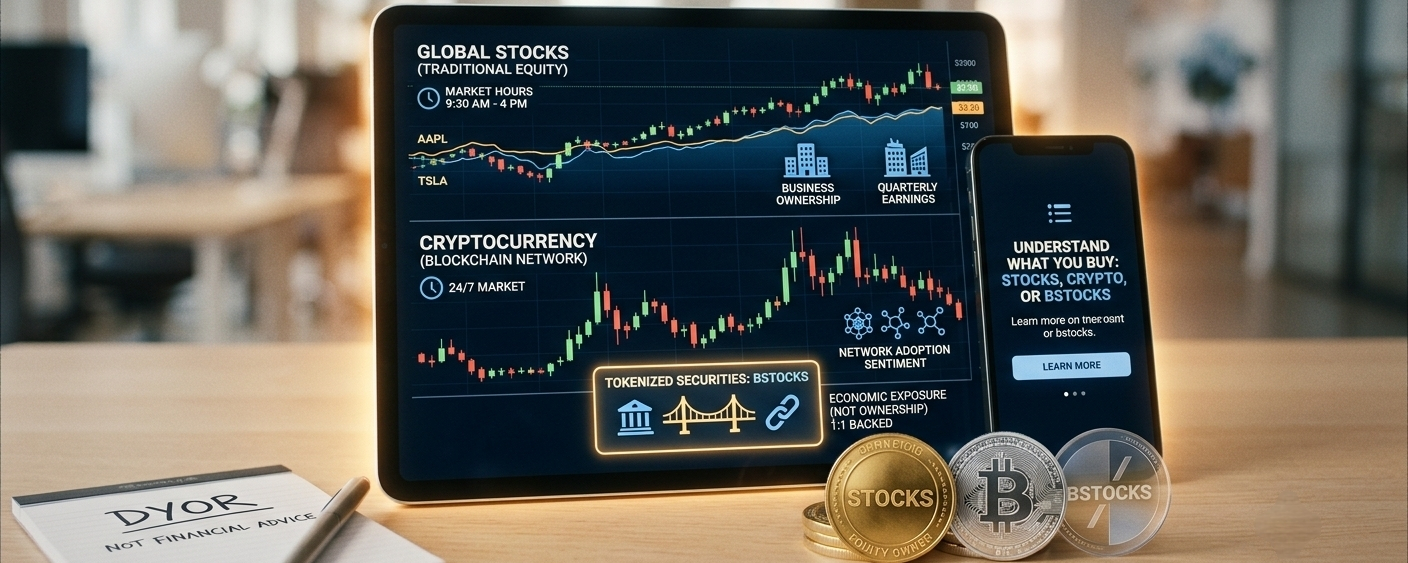
How are Stocks different from Crypto? Differences, risks, and opportunities 📈🪙If you already use crypto, you’ve probably noticed that stocks are becoming much easier to access through platforms like Binance. And honestly, at first glance, stocks and crypto can look very similar.
You see a price chart.
You choose an asset.
You buy it.
The price goes up or down.
So… are they really that different?
Yes. Quite a lot, actually.
But I don’t think the useful way to look at it is simply “Stocks are safe and crypto is risky.” Both can lose money, and both require you to understand what you’re buying.
The bigger difference is what the asset represents, how the market works, and what kind of risks you are taking.
🏢 First: What is a Stock?
A stock represents an ownership interest in a publicly traded company.
If you buy shares of a company through a traditional stock-market structure, your investment is connected to that company’s equity. Depending on the type of security and the arrangement, shareholders can have rights such as voting rights and rights related to dividends.
Stock prices are influenced by things that happen to the company and the wider economy.
For example:
• Company earnings
• Revenue growth
• New products
• Competition
• Interest rates
• Economic conditions
• Investor expectations
• Industry trends
That means when you buy a stock, you are essentially investing in the future performance of a business.
Of course, that doesn't mean a good company automatically means a good investment at every price. The market can change its expectations very quickly.
🪙 So how is Crypto different?
Crypto assets don't generally represent ownership in a traditional company.
Bitcoin, for example, isn't a share of a company. Its value isn't based on quarterly company earnings or ownership of a business.
Different crypto assets have different purposes and structures. Some are designed as networks, some as digital assets, some provide utility within an ecosystem, and some are connected to other applications.
The crypto market also operates differently from traditional stock markets.
Crypto markets are generally available 24/7, which is one reason crypto can feel so fast-moving. There is always another price movement, another piece of news, another token trending.
And this is where I think crypto users need to be careful.
Just because you can trade something 24/7 doesn't mean you need to trade it 24/7.
📊 The biggest difference: what moves the price?
This is probably one of the most useful things for someone moving from crypto into stocks to understand.
A stock's price is strongly connected to expectations about a company's future business performance.
Crypto prices can be influenced by many different factors, including network adoption, market liquidity, regulation, technology, sentiment, and supply and demand.
Both markets have speculation.
Both markets have volatility.
But the underlying structures are different.
That's why I wouldn't automatically apply the same thinking to a stock that I would use when looking at a crypto token.
⚠️ What about the risks?
This is where things become interesting.
Stocks have risks such as company-specific risk, economic risk, interest-rate risk and market risk. A company can report disappointing results, lose market share, face stronger competition, or simply become less attractive to investors.
Crypto has market volatility too, but there can also be additional risks connected to technology, custody, cybersecurity, regulation, liquidity and the particular design of an individual digital asset.
And there is another lesson I learned from using crypto:
The fact that something is available on an exchange doesn't automatically mean that I understand it.
That's true for both stocks and crypto.
Before buying something, I want to know what the asset actually represents.
🔗 Where do bStocks fit into this?
This is the part that I find particularly interesting.
Binance's bStocks are tokenized securities that provide exposure to selected underlying US equities. Binance says each bStock is backed 1:1 by the corresponding underlying US share held with a regulated custodian.
But there is an important detail here:
A bStock is not the same thing as directly owning the underlying company's stock.
Binance explicitly states that bStocks are not stocks or shares and don't give holders direct ownership or shareholder rights in the underlying company. Instead, they provide economic exposure to the underlying security.
So I think of bStocks as an interesting bridge between two worlds.
You have an underlying traditional financial asset, but its representation uses blockchain technology.
According to Binance, bStocks can also trade on Binance Spot 24/7 and can be withdrawn to compatible BNB Smart Chain wallets. Binance says fractional exposure can start from $5 for supported bStocks.
For someone who is already familiar with crypto wallets and blockchain transactions, this structure may feel more familiar than traditional stock infrastructure.
But familiar does not mean risk-free.
🧩 Stocks, Crypto and bStocks aren't interchangeable
This is probably the most important takeaway.
A traditional stock is not the same as a cryptocurrency.
A bStock is not the same as directly owning the underlying stock.
And a crypto user shouldn't assume that because an asset is traded on Binance, all three products work in the same way.
They don't.
They have different structures, different risks and potentially different rights.
For example, Binance notes that bStocks can have market, liquidity, issuer/custody, regulatory, technology and operational risks. Availability also depends on jurisdiction and user eligibility.
That's why reading the product information matters.
🌱 But there are opportunities too
The differences aren't only about risks.
Stocks give people a way to participate in the growth of publicly traded businesses.
Crypto gives users access to blockchain-based financial ecosystems that work differently from traditional markets.
And tokenized securities such as bStocks are an interesting development because they attempt to connect traditional financial exposure with blockchain infrastructure.
For crypto users, that creates an opportunity to learn about another asset class without completely leaving the environment they're already familiar with.
But I don't think the goal should be to choose between “Stocks vs Crypto” as if one has to replace the other.
The better question is:
Do I understand what I'm buying, and do I understand the risks involved?
💭 My biggest takeaway
When I first started learning about different financial markets, it was tempting to focus mainly on the price chart.
Green candle = good.
Red candle = bad.
But the more useful question is actually:
What is behind this price?
With a stock, look at the business.
With crypto, understand the asset, network and ecosystem.
With a tokenized security such as a bStock, understand both the underlying asset and the tokenized structure.
The chart only tells you what the market price is doing. It doesn't tell you everything about what you own.
That's why I think learning the differences between Stocks, Crypto and bStocks is more useful than simply asking which one will make more money.
Markets will always move.
The important part is knowing what you're actually holding when they do.
Not financial advice. Always do your own research and check the latest official product information, availability and applicable rules before making any financial decision.
@BinanceBurmese
#SEAstock
How are Stocks different from Crypto? Differences, risks, and opportunities 📈🪙
If you already use crypto, you’ve probably noticed that stocks are becoming much easier to access through platforms like Binance. And honestly, at first glance, stocks and crypto can look very similar.
You see a price chart.
You choose an asset.
You buy it.
The price goes up or down.
So… are they really that different?
Yes. Quite a lot, actually.
But I don’t think the useful way to look at it is simply “Stocks are safe and crypto is risky.” Both can lose money, and both require you to understand what you’re buying.
The bigger difference is what the asset represents, how the market works, and what kind of risks you are taking.
🏢 First: What is a Stock?
A stock represents an ownership interest in a publicly traded company.
If you buy shares of a company through a traditional stock-market structure, your investment is connected to that company’s equity. Depending on the type of security and the arrangement, shareholders can have rights such as voting rights and rights related to dividends.
Stock prices are influenced by things that happen to the company and the wider economy.
For example:
• Company earnings
• Revenue growth
• New products
• Competition
• Interest rates
• Economic conditions
• Investor expectations
• Industry trends
That means when you buy a stock, you are essentially investing in the future performance of a business.
Of course, that doesn't mean a good company automatically means a good investment at every price. The market can change its expectations very quickly.
🪙 So how is Crypto different?
Crypto assets don't generally represent ownership in a traditional company.
Bitcoin, for example, isn't a share of a company. Its value isn't based on quarterly company earnings or ownership of a business.
Different crypto assets have different purposes and structures. Some are designed as networks, some as digital assets, some provide utility within an ecosystem, and some are connected to other applications.
The crypto market also operates differently from traditional stock markets.
Crypto markets are generally available 24/7, which is one reason crypto can feel so fast-moving. There is always another price movement, another piece of news, another token trending.
And this is where I think crypto users need to be careful.
Just because you can trade something 24/7 doesn't mean you need to trade it 24/7.
📊 The biggest difference: what moves the price?
This is probably one of the most useful things for someone moving from crypto into stocks to understand.
A stock's price is strongly connected to expectations about a company's future business performance.
Crypto prices can be influenced by many different factors, including network adoption, market liquidity, regulation, technology, sentiment, and supply and demand.
Both markets have speculation.
Both markets have volatility.
But the underlying structures are different.
That's why I wouldn't automatically apply the same thinking to a stock that I would use when looking at a crypto token.
⚠️ What about the risks?
This is where things become interesting.
Stocks have risks such as company-specific risk, economic risk, interest-rate risk and market risk. A company can report disappointing results, lose market share, face stronger competition, or simply become less attractive to investors.
Crypto has market volatility too, but there can also be additional risks connected to technology, custody, cybersecurity, regulation, liquidity and the particular design of an individual digital asset.
And there is another lesson I learned from using crypto:
The fact that something is available on an exchange doesn't automatically mean that I understand it.
That's true for both stocks and crypto.
Before buying something, I want to know what the asset actually represents.
🔗 Where do bStocks fit into this?
This is the part that I find particularly interesting.
Binance's bStocks are tokenized securities that provide exposure to selected underlying US equities. Binance says each bStock is backed 1:1 by the corresponding underlying US share held with a regulated custodian.
But there is an important detail here:
A bStock is not the same thing as directly owning the underlying company's stock.
Binance explicitly states that bStocks are not stocks or shares and don't give holders direct ownership or shareholder rights in the underlying company. Instead, they provide economic exposure to the underlying security.
So I think of bStocks as an interesting bridge between two worlds.
You have an underlying traditional financial asset, but its representation uses blockchain technology.
According to Binance, bStocks can also trade on Binance Spot 24/7 and can be withdrawn to compatible BNB Smart Chain wallets. Binance says fractional exposure can start from $5 for supported bStocks.
For someone who is already familiar with crypto wallets and blockchain transactions, this structure may feel more familiar than traditional stock infrastructure.
But familiar does not mean risk-free.
🧩 Stocks, Crypto and bStocks aren't interchangeable
This is probably the most important takeaway.
A traditional stock is not the same as a cryptocurrency.
A bStock is not the same as directly owning the underlying stock.
And a crypto user shouldn't assume that because an asset is traded on Binance, all three products work in the same way.
They don't.
They have different structures, different risks and potentially different rights.
For example, Binance notes that bStocks can have market, liquidity, issuer/custody, regulatory, technology and operational risks. Availability also depends on jurisdiction and user eligibility.
That's why reading the product information matters.
🌱 But there are opportunities too
The differences aren't only about risks.
Stocks give people a way to participate in the growth of publicly traded businesses.
Crypto gives users access to blockchain-based financial ecosystems that work differently from traditional markets.
And tokenized securities such as bStocks are an interesting development because they attempt to connect traditional financial exposure with blockchain infrastructure.
For crypto users, that creates an opportunity to learn about another asset class without completely leaving the environment they're already familiar with.
But I don't think the goal should be to choose between “Stocks vs Crypto” as if one has to replace the other.
The better question is:
Do I understand what I'm buying, and do I understand the risks involved?
💭 My biggest takeaway
When I first started learning about different financial markets, it was tempting to focus mainly on the price chart.
Green candle = good.
Red candle = bad.
But the more useful question is actually:
What is behind this price?
With a stock, look at the business.
With crypto, understand the asset, network and ecosystem.
With a tokenized security such as a bStock, understand both the underlying asset and the tokenized structure.
The chart only tells you what the market price is doing. It doesn't tell you everything about what you own.
That's why I think learning the differences between Stocks, Crypto and bStocks is more useful than simply asking which one will make more money.
Markets will always move.
The important part is knowing what you're actually holding when they do.
Not financial advice. Always do your own research and check the latest official product information, availability and applicable rules before making any financial decision.
@Binance Burmese
#SEAstock
157

·
--

Article
Stocks vs Crypto: Understanding the Differences, Risks and OpportunitiesFor many crypto users, exploring the world of traditional stocks can be an interesting next step. Both stocks and crypto are popular financial markets, but they work in very different ways.
With Binance continuing to provide access to different financial products, beginners may come across terms such as Stocks, US Stocks, and bStocks. Understanding what these products are, how they differ from crypto, and what risks are involved is important before making any investment decision.
In this article, I want to share some basic information for beginners who are interested in learning about Stocks and bStocks.
🔹 1. What Are Stocks?
A stock represents an ownership interest in a publicly traded company.
For example, when an investor purchases shares of a public company, they are purchasing an ownership interest in that company. The value of a stock can be affected by many factors, including company earnings, business performance, economic conditions, industry developments, interest rates, and investor expectations.
Stock markets also operate under established market rules and trading schedules. Unlike crypto markets, traditional stock exchanges generally have specific trading hours.
This is one of the first differences that crypto users should understand when learning about Stocks.
🔹 2. How Are Stocks Different From Crypto?
Stocks and crypto are both tradable assets, but their underlying structures are different.
Stocks are connected to publicly traded companies and traditional financial markets. Investors may analyze financial statements, earnings reports, company growth, competitive advantages, and industry trends when researching a stock.
Crypto assets, on the other hand, are digital assets that can be built on blockchain networks. Their prices can be influenced by factors such as supply and demand, adoption, network activity, market sentiment, liquidity, technological developments, and broader market conditions.
Another major difference is market availability.
Crypto markets generally operate 24/7, meaning prices can move at any time, including weekends. Traditional stock markets generally follow specific trading sessions and market holidays.
For someone who is used to crypto trading, this difference in market structure is important to understand.
🔹 3. What Are bStocks?
This is where things become particularly interesting for crypto users.
bStocks are blockchain-based tokenized securities available through Binance. They are designed to provide exposure to the price performance of corresponding listed equities.
According to Binance's official information, bStocks are backed 1:1 by corresponding U.S. shares and can be traded on Binance Spot markets 24/7.
However, there is an important distinction that beginners should understand.
Holding a bStock does not mean that you directly own the underlying company's share in the same way as holding the traditional stock through a conventional brokerage account.
bStocks are structured as tokenized securities and represent financial instruments linked to the underlying asset. Therefore, users should carefully understand the ownership structure, rights, terms, and risks before using the product.
This is one of the most important points for anyone moving from crypto into tokenized stock products.
🔹 4. Why Should Crypto Users Learn About Stocks?
Crypto users already have experience following market movements, analyzing projects, monitoring news, and understanding market sentiment.
Learning about Stocks can expand that knowledge into traditional financial markets.
For example, someone interested in artificial intelligence may want to understand not only AI-related crypto projects but also companies involved in semiconductors, cloud computing, software, and other parts of the technology industry.
Learning about Stocks can therefore provide another perspective when studying global markets.
It is not necessarily about choosing Stocks over Crypto or Crypto over Stocks.
Instead, it is about understanding how different financial markets work and what factors influence their prices.
🔹 5. Risks You Should Understand
Stocks and Crypto both involve risk.
Crypto can experience significant price volatility, and individual tokens can be affected by market sentiment, liquidity, technology, regulation, and other factors.
Stocks also carry risks. A company's stock price can decline because of weak earnings, changing economic conditions, industry competition, unexpected company events, or broader market movements.
bStocks also have their own risks. Binance has highlighted risks associated with tokenized stock products, including liquidity, issuer, custody, regulatory, technology, and tax-related risks.
Therefore, investors should not assume that a product is automatically safer simply because it is connected to a traditional stock.
Understanding the product before using it is essential.
🔹 6. A Beginner's Checklist
If you are new to Stocks or bStocks, here are some areas worth learning about before trading:
1️⃣ How the stock market works
2️⃣ What company earnings and financial statements mean
3️⃣ What factors influence stock prices
4️⃣ The differences between Stocks and Crypto
5️⃣ How tokenized stocks such as bStocks are structured
6️⃣ Trading fees and liquidity
7️⃣ Market hours and trading rules
8️⃣ Product availability in your country or region
9️⃣ The risks associated with the specific product
🔟 Binance's official product information, Terms, and Risk Warnings
Taking time to learn these basics can help beginners make more informed decisions.
💡 Final Thoughts
Stocks and Crypto may look similar because both can be traded and both experience price movements, but the underlying systems are very different.
Stocks are connected to traditional companies and financial markets.
Crypto assets are based on blockchain technology and have their own unique market structures.
bStocks introduce another interesting concept by combining blockchain technology with exposure to traditional listed equities.
For crypto users, learning about Stocks can be an opportunity to expand their understanding of global financial markets. But learning about a product does not automatically mean that someone should buy it.
Before trading, it is important to understand the product, research the underlying asset, consider the risks, and check whether the product is available and suitable for your jurisdiction and personal circumstances.
The more we understand about different markets, the better we can evaluate opportunities and risks for ourselves.
If you are a Crypto user who is starting to explore US Stocks, which difference between Stocks and Crypto do you find the most interesting?
@BinanceBurmese
#SEABstock
#SEAstock
#Stocks
#bStocks
#BinanceBurmese
Stocks vs Crypto: Understanding the Differences, Risks and Opportunities
For many crypto users, exploring the world of traditional stocks can be an interesting next step. Both stocks and crypto are popular financial markets, but they work in very different ways.
With Binance continuing to provide access to different financial products, beginners may come across terms such as Stocks, US Stocks, and bStocks. Understanding what these products are, how they differ from crypto, and what risks are involved is important before making any investment decision.
In this article, I want to share some basic information for beginners who are interested in learning about Stocks and bStocks.
🔹 1. What Are Stocks?
A stock represents an ownership interest in a publicly traded company.
For example, when an investor purchases shares of a public company, they are purchasing an ownership interest in that company. The value of a stock can be affected by many factors, including company earnings, business performance, economic conditions, industry developments, interest rates, and investor expectations.
Stock markets also operate under established market rules and trading schedules. Unlike crypto markets, traditional stock exchanges generally have specific trading hours.
This is one of the first differences that crypto users should understand when learning about Stocks.
🔹 2. How Are Stocks Different From Crypto?
Stocks and crypto are both tradable assets, but their underlying structures are different.
Stocks are connected to publicly traded companies and traditional financial markets. Investors may analyze financial statements, earnings reports, company growth, competitive advantages, and industry trends when researching a stock.
Crypto assets, on the other hand, are digital assets that can be built on blockchain networks. Their prices can be influenced by factors such as supply and demand, adoption, network activity, market sentiment, liquidity, technological developments, and broader market conditions.
Another major difference is market availability.
Crypto markets generally operate 24/7, meaning prices can move at any time, including weekends. Traditional stock markets generally follow specific trading sessions and market holidays.
For someone who is used to crypto trading, this difference in market structure is important to understand.
🔹 3. What Are bStocks?
This is where things become particularly interesting for crypto users.
bStocks are blockchain-based tokenized securities available through Binance. They are designed to provide exposure to the price performance of corresponding listed equities.
According to Binance's official information, bStocks are backed 1:1 by corresponding U.S. shares and can be traded on Binance Spot markets 24/7.
However, there is an important distinction that beginners should understand.
Holding a bStock does not mean that you directly own the underlying company's share in the same way as holding the traditional stock through a conventional brokerage account.
bStocks are structured as tokenized securities and represent financial instruments linked to the underlying asset. Therefore, users should carefully understand the ownership structure, rights, terms, and risks before using the product.
This is one of the most important points for anyone moving from crypto into tokenized stock products.
🔹 4. Why Should Crypto Users Learn About Stocks?
Crypto users already have experience following market movements, analyzing projects, monitoring news, and understanding market sentiment.
Learning about Stocks can expand that knowledge into traditional financial markets.
For example, someone interested in artificial intelligence may want to understand not only AI-related crypto projects but also companies involved in semiconductors, cloud computing, software, and other parts of the technology industry.
Learning about Stocks can therefore provide another perspective when studying global markets.
It is not necessarily about choosing Stocks over Crypto or Crypto over Stocks.
Instead, it is about understanding how different financial markets work and what factors influence their prices.
🔹 5. Risks You Should Understand
Stocks and Crypto both involve risk.
Crypto can experience significant price volatility, and individual tokens can be affected by market sentiment, liquidity, technology, regulation, and other factors.
Stocks also carry risks. A company's stock price can decline because of weak earnings, changing economic conditions, industry competition, unexpected company events, or broader market movements.
bStocks also have their own risks. Binance has highlighted risks associated with tokenized stock products, including liquidity, issuer, custody, regulatory, technology, and tax-related risks.
Therefore, investors should not assume that a product is automatically safer simply because it is connected to a traditional stock.
Understanding the product before using it is essential.
🔹 6. A Beginner's Checklist
If you are new to Stocks or bStocks, here are some areas worth learning about before trading:
1️⃣ How the stock market works
2️⃣ What company earnings and financial statements mean
3️⃣ What factors influence stock prices
4️⃣ The differences between Stocks and Crypto
5️⃣ How tokenized stocks such as bStocks are structured
6️⃣ Trading fees and liquidity
7️⃣ Market hours and trading rules
8️⃣ Product availability in your country or region
9️⃣ The risks associated with the specific product
🔟 Binance's official product information, Terms, and Risk Warnings
Taking time to learn these basics can help beginners make more informed decisions.
💡 Final Thoughts
Stocks and Crypto may look similar because both can be traded and both experience price movements, but the underlying systems are very different.
Stocks are connected to traditional companies and financial markets.
Crypto assets are based on blockchain technology and have their own unique market structures.
bStocks introduce another interesting concept by combining blockchain technology with exposure to traditional listed equities.
For crypto users, learning about Stocks can be an opportunity to expand their understanding of global financial markets. But learning about a product does not automatically mean that someone should buy it.
Before trading, it is important to understand the product, research the underlying asset, consider the risks, and check whether the product is available and suitable for your jurisdiction and personal circumstances.
The more we understand about different markets, the better we can evaluate opportunities and risks for ourselves.
If you are a Crypto user who is starting to explore US Stocks, which difference between Stocks and Crypto do you find the most interesting?
@Binance Burmese
#SEABstock
#SEAstock
#Stocks
#bStocks
#BinanceBurmese
33
1
17
881


Article
How are Stocks different from Crypto? Differences, risks, and opportunitiesRHow Are Stocks Different from Crypto? Differences, Risks, and Opportunities
Understanding the difference between traditional financial assets and digital assets is one of the most critical steps for anyone navigating the modern market landscape. While both stocks and cryptocurrencies allow investors to build wealth over time, they operate under fundamentally distinct mechanisms, risk profiles, and market dynamics. Whether you are exploring traditional stock markets or diving into tokenized equities—such as BStocks (tokenized stocks accessible in Web3 ecosystems)—here is a comprehensive breakdown of how these asset classes differ, the risks associated with each, and where the biggest opportunities lie.
The primary distinction between stocks and cryptocurrency lies in their core underlying value. When you purchase a share of a stock, you are buying fractional ownership in a real-world, legally registered corporation. Stock values are anchored by tangible fundamentals, including revenue, earnings reports, profit margins, balance sheets, and physical assets. On the other hand, cryptocurrency assets represent utility, governance rights, or store-of-value mechanisms within a decentralized network. Instead of being backed by corporate profits, crypto valuations depend on network adoption, tokenomics, smart contract utility, technological innovation, and overall market demand.
Another major difference is market accessibility and trading schedules. Traditional stock exchanges, such as the NYSE or Nasdaq, operate during fixed business hours on weekdays and pause trading over weekends and public holidays. In contrast, cryptocurrency markets operate 24/7/365 globally, allowing continuous liquidity flow without market closures. Bridging these two financial worlds are BStocks (or tokenized equities), which allow Web3 investors to trade synthetic or tokenized versions of traditional stocks directly on the blockchain. This brings round-the-clock trading, fractional ownership, and seamless portfolio diversification directly into your crypto wallet without requiring a traditional broker.
When comparing risk profiles, traditional equities generally offer moderate price volatility because share prices fluctuate around corporate earnings reports, macroeconomic indicators, and interest rate changes. Cryptocurrencies, however, experience high to extreme volatility, with double-digit percentage price movements within a single day being driven by shifts in market sentiment, protocol updates, or liquidity changes. Furthermore, traditional stocks operate within highly defined regulatory frameworks enforced by government oversight bodies, whereas crypto regulations are continuously evolving globally. From a custodial standpoint, stocks are safely managed by regulated broker-dealers, while crypto users often manage their own wallet security and private keys.
Despite these risks, both markets present unique advantages for modern investors. Traditional stocks provide predictable dividend income streams, long-term historical compound growth, and clear fundamental analysis models like Discounted Cash Flow valuation. Conversely, cryptocurrencies and BStocks offer rapid network adoption potential, programmable integrations with Decentralized Finance (DeFi) protocols, and micro-fractional purchasing power that lowers the barrier to entry for beginners.
In conclusion, neither asset class is inherently superior—they simply serve different strategic functions within a portfolio. Traditional stocks offer proven corporate backing and long-term stability, while crypto and BStocks provide cutting-edge technological exposure, higher potential growth, and round-the-clock liquidity. For modern investors, balancing exposure across both traditional equities and digital assets offers an effective way to diversify wealth for the future.
@BinanceBurmese
#SEAstock
#SEABstock
How are Stocks different from Crypto? Differences, risks, and opportunities
RHow Are Stocks Different from Crypto? Differences, Risks, and Opportunities
Understanding the difference between traditional financial assets and digital assets is one of the most critical steps for anyone navigating the modern market landscape. While both stocks and cryptocurrencies allow investors to build wealth over time, they operate under fundamentally distinct mechanisms, risk profiles, and market dynamics. Whether you are exploring traditional stock markets or diving into tokenized equities—such as BStocks (tokenized stocks accessible in Web3 ecosystems)—here is a comprehensive breakdown of how these asset classes differ, the risks associated with each, and where the biggest opportunities lie.
The primary distinction between stocks and cryptocurrency lies in their core underlying value. When you purchase a share of a stock, you are buying fractional ownership in a real-world, legally registered corporation. Stock values are anchored by tangible fundamentals, including revenue, earnings reports, profit margins, balance sheets, and physical assets. On the other hand, cryptocurrency assets represent utility, governance rights, or store-of-value mechanisms within a decentralized network. Instead of being backed by corporate profits, crypto valuations depend on network adoption, tokenomics, smart contract utility, technological innovation, and overall market demand.
Another major difference is market accessibility and trading schedules. Traditional stock exchanges, such as the NYSE or Nasdaq, operate during fixed business hours on weekdays and pause trading over weekends and public holidays. In contrast, cryptocurrency markets operate 24/7/365 globally, allowing continuous liquidity flow without market closures. Bridging these two financial worlds are BStocks (or tokenized equities), which allow Web3 investors to trade synthetic or tokenized versions of traditional stocks directly on the blockchain. This brings round-the-clock trading, fractional ownership, and seamless portfolio diversification directly into your crypto wallet without requiring a traditional broker.
When comparing risk profiles, traditional equities generally offer moderate price volatility because share prices fluctuate around corporate earnings reports, macroeconomic indicators, and interest rate changes. Cryptocurrencies, however, experience high to extreme volatility, with double-digit percentage price movements within a single day being driven by shifts in market sentiment, protocol updates, or liquidity changes. Furthermore, traditional stocks operate within highly defined regulatory frameworks enforced by government oversight bodies, whereas crypto regulations are continuously evolving globally. From a custodial standpoint, stocks are safely managed by regulated broker-dealers, while crypto users often manage their own wallet security and private keys.
Despite these risks, both markets present unique advantages for modern investors. Traditional stocks provide predictable dividend income streams, long-term historical compound growth, and clear fundamental analysis models like Discounted Cash Flow valuation. Conversely, cryptocurrencies and BStocks offer rapid network adoption potential, programmable integrations with Decentralized Finance (DeFi) protocols, and micro-fractional purchasing power that lowers the barrier to entry for beginners.
In conclusion, neither asset class is inherently superior—they simply serve different strategic functions within a portfolio. Traditional stocks offer proven corporate backing and long-term stability, while crypto and BStocks provide cutting-edge technological exposure, higher potential growth, and round-the-clock liquidity. For modern investors, balancing exposure across both traditional equities and digital assets offers an effective way to diversify wealth for the future.
@Binance Burmese
#SEAstock
#SEABstock
1
1
2
91

·
--
Stocks & BStocks
Exploring the Future of Digital Markets
Financial markets are evolving as technology creates new ways to explore global opportunities. Binance Stocks & BStocks bring traditional market concepts closer to the digital asset experience.
Stocks can connect users with established companies, while BStocks introduce a blockchain-based approach to stock exposure. Understanding product structure, fees, risks, and availability is essential.
Stay informed and discover new perspectives as digital finance evolves.
What role could Stocks & BStocks play in the future of finance in 2026?
#SEAstock
@BinanceBurmese
Stocks & BStocks
Exploring the Future of Digital Markets
Financial markets are evolving as technology creates new ways to explore global opportunities. Binance Stocks & BStocks bring traditional market concepts closer to the digital asset experience.
Stocks can connect users with established companies, while BStocks introduce a blockchain-based approach to stock exposure. Understanding product structure, fees, risks, and availability is essential.
Stay informed and discover new perspectives as digital finance evolves.
What role could Stocks & BStocks play in the future of finance in 2026?
#SEAstock
@Binance Burmese

13
2
18
400

·
--
Crypto vs. Stocks: How BStocks on Binance Bridge the Gap for Modern InvestorsFor years, the financial world has felt divided into two separate camps: the fast-paced, 24/7 digital asset ecosystem of Cryptocurrency, and the battle-tested, foundational wealth-building engine of the Traditional Stock Market.
If you are a crypto-native investor, venturing into Wall Street often meant navigating complex traditional brokerage accounts, currency conversions, and cumbersome onboarding processes. Conversely, if you came from traditional finance, crypto volatility might have felt unfamiliar.
However, the investment landscape is evolving rapidly. With the introduction of BStocks on Binance, the boundary between traditional finance and Web3 is disappearing. Investors can now gain exposure to top-performing US Stocks directly within the crypto ecosystem they already know and trust.
In this guide, we will explore the fundamental differences between Crypto and Stocks, how BStocks work, and why bridging these two asset classes is a game-changer for your portfolio.
1️⃣ Crypto vs. Traditional Stocks: Understanding the Core Differences
To build a resilient portfolio, it is essential to understand how these two asset classes behave, what drives their value, and where their unique risks and opportunities lie:
Underlying Value:Cryptocurrency: Driven by decentralized networks, protocol utility, and supply/demand dynamics.Traditional US Stocks: Backed by corporate equity, revenue, earnings reports, and physical/intellectual assets.Market Hours:Cryptocurrency: Operating 24/7/365 continuous trading globally.Traditional US Stocks: Bound by standard market exchange hours (e.g., NYSE/NASDAQ opening and closing bells).Volatility & Risk:Cryptocurrency: High volatility with potential for rapid price discovery.Traditional US Stocks: Moderate to lower volatility, backed by historical corporate performance.Regulation:Cryptocurrency: Operating within evolving global regulatory frameworks.Traditional US Stocks: Strictly regulated by government bodies (e.g., US SEC).
💡 The Opportunity in Diversification:Crypto offers high growth potential, innovation, and continuous market access. Meanwhile, traditional US stocks offer historical stability, dividend opportunities, and exposure to battle-tested global giants like Apple, Microsoft, and Tesla. Holding both asset classes allows you to balance high-risk, high-reward innovation with steady, proven corporate equity.
2️⃣ What are BStocks and How Do They Work?
BStocks represent a revolutionary bridge between traditional equities and digital asset flexibility. They allow users to access the price performance of leading US stocks directly through Binance.
Instead of liquidating your crypto into fiat, withdrawing to a local bank, opening a foreign brokerage account, and wiring funds to trade US equities, BStocks streamline the entire process:
⚡ Seamless Access: Trade exposure to top US stocks using your existing Binance wallet balance.🧩 Fractional Ownership Mindset: You don't need thousands of dollars to invest in high-value companies. Access fractional exposure according to your available capital.📊 Unified Portfolio Management: Track your Bitcoin, Altcoins, Stablecoins, and Stock exposure in one single dashboard.💸 Efficiency: Avoid multiple intermediary fees, foreign exchange overheads, and long banking delay periods.
3️⃣ Getting Started with US Stocks via Binance: A Beginner’s Checklist
If you are transitioning from pure crypto trading to exploring US equities via Binance, follow this simple checklist to ensure a smooth start:
[x] Step 1: Complete Verification (KYC)Ensure your Binance account is fully verified. Compliance and security are essential for accessing advanced product suites.[ ] Step 2: Understand Market Hours vs. Crypto TradingRemember that traditional stock movements are tied to real-world exchange hours. Pay attention to pre-market and post-market news events in the US.[ ] Step 3: Research Fundamental Earnings & NewsUnlike crypto, which relies heavily on tokenomics, GitHub commits, and on-chain metrics, stocks move on quarterly earnings reports (EPS), revenue growth, macro interest rates, and sector health.[ ] Step 4: Define Your Risk Management StrategyAllocate your capital wisely. Use stablecoins or existing balances to diversify into stocks to hedge against crypto-market drawdown cycles.
4️⃣ Expanding Your Investment Journey: Why Blending Crypto & Stocks Makes Sense
The modern investor no longer needs to choose between being "100% Crypto" or "100% TradFi." The real power lies in portfolio asset allocation.
When crypto markets experience consolidation or bear cycles, capital often flows into traditional safe havens or high-performing tech stocks. By keeping your capital within the Binance ecosystem through BStocks, you retain full flexibility:
Reallocate gains from crypto bull runs into stable US tech equities to lock in long-term value.Pivot back into digital assets effortlessly when strategic crypto entry points emerge.Enjoy smooth liquidity management without leaving your primary exchange platform.
🎯 Conclusion: The Future of Unified Wealth Management
The integration of US Stocks into Binance via BStocks marks a major milestone in financial access. It empowers global users to learn, invest, and build a truly diversified wealth portfolio using a single, secure interface.
Whether you are a seasoned trader looking to hedge your crypto portfolio or a beginner taking your first steps into global equity markets, the tools are now at your fingertips. Take control of your financial journey, explore BStocks on Binance today, and build a portfolio designed for all market conditions!
@BinanceBurmese
#SEABstock #SEAstock
Crypto vs. Stocks: How BStocks on Binance Bridge the Gap for Modern Investors
For years, the financial world has felt divided into two separate camps: the fast-paced, 24/7 digital asset ecosystem of Cryptocurrency, and the battle-tested, foundational wealth-building engine of the Traditional Stock Market.
If you are a crypto-native investor, venturing into Wall Street often meant navigating complex traditional brokerage accounts, currency conversions, and cumbersome onboarding processes. Conversely, if you came from traditional finance, crypto volatility might have felt unfamiliar.
However, the investment landscape is evolving rapidly. With the introduction of BStocks on Binance, the boundary between traditional finance and Web3 is disappearing. Investors can now gain exposure to top-performing US Stocks directly within the crypto ecosystem they already know and trust.
In this guide, we will explore the fundamental differences between Crypto and Stocks, how BStocks work, and why bridging these two asset classes is a game-changer for your portfolio.
1️⃣ Crypto vs. Traditional Stocks: Understanding the Core Differences
To build a resilient portfolio, it is essential to understand how these two asset classes behave, what drives their value, and where their unique risks and opportunities lie:
Underlying Value:Cryptocurrency: Driven by decentralized networks, protocol utility, and supply/demand dynamics.Traditional US Stocks: Backed by corporate equity, revenue, earnings reports, and physical/intellectual assets.Market Hours:Cryptocurrency: Operating 24/7/365 continuous trading globally.Traditional US Stocks: Bound by standard market exchange hours (e.g., NYSE/NASDAQ opening and closing bells).Volatility & Risk:Cryptocurrency: High volatility with potential for rapid price discovery.Traditional US Stocks: Moderate to lower volatility, backed by historical corporate performance.Regulation:Cryptocurrency: Operating within evolving global regulatory frameworks.Traditional US Stocks: Strictly regulated by government bodies (e.g., US SEC).
💡 The Opportunity in Diversification:Crypto offers high growth potential, innovation, and continuous market access. Meanwhile, traditional US stocks offer historical stability, dividend opportunities, and exposure to battle-tested global giants like Apple, Microsoft, and Tesla. Holding both asset classes allows you to balance high-risk, high-reward innovation with steady, proven corporate equity.
2️⃣ What are BStocks and How Do They Work?
BStocks represent a revolutionary bridge between traditional equities and digital asset flexibility. They allow users to access the price performance of leading US stocks directly through Binance.
Instead of liquidating your crypto into fiat, withdrawing to a local bank, opening a foreign brokerage account, and wiring funds to trade US equities, BStocks streamline the entire process:
⚡ Seamless Access: Trade exposure to top US stocks using your existing Binance wallet balance.🧩 Fractional Ownership Mindset: You don't need thousands of dollars to invest in high-value companies. Access fractional exposure according to your available capital.📊 Unified Portfolio Management: Track your Bitcoin, Altcoins, Stablecoins, and Stock exposure in one single dashboard.💸 Efficiency: Avoid multiple intermediary fees, foreign exchange overheads, and long banking delay periods.
3️⃣ Getting Started with US Stocks via Binance: A Beginner’s Checklist
If you are transitioning from pure crypto trading to exploring US equities via Binance, follow this simple checklist to ensure a smooth start:
[x] Step 1: Complete Verification (KYC)Ensure your Binance account is fully verified. Compliance and security are essential for accessing advanced product suites.[ ] Step 2: Understand Market Hours vs. Crypto TradingRemember that traditional stock movements are tied to real-world exchange hours. Pay attention to pre-market and post-market news events in the US.[ ] Step 3: Research Fundamental Earnings & NewsUnlike crypto, which relies heavily on tokenomics, GitHub commits, and on-chain metrics, stocks move on quarterly earnings reports (EPS), revenue growth, macro interest rates, and sector health.[ ] Step 4: Define Your Risk Management StrategyAllocate your capital wisely. Use stablecoins or existing balances to diversify into stocks to hedge against crypto-market drawdown cycles.
4️⃣ Expanding Your Investment Journey: Why Blending Crypto & Stocks Makes Sense
The modern investor no longer needs to choose between being "100% Crypto" or "100% TradFi." The real power lies in portfolio asset allocation.
When crypto markets experience consolidation or bear cycles, capital often flows into traditional safe havens or high-performing tech stocks. By keeping your capital within the Binance ecosystem through BStocks, you retain full flexibility:
Reallocate gains from crypto bull runs into stable US tech equities to lock in long-term value.Pivot back into digital assets effortlessly when strategic crypto entry points emerge.Enjoy smooth liquidity management without leaving your primary exchange platform.
🎯 Conclusion: The Future of Unified Wealth Management
The integration of US Stocks into Binance via BStocks marks a major milestone in financial access. It empowers global users to learn, invest, and build a truly diversified wealth portfolio using a single, secure interface.
Whether you are a seasoned trader looking to hedge your crypto portfolio or a beginner taking your first steps into global equity markets, the tools are now at your fingertips. Take control of your financial journey, explore BStocks on Binance today, and build a portfolio designed for all market conditions!
@Binance Burmese
#SEABstock #SEAstock
1
82

·
--
Stocks & BStocks: Bridging Traditional and Digital Markets
The financial world is entering a new digital chapter. Stocks & BStocks bring together familiar market concepts and blockchain-based innovation, creating a new way to explore modern financial products.
Stocks provide exposure to established companies, while BStocks represent a digital approach to stock-related products. This connection between traditional finance and blockchain technology highlights how market infrastructure continues to evolve.
For anyone exploring this space, understanding product structure, fees, risks, and availability is essential. Research first, stay informed, and make decisions carefully.
How do you see the future of Stocks & BStocks? #SEAstock @BinanceBurmese
Stocks & BStocks: Bridging Traditional and Digital Markets
The financial world is entering a new digital chapter. Stocks & BStocks bring together familiar market concepts and blockchain-based innovation, creating a new way to explore modern financial products.
Stocks provide exposure to established companies, while BStocks represent a digital approach to stock-related products. This connection between traditional finance and blockchain technology highlights how market infrastructure continues to evolve.
For anyone exploring this space, understanding product structure, fees, risks, and availability is essential. Research first, stay informed, and make decisions carefully.
How do you see the future of Stocks & BStocks? #SEAstock @Binance Burmese

6
8
231

·
--
The global market is seeing growing investor concerns about the technology and AI sectors. In particular, reports about Chinese company CXMT’s advances in memory-chip technology have raised concerns about intensifying competition in the industry. This pressure is affecting semiconductor stocks, including Micron (MU).
On Binance, MUUB represents the Direxion MU Bull 2X ETF (bStocks). It is designed to target twice Micron’s daily stock-price performance. This means that when Micron’s stock falls, MUUB could experience even sharper losses. However, holding MUUB for the long term does not guarantee twice Micron’s returns because daily rebalancing can affect its performance over time.
Based on the latest available market data, MUUB is facing selling pressure, so it may be too early to assume that a rebound is coming. A falling price alone does not necessarily mean it is a good buying opportunity. It is important to watch for signs that selling pressure is easing, the price is stabilizing near support, and buying momentum is returning.
In my view, rather than buying immediately just because the price has dropped, it may be wiser to wait for clearer signs of stabilization and recovery. If you decide to trade, always determine how much you can afford to lose and manage your risk carefully.
What do you think about MUUB? 🤔 Do you expect a rebound, or could the price fall even further?
$MUU
$MUUB
@BinanceBurmese
#SEAstock
#BStocks
#Stocks
#Binance
The global market is seeing growing investor concerns about the technology and AI sectors. In particular, reports about Chinese company CXMT’s advances in memory-chip technology have raised concerns about intensifying competition in the industry. This pressure is affecting semiconductor stocks, including Micron (MU).
On Binance, MUUB represents the Direxion MU Bull 2X ETF (bStocks). It is designed to target twice Micron’s daily stock-price performance. This means that when Micron’s stock falls, MUUB could experience even sharper losses. However, holding MUUB for the long term does not guarantee twice Micron’s returns because daily rebalancing can affect its performance over time.
Based on the latest available market data, MUUB is facing selling pressure, so it may be too early to assume that a rebound is coming. A falling price alone does not necessarily mean it is a good buying opportunity. It is important to watch for signs that selling pressure is easing, the price is stabilizing near support, and buying momentum is returning.
In my view, rather than buying immediately just because the price has dropped, it may be wiser to wait for clearer signs of stabilization and recovery. If you decide to trade, always determine how much you can afford to lose and manage your risk carefully.
What do you think about MUUB? 🤔 Do you expect a rebound, or could the price fall even further?
$MUU
$MUUB
@Binance Burmese
#SEAstock
#BStocks
#Stocks
#Binance
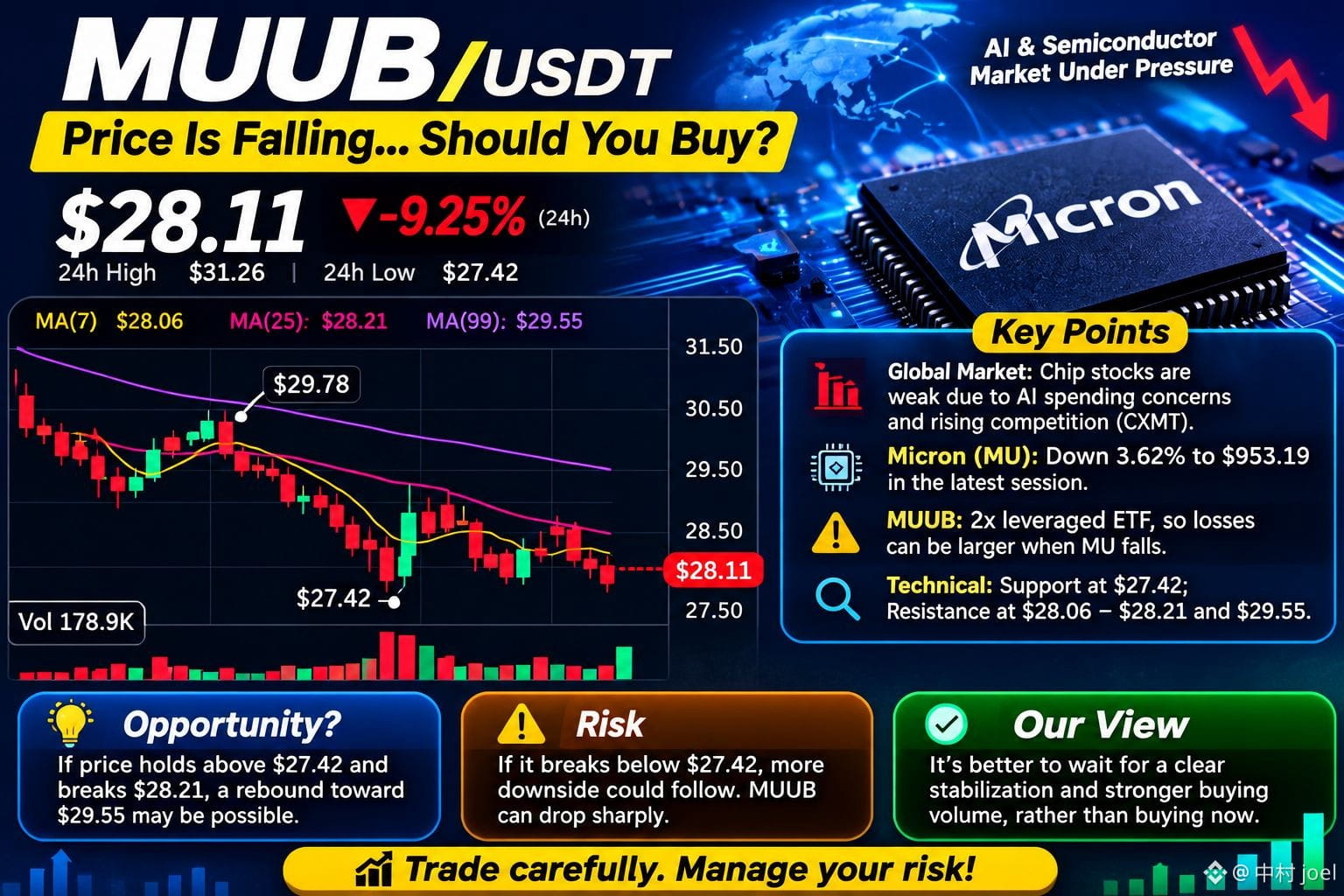
1
314

·
--
Verified
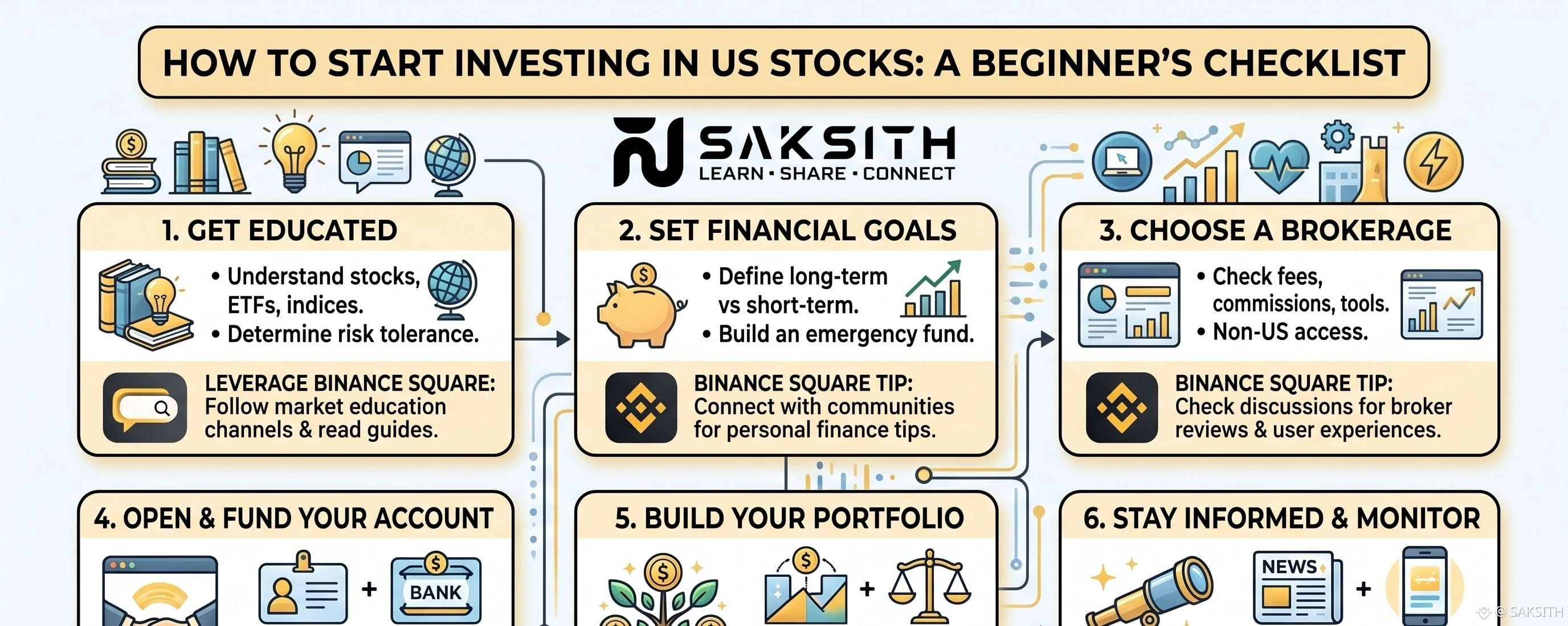
Article
🔶 📝 How to start investing in US Stocks: A checklist for beginners🔶 📝 To start investing in US Stocks as a beginner, focus on financial basics first, then find and open a brokerage account and learn the essentials of stocks, funds and risks.
👉 📝 Build Financial Foundation:
✅ Save at least 6 months to a year of living expenses before investing.
✅ Don't have debt or personal loans.
✅ Investing without affecting daily needs.
👉 📝 Choose a Brokerage or Exchange:
✅ Selecting a good, trustworthy broker.
✅ Now you can use Binance Stocks & bStocks Trading: 1:1 Trade tokenized stocks (bStocks) on Binance 24/7 on the spot market, zero commission, 100% FPSL yield, fully backed by real shares & publicly verifiable.
👉 📝 Understand what to buy Stocks:
✅ Finding a good company with future growth potential. 📈
✅ Learning and understand about Index funds/ETFs and S&P 500
✅ Dividends: Some companies pay regular cash to shareholders.
✅ Start investing small: Binance bStocks can start with as little as $5 using fractional shares.
✅ Making DCA (Dollar-Cost Averaging in Finance)
✅ Know the Rules and Risks
✅ Keep Learning and Researching on the internet, Binance Square Official and Binance Khmer. 🔶 ⬜
Thanks you for visiting article SAKSITH: Learn • Share • Connect
👉 Learn more: Follow Binance Khmer 🇰🇭
@Binance_Square_Official @BinanceKhmer #SEABstock #SEAstock
$NVDAB $AAPLB $GOOGL.US
🔶 📝 How to start investing in US Stocks: A checklist for beginners
🔶 📝 To start investing in US Stocks as a beginner, focus on financial basics first, then find and open a brokerage account and learn the essentials of stocks, funds and risks.
👉 📝 Build Financial Foundation:
✅ Save at least 6 months to a year of living expenses before investing.
✅ Don't have debt or personal loans.
✅ Investing without affecting daily needs.
👉 📝 Choose a Brokerage or Exchange:
✅ Selecting a good, trustworthy broker.
✅ Now you can use Binance Stocks & bStocks Trading: 1:1 Trade tokenized stocks (bStocks) on Binance 24/7 on the spot market, zero commission, 100% FPSL yield, fully backed by real shares & publicly verifiable.
👉 📝 Understand what to buy Stocks:
✅ Finding a good company with future growth potential. 📈
✅ Learning and understand about Index funds/ETFs and S&P 500
✅ Dividends: Some companies pay regular cash to shareholders.
✅ Start investing small: Binance bStocks can start with as little as $5 using fractional shares.
✅ Making DCA (Dollar-Cost Averaging in Finance)
✅ Know the Rules and Risks
✅ Keep Learning and Researching on the internet, Binance Square Official and Binance Khmer. 🔶 ⬜
Thanks you for visiting article SAKSITH: Learn • Share • Connect
👉 Learn more: Follow Binance Khmer 🇰🇭
@Binance Square Official @Binance Khmer #SEABstock #SEAstock
$NVDAB $AAPLB $GOOGL.US
1
184

·
--
Article
Binance bStocks: How Blockchain Is Connecting Crypto and Traditional MarketsThe growth of blockchain technology has created new ways for people to interact with financial assets. One area receiving increasing attention is tokenized securities. Binance bStocks are an example of this approach, bringing certain traditional-market exposure into a blockchain-based environment.
@BinanceBurmese
What Makes bStocks Different?
Binance describes bStocks as blockchain-based tokenized securities that provide exposure to the price performance of underlying listed equities. However, bStocks are not ordinary stocks or shares and do not give holders direct ownership of the underlying company or normal shareholder rights. �
Binance +1
This distinction is important for anyone learning about tokenized assets. A person should understand what they are actually holding before using any financial product.
The Role of Blockchain
Blockchain technology allows digital assets to be represented and transferred through blockchain infrastructure. In the case of bStocks, the technology provides a connection between traditional financial instruments and digital-asset infrastructure.
Binance has listed various bStocks on its Spot platform. For example, Binance has announced bStocks related to companies and securities including NVIDIA, Tesla, Microsoft, Apple and other underlying assets at different times. Availability and supported products can change over time. �
Binance +1
How Can Users Access bStocks?
For eligible users, Binance has supported bStocks through different services, including Spot trading and conversion features. Binance also announced that eligible users can convert certain supported tokenized securities into corresponding bStocks on a 1:1 basis, subject to the applicable terms and limits. �
Binance
Some bStocks can also be available for 24/7 trading, depending on the specific product and the user's eligibility and location. This is one difference between blockchain-based trading infrastructure and traditional stock-market trading schedules. �
Binance
Why Is Tokenization Important?
Tokenization is interesting because it can connect traditional financial markets with blockchain technology. Instead of keeping financial exposure entirely within traditional market infrastructure, tokenized products can use blockchain-based systems.
This development may make the financial ecosystem more interconnected. Crypto users can learn about traditional-market exposure, while people interested in traditional finance can explore blockchain-based financial products.
However, tokenization does not mean that risk disappears. The value of an asset can change because of market conditions, liquidity, issuer-related factors, technology, regulation and other risks.
bStocks Are Not the Same as Owning Shares
One of the most important points to understand is the difference between a bStock and a traditional company share.
A traditional stock represents ownership in a company under the relevant legal and market structure. Binance states that bStocks represent an interest in underlying securities held by the issuer rather than direct ownership of the underlying shares. �
Binance
Therefore, users should not assume that holding a bStock automatically gives them the same rights as a shareholder.
Availability Depends on Eligibility
bStocks are not available to every user in every country. Binance states that tokenized securities are available only to eligible users in permitted jurisdictions, and regional restrictions may apply. �
Binance
Before accessing a bStock, users should check Binance's latest product information, eligibility requirements, applicable terms and the laws that apply in their own jurisdiction.
Final Thoughts
Binance bStocks provide an interesting example of how blockchain technology can interact with traditional financial markets. They demonstrate how tokenization can create digital representations connected to underlying financial instruments.
At the same time, users should understand the product structure and risks rather than assuming that a bStock is simply the same as buying a normal company share.
Learning how tokenized securities work is an important step for anyone interested in the future connection between blockchain and traditional finance.
#SEABstock
#SEAstock
#binance
#binancesquare
Binance bStocks: How Blockchain Is Connecting Crypto and Traditional Markets
The growth of blockchain technology has created new ways for people to interact with financial assets. One area receiving increasing attention is tokenized securities. Binance bStocks are an example of this approach, bringing certain traditional-market exposure into a blockchain-based environment.
@Binance Burmese
What Makes bStocks Different?
Binance describes bStocks as blockchain-based tokenized securities that provide exposure to the price performance of underlying listed equities. However, bStocks are not ordinary stocks or shares and do not give holders direct ownership of the underlying company or normal shareholder rights. �
Binance +1
This distinction is important for anyone learning about tokenized assets. A person should understand what they are actually holding before using any financial product.
The Role of Blockchain
Blockchain technology allows digital assets to be represented and transferred through blockchain infrastructure. In the case of bStocks, the technology provides a connection between traditional financial instruments and digital-asset infrastructure.
Binance has listed various bStocks on its Spot platform. For example, Binance has announced bStocks related to companies and securities including NVIDIA, Tesla, Microsoft, Apple and other underlying assets at different times. Availability and supported products can change over time. �
Binance +1
How Can Users Access bStocks?
For eligible users, Binance has supported bStocks through different services, including Spot trading and conversion features. Binance also announced that eligible users can convert certain supported tokenized securities into corresponding bStocks on a 1:1 basis, subject to the applicable terms and limits. �
Binance
Some bStocks can also be available for 24/7 trading, depending on the specific product and the user's eligibility and location. This is one difference between blockchain-based trading infrastructure and traditional stock-market trading schedules. �
Binance
Why Is Tokenization Important?
Tokenization is interesting because it can connect traditional financial markets with blockchain technology. Instead of keeping financial exposure entirely within traditional market infrastructure, tokenized products can use blockchain-based systems.
This development may make the financial ecosystem more interconnected. Crypto users can learn about traditional-market exposure, while people interested in traditional finance can explore blockchain-based financial products.
However, tokenization does not mean that risk disappears. The value of an asset can change because of market conditions, liquidity, issuer-related factors, technology, regulation and other risks.
bStocks Are Not the Same as Owning Shares
One of the most important points to understand is the difference between a bStock and a traditional company share.
A traditional stock represents ownership in a company under the relevant legal and market structure. Binance states that bStocks represent an interest in underlying securities held by the issuer rather than direct ownership of the underlying shares. �
Binance
Therefore, users should not assume that holding a bStock automatically gives them the same rights as a shareholder.
Availability Depends on Eligibility
bStocks are not available to every user in every country. Binance states that tokenized securities are available only to eligible users in permitted jurisdictions, and regional restrictions may apply. �
Binance
Before accessing a bStock, users should check Binance's latest product information, eligibility requirements, applicable terms and the laws that apply in their own jurisdiction.
Final Thoughts
Binance bStocks provide an interesting example of how blockchain technology can interact with traditional financial markets. They demonstrate how tokenization can create digital representations connected to underlying financial instruments.
At the same time, users should understand the product structure and risks rather than assuming that a bStock is simply the same as buying a normal company share.
Learning how tokenized securities work is an important step for anyone interested in the future connection between blockchain and traditional finance.
#SEABstock
#SEAstock
#binance
#binancesquare
6
7
337

·
--
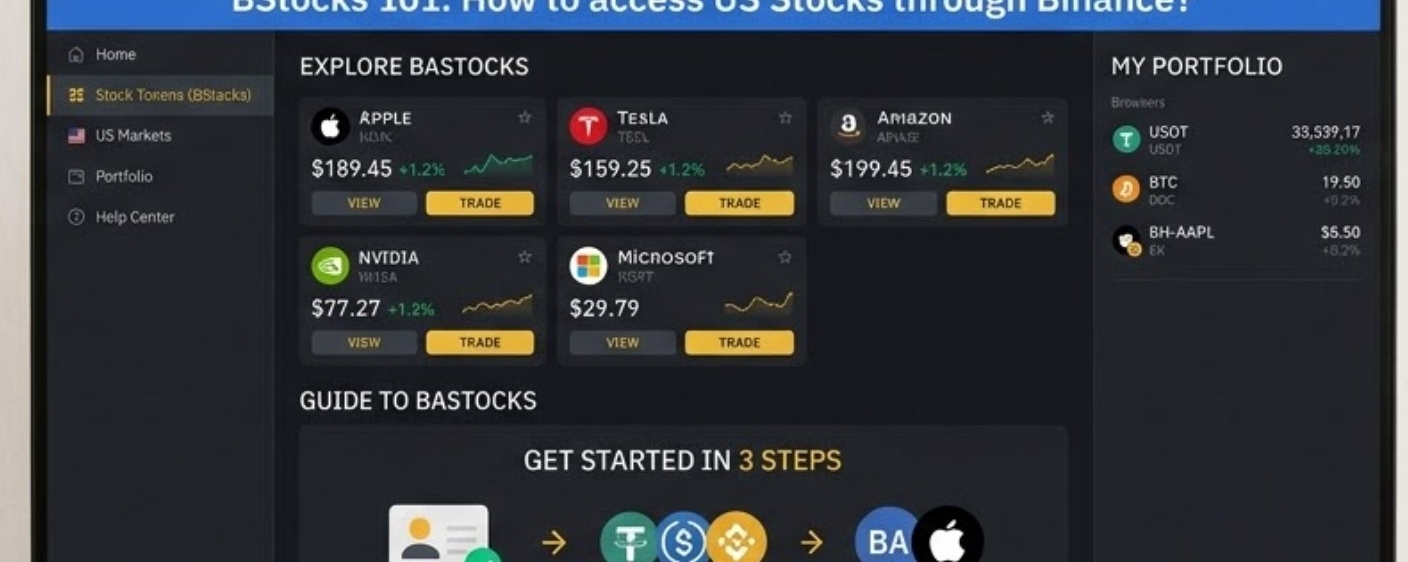
Article
BStocks 101: How to Access US Stocks through BinanceEver wished you could grab a quick piece of Apple, Tesla, or Nvidia without having to open a traditional brokerage account, fill out endless paperwork, or deal with strict international banking boundaries?
If you’ve been hanging around the crypto space for any length of time, you’ve probably heard of BStocks—Binance’s take on bridging Wall Street and Web3. While the way we trade stock tokens on crypto platforms has evolved over time, the core dream remains the same: buying and selling real-world assets with the same speed, flexibility, and 24/7 convenience you get with crypto.
Let’s break down what BStocks (and tokenized US equities) are all about, how the process works in plain English, and how you can get exposure to US stocks using your Binance wallet.
First Off: What Exactly Is a Stock Token?
In simple terms, a stock token is a digital asset whose value is directly tied to a real-world company’s share price.
Think of it like buying a digital gift card for a store, except the value of that gift card goes up or down depending on how well the company performs.
No Need to Buy Whole Shares: Stock price sitting at $800? No problem. With tokenized assets, you can put in $10 or $20 and buy a fraction of a share.
No Traditional Broker Hurdles: You don’t have to wait days for international bank transfers to clear just to buy a tech stock.
Crypto Convenience: You hold, trade, or settle everything using familiar stablecoins like USDT or BUSD.
The Reality Check: How Does It Work Today?
Back in 2021, Binance directly hosted native stock tokens on its centralized exchange. However, due to global financial regulations, direct stock token trading on the main centralized exchange was paused.
So, how do crypto users get US stock exposure through Binance today?
The answer lies in Web3 wallets, DeFi integration, and synthetic tokenized asset platforms accessible through the Binance Web3 ecosystem. Users hold their funds on Binance, connect to compliant DeFi protocols or partner tokenized stock platforms (like Backed Finance or similar decentralized stock pools), and swap their stablecoins for stock-pegged tokens.
Step-by-Step: Getting US Stock Exposure via Your Binance Funds
If you want to move your crypto into US stock exposure using Binance as your primary hub, here is the straightforward path to do it:
Step 1: Set Up and Verify Your Binance Account
Before doing anything, make sure your primary Binance account is fully verified through standard Know Your Customer (KYC) identity checks. This unlocks account funding and secure withdrawals.
Step 2: Load Up on Stablecoins
Acquire a liquid stablecoin such as USDT or USDC. You can do this via peer-to-peer (P2P) trading, direct credit card purchases, or by converting existing crypto holdings on Binance.
Step 3: Activate Your Binance Web3 Wallet
Inside the official Binance app, switch over to the Web3 Wallet tab. This non-custodial wallet links directly with your main Binance account, letting you seamlessly transfer funds into decentralized finance (DeFi) spaces.
Step 4: Connect to a Tokenized Stock Protocol
Through the Web3 wallet browser, access reputable synthetic asset or tokenized real-world asset (RWA) platforms that offer US stock-backed tokens (such as Apple, Tesla, or S&P 500 index tokens).
Step 5: Execute the Swap
Choose the stock token you want to buy, enter the amount of stablecoins you wish to spend, and confirm the transaction. The tokens will land directly in your Web3 wallet.
What You Need to Watch Out For (The Risks)
While trading stock tokens feels fast and futuristic, it’s not without a few catches:
Market Hours vs. Crypto Hours: Crypto trades 24/7, but standard US stock markets only operate during regular US business hours. Prices on stock tokens usually update live when Wall Street is open, but liquidity can slow down over the weekend.
#SEABstock #SEAstock @BinanceBurmese
BStocks 101: How to Access US Stocks through Binance
Ever wished you could grab a quick piece of Apple, Tesla, or Nvidia without having to open a traditional brokerage account, fill out endless paperwork, or deal with strict international banking boundaries?
If you’ve been hanging around the crypto space for any length of time, you’ve probably heard of BStocks—Binance’s take on bridging Wall Street and Web3. While the way we trade stock tokens on crypto platforms has evolved over time, the core dream remains the same: buying and selling real-world assets with the same speed, flexibility, and 24/7 convenience you get with crypto.
Let’s break down what BStocks (and tokenized US equities) are all about, how the process works in plain English, and how you can get exposure to US stocks using your Binance wallet.
First Off: What Exactly Is a Stock Token?
In simple terms, a stock token is a digital asset whose value is directly tied to a real-world company’s share price.
Think of it like buying a digital gift card for a store, except the value of that gift card goes up or down depending on how well the company performs.
No Need to Buy Whole Shares: Stock price sitting at $800? No problem. With tokenized assets, you can put in $10 or $20 and buy a fraction of a share.
No Traditional Broker Hurdles: You don’t have to wait days for international bank transfers to clear just to buy a tech stock.
Crypto Convenience: You hold, trade, or settle everything using familiar stablecoins like USDT or BUSD.
The Reality Check: How Does It Work Today?
Back in 2021, Binance directly hosted native stock tokens on its centralized exchange. However, due to global financial regulations, direct stock token trading on the main centralized exchange was paused.
So, how do crypto users get US stock exposure through Binance today?
The answer lies in Web3 wallets, DeFi integration, and synthetic tokenized asset platforms accessible through the Binance Web3 ecosystem. Users hold their funds on Binance, connect to compliant DeFi protocols or partner tokenized stock platforms (like Backed Finance or similar decentralized stock pools), and swap their stablecoins for stock-pegged tokens.
Step-by-Step: Getting US Stock Exposure via Your Binance Funds
If you want to move your crypto into US stock exposure using Binance as your primary hub, here is the straightforward path to do it:
Step 1: Set Up and Verify Your Binance Account
Before doing anything, make sure your primary Binance account is fully verified through standard Know Your Customer (KYC) identity checks. This unlocks account funding and secure withdrawals.
Step 2: Load Up on Stablecoins
Acquire a liquid stablecoin such as USDT or USDC. You can do this via peer-to-peer (P2P) trading, direct credit card purchases, or by converting existing crypto holdings on Binance.
Step 3: Activate Your Binance Web3 Wallet
Inside the official Binance app, switch over to the Web3 Wallet tab. This non-custodial wallet links directly with your main Binance account, letting you seamlessly transfer funds into decentralized finance (DeFi) spaces.
Step 4: Connect to a Tokenized Stock Protocol
Through the Web3 wallet browser, access reputable synthetic asset or tokenized real-world asset (RWA) platforms that offer US stock-backed tokens (such as Apple, Tesla, or S&P 500 index tokens).
Step 5: Execute the Swap
Choose the stock token you want to buy, enter the amount of stablecoins you wish to spend, and confirm the transaction. The tokens will land directly in your Web3 wallet.
What You Need to Watch Out For (The Risks)
While trading stock tokens feels fast and futuristic, it’s not without a few catches:
Market Hours vs. Crypto Hours: Crypto trades 24/7, but standard US stock markets only operate during regular US business hours. Prices on stock tokens usually update live when Wall Street is open, but liquidity can slow down over the weekend.
#SEABstock #SEAstock @Binance Burmese
1
2
403


Article
Strategic Wealth Allocation: Evaluating Traditional Stock Markets versus Digital Asset Ecosystems 🏦In the modern financial landscape, capital allocation strategies have evolved far beyond conventional boundaries. Today, individual traders and institutional entities are no longer restricted to traditional stock exchanges. The rise of distributed ledger technology and hybrid platforms like Binance has created an interconnected trading environment where digital assets and equity-linked instruments exist side by side.
To navigate this multi-asset environment efficiently, investors must understand the unique mechanics, risk parameters, and valuation frameworks that define each market segment.
Understanding the Fundamental Valuation Drivers 🔍🧭
Evaluating financial assets requires a structured approach to identifying what truly creates underlying value across different asset classes.
Traditional Equity Valuations 🏢: Corporate stocks represent legal ownership in registered public companies. Their market value is fundamentally anchored in corporate financial metrics—such as quarterly earnings reports, net operating income, debt-to-equity ratios, dividend payouts, and industry growth prospects. Furthermore, central bank interest rates and broader macroeconomic conditions play a critical role in determining traditional equity performance.
Digital Asset Valuations 🪙: Cryptocurrencies and decentralized infrastructure tokens function on entirely different market dynamics. Their intrinsic value stems from network utility, developer activity, total value locked (TVL), token supply economics (such as halving events or burn protocols), and market liquidity cycles. While fundamental utility drives long-term adoption, short-term price discovery in crypto is heavily influenced by narrative trends and global sentiment shifts.
Operational Mechanics and Liquidity Frameworks 🕒⚡
Beyond valuation, the practical execution of trades differs significantly between traditional capital markets and digital asset environments:
1. Market Hours and Trading Accessibility ⏰: Standard stock markets operate within fixed schedule windows (typically 9:30 AM to 4:00 PM in local exchange time zones) and remain closed during weekends and official holidays. Conversely, digital asset platforms function 24/7/365, allowing market participants to execute trades and rebalance portfolios continuously without market pauses.
2. Settlement Timelines and Efficiency 🔄: Conventional stock transactions historically operate on deferred clearing schedules (such as T+1 settlement windows), requiring intermediary clearinghouses. Tokenized market assets and crypto transactions settle near-instantly directly on blockchain rails or internal exchange ledgers.
3. Volatility Profiles and Risk Exposure 📉📈: Crypto markets display higher intraday volatility, presenting significant upside opportunities along with elevated downside risk. Traditional equities generally present lower baseline volatility, though individual growth stocks or earnings release dates can still experience substantial price swings.
Risk Management Protocols for Multi-Asset Portfolios 🛡️📊
Managing risk effectively across diverse financial assets requires discipline and structured execution:
Separate Fundamental Utility from Market Hype 🧠: Never confuse social media sentiment with genuine asset value. Conduct independent fundamental research into company balance sheets or crypto protocol whitepapers before allocating capital.
Leverage Fractional Equity Access 🧩: Modern financial solutions like bStocks enable users to acquire fractional shares of top-tier global corporations directly using stablecoins (USDT/USDC). This capability allows investors to build exposure to institutional assets without over-committing large capital reserves.
Maintain Strict Portfolio Hedging ⚖️: Avoid over-concentrating funds in a single asset class or over-leveraging open positions. Establish clear stop-loss limits and maintain a designated risk budget for volatile market cycles.
Constructing a Hybrid Investment Approach 🌐🚀
Rather than viewing stock trading and digital asset trading as opposing methodologies, sophisticated market participants treat them as complementary elements of a comprehensive wealth strategy. By combining the growth potential of crypto assets with the fundamental stability of traditional global equities via bStocks, investors can optimize their risk-adjusted returns within a single ecosystem.
@BinanceBurmese #BinanceBurmese #SEABstock #SEAstock
Strategic Wealth Allocation: Evaluating Traditional Stock Markets versus Digital Asset Ecosystems 🏦
In the modern financial landscape, capital allocation strategies have evolved far beyond conventional boundaries. Today, individual traders and institutional entities are no longer restricted to traditional stock exchanges. The rise of distributed ledger technology and hybrid platforms like Binance has created an interconnected trading environment where digital assets and equity-linked instruments exist side by side.
To navigate this multi-asset environment efficiently, investors must understand the unique mechanics, risk parameters, and valuation frameworks that define each market segment.
Understanding the Fundamental Valuation Drivers 🔍🧭
Evaluating financial assets requires a structured approach to identifying what truly creates underlying value across different asset classes.
Traditional Equity Valuations 🏢: Corporate stocks represent legal ownership in registered public companies. Their market value is fundamentally anchored in corporate financial metrics—such as quarterly earnings reports, net operating income, debt-to-equity ratios, dividend payouts, and industry growth prospects. Furthermore, central bank interest rates and broader macroeconomic conditions play a critical role in determining traditional equity performance.
Digital Asset Valuations 🪙: Cryptocurrencies and decentralized infrastructure tokens function on entirely different market dynamics. Their intrinsic value stems from network utility, developer activity, total value locked (TVL), token supply economics (such as halving events or burn protocols), and market liquidity cycles. While fundamental utility drives long-term adoption, short-term price discovery in crypto is heavily influenced by narrative trends and global sentiment shifts.
Operational Mechanics and Liquidity Frameworks 🕒⚡
Beyond valuation, the practical execution of trades differs significantly between traditional capital markets and digital asset environments:
1. Market Hours and Trading Accessibility ⏰: Standard stock markets operate within fixed schedule windows (typically 9:30 AM to 4:00 PM in local exchange time zones) and remain closed during weekends and official holidays. Conversely, digital asset platforms function 24/7/365, allowing market participants to execute trades and rebalance portfolios continuously without market pauses.
2. Settlement Timelines and Efficiency 🔄: Conventional stock transactions historically operate on deferred clearing schedules (such as T+1 settlement windows), requiring intermediary clearinghouses. Tokenized market assets and crypto transactions settle near-instantly directly on blockchain rails or internal exchange ledgers.
3. Volatility Profiles and Risk Exposure 📉📈: Crypto markets display higher intraday volatility, presenting significant upside opportunities along with elevated downside risk. Traditional equities generally present lower baseline volatility, though individual growth stocks or earnings release dates can still experience substantial price swings.
Risk Management Protocols for Multi-Asset Portfolios 🛡️📊
Managing risk effectively across diverse financial assets requires discipline and structured execution:
Separate Fundamental Utility from Market Hype 🧠: Never confuse social media sentiment with genuine asset value. Conduct independent fundamental research into company balance sheets or crypto protocol whitepapers before allocating capital.
Leverage Fractional Equity Access 🧩: Modern financial solutions like bStocks enable users to acquire fractional shares of top-tier global corporations directly using stablecoins (USDT/USDC). This capability allows investors to build exposure to institutional assets without over-committing large capital reserves.
Maintain Strict Portfolio Hedging ⚖️: Avoid over-concentrating funds in a single asset class or over-leveraging open positions. Establish clear stop-loss limits and maintain a designated risk budget for volatile market cycles.
Constructing a Hybrid Investment Approach 🌐🚀
Rather than viewing stock trading and digital asset trading as opposing methodologies, sophisticated market participants treat them as complementary elements of a comprehensive wealth strategy. By combining the growth potential of crypto assets with the fundamental stability of traditional global equities via bStocks, investors can optimize their risk-adjusted returns within a single ecosystem.
@Binance Burmese #BinanceBurmese #SEABstock #SEAstock
1
138

·
--
Verified
Article
📊 What is the difference between Stocks and Crypto? How to invest with Binance BStocks?As an investor entering the market, it is essential to clearly understand the core differences between Stocks and Cryptocurrency. Crypto is a digital asset class well-known for its high volatility, rapid price movements, and the unique ability to be traded 24/7 without market closures. On the other hand, Stocks represent fractional ownership of established, real-world companies (such as Apple, Tesla, or Microsoft). They generally offer more long-term stability and operate within traditional stock market hours.
So, how can crypto enthusiasts seamlessly buy US Stocks? Now, through Binance, you can easily invest using their innovative product called BStocks (Binance Stocks). BStocks is highly suitable for beginners, allowing you to step directly into the US Stock Market right from your existing Binance account without going through any complicated external procedures.
Here is a quick checklist for beginners before starting your investment journey in BStocks:
Always research the company's background, fundamental value, and recent earnings reports.Clearly define your personal Risk Tolerance and invest accordingly.Establish a solid Investment Plan—decide early on whether you are aiming for short-term trades or a long-term holding strategy.Diversifying your overall portfolio by investing in both traditional Stocks and Cryptocurrency is an excellent way to balance potential risks and rewards. Wishing everyone a highly profitable and successful investment journey ahead!
@BinanceBurmese
#SEAStock #SEABStock
📊 What is the difference between Stocks and Crypto? How to invest with Binance BStocks?
As an investor entering the market, it is essential to clearly understand the core differences between Stocks and Cryptocurrency. Crypto is a digital asset class well-known for its high volatility, rapid price movements, and the unique ability to be traded 24/7 without market closures. On the other hand, Stocks represent fractional ownership of established, real-world companies (such as Apple, Tesla, or Microsoft). They generally offer more long-term stability and operate within traditional stock market hours.
So, how can crypto enthusiasts seamlessly buy US Stocks? Now, through Binance, you can easily invest using their innovative product called BStocks (Binance Stocks). BStocks is highly suitable for beginners, allowing you to step directly into the US Stock Market right from your existing Binance account without going through any complicated external procedures.
Here is a quick checklist for beginners before starting your investment journey in BStocks:
Always research the company's background, fundamental value, and recent earnings reports.Clearly define your personal Risk Tolerance and invest accordingly.Establish a solid Investment Plan—decide early on whether you are aiming for short-term trades or a long-term holding strategy.Diversifying your overall portfolio by investing in both traditional Stocks and Cryptocurrency is an excellent way to balance potential risks and rewards. Wishing everyone a highly profitable and successful investment journey ahead!
@Binance Burmese
#SEAStock #SEABStock
1
98

If you are a crypto beginner, the word bStocks might sound confusing.
Is it a stock?
Is it crypto?
Is it a token?
Let’s make it simple.
A traditional stock represents an ownership interest in a company. When you buy shares through a traditional stock broker, you own shares of that company and may have certain shareholder rights.
bStocks are different.
bStocks are blockchain-based tokenized securities that provide exposure to the price performance of underlying listed stocks or ETFs.
The most important thing to remember is:
bStocks are NOT the same as directly owning the underlying stock.
So instead of thinking:
“I am buying Apple stock.”
Think:
“I am buying a tokenized security that gives me exposure to the price performance of the underlying asset.”
For crypto users, the blockchain part may feel familiar. But bStocks are still different from cryptocurrencies.
Another thing beginners should understand is fractional exposure. Depending on the product and eligibility, you may be able to get exposure to a portion of an underlying stock instead of buying one whole share.
But remember:
Small amount ≠ no risk.
If the underlying stock falls, the related bStock can also lose value.
Before using bStocks, I would check three things:
1. What is the underlying asset?
Know which stock or ETF it is linked to.
2. What exactly am I holding?
Remember that bStocks are tokenized securities, not direct ownership of company shares.
3. Am I eligible?
Availability depends on your location and account eligibility.
The more I learn about bStocks, the more I realize that understanding the product should come before trading it.
@BinanceBurmese
#SEABstock #SEAstock #bstock #Binance #Cryptobeginner
If you are a crypto beginner, the word bStocks might sound confusing.
Is it a stock?
Is it crypto?
Is it a token?
Let’s make it simple.
A traditional stock represents an ownership interest in a company. When you buy shares through a traditional stock broker, you own shares of that company and may have certain shareholder rights.
bStocks are different.
bStocks are blockchain-based tokenized securities that provide exposure to the price performance of underlying listed stocks or ETFs.
The most important thing to remember is:
bStocks are NOT the same as directly owning the underlying stock.
So instead of thinking:
“I am buying Apple stock.”
Think:
“I am buying a tokenized security that gives me exposure to the price performance of the underlying asset.”
For crypto users, the blockchain part may feel familiar. But bStocks are still different from cryptocurrencies.
Another thing beginners should understand is fractional exposure. Depending on the product and eligibility, you may be able to get exposure to a portion of an underlying stock instead of buying one whole share.
But remember:
Small amount ≠ no risk.
If the underlying stock falls, the related bStock can also lose value.
Before using bStocks, I would check three things:
1. What is the underlying asset?
Know which stock or ETF it is linked to.
2. What exactly am I holding?
Remember that bStocks are tokenized securities, not direct ownership of company shares.
3. Am I eligible?
Availability depends on your location and account eligibility.
The more I learn about bStocks, the more I realize that understanding the product should come before trading it.
@Binance Burmese
#SEABstock #SEAstock #bstock #Binance #Cryptobeginner
116

·
--
How Can Beginners Build Wealth with US Stocks? A Simple Guide to Getting StartedMany people want to build an additional source of income, but they may not know where to start. US Stocks can be one option to explore, especially for people who want to learn about investing and potentially build long-term wealth.
For beginners, the most important thing is not trying to make money quickly. It is understanding how the stock market works, choosing an approach that matches your goals, and managing risk carefully.
1. What does “making money from Stocks” mean?
There are generally two ways investors can potentially benefit from stocks:
Capital appreciation: You buy a stock and its market price increases. If you later sell it at a higher price, you may make a profit.
Dividends: Some companies distribute part of their profits to shareholders through dividends. However, not every company pays dividends, and dividend payments can change.
For example, if you invest $500 in a stock and its value later increases to $550, the unrealized gain would be $50 before considering fees, taxes, and other costs. But the price can also fall, meaning you could lose money.
2. Start with Knowledge, Not Money
Before putting money into the market, beginners should understand some basic concepts:
• What is a stock?
• How does a company make money?
• What is market capitalization?
• What are earnings and revenue?
• What is a dividend?
• Why do stock prices move?
• What are the risks of investing?
Learning these basics can help investors make decisions based on information rather than emotions.
3. Think Long Term
One common mistake beginners make is focusing only on short-term price movements.
The stock market can move up and down because of company results, economic conditions, interest rates, market sentiment, and global events.
A long-term approach means focusing on the underlying business and your investment objective instead of reacting emotionally to every daily price change.
4. Don't Put Everything Into One Stock
Diversification is another important concept.
Instead of putting all your available money into one company, investors can learn about different companies, sectors, and asset classes. Diversification does not eliminate risk, but it can help reduce the impact of one investment performing poorly.
5. How Can BStocks Help Beginners Explore Stocks?
For people who already use Binance and are interested in learning about traditional markets, BStocks can provide another way to explore US Stocks through the Binance ecosystem, where available.
However, availability, products, fees, eligibility, and other conditions can vary by location and product. Always check the latest information available on Binance before making any investment decision.
6. My Beginner Checklist
Before buying a stock, I would ask myself:
☑ Do I understand what the company does?
☑ Have I researched the company?
☑ Am I investing or simply chasing a price increase?
☑ How much money can I afford to risk?
☑ Do I have a clear investment goal?
☑ Have I considered diversification?
☑ Do I understand the risks?
☑ Am I prepared for the possibility of losing money?
Final Thoughts
Building wealth through Stocks is not a shortcut to getting rich. It is a process of learning, researching, managing risk, and making decisions based on your own financial situation.
For beginners, the goal should be to understand the market first and invest responsibly rather than chasing quick profits.
I am also continuing to learn about US Stocks and BStocks, and I hope this guide can help other beginners in the community start their learning journey.
Always do your own research and understand the risks before investing.
@BinanceLaotian
#SEABstock
#SEAstock #BStocks #USStocks #Investing
How Can Beginners Build Wealth with US Stocks? A Simple Guide to Getting Started
Many people want to build an additional source of income, but they may not know where to start. US Stocks can be one option to explore, especially for people who want to learn about investing and potentially build long-term wealth.
For beginners, the most important thing is not trying to make money quickly. It is understanding how the stock market works, choosing an approach that matches your goals, and managing risk carefully.
1. What does “making money from Stocks” mean?
There are generally two ways investors can potentially benefit from stocks:
Capital appreciation: You buy a stock and its market price increases. If you later sell it at a higher price, you may make a profit.
Dividends: Some companies distribute part of their profits to shareholders through dividends. However, not every company pays dividends, and dividend payments can change.
For example, if you invest $500 in a stock and its value later increases to $550, the unrealized gain would be $50 before considering fees, taxes, and other costs. But the price can also fall, meaning you could lose money.
2. Start with Knowledge, Not Money
Before putting money into the market, beginners should understand some basic concepts:
• What is a stock?
• How does a company make money?
• What is market capitalization?
• What are earnings and revenue?
• What is a dividend?
• Why do stock prices move?
• What are the risks of investing?
Learning these basics can help investors make decisions based on information rather than emotions.
3. Think Long Term
One common mistake beginners make is focusing only on short-term price movements.
The stock market can move up and down because of company results, economic conditions, interest rates, market sentiment, and global events.
A long-term approach means focusing on the underlying business and your investment objective instead of reacting emotionally to every daily price change.
4. Don't Put Everything Into One Stock
Diversification is another important concept.
Instead of putting all your available money into one company, investors can learn about different companies, sectors, and asset classes. Diversification does not eliminate risk, but it can help reduce the impact of one investment performing poorly.
5. How Can BStocks Help Beginners Explore Stocks?
For people who already use Binance and are interested in learning about traditional markets, BStocks can provide another way to explore US Stocks through the Binance ecosystem, where available.
However, availability, products, fees, eligibility, and other conditions can vary by location and product. Always check the latest information available on Binance before making any investment decision.
6. My Beginner Checklist
Before buying a stock, I would ask myself:
☑ Do I understand what the company does?
☑ Have I researched the company?
☑ Am I investing or simply chasing a price increase?
☑ How much money can I afford to risk?
☑ Do I have a clear investment goal?
☑ Have I considered diversification?
☑ Do I understand the risks?
☑ Am I prepared for the possibility of losing money?
Final Thoughts
Building wealth through Stocks is not a shortcut to getting rich. It is a process of learning, researching, managing risk, and making decisions based on your own financial situation.
For beginners, the goal should be to understand the market first and invest responsibly rather than chasing quick profits.
I am also continuing to learn about US Stocks and BStocks, and I hope this guide can help other beginners in the community start their learning journey.
Always do your own research and understand the risks before investing.
@Binance Laotian
#SEABstock
#SEAstock #BStocks #USStocks #Investing
229
Log in to explore more content
Join global crypto users on Binance Square
⚡️ Get latest and useful information about crypto.
💬 Trusted by the world’s largest crypto exchange.
👍 Discover real insights from verified creators.
Email / Phone number
Trending Topics
1
#CanBTCReboundAfterFallingBelow60K?
0 views
280 Discussing
2
#GlobalStocksFaceLongestLosingStreakSince2023
0 views
359 Discussing
3
#AnthropicPlungesTowardIPOPriceonDay2
0 views
93 Discussing
4
#GaoTengBitcoinETFListsOnHKEX
0 views
309 Discussing
5
#TradFiForBeginners
946,825 views
5,633 Discussing
6
#NvidiaBoardReportedlySplitOverHuang’sReturn
258,674 views
2,480 Discussing
7
#TetherBurns8BillionUSDTInPast20Days
0 views
120 Discussing
8
#BitcoinWalletSignatureFlawExploitableWithinSeconds
0 views
54 Discussing
9
#CanGTA6'sLaunchLiftTTWOShares?
207,868 views
1,752 Discussing
10
#HongKongProposesSFCLicensingForFourVirtualAssetServices
404 views
32 Discussing