
#shippingindustry
shippingindustry
770 views
5 Discussing
Hot
Latest

New Orleans Maritime Accident: Tanker Collision Capsizes River Cruise Ship
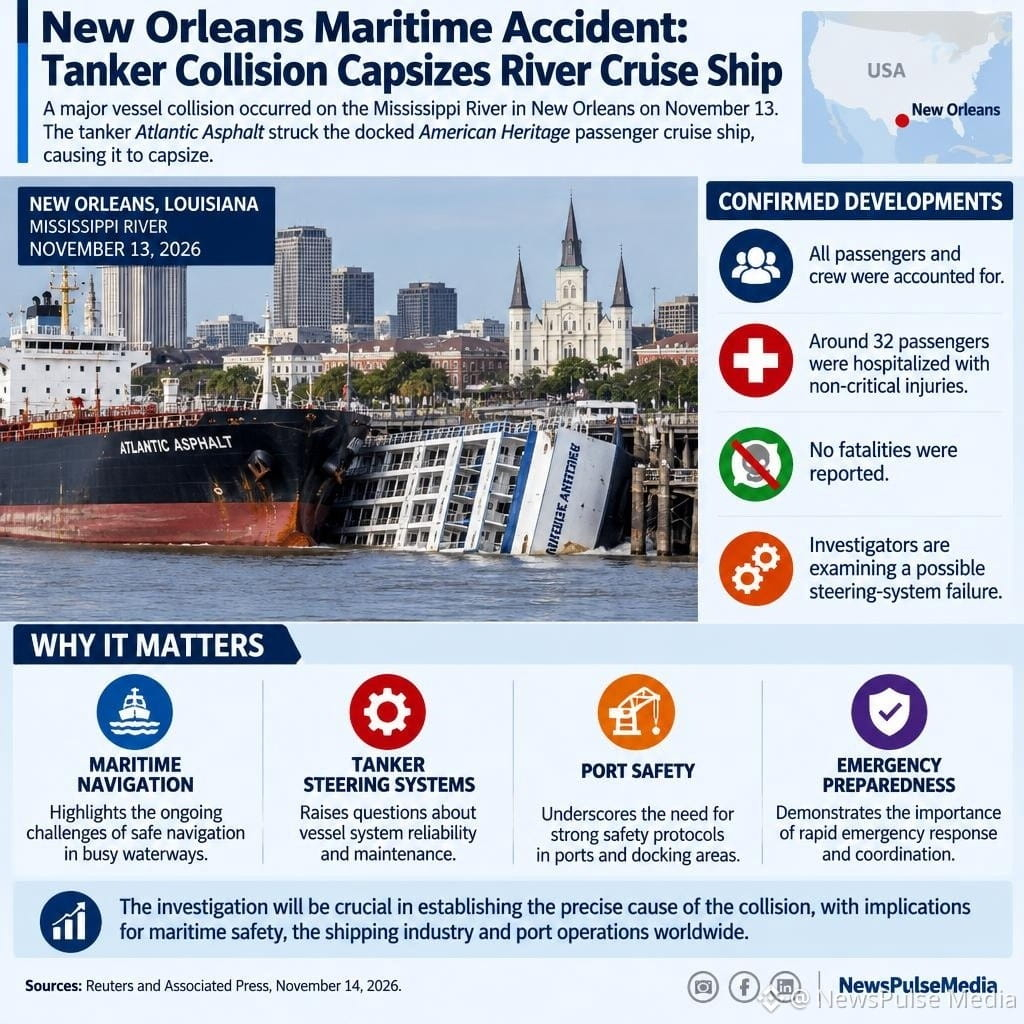
A major vessel collision occurred on the Mississippi River in New Orleans on November 13.
The tanker Atlantic Asphalt struck the docked American Heritage passenger cruise ship, causing it to capsize.
Confirmed developments:
- All passengers and crew were accounted for.
- Around 32 passengers were hospitalized with non-critical injuries.
- No fatalities were reported.
- Investigators are examining a possible steering-system failure.
Why it matters
The incident raises important questions about maritime navigation, tanker steering systems, port safety and emergency preparedness.
The investigation will be crucial in establishing the precise cause of the collision.
Sources: Reuters and Associated Press, November 14, 2026.
#MaritimeSafety #GlobalNews #BreakingNews #ShippingIndustry #NewsPulseMedia
1
6

Global Shipping at a Crossroads: LNG Interests and the Challenge of Decarbonisation
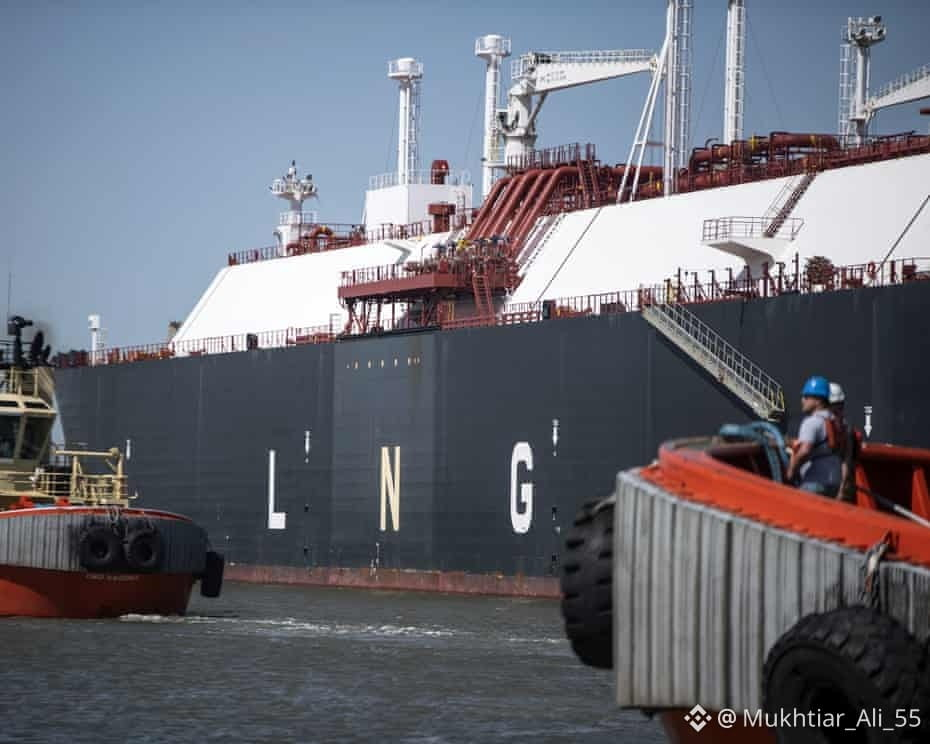
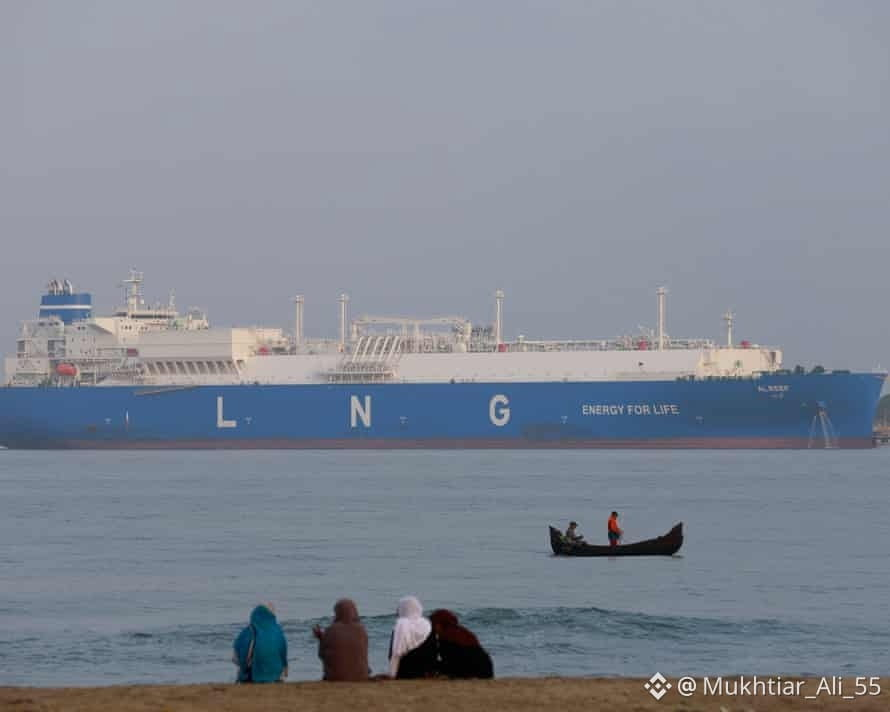
Efforts to decarbonise the global shipping industry are facing growing resistance as vested interests tied to liquefied natural gas (LNG) continue to influence international negotiations. Recent disruptions in the Strait of Hormuz highlighted the sector’s deep reliance on fossil fuels, with thousands of vessels stranded and energy supply chains shaken.
Shipping remains a significant contributor to global emissions, responsible for roughly 3% of greenhouse gases. Beyond fuel consumption, nearly 40% of the global fleet is dedicated to transporting fossil fuels, underlining the structural challenge of transitioning to cleaner alternatives.
At the International Maritime Organization (IMO), ongoing talks aimed at reducing emissions and introducing a carbon levy have encountered strong opposition. Countries with substantial LNG investments, including major exporters and shipping registries, are reportedly pushing back against stricter regulations, raising concerns about delays in achieving climate targets.
Industry experts suggest that LNG, once seen as a transitional fuel, may face long-term uncertainty due to high costs, evolving energy policies, and the global shift toward renewables. Meanwhile, a growing number of nations and stakeholders continue to advocate for stronger environmental measures, emphasizing the urgency of aligning maritime operations with global climate goals.
The outcome of these negotiations will play a critical role in shaping the future of international trade and environmental sustainability. As the global economy moves toward cleaner energy systems, the shipping sector must balance commercial interests with the pressing need for decarbonisation.
#ClimateAction #ShippingIndustry #Decarbonisation #Sustainability #EnergyTransition
$AXL
{spot}(AXLUSDT)
$INJ
{spot}(INJUSDT)
$ALLO
{spot}(ALLOUSDT)
Global Shipping at a Crossroads: LNG Interests and the Challenge of Decarbonisation
Efforts to decarbonise the global shipping industry are facing growing resistance as vested interests tied to liquefied natural gas (LNG) continue to influence international negotiations. Recent disruptions in the Strait of Hormuz highlighted the sector’s deep reliance on fossil fuels, with thousands of vessels stranded and energy supply chains shaken.
Shipping remains a significant contributor to global emissions, responsible for roughly 3% of greenhouse gases. Beyond fuel consumption, nearly 40% of the global fleet is dedicated to transporting fossil fuels, underlining the structural challenge of transitioning to cleaner alternatives.
At the International Maritime Organization (IMO), ongoing talks aimed at reducing emissions and introducing a carbon levy have encountered strong opposition. Countries with substantial LNG investments, including major exporters and shipping registries, are reportedly pushing back against stricter regulations, raising concerns about delays in achieving climate targets.
Industry experts suggest that LNG, once seen as a transitional fuel, may face long-term uncertainty due to high costs, evolving energy policies, and the global shift toward renewables. Meanwhile, a growing number of nations and stakeholders continue to advocate for stronger environmental measures, emphasizing the urgency of aligning maritime operations with global climate goals.
The outcome of these negotiations will play a critical role in shaping the future of international trade and environmental sustainability. As the global economy moves toward cleaner energy systems, the shipping sector must balance commercial interests with the pressing need for decarbonisation.
#ClimateAction #ShippingIndustry #Decarbonisation #Sustainability #EnergyTransition
$AXL
$INJ
$ALLO

171
Log in to explore more content
Join global crypto users on Binance Square
⚡️ Get latest and useful information about crypto.
💬 Trusted by the world’s largest crypto exchange.
👍 Discover real insights from verified creators.
Email / Phone number
Trending Topics
1
#WillOctCorePCEShiftFedHikeExpectations?
13 views
14 Discussing
2
#WillMarketsStageAThanksgivingReliefRally?
29,821 views
569 Discussing
3
#BessentSoftensStanceOnHuang’sNvidiaReturn
20,050 views
400 Discussing
4
#EvolveAtBinanceBlockchainWeek
16,757 views
248 Discussing
5
#MuskWarnsOfAICashCrunch
18,247 views
301 Discussing
6
#SouthKoreaToTightenOversightOfCryptoTransfersAbroad
1,659 views
36 Discussing
7
#RussiaAllowsExchangesToOfferCryptoTrading
9,891 views
165 Discussing
8
#UKToBarCryptoExchangesFromMakingMarketsOnTheirOwnPlatforms
570 views
21 Discussing
9
#UKTreasurySignsCryptoMarketMakingExemptionRules
3,362 views
122 Discussing
10
#BTCReboundsAbove$60KAmidWhaleDipBuying
139,534 views
446 Discussing