
#u.s
u.s
43,869 views
74 Discussing
Hot
Latest


Article
U.S. Expands AI Chip Export Controls to Chinese-Owned Firms Abroad£#u.s
The U.S. Department of Commerce's Bureau of Industry and Security (BIS) has broadened its export control framework by extending licensing requirements to advanced artificial intelligence (AI) chips sold to Chinese-owned companies operating outside of China. The move reflects Washington's continued efforts to regulate access to cutting-edge semiconductor technologies that could have strategic and military applications.
According to NS3.AI, the updated regulations cover several of the industry's most advanced processors, including Nvidia's upcoming Rubin and Blackwell series chips, as well as AMD's MI350x AI accelerator. These high-performance processors are widely regarded as critical components for training and deploying next-generation AI models.
The new restrictions aim to close potential loopholes that previously allowed Chinese-owned entities abroad to acquire advanced AI hardware through overseas subsidiaries. By expanding licensing requirements beyond mainland China, U.S. authorities seek to strengthen oversight of advanced semiconductor exports and limit access to technologies deemed sensitive for national security reasons.
Despite the tighter controls on leading-edge chips, existing licensed sales of lower-tier processors will continue under previously approved terms. This distinction suggests that U.S. regulators are focusing primarily on the most powerful AI computing hardware while allowing certain less advanced products to remain available through established channels.
Meanwhile, Nvidia disclosed that it recorded no shipments of its Data Center Hopper chips to China during the first fiscal quarter of 2027, highlighting the significant impact of ongoing export restrictions on the company's business activities in the region.
The latest regulatory expansion underscores the growing importance of AI technology in global competition and signals that export controls are likely to remain a key element of U.S. policy toward advanced semiconductor technologies.
U.S. Expands AI Chip Export Controls to Chinese-Owned Firms Abroad
£#u.s
The U.S. Department of Commerce's Bureau of Industry and Security (BIS) has broadened its export control framework by extending licensing requirements to advanced artificial intelligence (AI) chips sold to Chinese-owned companies operating outside of China. The move reflects Washington's continued efforts to regulate access to cutting-edge semiconductor technologies that could have strategic and military applications.
According to NS3.AI, the updated regulations cover several of the industry's most advanced processors, including Nvidia's upcoming Rubin and Blackwell series chips, as well as AMD's MI350x AI accelerator. These high-performance processors are widely regarded as critical components for training and deploying next-generation AI models.
The new restrictions aim to close potential loopholes that previously allowed Chinese-owned entities abroad to acquire advanced AI hardware through overseas subsidiaries. By expanding licensing requirements beyond mainland China, U.S. authorities seek to strengthen oversight of advanced semiconductor exports and limit access to technologies deemed sensitive for national security reasons.
Despite the tighter controls on leading-edge chips, existing licensed sales of lower-tier processors will continue under previously approved terms. This distinction suggests that U.S. regulators are focusing primarily on the most powerful AI computing hardware while allowing certain less advanced products to remain available through established channels.
Meanwhile, Nvidia disclosed that it recorded no shipments of its Data Center Hopper chips to China during the first fiscal quarter of 2027, highlighting the significant impact of ongoing export restrictions on the company's business activities in the region.
The latest regulatory expansion underscores the growing importance of AI technology in global competition and signals that export controls are likely to remain a key element of U.S. policy toward advanced semiconductor technologies.
118

·
--
🛑 CLARITY ACT STALLS — BUT WHO REALLY CAUSED IT?
The #U.S crypto market just got another reality check. 🇺🇸
The #CLARITYACT failed to move forward in the Senate after a procedural vote ended 49–50, far below the 60 votes needed.
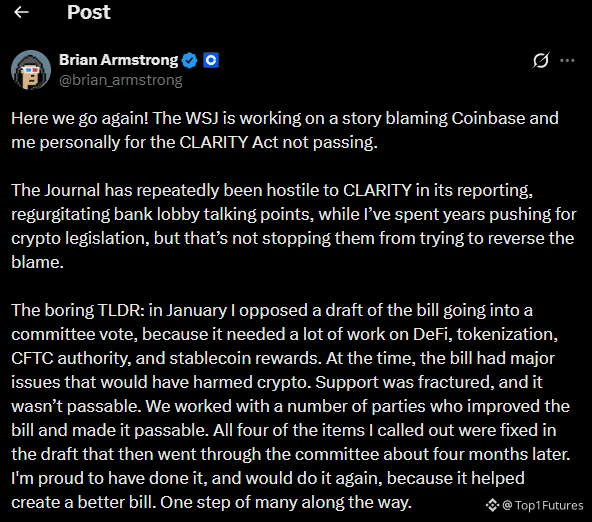
Now the debate is getting interesting: was Coinbase CEO Brian Armstrong partly responsible, or did the political fight around the Trump administration play the bigger role?
Armstrong rejected reports blaming him, saying he opposed an earlier version because of concerns around DeFi, tokenization, CFTC authority and stablecoin rewards. He later said the revised bill was strong and that he fully supported it.
But critics point toward another issue — concerns surrounding President Trump’s crypto-related financial interests and the bill’s ethics provisions.
And here’s the twist. 👀
While Congress is struggling to pass legislation, the SEC and CFTC are already moving through rulemaking.
The CFTC has taken steps affecting self-custodial wallet providers and is working on a crypto market-structure proposal. Meanwhile, the SEC is exploring a tokenization exemption framework for certain platforms.
That could give crypto companies a regulatory path forward — but there’s one major risk:
Rules can change when administrations change.
So the real question isn’t only who blocked CLARITY…
It’s whether crypto can get lasting regulatory clarity through Congress. ⚖️
#cpi $TRUMP $BTC
{future}(BTCUSDT)
🛑 CLARITY ACT STALLS — BUT WHO REALLY CAUSED IT?
The #U.S crypto market just got another reality check. 🇺🇸
The #CLARITYACT failed to move forward in the Senate after a procedural vote ended 49–50, far below the 60 votes needed.
Now the debate is getting interesting: was Coinbase CEO Brian Armstrong partly responsible, or did the political fight around the Trump administration play the bigger role?
Armstrong rejected reports blaming him, saying he opposed an earlier version because of concerns around DeFi, tokenization, CFTC authority and stablecoin rewards. He later said the revised bill was strong and that he fully supported it.
But critics point toward another issue — concerns surrounding President Trump’s crypto-related financial interests and the bill’s ethics provisions.
And here’s the twist. 👀
While Congress is struggling to pass legislation, the SEC and CFTC are already moving through rulemaking.
The CFTC has taken steps affecting self-custodial wallet providers and is working on a crypto market-structure proposal. Meanwhile, the SEC is exploring a tokenization exemption framework for certain platforms.
That could give crypto companies a regulatory path forward — but there’s one major risk:
Rules can change when administrations change.
So the real question isn’t only who blocked CLARITY…
It’s whether crypto can get lasting regulatory clarity through Congress. ⚖️
#cpi $TRUMP $BTC
2
638

Disputed
🚨 Trump Expected to Sign Emergency Executive Order Today! 🇺🇸$TRUMP is expected to sign an emergency executive order today at 5 PM ET, just after the #U.S stock market closes. 👀
Markets are watching closely as everyone waits to see what this could mean for the economy and crypto. 🔥
$TRUMP
{spot}(TRUMPUSDT)
🚨 Trump Expected to Sign Emergency Executive Order Today! 🇺🇸
$TRUMP is expected to sign an emergency executive order today at 5 PM ET, just after the #U.S stock market closes. 👀
Markets are watching closely as everyone waits to see what this could mean for the economy and crypto. 🔥
$TRUMP
Markets are watching closely as everyone waits to see what this could mean for the economy and crypto. 🔥
$TRUMP
306

·
--
Bullish
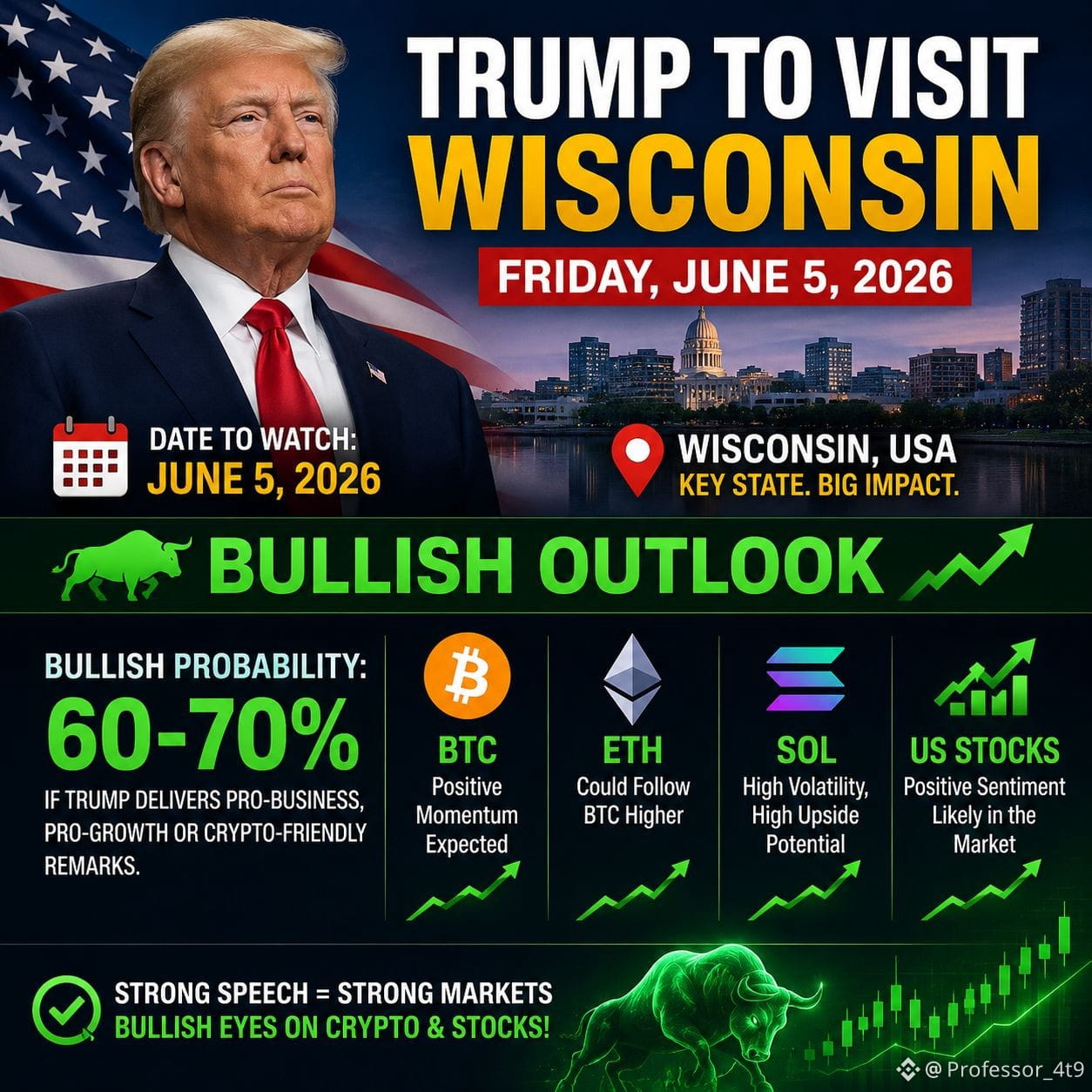
📅 #JUNE_5_2026 | Trump's Wisconsin Visit 🇺🇸#proCryptoPrediction
🟢 Bullish Probability: 60–70% if Trump delivers pro-business, pro-growth, or crypto-friendly remarks.
🚀 $BTC , $ETH , and $BNB could see positive momentum and increased buying pressure.
📈 #U.S . stocks may also react positively, driven by improved market sentiment.
#CryptoConversationByTrump
🟢 Bullish Probability: 60–70% if Trump delivers pro-business, pro-growth, or crypto-friendly remarks.
🚀 $BTC , $ETH , and $BNB could see positive momentum and increased buying pressure.
📈 #U.S . stocks may also react positively, driven by improved market sentiment.
#CryptoConversationByTrump
1
121

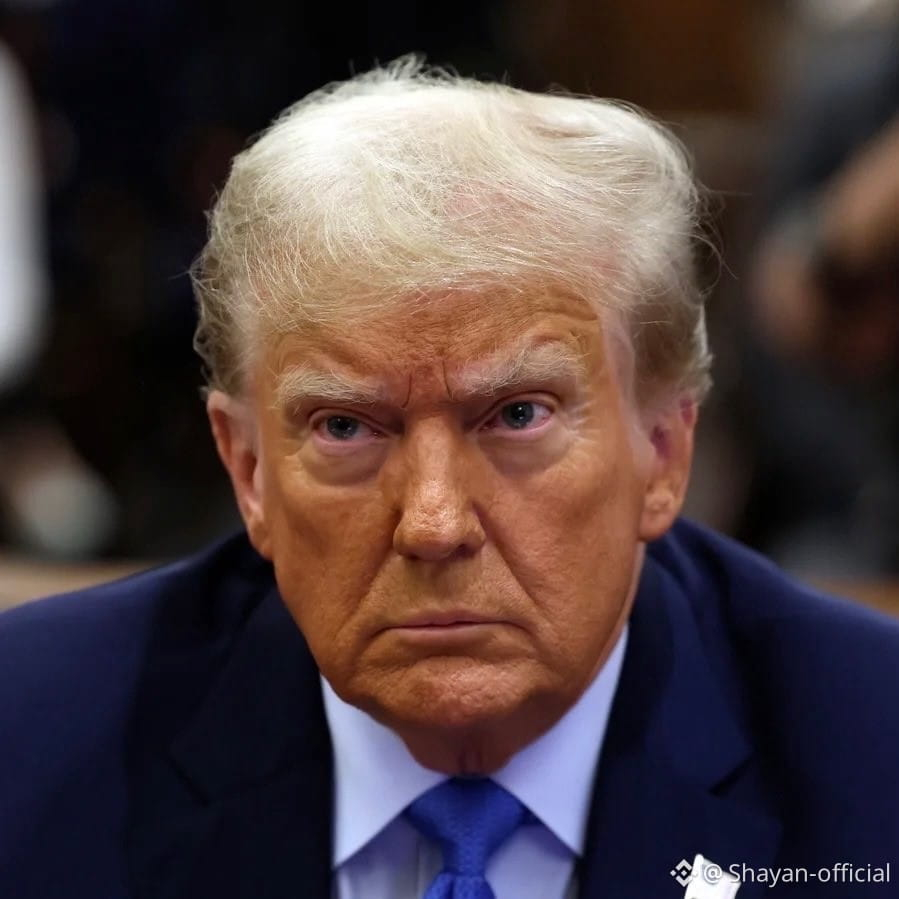
JUST IN: 🇺🇸 U.S. Lawmakers reportedly left shaken after closed-door Mythos AI demo showed potential for sophisticated cyber and criminal misuse.
#U.S #Lawmakers #ClaudeMythos $
JUST IN: 🇺🇸 U.S. Lawmakers reportedly left shaken after closed-door Mythos AI demo showed potential for sophisticated cyber and criminal misuse.
#U.S #Lawmakers #ClaudeMythos $
#U.S #Lawmakers #ClaudeMythos $

186

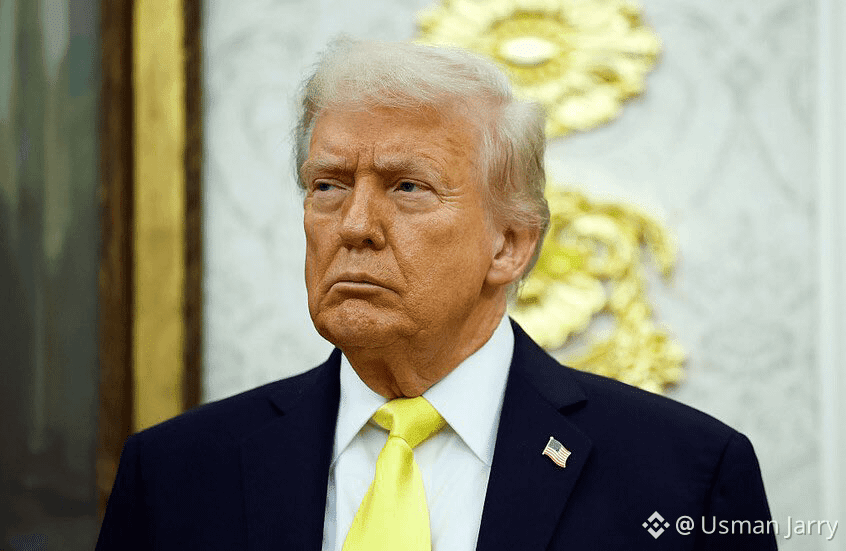
🚨 BREAKING: #Trump says #Iran allowed 10 #U.S . ships flying the #Pakistan flag to pass through the #StraitofHormuz $BTC $ETH $BNB
🚨 BREAKING: #Trump says #Iran allowed 10 #U.S . ships flying the #Pakistan flag to pass through the #StraitofHormuz $BTC $ETH $BNB

1
66

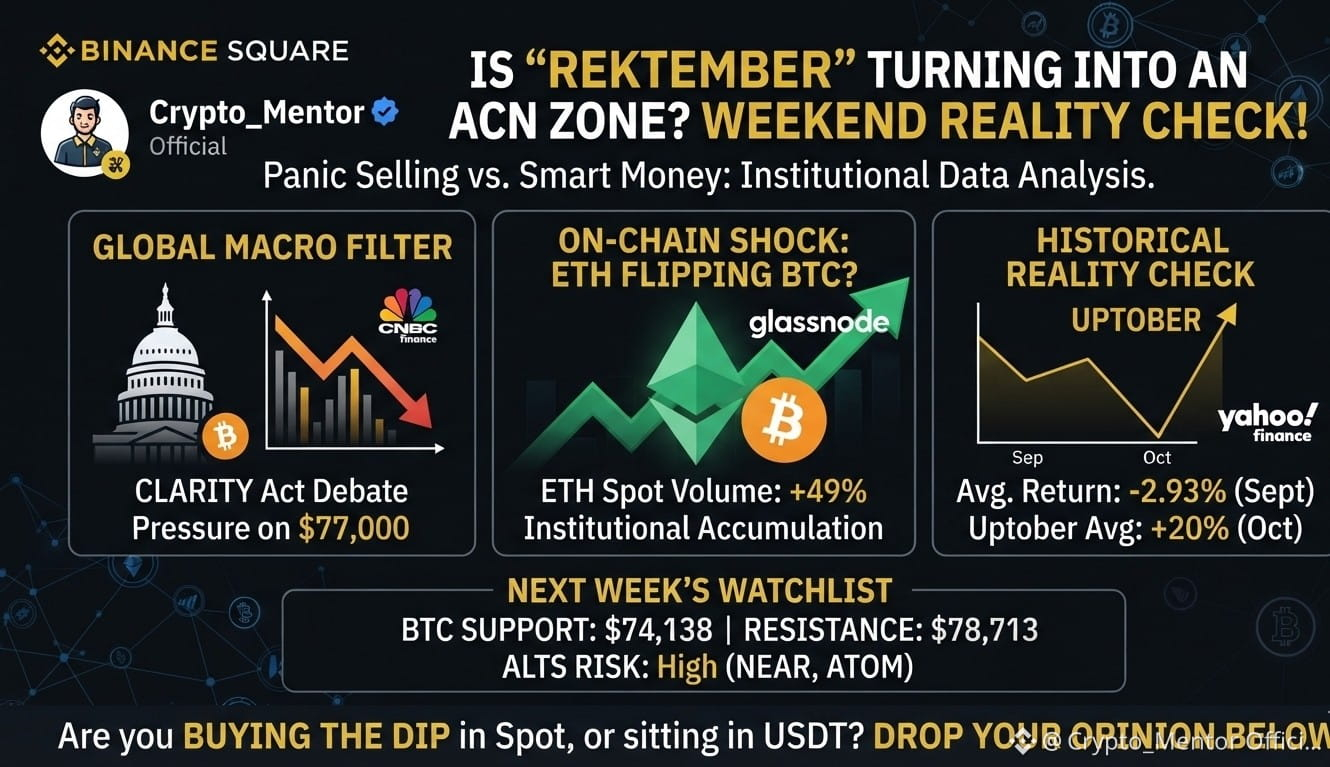
🚨 Is “Rektember” Turning Into an Accumulation Zone? Weekend Reality Check! 📊
90% retail traders are in panic-selling mode, but smart money isn’t only watching price charts — it’s also looking at macro, institutional flows, and on-chain data. If you’re only scared by red candles, then it’s important to understand the bigger weekend picture first.
1. The Global Macro Filter: CLARITY Act & Rate Cuts 🇺🇸
$BTC
{future}(BTCUSDT)
According to CNBC and prediction-market discussions, building consensus in the U.S. Senate on the CLARITY Act — meaning the crypto market-structure bill — still seems challenging for now.
Due to regulatory uncertainty and upcoming inflation data, pressure around Bitcoin is showing up. But liquidity, rate-cut expectations, and institutional demand still play a very important role in long-term market sentiment. Fiat weakness can become a potential tailwind for crypto, but macro risks shouldn’t be ignored.
2. The On-Chain Shock: Ethereum Flipping Bitcoin in Volume? 📈
$ETH
{spot}(ETHUSDT)
According to Glassnode data, over the past 24–48 hours, Ethereum’s spot volume increased by roughly 49%, while Bitcoin’s volume rose by around 7%.
This doesn’t necessarily confirm accumulation, but it can signal relative interest in ETH and possible capital rotation. If ETH maintains strength on a weekly basis, traders will watch it closely — especially with volume and broader market confirmation.
3. Why “Rektember” Is Historically Normal 📉
According to historical data reporting from Yahoo Finance, September had been counted among crypto’s weaker months, with an average return reported around -2.93%. That’s why the market knows this month as “Rektember.”
$SOL
But it would be wrong to treat historical seasonality as a guarantee. October and November have historically been stronger months, but the macro environment, liquidity, and sentiment differ across each cycle.
#BinanceSquareFamily #Market_Update #BTC☀ #Ethereum #U.S
🚨 Is “Rektember” Turning Into an Accumulation Zone? Weekend Reality Check! 📊
90% retail traders are in panic-selling mode, but smart money isn’t only watching price charts — it’s also looking at macro, institutional flows, and on-chain data. If you’re only scared by red candles, then it’s important to understand the bigger weekend picture first.
1. The Global Macro Filter: CLARITY Act & Rate Cuts 🇺🇸
$BTC
According to CNBC and prediction-market discussions, building consensus in the U.S. Senate on the CLARITY Act — meaning the crypto market-structure bill — still seems challenging for now.
Due to regulatory uncertainty and upcoming inflation data, pressure around Bitcoin is showing up. But liquidity, rate-cut expectations, and institutional demand still play a very important role in long-term market sentiment. Fiat weakness can become a potential tailwind for crypto, but macro risks shouldn’t be ignored.
2. The On-Chain Shock: Ethereum Flipping Bitcoin in Volume? 📈
$ETH
According to Glassnode data, over the past 24–48 hours, Ethereum’s spot volume increased by roughly 49%, while Bitcoin’s volume rose by around 7%.
This doesn’t necessarily confirm accumulation, but it can signal relative interest in ETH and possible capital rotation. If ETH maintains strength on a weekly basis, traders will watch it closely — especially with volume and broader market confirmation.
3. Why “Rektember” Is Historically Normal 📉
According to historical data reporting from Yahoo Finance, September had been counted among crypto’s weaker months, with an average return reported around -2.93%. That’s why the market knows this month as “Rektember.”
$SOL
But it would be wrong to treat historical seasonality as a guarantee. October and November have historically been stronger months, but the macro environment, liquidity, and sentiment differ across each cycle.
#BinanceSquareFamily #Market_Update #BTC☀ #Ethereum #U.S
10
1
1
81

·
--
Bearish
$BTC Bitcoin's closing price has finally broken above the 21-week exponential moving average, hitting around $76,794. According to NS3, Rekt Capital states that if next week's close can't hold, $72,810 and $65,710 will be back in the spotlight.$BTC
{future}(BTCUSDT)
#U.S
$BTC Bitcoin's closing price has finally broken above the 21-week exponential moving average, hitting around $76,794. According to NS3, Rekt Capital states that if next week's close can't hold, $72,810 and $65,710 will be back in the spotlight.$BTC
#U.S
#U.S
24
·
--
Bearish
$BTC QCP Capital states that Bitcoin needs to close above $82,000 to continue its roughly 14% rebound over the past month. According to reports from NS3, Wenny Cai points out that this week's earnings reports from major tech companies and the Fed meeting could impact the risk appetite in the U.S. Without clearer catalysts, Bitcoin may remain volatile and driven by news.#U.S #NS3 $BTC
{future}(BTCUSDT)
$BTC QCP Capital states that Bitcoin needs to close above $82,000 to continue its roughly 14% rebound over the past month. According to reports from NS3, Wenny Cai points out that this week's earnings reports from major tech companies and the Fed meeting could impact the risk appetite in the U.S. Without clearer catalysts, Bitcoin may remain volatile and driven by news.#U.S #NS3 $BTC
14

·
--
CLARITY ACT!!
In the U.S., a major crypto regulation bill (“CLARITY Act”) is moving forward, potentially reshaping how digital assets are regulated.
* Brazil 🇧🇷 has banned crypto and stablecoins for cross-border payment settlements, signaling tighter control globally.
* Several U.S.states 🇺🇸are cracking down on crypto ATMs due to scams, with new bans rolling out in 2026.
#BTCSurpasses$80K #CertiKSaysAprilCryptoHackLossesHit$650M #Brazil #U.S
75
Log in to explore more content
Join global crypto users on Binance Square
⚡️ Get latest and useful information about crypto.
💬 Trusted by the world’s largest crypto exchange.
👍 Discover real insights from verified creators.
Email / Phone number
Trending Topics
1
#BTCReboundsAbove$60KAmidWhaleDipBuying
65,815 views
314 Discussing
2
#SolanaSets2027RoadmapToDoubleComputeCapacity
51,435 views
918 Discussing
3
#CaliforniaNvidiaProbeExaminesPotentialCriminalViolations
13,439 views
122 Discussing
4
#BlackRockLaunchesHKDollarDigitalLiquidityFund
41,604 views
702 Discussing
5
#NvidiaLoses$2.7TrillionInMonthAndAHalf
74,522 views
303 Discussing
6
#GlobalStocksFaceLongestLosingStreakSince2023
554,429 views
3,439 Discussing
7
#BlackRockIBITPostsRecord$541MSingleDayOutflow
91,407 views
182 Discussing
8
#AnthropicPlungesTowardIPOPriceonDay2
307,812 views
2,307 Discussing
9
#TwentyOneCapitalAdds172.25BTC
160,867 views
1,623 Discussing
10
#HKBillWouldExcludeTokenizedDepositsFromVirtualAssets
17,682 views
102 Discussing