
#usmidtermelections
usmidtermelections
1.4M views
5,008 Discussing
The 2026 U.S. midterm elections will be held on November 3 (local time), with results expected to start coming in from around 00:00 UTC on November 4. As the first midterm elections of President Donald Trump's second term, the outcome may shape the outlook for tax, tariff and regulatory policies. How do you think the midterm elections will affect U.S. stocks and crypto markets? How are you positioning ahead of the results?
Hot
Latest


·
--
Article
Countdown to the US Midterms: What You Need to Know Before the November 3 VoteAmericans vote on Tuesday, November 3, in the 2026 midterm elections, the first nationwide test of President Donald Trump’s second term. With five days to go, forecasters and prediction markets favor Democrats to win control of Congress. This guide explains what’s at stake, how the races work and what to watch on election night and after.What Are the Midterm Elections?Midterms are held halfway through a president’s four-year term. The president is not on the ballot, but voters choose who controls Congress, which writes laws, approves spending and confirms the president’s nominees. The result decides how much of the administration’s agenda can move forward over the next two years.What’s on the BallotThe House of Representatives: all 435 seats, each held for a two-year term.The Senate: 35 of the 100 seats, each held for a six-year term.Governors and local offices: governorships in several states, plus state legislatures and ballot measures.How Control of Congress Is DecidedA party needs 218 seats to control the House. In the Senate, it needs 51 seats, or 50 plus the vice president, who breaks ties.Republicans currently control both chambers, holding 53 Senate seats. That means Democrats need to gain four Senate seats to take control. If the Senate ends up split 50-50, Vice President JD Vance’s tie-breaking vote keeps it in Republican hands.Where the Race StandsDemocrats go into the final days as favorites, but by different margins in each chamber.The House: prediction markets give Democrats more than a 90% chance of winning it, and Decision Desk HQ’s forecast model projects about 238 Democratic seats.The Senate: much closer, with forecasts giving Democrats an edge of 57% to 68%.National polls: asked which party they would back for Congress, voters favor Democrats by about 8.5 points on average.The Senate Races to WatchControl of the Senate is likely to come down to a handful of states. According to Kalshi, the races most likely to decide it are in Texas, Maine, Michigan, Ohio, Iowa, South Carolina and Kansas. Several of these are in states Republicans have won comfortably in the past, which is why the Senate has become competitive.Four Possible OutcomesOutcomeKalshiPolymarketDecision Desk HQDemocrats win both chambers63%67%55%Democratic House, Republican Senate29%28%24%Republicans keep both chambers9%7%19%Republican House, Democratic Senate1%1%1%Kalshi and Decision Desk HQ as of October 27; Polymarket as of October 29.Democrats win both chambers. Democrats would control which bills get votes, lead congressional investigations, and decide whether the president’s nominees and judges are confirmed. Any bills they pass would still face a presidential veto.Democrats win the House, Republicans keep the Senate. Democrats would run the House and its oversight, while Republicans would keep confirming nominees and judges. Major laws would need support from both parties.Republicans keep both chambers. With one party controlling the White House and Congress, the administration’s priorities on taxes, the budget, border security and deregulation would face fewer obstacles, though narrow margins could still slow them. Trump has promised a $5,000 “Trump dividend” to every adult citizen if this happens; it would cost about $1.2 trillion and need congressional approval.Republicans keep the House, Democrats win the Senate. The least likely outcome would give Democrats control of confirmations and Republicans control of spending bills and the House agenda.When Will Results Come In?Polls close in the evening across US time zones on November 3, and early results usually start coming in that night. Close races can take days to call, especially in states that count mail-in ballots after Election Day, so control of the Senate may not be clear right away. The new Congress is sworn in on January 3, 2027. Until then, the current Congress keeps working in a “lame-duck” session.Why Markets Are WatchingControl of Congress shapes taxes, government spending and regulation, all of which can move markets. Investors also watch for signs of gridlock, which tends to slow new legislation.For crypto, the key issue is the CLARITY Act, the bill that would set federal rules for digital asset markets. It passed the House in July 2025 but stalled after failing a Senate procedural vote in September, with ethics rules and stablecoin yield still dividing lawmakers.Analysts are split on what the midterms mean for it:TD Cowen’s Jaret Seiberg says a Democratic sweep, which he sees as the most likely outcome, would stall the bill. He sees a divided Congress as better, and a Republican sweep as the best path to passage.Pepperstone says any impact would likely hit altcoins, DeFi and crypto stocks harder than bitcoin, which trades more on broader economic conditions.Stand With Crypto’s Mason Lynaugh says he remains optimistic about crypto legislation even if Democrats gain control, citing past bipartisan support for crypto bills.Key DatesDateEventNovember 3Election Day; first results that eveningNovember–DecemberVote counting in close races; lame-duck session of the current CongressJanuary 3, 2027New Congress sworn in Question: Who will control Congress after the November 3 midterms?Democrats win both chambersDemocratic House, Republican SenateRepublicans keep both chambersRepublican House, Democratic Senate
Countdown to the US Midterms: What You Need to Know Before the November 3 Vote
Americans vote on Tuesday, November 3, in the 2026 midterm elections, the first nationwide test of President Donald Trump’s second term. With five days to go, forecasters and prediction markets favor Democrats to win control of Congress. This guide explains what’s at stake, how the races work and what to watch on election night and after.What Are the Midterm Elections?Midterms are held halfway through a president’s four-year term. The president is not on the ballot, but voters choose who controls Congress, which writes laws, approves spending and confirms the president’s nominees. The result decides how much of the administration’s agenda can move forward over the next two years.What’s on the BallotThe House of Representatives: all 435 seats, each held for a two-year term.The Senate: 35 of the 100 seats, each held for a six-year term.Governors and local offices: governorships in several states, plus state legislatures and ballot measures.How Control of Congress Is DecidedA party needs 218 seats to control the House. In the Senate, it needs 51 seats, or 50 plus the vice president, who breaks ties.Republicans currently control both chambers, holding 53 Senate seats. That means Democrats need to gain four Senate seats to take control. If the Senate ends up split 50-50, Vice President JD Vance’s tie-breaking vote keeps it in Republican hands.Where the Race StandsDemocrats go into the final days as favorites, but by different margins in each chamber.The House: prediction markets give Democrats more than a 90% chance of winning it, and Decision Desk HQ’s forecast model projects about 238 Democratic seats.The Senate: much closer, with forecasts giving Democrats an edge of 57% to 68%.National polls: asked which party they would back for Congress, voters favor Democrats by about 8.5 points on average.The Senate Races to WatchControl of the Senate is likely to come down to a handful of states. According to Kalshi, the races most likely to decide it are in Texas, Maine, Michigan, Ohio, Iowa, South Carolina and Kansas. Several of these are in states Republicans have won comfortably in the past, which is why the Senate has become competitive.Four Possible OutcomesOutcomeKalshiPolymarketDecision Desk HQDemocrats win both chambers63%67%55%Democratic House, Republican Senate29%28%24%Republicans keep both chambers9%7%19%Republican House, Democratic Senate1%1%1%Kalshi and Decision Desk HQ as of October 27; Polymarket as of October 29.Democrats win both chambers. Democrats would control which bills get votes, lead congressional investigations, and decide whether the president’s nominees and judges are confirmed. Any bills they pass would still face a presidential veto.Democrats win the House, Republicans keep the Senate. Democrats would run the House and its oversight, while Republicans would keep confirming nominees and judges. Major laws would need support from both parties.Republicans keep both chambers. With one party controlling the White House and Congress, the administration’s priorities on taxes, the budget, border security and deregulation would face fewer obstacles, though narrow margins could still slow them. Trump has promised a $5,000 “Trump dividend” to every adult citizen if this happens; it would cost about $1.2 trillion and need congressional approval.Republicans keep the House, Democrats win the Senate. The least likely outcome would give Democrats control of confirmations and Republicans control of spending bills and the House agenda.When Will Results Come In?Polls close in the evening across US time zones on November 3, and early results usually start coming in that night. Close races can take days to call, especially in states that count mail-in ballots after Election Day, so control of the Senate may not be clear right away. The new Congress is sworn in on January 3, 2027. Until then, the current Congress keeps working in a “lame-duck” session.Why Markets Are WatchingControl of Congress shapes taxes, government spending and regulation, all of which can move markets. Investors also watch for signs of gridlock, which tends to slow new legislation.For crypto, the key issue is the CLARITY Act, the bill that would set federal rules for digital asset markets. It passed the House in July 2025 but stalled after failing a Senate procedural vote in September, with ethics rules and stablecoin yield still dividing lawmakers.Analysts are split on what the midterms mean for it:TD Cowen’s Jaret Seiberg says a Democratic sweep, which he sees as the most likely outcome, would stall the bill. He sees a divided Congress as better, and a Republican sweep as the best path to passage.Pepperstone says any impact would likely hit altcoins, DeFi and crypto stocks harder than bitcoin, which trades more on broader economic conditions.Stand With Crypto’s Mason Lynaugh says he remains optimistic about crypto legislation even if Democrats gain control, citing past bipartisan support for crypto bills.Key DatesDateEventNovember 3Election Day; first results that eveningNovember–DecemberVote counting in close races; lame-duck session of the current CongressJanuary 3, 2027New Congress sworn in Question: Who will control Congress after the November 3 midterms?Democrats win both chambersDemocratic House, Republican SenateRepublicans keep both chambersRepublican House, Democratic Senate
4
2
35
35k

📰 U.S. Senate seat changes hands: Why the Democratic victory matters more than the election result itself
Democrat Sherrod Brown defeated Republican Jon Husted in Ohio, winning the state's Senate seat. This was not merely a choice by Ohio voters, but a subtle shift in the American political landscape that could influence the direction of congressional legislation and Republican strategy in swing states over the next few years.
Why does this news matter?
The key to this victory is that it happened in Ohio—a state long viewed as a battleground between the two parties. Ohio plays a pivotal role in Electoral College voting and seats in the House of Representatives. Brown's election means the Democrats have gained more influence in a key swing state, which will directly affect the direction of U.S. policy on issues such as cryptocurrency regulation and financial technology legislation in the coming years. Republicans may reassess their policy positions on technology and finance in an effort to regain lost ground in the next election.
Impact on the market
Although BTC and ETH prices are relatively stable at the moment, this political shift could trigger fluctuations in market sentiment over the coming months. Democrats are generally more open to cryptocurrency regulation, which could mean that the regulatory environment will become more favorable. However, this impact is indirect; a more immediate effect may come from how Republicans respond in the next election. For now, BTC and ETH prices are influenced more by macroeconomic conditions and capital flows, with political changes being just one potential factor.
Trading outlook
The current price movements of BTC and ETH suggest that market sentiment is cautious, and short-term volatility may be driven more by technical factors and capital flows. In the long term, changes in the political environment could bring greater uncertainty to the cryptocurrency market. Investors are advised to closely follow election developments in U.S. swing states and changes in the two parties' positions on cryptocurrency regulation. BTC is currently trading around $76,637.58, and ETH around $2,255.42; these levels can serve as reference points for market movements over the coming months.
This article was not sponsored by any project, and the author does not hold any of the assets mentioned.
⚠️ This is not investment advice. Forecasts are for reference only.
#USMidtermElections
$BTC $ETH $BNB



7


·
--
$TRUMP
{future}(TRUMPUSDT)
AI DATA CENTERS were a HUGE issue in the midterms!
🇺🇸 76% of voters opposed building a new data center in their community.
📊 56% said AI data centers were a crucial or major factor in their congressional vote.
🤖 57% believe AI will do more harm than good to society.
Among voters who considered data centers crucial, 67% voted Democratic and 30% Republican.
The AI infrastructure boom is facing growing political resistance... perhaps we do need to put them in space!
Source: NBC
#USMidtermElections
$TRUMP
AI DATA CENTERS were a HUGE issue in the midterms!
🇺🇸 76% of voters opposed building a new data center in their community.
📊 56% said AI data centers were a crucial or major factor in their congressional vote.
🤖 57% believe AI will do more harm than good to society.
Among voters who considered data centers crucial, 67% voted Democratic and 30% Republican.
The AI infrastructure boom is facing growing political resistance... perhaps we do need to put them in space!
Source: NBC
#USMidtermElections
1
587
📰 Losing Ground in Republican Strongholds? How Could the 2026 U.S. Midterm Election Results Affect Crypto Regulation?
A major shift has emerged in the 2026 U.S. midterm elections: Democrats are beginning to reclaim congressional seats in traditional Republican strongholds. The results will not only affect the U.S. political landscape, but also involve the performance of cryptocurrency-friendly candidates. The key question is whether future digital asset regulation will become more lenient or stricter.
Why does this news matter?
The 2026 U.S. midterm elections are seen as a key test of the Biden administration’s policies. Losses in state legislative seats long dominated by Republicans mean Democrats may gain more influence over regulatory policymaking. Particularly noteworthy is the surprise election of several cryptocurrency supporters, signaling that digital asset issues may feature more frequently on the legislative agenda. This reflects voters’ conflicting demands for a balance between economic policy, innovation, and regulation.
Market impact
Historical data shows that election cycles are often accompanied by fluctuations in regulatory sentiment. The increase in Democratic seats could mean:
1. Short-term impact: Sentiment in the crypto market may initially come under pressure by 0.5%-1%
2. Medium-term outlook: The timeline for adjustments to the regulatory framework may move up to the 2027 congressional session
3. Data point to watch: U.S. ETF inflows typically fall by 15% in the week before an election
A similar historical example: When Republicans lost the Senate in 2018, pessimistic expectations about crypto regulation persisted for 5 weeks.
Trading approach
The election results are broadly neutral for the crypto market, but shifts in regulatory expectations may have a lagged effect. Key things to watch:
- The flow of funds into U.S. ETFs related to crypto policy during the 30 days after the election
- Whether any Democratic lawmakers or candidates explicitly call for easing or tightening regulation
This assessment would no longer apply if a major regulatory policy dispute emerges in the future—for example, if the Republican-controlled Senate suddenly blocks a Democratic proposal to ease crypto laws.
This article is not sponsored by any project, and the author does not hold any of the assets mentioned
$BTC $ETH #BTC #ETH
⚠️ This is not investment advice. Predictions are for reference only.
#USMidtermElections
$BNB


14
📰 What do the midterm election results mean for AI and crypto?
The midterm election results are in, and market predictions were largely in line with expectations, with Democrats’ chances at around 71%–72%. Although this was not a major election, prediction markets in areas such as cryptocurrency and tech stocks placed bets ahead of time, showing that the market was paying particular attention. Crypto Briefing examined how AI, chips, Bitcoin, and altcoins might perform under four different election outcomes. For now, the results are unlikely to change the overall direction immediately, but short-term volatility will intensify.
Why does this news matter?
Although the midterm elections have less impact than a presidential election, they can still affect U.S. monetary policy, regulatory direction, and tech industry policy. The Democrats maintaining a narrow advantage means there will be no fundamental change in support for tech and AI, though policy details may lean toward more moderate regulation. The fact that prediction markets priced in the outcome ahead of time shows that market participants considered it in line with expectations, so there were no surprises for the AI and chip industries—and no cause for either excitement or alarm. This reflects that the market has already priced in the possibility of a policy shift.
Market impact
In the short term, cryptocurrencies and tech stocks may fluctuate because the results were in line with expectations, but they are unlikely to trigger a change in the overall trend. Bitcoin and Ethereum volatility may increase as investors reassess policy risks. In the long run, the Democrats’ support for the tech industry remains clear, so the growth prospects for AI and chips are unlikely to suffer any substantial blow. Similar historical events show that short-term volatility after election results are announced often exceeds 1%, but the market subsequently returns to analyzing fundamentals.
Trading strategy
Although the midterm election results were in line with expectations, market volatility will intensify in the short term. Investors with clear expectations about the policy direction may adjust their positions after the results are announced. For now, however, the long-term trends for Bitcoin and Ethereum remain unchanged. This view would no longer hold if unexpected policy tightening occurs.
This article was not sponsored by any project, and the author does not hold any of the assets mentioned.
$BTC $ETH #BTC #ETH
⚠️ This is not investment advice. Predictions are for reference only.
#USMidtermElections
$BNB


13
·
--
$BTC
{future}(BTCUSDT)
🇺🇸🇮🇱🇺🇦 Trump's midterm defeat could RESHAPE the geopolitical balance in the Middle East and Europe
3 major consequences are emerging:
🇮🇷 IRAN: Tehran celebrates Trump's setback as Washington weighs more strikes or a diplomatic deal.
🇮🇱 ISRAEL: Trump could cut U.S. military aid and Netanyahu may not be PM...
🇺🇦 UKRAINE: Zelensky hopes Democratic control of Congress will bring stronger U.S. support against Russia.
Trump still controls U.S. foreign policy, but his political position has weakened dramatically.
#USMidtermElections
Source: CNN
#worldnews
$BTC
🇺🇸🇮🇱🇺🇦 Trump's midterm defeat could RESHAPE the geopolitical balance in the Middle East and Europe
3 major consequences are emerging:
🇮🇷 IRAN: Tehran celebrates Trump's setback as Washington weighs more strikes or a diplomatic deal.
🇮🇱 ISRAEL: Trump could cut U.S. military aid and Netanyahu may not be PM...
🇺🇦 UKRAINE: Zelensky hopes Democratic control of Congress will bring stronger U.S. support against Russia.
Trump still controls U.S. foreign policy, but his political position has weakened dramatically.
#USMidtermElections
Source: CNN
#worldnews

142

·
--
Bearish
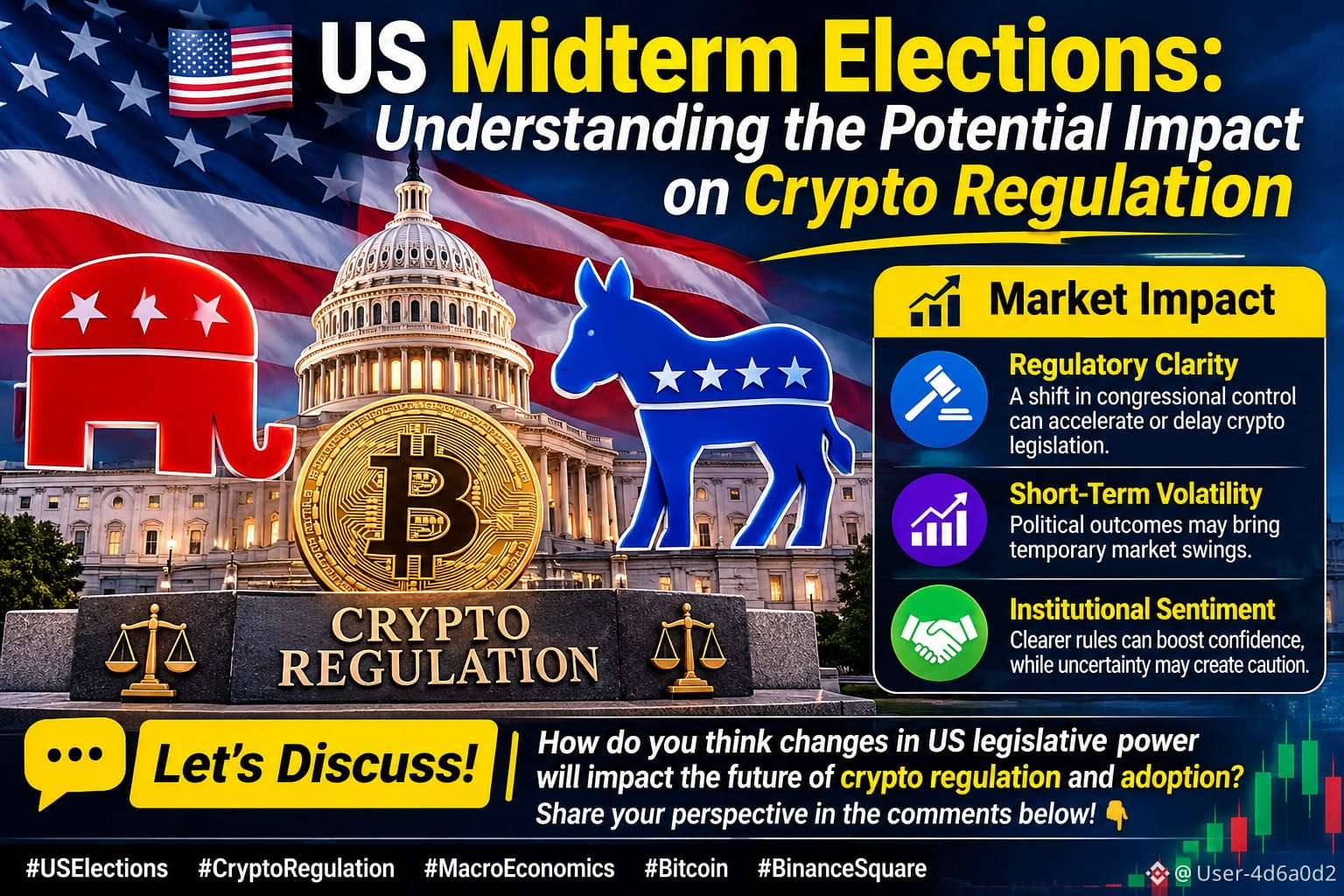
#usmidtermelections 🇺🇸 US Midterm Elections: Understanding the Potential Impact on Crypto Regulation
As the United States heads to the polls for the midterm elections, the global crypto market is watching closely. Political shifts in Washington can significantly shape the future of digital asset regulation and policy.
📰 The Core News
The US midterm elections will determine the balance of power in the House of Representatives and the Senate. The outcome dictates which political party controls the legislative agenda, directly influencing how future crypto-related bills, taxation policies, and regulatory frameworks are drafted, debated, and passed over the next two years.
📊 Market Impact
While elections do not change market fundamentals overnight, they play a crucial role in shaping the macroeconomic and regulatory environment:
• Regulatory Clarity: A shift in congressional control can either accelerate or delay comprehensive crypto legislation. This directly impacts the oversight dynamics between agencies like the SEC and the CFTC.
• Short-Term Volatility: Historical market data shows that major political events can introduce temporary volatility as traders and institutions reassess risk based on potential policy shifts.
• Institutional Sentiment: Progress toward clear, structured legislative frameworks can boost institutional confidence and adoption, whereas prolonged regulatory uncertainty may lead to cautious capital allocation in the digital asset space.
💬 Let's Discuss
How do you think changes in US legislative power will impact the future of crypto regulation and adoption? Share your perspective in the comments below! 👇
#USElections #CryptoRegulation #MacroEconomics #Bitcoin #BinanceSquare
This is for educational purposes only. Not Financial Advice (NFA). Always Do Your Own Research (DYOR).
$SNXXB $MUUB $THE
{future}(THEUSDT)
{spot}(MUUBUSDT)
{spot}(SNXXBUSDT)
#usmidtermelections 🇺🇸 US Midterm Elections: Understanding the Potential Impact on Crypto Regulation
As the United States heads to the polls for the midterm elections, the global crypto market is watching closely. Political shifts in Washington can significantly shape the future of digital asset regulation and policy.
📰 The Core News
The US midterm elections will determine the balance of power in the House of Representatives and the Senate. The outcome dictates which political party controls the legislative agenda, directly influencing how future crypto-related bills, taxation policies, and regulatory frameworks are drafted, debated, and passed over the next two years.
📊 Market Impact
While elections do not change market fundamentals overnight, they play a crucial role in shaping the macroeconomic and regulatory environment:
• Regulatory Clarity: A shift in congressional control can either accelerate or delay comprehensive crypto legislation. This directly impacts the oversight dynamics between agencies like the SEC and the CFTC.
• Short-Term Volatility: Historical market data shows that major political events can introduce temporary volatility as traders and institutions reassess risk based on potential policy shifts.
• Institutional Sentiment: Progress toward clear, structured legislative frameworks can boost institutional confidence and adoption, whereas prolonged regulatory uncertainty may lead to cautious capital allocation in the digital asset space.
💬 Let's Discuss
How do you think changes in US legislative power will impact the future of crypto regulation and adoption? Share your perspective in the comments below! 👇
#USElections #CryptoRegulation #MacroEconomics #Bitcoin #BinanceSquare
This is for educational purposes only. Not Financial Advice (NFA). Always Do Your Own Research (DYOR).
$SNXXB $MUUB $THE
1.1k

·
--
$SPCXB
{spot}(SPCXBUSDT)
$TSLAB
{spot}(TSLABUSDT)
$DOGE
{future}(DOGEUSDT)
🚨BREAKING NEWS🚨
One of the worst days in history is being experienced for Elon Musk:
🇺🇸 With the Republicans' heavy defeat in the US midterm elections, Elon Musk's loss was HUGE
He donated $589,000,000, and with today's drop in Tesla and SpaceX stocks, approximately $108,280,000,000 of his fortune went up in smoke!!
Elon Musk has also started deleting some of his posts on X for the Democrats!!
#USMidterms-WhatAreMarketsExpecting? #USMidtermElections
$SPCXB
$TSLAB
$DOGE
🚨BREAKING NEWS🚨
One of the worst days in history is being experienced for Elon Musk:
🇺🇸 With the Republicans' heavy defeat in the US midterm elections, Elon Musk's loss was HUGE
He donated $589,000,000, and with today's drop in Tesla and SpaceX stocks, approximately $108,280,000,000 of his fortune went up in smoke!!
Elon Musk has also started deleting some of his posts on X for the Democrats!!
#USMidterms-WhatAreMarketsExpecting? #USMidtermElections

1.6k
·
--
$TRUMP
{future}(TRUMPUSDT)
🚨🇺🇸 BREAKING:
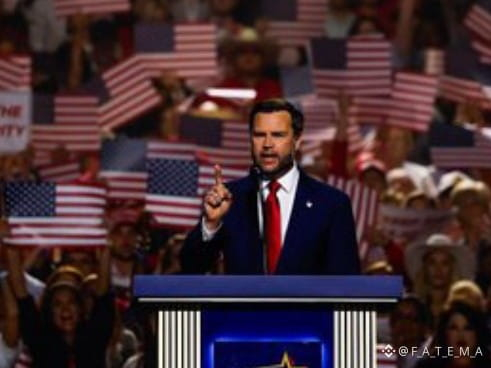
JD Vance says the Iran war cost Republicans the midterm elections!
He just put out a long tweet about the thrashing Republicans took last night, and according to him, the problem wasn't that Republican voters stayed home.
They actually showed up in strong numbers, but many who backed Trump and Vance in 2024 ended up voting for Democrats.
Vance says his team had spotted something strange before the election. Turnout looked good, but one of his analysts warned that plenty of those voters were angry enough to switch sides.
And a pollster later found out what was driving that anger.
When former Trump voters were asked what would bring them back, four answers stood out:
1. End the war
2. Bring down inflation and living costs
3. Put America First
4. Change America's relationship with Israel
That's a pretty striking list coming from voters who helped put Trump back in the White House just two years ago.
Vance admitted Republicans could have done a better job talking about the economy, but he says the war was the real reason they lost. He even pointed out that Trump himself had said so.
And he pushed back at Republicans offering immigration amnesty as the solution, warning that anyone selling that idea was lying.
He also had a message for voters who had warned Republicans this would happen: "You're right, you did tell us so."
Vance is openly acknowledging that many of Trump's own voters turned against Republicans over the war, inflation, and foreign policy.
HUGE!!!
Source: online News
#USGovernment #USMidtermElections
$TRUMP
🚨🇺🇸 BREAKING:
JD Vance says the Iran war cost Republicans the midterm elections!
He just put out a long tweet about the thrashing Republicans took last night, and according to him, the problem wasn't that Republican voters stayed home.
They actually showed up in strong numbers, but many who backed Trump and Vance in 2024 ended up voting for Democrats.
Vance says his team had spotted something strange before the election. Turnout looked good, but one of his analysts warned that plenty of those voters were angry enough to switch sides.
And a pollster later found out what was driving that anger.
When former Trump voters were asked what would bring them back, four answers stood out:
1. End the war
2. Bring down inflation and living costs
3. Put America First
4. Change America's relationship with Israel
That's a pretty striking list coming from voters who helped put Trump back in the White House just two years ago.
Vance admitted Republicans could have done a better job talking about the economy, but he says the war was the real reason they lost. He even pointed out that Trump himself had said so.
And he pushed back at Republicans offering immigration amnesty as the solution, warning that anyone selling that idea was lying.
He also had a message for voters who had warned Republicans this would happen: "You're right, you did tell us so."
Vance is openly acknowledging that many of Trump's own voters turned against Republicans over the war, inflation, and foreign policy.
HUGE!!!
Source: online News
#USGovernment #USMidtermElections
673

·
--
Bullish
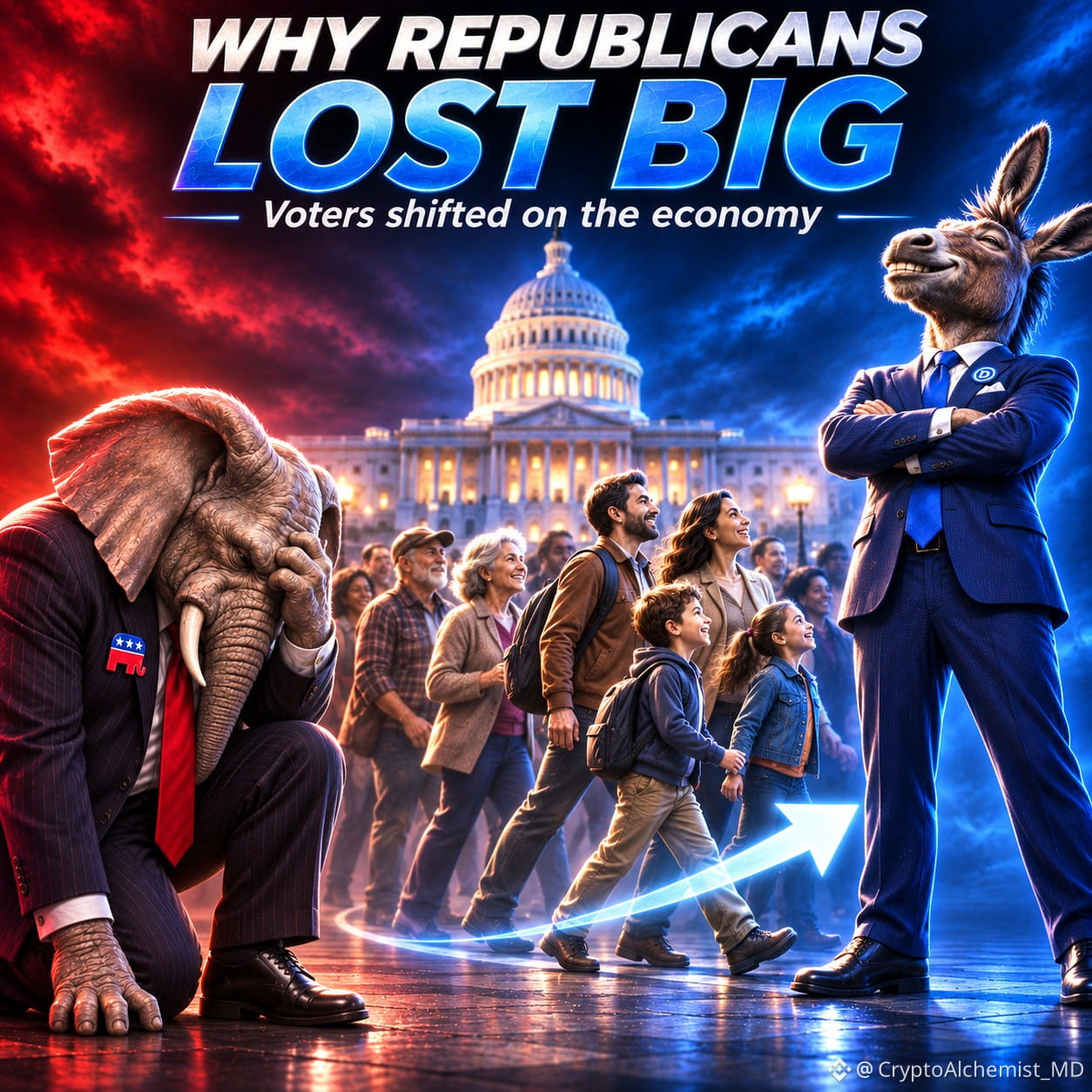
🇺🇸 Why did Republicans lose so much more ground than expected?
The answer may have less to do with ideology and much more to do with the economy people were actually feeling.
Nearly 9 in 10 voters said the cost of living was a crucial or major factor in their vote.
High prices remained stubborn.
Mortgage rates were still painful.
Tariffs kept adding uncertainty.
And many voters simply did not feel better off than they did two years ago.
The numbers show how deep the shift was.
Republican support among voters aged 18–29 fell from above 40% in 2024 to just 25%.
Among Hispanic voters, support dropped from nearly half to roughly one-third.
And Democrats gained ground in almost every type of county rich, poor, urban, rural and even places Trump won comfortably in 2024.
But here’s the part Wall Street found interesting:
The market didn’t crash after the Republican losses.
It rallied.
The Dow jumped more than 1,100 points.
The S&P 500 rose around 1.2%.
The Nasdaq gained about 1.1%.
Why?
Investors appear to be pricing in a Washington with more checks and balances potentially less aggressive spending, fewer major policy shocks and more political gridlock.
At the same time, the election created clear winners and losers:
→ Renewable-energy stocks surged
→ Treasury yields fell
→ Some AI and data-center stocks came under pressure
→ Trump-linked and Musk-linked companies sold off
So maybe the bigger story isn’t simply:
“Republicans lost.”
It’s this:
Did voters punish an economy that looked stronger on paper than it felt in everyday life?
Because if affordability keeps deciding elections, politicians may have a much bigger problem than the stock market suggests.
$SPCXB
{spot}(SPCXBUSDT)
$TSLAB
{spot}(TSLABUSDT)
$JPMB
{spot}(JPMBUSDT)
#USMidtermElections #stockmarket #economy
🇺🇸 Why did Republicans lose so much more ground than expected?
The answer may have less to do with ideology and much more to do with the economy people were actually feeling.
Nearly 9 in 10 voters said the cost of living was a crucial or major factor in their vote.
High prices remained stubborn.
Mortgage rates were still painful.
Tariffs kept adding uncertainty.
And many voters simply did not feel better off than they did two years ago.
The numbers show how deep the shift was.
Republican support among voters aged 18–29 fell from above 40% in 2024 to just 25%.
Among Hispanic voters, support dropped from nearly half to roughly one-third.
And Democrats gained ground in almost every type of county rich, poor, urban, rural and even places Trump won comfortably in 2024.
But here’s the part Wall Street found interesting:
The market didn’t crash after the Republican losses.
It rallied.
The Dow jumped more than 1,100 points.
The S&P 500 rose around 1.2%.
The Nasdaq gained about 1.1%.
Why?
Investors appear to be pricing in a Washington with more checks and balances potentially less aggressive spending, fewer major policy shocks and more political gridlock.
At the same time, the election created clear winners and losers:
→ Renewable-energy stocks surged
→ Treasury yields fell
→ Some AI and data-center stocks came under pressure
→ Trump-linked and Musk-linked companies sold off
So maybe the bigger story isn’t simply:
“Republicans lost.”
It’s this:
Did voters punish an economy that looked stronger on paper than it felt in everyday life?
Because if affordability keeps deciding elections, politicians may have a much bigger problem than the stock market suggests.
$SPCXB
$TSLAB
$JPMB
#USMidtermElections #stockmarket #economy
1
382

·
--
📰 Why are miners suddenly afraid of the ballot box? Are crypto fundamentals finally going to win this time?📉
We talked about this just a couple of days ago, and now there’s a new development. The Democrats won the U.S. midterm elections, contrary to traditional expectations: crypto tokens associated with Trump became the biggest losers, while BTC and ETH rallied against the trend.
The Democrats won the U.S. midterm elections, but crypto tokens associated with Trump (such as Trump and World Liberty Financial) ended up among the biggest losers in the top 100, while BTC and ETH rose. This shows that market sentiment doesn’t necessarily follow the vote—the factors investors care about may have changed.
In-depth analysis
Why does this news matter?
There are several deeper dynamics behind this. First, the crypto market is starting to distinguish political risk from asset value. The decline in Trump tokens doesn’t mean confidence in crypto overall has weakened; investors may instead feel that these tokens are too closely tied to politics and will be more volatile in the short term. Second, the Democrats may take a more cautious stance toward crypto. Although they haven’t said so explicitly, the Democrats have traditionally favored stricter crypto regulation, and this win may lead the market to expect greater regulatory uncertainty in the future. Third, capital may be shifting from politically themed coins to assets with more fundamental value. The performance of Bitcoin and ETH this time suggests that capital will ultimately return to digital assets that can withstand risk.
Market impact
In the short term, the drop in Trump tokens is a release of sentiment, not a systemic risk to the broader market. But it may mean the speculative cycle for politically themed coins is ending, and these coins could become more volatile over the next few years. For BTC and ETH, this is good news: it shows the market is separating out coins with genuine value. In the long run, however, if the Democrats really do tighten regulation, that could in turn weigh on the broader market. A similar historical event? After the 2008 financial crisis, safe-haven sentiment also drove a sharp rise in gold. This situation may be similar.
💡 Personal view: In the short term, capital is moving out of politically themed coins, which is a sign of a maturing market. But if regulation tightens in the future, volatility in these coins will continue to increase. This assessment would no longer apply if stricter crypto regulation is announced.
This article was not sponsored by any project, and the author does not hold any of the assets mentioned.
$BTC $ETH #BTC #ETH
⚠️ This is not investment advice. Predictions are for reference only.
#USMidtermElections
$BNB


493
·
--
Bullish
💰 Crypto spent $63M+ trying to stop one Senate comeback and still lost.
Sherrod Brown is returning to the U.S. Senate after defeating Jon Husted in Ohio.
And this wasn't just another race for the crypto industry.
Crypto-linked PACs poured more than $63 million into efforts aimed at keeping Brown out of Washington one of the industry's biggest political bets of the entire midterm cycle.
Why Brown?
During his previous time leading the Senate Banking Committee, major crypto legislation struggled to move forward.
Now he's coming back.
But the bigger question isn't just about Brown.
It's this:
How much political influence can crypto actually buy?
The industry spent heavily across the 2026 elections yet one of its biggest targets still won.
Does this mean crypto needs a more bipartisan political strategy instead of betting so heavily on individual races?
$BTC
{future}(BTCUSDT)
$ETH
{future}(ETHUSDT)
$USDEB
{spot}(USDEBUSDT)
like and follow 👋😁
#USMidtermElections #CryptoRegulation #bitcoin
💰 Crypto spent $63M+ trying to stop one Senate comeback and still lost.
Sherrod Brown is returning to the U.S. Senate after defeating Jon Husted in Ohio.
And this wasn't just another race for the crypto industry.
Crypto-linked PACs poured more than $63 million into efforts aimed at keeping Brown out of Washington one of the industry's biggest political bets of the entire midterm cycle.
Why Brown?
During his previous time leading the Senate Banking Committee, major crypto legislation struggled to move forward.
Now he's coming back.
But the bigger question isn't just about Brown.
It's this:
How much political influence can crypto actually buy?
The industry spent heavily across the 2026 elections yet one of its biggest targets still won.
Does this mean crypto needs a more bipartisan political strategy instead of betting so heavily on individual races?
$BTC
$ETH
$USDEB
like and follow 👋😁
#USMidtermElections #CryptoRegulation #bitcoin

117
·
--
$NVDAB
{spot}(NVDABUSDT)
$BTC
{future}(BTCUSDT)
BREAKING: SWEET REVENGE! The Navy Admiral who Pete Hegseth fired DEFEATS her MAGA opponent to win a House seat in South Carolina — cementing the blue tsunami with a poetic flourish!
This is just too beautiful...
Democrat Nancy Lacore, a 35-year Navy veteran who rose through the ranks from helicopter pilot to become Chief of Navy Reserve, was fired in August of 2025 amid Hegseth's purging of high-ranking women in the military. While no official reason was given, the deeply misogynistic Hegseth has not been coy about his caveman belief that only testosterone-injecting men should serve.
Lacore has now defeated Republican Jenny Costa Honeycutt to seize a seat that was formerly held by MAGA lunatic Nancy Mace who launched a failed bid for the governor's mansion this year.
Lacore has not been shy about criticizing Hegseth's disastrous mismanagement of the Defense Department, particularly his failed Iran War.
"Pete Hegseth is the most unqualified Secretary of Defense that we have ever had, and he is doing significant damage to our military that it will really take decades to undo," she said, adding that he "needs to go."
The most beautiful irony here?
Congresswoman Lacore could soon be voting with the rest of the Democratic majority in the House to impeach Pete Hegseth. We have subpoena power starting in January, so we'll be able to uncover all of the gross negligence and rampant criminality that he's overseen.
Ain't karma grand?
#USMidtermElections
$NVDAB
$BTC
BREAKING: SWEET REVENGE! The Navy Admiral who Pete Hegseth fired DEFEATS her MAGA opponent to win a House seat in South Carolina — cementing the blue tsunami with a poetic flourish!
This is just too beautiful...
Democrat Nancy Lacore, a 35-year Navy veteran who rose through the ranks from helicopter pilot to become Chief of Navy Reserve, was fired in August of 2025 amid Hegseth's purging of high-ranking women in the military. While no official reason was given, the deeply misogynistic Hegseth has not been coy about his caveman belief that only testosterone-injecting men should serve.
Lacore has now defeated Republican Jenny Costa Honeycutt to seize a seat that was formerly held by MAGA lunatic Nancy Mace who launched a failed bid for the governor's mansion this year.
Lacore has not been shy about criticizing Hegseth's disastrous mismanagement of the Defense Department, particularly his failed Iran War.
"Pete Hegseth is the most unqualified Secretary of Defense that we have ever had, and he is doing significant damage to our military that it will really take decades to undo," she said, adding that he "needs to go."
The most beautiful irony here?
Congresswoman Lacore could soon be voting with the rest of the Democratic majority in the House to impeach Pete Hegseth. We have subpoena power starting in January, so we'll be able to uncover all of the gross negligence and rampant criminality that he's overseen.
Ain't karma grand?
#USMidtermElections

2
373
·
--
Bullish
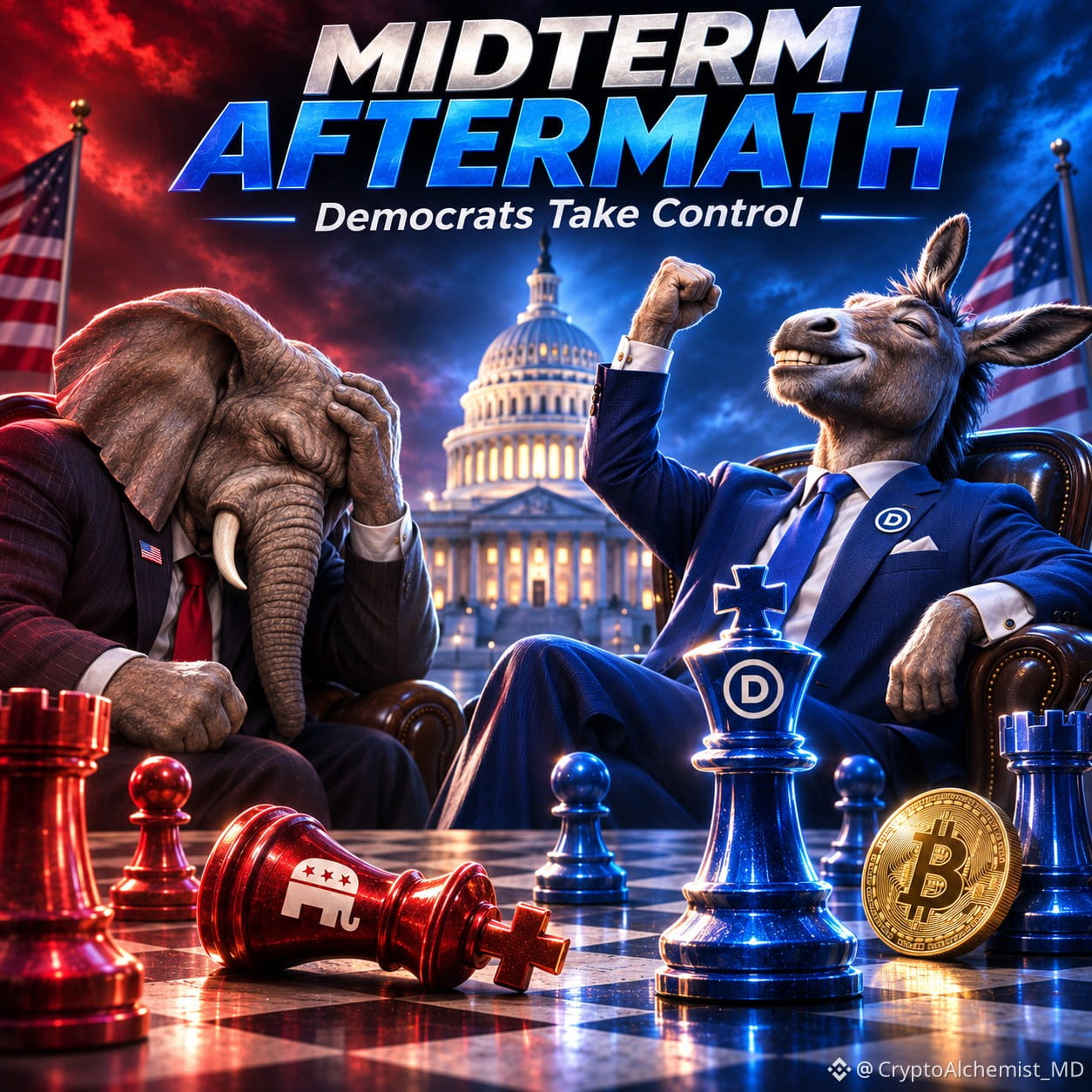
🇺🇸 UPDATE: The votes came in and Washington just changed dramatically.
When I posted yesterday, the question was whether the U.S. midterms would produce divided government.
We have the answer.
Democrats have won control of BOTH the House and Senate.
And some of the flips were huge — races in states including Texas, Kansas, Ohio, Iowa and North Carolina moved Democratic in a result much stronger than many expected.
For crypto, this is where things get interesting. 👀
The election is over, but the regulatory battle isn't.
A new Congress means a new political equation for:
• Crypto market-structure legislation
• SEC vs CFTC authority
• Stablecoin rules
• DeFi oversight
• Exchange regulation
• The future path of the CLARITY Act
Crypto spent heavily trying to influence this election cycle. Now the industry has to figure out how its agenda fits into a very different Congress.
And Binance Square is clearly watching — #USMidtermElections remains one of the platform's biggest live discussions.
My bigger question isn't whether tonight was “red” or “blue.”
It's this:
Does the new Congress accelerate clear crypto rules… or send U.S. regulation back into another long negotiation?
👇 What do you think happens first?
Clearer regulation?
More enforcement?
Legislative gridlock?
Or does the crypto market simply move on?
like and comment if enjoyed the post 👋😁
$SOL
{future}(SOLUSDT)
$XRP
{future}(XRPUSDT)
$ZEC
{future}(ZECUSDT)
#CryptoRegulation #CryptoUpdate #USMidtermElections
🇺🇸 UPDATE: The votes came in and Washington just changed dramatically.
When I posted yesterday, the question was whether the U.S. midterms would produce divided government.
We have the answer.
Democrats have won control of BOTH the House and Senate.
And some of the flips were huge — races in states including Texas, Kansas, Ohio, Iowa and North Carolina moved Democratic in a result much stronger than many expected.
For crypto, this is where things get interesting. 👀
The election is over, but the regulatory battle isn't.
A new Congress means a new political equation for:
• Crypto market-structure legislation
• SEC vs CFTC authority
• Stablecoin rules
• DeFi oversight
• Exchange regulation
• The future path of the CLARITY Act
Crypto spent heavily trying to influence this election cycle. Now the industry has to figure out how its agenda fits into a very different Congress.
And Binance Square is clearly watching — #USMidtermElections remains one of the platform's biggest live discussions.
My bigger question isn't whether tonight was “red” or “blue.”
It's this:
Does the new Congress accelerate clear crypto rules… or send U.S. regulation back into another long negotiation?
👇 What do you think happens first?
Clearer regulation?
More enforcement?
Legislative gridlock?
Or does the crypto market simply move on?
like and comment if enjoyed the post 👋😁
$SOL
$XRP
$ZEC
#CryptoRegulation #CryptoUpdate #USMidtermElections
791
·
--
Bullish
🇺🇸 Midterms update: Bitcoin may have already given us the first market verdict.
BTC initially dropped below $76K as the Democratic sweep became clear.
Then something interesting happened.
It snapped back above $78K in a sharp V-shaped recovery.
That suggests the bigger problem may not have been the election result itself — it was the uncertainty around the result.
Now that Washington’s new balance is clearer, traders can focus on what actually matters next:
Crypto regulation.
The CLARITY Act.
SEC vs CFTC authority.
Stablecoins and DeFi.
And whether political gridlock slows everything down.
So here’s the real question:
Was the BTC rebound just relief… or the start of a stronger post-election move?
$BTC
{future}(BTCUSDT)
$SOL
{future}(SOLUSDT)
$XRP
{future}(XRPUSDT)
#USMidtermElections #bitcoin #CryptoMarket
🇺🇸 Midterms update: Bitcoin may have already given us the first market verdict.
BTC initially dropped below $76K as the Democratic sweep became clear.
Then something interesting happened.
It snapped back above $78K in a sharp V-shaped recovery.
That suggests the bigger problem may not have been the election result itself — it was the uncertainty around the result.
Now that Washington’s new balance is clearer, traders can focus on what actually matters next:
Crypto regulation.
The CLARITY Act.
SEC vs CFTC authority.
Stablecoins and DeFi.
And whether political gridlock slows everything down.
So here’s the real question:
Was the BTC rebound just relief… or the start of a stronger post-election move?
$BTC
$SOL
$XRP
#USMidtermElections #bitcoin #CryptoMarket

129
·
--
$BTC
{future}(BTCUSDT)
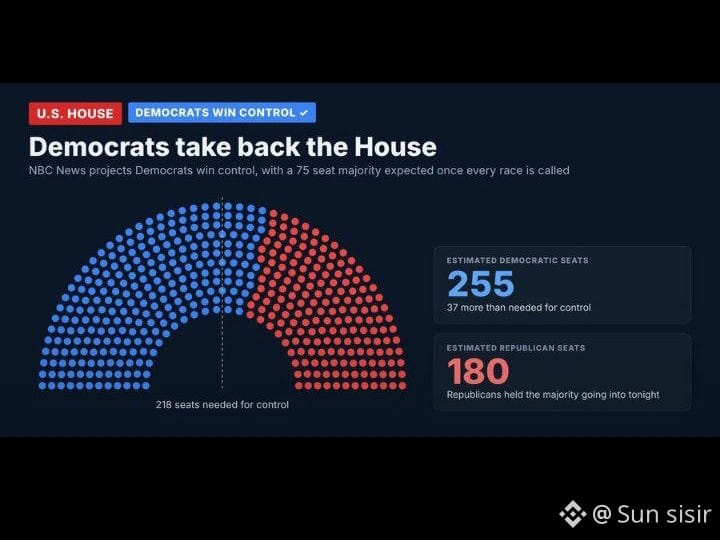
🚨🇺🇸 NBC is forecasting a 75-seat Democratic majority in the House, bigger than the 2006 Iraq backlash or the 2010 Tea Party wave
In 2006 Democrats picked up 31 seats on the Iraq War; in 2010 Republicans took 63 on Obamacare.
Tonight's wave ran through Texas, Kansas and the Carolinas on an eight-month Iran war and $4 gas, and NBC's exit poll had 62 percent of voters disapproving of the president.
A 75-seat margin means Jeffries doesn't need the socialists or the moderates to pass anything, it means the Iran oversight hearings start with a supermajority on every committee, and it means the 2028 map Republicans assumed for a decade got redrawn in one night.
Source: NBC News
#crypto #CryptoNews #USGovernment #USMidtermElections
$BTC
🚨🇺🇸 NBC is forecasting a 75-seat Democratic majority in the House, bigger than the 2006 Iraq backlash or the 2010 Tea Party wave
In 2006 Democrats picked up 31 seats on the Iraq War; in 2010 Republicans took 63 on Obamacare.
Tonight's wave ran through Texas, Kansas and the Carolinas on an eight-month Iran war and $4 gas, and NBC's exit poll had 62 percent of voters disapproving of the president.
A 75-seat margin means Jeffries doesn't need the socialists or the moderates to pass anything, it means the Iran oversight hearings start with a supermajority on every committee, and it means the 2028 map Republicans assumed for a decade got redrawn in one night.
Source: NBC News
#crypto #CryptoNews #USGovernment #USMidtermElections
93
·
--
$BTC
{future}(BTCUSDT)
🇮🇷 Iran’s parliament speaker is taking a victory lap on America’s midterms.
Mohammad Bagher Ghalibaf says Americans voted "NO TO WAR," and Tehran couldn't agree more.
But he also threw in a pretty serious warning:
"If the U.S govt betrays their public will to serve international paymasters and blackmailers, it will learn our NO comes with a Nightmare."
Ghalibaf is clearly enjoying the election results, using Trump's domestic political troubles to warn him against another round of fighting with Iran.
#USGovernment #USMidtermElections #worldnews
$BTC
🇮🇷 Iran’s parliament speaker is taking a victory lap on America’s midterms.
Mohammad Bagher Ghalibaf says Americans voted "NO TO WAR," and Tehran couldn't agree more.
But he also threw in a pretty serious warning:
"If the U.S govt betrays their public will to serve international paymasters and blackmailers, it will learn our NO comes with a Nightmare."
Ghalibaf is clearly enjoying the election results, using Trump's domestic political troubles to warn him against another round of fighting with Iran.
#USGovernment #USMidtermElections #worldnews

147
·
--
$TRUMP
{future}(TRUMPUSDT)
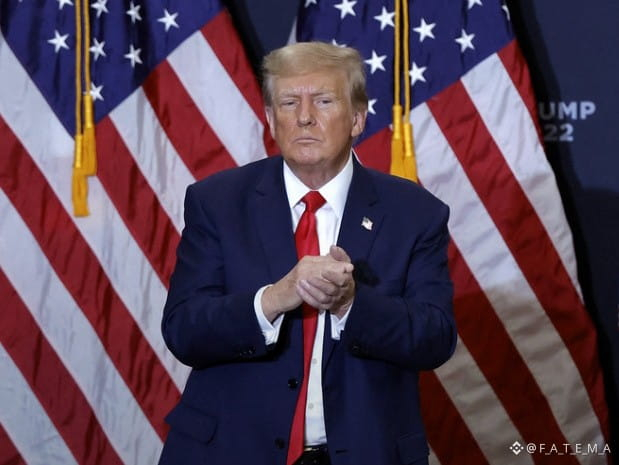
🚨🇺🇸 Trump says he wants to work with Democrats, but the balance of power has changed after the GOP losses.
In an election-night call, he congratulated Democrats and said he wanted to work for the good of the country.
But he also reminded them he has veto power and suggested they’d rather negotiate than face constant vetoes.
He also blamed some Republican losses on candidates who weren’t his allies and voters who stayed home.
The message is cooperation, but the terms may look very different after a loss.
Source: CBS News
#USGovernment #USMidtermElections #worldnews
$TRUMP
🚨🇺🇸 Trump says he wants to work with Democrats, but the balance of power has changed after the GOP losses.
In an election-night call, he congratulated Democrats and said he wanted to work for the good of the country.
But he also reminded them he has veto power and suggested they’d rather negotiate than face constant vetoes.
He also blamed some Republican losses on candidates who weren’t his allies and voters who stayed home.
The message is cooperation, but the terms may look very different after a loss.
Source: CBS News
#USGovernment #USMidtermElections #worldnews
2
3.5k

·
--
Bullish
#usmidterms-whataremarketsexpecting? #BTC #USMidtermElections 📈🏛️
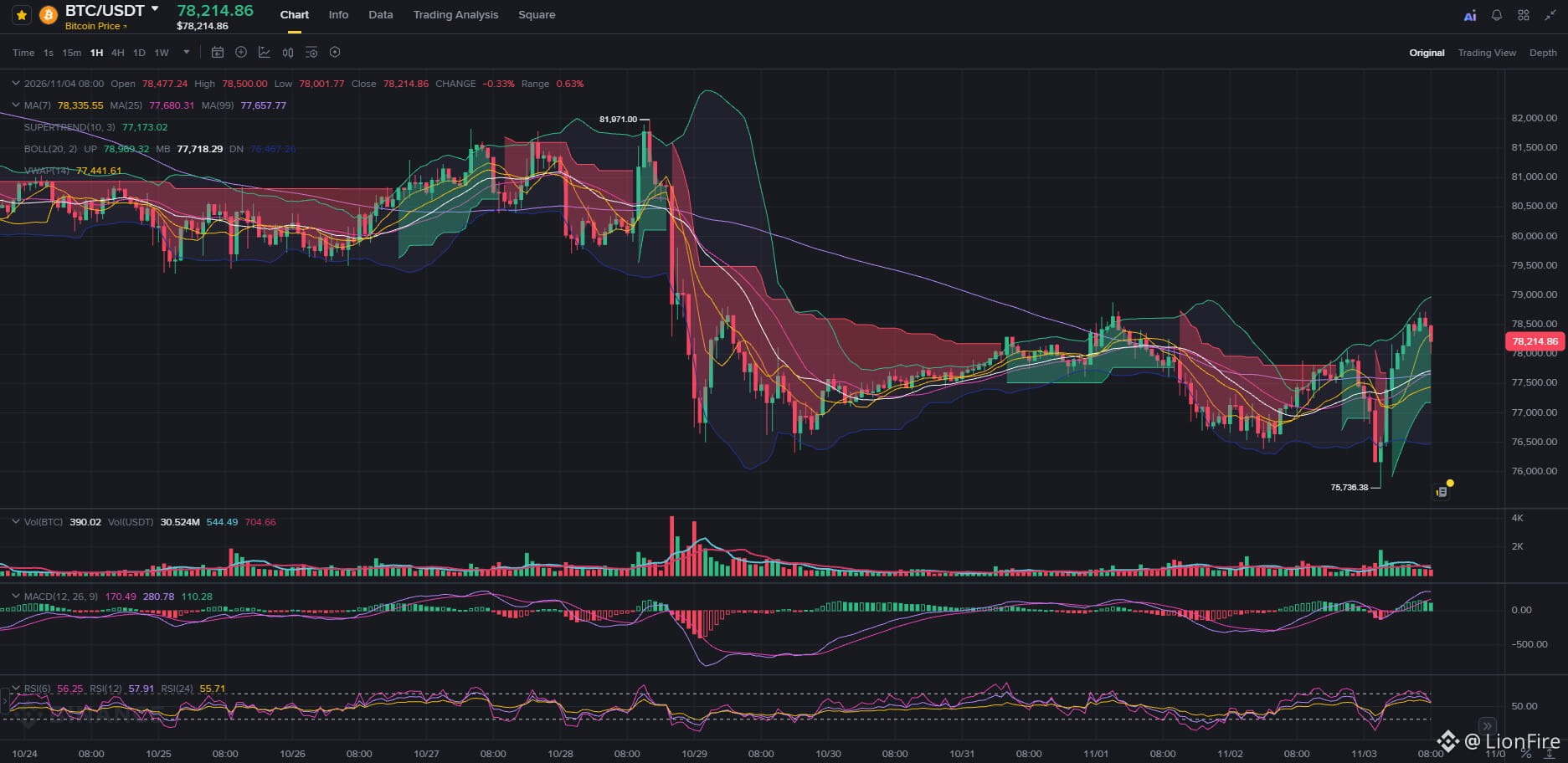
🟢 DISPERSING UNCERTAINTY: Bitcoin begins its upward correction after the midterm elections 📊⚡
After weeks of media tension and price compression surrounding the U.S. midterm elections, markets are beginning to digest the macroeconomic outcome. The chart for $BTC shows a very clear buying response, currently trading at $78,214.86 after firmly defending lower support at $75,735.30.
🔍 1. Technical and macroeconomic analysis of the move:
Post-election institutional relief: Historically, the resolution of uncertainty surrounding the midterm elections has acted as a catalyst, clearing regulatory noise and allowing institutional capital to resume its technical direction.
Orderly upward correction: The rebound from recent lows confirms that supply has been absorbed in key zones, driving a methodical price recovery toward current levels.
🧠 2. Tactical discipline amid optimism:
A rally driven by the resolution of major political events often sparks widespread enthusiasm. However, for a disciplined trader, euphoria never replaces analysis: chasing bullish candles without respecting resistance zones means putting capital at unnecessary risk.
💡 The golden rule of professional trading remains unchanged: patience, analytical rigor, and meticulous risk management always outweigh the excitement of a headline. Keep a cool head and trade according to a strict plan! 🧠⚡
3.3k

·
--
Bullish
Verified
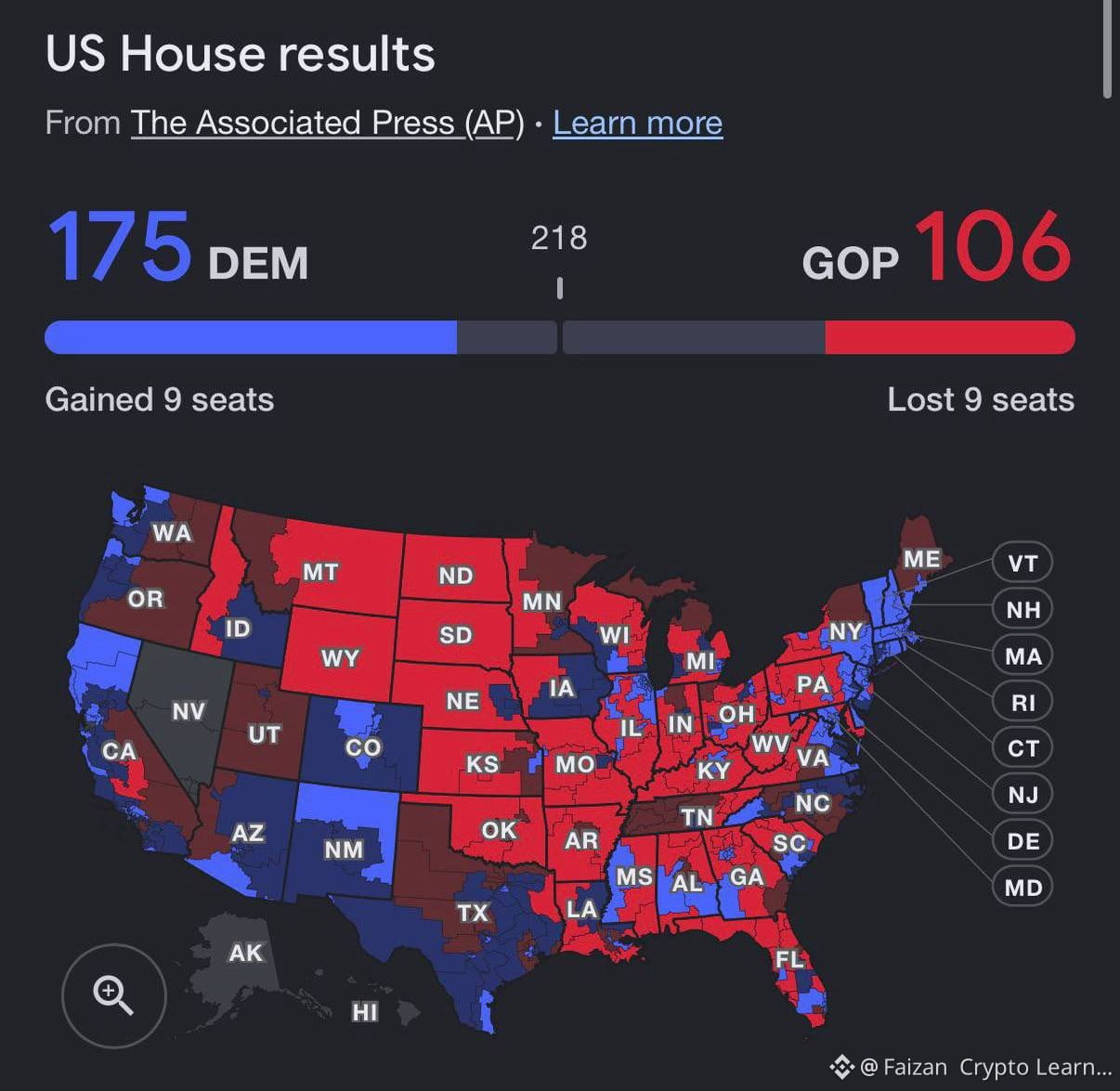
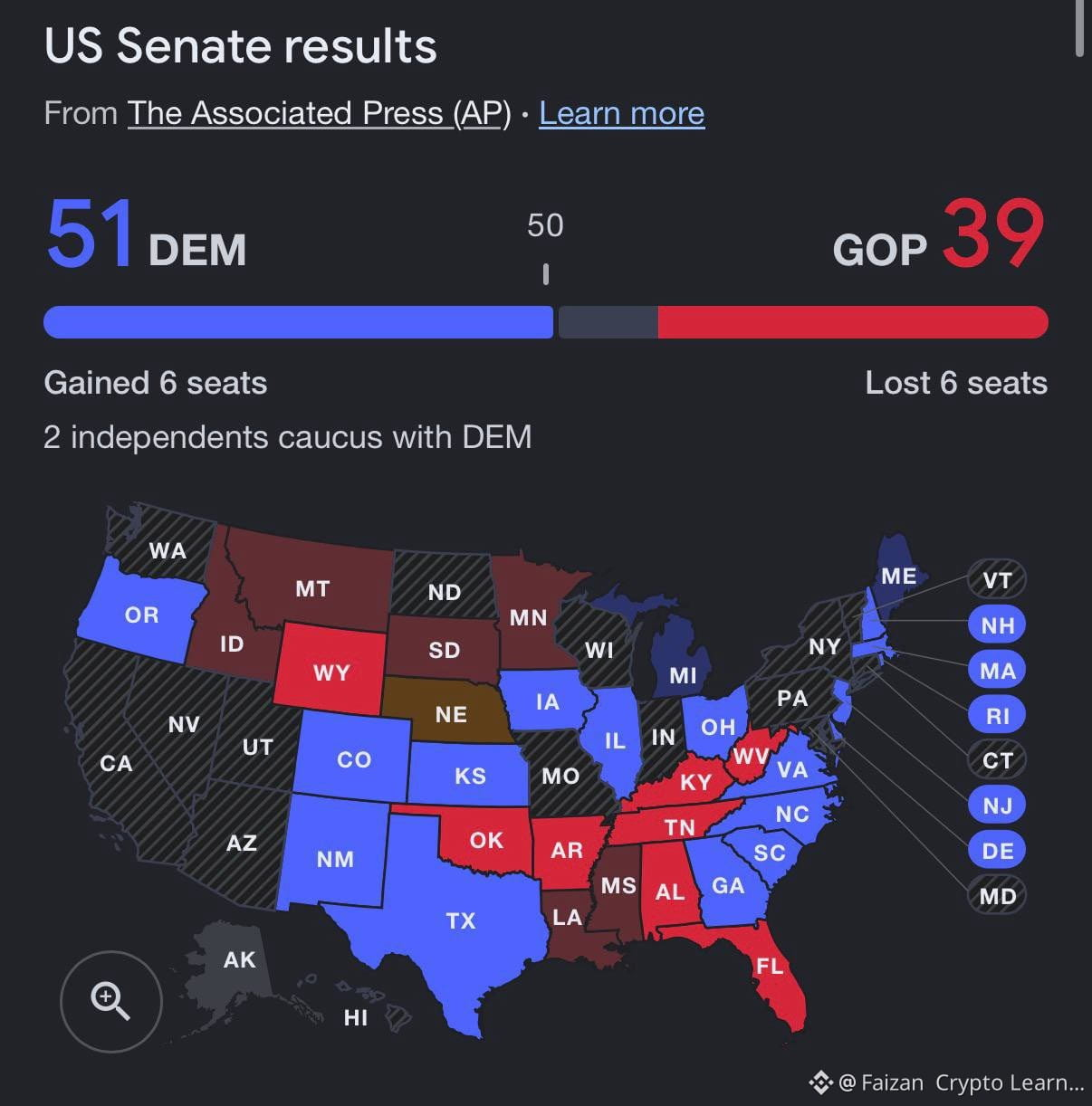
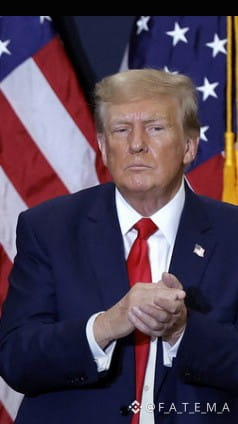
🚨 TRUMP JUST LOST CONGRESS — AND DEMOCRATS COULD BE COMING FOR HIS PRESIDENCY NEXT! 🇺🇸
Washington is facing a major political earthquake.
Democrats have scored a sweeping victory in the 2026 US Midterm Elections, taking control of both the House of Representatives and the Senate in a stunning setback for President Donald Trump.
And the biggest twist? The battle may be far from over.
Here's what could happen next:
🔴 Impeachment Returns: Democratic leaders have signaled that impeachment is not off the table. Trump could face renewed investigations and possible impeachment proceedings.
🔴 Congressional Power Shift: Republicans have lost control of both chambers, giving Democrats significantly more power to challenge Trump's agenda.
🔴 Two Years of Political Battles: Trump's remaining time in office could become a constant fight with a Democratic-controlled Congress.
🔴 Markets on Alert: Political uncertainty could create fresh volatility across US stocks, the dollar, Treasury bonds, Bitcoin and the wider crypto market.
This is more than an election defeat. It's a major shift in Washington's balance of power.
Trump now faces a completely different political landscape. Could impeachment become the next major headline?
#USMidtermElections #DonaldTrump #CryptoNews $BTC #USMidterms-WhatAreMarketsExpecting?
1
2.6k
·
--
$BTC
{future}(BTCUSDT)
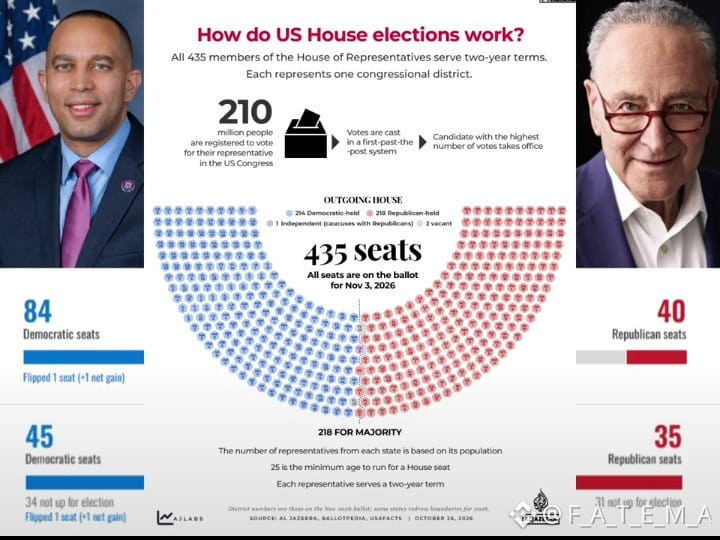
🔥🚨 BREAKING — Democrats are projected to WIN the U.S. House of Representatives and the U.S. Senate.
Hakeem Jeffries is now set to become Speaker, AND Chuck Schumer will likely be the Majority Leader.
That combination hands both chambers to the party that spent two years fighting the America First agenda.
Multiple competitive races broke their way as the night went on. The incoming leadership has already telegraphed plans to reverse border and energy policies.
Washington is about to change.
#WorldNews2026 #USGovernment #USMidtermElections
$BTC
🔥🚨 BREAKING — Democrats are projected to WIN the U.S. House of Representatives and the U.S. Senate.
Hakeem Jeffries is now set to become Speaker, AND Chuck Schumer will likely be the Majority Leader.
That combination hands both chambers to the party that spent two years fighting the America First agenda.
Multiple competitive races broke their way as the night went on. The incoming leadership has already telegraphed plans to reverse border and energy policies.
Washington is about to change.
#WorldNews2026 #USGovernment #USMidtermElections
151
Log in to explore more content
Join global crypto users on Binance Square
⚡️ Get latest and useful information about crypto.
💬 Trusted by the world’s largest crypto exchange.
👍 Discover real insights from verified creators.
Email / Phone number
Trending Topics
1
#WillMarketsStageAThanksgivingReliefRally?
13,796 views
310 Discussing
2
#BessentSoftensStanceOnHuang’sNvidiaReturn
10,016 views
197 Discussing
3
#EvolveAtBinanceBlockchainWeek
407 views
38 Discussing
4
#MuskWarnsOfAICashCrunch
10,439 views
168 Discussing
5
#SouthKoreaToTightenOversightOfCryptoTransfersAbroad
436 views
9 Discussing
6
#RussiaAllowsExchangesToOfferCryptoTrading
2,493 views
87 Discussing
7
#UKToBarCryptoExchangesFromMakingMarketsOnTheirOwnPlatforms
261 views
13 Discussing
8
#UKTreasurySignsCryptoMarketMakingExemptionRules
2,099 views
89 Discussing
9
#BTCReboundsAbove$60KAmidWhaleDipBuying
124,257 views
440 Discussing
10
#SolanaSets2027RoadmapToDoubleComputeCapacity
109,450 views
1,383 Discussing