
#warshpushestoscalebackforwardguidanceanddotplot
warshpushestoscalebackforwardguidanceanddotplot
388,401 views
1,303 Discussing
Hot
Latest

·
--
Warsh’s forward guidance in the spotlight again | Dot plot not officially scrapped | BTC rebound: watch 82,200
My stance is to be cautious about the rebound and not treat the buzz around “the Fed scrapping the dot plot” as an implemented policy. The topic gaining traction on social media is Chair Warsh’s push to scale back forward guidance. Back to the primary source: in his Jackson Hole speech, published on the Fed website on August 28, he did argue for limiting forward guidance in normal times, saying that signaling the interest-rate path in advance can make markets overly reliant on forecasts. But that was a position on communication, not a new decision suddenly announced on October 15. On September 16, the Fed still released its economic projections, including individual policymakers’ projections for the appropriate path of the federal funds rate. So saying “the dot plot has been abolished” goes beyond what the public documents show.
I’m more interested in how this communication philosophy might change trading discipline. If officials provide fewer hints about the path ahead, markets may be more likely to reassess interest rates, the dollar, and risk-asset valuations after data comes out. But “less information” can’t simply be translated into “bullish for BTC,” nor does it necessarily mean a sharp sell-off. Today, the U.S. Bureau of Labor Statistics reported that September final-demand PPI rose 1.3% month over month and 6.3% year over year, reflecting price pressures at the production level. PPI is not a Fed vote, nor is it a guarantee of future CPI or PCE readings. In his speech, Warsh also stressed that policymakers shouldn’t mechanically rely on a single data point—exactly the opposite of traders seeing one headline and betting on the next rate decision.
Let’s cross-check the fund-flow data as well: Farside’s daily table shows net outflows of about $261.4 million from U.S. spot BTC ETFs on October 14. The October 15 row is still pending, so the 0.0 currently shown in the table is not a final conclusion that there were zero outflows today. Keep these two things separate: the communication framework shapes how expectations are formed, while fund flows reflect changes in capital that have already happened. Neither directly proves what caused every candle today. The latest official BTC purchase announcement on Strategy’s website was for 250 BTC on October 12; social media speculation is no reason to announce another purchase on the company’s behalf.
The market’s initial reaction was a dip followed by a recovery. At the time of writing, Kraken BTC/USD was around $82,159, with an intraday low of $79,709, a high of $82,289, and an open of $81,576. It has climbed back above $80,000 and is now near the intraday high. I view $80,000 as a psychological battleground between bulls and bears, and $82,200–$82,300 as the short-term confirmation zone. If price breaks above it but can’t hold, this could just be a round of short covering. Conversely, if the hourly close falls back below $81,500, the rebound is clearly losing steam; if price then breaks below $79,700 and fails to reclaim it on a bounce, my current recovery thesis is invalidated. If the Fed officially changes how it publishes its projections in the future, I’ll update my view based on formal Fed documents, not social media retellings.
If I were trading this myself: I’d stay out for now, and only consider an unleveraged spot long, with a position size of 0%. Only if an hourly candle closes above $82,300 and the following hour’s pullback holds in the $82,000–$82,300 range would I test a long with no more than 0.5% of total capital. I’d take half off at $83,200 and close the rest at $84,200. After entering, if an hourly candle closes below $81,800, I’d cut half; below $81,100, I’d stop out entirely. If I haven’t entered and price first loses $80,000, I’d immediately cancel this rebound-following plan. The noisier the macro news gets, the smaller the position should be. Never use high leverage to guess what the Fed will say next.
#WarshPushesToScaleBackForwardGuidanceAndDotPlot #BTC
This is for personal market observation only and does not constitute investment advice.

32

·
--
🚨BREAKING MACRO ALERT: THE FED MAY NOT SAVE CRYPTO THIS TIME!💣
#WarshPushesToScaleBackForwardGuidanceAndDotPlot
🔥NO QE. NO LIQUIDITY FLOOD. NO EASY MODE.
Crypto traders, WAKE UP! ⚠️ The macro game could be changing.
Kevin Warsh’s push to scale back Forward Guidance and the Fed Dot Plot raises a major question: **WHAT HAPPENS WHEN MARKETS GET LESS GUIDANCE AND NO FRESH LIQUIDITY BOOST?**
💥 3 THINGS CRYPTO TRADERS CANNOT IGNORE :
🔴 1. THE QE EXPECTATION GAME*
Don't build a bull case around liquidity injections that haven't been announced.
⚡ 2. VOLATILITY COULD STRIKE HARDER
Less forward guidance could leave markets more sensitive to inflation data, jobs reports, and Fed decisions.
🐋 3. ORGANIC DEMAND TAKES CENTER STAGE*
Without additional liquidity, BTC and altcoins may need stronger real buying demand to sustain a rally.
📊 THE BATTLEFIELD:
$BTC : Can Bitcoin hold momentum without a fresh liquidity wave?
{future}(BTCUSDT)
$ETH : Can Ethereum attract buyers if risk appetite weakens?
{future}(ETHUSDT)
$XRP : Can XRP maintain its strength in a tougher macro environment?
{future}(XRPUSDT)
🚨HERE'S THE REAL QUESTION:
CAN CRYPTO HIT NEW HIGHS WITHOUT THE FED TURNING THE LIQUIDITY TAP BACK ON?🚀
Or are traders underestimating what tighter liquidity conditions could mean for the next bull run? 📉
💬 BULLS 🐂 OR BEARS 🐻 — WHO WINS THIS MACRO BATTLE?
Drop your prediction below. Let's see what the market thinks! 👇🔥
#SouthKoreaPlansTighterCybersecurityRules
#EtherTook60%OfCryptoLiquidations
#BTC
#CPIWatch
🚨BREAKING MACRO ALERT: THE FED MAY NOT SAVE CRYPTO THIS TIME!💣
#WarshPushesToScaleBackForwardGuidanceAndDotPlot
🔥NO QE. NO LIQUIDITY FLOOD. NO EASY MODE.
Crypto traders, WAKE UP! ⚠️ The macro game could be changing.
Kevin Warsh’s push to scale back Forward Guidance and the Fed Dot Plot raises a major question: **WHAT HAPPENS WHEN MARKETS GET LESS GUIDANCE AND NO FRESH LIQUIDITY BOOST?**
💥 3 THINGS CRYPTO TRADERS CANNOT IGNORE :
🔴 1. THE QE EXPECTATION GAME*
Don't build a bull case around liquidity injections that haven't been announced.
⚡ 2. VOLATILITY COULD STRIKE HARDER
Less forward guidance could leave markets more sensitive to inflation data, jobs reports, and Fed decisions.
🐋 3. ORGANIC DEMAND TAKES CENTER STAGE*
Without additional liquidity, BTC and altcoins may need stronger real buying demand to sustain a rally.
📊 THE BATTLEFIELD:
$BTC : Can Bitcoin hold momentum without a fresh liquidity wave?
$ETH : Can Ethereum attract buyers if risk appetite weakens?
$XRP : Can XRP maintain its strength in a tougher macro environment?
🚨HERE'S THE REAL QUESTION:
CAN CRYPTO HIT NEW HIGHS WITHOUT THE FED TURNING THE LIQUIDITY TAP BACK ON?🚀
Or are traders underestimating what tighter liquidity conditions could mean for the next bull run? 📉
💬 BULLS 🐂 OR BEARS 🐻 — WHO WINS THIS MACRO BATTLE?
Drop your prediction below. Let's see what the market thinks! 👇🔥
#SouthKoreaPlansTighterCybersecurityRules
#EtherTook60%OfCryptoLiquidations
#BTC
#CPIWatch

247

·
--
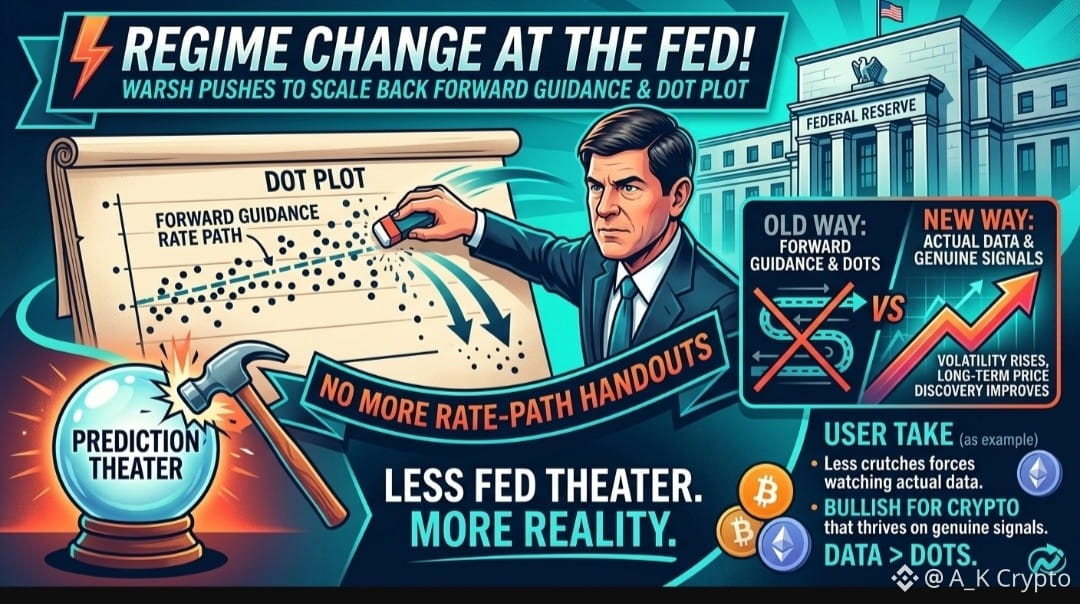
#WarshPushesToScaleBackForwardGuidanceAndDotPlot ⚡ Regime change at the Fed!
Kevin Warsh is actively scaling back forward guidance and the Dot Plot. No more rate-path handouts in statements, he skipped his own dot, and a task force is reviewing the whole communication playbook.
Smart move. Forward guidance and dots became market crutches that delayed real reactions and locked policymakers into bad paths. Less Fed theater forces everyone to watch actual data. Short-term volatility rises, but long-term price discovery improves — especially bullish for crypto that thrives on genuine signals, not predicted rate paths. Data > dots.
#Fed #DotPlot #Crypto #BinanceSquare
134

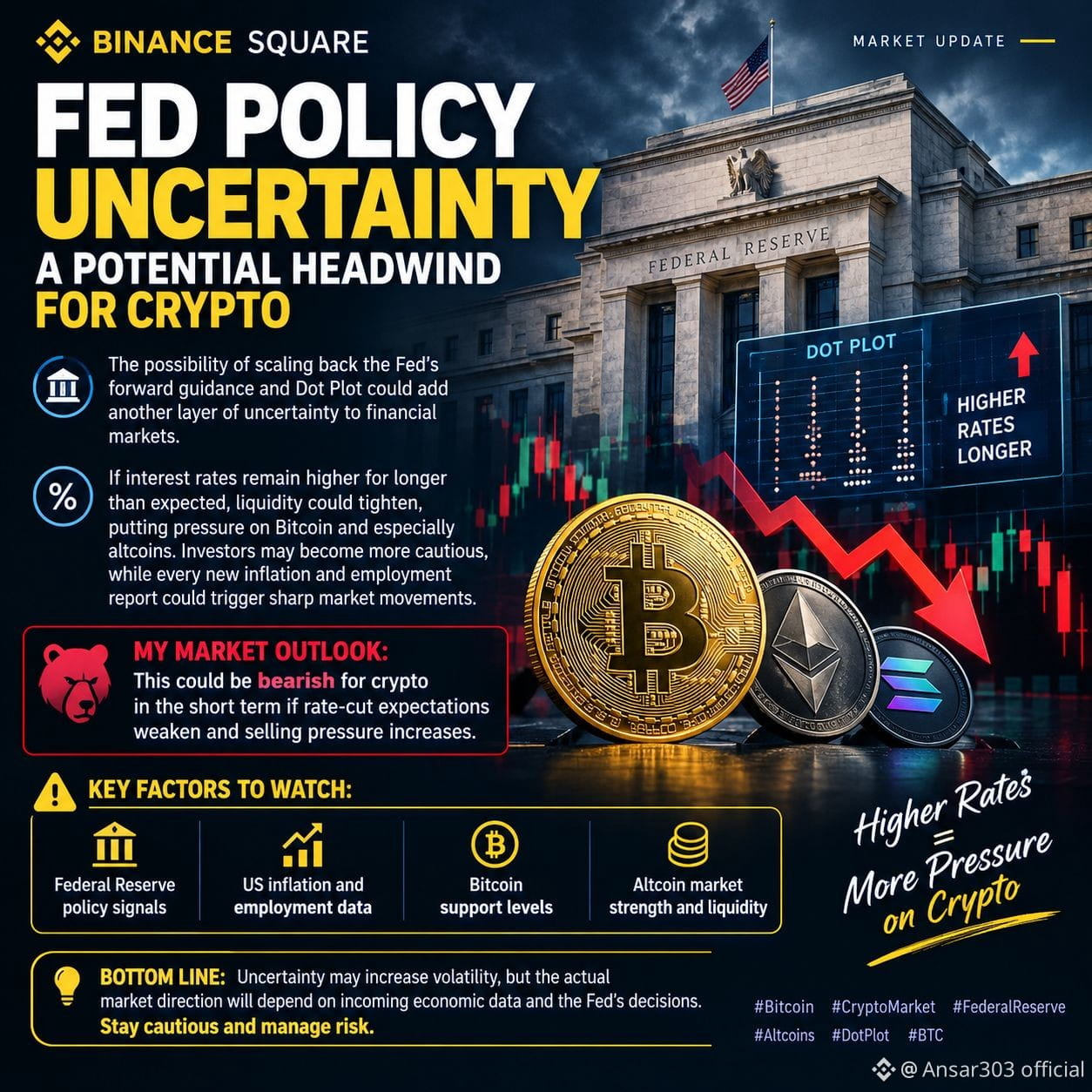
📉 FED POLICY UNCERTAINTY: A POTENTIAL HEADWIND FOR CRYPTO $BTC $ETH
The possibility of scaling back the Fed’s forward guidance and Dot Plot could add another layer of uncertainty to financial markets.
If interest rates remain higher for longer than expected, liquidity could tighten, putting pressure on Bitcoin and especially altcoins. Investors may $BTC me more cautious, while every new inflation and employment report could trigger sharp market movements.
🔻 My Market Outlook: This could be bearish for crypto in the short term if rate-cut expectations weaken and selling pressure increases.
#WarshPushesToScaleBackForwardGuidanceAndDotPlot #CPIWatch #EtherTook60%OfCryptoLiquidations #BlackRockCryptoAssetsJump63% #KOSPICloses7.57%LowerTriggeringCircuitBreaker
156

#WarshPushesToScaleBackForwardGuidanceAndDotPlot 🏦 Kevin Warsh is pushing for a rethink of how the Federal Reserve communicates monetary policy, including scaling back forward guidance and the “dot plot” of policymakers’ interest-rate projections. The argument is that clearer decisions based on incoming economic data could give the Fed more flexibility as inflation and growth risks change. Markets will be watching how any shift affects rate expectations, Treasury yields and the U.S. dollar. 📊
Hashtags
#FederalReservePolicyReform
#KevinWarshMonetaryPolicy
#InterestRateOutlook
#USInflationAndMarkets
Tokens
$DXYZ.US · $TLT.ETF · $SPY
Hashtags
#FederalReservePolicyReform
#KevinWarshMonetaryPolicy
#InterestRateOutlook
#USInflationAndMarkets
Tokens
$DXYZ.US · $TLT.ETF · $SPY
SPY+2.76%
TLTETF-0.08%
1
397


·
--
Verified
#WarshPushesToScaleBackForwardGuidanceAndDotPlot
The Fed May Reveal Less About Its Next Move : Markets Could Feel the Impact
Federal Reserve Chair Kevin Warsh is pushing for a quieter Fed, with less forward guidance and a possible end to the quarterly interest-rate projections known as the dot plot. But not everyone agrees that saying less is better.
According to Reuters on October 15, Fed officials have made more than 40 public appearances since September’s rate hike, helping temper market expectations for further increases. The debate comes as US September CPI inflation reached 3.7% year over year, keeping the next rate decision uncertain.
My take: Warsh’s approach could give policymakers more flexibility to react to fresh economic data rather than being tied to earlier forecasts. However, less guidance can also leave traders guessing, potentially increasing volatility around Fed meetings and key economic releases.
For crypto traders, the important question is how changing rate expectations influence the dollar, Treasury yields, Bitcoin and broader risk appetite. The direction will depend on incoming data, not just the Fed’s communication style.
Do you think less Fed guidance means better decisions or more market uncertainty?
Follow for more data-driven market analysis.
#FederalReserve #Bitcoin #crypto #MacroEconomics
3
3
3k

·
--
Bullish
#WarshPushesToScaleBackForwardGuidanceAndDotPlot
What is forward guidance?
It is the Fed providing advance indications about the potential direction of interest rates.
What is the dot plot?
A chart showing anonymous interest rate projections from Fed officials. The market monitors this very closely.
What is Warsh doing?
✅ Removed forward guidance from the statement.
✅ Did not submit his 'dots' (projections) for June and September.
✅ A review of communication practices is underway.
There is also opposition: Some Fed officials and economists argue that instead of eliminating the dot plot, it should be improved.
🧠 The bottom line: The market will receive fewer signals from the Fed and will need to focus more on incoming data and actual policy decisions.
$OSMO $BLUR $UVXYB
{spot}(UVXYBUSDT)
{future}(BLURUSDT)
{spot}(OSMOUSDT)
#WarshPushesToScaleBackForwardGuidanceAndDotPlot
What is forward guidance?
It is the Fed providing advance indications about the potential direction of interest rates.
What is the dot plot?
A chart showing anonymous interest rate projections from Fed officials. The market monitors this very closely.
What is Warsh doing?
✅ Removed forward guidance from the statement.
✅ Did not submit his 'dots' (projections) for June and September.
✅ A review of communication practices is underway.
There is also opposition: Some Fed officials and economists argue that instead of eliminating the dot plot, it should be improved.
🧠 The bottom line: The market will receive fewer signals from the Fed and will need to focus more on incoming data and actual policy decisions.
$OSMO $BLUR $UVXYB
551

Verified
#WarshPushesToScaleBackForwardGuidanceAndDotPlot
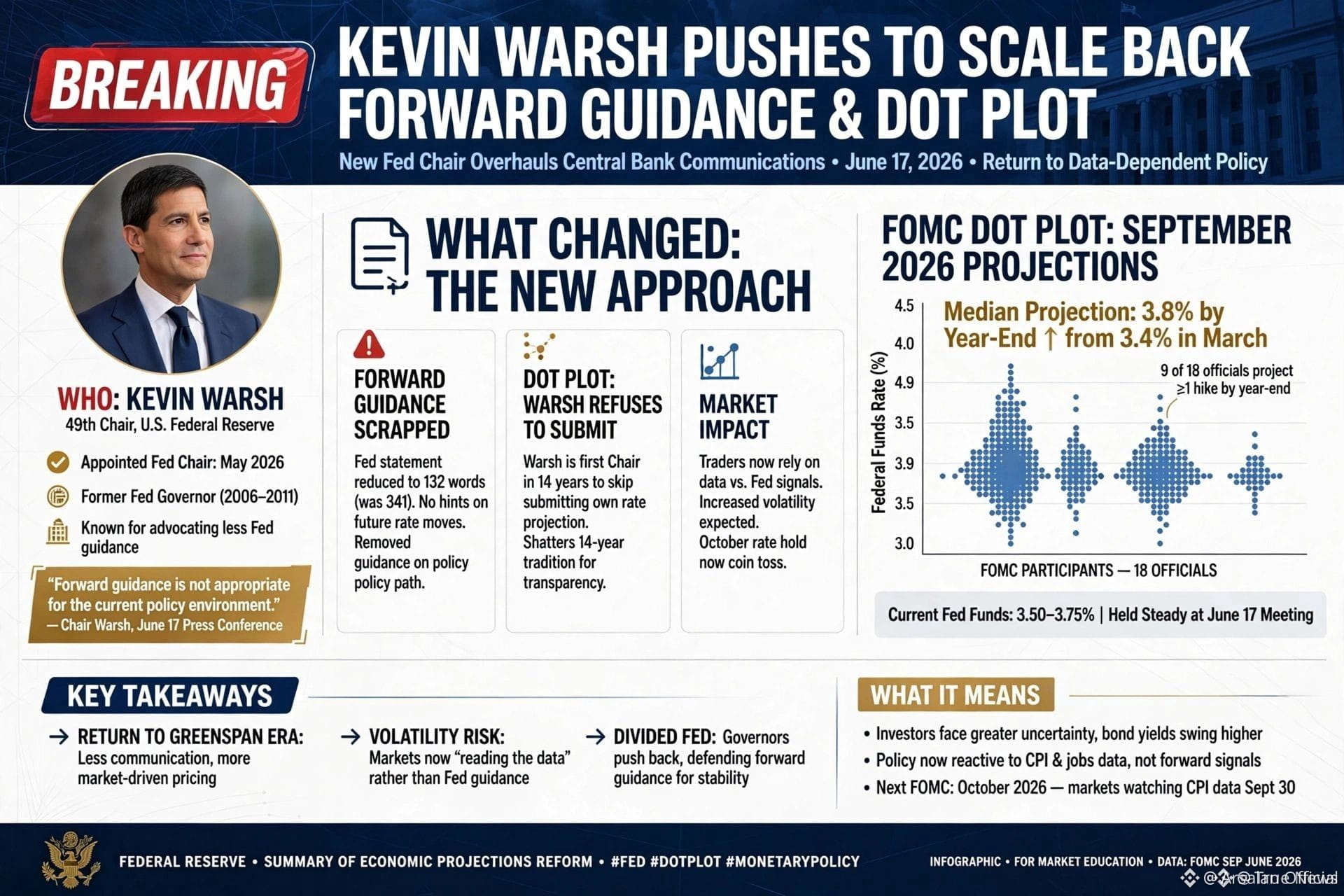
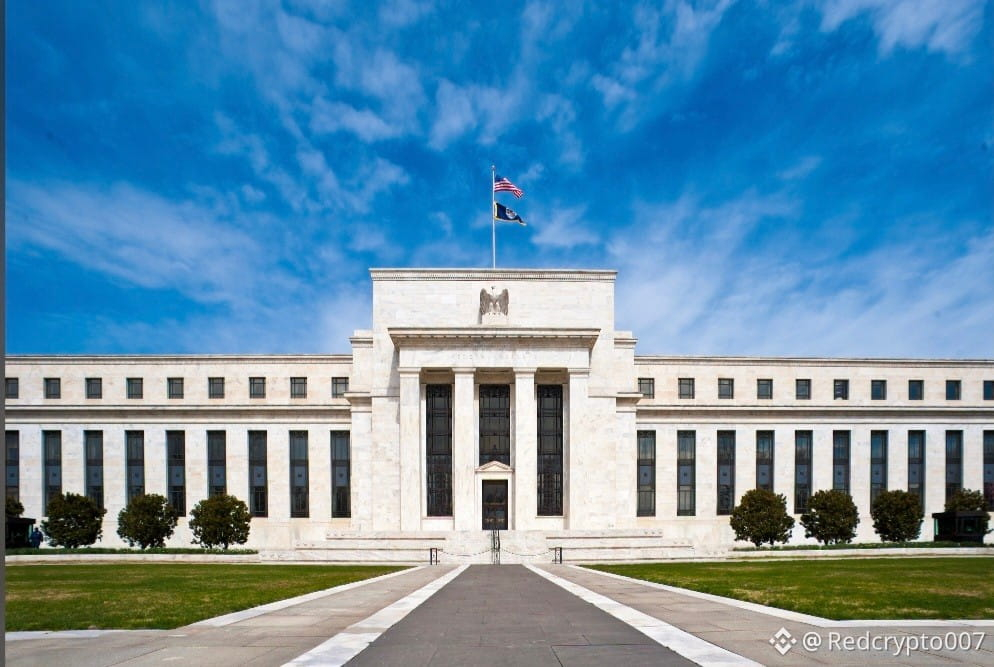
A seismic shift at the Fed: the “quiet” era returns to Wall Street! 📉🏛️
Global financial markets are closely watching a historic shift in how the U.S. Federal Reserve manages monetary policy. Fed Chair Kevin Warsh is leading serious efforts to move away from “Forward Guidance” and reduce reliance on the “Dot Plot.”
💡 What’s happening behind the scenes?
The end of the “ready-made forecasts” era: Warsh believes the Fed’s commitment to giving markets advance signals created an “echo chamber” that confused investors and restricted the central bank’s flexibility when economic conditions changed.
A phrase up in the air: Warsh described the Dot Plot as being written in pencil and accompanied by an eraser, reaffirming his refusal to provide his own interest rate forecasts and stressing that monetary policy should not be shackled by verbal promises.
A return to a “market-responsive Fed”: Rather than officially guiding markets on what will happen in the coming months, Warsh aims to make the Fed more responsive to real economic data (Data-Dependent) while reducing media noise.
📊 How are global markets reacting?
Rising volatility: Without clear guidance, investors can no longer rely on a smooth, guaranteed path for interest rates,
#CPI数据
$PEPE $NIL
1
740

#warshpushestoscalebackforwardguidanceanddotplot
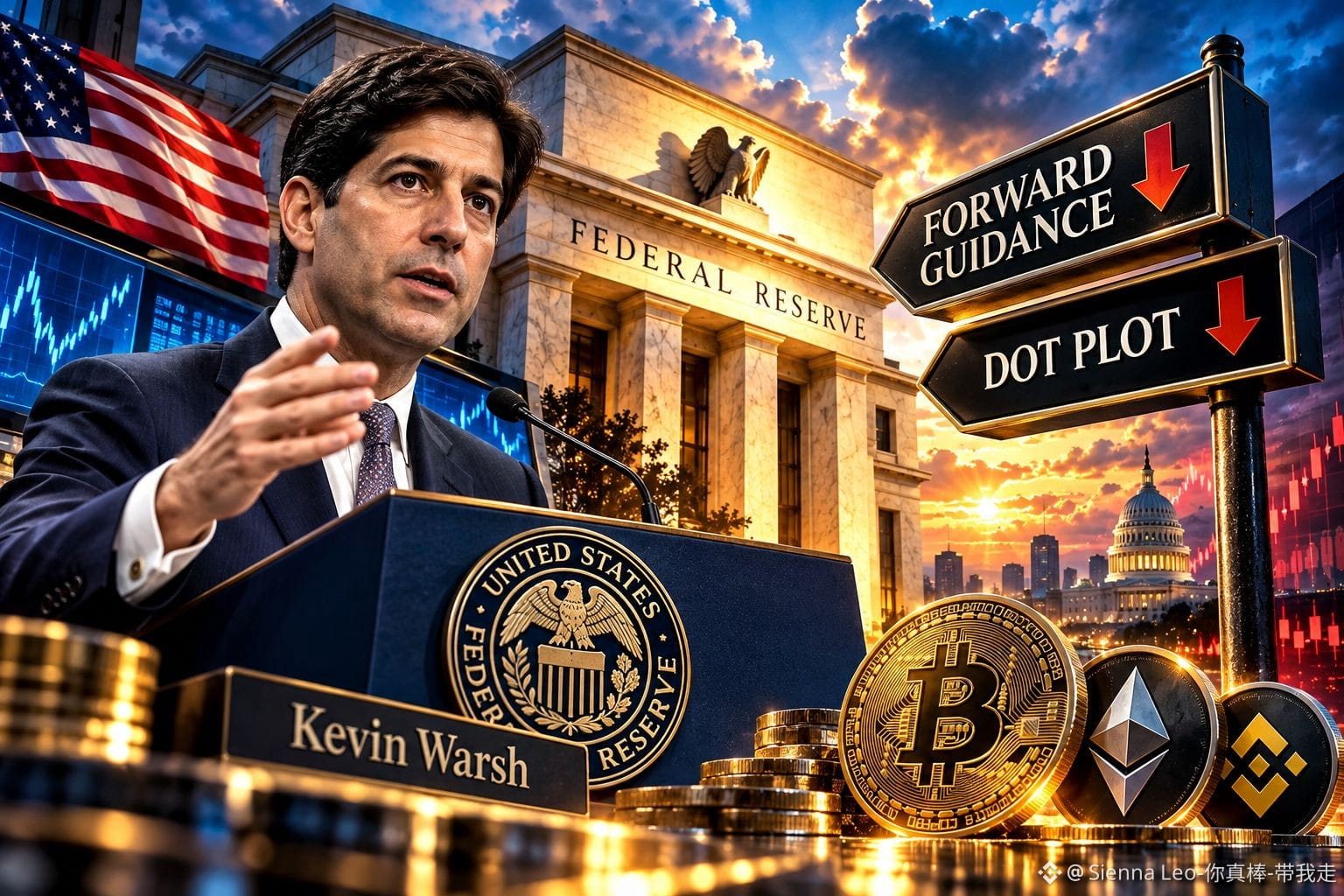
⚠️🏦 WARSH WANTS A QUIETER FED: IS CRYPTO READY FOR LESS CLARITY? 🏦⚠️
When the central bank stops revealing its next move, the market must learn to read the storm itself.
Federal Reserve Chair Kevin Warsh is pushing to reduce forward guidance and reconsider the famous dot plot, the quarterly projections showing where policymakers expect interest rates to go. His vision: let economic data speak louder than official predictions.
The timing matters. U.S. consumer prices rose 3.7% year over year in September 2026, intensifying uncertainty over the Fed’s next rate decision. Policymakers remain divided over whether less communication would improve decision-making or unsettle markets.
My Take: Less guidance does not eliminate uncertainty; it transfers more responsibility to investors. Without a reliable policy roadmap, markets may react more sharply to inflation releases, employment data, and unexpected Fed decisions.
For crypto, the key transmission channel is monetary policy. Interest-rate expectations influence bond yields, the dollar, liquidity conditions, and investors’ appetite for risk. Tighter-than-expected policy could pressure speculative assets, while improving inflation data could change that outlook.
The danger is confusing silence with a bullish or bearish signal. Warsh’s communication strategy alone cannot determine Bitcoin’s direction; actual policy decisions and broader market flows still matter.
Remember: When guidance disappears, economic data becomes the market’s loudest voice.
Would less Fed guidance make crypto markets more efficient or more volatile?
Disclaimer: This post is for educational purposes only, not financial advice. Cryptocurrency markets involve substantial risk.
#FederalReserve #CryptoMarket #GrowWithSAC $STRK $ZK $PYTH
#WarshPushesToScaleBackForwardGuidanceAndDotPlot
1
7
15.6k

·
--
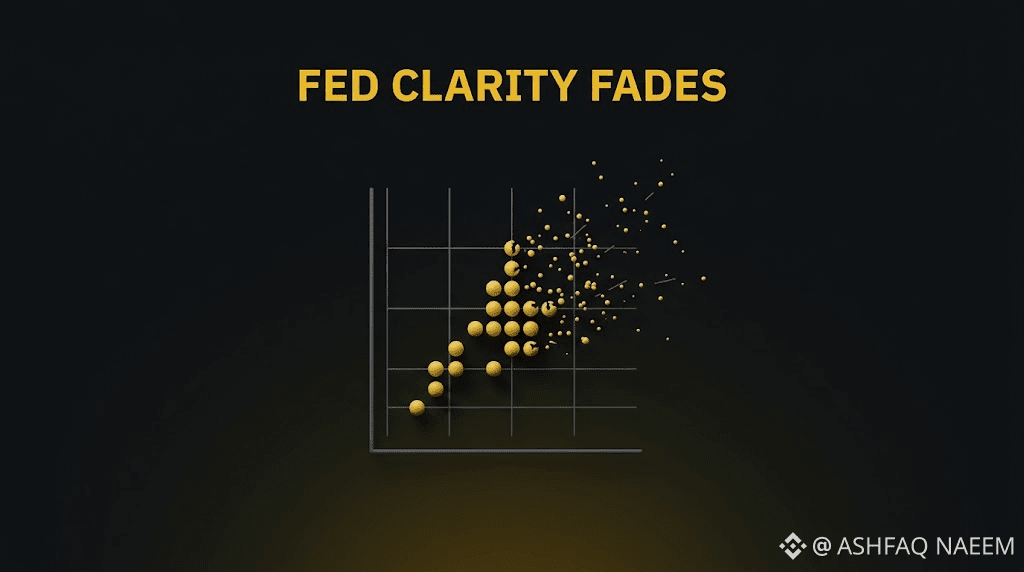
🚨 BREAKING: WARSH PUSHES TO SCALE BACK FED FORWARD GUIDANCE & DOT PLOT 🇺🇸
🇺🇸 Fed Chair Kevin Warsh wants to reduce the Federal Reserve’s reliance on forward guidance and interest-rate projections (Dot Plot).
📌 Why does this matter for crypto?
🔹 BTC & ETH: Uncertainty around future Fed decisions could increase volatility.
🔹 Interest Rates: Persistent inflation may keep rate-hike concerns alive.
🔹 Market Sentiment: A more cautious Fed outlook could pressure risk assets, including crypto.
🔹 Key Dates: Watch Warsh’s upcoming remarks and the October 27–28 Fed meeting.
📉 Bearish Scenario: Hawkish Fed signals → stronger dollar/yields → pressure on BTC.
📈 Bullish Scenario: Cooling inflation and fewer hawkish signals → potential relief rally.
⚠️ Important: Less forward guidance does NOT automatically mean rate cuts. Less clarity from the Fed could actually increase market volatility.
🎯 My Take: Stay cautious. Watch inflation data, Fed comments, and BTC’s price action before taking a trade.
💬 What’s your view? Bullish or bearish for Bitcoin?
#warshpushestoscalebackforwardguidanceanddotplot $BTC $ETH $BNB
{future}(BNBUSDT)
{future}(ETHUSDT)
{future}(BTCUSDT)
🚨 BREAKING: WARSH PUSHES TO SCALE BACK FED FORWARD GUIDANCE & DOT PLOT 🇺🇸
🇺🇸 Fed Chair Kevin Warsh wants to reduce the Federal Reserve’s reliance on forward guidance and interest-rate projections (Dot Plot).
📌 Why does this matter for crypto?
🔹 BTC & ETH: Uncertainty around future Fed decisions could increase volatility.
🔹 Interest Rates: Persistent inflation may keep rate-hike concerns alive.
🔹 Market Sentiment: A more cautious Fed outlook could pressure risk assets, including crypto.
🔹 Key Dates: Watch Warsh’s upcoming remarks and the October 27–28 Fed meeting.
📉 Bearish Scenario: Hawkish Fed signals → stronger dollar/yields → pressure on BTC.
📈 Bullish Scenario: Cooling inflation and fewer hawkish signals → potential relief rally.
⚠️ Important: Less forward guidance does NOT automatically mean rate cuts. Less clarity from the Fed could actually increase market volatility.
🎯 My Take: Stay cautious. Watch inflation data, Fed comments, and BTC’s price action before taking a trade.
💬 What’s your view? Bullish or bearish for Bitcoin?
#warshpushestoscalebackforwardguidanceanddotplot $BTC $ETH $BNB
1
4
8.6k

·
--
#WarshPushesToScaleBackForwardGuidanceAndDotPlot
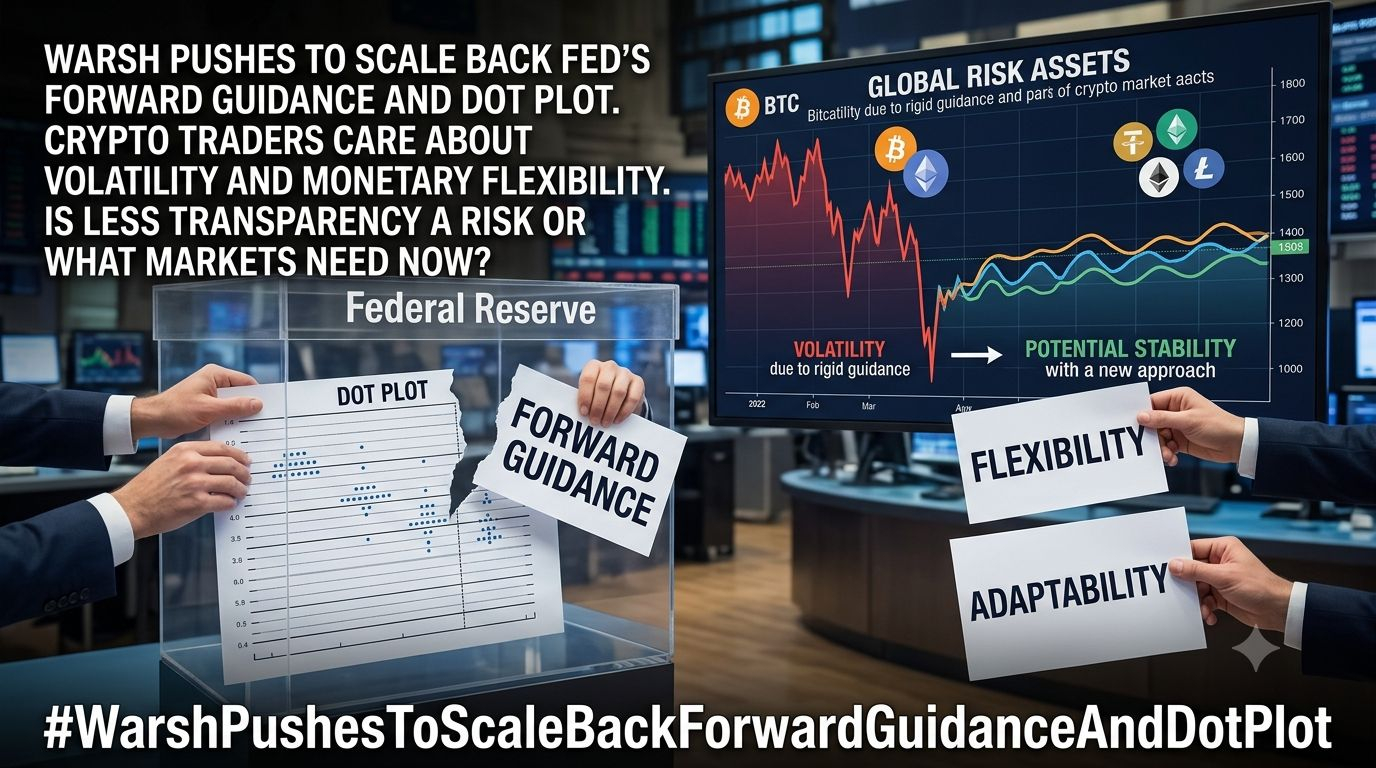
🚨 Big Shift in Central Banking?
Word is spreading that Kevin Warsh is pushing to scale back the Fed's forward guidance and dot plot.
Why should crypto traders care about this? 🤔
The dot plot has historically triggered massive market volatility with its rigid rate projections.
Moving away from it could usher in a more flexible, less predictable monetary policy framework.
Less rigid guidance might reduce knee-jerk macro reactions across global risk assets.
📉 Is less transparency a risk, or is flexibility what the markets need right now?
Drop your thoughts below! 👇
#WarshPushesToScaleBackForwardGuidanceAndDotPlot #Fed #Crypto #Macro
19
·
--
#WarshPushesToScaleBackForwardGuidanceAndDotPlot
Federal Reserve Chair Kevin Warsh is actively leading a major push to overhaul central bank communications by scaling back forward guidance and attempting to eliminate or weaken the quarterly "dot plot" interest-rate projections. Appointed as Fed Chair earlier in 2026, Warsh argues that telegraphing policy turns market pricing into an echo chamber for the central bank’s own remarks, ultimately distorting how financial assets reflect real economic data. [1, 2]
$BNB
{future}(BNBUSDT)
$HYPE
{future}(HYPEUSDT)
$ETHA.ETF
{etf_us}(ETHA.ETF)
#WarshNamesLeadersForFiveFedTaskFor
#WarshPushesToScaleBackForwardGuidanceAndDotPlot
#GuidanceEnd2End
#WarshPushesToScaleBackForwardGuidanceAndDotPlot
Federal Reserve Chair Kevin Warsh is actively leading a major push to overhaul central bank communications by scaling back forward guidance and attempting to eliminate or weaken the quarterly "dot plot" interest-rate projections. Appointed as Fed Chair earlier in 2026, Warsh argues that telegraphing policy turns market pricing into an echo chamber for the central bank’s own remarks, ultimately distorting how financial assets reflect real economic data. [1, 2]
$BNB
$HYPE
$ETHA.ETF
#WarshNamesLeadersForFiveFedTaskFor
#WarshPushesToScaleBackForwardGuidanceAndDotPlot
#GuidanceEnd2End


28

·
--
The chairman told everyone, “Don’t watch the referees—watch the ball.” The result? A whole lineup of referees taking turns blowing their whistles.
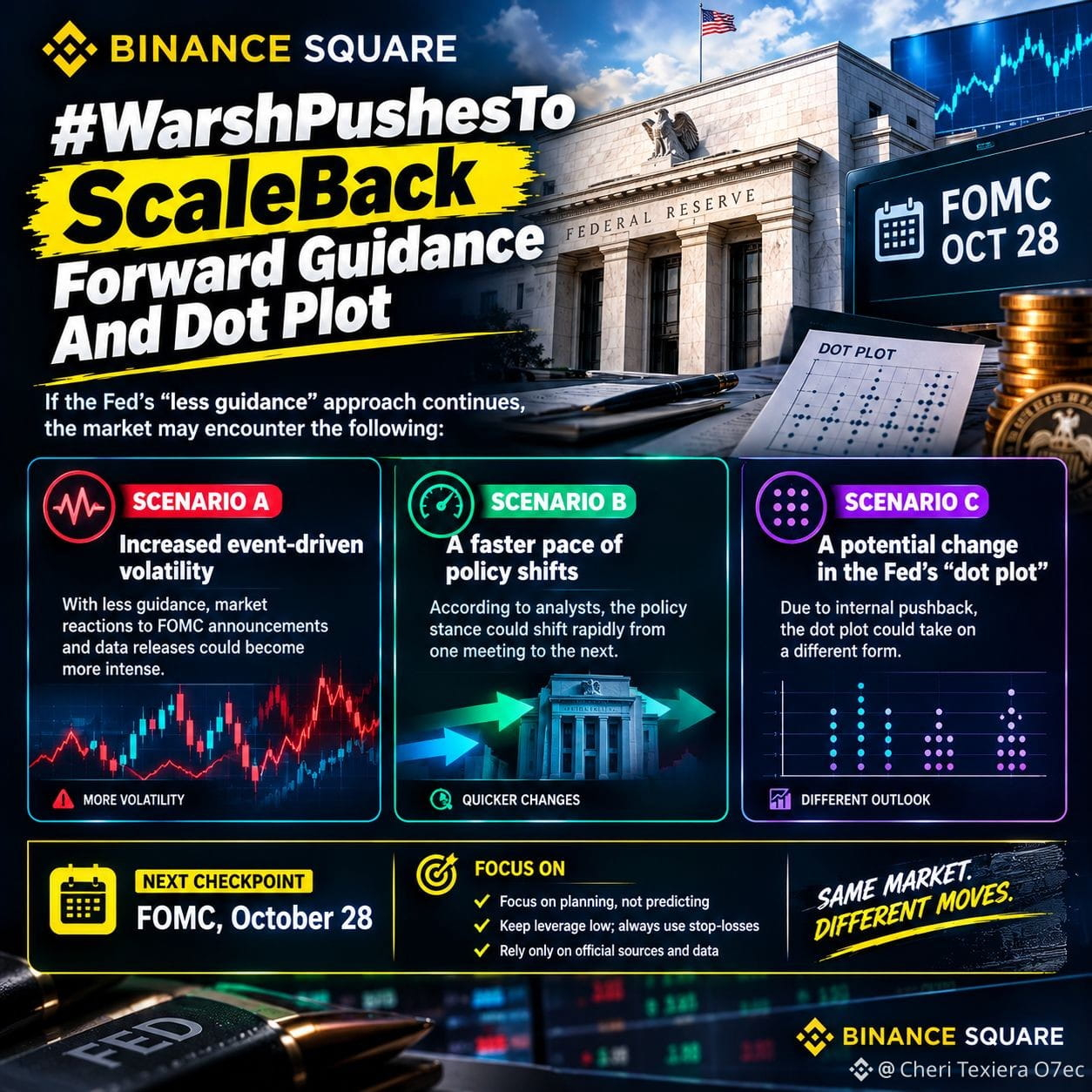
Discussion of the #1 trending topic, #WarshPushesToScaleBackForwardGuidanceAndDotPlot , surged to nearly 500 overnight—the topic was the same, but the details were new. During the Powell era, the Fed was one of the most outspoken institutions in the market. Since Warsh took over, he has shifted it into “need-to-know” mode: the first policy statement was only about 130 words, compared with the usual 300-plus under his predecessor. UBS estimates that just 5% of Warsh’s first press conference was directly related to monetary policy, versus 27% under his predecessor. Some on Wall Street have even created WarshGPT, specifically to analyze his scarce public remarks.
But a quiet chairman doesn’t mean a quiet Fed. According to Reuters, since the rate hike in September, other officials have made more than 40 public appearances—speeches, interviews, and comments—repeatedly cooling expectations for further hikes. After September’s CPI came in at 3.7% year over year, traders were once again pricing in a coin toss on whether rates would rise in October.
That’s the Warsh paradox: the less guidance there is, the more weight every remaining word carries. With the microphones collectively muted, the market scrutinizes every public appearance by an official, and repricing day by day has become the norm. The bigger uncertainty lies ahead: Warsh may even scrap the quarterly projections for the path of interest rates—the dot plot. If that happens, the market won’t even get “a decent new forecast”; instead, it will face a much wider range of possibilities, pushing hedging costs and term premiums even higher.
$BTC has been hovering around $80,000 these past couple of days. Put simply, it’s waiting for this coin to land ahead of the October 27–28 FOMC meeting. In the guidance vacuum era, data days are volatility days.
#WarshPushesToScaleBackForwardGuidanceAndDotPlot
#美联储 #RateHike
The above does not constitute investment advice. DYOR; trading involves risk.
29

#WarshPushesToScaleBackForwardGuidanceAndDotPlot
🚨 THE FED’S “QUIET POLICY” — WILL CRYPTO FACE BIGGER SURPRISES? 🇺🇸📊
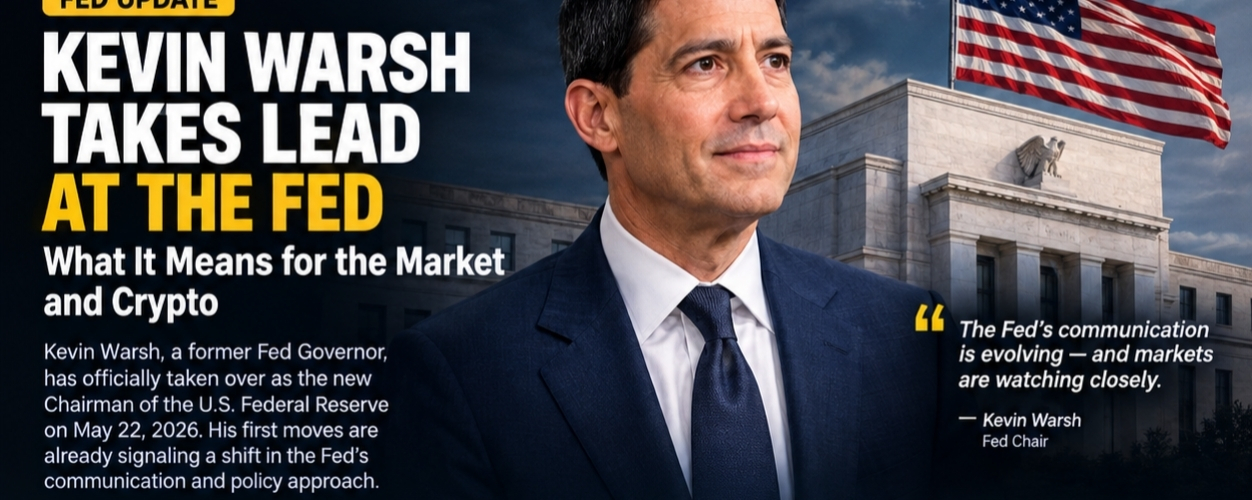
Fed Chair Kevin Warsh’s push to reduce forward guidance and potentially drop the dot plot has sparked debate among market watchers.
🔹 Less guidance could mean more uncertainty around future rate decisions.
🔹 The dot plot gives investors a snapshot of policymakers’ rate expectations, but it is not a promise.
🔹 Without clear signals, markets may react more sharply to CPI, jobs data, and other economic releases.
⚠️ WHY CRYPTO TRADERS SHOULD CARE
📉 Hot inflation and rising yields could pressure $BTC , $ETH , and $BNB .
📈 Cooler inflation and falling yields could improve sentiment toward risk assets.
🎯 My take: The key question is whether less guidance improves policy flexibility or leaves markets more vulnerable to sudden repricing. Watch the data, yields, and dollar reaction rather than relying on assumptions.
💬 YOUR VOTE: Should the Fed keep the dot plot?
🟢 YES — More transparency
🔴 NO — More policy flexibility
#bitcoin #BTC #Ethereum #BNB #FederalReserve #CryptoMarket #BinanceSquare
139

Article
🚨 FED POLICY SHIFT: KEVIN WARSH’S APPROACH PUTS CRYPTO MARKETS ON ALERT
U.s🚨 FED POLICY SHIFT: KEVIN WARSH’S APPROACH PUTS CRYPTO MARKETS ON ALERT
U.S. Inflation, Interest Rates and Bitcoin Volatility in Focus
📅 October 16, 2026
The U.S. Federal Reserve is facing renewed debate over interest-rate policy and central bank communication under Chair Kevin Warsh. His preference for less forward guidance is drawing criticism from policymakers who believe clear communication helps maintain market stability.
🏦 KEY DEVELOPMENTS
1️⃣ Fed Chair Kevin Warsh Changes the Communication Approach
Kevin Warsh took office as Federal Reserve Chair on May 22, 2026. He has advocated a less predictable, more data-dependent approach to monetary policy communication.
2️⃣ September Rate Hike Raises the Stakes
On September 16, the Federal Reserve raised its benchmark interest-rate target by 0.25 percentage points to 3.75%–4.00%, citing elevated inflation.
3️⃣ Inflation Remains a Major Concern
U.S. consumer inflation reached 3.7% year over year in September, up from 3.4% in August. Persistent inflation could limit the Fed’s ability to ease monetary policy quickly.
4️⃣ October Rate Decision Remains Uncertain
Market expectations shifted on October 15 as Fed officials’ comments reduced expectations of an immediate rate hike. The October 27–28 FOMC meeting remains a key event for investors.
₿ WHAT DOES THIS MEAN FOR CRYPTO?
🔸 Higher-for-longer rates: Could weigh on risk assets, including Bitcoin and altcoins.
🔸 A softer Fed stance: Could improve risk appetite if investors anticipate easier financial conditions.
🔸 Uncertainty and volatility: Conflicting signals may trigger sharp price movements and liquidations in leveraged futures markets.
🔸 Data matters more than headlines: Inflation, employment, Treasury yields, the U.S. dollar and Bitcoin’s own price action will help shape the market reaction.
📊 THE BIG PICTURE
The current environment is not a guaranteed bullish or bearish signal for Bitcoin. A rate hike does not automatically mean BTC will fall, and a rate pause does not guarantee a rally. Market expectations and liquidity conditions matter.
My takeaway: Watch the Fed’s October decision, incoming economic data, BTC support and resistance, Open Interest, Funding Rates and liquidation levels before taking a trading position.
⚠️ Risk Reminder: Avoid excessive leverage and always manage downside risk. This post is for informational purposes only and is not financial advice.
#bitcoin #WarshPushesToScaleBackForwardGuidanceAndDotPlot #BTC #CryptoNews #FederalReserve #KevinWarsh #FOMC #Inflation #BinanceSquare #CryptoMarket
🚨 FED POLICY SHIFT: KEVIN WARSH’S APPROACH PUTS CRYPTO MARKETS ON ALERT U.s
🚨 FED POLICY SHIFT: KEVIN WARSH’S APPROACH PUTS CRYPTO MARKETS ON ALERT
U.S. Inflation, Interest Rates and Bitcoin Volatility in Focus
📅 October 16, 2026
The U.S. Federal Reserve is facing renewed debate over interest-rate policy and central bank communication under Chair Kevin Warsh. His preference for less forward guidance is drawing criticism from policymakers who believe clear communication helps maintain market stability.
🏦 KEY DEVELOPMENTS
1️⃣ Fed Chair Kevin Warsh Changes the Communication Approach
Kevin Warsh took office as Federal Reserve Chair on May 22, 2026. He has advocated a less predictable, more data-dependent approach to monetary policy communication.
2️⃣ September Rate Hike Raises the Stakes
On September 16, the Federal Reserve raised its benchmark interest-rate target by 0.25 percentage points to 3.75%–4.00%, citing elevated inflation.
3️⃣ Inflation Remains a Major Concern
U.S. consumer inflation reached 3.7% year over year in September, up from 3.4% in August. Persistent inflation could limit the Fed’s ability to ease monetary policy quickly.
4️⃣ October Rate Decision Remains Uncertain
Market expectations shifted on October 15 as Fed officials’ comments reduced expectations of an immediate rate hike. The October 27–28 FOMC meeting remains a key event for investors.
₿ WHAT DOES THIS MEAN FOR CRYPTO?
🔸 Higher-for-longer rates: Could weigh on risk assets, including Bitcoin and altcoins.
🔸 A softer Fed stance: Could improve risk appetite if investors anticipate easier financial conditions.
🔸 Uncertainty and volatility: Conflicting signals may trigger sharp price movements and liquidations in leveraged futures markets.
🔸 Data matters more than headlines: Inflation, employment, Treasury yields, the U.S. dollar and Bitcoin’s own price action will help shape the market reaction.
📊 THE BIG PICTURE
The current environment is not a guaranteed bullish or bearish signal for Bitcoin. A rate hike does not automatically mean BTC will fall, and a rate pause does not guarantee a rally. Market expectations and liquidity conditions matter.
My takeaway: Watch the Fed’s October decision, incoming economic data, BTC support and resistance, Open Interest, Funding Rates and liquidation levels before taking a trading position.
⚠️ Risk Reminder: Avoid excessive leverage and always manage downside risk. This post is for informational purposes only and is not financial advice.
#bitcoin #WarshPushesToScaleBackForwardGuidanceAndDotPlot #BTC #CryptoNews #FederalReserve #KevinWarsh #FOMC #Inflation #BinanceSquare #CryptoMarket
139

·
--
Bearish
#warshpushestoscalebackforwardguidanceanddotplot
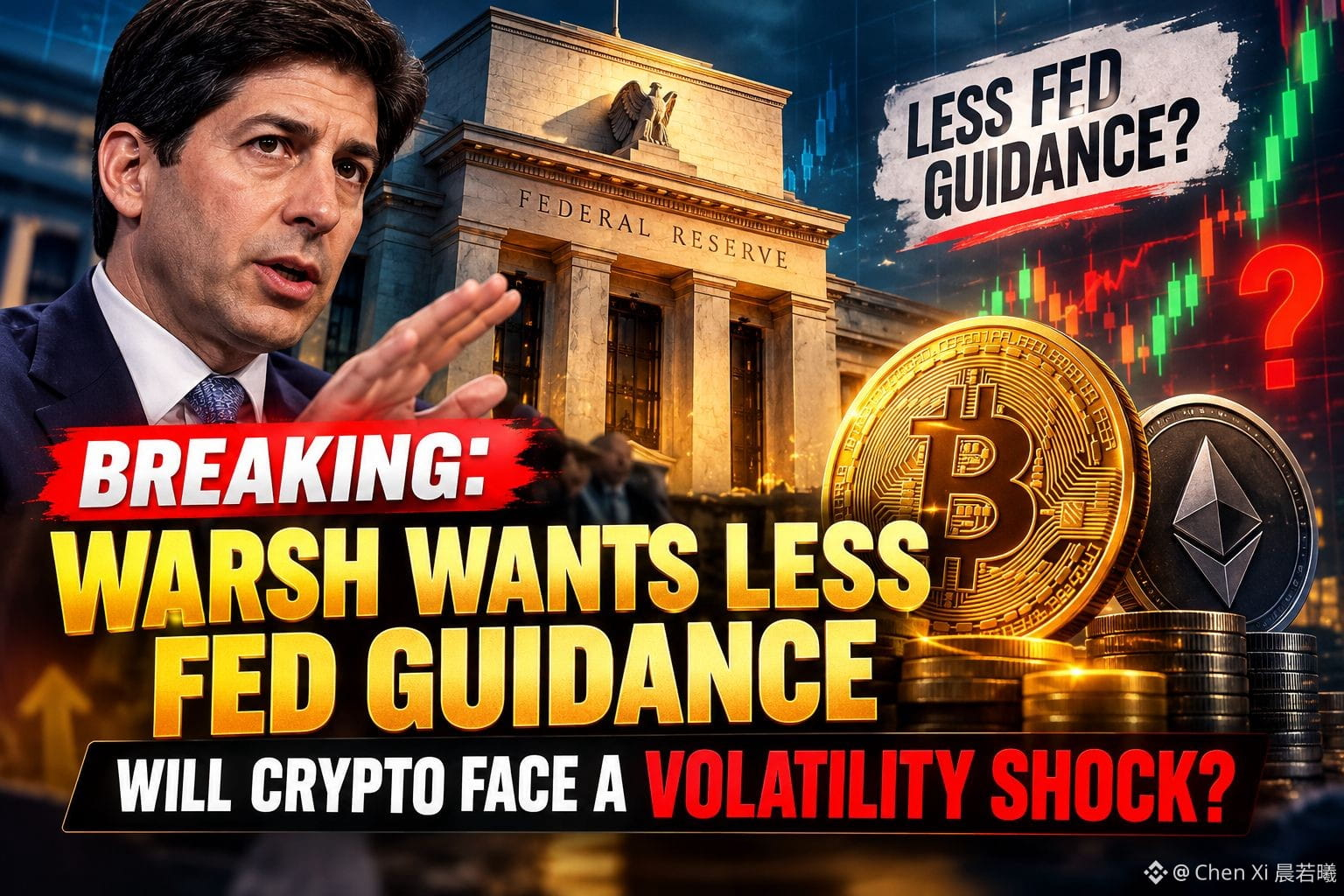
🚨 BREAKING: WARSH WANTS LESS FED GUIDANCE — WILL CRYPTO FACE A VOLATILITY SHOCK?
Federal Reserve Chair Kevin Warsh’s push to reduce forward guidance and move away from traditional interest-rate projections is putting the spotlight on one key question: How will markets react when the Fed reveals less about its next move?
With US inflation rising to 3.7% year over year in September, uncertainty around the Fed’s October decision is increasing. Traders are watching closely for fresh signals that could influence Bitcoin and the broader crypto market.
📊 WHAT CRYPTO TRADERS SHOULD WATCH
🔹 BTC & ETH: Watch price action around key support and resistance zones.
🔹 Fed Rate Expectations: A more hawkish outlook could pressure risk assets, while a dovish shift could improve sentiment.
🔹 Volatility & Liquidity: Unexpected policy signals may trigger sharp moves and liquidations in leveraged positions.
🎯 TRADING STRATEGY: Don’t chase the headline. Wait for confirmation, monitor volume, and plan both bullish and bearish scenarios. A breakout with strong volume or a rejection at resistance may offer a clearer setup than guessing the Fed’s next move.
The real opportunity isn’t predicting the news — it’s managing risk when the market reacts.
What’s your BTC outlook: BULLISH 📈 or BEARISH 📉?
#Bitcoin #CryptoTrading #FederalReserve #BinanceSquare
$KORU $SNXX $RAM
{future}(RAMUSDT)
{future}(SNXXUSDT)
{future}(KORUUSDT)
#warshpushestoscalebackforwardguidanceanddotplot
🚨 BREAKING: WARSH WANTS LESS FED GUIDANCE — WILL CRYPTO FACE A VOLATILITY SHOCK?
Federal Reserve Chair Kevin Warsh’s push to reduce forward guidance and move away from traditional interest-rate projections is putting the spotlight on one key question: How will markets react when the Fed reveals less about its next move?
With US inflation rising to 3.7% year over year in September, uncertainty around the Fed’s October decision is increasing. Traders are watching closely for fresh signals that could influence Bitcoin and the broader crypto market.
📊 WHAT CRYPTO TRADERS SHOULD WATCH
🔹 BTC & ETH: Watch price action around key support and resistance zones.
🔹 Fed Rate Expectations: A more hawkish outlook could pressure risk assets, while a dovish shift could improve sentiment.
🔹 Volatility & Liquidity: Unexpected policy signals may trigger sharp moves and liquidations in leveraged positions.
🎯 TRADING STRATEGY: Don’t chase the headline. Wait for confirmation, monitor volume, and plan both bullish and bearish scenarios. A breakout with strong volume or a rejection at resistance may offer a clearer setup than guessing the Fed’s next move.
The real opportunity isn’t predicting the news — it’s managing risk when the market reacts.
What’s your BTC outlook: BULLISH 📈 or BEARISH 📉?
#Bitcoin #CryptoTrading #FederalReserve #BinanceSquare
$KORU $SNXX $RAM
178

·
--
The Fed’s New Playbook, Hot Inflation and Mastercard’s Crypto Push: What It Means for Bitcoin and EtGlobal markets are facing three important forces: a changing Federal Reserve communication strategy, rising U.S. producer inflation, and the expansion of crypto-related payment infrastructure. Each affects markets differently, but together they create a complicated environment for investors.
The key question is whether tighter financial conditions will outweigh the long-term benefits of crypto adoption.
1. Why the Fed’s Communication Strategy Matters
Federal Reserve Chair Kevin Warsh has advocated reducing reliance on forward guidance and the dot plot. Forward guidance communicates policymakers’ views on the likely direction of monetary policy, while the dot plot presents individual Federal Open Market Committee participants’ interest-rate projections.
Neither tool guarantees future policy decisions. Economic conditions can change, forcing policymakers to adjust their outlook.
The historical context matters. After the 2008 financial crisis, central banks increasingly used communication to influence market expectations, especially when conventional interest-rate cuts became less effective. The Fed introduced its dot plot in 2012.
Reducing forward guidance could give policymakers more flexibility, but it may also leave investors with fewer clues about future rate decisions.
For financial markets, the result could be greater sensitivity to inflation reports, employment data and Treasury yields. If investors cannot confidently anticipate the Fed’s next move, sudden repricing becomes more likely.
For Bitcoin and Ethereum, this matters because both assets can respond sharply to changes in liquidity expectations and investor risk appetite.
2. Hot U.S. Inflation Could Complicate the Fed’s Decisions
The reported September 2026 U.S. Producer Price Index showed annual inflation of 6.3%, while monthly producer prices increased 1.3%.
Producer inflation measures price changes received by domestic producers. It does not directly measure the cost of living, but persistent increases can signal rising costs for businesses.
The geopolitical connection is important.
Conflicts, sanctions and disruptions to energy shipments can increase oil prices, transport expenses and insurance costs. Businesses may eventually pass some of these expenses to consumers.
If inflation remains elevated, the Fed may have less room to cut interest rates. Higher rates can make bonds and cash more attractive relative to riskier assets.
This creates a potential challenge for crypto markets.
Bitcoin is sometimes described as an inflation hedge because its supply is limited. However, its short-term behavior has often reflected liquidity conditions and investor risk appetite rather than inflation alone.
If inflation rises alongside higher Treasury yields and a stronger dollar, Bitcoin and Ethereum could face selling pressure. If inflation cools and financial conditions ease, the same assets may benefit from renewed risk-taking.
The critical variable is how inflation changes expectations for monetary policy.
3. Geopolitics, the Dollar and Institutional Capital Flows
The U.S. dollar remains central to global trade, commodity markets and international borrowing. Consequently, changes in U.S. monetary policy can influence capital flows well beyond American markets.
When Treasury yields rise, global investors may shift money toward dollar-denominated assets. Companies and governments with dollar debt can also face higher financing costs.
Geopolitical tensions can intensify these movements by disrupting energy supplies, trade routes and financial relationships.
For crypto investors, the transmission mechanism is relatively straightforward:
Geopolitical tensions can raise energy costs. Higher costs can sustain inflation. Persistent inflation can delay rate cuts. Higher yields and a stronger dollar can tighten financial conditions. Tighter conditions can reduce speculative demand for crypto.
However, the opposite mechanism can operate over a longer period. Concerns about currency instability, capital restrictions or dependence on traditional financial intermediaries may encourage interest in alternative payment and settlement systems.
These outcomes are not contradictory. Short-term liquidity pressures can hurt crypto prices even while long-term demand for blockchain infrastructure increases.
4. Mastercard’s Crypto Expansion: Adoption Does Not Guarantee Higher Prices
Mastercard’s expansion into stablecoin infrastructure highlights the growing connection between traditional finance and blockchain-based payments.
Its Global Money Platform, developed with BVNK, is designed to support services such as multi-currency accounts, stablecoin-linked cards, conversion and payouts.
This is important because established payment networks can help make digital-asset transactions more accessible to businesses and consumers.
However, payment-network reach should not be confused with the number of active crypto users. A large global network does not mean every customer can immediately access every crypto service.
The investment implications depend on actual usage.
First, payment integrations can reduce friction for cross-border transfers and business payments.
Second, stablecoins may become more useful for settlement and remittances.
Third, infrastructure providers may generate revenue from conversion, payment processing and related services.
But greater stablecoin usage does not automatically create demand for Bitcoin or Ethereum. A transaction can use a dollar-pegged stablecoin without requiring the user to purchase BTC.
Ethereum may benefit if increased payment activity translates into meaningful network usage and economic value for ETH. The same principle applies to other blockchain networks.
Investors should therefore distinguish between a promising partnership and measurable economic demand.
5. What Could Happen to $BTC and ETH?
The interaction between monetary policy and crypto adoption creates several possible outcomes.
Scenario One: Inflation remains elevated.
If producer inflation continues to pressure the Fed, markets may price in higher interest rates for longer. Rising yields and dollar strength could weigh on Bitcoin and Ethereum, particularly if leveraged positions begin to unwind.
Scenario Two: Inflation cools.
If price pressures ease and the Fed becomes more comfortable with monetary easing, liquidity expectations could improve. This may support risk assets, although market positioning and economic growth will still matter.
Scenario Three: Crypto adoption expands without stronger token demand.
Mastercard-related payment activity could increase while Bitcoin and Ethereum prices remain under pressure. Infrastructure growth and token valuations do not always move together.
Scenario Four: Adoption expands as financial conditions improve.
This combination could offer a more supportive environment for crypto. Better liquidity may encourage investment, while real payment activity could strengthen the long-term case for selected blockchain networks.
None of these scenarios is guaranteed. Investors must assess incoming data rather than assume that one headline determines the market’s direction.
6. A Practical Framework for Investors
For short-term traders, inflation data, Treasury yields, dollar movements and the market’s reaction to Federal Reserve statements deserve close attention.
A hot inflation report does not automatically justify a short position. If the market has already priced in the news, prices may recover. Likewise, a dovish policy signal does not guarantee a rally if investors are worried about economic weakness.
Avoid excessive leverage during major economic releases. Sudden price movements can trigger liquidations even when the broader investment thesis remains valid.
For longer-term investors, the focus should be different.
Bitcoin investors should evaluate liquidity conditions, institutional demand, market structure and portfolio risk.
Ethereum investors should monitor network activity, transaction economics and whether increased adoption creates sustainable demand for $ETH.
Investors in Bangladesh should also consider BDT/$USDC exchange-rate movements, transaction costs and applicable local regulations. Dollar-denominated gains do not always translate into equivalent returns in taka.
7. What Investors Should Watch Next
Three developments deserve attention.
First, the Federal Reserve’s upcoming policy decisions will help clarify how policymakers respond to persistent inflation and whether reduced forward guidance changes market expectations.
Second, upcoming inflation and employment reports will indicate whether price pressure is spreading through the economy or beginning to ease.
Third, Mastercard’s real payment volumes, stablecoin activity and the economics of supported blockchain networks will provide better evidence of adoption than headline announcements alone.
The distinction between confirmed developments and expectations is essential. A proposal is not an implemented policy. A partnership is not proof of mass adoption. A bullish narrative is not a trading signal.
Final Takeaway
The Fed’s changing communication strategy could make markets more sensitive to economic data, particularly while inflation remains elevated. That creates near-term uncertainty for Bitcoin and Ethereum if higher yields and a stronger dollar tighten financial conditions.
Mastercard’s crypto expansion presents a different opportunity: the gradual integration of blockchain-based payments into established financial infrastructure. Its long-term significance will depend on actual adoption, transaction volumes and the value captured by individual networks and assets.
The practical approach is to separate the macroeconomic trade from the long-term adoption thesis. Monitor inflation, Treasury yields and dollar liquidity for short-term decisions. Track real network usage and token economics for long-term investment analysis.
Do not confuse institutional adoption with guaranteed price appreciation. Manage risk, avoid emotional trading and make decisions based on evidence rather than headlines.
This article is for educational purposes only and is not financial advice. DYOR. NFA.
{spot}(BTCUSDT)
{spot}(USDCUSDT)
{spot}(ETHUSDT)
#WarshPushesToScaleBackForwardGuidanceAndDotPlot #BTC #ETH #USDC #Binance
The Fed’s New Playbook, Hot Inflation and Mastercard’s Crypto Push: What It Means for Bitcoin and Et
Global markets are facing three important forces: a changing Federal Reserve communication strategy, rising U.S. producer inflation, and the expansion of crypto-related payment infrastructure. Each affects markets differently, but together they create a complicated environment for investors.
The key question is whether tighter financial conditions will outweigh the long-term benefits of crypto adoption.
1. Why the Fed’s Communication Strategy Matters
Federal Reserve Chair Kevin Warsh has advocated reducing reliance on forward guidance and the dot plot. Forward guidance communicates policymakers’ views on the likely direction of monetary policy, while the dot plot presents individual Federal Open Market Committee participants’ interest-rate projections.
Neither tool guarantees future policy decisions. Economic conditions can change, forcing policymakers to adjust their outlook.
The historical context matters. After the 2008 financial crisis, central banks increasingly used communication to influence market expectations, especially when conventional interest-rate cuts became less effective. The Fed introduced its dot plot in 2012.
Reducing forward guidance could give policymakers more flexibility, but it may also leave investors with fewer clues about future rate decisions.
For financial markets, the result could be greater sensitivity to inflation reports, employment data and Treasury yields. If investors cannot confidently anticipate the Fed’s next move, sudden repricing becomes more likely.
For Bitcoin and Ethereum, this matters because both assets can respond sharply to changes in liquidity expectations and investor risk appetite.
2. Hot U.S. Inflation Could Complicate the Fed’s Decisions
The reported September 2026 U.S. Producer Price Index showed annual inflation of 6.3%, while monthly producer prices increased 1.3%.
Producer inflation measures price changes received by domestic producers. It does not directly measure the cost of living, but persistent increases can signal rising costs for businesses.
The geopolitical connection is important.
Conflicts, sanctions and disruptions to energy shipments can increase oil prices, transport expenses and insurance costs. Businesses may eventually pass some of these expenses to consumers.
If inflation remains elevated, the Fed may have less room to cut interest rates. Higher rates can make bonds and cash more attractive relative to riskier assets.
This creates a potential challenge for crypto markets.
Bitcoin is sometimes described as an inflation hedge because its supply is limited. However, its short-term behavior has often reflected liquidity conditions and investor risk appetite rather than inflation alone.
If inflation rises alongside higher Treasury yields and a stronger dollar, Bitcoin and Ethereum could face selling pressure. If inflation cools and financial conditions ease, the same assets may benefit from renewed risk-taking.
The critical variable is how inflation changes expectations for monetary policy.
3. Geopolitics, the Dollar and Institutional Capital Flows
The U.S. dollar remains central to global trade, commodity markets and international borrowing. Consequently, changes in U.S. monetary policy can influence capital flows well beyond American markets.
When Treasury yields rise, global investors may shift money toward dollar-denominated assets. Companies and governments with dollar debt can also face higher financing costs.
Geopolitical tensions can intensify these movements by disrupting energy supplies, trade routes and financial relationships.
For crypto investors, the transmission mechanism is relatively straightforward:
Geopolitical tensions can raise energy costs. Higher costs can sustain inflation. Persistent inflation can delay rate cuts. Higher yields and a stronger dollar can tighten financial conditions. Tighter conditions can reduce speculative demand for crypto.
However, the opposite mechanism can operate over a longer period. Concerns about currency instability, capital restrictions or dependence on traditional financial intermediaries may encourage interest in alternative payment and settlement systems.
These outcomes are not contradictory. Short-term liquidity pressures can hurt crypto prices even while long-term demand for blockchain infrastructure increases.
4. Mastercard’s Crypto Expansion: Adoption Does Not Guarantee Higher Prices
Mastercard’s expansion into stablecoin infrastructure highlights the growing connection between traditional finance and blockchain-based payments.
Its Global Money Platform, developed with BVNK, is designed to support services such as multi-currency accounts, stablecoin-linked cards, conversion and payouts.
This is important because established payment networks can help make digital-asset transactions more accessible to businesses and consumers.
However, payment-network reach should not be confused with the number of active crypto users. A large global network does not mean every customer can immediately access every crypto service.
The investment implications depend on actual usage.
First, payment integrations can reduce friction for cross-border transfers and business payments.
Second, stablecoins may become more useful for settlement and remittances.
Third, infrastructure providers may generate revenue from conversion, payment processing and related services.
But greater stablecoin usage does not automatically create demand for Bitcoin or Ethereum. A transaction can use a dollar-pegged stablecoin without requiring the user to purchase BTC.
Ethereum may benefit if increased payment activity translates into meaningful network usage and economic value for ETH. The same principle applies to other blockchain networks.
Investors should therefore distinguish between a promising partnership and measurable economic demand.
5. What Could Happen to $BTC and ETH?
The interaction between monetary policy and crypto adoption creates several possible outcomes.
Scenario One: Inflation remains elevated.
If producer inflation continues to pressure the Fed, markets may price in higher interest rates for longer. Rising yields and dollar strength could weigh on Bitcoin and Ethereum, particularly if leveraged positions begin to unwind.
Scenario Two: Inflation cools.
If price pressures ease and the Fed becomes more comfortable with monetary easing, liquidity expectations could improve. This may support risk assets, although market positioning and economic growth will still matter.
Scenario Three: Crypto adoption expands without stronger token demand.
Mastercard-related payment activity could increase while Bitcoin and Ethereum prices remain under pressure. Infrastructure growth and token valuations do not always move together.
Scenario Four: Adoption expands as financial conditions improve.
This combination could offer a more supportive environment for crypto. Better liquidity may encourage investment, while real payment activity could strengthen the long-term case for selected blockchain networks.
None of these scenarios is guaranteed. Investors must assess incoming data rather than assume that one headline determines the market’s direction.
6. A Practical Framework for Investors
For short-term traders, inflation data, Treasury yields, dollar movements and the market’s reaction to Federal Reserve statements deserve close attention.
A hot inflation report does not automatically justify a short position. If the market has already priced in the news, prices may recover. Likewise, a dovish policy signal does not guarantee a rally if investors are worried about economic weakness.
Avoid excessive leverage during major economic releases. Sudden price movements can trigger liquidations even when the broader investment thesis remains valid.
For longer-term investors, the focus should be different.
Bitcoin investors should evaluate liquidity conditions, institutional demand, market structure and portfolio risk.
Ethereum investors should monitor network activity, transaction economics and whether increased adoption creates sustainable demand for $ETH.
Investors in Bangladesh should also consider BDT/$USDC exchange-rate movements, transaction costs and applicable local regulations. Dollar-denominated gains do not always translate into equivalent returns in taka.
7. What Investors Should Watch Next
Three developments deserve attention.
First, the Federal Reserve’s upcoming policy decisions will help clarify how policymakers respond to persistent inflation and whether reduced forward guidance changes market expectations.
Second, upcoming inflation and employment reports will indicate whether price pressure is spreading through the economy or beginning to ease.
Third, Mastercard’s real payment volumes, stablecoin activity and the economics of supported blockchain networks will provide better evidence of adoption than headline announcements alone.
The distinction between confirmed developments and expectations is essential. A proposal is not an implemented policy. A partnership is not proof of mass adoption. A bullish narrative is not a trading signal.
Final Takeaway
The Fed’s changing communication strategy could make markets more sensitive to economic data, particularly while inflation remains elevated. That creates near-term uncertainty for Bitcoin and Ethereum if higher yields and a stronger dollar tighten financial conditions.
Mastercard’s crypto expansion presents a different opportunity: the gradual integration of blockchain-based payments into established financial infrastructure. Its long-term significance will depend on actual adoption, transaction volumes and the value captured by individual networks and assets.
The practical approach is to separate the macroeconomic trade from the long-term adoption thesis. Monitor inflation, Treasury yields and dollar liquidity for short-term decisions. Track real network usage and token economics for long-term investment analysis.
Do not confuse institutional adoption with guaranteed price appreciation. Manage risk, avoid emotional trading and make decisions based on evidence rather than headlines.
This article is for educational purposes only and is not financial advice. DYOR. NFA.
#WarshPushesToScaleBackForwardGuidanceAndDotPlot #BTC #ETH #USDC #Binance
1
430

·
--
#WarshPushesToScaleBackForwardGuidanceAndDotPlot
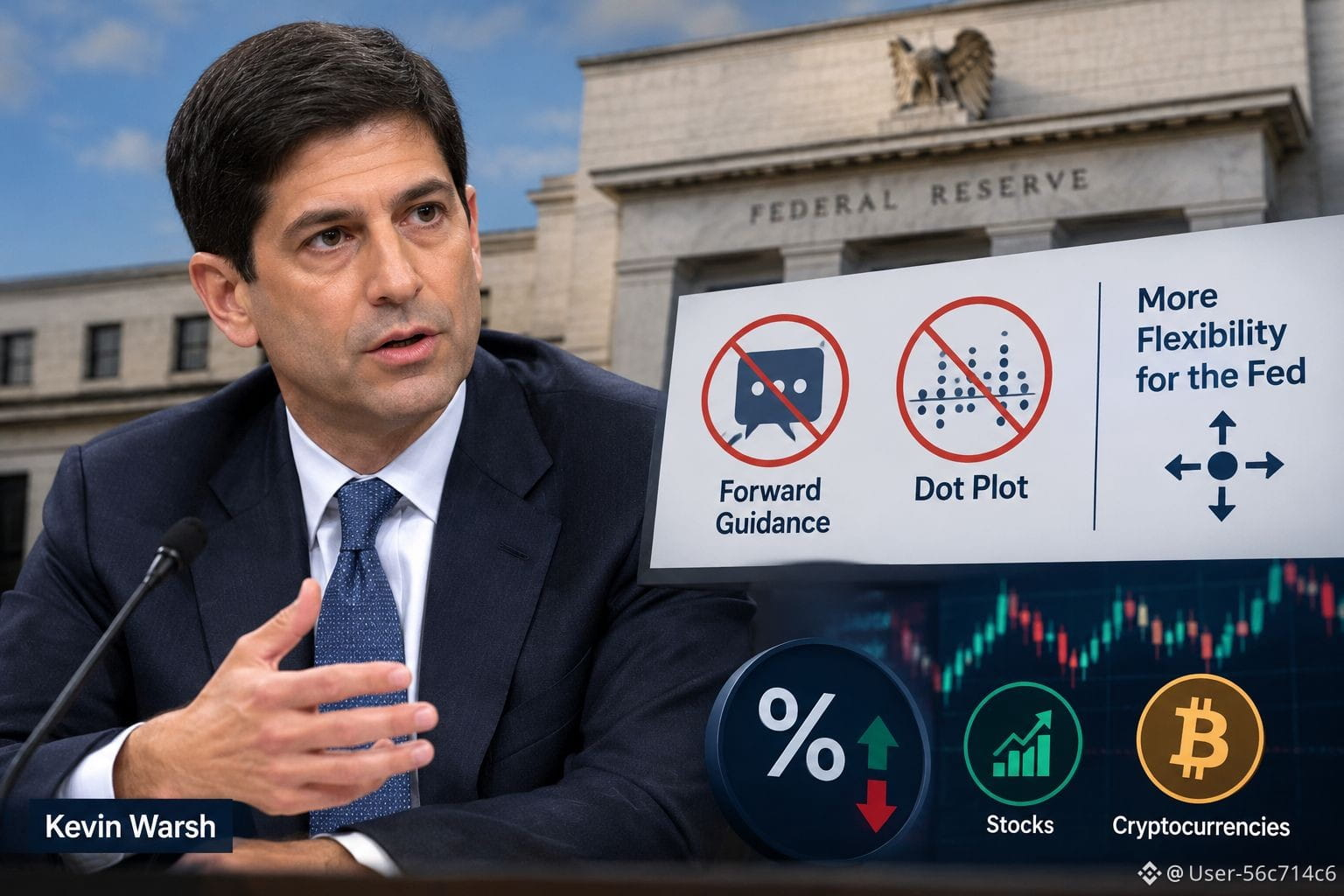
Kevin Warsh is pushing to reduce the Federal Reserve’s use of forward guidance and the dot plot. These tools help investors understand possible future interest rate decisions. Warsh believes the Fed should have more flexibility and avoid giving too many signals about its future plans. This approach could change how markets react to Fed announcements. Investors will watch closely to see how these changes affect interest rates, stocks, and cryptocurrencies. Clear communication remains important for market confidence and stability.
CHECK BELOW TO TRADE
$BTC $ETH $BNB
{future}(BTCUSDT)
{future}(ETHUSDT)
{future}(BNBUSDT)
#WarshPushesToScaleBackForwardGuidanceAndDotPlot
Kevin Warsh is pushing to reduce the Federal Reserve’s use of forward guidance and the dot plot. These tools help investors understand possible future interest rate decisions. Warsh believes the Fed should have more flexibility and avoid giving too many signals about its future plans. This approach could change how markets react to Fed announcements. Investors will watch closely to see how these changes affect interest rates, stocks, and cryptocurrencies. Clear communication remains important for market confidence and stability.
CHECK BELOW TO TRADE
$BTC $ETH $BNB
1
88

·
--
Article
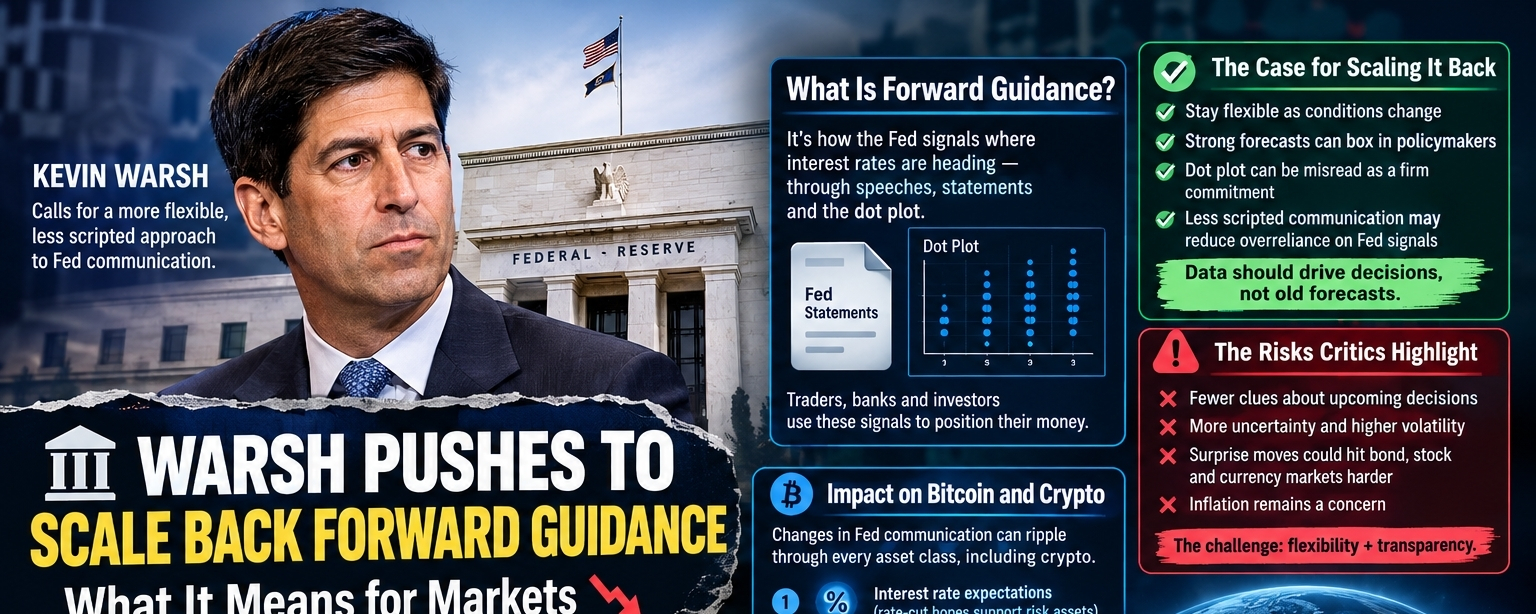
🏦 Warsh Pushes to Scale Back Forward Guidance: What It Means for Markets 📉#WarshPushesToScaleBackForwardGuidanceAndDotPlot
$AMZNB 🔥 The US Federal Reserve is facing a debate that could reshape how global markets read monetary policy. At its center is Kevin Warsh, who is associated with calls for a more flexible, less scripted approach to central bank communication. 🎙️
## 📢 What Is Forward Guidance?
Forward guidance is how the Fed signals where interest rates are heading. It includes speeches, statements, and the closely watched dot plot 📊, which shows policymakers' individual projections for future rates. Traders, banks, and investors worldwide use these signals to position their money.
## 🔄 The Case for Scaling It Back
Supporters of reducing forward guidance argue that:
- ✅ The Fed should stay flexible as economic conditions change
- ✅ Strong forecasts can box policymakers into promises they later regret
- ✅ The dot plot can be misread as a firm commitment when it is only a projection
- ✅ Less scripted communication may keep markets from becoming overly dependent on every Fed signal
In short, data should drive decisions, not forecasts made months earlier. 📈
## ⚠️ The Risks Critics Highlight
Critics warn that pulling back too far could backfire:
- ❌ Investors would have fewer clues about upcoming decisions
- ❌ Uncertainty could rise, leading to higher market volatility 🎢
- ❌ Surprise moves could hit bond, stock, and currency markets harder
- ❌ Inflation remains a concern, so clear communication matters more
The core challenge is balancing flexibility with transparency. ⚖️
## 💰 Impact on Bitcoin and Crypto
Changes in Fed communication can ripple through every asset class, including Bitcoin 🟠 and other cryptocurrencies. Here is how:
1. 📌 Interest rate expectations: Rate-cut hopes tend to support risk assets, while a hawkish tone pressures them.
2. 💵 The US dollar: A stronger dollar often weighs on crypto, and a weaker one can help it.
3. 📉 Bond yields: Rising yields can pull money out of speculative assets.
4. 🧠 Investor sentiment: Uncertainty can trigger sharp moves in both directions.
If the Fed communicates less, crypto traders may see bigger intraday swings around Fed meetings and data releases. ⚡ Risk management, such as stop-losses and sensible position sizing, becomes even more important. 🛡️
## 🔮 The Bottom Line
Whether the Fed keeps, trims, or drops forward guidance, one thing is clear: markets hate uncertainty. 😬 Smart traders should follow Fed speeches, watch inflation data closely, and avoid overleveraging in volatile windows. 🧐
The debate is far from settled, and every shift in tone could move billions across stocks, bonds, forex, and crypto. 🌍💥
This article is for informational purposes only and is not financial advice. Always do your own research. 📝
---
#FederalReserve #Bitcoin #SpotBitcoinETFsShed$261M #EtherTook60%OfCryptoLiquidations
🏦 Warsh Pushes to Scale Back Forward Guidance: What It Means for Markets 📉
#WarshPushesToScaleBackForwardGuidanceAndDotPlot
$AMZNB 🔥 The US Federal Reserve is facing a debate that could reshape how global markets read monetary policy. At its center is Kevin Warsh, who is associated with calls for a more flexible, less scripted approach to central bank communication. 🎙️
## 📢 What Is Forward Guidance?
Forward guidance is how the Fed signals where interest rates are heading. It includes speeches, statements, and the closely watched dot plot 📊, which shows policymakers' individual projections for future rates. Traders, banks, and investors worldwide use these signals to position their money.
## 🔄 The Case for Scaling It Back
Supporters of reducing forward guidance argue that:
- ✅ The Fed should stay flexible as economic conditions change
- ✅ Strong forecasts can box policymakers into promises they later regret
- ✅ The dot plot can be misread as a firm commitment when it is only a projection
- ✅ Less scripted communication may keep markets from becoming overly dependent on every Fed signal
In short, data should drive decisions, not forecasts made months earlier. 📈
## ⚠️ The Risks Critics Highlight
Critics warn that pulling back too far could backfire:
- ❌ Investors would have fewer clues about upcoming decisions
- ❌ Uncertainty could rise, leading to higher market volatility 🎢
- ❌ Surprise moves could hit bond, stock, and currency markets harder
- ❌ Inflation remains a concern, so clear communication matters more
The core challenge is balancing flexibility with transparency. ⚖️
## 💰 Impact on Bitcoin and Crypto
Changes in Fed communication can ripple through every asset class, including Bitcoin 🟠 and other cryptocurrencies. Here is how:
1. 📌 Interest rate expectations: Rate-cut hopes tend to support risk assets, while a hawkish tone pressures them.
2. 💵 The US dollar: A stronger dollar often weighs on crypto, and a weaker one can help it.
3. 📉 Bond yields: Rising yields can pull money out of speculative assets.
4. 🧠 Investor sentiment: Uncertainty can trigger sharp moves in both directions.
If the Fed communicates less, crypto traders may see bigger intraday swings around Fed meetings and data releases. ⚡ Risk management, such as stop-losses and sensible position sizing, becomes even more important. 🛡️
## 🔮 The Bottom Line
Whether the Fed keeps, trims, or drops forward guidance, one thing is clear: markets hate uncertainty. 😬 Smart traders should follow Fed speeches, watch inflation data closely, and avoid overleveraging in volatile windows. 🧐
The debate is far from settled, and every shift in tone could move billions across stocks, bonds, forex, and crypto. 🌍💥
This article is for informational purposes only and is not financial advice. Always do your own research. 📝
---
#FederalReserve #Bitcoin #SpotBitcoinETFsShed$261M #EtherTook60%OfCryptoLiquidations
1
134

·
--
Bullish
#WarshPushesToScaleBackForwardGuidanceAndDotPlot
🌎📊
💡 My unique thought: The Fed may be saying less about tomorrow, but that could make every economic data release more important today!
Kevin Warsh’s push for less forward guidance means traders may have fewer clues about the Fed’s future interest-rate decisions. Supporters see more flexibility for policymakers, while critics worry that less communication could create uncertainty and market volatility. <Cite refs={["turn667187news12","turn667187news21"]}/>
₿ What could this mean for crypto?
📈 Softer inflation and expectations of lower rates could support risk assets like Bitcoin.
📉 Persistent inflation and expectations of higher rates could pressure crypto and stocks.
⚡ Less predictable Fed communication could trigger sudden market moves in either direction.
😂 Funny market moment:
Fed before: “Here are our clues. Please analyze carefully.” 🤓
Fed now: “Watch the data!” 👀
Crypto traders: “I came to trade Bitcoin, not solve a Federal Reserve mystery!” 🕵️♂️🤣
🎯 My takeaway: Don’t trade based on headlines alone. Watch inflation data, Treasury yields, the US dollar, and market reaction. No Fed signal guarantees Bitcoin’s next move.
🔥 Question for the community: Is less Fed guidance good for financial markets, or does it make crypto trading more unpredictable?
#Bitcoin #BTC #CryptoMarket #FederalReserve #InterestRates #MarketVolatility
#CryptoCommunity
$BTC
{future}(BTCUSDT)
#WarshPushesToScaleBackForwardGuidanceAndDotPlot
🌎📊
💡 My unique thought: The Fed may be saying less about tomorrow, but that could make every economic data release more important today!
Kevin Warsh’s push for less forward guidance means traders may have fewer clues about the Fed’s future interest-rate decisions. Supporters see more flexibility for policymakers, while critics worry that less communication could create uncertainty and market volatility. <Cite refs={["turn667187news12","turn667187news21"]}/>
₿ What could this mean for crypto?
📈 Softer inflation and expectations of lower rates could support risk assets like Bitcoin.
📉 Persistent inflation and expectations of higher rates could pressure crypto and stocks.
⚡ Less predictable Fed communication could trigger sudden market moves in either direction.
😂 Funny market moment:
Fed before: “Here are our clues. Please analyze carefully.” 🤓
Fed now: “Watch the data!” 👀
Crypto traders: “I came to trade Bitcoin, not solve a Federal Reserve mystery!” 🕵️♂️🤣
🎯 My takeaway: Don’t trade based on headlines alone. Watch inflation data, Treasury yields, the US dollar, and market reaction. No Fed signal guarantees Bitcoin’s next move.
🔥 Question for the community: Is less Fed guidance good for financial markets, or does it make crypto trading more unpredictable?
#Bitcoin #BTC #CryptoMarket #FederalReserve #InterestRates #MarketVolatility
#CryptoCommunity
$BTC
55
Log in to explore more content
Join global crypto users on Binance Square
⚡️ Get latest and useful information about crypto.
💬 Trusted by the world’s largest crypto exchange.
👍 Discover real insights from verified creators.
Email / Phone number
Trending Topics
1
#NVIDIAReinstatesJensenHuangasCEO
673 views
171 Discussing
2
#WillMarketsStageAThanksgivingReliefRally?
93,293 views
1,408 Discussing
3
#WillOctCorePCEShiftFedHikeExpectations?
31,282 views
533 Discussing
4
#BitcoinEndsRecord17DayStreakOfLowerHighs
0 views
35 Discussing
5
#TradersPriceOut50bpDecemberFedHike
273 views
46 Discussing
6
#EvolveAtBinanceBlockchainWeek
83,210 views
809 Discussing
7
#BlackRockETHNetOutflowsReach$1.75BSinceOct1
262 views
9 Discussing
8
#TrumpBackedAmericanBitcoinRaisesHoldingsToOver8500BTC
503 views
22 Discussing
9
#MuskWarnsOfAICashCrunch
45,851 views
614 Discussing
10
#SkyPSMUSDCLiquidityReboundsTo$1.77B
353 views
9 Discussing