
#play2earn
play2earn
444,222 views
520 Discussing
Hot
Latest

·
--
#BinancePick Are Play-to-Earn games like Gemgala a real opportunity or just a waste of time? A realistic look
Recently, apps like Gemgala and Block Puzzle have become popular, promising users 10$ in rewards for playing. As a personal experiment, I tried one of these apps, which was linked to TimeBucks tasks.
In reality, the Play-to-Earn concept is based on two models: the first rewards users for their attention through ads, while the second uses tokens. But the main problems with most of these apps are:
1. Sustainability: The rewards come from advertising, so if the number of advertisers decreases, so do the rewards.
2. Verification: Most platforms now require KYC and face verification. This means sharing biometric data, which is a risk users should be aware of.
3. Acceptance rate: On platforms like TimeBucks, the acceptance rate for verification tasks is no more than 22%, meaning many people complete the task but don't receive the reward.
My neutral conclusion: These apps can be entertaining and offer a very small reward, but they are not a primary source of income. Before downloading any app that requires face verification, check its privacy policy and whether it's officially available on Google Play.
This content is for educational purposes only and is not investment advice.
#BinancePickA #Play2Earn #gemefi
#Binance

102

Web3 Gaming in 2026: the scams are gone—only strong projects remain?
A couple of years ago, 90% of Web3 games were simple “clickers” without proper mechanics. Today the trend is shifting: projects with full-fledged gameplay on Unreal Engine, a well-thought-out in-game economy, and support from major communities are entering the market.
What I pay attention to when choosing a Web3 game:
Economy and tokens: The token should have real use within the game—not just a button to “withdraw.”
Team events: A full Game Night, tournaments, and active Discord communities.
Balance and replayability: The game should be interesting on its own, even if you remove the financial component.
Farming and participation in early tests of such projects often offer a better risk/reward than trying to guess the movement of sh*tcoin on an exchange.
👇 Are you playing something from Web3, or do you think gaming in crypto is still raw? Share your top projects.
#web3gaming #BinanceSquare #Play2Earn #nft
132

·
--

Article
Pixels Game$Pixels world: How have pixel games turned free time into digital profits?
The world of digital games has undergone a radical transformation in recent years, as the traditional concept shifted from simply spending leisure time for entertainment to a "Play-to-Earn" model. At the forefront of this new generation of games, Pixels emerged as one of the most successful and widely adopted games in the Web3 environment.
Pixels Game
$Pixels world: How have pixel games turned free time into digital profits?
The world of digital games has undergone a radical transformation in recent years, as the traditional concept shifted from simply spending leisure time for entertainment to a "Play-to-Earn" model. At the forefront of this new generation of games, Pixels emerged as one of the most successful and widely adopted games in the Web3 environment.
The world of digital games has undergone a radical transformation in recent years, as the traditional concept shifted from simply spending leisure time for entertainment to a "Play-to-Earn" model. At the forefront of this new generation of games, Pixels emerged as one of the most successful and widely adopted games in the Web3 environment.
209

·
--
Bullish
Partly True
My penultimate post I was upset because people complained about me promoting a token that was already above 20k Mcap. I confess I thought it was crazy, but I understood the token in question from $Imagine and within 24 hours it reached 250k Mcap—so over 10x the value. Some people lost and wanted another chance, but honestly $SOL is very delicate to work with; there are countless scam cases every day. Because of that, I study the projects a lot before bringing them here. That’s how $PNUT brought gains below 1M and then jumped to 2B within 5 days—my biggest win to date.
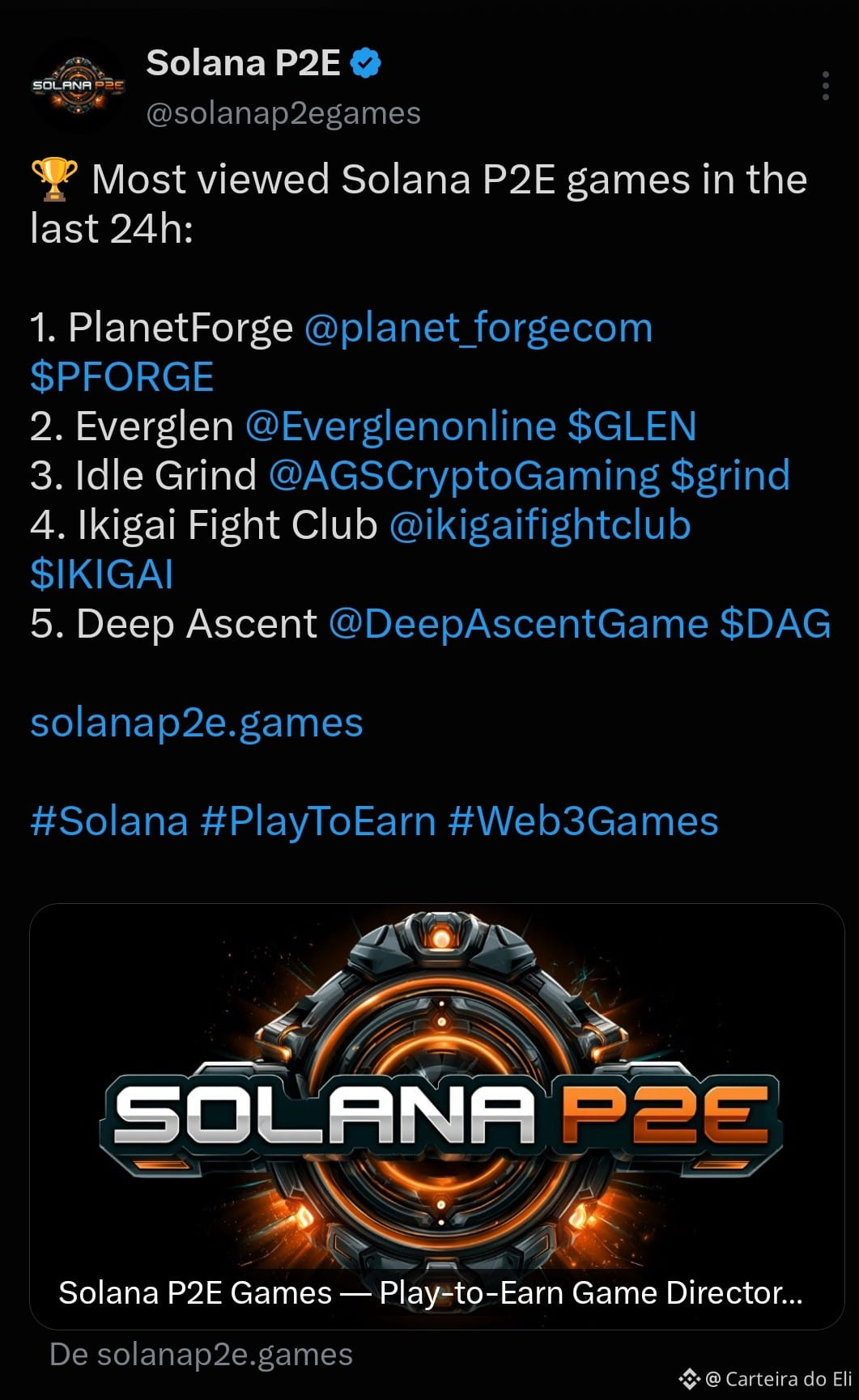
With all that said, this week I came across a literal gem for free with 5K Mcap. I studied it for 3 days before buying because I found it very strange. When I finally decided to buy it was already at 10K MCap—still cheap—but I missed out on 50% of what I would have made. The token $Pforge is a futuristic spaceship game with an economy revolving around the token. It reminded me of the beginning of $AXS on Axie Infinity, but much more organized and without the kind of devaluation, with creation and sales. Because of the contro token SP, the token value goes up: every time something is sold, it’s burned from the token—of the fees charged—and everything has a cost, so it’s going to rise one way or another. I recommend studying it well. Today they were top comments in Solana P2E 👀
#Solana #sol #defi #Play2Earn
Carteira do Eli
·
--
BullishWhat madness, I received some messages asking if there would be any correction to enter this project. GUYS, the token for this project is at 100k MCap. Do you want a token below and 10K? Do you understand the risk? I believe that's the reason many people are falling for scams...
Study and buy coherent projects with some security; don't keep wanting more and more advantages. Getting 10X the value of what you invested is already a lot.
Who bought on my first call made 3X their investment value, and they’re still holding. Do you know why?
$SOL is accumulating volume and $Imagine is building on a very solid base, waiting to explode, aiming for a possible 10000x—something we haven’t seen since $PEPE and $PNUT . So don’t be that greedy. Any one thousand reais you invest would make you a millionaire!
#sol #solana #sol板块 #meme板块关注热点 #bnb
1
2
3.4k

·
--
Bullish
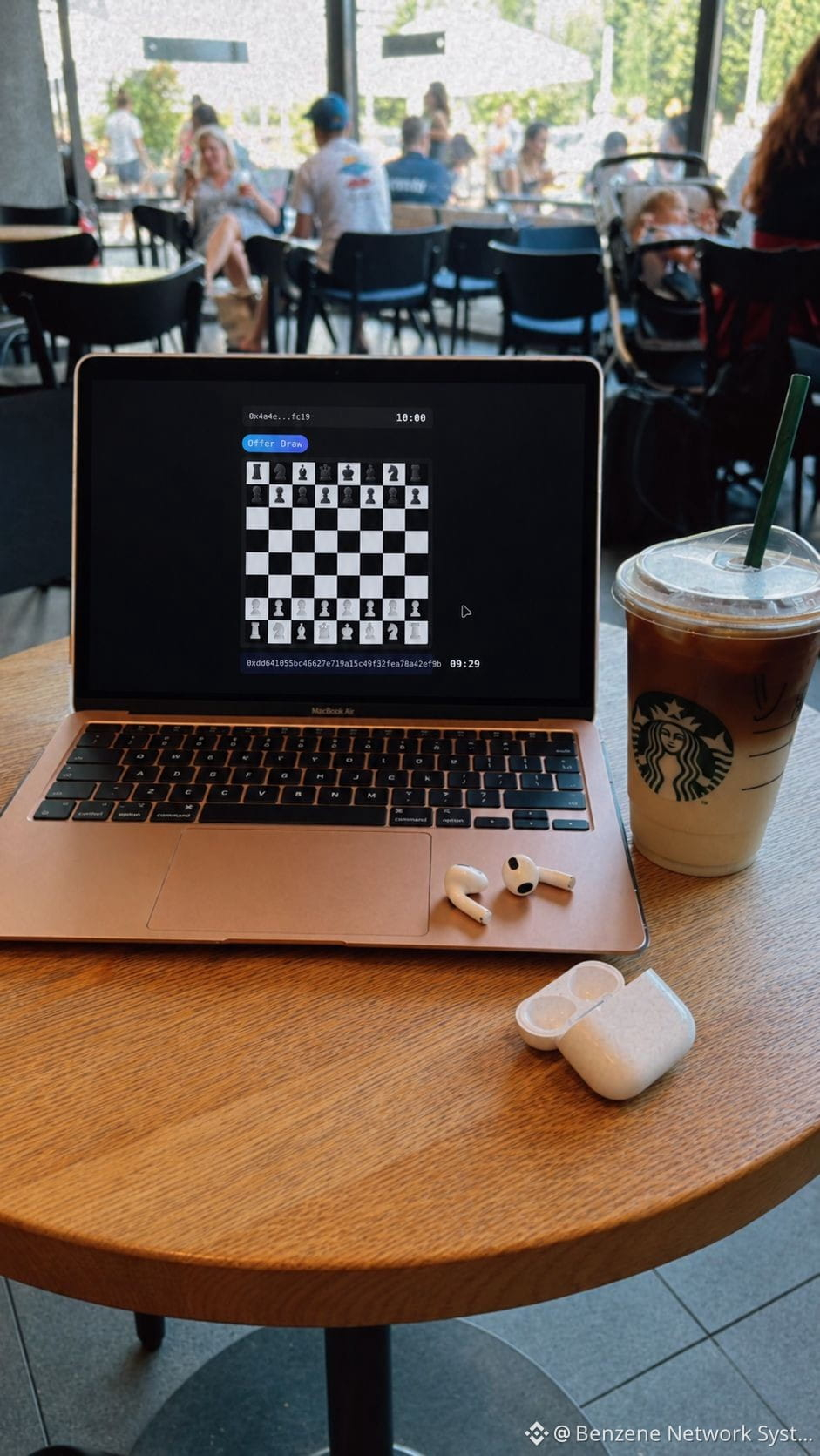
When you get tired of trading, come play CryptoChess. ♟️
You can still earn crypto while playing.
And by the way—BNS has a fixed total supply of only 21 million. 🔥
Play. Compete. Earn.
♟️ $BNS
cryptochess.benzenenetwork.com
#Web3 #Play2Earn
When you get tired of trading, come play CryptoChess. ♟️
You can still earn crypto while playing.
And by the way—BNS has a fixed total supply of only 21 million. 🔥
Play. Compete. Earn.
♟️ $BNS
cryptochess.benzenenetwork.com
#Web3 #Play2Earn
You can still earn crypto while playing.
And by the way—BNS has a fixed total supply of only 21 million. 🔥
Play. Compete. Earn.
♟️ $BNS
cryptochess.benzenenetwork.com
#Web3 #Play2Earn
105

·
--
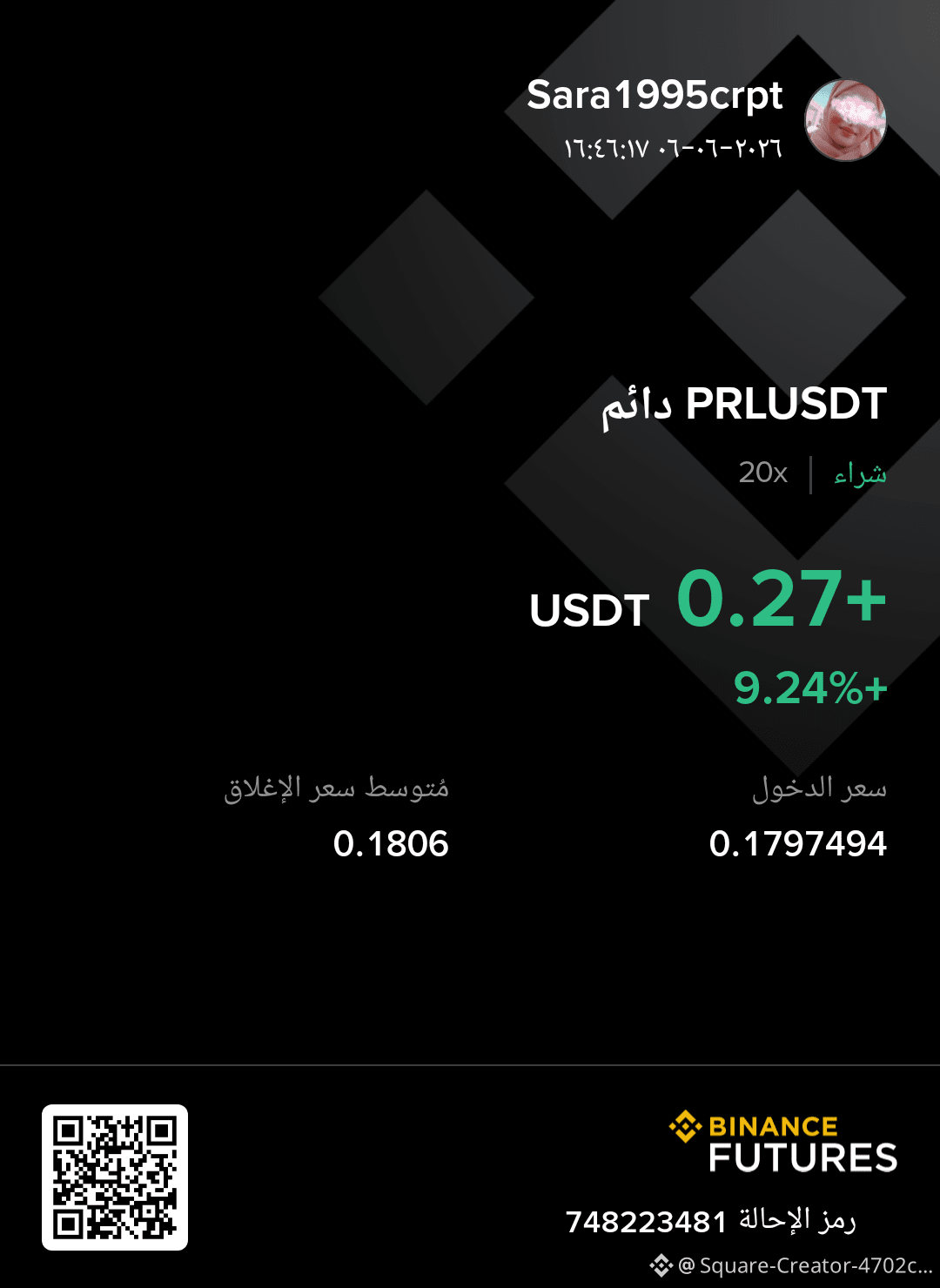
#Play2Earn #EVAA Hi everyone, I'm going short, watching Play and Eva go down.
Eva has some upward sections. It's at a low-to-mid level, drops, and then rises back to the same level, keeping the downward pace. The trend drops to -16 and then rises to -10%. That's the section I've been able to evaluate, and I'm taking profit during that downward interval.
I just started with Play; it's going down, and I haven't seen whether it will drop further. Make your own predictions. I didn't set a stop-loss as a trader because the movement of these coins is uncertain. Take profits and don't stay in for too long.
#FuturoBitcoin
169


·
--
Bullish
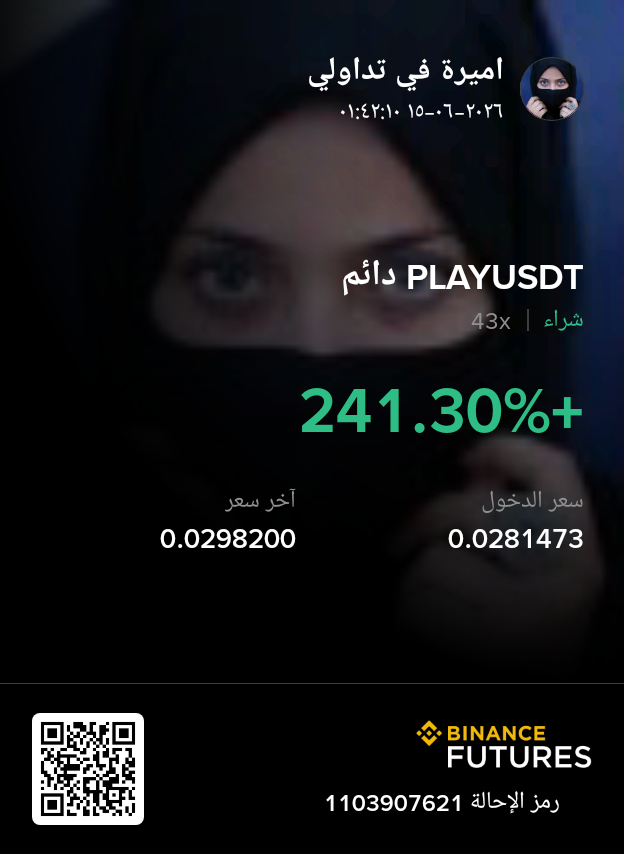
Oh man, oh man! Congrats to those who rode the wave, first target at 0.0331!
$PLAY
$SIREN
SIREN CryptoCrash BinanceSquare Altcoins TradingTips BNBChai
#SİREN
#siren
#Play2Earn
#play
Oh man, oh man! Congrats to those who rode the wave, first target at 0.0331!
$PLAY
$SIREN
SIREN CryptoCrash BinanceSquare Altcoins TradingTips BNBChai
#SİREN
#siren
#Play2Earn
#play
$PLAY
$SIREN
SIREN CryptoCrash BinanceSquare Altcoins TradingTips BNBChai
#SİREN
#siren
#Play2Earn
#play
8
7
2.6k

·
--
Bullish
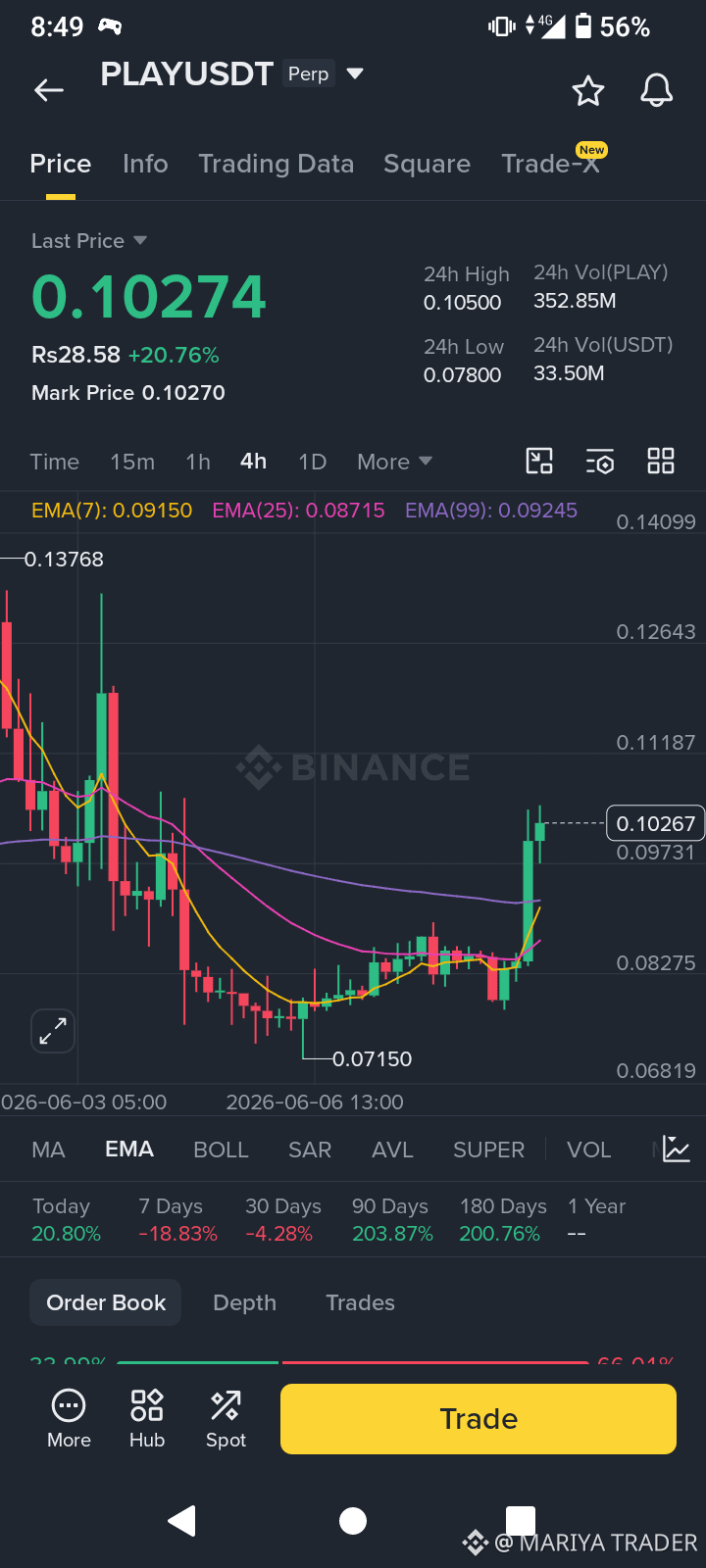
$PLAY bullish
Entry: 0.1010–0.1040
SL: 0.0900
TP1: 0.1080
TP2: 0.1120
TP3: 0.1200
Liquidity swept at 0.0780. Bullish EMA stack confirms momentum.
{future}(PLAYUSDT)
#Playdapp #Play2Earn
$PLAY bullish
Entry: 0.1010–0.1040
SL: 0.0900
TP1: 0.1080
TP2: 0.1120
TP3: 0.1200
Liquidity swept at 0.0780. Bullish EMA stack confirms momentum.
#Playdapp #Play2Earn
Entry: 0.1010–0.1040
SL: 0.0900
TP1: 0.1080
TP2: 0.1120
TP3: 0.1200
Liquidity swept at 0.0780. Bullish EMA stack confirms momentum.
#Playdapp #Play2Earn
1
207
·
--
Bullish
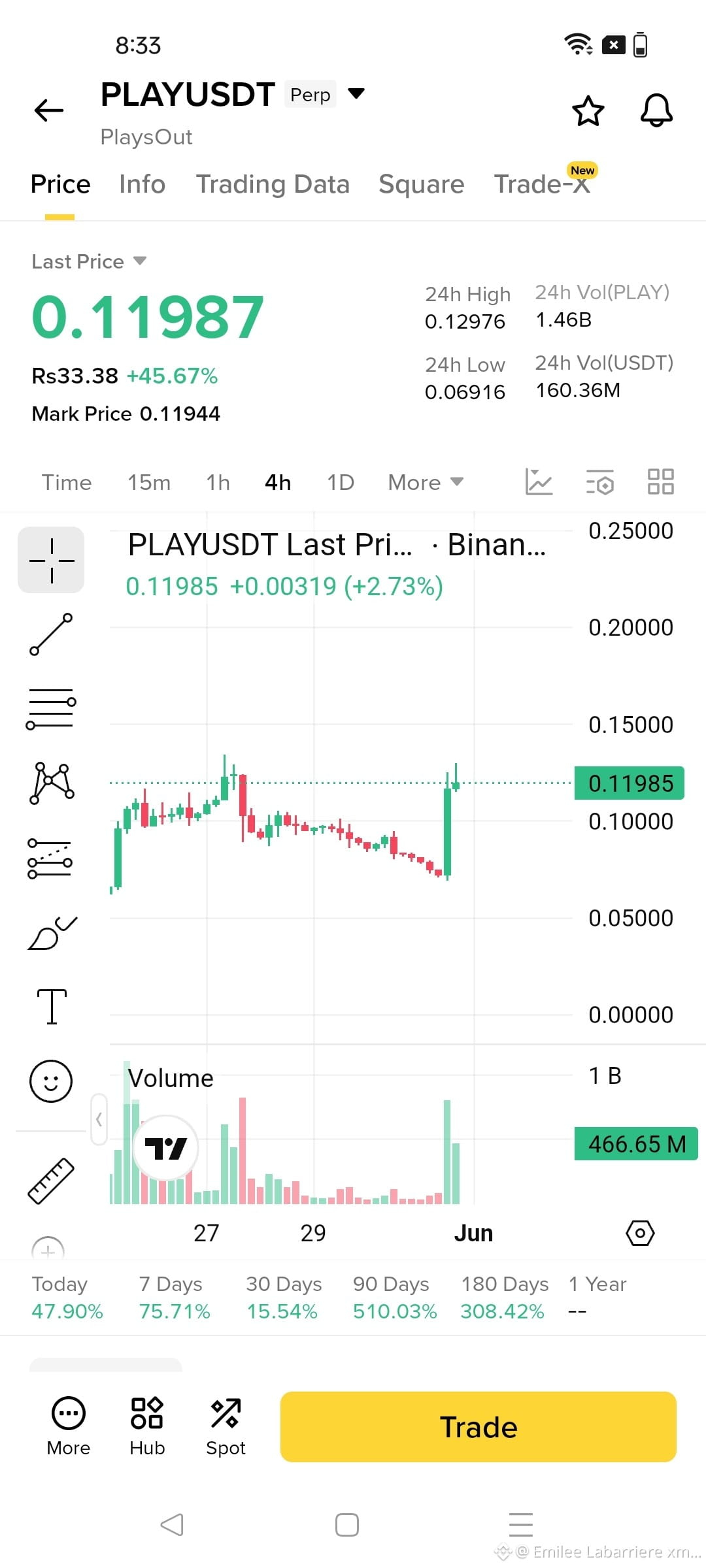
#play Trade plane LONG
Stop Loss (SL): Agar price 0.0900
TP 1..0.13000
TP 2..0.14000
TP 3..0..1500
#play
#Binance
#Play2Earn
{future}(PLAYUSDT)
#play Trade plane LONG
Stop Loss (SL): Agar price 0.0900
TP 1..0.13000
TP 2..0.14000
TP 3..0..1500
#play
#Binance
#Play2Earn
Stop Loss (SL): Agar price 0.0900
TP 1..0.13000
TP 2..0.14000
TP 3..0..1500
#play
#Binance
#Play2Earn
1
259

·
--
Bullish
🚀 TRADE SETUP ALERT 🚀
🪙 Coin: $PLAY / USDT
📊 Direction: 🟢 LONG
💰 Current Price: $0.0082
🎯 Take Profit (TP): $0.0085
🛑 Stop Loss (SL): $0.0077
🧠 Reasons to Trade:
🔹Huge Volume Spikes
🔹Huge bid Orders below
🔹Increaing OI on the long side
{future}(PLAYUSDT)
#CanGTA6'sLaunchLiftTTWOShares?
#play #Play2Earn
🚀 TRADE SETUP ALERT 🚀
🪙 Coin: $PLAY / USDT
📊 Direction: 🟢 LONG
💰 Current Price: $0.0082
🎯 Take Profit (TP): $0.0085
🛑 Stop Loss (SL): $0.0077
🧠 Reasons to Trade:
🔹Huge Volume Spikes
🔹Huge bid Orders below
🔹Increaing OI on the long side
#CanGTA6'sLaunchLiftTTWOShares?
#play #Play2Earn
🪙 Coin: $PLAY / USDT
📊 Direction: 🟢 LONG
💰 Current Price: $0.0082
🎯 Take Profit (TP): $0.0085
🛑 Stop Loss (SL): $0.0077
🧠 Reasons to Trade:
🔹Huge Volume Spikes
🔹Huge bid Orders below
🔹Increaing OI on the long side
#CanGTA6'sLaunchLiftTTWOShares?
#play #Play2Earn
406



Article
$PIXEL Might Be Deciding What Actually Matters in PixelsI caught myself thinking differently about $PIXEL last week after a few longer sessions in Pixels. At first, I treated it like any other in-game token—optional, mostly for speeding things up. I even delayed buying, assuming I could just grind everything out for free.
Technically, you can. That’s what makes it interesting.
The game feels open. You farm, trade, repeat loops, and nothing really forces you to spend. But after a while, I started noticing something subtle. Two players could put in similar time, yet their outcomes felt completely different—not just in rewards, but in what actually stuck.
That’s where my perspective shifted.
It doesn’t feel like every action carries equal weight. Some progress compounds, feels reusable, maybe even tradable later. Other actions just cycle and fade, even if they look productive in the moment. And the more I paid attention, the more it seemed like @pixels sits right at that boundary.
I picked up a small bag around $0.012—not a conviction trade, more like a test. I wanted to see if I’d naturally start using it. And honestly, I did. Not because I had to, but because certain moments made waiting feel inefficient. That friction point shows up more often than I expected.
Here’s the insight that stuck with me: $PIXEL isn’t just speeding things up—it’s increasing the chances that what you do actually persists in a meaningful way.
That matters because not everything can (or should) go on-chain. There’s a cost to recording every action, so the system has to be selective. Pixels seems to handle this quietly. It doesn’t block you, but it nudges you. If you want your actions to carry more weight, there’s a path—and the token is part of it.
From a market angle, this changes things. Demand isn’t just tied to player count. It depends on behavior—how often players choose to push their actions beyond the basic loop. If that becomes habitual, the token embeds itself into the system naturally.
Still, I’m cautious. If players feel like nothing matters without spending, it breaks trust. But if this balance holds, $PIXEL might be doing something most GameFi missed—quietly deciding what the system remembers.
#Web3 #Pixel #Play2Earn #GameFi #Infrastructure
$PIXEL Might Be Deciding What Actually Matters in Pixels
I caught myself thinking differently about $PIXEL last week after a few longer sessions in Pixels. At first, I treated it like any other in-game token—optional, mostly for speeding things up. I even delayed buying, assuming I could just grind everything out for free.
Technically, you can. That’s what makes it interesting.
The game feels open. You farm, trade, repeat loops, and nothing really forces you to spend. But after a while, I started noticing something subtle. Two players could put in similar time, yet their outcomes felt completely different—not just in rewards, but in what actually stuck.
That’s where my perspective shifted.
It doesn’t feel like every action carries equal weight. Some progress compounds, feels reusable, maybe even tradable later. Other actions just cycle and fade, even if they look productive in the moment. And the more I paid attention, the more it seemed like @Pixels sits right at that boundary.
I picked up a small bag around $0.012—not a conviction trade, more like a test. I wanted to see if I’d naturally start using it. And honestly, I did. Not because I had to, but because certain moments made waiting feel inefficient. That friction point shows up more often than I expected.
Here’s the insight that stuck with me: $PIXEL isn’t just speeding things up—it’s increasing the chances that what you do actually persists in a meaningful way.
That matters because not everything can (or should) go on-chain. There’s a cost to recording every action, so the system has to be selective. Pixels seems to handle this quietly. It doesn’t block you, but it nudges you. If you want your actions to carry more weight, there’s a path—and the token is part of it.
From a market angle, this changes things. Demand isn’t just tied to player count. It depends on behavior—how often players choose to push their actions beyond the basic loop. If that becomes habitual, the token embeds itself into the system naturally.
Still, I’m cautious. If players feel like nothing matters without spending, it breaks trust. But if this balance holds, $PIXEL might be doing something most GameFi missed—quietly deciding what the system remembers.
#Web3 #Pixel #Play2Earn #GameFi #Infrastructure
5
7
188


·
--
Bearish
Market remains highly reactive as liquidity sweeps continue across multiple mid-cap assets 💥
Fast moves are dominating price action, leaving little room for hesitation 👀
$PLAY
{future}(PLAYUSDT)
🔴 LIQUIDITY ZONE HIT 🔴
Long liquidation spotted 🧨
$3.0686K cleared at $0.0738
Downside liquidity swept — react NOW or watch the market shift 👀
🎯 TP Targets:
TP1: ~$0.0733
TP2: ~$0.0728
TP3: ~$0.0722
#Play2Earn
Market remains highly reactive as liquidity sweeps continue across multiple mid-cap assets 💥
Fast moves are dominating price action, leaving little room for hesitation 👀
$PLAY
🔴 LIQUIDITY ZONE HIT 🔴
Long liquidation spotted 🧨
$3.0686K cleared at $0.0738
Downside liquidity swept — react NOW or watch the market shift 👀
🎯 TP Targets:
TP1: ~$0.0733
TP2: ~$0.0728
TP3: ~$0.0722
#Play2Earn
Fast moves are dominating price action, leaving little room for hesitation 👀
$PLAY
🔴 LIQUIDITY ZONE HIT 🔴
Long liquidation spotted 🧨
$3.0686K cleared at $0.0738
Downside liquidity swept — react NOW or watch the market shift 👀
🎯 TP Targets:
TP1: ~$0.0733
TP2: ~$0.0728
TP3: ~$0.0722
#Play2Earn
1
111

Article
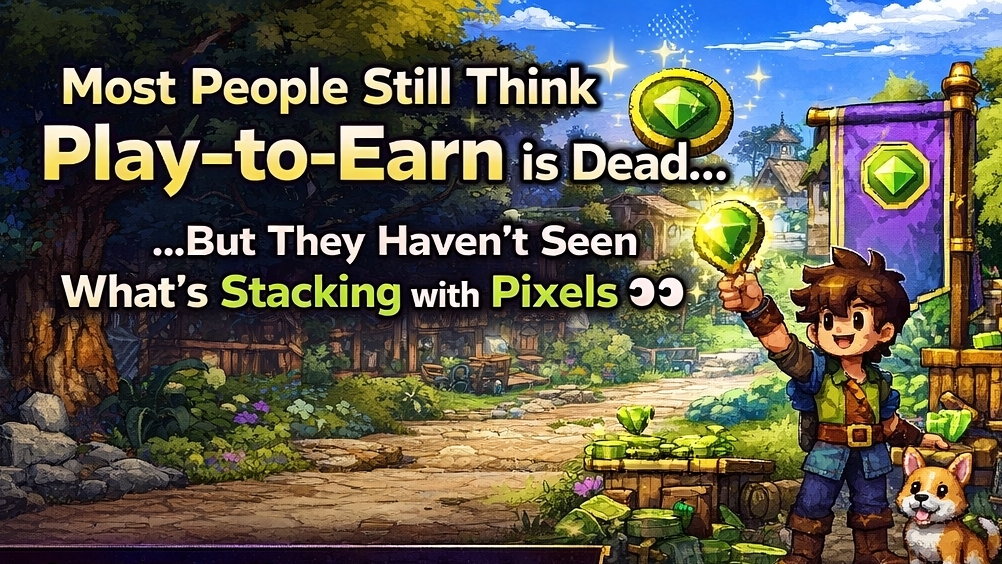
Most people still think play-to-earn is dead… but they haven’t seen what Pixels is building 👀$PIXEL flips the script. This isn’t just “play and cash out”—it’s a full Stacked ecosystem where you earn, reinvest, and compound like a real economy. Every action in-game has purpose: farming, building, trading all feeding into long term growth.
The smartest players aren’t chasing quick wins… they’re stacking rewards and positioning early. That’s the real edge.
@pixels is quietly turning gamers into strategists.
This isn’t hype. It’s a system. #pixel #Web3 #Play2Earn
Most people still think play-to-earn is dead… but they haven’t seen what Pixels is building 👀
$PIXEL flips the script. This isn’t just “play and cash out”—it’s a full Stacked ecosystem where you earn, reinvest, and compound like a real economy. Every action in-game has purpose: farming, building, trading all feeding into long term growth.
The smartest players aren’t chasing quick wins… they’re stacking rewards and positioning early. That’s the real edge.
@Pixels is quietly turning gamers into strategists.
This isn’t hype. It’s a system. #pixel #Web3 #Play2Earn
The smartest players aren’t chasing quick wins… they’re stacking rewards and positioning early. That’s the real edge.
@Pixels is quietly turning gamers into strategists.
This isn’t hype. It’s a system. #pixel #Web3 #Play2Earn
83

Article
PIXEL Isn't Selling You Progress — It's Selling You Time BackI've been playing @pixels on and off for a few weeks now, mostly because a friend wouldn't stop talking about it. Typical farming loop, I thought. Plant, wait, harvest, repeat. I've seen this template a hundred times in GameFi and usually I know exactly how it ends.
But something kept nagging at me.
It wasn't the rewards that made me reach for $PIXEL. It was the waiting. All these small timers stacked on top of each other — growth delays, energy limits, little pauses scattered everywhere. Each one feels harmless alone. Together though, they build into this quiet pressure you barely notice until you're already spending to escape it.
And that's kind of genius, honestly.
Most GameFi tokens market themselves around progress. Bigger yields, better gear, faster output. $PIXEL technically does that too, but the real hook is different. It sits at the point where you decide waiting is no longer worth it. That's a softer sell, but it hits more often than you'd expect.
I tested this myself about two weeks ago. Picked up a small bag around a dip, not for any deep fundamental reason — I just noticed I'd personally used the token three sessions in a row without really planning to. Felt like data worth paying attention to. Held for about ten days, took a modest profit, nothing dramatic. But the logic felt more solid than most trades I've made based on whitepaper hype alone.
What I think the market is missing is the behavioral layer here. Everyone's tracking supply unlocks, user counts, the usual metrics. Clean, easy to chart. But the quieter signal is how often players make small "skip this" decisions without even thinking. That's recurring demand that doesn't show up obviously anywhere.
There's also a smart split in the economy — Coins handle everyday activity, keep the world moving. $PIXEL shows up when you want control over your time, not just participation. That boundary feels intentional, and I think it's underappreciated.
Is this model bulletproof? No. If the delays ever start feeling artificial, players will notice and they won't be subtle about it. The whole thing works because the friction feels natural.
But right now? I don't think $PIXEL is being priced with that behavioral loop in mind. And subtle systems are almost always the ones worth watching.
#pixel #pixelverse #web3 #NFT #Play2Earn
PIXEL Isn't Selling You Progress — It's Selling You Time Back
I've been playing @Pixels on and off for a few weeks now, mostly because a friend wouldn't stop talking about it. Typical farming loop, I thought. Plant, wait, harvest, repeat. I've seen this template a hundred times in GameFi and usually I know exactly how it ends.
But something kept nagging at me.
It wasn't the rewards that made me reach for $PIXEL . It was the waiting. All these small timers stacked on top of each other — growth delays, energy limits, little pauses scattered everywhere. Each one feels harmless alone. Together though, they build into this quiet pressure you barely notice until you're already spending to escape it.
And that's kind of genius, honestly.
Most GameFi tokens market themselves around progress. Bigger yields, better gear, faster output. $PIXEL technically does that too, but the real hook is different. It sits at the point where you decide waiting is no longer worth it. That's a softer sell, but it hits more often than you'd expect.
I tested this myself about two weeks ago. Picked up a small bag around a dip, not for any deep fundamental reason — I just noticed I'd personally used the token three sessions in a row without really planning to. Felt like data worth paying attention to. Held for about ten days, took a modest profit, nothing dramatic. But the logic felt more solid than most trades I've made based on whitepaper hype alone.
What I think the market is missing is the behavioral layer here. Everyone's tracking supply unlocks, user counts, the usual metrics. Clean, easy to chart. But the quieter signal is how often players make small "skip this" decisions without even thinking. That's recurring demand that doesn't show up obviously anywhere.
There's also a smart split in the economy — Coins handle everyday activity, keep the world moving. $PIXEL shows up when you want control over your time, not just participation. That boundary feels intentional, and I think it's underappreciated.
Is this model bulletproof? No. If the delays ever start feeling artificial, players will notice and they won't be subtle about it. The whole thing works because the friction feels natural.
But right now? I don't think $PIXEL is being priced with that behavioral loop in mind. And subtle systems are almost always the ones worth watching.
#pixel #pixelverse #web3 #NFT #Play2Earn
4
4
182
·
--
Bullish
{future}(CLUSDT)
#Play2Earn
Perhaps with the current political instability and war situation, oil prices will soon hit a new all-time high.
This is not investment advice.
#Play2Earn
Perhaps with the current political instability and war situation, oil prices will soon hit a new all-time high.
This is not investment advice.
Perhaps with the current political instability and war situation, oil prices will soon hit a new all-time high.
This is not investment advice.
92

·
--
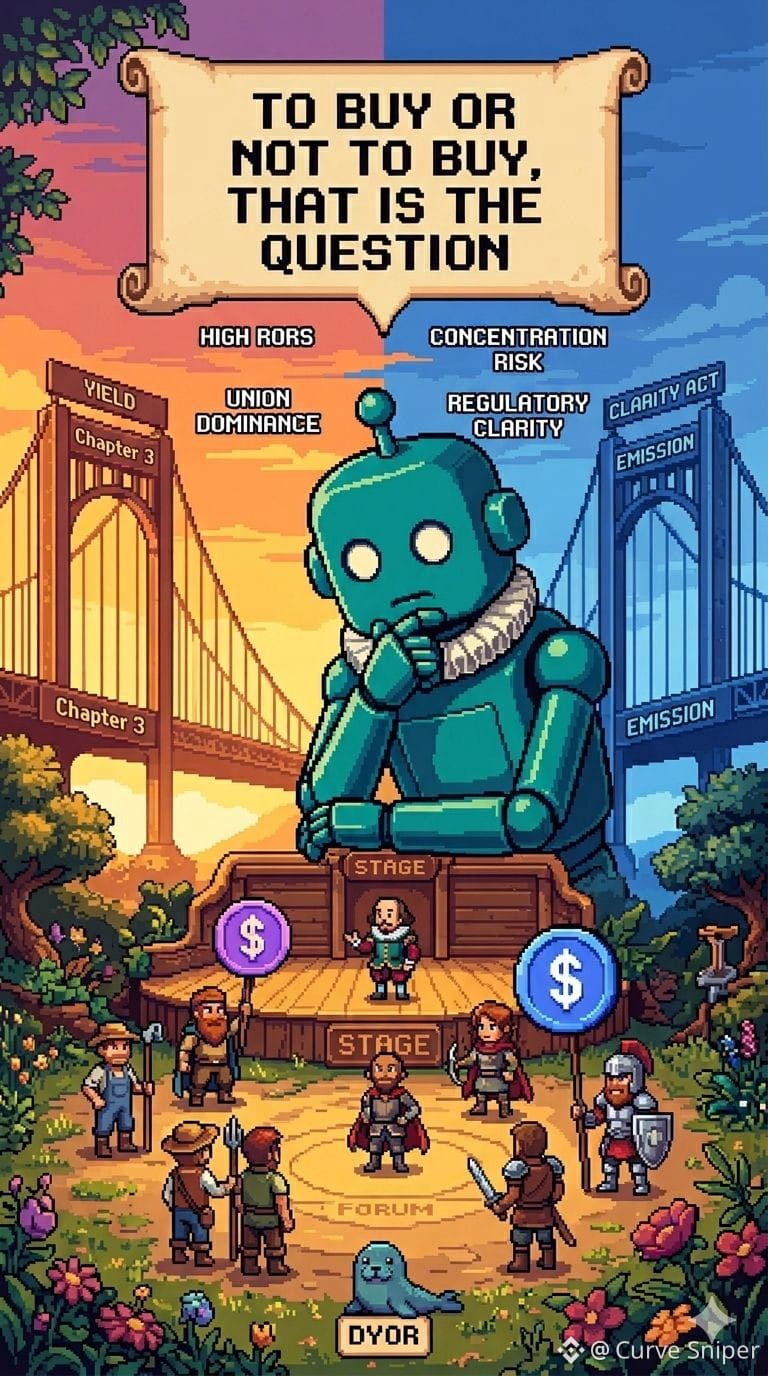
PIXEL: Is It Worth Investors’ Attention?
✅ Why investors are interested:
- Real economic activity inside the game.
- Post-unlock stability phase.
- Strong ecosystem integration (Stacked + Ronin + guild economy).
⚠️ Why caution still matters:
- Centralised Infrastructure Dependency.
- High token concentration among whales and guilds.
- Regulatory Uncertainty (Clarity Act) – creates risk for potential reclassification of staking rewards or in-game revenues.
@pixels #pixel $PIXEL #InvestorFocused #Play2Earn
PIXEL: Is It Worth Investors’ Attention?
✅ Why investors are interested:
- Real economic activity inside the game.
- Post-unlock stability phase.
- Strong ecosystem integration (Stacked + Ronin + guild economy).
⚠️ Why caution still matters:
- Centralised Infrastructure Dependency.
- High token concentration among whales and guilds.
- Regulatory Uncertainty (Clarity Act) – creates risk for potential reclassification of staking rewards or in-game revenues.
@Pixels #pixel $PIXEL #InvestorFocused #Play2Earn
2
2
134
Article
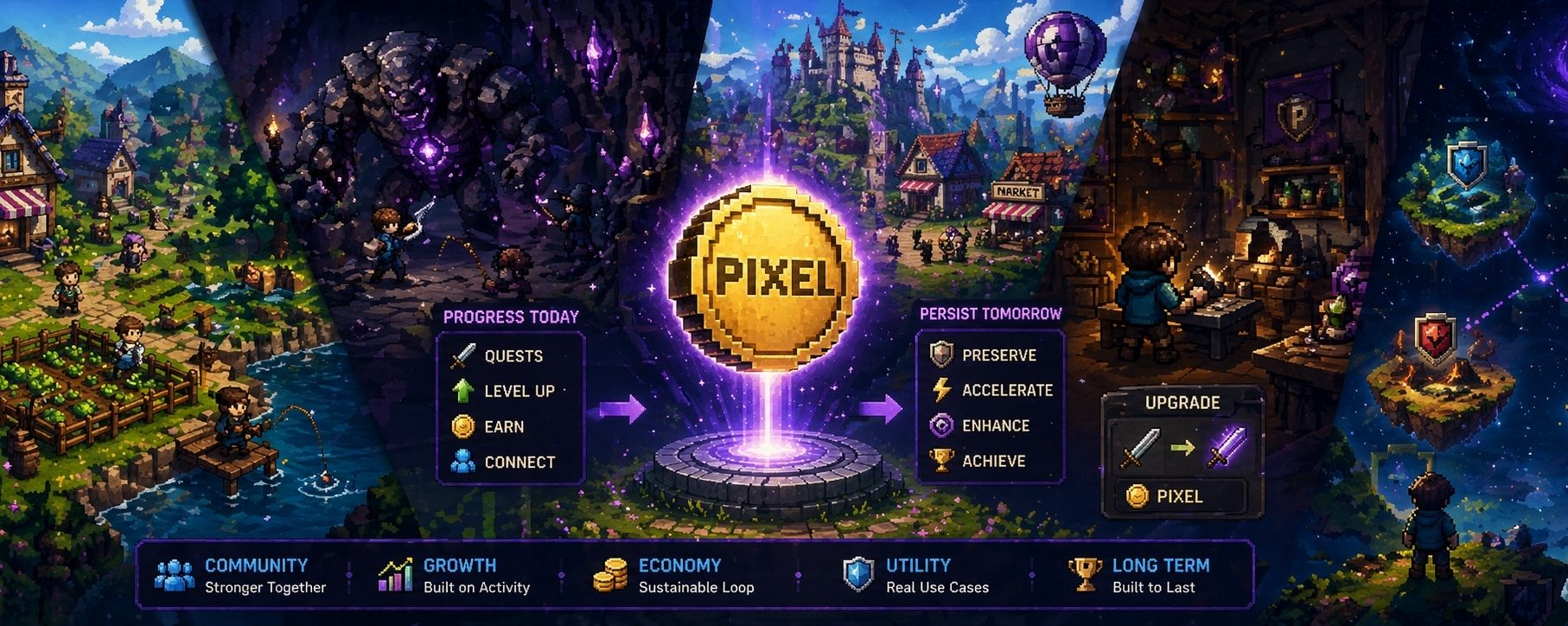
Pixel Feels Like an Open Economy… But I’m Starting to Think It’s About When Value Gets Locked InI was reviewing my small $PIXEL position again this week, and honestly, I realized I’d been misunderstanding it for a while.
At first, I treated Pixels like most Web3 game economies I’ve seen before — active players grind, token gets used, demand should follow. Pretty standard. My early assumption was simple: more gameplay = more Pixel relevance. But after watching my own trades and hesitating more than once before adding, I started noticing something different.
What changed my view wasn’t price action alone — it was player behavior.
Pixels feels open when you first jump in. You can farm, craft, trade, optimize… the system moves constantly. That part is real. But the deeper I paid attention, the more it felt like not all value inside Pixels becomes equally “real” at the same time.
That’s where @pixels started looking more important to me.
I don’t really see it as just a speed-up token anymore. It feels more like the layer that helps decide when your in-game effort actually becomes economically meaningful in a lasting way.
That distinction matters.
In a lot of weaker play-to-earn systems, everything gets extracted too quickly. Grind, mint, dump, repeat. Activity stays high for a while, but durability fades because too much value settles instantly. Pixels seems more thoughtful than that. From what I’ve experienced, there’s often this subtle pause between doing something productive and deciding when it’s worth committing deeper value.
I actually caught myself doing this recently during an upgrade decision. I had enough progress to move forward, but instead of instantly spending, I paused. Not because I lacked resources — I was thinking about timing. Was this the right moment to lock in value?
That hesitation surprised me.
Good systems change how you think, not just what you do. And Pixels, at least for me, seems designed around that principle.
This is why I think $PIXEL may be stronger than people assume during quieter periods. Token demand may not always move in a straight line with player activity because its role appears tied more to decision points than constant action. That creates bursts, pauses, and sometimes misleading market signals.
Of course, balance matters. Too much friction could delay settlement too long, while too little could flood the system. But if Pixels manages that middle ground well, $PIXEL could represent more than utility — it could become the timing mechanism that helps the economy stay sustainable.
I’m still watching closely, but right now, I’m leaning more bullish than I was months ago.
Sometimes the real value in a token isn’t just what it lets you do…
It’s when it asks you to decide what your progress is actually worth.
#Pixel #Web3 #Gamefi #Play2Earn #Ronin
Pixel Feels Like an Open Economy… But I’m Starting to Think It’s About When Value Gets Locked In
I was reviewing my small $PIXEL position again this week, and honestly, I realized I’d been misunderstanding it for a while.
At first, I treated Pixels like most Web3 game economies I’ve seen before — active players grind, token gets used, demand should follow. Pretty standard. My early assumption was simple: more gameplay = more Pixel relevance. But after watching my own trades and hesitating more than once before adding, I started noticing something different.
What changed my view wasn’t price action alone — it was player behavior.
Pixels feels open when you first jump in. You can farm, craft, trade, optimize… the system moves constantly. That part is real. But the deeper I paid attention, the more it felt like not all value inside Pixels becomes equally “real” at the same time.
That’s where @Pixels started looking more important to me.
I don’t really see it as just a speed-up token anymore. It feels more like the layer that helps decide when your in-game effort actually becomes economically meaningful in a lasting way.
That distinction matters.
In a lot of weaker play-to-earn systems, everything gets extracted too quickly. Grind, mint, dump, repeat. Activity stays high for a while, but durability fades because too much value settles instantly. Pixels seems more thoughtful than that. From what I’ve experienced, there’s often this subtle pause between doing something productive and deciding when it’s worth committing deeper value.
I actually caught myself doing this recently during an upgrade decision. I had enough progress to move forward, but instead of instantly spending, I paused. Not because I lacked resources — I was thinking about timing. Was this the right moment to lock in value?
That hesitation surprised me.
Good systems change how you think, not just what you do. And Pixels, at least for me, seems designed around that principle.
This is why I think $PIXEL may be stronger than people assume during quieter periods. Token demand may not always move in a straight line with player activity because its role appears tied more to decision points than constant action. That creates bursts, pauses, and sometimes misleading market signals.
Of course, balance matters. Too much friction could delay settlement too long, while too little could flood the system. But if Pixels manages that middle ground well, $PIXEL could represent more than utility — it could become the timing mechanism that helps the economy stay sustainable.
I’m still watching closely, but right now, I’m leaning more bullish than I was months ago.
Sometimes the real value in a token isn’t just what it lets you do…
It’s when it asks you to decide what your progress is actually worth.
#Pixel #Web3 #Gamefi #Play2Earn #Ronin
4
5
138
Log in to explore more content
Join global crypto users on Binance Square
⚡️ Get latest and useful information about crypto.
💬 Trusted by the world’s largest crypto exchange.
👍 Discover real insights from verified creators.
Email / Phone number
Trending Topics
1
#BTCReboundsAbove$60KAmidWhaleDipBuying
80,439 views
355 Discussing
2
#SolanaSets2027RoadmapToDoubleComputeCapacity
59,204 views
1,031 Discussing
3
#CaliforniaNvidiaProbeExaminesPotentialCriminalViolations
17,580 views
141 Discussing
4
#BlackRockLaunchesHKDollarDigitalLiquidityFund
53,724 views
790 Discussing
5
#NvidiaLoses$2.7TrillionInMonthAndAHalf
79,112 views
315 Discussing
6
#GlobalStocksFaceLongestLosingStreakSince2023
578,941 views
3,507 Discussing
7
#BlackRockIBITPostsRecord$541MSingleDayOutflow
97,262 views
186 Discussing
8
#AnthropicPlungesTowardIPOPriceonDay2
315,838 views
2,354 Discussing
9
#TwentyOneCapitalAdds172.25BTC
172,356 views
1,664 Discussing
10
#HKBillWouldExcludeTokenizedDepositsFromVirtualAssets
18,677 views
106 Discussing