
#seguridadcripto
seguridadcripto
341,740 views
486 Discussing
Hot
Latest

·
--
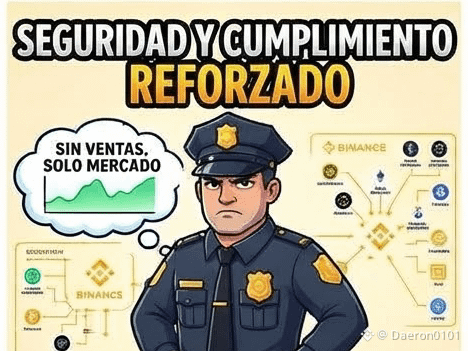
🚨 Binance strengthens security and regulatory compliance measures
Binance has updated its internal security protocols for users and strengthened its compliance teams to adapt to new global regulations, reaffirming its commitment to a safe and transparent environment.
🛡️ How does this affect holders?
It’s great news for your peace of mind. A secure, regulated exchange protects your funds. For any holder, knowing that the platform where you keep your assets invests in security and legal compliance is essential.
Do you feel that Binance is the safest exchange on the market for keeping your cryptocurrencies safe? Comment and let’s learn together 👇
#Binance #SeguridadCripto #ADNB
$BNB
{future}(BNBUSDT)
🚨 Binance strengthens security and regulatory compliance measures
Binance has updated its internal security protocols for users and strengthened its compliance teams to adapt to new global regulations, reaffirming its commitment to a safe and transparent environment.
🛡️ How does this affect holders?
It’s great news for your peace of mind. A secure, regulated exchange protects your funds. For any holder, knowing that the platform where you keep your assets invests in security and legal compliance is essential.
Do you feel that Binance is the safest exchange on the market for keeping your cryptocurrencies safe? Comment and let’s learn together 👇
#Binance #SeguridadCripto #ADNB
$BNB
Binance has updated its internal security protocols for users and strengthened its compliance teams to adapt to new global regulations, reaffirming its commitment to a safe and transparent environment.
🛡️ How does this affect holders?
It’s great news for your peace of mind. A secure, regulated exchange protects your funds. For any holder, knowing that the platform where you keep your assets invests in security and legal compliance is essential.
Do you feel that Binance is the safest exchange on the market for keeping your cryptocurrencies safe? Comment and let’s learn together 👇
#Binance #SeguridadCripto #ADNB
$BNB
1
94

·
--
Binance has just regained control of an enormous sum.
The platform secured a court order to freeze $6.5 billion linked to the biggest theft in crypto history.
What’s striking is that the company had already replenished those funds.
It used its own reserves and insurance to compensate affected users.
It’s a decisive move following such a complex security incident for the industry.
What do you think of this way of managing the damage?
$BTC $BNB
#Binance #CryptoSecurity
Binance has just regained control of an enormous sum.
The platform secured a court order to freeze $6.5 billion linked to the biggest theft in crypto history.
What’s striking is that the company had already replenished those funds.
It used its own reserves and insurance to compensate affected users.
It’s a decisive move following such a complex security incident for the industry.
What do you think of this way of managing the damage?
$BTC $BNB
#Binance #CryptoSecurity
The platform secured a court order to freeze $6.5 billion linked to the biggest theft in crypto history.
What’s striking is that the company had already replenished those funds.
It used its own reserves and insurance to compensate affected users.
It’s a decisive move following such a complex security incident for the industry.
What do you think of this way of managing the damage?
$BTC $BNB
#Binance #CryptoSecurity
40
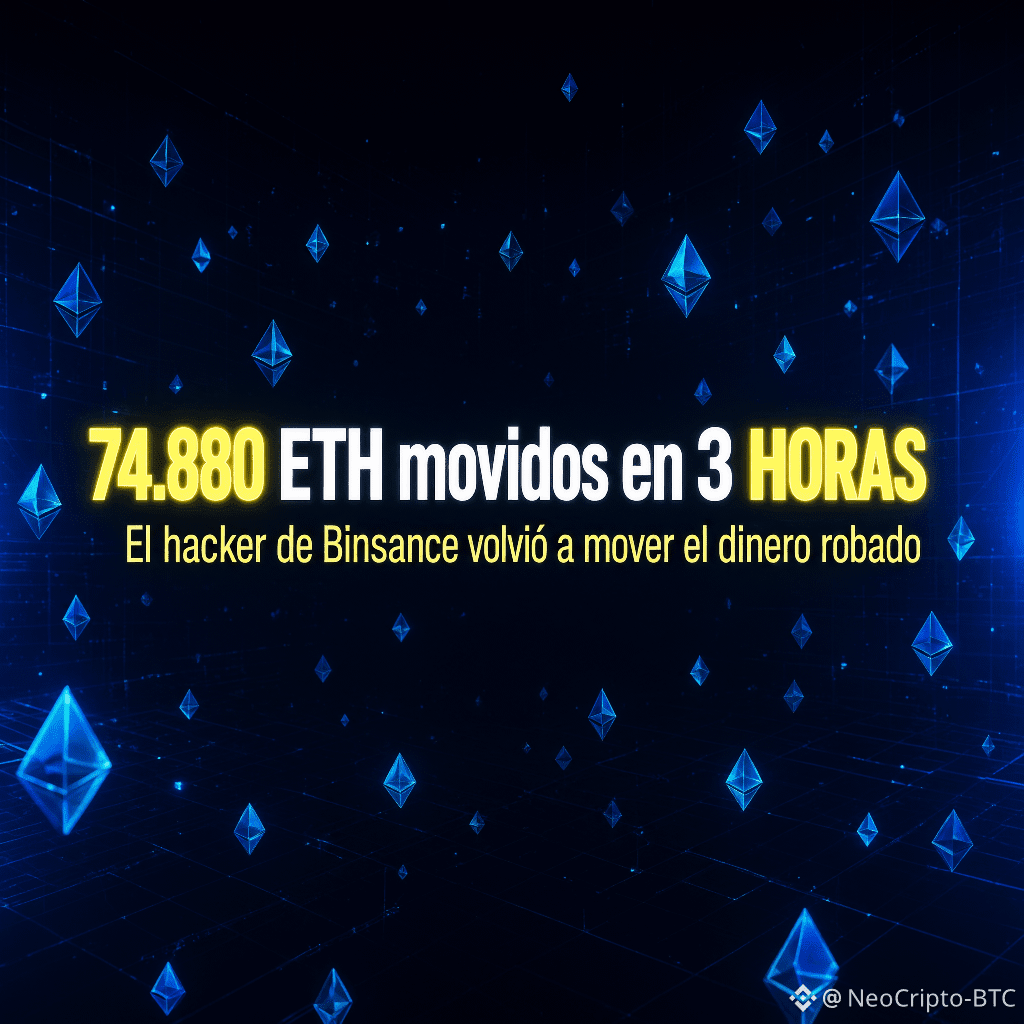
Following the October 29 attack, on November 17 we recorded that wallets belonging to the malicious actors—whom the FBI attributes to the North Korean group TraderTraitor—moved around 74,880 ETH (≈US$136.8 million) and converted it into Bitcoin through THORChain, their first activity in two weeks. We want you to have the full picture: our users’ balances were never at risk, since the vast majority are held in cold wallets and the incident was fully covered by our own reserves, as supported by our Proof of Reserves (PoR). In addition, cooperation between authorities and issuers has already resulted in more than US$2.7 billion being frozen, with US$1.2 billion seized by court order, and we continue to cooperate to trace every hop back to its origin. Because in an ecosystem where everything is visible on the blockchain, the best defense is information: enable two-step verification with an authenticator app (never by SMS), transfer to a cold wallet anything you don’t plan to trade, and set up on-chain alerts. Tell us in the comments: have you already applied these three security measures, or are you missing one? 👇
#SeguridadCripto
$BTC
{future}(BTCUSDT)
$ETH
{future}(ETHUSDT)
$USDC
{future}(USDCUSDT)
Following the October 29 attack, on November 17 we recorded that wallets belonging to the malicious actors—whom the FBI attributes to the North Korean group TraderTraitor—moved around 74,880 ETH (≈US$136.8 million) and converted it into Bitcoin through THORChain, their first activity in two weeks. We want you to have the full picture: our users’ balances were never at risk, since the vast majority are held in cold wallets and the incident was fully covered by our own reserves, as supported by our Proof of Reserves (PoR). In addition, cooperation between authorities and issuers has already resulted in more than US$2.7 billion being frozen, with US$1.2 billion seized by court order, and we continue to cooperate to trace every hop back to its origin. Because in an ecosystem where everything is visible on the blockchain, the best defense is information: enable two-step verification with an authenticator app (never by SMS), transfer to a cold wallet anything you don’t plan to trade, and set up on-chain alerts. Tell us in the comments: have you already applied these three security measures, or are you missing one? 👇
#SeguridadCripto
$BTC
$ETH
$USDC
#SeguridadCripto
$BTC
$ETH
$USDC
1
169

🚨 FBI ALERT: AI-powered hacking is now a reality and threatens the crypto ecosystem ⚠️
The FBI has just issued a FLASH alert about ARTEX, an agentic artificial intelligence framework that cybercriminals are using to automate attacks at machine speed.
⚡ The critical detail: ARTEX can take an attacker from identifying a target to gaining full access in less than 3 hours. It has already been used to compromise cloud integrations and attack more than 2,250 organizations.
📉 How does this affect the crypto market?
Risk to Exchanges and Custodians: An automated attack that takes less than 3 hours outpaces human response times. Centralized platforms (CEXs) and custodians that rely on external cloud providers are in the crosshairs.
Mass Theft of API Keys and Secrets: These agents scan repositories (such as GitHub) in seconds, searching for leaked credentials. One oversight by a DeFi developer could mean a protocol is drained before the first alarm goes off.
Social Engineering and Hyper-Scalable Phishing: Attackers can compromise legitimate corporate emails within minutes to launch massive phishing campaigns targeting users and investors.
The On-Chain Security Narrative: This scenario reinforces the value of self-custody (hardware wallets) and fuels interest in decentralized cybersecurity and digital identity protocols.
🛡️ Takeaway for investors: In the age of AI-powered cyberattacks, leaving large amounts of capital on third-party platforms carries an increasingly significant operational risk. “Not your keys, not your coins” makes more sense than ever.
👇 Do you think the crypto industry is prepared to defend itself against AI-driven attacks? Share your thoughts in the comments.
#Ciberseguridad #amarillocryto #IA #SeguridadCripto #bitcoin
🚨 FBI ALERT: AI-powered hacking is now a reality and threatens the crypto ecosystem ⚠️
The FBI has just issued a FLASH alert about ARTEX, an agentic artificial intelligence framework that cybercriminals are using to automate attacks at machine speed.
⚡ The critical detail: ARTEX can take an attacker from identifying a target to gaining full access in less than 3 hours. It has already been used to compromise cloud integrations and attack more than 2,250 organizations.
📉 How does this affect the crypto market?
Risk to Exchanges and Custodians: An automated attack that takes less than 3 hours outpaces human response times. Centralized platforms (CEXs) and custodians that rely on external cloud providers are in the crosshairs.
Mass Theft of API Keys and Secrets: These agents scan repositories (such as GitHub) in seconds, searching for leaked credentials. One oversight by a DeFi developer could mean a protocol is drained before the first alarm goes off.
Social Engineering and Hyper-Scalable Phishing: Attackers can compromise legitimate corporate emails within minutes to launch massive phishing campaigns targeting users and investors.
The On-Chain Security Narrative: This scenario reinforces the value of self-custody (hardware wallets) and fuels interest in decentralized cybersecurity and digital identity protocols.
🛡️ Takeaway for investors: In the age of AI-powered cyberattacks, leaving large amounts of capital on third-party platforms carries an increasingly significant operational risk. “Not your keys, not your coins” makes more sense than ever.
👇 Do you think the crypto industry is prepared to defend itself against AI-driven attacks? Share your thoughts in the comments.
#Ciberseguridad #amarillocryto #IA #SeguridadCripto #bitcoin
The FBI has just issued a FLASH alert about ARTEX, an agentic artificial intelligence framework that cybercriminals are using to automate attacks at machine speed.
⚡ The critical detail: ARTEX can take an attacker from identifying a target to gaining full access in less than 3 hours. It has already been used to compromise cloud integrations and attack more than 2,250 organizations.
📉 How does this affect the crypto market?
Risk to Exchanges and Custodians: An automated attack that takes less than 3 hours outpaces human response times. Centralized platforms (CEXs) and custodians that rely on external cloud providers are in the crosshairs.
Mass Theft of API Keys and Secrets: These agents scan repositories (such as GitHub) in seconds, searching for leaked credentials. One oversight by a DeFi developer could mean a protocol is drained before the first alarm goes off.
Social Engineering and Hyper-Scalable Phishing: Attackers can compromise legitimate corporate emails within minutes to launch massive phishing campaigns targeting users and investors.
The On-Chain Security Narrative: This scenario reinforces the value of self-custody (hardware wallets) and fuels interest in decentralized cybersecurity and digital identity protocols.
🛡️ Takeaway for investors: In the age of AI-powered cyberattacks, leaving large amounts of capital on third-party platforms carries an increasingly significant operational risk. “Not your keys, not your coins” makes more sense than ever.
👇 Do you think the crypto industry is prepared to defend itself against AI-driven attacks? Share your thoughts in the comments.
#Ciberseguridad #amarillocryto #IA #SeguridadCripto #bitcoin
1
50

·
--
🚨 Multisig hacked? $6.45M stolen from a Safe Wallet—and it wasn’t due to a coding error 💸
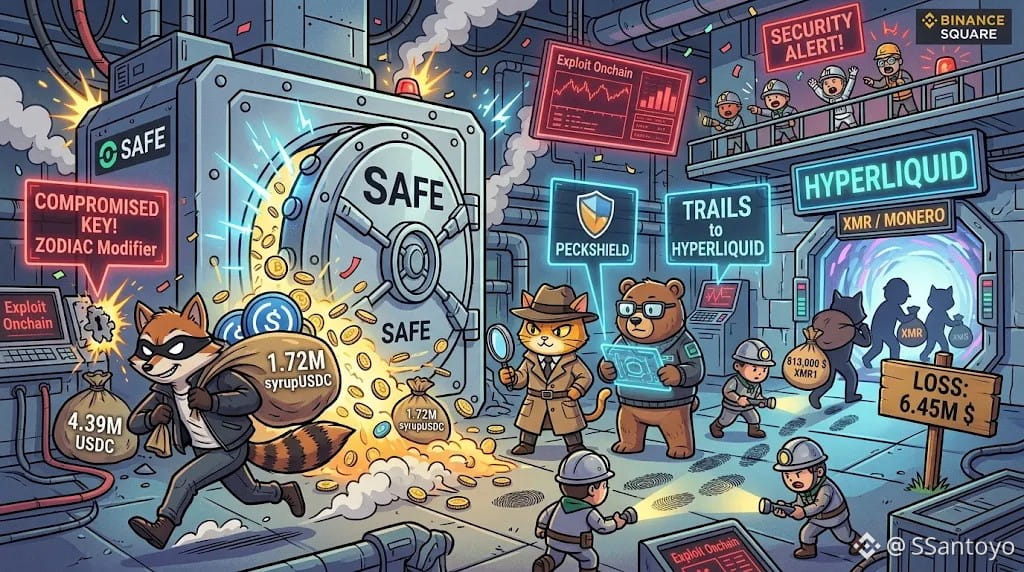
About $6.45 million was stolen from a Safe wallet this Monday. But here’s the thing: this wasn’t an "exploit" or a smart contract vulnerability, but the usual human factor.
How did they do it? The attacker apparently compromised the private key of a former member who had permissions in "Zodiac Roles" (the module that determines who can do what within the wallet).
With that access, the intruder simply authorized a transaction to transfer 4.39 million USDC and 1.72 million syrupUSDC in one go. There was no code hack: the contracts worked perfectly, but the hacker used a valid key with permissions that made it easy to withdraw the funds without raising suspicion.
🕵️♂️ The trail of the funds: PeckShield and Bitquery traced the funds directly to Hyperliquid, where the hacker used around $813,000 to buy Monero ($XMR) tokens in an attempt to cover their tracks.
This reminds us that even the best multisig wallet in the world isn’t foolproof if you neglect key management and leave old permissions active. The weakest link is always the key owner.
How do you manage your permissions and security in Web3? 👇
#SeguridadCripto #SafeWallet #Binance $USDC $SYRUP
{future}(SYRUPUSDT)
🚨 Multisig hacked? $6.45M stolen from a Safe Wallet—and it wasn’t due to a coding error 💸
About $6.45 million was stolen from a Safe wallet this Monday. But here’s the thing: this wasn’t an "exploit" or a smart contract vulnerability, but the usual human factor.
How did they do it? The attacker apparently compromised the private key of a former member who had permissions in "Zodiac Roles" (the module that determines who can do what within the wallet).
With that access, the intruder simply authorized a transaction to transfer 4.39 million USDC and 1.72 million syrupUSDC in one go. There was no code hack: the contracts worked perfectly, but the hacker used a valid key with permissions that made it easy to withdraw the funds without raising suspicion.
🕵️♂️ The trail of the funds: PeckShield and Bitquery traced the funds directly to Hyperliquid, where the hacker used around $813,000 to buy Monero ($XMR) tokens in an attempt to cover their tracks.
This reminds us that even the best multisig wallet in the world isn’t foolproof if you neglect key management and leave old permissions active. The weakest link is always the key owner.
How do you manage your permissions and security in Web3? 👇
#SeguridadCripto #SafeWallet #Binance $USDC $SYRUP
About $6.45 million was stolen from a Safe wallet this Monday. But here’s the thing: this wasn’t an "exploit" or a smart contract vulnerability, but the usual human factor.
How did they do it? The attacker apparently compromised the private key of a former member who had permissions in "Zodiac Roles" (the module that determines who can do what within the wallet).
With that access, the intruder simply authorized a transaction to transfer 4.39 million USDC and 1.72 million syrupUSDC in one go. There was no code hack: the contracts worked perfectly, but the hacker used a valid key with permissions that made it easy to withdraw the funds without raising suspicion.
🕵️♂️ The trail of the funds: PeckShield and Bitquery traced the funds directly to Hyperliquid, where the hacker used around $813,000 to buy Monero ($XMR) tokens in an attempt to cover their tracks.
This reminds us that even the best multisig wallet in the world isn’t foolproof if you neglect key management and leave old permissions active. The weakest link is always the key owner.
How do you manage your permissions and security in Web3? 👇
#SeguridadCripto #SafeWallet #Binance $USDC $SYRUP
3
1.9k

Scammers are sending fake tokens called QSDT (for amounts over $1000) to wallets like MetaMask to trick you in P2P trades or payments for products/services.
The trick is simple: the balance shows up in your wallet, but the token is worth $0.
If you release your funds without checking, you’ll lose your money.
🛡️ Golden rule: Don’t trust, verify. Before releasing funds, always check the exact token name (USDT, not QSDT), its contract, and that it has a real market capitalization. Don’t let them fool you!
#SeguridadCripto #estafap2p #Criptomonedas #MetaMask #TrustWallet
$BTC $TRX
Scammers are sending fake tokens called QSDT (for amounts over $1000) to wallets like MetaMask to trick you in P2P trades or payments for products/services.
The trick is simple: the balance shows up in your wallet, but the token is worth $0.
If you release your funds without checking, you’ll lose your money.
🛡️ Golden rule: Don’t trust, verify. Before releasing funds, always check the exact token name (USDT, not QSDT), its contract, and that it has a real market capitalization. Don’t let them fool you!
#SeguridadCripto #estafap2p #Criptomonedas #MetaMask #TrustWallet
$BTC $TRX
The trick is simple: the balance shows up in your wallet, but the token is worth $0.
If you release your funds without checking, you’ll lose your money.
🛡️ Golden rule: Don’t trust, verify. Before releasing funds, always check the exact token name (USDT, not QSDT), its contract, and that it has a real market capitalization. Don’t let them fool you!
#SeguridadCripto #estafap2p #Criptomonedas #MetaMask #TrustWallet
$BTC $TRX
Alexander Guevara
·
--
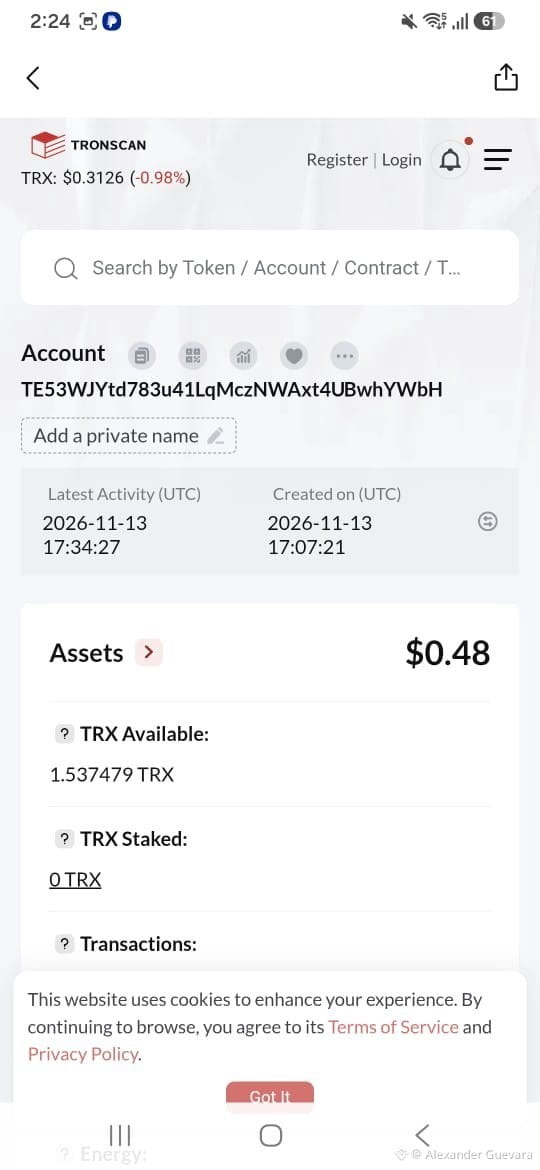
SCAM ALERT: THEY'VE CREATED THE QSDT TOKEN TO TRY TO SCAM YOU ON P2P 🚨🚨🚨
Here's how it works so you don't fall for the trap:
⭐ They send you +1000 $ in that token via Metamask, but it's a token with no value.
⭐ When you receive the funds, the amount appears in your balance. If you release the funds just by seeing it there, that's when the scam happens.
⭐ If you check carefully before releasing the funds, you'll notice the token's name (QSDT), its market capitalization is zero, and in this case, the contract had only been created the day before.
This is why education is essential. There are tools to detect scams, but you need the knowledge to spot them.
DON'T TRUST, VERIFY. It's always important to check before releasing funds (the golden rule of P2P). This scam can also happen outside of P2P if someone wants to pay you for a product or service.
#DEX #decentralization #USDT #P2P #P2PScam $USDT $BTC
Here's how it works so you don't fall for the trap:
⭐ They send you +1000 $ in that token via Metamask, but it's a token with no value.
⭐ When you receive the funds, the amount appears in your balance. If you release the funds just by seeing it there, that's when the scam happens.
⭐ If you check carefully before releasing the funds, you'll notice the token's name (QSDT), its market capitalization is zero, and in this case, the contract had only been created the day before.
This is why education is essential. There are tools to detect scams, but you need the knowledge to spot them.
DON'T TRUST, VERIFY. It's always important to check before releasing funds (the golden rule of P2P). This scam can also happen outside of P2P if someone wants to pay you for a product or service.
#DEX #decentralization #USDT #P2P #P2PScam $USDT $BTC
63
·
--
Bearish
Lately, I’ve been thinking about something: do we really know where we’re storing our cryptocurrencies? 🤔
When we first get into this world, we usually buy BTC, ETH, or other coins and leave them on Binance. It’s convenient, especially if we do Spot Trading.
But there are also self-custody wallets, where we have control of the keys.
The difference is important:
- On Binance, the platform takes care of custody.
- With a self-custody wallet, we’re responsible for protecting the keys and recovery phrase.
Neither option is risk-free. The important thing is to understand how each one works before moving our money.
I don’t think it’s all about learning how to buy and sell. We also need to learn how to protect what we have.
I have a question for those of you in this world:
Do you leave your cryptocurrencies on Binance, or do you prefer to keep them in a self-custody wallet?
I’d love to hear about your experiences. 👇
$BTC $ETH
#Bitcoin #Crypto #SeguridadCripto
Lately, I’ve been thinking about something: do we really know where we’re storing our cryptocurrencies? 🤔
When we first get into this world, we usually buy BTC, ETH, or other coins and leave them on Binance. It’s convenient, especially if we do Spot Trading.
But there are also self-custody wallets, where we have control of the keys.
The difference is important:
- On Binance, the platform takes care of custody.
- With a self-custody wallet, we’re responsible for protecting the keys and recovery phrase.
Neither option is risk-free. The important thing is to understand how each one works before moving our money.
I don’t think it’s all about learning how to buy and sell. We also need to learn how to protect what we have.
I have a question for those of you in this world:
Do you leave your cryptocurrencies on Binance, or do you prefer to keep them in a self-custody wallet?
I’d love to hear about your experiences. 👇
$BTC $ETH
#Bitcoin #Crypto #SeguridadCripto
When we first get into this world, we usually buy BTC, ETH, or other coins and leave them on Binance. It’s convenient, especially if we do Spot Trading.
But there are also self-custody wallets, where we have control of the keys.
The difference is important:
- On Binance, the platform takes care of custody.
- With a self-custody wallet, we’re responsible for protecting the keys and recovery phrase.
Neither option is risk-free. The important thing is to understand how each one works before moving our money.
I don’t think it’s all about learning how to buy and sell. We also need to learn how to protect what we have.
I have a question for those of you in this world:
Do you leave your cryptocurrencies on Binance, or do you prefer to keep them in a self-custody wallet?
I’d love to hear about your experiences. 👇
$BTC $ETH
#Bitcoin #Crypto #SeguridadCripto
174

Article
🔐 Before you move your first dollar on Binance, set up these security measures.Have you just created your Binance account or are you thinking about getting started?
- Then there’s something you should know:
it’s not enough to learn how to buy and sell cryptocurrencies—you also need to learn how to protect your account.
Today, I’m sharing 5 essential steps to help you get started safely. 👇
1️⃣ Verify your identity (KYC)
Complete identity verification through the official Binance app. Follow the instructions to verify your documents and your face. This helps protect your account and enable the relevant features.
🔐 Before you move your first dollar on Binance, set up these security measures.
Have you just created your Binance account or are you thinking about getting started?
- Then there’s something you should know:
it’s not enough to learn how to buy and sell cryptocurrencies—you also need to learn how to protect your account.
Today, I’m sharing 5 essential steps to help you get started safely. 👇
1️⃣ Verify your identity (KYC)
Complete identity verification through the official Binance app. Follow the instructions to verify your documents and your face. This helps protect your account and enable the relevant features.
- Then there’s something you should know:
it’s not enough to learn how to buy and sell cryptocurrencies—you also need to learn how to protect your account.
Today, I’m sharing 5 essential steps to help you get started safely. 👇
1️⃣ Verify your identity (KYC)
Complete identity verification through the official Binance app. Follow the instructions to verify your documents and your face. This helps protect your account and enable the relevant features.
166
·
--
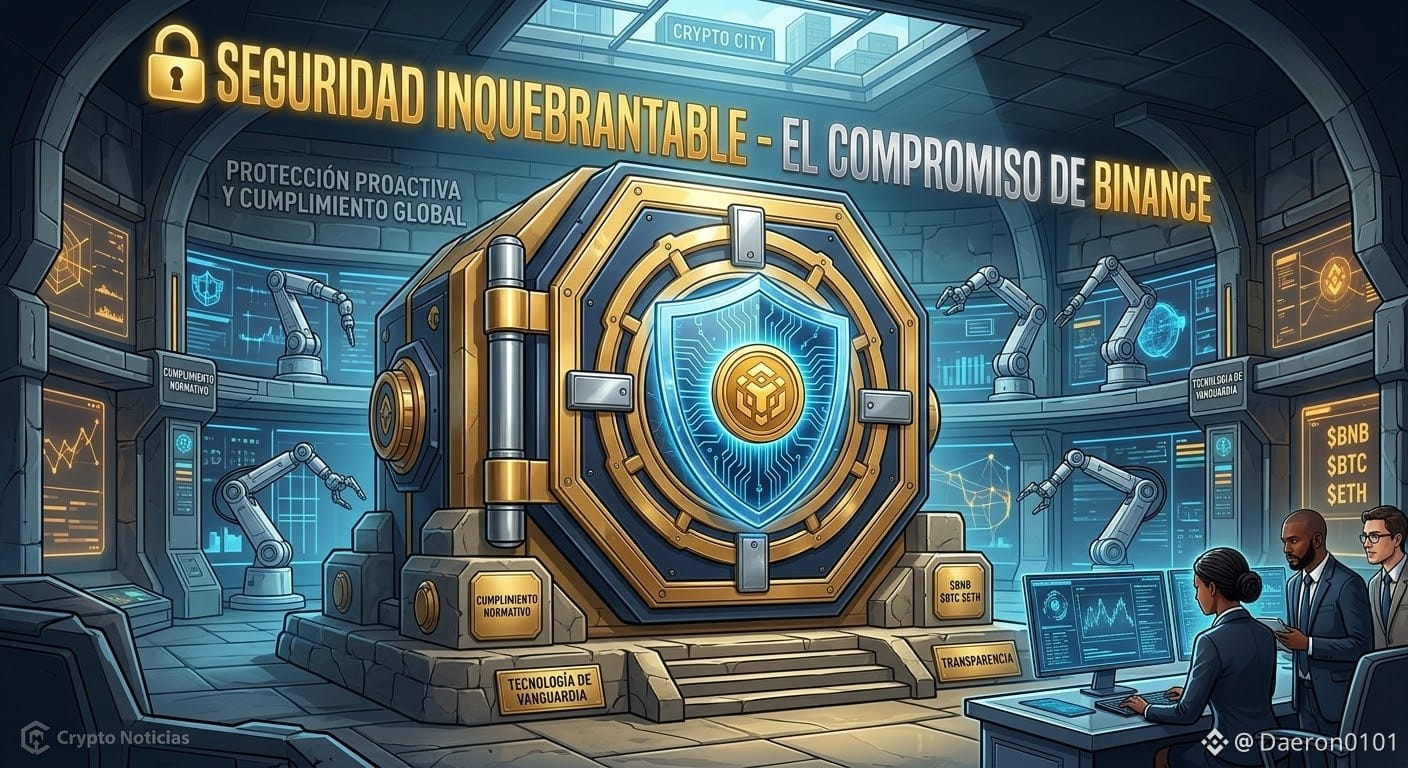
🔒 Ongoing Commitment to Security and Compliance
Binance reaffirms its unwavering commitment to the security of its users and strict global regulatory compliance. In a constantly evolving digital environment, the platform continuously implements proactive measures to safeguard the community’s assets and information.
This includes regularly updating security protocols, collaborating with regulatory authorities to establish clear frameworks, and investing in advanced monitoring technologies. For Binance, transparency and trust are fundamental pillars for the sustainable development of the crypto ecosystem.
What security measures do you consider most important for protecting your digital assets, and which aspect of regulatory compliance do you think is crucial for mass adoption?
Comment and let’s learn together 👇
$BNB
#SeguridadCripto #BinanceSquare
{future}(BNBUSDT)
🔒 Ongoing Commitment to Security and Compliance
Binance reaffirms its unwavering commitment to the security of its users and strict global regulatory compliance. In a constantly evolving digital environment, the platform continuously implements proactive measures to safeguard the community’s assets and information.
This includes regularly updating security protocols, collaborating with regulatory authorities to establish clear frameworks, and investing in advanced monitoring technologies. For Binance, transparency and trust are fundamental pillars for the sustainable development of the crypto ecosystem.
What security measures do you consider most important for protecting your digital assets, and which aspect of regulatory compliance do you think is crucial for mass adoption?
Comment and let’s learn together 👇
$BNB
#SeguridadCripto #BinanceSquare
Binance reaffirms its unwavering commitment to the security of its users and strict global regulatory compliance. In a constantly evolving digital environment, the platform continuously implements proactive measures to safeguard the community’s assets and information.
This includes regularly updating security protocols, collaborating with regulatory authorities to establish clear frameworks, and investing in advanced monitoring technologies. For Binance, transparency and trust are fundamental pillars for the sustainable development of the crypto ecosystem.
What security measures do you consider most important for protecting your digital assets, and which aspect of regulatory compliance do you think is crucial for mass adoption?
Comment and let’s learn together 👇
$BNB
#SeguridadCripto #BinanceSquare
1
37
·
--
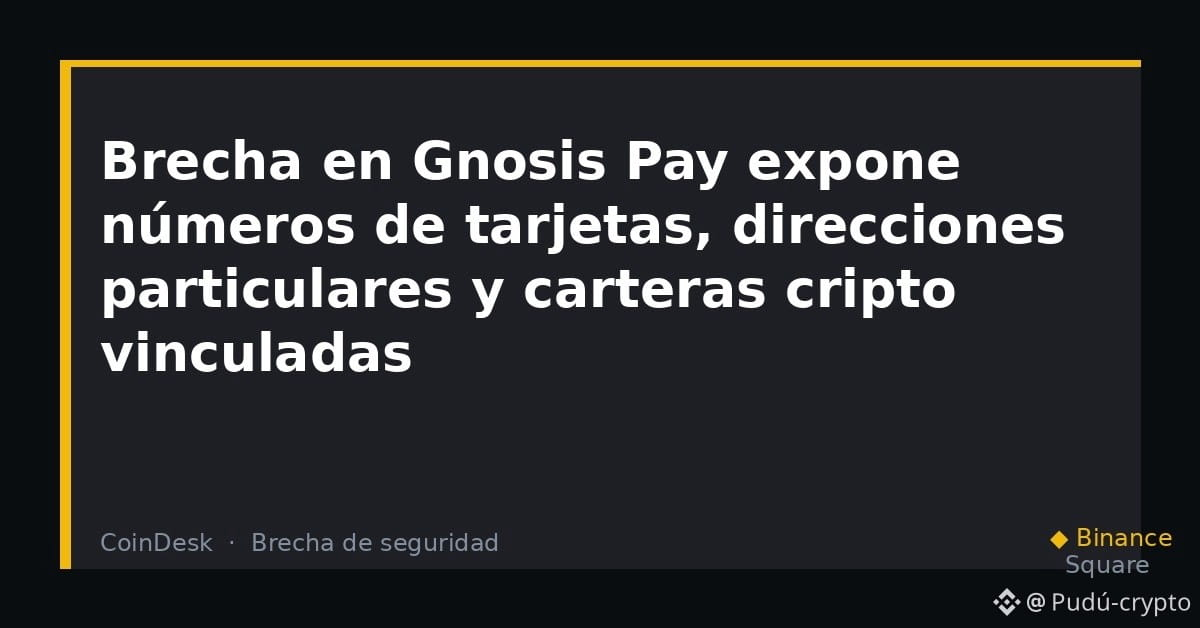
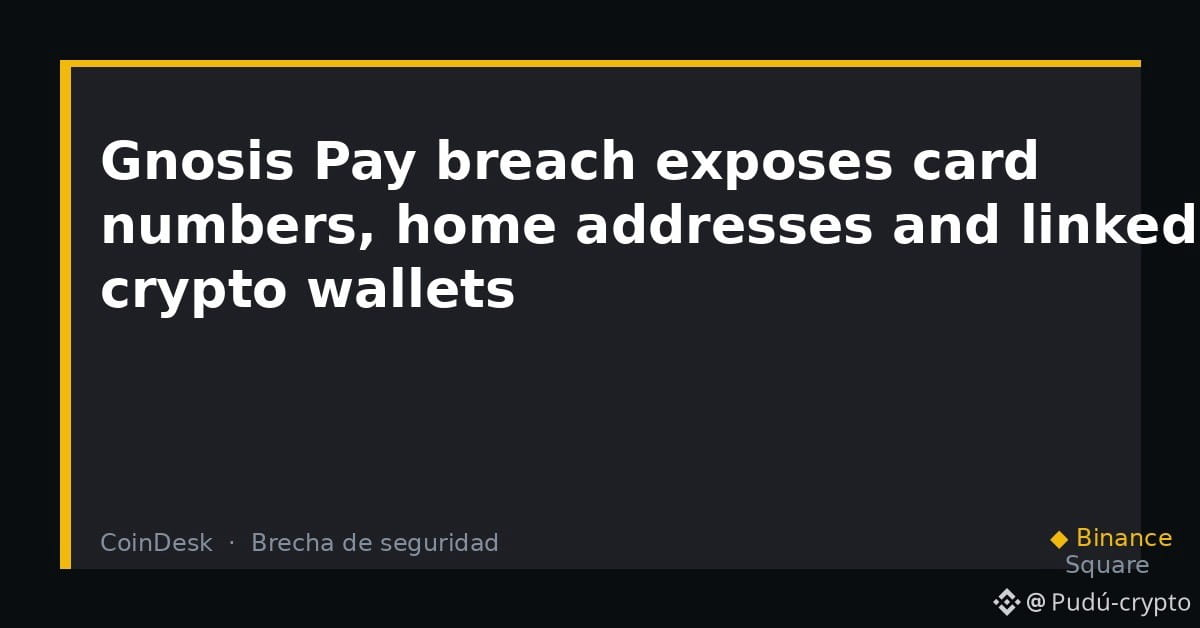
There was a serious data breach at Gnosis Pay.
Card numbers, home addresses, and crypto wallets were exposed.
One user commented that their personal data is now directly linked to their wallets.
This greatly increases the risk of targeted scams against those affected.
It’s a stark reminder of the importance of keeping our personal data secure.
What steps do you take to protect your private information?
#GnosisPay #SeguridadCripto $BTC
There was a serious data breach at Gnosis Pay.
Card numbers, home addresses, and crypto wallets were exposed.
One user commented that their personal data is now directly linked to their wallets.
This greatly increases the risk of targeted scams against those affected.
It’s a stark reminder of the importance of keeping our personal data secure.
What steps do you take to protect your private information?
#GnosisPay #SeguridadCripto $BTC
Card numbers, home addresses, and crypto wallets were exposed.
One user commented that their personal data is now directly linked to their wallets.
This greatly increases the risk of targeted scams against those affected.
It’s a stark reminder of the importance of keeping our personal data secure.
What steps do you take to protect your private information?
#GnosisPay #SeguridadCripto $BTC
82

·
--
Bearish
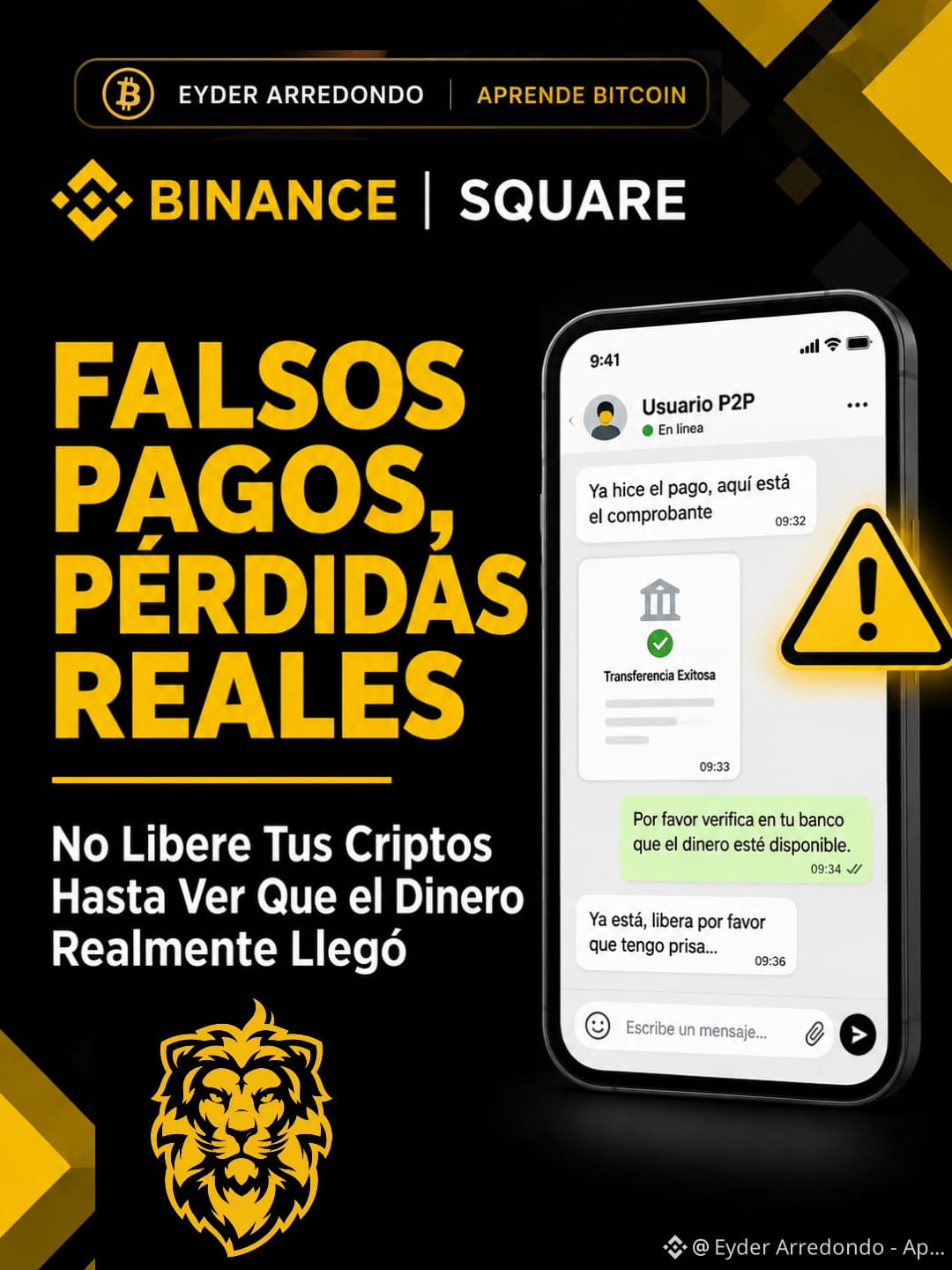
🚨 One of the most common scams in P2P trading involves trying to convince the seller that the payment has already been made, when in reality the money never arrived in their account.
How do they do it? They use fake receipts, manipulated screenshots, or messages that make it look as if a transfer was successful.
To avoid falling for this scam, keep these recommendations in mind:
🔸 1. Don’t trust screenshots.
A receipt doesn’t prove that you received the money.
🔸 2. Check directly with your bank.
Open your banking app and confirm that the money appears as received and available.
🔸 3. Don’t release your crypto under pressure.
If the buyer insists that you release it quickly, stay calm and verify first.
🔸 4. Check the account holder’s name.
The account holder sending the payment must match the verified name of your counterparty on Binance.
🔸 5. Keep communications on Binance.
Don’t accept external arrangements or follow instructions from strangers on WhatsApp or Telegram.
🔸 6. Don’t cancel an order at the buyer’s request if they’ve already sent the payment.
First, verify the situation and use Binance’s appeal process when appropriate.
🔸 7. Stop the transaction if you notice anything irregular.
Keep the evidence and contact official Binance Support through the platform’s channels.
DYOR.
#P2PTrading #SeguridadCripto #EducaciónFinanciera
🚨 One of the most common scams in P2P trading involves trying to convince the seller that the payment has already been made, when in reality the money never arrived in their account.
How do they do it? They use fake receipts, manipulated screenshots, or messages that make it look as if a transfer was successful.
To avoid falling for this scam, keep these recommendations in mind:
🔸 1. Don’t trust screenshots.
A receipt doesn’t prove that you received the money.
🔸 2. Check directly with your bank.
Open your banking app and confirm that the money appears as received and available.
🔸 3. Don’t release your crypto under pressure.
If the buyer insists that you release it quickly, stay calm and verify first.
🔸 4. Check the account holder’s name.
The account holder sending the payment must match the verified name of your counterparty on Binance.
🔸 5. Keep communications on Binance.
Don’t accept external arrangements or follow instructions from strangers on WhatsApp or Telegram.
🔸 6. Don’t cancel an order at the buyer’s request if they’ve already sent the payment.
First, verify the situation and use Binance’s appeal process when appropriate.
🔸 7. Stop the transaction if you notice anything irregular.
Keep the evidence and contact official Binance Support through the platform’s channels.
DYOR.
#P2PTrading #SeguridadCripto #EducaciónFinanciera
How do they do it? They use fake receipts, manipulated screenshots, or messages that make it look as if a transfer was successful.
To avoid falling for this scam, keep these recommendations in mind:
🔸 1. Don’t trust screenshots.
A receipt doesn’t prove that you received the money.
🔸 2. Check directly with your bank.
Open your banking app and confirm that the money appears as received and available.
🔸 3. Don’t release your crypto under pressure.
If the buyer insists that you release it quickly, stay calm and verify first.
🔸 4. Check the account holder’s name.
The account holder sending the payment must match the verified name of your counterparty on Binance.
🔸 5. Keep communications on Binance.
Don’t accept external arrangements or follow instructions from strangers on WhatsApp or Telegram.
🔸 6. Don’t cancel an order at the buyer’s request if they’ve already sent the payment.
First, verify the situation and use Binance’s appeal process when appropriate.
🔸 7. Stop the transaction if you notice anything irregular.
Keep the evidence and contact official Binance Support through the platform’s channels.
DYOR.
#P2PTrading #SeguridadCripto #EducaciónFinanciera
2
3
2.7k


·
--
Crypto card provider Gnosis Pay reported that hackers accessed customer data.
According to Decrypt, the attack may have occurred earlier this month.
Traders should be aware of this incident because it could affect confidence in cryptocurrency payment services, which may indirectly impact transaction volume.
The Gnosis Pay hack could indicate that some crypto payment service providers are not secure enough, potentially affecting online cryptocurrency trading.
Do you think this incident will raise awareness among traders and users about the security of crypto payment services?
#GnosisPay #HackeoCripto #SeguridadCripto #BinanceSquare
Crypto card provider Gnosis Pay reported that hackers accessed customer data.
According to Decrypt, the attack may have occurred earlier this month.
Traders should be aware of this incident because it could affect confidence in cryptocurrency payment services, which may indirectly impact transaction volume.
The Gnosis Pay hack could indicate that some crypto payment service providers are not secure enough, potentially affecting online cryptocurrency trading.
Do you think this incident will raise awareness among traders and users about the security of crypto payment services?
#GnosisPay #HackeoCripto #SeguridadCripto #BinanceSquare
According to Decrypt, the attack may have occurred earlier this month.
Traders should be aware of this incident because it could affect confidence in cryptocurrency payment services, which may indirectly impact transaction volume.
The Gnosis Pay hack could indicate that some crypto payment service providers are not secure enough, potentially affecting online cryptocurrency trading.
Do you think this incident will raise awareness among traders and users about the security of crypto payment services?
#GnosisPay #HackeoCripto #SeguridadCripto #BinanceSquare
163

·
--
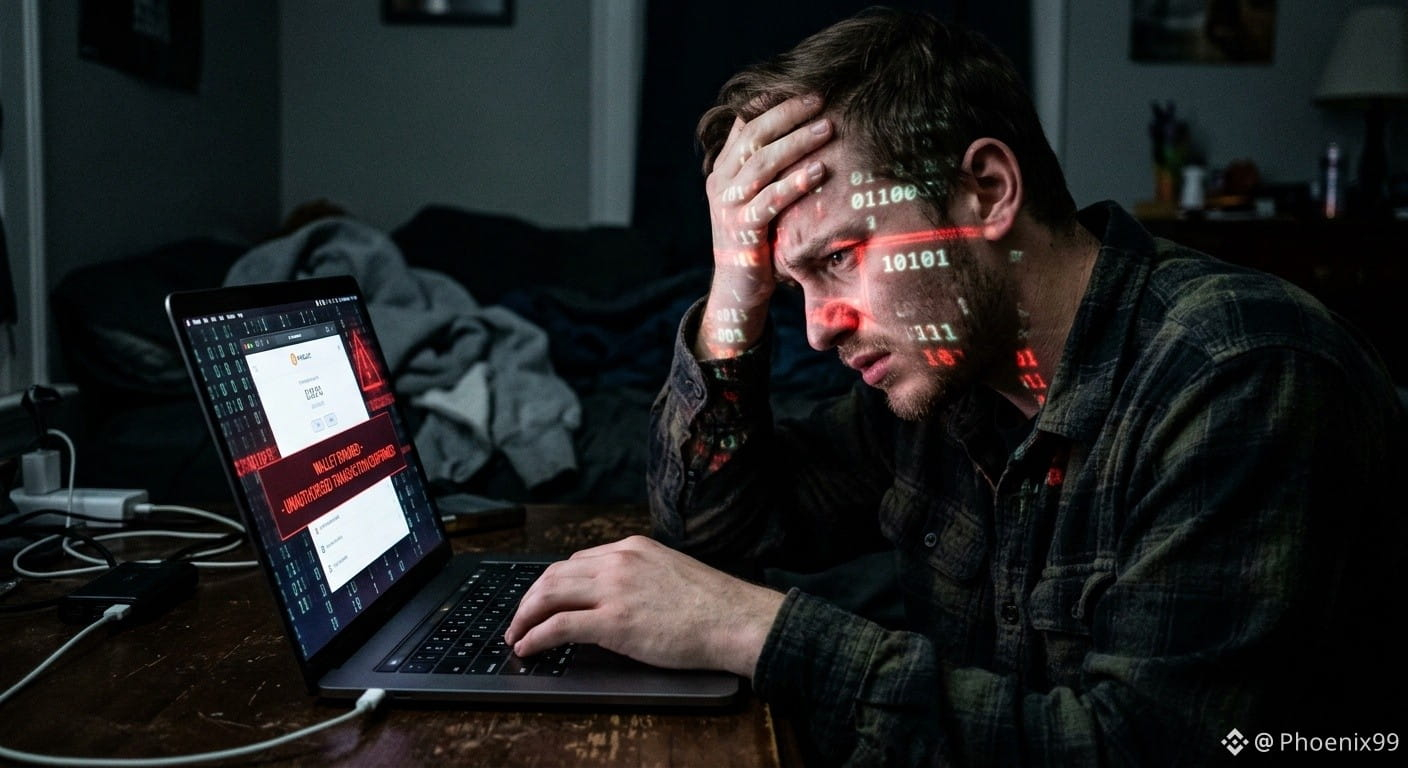
Maybe this post isn't the best of all, but if I can help prevent a parent from being scammed while they're just trying to earn a few dollars or protect some of their savings with cryptocurrencies by creating addresses outside Binance, then it's worth it.
I've been interacting on several cryptocurrency-related platforms and have seen malicious actors—basically scammers—encouraging people to generate their private keys or seed phrases using web-based tools and links.
To disguise their intentions, they try to confuse readers with complex terminology, making it seem like their web algorithms are the ultimate in security.
Don't fall for that trap.
The technical reality: Generating a seed in a web browser is a massive risk. Browsers are exposed to malware, clipboard access, malicious extensions, and so on. Even the trick of “disconnecting from the internet” doesn't work; scripts can save data locally in the cache and send it to the attacker as soon as the machine reconnects.
My impartiality and your only 3 safe options:
To be clear, I have no sponsors or commercial interest in selling you any brand of cold wallet.
My only goal as a developer and an empathetic human being is to protect those who are just venturing into this beautiful world. If you want to protect your funds, there are only three legitimate ways:
1️⃣ Cold wallets: The industry's gold standard for generating and isolating your keys completely offline.
2️⃣ Audited open-source software: If a cold wallet is expensive in your region, use tested native clients (such as Bitcoin Core or Electrum) on a machine that is 100% offline.
3️⃣ Absolute sovereignty: For advanced programmers, write your own local script, calculating the math from real physical entropy.
Don't entrust the foundation of your security to a third-party website!
#SeguridadCripto #Bitcoin #SelfCustody 🚀
Maybe this post isn't the best of all, but if I can help prevent a parent from being scammed while they're just trying to earn a few dollars or protect some of their savings with cryptocurrencies by creating addresses outside Binance, then it's worth it.
I've been interacting on several cryptocurrency-related platforms and have seen malicious actors—basically scammers—encouraging people to generate their private keys or seed phrases using web-based tools and links.
To disguise their intentions, they try to confuse readers with complex terminology, making it seem like their web algorithms are the ultimate in security.
Don't fall for that trap.
The technical reality: Generating a seed in a web browser is a massive risk. Browsers are exposed to malware, clipboard access, malicious extensions, and so on. Even the trick of “disconnecting from the internet” doesn't work; scripts can save data locally in the cache and send it to the attacker as soon as the machine reconnects.
My impartiality and your only 3 safe options:
To be clear, I have no sponsors or commercial interest in selling you any brand of cold wallet.
My only goal as a developer and an empathetic human being is to protect those who are just venturing into this beautiful world. If you want to protect your funds, there are only three legitimate ways:
1️⃣ Cold wallets: The industry's gold standard for generating and isolating your keys completely offline.
2️⃣ Audited open-source software: If a cold wallet is expensive in your region, use tested native clients (such as Bitcoin Core or Electrum) on a machine that is 100% offline.
3️⃣ Absolute sovereignty: For advanced programmers, write your own local script, calculating the math from real physical entropy.
Don't entrust the foundation of your security to a third-party website!
#SeguridadCripto #Bitcoin #SelfCustody 🚀
I've been interacting on several cryptocurrency-related platforms and have seen malicious actors—basically scammers—encouraging people to generate their private keys or seed phrases using web-based tools and links.
To disguise their intentions, they try to confuse readers with complex terminology, making it seem like their web algorithms are the ultimate in security.
Don't fall for that trap.
The technical reality: Generating a seed in a web browser is a massive risk. Browsers are exposed to malware, clipboard access, malicious extensions, and so on. Even the trick of “disconnecting from the internet” doesn't work; scripts can save data locally in the cache and send it to the attacker as soon as the machine reconnects.
My impartiality and your only 3 safe options:
To be clear, I have no sponsors or commercial interest in selling you any brand of cold wallet.
My only goal as a developer and an empathetic human being is to protect those who are just venturing into this beautiful world. If you want to protect your funds, there are only three legitimate ways:
1️⃣ Cold wallets: The industry's gold standard for generating and isolating your keys completely offline.
2️⃣ Audited open-source software: If a cold wallet is expensive in your region, use tested native clients (such as Bitcoin Core or Electrum) on a machine that is 100% offline.
3️⃣ Absolute sovereignty: For advanced programmers, write your own local script, calculating the math from real physical entropy.
Don't entrust the foundation of your security to a third-party website!
#SeguridadCripto #Bitcoin #SelfCustody 🚀
94

What happened, and how did they manage to hack Binance?
$BNB
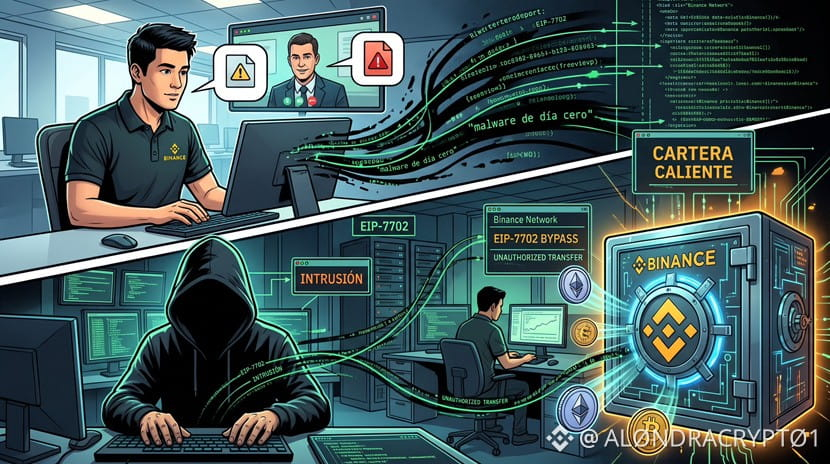
Binance revealed the details of the $6.3 billion hack, attributed to North Korean hackers, and the story sounds like something out of a movie. It wasn’t a system failure, but an attack that lasted for months and began with human error.
1. The fake job interview: A hacker posed as a recruiter on a job platform and contacted a Binance engineer. They gained the engineer’s trust through video calls and fake profiles. During the “second interview,” they asked the engineer to download a file for a coding test. The file contained spyware that infected the engineer’s work computer.
2. The infiltration: With that access, the attackers broke into the computers of other engineers on the company’s wallet team.
3. The theft: Once inside, they used an Ethereum protocol (EIP-7702) to obtain withdrawal permissions for a hot wallet (connected to the internet). No individual Binance key could stop the attack in time because the company’s wallets require multiple authorizations. This delayed the response by a few hours while the funds were being moved out.
The good news: Binance says that 98% of the stolen funds have already been replenished with the company’s own money, and $2.85 billion has been frozen. They also guarantee that users won’t be affected.
What do you think of the hackers’ strategy? Are you surprised that a giant like Binance fell for a social engineering trick? Let me know in the comments! 👇
#Binance #SeguridadCripto
{future}(BNBUSDT)
What happened, and how did they manage to hack Binance?
$BNB
Binance revealed the details of the $6.3 billion hack, attributed to North Korean hackers, and the story sounds like something out of a movie. It wasn’t a system failure, but an attack that lasted for months and began with human error.
1. The fake job interview: A hacker posed as a recruiter on a job platform and contacted a Binance engineer. They gained the engineer’s trust through video calls and fake profiles. During the “second interview,” they asked the engineer to download a file for a coding test. The file contained spyware that infected the engineer’s work computer.
2. The infiltration: With that access, the attackers broke into the computers of other engineers on the company’s wallet team.
3. The theft: Once inside, they used an Ethereum protocol (EIP-7702) to obtain withdrawal permissions for a hot wallet (connected to the internet). No individual Binance key could stop the attack in time because the company’s wallets require multiple authorizations. This delayed the response by a few hours while the funds were being moved out.
The good news: Binance says that 98% of the stolen funds have already been replenished with the company’s own money, and $2.85 billion has been frozen. They also guarantee that users won’t be affected.
What do you think of the hackers’ strategy? Are you surprised that a giant like Binance fell for a social engineering trick? Let me know in the comments! 👇
#Binance #SeguridadCripto
$BNB
Binance revealed the details of the $6.3 billion hack, attributed to North Korean hackers, and the story sounds like something out of a movie. It wasn’t a system failure, but an attack that lasted for months and began with human error.
1. The fake job interview: A hacker posed as a recruiter on a job platform and contacted a Binance engineer. They gained the engineer’s trust through video calls and fake profiles. During the “second interview,” they asked the engineer to download a file for a coding test. The file contained spyware that infected the engineer’s work computer.
2. The infiltration: With that access, the attackers broke into the computers of other engineers on the company’s wallet team.
3. The theft: Once inside, they used an Ethereum protocol (EIP-7702) to obtain withdrawal permissions for a hot wallet (connected to the internet). No individual Binance key could stop the attack in time because the company’s wallets require multiple authorizations. This delayed the response by a few hours while the funds were being moved out.
The good news: Binance says that 98% of the stolen funds have already been replenished with the company’s own money, and $2.85 billion has been frozen. They also guarantee that users won’t be affected.
What do you think of the hackers’ strategy? Are you surprised that a giant like Binance fell for a social engineering trick? Let me know in the comments! 👇
#Binance #SeguridadCripto
1
3
3.8k
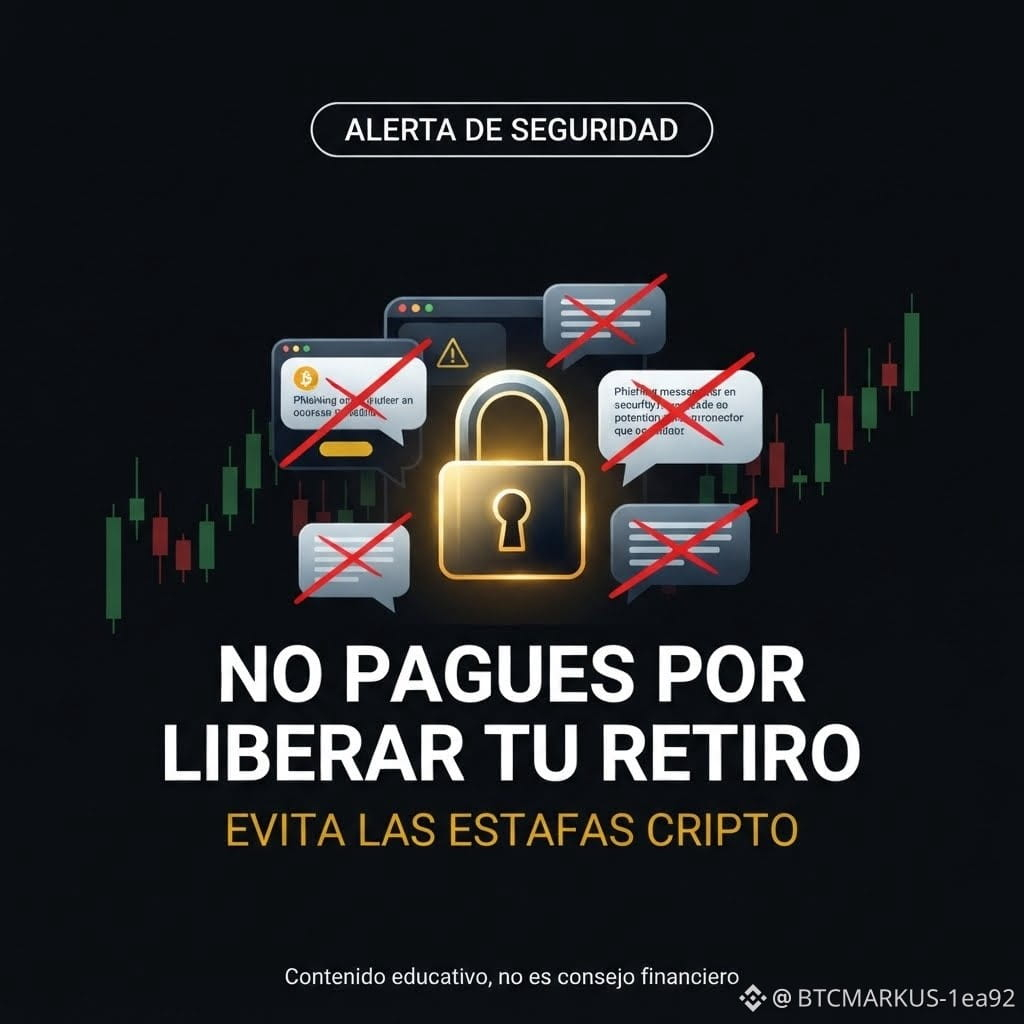
🚨 Are you being offered a faster Binance withdrawal in exchange for money? BEWARE.
Today, November 2, Binance warned about scammers taking advantage of the resumption of withdrawals to impersonate the platform.
There are three warning signs:
❌ Charging you to speed up a withdrawal.
❌ Offering you a priority place in the queue.
❌ Asking you to transfer your $BTC or move your funds to a supposed “secure vault.”
Binance also warns that you should never share passwords, 2FA codes, or recovery phrases.
🔐 Verify your transactions only through the app and official channels.
💬 Question: Which of these scams do you consider the most dangerous: fake fees, private messages, or fake vaults?
I’m building this community to learn, analyze, and share verified crypto information. Follow me and join in. 🤝
#BTC #SeguridadCripto #EstafasCripto #EducacionFinanciera
$BTC
{spot}(BTCUSDT)
🚨 Are you being offered a faster Binance withdrawal in exchange for money? BEWARE.
Today, November 2, Binance warned about scammers taking advantage of the resumption of withdrawals to impersonate the platform.
There are three warning signs:
❌ Charging you to speed up a withdrawal.
❌ Offering you a priority place in the queue.
❌ Asking you to transfer your $BTC or move your funds to a supposed “secure vault.”
Binance also warns that you should never share passwords, 2FA codes, or recovery phrases.
🔐 Verify your transactions only through the app and official channels.
💬 Question: Which of these scams do you consider the most dangerous: fake fees, private messages, or fake vaults?
I’m building this community to learn, analyze, and share verified crypto information. Follow me and join in. 🤝
#BTC #SeguridadCripto #EstafasCripto #EducacionFinanciera
$BTC
Today, November 2, Binance warned about scammers taking advantage of the resumption of withdrawals to impersonate the platform.
There are three warning signs:
❌ Charging you to speed up a withdrawal.
❌ Offering you a priority place in the queue.
❌ Asking you to transfer your $BTC or move your funds to a supposed “secure vault.”
Binance also warns that you should never share passwords, 2FA codes, or recovery phrases.
🔐 Verify your transactions only through the app and official channels.
💬 Question: Which of these scams do you consider the most dangerous: fake fees, private messages, or fake vaults?
I’m building this community to learn, analyze, and share verified crypto information. Follow me and join in. 🤝
#BTC #SeguridadCripto #EstafasCripto #EducacionFinanciera
$BTC
1
127
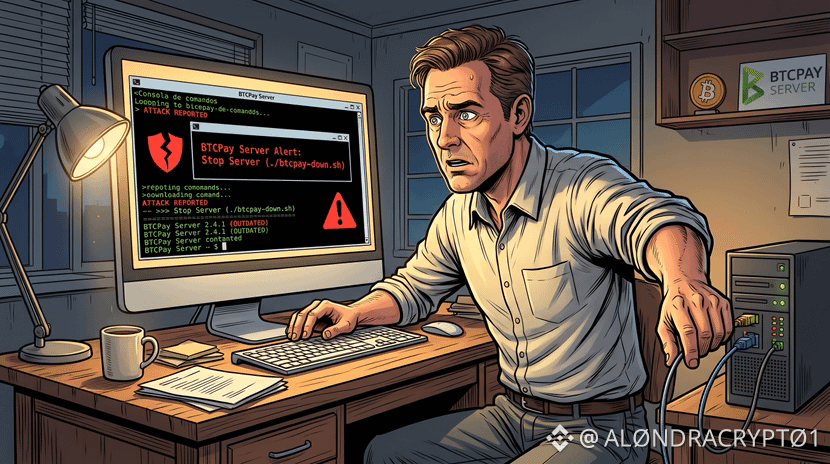
$BTC Alert on BTCPay Server: the real risk of hot wallets and self-custody ⚠️💻
BTCPay Server, the popular open-source payment processor that lets merchants accept Bitcoin without intermediaries, asked its users to shut down their servers following reports of attackers draining hot wallets.
What happened, and what can we learn from this case?
- Exposed hot wallets: When a server stores the seed phrases or keys used to automate payments and payouts, any breach of the server gives the attacker free rein to drain the funds.
- The other side of decentralization: Since these are independent private servers, there is no central company with a switch to stop the attack; each merchant is entirely responsible for their own security and for shutting down their system.
- The importance of updating: The incidents appear to be concentrated on outdated versions (earlier than 2.4.2). In crypto infrastructure, putting off a software update is like leaving the door open.
🔖 Golden rule:
For a business or payment gateway, never keep more money in a connected hot wallet than is strictly necessary for day-to-day operations. Everything else should be swept into a cold wallet.
📌 If you accept Bitcoin in your business or manage your own servers, do you keep your systems up to date, or do you tend to put it off?
#noticias 🗞️
#bitcoin #SeguridadCripto
{future}(BTCUSDT)
$BTC Alert on BTCPay Server: the real risk of hot wallets and self-custody ⚠️💻
BTCPay Server, the popular open-source payment processor that lets merchants accept Bitcoin without intermediaries, asked its users to shut down their servers following reports of attackers draining hot wallets.
What happened, and what can we learn from this case?
- Exposed hot wallets: When a server stores the seed phrases or keys used to automate payments and payouts, any breach of the server gives the attacker free rein to drain the funds.
- The other side of decentralization: Since these are independent private servers, there is no central company with a switch to stop the attack; each merchant is entirely responsible for their own security and for shutting down their system.
- The importance of updating: The incidents appear to be concentrated on outdated versions (earlier than 2.4.2). In crypto infrastructure, putting off a software update is like leaving the door open.
🔖 Golden rule:
For a business or payment gateway, never keep more money in a connected hot wallet than is strictly necessary for day-to-day operations. Everything else should be swept into a cold wallet.
📌 If you accept Bitcoin in your business or manage your own servers, do you keep your systems up to date, or do you tend to put it off?
#noticias 🗞️
#bitcoin #SeguridadCripto
BTCPay Server, the popular open-source payment processor that lets merchants accept Bitcoin without intermediaries, asked its users to shut down their servers following reports of attackers draining hot wallets.
What happened, and what can we learn from this case?
- Exposed hot wallets: When a server stores the seed phrases or keys used to automate payments and payouts, any breach of the server gives the attacker free rein to drain the funds.
- The other side of decentralization: Since these are independent private servers, there is no central company with a switch to stop the attack; each merchant is entirely responsible for their own security and for shutting down their system.
- The importance of updating: The incidents appear to be concentrated on outdated versions (earlier than 2.4.2). In crypto infrastructure, putting off a software update is like leaving the door open.
🔖 Golden rule:
For a business or payment gateway, never keep more money in a connected hot wallet than is strictly necessary for day-to-day operations. Everything else should be swept into a cold wallet.
📌 If you accept Bitcoin in your business or manage your own servers, do you keep your systems up to date, or do you tend to put it off?
#noticias 🗞️
#bitcoin #SeguridadCripto
4
1.3k


Article
BINANCE SECURITY🛡️ Peace, Confidence, and Extreme Care in Web3 BINANCE A CHAMPION.
For the Lord said to me this: I will remain still and watch from my dwelling place, like clear sunshine after the rain, and like a dewy cloud in the heat of harvest. Isaiah 18:4 (RV1960)
Binance family, it's time to speak frankly, stay calm, and keep your eyes wide open.
In the Word, we see how the Lord teaches us to be still and at peace, observing with complete serenity in the midst of any storm. That same stillness and tranquility is what we need to have today:
BINANCE SECURITY
🛡️ Peace, Confidence, and Extreme Care in Web3 BINANCE A CHAMPION.
For the Lord said to me this: I will remain still and watch from my dwelling place, like clear sunshine after the rain, and like a dewy cloud in the heat of harvest. Isaiah 18:4 (RV1960)
Binance family, it's time to speak frankly, stay calm, and keep your eyes wide open.
In the Word, we see how the Lord teaches us to be still and at peace, observing with complete serenity in the midst of any storm. That same stillness and tranquility is what we need to have today:
For the Lord said to me this: I will remain still and watch from my dwelling place, like clear sunshine after the rain, and like a dewy cloud in the heat of harvest. Isaiah 18:4 (RV1960)
Binance family, it's time to speak frankly, stay calm, and keep your eyes wide open.
In the Word, we see how the Lord teaches us to be still and at peace, observing with complete serenity in the midst of any storm. That same stillness and tranquility is what we need to have today:
272

Many people buy a hardware wallet and consider the security issue settled.
It makes sense to think that way. The device’s chip stores the key and never connects to the internet; signing happens inside it, without exposing the key. That blocks remote theft, because no virus on your computer can copy something that never leaves the device. But blocking that threat doesn’t block all the others.
Here’s what almost nobody checks. You visit a fake exchange site and authorize a contract to move your funds. Your computer shows 0.05 $ETH, but the information sent to the device is different: unlimited permission to access your wallet. The device displays it character by character on its own screen. If you confirm without reading, it signs exactly that. The chip didn’t fail. The decision did.
The device’s passphrase protects against someone who steals it, not against what you yourself approve by mistake: access is one thing, judgment is another. Confusing the two explains much of today’s crypto phishing. A paper wallet teaches the same lesson: taking a key offline protects it from one type of threat, not all of them. Paper gets wet, burns, or gets lost, and nobody notices until it’s too late. Being offline isn’t the same as being safe.
A hardware wallet protects the key; signing is still a human decision, and that’s where its real limitation lies.
KEY CONCEPTS
- The offline chip prevents remote theft of the key, but it doesn’t verify whether the transaction you’re signing is legitimate.
- The passphrase protects the device from physical theft, not from transactions you yourself authorize by mistake.
- No wallet, hardware or paper, replaces the habit of reading the screen before confirming.
The device keeps the key away from the internet. Reading every signature before confirming is your job, not any chip’s.
Transparency: Binance may pay us a commission if you trade after clicking an asset symbol or a price link in this post.
#Custodia #Autocustodia #SeguridadCripto #HardwareWallet
Many people buy a hardware wallet and consider the security issue settled.
It makes sense to think that way. The device’s chip stores the key and never connects to the internet; signing happens inside it, without exposing the key. That blocks remote theft, because no virus on your computer can copy something that never leaves the device. But blocking that threat doesn’t block all the others.
Here’s what almost nobody checks. You visit a fake exchange site and authorize a contract to move your funds. Your computer shows 0.05 $ETH , but the information sent to the device is different: unlimited permission to access your wallet. The device displays it character by character on its own screen. If you confirm without reading, it signs exactly that. The chip didn’t fail. The decision did.
The device’s passphrase protects against someone who steals it, not against what you yourself approve by mistake: access is one thing, judgment is another. Confusing the two explains much of today’s crypto phishing. A paper wallet teaches the same lesson: taking a key offline protects it from one type of threat, not all of them. Paper gets wet, burns, or gets lost, and nobody notices until it’s too late. Being offline isn’t the same as being safe.
A hardware wallet protects the key; signing is still a human decision, and that’s where its real limitation lies.
KEY CONCEPTS
- The offline chip prevents remote theft of the key, but it doesn’t verify whether the transaction you’re signing is legitimate.
- The passphrase protects the device from physical theft, not from transactions you yourself authorize by mistake.
- No wallet, hardware or paper, replaces the habit of reading the screen before confirming.
The device keeps the key away from the internet. Reading every signature before confirming is your job, not any chip’s.
Transparency: Binance may pay us a commission if you trade after clicking an asset symbol or a price link in this post.
#Custodia #Autocustodia #SeguridadCripto #HardwareWallet
It makes sense to think that way. The device’s chip stores the key and never connects to the internet; signing happens inside it, without exposing the key. That blocks remote theft, because no virus on your computer can copy something that never leaves the device. But blocking that threat doesn’t block all the others.
Here’s what almost nobody checks. You visit a fake exchange site and authorize a contract to move your funds. Your computer shows 0.05 $ETH , but the information sent to the device is different: unlimited permission to access your wallet. The device displays it character by character on its own screen. If you confirm without reading, it signs exactly that. The chip didn’t fail. The decision did.
The device’s passphrase protects against someone who steals it, not against what you yourself approve by mistake: access is one thing, judgment is another. Confusing the two explains much of today’s crypto phishing. A paper wallet teaches the same lesson: taking a key offline protects it from one type of threat, not all of them. Paper gets wet, burns, or gets lost, and nobody notices until it’s too late. Being offline isn’t the same as being safe.
A hardware wallet protects the key; signing is still a human decision, and that’s where its real limitation lies.
KEY CONCEPTS
- The offline chip prevents remote theft of the key, but it doesn’t verify whether the transaction you’re signing is legitimate.
- The passphrase protects the device from physical theft, not from transactions you yourself authorize by mistake.
- No wallet, hardware or paper, replaces the habit of reading the screen before confirming.
The device keeps the key away from the internet. Reading every signature before confirming is your job, not any chip’s.
Transparency: Binance may pay us a commission if you trade after clicking an asset symbol or a price link in this post.
#Custodia #Autocustodia #SeguridadCripto #HardwareWallet

1
150
The 3 KEY LESSONS for anyone who invests.
1. Stablecoins ($USDT,$USDC) aren’t 100% yours:
They’re excellent tools for locking in profits or sending quick payments, but they have a centralized pause button. If the issuing company comes under pressure, suspects your account, or there’s a mix-up, your funds can be blocked with a single click.
2. Bitcoin ($BTC ) means absolute freedom, but with total risk:
No one in the world (not governments, not companies) can pause or freeze a Bitcoin wallet at the code level. However, that same freedom means that if you get hacked or send funds to the wrong address, there’s no customer service you can call to get your money back.
3. Don’t count on “the industry” to bail you out:
Binance got help within hours because moving $3.000 million put the reputation of the entire crypto market at stake. If a scammer or hacker steals $500 or $5.000 from an ordinary user, no one is going to press an emergency button for them. What can we ordinary people do? Take responsibility for our own security: never keep all your savings in one place, separate your trading money from your long-term money, be wary of suspicious links, and always double-check before signing any transaction. In crypto, prevention is your only insurance.
Of these three realities, which do you find hardest to manage in your daily crypto routine?
Share your experience in the comments…
$BNB
#EducacionFinanciera #SeguridadCripto
{future}(BNBUSDT)
{future}(BTCUSDT)
The 3 KEY LESSONS for anyone who invests.
1. Stablecoins ($USDT,$USDC) aren’t 100% yours:
They’re excellent tools for locking in profits or sending quick payments, but they have a centralized pause button. If the issuing company comes under pressure, suspects your account, or there’s a mix-up, your funds can be blocked with a single click.
2. Bitcoin ($BTC ) means absolute freedom, but with total risk:
No one in the world (not governments, not companies) can pause or freeze a Bitcoin wallet at the code level. However, that same freedom means that if you get hacked or send funds to the wrong address, there’s no customer service you can call to get your money back.
3. Don’t count on “the industry” to bail you out:
Binance got help within hours because moving $3.000 million put the reputation of the entire crypto market at stake. If a scammer or hacker steals $500 or $5.000 from an ordinary user, no one is going to press an emergency button for them. What can we ordinary people do? Take responsibility for our own security: never keep all your savings in one place, separate your trading money from your long-term money, be wary of suspicious links, and always double-check before signing any transaction. In crypto, prevention is your only insurance.
Of these three realities, which do you find hardest to manage in your daily crypto routine?
Share your experience in the comments…
$BNB
#EducacionFinanciera #SeguridadCripto
1. Stablecoins ($USDT,$USDC) aren’t 100% yours:
They’re excellent tools for locking in profits or sending quick payments, but they have a centralized pause button. If the issuing company comes under pressure, suspects your account, or there’s a mix-up, your funds can be blocked with a single click.
2. Bitcoin ($BTC ) means absolute freedom, but with total risk:
No one in the world (not governments, not companies) can pause or freeze a Bitcoin wallet at the code level. However, that same freedom means that if you get hacked or send funds to the wrong address, there’s no customer service you can call to get your money back.
3. Don’t count on “the industry” to bail you out:
Binance got help within hours because moving $3.000 million put the reputation of the entire crypto market at stake. If a scammer or hacker steals $500 or $5.000 from an ordinary user, no one is going to press an emergency button for them. What can we ordinary people do? Take responsibility for our own security: never keep all your savings in one place, separate your trading money from your long-term money, be wary of suspicious links, and always double-check before signing any transaction. In crypto, prevention is your only insurance.
Of these three realities, which do you find hardest to manage in your daily crypto routine?
Share your experience in the comments…
$BNB
#EducacionFinanciera #SeguridadCripto
17
1
22
3.4k
·
--
EIP-7702 is a security upgrade for the Ethereum network that has been cited as one of the causes of the recent Binance hack. The upgrade aims to improve the security of transactions on the Ethereum network, but its implementation has raised some concerns among developers.
For traders, this news matters because it could affect the stability and security of transactions on the Ethereum network, potentially impacting the value of cryptocurrencies that use the network. Ethereum developers are working to implement the upgrade in a way that minimizes service disruptions.
But what measures do you think exchanges should take to protect themselves against future hacks?
#EIP-7702 #BinanceHack #Ethereum #CryptoSecurity
EIP-7702 is a security upgrade for the Ethereum network that has been cited as one of the causes of the recent Binance hack. The upgrade aims to improve the security of transactions on the Ethereum network, but its implementation has raised some concerns among developers.
For traders, this news matters because it could affect the stability and security of transactions on the Ethereum network, potentially impacting the value of cryptocurrencies that use the network. Ethereum developers are working to implement the upgrade in a way that minimizes service disruptions.
But what measures do you think exchanges should take to protect themselves against future hacks?
#EIP-7702 #BinanceHack #Ethereum #CryptoSecurity
For traders, this news matters because it could affect the stability and security of transactions on the Ethereum network, potentially impacting the value of cryptocurrencies that use the network. Ethereum developers are working to implement the upgrade in a way that minimizes service disruptions.
But what measures do you think exchanges should take to protect themselves against future hacks?
#EIP-7702 #BinanceHack #Ethereum #CryptoSecurity
226
Log in to explore more content
Join global crypto users on Binance Square
⚡️ Get latest and useful information about crypto.
💬 Trusted by the world’s largest crypto exchange.
👍 Discover real insights from verified creators.
Email / Phone number
Trending Topics
1
#IsAnthropic’s$1.5TMarketCapJustified?
13,603 views
108 Discussing
2
#BTCRemainsUnderPressureAfterHawkishFOMCMinutes
266,602 views
2,144 Discussing
3
#NvidiaBoardReportedlySplitOverHuang’sReturn
130,758 views
1,163 Discussing
4
#StrategySTRCPreferredSlips3.65%Below$100Par
9,046 views
88 Discussing
5
#MASToUpgradeSGDTestnetToSGDigitalLedger
26,124 views
288 Discussing
6
#CanGTA6'sLaunchLiftTTWOShares?
95,825 views
837 Discussing
7
#Solana2027RoadmapTargetsDoubleComputeCapacity
11,211 views
151 Discussing
8
#InjectiveTokenizedRealEstateMortgagesTop$1.5B
1,268 views
29 Discussing
9
#TetherMakesStrategicInvestmentInSCRYPT
8,441 views
114 Discussing
10
#CapitalGroupAdds1264500StrategyShares
35,102 views
247 Discussing