
#storage
storage
139,062 views
949 Discussing
Hot
Latest

·
--
The Zero-Downtime Storage Architecture: Why Cloud Outages Highlight On-Chain ResiliencyIn enterprise technology infrastructure, high availability is essential to commercial operations. When centralized cloud platforms suffer multi-hour service outages, organizations face immediate operational disruption, unfulfilled service agreements, and substantial transactional loss.
Despite substantial financial investments in multi-region redundancy, enterprise teams continually discover that centralized cloud vendors remain vulnerable to cascading single points of failure.
1. Systemic Vulnerabilities of Centralized Cloud Storage
Centralized object storage architectures share critical control planes that introduce systemic vulnerabilities:
- Centralized IAM Dependency: Requests to centralized cloud buckets require verification through global identity control planes. When authentication subsystems fail, storage operations halt across all geographic zones regardless of physical drive health.
- Automated Configuration Propagation: Automated software deployment pipelines can push faulty configuration tables or daemon updates across regional data centers simultaneously, bypassing isolated availability zones.
- Single Provider Infrastructure: Shared regional fiber backbones and power grids create hidden dependencies that undermine perceived infrastructure separation.
2. Byzantine Fault Tolerant Subnet Storage on the Internet Computer
Smart contract canisters deployed on the Internet Computer Protocol ($ICP) operate under an entirely different architecture:
- Subnet State Machine Replication: Canisters execute across decentralized subnets comprising 13 to 28 independent, geographically distributed node machines. Storage state is committed through Byzantine Fault Tolerant consensus.
- Zero Centralized Control Plane: Requests are validated cryptographically using threshold signatures rather than a corporate identity service, eliminating single-point administrative locks.
- Orthogonal Persistence: Memory is inherently persistent at the WebAssembly level. Canisters execute without external database connections, caches, or attached virtual volumes that can detach during regional incidents.
3. Economic and Operational Predictability
Beyond fault tolerance, canister-based storage alters cloud economics:
- Zero Egress Bandwidth Penalties: Data retrieval over decentralized boundary node gateways incurs zero egress fees, removing the unpredictable bandwidth extraction common to centralized clouds.
- Pegged Cycles Accounting: Infrastructure compute and memory costs are pegged to IMF Special Drawing Rights, decoupling operational overhead from token market fluctuations.
As institutional developers evaluate mission-critical disaster recovery strategies, the shift toward decentralized, canister-native storage represents a structural advance in operational continuity and sovereign data management.
$ICP #ICP #BinanceSquare #Storage
The Zero-Downtime Storage Architecture: Why Cloud Outages Highlight On-Chain Resiliency
In enterprise technology infrastructure, high availability is essential to commercial operations. When centralized cloud platforms suffer multi-hour service outages, organizations face immediate operational disruption, unfulfilled service agreements, and substantial transactional loss.
Despite substantial financial investments in multi-region redundancy, enterprise teams continually discover that centralized cloud vendors remain vulnerable to cascading single points of failure.
1. Systemic Vulnerabilities of Centralized Cloud Storage
Centralized object storage architectures share critical control planes that introduce systemic vulnerabilities:
- Centralized IAM Dependency: Requests to centralized cloud buckets require verification through global identity control planes. When authentication subsystems fail, storage operations halt across all geographic zones regardless of physical drive health.
- Automated Configuration Propagation: Automated software deployment pipelines can push faulty configuration tables or daemon updates across regional data centers simultaneously, bypassing isolated availability zones.
- Single Provider Infrastructure: Shared regional fiber backbones and power grids create hidden dependencies that undermine perceived infrastructure separation.
2. Byzantine Fault Tolerant Subnet Storage on the Internet Computer
Smart contract canisters deployed on the Internet Computer Protocol ($ICP ) operate under an entirely different architecture:
- Subnet State Machine Replication: Canisters execute across decentralized subnets comprising 13 to 28 independent, geographically distributed node machines. Storage state is committed through Byzantine Fault Tolerant consensus.
- Zero Centralized Control Plane: Requests are validated cryptographically using threshold signatures rather than a corporate identity service, eliminating single-point administrative locks.
- Orthogonal Persistence: Memory is inherently persistent at the WebAssembly level. Canisters execute without external database connections, caches, or attached virtual volumes that can detach during regional incidents.
3. Economic and Operational Predictability
Beyond fault tolerance, canister-based storage alters cloud economics:
- Zero Egress Bandwidth Penalties: Data retrieval over decentralized boundary node gateways incurs zero egress fees, removing the unpredictable bandwidth extraction common to centralized clouds.
- Pegged Cycles Accounting: Infrastructure compute and memory costs are pegged to IMF Special Drawing Rights, decoupling operational overhead from token market fluctuations.
As institutional developers evaluate mission-critical disaster recovery strategies, the shift toward decentralized, canister-native storage represents a structural advance in operational continuity and sovereign data management.
$ICP #ICP #BinanceSquare #Storage
1
370

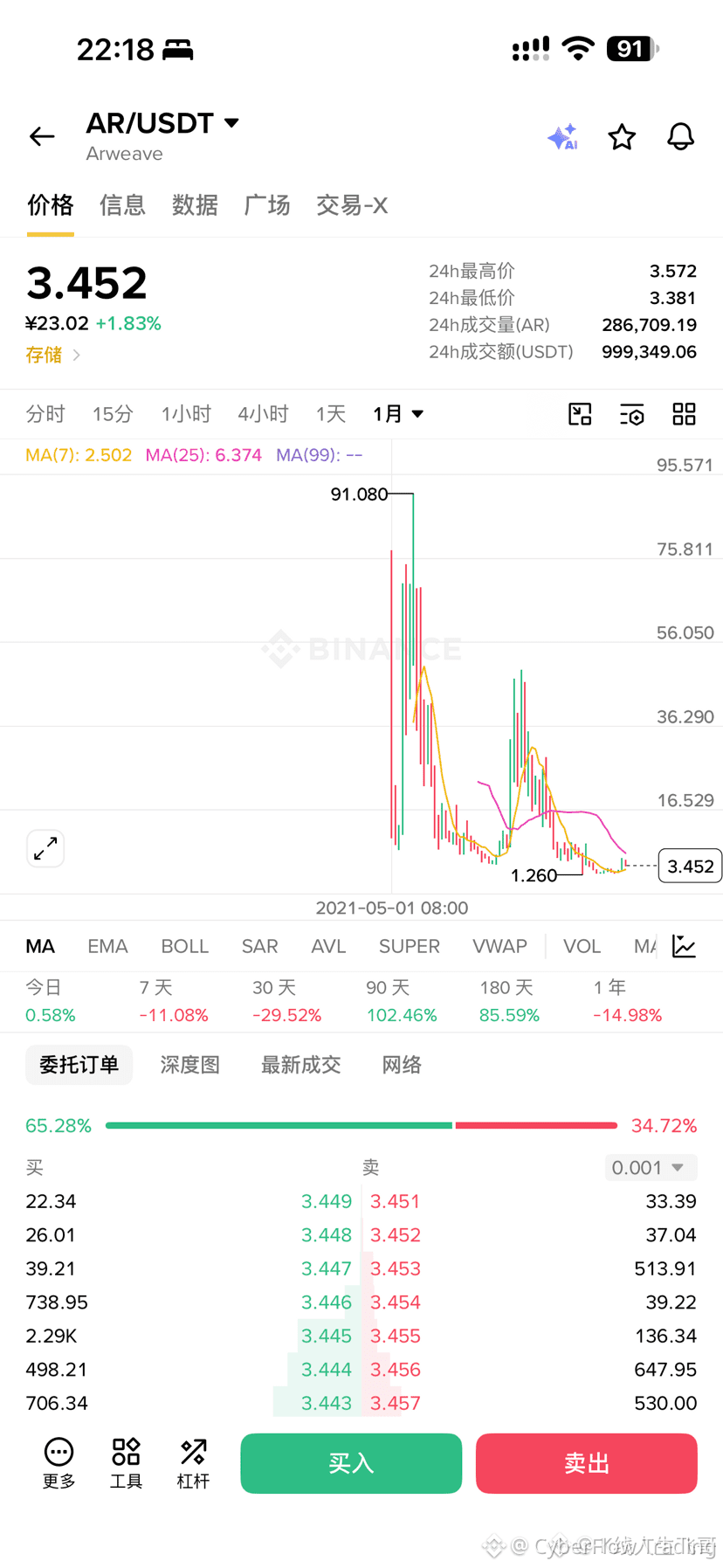
🚀 $AR PERMANENT STORAGE BET ON THE NEXT BULL RUN? 🟢
📊 AR’s promise of centuries‑long data immutability is a rare edge in a cloud‑dominated world, and smart‑money whales have already begun stacking the protocol on a few niche B2B contracts. ⚡ Yet the real question is whether enterprises will trust a decentralized vault over entrenched giants for mission‑critical archives.
💡 From a retail lens, the allure of “store forever” clashes with the practical pull of familiar cloud services, leaving demand a bit tentative. Light‑positioning now lets you watch the narrative unfold without overexposing to market noise. 💬 Do you see AR evolving into a mainstream storage layer or staying a niche play? 👇
⚠️ Not financial advice. Always manage your risk. 🛡️
🏷️ #AR #LongSetup #Storage #Crypto
🔥 🦈
61

·
--
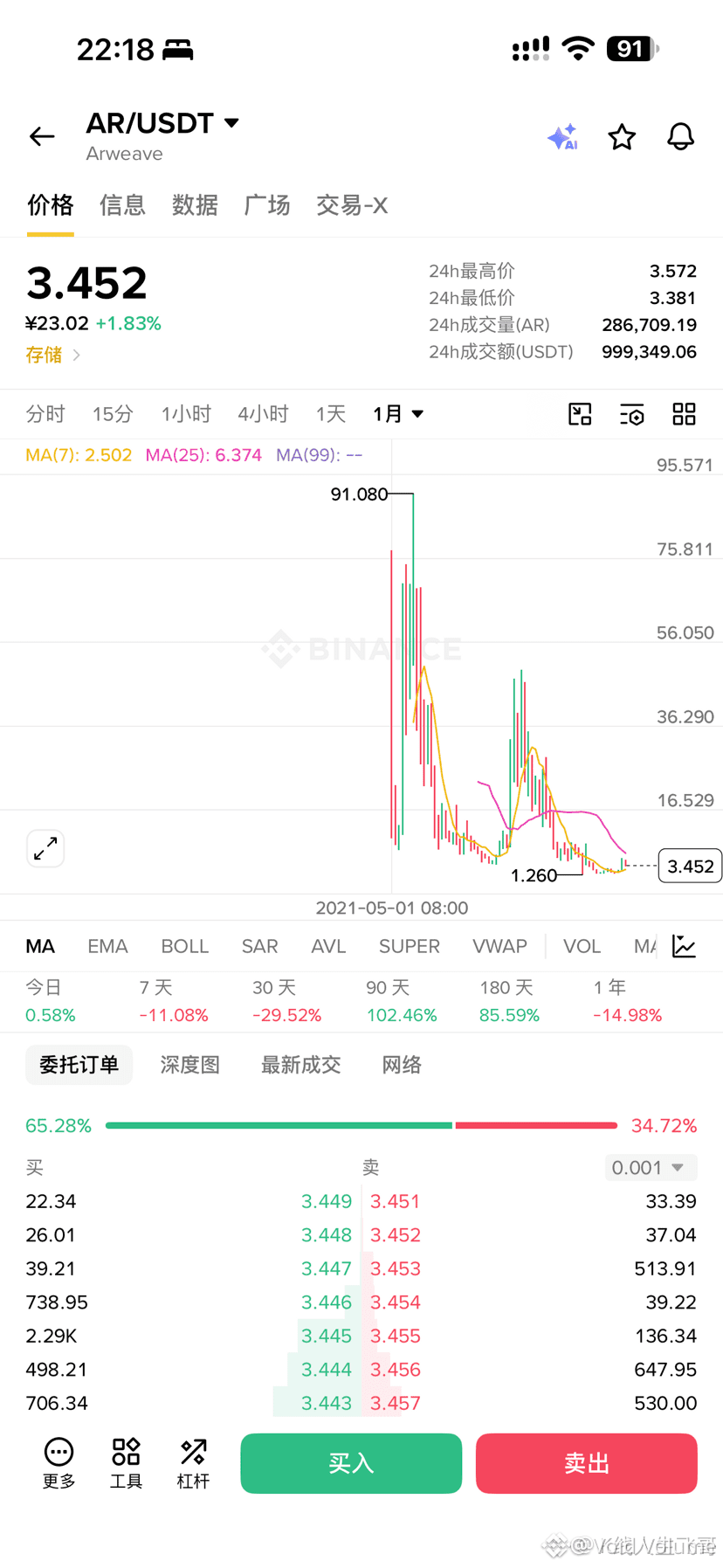
🚨 $AR PERMANENT STORAGE QUIRK: IS IT READY FOR THE NEXT BULL RUN? 🦈
Arweave’s promise of immutable, century‑scale storage is a rare institutional moat, but the real test is whether enterprises will hand over mission‑critical data to a decentralized layer instead of entrenched cloud giants. 📊 The order‑block of $AR has been absorbing sell pressure, yet volume on the 4‑hour chart remains modest, hinting at limited conviction.
On the consumer side, the psychological cost of trusting a protocol that must stay funded forever adds a liquidity‑drain factor. 💡 Until we see a clear pipeline of B2B contracts or a sustained on‑chain usage surge, the upside stays conditional. ⚡
💬 Do you think the institutional appetite for permanent storage will finally tip the scales for $AR ? 👇
⚠️ Not financial advice. Always manage your risk. 🛡️
🏷️ #AR #LongSetup #Storage #Crypto
🔥 💎
30
·
--
🦈 $FIL POISED TO ABSORB DATA CENTER DOWNTURN 🚀
📊 S&P’s latest rating alert flags 146 U.S. data‑center projects stalled by grid limits and community pushback, tightening credit profiles across the sector. 🌊 Institutional liquidity is already eyeing the emerging gap as developers scramble for rent credits and contract renegotiations.
💡 Decentralized storage tokens like $FIL stand to benefit from the systemic shift, offering a resilient alternative to power‑hungry facilities. 📈 Smart money may be reallocating exposure, hunting the order‑block where demand for off‑grid capacity spikes.
💬 Are you positioning for the storage wave before the data‑center slowdown fully materialises? 👇
⚠️ Not financial advice. Always manage your risk. 🛡️
🏷️ #FIL #SmartMoney #Storage #Crypto
🚀 ⚡
18

·
--
Data continues to grow at an incredible pace, and companies like Seagate play an important role in storing that information efficiently.
While AI often dominates headlines, reliable storage infrastructure remains essential behind the scenes.
As enterprises generate larger datasets, demand for scalable storage solutions is likely to remain an important theme.
Sometimes the strongest opportunities are found in businesses quietly supporting the entire digital economy rather than attracting daily attention.
#Seagate #storage $STXX #crypto #Technology #Investing $KORU
KORUETF-20.65%
STXXETF-24.19%
83

$FIL STORAGE SECTOR FINDS ITS FLOOR – AI DEMAND REMAINS INTACT 🔍
The recent selloff in storage tokens is purely sentiment-driven, not systemic. The pullback has approached a phase-wise bottom, and long-term AI demand logic hasn't changed. Strong earnings certainty projects will recover once short-term fear fades.
Volume is contracting on daily, suggesting sellers are exhausted. No leverage blow-ups here — just a normal correction after a big run. Are you accumulating at these levels or waiting for a lower sweep?
Not financial advice. Always manage your risk.
#FIL #Storage #AI #BottomPick
💎
160

·
--
💾 SanDisk (SNDK) just ripped +10.8% — the storage play nobody's talking about is making moves while everyone watches the AI headlines.
📊 Technical Snapshot:
• Price: $1,427.62 (up from $1,288)
• RSI: 47.6 — neutral, not overbought
• Trend: Consolidation with bullish breakout
• Volume: 14.5M shares — 1.44x normal (increasing!)
• 3-month range: $1,016–$2,335 (39% below highs, 40% above lows)
🧠 The Hidden Story:
Data creation is exploding — AI models need training data, enterprises need storage, and consumers need more SSDs than ever. SanDisk, as a leading flash storage manufacturer, benefits from every byte the world creates.
The +10.8% move on increasing volume is a strong technical signal. Price has cleared the SMA5 ($1,245) and SMA10 ($1,325) and is now testing the 20-day SMA ($1,477). A close above that level would confirm a trend reversal from the recent downtrend.
📍 Key Levels:
• Support: $1,333 (recent consolidation low)
• Resistance: $1,477 (20-day SMA) → $1,705 (50-day SMA)
• Upside target: $2,050
Storage isn't sexy like GPUs, but it's where the steady money flows. Every AI training run needs petabytes of data storage.
🤔 Storage stocks — hidden gem or permanently unsexy? Would you hold SNDK long-term? 👇
#SanDisk #Storage #DYOR
⚠️ Not financial advice. Always conduct your own analysis before making investment decisions.
18

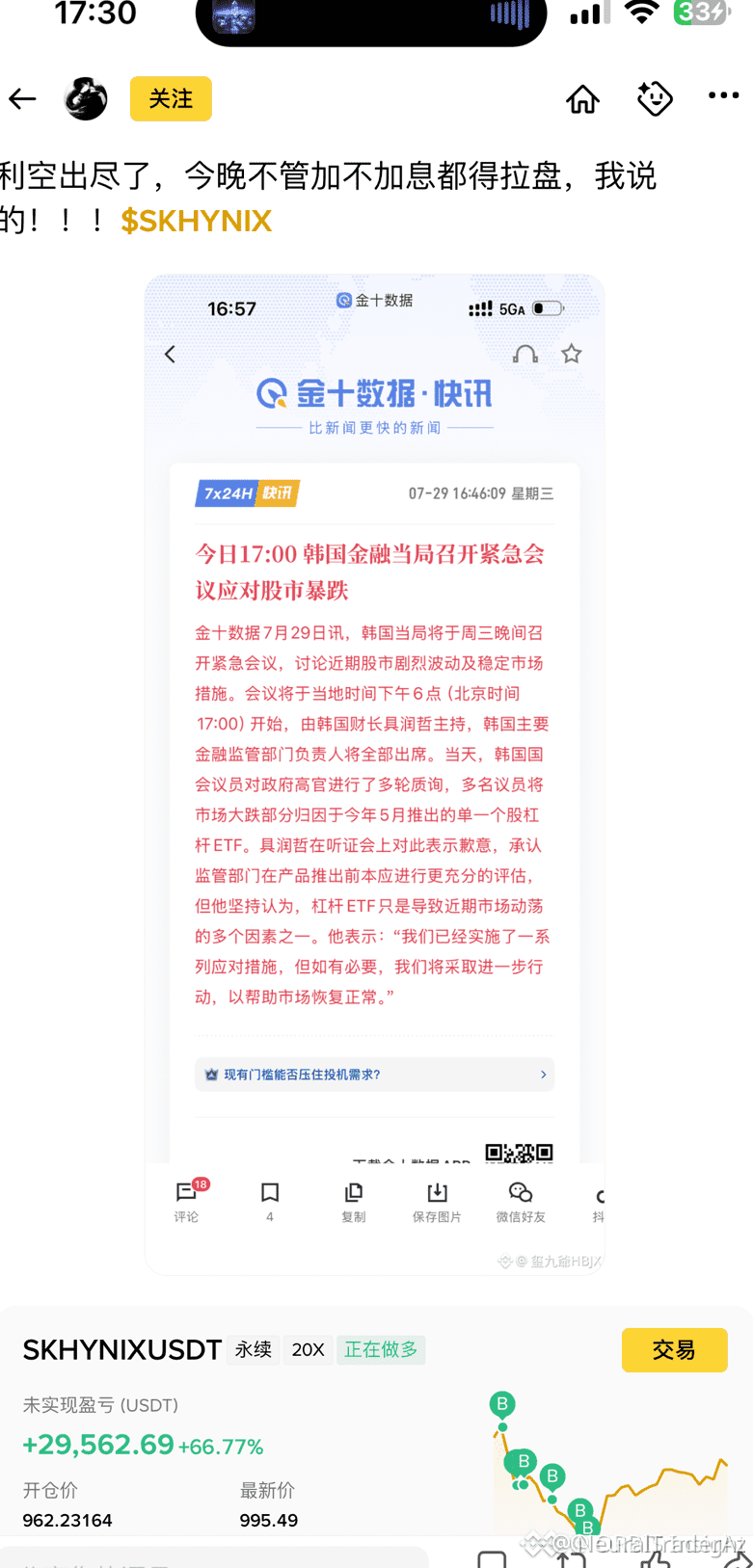
🚨 $SNDK WHALE ACCUMULATION SIGNAL — STORAGE SECTOR READY FOR A STRUCTURAL SHIFT ⚡
📌 Institutional footprints are emerging across the memory and storage complex. 🦈 Smart money has been quietly building positions in $SNDK after weeks of compression and panic selling from retail. 📊 The liquidity pools below have been swept clean, and the order flow from Korean desks points to aggressive bid stacking at these discounted levels.
💡 When news catalysts align with extreme bearish sentiment and clear accumulation patterns, the asymmetric opportunity becomes hard to ignore. 💬 Are you watching for the first daily close above the recent value area high as your trigger? 👇
⚠️ Not financial advice. Always manage your risk. 🛡️
🏷️ $SNDK #SmartMoney #Accumulation #Storage #Crypto
🎯 🦈
283

#USStorageStocksExtendLosses
🚨 WHILE RETAIL PANICS, INSTITUTIONS ACCUMULATE!
The pullback across U.S. storage equities is flushing out panic sellers, but smart capital is quietly absorbing the liquidity.
⚡ THE MACRO REALITY:
Profit-Taking vs. Fundamentals: Memory stocks are taking a hit from short-term profit rotation, yet the AI hardware thesis remains 100% intact.
Infrastructure Demand: Next-gen AI data centers require unprecedented storage capacity—the core need isn't shrinking.
The Next Trigger: Key corporate earnings (like Seagate) are set to act as the upcoming trend flippers.
Amateurs exit when the tape bleeds. Institutional investors deploy capital when macro demand is high but short-term sentiment collapses.
Dips generate opportunities—patience captures them. ⚡
#AI #storage #stocks $AAPL.US
{stock_us}(AAPL.US)
$GOOGL.US
{stock_us}(GOOGL.US)
$TAO
{spot}(TAOUSDT)
#USStorageStocksExtendLosses
🚨 WHILE RETAIL PANICS, INSTITUTIONS ACCUMULATE!
The pullback across U.S. storage equities is flushing out panic sellers, but smart capital is quietly absorbing the liquidity.
⚡ THE MACRO REALITY:
Profit-Taking vs. Fundamentals: Memory stocks are taking a hit from short-term profit rotation, yet the AI hardware thesis remains 100% intact.
Infrastructure Demand: Next-gen AI data centers require unprecedented storage capacity—the core need isn't shrinking.
The Next Trigger: Key corporate earnings (like Seagate) are set to act as the upcoming trend flippers.
Amateurs exit when the tape bleeds. Institutional investors deploy capital when macro demand is high but short-term sentiment collapses.
Dips generate opportunities—patience captures them. ⚡
#AI #storage #stocks $AAPL.US
$GOOGL.US
$TAO

2
3
211
·
--
💾 SanDisk (SNDK) down -3.68% today — the storage sector is getting hammered alongside its chip peers. Is this a buying opportunity?
$1,212.21 with RSI at 41.6 — leaning bearish. Price is well below SMA20 ($1,393) and SMA50 ($1,688), confirming the strong downtrend. But volume at 1.15x average shows conviction behind the selling.
📊 Technical Snapshot:
• Price: $1,212.21 | Trend: Strong Downtrend
• RSI: 41.6 (bearish, approaching oversold)
• MACD: Negative and expanding
• 48.1% below 3-month high
• Volume: Slightly above average (1.15x)
🧠 Key Logic:
SanDisk benefits from the same AI/data center tail as Micron and SK Hynix, but it's getting caught in the sector-wide rotation out of semiconductors. The elevated volume suggests institutional selling, not just retail panic. When institutions sell into strength, it usually means they see a longer correction ahead.
📍 Key Levels:
• Support: $1,280 (SMA20 — broken, now resistance)
• Actual support: $1,016 (3-month low)
• Resistance: $1,307 (SMA5) → $1,393 (SMA20)
The memory chip sector is in pain. Temporary shakeout or structural shift? 👇
#SanDisk #Storage #StockAnalysis
⚠️ Disclaimer: Not financial advice. Always DYOR before investing. Sector rotations can last longer than expected.
32
·
--
SanDisk up 2.68% while the rest of the memory sector bleeds. Sometimes the strongest stock in a weak sector tells you where smart money is rotating.
📊 Technical Snapshot:
Price: $1,271.05 (+2.68%)
Trend: Consolidation | RSI: 44 (leaning bearish but improving)
MACD: Negative but narrowing (-117.29)
Volume: 9.2M shares — normal (1.04x)
SMA5: $1,266 | SMA10: $1,256 | SMA20: $1,347
The Setup:
SNDK is showing early signs of a base formation. Price is holding above SMA5 and SMA10, which is constructive after a 45% decline from 3-month highs. The consolidation pattern with normal volume suggests accumulation, not distribution.
Key Levels:
Support: $1,271 (current base) → $1,016 (3-month low)
Resistance: $1,347 (SMA20) → $1,672 (SMA50)
💡 Storage demand follows memory cycles. If you believe in the AI infrastructure buildout, storage plays like SNDK could be the next rotation target after HBM leaders.
👇 Is SNDK a hidden gem or a value trap?
#SanDisk #Storage #DYOR
⚠️ Disclaimer: This is not financial advice. Always conduct your own research before investing.
52
·
--
💽 SanDisk ($SNDK) at $1,596 — the quiet storage play nobody's talking about.
Down just -0.28% with normal volume (1.04x). Boring? Maybe. But boring setups are where the best risk/reward lives. RSI at 53.8, sitting in a clean uptrend with the 20-day MA ($1,381) providing strong support below.
📊 Technical Snapshot:
• Price: $1,596.08 | Trend: Uptrend
• RSI: 53.8 — neutral with bullish bias
• Volume: Normal (1.04x) — no panic, no euphoria
• Support: $1,271 | Resistance: $2,050
• 3-month range: $1,015 – $2,335 (currently 31.6% off high)
🧠 Why SNDK Is Interesting:
Data storage demand is exploding — AI training datasets, cloud infrastructure, enterprise storage. SanDisk sits at the intersection of consumer and enterprise storage, and the stock has recovered 57% from its 3-month low. The uptrend is intact, just paused.
📍 Key Levels:
• $1,520 (10-day MA) — first support, dip-buy zone
• $1,381 (20-day MA) — strong support, aggressive buy zone
• $1,654 (50-day MA) — immediate overhead resistance
• $2,050 — the big target if the uptrend resumes
The memory/storage sector moves in cycles. We're mid-cycle, and SNDK is the less crowded way to play it vs. the HBM names everyone's already talking about.
🤔 Storage stocks — boring value or hidden gem? Would you add SNDK to your portfolio? 👇
#SanDisk #Storage #DYOR
⚠️ Disclaimer: This is analysis, not financial advice. Stock investments carry risk — always do your own research and manage risk appropriately.
💽 SanDisk ($SNDK ) at $1,596 — the quiet storage play nobody's talking about.
Down just -0.28% with normal volume (1.04x). Boring? Maybe. But boring setups are where the best risk/reward lives. RSI at 53.8, sitting in a clean uptrend with the 20-day MA ($1,381) providing strong support below.
📊 Technical Snapshot:
• Price: $1,596.08 | Trend: Uptrend
• RSI: 53.8 — neutral with bullish bias
• Volume: Normal (1.04x) — no panic, no euphoria
• Support: $1,271 | Resistance: $2,050
• 3-month range: $1,015 – $2,335 (currently 31.6% off high)
🧠 Why SNDK Is Interesting:
Data storage demand is exploding — AI training datasets, cloud infrastructure, enterprise storage. SanDisk sits at the intersection of consumer and enterprise storage, and the stock has recovered 57% from its 3-month low. The uptrend is intact, just paused.
📍 Key Levels:
• $1,520 (10-day MA) — first support, dip-buy zone
• $1,381 (20-day MA) — strong support, aggressive buy zone
• $1,654 (50-day MA) — immediate overhead resistance
• $2,050 — the big target if the uptrend resumes
The memory/storage sector moves in cycles. We're mid-cycle, and SNDK is the less crowded way to play it vs. the HBM names everyone's already talking about.
🤔 Storage stocks — boring value or hidden gem? Would you add SNDK to your portfolio? 👇
#SanDisk #Storage #DYOR
⚠️ Disclaimer: This is analysis, not financial advice. Stock investments carry risk — always do your own research and manage risk appropriately.
90
·
--
SanDisk is Up 57% From Its Low — But This One Level Could Stop It Cold 📸
SNDK has been on a quiet tear, climbing 57% from its 3-month low of $1,016 to $1,596. But it is now bumping against the 50-day moving average at $1,654 — and that level matters more than you think.
📊 Technical Snapshot:
• Price: $1,596.08 (-0.28%)
• RSI: 53.8 — neutral, no extremes
• SMA50: $1,654 — key resistance right above
• Volume: 7.53M shares (1.04x — normal)
• Trend: Uptrend but losing steam
• 3M Range: $1,016 to $2,335
🧠 Key Logic:
SanDisk benefits from the same storage demand cycle as Micron and SK Hynix — AI infrastructure buildout, data center expansion, and consumer storage upgrades. The 57% recovery shows conviction, but the SMA50 at $1,654 is the first real test. A clean break above it could unlock a move to $2,050. Rejection here means a pullback to $1,380 (SMA20).
📌 Key Levels:
• Resistance: $1,654 (SMA50 — breakout trigger)
• Support: $1,381 (SMA20) / $1,271 (structural)
• Target if breakout: $2,050
⚡ This is a wait-and-see setup. Let the SMA50 battle resolve before committing. Breakout buyers should wait for a daily close above $1,654.
Storage stocks: overlooked gem or value trap in the AI era? 💬
#SanDisk #Storage #DYOR
⚠️ This is my personal analysis, not financial advice. Always do your own research before trading.
70
·
--
SanDisk down -3.5% today but the uptrend is fully intact. Here's why I'm not worried.
📊 The Setup:
SNDK at $1,569 is still above SMA20 ($1,374) and SMA50 ($1,656). RSI at 52.9 is neutral with room on both sides. Volume is actually INCREASING (1.38x) — this looks like accumulation, not distribution.
The Storage Thesis:
• AI data centers need storage — lots of it. NAND demand is structural
• SNDK is +54.4% from its 3-month low — the trend is your friend
• Pullbacks within uptrends are buying opportunities, not warning signs
📍 Key Levels:
Support: $1,271 | Resistance: $1,656 (SMA50), then $2,050
As long as $1,271 holds, the bull case is intact. I'd look to buy near SMA20 ($1,374) on a deeper pullback.
Is storage the next semiconductor subsector to rotate into? 👇
#SanDisk #Storage #DYOR
📌 Disclaimer: This is personal analysis, not financial advice. Always DYOR and manage your risk.
55
·
--
💾 SanDisk ($SNDK) is up 57% from its 3-month low — and the chart says there's more room to run.
Trading at $1,596 with RSI at 53.8 (neutral-bullish). The stock is in a confirmed uptrend with price above the 10-day ($1,520) and 20-day ($1,381) SMAs. Volume at 1.04x average is steady — no distribution signs.
💡 The Storage Play:
While everyone focuses on HBM and GPUs, flash storage demand is quietly surging. Data centers need storage, AI training needs massive datasets, and edge computing needs local memory. SanDisk benefits from all three trends.
📊 Key Levels:
• Support: $1,271 (strong demand zone)
• Resistance: $2,050 (next major supply zone)
• Still 31.6% below 3-month high — plenty of runway
The storage sector is the quiet winner of the AI infrastructure boom. Less hype, more fundamentals.
🤔 Flash storage stocks — underrated AI play or value trap? 👇
#SanDisk #Storage #DYOR
⚠️ Disclaimer: This is not financial advice. Always do your own research before making investment decisions.
💾 SanDisk ($SNDK ) is up 57% from its 3-month low — and the chart says there's more room to run.
Trading at $1,596 with RSI at 53.8 (neutral-bullish). The stock is in a confirmed uptrend with price above the 10-day ($1,520) and 20-day ($1,381) SMAs. Volume at 1.04x average is steady — no distribution signs.
💡 The Storage Play:
While everyone focuses on HBM and GPUs, flash storage demand is quietly surging. Data centers need storage, AI training needs massive datasets, and edge computing needs local memory. SanDisk benefits from all three trends.
📊 Key Levels:
• Support: $1,271 (strong demand zone)
• Resistance: $2,050 (next major supply zone)
• Still 31.6% below 3-month high — plenty of runway
The storage sector is the quiet winner of the AI infrastructure boom. Less hype, more fundamentals.
🤔 Flash storage stocks — underrated AI play or value trap? 👇
#SanDisk #Storage #DYOR
⚠️ Disclaimer: This is not financial advice. Always do your own research before making investment decisions.
37
·
--
💿 Flash memory demand from AI data centers is surging. SanDisk is riding the wave — up 57% in 3 months.
📊 Technical Snapshot:
• Price: $1,596 (-0.28%) — consolidating
• RSI: 53.8 — neutral zone
• Trend: Uptrend, +57% from 3-month low
• Volume: Normal (1.04x) — healthy pause
💡 Why Flash Memory Matters:
AI data centers don't just need GPUs — they need massive storage for training data. Enterprise SSD demand is booming, and SanDisk (now independent again) is a direct beneficiary.
📌 Key Levels:
• Support: $1,271 (SMA20 zone)
• Resistance: $2,050 (SMA50 zone)
• 3-month high: $2,335
After a 57% run, consolidation is expected and healthy. The stock is digesting gains between the 20-DMA and 50-DMA. Next directional move depends on Q4 flash memory pricing.
SNDK: sustainable trend or one-time AI spike? 💿
#SanDisk #Storage #Stocks
⚠️ Not financial advice. Always do your own research.
39
·
--
💿 SanDisk (SNDK) at $1,485 — flat as a pancake with +0.01% and declining volume. Is this the calm before a storm?
SNDK is in a technical dead zone: RSI at 49.3, MACD barely positive at 4.19, and volume at just 70% of average. Price is trapped below SMA5 ($1,489) and SMA10 ($1,562), while SMA20 ($1,459) provides a floor. The 3-month picture shows price is 36% below the $2,335 high.
📊 Key Levels:
• Support: $1,271 (technical support zone)
• Resistance: $1,605 (SMA50) then $2,050 (major resistance)
• 3-month range: $1,016 - $2,335 (currently 46% above low)
💡 Why It Matters:
Storage demand is cyclical, and SNDK has been in a recovery from the $1,016 low. The current sideways action could be accumulation before the next leg — or distribution before another dip. Volume will be the tell.
🤔 Storage sector: underrated or overhyped? Would you hold SNDK for the next cycle? 💽
#SanDisk #Storage #DYOR
⚠️ Disclaimer: Not financial advice. Do your own research. Trade only what you can afford to lose.
52

#HongKongStorageStocksStrengthen
🚨 The AI Bears Are Getting Trapped. Storage Stocks Are Waking Up.
For weeks, everyone screamed that the storage trade was finished. Now Hong Kong storage stocks are turning higher, and that's exactly how major reversals usually begin. The crowd sells at the bottom. Institutions accumulate before the headlines change. Improving sentiment around AI memory demand and expectations for stronger chip earnings are helping fuel the rebound. (reuters.com)
I'm not chasing hype. I'm watching capital.
If this momentum continues, today's "dead sector" could become tomorrow's best-performing trade. The biggest mistake traders make is waiting for confirmation. By then, the easy money is already gone.
AI didn't die. Weak hands did. The next squeeze could be far more violent than most traders expect. 🚀
#Aİ #storage #stocks
$LAB
$AIA
494
·
--
💿 Flash storage consolidating while AI data center buildout accelerates — this is a patience trade.
SanDisk at $1,271.05 (+2.68%) in consolidation mode. RSI 44 (leaning bearish), normal volume (1.04x average). Price above SMA5 ($1,266) and SMA10 ($1,256) but below SMA20 ($1,347) — classic squeeze setup. 45% off 3-month highs.
📊 Technical Snapshot:
• Trend: Consolidation after 45% drawdown
• Support: $1,271 (current level)
• Resistance: $2,050
• RSI: 44 — room to move in either direction
📌 Why Watch This?
Data center storage demand is structural and accelerating. AI training clusters need massive flash storage. Consolidation after a deep pullback = accumulation zone for patient traders who understand the thesis.
This isn't a momentum trade — it's a conviction trade. You're betting that NAND demand will re-rate the stock.
💬 Flash storage stocks — undervalued opportunity or is NAND pricing headed lower?
#SanDisk #Storage #DYOR
⚠️ Disclaimer: This is not financial advice. Always do your own research. Past performance does not guarantee future results.
12
·
--
SanDisk is up 57% off its 3-month low and nobody is talking about it. Flash storage demand from AI data centers is about to explode.
Technical Snapshot:
- Price: $1,596.08 (-0.28%)
- Trend: Uptrend (SMA5 > SMA10 > SMA20)
- RSI: 53.8 - neutral with bullish bias
- MACD: Positive and histogram expanding at 4.29
- Volume: Normal at 1.04x - steady accumulation
Why This Matters:
AI does not just need compute - it needs storage. Massive amounts of it. SNDK (now part of WD/SanDisk) supplies enterprise flash that powers every data center expansion. The stock has recovered from $1,016 to $1,596 (+57%) and is consolidating near the SMA50 ($1,654). A break above that level opens the door to $2,050.
Key Levels:
- Support: $1,271 (strong structural floor) | $1,381 (SMA20)
- Resistance: $1,654 (SMA50) | $2,050 (3-month target)
Storage stocks: underrated AI beneficiary or value trap? Your take?
#SanDisk #Storage #DYOR
Disclaimer: This is not financial advice. Always conduct thorough research before making investment decisions.
39
Log in to explore more content
Join global crypto users on Binance Square
⚡️ Get latest and useful information about crypto.
💬 Trusted by the world’s largest crypto exchange.
👍 Discover real insights from verified creators.
Email / Phone number
Trending Topics
1
#CanBTCReboundAfterFallingBelow60K?
408,703 views
1,749 Discussing
2
#GlobalStocksFaceLongestLosingStreakSince2023
136,870 views
1,229 Discussing
3
#BlackRockIBITPostsRecord$541MSingleDayOutflow
2,221 views
33 Discussing
4
#AnthropicPlungesTowardIPOPriceonDay2
64,929 views
673 Discussing
5
#TwentyOneCapitalAdds172.25BTC
17,233 views
231 Discussing
6
#HKBillWouldExcludeTokenizedDepositsFromVirtualAssets
1,869 views
24 Discussing
7
#BNBDropsBelow540USDTWith8.46%DailyDecline
37,713 views
332 Discussing
8
#HKBillProposesHK$100KFineForUnauthorizedCryptoTitles
1,225 views
19 Discussing
9
#BitMineFaces$10.1BUnrealizedETHLoss
2,271 views
22 Discussing
10
#StrategyReports$35BNetReserves
2,198 views
18 Discussing