
Caesar jn
569 Posts

Caesar jn
Report
Block User
Crypto educator and investor, influencer and KOL manager. DM for collaboration
54 Following
37 Followers
155 Liked
Posts
All
Quotes
Live
·
--
BITCOIN'S $55K REBOUND: IS THE WORST OVER, OR IS THE MARKET SETTING UP FOR ANOTHER SHAKEOUT?
Bitcoin's recent price action presents a difficult question for the market.
After falling toward $55,000, BTC has recovered above $60,000. That recovery is encouraging, but I would be careful about calling it a confirmed reversal.
Here is what makes this situation interesting.
THE BATTLE IS NOT JUST ABOUT $70K OR $49K. IT IS ABOUT MARKET CONFIRMATION.
At around $61,000, Bitcoin is approaching an important decision zone.
1. THE BULLISH CASE
If buyers defend $60,000 and reclaim the $62,000–$65,000 resistance region, confidence in the recovery could improve.
A sustained move above that region would bring $70,000 back into focus, followed by the possibility of a broader recovery toward $75,000.
2. THE BEARISH CASE
If Bitcoin fails to maintain support around $60,000, the market could revisit $58,000 and potentially retest the $55,000 low.
A deeper breakdown would make lower levels, including $49,000, a scenario worth monitoring rather than dismissing.
3. WHAT I AM WATCHING
I am more interested in how Bitcoin behaves during its next pullback than in the size of its current rebound.
Can buyers establish a higher low? Can trading volume support an upward move? Can BTC reclaim resistance and hold it?
Those answers will tell us more than a temporary green candle.
MY PERSPECTIVE
I don't think the market has provided enough confirmation to confidently declare either a full recovery or another major collapse.
Bitcoin is at a point where patience and confirmation matter more than predictions.
The question isn't simply whether BTC can reach $70K or fall to $49K.
It is which side can demonstrate real strength when the market faces its next major test.
I want to hear different perspectives:
Are we witnessing the beginning of Bitcoin's recovery, or is this simply a relief rally before another leg down?
$BTC #BTC
{spot}(BTCUSDT)
$ETH $ZEC
BITCOIN'S $55K REBOUND: IS THE WORST OVER, OR IS THE MARKET SETTING UP FOR ANOTHER SHAKEOUT?
Bitcoin's recent price action presents a difficult question for the market.
After falling toward $55,000, BTC has recovered above $60,000. That recovery is encouraging, but I would be careful about calling it a confirmed reversal.
Here is what makes this situation interesting.
THE BATTLE IS NOT JUST ABOUT $70K OR $49K. IT IS ABOUT MARKET CONFIRMATION.
At around $61,000, Bitcoin is approaching an important decision zone.
1. THE BULLISH CASE
If buyers defend $60,000 and reclaim the $62,000–$65,000 resistance region, confidence in the recovery could improve.
A sustained move above that region would bring $70,000 back into focus, followed by the possibility of a broader recovery toward $75,000.
2. THE BEARISH CASE
If Bitcoin fails to maintain support around $60,000, the market could revisit $58,000 and potentially retest the $55,000 low.
A deeper breakdown would make lower levels, including $49,000, a scenario worth monitoring rather than dismissing.
3. WHAT I AM WATCHING
I am more interested in how Bitcoin behaves during its next pullback than in the size of its current rebound.
Can buyers establish a higher low? Can trading volume support an upward move? Can BTC reclaim resistance and hold it?
Those answers will tell us more than a temporary green candle.
MY PERSPECTIVE
I don't think the market has provided enough confirmation to confidently declare either a full recovery or another major collapse.
Bitcoin is at a point where patience and confirmation matter more than predictions.
The question isn't simply whether BTC can reach $70K or fall to $49K.
It is which side can demonstrate real strength when the market faces its next major test.
I want to hear different perspectives:
Are we witnessing the beginning of Bitcoin's recovery, or is this simply a relief rally before another leg down?
$BTC #BTC
$ETH $ZEC
1
9
·
--
FROM ECOSYSTEM REVENUE TO PERMANENT SUPPLY REDUCTION: HOW JUST'S JST BUYBACK MECHANISM WORKS
A buyback programme is more than setting aside money to purchase tokens. The important question is how capital moves through the system, who oversees its deployment and what happens after the tokens are purchased.
JUST's upgraded JST buyback mechanism introduces a structured process connecting ecosystem revenue with the long-term management of JST's supply.
Here is how the mechanism works.
1. REVENUE ENTERS THE FUNDING FRAMEWORK
Eligible revenue from JustLend, USDD and GasFree forms the foundation of the upgraded programme. This connects the buyback process to the actual business activities of JUST rather than depending entirely on external funding.
2. THE TREASURY RESERVE IS PROTECTED
JUST maintains a minimum $50 million treasury reserve cushion. This is an important financial boundary: funds needed to maintain the ecosystem's safety buffer are distinguished from surplus capital available for buybacks.
3. AVAILABLE CAPITAL IS DEPLOYED
The upgraded framework provides for approximately $20.34 million in surplus capital to be released in four phases, beginning in Q4 2026. Alongside this, eligible ongoing ecosystem revenue supports future purchases.
4. JST IS PURCHASED FROM THE MARKET
JUST DAO oversees the execution of buybacks. Under the new approach, purchases are designed to occur continuously, with execution adjusted to prevailing market depth and liquidity conditions.
This matters because responsible execution should consider market conditions rather than treat every purchase as an identical transaction.
5. REPURCHASED TOKENS ARE PERMANENTLY BURNED
Instead of distributing the purchased JST back into circulation, the mechanism adopts periodic burns. The tokens accumulated through buybacks are sent to a designated burn address, permanently removing them from circulation.
WHY I THINK THIS STRUCTURE MATTERS
The most interesting part of this upgrade is the separation between financial protection,
@DeFi_JUST @JustinSun
#TRONEcoStar
FROM ECOSYSTEM REVENUE TO PERMANENT SUPPLY REDUCTION: HOW JUST'S JST BUYBACK MECHANISM WORKS
A buyback programme is more than setting aside money to purchase tokens. The important question is how capital moves through the system, who oversees its deployment and what happens after the tokens are purchased.
JUST's upgraded JST buyback mechanism introduces a structured process connecting ecosystem revenue with the long-term management of JST's supply.
Here is how the mechanism works.
1. REVENUE ENTERS THE FUNDING FRAMEWORK
Eligible revenue from JustLend, USDD and GasFree forms the foundation of the upgraded programme. This connects the buyback process to the actual business activities of JUST rather than depending entirely on external funding.
2. THE TREASURY RESERVE IS PROTECTED
JUST maintains a minimum $50 million treasury reserve cushion. This is an important financial boundary: funds needed to maintain the ecosystem's safety buffer are distinguished from surplus capital available for buybacks.
3. AVAILABLE CAPITAL IS DEPLOYED
The upgraded framework provides for approximately $20.34 million in surplus capital to be released in four phases, beginning in Q4 2026. Alongside this, eligible ongoing ecosystem revenue supports future purchases.
4. JST IS PURCHASED FROM THE MARKET
JUST DAO oversees the execution of buybacks. Under the new approach, purchases are designed to occur continuously, with execution adjusted to prevailing market depth and liquidity conditions.
This matters because responsible execution should consider market conditions rather than treat every purchase as an identical transaction.
5. REPURCHASED TOKENS ARE PERMANENTLY BURNED
Instead of distributing the purchased JST back into circulation, the mechanism adopts periodic burns. The tokens accumulated through buybacks are sent to a designated burn address, permanently removing them from circulation.
WHY I THINK THIS STRUCTURE MATTERS
The most interesting part of this upgrade is the separation between financial protection,
@JUST DAO @Justin Sun孙宇晨
#TRONEcoStar
19
·
--
TRANSPARENCY IN JUST'S JST BUYBACK: WHAT CAN THE COMMUNITY ACTUALLY VERIFY?
In DeFi, announcing a token burn is one thing. Providing evidence that allows the community to independently verify it is another.
This distinction matters when evaluating JUST's JST buyback and burn programme.
After five completed rounds, JUST has reported a cumulative burn of 1,881,973,007 JST, representing approximately 19.01% of its initial maximum supply.
But beyond the headline figure, what should the community actually examine?
1. THE ACTUAL BURN TRANSACTIONS
On-chain records allow anyone to inspect the transactions associated with token burns. The amount transferred, transaction timestamp, sending address and destination can be examined rather than accepted solely on the basis of a social media announcement.
2. THE SOURCE OF FUNDING
A burn figure alone does not explain how the programme was financed. JUST's published disclosures provide information about revenue allocations and the funding behind individual buyback rounds.
For example, the fifth round disclosed $9.28 million in Q3 2026 net income from JustLend DAO alongside $10.34 million in historical revenue allocation.
3. CONSISTENCY BETWEEN DISCLOSURES AND EXECUTION
The real test is whether published figures correspond with verifiable transactions. This allows the community to assess whether announced milestones were actually executed.
4. ACCOUNTABILITY OVER TIME
Transparency should not be measured by one successful announcement. It becomes meaningful when financial disclosures, buyback activity and burn records remain accessible across multiple reporting periods.
There is also an important distinction: an on-chain burn transaction proves that tokens were sent to a burn address. It does not, by itself, independently audit every aspect of the revenue collection and accounting process.
That is why financial disclosures and on-chain evidence should be examined together.
My perspective is simple: DeFi projects should not expect communities to trust numbers
@DeFi_JUST @JustinSun #TRONEcoStar
TRANSPARENCY IN JUST'S JST BUYBACK: WHAT CAN THE COMMUNITY ACTUALLY VERIFY?
In DeFi, announcing a token burn is one thing. Providing evidence that allows the community to independently verify it is another.
This distinction matters when evaluating JUST's JST buyback and burn programme.
After five completed rounds, JUST has reported a cumulative burn of 1,881,973,007 JST, representing approximately 19.01% of its initial maximum supply.
But beyond the headline figure, what should the community actually examine?
1. THE ACTUAL BURN TRANSACTIONS
On-chain records allow anyone to inspect the transactions associated with token burns. The amount transferred, transaction timestamp, sending address and destination can be examined rather than accepted solely on the basis of a social media announcement.
2. THE SOURCE OF FUNDING
A burn figure alone does not explain how the programme was financed. JUST's published disclosures provide information about revenue allocations and the funding behind individual buyback rounds.
For example, the fifth round disclosed $9.28 million in Q3 2026 net income from JustLend DAO alongside $10.34 million in historical revenue allocation.
3. CONSISTENCY BETWEEN DISCLOSURES AND EXECUTION
The real test is whether published figures correspond with verifiable transactions. This allows the community to assess whether announced milestones were actually executed.
4. ACCOUNTABILITY OVER TIME
Transparency should not be measured by one successful announcement. It becomes meaningful when financial disclosures, buyback activity and burn records remain accessible across multiple reporting periods.
There is also an important distinction: an on-chain burn transaction proves that tokens were sent to a burn address. It does not, by itself, independently audit every aspect of the revenue collection and accounting process.
That is why financial disclosures and on-chain evidence should be examined together.
My perspective is simple: DeFi projects should not expect communities to trust numbers
@JUST DAO @Justin Sun孙宇晨 #TRONEcoStar
1
35
·
--
UNDERSTANDING THE MECHANISM BEHIND JST BUYBACK AND BURN
A token burn is the final step. What deserves closer attention is the process that happens before those tokens disappear from circulation.
JUST's JST buyback mechanism connects revenue generated across its ecosystem to the long-term management of JST's token supply.
Here is how the process works.
1. REVENUE GENERATION
JUST operates across several business lines, including JustLend, USDD and GasFree. These products generate revenue through activities such as lending, staking services and transaction services.
2. FUND ALLOCATION
Eligible revenue is allocated to the JST buyback programme under its disclosed funding rules. The upgraded framework also establishes a $50 million treasury reserve cushion, separating operational protection from funds available for buybacks.
3. MARKET REPURCHASES
JUST DAO uses allocated funds to purchase JST from the market. Under the upgraded model, buybacks are designed to happen continuously, with execution informed by prevailing market conditions.
4. PERMANENT BURN
The repurchased JST is subsequently sent for burning, permanently removing those tokens from circulation.
5. PUBLIC VERIFICATION
The process is supported by official transparency disclosures and on-chain transaction records, allowing the community to examine actual execution rather than depend entirely on announcements.
What makes this model interesting is the connection between business performance and token supply management.
As JUST expands its revenue-generating products, the mechanism has a broader economic foundation. However, buybacks and burns do not automatically guarantee price appreciation. Demand, liquidity, execution and overall market conditions remain important.
The real development to watch is whether the ecosystem can sustain revenue generation and consistent execution over time.
That is what makes understanding the mechanism more important than simply counting burned tokens.
@JustinSun @DeFi_JUST #TRONEcoStar
UNDERSTANDING THE MECHANISM BEHIND JST BUYBACK AND BURN
A token burn is the final step. What deserves closer attention is the process that happens before those tokens disappear from circulation.
JUST's JST buyback mechanism connects revenue generated across its ecosystem to the long-term management of JST's token supply.
Here is how the process works.
1. REVENUE GENERATION
JUST operates across several business lines, including JustLend, USDD and GasFree. These products generate revenue through activities such as lending, staking services and transaction services.
2. FUND ALLOCATION
Eligible revenue is allocated to the JST buyback programme under its disclosed funding rules. The upgraded framework also establishes a $50 million treasury reserve cushion, separating operational protection from funds available for buybacks.
3. MARKET REPURCHASES
JUST DAO uses allocated funds to purchase JST from the market. Under the upgraded model, buybacks are designed to happen continuously, with execution informed by prevailing market conditions.
4. PERMANENT BURN
The repurchased JST is subsequently sent for burning, permanently removing those tokens from circulation.
5. PUBLIC VERIFICATION
The process is supported by official transparency disclosures and on-chain transaction records, allowing the community to examine actual execution rather than depend entirely on announcements.
What makes this model interesting is the connection between business performance and token supply management.
As JUST expands its revenue-generating products, the mechanism has a broader economic foundation. However, buybacks and burns do not automatically guarantee price appreciation. Demand, liquidity, execution and overall market conditions remain important.
The real development to watch is whether the ecosystem can sustain revenue generation and consistent execution over time.
That is what makes understanding the mechanism more important than simply counting burned tokens.
@Justin Sun孙宇晨 @JUST DAO #TRONEcoStar

36
·
--
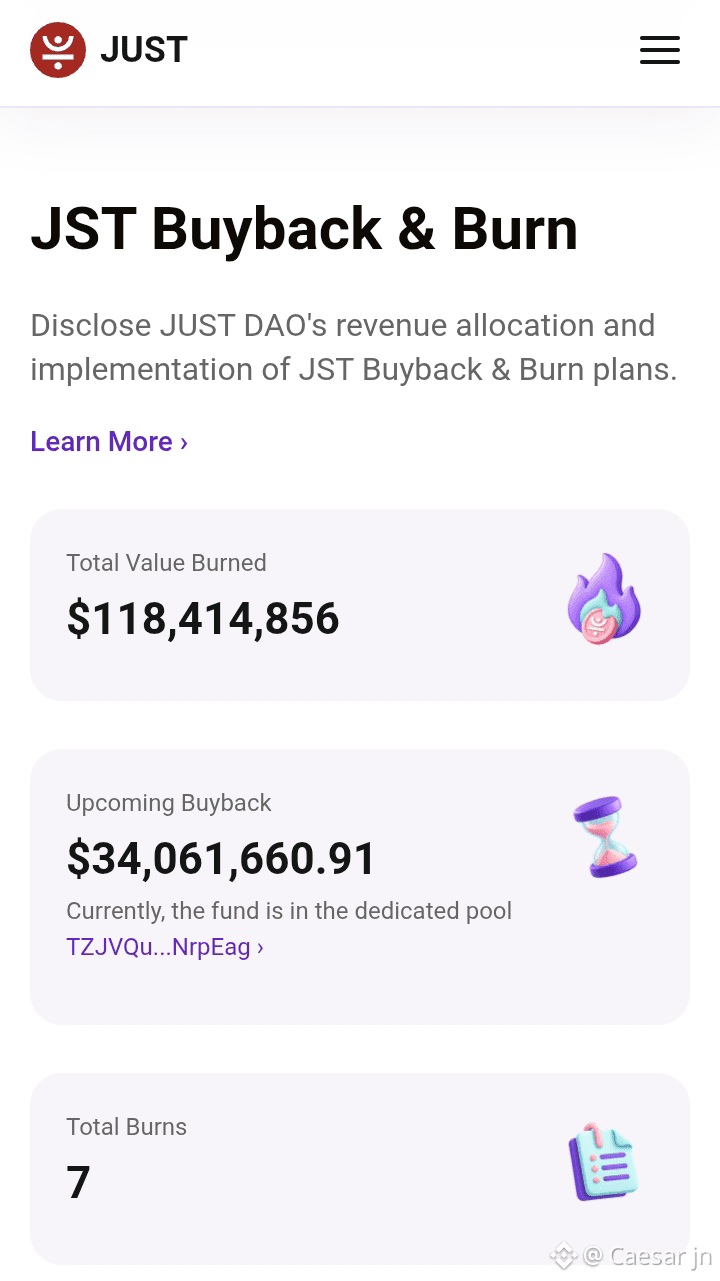
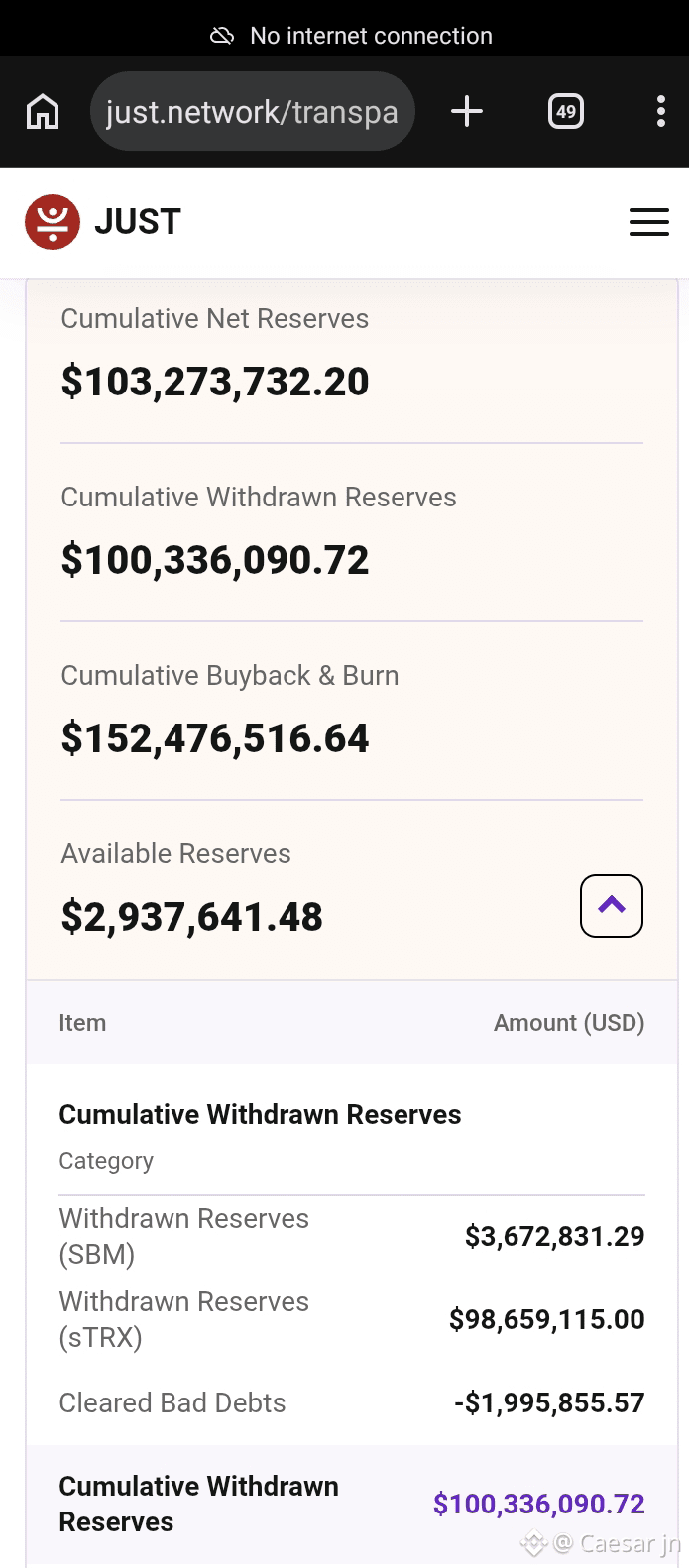
JST'S 1.88 BILLION TOKEN BURN: THE REAL STORY IS WHAT POWERS IT
Five buyback and burn rounds have permanently removed 1,881,973,007 JST from circulation, representing approximately 19.01% of its initial maximum supply.
That figure is significant, but I think the more important part of this development is understanding where the funding comes from.
JUST has connected its buyback mechanism to revenue generated within its ecosystem, particularly through JustLend DAO. This creates an important relationship between protocol activity and JST's long-term supply management.
There is also a bigger development worth watching: the upgraded mechanism is expanding its funding sources to include GasFree revenue and other eligible ecosystem income.
For me, this is where transparency becomes particularly important. A burn announcement tells us what happened. Public records allow the community to examine how much was burned, verify execution and follow the progress over time.
However, reducing supply alone does not guarantee price appreciation. Sustainable revenue, genuine utility, demand and responsible execution all matter.
The real measure of success will be whether JUST can maintain this mechanism through consistent ecosystem performance rather than relying on isolated milestones.
I encourage the community to look beyond the headline and explore the actual records.
Transparency is more valuable when everyone can verify the numbers.
Official records: https://just.network/transparency
@JustinSun @DeFi_JUST #TRONEcoStar
@CZ @Square-Creator-0d496b6dcef6 @Square-Creator-b10976136
JST'S 1.88 BILLION TOKEN BURN: THE REAL STORY IS WHAT POWERS IT
Five buyback and burn rounds have permanently removed 1,881,973,007 JST from circulation, representing approximately 19.01% of its initial maximum supply.
That figure is significant, but I think the more important part of this development is understanding where the funding comes from.
JUST has connected its buyback mechanism to revenue generated within its ecosystem, particularly through JustLend DAO. This creates an important relationship between protocol activity and JST's long-term supply management.
There is also a bigger development worth watching: the upgraded mechanism is expanding its funding sources to include GasFree revenue and other eligible ecosystem income.
For me, this is where transparency becomes particularly important. A burn announcement tells us what happened. Public records allow the community to examine how much was burned, verify execution and follow the progress over time.
However, reducing supply alone does not guarantee price appreciation. Sustainable revenue, genuine utility, demand and responsible execution all matter.
The real measure of success will be whether JUST can maintain this mechanism through consistent ecosystem performance rather than relying on isolated milestones.
I encourage the community to look beyond the headline and explore the actual records.
Transparency is more valuable when everyone can verify the numbers.
Official records: https://just.network/transparency
@Justin Sun孙宇晨 @JUST DAO #TRONEcoStar
@CZ @Node知行 @英鸿³³₇
63
·
--
BNB'S DECLINE BELOW $540 DESERVES MORE THAN A PRICE ALERT
$BNB falling below $540 after an 8.46% daily decline is a notable move, but the bigger question is what happens next.
A sharp decline can create two very different market conditions: an opportunity for buyers if demand returns, or the beginning of a deeper correction if selling pressure continues.
What matters now is not simply how far BNB has fallen, but whether the market can establish support below this level.
Three things are worth watching:
- Trading volume: Is the decline accompanied by stronger selling activity?
- Price recovery: Can BNB reclaim $540 and sustain its position above it?
- Broader market sentiment: Is this weakness specific to BNB or part of a wider market correction?
A temporary price break and a sustained bearish trend are not the same thing. Confirmation matters more than speculation.
My view: the next market reaction will be more informative than the percentage decline itself. Traders should pay attention to market structure rather than rush to conclusions.
Not financial advice. DYOR.
#bnb
1
240
·
--
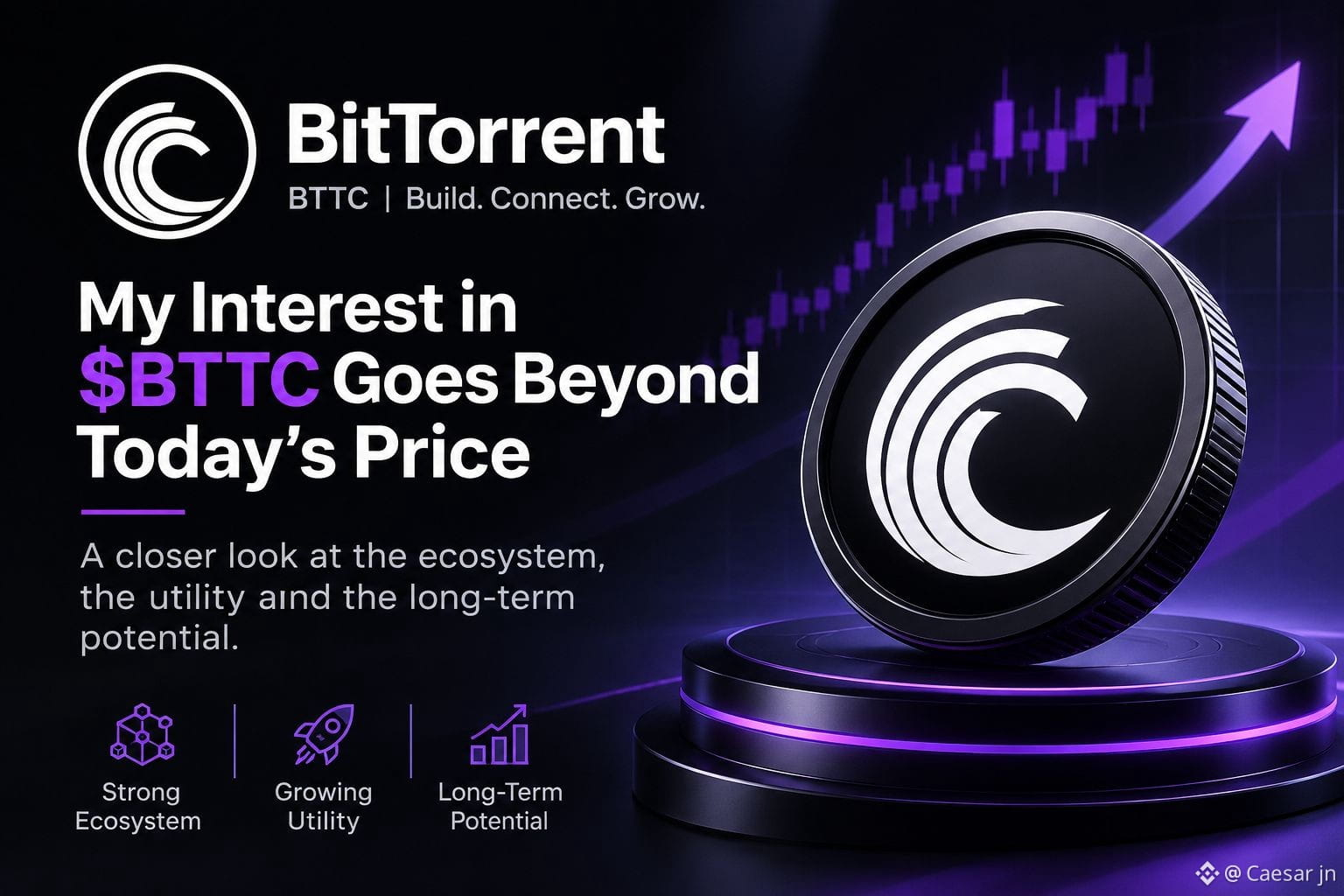
MY INTEREST IN $BTTC GOES BEYOND WHAT THE PRICE IS DOING TODAY.
I have noticed that when people discuss smaller crypto assets, the conversation often starts and ends with the current market price.
I think that is a limited way to evaluate a project.
When I look at BitTorrent Token, I am more interested in the bigger picture: what is being built around it, what role the token plays and whether the ecosystem can continue creating meaningful utility.
BTTC is particularly interesting because it connects the BitTorrent ecosystem with blockchain infrastructure through its BitTorrent Chain.
For me, that opens up a more important conversation than simply asking whether the token will rise tomorrow.
WHAT I AM PAYING ATTENTION TO
I want to see continued development in decentralized infrastructure, stronger network participation, meaningful applications and sustainable activity across the ecosystem.
I also pay attention to how BTT connects with these developments through its utility, staking and participation in the BTTC environment.
Of course, none of this guarantees future price appreciation. Token supply, demand, liquidity, adoption and broader market conditions will all influence its performance.
But I believe an asset deserves to be evaluated on more than its latest chart movement.
A low token price alone does not make something undervalued, just as a temporary market decline does not automatically mean a project has lost its potential.
My interest in $BTTC is about watching the infrastructure develop and understanding whether its long-term utility can translate into stronger ecosystem demand.
I would rather understand what I am investing in than build my entire expectation around a price prediction.
Sometimes, the most important part of an investment thesis is not the number you hope to see on the chart, but the progress happening behind the asset.
@BitTorrent_Official @JustinSun #TRONEcoStar
MY INTEREST IN $BTTC GOES BEYOND WHAT THE PRICE IS DOING TODAY.
I have noticed that when people discuss smaller crypto assets, the conversation often starts and ends with the current market price.
I think that is a limited way to evaluate a project.
When I look at BitTorrent Token, I am more interested in the bigger picture: what is being built around it, what role the token plays and whether the ecosystem can continue creating meaningful utility.
BTTC is particularly interesting because it connects the BitTorrent ecosystem with blockchain infrastructure through its BitTorrent Chain.
For me, that opens up a more important conversation than simply asking whether the token will rise tomorrow.
WHAT I AM PAYING ATTENTION TO
I want to see continued development in decentralized infrastructure, stronger network participation, meaningful applications and sustainable activity across the ecosystem.
I also pay attention to how BTT connects with these developments through its utility, staking and participation in the BTTC environment.
Of course, none of this guarantees future price appreciation. Token supply, demand, liquidity, adoption and broader market conditions will all influence its performance.
But I believe an asset deserves to be evaluated on more than its latest chart movement.
A low token price alone does not make something undervalued, just as a temporary market decline does not automatically mean a project has lost its potential.
My interest in $BTTC is about watching the infrastructure develop and understanding whether its long-term utility can translate into stronger ecosystem demand.
I would rather understand what I am investing in than build my entire expectation around a price prediction.
Sometimes, the most important part of an investment thesis is not the number you hope to see on the chart, but the progress happening behind the asset.
@BitTorrent_Official @Justin Sun孙宇晨 #TRONEcoStar
3
325
·
--
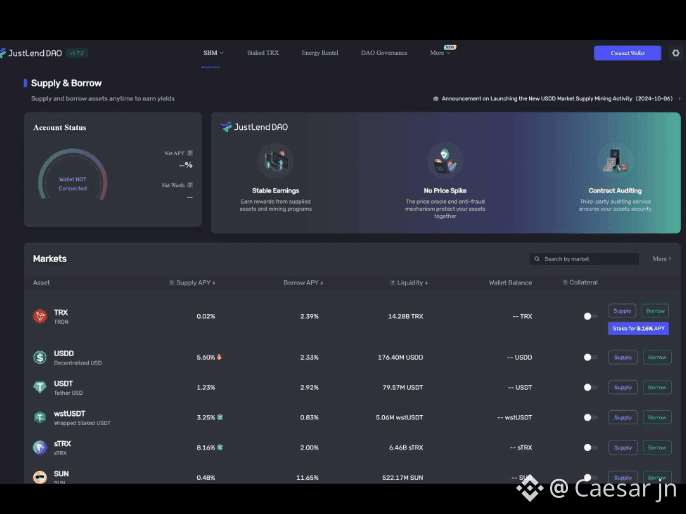
JUSTLEND DAO: THE REAL TEST OF A LENDING PROTOCOL IS HOW IT MANAGES CAPITAL AND RISK.
One aspect of DeFi I find particularly interesting is how protocols make liquidity useful without overlooking the risks that come with lending and borrowing.
This is where JustLend deserves a closer look.
Built on TRON, JustLend provides a decentralized money market where users can supply supported digital assets to earn interest or borrow against eligible collateral.
But what I find more interesting is the distinction between its two lending models.
CAPITAL EFFICIENCY AND RISK ISOLATION
SBM V1 follows a cross-collateral approach. It allows supported assets within a shared lending market to contribute to borrowing capacity. This offers flexibility and capital efficiency.
SBM V2 takes a different approach through isolated collateral markets and a dual-layer Vault and Market structure.
Each market operates with defined collateral and borrowing parameters. This helps contain risks associated with individual collateral assets rather than allowing them to spread across the entire lending structure.
V2 also introduces an Adaptive Curve Interest Rate Model, which adjusts borrowing and supply rates according to market utilization.
WHY THIS MATTERS
I believe the future of DeFi lending should not be measured simply by how much liquidity a protocol attracts.
The more important questions are how efficiently that liquidity is allocated, how borrowing demand is managed and what happens when collateral values change.
A lending protocol must balance opportunities for suppliers and borrowers with the responsibility of protecting the wider system from excessive risk.
That balance is not easy to achieve, but it is essential for sustainable DeFi infrastructure.
What interests me about JustLend is that its V1 and V2 models approach this challenge differently, giving users distinct lending structures rather than treating every market as if it carries the same risk.
For me, this is the kind of development worth examining when evaluating the maturity of DeFi on TRON.
#TRONEcStar
167
·
--
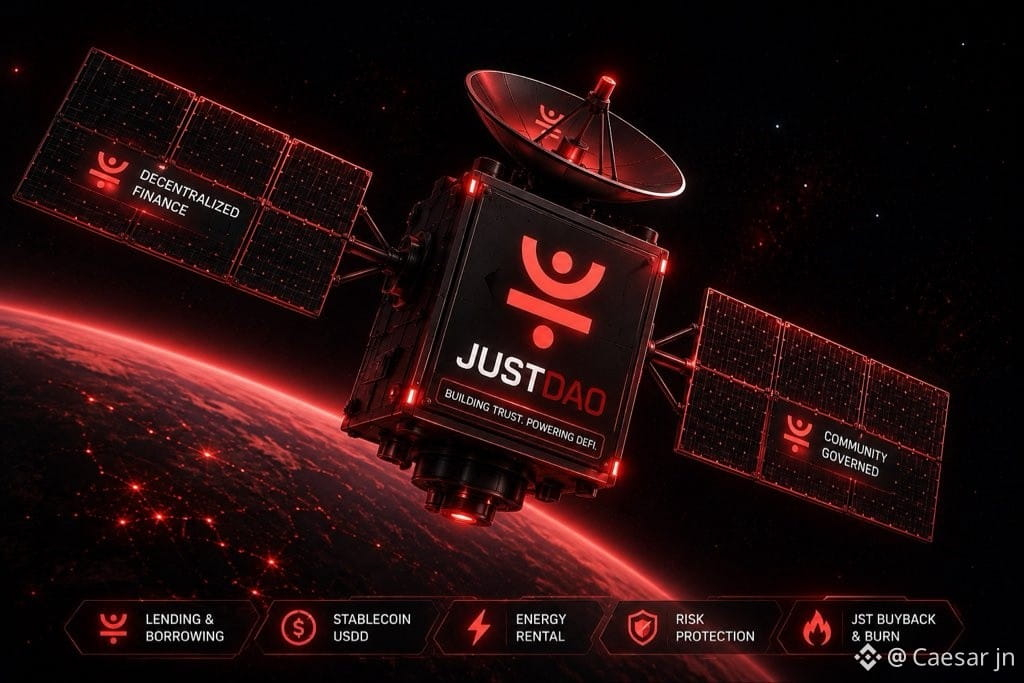
𝗝𝗦𝗧 𝗕𝘂𝗿𝗻𝘀 𝗔𝗻𝗱 𝗪𝗵𝘆 𝗧𝗼𝗸𝗲𝗻 𝗦𝘂𝗽𝗽𝗹𝘆 𝗠𝗮𝘁𝘁𝗲𝗿𝘀
Token burns are often discussed in DeFi, but understanding their economic purpose requires looking beyond the word deflationary.
A burn permanently removes tokens from circulation or makes them inaccessible, depending on the mechanism used.
This can affect the circulating supply over time.
However, the economic impact depends on more than the number of tokens burned.
We need to consider the size of the burn relative to total supply, the rate of new token issuance, actual token demand and the sustainability of the mechanism.
For JST, burns and buybacks are particularly interesting when examined alongside the wider JUST ecosystem.
A buyback is the purchase of tokens. A burn is the removal of tokens from circulation. They are related only when the purchased tokens are subsequently burned.
That distinction matters.
A credible token economy should make the process, quantities and destinations transparent.
Reducing supply can be meaningful, but lasting value still depends on utility, adoption and demand.
@DeFi_JUST @JustinSun #TRONEcoStar
𝗝𝗦𝗧 𝗕𝘂𝗿𝗻𝘀 𝗔𝗻𝗱 𝗪𝗵𝘆 𝗧𝗼𝗸𝗲𝗻 𝗦𝘂𝗽𝗽𝗹𝘆 𝗠𝗮𝘁𝘁𝗲𝗿𝘀
Token burns are often discussed in DeFi, but understanding their economic purpose requires looking beyond the word deflationary.
A burn permanently removes tokens from circulation or makes them inaccessible, depending on the mechanism used.
This can affect the circulating supply over time.
However, the economic impact depends on more than the number of tokens burned.
We need to consider the size of the burn relative to total supply, the rate of new token issuance, actual token demand and the sustainability of the mechanism.
For JST, burns and buybacks are particularly interesting when examined alongside the wider JUST ecosystem.
A buyback is the purchase of tokens. A burn is the removal of tokens from circulation. They are related only when the purchased tokens are subsequently burned.
That distinction matters.
A credible token economy should make the process, quantities and destinations transparent.
Reducing supply can be meaningful, but lasting value still depends on utility, adoption and demand.
@JUST DAO @Justin Sun孙宇晨 #TRONEcoStar
97
·
--
𝗝𝘂𝘀𝘁𝗟𝗲𝗻𝗱 𝗗𝗔𝗢 𝗜𝘀 𝗧𝗮𝗸𝗶𝗻𝗴 𝗧𝘄𝗼 𝗗𝗶𝗳𝗳𝗲𝗿𝗲𝗻𝘁 𝗔𝗽𝗽𝗿𝗼𝗮𝗰𝗵𝗲𝘀 𝗧𝗼 𝗢𝗻-𝗖𝗵𝗮𝗶𝗻 𝗟𝗲𝗻𝗱𝗶𝗻𝗴
One interesting thing about DeFi lending is that there is no single architecture that works equally well for every borrowing strategy.
JustLend DAO’s SBM V1 and SBM V2 demonstrate two different approaches to managing collateral and liquidity.
SBM V1 introduces cross-collateral flexibility. Rather than treating every collateral asset as an entirely separate borrowing environment, it allows supported collateral to work within a shared model.
SBM V2 takes a different direction. Its isolated markets separate lending environments, while Vault-based liquidity management introduces another layer to how liquidity is organized.
The distinction is important.
V1 emphasizes flexibility across collateral, while V2 introduces more separation between markets and a different liquidity management structure.
Neither approach should be judged by its name alone. What matters is how each model handles capital efficiency, risk exposure, liquidity and the needs of different users.
This is an interesting evolution in how lending infrastructure can be designed.
@DeFi_JUST @JustinSun #TRONEcoStar
𝗝𝘂𝘀𝘁𝗟𝗲𝗻𝗱 𝗗𝗔𝗢 𝗜𝘀 𝗧𝗮𝗸𝗶𝗻𝗴 𝗧𝘄𝗼 𝗗𝗶𝗳𝗳𝗲𝗿𝗲𝗻𝘁 𝗔𝗽𝗽𝗿𝗼𝗮𝗰𝗵𝗲𝘀 𝗧𝗼 𝗢𝗻-𝗖𝗵𝗮𝗶𝗻 𝗟𝗲𝗻𝗱𝗶𝗻𝗴
One interesting thing about DeFi lending is that there is no single architecture that works equally well for every borrowing strategy.
JustLend DAO’s SBM V1 and SBM V2 demonstrate two different approaches to managing collateral and liquidity.
SBM V1 introduces cross-collateral flexibility. Rather than treating every collateral asset as an entirely separate borrowing environment, it allows supported collateral to work within a shared model.
SBM V2 takes a different direction. Its isolated markets separate lending environments, while Vault-based liquidity management introduces another layer to how liquidity is organized.
The distinction is important.
V1 emphasizes flexibility across collateral, while V2 introduces more separation between markets and a different liquidity management structure.
Neither approach should be judged by its name alone. What matters is how each model handles capital efficiency, risk exposure, liquidity and the needs of different users.
This is an interesting evolution in how lending infrastructure can be designed.
@JUST DAO @Justin Sun孙宇晨 #TRONEcoStar

5
·
--
𝗪𝗵𝘆 𝗖𝗿𝗼𝘀𝘀-𝗖𝗼𝗹𝗹𝗮𝘁𝗲𝗿𝗮𝗹 𝗙𝗹𝗲𝘅𝗶𝗯𝗶𝗹𝗶𝘁𝘆 𝗠𝗮𝘁𝘁𝗲𝗿𝘀 𝗜𝗻 𝗦𝗕𝗠 𝗩𝟭
Collateral is one of the most important parts of any lending protocol. It determines how users secure loans and how much borrowing capacity their assets can support.
SBM V1 brings cross-collateral flexibility into the JustLend DAO lending experience.
The idea is straightforward: supported assets can contribute to a user’s collateral position within the shared lending model.
This matters because users may hold different assets instead of keeping their entire portfolio in one token. Cross-collateral functionality can make that portfolio more useful when accessing liquidity.
However, flexibility does not mean unlimited borrowing. Collateral factors, asset values, borrowing limits and liquidation conditions still determine how much a user can safely borrow.
The bigger point is that lending should not only be about depositing an asset and receiving a loan. It should also consider how efficiently different assets can work together.
That is the value proposition behind the cross-collateral approach.
@JustinSun @DeFi_JUST #TRONEcoStar
𝗪𝗵𝘆 𝗖𝗿𝗼𝘀𝘀-𝗖𝗼𝗹𝗹𝗮𝘁𝗲𝗿𝗮𝗹 𝗙𝗹𝗲𝘅𝗶𝗯𝗶𝗹𝗶𝘁𝘆 𝗠𝗮𝘁𝘁𝗲𝗿𝘀 𝗜𝗻 𝗦𝗕𝗠 𝗩𝟭
Collateral is one of the most important parts of any lending protocol. It determines how users secure loans and how much borrowing capacity their assets can support.
SBM V1 brings cross-collateral flexibility into the JustLend DAO lending experience.
The idea is straightforward: supported assets can contribute to a user’s collateral position within the shared lending model.
This matters because users may hold different assets instead of keeping their entire portfolio in one token. Cross-collateral functionality can make that portfolio more useful when accessing liquidity.
However, flexibility does not mean unlimited borrowing. Collateral factors, asset values, borrowing limits and liquidation conditions still determine how much a user can safely borrow.
The bigger point is that lending should not only be about depositing an asset and receiving a loan. It should also consider how efficiently different assets can work together.
That is the value proposition behind the cross-collateral approach.
@Justin Sun孙宇晨 @JUST DAO #TRONEcoStar

75
·
--
𝗦𝗕𝗠 𝗩𝟮 𝗕𝗿𝗶𝗻𝗴𝘀 𝗔 𝗗𝗶𝗳𝗳𝗲𝗿𝗲𝗻𝘁 𝗥𝗶𝘀𝗸 𝗦𝘁𝗿𝘂𝗰𝘁𝘂𝗿𝗲 𝗧𝗼 𝗝𝘂𝘀𝘁𝗟𝗲𝗻𝗱
One of the biggest considerations in DeFi lending is how risk moves between assets and markets.
SBM V2 introduces isolated markets, a design that separates lending environments instead of relying entirely on one shared collateral structure.
Why is this important?
Different assets carry different levels of volatility, liquidity and market risk. A lending environment built around one asset may require different risk parameters from another.
Market isolation provides a way to manage these environments separately.
It can help limit the extent to which risks in one market affect another, depending on the protocol’s actual risk controls and market configuration.
This does not eliminate risk. Smart contract vulnerabilities, market disruptions, oracle failures and insufficient liquidity remain important considerations.
What interests me is the design philosophy: instead of forcing different assets into one lending structure, SBM V2 creates room for more distinct market environments.
That is a meaningful development in lending architecture.
@DeFi_JUST @JustinSun #TRONEcoStar
𝗦𝗕𝗠 𝗩𝟮 𝗕𝗿𝗶𝗻𝗴𝘀 𝗔 𝗗𝗶𝗳𝗳𝗲𝗿𝗲𝗻𝘁 𝗥𝗶𝘀𝗸 𝗦𝘁𝗿𝘂𝗰𝘁𝘂𝗿𝗲 𝗧𝗼 𝗝𝘂𝘀𝘁𝗟𝗲𝗻𝗱
One of the biggest considerations in DeFi lending is how risk moves between assets and markets.
SBM V2 introduces isolated markets, a design that separates lending environments instead of relying entirely on one shared collateral structure.
Why is this important?
Different assets carry different levels of volatility, liquidity and market risk. A lending environment built around one asset may require different risk parameters from another.
Market isolation provides a way to manage these environments separately.
It can help limit the extent to which risks in one market affect another, depending on the protocol’s actual risk controls and market configuration.
This does not eliminate risk. Smart contract vulnerabilities, market disruptions, oracle failures and insufficient liquidity remain important considerations.
What interests me is the design philosophy: instead of forcing different assets into one lending structure, SBM V2 creates room for more distinct market environments.
That is a meaningful development in lending architecture.
@JUST DAO @Justin Sun孙宇晨 #TRONEcoStar

6
·
--
𝗚𝗮𝘀𝗙𝗿𝗲𝗲 𝗔𝗻𝗱 𝗧𝗵𝗲 𝗨𝗦𝗗𝗗 𝗨𝘀𝗲𝗿 𝗘𝘅𝗽𝗲𝗿𝗶𝗲𝗻𝗰𝗲
One barrier to blockchain adoption is not always the complexity of the application. Sometimes, it is the transaction process itself.
A user may hold a stablecoin but still need to understand how network fees are paid before completing a transfer.
TRON’s GasFree functionality explores a different experience for eligible stablecoin transfers.
Under supported conditions, users can pay applicable transaction fees in supported stablecoins rather than needing to manage the usual TRX resource arrangement for that transaction.
This can make the experience more accessible, especially for users whose main activity is moving stablecoins.
For USDD users, the relevance depends on the supported assets, wallets and service conditions available at the time.
It is important not to assume that every USDD transfer automatically qualifies or that all transactions become free.
The larger lesson is that user experience matters in financial infrastructure.
A stablecoin can have strong technical capabilities, but making its everyday use easier is equally important to adoption.
@usddio @TRONDAO @JustinSun #TRONEcoStar
𝗚𝗮𝘀𝗙𝗿𝗲𝗲 𝗔𝗻𝗱 𝗧𝗵𝗲 𝗨𝗦𝗗𝗗 𝗨𝘀𝗲𝗿 𝗘𝘅𝗽𝗲𝗿𝗶𝗲𝗻𝗰𝗲
One barrier to blockchain adoption is not always the complexity of the application. Sometimes, it is the transaction process itself.
A user may hold a stablecoin but still need to understand how network fees are paid before completing a transfer.
TRON’s GasFree functionality explores a different experience for eligible stablecoin transfers.
Under supported conditions, users can pay applicable transaction fees in supported stablecoins rather than needing to manage the usual TRX resource arrangement for that transaction.
This can make the experience more accessible, especially for users whose main activity is moving stablecoins.
For USDD users, the relevance depends on the supported assets, wallets and service conditions available at the time.
It is important not to assume that every USDD transfer automatically qualifies or that all transactions become free.
The larger lesson is that user experience matters in financial infrastructure.
A stablecoin can have strong technical capabilities, but making its everyday use easier is equally important to adoption.
@USDD - Decentralized USD @TRON DAO @Justin Sun孙宇晨 #TRONEcoStar
22
·
--
𝗪𝗵𝘆 𝗦𝗨𝗡 𝗠𝗮𝘁𝘁𝗲𝗿𝘀 𝗧𝗼 𝗧𝗥𝗢𝗡’𝘀 𝗗𝗘𝗙𝗜 𝗟𝗶𝗾𝘂𝗶𝗱𝗶𝘁𝘆
A blockchain can process transactions, but a healthy DeFi environment also needs markets where users can exchange assets and deploy capital.
This is one reason decentralized exchanges matter to the TRON ecosystem.
Through SunSwap and related SUN services, users can access decentralized trading and liquidity infrastructure.
The benefit extends beyond individual trades.
Trading activity creates demand for liquidity. Liquidity providers contribute capital to supported markets. Token projects can gain access to exchange infrastructure, while users have more opportunities to move between assets.
These activities help form the financial layer of an ecosystem.
But there is a difference between activity and sustainable growth.
A large amount of trading volume does not automatically mean healthy markets. Incentive-driven activity, concentrated liquidity and speculative trading can distort the picture.
What matters is whether users continue to find genuine reasons to trade, provide liquidity and use the available applications.
SUN’s contribution to TRON DeFi should therefore be assessed through the quality and sustainability of the markets it helps support.
@SunPump_meme @JustinSun @TRONDAO #TRONEcoStar
𝗪𝗵𝘆 𝗦𝗨𝗡 𝗠𝗮𝘁𝘁𝗲𝗿𝘀 𝗧𝗼 𝗧𝗥𝗢𝗡’𝘀 𝗗𝗘𝗙𝗜 𝗟𝗶𝗾𝘂𝗶𝗱𝗶𝘁𝘆
A blockchain can process transactions, but a healthy DeFi environment also needs markets where users can exchange assets and deploy capital.
This is one reason decentralized exchanges matter to the TRON ecosystem.
Through SunSwap and related SUN services, users can access decentralized trading and liquidity infrastructure.
The benefit extends beyond individual trades.
Trading activity creates demand for liquidity. Liquidity providers contribute capital to supported markets. Token projects can gain access to exchange infrastructure, while users have more opportunities to move between assets.
These activities help form the financial layer of an ecosystem.
But there is a difference between activity and sustainable growth.
A large amount of trading volume does not automatically mean healthy markets. Incentive-driven activity, concentrated liquidity and speculative trading can distort the picture.
What matters is whether users continue to find genuine reasons to trade, provide liquidity and use the available applications.
SUN’s contribution to TRON DeFi should therefore be assessed through the quality and sustainability of the markets it helps support.
@OfficialSUNio @Justin Sun孙宇晨 @TRON DAO #TRONEcoStar

73
·
--
𝗧𝗵𝗲 𝗦𝗨𝗡 𝗧𝗿𝗲𝗮𝘀𝘂𝗿𝘆 𝗔𝗻𝗱 𝗧𝗵𝗲 𝗤𝘂𝗲𝘀𝘁𝗶𝗼𝗻 𝗢𝗳 𝗟𝗼𝗻𝗴-𝗧𝗲𝗿𝗺 𝗦𝘂𝘀𝘁𝗮𝗶𝗻𝗮𝗯𝗶𝗹𝗶𝘁𝘆
A token economy needs more than supply and demand. It also needs a credible approach to managing the resources that support its activities.
This is why treasury management deserves attention when examining SUN.
The ecosystem’s treasury-related arrangements and buyback initiatives raise important questions about revenue, reserves, allocation and long-term financial planning.
A treasury can help coordinate resources for ecosystem priorities, but its effectiveness depends on how funds are generated, managed and deployed.
For example, a transparent approach should make it possible to understand the source of funds used for ecosystem initiatives and the conditions under which those funds are allocated.
It is also important to distinguish revenue from token purchases, treasury reserves and permanently burned supply. They are not interchangeable financial measures.
What interests me most is the sustainability question.
Can an ecosystem support its incentives and development through durable economic activity rather than depending entirely on market enthusiasm?
That is a much stronger measure of financial maturity than any isolated token metric.
@SunPump_meme @JustinSun #TRONEcoStar
𝗧𝗵𝗲 𝗦𝗨𝗡 𝗧𝗿𝗲𝗮𝘀𝘂𝗿𝘆 𝗔𝗻𝗱 𝗧𝗵𝗲 𝗤𝘂𝗲𝘀𝘁𝗶𝗼𝗻 𝗢𝗳 𝗟𝗼𝗻𝗴-𝗧𝗲𝗿𝗺 𝗦𝘂𝘀𝘁𝗮𝗶𝗻𝗮𝗯𝗶𝗹𝗶𝘁𝘆
A token economy needs more than supply and demand. It also needs a credible approach to managing the resources that support its activities.
This is why treasury management deserves attention when examining SUN.
The ecosystem’s treasury-related arrangements and buyback initiatives raise important questions about revenue, reserves, allocation and long-term financial planning.
A treasury can help coordinate resources for ecosystem priorities, but its effectiveness depends on how funds are generated, managed and deployed.
For example, a transparent approach should make it possible to understand the source of funds used for ecosystem initiatives and the conditions under which those funds are allocated.
It is also important to distinguish revenue from token purchases, treasury reserves and permanently burned supply. They are not interchangeable financial measures.
What interests me most is the sustainability question.
Can an ecosystem support its incentives and development through durable economic activity rather than depending entirely on market enthusiasm?
That is a much stronger measure of financial maturity than any isolated token metric.
@OfficialSUNio @Justin Sun孙宇晨 #TRONEcoStar

36
·
--
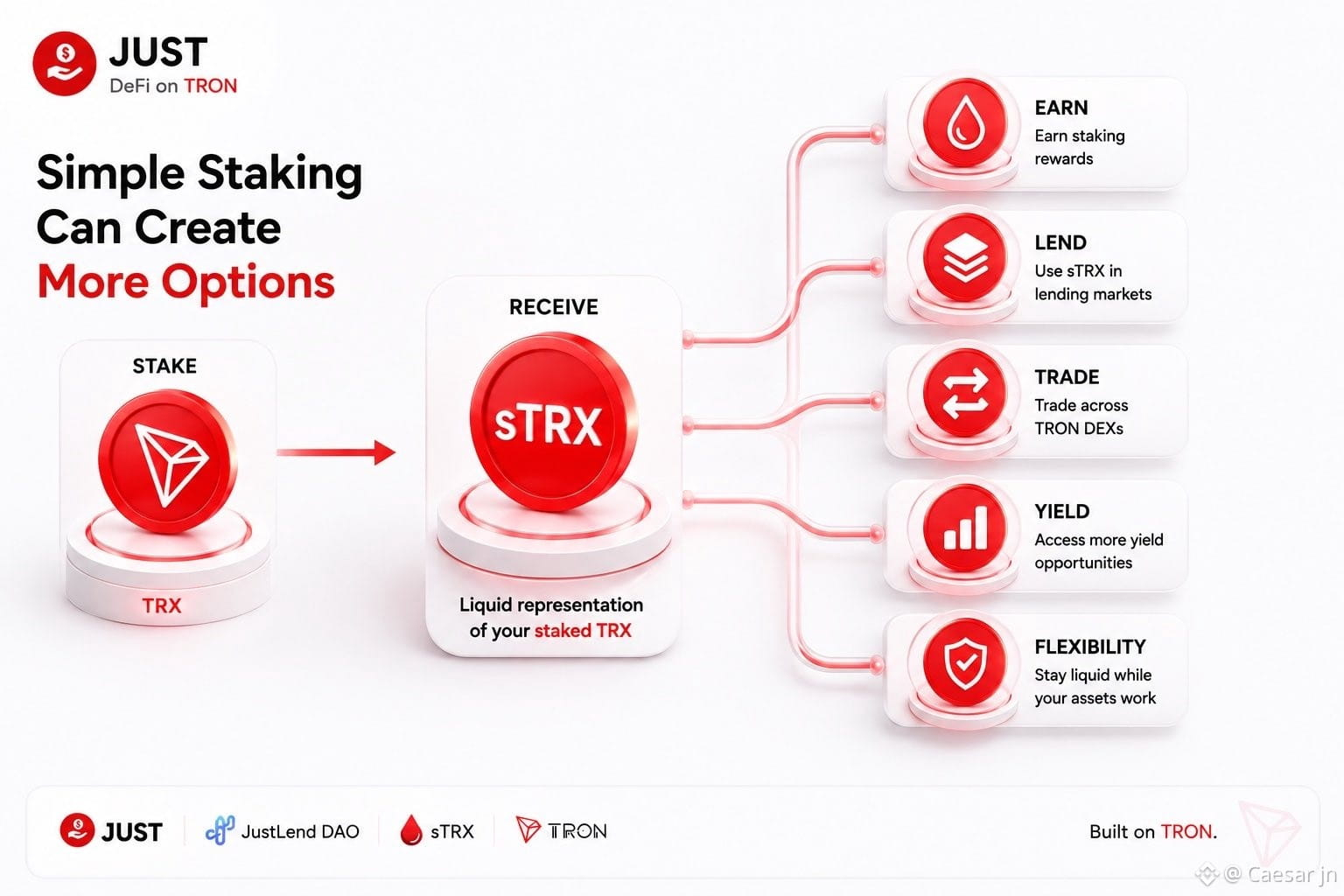
𝗦𝗧𝗔𝗞𝗜𝗡𝗚, 𝘀𝗧𝗥𝗫 𝗔𝗻𝗱 𝗧𝗵𝗲 𝗪𝗶𝗱𝗲𝗿 𝗝𝗨𝗦𝗧 𝗘𝗰𝗼𝘀𝘆𝘀𝘁𝗲𝗺
Stablecoins are only one part of TRON’s DeFi economy.
Another important area is TRX staking and the liquid staking experience associated with sTRX.
Within the JUST ecosystem, sTRX represents a liquid staking-related asset connected to TRX staking.
The broader idea behind liquid staking is to represent a staked position with a token that may be usable in supported applications, subject to the protocol’s design and market conditions.
This creates another way to think about capital utility.
Instead of looking at stablecoins, staking and DeFi as completely separate activities, users can examine how different assets serve different financial purposes.
USDD can serve as a dollar-referenced asset, while sTRX represents a different type of exposure connected to TRX staking.
They should not be confused, USDD is not a staking receipt, and sTRX is not a stablecoin.
The value of the wider ecosystem lies in offering different financial tools for different needs.
@JustinSun @DeFi_JUST @usddio @TRONDAO #TRONEcoStar
𝗦𝗧𝗔𝗞𝗜𝗡𝗚, 𝘀𝗧𝗥𝗫 𝗔𝗻𝗱 𝗧𝗵𝗲 𝗪𝗶𝗱𝗲𝗿 𝗝𝗨𝗦𝗧 𝗘𝗰𝗼𝘀𝘆𝘀𝘁𝗲𝗺
Stablecoins are only one part of TRON’s DeFi economy.
Another important area is TRX staking and the liquid staking experience associated with sTRX.
Within the JUST ecosystem, sTRX represents a liquid staking-related asset connected to TRX staking.
The broader idea behind liquid staking is to represent a staked position with a token that may be usable in supported applications, subject to the protocol’s design and market conditions.
This creates another way to think about capital utility.
Instead of looking at stablecoins, staking and DeFi as completely separate activities, users can examine how different assets serve different financial purposes.
USDD can serve as a dollar-referenced asset, while sTRX represents a different type of exposure connected to TRX staking.
They should not be confused, USDD is not a staking receipt, and sTRX is not a stablecoin.
The value of the wider ecosystem lies in offering different financial tools for different needs.
@Justin Sun孙宇晨 @JUST DAO @USDD - Decentralized USD @TRON DAO #TRONEcoStar
15
·
--
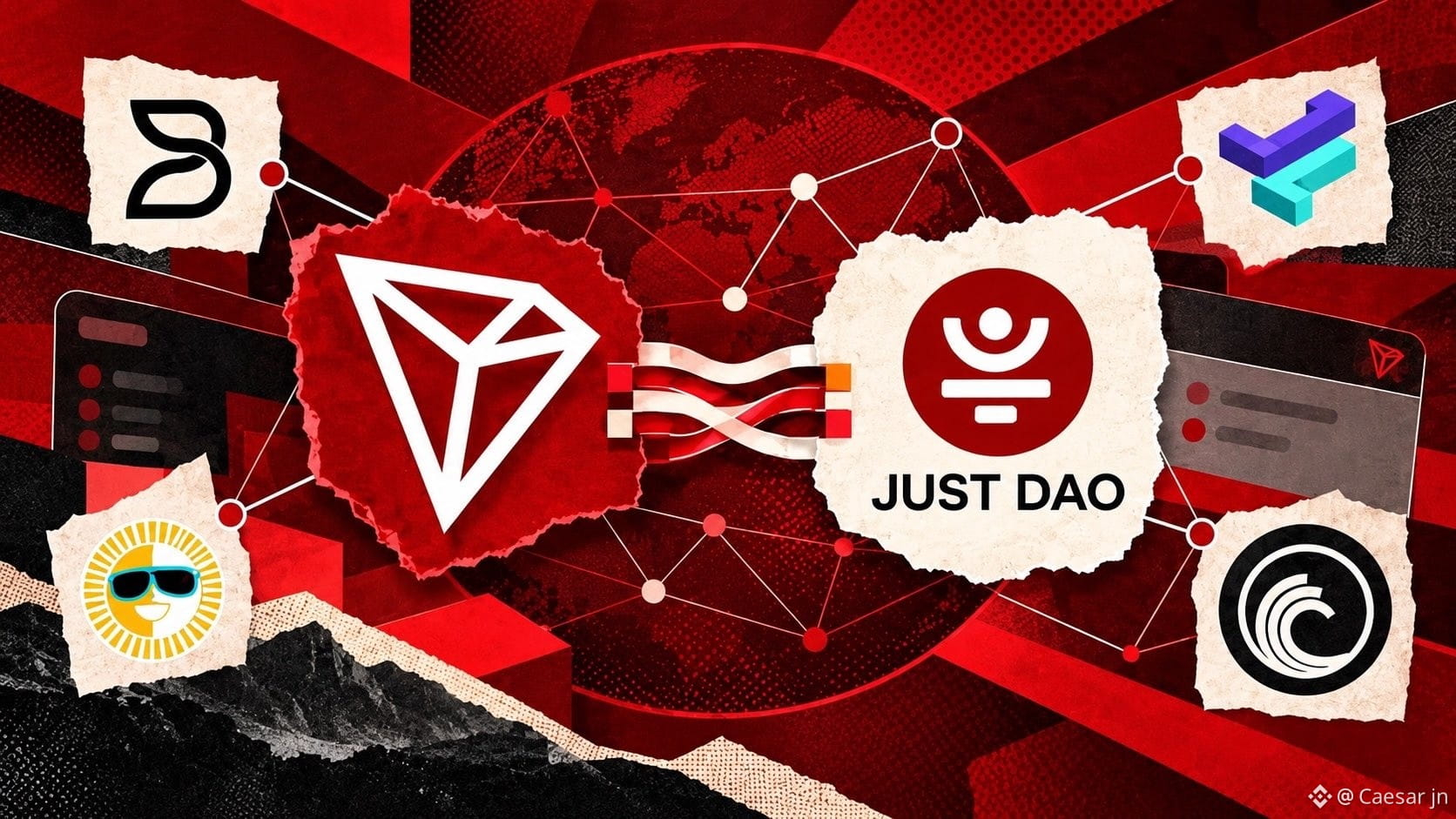
𝗦𝗧𝗔𝗕𝗟𝗘𝗖𝗢𝗜𝗡 𝗟𝗜𝗤𝗨𝗜𝗗𝗜𝗧𝗬 𝗔𝗻𝗱 𝗪𝗵𝘆 𝗨𝗦𝗗𝗗 𝗠𝗮𝘁𝘁𝗲𝗿𝘀 𝗧𝗼 𝗗𝗘𝗫𝘀
A stablecoin becomes more useful when users can exchange it efficiently for other digital assets.
This is where decentralized exchanges and liquidity pools become important.
SUN.io’s SunSwap provides decentralized trading infrastructure on TRON, allowing users to exchange supported tokens through available liquidity pools.
Where USDD is included in supported trading pairs, it can serve as one side of a swap.
For example, a user may exchange USDD for another supported asset, or move back into USDD after completing a DeFi activity.
Liquidity providers make these markets possible by depositing assets into eligible pools. In return, they may earn a share of trading fees according to the pool’s rules.
But liquidity provision carries risks, including impermanent loss, smart-contract vulnerabilities and token price movements.
The broader connection is important: stablecoins provide a useful trading asset, while decentralized exchanges create routes for that asset to move through the market.
USDD’s DeFi usefulness therefore depends partly on the quality and availability of its supported liquidity.
@usddio @JustinSun @SunPump_meme @TRONDAO #TRONEcoStar
𝗦𝗧𝗔𝗕𝗟𝗘𝗖𝗢𝗜𝗡 𝗟𝗜𝗤𝗨𝗜𝗗𝗜𝗧𝗬 𝗔𝗻𝗱 𝗪𝗵𝘆 𝗨𝗦𝗗𝗗 𝗠𝗮𝘁𝘁𝗲𝗿𝘀 𝗧𝗼 𝗗𝗘𝗫𝘀
A stablecoin becomes more useful when users can exchange it efficiently for other digital assets.
This is where decentralized exchanges and liquidity pools become important.
SUN.io’s SunSwap provides decentralized trading infrastructure on TRON, allowing users to exchange supported tokens through available liquidity pools.
Where USDD is included in supported trading pairs, it can serve as one side of a swap.
For example, a user may exchange USDD for another supported asset, or move back into USDD after completing a DeFi activity.
Liquidity providers make these markets possible by depositing assets into eligible pools. In return, they may earn a share of trading fees according to the pool’s rules.
But liquidity provision carries risks, including impermanent loss, smart-contract vulnerabilities and token price movements.
The broader connection is important: stablecoins provide a useful trading asset, while decentralized exchanges create routes for that asset to move through the market.
USDD’s DeFi usefulness therefore depends partly on the quality and availability of its supported liquidity.
@USDD - Decentralized USD @Justin Sun孙宇晨 @OfficialSUNio @TRON DAO #TRONEcoStar
18
·
--
𝗪𝗜𝗡𝗸𝗟𝗶𝗻𝗸 𝗔𝗻𝗱 𝗧𝗵𝗲 𝗣𝗿𝗼𝗯𝗹𝗲𝗺 𝗢𝗳 𝗦𝗺𝗮𝗿𝘁 𝗖𝗼𝗻𝘁𝗿𝗮𝗰𝘁𝘀 𝗧𝗵𝗮𝘁 𝗖𝗮𝗻𝗻𝗼𝘁 𝗦𝗲𝗲 𝗢𝘂𝘁𝘀𝗶𝗱𝗲 𝗧𝗵𝗲 𝗕𝗹𝗼𝗰𝗸𝗰𝗵𝗮𝗶𝗻
One limitation of smart contracts is that they cannot independently access information from the outside world.
A smart contract can execute predefined conditions perfectly, but it cannot naturally visit a website, observe a market price or confirm a real-world event.
This creates an important infrastructure problem.
Imagine a lending protocol that needs to determine the current value of collateral. The contract needs reliable price information before it can calculate borrowing limits or determine whether a position should be liquidated.
This is where oracle infrastructure becomes essential.
WINkLink provides oracle services that connect external data sources with blockchain applications, allowing information from beyond the blockchain to become available for on-chain execution.
The interesting part is what this enables.
Smart contracts can move beyond operating only on information already recorded on-chain. They can respond to external conditions when the relevant data is supplied through an oracle.
That connection expands what blockchain applications can do.
The oracle is not the smart contract, and it does not replace the contract’s logic. It supplies information that allows the contract to make decisions according to its programmed rules.
@WINkLink_Official @JustinSun #TRONEcoStar
𝗪𝗜𝗡𝗸𝗟𝗶𝗻𝗸 𝗔𝗻𝗱 𝗧𝗵𝗲 𝗣𝗿𝗼𝗯𝗹𝗲𝗺 𝗢𝗳 𝗦𝗺𝗮𝗿𝘁 𝗖𝗼𝗻𝘁𝗿𝗮𝗰𝘁𝘀 𝗧𝗵𝗮𝘁 𝗖𝗮𝗻𝗻𝗼𝘁 𝗦𝗲𝗲 𝗢𝘂𝘁𝘀𝗶𝗱𝗲 𝗧𝗵𝗲 𝗕𝗹𝗼𝗰𝗸𝗰𝗵𝗮𝗶𝗻
One limitation of smart contracts is that they cannot independently access information from the outside world.
A smart contract can execute predefined conditions perfectly, but it cannot naturally visit a website, observe a market price or confirm a real-world event.
This creates an important infrastructure problem.
Imagine a lending protocol that needs to determine the current value of collateral. The contract needs reliable price information before it can calculate borrowing limits or determine whether a position should be liquidated.
This is where oracle infrastructure becomes essential.
WINkLink provides oracle services that connect external data sources with blockchain applications, allowing information from beyond the blockchain to become available for on-chain execution.
The interesting part is what this enables.
Smart contracts can move beyond operating only on information already recorded on-chain. They can respond to external conditions when the relevant data is supplied through an oracle.
That connection expands what blockchain applications can do.
The oracle is not the smart contract, and it does not replace the contract’s logic. It supplies information that allows the contract to make decisions according to its programmed rules.
@WINkLink_Official @Justin Sun孙宇晨 #TRONEcoStar

164
·
--
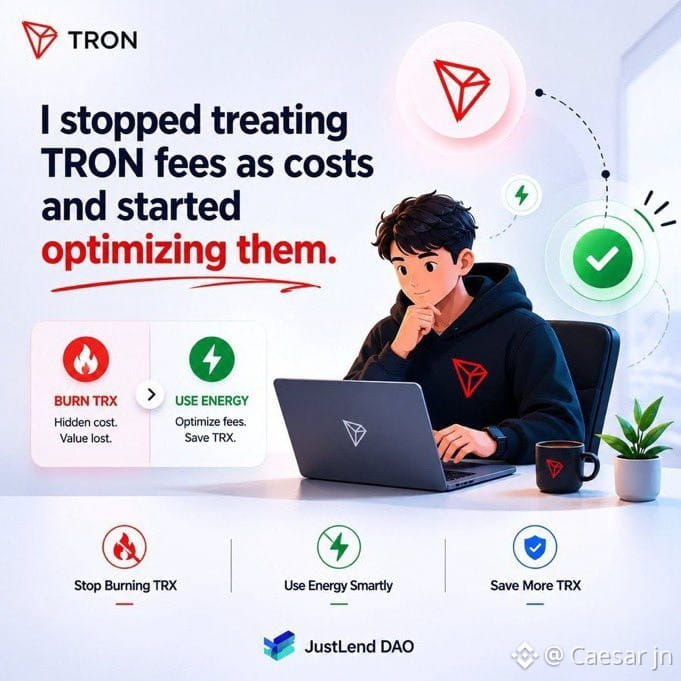
𝗧𝗥𝗢𝗡 𝗘𝗻𝗲𝗿𝗴𝘆 𝗔𝗻𝗱 𝗧𝗵𝗲 𝗖𝗼𝘀𝘁 𝗢𝗳 𝗨𝗦𝗗𝗗 𝗔𝗰𝘁𝗶𝘃𝗶𝘁𝘆
Stablecoin transfers and DeFi interactions require blockchain resources.
On TRON, two important resources are Bandwidth and Energy.
Bandwidth is used for transaction data, while Energy is consumed by smart-contract execution. The amount required depends on the operation.
This distinction matters because a simple token transfer and a more complex DeFi interaction do not necessarily consume the same resources.
TRON users can obtain resources through the network’s mechanisms, including freezing TRX for resource allocation, while eligible users may also access Energy through rental services.
This is relevant to USDD because the cost of interacting with a stablecoin includes more than its market value. Users also need to consider the network resources required to move or deploy it.
Understanding Energy helps users make better decisions about their transactions and DeFi activity.
It also demonstrates how TRON’s infrastructure complements the stablecoin layer.
USDD provides the digital asset. TRON provides the execution environment through which supported transactions take place.
@usddio @JustinSun @DeFi_JUST @TRONDAO #TRONEcoStar
𝗧𝗥𝗢𝗡 𝗘𝗻𝗲𝗿𝗴𝘆 𝗔𝗻𝗱 𝗧𝗵𝗲 𝗖𝗼𝘀𝘁 𝗢𝗳 𝗨𝗦𝗗𝗗 𝗔𝗰𝘁𝗶𝘃𝗶𝘁𝘆
Stablecoin transfers and DeFi interactions require blockchain resources.
On TRON, two important resources are Bandwidth and Energy.
Bandwidth is used for transaction data, while Energy is consumed by smart-contract execution. The amount required depends on the operation.
This distinction matters because a simple token transfer and a more complex DeFi interaction do not necessarily consume the same resources.
TRON users can obtain resources through the network’s mechanisms, including freezing TRX for resource allocation, while eligible users may also access Energy through rental services.
This is relevant to USDD because the cost of interacting with a stablecoin includes more than its market value. Users also need to consider the network resources required to move or deploy it.
Understanding Energy helps users make better decisions about their transactions and DeFi activity.
It also demonstrates how TRON’s infrastructure complements the stablecoin layer.
USDD provides the digital asset. TRON provides the execution environment through which supported transactions take place.
@USDD - Decentralized USD @Justin Sun孙宇晨 @JUST DAO @TRON DAO #TRONEcoStar
11
·
--
𝗧𝗵𝗲 𝗥𝗲𝗮𝗹 𝗖𝗼𝘀𝘁 𝗢𝗳 𝗨𝘀𝗶𝗻𝗴 𝗢𝗿𝗮𝗰𝗹𝗲 𝗦𝗲𝗿𝘃𝗶𝗰𝗲𝘀
Oracle services provide important infrastructure, but delivering external information is not costless.
There are several expenses that can influence the economics of an oracle-dependent application.
External data acquisition may require access to information providers. Oracle operations involve infrastructure, computation and maintenance. Delivering information on-chain also requires blockchain transactions and the resources associated with them.
The application may additionally need to account for how frequently data is updated and how many data feeds it consumes.
For example, a protocol that needs highly frequent price updates may have different operational requirements from an application that only needs occasional external information.
This makes oracle cost an architectural consideration rather than simply a service fee.
Developers need to consider the value of the information, the frequency of updates, the network where the application operates and the consequences of delayed or unavailable data.
The cheapest oracle arrangement is not necessarily the best one.
What matters is the balance between cost, reliability, performance and the financial value being protected.
@WINkLink_Official @JustinSun #TRONEcoStar
𝗧𝗵𝗲 𝗥𝗲𝗮𝗹 𝗖𝗼𝘀𝘁 𝗢𝗳 𝗨𝘀𝗶𝗻𝗴 𝗢𝗿𝗮𝗰𝗹𝗲 𝗦𝗲𝗿𝘃𝗶𝗰𝗲𝘀
Oracle services provide important infrastructure, but delivering external information is not costless.
There are several expenses that can influence the economics of an oracle-dependent application.
External data acquisition may require access to information providers. Oracle operations involve infrastructure, computation and maintenance. Delivering information on-chain also requires blockchain transactions and the resources associated with them.
The application may additionally need to account for how frequently data is updated and how many data feeds it consumes.
For example, a protocol that needs highly frequent price updates may have different operational requirements from an application that only needs occasional external information.
This makes oracle cost an architectural consideration rather than simply a service fee.
Developers need to consider the value of the information, the frequency of updates, the network where the application operates and the consequences of delayed or unavailable data.
The cheapest oracle arrangement is not necessarily the best one.
What matters is the balance between cost, reliability, performance and the financial value being protected.
@WINkLink_Official @Justin Sun孙宇晨 #TRONEcoStar

63
Log in to explore more content
Join global crypto users on Binance Square
⚡️ Get latest and useful information about crypto.
💬 Trusted by the world’s largest crypto exchange.
👍 Discover real insights from verified creators.
Email / Phone number
Trending Topics
NVIDIAReinstatesJensenHuangasCEO
30,585 views
603 Discussing
TradFi News | Nvidia Board Unanimously Reinstates Jensen Huang as CEO; Shares Jump 30% Premarket
Binance News
·31 Likes
·28.6k views
WillMarketsStageAThanksgivingReliefRally?
132,732 views
1,693 Discussing
WillOctCorePCEShiftFedHikeExpectations?
50,411 views
709 Discussing