
Midnight Network
103 Posts

Midnight Network
 Square Verified
Report
Block User
An innovative new blockchain empowering ground-breaking apps that safeguard sensitive commercial & personal data. Midnight is live.
0 Following
1.2K+ Followers
345 Liked
Posts
Verified

Article
Connecting Midnight wallets made simple with DynamicDynamic brings wallet abstraction to the Midnight network, helping developers offer simple email and social sign-ins while managing multi-address mechanics behind the scenes.
Connecting Midnight wallets made simple with Dynamic
Interacting with decentralized applications traditionally presents a steep learning curve. Before testing a new application, users often face a demanding setup checklist: downloading specialized browser extensions, noting down a seed phrase in a secure location, completing complex setup operations and figuring out how to pay for transaction fees.
Onboarding friction causes significant user drop-off. Some estimates suggest 80% of users give up before executing their first transaction. For everyday web users who expect instant access and seamless user experience, these technical hurdles create a major barrier to entry.
The recent blog explaining the importance of abstraction, and how partners across the Midnight ecosystem are implementing it, highlights how shifting complex technical operations into background infrastructure solves this exact usability challenge.
Abstraction moves complex mechanics like seed phrase management and cross-chain asset movement to automated processes. Abstraction makes it much easier to focus on the functionality and utility of applications.
Wallet abstraction with Dynamic
Dynamic, a Fireblocks company, brings abstraction directly to Midnight wallets. It is non-custodial infrastructure with one SDK that includes EVM, Solana, Bitcoin, Sui, TON, Aleo, and Midnight. This means that builders already using Dynamic on other chains can add Midnight using the same integration they are familiar with.
There are two ways to connect wallets:
Users connect an existing Midnight wallet like 1AM or Gero which Dynamic connects using the official @midnight-ntwrk/dapp-connector-api.First-time users can sign in using a standard email address or social account, creating an embedded non-custodial wallet instantly.
Key security relies on threshold signature schemes, ensuring private keys never exist in a single location while removing the need for browser extensions for embedded wallets. External wallets such as 1AM hold their own keys.
Unique features of building on Midnight
Midnight has features that are different from every other chain Dynamic supports. Understanding these capabilities is necessary to build wallet integrations with Dynamic because on Midnight a functional wallet exposes three distinct surfaces.
1. DUST
DUST acts as a private, non-transferable resource to execute smart contracts. Holding unshielded NIGHT allows users to register an address to generate DUST at a constant linear rate, where 1 NIGHT yields up to 5 DUST.
Network transaction fees are paid using the DUST resource.
2. Unshielded
The unshielded surface manages the public address and state of the wallet. It holds public NIGHT tokens and standard unshielded assets, handling public transfers where transaction details stay visible on-chain like traditional blockchains.
3. Shielded
The shielded surface manages private addresses and private token state. It holds private assets in a separate token pool, using zero-knowledge technology to protect transaction balances and participant privacy during contract interactions.
Putting abstraction into practice
Managing three distinct address surfaces alongside Midnight’s sophisticated zero-knowledge technology is more complex than the average web user wants or is able to manage. Dynamic's integration handles the complexity behind the scenes. Developers get clear API methods to query balances and execute transactions, while users sign in through a simple login prompt and interact with privacy features effortlessly.
Next steps for builders
Builders ready to integrate Midnight wallet support can read the detailed technical integration blog on Medium for code examples, connector setups, and contract call workflows.
Builders can also explore the Midnight developer documentation or join the community on Discord to ask questions and share feedback.
Connecting Midnight wallets made simple with Dynamic
Dynamic brings wallet abstraction to the Midnight network, helping developers offer simple email and social sign-ins while managing multi-address mechanics behind the scenes.
Connecting Midnight wallets made simple with Dynamic
Interacting with decentralized applications traditionally presents a steep learning curve. Before testing a new application, users often face a demanding setup checklist: downloading specialized browser extensions, noting down a seed phrase in a secure location, completing complex setup operations and figuring out how to pay for transaction fees.
Onboarding friction causes significant user drop-off. Some estimates suggest 80% of users give up before executing their first transaction. For everyday web users who expect instant access and seamless user experience, these technical hurdles create a major barrier to entry.
The recent blog explaining the importance of abstraction, and how partners across the Midnight ecosystem are implementing it, highlights how shifting complex technical operations into background infrastructure solves this exact usability challenge.
Abstraction moves complex mechanics like seed phrase management and cross-chain asset movement to automated processes. Abstraction makes it much easier to focus on the functionality and utility of applications.
Wallet abstraction with Dynamic
Dynamic, a Fireblocks company, brings abstraction directly to Midnight wallets. It is non-custodial infrastructure with one SDK that includes EVM, Solana, Bitcoin, Sui, TON, Aleo, and Midnight. This means that builders already using Dynamic on other chains can add Midnight using the same integration they are familiar with.
There are two ways to connect wallets:
Users connect an existing Midnight wallet like 1AM or Gero which Dynamic connects using the official @midnight-ntwrk/dapp-connector-api.First-time users can sign in using a standard email address or social account, creating an embedded non-custodial wallet instantly.
Key security relies on threshold signature schemes, ensuring private keys never exist in a single location while removing the need for browser extensions for embedded wallets. External wallets such as 1AM hold their own keys.
Unique features of building on Midnight
Midnight has features that are different from every other chain Dynamic supports. Understanding these capabilities is necessary to build wallet integrations with Dynamic because on Midnight a functional wallet exposes three distinct surfaces.
1. DUST
DUST acts as a private, non-transferable resource to execute smart contracts. Holding unshielded NIGHT allows users to register an address to generate DUST at a constant linear rate, where 1 NIGHT yields up to 5 DUST.
Network transaction fees are paid using the DUST resource.
2. Unshielded
The unshielded surface manages the public address and state of the wallet. It holds public NIGHT tokens and standard unshielded assets, handling public transfers where transaction details stay visible on-chain like traditional blockchains.
3. Shielded
The shielded surface manages private addresses and private token state. It holds private assets in a separate token pool, using zero-knowledge technology to protect transaction balances and participant privacy during contract interactions.
Putting abstraction into practice
Managing three distinct address surfaces alongside Midnight’s sophisticated zero-knowledge technology is more complex than the average web user wants or is able to manage. Dynamic's integration handles the complexity behind the scenes. Developers get clear API methods to query balances and execute transactions, while users sign in through a simple login prompt and interact with privacy features effortlessly.
Next steps for builders
Builders ready to integrate Midnight wallet support can read the detailed technical integration blog on Medium for code examples, connector setups, and contract call workflows.
Builders can also explore the Midnight developer documentation or join the community on Discord to ask questions and share feedback.
Connecting Midnight wallets made simple with Dynamic
Interacting with decentralized applications traditionally presents a steep learning curve. Before testing a new application, users often face a demanding setup checklist: downloading specialized browser extensions, noting down a seed phrase in a secure location, completing complex setup operations and figuring out how to pay for transaction fees.
Onboarding friction causes significant user drop-off. Some estimates suggest 80% of users give up before executing their first transaction. For everyday web users who expect instant access and seamless user experience, these technical hurdles create a major barrier to entry.
The recent blog explaining the importance of abstraction, and how partners across the Midnight ecosystem are implementing it, highlights how shifting complex technical operations into background infrastructure solves this exact usability challenge.
Abstraction moves complex mechanics like seed phrase management and cross-chain asset movement to automated processes. Abstraction makes it much easier to focus on the functionality and utility of applications.
Wallet abstraction with Dynamic
Dynamic, a Fireblocks company, brings abstraction directly to Midnight wallets. It is non-custodial infrastructure with one SDK that includes EVM, Solana, Bitcoin, Sui, TON, Aleo, and Midnight. This means that builders already using Dynamic on other chains can add Midnight using the same integration they are familiar with.
There are two ways to connect wallets:
Users connect an existing Midnight wallet like 1AM or Gero which Dynamic connects using the official @midnight-ntwrk/dapp-connector-api.First-time users can sign in using a standard email address or social account, creating an embedded non-custodial wallet instantly.
Key security relies on threshold signature schemes, ensuring private keys never exist in a single location while removing the need for browser extensions for embedded wallets. External wallets such as 1AM hold their own keys.
Unique features of building on Midnight
Midnight has features that are different from every other chain Dynamic supports. Understanding these capabilities is necessary to build wallet integrations with Dynamic because on Midnight a functional wallet exposes three distinct surfaces.
1. DUST
DUST acts as a private, non-transferable resource to execute smart contracts. Holding unshielded NIGHT allows users to register an address to generate DUST at a constant linear rate, where 1 NIGHT yields up to 5 DUST.
Network transaction fees are paid using the DUST resource.
2. Unshielded
The unshielded surface manages the public address and state of the wallet. It holds public NIGHT tokens and standard unshielded assets, handling public transfers where transaction details stay visible on-chain like traditional blockchains.
3. Shielded
The shielded surface manages private addresses and private token state. It holds private assets in a separate token pool, using zero-knowledge technology to protect transaction balances and participant privacy during contract interactions.
Putting abstraction into practice
Managing three distinct address surfaces alongside Midnight’s sophisticated zero-knowledge technology is more complex than the average web user wants or is able to manage. Dynamic's integration handles the complexity behind the scenes. Developers get clear API methods to query balances and execute transactions, while users sign in through a simple login prompt and interact with privacy features effortlessly.
Next steps for builders
Builders ready to integrate Midnight wallet support can read the detailed technical integration blog on Medium for code examples, connector setups, and contract call workflows.
Builders can also explore the Midnight developer documentation or join the community on Discord to ask questions and share feedback.
7
2.2k
·
--
Bullish
Verified
Monument Bank has launched tokenized retail deposits on Midnight 🔥
The opening phase targets up to £250 million, represented one-to-one in sterling and accessed through Monument’s existing banking app.
Customers do not need to manage private keys, gas accounts or $NIGHT to use the product. Midnight operates in the background, with shielded contracts recording the deposits without publishing customer balances or identities.
The banking experience stays familiar while the deposit record moves onchain.
#RWA #Privacy
2
9
3.5k
Verified
Article
Nightmode enables cross-chain privacyMost blockchain networks broadcast every transaction publicly for everyone to see. While public ledgers allow anyone to verify transaction status, permanent visibility limits institutional participation far beyond compliance with data protection laws. Open ledgers expose critical business operations, active trading strategies, market positions, commercial secrets, and proprietary IP to public scrutiny.
Publishing sensitive and personal data on a public ledger also creates financial and security risks. Wallet balances disclose net worth, corporate payroll transactions expose salary structures, and treasury rebalancing alerts market competitors to upcoming strategic moves. On-chain trading remains vulnerable to automated exploitation, where front-running bots extract over $900 million annually from public protocols by inspecting pending orders.
The capabilities of the Midnight network make it optimal to function as the dedicated privacy layer for Web3, providing confidential execution across public networks without sacrificing regulatory compliance. The architecture solves the visibility problem by decoupling identity verification from transactional data.
Introducing Nightmode
Nightmode connects Midnight to public blockchains using Multi-Party Computation (MPC) vault contracts. A set of seven private cryptographic signatures governs vault access on the native chain.
The native assets never leave their origin network. When a user deposits collateral into an origin vault, Midnight issues a corresponding relational token balance inside a Multi-Chain Shielded (MCS) pool.
Deposit native assets: A user sends their chosen asset to an MPC vault locked on another chain.Issue shielded balance: Midnight logs the vault deposit and updates the user's private balance within the MCS pool using shielded tokens. Identity information stays protected.Execute shielded transactions: The user trades, swaps, or stakes the representative tokens across connected applications on Midnight or public protocols like Uniswap.Settle trade operations: The MCS pool routes the transaction order to the target application while keeping the user's identity completely private.Reclaim native asset: The user burns the relational token balance on Midnight to release the original native asset onto the origin chain.
When a trade is executed on an app like Uniswap, the details of the trade against the MCS pool will be visible, but none of the user details are linked to the swap. That means the values of transactions are public but personal identifying information is kept fully private by Midnight.
Selective disclosure replaces absolute transparency
Financial regulators, tax authorities, and institutional risk officers require verified accounting trails. Traditional privacy protocols enforce total anonymity, which makes it impossible to participate in regulated markets. Midnight replaces the black box associated with some privacy protocols with selective disclosure using zero-knowledge proofs. That means mathematical statements can prove the activity is compliant without compromising user privacy.
Zero-knowledge technology allows users to shield personal wallet identities and balance details while proving transaction validity to authorized auditors.
Privacy and predictable costs
Midnight manages persistent private state to track account balances, historical logs, and permission structures across multi-chain interactions. This design separates single-transaction privacy from long-term account management, enabling multi-step financial workflows without exposing historic activity to external indexers.
To eliminate fee friction, private transfers operate on Midnight’s dual-component model where the NIGHT token generates the DUST resource. Holding the NIGHT token continuously generates DUST, the network resource used to process transactions. That means anyone who holds NIGHT can use the DUST generated to cover the costs of executing shielded transactions without having to purchase additional tokens regularly to cover the costs. Users can execute private transactions without spending their capital asset on gas fees.
Enterprise and DeFi application models
Nightmode extends private execution to create real-world value across a range of use cases, including:
Shielded trading: Traders execute swaps on exchanges like Uniswap, PancakeSwap, and CoW Swap directly from an MCS pool balance without revealing transaction histories, execution timing, or portfolio sizes to public order books.Confidential lending: Borrowers interact with money markets like Aave or Stella Labs with identity parameters shielded from public liquidation bots.Liquid staking: Investors hold Lido liquid staking positions inside private balances, preventing outside observers from linking reward accruals back to specific identity wallets.Institutional payments: Corporations can process global payroll and vendor invoices across chains without exposing headcount, salary brackets, or supplier margins to public block explorers.Real-world asset settlement: Financial institutions tokenize and trade private real-world assets through Assetize, maintaining confidential trade terms while satisfying verification and compliance requirements.
Nightmode enables cross-chain privacy
Most blockchain networks broadcast every transaction publicly for everyone to see. While public ledgers allow anyone to verify transaction status, permanent visibility limits institutional participation far beyond compliance with data protection laws. Open ledgers expose critical business operations, active trading strategies, market positions, commercial secrets, and proprietary IP to public scrutiny.
Publishing sensitive and personal data on a public ledger also creates financial and security risks. Wallet balances disclose net worth, corporate payroll transactions expose salary structures, and treasury rebalancing alerts market competitors to upcoming strategic moves. On-chain trading remains vulnerable to automated exploitation, where front-running bots extract over $900 million annually from public protocols by inspecting pending orders.
The capabilities of the Midnight network make it optimal to function as the dedicated privacy layer for Web3, providing confidential execution across public networks without sacrificing regulatory compliance. The architecture solves the visibility problem by decoupling identity verification from transactional data.
Introducing Nightmode
Nightmode connects Midnight to public blockchains using Multi-Party Computation (MPC) vault contracts. A set of seven private cryptographic signatures governs vault access on the native chain.
The native assets never leave their origin network. When a user deposits collateral into an origin vault, Midnight issues a corresponding relational token balance inside a Multi-Chain Shielded (MCS) pool.
Deposit native assets: A user sends their chosen asset to an MPC vault locked on another chain.Issue shielded balance: Midnight logs the vault deposit and updates the user's private balance within the MCS pool using shielded tokens. Identity information stays protected.Execute shielded transactions: The user trades, swaps, or stakes the representative tokens across connected applications on Midnight or public protocols like Uniswap.Settle trade operations: The MCS pool routes the transaction order to the target application while keeping the user's identity completely private.Reclaim native asset: The user burns the relational token balance on Midnight to release the original native asset onto the origin chain.
When a trade is executed on an app like Uniswap, the details of the trade against the MCS pool will be visible, but none of the user details are linked to the swap. That means the values of transactions are public but personal identifying information is kept fully private by Midnight.
Selective disclosure replaces absolute transparency
Financial regulators, tax authorities, and institutional risk officers require verified accounting trails. Traditional privacy protocols enforce total anonymity, which makes it impossible to participate in regulated markets. Midnight replaces the black box associated with some privacy protocols with selective disclosure using zero-knowledge proofs. That means mathematical statements can prove the activity is compliant without compromising user privacy.
Zero-knowledge technology allows users to shield personal wallet identities and balance details while proving transaction validity to authorized auditors.
Privacy and predictable costs
Midnight manages persistent private state to track account balances, historical logs, and permission structures across multi-chain interactions. This design separates single-transaction privacy from long-term account management, enabling multi-step financial workflows without exposing historic activity to external indexers.
To eliminate fee friction, private transfers operate on Midnight’s dual-component model where the NIGHT token generates the DUST resource. Holding the NIGHT token continuously generates DUST, the network resource used to process transactions. That means anyone who holds NIGHT can use the DUST generated to cover the costs of executing shielded transactions without having to purchase additional tokens regularly to cover the costs. Users can execute private transactions without spending their capital asset on gas fees.
Enterprise and DeFi application models
Nightmode extends private execution to create real-world value across a range of use cases, including:
Shielded trading: Traders execute swaps on exchanges like Uniswap, PancakeSwap, and CoW Swap directly from an MCS pool balance without revealing transaction histories, execution timing, or portfolio sizes to public order books.Confidential lending: Borrowers interact with money markets like Aave or Stella Labs with identity parameters shielded from public liquidation bots.Liquid staking: Investors hold Lido liquid staking positions inside private balances, preventing outside observers from linking reward accruals back to specific identity wallets.Institutional payments: Corporations can process global payroll and vendor invoices across chains without exposing headcount, salary brackets, or supplier margins to public block explorers.Real-world asset settlement: Financial institutions tokenize and trade private real-world assets through Assetize, maintaining confidential trade terms while satisfying verification and compliance requirements.
2
3
2.9k
·
--
Bullish
Verified
From hours to under one minute ⚙️
Midnight Foundation worked with Google Cloud and BCW Group on zero-knowledge infrastructure for Midnight, where $NIGHT serves as the native token.
Complex proving workloads were moved into trusted execution environments using Confidential Space and Google Kubernetes Engine Confidential Nodes.
Google Cloud reports that the open-source reference architecture and Terraform configurations reduced third-party developer onboarding for private proving containers from hours to under one minute.
#ZK #GoogleCloud
NIGHT+2.60%
GOOGUS+6.26%
13
3.8k
·
--
Bullish
Partly True
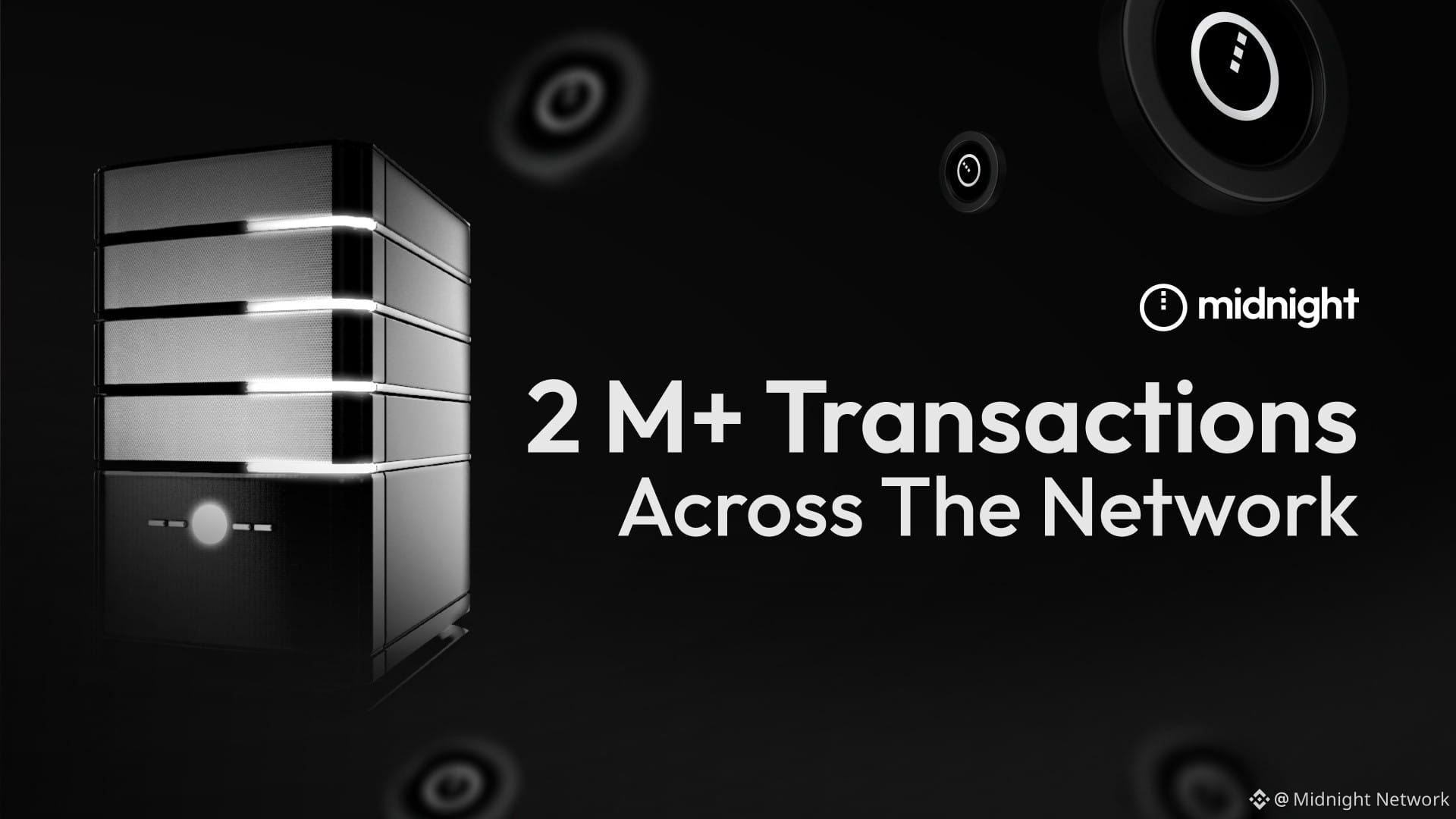
2M+ transactions on Midnight 🌙
We’ve just crossed 2 million transactions on Midnight, and the pace matters as much as the number itself.
• Mainnet launched on March 29
• 1 million transactions on October 27
• 2 million transactions just over two weeks later
The first million took nearly seven months, and the second arrived in roughly two weeks, showing that transaction activity on Midnight has accelerated sharply since late October.
Two million is a major milestone, but the shrinking time between each million matters more.
We’re now watching how quickly the network reaches 3 million 👀
7
1.7k
Verified
Article
State of the Network - October 2026October brings lots of news from across the ecosystem with major product demonstrations from TOKEN2049, the premiere of the Freedom Fighters docuseries, and the publication of the Midnight network roadmap outlining upcoming technical milestones and releases through early 2027.
Freedom Fighters with Leopoldo López
The Midnight Foundation presents Freedom Fighters, a four-part docuseries featuring Venezuelan opposition leader and democracy campaigner Leopoldo López. The series tracks Venezuela’s descent into autocracy, exploring the human cost of opposing centralized power and what it takes to defend fundamental rights.
When the social structures, institutions, and technologies that enable people’s freedoms are dismantled, the battle moves online just as much as it happens in physical spaces. Autocratic regimes and hostile actors will exploit whatever channel they can, making it critical to build tools that give people back control over their digital lives. The future of freedom now depends directly on the digital infrastructure built to protect it.
Defending against networked autocracy requires freedom technology that preserves people’s ability to communicate, transact, and organize with privacy and autonomy. This documentary aligns with the Midnight Foundation’s mission to protect personal data and support digital freedom. López’s experience in Venezuela reveals the real human consequences of this conflict, proving exactly why building secure infrastructure is essential. Watch all four films at midnight.network/freedom-fighters.
Midnight network roadmap
The latest roadmap for the Midnight network is now live, outlining technical milestones across seven core tracks through the first quarter of 2027. The schedule focuses on making programmable privacy practical on-chain, covering key areas such as confidential financial infrastructure, verifiable identity tools, network scaling, and post-quantum proving systems.
Key updates introduce enterprise key support for institutional tokenization, a staged migration to the BABE consensus protocol, and new developer tools including mobile SDKs and AI coding assistants. Learn more about what’s coming up at midnight.network/roadmap.
Applications
At TOKEN2049 Singapore, Midnight President Fahmi Syed provided a high-level view of the expanding ecosystem and capabilities, explaining how the Midnight network solves the transparency issues inherent to public blockchains. The presentation included brief technical demos of the Collateral Warehouse, which shields cross-chain market deposits, and Offer Files, which execute private, single-step trades without exposing users to front-running.
Speakers from across the Midnight ecosystem showcased functional progress:
Midnight Companions introduces privacy-preserving AI agents that connect users with relevant applications. Companions provide personalized trading insights and ecosystem recommendations without exposing underlying user data.Midnight Passport provides a user-friendly application to control digital identities and assets. Midnight Passport allows users to execute transactions via private aliases and delegate specific on-chain permissions to AI agents while maintaining absolute custody of their funds.Nightmode with SIG Network extends Midnight's cryptographic privacy directly to Ethereum. By deploying shielded vaults, developers can build private versions of decentralized finance protocols like Uniswap and Aave without forcing users to navigate traditional bridges.
Input Output Founder Charles Hoskinson shared the vision for Midnight City, as a self-sovereign simulation for autonomous AI agents to battle-test cross-chain trading, identity, and commerce. He also introduced the concept of Nightframes, a context-aware, privacy-focused successor to standard smart contracts.
Ecosystem Updates
Developments across the Midnight ecosystem expand Midnight functionality across new chains, and the latest hackathon in Korea showcases privacy-enhancing apps using Compact.
Sig Network upgrades and expansion
Sig Network released versions 0.24.0 and 0.25.0 of its Midnight integration, modifying how its multi-party computation (MPC) signs outputs, expanding functionality to Solana. The integration enables Midnight contract execution on other chains and covers deposits, Uniswap swaps, Aave supply and withdrawals from Midnight to Ethereum. Check out the full release notes here.
Sig Network announced TRON as the next target for Nightmode, scheduling deployment for December 2026. NightMode provides external applications with Midnight’s cryptographic privacy users needing to abandon their native blockchain. Adding TRON alongside the existing Ethereum integration introduces confidential transactions and selective disclosure to a high-volume payment network, widening the reach of Midnight's infrastructure.
Midnight Korea Hackathon
The Midnight Korea Hackathon concluded with 38 teams submitting working decentralized applications built with the Compact smart contract language. Following a one-month remote building phase, the program closed with a live showcase in Seoul, co-hosted with security auditor CertiK and the Seoul Fintech Lab.
The hackathon generated applications focused on compliance, selective disclosure, and regulated finance. The winning projects deployed zero-knowledge proofs to solve specific institutional problems: JustEnough built a system for verifying public subsidy eligibility without exposing personal documents; Safejeonse developed a mechanism for renters to verify the safety of lease deposits without exposing other tenants' financial data; and Veilance designed a supply chain tracker to prove recycled material content for EU regulations without leaking supplier trade secrets.
Releases & Documentation
Mainnet node upgrade to 1.0.400
All mainnet validators upgraded to Midnight Node 1.0.400. This release applies a targeted security patch while keeping the core runtime environment unchanged. The source code and security advisory are available at the midnightntwrk/midnight-node repo. No action is required from developers, application users, and token holders.
Hosted indexer and RPC deprecation
The Midnight-hosted indexer and RPC endpoints for the mainnet and preprod networks permanently shut down on October 9. Application developers must now route data access through Blockfrost endpoints or operate independent indexers. Because synchronization states cannot transfer across different indexer services, applications saving local wallet data must discard previous files and sync directly from the genesis block. Find configuration examples on the networks and environments page, or consult the migration runbook for troubleshooting.
Join the community
Connect with developers, ecosystem partners, and the core engineering team on the official Midnight Discord.
State of the Network - October 2026
October brings lots of news from across the ecosystem with major product demonstrations from TOKEN2049, the premiere of the Freedom Fighters docuseries, and the publication of the Midnight network roadmap outlining upcoming technical milestones and releases through early 2027.
Freedom Fighters with Leopoldo López
The Midnight Foundation presents Freedom Fighters, a four-part docuseries featuring Venezuelan opposition leader and democracy campaigner Leopoldo López. The series tracks Venezuela’s descent into autocracy, exploring the human cost of opposing centralized power and what it takes to defend fundamental rights.
When the social structures, institutions, and technologies that enable people’s freedoms are dismantled, the battle moves online just as much as it happens in physical spaces. Autocratic regimes and hostile actors will exploit whatever channel they can, making it critical to build tools that give people back control over their digital lives. The future of freedom now depends directly on the digital infrastructure built to protect it.
Defending against networked autocracy requires freedom technology that preserves people’s ability to communicate, transact, and organize with privacy and autonomy. This documentary aligns with the Midnight Foundation’s mission to protect personal data and support digital freedom. López’s experience in Venezuela reveals the real human consequences of this conflict, proving exactly why building secure infrastructure is essential. Watch all four films at midnight.network/freedom-fighters.
Midnight network roadmap
The latest roadmap for the Midnight network is now live, outlining technical milestones across seven core tracks through the first quarter of 2027. The schedule focuses on making programmable privacy practical on-chain, covering key areas such as confidential financial infrastructure, verifiable identity tools, network scaling, and post-quantum proving systems.
Key updates introduce enterprise key support for institutional tokenization, a staged migration to the BABE consensus protocol, and new developer tools including mobile SDKs and AI coding assistants. Learn more about what’s coming up at midnight.network/roadmap.
Applications
At TOKEN2049 Singapore, Midnight President Fahmi Syed provided a high-level view of the expanding ecosystem and capabilities, explaining how the Midnight network solves the transparency issues inherent to public blockchains. The presentation included brief technical demos of the Collateral Warehouse, which shields cross-chain market deposits, and Offer Files, which execute private, single-step trades without exposing users to front-running.
Speakers from across the Midnight ecosystem showcased functional progress:
Midnight Companions introduces privacy-preserving AI agents that connect users with relevant applications. Companions provide personalized trading insights and ecosystem recommendations without exposing underlying user data.Midnight Passport provides a user-friendly application to control digital identities and assets. Midnight Passport allows users to execute transactions via private aliases and delegate specific on-chain permissions to AI agents while maintaining absolute custody of their funds.Nightmode with SIG Network extends Midnight's cryptographic privacy directly to Ethereum. By deploying shielded vaults, developers can build private versions of decentralized finance protocols like Uniswap and Aave without forcing users to navigate traditional bridges.
Input Output Founder Charles Hoskinson shared the vision for Midnight City, as a self-sovereign simulation for autonomous AI agents to battle-test cross-chain trading, identity, and commerce. He also introduced the concept of Nightframes, a context-aware, privacy-focused successor to standard smart contracts.
Ecosystem Updates
Developments across the Midnight ecosystem expand Midnight functionality across new chains, and the latest hackathon in Korea showcases privacy-enhancing apps using Compact.
Sig Network upgrades and expansion
Sig Network released versions 0.24.0 and 0.25.0 of its Midnight integration, modifying how its multi-party computation (MPC) signs outputs, expanding functionality to Solana. The integration enables Midnight contract execution on other chains and covers deposits, Uniswap swaps, Aave supply and withdrawals from Midnight to Ethereum. Check out the full release notes here.
Sig Network announced TRON as the next target for Nightmode, scheduling deployment for December 2026. NightMode provides external applications with Midnight’s cryptographic privacy users needing to abandon their native blockchain. Adding TRON alongside the existing Ethereum integration introduces confidential transactions and selective disclosure to a high-volume payment network, widening the reach of Midnight's infrastructure.
Midnight Korea Hackathon
The Midnight Korea Hackathon concluded with 38 teams submitting working decentralized applications built with the Compact smart contract language. Following a one-month remote building phase, the program closed with a live showcase in Seoul, co-hosted with security auditor CertiK and the Seoul Fintech Lab.
The hackathon generated applications focused on compliance, selective disclosure, and regulated finance. The winning projects deployed zero-knowledge proofs to solve specific institutional problems: JustEnough built a system for verifying public subsidy eligibility without exposing personal documents; Safejeonse developed a mechanism for renters to verify the safety of lease deposits without exposing other tenants' financial data; and Veilance designed a supply chain tracker to prove recycled material content for EU regulations without leaking supplier trade secrets.
Releases & Documentation
Mainnet node upgrade to 1.0.400
All mainnet validators upgraded to Midnight Node 1.0.400. This release applies a targeted security patch while keeping the core runtime environment unchanged. The source code and security advisory are available at the midnightntwrk/midnight-node repo. No action is required from developers, application users, and token holders.
Hosted indexer and RPC deprecation
The Midnight-hosted indexer and RPC endpoints for the mainnet and preprod networks permanently shut down on October 9. Application developers must now route data access through Blockfrost endpoints or operate independent indexers. Because synchronization states cannot transfer across different indexer services, applications saving local wallet data must discard previous files and sync directly from the genesis block. Find configuration examples on the networks and environments page, or consult the migration runbook for troubleshooting.
Join the community
Connect with developers, ecosystem partners, and the core engineering team on the official Midnight Discord.
1
5
1.1k
·
--
Bullish
Verified
Sometimes A Yes Or No Is All An App Needs ✅
$XMR demonstrated why users may not want their financial activity exposed publicly. $ADA demonstrated the value of independently verifiable blockchain activity.
Midnight asks whether applications can get the verification they need without receiving all the data behind it.
Imagine proving you have sufficient assets for a transaction.
The application may only need to know:
Requirement met: YES
It doesn’t necessarily need your exact balance, every asset you own or your entire transaction history.
With zero-knowledge proofs, the underlying information can remain private while the required fact is still verified.
That’s selective disclosure.
Prove what matters. Keep the rest private.
1
3
1.6k
·
--
Bullish
Partly True
What If Your AI Agent Had Permissions Instead of Full Wallet Access?
$NEAR is part of the growing conversation around AI-driven blockchain applications. $TAO represents another side of the crypto industry's expanding AI ecosystem.
Midnight's Passport roadmap introduces a practical question for that future:
How should AI agents interact with assets and accounts on a user's behalf?
Passport is designed to support a unified account experience across chains, with users controlling what they delegate.
Instead of handing an automated agent unrestricted account access, the goal is to enable defined permissions.
Passport's roadmap includes support for delegated permissions and expanded identity capabilities.
AI agents need more than intelligence.
They need boundaries.
6
1.9k
·
--
Bullish
Verified
Privacy Becomes More Interesting When People Actually Build With It 🛠️
$ADA showed how an ecosystem grows when developers have infrastructure they can build applications around.
$LINK showed how specialized blockchain infrastructure can become useful far beyond a single crypto-native use case.
That’s the stage Midnight is moving toward.
The network combines programmable privacy with Compact smart contracts, zero-knowledge proofs and infrastructure supported by recognizable operators.
Builders are already putting that infrastructure to work. A recent developer sprint with VIA Labs brought together 37 developers and produced five payment applications built using Midnight's technology.
And institutional projects such as Monument Bank give those ideas a path into real-world deployment.
Privacy is no longer just about hiding a transaction.
It’s becoming an application primitive developers can build around.
#Privacy
1
2
2.5k
Today’s Public Data Can Be Analyzed By Tomorrow’s AI 🤖
$LINK has helped blockchain applications consume increasingly diverse sources of data. $NEAR is part of an industry increasingly exploring the intersection between blockchains, applications and AI.
That intersection creates a privacy question.
Blockchain history is permanent.
AI capability isn’t.
Information that seems difficult to interpret today can remain available for much more capable systems to analyze years later.
Wallet behavior, counterparties and transaction patterns can all become useful signals.
Midnight approaches that problem through data minimization.
If an application only needs proof that a condition was satisfied, it doesn’t necessarily need the private information behind that proof.
The best way to protect some data may be never making it public in the first place.
#Privacy
8
1.7k
·
--
Bullish
A Privacy Network Still Has To Prove It Can Operate 🌐
$LINK built credibility by turning blockchain infrastructure into something enterprises could actually integrate.$ADA built an ecosystem around infrastructure that can be independently operated and verified.
Midnight’s privacy thesis is increasingly backed by something more tangible: infrastructure and participants.
Its federated node operators include Google Cloud, MoneyGram, Worldpay, eToro, Bullish, Blockdaemon and Pairpoint by Vodafone.
That’s important because a network isn’t proven by what it says it will become.
It becomes credible as infrastructure gets deployed, applications get built and recognizable operators participate.
Privacy is the feature.
The network underneath still has to deliver it.
#Privacy
5
475
·
--
Bullish
Verified
The Midnight Ecosystem Builds Momentum 🌐
$ADA has shown what a growing blockchain developer ecosystem can become. $LINK has demonstrated how infrastructure gains utility as more projects integrate and build around it.
Midnight has its own growing list of milestones worth watching.
Recent developments include:
→ Permissionless smart contract deployment on mainnet
→ Gero Wallet adding Midnight dApp connectivity and shielded balance
→ Dynamic bringing embedded wallet onboarding to the network
→ VIA Labs' developer sprint producing five payment applications
→ Ura Labs piloting sponsored transaction fees through Relay Club on Preprod
These developments cover different parts of the ecosystem: network access, developer tools, wallets, payments and application usability.
Each gives builders another capability to work with.
And together, they show Midnight developing beyond its core technology into a broader application ecosystem.
#Privacy

5
2.1k
·
--
Bullish
Financial Markets Need Privacy Too 📊
$XLM has helped push blockchain infrastructure toward real-world financial activity. $LINK has connected onchain systems with increasingly sophisticated financial data and institutions.
But moving more finance onchain introduces a fundamental tension.
Markets need verification.
Participants also have information they cannot simply broadcast: positions, counterparties, customer information and strategies.
Traditional finance already understands that not every participant should see every piece of information.
Midnight brings that principle into programmable blockchain applications.
Information can remain private while specific facts are still proven to authorized parties.
More finance can move onchain without requiring more financial information to become public.
#Privacy
4
236
·
--
Bullish
Verified
Getting Started With Midnight Is Becoming Simpler 📱
$ADA has built an extensive ecosystem of blockchain applications. $NEAR has emphasized making Web3 more accessible to everyday users.
Midnight's integration with Dynamic tackles one of the biggest obstacles to blockchain adoption: onboarding.
Dynamic brings embedded wallet infrastructure to Midnight, giving developers ways to offer familiar sign-in experiences.
Here's what that means:
→ Users can sign in with email or social accounts
→ New users can create embedded non-custodial wallets
→ Existing Midnight wallets like Gero and 1AM can connect
→ Developers can manage complex wallet interactions through a single SDK
The result is a simpler way for applications to bring users into the Midnight ecosystem.
Because powerful technology becomes more useful when people can actually access it.
#defi
4
699
·
--
Bullish
You Can Measure A Network By Who Shows Up 🏗
$LINK has built relationships across both crypto-native and traditional financial infrastructure, $XLM has demonstrated how blockchain networks can attract organizations interested in real-world financial applications.
For Midnight, one signal is the range of organizations already participating around its infrastructure and ecosystem.
Google Cloud. MoneyGram. Worldpay. eToro. Bullish. Blockdaemon. Pairpoint by Vodafone.
Then there are initiatives such as Monument Bank’s project to tokenize up to £250M of customer deposits.
None of these individually defines a network.
Together, they provide something more useful than a narrative:
Evidence that companies are exploring, operating and building around the infrastructure.
Adoption leaves evidence.
#RWA #Adoption
3
282
·
--
Bullish
Smart Contracts Can Decide What Gets Revealed 🧩
$ADA helped establish smart contracts as a foundation for applications across its ecosystem. $NEAR has focused heavily on making blockchain applications practical for developers and users.
Midnight extends programmability to privacy itself.
Through Compact, developers can define how private and public information interact inside an application.
Consider an identity application.
The underlying document can remain private while the application proves a user meets a particular requirement.
Or a financial application can verify a threshold without exposing the exact number behind it.
The developer defines those disclosure rules in the application.
That turns privacy from a network-wide switch into something developers can program.
#defi
5
573
·
--
Bullish
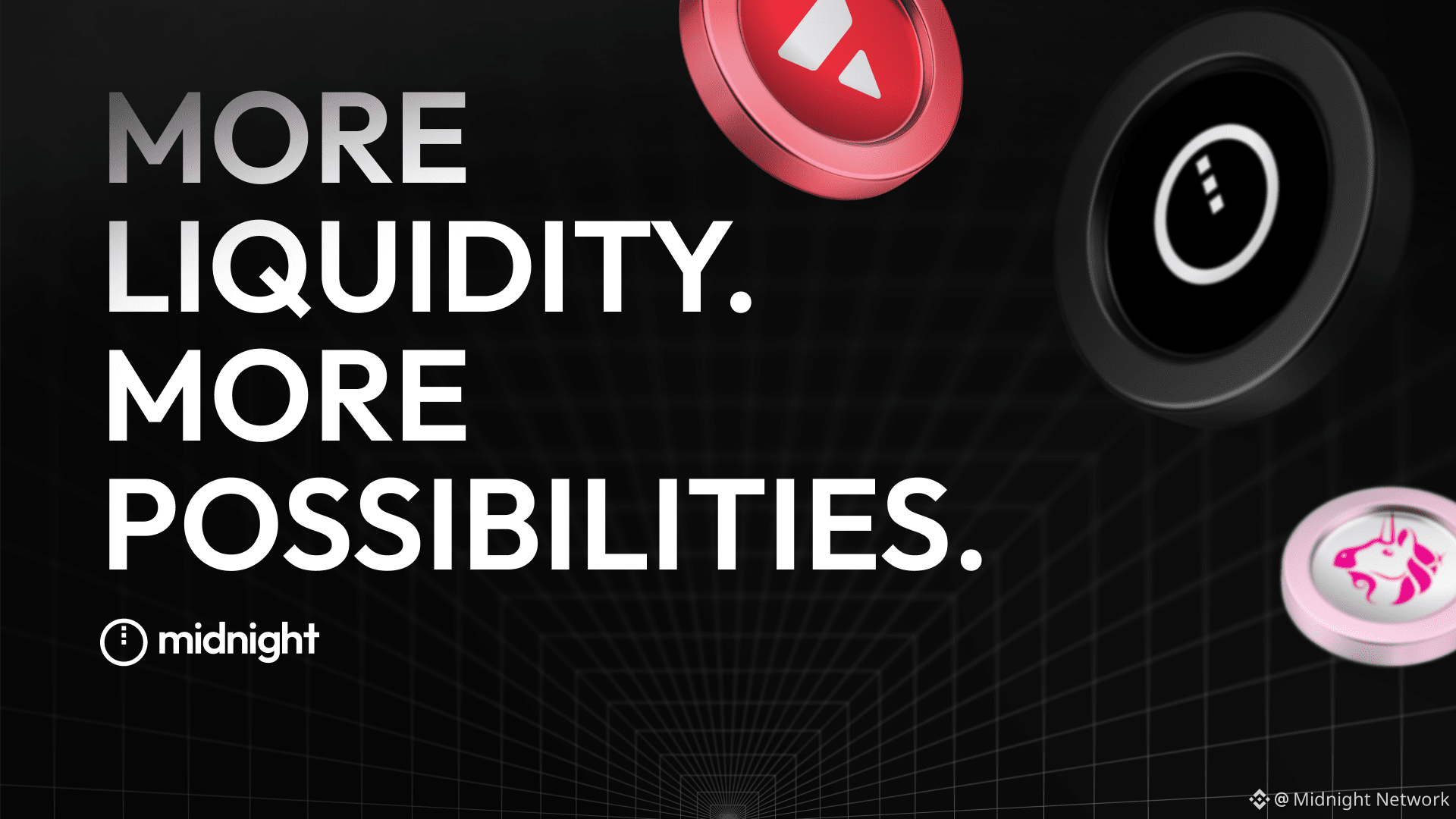
Midnight's Nightmode Opens a New Path to DeFi 🌐
$UNI helped make decentralized token swaps a major part of crypto. $AVAX has expanded the range of blockchain environments where financial applications can operate.
Now Midnight is developing Nightmode to connect its capabilities with liquidity on existing networks.
Rather than requiring every application to rebuild liquidity from scratch, Nightmode is designed to let users interact with established DeFi markets through Midnight.
The roadmap starts with EVM-compatible networks and plans further cross-chain expansion in Q1 2027.
The bigger opportunity?
Making existing blockchain ecosystems more useful together.
#defi #Privacy
3
571
·
--
Bullish
Verified
Developers Can Now Deploy Directly On Midnight Mainnet 🚀
$ADA helped establish an ecosystem where developers build and deploy decentralized applications. $NEAR has also focused on making blockchain development more accessible.
Midnight has reached an important milestone of its own.
Permissionless smart contract deployment is now live on mainnet.
Previously, deployment required a mandatory security review through the Preprod process.
Now developers can deploy contracts directly without that mandatory review.
Why does this matter?
Because an ecosystem grows when developers can move from building to deployment with fewer barriers.
More freedom to experiment.
A more direct path to launching applications.
And another important step in Midnight's development as a platform for builders.
#DeFi #Web3
4
1k
·
--
Bullish
Not All Blockchain Data Needs The Same Visibility 👁
$XMR showed that blockchain activity doesn’t inherently need to expose every financial detail. $ADA showed how public blockchain activity can remain broadly verifiable.
Midnight introduces a more granular approach.
Think about information in three categories:
→ Public: anyone can see it
→ Private: it remains hidden
→ Provable: it remains private, but a specific fact about it can still be verified
That third category changes what developers can build.
An application doesn’t always need the underlying data.
Sometimes it only needs mathematical proof that the data satisfies a condition.
That’s what makes privacy programmable.
#XRM #solana
1
2
404
·
--
Bullish
Verified
Midnight Builders Are Turning Ideas Into Applications 🛠
$ADA has demonstrated how developer communities can expand what blockchain infrastructure is used for. $LINK has shown how specialized tools can unlock new applications across the ecosystem.
Now Midnight's builder community is putting its own infrastructure to work.
A developer sprint with VIA Labs brought together 37 developers and produced five completed payment applications.
Among the projects:
→ Midnight Private Invoices
→ Privoice
→ USDM Invoice Relay
These aren't just concepts for what blockchain could eventually support.
They're examples of developers building payment-focused applications using Midnight's technology.
More tools. More builders. More use cases.
That's how an ecosystem takes shape.
#privacy #defi
3
338
Log in to explore more content
Join global crypto users on Binance Square
⚡️ Get latest and useful information about crypto.
💬 Trusted by the world’s largest crypto exchange.
👍 Discover real insights from verified creators.
Email / Phone number
Trending Topics
NVIDIAReinstatesJensenHuangasCEO
2,531 views
250 Discussing
TradFi News | Nvidia Board Unanimously Reinstates Jensen Huang as CEO; Shares Jump 30% Premarket
Binance News
·12 Likes
·15.2k views
WillMarketsStageAThanksgivingReliefRally?
101,051 views
1,468 Discussing
WillOctCorePCEShiftFedHikeExpectations?
35,334 views
567 Discussing