
#bitcoincoredisclosestortrafficvulnerability
bitcoincoredisclosestortrafficvulnerability
113,484 views
1,021 Discussing
Hot
Latest

·
--

Article
Bitcoin Core Reveals Tor Traffic Vulnerability#bitcoincoredisclosestortrafficvulnerability
Bitcoin Privacy Faces a New Security Challenge!
Bitcoin Core developers have disclosed a vulnerability involving Tor network traffic, raising concerns about the privacy of Bitcoin users who rely on Tor to hide their IP addresses.
Why does it matter?
Tor helps Bitcoin users protect their network privacy.A traffic vulnerability could potentially expose information about users' connections.Bitcoin's transaction security and user network privacy are two different things.Users should update to security-recommended Bitcoin Core versions and follow official developer advisories.
Market Impact: This is primarily a privacy and cybersecurity concern, not evidence that Bitcoin's blockchain or funds have been hacked.
What do you think? Could privacy vulnerabilities become a bigger challenge for Bitcoin adoption?
The Tor vulnerability was identified as CVE-2025-62860. It was patched in Bitcoin Core 28.3, 29.2 and 30.0 before its public disclosure on November 10, 2026. Not every Bitcoin node was affected.
#BitcoinCore #CryptoSecurity #BTC #CryptoNew
Bitcoin Core Reveals Tor Traffic Vulnerability
#bitcoincoredisclosestortrafficvulnerability
Bitcoin Privacy Faces a New Security Challenge!
Bitcoin Core developers have disclosed a vulnerability involving Tor network traffic, raising concerns about the privacy of Bitcoin users who rely on Tor to hide their IP addresses.
Why does it matter?
Tor helps Bitcoin users protect their network privacy.A traffic vulnerability could potentially expose information about users' connections.Bitcoin's transaction security and user network privacy are two different things.Users should update to security-recommended Bitcoin Core versions and follow official developer advisories.
Market Impact: This is primarily a privacy and cybersecurity concern, not evidence that Bitcoin's blockchain or funds have been hacked.
What do you think? Could privacy vulnerabilities become a bigger challenge for Bitcoin adoption?
The Tor vulnerability was identified as CVE-2025-62860. It was patched in Bitcoin Core 28.3, 29.2 and 30.0 before its public disclosure on November 10, 2026. Not every Bitcoin node was affected.
#BitcoinCore #CryptoSecurity #BTC #CryptoNew
Bitcoin Privacy Faces a New Security Challenge!
Bitcoin Core developers have disclosed a vulnerability involving Tor network traffic, raising concerns about the privacy of Bitcoin users who rely on Tor to hide their IP addresses.
Why does it matter?
Tor helps Bitcoin users protect their network privacy.A traffic vulnerability could potentially expose information about users' connections.Bitcoin's transaction security and user network privacy are two different things.Users should update to security-recommended Bitcoin Core versions and follow official developer advisories.
Market Impact: This is primarily a privacy and cybersecurity concern, not evidence that Bitcoin's blockchain or funds have been hacked.
What do you think? Could privacy vulnerabilities become a bigger challenge for Bitcoin adoption?
The Tor vulnerability was identified as CVE-2025-62860. It was patched in Bitcoin Core 28.3, 29.2 and 30.0 before its public disclosure on November 10, 2026. Not every Bitcoin node was affected.
#BitcoinCore #CryptoSecurity #BTC #CryptoNew
143

📊 Three Security Flaws, One Important Lesson!
Bitcoin Core disclosed three previously patched vulnerabilities involving Tor permissions, block processing and mining operations. The findings highlight why continuous code reviews, responsible disclosure and timely upgrades matter.
$BTC $ETH $SOL
#bitcoincoredisclosestortrafficvulnerability
📊 Three Security Flaws, One Important Lesson!
Bitcoin Core disclosed three previously patched vulnerabilities involving Tor permissions, block processing and mining operations. The findings highlight why continuous code reviews, responsible disclosure and timely upgrades matter.
$BTC $ETH $SOL
#bitcoincoredisclosestortrafficvulnerability
Bitcoin Core disclosed three previously patched vulnerabilities involving Tor permissions, block processing and mining operations. The findings highlight why continuous code reviews, responsible disclosure and timely upgrades matter.
$BTC $ETH $SOL
#bitcoincoredisclosestortrafficvulnerability
41
🔐 Bitcoin Core Reveals a Hidden Tor Security Risk!
Bitcoin Core has disclosed a vulnerability that allowed incoming Tor connections to receive trusted permissions on thousands of nodes. The issue could weaken spam protection and expose internal node information. Security remains essential to Bitcoin's infrastructure.
$BTC $BTC#bitcoincoredisclosestortrafficvulnerability
🔐 Bitcoin Core Reveals a Hidden Tor Security Risk!
Bitcoin Core has disclosed a vulnerability that allowed incoming Tor connections to receive trusted permissions on thousands of nodes. The issue could weaken spam protection and expose internal node information. Security remains essential to Bitcoin's infrastructure.
$BTC $BTC #bitcoincoredisclosestortrafficvulnerability
Bitcoin Core has disclosed a vulnerability that allowed incoming Tor connections to receive trusted permissions on thousands of nodes. The issue could weaken spam protection and expose internal node information. Security remains essential to Bitcoin's infrastructure.
$BTC $BTC #bitcoincoredisclosestortrafficvulnerability
50
🚨 Thousands of Bitcoin Nodes Faced a Configuration Risk!
A flaw in Bitcoin Core's optional whitelist setting allowed some incoming Tor users to inherit privileges intended for trusted connections. Nodes without this specific configuration were not affected.
$BTC $BTC
#bitcoincoredisclosestortrafficvulnerability
🚨 Thousands of Bitcoin Nodes Faced a Configuration Risk!
A flaw in Bitcoin Core's optional whitelist setting allowed some incoming Tor users to inherit privileges intended for trusted connections. Nodes without this specific configuration were not affected.
$BTC $BTC
#bitcoincoredisclosestortrafficvulnerability
A flaw in Bitcoin Core's optional whitelist setting allowed some incoming Tor users to inherit privileges intended for trusted connections. Nodes without this specific configuration were not affected.
$BTC $BTC
#bitcoincoredisclosestortrafficvulnerability
48
🛡️ Bitcoin Core Developers Had Already Fixed the Tor Vulnerability!
The security issue, tracked as CVE-2025-62860, was patched in October 2025 but publicly disclosed on November 10, 2026. The delayed disclosure gave operators time to upgrade their software.
$BTC $ETH
#bitcoincoredisclosestortrafficvulnerability
🛡️ Bitcoin Core Developers Had Already Fixed the Tor Vulnerability!
The security issue, tracked as CVE-2025-62860, was patched in October 2025 but publicly disclosed on November 10, 2026. The delayed disclosure gave operators time to upgrade their software.
$BTC $ETH
#bitcoincoredisclosestortrafficvulnerability
The security issue, tracked as CVE-2025-62860, was patched in October 2025 but publicly disclosed on November 10, 2026. The delayed disclosure gave operators time to upgrade their software.
$BTC $ETH
#bitcoincoredisclosestortrafficvulnerability
40

·
--
#BitcoinCoreDisclosesTorTrafficVulnerability
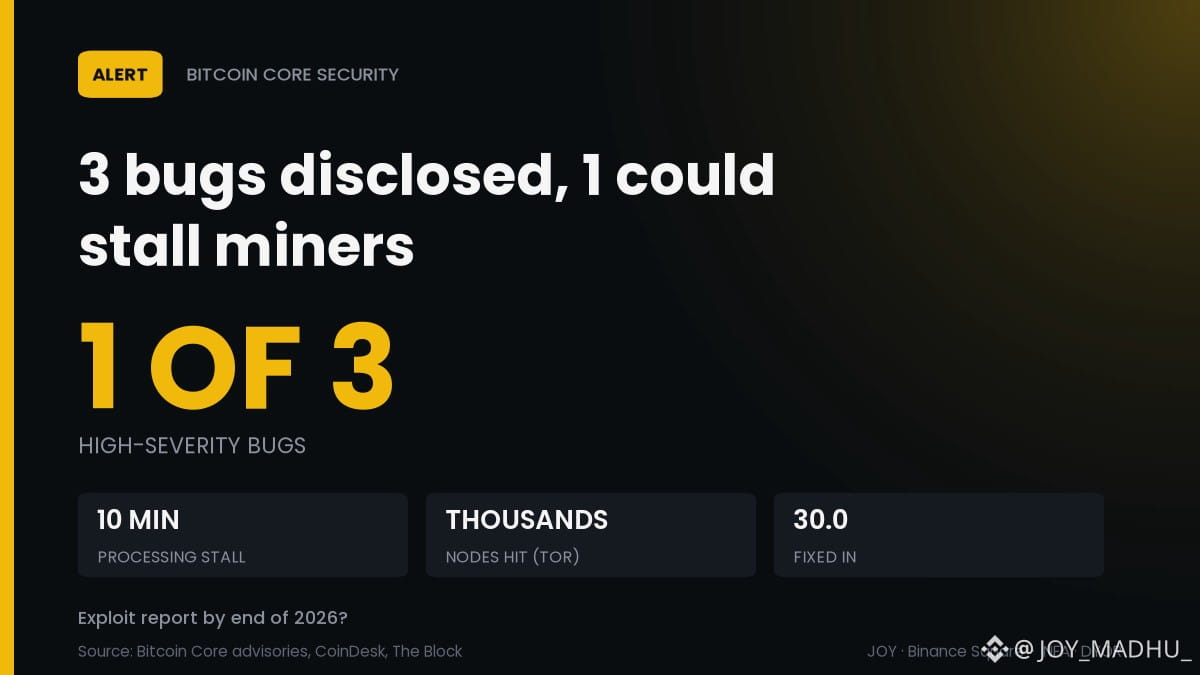
⛏️ Not Just Tor: 3 Core Bugs, 1 Could Stall Miners
The Tor flaw was one of three bugs Core disclosed Nov 10. The worst hit miners.
⚠️ High: miners could fail to build blocks after a reorg
📉 Medium: block processing stalled up to 10 min, repeatably
📊 Medium: Tor peers got trusted status on "thousands" of nodes
📅 All fixed in 30.0 (Oct 2025); 29.x end-of-life Oct 27
My read: no attacks reported, but 28.x/29.x nodes should upgrade.
Confirmed exploit of any of the 3 before 2027: yes or no? 👇
$BTC
#BitcoinCoreDisclosesTorTrafficVulnerability #Bitcoin #BitcoinMining
#BitcoinCoreDisclosesTorTrafficVulnerability
⛏️ Not Just Tor: 3 Core Bugs, 1 Could Stall Miners
The Tor flaw was one of three bugs Core disclosed Nov 10. The worst hit miners.
⚠️ High: miners could fail to build blocks after a reorg
📉 Medium: block processing stalled up to 10 min, repeatably
📊 Medium: Tor peers got trusted status on "thousands" of nodes
📅 All fixed in 30.0 (Oct 2025); 29.x end-of-life Oct 27
My read: no attacks reported, but 28.x/29.x nodes should upgrade.
Confirmed exploit of any of the 3 before 2027: yes or no? 👇
$BTC
#BitcoinCoreDisclosesTorTrafficVulnerability #Bitcoin #BitcoinMining
⛏️ Not Just Tor: 3 Core Bugs, 1 Could Stall Miners
The Tor flaw was one of three bugs Core disclosed Nov 10. The worst hit miners.
⚠️ High: miners could fail to build blocks after a reorg
📉 Medium: block processing stalled up to 10 min, repeatably
📊 Medium: Tor peers got trusted status on "thousands" of nodes
📅 All fixed in 30.0 (Oct 2025); 29.x end-of-life Oct 27
My read: no attacks reported, but 28.x/29.x nodes should upgrade.
Confirmed exploit of any of the 3 before 2027: yes or no? 👇
$BTC
#BitcoinCoreDisclosesTorTrafficVulnerability #Bitcoin #BitcoinMining
1
48

·
--
Bullish
#BitcoinCoreDisclosesTorTrafficVulnerability Bitcoin Core Discloses Tor Vulnerability: What Node Operators Should Know
Bitcoin Core has publicly disclosed a security vulnerability that allowed incoming Tor connections to receive trusted-peer permissions on thousands of reachable Bitcoin nodes under certain configurations. The issue, identified as CVE-2025-62860, raises important questions about network security and how trust settings are managed across decentralized infrastructure.
The vulnerability occurred when Bitcoin Core treated incoming Tor connections as trusted because the local Tor proxy address matched an IP range configured through the optional whitelist setting. These connections could consequently bypass certain denial-of-service limits and privacy protections normally applied to untrusted peers.
However, the exposure was configuration-dependent. Nodes that never enabled the non-default whitelist setting were not affected by this particular issue. Importantly, the vulnerability had already been addressed through Bitcoin Core updates released in October 2025, before the detailed public disclosure on November 10, 2026.
From a market perspective, this development is more relevant to Bitcoin's technical infrastructure than its immediate price action. Security transparency and timely software maintenance remain essential for maintaining confidence in decentralized networks.
For traders, the key takeaway is to distinguish between a historical software vulnerability and an active network-wide threat. Monitoring developer disclosures, node upgrades, and network resilience provides a more balanced perspective than reacting to security headlines alone.
$AKE
{future}(AKEUSDT)
$SHELL
{future}(SHELLUSDT)
$TAC
{future}(TACUSDT)
#BitcoinCoreDisclosesTorTrafficVulnerability Bitcoin Core Discloses Tor Vulnerability: What Node Operators Should Know
Bitcoin Core has publicly disclosed a security vulnerability that allowed incoming Tor connections to receive trusted-peer permissions on thousands of reachable Bitcoin nodes under certain configurations. The issue, identified as CVE-2025-62860, raises important questions about network security and how trust settings are managed across decentralized infrastructure.
The vulnerability occurred when Bitcoin Core treated incoming Tor connections as trusted because the local Tor proxy address matched an IP range configured through the optional whitelist setting. These connections could consequently bypass certain denial-of-service limits and privacy protections normally applied to untrusted peers.
However, the exposure was configuration-dependent. Nodes that never enabled the non-default whitelist setting were not affected by this particular issue. Importantly, the vulnerability had already been addressed through Bitcoin Core updates released in October 2025, before the detailed public disclosure on November 10, 2026.
From a market perspective, this development is more relevant to Bitcoin's technical infrastructure than its immediate price action. Security transparency and timely software maintenance remain essential for maintaining confidence in decentralized networks.
For traders, the key takeaway is to distinguish between a historical software vulnerability and an active network-wide threat. Monitoring developer disclosures, node upgrades, and network resilience provides a more balanced perspective than reacting to security headlines alone.
$AKE
$SHELL
$TAC
Bitcoin Core has publicly disclosed a security vulnerability that allowed incoming Tor connections to receive trusted-peer permissions on thousands of reachable Bitcoin nodes under certain configurations. The issue, identified as CVE-2025-62860, raises important questions about network security and how trust settings are managed across decentralized infrastructure.
The vulnerability occurred when Bitcoin Core treated incoming Tor connections as trusted because the local Tor proxy address matched an IP range configured through the optional whitelist setting. These connections could consequently bypass certain denial-of-service limits and privacy protections normally applied to untrusted peers.
However, the exposure was configuration-dependent. Nodes that never enabled the non-default whitelist setting were not affected by this particular issue. Importantly, the vulnerability had already been addressed through Bitcoin Core updates released in October 2025, before the detailed public disclosure on November 10, 2026.
From a market perspective, this development is more relevant to Bitcoin's technical infrastructure than its immediate price action. Security transparency and timely software maintenance remain essential for maintaining confidence in decentralized networks.
For traders, the key takeaway is to distinguish between a historical software vulnerability and an active network-wide threat. Monitoring developer disclosures, node upgrades, and network resilience provides a more balanced perspective than reacting to security headlines alone.
$AKE
$SHELL
$TAC

89

·
--
🚨Tor wasn't broken. Bitcoin Core trusted the wrong address.
#bitcoincoredisclosestortrafficvulnerability
On November 10, Bitcoin Core disclosed medium-severity CVE-2025-62860. In certain configurations, an inbound Tor peer appeared to the node as its local Tor daemon. If that daemon's IP matched a non-default -whitelist range, incoming onion peers could inherit trusted-peer permissions that relax denial-of-service limits and some privacy protections.
Bitcoin Core says vendor bundles and common Tor configurations left thousands of reachable mainnet nodes exposed. But nodes without the optional whitelist setting were never affected.
This was not a break of Tor encryption, a Bitcoin consensus failure or proof that users' real IP addresses were exposed.
The more overlooked story: the Tor bug was one of three vulnerabilities disclosed together. CVE-2025-62861, rated high severity, could leave an affected mining node unable to build block templates after a chain reorganization until restart. CVE-2025-62859 could stall block processing under specific peer conditions.
The fixes shipped in 2025. The detailed disclosure arrived November 10, two weeks after the last affected 29.x branch reached end-of-life on October 27, following Bitcoin Core's published security policy.
The lesson: network security can fail through configuration assumptions, not just cryptographic flaws.
Not financial advice.
$BTC
{future}(BTCUSDT)
#BitcoinCoreDisclosesTorTrafficVulnerability #BitcoinCore #BitcoinBreaksBelow200WeekMovingAverage #NodeSecurity
🚨Tor wasn't broken. Bitcoin Core trusted the wrong address.
#bitcoincoredisclosestortrafficvulnerability
On November 10, Bitcoin Core disclosed medium-severity CVE-2025-62860. In certain configurations, an inbound Tor peer appeared to the node as its local Tor daemon. If that daemon's IP matched a non-default -whitelist range, incoming onion peers could inherit trusted-peer permissions that relax denial-of-service limits and some privacy protections.
Bitcoin Core says vendor bundles and common Tor configurations left thousands of reachable mainnet nodes exposed. But nodes without the optional whitelist setting were never affected.
This was not a break of Tor encryption, a Bitcoin consensus failure or proof that users' real IP addresses were exposed.
The more overlooked story: the Tor bug was one of three vulnerabilities disclosed together. CVE-2025-62861, rated high severity, could leave an affected mining node unable to build block templates after a chain reorganization until restart. CVE-2025-62859 could stall block processing under specific peer conditions.
The fixes shipped in 2025. The detailed disclosure arrived November 10, two weeks after the last affected 29.x branch reached end-of-life on October 27, following Bitcoin Core's published security policy.
The lesson: network security can fail through configuration assumptions, not just cryptographic flaws.
Not financial advice.
$BTC
#BitcoinCoreDisclosesTorTrafficVulnerability #BitcoinCore #BitcoinBreaksBelow200WeekMovingAverage #NodeSecurity
#bitcoincoredisclosestortrafficvulnerability
On November 10, Bitcoin Core disclosed medium-severity CVE-2025-62860. In certain configurations, an inbound Tor peer appeared to the node as its local Tor daemon. If that daemon's IP matched a non-default -whitelist range, incoming onion peers could inherit trusted-peer permissions that relax denial-of-service limits and some privacy protections.
Bitcoin Core says vendor bundles and common Tor configurations left thousands of reachable mainnet nodes exposed. But nodes without the optional whitelist setting were never affected.
This was not a break of Tor encryption, a Bitcoin consensus failure or proof that users' real IP addresses were exposed.
The more overlooked story: the Tor bug was one of three vulnerabilities disclosed together. CVE-2025-62861, rated high severity, could leave an affected mining node unable to build block templates after a chain reorganization until restart. CVE-2025-62859 could stall block processing under specific peer conditions.
The fixes shipped in 2025. The detailed disclosure arrived November 10, two weeks after the last affected 29.x branch reached end-of-life on October 27, following Bitcoin Core's published security policy.
The lesson: network security can fail through configuration assumptions, not just cryptographic flaws.
Not financial advice.
$BTC
#BitcoinCoreDisclosesTorTrafficVulnerability #BitcoinCore #BitcoinBreaksBelow200WeekMovingAverage #NodeSecurity

2
1
331

·
--
Bitcoin Core Discloses Tor Traffic Vulnerability Affecting Thousands of Nodes
Bitcoin Core has publicly disclosed a security flaw (CVE-2025-62860) in which incoming Tor traffic bundled with non-default -whitelist configurations inherited "trusted" local peer status across thousands of reachable nodes—weakening DoS and privacy protections.
The issue was disclosed alongside two other bugs—including a high-severity block-template stall vulnerability (CVE-2025-62861)—following the end of support for the 29.x series. While all three flaws were already patched in Bitcoin Core 30.0 (and backported to 29.2 and 28.3) with zero active exploits reported, around 9% of reachable nodes are still running outdated versions and should upgrade immediately.
Here is the short tactical trade plan for the top three coins on watch:
$BTC
Entry: Buy dips at $66,000–$66,700 demand or breakout above $68,500.
Targets: $71,000–$73,500 | Stop-Loss: $64,500
$ZEC
Entry: Accumulate near $850–$900 demand zone or reclaim above $960.
Targets: $1,050–$1,150 | Stop-Loss: $790
$ETH
Entry: Buy $1,850–$1,900 support bounce or 4H close above $1,960.
Targets: $2,080–$2,180 | Stop-Loss: $1,780
Disclaimer: Market analysis only, not financial advice. Always manage risk and DYOR.
{spot}(BTCUSDT)
{spot}(ZECUSDT)
{spot}(ETHUSDT)
#BitcoinCoreDisclosesTorTrafficVulnerability #BinanceSquare2026 #CryptoSecurity #Write2Earn
Bitcoin Core Discloses Tor Traffic Vulnerability Affecting Thousands of Nodes
Bitcoin Core has publicly disclosed a security flaw (CVE-2025-62860) in which incoming Tor traffic bundled with non-default -whitelist configurations inherited "trusted" local peer status across thousands of reachable nodes—weakening DoS and privacy protections.
The issue was disclosed alongside two other bugs—including a high-severity block-template stall vulnerability (CVE-2025-62861)—following the end of support for the 29.x series. While all three flaws were already patched in Bitcoin Core 30.0 (and backported to 29.2 and 28.3) with zero active exploits reported, around 9% of reachable nodes are still running outdated versions and should upgrade immediately.
Here is the short tactical trade plan for the top three coins on watch:
$BTC
Entry: Buy dips at $66,000–$66,700 demand or breakout above $68,500.
Targets: $71,000–$73,500 | Stop-Loss: $64,500
$ZEC
Entry: Accumulate near $850–$900 demand zone or reclaim above $960.
Targets: $1,050–$1,150 | Stop-Loss: $790
$ETH
Entry: Buy $1,850–$1,900 support bounce or 4H close above $1,960.
Targets: $2,080–$2,180 | Stop-Loss: $1,780
Disclaimer: Market analysis only, not financial advice. Always manage risk and DYOR.
#BitcoinCoreDisclosesTorTrafficVulnerability #BinanceSquare2026 #CryptoSecurity #Write2Earn
Bitcoin Core has publicly disclosed a security flaw (CVE-2025-62860) in which incoming Tor traffic bundled with non-default -whitelist configurations inherited "trusted" local peer status across thousands of reachable nodes—weakening DoS and privacy protections.
The issue was disclosed alongside two other bugs—including a high-severity block-template stall vulnerability (CVE-2025-62861)—following the end of support for the 29.x series. While all three flaws were already patched in Bitcoin Core 30.0 (and backported to 29.2 and 28.3) with zero active exploits reported, around 9% of reachable nodes are still running outdated versions and should upgrade immediately.
Here is the short tactical trade plan for the top three coins on watch:
$BTC
Entry: Buy dips at $66,000–$66,700 demand or breakout above $68,500.
Targets: $71,000–$73,500 | Stop-Loss: $64,500
$ZEC
Entry: Accumulate near $850–$900 demand zone or reclaim above $960.
Targets: $1,050–$1,150 | Stop-Loss: $790
$ETH
Entry: Buy $1,850–$1,900 support bounce or 4H close above $1,960.
Targets: $2,080–$2,180 | Stop-Loss: $1,780
Disclaimer: Market analysis only, not financial advice. Always manage risk and DYOR.
#BitcoinCoreDisclosesTorTrafficVulnerability #BinanceSquare2026 #CryptoSecurity #Write2Earn

1
1
83

·
--
#BitcoinCoreDisclosesTorTrafficVulnerability 🚨 BREAKING: Bitcoin Core Discloses Tor Traffic Vulnerability
This is HUGE for every Node Runner & Privacy user! 👇
What happened?
Bitcoin Core revealed CVE-2025-62860 - a Tor flaw that let ANY stranger on Tor get TRUSTED permissions on thousands of nodes! 😱
How?
➡️ Tor traffic was treated as LOCAL traffic
➡️ If node had -whitelist enabled, Tor strangers bypassed spam + privacy protections
➡️ Thousands of reachable mainnet nodes were whitelisting ALL incoming Tor connections
Good News:
✅ NO coins lost, NO wallets hacked
✅ Fixed in Oct 2025 in v30.0, v29.2, v28.3
✅ Nodes WITHOUT whitelist = NOT affected
✅ Disclosed Nov 10 after 29.x retired
BUT also disclosed:
⚠️ CVE-2025-62861 HIGH - Could stop mining nodes from making valid blocks
⚠️ CVE-2025-62859 MEDIUM - Could stall block processing 10 mins
What to do NOW?
1. Update to latest Bitcoin Core ASAP
2. Check your -whitelist settings
3. If you run a Tor node, VERIFY your config
Bitcoin is still secure - this is responsible disclosure working!
Are you running a node? 👇
🟢 = Already Updated
🟡 = Updating Now
🔴 = Didn't know
RT to warn every node runner!
#Bitcoin #BTC #Tor #BitcoinCore #CryptoSecurity #Binance
#BitcoinCoreDisclosesTorTrafficVulnerability 🚨 BREAKING: Bitcoin Core Discloses Tor Traffic Vulnerability
This is HUGE for every Node Runner & Privacy user! 👇
What happened?
Bitcoin Core revealed CVE-2025-62860 - a Tor flaw that let ANY stranger on Tor get TRUSTED permissions on thousands of nodes! 😱
How?
➡️ Tor traffic was treated as LOCAL traffic
➡️ If node had -whitelist enabled, Tor strangers bypassed spam + privacy protections
➡️ Thousands of reachable mainnet nodes were whitelisting ALL incoming Tor connections
Good News:
✅ NO coins lost, NO wallets hacked
✅ Fixed in Oct 2025 in v30.0, v29.2, v28.3
✅ Nodes WITHOUT whitelist = NOT affected
✅ Disclosed Nov 10 after 29.x retired
BUT also disclosed:
⚠️ CVE-2025-62861 HIGH - Could stop mining nodes from making valid blocks
⚠️ CVE-2025-62859 MEDIUM - Could stall block processing 10 mins
What to do NOW?
1. Update to latest Bitcoin Core ASAP
2. Check your -whitelist settings
3. If you run a Tor node, VERIFY your config
Bitcoin is still secure - this is responsible disclosure working!
Are you running a node? 👇
🟢 = Already Updated
🟡 = Updating Now
🔴 = Didn't know
RT to warn every node runner!
#Bitcoin #BTC #Tor #BitcoinCore #CryptoSecurity #Binance
This is HUGE for every Node Runner & Privacy user! 👇
What happened?
Bitcoin Core revealed CVE-2025-62860 - a Tor flaw that let ANY stranger on Tor get TRUSTED permissions on thousands of nodes! 😱
How?
➡️ Tor traffic was treated as LOCAL traffic
➡️ If node had -whitelist enabled, Tor strangers bypassed spam + privacy protections
➡️ Thousands of reachable mainnet nodes were whitelisting ALL incoming Tor connections
Good News:
✅ NO coins lost, NO wallets hacked
✅ Fixed in Oct 2025 in v30.0, v29.2, v28.3
✅ Nodes WITHOUT whitelist = NOT affected
✅ Disclosed Nov 10 after 29.x retired
BUT also disclosed:
⚠️ CVE-2025-62861 HIGH - Could stop mining nodes from making valid blocks
⚠️ CVE-2025-62859 MEDIUM - Could stall block processing 10 mins
What to do NOW?
1. Update to latest Bitcoin Core ASAP
2. Check your -whitelist settings
3. If you run a Tor node, VERIFY your config
Bitcoin is still secure - this is responsible disclosure working!
Are you running a node? 👇
🟢 = Already Updated
🟡 = Updating Now
🔴 = Didn't know
RT to warn every node runner!
#Bitcoin #BTC #Tor #BitcoinCore #CryptoSecurity #Binance

2
1
102

#BitcoinCoreDisclosesTorTrafficVulnerability bitcoincoredisclosestortrafficvuln...
A medium-severity vulnerability allowed anonymous Tor connections to inherit trusted permissions across thousands of Bitcoin nodes, potentially weakening ...
#BitcoinCoreDisclosesTorTrafficVulnerability bitcoincoredisclosestortrafficvuln...
A medium-severity vulnerability allowed anonymous Tor connections to inherit trusted permissions across thousands of Bitcoin nodes, potentially weakening ...
A medium-severity vulnerability allowed anonymous Tor connections to inherit trusted permissions across thousands of Bitcoin nodes, potentially weakening ...
1
167

#BitcoinCoreDisclosesTorTrafficVulnerability
🚨 BITCOIN CORE REVEALS TOR TRAFFIC VULNERABILITY! 🔥
Bitcoin Core has disclosed a security flaw (CVE-2025-62860) that allowed incoming Tor connections to receive trusted-peer privileges on thousands of reachable Bitcoin nodes.
⚠️ Why does it matter?
Certain nodes unintentionally relaxed spam and privacy protections.
The issue affected specific configurations using the optional -whitelist setting.
Developers released fixes in October 2025.
Nodes without the affected whitelist configuration were not impacted.
📊 Market Perspective: This disclosure highlights the importance of Bitcoin network security, decentralization, and continuous upgrades.
My Take: Don't panic or confuse a node-security vulnerability with a Bitcoin wallet hack. Network security matters, but this is not evidence that BTC funds were stolen.
👀 Traders, keep watching $BTC volatility, market sentiment, and key support levels.
Is this a warning for Bitcoin infrastructure or proof that its security process is working?
#Bitcoin #BTC #BitcoinCore #CryptoSecurity #Tor #CryptoNewss
#BitcoinCoreDisclosesTorTrafficVulnerability
🚨 BITCOIN CORE REVEALS TOR TRAFFIC VULNERABILITY! 🔥
Bitcoin Core has disclosed a security flaw (CVE-2025-62860) that allowed incoming Tor connections to receive trusted-peer privileges on thousands of reachable Bitcoin nodes.
⚠️ Why does it matter?
Certain nodes unintentionally relaxed spam and privacy protections.
The issue affected specific configurations using the optional -whitelist setting.
Developers released fixes in October 2025.
Nodes without the affected whitelist configuration were not impacted.
📊 Market Perspective: This disclosure highlights the importance of Bitcoin network security, decentralization, and continuous upgrades.
My Take: Don't panic or confuse a node-security vulnerability with a Bitcoin wallet hack. Network security matters, but this is not evidence that BTC funds were stolen.
👀 Traders, keep watching $BTC volatility, market sentiment, and key support levels.
Is this a warning for Bitcoin infrastructure or proof that its security process is working?
#Bitcoin #BTC #BitcoinCore #CryptoSecurity #Tor #CryptoNewss
🚨 BITCOIN CORE REVEALS TOR TRAFFIC VULNERABILITY! 🔥
Bitcoin Core has disclosed a security flaw (CVE-2025-62860) that allowed incoming Tor connections to receive trusted-peer privileges on thousands of reachable Bitcoin nodes.
⚠️ Why does it matter?
Certain nodes unintentionally relaxed spam and privacy protections.
The issue affected specific configurations using the optional -whitelist setting.
Developers released fixes in October 2025.
Nodes without the affected whitelist configuration were not impacted.
📊 Market Perspective: This disclosure highlights the importance of Bitcoin network security, decentralization, and continuous upgrades.
My Take: Don't panic or confuse a node-security vulnerability with a Bitcoin wallet hack. Network security matters, but this is not evidence that BTC funds were stolen.
👀 Traders, keep watching $BTC volatility, market sentiment, and key support levels.
Is this a warning for Bitcoin infrastructure or proof that its security process is working?
#Bitcoin #BTC #BitcoinCore #CryptoSecurity #Tor #CryptoNewss

1
14

#BitcoinCoreDisclosesTorTrafficVulnerability
🚨 $BTC CORE DISCLOSES TOR TRAFFIC VULNERABILITY!
Bitcoin Core has publicly revealed a security flaw that could have exposed thousands of Bitcoin nodes to unexpected risks through Tor connections.
🔍 What Happened?
- A vulnerability was identified as CVE-2025-62860.
- Incoming Tor connections could incorrectly receive trusted-node permissions.
- This could bypass certain spam and privacy protections.
- Thousands of reachable Bitcoin nodes were potentially affected under specific configurations.
🛡️ Was It Fixed?
✅ Bitcoin Core 28.3
✅ Bitcoin Core 29.2
✅ Bitcoin Core 30.0
The vulnerability was patched in October 2025, while its technical details were publicly disclosed on November 10, 2026.
⚠️ Important: This is a previously patched vulnerability, not evidence of a new ongoing Bitcoin attack. Nodes using default configurations were not affected by this specific issue.
💬 Do you think Bitcoin Core's security disclosure policy is strong enough to protect the network?
#BTC #CryptoSecurity #TorNetwork #BlockchainLeaders #CryptoNews
#BitcoinCoreDisclosesTorTrafficVulnerability
🚨 $BTC CORE DISCLOSES TOR TRAFFIC VULNERABILITY!
Bitcoin Core has publicly revealed a security flaw that could have exposed thousands of Bitcoin nodes to unexpected risks through Tor connections.
🔍 What Happened?
- A vulnerability was identified as CVE-2025-62860.
- Incoming Tor connections could incorrectly receive trusted-node permissions.
- This could bypass certain spam and privacy protections.
- Thousands of reachable Bitcoin nodes were potentially affected under specific configurations.
🛡️ Was It Fixed?
✅ Bitcoin Core 28.3
✅ Bitcoin Core 29.2
✅ Bitcoin Core 30.0
The vulnerability was patched in October 2025, while its technical details were publicly disclosed on November 10, 2026.
⚠️ Important: This is a previously patched vulnerability, not evidence of a new ongoing Bitcoin attack. Nodes using default configurations were not affected by this specific issue.
💬 Do you think Bitcoin Core's security disclosure policy is strong enough to protect the network?
#BTC #CryptoSecurity #TorNetwork #BlockchainLeaders #CryptoNews
🚨 $BTC CORE DISCLOSES TOR TRAFFIC VULNERABILITY!
Bitcoin Core has publicly revealed a security flaw that could have exposed thousands of Bitcoin nodes to unexpected risks through Tor connections.
🔍 What Happened?
- A vulnerability was identified as CVE-2025-62860.
- Incoming Tor connections could incorrectly receive trusted-node permissions.
- This could bypass certain spam and privacy protections.
- Thousands of reachable Bitcoin nodes were potentially affected under specific configurations.
🛡️ Was It Fixed?
✅ Bitcoin Core 28.3
✅ Bitcoin Core 29.2
✅ Bitcoin Core 30.0
The vulnerability was patched in October 2025, while its technical details were publicly disclosed on November 10, 2026.
⚠️ Important: This is a previously patched vulnerability, not evidence of a new ongoing Bitcoin attack. Nodes using default configurations were not affected by this specific issue.
💬 Do you think Bitcoin Core's security disclosure policy is strong enough to protect the network?
#BTC #CryptoSecurity #TorNetwork #BlockchainLeaders #CryptoNews

1
62

#bitcoincoredisclosestortrafficvulnerability Follow my profile. I write research for ordinary traders.
BITCOIN CORE SAYS THERE WAS A TOR BUG. SHOULD YOU WORRY?
Short answer for most people: no. Your coins were not at risk.
What happened, in simple words:
Bitcoin runs on thousands of computers called nodes. A node can have a “trusted list” of other computers. Trusted ones get fewer limits. Tor is a privacy tool. It makes every visitor look like it comes from the node’s own computer. If that address was on the trusted list, every stranger coming through Tor was treated as trusted. That weakened some protection against spam attacks and some privacy protection.
What matters most:
It only affected nodes using a special, non-default setting called “whitelist”. Normal nodes were not affected. No coins were stolen, no wallets were hacked, and no attacks were reported. It was fixed in October 2025, in versions 30.0, 29.2 and 28.3. The details were published on 10 Nov 2026. The developers wait until the last old version stops being supported before they explain a bug. Two other bugs were published at the same time. One could make a miner restart its node to build blocks again. The other could slow block downloads for about 10 minutes. Both were also fixed.
Is it bearish for $BTC? This is a node-software story, not a problem with Bitcoin’s rules. Bitcoin is down today because of inflation, interest rates and ETF outflows, not because of this bug.
If you run a node: update to 30.0 or newer, and check any “whitelist” line in your settings.
I don’t claim to predict every candle. I want to understand WHY.
To the 90% of retail traders: don’t sell because of scary headlines. Ask three things first: How serious is it? Was it fixed? Did anyone lose money? Here the answers are medium, yes, and no.
Question: is it good that they waited 13 months to tell us, or is that too long?
Experience, not financial advice.
$BTC
{spot}(BTCUSDT)
#BitcoinCoreDisclosesTorTrafficVulnerability
#bitcoincoredisclosestortrafficvulnerability Follow my profile. I write research for ordinary traders.
BITCOIN CORE SAYS THERE WAS A TOR BUG. SHOULD YOU WORRY?
Short answer for most people: no. Your coins were not at risk.
What happened, in simple words:
Bitcoin runs on thousands of computers called nodes. A node can have a “trusted list” of other computers. Trusted ones get fewer limits. Tor is a privacy tool. It makes every visitor look like it comes from the node’s own computer. If that address was on the trusted list, every stranger coming through Tor was treated as trusted. That weakened some protection against spam attacks and some privacy protection.
What matters most:
It only affected nodes using a special, non-default setting called “whitelist”. Normal nodes were not affected. No coins were stolen, no wallets were hacked, and no attacks were reported. It was fixed in October 2025, in versions 30.0, 29.2 and 28.3. The details were published on 10 Nov 2026. The developers wait until the last old version stops being supported before they explain a bug. Two other bugs were published at the same time. One could make a miner restart its node to build blocks again. The other could slow block downloads for about 10 minutes. Both were also fixed.
Is it bearish for $BTC ? This is a node-software story, not a problem with Bitcoin’s rules. Bitcoin is down today because of inflation, interest rates and ETF outflows, not because of this bug.
If you run a node: update to 30.0 or newer, and check any “whitelist” line in your settings.
I don’t claim to predict every candle. I want to understand WHY.
To the 90% of retail traders: don’t sell because of scary headlines. Ask three things first: How serious is it? Was it fixed? Did anyone lose money? Here the answers are medium, yes, and no.
Question: is it good that they waited 13 months to tell us, or is that too long?
Experience, not financial advice.
$BTC
#BitcoinCoreDisclosesTorTrafficVulnerability
BITCOIN CORE SAYS THERE WAS A TOR BUG. SHOULD YOU WORRY?
Short answer for most people: no. Your coins were not at risk.
What happened, in simple words:
Bitcoin runs on thousands of computers called nodes. A node can have a “trusted list” of other computers. Trusted ones get fewer limits. Tor is a privacy tool. It makes every visitor look like it comes from the node’s own computer. If that address was on the trusted list, every stranger coming through Tor was treated as trusted. That weakened some protection against spam attacks and some privacy protection.
What matters most:
It only affected nodes using a special, non-default setting called “whitelist”. Normal nodes were not affected. No coins were stolen, no wallets were hacked, and no attacks were reported. It was fixed in October 2025, in versions 30.0, 29.2 and 28.3. The details were published on 10 Nov 2026. The developers wait until the last old version stops being supported before they explain a bug. Two other bugs were published at the same time. One could make a miner restart its node to build blocks again. The other could slow block downloads for about 10 minutes. Both were also fixed.
Is it bearish for $BTC ? This is a node-software story, not a problem with Bitcoin’s rules. Bitcoin is down today because of inflation, interest rates and ETF outflows, not because of this bug.
If you run a node: update to 30.0 or newer, and check any “whitelist” line in your settings.
I don’t claim to predict every candle. I want to understand WHY.
To the 90% of retail traders: don’t sell because of scary headlines. Ask three things first: How serious is it? Was it fixed? Did anyone lose money? Here the answers are medium, yes, and no.
Question: is it good that they waited 13 months to tell us, or is that too long?
Experience, not financial advice.
$BTC
#BitcoinCoreDisclosesTorTrafficVulnerability

1
1k

·
--
#bitcoincoredisclosestortrafficvulnerability
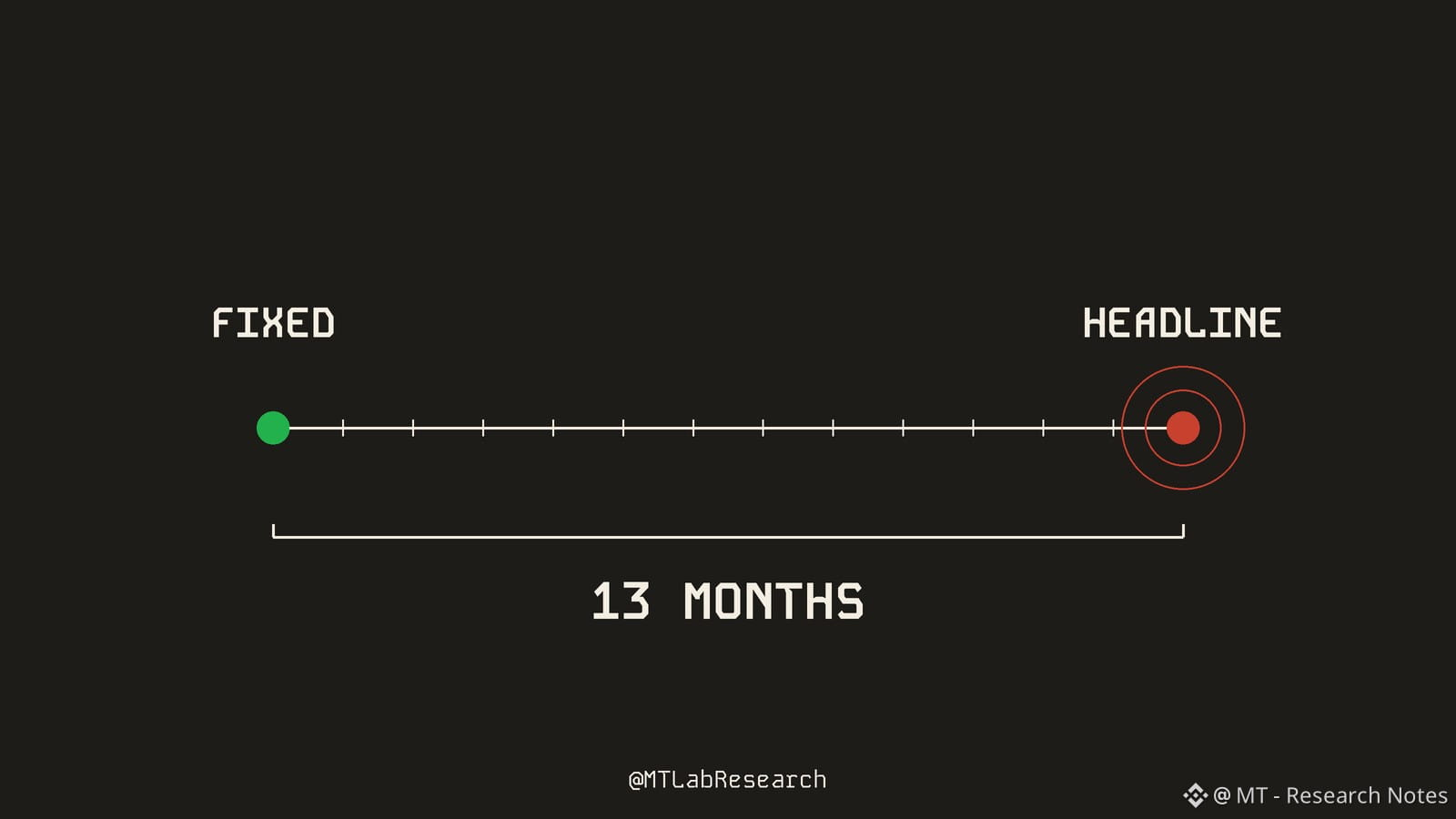
🧅 Your Tor node was "trusted" by strangers. For 13 months. Nobody told you.
Bitcoin Core just disclosed CVE-2025-62860: if a node's non-default -whitelist range covered its Tor daemon, every inbound Tor peer inherited trusted rights.
✅ No coin theft
✅ No reported exploits
✅ Fixed in Oct 2025 (30.0 / 29.2 / 28.3)
The real question: should critical bugs wait 13 months to be disclosed?
Comment 🟢 if transparency wins, 🔴 if faster disclosure matters more 👇
$BTC
{future}(BTCUSDT)
#Bitcoin #CryptoSecurity #BitcoinCore
#bitcoincoredisclosestortrafficvulnerability
🧅 Your Tor node was "trusted" by strangers. For 13 months. Nobody told you.
Bitcoin Core just disclosed CVE-2025-62860: if a node's non-default -whitelist range covered its Tor daemon, every inbound Tor peer inherited trusted rights.
✅ No coin theft
✅ No reported exploits
✅ Fixed in Oct 2025 (30.0 / 29.2 / 28.3)
The real question: should critical bugs wait 13 months to be disclosed?
Comment 🟢 if transparency wins, 🔴 if faster disclosure matters more 👇
$BTC
#Bitcoin #CryptoSecurity #BitcoinCore
🧅 Your Tor node was "trusted" by strangers. For 13 months. Nobody told you.
Bitcoin Core just disclosed CVE-2025-62860: if a node's non-default -whitelist range covered its Tor daemon, every inbound Tor peer inherited trusted rights.
✅ No coin theft
✅ No reported exploits
✅ Fixed in Oct 2025 (30.0 / 29.2 / 28.3)
The real question: should critical bugs wait 13 months to be disclosed?
Comment 🟢 if transparency wins, 🔴 if faster disclosure matters more 👇
$BTC
#Bitcoin #CryptoSecurity #BitcoinCore

2
179

·
--
Bullish
Did you know Bitcoin nodes had a VIP list, and every Tor stranger got in uninvited?
On Nov 10, Bitcoin Core published three old bugs. The Tor one is rated Medium, needed a non-default setting, and was patched in Oct 2025. Here is what it really was.
> Bitcoin Core software runs on nodes, computers that check and relay Bitcoin transactions.
> Operators can set a "-whitelist" option, a guest list of trusted peers that get relaxed limits.
> Tor hides who is really connecting, so a node sees every Tor visitor as coming from its own local Tor service.
> If that address sat on the guest list, every stranger arriving over Tor got VIP treatment: looser limits against attacks and weaker privacy protections.
> Bitcoin Core says thousands of reachable nodes ended up like this, because popular node bundles shipped with Tor plus a matching whitelist.
Details many people may skip:
- It needed a non-default setting. Nodes without -whitelist were not affected.
- Fixes shipped in Oct 2025 (versions 30.0, 29.2, 28.3). Core publishes Medium and High bugs only after the last affected version stops getting support, plus two weeks. That is why you read it in Nov 2026.
- The coverage I read describes weaker node limits and privacy, not stolen coins. No active exploits were reported (per Crypto Briefing).
- Running your own node? Check your version and every whitelist= line in bitcoin.conf (per CryptoTicker).
Severity, versions, fix date. Check all three before you worry 😉
Experience, not financial advice. $BTC
{future}(BTCUSDT)
#BitcoinCoreDisclosesTorTrafficVulnerability
Did you know Bitcoin nodes had a VIP list, and every Tor stranger got in uninvited?
On Nov 10, Bitcoin Core published three old bugs. The Tor one is rated Medium, needed a non-default setting, and was patched in Oct 2025. Here is what it really was.
> Bitcoin Core software runs on nodes, computers that check and relay Bitcoin transactions.
> Operators can set a "-whitelist" option, a guest list of trusted peers that get relaxed limits.
> Tor hides who is really connecting, so a node sees every Tor visitor as coming from its own local Tor service.
> If that address sat on the guest list, every stranger arriving over Tor got VIP treatment: looser limits against attacks and weaker privacy protections.
> Bitcoin Core says thousands of reachable nodes ended up like this, because popular node bundles shipped with Tor plus a matching whitelist.
Details many people may skip:
- It needed a non-default setting. Nodes without -whitelist were not affected.
- Fixes shipped in Oct 2025 (versions 30.0, 29.2, 28.3). Core publishes Medium and High bugs only after the last affected version stops getting support, plus two weeks. That is why you read it in Nov 2026.
- The coverage I read describes weaker node limits and privacy, not stolen coins. No active exploits were reported (per Crypto Briefing).
- Running your own node? Check your version and every whitelist= line in bitcoin.conf (per CryptoTicker).
Severity, versions, fix date. Check all three before you worry 😉
Experience, not financial advice. $BTC
#BitcoinCoreDisclosesTorTrafficVulnerability
On Nov 10, Bitcoin Core published three old bugs. The Tor one is rated Medium, needed a non-default setting, and was patched in Oct 2025. Here is what it really was.
> Bitcoin Core software runs on nodes, computers that check and relay Bitcoin transactions.
> Operators can set a "-whitelist" option, a guest list of trusted peers that get relaxed limits.
> Tor hides who is really connecting, so a node sees every Tor visitor as coming from its own local Tor service.
> If that address sat on the guest list, every stranger arriving over Tor got VIP treatment: looser limits against attacks and weaker privacy protections.
> Bitcoin Core says thousands of reachable nodes ended up like this, because popular node bundles shipped with Tor plus a matching whitelist.
Details many people may skip:
- It needed a non-default setting. Nodes without -whitelist were not affected.
- Fixes shipped in Oct 2025 (versions 30.0, 29.2, 28.3). Core publishes Medium and High bugs only after the last affected version stops getting support, plus two weeks. That is why you read it in Nov 2026.
- The coverage I read describes weaker node limits and privacy, not stolen coins. No active exploits were reported (per Crypto Briefing).
- Running your own node? Check your version and every whitelist= line in bitcoin.conf (per CryptoTicker).
Severity, versions, fix date. Check all three before you worry 😉
Experience, not financial advice. $BTC
#BitcoinCoreDisclosesTorTrafficVulnerability
2
1
422

·
--
Security FUD vs. Reality
Bitcoin Core / Tor Network Vulnerability #bitcoincoredisclosestortrafficvulnerability
Don't let old security patches become new FUD! 🛑
Seeing a lot of chatter about the $BTC Bitcoin Core Tor network vulnerability disclosure. Quick reminder: this bug was already patched back in October 2025, and it was just standard transparency reporting after ending support for older versions. No active exploits, no network breakdown!
Don't let old technical news shake you out of your positions. Keep your eyes on the bigger macro picture and stay focused on your portfolio strategy. Stay safe out there! 🛡️✨
#bitcoincoredisclosestortrafficvulnerability #bitcoin #CryptoSecurity #CryptoNews
{spot}(BTCUSDT)
Security FUD vs. Reality
Bitcoin Core / Tor Network Vulnerability #bitcoincoredisclosestortrafficvulnerability
Don't let old security patches become new FUD! 🛑
Seeing a lot of chatter about the $BTC Bitcoin Core Tor network vulnerability disclosure. Quick reminder: this bug was already patched back in October 2025, and it was just standard transparency reporting after ending support for older versions. No active exploits, no network breakdown!
Don't let old technical news shake you out of your positions. Keep your eyes on the bigger macro picture and stay focused on your portfolio strategy. Stay safe out there! 🛡️✨
#bitcoincoredisclosestortrafficvulnerability #bitcoin #CryptoSecurity #CryptoNews
Bitcoin Core / Tor Network Vulnerability #bitcoincoredisclosestortrafficvulnerability
Don't let old security patches become new FUD! 🛑
Seeing a lot of chatter about the $BTC Bitcoin Core Tor network vulnerability disclosure. Quick reminder: this bug was already patched back in October 2025, and it was just standard transparency reporting after ending support for older versions. No active exploits, no network breakdown!
Don't let old technical news shake you out of your positions. Keep your eyes on the bigger macro picture and stay focused on your portfolio strategy. Stay safe out there! 🛡️✨
#bitcoincoredisclosestortrafficvulnerability #bitcoin #CryptoSecurity #CryptoNews

1
1
1.3k

·
--
🚨 A security vulnerability affected thousands of Bitcoin nodes! Were your funds at risk?
Bitcoin Core developers revealed a security vulnerability that allowed some connections over the Tor network to gain privileges reserved for trusted devices!
🔍 What does this mean?
Simply put, some nodes treated external connections as if they were trusted, potentially allowing certain protections against attacks to be bypassed and internal information to be exposed.
⚠️ Was Bitcoin hacked?
No! The vulnerability was not in the Bitcoin system itself, and there is no evidence that wallet keys were stolen because of it.
Most importantly, the issue was fixed in October 2025, but details were officially disclosed on November 10, 2026.
💡 The lesson: Even open-source software needs ongoing security updates. If you run a Bitcoin Core node, make sure you’re using a supported, up-to-date version.
👇 In your opinion, does disclosing vulnerabilities after they’re fixed strengthen trust in Bitcoin, or raise concerns?
#BitcoinCoreDisclosesTorTrafficVulnerability #BTC #CryptoSecurity
⚠️ Educational and news content.
🚨 A security vulnerability affected thousands of Bitcoin nodes! Were your funds at risk?
Bitcoin Core developers revealed a security vulnerability that allowed some connections over the Tor network to gain privileges reserved for trusted devices!
🔍 What does this mean?
Simply put, some nodes treated external connections as if they were trusted, potentially allowing certain protections against attacks to be bypassed and internal information to be exposed.
⚠️ Was Bitcoin hacked?
No! The vulnerability was not in the Bitcoin system itself, and there is no evidence that wallet keys were stolen because of it.
Most importantly, the issue was fixed in October 2025, but details were officially disclosed on November 10, 2026.
💡 The lesson: Even open-source software needs ongoing security updates. If you run a Bitcoin Core node, make sure you’re using a supported, up-to-date version.
👇 In your opinion, does disclosing vulnerabilities after they’re fixed strengthen trust in Bitcoin, or raise concerns?
#BitcoinCoreDisclosesTorTrafficVulnerability #BTC #CryptoSecurity
⚠️ Educational and news content.
Bitcoin Core developers revealed a security vulnerability that allowed some connections over the Tor network to gain privileges reserved for trusted devices!
🔍 What does this mean?
Simply put, some nodes treated external connections as if they were trusted, potentially allowing certain protections against attacks to be bypassed and internal information to be exposed.
⚠️ Was Bitcoin hacked?
No! The vulnerability was not in the Bitcoin system itself, and there is no evidence that wallet keys were stolen because of it.
Most importantly, the issue was fixed in October 2025, but details were officially disclosed on November 10, 2026.
💡 The lesson: Even open-source software needs ongoing security updates. If you run a Bitcoin Core node, make sure you’re using a supported, up-to-date version.
👇 In your opinion, does disclosing vulnerabilities after they’re fixed strengthen trust in Bitcoin, or raise concerns?
#BitcoinCoreDisclosesTorTrafficVulnerability #BTC #CryptoSecurity
⚠️ Educational and news content.

7
285

·
--
BTC security discussions need clear scope | Tor whitelist vulnerability has been fixed | Price rebound still needs confirmation
My view is to verify the scope of impact first, then decide whether to trade. I won't panic-sell just because the word “vulnerability” appears. Binance Square is discussing a Tor traffic vulnerability in Bitcoin Core. The CVE-2025-62860 advisory published by Bitcoin Core on November 10 gives a more precise picture: older nodes that both accept inbound Tor connections and set the IP range used by their Tor proxy as a non-default `-whitelist` may mistakenly treat unknown Tor peers as trusted nodes, relaxing some denial-of-service restrictions and privacy protections. The official severity rating is moderate, and the advisory explicitly states that nodes that have not enabled this non-default whitelist option are not affected. This is an issue with node network-permission configuration; it should not be portrayed as a Bitcoin consensus failure, an on-chain asset theft, or a risk to all wallets.
The fix timeline is also important. The official disclosure states that versions 28.3, 29.2, 30.0, and their subsequent corresponding releases include the fix. The 29.2 release notes also explicitly state that whitelist permissions are “no longer applied to inbound onion connections.” The public disclosure came after the fixed versions were released. Operators running their own nodes—especially those deploying Bitcoin Core alongside a Tor proxy—should check their actual version, `-whitelist` configuration, and network binding, and follow the official upgrade guidance. Ordinary holders should first check whether the services they use involve the relevant setup. This assessment is based on both the vulnerability advisory and release records; social media headlines should not be used to exaggerate the scope of impact.
Why might this still affect the market? Security concerns can raise risk aversion in the short term, but a sustained fundamental shock would likely require widespread node issues, disrupted transaction confirmations, or service-provider outages. The official materials currently describe the configuration requirements and remediation path; price movements cannot simply be attributed to this already-fixed vulnerability. For example, based on quotes available during this period, BTC/USDT is around $67,184, having retreated from a 24-hour high of $70,214 to a low of $66,456, and remains down about 3.3% on the day. A rebound has emerged from the lows, but price has yet to reclaim the previous trading range. The claim that “prices must rise once the security risk is resolved” lacks confirmation from both price action and capital flows.
I would view $66,450 as a near-term support level, $67,000–$67,200 as a zone to watch for a recovery, around $68,000 as the first resistance, and a move above $69,000 as a more complete recovery. If price breaks below $66,450 and a rebound fails to reclaim it, the short-term recovery thesis is invalidated. If a new official disclosure shows that the scope of impact has widened, I would reassess the risk immediately rather than stick to an outdated plan.
If I were trading this myself, I would hold off on chasing the rally for now and only consider a small spot position to test a long. I would enter with no more than 2% of total capital only if price regains and holds above $68,000, pulls back to around $67,200 without breaking below it, and spot trading volume picks up. I would initially target $69,000, sell half there, and hold the remainder for $70,000. The stop-loss would be below $66,450; if triggered, I would close the position. If price cannot hold above $68,000 within 24 hours of entry, or a new verifiable node-service issue emerges, I would exit proactively. If none of these conditions are met, I would keep my cash and wait, rather than present a conditional plan as an actual trade.
#BitcoinCoreDisclosesTorTrafficVulnerability #BTC
The above is solely my personal market observation and does not constitute investment advice.
BTC security discussions need clear scope | Tor whitelist vulnerability has been fixed | Price rebound still needs confirmation
My view is to verify the scope of impact first, then decide whether to trade. I won't panic-sell just because the word “vulnerability” appears. Binance Square is discussing a Tor traffic vulnerability in Bitcoin Core. The CVE-2025-62860 advisory published by Bitcoin Core on November 10 gives a more precise picture: older nodes that both accept inbound Tor connections and set the IP range used by their Tor proxy as a non-default `-whitelist` may mistakenly treat unknown Tor peers as trusted nodes, relaxing some denial-of-service restrictions and privacy protections. The official severity rating is moderate, and the advisory explicitly states that nodes that have not enabled this non-default whitelist option are not affected. This is an issue with node network-permission configuration; it should not be portrayed as a Bitcoin consensus failure, an on-chain asset theft, or a risk to all wallets.
The fix timeline is also important. The official disclosure states that versions 28.3, 29.2, 30.0, and their subsequent corresponding releases include the fix. The 29.2 release notes also explicitly state that whitelist permissions are “no longer applied to inbound onion connections.” The public disclosure came after the fixed versions were released. Operators running their own nodes—especially those deploying Bitcoin Core alongside a Tor proxy—should check their actual version, `-whitelist` configuration, and network binding, and follow the official upgrade guidance. Ordinary holders should first check whether the services they use involve the relevant setup. This assessment is based on both the vulnerability advisory and release records; social media headlines should not be used to exaggerate the scope of impact.
Why might this still affect the market? Security concerns can raise risk aversion in the short term, but a sustained fundamental shock would likely require widespread node issues, disrupted transaction confirmations, or service-provider outages. The official materials currently describe the configuration requirements and remediation path; price movements cannot simply be attributed to this already-fixed vulnerability. For example, based on quotes available during this period, BTC/USDT is around $67,184, having retreated from a 24-hour high of $70,214 to a low of $66,456, and remains down about 3.3% on the day. A rebound has emerged from the lows, but price has yet to reclaim the previous trading range. The claim that “prices must rise once the security risk is resolved” lacks confirmation from both price action and capital flows.
I would view $66,450 as a near-term support level, $67,000–$67,200 as a zone to watch for a recovery, around $68,000 as the first resistance, and a move above $69,000 as a more complete recovery. If price breaks below $66,450 and a rebound fails to reclaim it, the short-term recovery thesis is invalidated. If a new official disclosure shows that the scope of impact has widened, I would reassess the risk immediately rather than stick to an outdated plan.
If I were trading this myself, I would hold off on chasing the rally for now and only consider a small spot position to test a long. I would enter with no more than 2% of total capital only if price regains and holds above $68,000, pulls back to around $67,200 without breaking below it, and spot trading volume picks up. I would initially target $69,000, sell half there, and hold the remainder for $70,000. The stop-loss would be below $66,450; if triggered, I would close the position. If price cannot hold above $68,000 within 24 hours of entry, or a new verifiable node-service issue emerges, I would exit proactively. If none of these conditions are met, I would keep my cash and wait, rather than present a conditional plan as an actual trade.
#BitcoinCoreDisclosesTorTrafficVulnerability #BTC
The above is solely my personal market observation and does not constitute investment advice.
My view is to verify the scope of impact first, then decide whether to trade. I won't panic-sell just because the word “vulnerability” appears. Binance Square is discussing a Tor traffic vulnerability in Bitcoin Core. The CVE-2025-62860 advisory published by Bitcoin Core on November 10 gives a more precise picture: older nodes that both accept inbound Tor connections and set the IP range used by their Tor proxy as a non-default `-whitelist` may mistakenly treat unknown Tor peers as trusted nodes, relaxing some denial-of-service restrictions and privacy protections. The official severity rating is moderate, and the advisory explicitly states that nodes that have not enabled this non-default whitelist option are not affected. This is an issue with node network-permission configuration; it should not be portrayed as a Bitcoin consensus failure, an on-chain asset theft, or a risk to all wallets.
The fix timeline is also important. The official disclosure states that versions 28.3, 29.2, 30.0, and their subsequent corresponding releases include the fix. The 29.2 release notes also explicitly state that whitelist permissions are “no longer applied to inbound onion connections.” The public disclosure came after the fixed versions were released. Operators running their own nodes—especially those deploying Bitcoin Core alongside a Tor proxy—should check their actual version, `-whitelist` configuration, and network binding, and follow the official upgrade guidance. Ordinary holders should first check whether the services they use involve the relevant setup. This assessment is based on both the vulnerability advisory and release records; social media headlines should not be used to exaggerate the scope of impact.
Why might this still affect the market? Security concerns can raise risk aversion in the short term, but a sustained fundamental shock would likely require widespread node issues, disrupted transaction confirmations, or service-provider outages. The official materials currently describe the configuration requirements and remediation path; price movements cannot simply be attributed to this already-fixed vulnerability. For example, based on quotes available during this period, BTC/USDT is around $67,184, having retreated from a 24-hour high of $70,214 to a low of $66,456, and remains down about 3.3% on the day. A rebound has emerged from the lows, but price has yet to reclaim the previous trading range. The claim that “prices must rise once the security risk is resolved” lacks confirmation from both price action and capital flows.
I would view $66,450 as a near-term support level, $67,000–$67,200 as a zone to watch for a recovery, around $68,000 as the first resistance, and a move above $69,000 as a more complete recovery. If price breaks below $66,450 and a rebound fails to reclaim it, the short-term recovery thesis is invalidated. If a new official disclosure shows that the scope of impact has widened, I would reassess the risk immediately rather than stick to an outdated plan.
If I were trading this myself, I would hold off on chasing the rally for now and only consider a small spot position to test a long. I would enter with no more than 2% of total capital only if price regains and holds above $68,000, pulls back to around $67,200 without breaking below it, and spot trading volume picks up. I would initially target $69,000, sell half there, and hold the remainder for $70,000. The stop-loss would be below $66,450; if triggered, I would close the position. If price cannot hold above $68,000 within 24 hours of entry, or a new verifiable node-service issue emerges, I would exit proactively. If none of these conditions are met, I would keep my cash and wait, rather than present a conditional plan as an actual trade.
#BitcoinCoreDisclosesTorTrafficVulnerability #BTC
The above is solely my personal market observation and does not constitute investment advice.

15

·
--
🚨 BITCOIN CORE REVEALS A TOR TRAFFIC SECURITY VULNERABILITY!
A major security disclosure has raised questions about privacy and protection across thousands of Bitcoin nodes.
Bitcoin Core revealed that a configuration flaw allowed incoming Tor connections to receive trusted-peer privileges, potentially bypassing certain denial-of-service protections and privacy safeguards.
The vulnerability, identified as CVE-2025-62860, affected thousands of reachable Bitcoin nodes using specific whitelist configurations.
But there is an important detail: THE BUG WAS ALREADY PATCHED IN OCTOBER 2025.
Bitcoin Core versions 30.0, 29.2 and 28.3 included the fix. Nodes without the affected non-default whitelist configuration were not vulnerable.
This disclosure highlights why regular software updates and network security remain essential for Bitcoin's decentralized infrastructure.
Is Bitcoin's biggest strength its decentralized design, or the security of the software protecting it?
#bitcoincoredisclosestortrafficvulnerability $BTC
{spot}(BTCUSDT)
🚨 BITCOIN CORE REVEALS A TOR TRAFFIC SECURITY VULNERABILITY!
A major security disclosure has raised questions about privacy and protection across thousands of Bitcoin nodes.
Bitcoin Core revealed that a configuration flaw allowed incoming Tor connections to receive trusted-peer privileges, potentially bypassing certain denial-of-service protections and privacy safeguards.
The vulnerability, identified as CVE-2025-62860, affected thousands of reachable Bitcoin nodes using specific whitelist configurations.
But there is an important detail: THE BUG WAS ALREADY PATCHED IN OCTOBER 2025.
Bitcoin Core versions 30.0, 29.2 and 28.3 included the fix. Nodes without the affected non-default whitelist configuration were not vulnerable.
This disclosure highlights why regular software updates and network security remain essential for Bitcoin's decentralized infrastructure.
Is Bitcoin's biggest strength its decentralized design, or the security of the software protecting it?
#bitcoincoredisclosestortrafficvulnerability $BTC
A major security disclosure has raised questions about privacy and protection across thousands of Bitcoin nodes.
Bitcoin Core revealed that a configuration flaw allowed incoming Tor connections to receive trusted-peer privileges, potentially bypassing certain denial-of-service protections and privacy safeguards.
The vulnerability, identified as CVE-2025-62860, affected thousands of reachable Bitcoin nodes using specific whitelist configurations.
But there is an important detail: THE BUG WAS ALREADY PATCHED IN OCTOBER 2025.
Bitcoin Core versions 30.0, 29.2 and 28.3 included the fix. Nodes without the affected non-default whitelist configuration were not vulnerable.
This disclosure highlights why regular software updates and network security remain essential for Bitcoin's decentralized infrastructure.
Is Bitcoin's biggest strength its decentralized design, or the security of the software protecting it?
#bitcoincoredisclosestortrafficvulnerability $BTC

1
1
406
Log in to explore more content
Join global crypto users on Binance Square
⚡️ Get latest and useful information about crypto.
💬 Trusted by the world’s largest crypto exchange.
👍 Discover real insights from verified creators.
Email / Phone number
Trending Topics
1
#BTCReboundsAbove$60KAmidWhaleDipBuying
87,462 views
402 Discussing
2
#SolanaSets2027RoadmapToDoubleComputeCapacity
72,115 views
1,154 Discussing
3
#CaliforniaNvidiaProbeExaminesPotentialCriminalViolations
19,625 views
167 Discussing
4
#BlackRockLaunchesHKDollarDigitalLiquidityFund
60,494 views
853 Discussing
5
#NvidiaLoses$2.7TrillionInMonthAndAHalf
82,199 views
339 Discussing
6
#GlobalStocksFaceLongestLosingStreakSince2023
590,969 views
3,579 Discussing
7
#BlackRockIBITPostsRecord$541MSingleDayOutflow
100,178 views
186 Discussing
8
#AnthropicPlungesTowardIPOPriceonDay2
329,451 views
2,403 Discussing
9
#TwentyOneCapitalAdds172.25BTC
178,604 views
1,707 Discussing
10
#HKBillWouldExcludeTokenizedDepositsFromVirtualAssets
19,138 views
109 Discussing