
#bitcoinwalletsignatureflawexploitablewithinseconds
bitcoinwalletsignatureflawexploitablewithinseconds
Hot
Latest

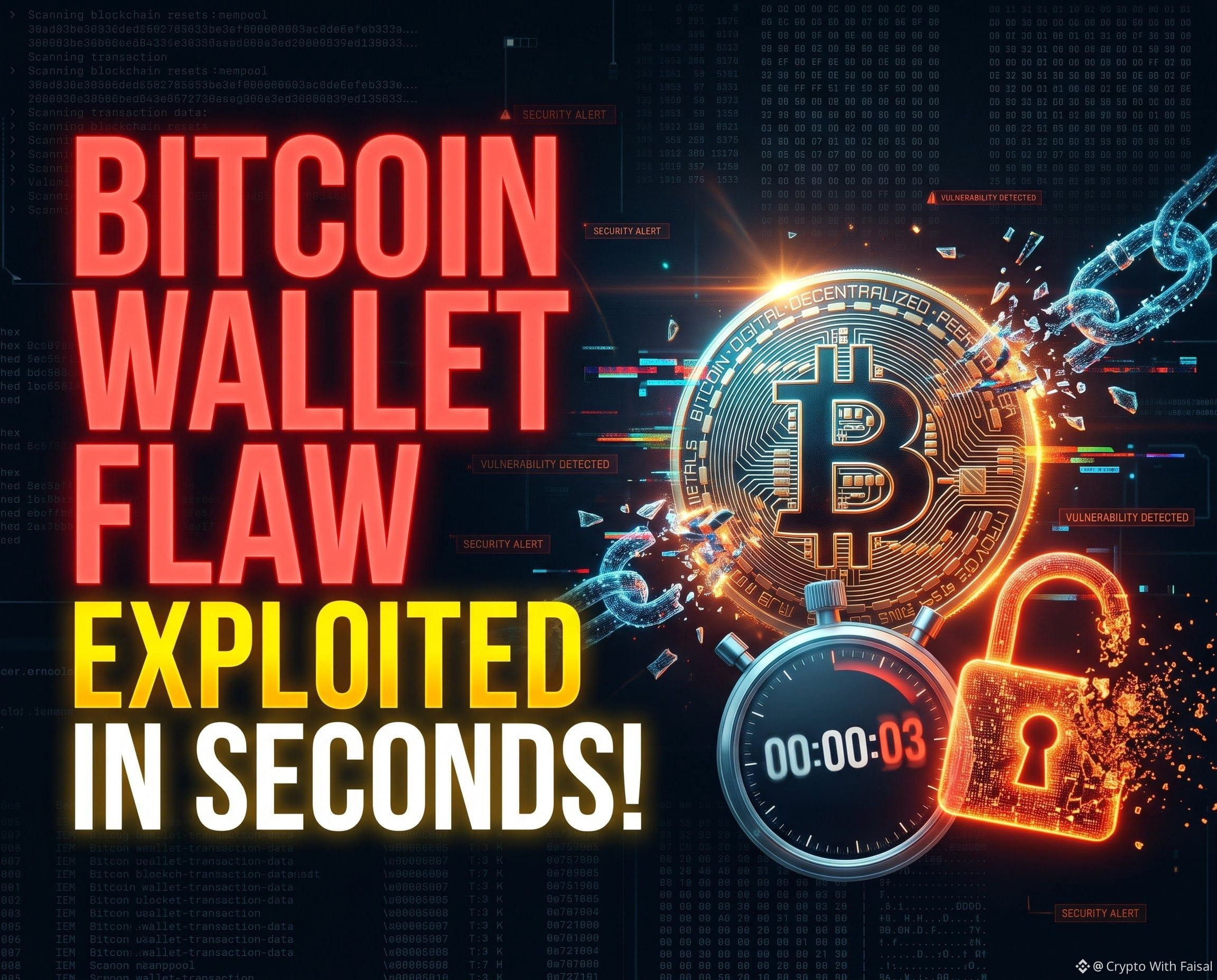
🚨 One reused signature number can empty a Bitcoin wallet in seconds.
Fresh research from the University of Liège (Vincent Jacquot & Benoît Donnet) proves automated bots are scanning the mempool 24/7 for weak wallet signatures.
Here is what their experiment uncovered:
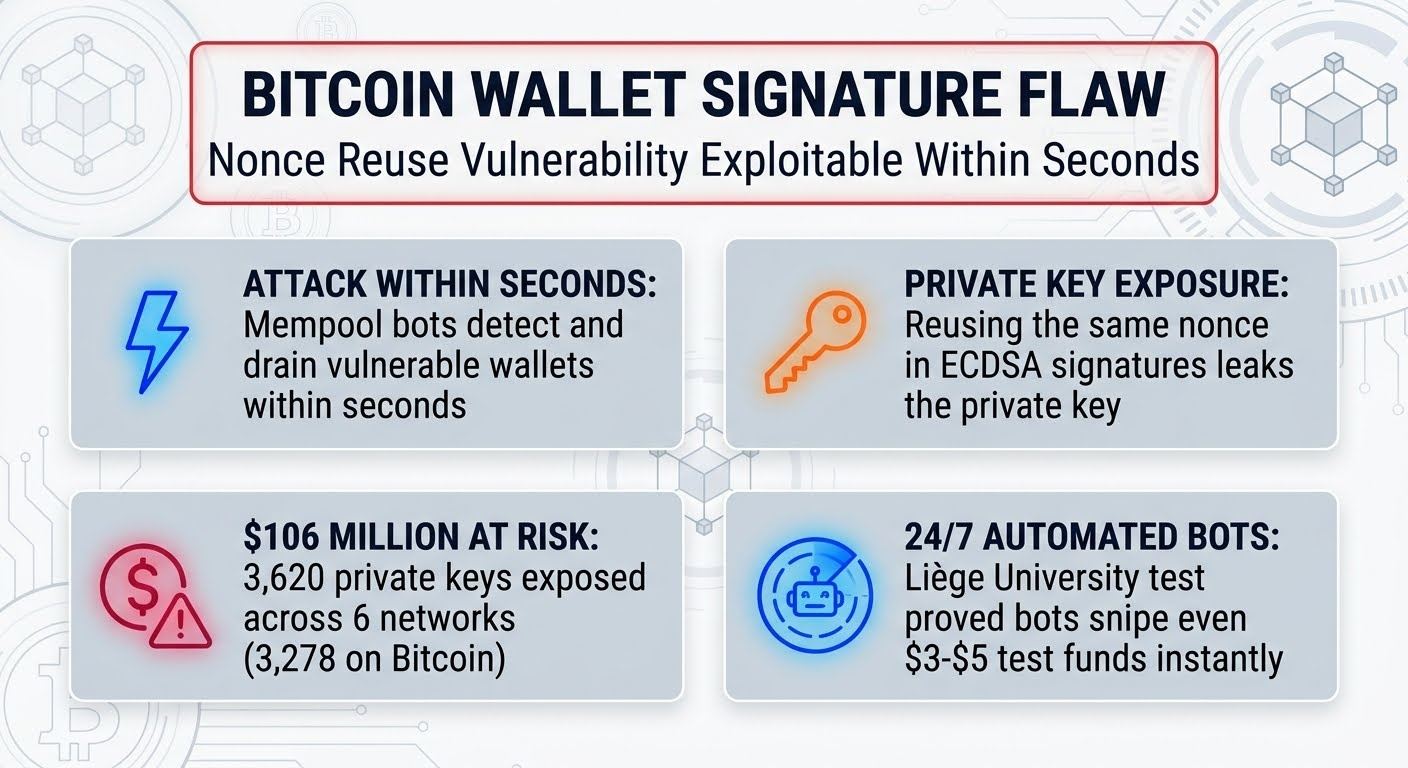
• The Flaw: Under ECDSA signing, every transaction needs a unique random number (a nonce). When faulty or outdated wallet software reuses that number, anyone watching the blockchain can calculate the private key.
• The Speed: Researchers funded bait wallets with a few dollars and intentionally reused a nonce. Within seconds, competing bots spotted the error and raced to drain the funds.
• The Scale: Scanning six blockchains revealed 3,620 exposed keys (3,278 on Bitcoin alone)—linked to addresses that once held roughly $106M at peak prices.
Trader’s Takeaway:
Bitcoin’s protocol isn’t broken, but legacy wallet code still is. Stick to reputable, updated wallets using deterministic signing (RFC 6979) and never reuse old, unmaintained software for self-custody.
Are you still using any legacy wallets from previous cycles? Drop your setup below 👇
$BTC $ETH $EVAA
{future}(EVAAUSDT)
{future}(BTCUSDT)
{future}(ETHUSDT)
#bitcoinwalletsignatureflawexploitablewithinseconds
#CryptoSecurity #BitcoinWallet #SelfCustody
🚨 One reused signature number can empty a Bitcoin wallet in seconds.
Fresh research from the University of Liège (Vincent Jacquot & Benoît Donnet) proves automated bots are scanning the mempool 24/7 for weak wallet signatures.
Here is what their experiment uncovered:
• The Flaw: Under ECDSA signing, every transaction needs a unique random number (a nonce). When faulty or outdated wallet software reuses that number, anyone watching the blockchain can calculate the private key.
• The Speed: Researchers funded bait wallets with a few dollars and intentionally reused a nonce. Within seconds, competing bots spotted the error and raced to drain the funds.
• The Scale: Scanning six blockchains revealed 3,620 exposed keys (3,278 on Bitcoin alone)—linked to addresses that once held roughly $106M at peak prices.
Trader’s Takeaway:
Bitcoin’s protocol isn’t broken, but legacy wallet code still is. Stick to reputable, updated wallets using deterministic signing (RFC 6979) and never reuse old, unmaintained software for self-custody.
Are you still using any legacy wallets from previous cycles? Drop your setup below 👇
$BTC $ETH $EVAA
#bitcoinwalletsignatureflawexploitablewithinseconds
#CryptoSecurity #BitcoinWallet #SelfCustody
4
2.8k
#BitcoinWalletSignatureFlawExploitableWithinSeconds
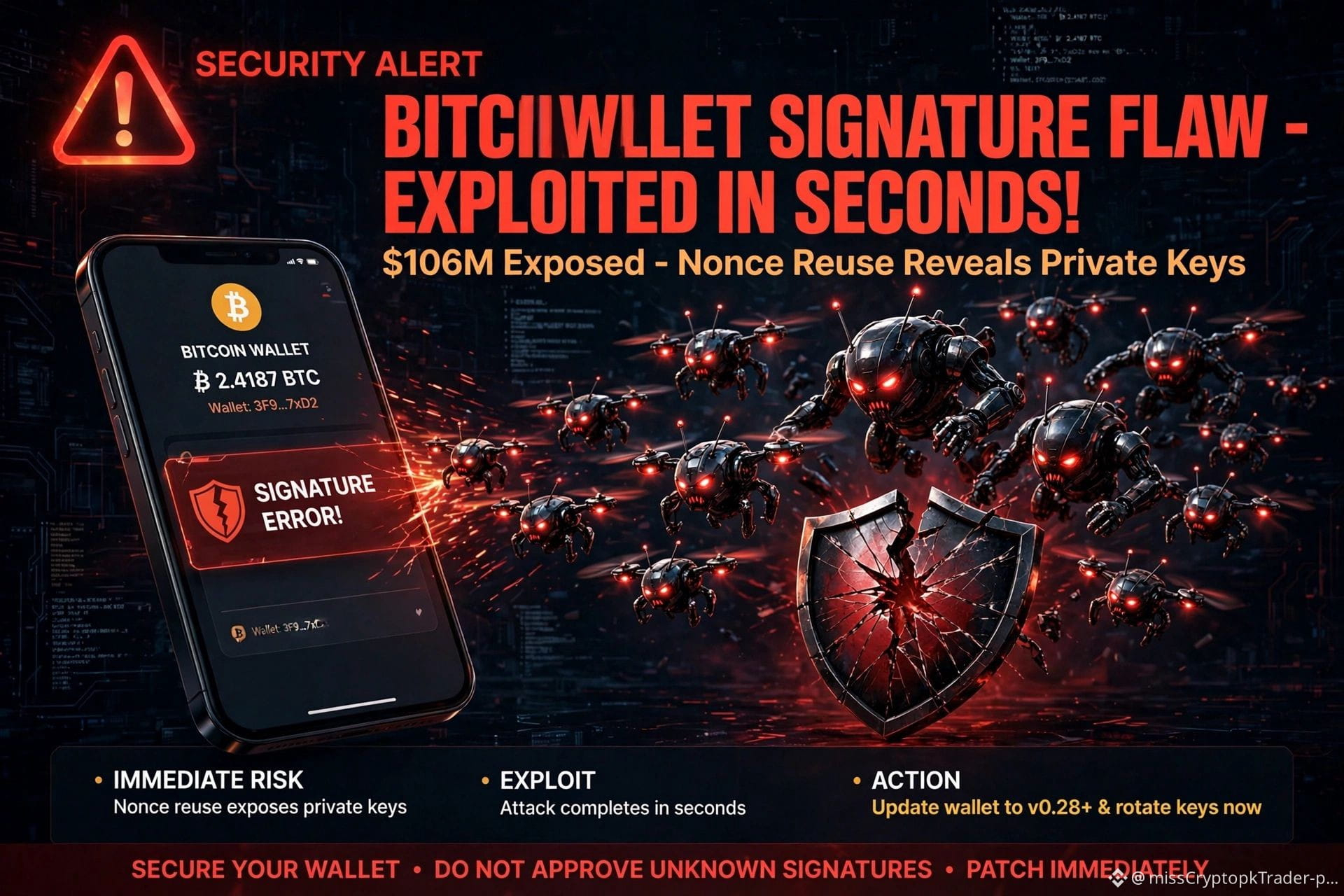
🚨 BITCOIN WALLET SIGNATURE FLAW — EXPLOITED IN SECONDS!
Bots Attack In Mempool — 1 Mistake = Keys Gone!
🎓 University of Liège Research — Nov 20, 2026!
🧪 $3-$5 Trap Wallets → Bots Attacked In 1-2 Seconds!
🔑 Nonce Reuse = Private Key Exposed By Simple Algebra!
💰 $106M Peak Exposure — 3,278 BTC Keys Recovered!
HOW TO PROTECT YOURSELF! 🛡️
✅ Use Modern, Updated, Reputable Wallets ONLY!
✅ NEVER Use Old / Unmaintained / Unknown Wallets!
✅ UPDATE Wallet Firmware + App Immediately!
✅ Use Wallets With RFC 6979 Deterministic Nonces / Schnorr / Taproot!
✅ Use Hardware Wallet + Verify Address On Device Screen!
✅ NEVER Reuse Keys Across Sketchy Tools!
✅ If You Used Old Wallet — Move To NEW Wallet With Fresh Seed!
💡 Updating Firmware Does NOT Fix Seed Already Created On Flawed Version!
✅ Bitcoin Protocol SAFE — Old Wallet Software Flaw!
🛡️ Use Modern Wallet + Update Now + Move To Fresh Seed!
Your call? 👇
UPDATING NOW 🔴
HARDWARE WALLET 🟢
FRESH SEED 🟡
#bitcoin #BTC #WalletSecurity #CryptoNews
$BTC $ETH $ZIL
234

·
--
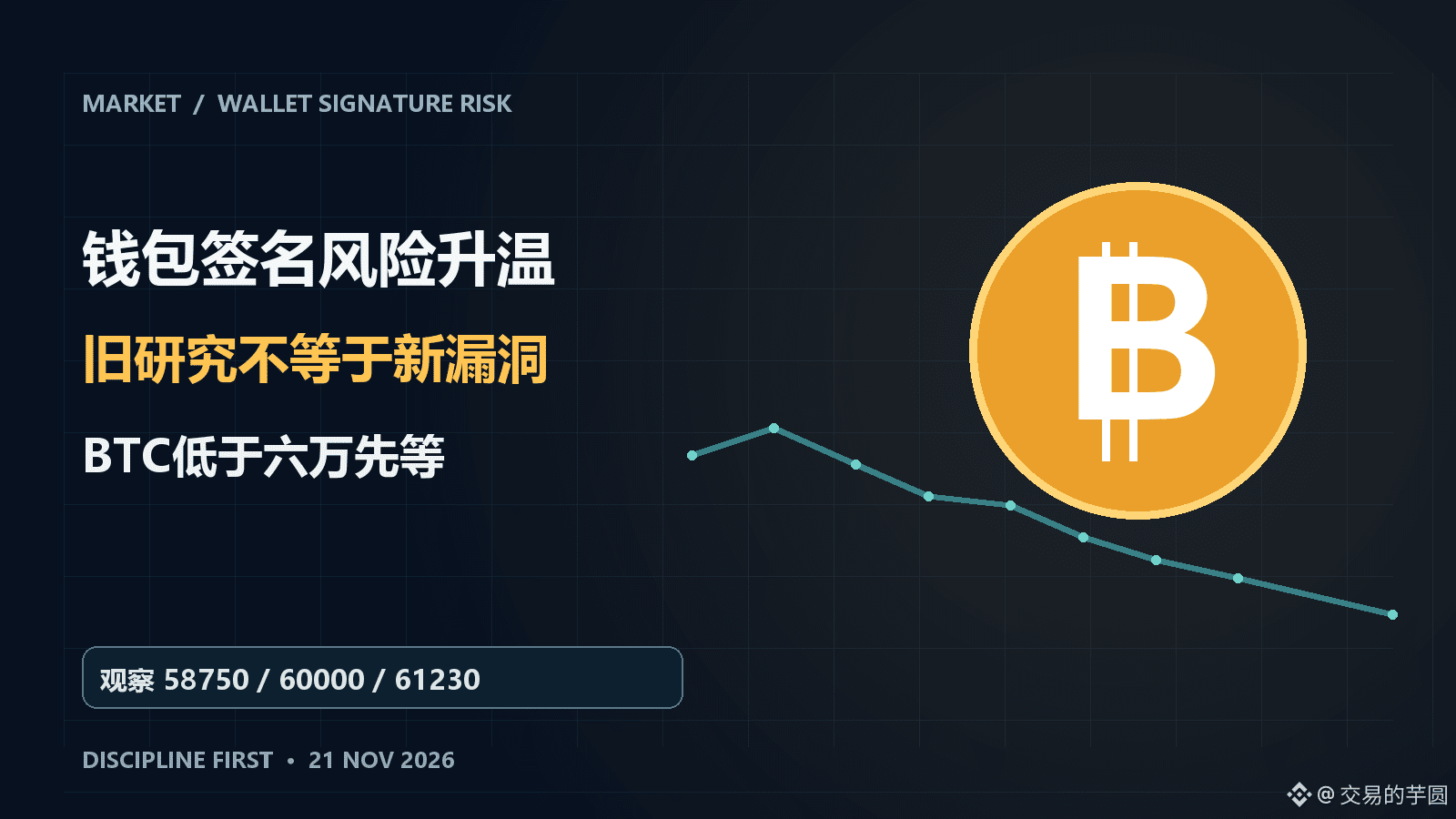
BTC | Wallet signature risk becomes a trending topic on Square | Don’t frame old research as a protocol meltdown
My view is to verify security first, then talk about buying the dip. Square is currently showing the topic #BitcoinWalletSignatureFlawExploitableWithinSeconds, which discusses the risk of private-key leakage caused by repeated use of wallet-signature nonces. The paper abstract by University of Liège researchers Jacquot and Donnet says that ECDSA should use a new nonce for every signature; reusing one can allow attackers to recover the private key from public signatures. Their cross-chain analysis recovered 3,620 private keys, and they used honeypot wallets to observe real attacks. Binance News reported that bots attempted to move funds within seconds of exposure. We need to distinguish three facts here: the paper was published in March 2026, so today’s attention does not mean a new Bitcoin protocol vulnerability was just discovered; the issue lies in flawed wallet-signing implementations or practices and does not mean that keys for normal wallets can be derived from any transaction; and the paper’s estimate of the maximum potential loss was about €101 million, not an amount confirmed to have been stolen.
The direct market mechanism concerns trust in custodians and wallets, not a change to BTC’s supply rules. People using old software, faulty random-number generators, or the same private key across chains should pay closer attention. If funds move out of vulnerable addresses, there may be on-chain transfers, but that should not automatically be interpreted as selling pressure from exchanges. Holders should verify their wallet version through official channels and check whether they imported the same private key across chains. Be wary of messages saying, “Your wallet has a vulnerability—click here to enter your recovery phrase”; those may be phishing attempts. The research sample covered a specific time period, so we cannot infer that the same proportion of wallets remains exposed today. I will only raise the risk level if the research team or a vendor confirms that new products are affected.
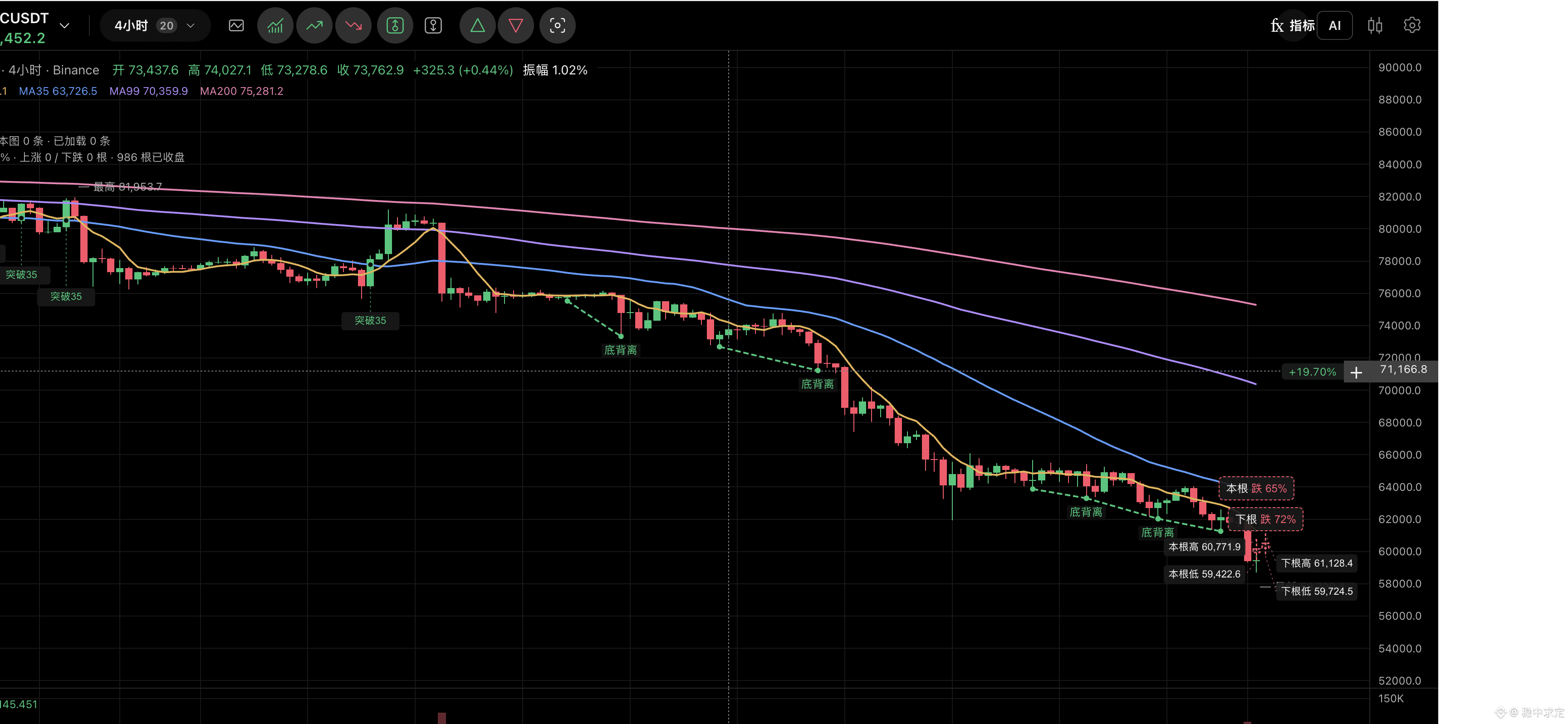
Prices have already weakened as broader risk aversion has eased. Binance BTC/USDT is around $59,260, down about 5% over 24 hours, with a low of $58,769 and a high of $63,409. An earlier post said BTC first needed to hold $59,800 and reclaim $60,000; the current price is below those levels, so the previous long-entry conditions have not been met. The Farside table shows net outflows of about $582.3 million from U.S. spot BTC funds on November 19, including about $541.1 million from IBIT. The November 20 row is not yet complete, so unreported 0.0 figures cannot be taken as evidence of fund inflows. The entire decline this round cannot be attributed to the paper. In the short term, watch whether price can stabilize near $58,750; $60,000 would be an initial recovery, while $61,230 would be stronger confirmation. If BTC breaks below $58,750 and fails to reclaim it within four hours, I will maintain a defensive view. I will only change my stance if it holds above $61,230 and complete ETF data improves.
If I were trading this myself, I would stay out for now and consider only a small, unleveraged spot long. The entry trigger would be a four-hour close above $60,000, a pullback that holds above $59,500, and then another close above $61,230. I would use no more than 3% of total capital, with the risk on any single trade capped at 0.4% of the account. The first target is $62,500, where I would take half off; the second is $64,000. If the rebound lacks volume or ETFs continue to see large net outflows, I would close the remaining position early. The stop-loss would be below $58,700. If new evidence confirms that wallet products are affected on a large scale, I would also cancel the plan and review custody risks. If the conditions are not met, I will hold cash rather than turn anxiety over the news into a highly leveraged trade.
#BitcoinWalletSignatureFlawExploitableWithinSeconds #BTC
The above is solely my personal market observation and does not constitute investment advice.
17

·
--
Article
Bitcoin wallet signing errors can be spotted by bots within seconds: this is a self-custody risk, not a failure of the Bitcoin protocolBitcoin wallet signing errors can be spotted by bots within seconds: this is a self-custody risk, not a failure of the Bitcoin protocol
The bottom line: The topic currently appearing on Binance Square’s trending page—“A Bitcoin wallet signature vulnerability can be exploited by bots within seconds”—is worth paying attention to not because “Bitcoin has been hacked,” but because it points to a more specific self-custody issue: if wallet software reuses the nonce in ECDSA signatures, public transactions may help attackers recover the private key. Once an address enters the public mempool, automated programs can try to transfer the funds within seconds.
Bitcoin wallet signing errors can be spotted by bots within seconds: this is a self-custody risk, not a failure of the Bitcoin protocol
Bitcoin wallet signing errors can be spotted by bots within seconds: this is a self-custody risk, not a failure of the Bitcoin protocol
The bottom line: The topic currently appearing on Binance Square’s trending page—“A Bitcoin wallet signature vulnerability can be exploited by bots within seconds”—is worth paying attention to not because “Bitcoin has been hacked,” but because it points to a more specific self-custody issue: if wallet software reuses the nonce in ECDSA signatures, public transactions may help attackers recover the private key. Once an address enters the public mempool, automated programs can try to transfer the funds within seconds.
The bottom line: The topic currently appearing on Binance Square’s trending page—“A Bitcoin wallet signature vulnerability can be exploited by bots within seconds”—is worth paying attention to not because “Bitcoin has been hacked,” but because it points to a more specific self-custody issue: if wallet software reuses the nonce in ECDSA signatures, public transactions may help attackers recover the private key. Once an address enters the public mempool, automated programs can try to transfer the funds within seconds.
358

·
--
#bitcoinwalletsignatureflawexploitablewithinseconds 🚨🔐 A suspected flaw in the signatures of some Bitcoin wallets that could be exploited in seconds is causing concern in the crypto community.
Although the technical details are still being analyzed, news like this is a reminder of a fundamental rule: the security of your funds depends not only on Bitcoin, but also on the wallet and the practices you use to protect your assets.
💡 In bull markets, many focus on profits. Smart investors also focus on security.
👇 What is your main method of protection?
✅ Hardware wallet
✅ 2FA + Whitelist
✅ Cold wallet
✅ Diversification of funds
#Bitcoin #BTC #CryptoSecurity #Wallet #Blockchain #BinanceSquare #CryptoNews #BTCHolder 🚀🔒
24

·
--
#bitcoinwalletsignatureflawexploitablewithinseconds
🚨🔐 According to a new study by Belgian researchers, a signature (nonce) reuse flaw in Bitcoin wallets can be exploited by automated bots within seconds.
University of Liège researchers Vincent Jacquot and Benoit Donnet demonstrated in a live experiment how quickly wallets can be drained when random numbers (nonces), which should be used only once in cryptographic operations, are reused. The team also scanned historical data and found that this flaw put thousands of wallets at risk, with a combined peak value of $106 million.
📌 Key Details
⚡ Attack in Seconds: After depositing a test balance of $3–$5 into a deliberately vulnerable Bitcoin wallet they had created and signing a transaction with the same random number (nonce), the researchers saw automated attack bots spring into action within seconds. At least two different bots raced to grab the funds from the mempool.🔑 How Is the Private Key Stolen? When the same private key uses the same random number (nonce) to sign two different transactions with the ECDSA signature method, the wallet's secret private key can be calculated directly from public data on the blockchain.💰 $106 Million at Risk: The team scanned the Bitcoin, Ethereum, Dogecoin, Litecoin, Bitcoin Cash, and Dash networks and found 3,620 private keys exposed by this flaw (3,278 on the Bitcoin network). The combined balance of these addresses at their peak was around $106 million.🤖 Bots Lurking 24/7: The study shows that attackers use automated software to continuously scan blockchain networks and the mempool rather than targeting specific individuals, and instantly turn even the slightest randomness (entropy) flaw into money.
$BTCDOM $BLESS $SKY
{future}(SKYUSDT)
{future}(BLESSUSDT)
{future}(BTCDOMUSDT)
#bitcoinwalletsignatureflawexploitablewithinseconds
🚨🔐 According to a new study by Belgian researchers, a signature (nonce) reuse flaw in Bitcoin wallets can be exploited by automated bots within seconds.
University of Liège researchers Vincent Jacquot and Benoit Donnet demonstrated in a live experiment how quickly wallets can be drained when random numbers (nonces), which should be used only once in cryptographic operations, are reused. The team also scanned historical data and found that this flaw put thousands of wallets at risk, with a combined peak value of $106 million.
📌 Key Details
⚡ Attack in Seconds: After depositing a test balance of $3–$5 into a deliberately vulnerable Bitcoin wallet they had created and signing a transaction with the same random number (nonce), the researchers saw automated attack bots spring into action within seconds. At least two different bots raced to grab the funds from the mempool.🔑 How Is the Private Key Stolen? When the same private key uses the same random number (nonce) to sign two different transactions with the ECDSA signature method, the wallet's secret private key can be calculated directly from public data on the blockchain.💰 $106 Million at Risk: The team scanned the Bitcoin, Ethereum, Dogecoin, Litecoin, Bitcoin Cash, and Dash networks and found 3,620 private keys exposed by this flaw (3,278 on the Bitcoin network). The combined balance of these addresses at their peak was around $106 million.🤖 Bots Lurking 24/7: The study shows that attackers use automated software to continuously scan blockchain networks and the mempool rather than targeting specific individuals, and instantly turn even the slightest randomness (entropy) flaw into money.
$BTCDOM $BLESS $SKY
550


·
--
Bearish
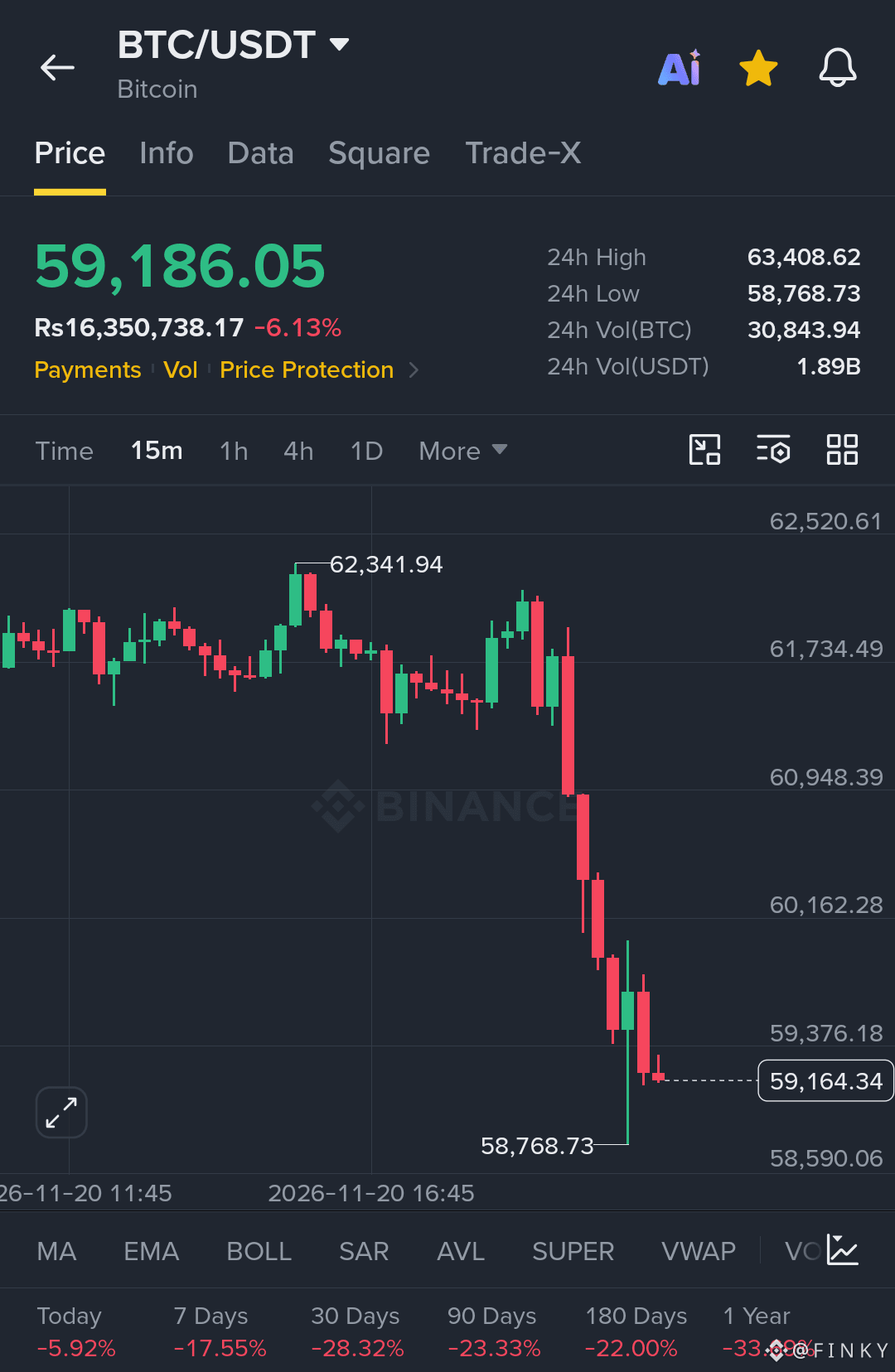
$BTC /USDT is taking a serious beating, and buyers are struggling to stop the bleeding.
Bitcoin is trading around $59,186, down more than 6% in 24 hours. The sell-off has been aggressive, with price dropping from the $62,300 area and breaking through multiple support levels.
The 15-minute chart clearly shows sellers in control. BTC lost $61,734, then $60,948, and continued falling below $60,162 without any meaningful recovery.
Now all eyes are on $58,768, the latest intraday low. Buyers stepped in there and created a small bounce, but that alone is not enough to confirm a reversal.
Here are the levels I'm watching:
Immediate Support: $58,768
Critical Support: $58,590
First Resistance: $59,376
Next Resistance: $60,162
Major Resistance: $60,948–$61,734
Bullish Scenario: If BTC holds above $58,768 and reclaims $59,376, we could see a recovery toward $60,162. A stronger move above $60,948 would be the first meaningful sign that buyers are returning.
Bearish Scenario: If $58,768 breaks, selling pressure could accelerate toward $58,590 and potentially push Bitcoin into another lower range.
My take: This is not the time to blindly buy the dip. The market needs to prove that buyers are back. Watch the $58.7K zone closely because losing it could make things much uglier.
Cash is a position. Protect your capital and don't force a trade.
The big question: Will BTC defend $58,768, or are we about to see another leg down?
#GlobalStocksFaceLongestLosingStreakSince2023 #GaoTengBitcoinETFListsOnHKEX #BitcoinWalletSignatureFlawExploitableWithinSeconds
138

·
--
Dogecoin $DOGE
Introduction: Dogecoin is a popular meme cryptocurrency.
Uses: Online payments and community activities.
Key Feature: Originally created as an internet joke.
Analysis: Its popularity is influenced by its community and social media, making its price highly volatile.#CanGTA6'sLaunchLiftTTWOShares? #BitcoinWalletSignatureFlawExploitableWithinSeconds #TetherBurns8BillionUSDTInPast20Days #NvidiaBoardReportedlySplitOverHuang’sReturn #TradFiForBeginners
{spot}(DOGEUSDT)
Dogecoin $DOGE
Introduction: Dogecoin is a popular meme cryptocurrency.
Uses: Online payments and community activities.
Key Feature: Originally created as an internet joke.
Analysis: Its popularity is influenced by its community and social media, making its price highly volatile.#CanGTA6'sLaunchLiftTTWOShares? #BitcoinWalletSignatureFlawExploitableWithinSeconds #TetherBurns8BillionUSDTInPast20Days #NvidiaBoardReportedlySplitOverHuang’sReturn #TradFiForBeginners

26

·
--
Bullish
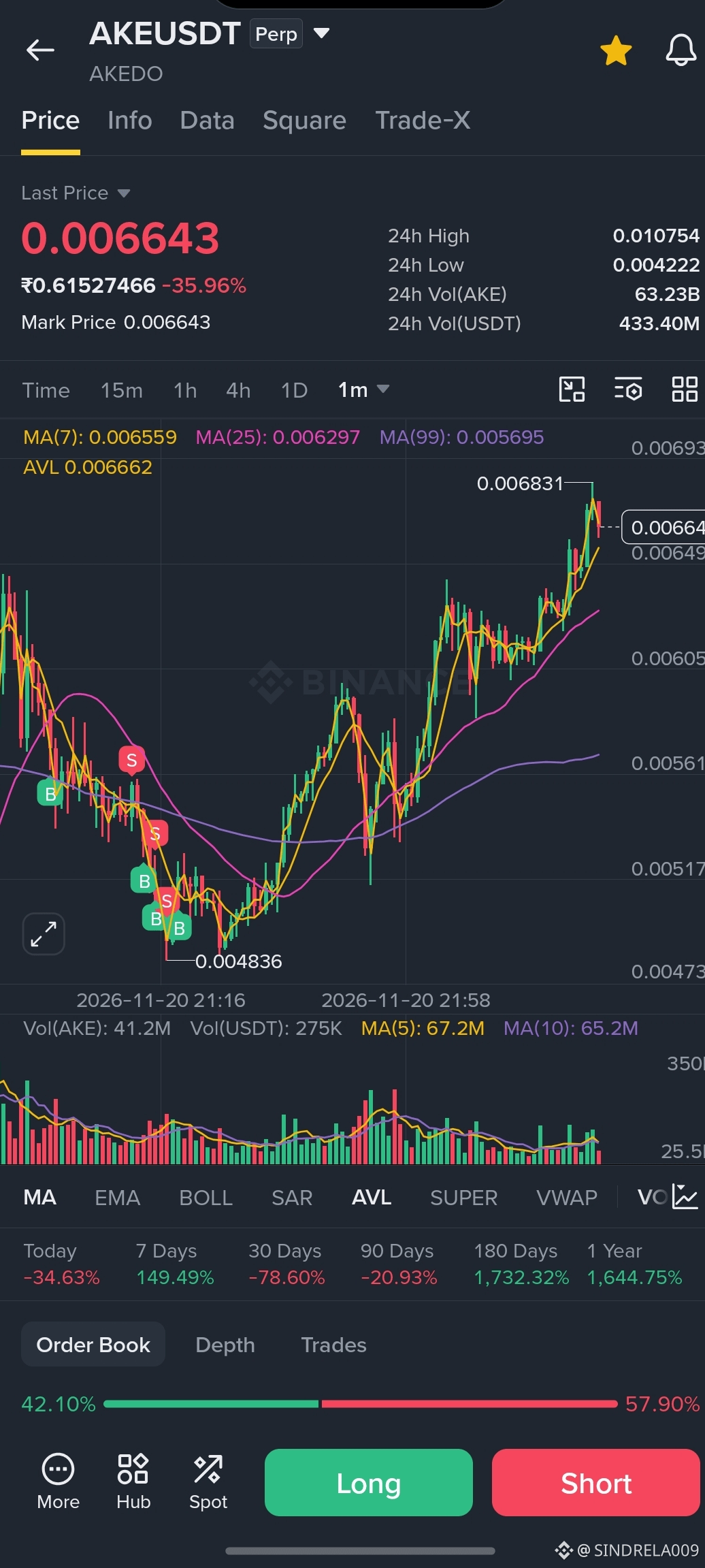
after eating my all capital $AKE go to the moon 😭😭 what God gifted luck to me i am the most unluckiest girl i am crying today $EVAA $IDOL
message me #CanGTA6'sLaunchLiftTTWOShares? #BitcoinWalletSignatureFlawExploitableWithinSeconds #NvidiaBoardReportedlySplitOverHuang’sReturn #TradFiForBeginners
{future}(IDOLUSDT)
{future}(EVAAUSDT)
{future}(AKEUSDT)
after eating my all capital $AKE go to the moon 😭😭 what God gifted luck to me i am the most unluckiest girl i am crying today $EVAA $IDOL
message me #CanGTA6'sLaunchLiftTTWOShares? #BitcoinWalletSignatureFlawExploitableWithinSeconds #NvidiaBoardReportedlySplitOverHuang’sReturn #TradFiForBeginners
message me #CanGTA6'sLaunchLiftTTWOShares? #BitcoinWalletSignatureFlawExploitableWithinSeconds #NvidiaBoardReportedlySplitOverHuang’sReturn #TradFiForBeginners

CryptoWithGanesh:
i will unfollowed everyone right now because they have not responded to me like follow , comment or valued added information
within 2 days if your not follow or comment i will also unfollow you i am too much serious
i wann Start fresh from new idea ,topic , efforts
and iam also touched only few my flowers members so if you want touch with me follow back within 2 days
i am so sorry if i heart you
9
4
905

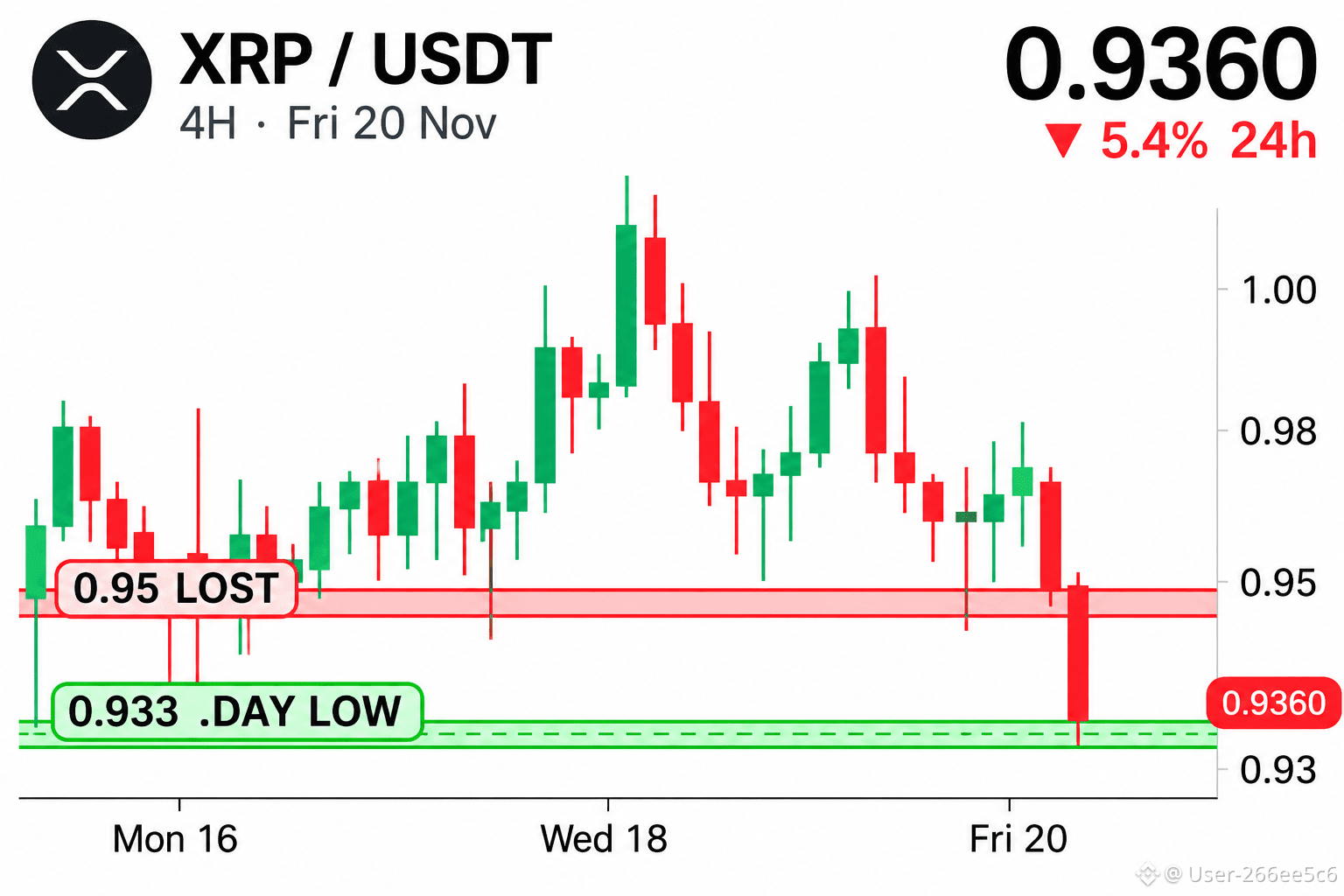
JUST IN: $XRP has dropped 5.4% in the last 24 hours and is now trading at $0.936.
The bounce to $0.953 during the US session was quickly rejected, pushing the price back toward its daily low of $0.933. Meanwhile, Bitcoin has also set a new low for the day.
Key levels to watch:
- $0.933: Critical support. A break below this level could open the way toward $0.90.
- $0.95: Key recovery level bulls need to reclaim to regain momentum.
For now, $XRP remains under pressure. The next move depends on whether buyers can defend support or sellers push the price lower.#BitcoinWalletSignatureFlawExploitableWithinSeconds $XRP
{future}(XRPUSDT)
JUST IN: $XRP has dropped 5.4% in the last 24 hours and is now trading at $0.936.
The bounce to $0.953 during the US session was quickly rejected, pushing the price back toward its daily low of $0.933. Meanwhile, Bitcoin has also set a new low for the day.
Key levels to watch:
- $0.933: Critical support. A break below this level could open the way toward $0.90.
- $0.95: Key recovery level bulls need to reclaim to regain momentum.
For now, $XRP remains under pressure. The next move depends on whether buyers can defend support or sellers push the price lower.#BitcoinWalletSignatureFlawExploitableWithinSeconds $XRP
118
·
--
TRON $TRX
Introduction: TRON is a blockchain network.
Uses: Digital payments and smart contracts.
Key Feature: Widely used for USDT transfers.
Analysis: Its usefulness depends on network activity and adoption.#CanGTA6'sLaunchLiftTTWOShares? #BitcoinWalletSignatureFlawExploitableWithinSeconds #TetherBurns8BillionUSDTInPast20Days #TradFiForBeginners #GaoTengBitcoinETFListsOnHKEX
{spot}(TRXUSDT)
TRON $TRX
Introduction: TRON is a blockchain network.
Uses: Digital payments and smart contracts.
Key Feature: Widely used for USDT transfers.
Analysis: Its usefulness depends on network activity and adoption.#CanGTA6'sLaunchLiftTTWOShares? #BitcoinWalletSignatureFlawExploitableWithinSeconds #TetherBurns8BillionUSDTInPast20Days #TradFiForBeginners #GaoTengBitcoinETFListsOnHKEX

7

How confident you are thinking FED will raise the Rates in DECEMBER?
$BTC | $ZEC | $HYPE
{future}(HYPEUSDT)
#BitcoinWalletSignatureFlawExploitableWithinSeconds
#FedRateDecisions
How confident you are thinking FED will raise the Rates in DECEMBER?
$BTC | $ZEC | $HYPE
#BitcoinWalletSignatureFlawExploitableWithinSeconds
#FedRateDecisions
$BTC | $ZEC | $HYPE
#BitcoinWalletSignatureFlawExploitableWithinSeconds
#FedRateDecisions
100%
75%
50%
25%
23 hr(s) left
876

·
--
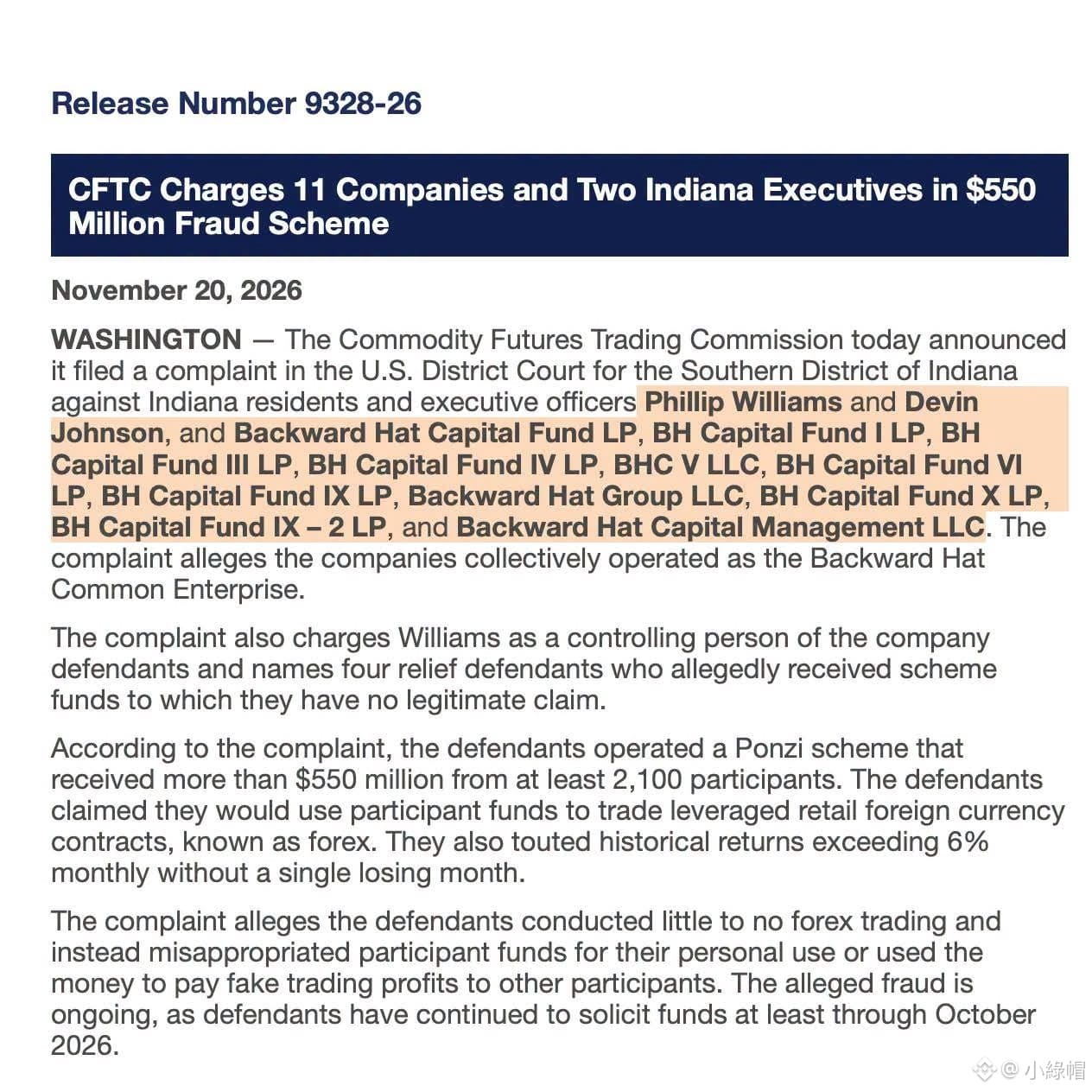
The CFTC did charge 11 companies and two Indiana executives in a $550 million Ponzi scheme. The executives are Phillip Williams and Devin Johnson, and they allegedly ran the operation through a web of entities called the Backward Hat Common Enterprise .
The core allegation matches what you posted: they told investors they were trading leveraged forex and promised returns exceeding 6% monthly with no losing months, but the CFTC claims little to no actual trading occurred. Instead, funds were allegedly used for personal spending and to pay earlier participants in classic Ponzi fashion .
The FBI arrested both executives on Wednesday, and the court froze their assets while appointing a temporary receiver . The SEC also filed a parallel civil action.
One detail worth noting: criminal prosecutors in New York cite a higher figure of over $600 million raised from more than 2,000 investors, and the SEC puts its case at approximately $560 million . The CFTC 's $550 million figure is specific to its complaint.
Williams also had a separate profile as co-founder of Drop light , a sports sponsorship firm with deals involving Butler Athletics and an IndyCar team. That connection is now drawing attention as the case unfolds .
#BitcoinWalletSignatureFlawExploitableWithinSeconds #GlobalStocksFaceLongestLosingStreakSince2023

10
·
--
Bearish
{future}(ZECUSDT)
$ZEC short target all tp hit market down we already have in profit why you are not following me #GlobalStocksFaceLongestLosingStreakSince2023 #GaoTengBitcoinETFListsOnHKEX #BitcoinWalletSignatureFlawExploitableWithinSeconds
$ZEC short target all tp hit market down we already have in profit why you are not following me #GlobalStocksFaceLongestLosingStreakSince2023 #GaoTengBitcoinETFListsOnHKEX #BitcoinWalletSignatureFlawExploitableWithinSeconds
139

$BTC $BTC Resistance 2 $63,800
Support 1 $60,970
Support 2 $59,674
Next downside level $58,015
Source: 20 November market data.
My trading outlook
Buy: Wait for price to recover above $62,420.
Sell pressure: Remains strong below $60,970.
RSI is around 20, indicating oversold conditions, but that does not guarantee a bounce.
One question:
Do you want a Bitcoin Spot trading plan according to your 1.53 USDT balance on Binance?
I'm not a financial advisor; crypto trading can result in loss.#GlobalStocksFaceLongestLosingStreakSince2023 #CanBTCReboundAfterFallingBelow60K? #BitcoinWalletSignatureFlawExploitableWithinSeconds $BTC
{spot}(BTCUSDT)
$BTC $BTC Resistance 2 $63,800
Support 1 $60,970
Support 2 $59,674
Next downside level $58,015
Source: 20 November market data.
My trading outlook
Buy: Wait for price to recover above $62,420.
Sell pressure: Remains strong below $60,970.
RSI is around 20, indicating oversold conditions, but that does not guarantee a bounce.
One question:
Do you want a Bitcoin Spot trading plan according to your 1.53 USDT balance on Binance?
I'm not a financial advisor; crypto trading can result in loss.#GlobalStocksFaceLongestLosingStreakSince2023 #CanBTCReboundAfterFallingBelow60K? #BitcoinWalletSignatureFlawExploitableWithinSeconds $BTC
75
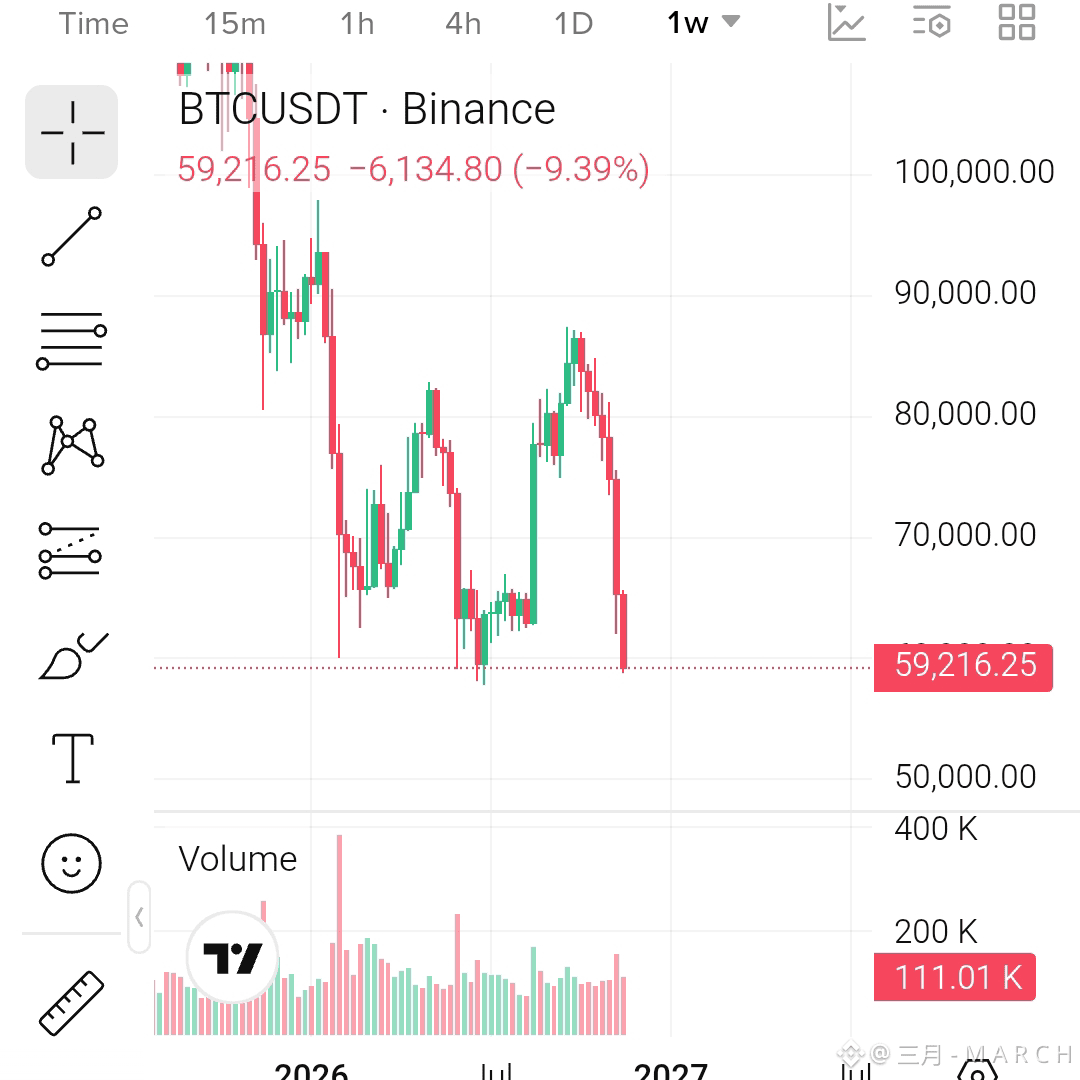
🚨 Breaking: Bitcoin is heading towards lowest price on July. 57,000 was area to hold on. Market still on extreme fear due to issue of FED hike the Rates in December. Fear and Greed index shown at level 8 with extreme Fear. lowest of the year was 5. Can market still holding??
#BlackRockBitcoinETFRecordsLargestDailyOutflow
#BitcoinWalletSignatureFlawExploitableWithinSeconds
#BlackRockBitcoinETFRecordsLargestDailyOutflow
#BitcoinWalletSignatureFlawExploitableWithinSeconds
182

·
--
Bullish
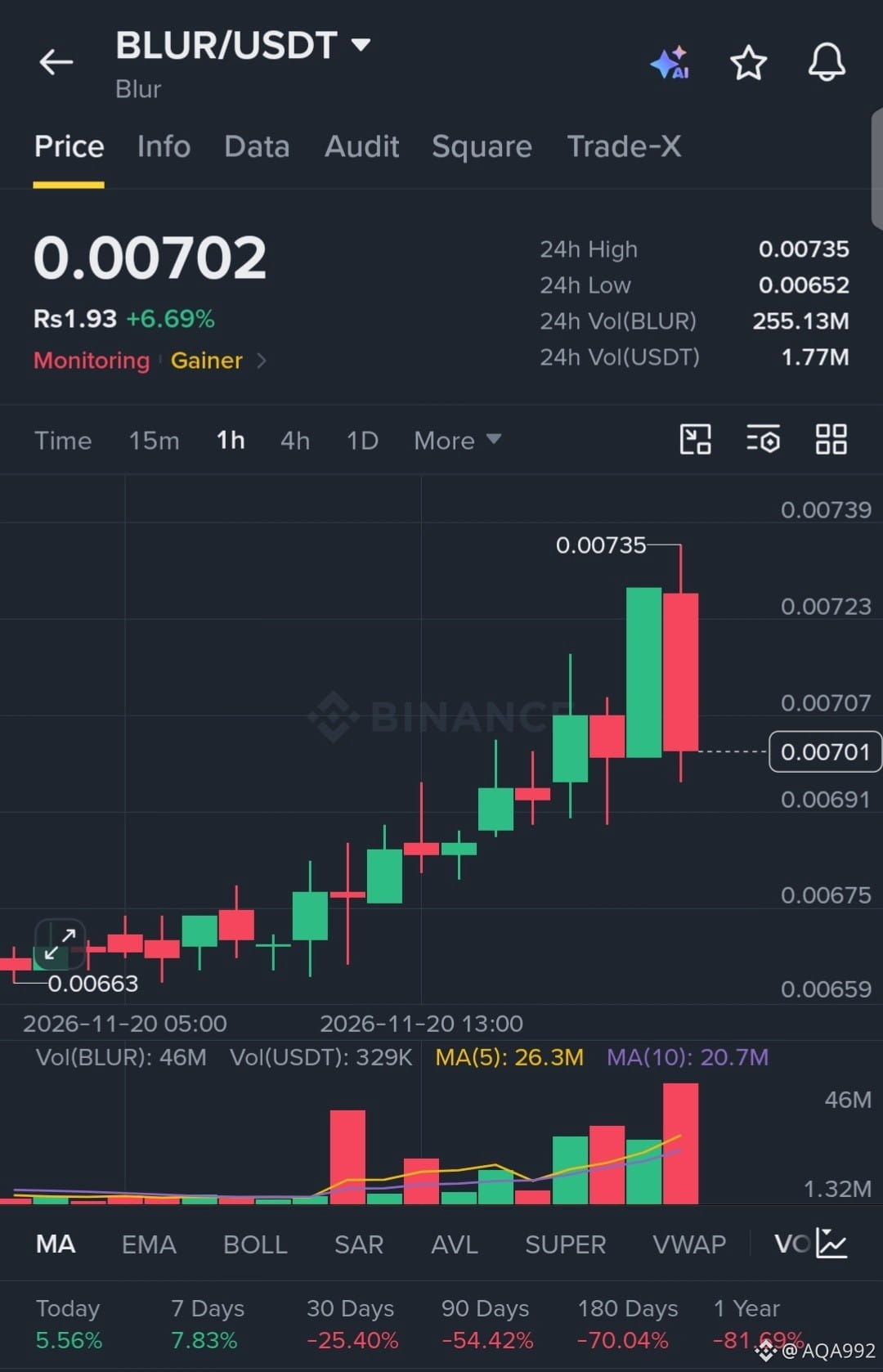
$BLUR
Strong momentum building. Price is printing a series of higher highs with steady volume expansion, breaking through local resistance. Bulls are clearly dictating the trend, setting up for a push higher.
EP: 0.00702
TP: 0.00735 / 0.00780
SL: 0.00665
$BLUR
#GlobalStocksFaceLongestLosingStreakSince2023
#GaoTengBitcoinETFListsOnHKEX
#TetherBurns8BillionUSDTInPast20Days
#BitcoinWalletSignatureFlawExploitableWithinSeconds
#BlackRockBitcoinETFRecordsLargestDailyOutflow
{future}(BLURUSDT)
$BLUR
Strong momentum building. Price is printing a series of higher highs with steady volume expansion, breaking through local resistance. Bulls are clearly dictating the trend, setting up for a push higher.
EP: 0.00702
TP: 0.00735 / 0.00780
SL: 0.00665
$BLUR
#GlobalStocksFaceLongestLosingStreakSince2023
#GaoTengBitcoinETFListsOnHKEX
#TetherBurns8BillionUSDTInPast20Days
#BitcoinWalletSignatureFlawExploitableWithinSeconds
#BlackRockBitcoinETFRecordsLargestDailyOutflow
9
·
--
Bullish
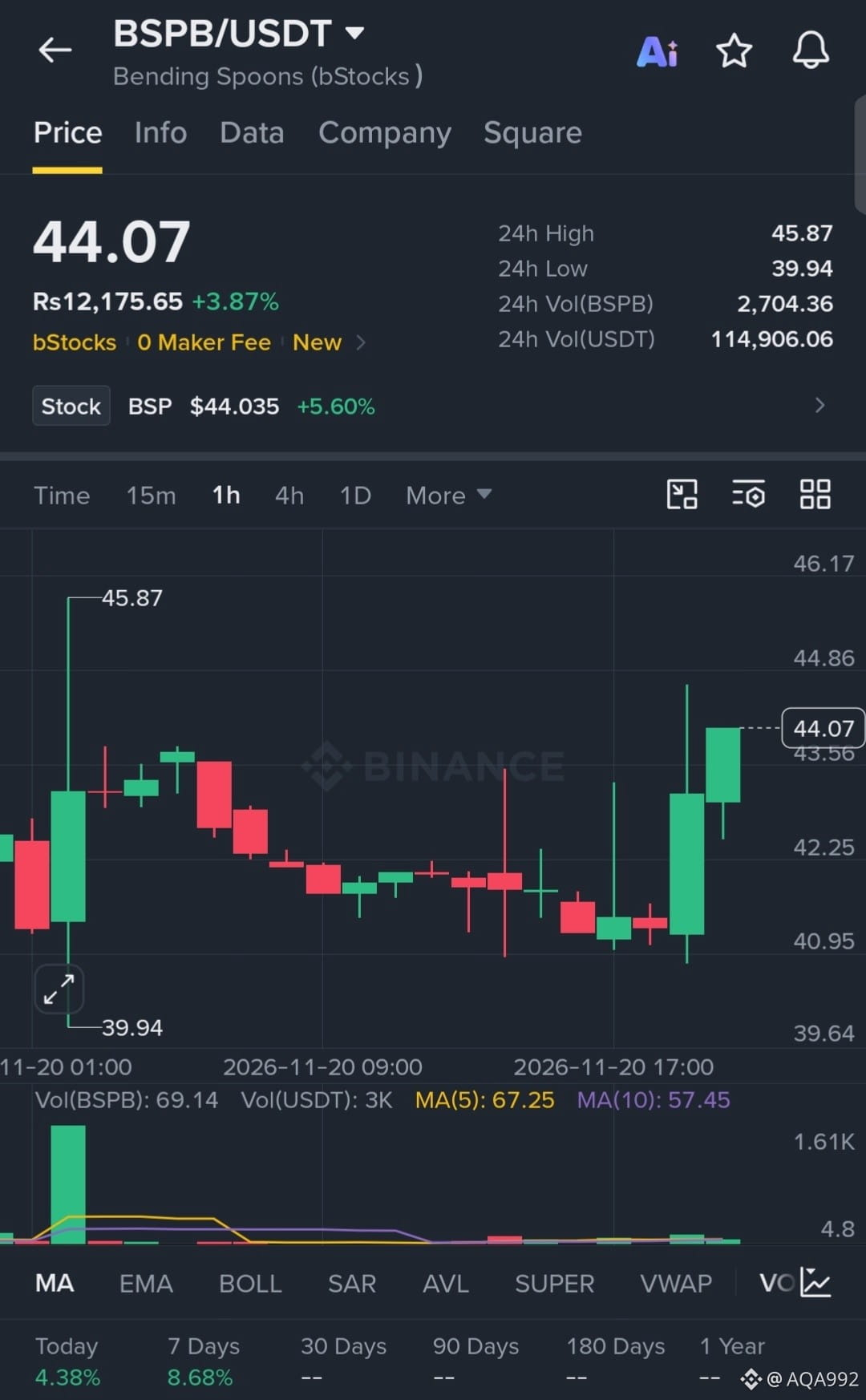
$BSPB
Bullish reversal in play. Price has aggressively swept liquidity at the lows and is now printing strong green candles, reclaiming prior structure. Buyers are stepping in with conviction to drive the next leg up.
EP: 44.07
TP: 45.80 / 47.50
SL: 41.80
$BSPB
#GlobalStocksFaceLongestLosingStreakSince2023
#GaoTengBitcoinETFListsOnHKEX
#TetherBurns8BillionUSDTInPast20Days
#BitcoinWalletSignatureFlawExploitableWithinSeconds
#TradFiForBeginners
{spot}(BSPBUSDT)
$BSPB
Bullish reversal in play. Price has aggressively swept liquidity at the lows and is now printing strong green candles, reclaiming prior structure. Buyers are stepping in with conviction to drive the next leg up.
EP: 44.07
TP: 45.80 / 47.50
SL: 41.80
$BSPB
#GlobalStocksFaceLongestLosingStreakSince2023
#GaoTengBitcoinETFListsOnHKEX
#TetherBurns8BillionUSDTInPast20Days
#BitcoinWalletSignatureFlawExploitableWithinSeconds
#TradFiForBeginners
14

·
--
Bearish
$BTC
20 November 2026
Bitcoin (BTC/USD)
$60,911
-4.22% in 24 hours
According to the latest reported market data, Bitcoin is experiencing significant selling pressure.
1. Today's market statistics
Indicator Value
BTC price $60,911
24-hour high $63,522
24-hour low $60,910
Market capitalization $1.23 trillion
7-day change -10.75%
Maximum supply 21 million BTC
Source: CoinGlass, November 20, 2026.#GaoTengBitcoinETFListsOnHKEX #BitcoinWalletSignatureFlawExploitableWithinSeconds
86

·
--
Hi Everyone
Please Earn money to Sell Dollars
#TradFiForBeginners #BitcoinWalletSignatureFlawExploitableWithinSeconds $BTC
Hi Everyone
Please Earn money to Sell Dollars
#TradFiForBeginners #BitcoinWalletSignatureFlawExploitableWithinSeconds $BTC
Please Earn money to Sell Dollars
#TradFiForBeginners #BitcoinWalletSignatureFlawExploitableWithinSeconds $BTC
35
Log in to explore more content
Join global crypto users on Binance Square
⚡️ Get latest and useful information about crypto.
💬 Trusted by the world’s largest crypto exchange.
👍 Discover real insights from verified creators.
Email / Phone number
Trending Topics
1
#CanBTCReboundAfterFallingBelow60K?
0 views
123 Discussing
2
#GlobalStocksFaceLongestLosingStreakSince2023
0 views
275 Discussing
3
#AnthropicPlungesTowardIPOPriceonDay2
0 views
45 Discussing
4
#GaoTengBitcoinETFListsOnHKEX
0 views
265 Discussing
5
#TradFiForBeginners
946,825 views
5,532 Discussing
6
#NvidiaBoardReportedlySplitOverHuang’sReturn
258,674 views
2,414 Discussing
7
#TetherBurns8BillionUSDTInPast20Days
0 views
103 Discussing
8
#BitcoinWalletSignatureFlawExploitableWithinSeconds
0 views
45 Discussing
9
#CanGTA6'sLaunchLiftTTWOShares?
207,868 views
1,713 Discussing
10
#HongKongProposesSFCLicensingForFourVirtualAssetServices
404 views
32 Discussing