
#blockchaineducation
blockchaineducation
41,979 views
367 Discussing
Hot
Latest

CryptoLearnZA | Binance SquareWednesday Evening Lesson
Today's topic: What Are Blockchain Confirmations?
⛓️ **CRYPTO EDUCATION: What Are Blockchain Confirmations?**
Have you ever sent cryptocurrency and wondered why your transaction needs confirmations?
Let's break it down!
### 🔍 WHAT IS A BLOCKCHAIN CONFIRMATION?
A confirmation happens when a transaction is included in a block that gets added to the blockchain.
As more blocks are added after that block, the transaction receives more confirmations.
### 💡 WHY ARE CONFIRMATIONS IMPORTANT?
1️⃣ **Transaction Verification:** They show that a transaction has been included in the blockchain.
2️⃣ **Network Security:** Additional confirmations make it increasingly difficult to reverse a transaction.
3️⃣ **Exchange Deposits:** Some exchanges require a specific number of confirmations before crediting a deposit.
### 📌 SIMPLE EXAMPLE
If your transaction has 1 confirmation, it has been included in one block.
If it has 6 confirmations, six blocks have been added at or after the block containing your transaction.
Remember: Confirmation requirements vary between networks and exchanges.
### 🧠 TONIGHT'S QUIZ
What happens when a blockchain transaction receives more confirmations?
A. It becomes a new cryptocurrency.
B. It generally becomes harder to reverse.
C. Its transaction fee disappears.
D. It automatically becomes private.
👇 Drop your answer in the comments!
**CryptoLearnZA — Understand Crypto. Learn with Confidence.** 🖤💛
#CryptoLearnZA #BlockchainEducation
55

·
--
1. What is Gas? Gas measures the computational work needed to process an action on the Ethereum network.
2. Why do we pay it? Network fees help compensate validators for processing transactions. On Ethereum, the base fee is burned, while the priority fee goes to the validator.
3. Why does the fee change? When network demand increases, users may compete for faster transaction processing, causing fees to rise.
4. Can a failed transaction still cost money? Yes. If a transaction uses network resources before failing, some gas may still be consumed.
Remember: An Ethereum network fee is different from a cryptocurrency exchange's trading fee.
Understanding the technology is useful—even if you never make a crypto transaction.
Discussion question: Before reading this post, did you know that a failed Ethereum transaction could still consume gas? What would you like to understand better about gas fees?
$ETH
#Ethereum #GasFees #blockchaineducation ducation #CryptoForBeginners #BinanceSquareTalks
165


Article
Crypto Is Dead🔥 After Major Exchange Security Incidents… What Should Every Trader Learn? 👀🔐
💭 “When security incidents shake confidence, is abandoning crypto the answer… or is better education the missing protection?”
Something caught my attention while following recent crypto security developments. 👀
In September, Bitget reported a major security incident.
Now, on October 30, Binance has also released an update regarding a significant security incident.
Different platforms. Different circumstances.
But the same uncomfortable question keeps coming up:
“Is crypto really over?”
I understand why some people are concerned.
When digital assets are exposed to security risks, confidence can weaken quickly.
But rather than rushing to defend or condemn an entire industry, I wanted to explore something more useful.
What can everyday traders actually learn from these events?
⭕🔥 1. THE INCIDENTS — WHAT DO WE ACTUALLY KNOW? 🔐
Let’s distinguish reported facts from speculation.
🟡 BINANCE — OCTOBER 30
Binance reported an estimated security incident impact of approximately $6.3 billion.
The exchange stated that around $3 billion in affected assets had been frozen on-chain and that it planned to cover losses through its SAFU fund and company resources.
Its preliminary investigation suggested a possible compromise involving an employee’s laptop.
However, the full technical investigation remains ongoing.
🔵 BITGET — SEPTEMBER 24
Bitget previously disclosed unauthorized transfers affecting parts of its hot and warm wallet infrastructure.
Its initial estimate was approximately $351.6 million, later updated to around $387.5 million as additional affected assets were identified.
Bitget reported that it had contained the incident and allocated its Protection Fund to cover the financial impact.
These figures and updates are based on the exchanges’ public statements.
The lesson isn’t about deciding which exchange is better or worse.
It’s about recognizing that security incidents can affect even established platforms.
And traders need to understand the risks involved.
⭕🔥 2. AN EXCHANGE SECURITY INCIDENT IS NOT THE SAME AS A BLOCKCHAIN FAILURE ⛓️
This difference is important.
A centralized exchange manages customer accounts, operational systems, trading services and custody infrastructure.
A blockchain is the underlying network that records and validates transactions.
If an exchange experiences unauthorized access, that doesn’t automatically mean Bitcoin or Ethereum’s underlying network has failed.
However, exchange security problems can still affect users through withdrawal restrictions, financial exposure and uncertainty.
That’s why I believe traders should understand both:
📍 How blockchain technology operates.
📍 How centralized platforms protect and manage customer assets.
Knowing the difference helps us assess risks more clearly.
⭕🔥 3. FIVE SECURITY HABITS WORTH REVIEWING TODAY 🛡️
These incidents encouraged me to reflect on my own approach to crypto security.
Here are five lessons I believe every trader should consider.
🔐 Protect your account.
Use a unique password and enable strong two-factor authentication or a passkey where supported.
🔐 Understand custody risks.
Keeping assets on an exchange is convenient for trading, but it also means relying on the platform’s security and operations.
🔐 Learn before using self-custody.
Personal wallets provide greater control, but recovery phrases, private keys and transaction approvals require careful handling.
🔐 Verify every security announcement.
Major incidents can attract impersonators, phishing links and fake compensation offers.
Always confirm information through official channels.
🔐 Review your exposure.
Consider how much of your portfolio depends on one platform, one wallet or one type of security arrangement.
No method eliminates every risk.
But better preparation can help prevent avoidable mistakes.
⭕🔥 4. DOES MARKET FEAR ALWAYS TELL THE FULL STORY? 📉
Security headlines can affect investor confidence.
Some traders reduce their exposure.
Others wait for clearer, verified information.
And some react immediately to whatever is trending online.
But a security incident and the long-term value of blockchain technology are not necessarily the same question.
For me, the more useful approach is to investigate before drawing conclusions.
What has actually been confirmed?
What is still under investigation?
What actions have been taken?
And what risks should I personally manage?
Staying calm doesn’t mean ignoring danger.
It means responding with a better understanding of the facts.
⭕🔥 5. WHAT SHOULD THE CRYPTO INDUSTRY LEARN? 🌍
Security cannot rely on promises alone.
Trust requires evidence.
Exchanges should continue strengthening operational controls, independent security reviews, transparent incident reporting and customer protection mechanisms.
Traders also have responsibilities.
We need to understand phishing risks, wallet permissions, custody arrangements and basic risk management.
The technology may continue to evolve, but its future is not guaranteed.
Confidence must be supported by accountability and ongoing improvement.
For me, that’s a more meaningful message than simply declaring that crypto is finished or that everything is fine.
⭕💬 STREET DEBATE — YOUR TURN! 🔥
After these recent security incidents, here’s the question I want to ask:
Is crypto facing a crisis of technology… or a crisis of security and trust? 👀
💭 Do you prefer keeping trading assets on an exchange or managing your own wallet?
💭 Which security habit do you think beginners overlook most?
💭 What should exchanges do to rebuild stronger user confidence?
👇 Share your perspective and explain WHY.
Let’s turn this into a discussion that helps traders learn something valuable.
⭕❤️ PROFUSEEY FINAL NOTE 🌍
Following these events reminded me that owning crypto and truly understanding crypto are two different things.
A trader can understand price charts but still overlook basic security.
A beginner can recognize Bitcoin’s potential but misunderstand custody risks.
And even experienced participants can make costly mistakes.
That’s why I believe security education deserves just as much attention as market analysis.
The question isn’t simply whether crypto will survive another difficult headline.
It’s whether we are becoming more informed and responsible participants.
Don’t blindly trust. Don’t blindly panic. Learn how to verify and protect.
❤️ Like if security awareness matters to you.
🔁 Share to help another trader review their safety habits.
👥 Follow @ProfUseey for market awareness, trading education and practical crypto insights.
🔥 “Market knowledge helps you understand opportunities. Security knowledge helps you understand what you’re protecting.”
Stay informed. Stay disciplined. Stay aware. 🌍🔐
📌 Sources: Binance Security Incident Update (October 30, 2026); Bitget Security Notices (September 24–25, 2026). Reported figures and investigations may change.
Educational content only. Not financial advice or a guarantee of asset safety.
#MarketAwareness #bitcoin #RiskManagement #blockchaineducation
$BTC $ETH
Crypto Is Dead
🔥 After Major Exchange Security Incidents… What Should Every Trader Learn? 👀🔐
💭 “When security incidents shake confidence, is abandoning crypto the answer… or is better education the missing protection?”
Something caught my attention while following recent crypto security developments. 👀
In September, Bitget reported a major security incident.
Now, on October 30, Binance has also released an update regarding a significant security incident.
Different platforms. Different circumstances.
But the same uncomfortable question keeps coming up:
“Is crypto really over?”
I understand why some people are concerned.
When digital assets are exposed to security risks, confidence can weaken quickly.
But rather than rushing to defend or condemn an entire industry, I wanted to explore something more useful.
What can everyday traders actually learn from these events?
⭕🔥 1. THE INCIDENTS — WHAT DO WE ACTUALLY KNOW? 🔐
Let’s distinguish reported facts from speculation.
🟡 BINANCE — OCTOBER 30
Binance reported an estimated security incident impact of approximately $6.3 billion.
The exchange stated that around $3 billion in affected assets had been frozen on-chain and that it planned to cover losses through its SAFU fund and company resources.
Its preliminary investigation suggested a possible compromise involving an employee’s laptop.
However, the full technical investigation remains ongoing.
🔵 BITGET — SEPTEMBER 24
Bitget previously disclosed unauthorized transfers affecting parts of its hot and warm wallet infrastructure.
Its initial estimate was approximately $351.6 million, later updated to around $387.5 million as additional affected assets were identified.
Bitget reported that it had contained the incident and allocated its Protection Fund to cover the financial impact.
These figures and updates are based on the exchanges’ public statements.
The lesson isn’t about deciding which exchange is better or worse.
It’s about recognizing that security incidents can affect even established platforms.
And traders need to understand the risks involved.
⭕🔥 2. AN EXCHANGE SECURITY INCIDENT IS NOT THE SAME AS A BLOCKCHAIN FAILURE ⛓️
This difference is important.
A centralized exchange manages customer accounts, operational systems, trading services and custody infrastructure.
A blockchain is the underlying network that records and validates transactions.
If an exchange experiences unauthorized access, that doesn’t automatically mean Bitcoin or Ethereum’s underlying network has failed.
However, exchange security problems can still affect users through withdrawal restrictions, financial exposure and uncertainty.
That’s why I believe traders should understand both:
📍 How blockchain technology operates.
📍 How centralized platforms protect and manage customer assets.
Knowing the difference helps us assess risks more clearly.
⭕🔥 3. FIVE SECURITY HABITS WORTH REVIEWING TODAY 🛡️
These incidents encouraged me to reflect on my own approach to crypto security.
Here are five lessons I believe every trader should consider.
🔐 Protect your account.
Use a unique password and enable strong two-factor authentication or a passkey where supported.
🔐 Understand custody risks.
Keeping assets on an exchange is convenient for trading, but it also means relying on the platform’s security and operations.
🔐 Learn before using self-custody.
Personal wallets provide greater control, but recovery phrases, private keys and transaction approvals require careful handling.
🔐 Verify every security announcement.
Major incidents can attract impersonators, phishing links and fake compensation offers.
Always confirm information through official channels.
🔐 Review your exposure.
Consider how much of your portfolio depends on one platform, one wallet or one type of security arrangement.
No method eliminates every risk.
But better preparation can help prevent avoidable mistakes.
⭕🔥 4. DOES MARKET FEAR ALWAYS TELL THE FULL STORY? 📉
Security headlines can affect investor confidence.
Some traders reduce their exposure.
Others wait for clearer, verified information.
And some react immediately to whatever is trending online.
But a security incident and the long-term value of blockchain technology are not necessarily the same question.
For me, the more useful approach is to investigate before drawing conclusions.
What has actually been confirmed?
What is still under investigation?
What actions have been taken?
And what risks should I personally manage?
Staying calm doesn’t mean ignoring danger.
It means responding with a better understanding of the facts.
⭕🔥 5. WHAT SHOULD THE CRYPTO INDUSTRY LEARN? 🌍
Security cannot rely on promises alone.
Trust requires evidence.
Exchanges should continue strengthening operational controls, independent security reviews, transparent incident reporting and customer protection mechanisms.
Traders also have responsibilities.
We need to understand phishing risks, wallet permissions, custody arrangements and basic risk management.
The technology may continue to evolve, but its future is not guaranteed.
Confidence must be supported by accountability and ongoing improvement.
For me, that’s a more meaningful message than simply declaring that crypto is finished or that everything is fine.
⭕💬 STREET DEBATE — YOUR TURN! 🔥
After these recent security incidents, here’s the question I want to ask:
Is crypto facing a crisis of technology… or a crisis of security and trust? 👀
💭 Do you prefer keeping trading assets on an exchange or managing your own wallet?
💭 Which security habit do you think beginners overlook most?
💭 What should exchanges do to rebuild stronger user confidence?
👇 Share your perspective and explain WHY.
Let’s turn this into a discussion that helps traders learn something valuable.
⭕❤️ PROFUSEEY FINAL NOTE 🌍
Following these events reminded me that owning crypto and truly understanding crypto are two different things.
A trader can understand price charts but still overlook basic security.
A beginner can recognize Bitcoin’s potential but misunderstand custody risks.
And even experienced participants can make costly mistakes.
That’s why I believe security education deserves just as much attention as market analysis.
The question isn’t simply whether crypto will survive another difficult headline.
It’s whether we are becoming more informed and responsible participants.
Don’t blindly trust. Don’t blindly panic. Learn how to verify and protect.
❤️ Like if security awareness matters to you.
🔁 Share to help another trader review their safety habits.
👥 Follow @ProfUseey for market awareness, trading education and practical crypto insights.
🔥 “Market knowledge helps you understand opportunities. Security knowledge helps you understand what you’re protecting.”
Stay informed. Stay disciplined. Stay aware. 🌍🔐
📌 Sources: Binance Security Incident Update (October 30, 2026); Bitget Security Notices (September 24–25, 2026). Reported figures and investigations may change.
Educational content only. Not financial advice or a guarantee of asset safety.
#MarketAwareness #bitcoin #RiskManagement #blockchaineducation
$BTC $ETH
2
1
204

·
--
Saw someone explain PoW like a town hall puzzle contest. First guy to finish writes the line, gets paid. Wastes a ton of energy, but it works. PoS? That’s just a deposit. Lock up your bag, get picked to write the entry. More you stake, better odds. No furnace running 24/7 here, but you better trust that bond holds. Both keep the ledger from getting cooked. One burns electricity, the other uses actual capital. PoW is brute force. PoS is skin in the game. I run on PoS now. Keeps my electric bill from looking like an insult. Pick what fits your risk profile. If you can’t sleep when hash rate wobbles, maybe stick to proof of stake. If you love watching power grids strain? Go solve puzzles. Just don’t tell me the tech is “clean” or “efficient” without quantifying the tradeoff. Efficiency is a spectrum, not a binary. PoS #PoW #BlockchainEducation
Saw someone explain PoW like a town hall puzzle contest. First guy to finish writes the line, gets paid. Wastes a ton of energy, but it works. PoS? That’s just a deposit. Lock up your bag, get picked to write the entry. More you stake, better odds. No furnace running 24/7 here, but you better trust that bond holds. Both keep the ledger from getting cooked. One burns electricity, the other uses actual capital. PoW is brute force. PoS is skin in the game. I run on PoS now. Keeps my electric bill from looking like an insult. Pick what fits your risk profile. If you can’t sleep when hash rate wobbles, maybe stick to proof of stake. If you love watching power grids strain? Go solve puzzles. Just don’t tell me the tech is “clean” or “efficient” without quantifying the tradeoff. Efficiency is a spectrum, not a binary. PoS #PoW #BlockchainEducation
26

·
--
Did you know that a major financial tech company is investing heavily in the future of blockchain education?
THE CONCEPT: Public-Private Partnerships in Blockchain. This is like when a school teams up with a local business to offer a specialized program. The school (NYU Abu Dhabi) brings the learning environment and research expertise, while the business (Ripple) provides funding and real-world application insights. This helps train the next generation of innovators and pushes the technology forward. #BlockchainEducation #Fintech
THE REAL-WORLD EXAMPLE: Ripple, the company behind XRP, just renewed its partnership with NYU Abu Dhabi until 2027. This collaboration focuses on research into the XRP Ledger, a blockchain technology, and also supports fintech education. It's a clear sign that established players see the value in nurturing talent and exploring new blockchain applications.
THE TAKEAWAY: Partnerships like this are crucial for the growth and legitimacy of blockchain technology. They bridge the gap between academic learning and industry needs, producing skilled individuals and driving innovation. Keep an eye on these collaborations! #CryptoNews
What other kinds of public-private partnerships do you think could benefit the crypto space?
49
·
--
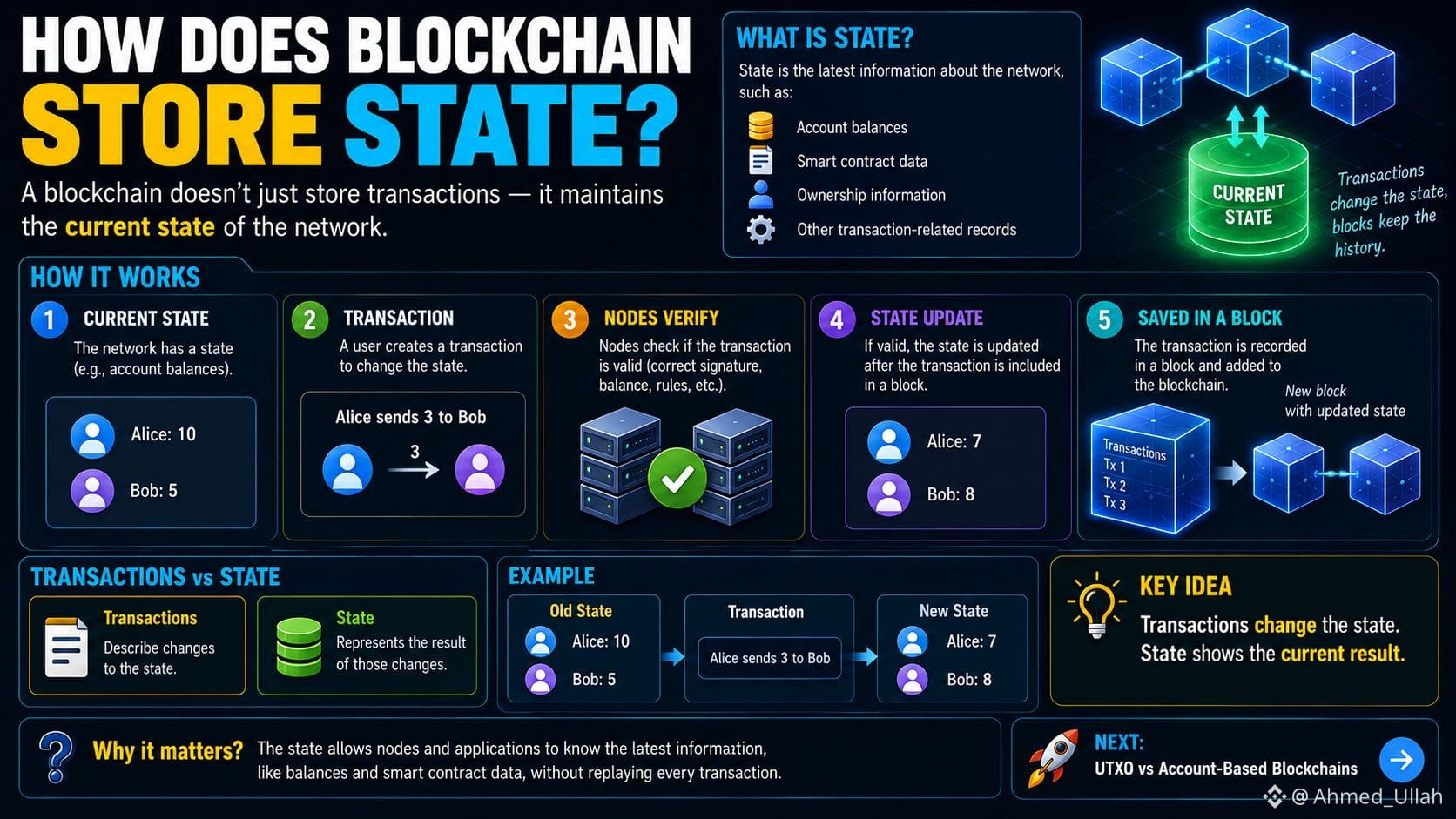
How Does Blockchain Store State? 🔗🧠
A blockchain doesn't just store transactions—it maintains a record of the current state of the network.
For example, state can include:
• Account balances
• Smart contract data
• Ownership information
• Transaction-related records
When a transaction is processed, it changes the state.
Old State → Transaction → New State
For example:
Alice: 10 → Sends 3 → Alice: 7
Nodes independently verify the transaction and update their local view of the blockchain state.
🧠 Key Idea
Transactions describe changes.
State represents the result of those changes.
Understanding blockchain state is essential for understanding how networks like Bitcoin and Ethereum work.
Next: UTXO vs Account-Based Blockchains ⚡
$BTC $BNB $BTTC
#blockchain #BlockchainTechnology #Web3metaverse #blockchaineducation
{spot}(BTCUSDT)
How Does Blockchain Store State? 🔗🧠
A blockchain doesn't just store transactions—it maintains a record of the current state of the network.
For example, state can include:
• Account balances
• Smart contract data
• Ownership information
• Transaction-related records
When a transaction is processed, it changes the state.
Old State → Transaction → New State
For example:
Alice: 10 → Sends 3 → Alice: 7
Nodes independently verify the transaction and update their local view of the blockchain state.
🧠 Key Idea
Transactions describe changes.
State represents the result of those changes.
Understanding blockchain state is essential for understanding how networks like Bitcoin and Ethereum work.
Next: UTXO vs Account-Based Blockchains ⚡
$BTC $BNB $BTTC
#blockchain #BlockchainTechnology #Web3metaverse #blockchaineducation
8
1
2
73

·
--
Bearish
💡 What is UTXO?
Many folks think Bitcoin operates like a bank account, but in reality, Bitcoin uses the UTXO (Unspent Transaction Output) model.
Simply put, each UTXO is like a bill in your wallet.
For example:
You have 1 UTXO worth 1 BTC.
You want to send 0.3 BTC to someone else.
The system will spend that entire 1 BTC UTXO, send 0.3 BTC to the recipient, and create a new UTXO of 0.7 BTC back to you.
Bitcoin doesn’t track "account balance"; it tracks ownership of unspent UTXOs.
That’s why nodes only need to verify:
✅ Does the UTXO exist?
✅ Has it not been spent before?
✅ Is the signature valid?
#Bitcoin #Crypto #UTXO #BlockchainEducation $BTC
{spot}(BTCUSDT)
💡 What is UTXO?
Many folks think Bitcoin operates like a bank account, but in reality, Bitcoin uses the UTXO (Unspent Transaction Output) model.
Simply put, each UTXO is like a bill in your wallet.
For example:
You have 1 UTXO worth 1 BTC.
You want to send 0.3 BTC to someone else.
The system will spend that entire 1 BTC UTXO, send 0.3 BTC to the recipient, and create a new UTXO of 0.7 BTC back to you.
Bitcoin doesn’t track "account balance"; it tracks ownership of unspent UTXOs.
That’s why nodes only need to verify:
✅ Does the UTXO exist?
✅ Has it not been spent before?
✅ Is the signature valid?
#Bitcoin #Crypto #UTXO #BlockchainEducation $BTC
351

·
--
🔐 CRYPTO EXCHANGE SECURITY: WHO PROTECTS YOUR DIGITAL ASSETS?
Imagine waking up and discovering that a major digital platform has suffered a cybersecurity breach.
Would you know what happened?
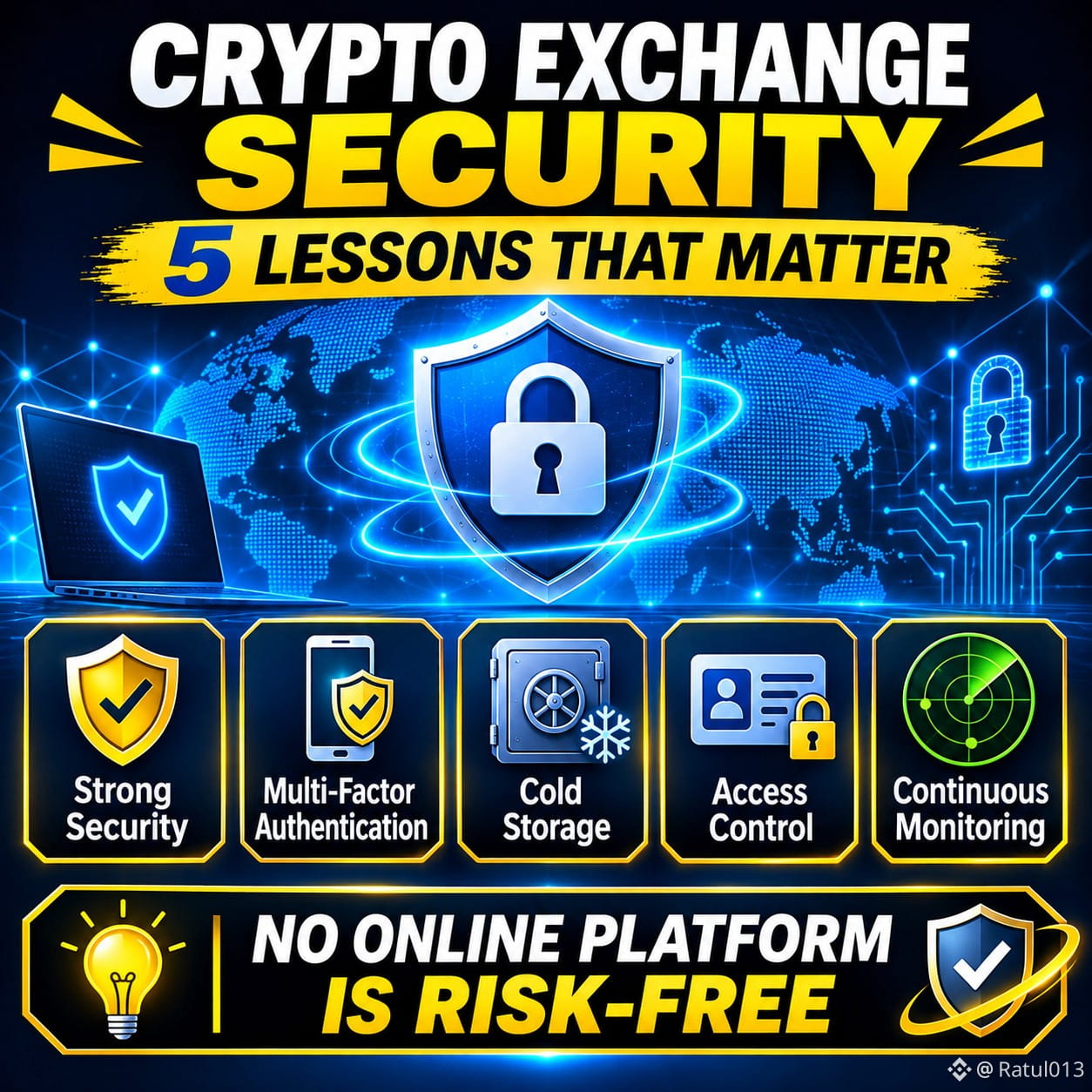
Cryptocurrency exchanges depend on technology, security systems, and people to protect digital assets. But no online platform should be considered completely risk-free.
🚨 5 IMPORTANT CRYPTO SECURITY LESSONS
1️⃣ Strong Security Systems
Digital platforms need multiple layers of protection.
2️⃣ Multi-Factor Authentication
Additional identity verification can help protect accounts.
3️⃣ Cold Storage
Offline storage can reduce exposure to certain online attacks.
4️⃣ Internal Access Control
Employees should only have access to the systems they need.
5️⃣ Continuous Monitoring
Security teams must monitor suspicious activity and respond quickly.
🧠 THE BIG LESSON
Blockchain technology can provide transparency, but it does not automatically make every exchange or wallet secure.
Security requires responsible people, strong technology, and constant improvement.
💬 QUESTION FOR THE COMMUNITY:
What do you think is the most important part of crypto security?
A. Strong passwords
B. Multi-factor authentication
C. Cold storage
D. Exchange security systems
Share your thoughts below!
#CryptoSecurity #BlockchainEducation
65

Curiosity is your edge in Web3. 🔍⛓️
You don’t need to know everything about blockchain, crypto, or digital assets you need the curiosity to keep learning, ask better questions, and explore what’s next.
🚀 Stay curious. Keep learning. Stay On Chain.
👉 Follow @onchainvoice for practical insights into blockchain, Web3, crypto, and the evolving digital economy.
💬 What Web3 topic are you curious to learn about next? Drop it in the comments! 👇
$AAPLB $MSFTB $JPMB
#onchainvoice #stayonchain #staycurious #web3 #blockchaineducation

1
103

·
--
Most crypto investors do not lose their capital to bad market timing, but to the quiet illusion of guaranteed returns.
We have all felt that urgent itch to catch up after watching $BTC rally, only to let our guard down and hand hard-earned savings to an elaborate trap. The sickening feeling of realizing a dashboard balance was never real is something no technical indicator can prepare you for.
I watched this exact dynamic play out in 2017 with fraudulent yield schemes, and the playbook has barely changed even as European law enforcement steps up enforcement. Greek authorities recently broke up a major criminal ring, arresting 17 suspects tied to an operation that defrauded roughly 1,500 people. The operators relied on fake trading dashboards and high-pressure tactics, preying directly on retail traders eager to multiply their $ETH holdings.
Survival in this space comes down to understanding custody and verifying where yield actually originates. If a platform asks you to bridge your $BNB into a closed ecosystem with no verifiable on-chain mechanism, you are almost always the exit liquidity.
How do you verify the legitimacy of a yield platform before depositing any capital?
#CryptoSecurity #ScamAlert #BlockchainEducation

27

·
--
Imagine learning that the company behind your favorite online payments is now the largest US holder of blockchain patents - a game-changer for future innovations.
The concept of blockchain patents is a new frontier for many of us, but it's all about giving companies like Circle a competitive edge when it comes to secure and transparent transactions #blockchaininnovation #patentrights.
Just take IBM, they've been leaders in blockchain technology and now they've made headlines by selling their entire patent portfolio to Circle, a leading US blockchain company, including over 680 patent families and almost 1000 issued patents.
What does this mean for the crypto ecosystem and user-friendly payments? It opens doors to more secure and reliable services.
Takeaway: Staying informed about blockchain developments will help you make more informed decisions about your investments #blockchaineducation.
Can you think of other potential areas where acquiring patents like these could disrupt the status quo? Let us know in the comments.
115

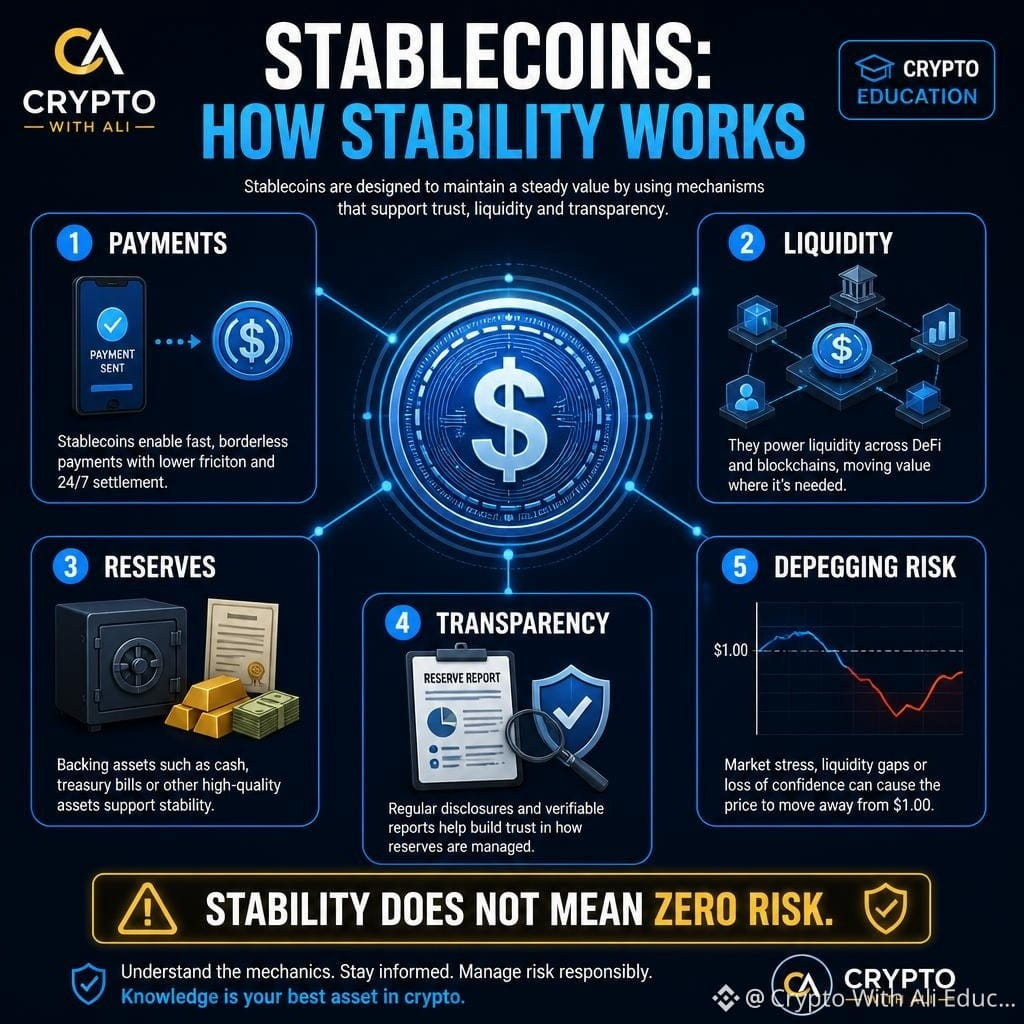
Stablecoins Explained: Payments, Liquidity, Reserves & Depegging Risks
Stablecoins are designed to maintain a relatively stable value, often by tracking a currency such as the US dollar.
They play an important role in crypto payments, trading and blockchain applications. But stability should never be assumed without understanding how they work.
1. What Are Stablecoins?
Stablecoins are digital assets designed to maintain a reference value.
Different models use fiat reserves, crypto collateral or other mechanisms to support their value.
2. How Are They Used?
Common uses include:
Sending digital payments
Moving value between crypto platforms
Providing liquidity in DeFi
Transferring value across supported blockchain networks
3. Why Do Reserves Matter?
For reserve-backed stablecoins, the quality and availability of supporting assets are important.
Users should understand what assets back a stablecoin and whether information about those reserves is independently verified.
4. Why Does Transparency Matter?
Regular reserve disclosures, clear redemption policies and reliable reporting help users evaluate how a stablecoin operates.
5. What Is Depegging?
Depegging happens when a stablecoin moves away from its intended reference value.
Possible contributing factors include:
Concerns about reserve quality
Reduced market liquidity
Redemption difficulties
Loss of confidence or market stress
The Key Lesson
A stablecoin is not automatically risk-free just because its name or design suggests stability.
Before relying on one, understand its reserves, transparency, liquidity and redemption process.
Question: Which factor do you consider most important when evaluating a stablecoin?
#Stablecoins #cryptoeducation #defi #blockchaineducation #CryptoWithAli
Educational content only. Not financial advice.
67
On-Chain Analysis for Beginners: Wallet Activity, Transfers & Their Limitations
Blockchain networks record transactions publicly, creating data that can help people understand network activity.
This is the foundation of on-chain analysis. But interpreting that data requires context.
1. What Is On-Chain Analysis?
On-chain analysis involves studying publicly available blockchain data, such as transactions, wallet activity and asset movements.
It can provide insights into how a network is being used.
2. Wallet Activity
Wallet activity helps track interactions with a blockchain.
However, one person may control multiple wallets, and one wallet may be used by several services. Wallet addresses do not automatically reveal real-world identities.
3. Token Transfers
Tracking transfers can show when assets move between addresses.
But a large transfer does not necessarily mean someone is preparing to sell. It could involve internal transfers, custody changes, smart contracts or other operational activity.
4. Active Addresses
Active addresses measure wallet addresses participating in transactions during a particular period.
This can help assess network activity, but it does not directly measure unique users or genuine adoption.
5. Understand the Limitations
On-chain data does not always explain:
Who controls an address
Why a transaction occurred
Whether assets will be sold or held
What the market will do next
The Key Lesson
Blockchain data provides useful evidence, not complete explanations.
Always combine on-chain metrics with market structure, liquidity and broader context instead of assuming every wallet movement reveals market intent.
Question: Which on-chain metric would you like to understand better?
#OnChainAnalysis #blockchaineducation #CryptoResearch #Web3 #CryptoWithAli
Educational content only. Not financial advice.

48

·
--
📚 WHAT MAKES A BLOCKCHAIN PROJECT WORTH WATCHING?
$SUI — $0.728 (-0.93%)
Look at network adoption, developer activity, transaction growth and token economics. Understanding these factors can help investors make more informed decisions than following price movements alone.
#SuiNetwork #BlockchainEducation #CryptoFundamentals #Web3 #DYOR
$SUI — $0.728 (-0.93%)
Look at network adoption, developer activity, transaction growth and token economics. Understanding these factors can help investors make more informed decisions than following price movements alone.
#SuiNetwork #BlockchainEducation #CryptoFundamentals #Web3 #DYOR
2
#CardanoEducationPush
Cardano is expanding its real-world education footprint through a new partnership focused on the energy sector.
The Cardano Foundation has teamed up with InnoEnergy Masters+ to deliver blockchain training for future energy leaders via masterclasses and the Cardano Academy. At the same time, the network continues advancing key technical milestones including the Node 11.2 release and the Dijkstra upgrade window.
These steps keep attention on long-term infrastructure and adoption progress beyond short-term price moves.
$ADA #Cardano #NetworkUpgrade #CoinVahini #BlockchainEducation
114
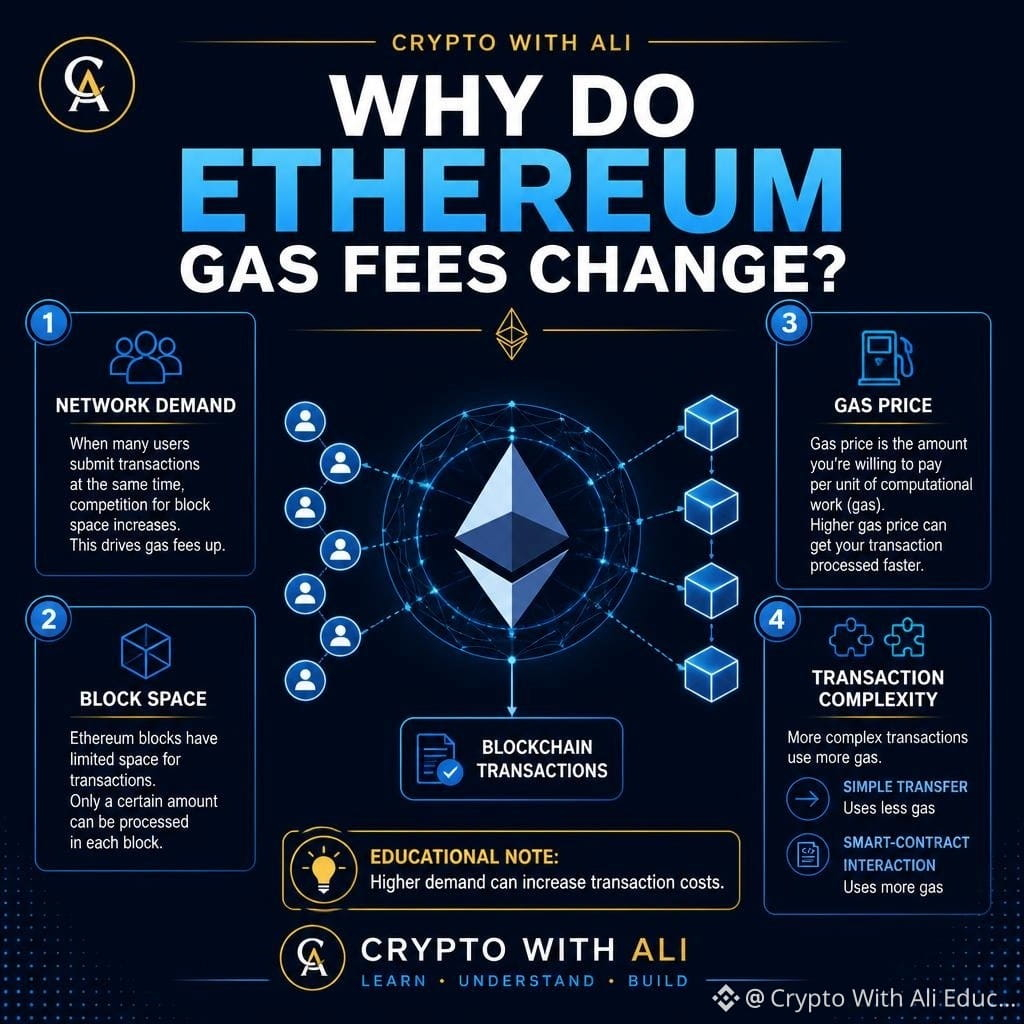
Ethereum Gas Fees: Why Network Demand Can Affect Transaction Costs
Have you ever wondered why an Ethereum transaction can cost more at one time than another?
The answer is closely connected to network demand.
1. What Are Gas Fees?
Gas is the unit used to measure the computational work required to process operations on Ethereum.
Gas fees are the transaction costs users pay to have their operations processed by the network.
2. Why Do Fees Increase?
Ethereum has limited block space. When many users compete to have transactions included, demand for available block space increases.
This competition can push transaction fees higher.
3. What Affects the Cost?
Several factors influence the final fee:
Network activity and demand
The amount of computational work required
The current gas price
The complexity of the transaction
A simple transfer and a complex smart-contract interaction may require different amounts of gas.
4. What Is Gas Price?
Gas price represents how much a user is willing to pay per unit of gas, commonly expressed in gwei.
The total fee depends on the gas used and the applicable fee rate.
5. How Can Users Stay Informed?
Before making a transaction, check the estimated fee in your wallet and consider whether the transaction is urgent.
Layer 2 networks can also provide alternative ways to interact with the Ethereum ecosystem, although their fees and security assumptions differ.
The Key Lesson
Gas fees are not simply random charges. They reflect the resources and demand involved in processing transactions.
Understanding gas helps users make more informed decisions when interacting with blockchain applications.
Question: Have high Ethereum gas fees ever affected your decision to make a transaction?
#Ethereum #gasfees #blockchaineducation #Web3 #CryptoWithAli
Educational content only. Not financial advice.
87

·
--
💡 WHY $BTC SUPPLY MATTERS!
One of the most discussed features of $BTC is its maximum supply of 21 million coins.
This predictable issuance model makes it different from traditional currencies.
Understanding supply mechanics is an important part of understanding the asset!
{spot}(BTCUSDT)
#BTC #BitcoinSupply #CryptoKnowledge #DigitalScarcity #BlockchainEducation
💡 WHY $BTC SUPPLY MATTERS!
One of the most discussed features of $BTC is its maximum supply of 21 million coins.
This predictable issuance model makes it different from traditional currencies.
Understanding supply mechanics is an important part of understanding the asset!
#BTC #BitcoinSupply #CryptoKnowledge #DigitalScarcity #BlockchainEducation

1
2
·
--
$BTC AND BLOCKCHAIN: MORE THAN JUST A PRICE CHART!
Behind every $BTC transaction is a decentralized network secured by proof of work. Understanding the technology, mining, and network economics can help investors make more informed decisions.
Learn the asset, not just the ticker! 📚
{spot}(BTCUSDT)
#BTC #BlockchainEducation #ProofOfWork #CryptoTechnology #BTCCommunity
$BTC AND BLOCKCHAIN: MORE THAN JUST A PRICE CHART!
Behind every $BTC transaction is a decentralized network secured by proof of work. Understanding the technology, mining, and network economics can help investors make more informed decisions.
Learn the asset, not just the ticker! 📚
#BTC #BlockchainEducation #ProofOfWork #CryptoTechnology #BTCCommunity

1
2

·
--
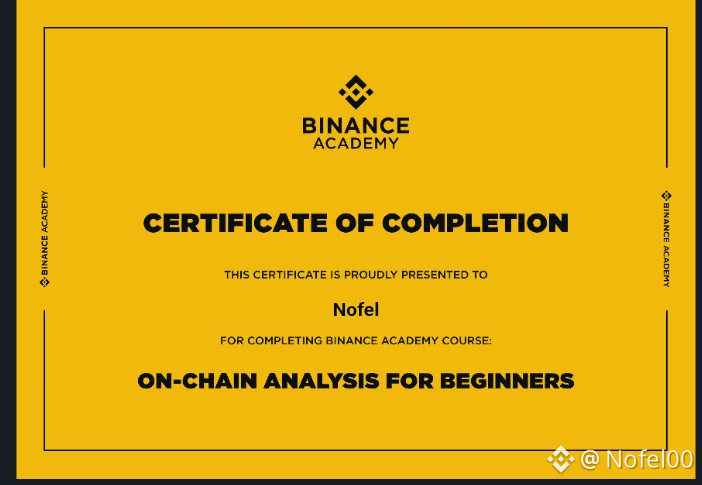
Just earned my certificate from Binance Academy for completing On-Chain Analysis for Beginners.
Always leveling up my crypto and blockchain knowledge.
#BinanceAcademy
#CryptoLearning
#blockchaineducation
$BTC $ETH $BNB
Just earned my certificate from Binance Academy for completing On-Chain Analysis for Beginners.
Always leveling up my crypto and blockchain knowledge.
#BinanceAcademy
#CryptoLearning
#blockchaineducation
$BTC $ETH $BNB
Always leveling up my crypto and blockchain knowledge.
#BinanceAcademy
#CryptoLearning
#blockchaineducation
$BTC $ETH $BNB
1
1
36

·
--
Bullish
Ethereum is more than just a digital currency; it is a global platform for decentralized applications. Here are three quick tips to help you understand it better:
1. Smart Contracts: $ETH powers self-executing contracts that function without intermediaries, enabling everything from DeFi to NFTs.
{spot}(ETHUSDT)
2. Layer 2 Scaling: To manage gas fees, many users interact with ecosystems like $ARB which process transactions faster and at a lower cost while staying secure.
{spot}(ARBUSDT)
3. Proof of Stake: Since the Merge, the network is secured by validators who stake their assets rather than by traditional mining.
How are you currently using the Ethereum ecosystem in your daily activity?
#Ethereum #defi #Layer2 #blockchaineducation
Ethereum is more than just a digital currency; it is a global platform for decentralized applications. Here are three quick tips to help you understand it better:
1. Smart Contracts: $ETH powers self-executing contracts that function without intermediaries, enabling everything from DeFi to NFTs.
2. Layer 2 Scaling: To manage gas fees, many users interact with ecosystems like $ARB which process transactions faster and at a lower cost while staying secure.
3. Proof of Stake: Since the Merge, the network is secured by validators who stake their assets rather than by traditional mining.
How are you currently using the Ethereum ecosystem in your daily activity?
#Ethereum #defi #Layer2 #blockchaineducation
7
129
Log in to explore more content
Join global crypto users on Binance Square
⚡️ Get latest and useful information about crypto.
💬 Trusted by the world’s largest crypto exchange.
👍 Discover real insights from verified creators.
Email / Phone number
Trending Topics
1
#BTCReboundsAbove$60KAmidWhaleDipBuying
6,496 views
66 Discussing
2
#CaliforniaNvidiaProbeExaminesPotentialCriminalViolations
0 views
1 Discussing
3
#BlackRockLaunchesHKDollarDigitalLiquidityFund
0 views
9 Discussing
4
#NvidiaLoses$2.7TrillionInMonthAndAHalf
45,502 views
211 Discussing
5
#GlobalStocksFaceLongestLosingStreakSince2023
407,244 views
2,693 Discussing
6
#BlackRockIBITPostsRecord$541MSingleDayOutflow
60,328 views
148 Discussing
7
#AnthropicPlungesTowardIPOPriceonDay2
218,872 views
1,734 Discussing
8
#TwentyOneCapitalAdds172.25BTC
106,250 views
1,129 Discussing
9
#HKBillWouldExcludeTokenizedDepositsFromVirtualAssets
14,658 views
67 Discussing
10
#HKBillProposesHK$100KFineForUnauthorizedCryptoTitles
3,635 views
31 Discussing