
#cryptowithali
cryptowithali
596 views
47 Discussing
Hot
Latest

📊 November Crypto Outlook: Market Structure, Liquidity & Key Narratives to Watch
A new month brings new opportunities to learn—but understanding market conditions matters more than predicting every move.
🔹 1. Market Structure
Is the market forming higher highs and higher lows, making lower lows, or moving sideways? Understanding the broader structure helps put short-term price movements into context.
🔹 2. Liquidity
Liquidity affects how easily assets can be bought or sold. Watch how price reacts around previous highs, lows, and important trading zones. A liquidity sweep alone does not confirm a reversal.
🔹 3. Bitcoin & Ethereum
BTC and ETH can provide useful context for the wider crypto market. Observe their price action, trading volume, and key technical levels instead of relying on a single candle.
🔹 4. Altcoin Narratives
AI, Web3, tokenization, and blockchain infrastructure remain important educational themes to follow. However, a popular narrative does not automatically mean a project has strong fundamentals or that its token price will rise.
🔹 5. Risk Awareness
Volatility can change quickly. Avoid treating predictions as facts, and remember that technical indicators are tools for interpretation—not guarantees.
🎯 November's Learning Focus:
Market structure + liquidity + fundamentals + market psychology.
💬 Your view: What best describes the crypto market as November begins?
Follow Crypto With Ali for regular crypto education, market context, and Web3 insights.
Educational content only. Not financial advice.
#CryptoWithAli #bitcoin #Ethereum #cryptoeducation #Marketstructure

73
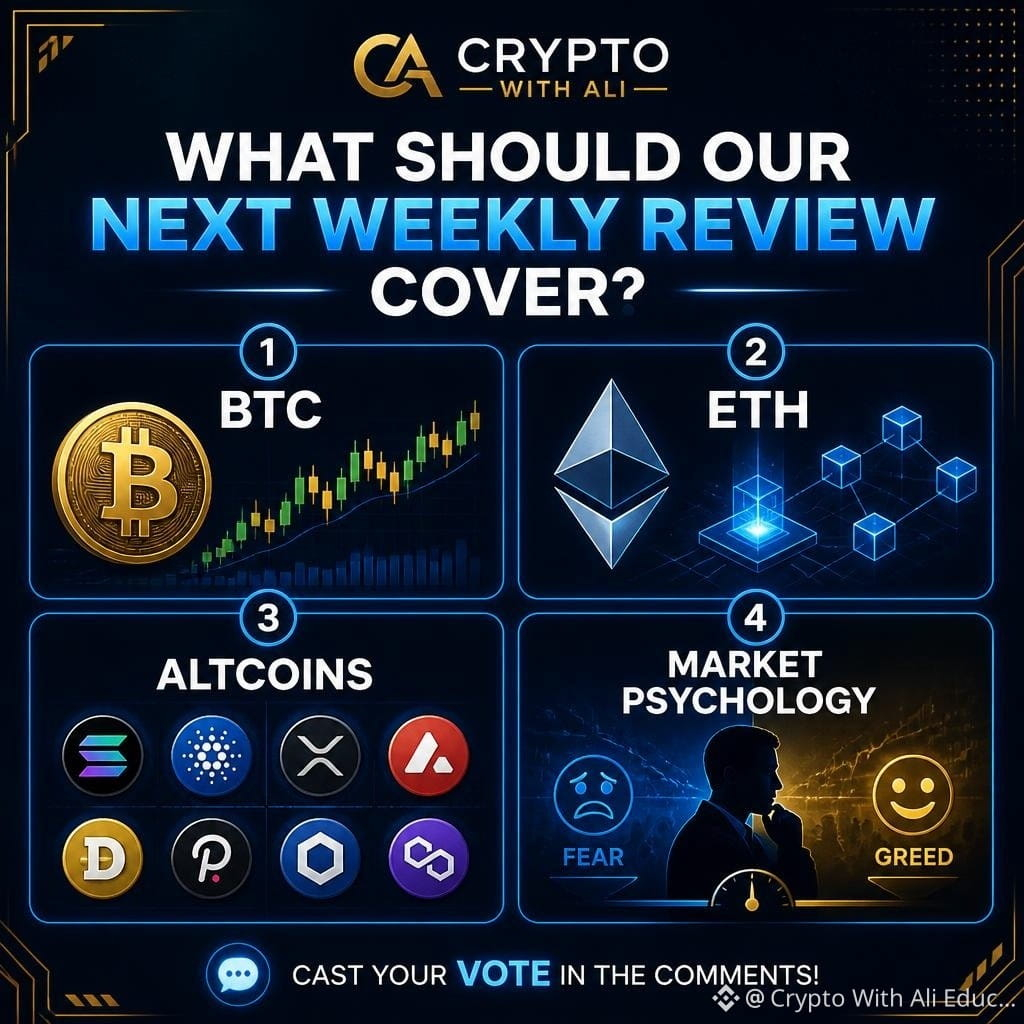
What Should Our Next Weekly Review Cover?
Our Weekly Crypto Lessons series is about understanding market behaviour through education, evidence and responsible analysis.
For the next weekly review, which topic would you like us to explore?
Choose one:
1. BTC — Bitcoin market structure and key concepts
2. ETH — Ethereum ecosystem and market behaviour
3. Altcoins — Liquidity, risk and market participation
4. Market Psychology — Fear, greed and decision-making
Vote and share what you would like to learn in the next installment.
#weekly #CryptoLessons #CryptoEducatio #CryptoWithAli
Educational content only. Not financial advice.
155
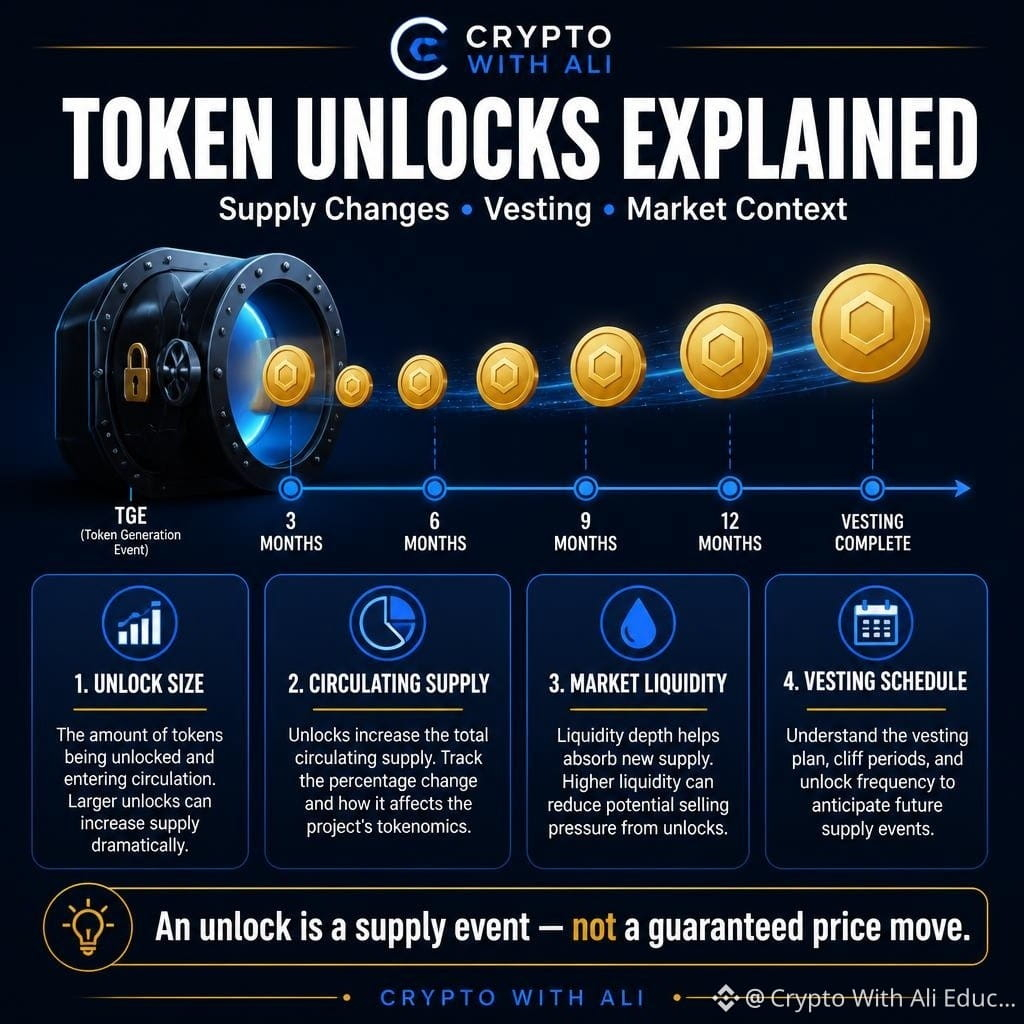
Token Unlocks Explained: Supply Changes, Vesting & Market Context
A token unlock happens when previously restricted tokens become available for transfer or use. These tokens may belong to project teams, early investors, advisors or ecosystem funds.
Many projects release tokens gradually through a vesting schedule rather than distributing their entire supply at once.
What Are the Main Types of Vesting?
* Cliff Unlock: Tokens become available after a specific period.
* Linear Unlock: Tokens are released gradually over time.
* Milestone-Based Unlock: Release depends on defined project milestones.
4 Factors to Check Before an Unlock
1. Unlock Size: How many tokens will become available?
2. Circulating Supply: What percentage of the current circulating supply does the unlock represent?
3. Liquidity: How much market liquidity is available?
4. Vesting Schedule: Is it a one-time release or a recurring event?
Does Every Unlock Create Selling Pressure?
No. Recipients may hold, transfer, use or sell their unlocked tokens. The impact depends on recipient behavior, market conditions, liquidity and the purpose of the allocation.
Key Lesson
A token unlock is a supply event, not a guaranteed price move. Always examine unlock size, circulating supply, liquidity and vesting details together.
What do you check first when researching a token unlock?
Educational content only. Not financial advice.
#tokenunlocks #Tokenomics #cryptoeducation #VestingSchedule #CryptoWithAli
55
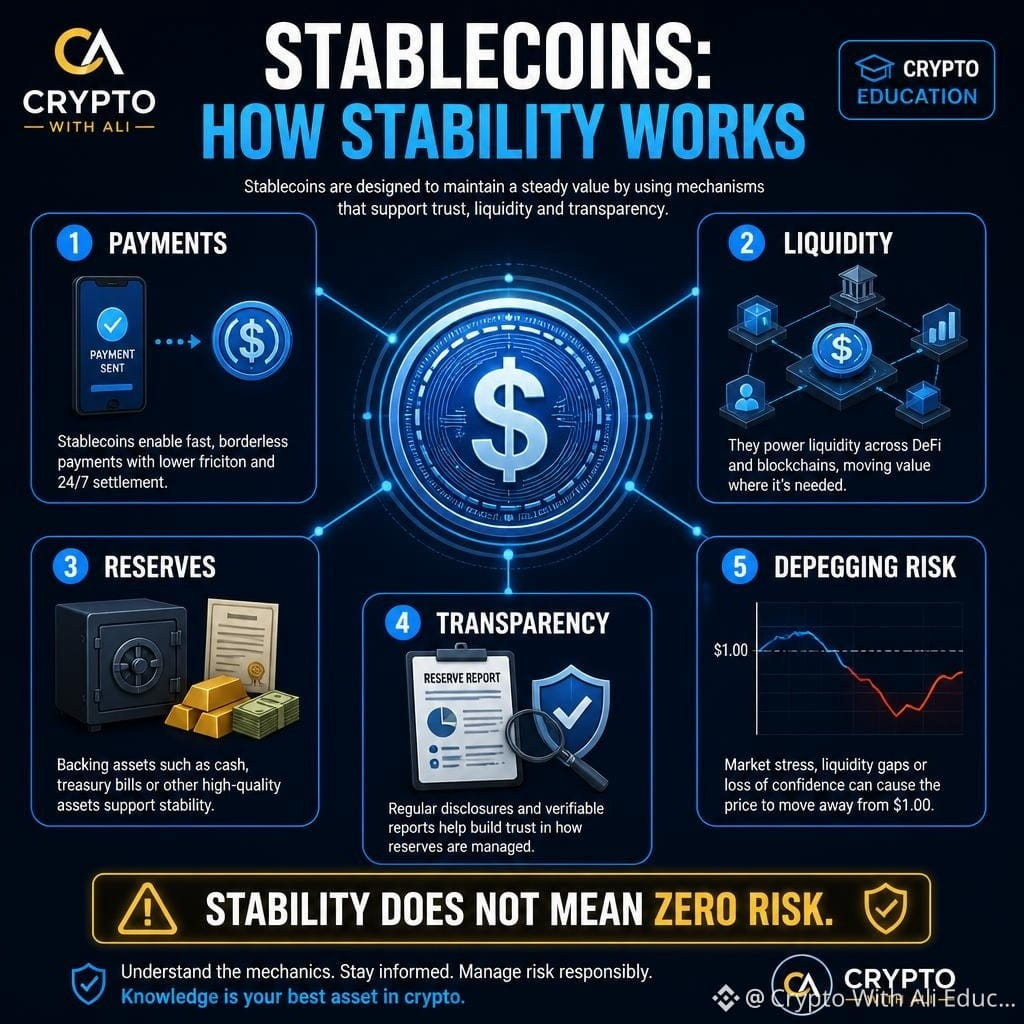
Stablecoins Explained: Payments, Liquidity, Reserves & Depegging Risks
Stablecoins are designed to maintain a relatively stable value, often by tracking a currency such as the US dollar.
They play an important role in crypto payments, trading and blockchain applications. But stability should never be assumed without understanding how they work.
1. What Are Stablecoins?
Stablecoins are digital assets designed to maintain a reference value.
Different models use fiat reserves, crypto collateral or other mechanisms to support their value.
2. How Are They Used?
Common uses include:
Sending digital payments
Moving value between crypto platforms
Providing liquidity in DeFi
Transferring value across supported blockchain networks
3. Why Do Reserves Matter?
For reserve-backed stablecoins, the quality and availability of supporting assets are important.
Users should understand what assets back a stablecoin and whether information about those reserves is independently verified.
4. Why Does Transparency Matter?
Regular reserve disclosures, clear redemption policies and reliable reporting help users evaluate how a stablecoin operates.
5. What Is Depegging?
Depegging happens when a stablecoin moves away from its intended reference value.
Possible contributing factors include:
Concerns about reserve quality
Reduced market liquidity
Redemption difficulties
Loss of confidence or market stress
The Key Lesson
A stablecoin is not automatically risk-free just because its name or design suggests stability.
Before relying on one, understand its reserves, transparency, liquidity and redemption process.
Question: Which factor do you consider most important when evaluating a stablecoin?
#Stablecoins #cryptoeducation #defi #blockchaineducation #CryptoWithAli
Educational content only. Not financial advice.
67
On-Chain Analysis for Beginners: Wallet Activity, Transfers & Their Limitations
Blockchain networks record transactions publicly, creating data that can help people understand network activity.
This is the foundation of on-chain analysis. But interpreting that data requires context.
1. What Is On-Chain Analysis?
On-chain analysis involves studying publicly available blockchain data, such as transactions, wallet activity and asset movements.
It can provide insights into how a network is being used.
2. Wallet Activity
Wallet activity helps track interactions with a blockchain.
However, one person may control multiple wallets, and one wallet may be used by several services. Wallet addresses do not automatically reveal real-world identities.
3. Token Transfers
Tracking transfers can show when assets move between addresses.
But a large transfer does not necessarily mean someone is preparing to sell. It could involve internal transfers, custody changes, smart contracts or other operational activity.
4. Active Addresses
Active addresses measure wallet addresses participating in transactions during a particular period.
This can help assess network activity, but it does not directly measure unique users or genuine adoption.
5. Understand the Limitations
On-chain data does not always explain:
Who controls an address
Why a transaction occurred
Whether assets will be sold or held
What the market will do next
The Key Lesson
Blockchain data provides useful evidence, not complete explanations.
Always combine on-chain metrics with market structure, liquidity and broader context instead of assuming every wallet movement reveals market intent.
Question: Which on-chain metric would you like to understand better?
#OnChainAnalysis #blockchaineducation #CryptoResearch #Web3 #CryptoWithAli
Educational content only. Not financial advice.

48
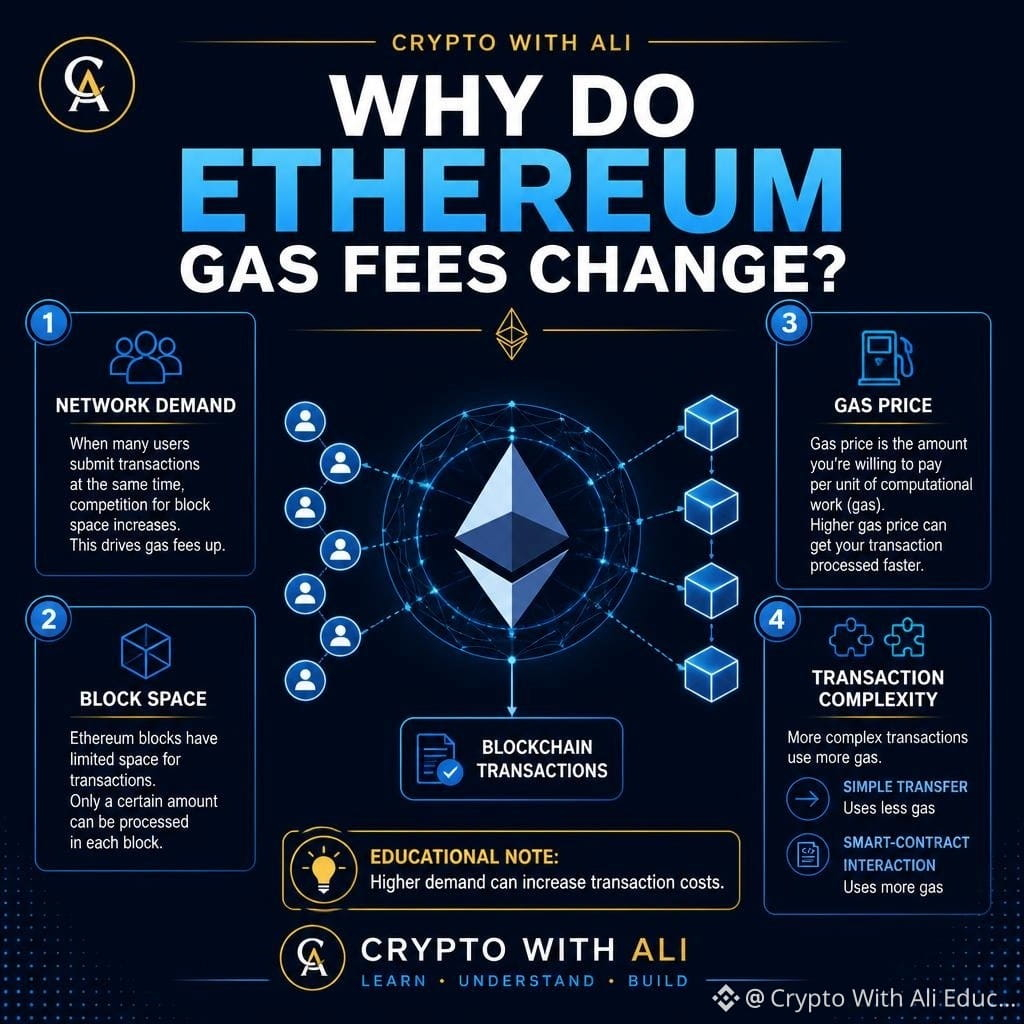
Ethereum Gas Fees: Why Network Demand Can Affect Transaction Costs
Have you ever wondered why an Ethereum transaction can cost more at one time than another?
The answer is closely connected to network demand.
1. What Are Gas Fees?
Gas is the unit used to measure the computational work required to process operations on Ethereum.
Gas fees are the transaction costs users pay to have their operations processed by the network.
2. Why Do Fees Increase?
Ethereum has limited block space. When many users compete to have transactions included, demand for available block space increases.
This competition can push transaction fees higher.
3. What Affects the Cost?
Several factors influence the final fee:
Network activity and demand
The amount of computational work required
The current gas price
The complexity of the transaction
A simple transfer and a complex smart-contract interaction may require different amounts of gas.
4. What Is Gas Price?
Gas price represents how much a user is willing to pay per unit of gas, commonly expressed in gwei.
The total fee depends on the gas used and the applicable fee rate.
5. How Can Users Stay Informed?
Before making a transaction, check the estimated fee in your wallet and consider whether the transaction is urgent.
Layer 2 networks can also provide alternative ways to interact with the Ethereum ecosystem, although their fees and security assumptions differ.
The Key Lesson
Gas fees are not simply random charges. They reflect the resources and demand involved in processing transactions.
Understanding gas helps users make more informed decisions when interacting with blockchain applications.
Question: Have high Ethereum gas fees ever affected your decision to make a transaction?
#Ethereum #gasfees #blockchaineducation #Web3 #CryptoWithAli
Educational content only. Not financial advice.
87
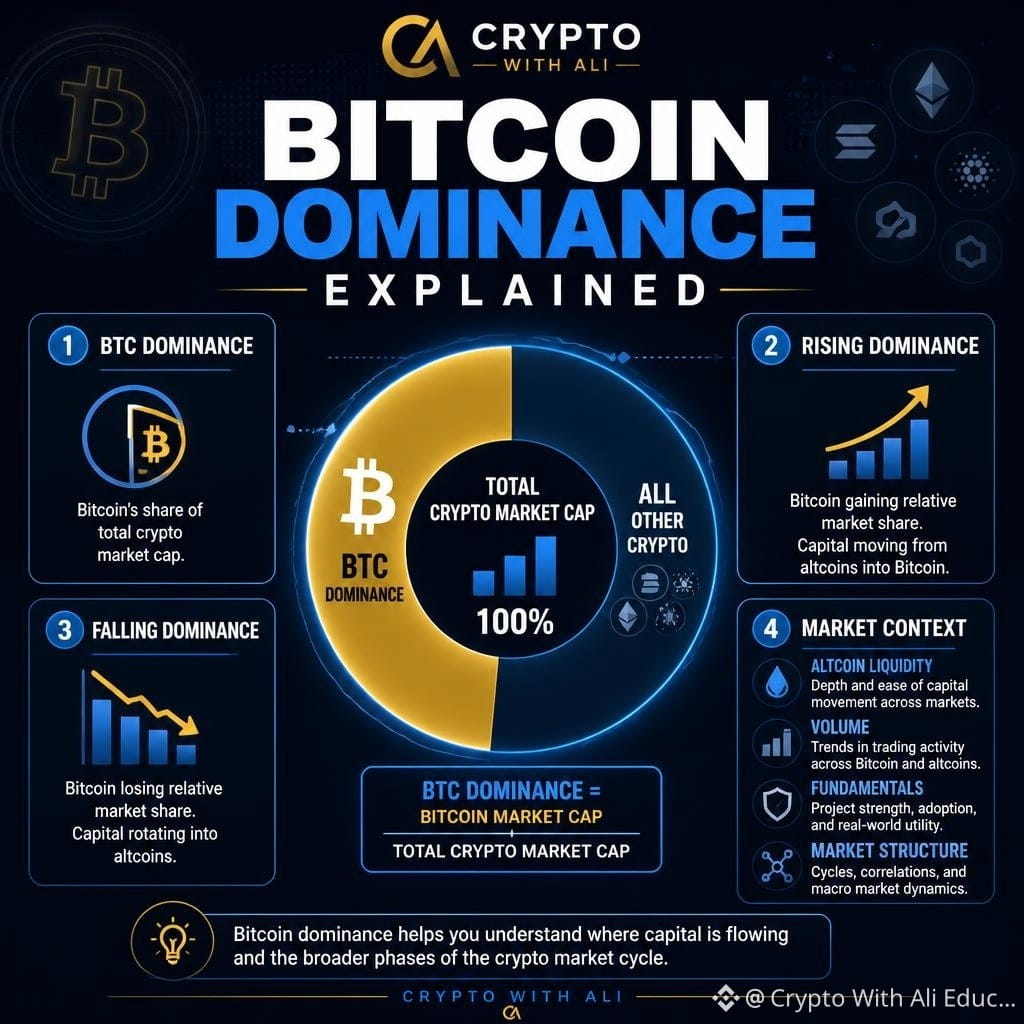
Bitcoin Dominance Explained: What It Can and Cannot Tell Us About Altcoins
Bitcoin dominance (BTC.D) is a widely followed cryptocurrency market metric. It measures Bitcoin's share of the total cryptocurrency market capitalization.
But what does it actually tell us?
1. What Is Bitcoin Dominance?
BTC dominance is generally calculated by dividing Bitcoin's market capitalization by the total market capitalization of the cryptocurrency market, then multiplying by 100.
It provides a relative measure of Bitcoin's market share.
2. What Can Rising Dominance Indicate?
Rising BTC dominance means Bitcoin represents a larger share of the overall market capitalization.
This can happen when Bitcoin performs relatively stronger than other crypto assets. It can also happen when altcoin market capitalization declines more sharply.
3. What Can Falling Dominance Indicate?
Falling dominance means Bitcoin's share of total market capitalization is decreasing.
This may reflect stronger relative performance from altcoins, but it does not automatically mean the entire altcoin market is rising.
4. What Can BTC Dominance NOT Tell Us?
BTC dominance alone cannot confirm:
An upcoming altcoin rally
Which individual altcoin may perform better
Whether market liquidity is increasing
Whether a particular project has strong fundamentals
5. What Should We Check Alongside It?
For a broader market view, consider:
BTC and ETH price structure
Altcoin trading volume and liquidity
Project fundamentals and adoption
Overall market conditions
The Key Lesson
Bitcoin dominance is useful for understanding market share and relative performance, but it is not a standalone prediction tool.
A better market assessment combines multiple metrics instead of relying on one percentage.
Question: Do you check BTC dominance when evaluating the wider altcoin market?
#bitcoindominance #BTC #altcoins #cryptoeducation #CryptoWithAli
Educational content only. Not financial advice.
49
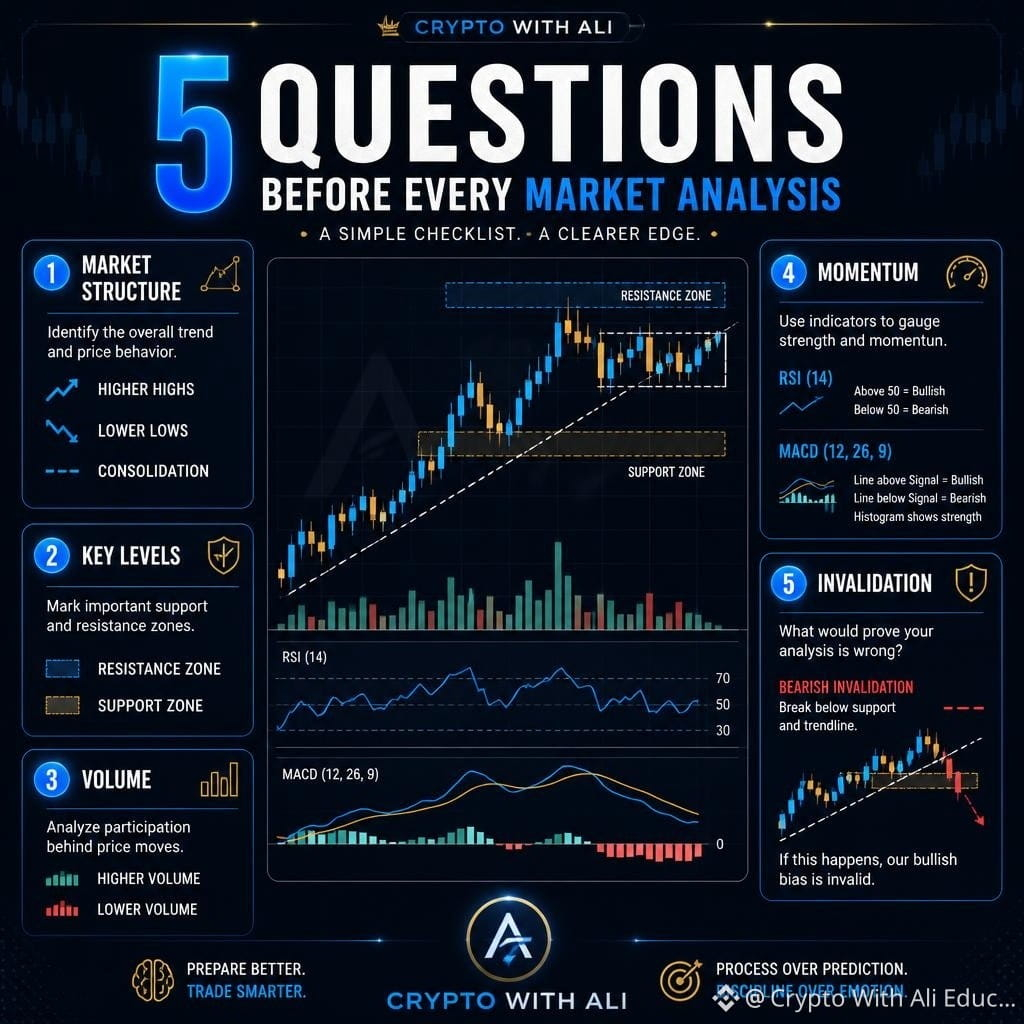
Weekly Crypto Lessons: Five Questions to Ask Before Interpreting a Market Move
A market move can attract attention within minutes, but understanding what is happening requires more than looking at a rising or falling price.
Before interpreting any cryptocurrency market move, consider these five questions:
1. What Is the Market Structure?
Is the market forming higher highs and higher lows, lower highs and lower lows, or moving sideways?
Understanding structure provides context instead of judging one candle in isolation.
2. Where Are the Important Price Levels?
Identify relevant support and resistance zones. Ask whether price is approaching a key area, reacting to it or moving away from it.
These are zones to study, not guaranteed turning points.
3. Is Volume Supporting the Move?
Volume can provide additional information about market participation. Compare it with previous activity, but remember that volume alone does not confirm a trend.
4. What Is Momentum Showing?
Indicators such as RSI and MACD can help study momentum. However, they have limitations and should not be treated as automatic buy or sell signals.
5. What Could Invalidate the Interpretation?
Every market analysis involves uncertainty. Consider alternative scenarios and identify what evidence would challenge your initial view.
The Weekly Lesson
A useful market review is not about predicting every move. It is about asking better questions, checking evidence and avoiding emotional decisions.
Save these five questions and use them as a checklist during your next market review.
Which of these five questions do you think is most often overlooked?
#weekly #cryptoeducation #MarketAnalysis #RiskManagement #CryptoWithAli
Educational content only. Not financial advice.
74
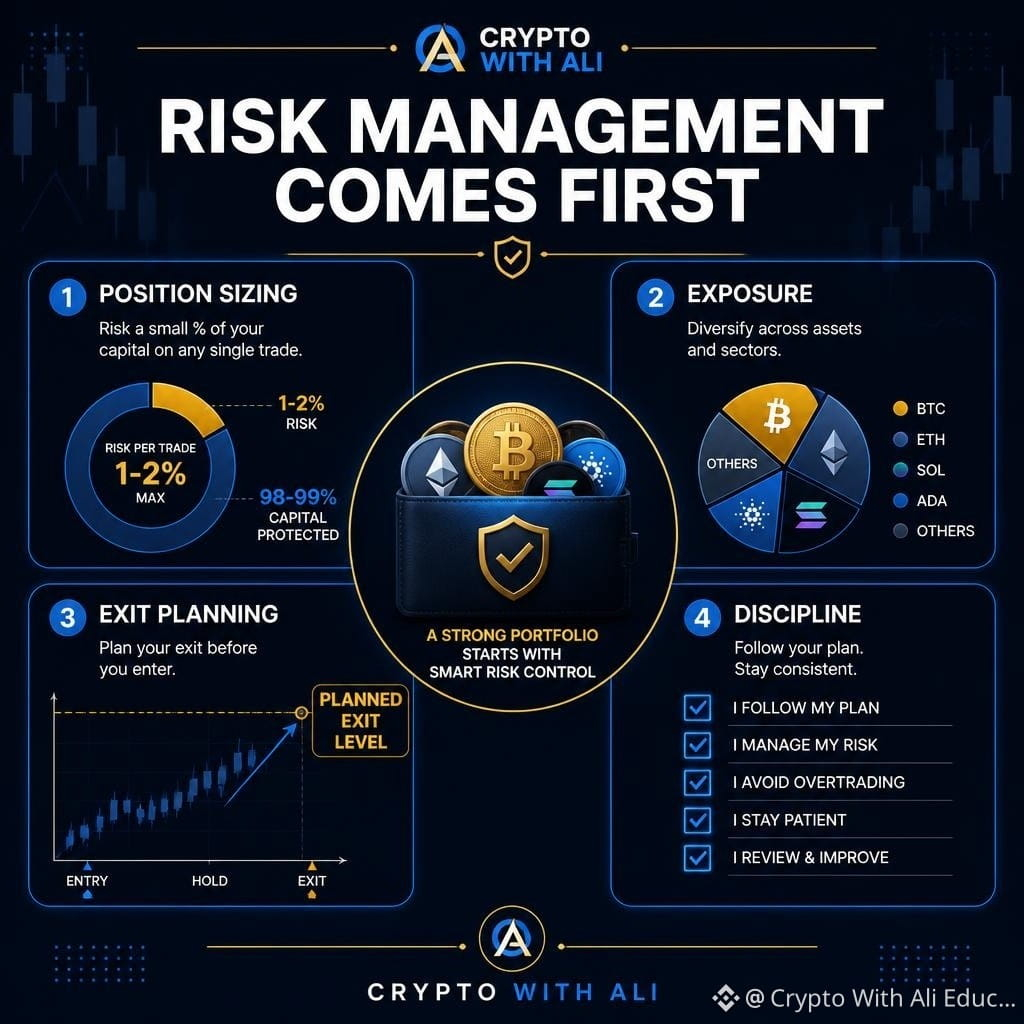
Crypto Risk Management: Position Sizing, Exposure & Why Risk Comes First
In crypto markets, finding opportunities is only one part of the process. Understanding potential risk before making a decision is equally important.
Risk management cannot eliminate uncertainty, but it can help create a more disciplined approach.
1. Position Sizing
Position sizing means deciding how much capital to allocate to a position. Allocation should consider total capital and personal risk tolerance. Oversized positions can increase portfolio risk.
2. Exposure Management
Exposure measures how much your portfolio depends on particular assets or market movements. Holding different cryptocurrencies does not automatically mean your portfolio is diversified. Some assets may react similarly to market conditions.
3. Exit Planning
Before entering a position, identify what could invalidate your original idea. Consider predefined exit levels, conditions for reducing exposure and when to review your decision.
A plan made in advance can help reduce emotional reactions.
4. Discipline
A risk-management plan is only useful when followed consistently. Avoid impulsive decisions, review your approach and do not let short-term market movements control your actions.
Why Does Risk Come First?
Markets are uncertain. No indicator or strategy guarantees an outcome. Responsible market participation starts with understanding potential downside, not just possible upside.
Remember: Not every market move requires participation. Protecting capital and managing exposure deserve attention before chasing opportunities.
Which matters most to you: Position Size, Exposure, Exit Planning or Discipline?
#cryptoeducation #RiskManagement #PositionSizing #TradingDiscipline #CryptoWithAli
Educational content only. Not financial advice.
1
69
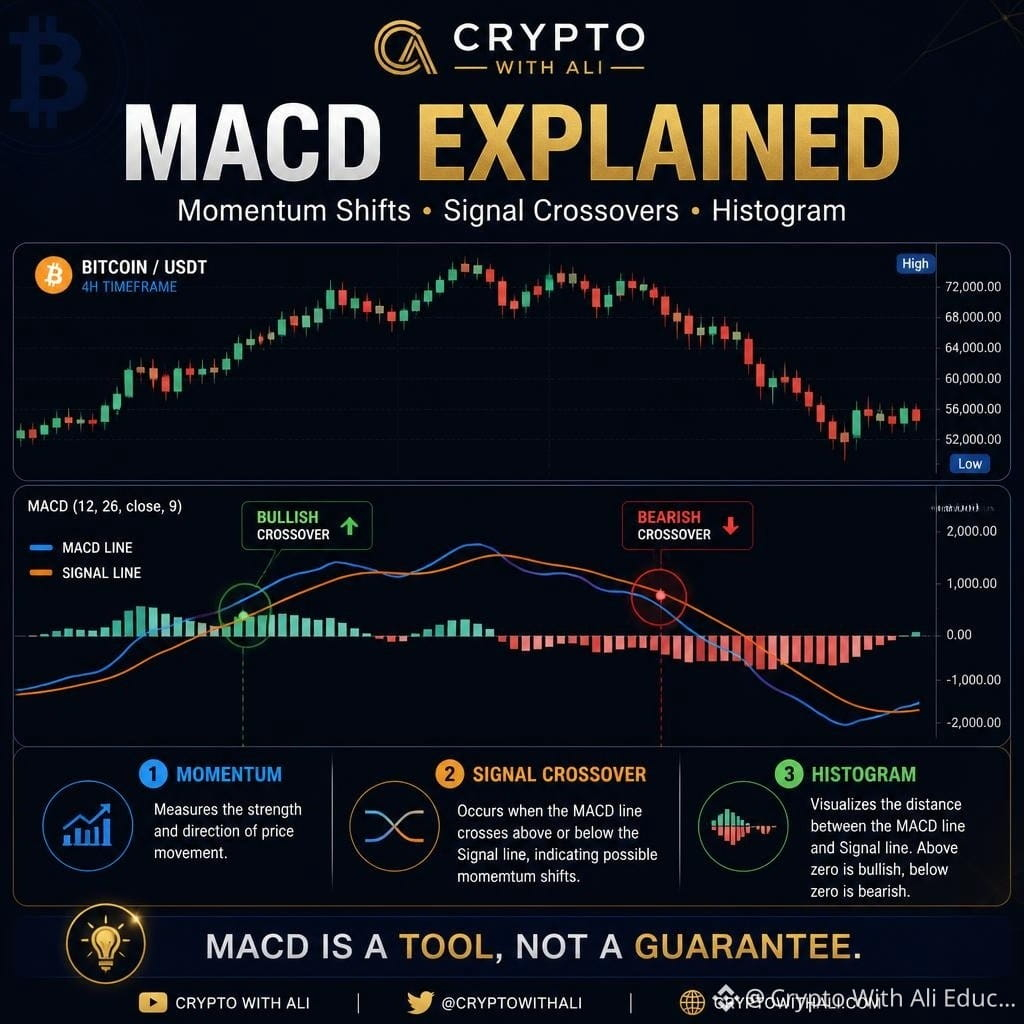
📊 MACD Explained: Momentum Shifts, Signal Crossovers & Their Limitations
Have you ever noticed MACD lines crossing on a Bitcoin chart and wondered what that signal actually means?
The Moving Average Convergence Divergence (MACD) is a momentum indicator that helps traders study changes in momentum and potential trend shifts.
Let's understand its basics.
🔹 1. What Is MACD?
MACD is commonly calculated using three settings:
Fast EMA: 12 periods
Slow EMA: 26 periods
Signal line: 9 periods
These settings are commonly written as MACD (12, 26, 9).
🔹 2. MACD Line
The MACD line measures the difference between the 12-period and 26-period exponential moving averages (EMAs).
It helps visualize changes in momentum as these averages move closer together or farther apart.
🔹 3. Signal Line Crossover
A bullish crossover occurs when the MACD line crosses above the signal line.
A bearish crossover occurs when the MACD line crosses below the signal line.
These crossovers can indicate momentum changes, but they are not guaranteed buy or sell signals.
🔹 4. Understanding the Histogram
The MACD histogram displays the difference between the MACD line and signal line.
Expanding bars indicate increasing separation.
Contracting bars indicate decreasing separation.
It can help visualize changes in momentum.
🔹 5. MACD Limitations
MACD is based on moving averages, so it can lag behind price movements.
In sideways markets, frequent crossovers can produce misleading signals.
📌 Key Lesson:
MACD helps evaluate momentum, but it should not be used in isolation.
Combine it with price action, volume, support and resistance, and broader market structure for better context.
💬 Question: Do you prefer MACD crossovers or histogram analysis when studying crypto charts?
Follow Crypto With Ali for regular technical-analysis education and crypto insights.
Educational content only. Not financial advice.
#CryptoWithAli #MACD #TechnicalAnalysis #bitcoin #cryptoeducation
113
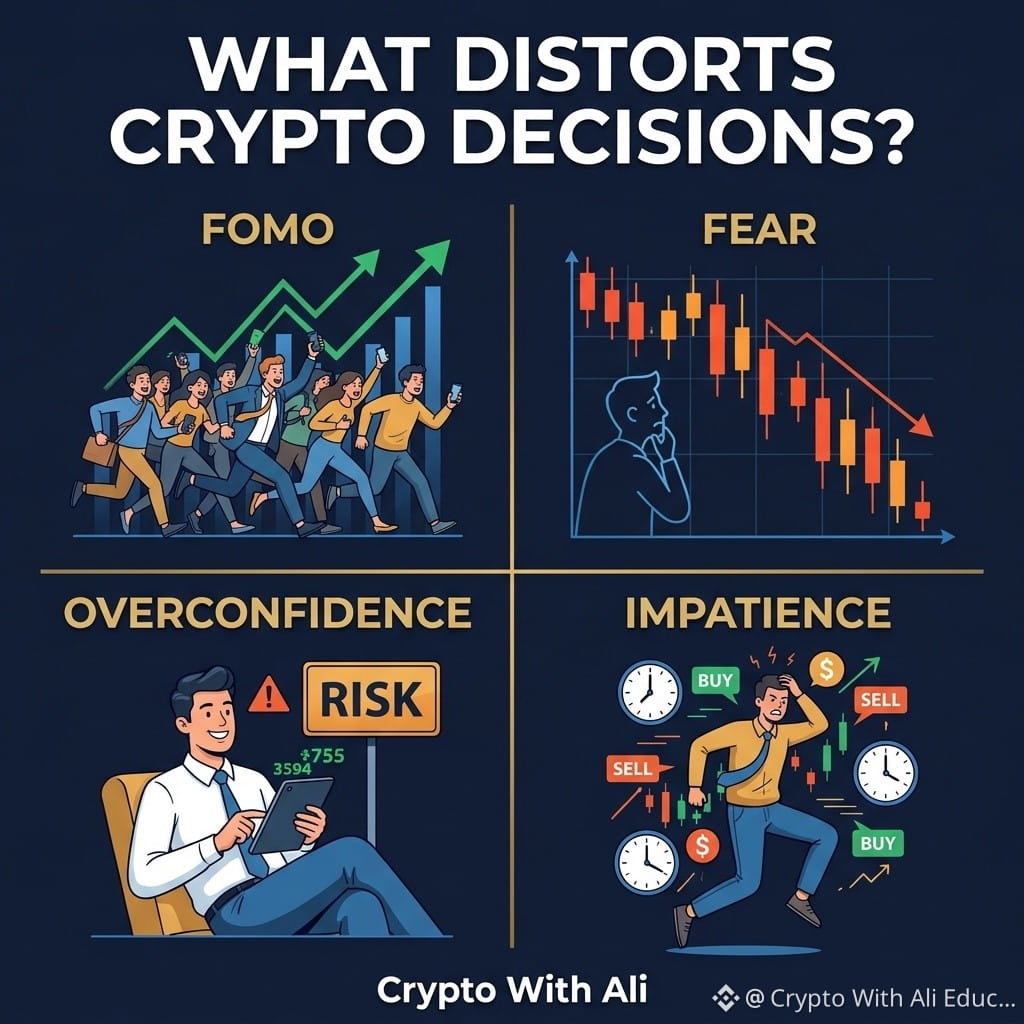
🧠 Crypto Market Psychology: What's Your Biggest Challenge?
Crypto decisions are not always based on research and analysis. Sometimes emotions influence our judgment.
Which psychological factor most often distorts crypto decisions?
🟢 FOMO
🔵 Fear
🟠 Overconfidence
⚪ Impatience
💬 Cast your vote and share your experience.
Understanding our own decision-making is an important part of becoming more informed crypto participants.
Follow Crypto With Ali for more educational insights.
#CryptoWithAli #Marketpsychology #FOMO #cryptoeducation #CryptoPoll
47
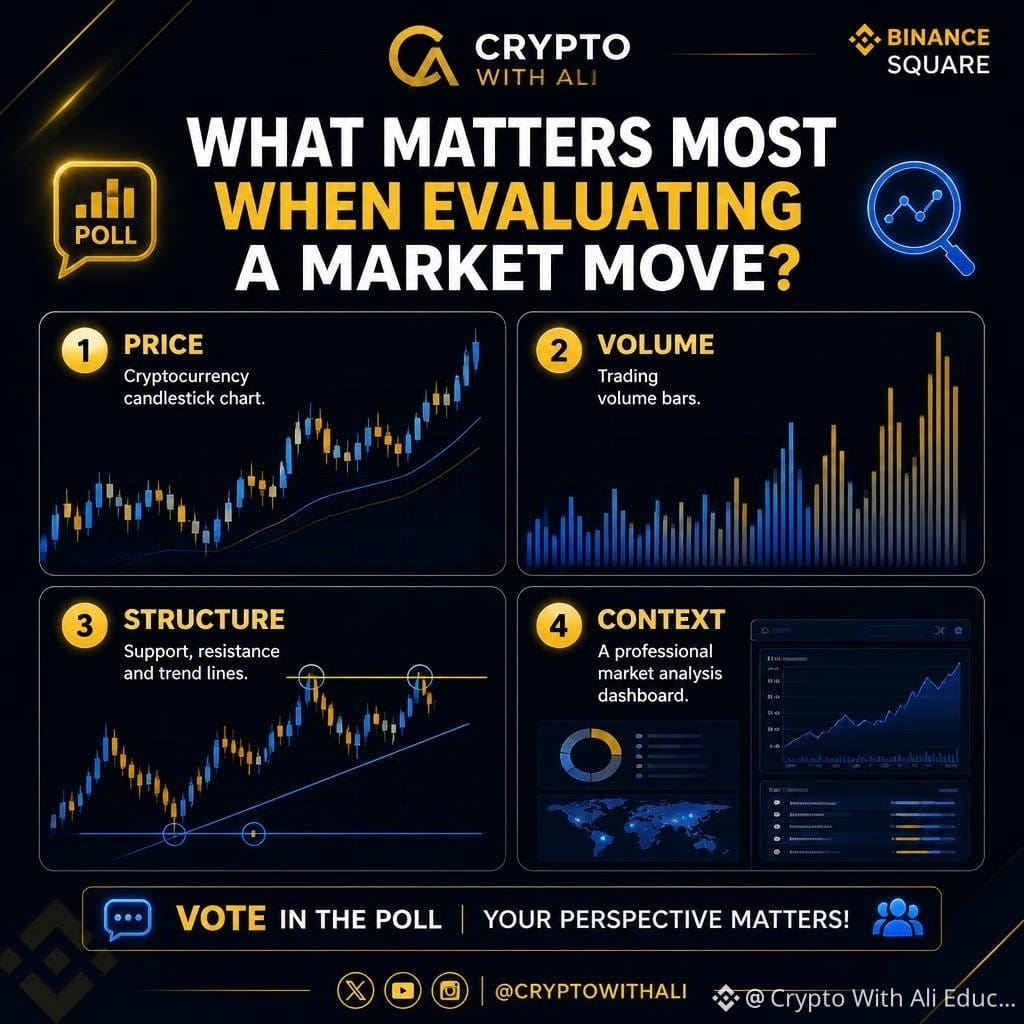
📊 What Matters Most When Evaluating a Crypto Market Move?
A price movement alone doesn't always explain the complete market picture.
Different factors provide different insights.
What do you check first?
🟢 Price
🔵 Volume
🟠 Structure
⚪ Context
💬 Cast your vote and explain why you prefer that factor.
Let's learn from different market perspectives!
Follow Crypto With Ali for more crypto education.
#CryptoWithAli #Bitcoin #Ethereum #CryptoMarket #CryptoPoll
155
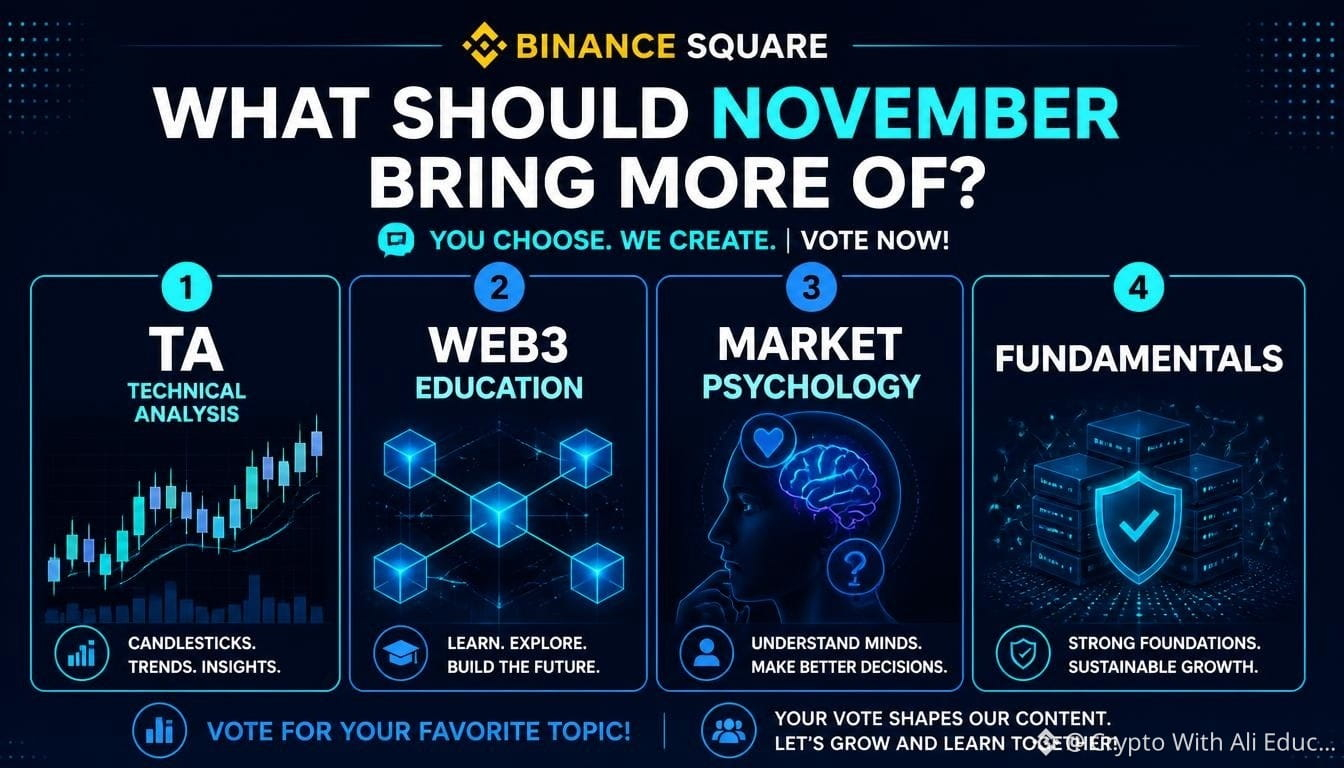
📊 What Should November Bring More Of?
October's educational series explored market structure, liquidity, crypto narratives, blockchain infrastructure, and Web3 fundamentals.
Now it's your turn to help shape November's content! 👇
🔹 A. TA — Technical analysis and chart structure
🔹 B. Web3 Education — Blockchain, DeFi, AI, and tokenization
🔹 C. Market Psychology — Sentiment, emotions, and decision-making
🔹 D. Fundamentals — Adoption, infrastructure, and real-world utility
💬 Vote and tell us which topics you want explained next.
Your feedback will help guide the upcoming Crypto With Ali November Education Series.
Follow for practical, easy-to-understand crypto and Web3 learning.
Educational content only. Not financial advice.
#cryptoeducation #Web3 #Marketpsychology #CryptoFundamentals #CryptoWithAli
44
October Final Report: Market Structure, Narratives & Lessons for the Next Month
As October ends, let's review the key lessons from this month's crypto education series and prepare for November. The goal is not to predict every move, but to understand the market more clearly. 📊
🔹 1. Market Structure Matters
Trends, support, resistance, and price reactions help explain market behavior. They provide context—not certainty.
🔹 2. Liquidity Influences Price Action
Market depth and trading activity can affect volatility and execution. Price movements should be viewed alongside liquidity conditions.
🔹 3. Narratives Need Evidence
AI, DeFi, tokenization, and other Web3 themes can attract attention. Real development, adoption, and utility matter more than hype.
🔹 4. Fundamentals Go Beyond Charts
Network activity, security, infrastructure, and real-world use can add context that short-term price movements alone cannot provide.
🔹 5. Risk Awareness Is Essential
Psychology, volatility, and uncertainty influence decisions. No single indicator or narrative explains the entire market.
💡 Looking Ahead to November:
We'll continue exploring Bitcoin and Ethereum, altcoins, market psychology, blockchain infrastructure, and practical Web3 fundamentals.
💬 Help Shape the Next Series: What should we cover more—technical analysis, Web3 education, market psychology, or fundamentals?
Follow Crypto With Ali for practical crypto education throughout November.
Educational content only. Not financial advice.
#CryptoReview #Marketstructure #Web3Education
#CryptoFundamentals #CryptoWithAli

62
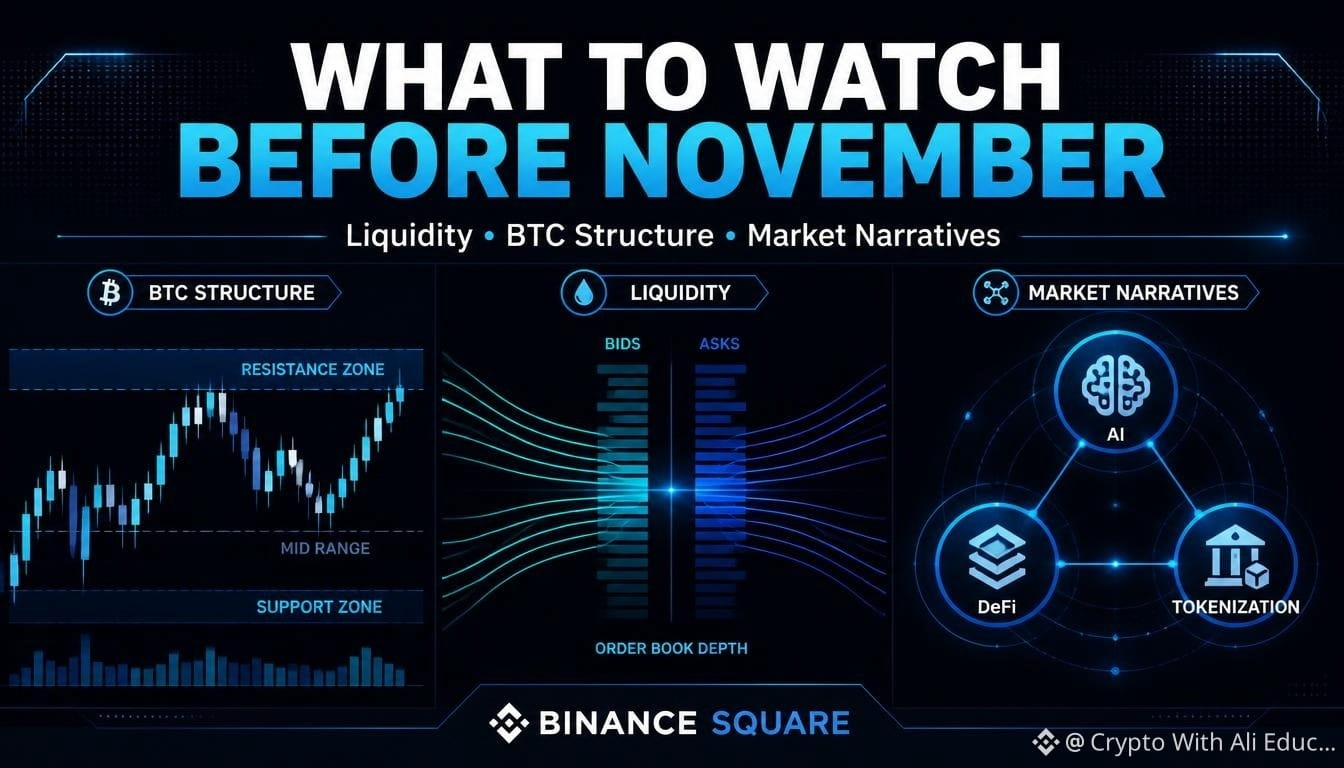
What to Watch Before November: Liquidity, BTC Structure & Market Narratives
As October comes to an end, it's a good time to review the factors that can help us understand crypto markets heading into November.
Rather than predicting prices, focus on context and evidence. 📊
🔹 1. Liquidity
Trading activity and market depth can influence volatility and execution. Thin liquidity may amplify price movements, so volume alone does not tell the whole story.
🔹 2. Bitcoin Market Structure
Observe trends, support and resistance zones, and how price reacts around important levels. These areas provide context, not guaranteed outcomes.
🔹 3. Ethereum and the Wider Market
Compare BTC and ETH behavior with broader altcoin activity. Different assets can respond differently to liquidity, sentiment, and market conditions.
🔹 4. Market Narratives
Themes such as AI, tokenization, DeFi, and infrastructure can attract attention. Check real development, adoption, and utility rather than relying on hype.
🔹 5. Risk and Psychology
Volatility, uncertainty, and emotional decisions remain part of crypto markets. A clear process and awareness of risk matter in every market environment.
💡 Key Takeaway:
For November, focus on liquidity, market structure, fundamentals, and changing narratives. No single indicator can explain the entire market.
💬 Your Focus for November: BTC, ETH, altcoins, or macro conditions?
Follow Crypto With Ali for practical crypto and Web3 education throughout November.
Educational content only. Not financial advice.
#CryptoMarket #Bitcoin #liquidity #Web3 #CryptoWithAli
88
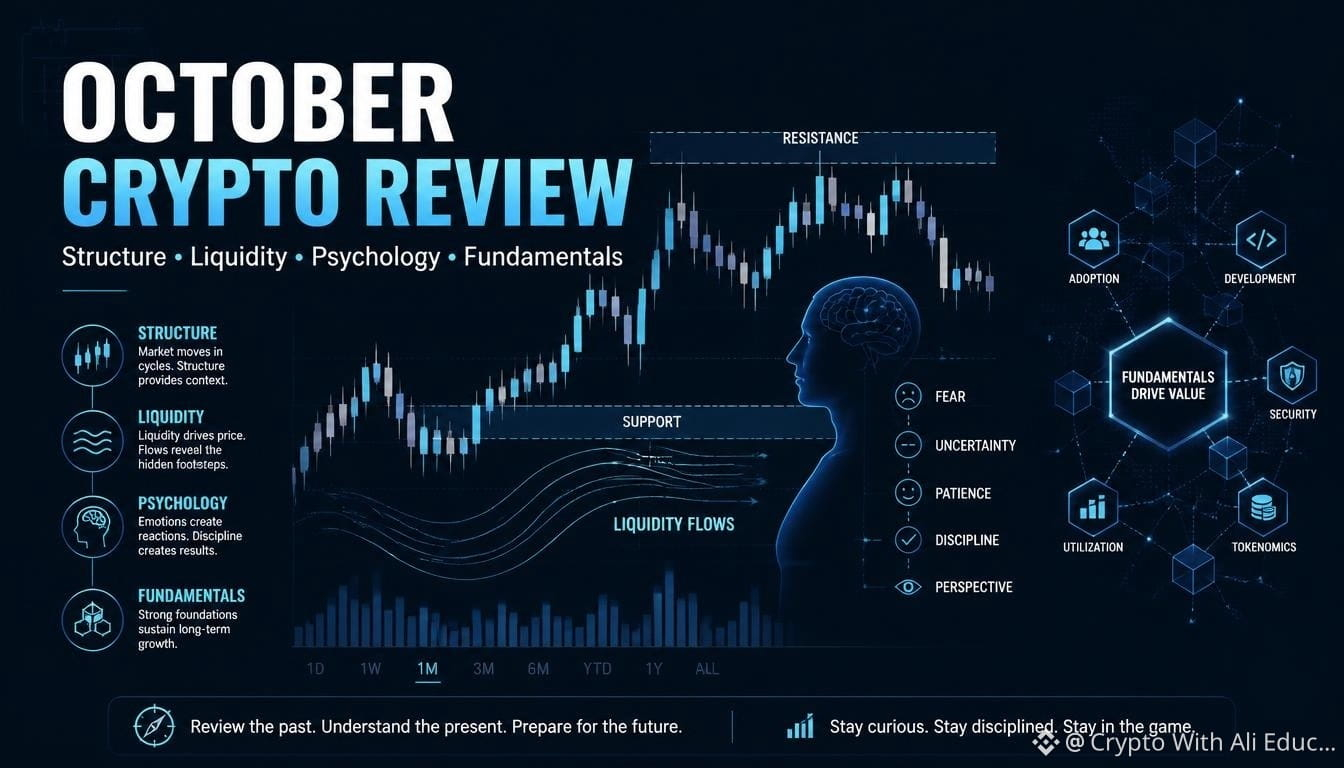
October Crypto Review: What Market Structure Taught Us This Month
October offered an opportunity to look beyond daily price movements and understand the broader factors that shape crypto markets. Here are five important lessons. 📊
🔹 1. Structure Provides Context
Support, resistance, trends, and market ranges help organize price action. No single level guarantees what happens next.
🔹 2. Liquidity Matters
Trading activity and available liquidity can influence volatility and how easily orders are executed. Thin liquidity may amplify price movements.
🔹 3. Psychology Influences Decisions
Fear, excitement, and herd behavior can affect market participation. Emotional decisions often make it harder to assess risk objectively.
🔹 4. Fundamentals Go Beyond Price
Network activity, adoption, security, development, and real-world utility can provide context beyond short-term charts.
🔹 5. No Single Indicator Tells the Whole Story
Price structure, volume, liquidity, sentiment, and fundamentals each provide different information. Combining perspectives can help build a more balanced understanding, but uncertainty always remains.
💡 Key Takeaway:
A useful crypto review is not about predicting every move. It is about identifying what the market shows, understanding the context, and recognizing the risks.
As we approach November, focus on evidence rather than hype, and learning rather than impulsive reactions.
💬 Your Biggest Lesson from October: Structure, liquidity, psychology, or fundamentals?
Follow Crypto With Ali for practical crypto and Web3 education.
Educational content only. Not financial advice.
#CryptoReview #Marketstructure #cryptoeducation #blockchain #CryptoWithAli
54
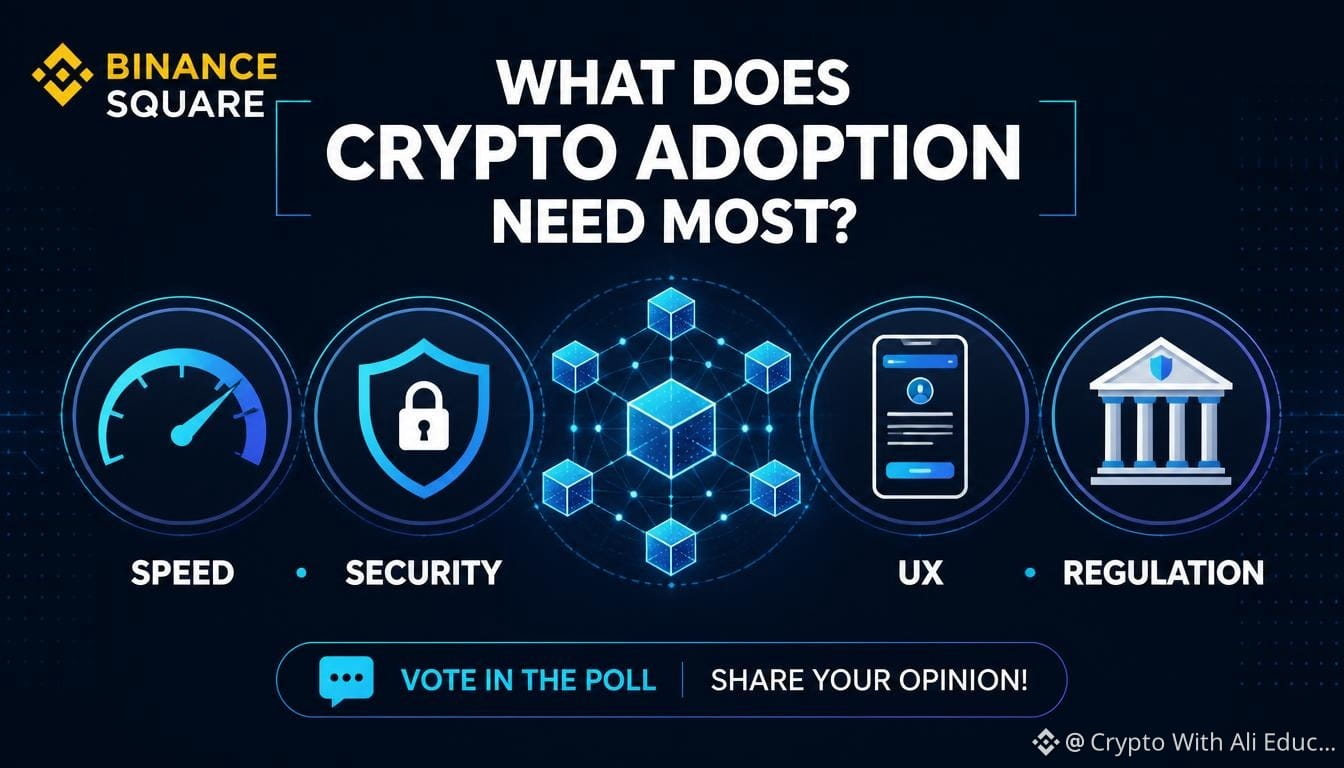
📊 Biggest Adoption Requirement →
For crypto and Web3 to reach more everyday users, the underlying infrastructure needs to work reliably.
But which factor matters most?
🔹 A. Speed — Efficient transactions and scalable networks
🔹 B. Security — Safer networks, wallets, and applications
🔹 C. UX — Simple, accessible user experiences
🔹 D. Regulation — Clear rules and stronger trust
💬 Vote and explain your choice. Is one factor enough, or does mass adoption depend on all four working together?
Educational content only. Not financial advice.
#CryptoAdoption #blockchain #Web3 #CryptoCommunity #CryptoWithAli
53
Crypto Infrastructure: What Must Work Before Mass Adoption Can Scale?
Crypto adoption is about more than prices. For blockchain technology to serve millions of people, its infrastructure must be secure, efficient, and reliable. 🌐
🔹 1. Speed & Scalability
Networks must handle growing transaction volumes efficiently. Congestion and high fees can limit everyday use. Layer 2 solutions help address these challenges, but trade-offs remain.
🔹 2. Security & Reliability
Networks, wallets, smart contracts, and applications need strong security practices. Audits, testing, and monitoring help reduce risks, but no system is completely risk-free.
🔹 3. User Experience (UX)
Complex wallets, confusing fees, and difficult interfaces can discourage new users. Simple onboarding and clear transaction information can make crypto easier to use.
🔹 4. Interoperability
Different blockchains need practical ways to connect. Cross-chain tools can improve connectivity, but bridges may introduce additional security risks.
🔹 5. Regulation & Trust
Clear rules can help users and businesses understand their responsibilities. Consumer protection, privacy, and consistent standards also matter.
💡 Key Takeaway:
Mass adoption requires more than one breakthrough. It depends on scalability, security, usability, interoperability, and trustworthy standards working together.
The strongest infrastructure is technology people can use reliably—not simply technology that attracts attention.
💬 Your Opinion: What matters most for broader crypto adoption: speed, security, UX, or regulation?
Follow Crypto With Ali for practical crypto and Web3 education.
Educational content only. Not financial advice.
#CryptoInfrastructure #blockchain #Web3 #cryptoeducation #CryptoWithAli

49
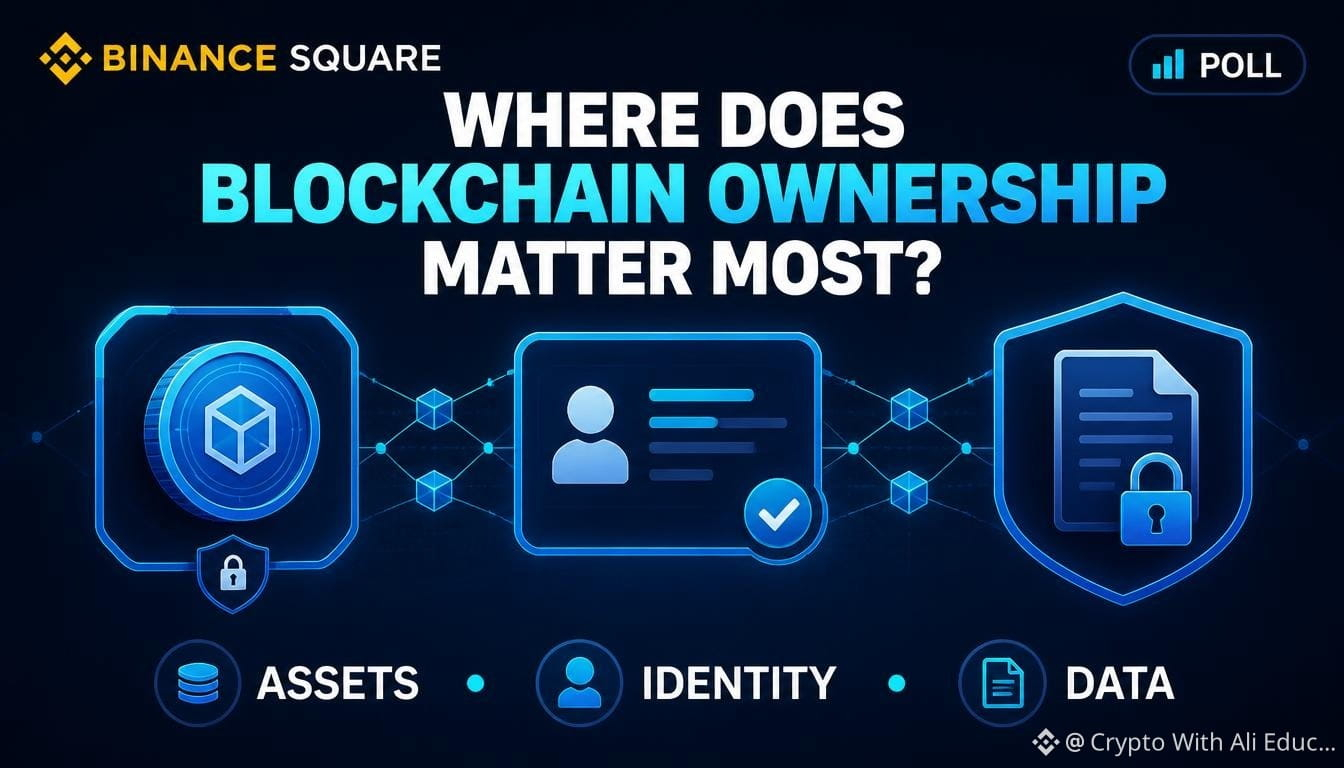
📊 Blockchain Ownership Is Most Relevant To →
Blockchain technology can help record and verify ownership-related information in different areas of the digital world.
But where do you think it could make the biggest difference?
🔹 A. Assets
🔹 B. Identity
🔹 C. Data
🔹 D. All Three
💬 Cast your vote and share your reasoning in the comments.
Remember: blockchain records can support verification, but legal rights, privacy, and security still matter.
Educational content only. Not financial advice.
#BinanceSquare #blockchain #web #CryptoCommunity #CryptoWithAli
63
Digital Ownership: Why Blockchain Changes the Meaning of Ownership
In the digital world, owning something is not always as simple as having access to it. An account, a file, or an in-game item may depend on a platform's rules and permissions.
Blockchain technology introduces another way to manage and verify digital ownership. 🔗
🔹 1. Ownership of Digital Assets
Blockchain networks can record transactions involving digital assets, including cryptocurrencies and certain tokenized items. These records help participants verify transfers and balances.
🔹 2. NFTs and Digital Collectibles
Non-fungible tokens (NFTs) can represent unique digital items or links to other assets. However, owning an NFT does not automatically mean owning the copyright or every commercial right to the content.
🔹 3. More Control Through Private Keys
With compatible self-custody wallets, users can control the keys used to authorize transactions. This can reduce dependence on a custodial provider, but losing the keys may mean losing access.
🔹 4. Identity and Data
Blockchain-based systems can support digital identity and verifiable credentials. Still, putting personal information directly on a public blockchain can create privacy risks. Sensitive data needs careful protection.
🔹 5. Ownership Has Limits
A blockchain record alone cannot guarantee legal ownership, physical possession, copyright, or enforceable rights. These depend on the asset, applicable laws, and the terms governing it.
💡 Key Takeaway:
Blockchain can make digital ownership easier to record and verify, but real ownership also depends on rights, security, and how the system is designed.
💬 Question: Where do you think blockchain ownership could have the greatest impact: assets, identity, data, or all three?
Follow Crypto With Ali for practical Web3 and blockchain education.
Educational content only. Not financial advice.
#Digital #blockchain #Web3 #nft #CryptoWithAli

68
Log in to explore more content
Join global crypto users on Binance Square
⚡️ Get latest and useful information about crypto.
💬 Trusted by the world’s largest crypto exchange.
👍 Discover real insights from verified creators.
Email / Phone number
Trending Topics
1
#CanBTCReboundAfterFallingBelow60K?
360,624 views
1,510 Discussing
2
#GlobalStocksFaceLongestLosingStreakSince2023
119,016 views
1,079 Discussing
3
#BlackRockIBITPostsRecord$541MSingleDayOutflow
613 views
16 Discussing
4
#AnthropicPlungesTowardIPOPriceonDay2
57,449 views
581 Discussing
5
#TwentyOneCapitalAdds172.25BTC
10,155 views
157 Discussing
6
#HKBillWouldExcludeTokenizedDepositsFromVirtualAssets
861 views
14 Discussing
7
#BNBDropsBelow540USDTWith8.46%DailyDecline
30,925 views
263 Discussing
8
#HKBillProposesHK$100KFineForUnauthorizedCryptoTitles
1,009 views
14 Discussing
9
#BitMineFaces$10.1BUnrealizedETHLoss
1,967 views
18 Discussing
10
#StrategyReports$35BNetReserves
1,834 views
18 Discussing