
#cryptodeposit
cryptodeposit
3,324 views
29 Discussing
Hot
Latest

·
--
Article
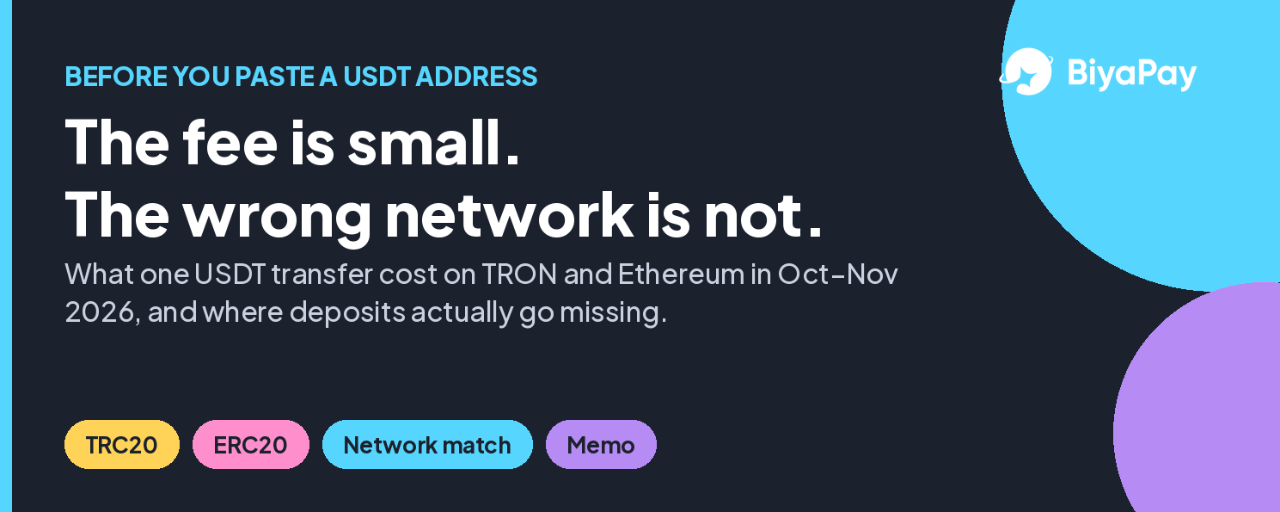
Before You Paste a USDT Address: My Network Checklist for BiyaPay DepositsDisclosure: It is not financial advice
The question everyone asks first
"Which network is cheapest for USDT?" In Indonesian crypto chats the answer is almost automatic: TRC20, because Ethereum is expensive.
I wanted to know if that answer still holds, so I looked at what a single USDT transfer actually cost on-chain in October and November 2026. The result surprised me, and it changed what I worry about before a deposit. The fee turned out to be the small problem. The network mismatch is the big one.
What one transfer actually cost this autumn
On TRON, a USDT transfer is a smart contract call, so it burns Energy. Energy has no free daily quota. You either stake TRX for it, rent it, or the network burns TRX from your balance at 100 sun per Energy.
An on-chain check by OrcaRail on 14 November 2026 put the cost at:
64,285 Energy (6.43 TRX, about $2.01) when the receiving address already holds USDT130,285 Energy (13.03 TRX, about $4.08) when the address has never held USDT
On Ethereum, the same check measured a USDT transfer at 64,031 gas to a new holder. At that day's base fee of 0.059 gwei, that is about 0.0000038 ETH, or under one US cent at ETH near $1,905.
A separate sample by TRXMAN on 27 October 2026 points the same way: a median of about $0.017 for 250 ERC20 USDT transfers, against a median of 6.77 TRX (about $2.22) for TRC20 transfers that had to burn TRX. TRC20 only becomes nearly free when the sender already has staked or rented Energy.
Here is what that means as a share of the amount, if you send from your own wallet without staked Energy:
20 USDT: TRC20 to a new address costs about 20.4%. ERC20 costs about 0.04%.100 USDT: TRC20 to a new address about 4.1%, to an existing holder about 2.0%. ERC20 under 0.01%.1,000 USDT: TRC20 about 0.41% or 0.20%. ERC20 is still a rounding error.
Two things follow. TRC20 is a flat fee in TRX, so it hurts small transfers most. And Ethereum's gas price moves with demand, so this snapshot can flip on a busy day. The fee is real, but it is measured in cents to a few dollars.
If you send from an exchange instead of your own wallet, the exchange charges its own flat withdrawal fee per network, and that number replaces the on-chain math above. Either way, the fee is something you can see before you press send.
Where deposits really go missing
The expensive mistake is choosing a different network on each side. Same token name, USDT, different blockchain. When the sending network and the receiving network do not match, the coins can be lost. That is a 100% loss, not a 4% fee.
Address formats explain why some mix-ups get caught and others do not. A TRON address starts with T and has 34 characters. An Ethereum address starts with 0x and has 42. Paste a TRON address into an Ethereum withdrawal field and the format check usually rejects it.
The dangerous case is between networks that share the 0x format. Several EVM chains use exactly the same address shape, so a withdrawal on the wrong one can look completely valid and go through. The wallet accepts it. The deposit never shows up where you expect it.
Memo coins are the second trap. For coins like XRP and EOS, the deposit needs both the address and a tag (MEMO), usually a string of numbers shown above the address. Skip the tag and the coins can be lost, even with a perfect address.
How I deposit USDT on BiyaPay
On BiyaPay, the deposit itself costs nothing. Crypto deposits are free on the receiving side; any fee comes from the sending wallet or exchange and the blockchain.
The path in the app is Deposit, then On-chain Deposit (Cryptocurrency), then pick USDT and the network, for example USDT-TRC20, and copy the address. On the web it starts from My Assets, then Funds, then Deposit, with the same network step.
The minimum depends on the network. USDT on TRC20 has a minimum of 1 USDT, and USDT on ERC20 has a minimum of 10 USDT. That matters for test transfers: a 5 USDT test on ERC20 sits below the minimum.
Each network also has its own confirmation requirement, shown on the network selection page. TRON blocks come about every 3 seconds, so TRC20 deposits usually confirm within minutes. Ethereum depends on congestion and the gas paid.
The deposit record icon in the upper right corner of the address page shows every deposit and its status. If a deposit is late, the transaction hash on a block explorer tells you whether it confirmed on-chain. If it confirmed and the balance has not updated, BiyaPay support needs the transaction hash, registered email, currency, deposit network, deposit address, transaction time, and a screenshot. Having those ready saves a lot of back and forth.
My checklist, in the order I use it
Pick the network on BiyaPay first, then select the exact same network on the sending side. Never the other way around.Read the first characters of the address: T for TRON, 0x for Ethereum. If it is 0x, double-check the chain name, not just the format.For memo coins, fill in both the address and the tag.Compare the total cost: the sender's withdrawal fee, or the on-chain cost from your own wallet. For small amounts from a wallet without staked Energy, ERC20 was the cheaper chain in this autumn's data.Stay above the network minimum: 1 USDT on TRC20, 10 USDT on ERC20.For a new route, send a small amount above the minimum first, then the rest.Keep the transaction hash until the balance shows up.
My take
The "TRC20 is always cheaper" rule is out of date for small transfers from a self-custody wallet. The October and November 2026 numbers show ERC20 costing a fraction of a cent while a TRC20 transfer burned $2 to $4 of TRX.
But I would not choose a network on fee alone. A few dollars of fee is a cost I can see in advance. A network mismatch is a full loss I cannot undo. So my order is fixed: match the network first, check the format and the memo, and only then compare fees.
Source: OrcaRail, "USDT TRC20 Fee vs ERC20 and Solana" (on-chain check, 14 Nov 2026); TRXMAN, "TRC20 vs ERC20: USDT fees measured on-chain" (updated 27 Oct 2026); TRON Developer Hub, "Bandwidth and Energy". Checked 21 Nov 2026.
#BiyaPay #USDT #CryptoDeposit #TRC20 #ERC20
Before You Paste a USDT Address: My Network Checklist for BiyaPay Deposits
Disclosure: It is not financial advice
The question everyone asks first
"Which network is cheapest for USDT?" In Indonesian crypto chats the answer is almost automatic: TRC20, because Ethereum is expensive.
I wanted to know if that answer still holds, so I looked at what a single USDT transfer actually cost on-chain in October and November 2026. The result surprised me, and it changed what I worry about before a deposit. The fee turned out to be the small problem. The network mismatch is the big one.
What one transfer actually cost this autumn
On TRON, a USDT transfer is a smart contract call, so it burns Energy. Energy has no free daily quota. You either stake TRX for it, rent it, or the network burns TRX from your balance at 100 sun per Energy.
An on-chain check by OrcaRail on 14 November 2026 put the cost at:
64,285 Energy (6.43 TRX, about $2.01) when the receiving address already holds USDT130,285 Energy (13.03 TRX, about $4.08) when the address has never held USDT
On Ethereum, the same check measured a USDT transfer at 64,031 gas to a new holder. At that day's base fee of 0.059 gwei, that is about 0.0000038 ETH, or under one US cent at ETH near $1,905.
A separate sample by TRXMAN on 27 October 2026 points the same way: a median of about $0.017 for 250 ERC20 USDT transfers, against a median of 6.77 TRX (about $2.22) for TRC20 transfers that had to burn TRX. TRC20 only becomes nearly free when the sender already has staked or rented Energy.
Here is what that means as a share of the amount, if you send from your own wallet without staked Energy:
20 USDT: TRC20 to a new address costs about 20.4%. ERC20 costs about 0.04%.100 USDT: TRC20 to a new address about 4.1%, to an existing holder about 2.0%. ERC20 under 0.01%.1,000 USDT: TRC20 about 0.41% or 0.20%. ERC20 is still a rounding error.
Two things follow. TRC20 is a flat fee in TRX, so it hurts small transfers most. And Ethereum's gas price moves with demand, so this snapshot can flip on a busy day. The fee is real, but it is measured in cents to a few dollars.
If you send from an exchange instead of your own wallet, the exchange charges its own flat withdrawal fee per network, and that number replaces the on-chain math above. Either way, the fee is something you can see before you press send.
Where deposits really go missing
The expensive mistake is choosing a different network on each side. Same token name, USDT, different blockchain. When the sending network and the receiving network do not match, the coins can be lost. That is a 100% loss, not a 4% fee.
Address formats explain why some mix-ups get caught and others do not. A TRON address starts with T and has 34 characters. An Ethereum address starts with 0x and has 42. Paste a TRON address into an Ethereum withdrawal field and the format check usually rejects it.
The dangerous case is between networks that share the 0x format. Several EVM chains use exactly the same address shape, so a withdrawal on the wrong one can look completely valid and go through. The wallet accepts it. The deposit never shows up where you expect it.
Memo coins are the second trap. For coins like XRP and EOS, the deposit needs both the address and a tag (MEMO), usually a string of numbers shown above the address. Skip the tag and the coins can be lost, even with a perfect address.
How I deposit USDT on BiyaPay
On BiyaPay, the deposit itself costs nothing. Crypto deposits are free on the receiving side; any fee comes from the sending wallet or exchange and the blockchain.
The path in the app is Deposit, then On-chain Deposit (Cryptocurrency), then pick USDT and the network, for example USDT-TRC20, and copy the address. On the web it starts from My Assets, then Funds, then Deposit, with the same network step.
The minimum depends on the network. USDT on TRC20 has a minimum of 1 USDT, and USDT on ERC20 has a minimum of 10 USDT. That matters for test transfers: a 5 USDT test on ERC20 sits below the minimum.
Each network also has its own confirmation requirement, shown on the network selection page. TRON blocks come about every 3 seconds, so TRC20 deposits usually confirm within minutes. Ethereum depends on congestion and the gas paid.
The deposit record icon in the upper right corner of the address page shows every deposit and its status. If a deposit is late, the transaction hash on a block explorer tells you whether it confirmed on-chain. If it confirmed and the balance has not updated, BiyaPay support needs the transaction hash, registered email, currency, deposit network, deposit address, transaction time, and a screenshot. Having those ready saves a lot of back and forth.
My checklist, in the order I use it
Pick the network on BiyaPay first, then select the exact same network on the sending side. Never the other way around.Read the first characters of the address: T for TRON, 0x for Ethereum. If it is 0x, double-check the chain name, not just the format.For memo coins, fill in both the address and the tag.Compare the total cost: the sender's withdrawal fee, or the on-chain cost from your own wallet. For small amounts from a wallet without staked Energy, ERC20 was the cheaper chain in this autumn's data.Stay above the network minimum: 1 USDT on TRC20, 10 USDT on ERC20.For a new route, send a small amount above the minimum first, then the rest.Keep the transaction hash until the balance shows up.
My take
The "TRC20 is always cheaper" rule is out of date for small transfers from a self-custody wallet. The October and November 2026 numbers show ERC20 costing a fraction of a cent while a TRC20 transfer burned $2 to $4 of TRX.
But I would not choose a network on fee alone. A few dollars of fee is a cost I can see in advance. A network mismatch is a full loss I cannot undo. So my order is fixed: match the network first, check the format and the memo, and only then compare fees.
Source: OrcaRail, "USDT TRC20 Fee vs ERC20 and Solana" (on-chain check, 14 Nov 2026); TRXMAN, "TRC20 vs ERC20: USDT fees measured on-chain" (updated 27 Oct 2026); TRON Developer Hub, "Bandwidth and Energy". Checked 21 Nov 2026.
#BiyaPay #USDT #CryptoDeposit #TRC20 #ERC20
131


·
--
Article
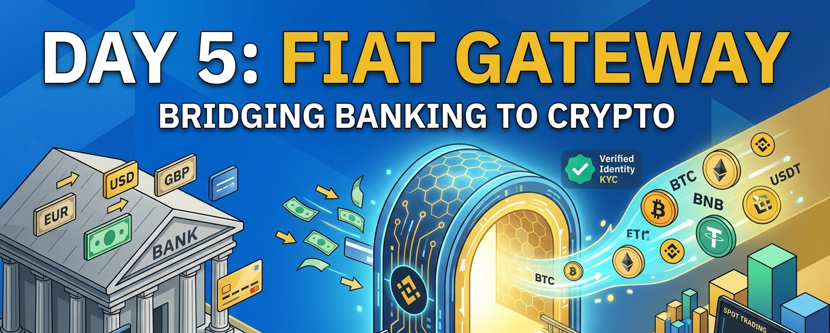
Navigating the Binance Fiat GatewayWelcome to the fifth day of our educational series focused on empowering you to handle digital assets smoothly and efficiently. Today we are exploring a vital bridge that connects traditional banking with the digital world which is commonly known as the fiat gateway. This feature is the official channel that allows you to deposit or withdraw traditional national currencies like dollars euros or other local money directly into and out of your trading account. Understanding how this portal operates ensures that you can fund your investment ideas or secure your real world profits without relying on third party brokers.
For many individuals the easiest way to interact with this system is by linking a traditional credit or debit card directly to the platform. This specific method functions just like any standard online shopping transaction making it highly accessible for beginners who are buying their very first digital tokens. The primary benefit of utilizing a card channel is speed because the funds are processed instantly allowing you to react immediately to sudden market opportunities. While it carries a small processing percentage fee for the transaction convenience and immediacy make it a favorite for tactical movements.
If you are planning to move larger amounts of capital into the ecosystem traditional bank transfers are generally the most cost effective solution available. Options like electronic fund transfers or regional networks allow you to send direct deposits into your exchange wallet with very low or sometimes completely zero platform fees. It is important to note that bank transfers require patience as they can take anywhere from a few hours to a couple of business days to settle depending on your location. When initiating a transfer you must always include the exact reference code provided by the system to prevent any unnecessary processing delays.
The gateway operates exactly the same way in reverse when you decide it is time to cash out your investments and send profits back to the real world. You can seamlessly sell your digital currency into your local fiat balance and then request a withdrawal straight back to your verified bank account. Having a dependable regulated exit strategy gives investors peace of mind because they know their capital is never trapped inside the digital network. The processing times for withdrawals mirror the deposit times keeping your financial planning predictable and transparent.
Compliance and user safety are heavily integrated into this specific feature to protect the global financial integrity of the community. To unlock standard fiat deposit and withdrawal capabilities every user must first complete their regular identity verification steps also known as know your customer protocols. This straightforward process involves submitting a valid government identification document and a quick selfie to confirm ownership of the profile. Completing this level of verification not only secures your account but also unlocks much higher daily financial limits for both deposits and withdrawals.
A strict rule that you must follow when using these traditional payment channels is ensuring that the names on all accounts match exactly. The name registered on your personal bank account or bank card must be identical to the verified identity name on your exchange profile. Attempting to deposit funds using a friend card or a family member bank account will trigger an automatic security freeze and a rejection of the transaction. This strict matching policy is a key industry standard designed to combat identity fraud and protect your personal wealth.
In certain regions where direct banking integrations face local regulatory limitations the platform adapts by utilizing supported electronic wallets or localized stablecoin channels. This flexible approach ensures that no matter where you live there is always a viable secure pathway to onboard your capital safely. By learning to navigate these official gateways you minimize the risks associated with unverified over the counter deals. It puts the control back into your hands allowing you to manage the relationship between your bank and your digital wallet professionally.
Tomorrow we will look at how you can utilize your free time to gain knowledge and earn rewards simultaneously through educational hubs. For today take a moment to look at the deposit section of your application to see which local currency channels are fully optimized for your specific region. Getting comfortable with these entry and exit points is a crucial step in cementing your status as an independent digital asset manager.
#binancefiat #CryptoDeposit #FinancialFreedom #day5
Navigating the Binance Fiat Gateway
Welcome to the fifth day of our educational series focused on empowering you to handle digital assets smoothly and efficiently. Today we are exploring a vital bridge that connects traditional banking with the digital world which is commonly known as the fiat gateway. This feature is the official channel that allows you to deposit or withdraw traditional national currencies like dollars euros or other local money directly into and out of your trading account. Understanding how this portal operates ensures that you can fund your investment ideas or secure your real world profits without relying on third party brokers.
For many individuals the easiest way to interact with this system is by linking a traditional credit or debit card directly to the platform. This specific method functions just like any standard online shopping transaction making it highly accessible for beginners who are buying their very first digital tokens. The primary benefit of utilizing a card channel is speed because the funds are processed instantly allowing you to react immediately to sudden market opportunities. While it carries a small processing percentage fee for the transaction convenience and immediacy make it a favorite for tactical movements.
If you are planning to move larger amounts of capital into the ecosystem traditional bank transfers are generally the most cost effective solution available. Options like electronic fund transfers or regional networks allow you to send direct deposits into your exchange wallet with very low or sometimes completely zero platform fees. It is important to note that bank transfers require patience as they can take anywhere from a few hours to a couple of business days to settle depending on your location. When initiating a transfer you must always include the exact reference code provided by the system to prevent any unnecessary processing delays.
The gateway operates exactly the same way in reverse when you decide it is time to cash out your investments and send profits back to the real world. You can seamlessly sell your digital currency into your local fiat balance and then request a withdrawal straight back to your verified bank account. Having a dependable regulated exit strategy gives investors peace of mind because they know their capital is never trapped inside the digital network. The processing times for withdrawals mirror the deposit times keeping your financial planning predictable and transparent.
Compliance and user safety are heavily integrated into this specific feature to protect the global financial integrity of the community. To unlock standard fiat deposit and withdrawal capabilities every user must first complete their regular identity verification steps also known as know your customer protocols. This straightforward process involves submitting a valid government identification document and a quick selfie to confirm ownership of the profile. Completing this level of verification not only secures your account but also unlocks much higher daily financial limits for both deposits and withdrawals.
A strict rule that you must follow when using these traditional payment channels is ensuring that the names on all accounts match exactly. The name registered on your personal bank account or bank card must be identical to the verified identity name on your exchange profile. Attempting to deposit funds using a friend card or a family member bank account will trigger an automatic security freeze and a rejection of the transaction. This strict matching policy is a key industry standard designed to combat identity fraud and protect your personal wealth.
In certain regions where direct banking integrations face local regulatory limitations the platform adapts by utilizing supported electronic wallets or localized stablecoin channels. This flexible approach ensures that no matter where you live there is always a viable secure pathway to onboard your capital safely. By learning to navigate these official gateways you minimize the risks associated with unverified over the counter deals. It puts the control back into your hands allowing you to manage the relationship between your bank and your digital wallet professionally.
Tomorrow we will look at how you can utilize your free time to gain knowledge and earn rewards simultaneously through educational hubs. For today take a moment to look at the deposit section of your application to see which local currency channels are fully optimized for your specific region. Getting comfortable with these entry and exit points is a crucial step in cementing your status as an independent digital asset manager.
#binancefiat #CryptoDeposit #FinancialFreedom #day5
3
8
726
Log in to explore more content
Join global crypto users on Binance Square
⚡️ Get latest and useful information about crypto.
💬 Trusted by the world’s largest crypto exchange.
👍 Discover real insights from verified creators.
Email / Phone number
Trending Topics
1
#NvidiaLoses$2.7TrillionInMonthAndAHalf
19,130 views
121 Discussing
2
#CanBTCReboundAfterFallingBelow60K?
762,868 views
2,986 Discussing
3
#GlobalStocksFaceLongestLosingStreakSince2023
277,266 views
1,992 Discussing
4
#BlackRockIBITPostsRecord$541MSingleDayOutflow
32,865 views
92 Discussing
5
#AnthropicPlungesTowardIPOPriceonDay2
141,817 views
1,212 Discussing
6
#TwentyOneCapitalAdds172.25BTC
64,899 views
665 Discussing
7
#HKBillWouldExcludeTokenizedDepositsFromVirtualAssets
8,306 views
50 Discussing
8
#BNBDropsBelow540USDTWith8.46%DailyDecline
77,451 views
651 Discussing
9
#HKBillProposesHK$100KFineForUnauthorizedCryptoTitles
2,590 views
22 Discussing
10
#BitMineFaces$10.1BUnrealizedETHLoss
5,462 views
28 Discussing