
#datacenters
datacenters
41,675 views
359 Discussing
Hot
Latest

·
--
Article
WT Micro's Datacenter Engine Reaccelerates — But Funding Costs Cut Its TargetWT Micro's Datacenter Engine Reaccelerates — But Funding Costs Cut Its Target
$3036.TW
BOFA GLOBAL RESEARCH | MIKE YANG, HAAS LIU, CATHY HSU • 5 November 2026
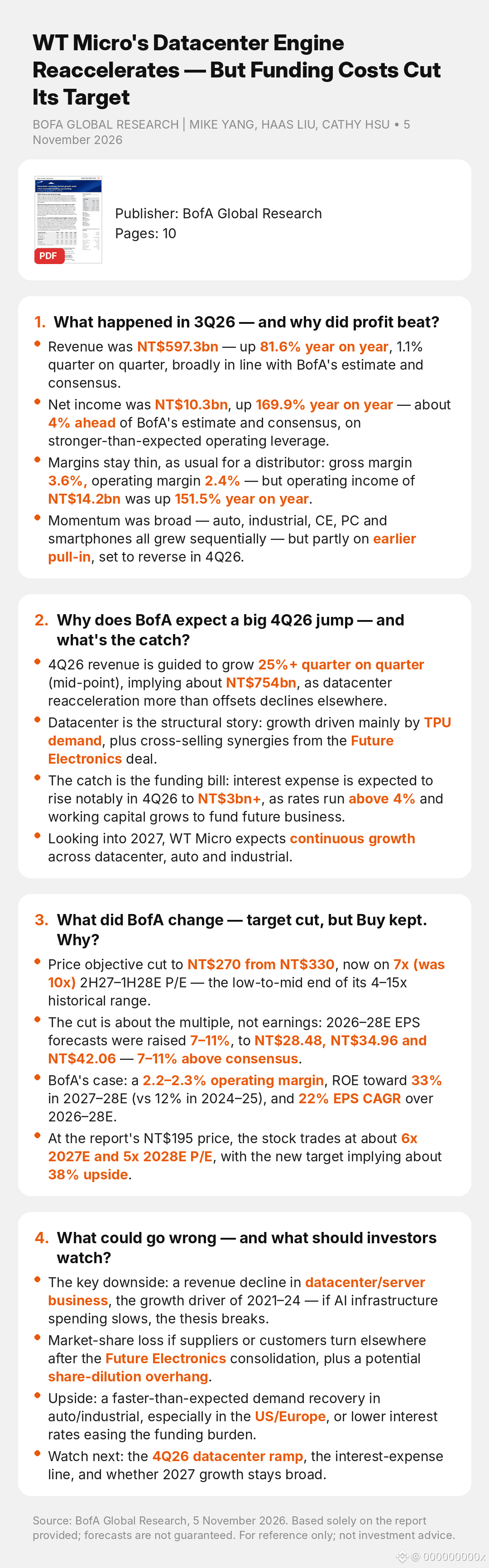
1. What happened in 3Q26 — and why did profit beat?
• Revenue was NT$597.3bn — up 81.6% year on year, 1.1% quarter on quarter, broadly in line with BofA's estimate and consensus.
• Net income was NT$10.3bn, up 169.9% year on year — about 4% ahead of BofA's estimate and consensus, on stronger-than-expected operating leverage.
• Margins stay thin, as usual for a distributor: gross margin 3.6%, operating margin 2.4% — but operating income of NT$14.2bn was up 151.5% year on year.
• Momentum was broad — auto, industrial, CE, PC and smartphones all grew sequentially — but partly on earlier pull-in, set to reverse in 4Q26.
2. Why does BofA expect a big 4Q26 jump — and what's the catch?
• 4Q26 revenue is guided to grow 25%+ quarter on quarter (mid-point), implying about NT$754bn, as datacenter reacceleration more than offsets declines elsewhere.
• Datacenter is the structural story: growth driven mainly by TPU demand, plus cross-selling synergies from the Future Electronics deal.
• The catch is the funding bill: interest expense is expected to rise notably in 4Q26 to NT$3bn+, as rates run above 4% and working capital grows to fund future business.
• Looking into 2027, WT Micro expects continuous growth across datacenter, auto and industrial.
3. What did BofA change — target cut, but Buy kept. Why?
• Price objective cut to NT$270 from NT$330, now on 7x (was 10x) 2H27–1H28E P/E — the low-to-mid end of its 4–15x historical range.
• The cut is about the multiple, not earnings: 2026–28E EPS forecasts were raised 7–11%, to NT$28.48, NT$34.96 and NT$42.06 — 7–11% above consensus.
• BofA's case: a 2.2–2.3% operating margin, ROE toward 33% in 2027–28E (vs 12% in 2024–25), and 22% EPS CAGR over 2026–28E.
• At the report's NT$195 price, the stock trades at about 6x 2027E and 5x 2028E P/E, with the new target implying about 38% upside.
4. What could go wrong — and what should investors watch?
• The key downside: a revenue decline in datacenter/server business, the growth driver of 2021–24 — if AI infrastructure spending slows, the thesis breaks.
• Market-share loss if suppliers or customers turn elsewhere after the Future Electronics consolidation, plus a potential share-dilution overhang.
• Upside: a faster-than-expected demand recovery in auto/industrial, especially in the US/Europe, or lower interest rates easing the funding burden.
• Watch next: the 4Q26 datacenter ramp, the interest-expense line, and whether 2027 growth stays broad.
Since the report (20 Nov): AI hardware sold off sharply — Nvidia -14%, Nasdaq -5.3% in a day — a reminder that the datacenter chain is not immune to valuation resets. (Market reports, 21 Nov 2026.)
#DataCenters #Semiconductors #AI #Taiwan #TPU
Source: BofA Global Research, 5 November 2026. Based solely on the report provided; forecasts are not guaranteed. For reference only; not investment advice.
Read the full breakdown on Unhidea: https://unhidea.com/en/articles/research-6567fd40fc4e4224941a1c18332915fc-en
Visit unhidea.com for more of the latest sell-side research interpretations.
WT Micro's Datacenter Engine Reaccelerates — But Funding Costs Cut Its Target
WT Micro's Datacenter Engine Reaccelerates — But Funding Costs Cut Its Target
$3036.TW
BOFA GLOBAL RESEARCH | MIKE YANG, HAAS LIU, CATHY HSU • 5 November 2026
1. What happened in 3Q26 — and why did profit beat?
• Revenue was NT$597.3bn — up 81.6% year on year, 1.1% quarter on quarter, broadly in line with BofA's estimate and consensus.
• Net income was NT$10.3bn, up 169.9% year on year — about 4% ahead of BofA's estimate and consensus, on stronger-than-expected operating leverage.
• Margins stay thin, as usual for a distributor: gross margin 3.6%, operating margin 2.4% — but operating income of NT$14.2bn was up 151.5% year on year.
• Momentum was broad — auto, industrial, CE, PC and smartphones all grew sequentially — but partly on earlier pull-in, set to reverse in 4Q26.
2. Why does BofA expect a big 4Q26 jump — and what's the catch?
• 4Q26 revenue is guided to grow 25%+ quarter on quarter (mid-point), implying about NT$754bn, as datacenter reacceleration more than offsets declines elsewhere.
• Datacenter is the structural story: growth driven mainly by TPU demand, plus cross-selling synergies from the Future Electronics deal.
• The catch is the funding bill: interest expense is expected to rise notably in 4Q26 to NT$3bn+, as rates run above 4% and working capital grows to fund future business.
• Looking into 2027, WT Micro expects continuous growth across datacenter, auto and industrial.
3. What did BofA change — target cut, but Buy kept. Why?
• Price objective cut to NT$270 from NT$330, now on 7x (was 10x) 2H27–1H28E P/E — the low-to-mid end of its 4–15x historical range.
• The cut is about the multiple, not earnings: 2026–28E EPS forecasts were raised 7–11%, to NT$28.48, NT$34.96 and NT$42.06 — 7–11% above consensus.
• BofA's case: a 2.2–2.3% operating margin, ROE toward 33% in 2027–28E (vs 12% in 2024–25), and 22% EPS CAGR over 2026–28E.
• At the report's NT$195 price, the stock trades at about 6x 2027E and 5x 2028E P/E, with the new target implying about 38% upside.
4. What could go wrong — and what should investors watch?
• The key downside: a revenue decline in datacenter/server business, the growth driver of 2021–24 — if AI infrastructure spending slows, the thesis breaks.
• Market-share loss if suppliers or customers turn elsewhere after the Future Electronics consolidation, plus a potential share-dilution overhang.
• Upside: a faster-than-expected demand recovery in auto/industrial, especially in the US/Europe, or lower interest rates easing the funding burden.
• Watch next: the 4Q26 datacenter ramp, the interest-expense line, and whether 2027 growth stays broad.
Since the report (20 Nov): AI hardware sold off sharply — Nvidia -14%, Nasdaq -5.3% in a day — a reminder that the datacenter chain is not immune to valuation resets. (Market reports, 21 Nov 2026.)
#DataCenters #Semiconductors #AI #Taiwan #TPU
Source: BofA Global Research, 5 November 2026. Based solely on the report provided; forecasts are not guaranteed. For reference only; not investment advice.
Read the full breakdown on Unhidea: https://unhidea.com/en/articles/research-6567fd40fc4e4224941a1c18332915fc-en
Visit unhidea.com for more of the latest sell-side research interpretations.
44

#CoreWeave : AI Demand Is Strong, Financing Is the Question 💸
CoreWeave fell about 6% as investors focused less on AI demand and more on whether independent data-center operators can keep funding an expensive buildout. Unlike hyperscalers, CoreWeave must continually raise capital for GPUs, land, power, and data centers—making it highly sensitive to credit conditions and investor confidence.
The company reported $3.66 billion in Q3 revenue, up 168% year over year, and a $132.5 billion backlog. But its debt rose to roughly $47 billion by September 30, while Q3 interest expense reached $846 million; management now expects $37–39 billion of 2026 capex.
CoreWeave’s bull case rests on long-term customer contracts, prepayments, and secured financing -not merely GPU demand. If those commitments keep funding expansion, the growth story can hold; if borrowing costs stay elevated or utilization disappoints, the market may keep discounting its aggressive capacity plans.
$CRWDB $CRWD $NVDAB #CRWV #AIStocks #DataCenters #CoinVahini
76

Riot and TeraWulf: The discount Bernstein sees in AI data centersThe discount at which Riot and TeraWulf trade applies not only to $BTC mining itself, but also to the value of the AI data centers associated with them ⚖️
This is the point Bernstein believes is worth paying attention to in the two stocks.
First, Bernstein sees room for upside in Riot and TeraWulf, because the market values them below the implied value of their data centers.
Riot and TeraWulf: The discount Bernstein sees in AI data centers
The discount at which Riot and TeraWulf trade applies not only to $BTC mining itself, but also to the value of the AI data centers associated with them ⚖️
This is the point Bernstein believes is worth paying attention to in the two stocks.
First, Bernstein sees room for upside in Riot and TeraWulf, because the market values them below the implied value of their data centers.
This is the point Bernstein believes is worth paying attention to in the two stocks.
First, Bernstein sees room for upside in Riot and TeraWulf, because the market values them below the implied value of their data centers.
17

🚨 JUST 400 US DATA CENTERS USE MORE ELECTRICITY THAN MICHIGAN
📰 WHAT HAPPENED?
New Harvard research shows that data-center power demand is outstripping states—and that doesn’t even include facilities with off-grid gas plants.
📊 IMPACT ON TECHNOLOGY
The news highlights the growing demand for computing capacity and the importance of chips and data centers in sustaining the expansion of new technologies.
🔎 Source: WIRED
🤔 💬 Will computing capacity be one of the main limits to the growth of these technologies?
#Semiconductors #DataCenters #Crypto_Marker #News
11

·
--
Bearish
AI crypto crowd, keep an eye on this one.
A Republican senator wants to hit PAUSE on new AI data centers while lawmakers in Congress are pushing to build more. If that fight slows down investment, AI tokens could catch some heat too. I’d watch the projects that actually sell GPU power and see whether demand holds up.
#CoreWeaveJumps10%On168%RevenueGrowth #AICrypto #DataCenters

1
393

·
--
#US Data Center Rules May Constrain AI Expansion
🚨 **AI BOOM UNDER PRESSURE? US DATA CENTER RULES COULD CHANGE THE GAME!**
The AI revolution needs more than powerful chips. It needs enormous amounts of electricity, land, water, and infrastructure.
And now, the US is facing growing pressure to regulate data center expansion.
Here's why this matters:
⚡ **1. Electricity Crisis**
AI data centers are consuming massive amounts of power, raising concerns about electricity prices for ordinary households.
🏛️ **2. Government Pressure**
New political momentum is building behind stricter AI and data center regulations.
💰 **3. Rising Costs**
Developers may face additional expenses for electricity, grid infrastructure, environmental compliance, and permits.
🤖 **4. AI Expansion at Risk?**
More restrictions could delay new facilities and increase the cost of building AI infrastructure.
📈 **5. The Bigger Opportunity**
Energy companies, power infrastructure providers, chipmakers, and data center developers could all be affected.
🔥 **MY TAKE:**
The next big AI bottleneck might not be computing power or software.
It might be ELECTRICITY.
The companies that can secure affordable, reliable energy may have a major competitive advantage.
💬 **What do you think?**
Will stricter US regulations slow down the AI revolution, or will they create a more sustainable industry?
#AI #artificialintelligence #Bitcoin #Crypto #DataCenters
76

·
--
Bearish
🚨 A BITCOIN MINER IS NOW MAKING 7 TIMES MORE REVENUE FROM AI THAN FROM BITCOIN MINING! 🤯
The crypto industry is changing, and one company is showing just how big that change could become.
IREN, a company known for Bitcoin mining, has reported a major increase in its AI Cloud business.
According to its latest quarterly results released on November 5, the numbers are surprising.
📊 HERE ARE THE NUMBERS:
🔹 AI Cloud Revenue: $200 MILLION, up 182% from the previous quarter.
🔹 Bitcoin Mining Revenue: $28 MILLION, down from $67 million in the previous quarter.
🔹 Total Revenue: $228 MILLION, up 66% from the previous quarter.
🔹 Net Loss: $263 MILLION.
That means IREN generated around 7 times more revenue from AI Cloud than from Bitcoin mining during the latest quarter.
BUT THERE IS A CATCH...
IREN is investing heavily in AI infrastructure.
The company plans around $15 BILLION in additional capital expenditure during the rest of its financial year.
It also delayed its target of reaching more than $4 billion in annualized revenue capacity to January 2027, with a possible extension into February, following requested network design changes for its Microsoft project and supplier delays.
🌍 WHY SHOULD CRYPTO INVESTORS CARE?
Bitcoin mining companies already have important resources:
🔸 Large data centers.
🔸 Access to electricity.
🔸 Land and computing infrastructure.
🔸 Experience operating large-scale hardware.
These resources can also support AI computing.
This could create a new business opportunity for some mining companies, but it also requires huge investment and comes with execution risks.
MY TAKE:
The competition for computing power is becoming bigger than just cryptocurrency.
AI companies need computing infrastructure, and some Bitcoin miners are trying to become part of that market.
👀 HERE IS THE BIG QUESTION:
Will Bitcoin mining companies eventually make more money from AI than from mining Bitcoin?
will Bitcoin mining remain their main business?
#CryptoNews #AICloud #DataCenters #NVIDIA
$BTC
117


#US Data Center Rules May Constrain AI Expansion
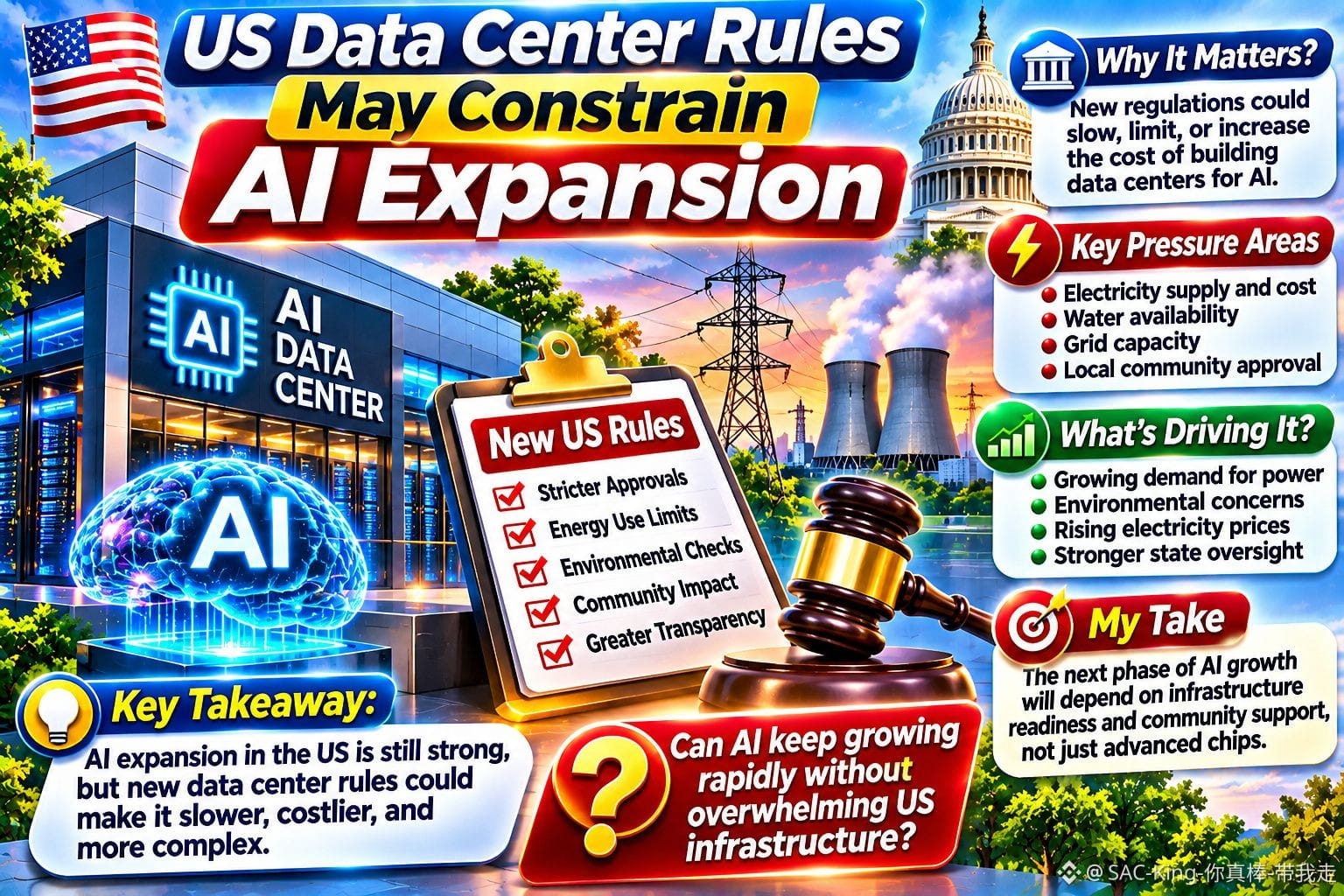
🏗️ ⚡ US Data Center Rules May Constrain AI Expansion: Is the AI Boom Hitting a Wall?
Building smarter AI is one challenge. Finding enough electricity, water and public support to run it is becoming another.
Across the United States, data center developers are facing growing regulatory pressure. Local communities and policymakers are demanding greater transparency, environmental safeguards and protection against rising electricity costs.
The November midterm results have added momentum to this debate. Several newly elected state leaders support tighter oversight, while local voters have increasingly backed restrictions on data center projects.
The real bottleneck may not be advanced chips. It could be grid connections, energy infrastructure, water availability and construction approvals.
My take: AI expansion is entering a new phase. Companies must prove not only that they can build powerful computing facilities, but that communities can afford and support them.
Watch electricity prices, permitting decisions, grid capacity and hyperscaler capital spending. These could reveal whether AI infrastructure growth is slowing or simply becoming more expensive.
The next AI race may be decided by power availability, not computing power alone.
Can AI grow fast enough without overwhelming local infrastructure?
Educational purposes only. Not financial advice.
#ArtificialIntelligence #DataCenters #GrowWithSAC $CYBER $IRENB $ACT
2
371

·
--
🤖 New regulations for data centers in the U.S. could become a challenge for the rapid expansion of AI.
The growth of artificial intelligence depends on enormous computing, energy, and semiconductor infrastructure. If regulations on energy consumption, environmental impact, or the development of new data centers become stricter, the pace of AI companies’ expansion could slow down.
⚡ Data centers are consuming more and more energy
🏗️ New regulations could delay expansion projects
🖥️ Companies like Microsoft, Google, Amazon, and Meta depend on this infrastructure
📈 Demand for AI continues to grow globally
However, some analysts believe these rules could drive more efficient and sustainable technologies, strengthening the sector in the long term.
💬 Do you think regulations on data centers will limit AI growth or drive more innovative and efficient infrastructure?
#AI #ArtificialIntelligence #DataCenters #Technology #Microsoft #Google #Amazon #Meta #Innovation #BinanceSquare #TechNews #Investing 🚀
11

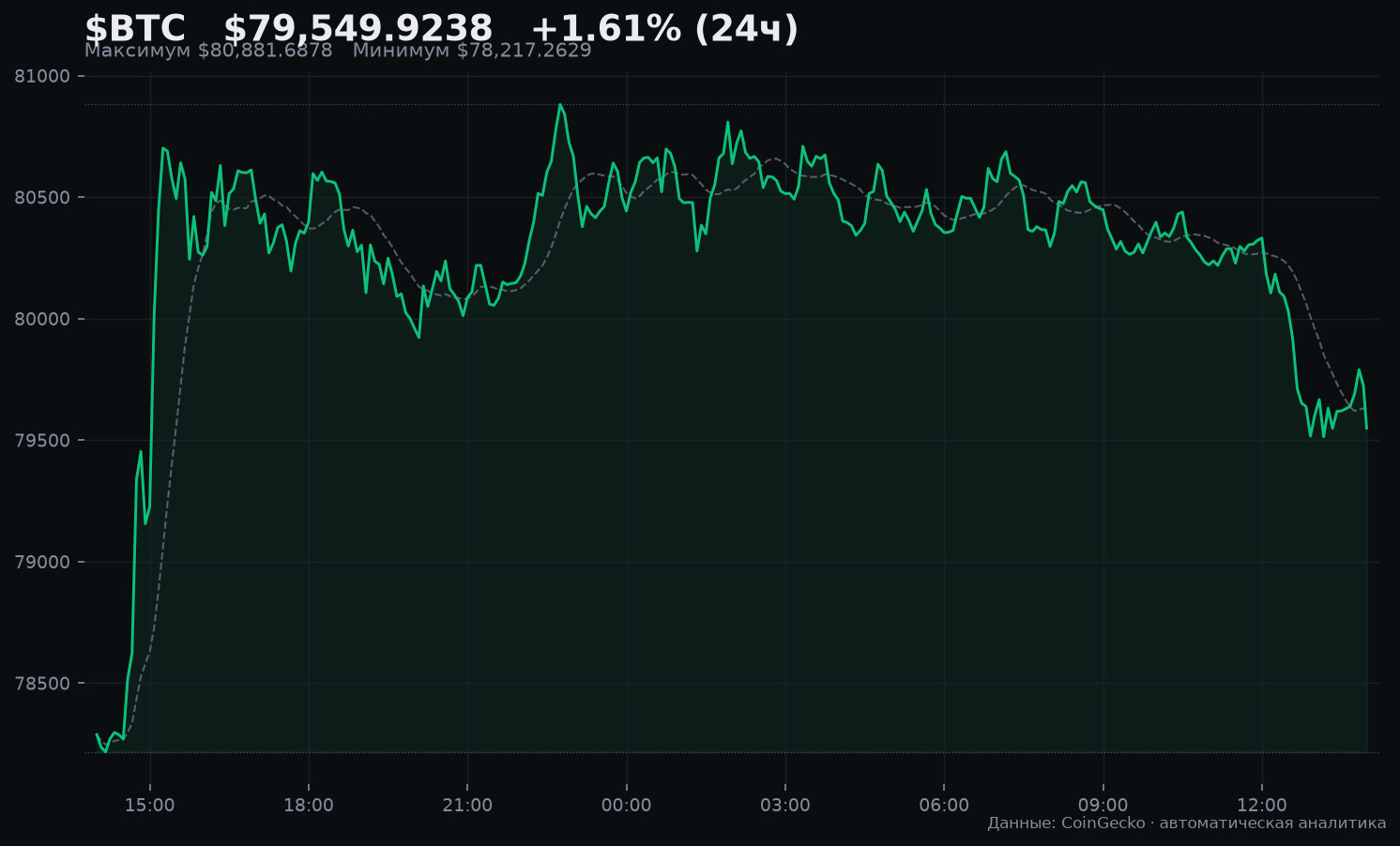
Texas was the epicenter of AI data center construction—but now that’s in question. Regulatory and infrastructure constraints are slowing expansion, and the market is taking notice: pressure on AI tokens is intensifying. Less computing capacity means weaker demand for decentralized rendering and training networks. BTC $79,593 (+1.69%).
$BTC $RENDER #AI #DataCenters
$BTC $RENDER #AI #DataCenters
85

·
--
Article
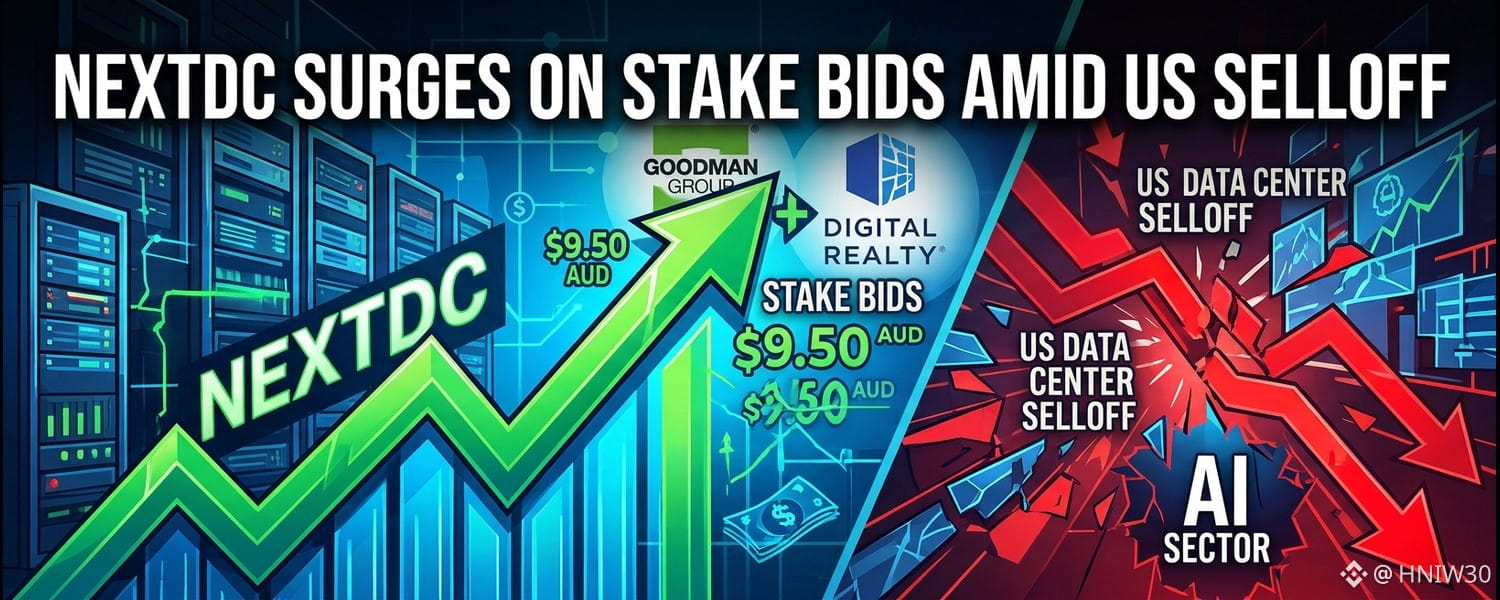
NextDC Surges on Stake Bids Amid US SelloffShares of Australian data center operator NextDC surged more than 40 percent Thursday morning after Goodman Group and Digital Realty moved to acquire stakes in the company. The two entities sought to purchase equity of up to 9.9 percent through an aftermarket bookbuild conducted Wednesday. NextDC confirmed the details in a regulatory filing, noting that the proposed share purchase was priced at 9.50 Australian dollars apiece following the initial approach from the prospective buyers.
The board of NextDC officially labeled the acquisition attempt opportunistic, according to the regulatory filing released on the same day. Leadership pointed out that the move arrived two weeks after the company disclosed an operational setback involving a power supply delay at its M3 Melbourne data center. Following that delay, NextDC had revised its fiscal 2027 guidance, creating the specific operational backdrop against which Goodman Group and Digital Realty launched their share purchase.
NextDC stated in its filing that it remained unaware of the outcome of the aftermarket share purchase. Meanwhile, Goodman Group and Digital Realty informed investors that they held no current intention of making a formal takeover bid for the Australian data center operator. However, both companies explicitly reserved the right to pursue a takeover bid in the future, maintaining their strategic flexibility after seeking the initial stakes of up to 9.9 percent at 9.50 Australian dollars per share.
The substantial rally in NextDC shares stood in sharp contrast to the performance of United States data center equities overnight. While the Australian operator experienced significant share price gains Thursday, American data center stocks endured a notable sell-off during the Wednesday trading session. That overnight weakness across United States markets highlighted a diverging performance pattern between the Australian company and its North American digital infrastructure peers.
Market losses in the United States were led by notable declines among key data center operators during the Wednesday session. Shares of CoreWeave dropped by about 9 percent, while shares of Iren fell roughly 11.2 percent over the same trading period. Those steep share price declines reflected broader selling pressure across the United States data center sector, contrasting sharply with the buying interest that lifted NextDC shares by more than 42 percent in Australia on Thursday.
The sell-off in United States data center stocks followed sweeping Democratic victories in the U.S. midterm elections. Those political results heightened market concerns over tighter oversight and potential restrictions on data center development. Investors feared that increased regulatory scrutiny following the election victories could slow down the artificial intelligence infrastructure buildout, driving the overnight retreat in American stocks even as NextDC surged on takeover interest.
#DataCenters
#MergersAndAcquisitions
NextDC Surges on Stake Bids Amid US Selloff
Shares of Australian data center operator NextDC surged more than 40 percent Thursday morning after Goodman Group and Digital Realty moved to acquire stakes in the company. The two entities sought to purchase equity of up to 9.9 percent through an aftermarket bookbuild conducted Wednesday. NextDC confirmed the details in a regulatory filing, noting that the proposed share purchase was priced at 9.50 Australian dollars apiece following the initial approach from the prospective buyers.
The board of NextDC officially labeled the acquisition attempt opportunistic, according to the regulatory filing released on the same day. Leadership pointed out that the move arrived two weeks after the company disclosed an operational setback involving a power supply delay at its M3 Melbourne data center. Following that delay, NextDC had revised its fiscal 2027 guidance, creating the specific operational backdrop against which Goodman Group and Digital Realty launched their share purchase.
NextDC stated in its filing that it remained unaware of the outcome of the aftermarket share purchase. Meanwhile, Goodman Group and Digital Realty informed investors that they held no current intention of making a formal takeover bid for the Australian data center operator. However, both companies explicitly reserved the right to pursue a takeover bid in the future, maintaining their strategic flexibility after seeking the initial stakes of up to 9.9 percent at 9.50 Australian dollars per share.
The substantial rally in NextDC shares stood in sharp contrast to the performance of United States data center equities overnight. While the Australian operator experienced significant share price gains Thursday, American data center stocks endured a notable sell-off during the Wednesday trading session. That overnight weakness across United States markets highlighted a diverging performance pattern between the Australian company and its North American digital infrastructure peers.
Market losses in the United States were led by notable declines among key data center operators during the Wednesday session. Shares of CoreWeave dropped by about 9 percent, while shares of Iren fell roughly 11.2 percent over the same trading period. Those steep share price declines reflected broader selling pressure across the United States data center sector, contrasting sharply with the buying interest that lifted NextDC shares by more than 42 percent in Australia on Thursday.
The sell-off in United States data center stocks followed sweeping Democratic victories in the U.S. midterm elections. Those political results heightened market concerns over tighter oversight and potential restrictions on data center development. Investors feared that increased regulatory scrutiny following the election victories could slow down the artificial intelligence infrastructure buildout, driving the overnight retreat in American stocks even as NextDC surged on takeover interest.
#DataCenters
#MergersAndAcquisitions
164

·
--
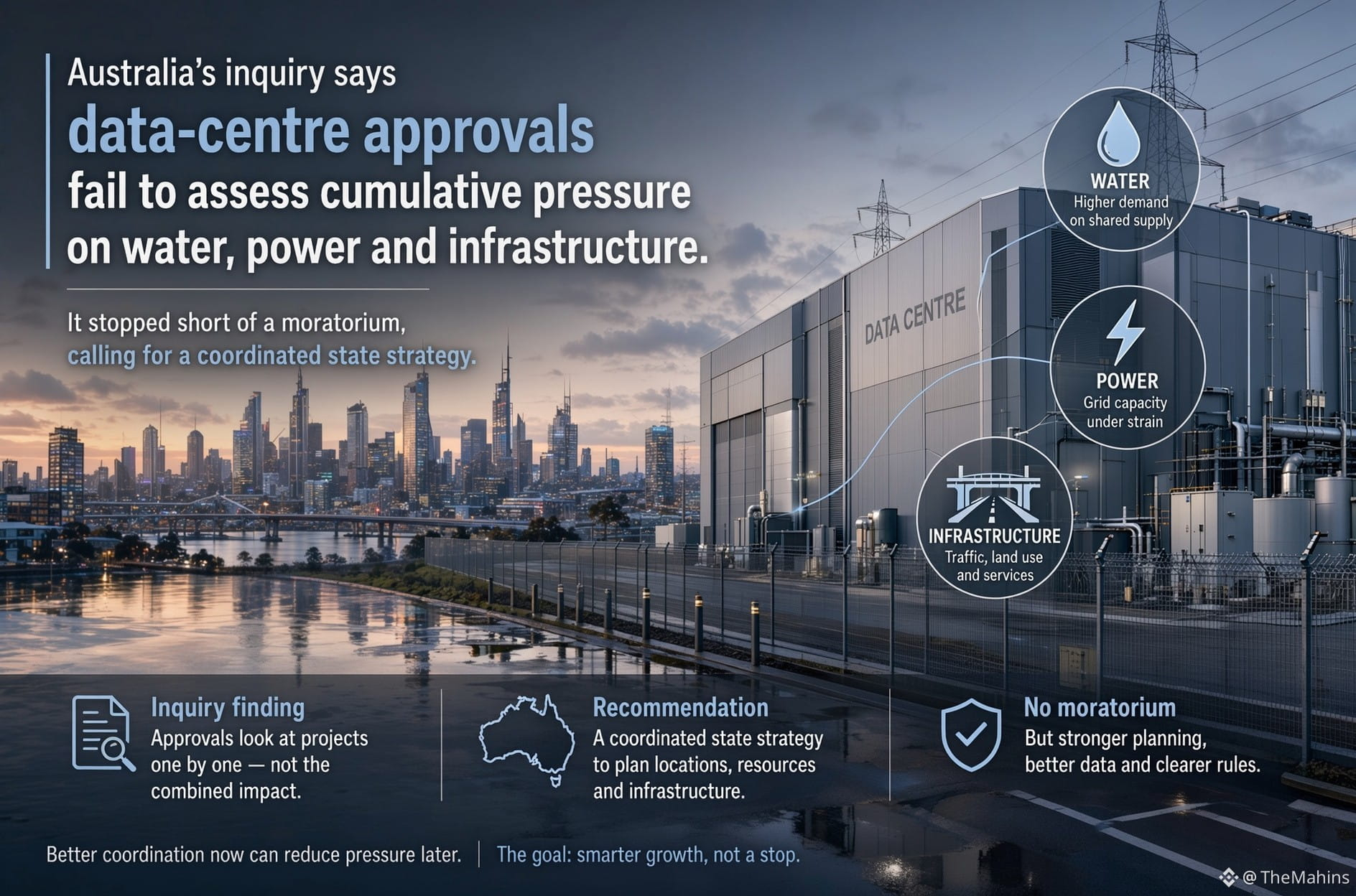
Australia’s inquiry says data-centre approvals fail to assess cumulative pressure on water, power and infrastructure. It stopped short of a moratorium, calling for a coordinated state strategy. $NVDA $AMD $MSFT #Tech #DataCenters #AI #Cloud #Energy Plan needed
Australia’s inquiry says data-centre approvals fail to assess cumulative pressure on water, power and infrastructure. It stopped short of a moratorium, calling for a coordinated state strategy. $NVDA $AMD $MSFT #Tech #DataCenters #AI #Cloud #Energy Plan needed
231

Article
The AI boom and data centers in the United States: Economic driver or threat to the traditional market? 🏗️⚡
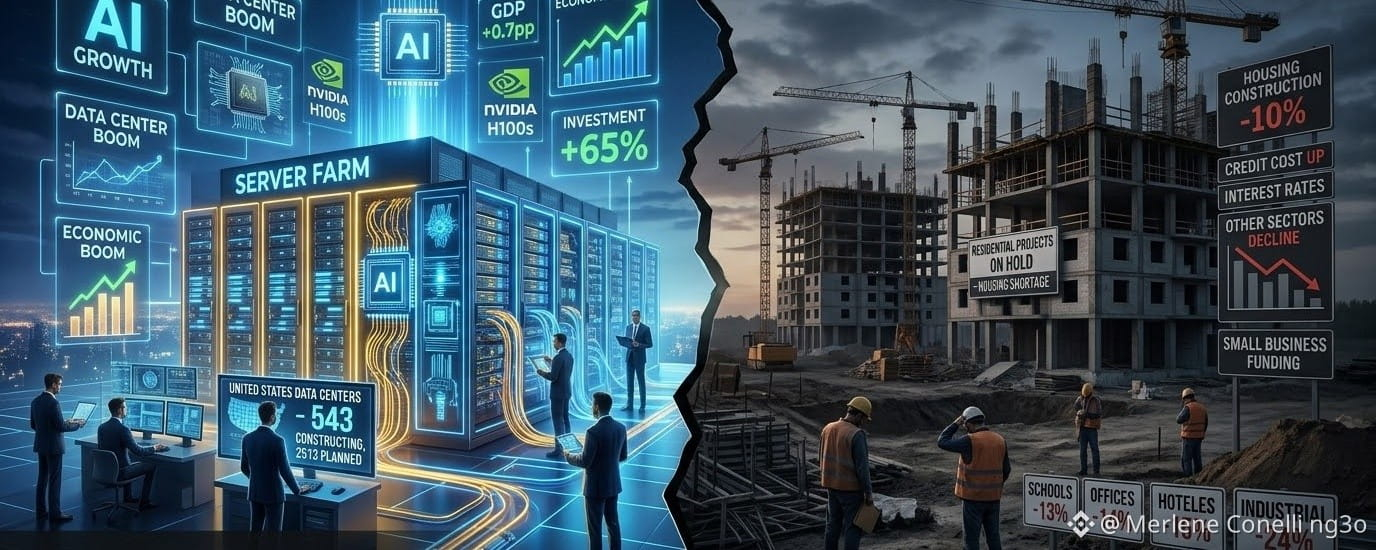
Data center construction in the United States has reached unprecedented levels. In 2026 alone, tech giants (Oracle, Microsoft, Amazon, Meta, Alphabet) planned to spend around $800 billion on capital expenditures. According to The Atlantic, 543 facilities are already under construction in the country, with another 2,513 in the planning stages.
But in macroeconomics, every rapid expansion comes at a cost. Analysts are increasingly talking about the crowding-out effect.
But in macroeconomics, every rapid expansion comes at a cost. Analysts are increasingly talking about the crowding-out effect.
5
390

·
--
🏗️ AI is consuming the US economy: what do crypto and mining have to do with it?
The Atlantic published an interesting analysis: the AI infrastructure boom in the US is boosting the economy, but creating a massive “crowding-out effect.”
The scale:
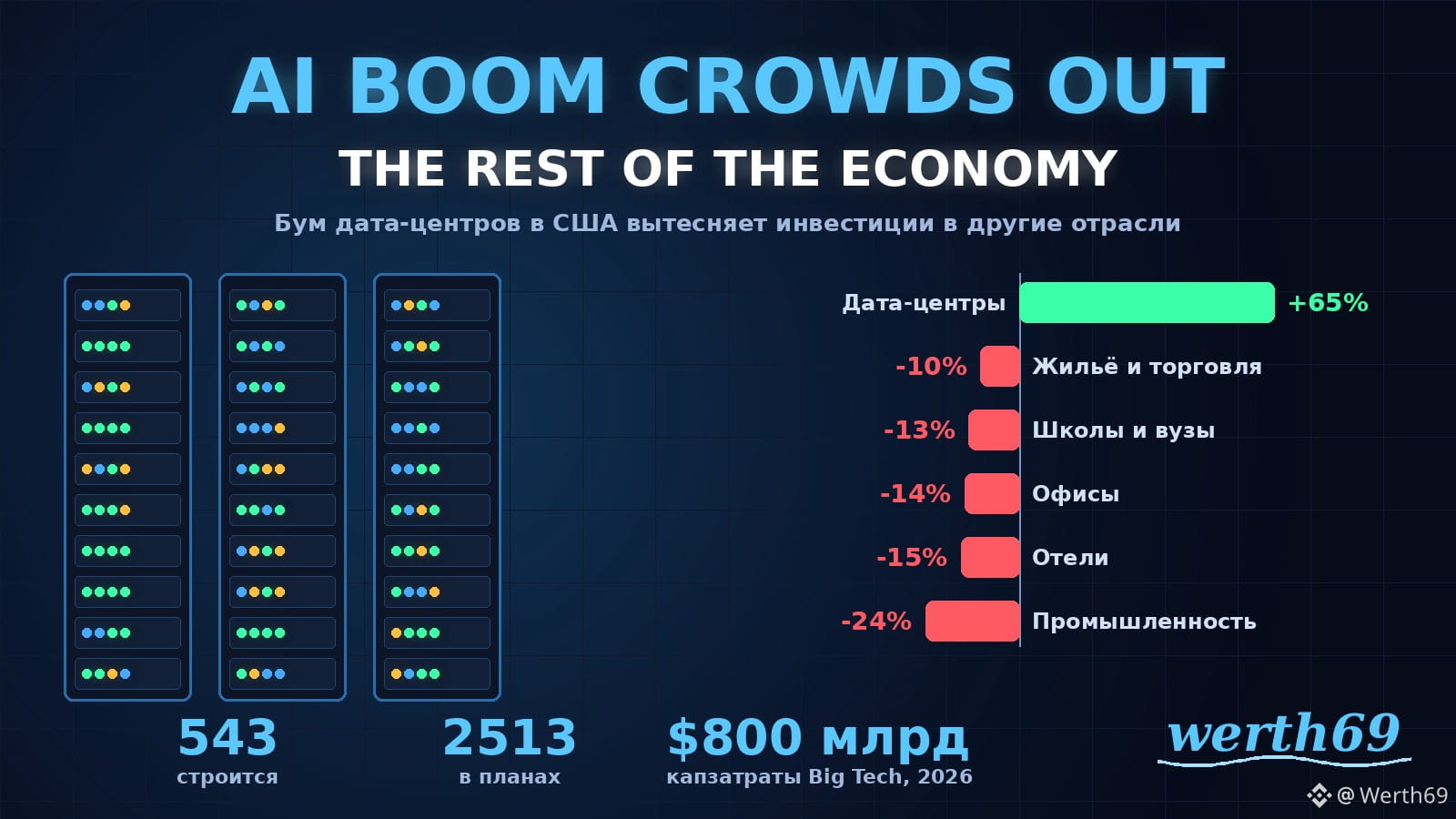
543 data centers are being built in the US, with another 2,513 planned. Oracle, Microsoft, Amazon, Meta, and Alphabet are ready to spend around $800 billion in capital expenditures in 2026 (8 times more than 10 years ago).
The flip side (year over year):
Data center construction grew by +65%. But at the same time:
🔻 Manufacturing: -24%
🔻 Hotels and resorts: -15%
🔻 Offices: -14%
🔻 Housing and retail: -10%
AI infrastructure is consuming credit, land, and materials.
What does crypto have to do with it?
Economist Ryan Cummings sees the displacement of mining businesses, driven by rising costs, as a positive effect. Competition for electricity and resources is increasing.
If AI fails to deliver the expected productivity boost, this bubble could burst. For now, capital is flowing into data centers rather than risky assets.
Are we in for a stock market correction, or will AI save the economy? 👇
#Aİ #Macro #cryptotrading #DataCenters
$BTC
{future}(BTCUSDT)
🏗️ AI is consuming the US economy: what do crypto and mining have to do with it?
The Atlantic published an interesting analysis: the AI infrastructure boom in the US is boosting the economy, but creating a massive “crowding-out effect.”
The scale:
543 data centers are being built in the US, with another 2,513 planned. Oracle, Microsoft, Amazon, Meta, and Alphabet are ready to spend around $800 billion in capital expenditures in 2026 (8 times more than 10 years ago).
The flip side (year over year):
Data center construction grew by +65%. But at the same time:
🔻 Manufacturing: -24%
🔻 Hotels and resorts: -15%
🔻 Offices: -14%
🔻 Housing and retail: -10%
AI infrastructure is consuming credit, land, and materials.
What does crypto have to do with it?
Economist Ryan Cummings sees the displacement of mining businesses, driven by rising costs, as a positive effect. Competition for electricity and resources is increasing.
If AI fails to deliver the expected productivity boost, this bubble could burst. For now, capital is flowing into data centers rather than risky assets.
Are we in for a stock market correction, or will AI save the economy? 👇
#Aİ #Macro #cryptotrading #DataCenters
$BTC
793

Verified
#earningsseason
🚨 Celestica Faces $5.4 Billion Revenue Test as AI Infrastructure Demand Takes Center Stage!
Celestica ($CLS), a major supplier of advanced hardware and manufacturing solutions, is scheduled to report its third-quarter 2026 earnings after today's market close.
Analysts expect approximately $5.39 billion in quarterly revenue and earnings of $2.94 per share.
🚀 The biggest story is artificial intelligence.
Celestica provides hardware and technology solutions used in data centers and networking infrastructure, making its performance particularly relevant as major technology companies continue expanding AI computing capacity.
Investors will closely examine demand for high-performance networking equipment, profitability and management's expectations for the coming quarters.
⚠️ The key challenge is whether strong AI infrastructure demand can continue supporting growth while companies manage rising costs and increasingly demanding valuations.
Celestica's earnings could offer another important signal about spending across the AI hardware supply chain.
#artificialintelligence #DataCenters #TechStocks

2.7k
🚨 JENSEN HUANG’S VISION FOR EUROPE RUNS ON PLUG-IN DATA CENTERS
📰 WHAT HAPPENED?
At Nvidia’s GTC in Berlin, Huang unveiled the company’s new plug-in data center—the DSX Pod—as the key to unlocking Europe’s AI infrastructure lag. Oh, and autonomous humanoid robotics.
📊 TECHNOLOGY IMPACT
The news highlights the growing demand for computing capacity and the importance of chips and data centers in supporting the expansion of new technologies.
🔎 Source: WIRED AI
🤔 💬 Will computing capacity be one of the main limits to the growth of these technologies?
#Semiconductors #DataCenters #Crypto_Marker #News

75
Verified
#earningsseason
🚨 Western Digital Beats Wall Street Estimates as AI Storage Demand Surges!
Western Digital ($WDCB ) reported strong fiscal first-quarter results, with revenue jumping 55% year over year to approximately $4.4 billion.
Adjusted earnings reached $4.64 per share, beating analysts' expectations of approximately $4.11.
The company also reported a major improvement in profitability, with adjusted gross margins reaching 58.1%, compared with 43.9% a year earlier.
🚀 The biggest growth driver: AI data centers.
As artificial intelligence applications generate enormous amounts of information, demand for high-capacity data storage continues to expand.
Western Digital expects approximately $5.1 billion in revenue next quarter, with gross margins between 60% and 61%.
However, despite strong earnings and optimistic guidance, $WDC shares declined approximately 2.5% on Friday.
Investors remain concerned about production costs, competition and whether the AI-driven storage boom can sustain its current pace.
Strong results are no longer enough. Wall Street wants proof that AI demand can support long-term profitability.
#AI #TechStocks #DataCenters

1.1k

·
--
AI infrastructure is much more than GPUs.
It requires networking, cooling, electricity and data centres.
Intelligence at scale depends on physical infrastructure.
#AIInfrastructure #DataCenters #Semiconductors #artificialintelligence
AI infrastructure is much more than GPUs.
It requires networking, cooling, electricity and data centres.
Intelligence at scale depends on physical infrastructure.
#AIInfrastructure #DataCenters #Semiconductors #artificialintelligence
It requires networking, cooling, electricity and data centres.
Intelligence at scale depends on physical infrastructure.
#AIInfrastructure #DataCenters #Semiconductors #artificialintelligence
1
79

⚡️ U.S. states pull incentives for data centers due to energy concerns
Several U.S. states have withdrawn incentives offered to data centers amid growing concerns about energy consumption and rising costs. This decision may affect technology companies' expansion plans and their energy-related strategies.
━━━━━━━━━━━━━━
📊 Impact: 📈 High
🏷️ OTHER
#DataCenters #EnergyConsumption #TechNews #USRegulation
📰 Source: cryptobriefing.com
21

·
--
U.S. former President Donald Trump has recently made comments on his social media platform, Truth Social, sharply criticizing the various warnings currently being issued about artificial intelligence and the construction of data centers. He directly likened voices that claim “AI will destroy the world” or that “data centers will disrupt residents’ lives” to past predictions about climate change, calling them a “scam,” and accusing the motives behind such remarks of not aligning with U.S. interests.
This statement has drawn market attention partly because global tech giants are currently moving ahead with large-scale investments in computing power infrastructure. Issues related to energy consumption and data center siting have sparked policy and public-opinion debates in many places. As one of the key figures shaping the direction of next-step policy, Trump’s move sends a strong signal of support for domestic AI infrastructure buildout and the expansion of computing power, attempting to clear obstacles at the local level and regulatory resistance that hinder the rollout of computing capacity.
From the perspective of traditional financial markets, this stance that favors the expansion of computing power provides some sentiment support for U.S. stock technology sectors, the semiconductor supply chain, and power and energy support companies. Improved expectations for policy may help reduce policy uncertainty for mega-cap firms when making heavy-asset investments in computing power, but it could also trigger further debate among environmental regulators about the long-term balance between energy supply and demand.
As for the crypto market, AI-themed tokens and the decentralized computing (DePIN) track are often closely linked to broader macro AI narratives. If, in the future, the construction of computing power infrastructure receives a more permissive policy environment, not only could traditional technology capital accelerate its deployments, but on-chain distributed computing and AI infrastructure projects may also attract greater attention. However, the pace of real-world implementation and market capital rotation still need to be monitored continuously. $BTC
#ArtificialIntelligence #DataCenters #USPolitics
20
Log in to explore more content
Join global crypto users on Binance Square
⚡️ Get latest and useful information about crypto.
💬 Trusted by the world’s largest crypto exchange.
👍 Discover real insights from verified creators.
Email / Phone number
Trending Topics
1
#NvidiaLoses$2.7TrillionInMonthAndAHalf
31,852 views
167 Discussing
2
#CanBTCReboundAfterFallingBelow60K?
885,652 views
3,275 Discussing
3
#GlobalStocksFaceLongestLosingStreakSince2023
334,416 views
2,188 Discussing
4
#BlackRockIBITPostsRecord$541MSingleDayOutflow
44,222 views
121 Discussing
5
#AnthropicPlungesTowardIPOPriceonDay2
172,904 views
1,343 Discussing
6
#TwentyOneCapitalAdds172.25BTC
81,154 views
776 Discussing
7
#HKBillWouldExcludeTokenizedDepositsFromVirtualAssets
11,937 views
57 Discussing
8
#BNBDropsBelow540USDTWith8.46%DailyDecline
91,486 views
732 Discussing
9
#HKBillProposesHK$100KFineForUnauthorizedCryptoTitles
3,150 views
29 Discussing
10
#BitMineFaces$10.1BUnrealizedETHLoss
6,324 views
32 Discussing