
#dataprotection
dataprotection
62,058 views
84 Discussing
Hot
Latest

·
--
Mac Clipboard Tool Used for Data Theft
A new macOS clipboard management application has been identified using deceptive tactics to capture sensitive user information. Security analysts warn that the software mimics legitimate utility tools designed for cross-device clipboard synchronization on Apple platforms.
The application has been shown to intercept credential data, wallet access keys, and multi-factor authentication tokens. Once deployed, the software operates discreetly while transmitting collected information to external servers managed by the developers.
This incident highlights emerging risks for Apple ecosystem users who may assume greater protection from the platform's review processes. The clipboard interception method proves particularly effective as users typically trust applications offering convenience features without thorough vetting.
Security specialists advise verifying application sources, implementing multi-factor authentication across accounts, and utilizing hardware-based security keys for critical operations. Could clipboard-focused threats become a persistent challenge for macOS users, or is this a contained case? Drop your take below. 👇
#MacOSecurity #DataProtection #CryptoSafety
Mac Clipboard Tool Used for Data Theft
A new macOS clipboard management application has been identified using deceptive tactics to capture sensitive user information. Security analysts warn that the software mimics legitimate utility tools designed for cross-device clipboard synchronization on Apple platforms.
The application has been shown to intercept credential data, wallet access keys, and multi-factor authentication tokens. Once deployed, the software operates discreetly while transmitting collected information to external servers managed by the developers.
This incident highlights emerging risks for Apple ecosystem users who may assume greater protection from the platform's review processes. The clipboard interception method proves particularly effective as users typically trust applications offering convenience features without thorough vetting.
Security specialists advise verifying application sources, implementing multi-factor authentication across accounts, and utilizing hardware-based security keys for critical operations. Could clipboard-focused threats become a persistent challenge for macOS users, or is this a contained case? Drop your take below. 👇
#MacOSecurity #DataProtection #CryptoSafety
A new macOS clipboard management application has been identified using deceptive tactics to capture sensitive user information. Security analysts warn that the software mimics legitimate utility tools designed for cross-device clipboard synchronization on Apple platforms.
The application has been shown to intercept credential data, wallet access keys, and multi-factor authentication tokens. Once deployed, the software operates discreetly while transmitting collected information to external servers managed by the developers.
This incident highlights emerging risks for Apple ecosystem users who may assume greater protection from the platform's review processes. The clipboard interception method proves particularly effective as users typically trust applications offering convenience features without thorough vetting.
Security specialists advise verifying application sources, implementing multi-factor authentication across accounts, and utilizing hardware-based security keys for critical operations. Could clipboard-focused threats become a persistent challenge for macOS users, or is this a contained case? Drop your take below. 👇
#MacOSecurity #DataProtection #CryptoSafety
36

·
--
Have you noticed how these supposedly secure fintech apps keep getting fooled by simple impersonation tactics?
Crypto investors constantly risk losing everything when personal data leaks, turning a routine $BTC transfer into a full account takeover.
The attackers allegedly tricked Revolut into handing over sensitive customer information by using a fraudulent request from an unauthorized account operating inside a legitimate government agency’s domain. No fancy exploit was needed. Just a well-crafted fake request from what looked like an official source.
Most platforms still rely on outdated verification that trusts domain names too easily. That leaves regular users exposed every time they sign up or trade $ETH.
The practical move is straightforward. Isolate your crypto activity with a dedicated email, lock down 2FA with a hardware device, and never store more $BNB than you need for the next trade. Review every login and withdrawal daily.
What's your take on whether these companies will actually tighten their processes?
#CryptoSecurity #SelfCustody #DataProtection
Have you noticed how these supposedly secure fintech apps keep getting fooled by simple impersonation tactics?
Crypto investors constantly risk losing everything when personal data leaks, turning a routine $BTC transfer into a full account takeover.
The attackers allegedly tricked Revolut into handing over sensitive customer information by using a fraudulent request from an unauthorized account operating inside a legitimate government agency’s domain. No fancy exploit was needed. Just a well-crafted fake request from what looked like an official source.
Most platforms still rely on outdated verification that trusts domain names too easily. That leaves regular users exposed every time they sign up or trade $ETH .
The practical move is straightforward. Isolate your crypto activity with a dedicated email, lock down 2FA with a hardware device, and never store more $BNB than you need for the next trade. Review every login and withdrawal daily.
What's your take on whether these companies will actually tighten their processes?
#CryptoSecurity #SelfCustody #DataProtection
Crypto investors constantly risk losing everything when personal data leaks, turning a routine $BTC transfer into a full account takeover.
The attackers allegedly tricked Revolut into handing over sensitive customer information by using a fraudulent request from an unauthorized account operating inside a legitimate government agency’s domain. No fancy exploit was needed. Just a well-crafted fake request from what looked like an official source.
Most platforms still rely on outdated verification that trusts domain names too easily. That leaves regular users exposed every time they sign up or trade $ETH .
The practical move is straightforward. Isolate your crypto activity with a dedicated email, lock down 2FA with a hardware device, and never store more $BNB than you need for the next trade. Review every login and withdrawal daily.
What's your take on whether these companies will actually tighten their processes?
#CryptoSecurity #SelfCustody #DataProtection
29

GLOBAL CYBERSECURITY ALERT178 GLOBAL BRANDS HIT: CRYPTO THEFT & iPhone SECURITY UNDER ATTACK🌍#PositiveMindsGlobalResults #BinanceSquare
BINANCE SQUARE | INVEST • LEARN • GROW • TOGETHER
Stay positive. Stay informed. Stay secure!
November 18, 2026 | GLOBAL CYBERSECURITY • CRYPTOCURRENCY • DIGITAL PRIVACY
Stay informed. Verify before you trust. Protect your devices. Secure your assets.
GLOBAL CYBERSECURITY ALERT: 178 ORGANIZATIONS TARGETED IN MAJOR ATTACK — CRYPTOCURRENCY THEFT AND IPHONE MALWARE RAISE NEW SECURITY CONCERNS
A major cybersecurity incident has exposed a serious weakness in the digital infrastructure used by some of the world's most recognized organizations. This time, attackers did not need to create fake websites. They reportedly exploited trusted websites to deliver malicious software to unsuspecting visitors.
According to Reuters reporting on November 17, malicious JavaScript was distributed through the Optimize website experimentation platform, affecting websites associated with approximately 178 organizations across multiple industries.
Names reported in connection with the incident include Zoom, HSBC, Equifax, CNN, Salesforce, IKEA, BBC and Ledger, among others.
The discovery raises an important question: If people cannot automatically trust familiar websites, how can they protect their digital assets and personal information?
HOW DID THE CYBERATTACK WORK?
The attackers reportedly exploited a vulnerability in Optimizely's Experimentation platform, which organizations use to test, customize and optimize their websites.
By gaining unauthorized access to customer projects, attackers were able to inject malicious JavaScript into website pages.
The malicious scripts were designed to perform several dangerous activities:
Cryptocurrency theft: Replace legitimate wallet addresses copied by visitors with attacker-controlled addresses, potentially redirecting transfers.Payment-card theft: Capture credit-card information entered into website forms.Session hijacking: Steal browser cookies that could potentially help attackers access authenticated accounts.Privacy invasion: Capture screenshots and collect information from visitors.iPhone and iPad exploitation: Deliver malicious exploit code targeting Apple's iOS devices.
Security researchers identified two exploit kits, known as Coruna and DarkSword, in the campaign.
This is particularly concerning because website visitors may not recognize that anything suspicious is happening.
WHY IS THIS A SERIOUS WARNING FOR CRYPTO INVESTORS?
Cryptocurrency transactions introduce a particular security challenge: blockchain transfers are generally irreversible once confirmed.
Imagine copying a legitimate cryptocurrency deposit address from a website. If malicious software silently replaces that address with one controlled by an attacker, a user could unknowingly transfer funds to the wrong wallet.
The website may look normal, the transaction may appear legitimate, and the mistake may only become apparent after the funds have been sent.
For cryptocurrency investors, this demonstrates why security must extend beyond exchanges and wallets to the devices and websites used to access them.
ARE IPHONE USERS AT RISK?
The reported campaign also targeted Apple devices through iOS exploit code.
Researchers identified Coruna and DarkSword as part of the malicious activity. These exploit kits were associated with attempts to exploit weaknesses in iOS devices.
However, an important distinction is necessary: exposure to malicious website code does not automatically mean every visitor's iPhone was infected.
Reuters reported that the full extent of successful compromises could not immediately be established.
Apple users should nevertheless take the warning seriously, particularly if they visited potentially affected websites during the incident.
WHAT HAPPENED AFTER THE DISCOVERY?
Optimizely's confirmed the security incident and stated that it had:
Fixed the exploited vulnerability.Removed malicious code from affected customer projects.Taken steps to secure affected accounts.Introduced additional protections against unauthorized scripts.
Salesforce disabled Optimize scripts as a precaution while investigating.
Equifax said it investigated the issue, stopped using the platform and found no evidence that its own systems had been compromised.
HSBC said unauthorized scripts were not active on its websites.
These responses demonstrate the importance of rapid detection, transparent communication and coordinated cybersecurity action.
10 ESSENTIAL CYBERSECURITY RULES EVERY CRYPTO INVESTOR SHOULD FOLLOW
Digital security is not only the responsibility of exchanges, banks or technology companies. Every internet user has a role to play.
1. Verify every wallet address.
Never trust a copied cryptocurrency address without checking it character by character. Confirm the recipient and network before approving a transaction.
2. Keep your iPhone and other devices updated.
Install official operating-system and security updates as soon as practical.
3. Use official applications.
Download cryptocurrency wallets and exchange applications only through verified official sources.
4. Enable two-factor authentication.
Use authenticator applications or passkeys where supported. Avoid relying exclusively on SMS authentication.
5. Never share your recovery phrase.
Your seed phrase, private keys and authentication codes must remain confidential. No legitimate support representative needs your recovery phrase.
6. Check website addresses carefully.
Watch for fake domains, suspicious redirects and unexpected login pages.
7. Protect your browser sessions.
Log out of important accounts on shared devices and review active sessions regularly.
8. Secure your payment information.
Use transaction alerts and contact your bank immediately if you suspect card information has been exposed.
9. Use hardware wallets carefully.
Hardware wallets provide additional protection for private keys, but they cannot prevent every risk. Always verify transaction details on the device before signing.
10. Never rush financial decisions.
Unexpected security warnings, urgent messages, fake investment opportunities and suspicious support requests can be used to manipulate victims.
THE BIGGER PICTURE: CYBERSECURITY IS NOW FINANCIAL SECURITY
This incident highlights an increasingly important reality: the security of the cryptocurrency ecosystem depends on much more than blockchain technology.
Third-party software, website integrations, browser extensions, smartphones, payment systems and personal accounts are all potential points of vulnerability.
Even organizations with established security teams can face risks through external technology providers.
According to Chainalysis figures cited by Reuters, cryptocurrency hacks have resulted in more than $22.3 billion in stolen funds since 2021.
The latest incident is another reminder that digital trust must be supported by continuous security monitoring, stronger software controls and responsible user behavior.
FINAL THOUGHT
In the digital economy, protecting your money starts before you make a transaction.
A familiar website does not guarantee that every component behind it is safe. A trusted brand does not eliminate third-party security risks. And owning cryptocurrency means taking personal responsibility for protecting access to your assets.
Technology continues to advance, but cybercriminals are also finding new ways to exploit it.
Stay informed. Verify before you trust. Protect your devices. Secure your assets.
This article is for educational and cybersecurity awareness purposes only. It is not financial or technical security advice. Users should follow official security guidance from their device manufacturers, banks, exchanges and service providers.
#CyberSecurity #CyberAttack #CryptoSecurity #iPhoneSecurity #Malware #DataProtection #Cryptocurrency #OnlineSafety #DigitalSecurity #StaySecure #PositiveMindsGlobalResults
GLOBAL CYBERSECURITY ALERT178 GLOBAL BRANDS HIT: CRYPTO THEFT & iPhone SECURITY UNDER ATTACK
🌍#PositiveMindsGlobalResults #BinanceSquare
BINANCE SQUARE | INVEST • LEARN • GROW • TOGETHER
Stay positive. Stay informed. Stay secure!
November 18, 2026 | GLOBAL CYBERSECURITY • CRYPTOCURRENCY • DIGITAL PRIVACY
Stay informed. Verify before you trust. Protect your devices. Secure your assets.
GLOBAL CYBERSECURITY ALERT: 178 ORGANIZATIONS TARGETED IN MAJOR ATTACK — CRYPTOCURRENCY THEFT AND IPHONE MALWARE RAISE NEW SECURITY CONCERNS
A major cybersecurity incident has exposed a serious weakness in the digital infrastructure used by some of the world's most recognized organizations. This time, attackers did not need to create fake websites. They reportedly exploited trusted websites to deliver malicious software to unsuspecting visitors.
According to Reuters reporting on November 17, malicious JavaScript was distributed through the Optimize website experimentation platform, affecting websites associated with approximately 178 organizations across multiple industries.
Names reported in connection with the incident include Zoom, HSBC, Equifax, CNN, Salesforce, IKEA, BBC and Ledger, among others.
The discovery raises an important question: If people cannot automatically trust familiar websites, how can they protect their digital assets and personal information?
HOW DID THE CYBERATTACK WORK?
The attackers reportedly exploited a vulnerability in Optimizely's Experimentation platform, which organizations use to test, customize and optimize their websites.
By gaining unauthorized access to customer projects, attackers were able to inject malicious JavaScript into website pages.
The malicious scripts were designed to perform several dangerous activities:
Cryptocurrency theft: Replace legitimate wallet addresses copied by visitors with attacker-controlled addresses, potentially redirecting transfers.Payment-card theft: Capture credit-card information entered into website forms.Session hijacking: Steal browser cookies that could potentially help attackers access authenticated accounts.Privacy invasion: Capture screenshots and collect information from visitors.iPhone and iPad exploitation: Deliver malicious exploit code targeting Apple's iOS devices.
Security researchers identified two exploit kits, known as Coruna and DarkSword, in the campaign.
This is particularly concerning because website visitors may not recognize that anything suspicious is happening.
WHY IS THIS A SERIOUS WARNING FOR CRYPTO INVESTORS?
Cryptocurrency transactions introduce a particular security challenge: blockchain transfers are generally irreversible once confirmed.
Imagine copying a legitimate cryptocurrency deposit address from a website. If malicious software silently replaces that address with one controlled by an attacker, a user could unknowingly transfer funds to the wrong wallet.
The website may look normal, the transaction may appear legitimate, and the mistake may only become apparent after the funds have been sent.
For cryptocurrency investors, this demonstrates why security must extend beyond exchanges and wallets to the devices and websites used to access them.
ARE IPHONE USERS AT RISK?
The reported campaign also targeted Apple devices through iOS exploit code.
Researchers identified Coruna and DarkSword as part of the malicious activity. These exploit kits were associated with attempts to exploit weaknesses in iOS devices.
However, an important distinction is necessary: exposure to malicious website code does not automatically mean every visitor's iPhone was infected.
Reuters reported that the full extent of successful compromises could not immediately be established.
Apple users should nevertheless take the warning seriously, particularly if they visited potentially affected websites during the incident.
WHAT HAPPENED AFTER THE DISCOVERY?
Optimizely's confirmed the security incident and stated that it had:
Fixed the exploited vulnerability.Removed malicious code from affected customer projects.Taken steps to secure affected accounts.Introduced additional protections against unauthorized scripts.
Salesforce disabled Optimize scripts as a precaution while investigating.
Equifax said it investigated the issue, stopped using the platform and found no evidence that its own systems had been compromised.
HSBC said unauthorized scripts were not active on its websites.
These responses demonstrate the importance of rapid detection, transparent communication and coordinated cybersecurity action.
10 ESSENTIAL CYBERSECURITY RULES EVERY CRYPTO INVESTOR SHOULD FOLLOW
Digital security is not only the responsibility of exchanges, banks or technology companies. Every internet user has a role to play.
1. Verify every wallet address.
Never trust a copied cryptocurrency address without checking it character by character. Confirm the recipient and network before approving a transaction.
2. Keep your iPhone and other devices updated.
Install official operating-system and security updates as soon as practical.
3. Use official applications.
Download cryptocurrency wallets and exchange applications only through verified official sources.
4. Enable two-factor authentication.
Use authenticator applications or passkeys where supported. Avoid relying exclusively on SMS authentication.
5. Never share your recovery phrase.
Your seed phrase, private keys and authentication codes must remain confidential. No legitimate support representative needs your recovery phrase.
6. Check website addresses carefully.
Watch for fake domains, suspicious redirects and unexpected login pages.
7. Protect your browser sessions.
Log out of important accounts on shared devices and review active sessions regularly.
8. Secure your payment information.
Use transaction alerts and contact your bank immediately if you suspect card information has been exposed.
9. Use hardware wallets carefully.
Hardware wallets provide additional protection for private keys, but they cannot prevent every risk. Always verify transaction details on the device before signing.
10. Never rush financial decisions.
Unexpected security warnings, urgent messages, fake investment opportunities and suspicious support requests can be used to manipulate victims.
THE BIGGER PICTURE: CYBERSECURITY IS NOW FINANCIAL SECURITY
This incident highlights an increasingly important reality: the security of the cryptocurrency ecosystem depends on much more than blockchain technology.
Third-party software, website integrations, browser extensions, smartphones, payment systems and personal accounts are all potential points of vulnerability.
Even organizations with established security teams can face risks through external technology providers.
According to Chainalysis figures cited by Reuters, cryptocurrency hacks have resulted in more than $22.3 billion in stolen funds since 2021.
The latest incident is another reminder that digital trust must be supported by continuous security monitoring, stronger software controls and responsible user behavior.
FINAL THOUGHT
In the digital economy, protecting your money starts before you make a transaction.
A familiar website does not guarantee that every component behind it is safe. A trusted brand does not eliminate third-party security risks. And owning cryptocurrency means taking personal responsibility for protecting access to your assets.
Technology continues to advance, but cybercriminals are also finding new ways to exploit it.
Stay informed. Verify before you trust. Protect your devices. Secure your assets.
This article is for educational and cybersecurity awareness purposes only. It is not financial or technical security advice. Users should follow official security guidance from their device manufacturers, banks, exchanges and service providers.
#CyberSecurity #CyberAttack #CryptoSecurity #iPhoneSecurity #Malware #DataProtection #Cryptocurrency #OnlineSafety #DigitalSecurity #StaySecure #PositiveMindsGlobalResults
BINANCE SQUARE | INVEST • LEARN • GROW • TOGETHER
Stay positive. Stay informed. Stay secure!
November 18, 2026 | GLOBAL CYBERSECURITY • CRYPTOCURRENCY • DIGITAL PRIVACY
Stay informed. Verify before you trust. Protect your devices. Secure your assets.
GLOBAL CYBERSECURITY ALERT: 178 ORGANIZATIONS TARGETED IN MAJOR ATTACK — CRYPTOCURRENCY THEFT AND IPHONE MALWARE RAISE NEW SECURITY CONCERNS
A major cybersecurity incident has exposed a serious weakness in the digital infrastructure used by some of the world's most recognized organizations. This time, attackers did not need to create fake websites. They reportedly exploited trusted websites to deliver malicious software to unsuspecting visitors.
According to Reuters reporting on November 17, malicious JavaScript was distributed through the Optimize website experimentation platform, affecting websites associated with approximately 178 organizations across multiple industries.
Names reported in connection with the incident include Zoom, HSBC, Equifax, CNN, Salesforce, IKEA, BBC and Ledger, among others.
The discovery raises an important question: If people cannot automatically trust familiar websites, how can they protect their digital assets and personal information?
HOW DID THE CYBERATTACK WORK?
The attackers reportedly exploited a vulnerability in Optimizely's Experimentation platform, which organizations use to test, customize and optimize their websites.
By gaining unauthorized access to customer projects, attackers were able to inject malicious JavaScript into website pages.
The malicious scripts were designed to perform several dangerous activities:
Cryptocurrency theft: Replace legitimate wallet addresses copied by visitors with attacker-controlled addresses, potentially redirecting transfers.Payment-card theft: Capture credit-card information entered into website forms.Session hijacking: Steal browser cookies that could potentially help attackers access authenticated accounts.Privacy invasion: Capture screenshots and collect information from visitors.iPhone and iPad exploitation: Deliver malicious exploit code targeting Apple's iOS devices.
Security researchers identified two exploit kits, known as Coruna and DarkSword, in the campaign.
This is particularly concerning because website visitors may not recognize that anything suspicious is happening.
WHY IS THIS A SERIOUS WARNING FOR CRYPTO INVESTORS?
Cryptocurrency transactions introduce a particular security challenge: blockchain transfers are generally irreversible once confirmed.
Imagine copying a legitimate cryptocurrency deposit address from a website. If malicious software silently replaces that address with one controlled by an attacker, a user could unknowingly transfer funds to the wrong wallet.
The website may look normal, the transaction may appear legitimate, and the mistake may only become apparent after the funds have been sent.
For cryptocurrency investors, this demonstrates why security must extend beyond exchanges and wallets to the devices and websites used to access them.
ARE IPHONE USERS AT RISK?
The reported campaign also targeted Apple devices through iOS exploit code.
Researchers identified Coruna and DarkSword as part of the malicious activity. These exploit kits were associated with attempts to exploit weaknesses in iOS devices.
However, an important distinction is necessary: exposure to malicious website code does not automatically mean every visitor's iPhone was infected.
Reuters reported that the full extent of successful compromises could not immediately be established.
Apple users should nevertheless take the warning seriously, particularly if they visited potentially affected websites during the incident.
WHAT HAPPENED AFTER THE DISCOVERY?
Optimizely's confirmed the security incident and stated that it had:
Fixed the exploited vulnerability.Removed malicious code from affected customer projects.Taken steps to secure affected accounts.Introduced additional protections against unauthorized scripts.
Salesforce disabled Optimize scripts as a precaution while investigating.
Equifax said it investigated the issue, stopped using the platform and found no evidence that its own systems had been compromised.
HSBC said unauthorized scripts were not active on its websites.
These responses demonstrate the importance of rapid detection, transparent communication and coordinated cybersecurity action.
10 ESSENTIAL CYBERSECURITY RULES EVERY CRYPTO INVESTOR SHOULD FOLLOW
Digital security is not only the responsibility of exchanges, banks or technology companies. Every internet user has a role to play.
1. Verify every wallet address.
Never trust a copied cryptocurrency address without checking it character by character. Confirm the recipient and network before approving a transaction.
2. Keep your iPhone and other devices updated.
Install official operating-system and security updates as soon as practical.
3. Use official applications.
Download cryptocurrency wallets and exchange applications only through verified official sources.
4. Enable two-factor authentication.
Use authenticator applications or passkeys where supported. Avoid relying exclusively on SMS authentication.
5. Never share your recovery phrase.
Your seed phrase, private keys and authentication codes must remain confidential. No legitimate support representative needs your recovery phrase.
6. Check website addresses carefully.
Watch for fake domains, suspicious redirects and unexpected login pages.
7. Protect your browser sessions.
Log out of important accounts on shared devices and review active sessions regularly.
8. Secure your payment information.
Use transaction alerts and contact your bank immediately if you suspect card information has been exposed.
9. Use hardware wallets carefully.
Hardware wallets provide additional protection for private keys, but they cannot prevent every risk. Always verify transaction details on the device before signing.
10. Never rush financial decisions.
Unexpected security warnings, urgent messages, fake investment opportunities and suspicious support requests can be used to manipulate victims.
THE BIGGER PICTURE: CYBERSECURITY IS NOW FINANCIAL SECURITY
This incident highlights an increasingly important reality: the security of the cryptocurrency ecosystem depends on much more than blockchain technology.
Third-party software, website integrations, browser extensions, smartphones, payment systems and personal accounts are all potential points of vulnerability.
Even organizations with established security teams can face risks through external technology providers.
According to Chainalysis figures cited by Reuters, cryptocurrency hacks have resulted in more than $22.3 billion in stolen funds since 2021.
The latest incident is another reminder that digital trust must be supported by continuous security monitoring, stronger software controls and responsible user behavior.
FINAL THOUGHT
In the digital economy, protecting your money starts before you make a transaction.
A familiar website does not guarantee that every component behind it is safe. A trusted brand does not eliminate third-party security risks. And owning cryptocurrency means taking personal responsibility for protecting access to your assets.
Technology continues to advance, but cybercriminals are also finding new ways to exploit it.
Stay informed. Verify before you trust. Protect your devices. Secure your assets.
This article is for educational and cybersecurity awareness purposes only. It is not financial or technical security advice. Users should follow official security guidance from their device manufacturers, banks, exchanges and service providers.
#CyberSecurity #CyberAttack #CryptoSecurity #iPhoneSecurity #Malware #DataProtection #Cryptocurrency #OnlineSafety #DigitalSecurity #StaySecure #PositiveMindsGlobalResults
72

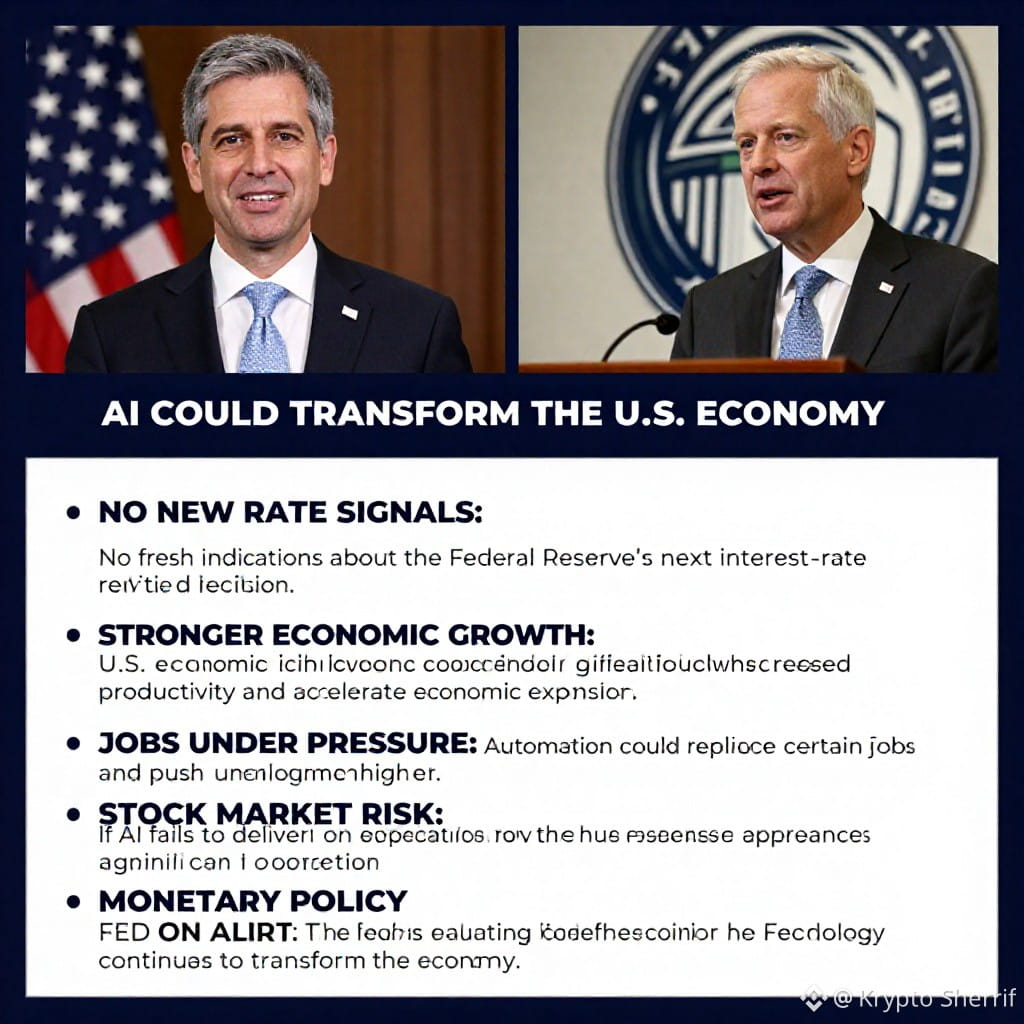
🚨🇺🇸 FED CHAIR KEVIN WARSH SPEAKS: AI COULD TRANSFORM THE U.S. ECONOMY! 🤖📊
Federal Reserve Chair Kevin Warsh has highlighted the growing impact of Artificial Intelligence (AI) on the future of the U.S. economy, pointing to both major opportunities and potential risks. 👀🔥
Here are the key takeaways from his latest speech:
🔹 NO NEW RATE SIGNALS: No fresh indications about the Federal Reserve's next interest-rate decision.
🔹 STRONGER ECONOMIC GROWTH: U.S. economic growth could exceed historical averages.
🔹 AI PRODUCTIVITY BOOM: Artificial Intelligence could significantly increase productivity and accelerate economic expansion.
🔹 JOBS UNDER PRESSURE: Automation could replace certain jobs and push unemployment higher.
🔹 STOCK MARKET RISK: If AI fails to deliver on expectations, markets could experience a significant correction.
🔹 MONETARY POLICY SHIFT: Widespread AI adoption could reshape how the Federal Reserve approaches monetary policy.
🔹 FED ON ALERT: The Fed is evaluating different economic scenarios as technology continues to transform the economy.
🌍 THE BIG PICTURE: AI could become one of the biggest drivers of economic growth, but the transition may bring serious challenges for workers, businesses and financial markets.
⚠️ Investors should watch closely as AI, employment, inflation and Federal Reserve policy increasingly become connected.
#FED #KevinWarsh #AI #ArtificialIntelligence #USMarkets #StockMarket #Economy #NFA #DYOR #FedMeeting #DataProtection #CaliforniaVotersBackProp42BarringNewCryptoTaxes $1000000BOB $1
{alpha}(560xff5d99a5c16cf2ffb4e7da1d7c42a791e70e4444)
$1MBABYDOGE
{spot}(1MBABYDOGEUSDT)
🚨🇺🇸 FED CHAIR KEVIN WARSH SPEAKS: AI COULD TRANSFORM THE U.S. ECONOMY! 🤖📊
Federal Reserve Chair Kevin Warsh has highlighted the growing impact of Artificial Intelligence (AI) on the future of the U.S. economy, pointing to both major opportunities and potential risks. 👀🔥
Here are the key takeaways from his latest speech:
🔹 NO NEW RATE SIGNALS: No fresh indications about the Federal Reserve's next interest-rate decision.
🔹 STRONGER ECONOMIC GROWTH: U.S. economic growth could exceed historical averages.
🔹 AI PRODUCTIVITY BOOM: Artificial Intelligence could significantly increase productivity and accelerate economic expansion.
🔹 JOBS UNDER PRESSURE: Automation could replace certain jobs and push unemployment higher.
🔹 STOCK MARKET RISK: If AI fails to deliver on expectations, markets could experience a significant correction.
🔹 MONETARY POLICY SHIFT: Widespread AI adoption could reshape how the Federal Reserve approaches monetary policy.
🔹 FED ON ALERT: The Fed is evaluating different economic scenarios as technology continues to transform the economy.
🌍 THE BIG PICTURE: AI could become one of the biggest drivers of economic growth, but the transition may bring serious challenges for workers, businesses and financial markets.
⚠️ Investors should watch closely as AI, employment, inflation and Federal Reserve policy increasingly become connected.
#FED #KevinWarsh #AI #ArtificialIntelligence #USMarkets #StockMarket #Economy #NFA #DYOR #FedMeeting #DataProtection #CaliforniaVotersBackProp42BarringNewCryptoTaxes $1000000BOB $1
$1MBABYDOGE
Federal Reserve Chair Kevin Warsh has highlighted the growing impact of Artificial Intelligence (AI) on the future of the U.S. economy, pointing to both major opportunities and potential risks. 👀🔥
Here are the key takeaways from his latest speech:
🔹 NO NEW RATE SIGNALS: No fresh indications about the Federal Reserve's next interest-rate decision.
🔹 STRONGER ECONOMIC GROWTH: U.S. economic growth could exceed historical averages.
🔹 AI PRODUCTIVITY BOOM: Artificial Intelligence could significantly increase productivity and accelerate economic expansion.
🔹 JOBS UNDER PRESSURE: Automation could replace certain jobs and push unemployment higher.
🔹 STOCK MARKET RISK: If AI fails to deliver on expectations, markets could experience a significant correction.
🔹 MONETARY POLICY SHIFT: Widespread AI adoption could reshape how the Federal Reserve approaches monetary policy.
🔹 FED ON ALERT: The Fed is evaluating different economic scenarios as technology continues to transform the economy.
🌍 THE BIG PICTURE: AI could become one of the biggest drivers of economic growth, but the transition may bring serious challenges for workers, businesses and financial markets.
⚠️ Investors should watch closely as AI, employment, inflation and Federal Reserve policy increasingly become connected.
#FED #KevinWarsh #AI #ArtificialIntelligence #USMarkets #StockMarket #Economy #NFA #DYOR #FedMeeting #DataProtection #CaliforniaVotersBackProp42BarringNewCryptoTaxes $1000000BOB $1
$1MBABYDOGE


1
302
Are Today's Data Reports Driving Stronger Security Awareness? 🔒 #DataProtection
Fresh reports of information exposures highlight the clear value of robust digital safeguards. Growing attention can accelerate demand for reliable tools that keep systems secure.
This focus opens space for progress in protective technologies and encourages better standards across industries. Steady improvements help create more resilient digital environments for all users.
$FIRO $ZEC #CoinVahini #CyberAwareness #DataSafety #SecurityFocus
Are Today's Data Reports Driving Stronger Security Awareness? 🔒 #DataProtection
Fresh reports of information exposures highlight the clear value of robust digital safeguards. Growing attention can accelerate demand for reliable tools that keep systems secure.
This focus opens space for progress in protective technologies and encourages better standards across industries. Steady improvements help create more resilient digital environments for all users.
$FIRO $ZEC #CoinVahini #CyberAwareness #DataSafety #SecurityFocus
Fresh reports of information exposures highlight the clear value of robust digital safeguards. Growing attention can accelerate demand for reliable tools that keep systems secure.
This focus opens space for progress in protective technologies and encourages better standards across industries. Steady improvements help create more resilient digital environments for all users.
$FIRO $ZEC #CoinVahini #CyberAwareness #DataSafety #SecurityFocus
10

·
--
$20B worth of user data exposed annually due to inadequate age verification - the reality is grim, but smart investors are acting on this truth.
The Cardano Foundation CEO Frederik Gregaard's recent comments expose the dark side of the digital age, where kids' online data is exploited without adequate protection. This echoes a larger trend, where the intersection of crypto and Web3 solutions can create new, robust privacy measures.
Smart money is taking notice, recognizing the opportunity to secure sensitive data and capitalize on emerging technologies that protect online identities. As #Web3Security and #DataProtection trends grow, forward-thinking players are poised to profit by addressing the void left by ineffective age verification.
A turning point is near as the market awakens to the potential of blockchain-based solutions. A key level to watch is the upcoming Cardano Foundation announcement, which could propel this trend forward. Will you be ready to adapt to the seismic shift in online data protection?
$20B worth of user data exposed annually due to inadequate age verification - the reality is grim, but smart investors are acting on this truth.
The Cardano Foundation CEO Frederik Gregaard's recent comments expose the dark side of the digital age, where kids' online data is exploited without adequate protection. This echoes a larger trend, where the intersection of crypto and Web3 solutions can create new, robust privacy measures.
Smart money is taking notice, recognizing the opportunity to secure sensitive data and capitalize on emerging technologies that protect online identities. As #Web3Security and #DataProtection trends grow, forward-thinking players are poised to profit by addressing the void left by ineffective age verification.
A turning point is near as the market awakens to the potential of blockchain-based solutions. A key level to watch is the upcoming Cardano Foundation announcement, which could propel this trend forward. Will you be ready to adapt to the seismic shift in online data protection?
The Cardano Foundation CEO Frederik Gregaard's recent comments expose the dark side of the digital age, where kids' online data is exploited without adequate protection. This echoes a larger trend, where the intersection of crypto and Web3 solutions can create new, robust privacy measures.
Smart money is taking notice, recognizing the opportunity to secure sensitive data and capitalize on emerging technologies that protect online identities. As #Web3Security and #DataProtection trends grow, forward-thinking players are poised to profit by addressing the void left by ineffective age verification.
A turning point is near as the market awakens to the potential of blockchain-based solutions. A key level to watch is the upcoming Cardano Foundation announcement, which could propel this trend forward. Will you be ready to adapt to the seismic shift in online data protection?
46


·
--
Fully Homomorphic Encryption is emerging as the ultimate privacy breakthrough for decentralized applications and cloud computing.
This cryptographic technology allows computations to be performed directly on encrypted data without ever needing to decrypt it first.
In the crypto space FHE enables completely private smart contracts where transaction details and state changes remain hidden from validators while maintaining network integrity.
It solves major front running problems and opens the door for secure confidential corporate institutional use cases.
#FHE #Cryptography #Privacy #Web3Security #DataProtection
Fully Homomorphic Encryption is emerging as the ultimate privacy breakthrough for decentralized applications and cloud computing.
This cryptographic technology allows computations to be performed directly on encrypted data without ever needing to decrypt it first.
In the crypto space FHE enables completely private smart contracts where transaction details and state changes remain hidden from validators while maintaining network integrity.
It solves major front running problems and opens the door for secure confidential corporate institutional use cases.
#FHE #Cryptography #Privacy #Web3Security #DataProtection
This cryptographic technology allows computations to be performed directly on encrypted data without ever needing to decrypt it first.
In the crypto space FHE enables completely private smart contracts where transaction details and state changes remain hidden from validators while maintaining network integrity.
It solves major front running problems and opens the door for secure confidential corporate institutional use cases.
#FHE #Cryptography #Privacy #Web3Security #DataProtection
234

🚨 Massive data leak reveals 153 million driver’s licenses offered for sale
A recent report uncovered an alleged leak of 153 million driver’s licenses, believed to have been stolen from an identity verification company. This incident highlights the growing security risks associated with storing sensitive information with third parties, making it an attractive target for malicious actors.
━━━━━━━━━━━━━━
📊 Impact: 📈 High
🏷️ OTHER
#DataBreach #CyberSecurity #Privacy #IdentityTheft #DataProtection
📰 Source: gizmodo.com
🚨 Massive data leak reveals 153 million driver’s licenses offered for sale
A recent report uncovered an alleged leak of 153 million driver’s licenses, believed to have been stolen from an identity verification company. This incident highlights the growing security risks associated with storing sensitive information with third parties, making it an attractive target for malicious actors.
━━━━━━━━━━━━━━
📊 Impact: 📈 High
🏷️ OTHER
#DataBreach #CyberSecurity #Privacy #IdentityTheft #DataProtection
📰 Source: gizmodo.com
A recent report uncovered an alleged leak of 153 million driver’s licenses, believed to have been stolen from an identity verification company. This incident highlights the growing security risks associated with storing sensitive information with third parties, making it an attractive target for malicious actors.
━━━━━━━━━━━━━━
📊 Impact: 📈 High
🏷️ OTHER
#DataBreach #CyberSecurity #Privacy #IdentityTheft #DataProtection
📰 Source: gizmodo.com
48

·
--
🛡️ Security Alert: Was Anthropic’s Mythos model hacked?
A major piece of news from the tech world! According to a report by Jin10, there have been reports that some unauthorized users have attempted to access Anthropic’s ‘Mythos’ model. ⚠️
What’s the situation?
Incident: There have been reports of unauthorized users accessing the Mythos model.
Company’s position: Anthropic has quickly clarified that there is no evidence yet to indicate that this illegal access has affected their core systems or data.
Lesson for investors and users:
Cybersecurity has now become the biggest challenge for AI companies. Although there was no major loss here, this incident is a reminder of how fragile the security of AI models can be.
Should you be worried? No threat to users has been revealed yet. However, such an intervention in the systems of any major tech company could affect market sentiment.
We will have to keep a close eye on this news to see if it was just a limited incident or if it has more implications. What do you think about this, are AI companies’ systems safe now? Let us know in the comments! 👇
Follow me for more tech and security updates!
$ON $BAS $UAI
#Anthropic #MythosAI #CyberSecurity #AITech #DataProtection
🛡️ Security Alert: Was Anthropic’s Mythos model hacked?
A major piece of news from the tech world! According to a report by Jin10, there have been reports that some unauthorized users have attempted to access Anthropic’s ‘Mythos’ model. ⚠️
What’s the situation?
Incident: There have been reports of unauthorized users accessing the Mythos model.
Company’s position: Anthropic has quickly clarified that there is no evidence yet to indicate that this illegal access has affected their core systems or data.
Lesson for investors and users:
Cybersecurity has now become the biggest challenge for AI companies. Although there was no major loss here, this incident is a reminder of how fragile the security of AI models can be.
Should you be worried? No threat to users has been revealed yet. However, such an intervention in the systems of any major tech company could affect market sentiment.
We will have to keep a close eye on this news to see if it was just a limited incident or if it has more implications. What do you think about this, are AI companies’ systems safe now? Let us know in the comments! 👇
Follow me for more tech and security updates!
$ON $BAS $UAI
#Anthropic #MythosAI #CyberSecurity #AITech #DataProtection
A major piece of news from the tech world! According to a report by Jin10, there have been reports that some unauthorized users have attempted to access Anthropic’s ‘Mythos’ model. ⚠️
What’s the situation?
Incident: There have been reports of unauthorized users accessing the Mythos model.
Company’s position: Anthropic has quickly clarified that there is no evidence yet to indicate that this illegal access has affected their core systems or data.
Lesson for investors and users:
Cybersecurity has now become the biggest challenge for AI companies. Although there was no major loss here, this incident is a reminder of how fragile the security of AI models can be.
Should you be worried? No threat to users has been revealed yet. However, such an intervention in the systems of any major tech company could affect market sentiment.
We will have to keep a close eye on this news to see if it was just a limited incident or if it has more implications. What do you think about this, are AI companies’ systems safe now? Let us know in the comments! 👇
Follow me for more tech and security updates!
$ON $BAS $UAI
#Anthropic #MythosAI #CyberSecurity #AITech #DataProtection
434

U.S. Supreme Court Examines Privacy Limits of Smartphone Location Tracking
The Supreme Court of the United States is currently weighing a landmark case that could redefine digital privacy rights in the modern era. At the center of the debate is the legality of “geofence warrants,” a law enforcement tool that collects location data from all smartphones within a specific area during a defined time window.
The case, Chatrie v United States, stems from a 2019 robbery investigation in Virginia, where police used location data to identify a suspect. While authorities argue that individuals have limited expectations of privacy in public spaces, especially when voluntarily sharing data with third parties like Google, privacy advocates warn that such warrants risk sweeping up vast amounts of data from innocent individuals.
Critics describe geofence warrants as overly broad, potentially enabling mass surveillance without direct suspicion. Legal experts caution that if such practices are upheld, they could open the door to monitoring sensitive locations such as protests, healthcare facilities, or places of worship.
Several justices have expressed concern about the broader implications for constitutional protections, particularly under the Fourth Amendment, which guards against unreasonable searches and seizures. Questions raised during proceedings suggest the court may consider geofence warrants as a form of search, which would require stricter legal scrutiny.
The outcome of this case could have far-reaching consequences, shaping how governments, tech companies, and citizens navigate the balance between security and privacy in an increasingly data-driven world.
#PrivacyRights #SupremeCourt #DigitalPrivacy #Surveillance #DataProtection
$BIO
{spot}(BIOUSDT)
$EUR
{spot}(EURUSDT)
$PUMP
{spot}(PUMPUSDT)
U.S. Supreme Court Examines Privacy Limits of Smartphone Location Tracking
The Supreme Court of the United States is currently weighing a landmark case that could redefine digital privacy rights in the modern era. At the center of the debate is the legality of “geofence warrants,” a law enforcement tool that collects location data from all smartphones within a specific area during a defined time window.
The case, Chatrie v United States, stems from a 2019 robbery investigation in Virginia, where police used location data to identify a suspect. While authorities argue that individuals have limited expectations of privacy in public spaces, especially when voluntarily sharing data with third parties like Google, privacy advocates warn that such warrants risk sweeping up vast amounts of data from innocent individuals.
Critics describe geofence warrants as overly broad, potentially enabling mass surveillance without direct suspicion. Legal experts caution that if such practices are upheld, they could open the door to monitoring sensitive locations such as protests, healthcare facilities, or places of worship.
Several justices have expressed concern about the broader implications for constitutional protections, particularly under the Fourth Amendment, which guards against unreasonable searches and seizures. Questions raised during proceedings suggest the court may consider geofence warrants as a form of search, which would require stricter legal scrutiny.
The outcome of this case could have far-reaching consequences, shaping how governments, tech companies, and citizens navigate the balance between security and privacy in an increasingly data-driven world.
#PrivacyRights #SupremeCourt #DigitalPrivacy #Surveillance #DataProtection
$BIO
$EUR
$PUMP
The Supreme Court of the United States is currently weighing a landmark case that could redefine digital privacy rights in the modern era. At the center of the debate is the legality of “geofence warrants,” a law enforcement tool that collects location data from all smartphones within a specific area during a defined time window.
The case, Chatrie v United States, stems from a 2019 robbery investigation in Virginia, where police used location data to identify a suspect. While authorities argue that individuals have limited expectations of privacy in public spaces, especially when voluntarily sharing data with third parties like Google, privacy advocates warn that such warrants risk sweeping up vast amounts of data from innocent individuals.
Critics describe geofence warrants as overly broad, potentially enabling mass surveillance without direct suspicion. Legal experts caution that if such practices are upheld, they could open the door to monitoring sensitive locations such as protests, healthcare facilities, or places of worship.
Several justices have expressed concern about the broader implications for constitutional protections, particularly under the Fourth Amendment, which guards against unreasonable searches and seizures. Questions raised during proceedings suggest the court may consider geofence warrants as a form of search, which would require stricter legal scrutiny.
The outcome of this case could have far-reaching consequences, shaping how governments, tech companies, and citizens navigate the balance between security and privacy in an increasingly data-driven world.
#PrivacyRights #SupremeCourt #DigitalPrivacy #Surveillance #DataProtection
$BIO
$EUR
$PUMP

188

·
--
Bullish
Top 3 fastest-rising cryptocurrencies in a month 🔥🔥
#CryptoAnalysis #predictons #DataProtection
$GTC ( 282 % )
$QNT ( 256 % )
$STRK ( 255 % )
{spot}(STRKUSDT)
{spot}(QNTUSDT)
{spot}(GTCUSDT)
Top 3 fastest-rising cryptocurrencies in a month 🔥🔥
#CryptoAnalysis #predictons #DataProtection
$GTC ( 282 % )
$QNT ( 256 % )
$STRK ( 255 % )
#CryptoAnalysis #predictons #DataProtection
$GTC ( 282 % )
$QNT ( 256 % )
$STRK ( 255 % )
1
97
⚠️ Security warning: ClickLock software threatens macOS users with data theft!
A new malicious program called ClickLock targets macOS device users and relies on social engineering to trick victims into stealing passwords and sensitive data. This malware does not require exploiting vulnerabilities or elevated privileges to operate, making it an increasingly serious threat to information security.
━━━━━━━━━━━━━━
📊 Impact: 📈 High
🏷️ OTHER
#macOSSecurity #CyberThreat #ClickLock #DataProtection #Phishing
🔗 Source: https://www.techradar.com/pro/security/macos-users-may-face-real-sophisticated-threats-that-require-neither-exploits-nor-any-elevated-access-to-succeed-clicklock-stealer-tries-to-trick-apple-users-into-revealing-their-passwords
⚠️ Security warning: ClickLock software threatens macOS users with data theft!
A new malicious program called ClickLock targets macOS device users and relies on social engineering to trick victims into stealing passwords and sensitive data. This malware does not require exploiting vulnerabilities or elevated privileges to operate, making it an increasingly serious threat to information security.
━━━━━━━━━━━━━━
📊 Impact: 📈 High
🏷️ OTHER
#macOSSecurity #CyberThreat #ClickLock #DataProtection #Phishing
🔗 Source: https://www.techradar.com/pro/security/macos-users-may-face-real-sophisticated-threats-that-require-neither-exploits-nor-any-elevated-access-to-succeed-clicklock-stealer-tries-to-trick-apple-users-into-revealing-their-passwords
A new malicious program called ClickLock targets macOS device users and relies on social engineering to trick victims into stealing passwords and sensitive data. This malware does not require exploiting vulnerabilities or elevated privileges to operate, making it an increasingly serious threat to information security.
━━━━━━━━━━━━━━
📊 Impact: 📈 High
🏷️ OTHER
#macOSSecurity #CyberThreat #ClickLock #DataProtection #Phishing
🔗 Source: https://www.techradar.com/pro/security/macos-users-may-face-real-sophisticated-threats-that-require-neither-exploits-nor-any-elevated-access-to-succeed-clicklock-stealer-tries-to-trick-apple-users-into-revealing-their-passwords
34
⚠️ Malware discovered using AI models to stay hidden
Security researchers have uncovered malware that exploits the capabilities of AI models, such as Grok, to enhance its stealth and persistence on infected computers. The malware aims to steal sensitive data, including passwords, cookies, and API keys.
━━━━━━━━━━━━━━
📊 Impact: 📊 Moderate
🏷️ OTHER
#CyberSecurity #AI #Malware #TechNews #DataProtection
📰 Source: foxnews.com
⚠️ Malware discovered using AI models to stay hidden
Security researchers have uncovered malware that exploits the capabilities of AI models, such as Grok, to enhance its stealth and persistence on infected computers. The malware aims to steal sensitive data, including passwords, cookies, and API keys.
━━━━━━━━━━━━━━
📊 Impact: 📊 Moderate
🏷️ OTHER
#CyberSecurity #AI #Malware #TechNews #DataProtection
📰 Source: foxnews.com
Security researchers have uncovered malware that exploits the capabilities of AI models, such as Grok, to enhance its stealth and persistence on infected computers. The malware aims to steal sensitive data, including passwords, cookies, and API keys.
━━━━━━━━━━━━━━
📊 Impact: 📊 Moderate
🏷️ OTHER
#CyberSecurity #AI #Malware #TechNews #DataProtection
📰 Source: foxnews.com
46

·
--

Article
What Is Data Network (DATA)?Data Network started out as Story, with the aim to simplify the management of intellectual property (IP) rights and create an open, blockchain-based infrastructure for IP. In July 2026, Story announced a rebrand to Data Network, citing resistance from major legacy brands who guarded their IP rights strongly and resisted broad open licensing. Data Network is now focused on AI training data, as demand for rights-cleared datasets to train AI models grows.
What Is Data Network?
Data Network is a blockchain network built for intellectual property and verified data. It provides a universal, open ledger where creative works, scientific data, machine learning models, and other knowledge assets can be registered as native digital assets.
Rather than relying on a central authority to track ownership and licensing agreements, Data Network enables creators and organizations to set programmable rules around how their IP can be used, shared, or monetized. Third parties can then access those assets under automated terms without lengthy negotiations.
How Does Data Network Work?
Multi-core architecture
Data Network uses a multi-core execution environment. The main core is compatible with the [Ethereum Virtual Machine (EVM)](https://www.binance.com/en/academy/articles/what-is-a-virtual-machine-vm), which allows developers to build familiar decentralized applications on the network. A separate Intellectual Property (IP) core manages on-chain registration, licensing, and ownership relationships for IP assets.
The IP core tracks complex asset graphs that show how one IP asset was derived from or relates to another. This lets the network automatically calculate and distribute royalties across multiple creators and contributors in a transparent way.
Proof of Creativity protocol
The Proof of Creativity (PoC) protocol is built on the IP core. It acts as an open repository that records the full history of every IP asset, from its initial creation through any modifications, expansions, or commercial uses.
PoC introduces programmable license modules that let IP holders define specific usage terms in code. For example, a creator could allow free use in non-commercial projects while charging a royalty for commercial applications. Revenue sharing rules are enforced automatically through [smart contracts](https://www.binance.com/en/academy/articles/what-are-smart-contracts), without requiring any intermediary.
The DATA token
The native DATA (formerly IP) token is the medium of exchange on Data Network. It is used to pay transaction fees, incentivize validators through staking, and facilitate economic flows related to IP usage, such as royalty payments and licensing fees.
The DATA token also supports AI-related transactions on the network. Autonomous AI agents can use it to negotiate licenses and pay for access to datasets or models on behalf of users.
Cross-chain and off-chain integrations
Data Network supports [cross-chain communication](https://www.binance.com/en/academy/articles/what-is-cross-chain-interoperability), so IP assets can be used across different blockchains and decentralized finance (DeFi) platforms without the owner losing control. It also integrates oracles and off-chain services that verify IP authenticity, validate ownership claims, and support legal dispute resolution.
The Rebrand: From Story to Data Network
In July 2026, Story Protocol rebranded as the DATA Foundation, and Story Network became Data Network. The project's token, previously known as IP, was converted to DATA through a one-to-one migration. The rebrand reflected a strategic shift: while the original Story Protocol focused on making intellectual property programmable for entertainment and gaming, the DATA Foundation redirected its focus toward verified data for AI training.
The foundation explained that companies behind valuable music, games, and brands had resisted open licensing, which limited adoption of the original IP-focused model. By contrast, demand for AI training data proved stronger.
The rebrand also brought a partnership with Kled, described as the largest opt-in human data marketplace, which adds more than 1.5 billion images, videos, and files to the network. Kled's founder Avi Patel joined the DATA Foundation as chief data officer.
For readers looking for the pre-rebrand article, see our existing explainer on [What Is Story (IP)?](https://www.binance.com/en/academy/articles/what-is-story-ip), which covers the original project architecture and token.
Use Cases and Applications
Data Network is designed to support a range of IP and AI-related use cases.
Universal IP marketplace: Data Network enables direct, programmable peer-to-peer IP transactions, including licensing, revenue sharing, and fractional ownership. This is relevant for creative works, music, literature, and art, as AI-generated content becomes more common.AI model and dataset markets: Organizations can register AI training datasets, foundation models, and fine-tuning packages on Data Network, making them licensable assets. Developers who use these assets can pay royalties automatically. For more on how blockchain and AI intersect, see [The Relationship Between Blockchain and AI](https://www.binance.com/en/academy/articles/the-relationship-between-blockchain-and-ai).Agent-based commerce: Autonomous [AI agents](https://www.binance.com/en/academy/articles/what-are-ai-agents) can negotiate, license, and pay for IP assets on behalf of users in a trustless way. This removes the need for manual contract negotiations when AI systems interact at scale.Legal and compliance: Through programmable licenses and off-chain attestations, Data Network can support enforceable agreements and dispute resolution. The governance layer can also function similarly to a decentralized autonomous organization (DAO) for protocol decisions.
FAQ
What problem does Data Network solve for intellectual property?
Traditional IP systems rely on centralized registries and legal processes that can be slow and costly. Data Network moves IP management on-chain, so creators can register assets, set licensing terms in code, and receive royalties automatically. This reduces the need for intermediaries and makes IP markets more accessible.
What is the DATA token used for?
The DATA token is the native token of the Data Network. It is used to pay transaction fees, stake to support network validators, and facilitate economic transactions such as licensing fees and royalty payments. It also enables AI agents to transact on behalf of users within the network. DATA replaced the former IP token through a 1:1 migration.
What is the Proof of Creativity protocol?
Proof of Creativity (PoC) is Data Network's open IP repository. It records the full history of an IP asset, including its origin, any derivative works, and all commercial uses. It also enforces programmable licenses, so royalties can be distributed automatically without manual intervention.
How does Data Network support AI and machine learning?
Data Network allows AI training datasets and models to be registered as licensable IP assets. When a developer uses a registered dataset to train a model, the royalty rules encoded in the license can trigger automatic payments to the original data creators. AI agents can also use the DATA token to negotiate and pay for licenses independently.
What happened to the IP token after the rebrand?
The IP token was converted to DATA through a one-to-one migration when Story Protocol rebranded as the DATA Foundation in July 2026. Integrations and validators continued without interruption.
Is Data Network compatible with other blockchains?
Yes. Data Network supports cross-chain communication, which means IP assets registered on Data Network can be used across other blockchain networks and DeFi platforms. This interoperability is designed to make the network useful beyond its own ecosystem.
#datausdt #DataTheftAlert #DataProtection
$ETH
{future}(ETHUSDT)
$GOOGL.US
{stock_us}(GOOGL.US)
$BTC
{future}(BTCUSDT)
What Is Data Network (DATA)?
Data Network started out as Story, with the aim to simplify the management of intellectual property (IP) rights and create an open, blockchain-based infrastructure for IP. In July 2026, Story announced a rebrand to Data Network, citing resistance from major legacy brands who guarded their IP rights strongly and resisted broad open licensing. Data Network is now focused on AI training data, as demand for rights-cleared datasets to train AI models grows.
What Is Data Network?
Data Network is a blockchain network built for intellectual property and verified data. It provides a universal, open ledger where creative works, scientific data, machine learning models, and other knowledge assets can be registered as native digital assets.
Rather than relying on a central authority to track ownership and licensing agreements, Data Network enables creators and organizations to set programmable rules around how their IP can be used, shared, or monetized. Third parties can then access those assets under automated terms without lengthy negotiations.
How Does Data Network Work?
Multi-core architecture
Data Network uses a multi-core execution environment. The main core is compatible with the Ethereum Virtual Machine (EVM), which allows developers to build familiar decentralized applications on the network. A separate Intellectual Property (IP) core manages on-chain registration, licensing, and ownership relationships for IP assets.
The IP core tracks complex asset graphs that show how one IP asset was derived from or relates to another. This lets the network automatically calculate and distribute royalties across multiple creators and contributors in a transparent way.
Proof of Creativity protocol
The Proof of Creativity (PoC) protocol is built on the IP core. It acts as an open repository that records the full history of every IP asset, from its initial creation through any modifications, expansions, or commercial uses.
PoC introduces programmable license modules that let IP holders define specific usage terms in code. For example, a creator could allow free use in non-commercial projects while charging a royalty for commercial applications. Revenue sharing rules are enforced automatically through smart contracts, without requiring any intermediary.
The DATA token
The native DATA (formerly IP) token is the medium of exchange on Data Network. It is used to pay transaction fees, incentivize validators through staking, and facilitate economic flows related to IP usage, such as royalty payments and licensing fees.
The DATA token also supports AI-related transactions on the network. Autonomous AI agents can use it to negotiate licenses and pay for access to datasets or models on behalf of users.
Cross-chain and off-chain integrations
Data Network supports cross-chain communication, so IP assets can be used across different blockchains and decentralized finance (DeFi) platforms without the owner losing control. It also integrates oracles and off-chain services that verify IP authenticity, validate ownership claims, and support legal dispute resolution.
The Rebrand: From Story to Data Network
In July 2026, Story Protocol rebranded as the DATA Foundation, and Story Network became Data Network. The project's token, previously known as IP, was converted to DATA through a one-to-one migration. The rebrand reflected a strategic shift: while the original Story Protocol focused on making intellectual property programmable for entertainment and gaming, the DATA Foundation redirected its focus toward verified data for AI training.
The foundation explained that companies behind valuable music, games, and brands had resisted open licensing, which limited adoption of the original IP-focused model. By contrast, demand for AI training data proved stronger.
The rebrand also brought a partnership with Kled, described as the largest opt-in human data marketplace, which adds more than 1.5 billion images, videos, and files to the network. Kled's founder Avi Patel joined the DATA Foundation as chief data officer.
For readers looking for the pre-rebrand article, see our existing explainer on What Is Story (IP)?, which covers the original project architecture and token.
Use Cases and Applications
Data Network is designed to support a range of IP and AI-related use cases.
Universal IP marketplace: Data Network enables direct, programmable peer-to-peer IP transactions, including licensing, revenue sharing, and fractional ownership. This is relevant for creative works, music, literature, and art, as AI-generated content becomes more common.AI model and dataset markets: Organizations can register AI training datasets, foundation models, and fine-tuning packages on Data Network, making them licensable assets. Developers who use these assets can pay royalties automatically. For more on how blockchain and AI intersect, see The Relationship Between Blockchain and AI.Agent-based commerce: Autonomous AI agents can negotiate, license, and pay for IP assets on behalf of users in a trustless way. This removes the need for manual contract negotiations when AI systems interact at scale.Legal and compliance: Through programmable licenses and off-chain attestations, Data Network can support enforceable agreements and dispute resolution. The governance layer can also function similarly to a decentralized autonomous organization (DAO) for protocol decisions.
FAQ
What problem does Data Network solve for intellectual property?
Traditional IP systems rely on centralized registries and legal processes that can be slow and costly. Data Network moves IP management on-chain, so creators can register assets, set licensing terms in code, and receive royalties automatically. This reduces the need for intermediaries and makes IP markets more accessible.
What is the DATA token used for?
The DATA token is the native token of the Data Network. It is used to pay transaction fees, stake to support network validators, and facilitate economic transactions such as licensing fees and royalty payments. It also enables AI agents to transact on behalf of users within the network. DATA replaced the former IP token through a 1:1 migration.
What is the Proof of Creativity protocol?
Proof of Creativity (PoC) is Data Network's open IP repository. It records the full history of an IP asset, including its origin, any derivative works, and all commercial uses. It also enforces programmable licenses, so royalties can be distributed automatically without manual intervention.
How does Data Network support AI and machine learning?
Data Network allows AI training datasets and models to be registered as licensable IP assets. When a developer uses a registered dataset to train a model, the royalty rules encoded in the license can trigger automatic payments to the original data creators. AI agents can also use the DATA token to negotiate and pay for licenses independently.
What happened to the IP token after the rebrand?
The IP token was converted to DATA through a one-to-one migration when Story Protocol rebranded as the DATA Foundation in July 2026. Integrations and validators continued without interruption.
Is Data Network compatible with other blockchains?
Yes. Data Network supports cross-chain communication, which means IP assets registered on Data Network can be used across other blockchain networks and DeFi platforms. This interoperability is designed to make the network useful beyond its own ecosystem.
#datausdt #DataTheftAlert #DataProtection
$ETH
$GOOGL.US
$BTC
What Is Data Network?
Data Network is a blockchain network built for intellectual property and verified data. It provides a universal, open ledger where creative works, scientific data, machine learning models, and other knowledge assets can be registered as native digital assets.
Rather than relying on a central authority to track ownership and licensing agreements, Data Network enables creators and organizations to set programmable rules around how their IP can be used, shared, or monetized. Third parties can then access those assets under automated terms without lengthy negotiations.
How Does Data Network Work?
Multi-core architecture
Data Network uses a multi-core execution environment. The main core is compatible with the Ethereum Virtual Machine (EVM), which allows developers to build familiar decentralized applications on the network. A separate Intellectual Property (IP) core manages on-chain registration, licensing, and ownership relationships for IP assets.
The IP core tracks complex asset graphs that show how one IP asset was derived from or relates to another. This lets the network automatically calculate and distribute royalties across multiple creators and contributors in a transparent way.
Proof of Creativity protocol
The Proof of Creativity (PoC) protocol is built on the IP core. It acts as an open repository that records the full history of every IP asset, from its initial creation through any modifications, expansions, or commercial uses.
PoC introduces programmable license modules that let IP holders define specific usage terms in code. For example, a creator could allow free use in non-commercial projects while charging a royalty for commercial applications. Revenue sharing rules are enforced automatically through smart contracts, without requiring any intermediary.
The DATA token
The native DATA (formerly IP) token is the medium of exchange on Data Network. It is used to pay transaction fees, incentivize validators through staking, and facilitate economic flows related to IP usage, such as royalty payments and licensing fees.
The DATA token also supports AI-related transactions on the network. Autonomous AI agents can use it to negotiate licenses and pay for access to datasets or models on behalf of users.
Cross-chain and off-chain integrations
Data Network supports cross-chain communication, so IP assets can be used across different blockchains and decentralized finance (DeFi) platforms without the owner losing control. It also integrates oracles and off-chain services that verify IP authenticity, validate ownership claims, and support legal dispute resolution.
The Rebrand: From Story to Data Network
In July 2026, Story Protocol rebranded as the DATA Foundation, and Story Network became Data Network. The project's token, previously known as IP, was converted to DATA through a one-to-one migration. The rebrand reflected a strategic shift: while the original Story Protocol focused on making intellectual property programmable for entertainment and gaming, the DATA Foundation redirected its focus toward verified data for AI training.
The foundation explained that companies behind valuable music, games, and brands had resisted open licensing, which limited adoption of the original IP-focused model. By contrast, demand for AI training data proved stronger.
The rebrand also brought a partnership with Kled, described as the largest opt-in human data marketplace, which adds more than 1.5 billion images, videos, and files to the network. Kled's founder Avi Patel joined the DATA Foundation as chief data officer.
For readers looking for the pre-rebrand article, see our existing explainer on What Is Story (IP)?, which covers the original project architecture and token.
Use Cases and Applications
Data Network is designed to support a range of IP and AI-related use cases.
Universal IP marketplace: Data Network enables direct, programmable peer-to-peer IP transactions, including licensing, revenue sharing, and fractional ownership. This is relevant for creative works, music, literature, and art, as AI-generated content becomes more common.AI model and dataset markets: Organizations can register AI training datasets, foundation models, and fine-tuning packages on Data Network, making them licensable assets. Developers who use these assets can pay royalties automatically. For more on how blockchain and AI intersect, see The Relationship Between Blockchain and AI.Agent-based commerce: Autonomous AI agents can negotiate, license, and pay for IP assets on behalf of users in a trustless way. This removes the need for manual contract negotiations when AI systems interact at scale.Legal and compliance: Through programmable licenses and off-chain attestations, Data Network can support enforceable agreements and dispute resolution. The governance layer can also function similarly to a decentralized autonomous organization (DAO) for protocol decisions.
FAQ
What problem does Data Network solve for intellectual property?
Traditional IP systems rely on centralized registries and legal processes that can be slow and costly. Data Network moves IP management on-chain, so creators can register assets, set licensing terms in code, and receive royalties automatically. This reduces the need for intermediaries and makes IP markets more accessible.
What is the DATA token used for?
The DATA token is the native token of the Data Network. It is used to pay transaction fees, stake to support network validators, and facilitate economic transactions such as licensing fees and royalty payments. It also enables AI agents to transact on behalf of users within the network. DATA replaced the former IP token through a 1:1 migration.
What is the Proof of Creativity protocol?
Proof of Creativity (PoC) is Data Network's open IP repository. It records the full history of an IP asset, including its origin, any derivative works, and all commercial uses. It also enforces programmable licenses, so royalties can be distributed automatically without manual intervention.
How does Data Network support AI and machine learning?
Data Network allows AI training datasets and models to be registered as licensable IP assets. When a developer uses a registered dataset to train a model, the royalty rules encoded in the license can trigger automatic payments to the original data creators. AI agents can also use the DATA token to negotiate and pay for licenses independently.
What happened to the IP token after the rebrand?
The IP token was converted to DATA through a one-to-one migration when Story Protocol rebranded as the DATA Foundation in July 2026. Integrations and validators continued without interruption.
Is Data Network compatible with other blockchains?
Yes. Data Network supports cross-chain communication, which means IP assets registered on Data Network can be used across other blockchain networks and DeFi platforms. This interoperability is designed to make the network useful beyond its own ecosystem.
#datausdt #DataTheftAlert #DataProtection
$ETH
$GOOGL.US
$BTC
1
119
🌐 Gen launches Fearless Planet Digital Safety Index
Gen, the cybersecurity company, announced the launch of the Fearless Planet Index. The index aims to provide daily, real-time insights into scams and cyber threats affecting digital life worldwide, with the goal of enhancing online safety.
━━━━━━━━━━━━━━
📊 Impact: 📊 Medium
🏷️ OTHER
#CyberSecurity #DigitalSafety #Gen #OnlineThreats #DataProtection
📰 Source: prnewswire.com
🌐 Gen launches Fearless Planet Digital Safety Index
Gen, the cybersecurity company, announced the launch of the Fearless Planet Index. The index aims to provide daily, real-time insights into scams and cyber threats affecting digital life worldwide, with the goal of enhancing online safety.
━━━━━━━━━━━━━━
📊 Impact: 📊 Medium
🏷️ OTHER
#CyberSecurity #DigitalSafety #Gen #OnlineThreats #DataProtection
📰 Source: prnewswire.com
Gen, the cybersecurity company, announced the launch of the Fearless Planet Index. The index aims to provide daily, real-time insights into scams and cyber threats affecting digital life worldwide, with the goal of enhancing online safety.
━━━━━━━━━━━━━━
📊 Impact: 📊 Medium
🏷️ OTHER
#CyberSecurity #DigitalSafety #Gen #OnlineThreats #DataProtection
📰 Source: prnewswire.com
33

·
--
#I am deeply concerned to learn that unauthorized hardware implants have been discovered within a user device. Maintaining the integrity of our security infrastructure remains my highest priority during this investigation. I am currently reviewing all internal protocols to understand how such a significant breach could occur. Transparency is essential, and I am committed to keeping everyone informed as more technical details emerge 🛡️. Please exercise extreme caution and verify the physical security of your hardware whenever possible 🔐. I believe that safeguarding our digital assets requires constant vigilance and collective awareness across the community 🌐.
#CyberSecurityPolicy #DataProtection #HardwareSecurity #technews #InfoSec #DigitalSafety
#I am deeply concerned to learn that unauthorized hardware implants have been discovered within a user device. Maintaining the integrity of our security infrastructure remains my highest priority during this investigation. I am currently reviewing all internal protocols to understand how such a significant breach could occur. Transparency is essential, and I am committed to keeping everyone informed as more technical details emerge 🛡️. Please exercise extreme caution and verify the physical security of your hardware whenever possible 🔐. I believe that safeguarding our digital assets requires constant vigilance and collective awareness across the community 🌐.
#CyberSecurityPolicy #DataProtection #HardwareSecurity #technews #InfoSec #DigitalSafety
#CyberSecurityPolicy #DataProtection #HardwareSecurity #technews #InfoSec #DigitalSafety
122
⚠️ Security warning: Free VPN add-ons spy on clipboard data
CyberInsider has revealed a serious security threat where some free VPN extensions for Chrome and Firefox browsers collect users’ clipboard data. This is a blatant privacy violation and may expose sensitive information to risks.
━━━━━━━━━━━━━━
📊 Impact: 📊 Medium
🏷️ OTHER
#VPNprivacy #CyberSecurity #DataProtection #BrowserExtensions #OnlineSafety
🔗 Source: https://www.globenewswire.com/news-release/2026/07/20/3329726/0/en/Free-VPN-Extensions-Caught-Harvesting-Clipboard-Data-CyberInsider-Warns-Browser-Users.html
⚠️ Security warning: Free VPN add-ons spy on clipboard data
CyberInsider has revealed a serious security threat where some free VPN extensions for Chrome and Firefox browsers collect users’ clipboard data. This is a blatant privacy violation and may expose sensitive information to risks.
━━━━━━━━━━━━━━
📊 Impact: 📊 Medium
🏷️ OTHER
#VPNprivacy #CyberSecurity #DataProtection #BrowserExtensions #OnlineSafety
🔗 Source: https://www.globenewswire.com/news-release/2026/07/20/3329726/0/en/Free-VPN-Extensions-Caught-Harvesting-Clipboard-Data-CyberInsider-Warns-Browser-Users.html
CyberInsider has revealed a serious security threat where some free VPN extensions for Chrome and Firefox browsers collect users’ clipboard data. This is a blatant privacy violation and may expose sensitive information to risks.
━━━━━━━━━━━━━━
📊 Impact: 📊 Medium
🏷️ OTHER
#VPNprivacy #CyberSecurity #DataProtection #BrowserExtensions #OnlineSafety
🔗 Source: https://www.globenewswire.com/news-release/2026/07/20/3329726/0/en/Free-VPN-Extensions-Caught-Harvesting-Clipboard-Data-CyberInsider-Warns-Browser-Users.html
48
🚨 New DOUBLECUP Service Uses Browser Images to Hide Malware
Security reports have revealed the emergence of a new Russian service for downloading malicious software called DOUBLECUP. This service uses ClickFix technology to conceal malicious code within cache memory images from web browsers. This method is used to distribute CountLoader malware on Windows and macOS devices, along with a remote access trojan known as DeviceManager.
━━━━━━━━━━━━━━
📊 Impact: 📈 High
🏷️ OTHER
#CyberSecurity #Malware #TechNews #DataProtection #SecurityAlert
📰 Source: bleepingcomputer.com
🚨 New DOUBLECUP Service Uses Browser Images to Hide Malware
Security reports have revealed the emergence of a new Russian service for downloading malicious software called DOUBLECUP. This service uses ClickFix technology to conceal malicious code within cache memory images from web browsers. This method is used to distribute CountLoader malware on Windows and macOS devices, along with a remote access trojan known as DeviceManager.
━━━━━━━━━━━━━━
📊 Impact: 📈 High
🏷️ OTHER
#CyberSecurity #Malware #TechNews #DataProtection #SecurityAlert
📰 Source: bleepingcomputer.com
Security reports have revealed the emergence of a new Russian service for downloading malicious software called DOUBLECUP. This service uses ClickFix technology to conceal malicious code within cache memory images from web browsers. This method is used to distribute CountLoader malware on Windows and macOS devices, along with a remote access trojan known as DeviceManager.
━━━━━━━━━━━━━━
📊 Impact: 📈 High
🏷️ OTHER
#CyberSecurity #Malware #TechNews #DataProtection #SecurityAlert
📰 Source: bleepingcomputer.com
52
Log in to explore more content
Join global crypto users on Binance Square
⚡️ Get latest and useful information about crypto.
💬 Trusted by the world’s largest crypto exchange.
👍 Discover real insights from verified creators.
Email / Phone number
Trending Topics
1
#CanBTCReboundAfterFallingBelow60K?
408,703 views
1,764 Discussing
2
#GlobalStocksFaceLongestLosingStreakSince2023
136,870 views
1,229 Discussing
3
#BlackRockIBITPostsRecord$541MSingleDayOutflow
2,221 views
33 Discussing
4
#AnthropicPlungesTowardIPOPriceonDay2
65,962 views
686 Discussing
5
#TwentyOneCapitalAdds172.25BTC
17,233 views
231 Discussing
6
#HKBillWouldExcludeTokenizedDepositsFromVirtualAssets
1,869 views
24 Discussing
7
#BNBDropsBelow540USDTWith8.46%DailyDecline
38,365 views
336 Discussing
8
#HKBillProposesHK$100KFineForUnauthorizedCryptoTitles
1,225 views
19 Discussing
9
#BitMineFaces$10.1BUnrealizedETHLoss
2,271 views
22 Discussing
10
#StrategyReports$35BNetReserves
2,198 views
18 Discussing