
#fatf
fatf
20,981 views
88 Discussing
Hot
Latest

UK Faces Regulatory Pressure Ahead of FATF Review
The UK faces material risks regarding crypto laundering enforcement as FATF assessors prepare for a 2027 review.
#UKRegulation #FATF
UK Faces Regulatory Pressure Ahead of FATF Review
The UK faces material risks regarding crypto laundering enforcement as FATF assessors prepare for a 2027 review.
#UKRegulation #FATF
The UK faces material risks regarding crypto laundering enforcement as FATF assessors prepare for a 2027 review.
#UKRegulation #FATF
11

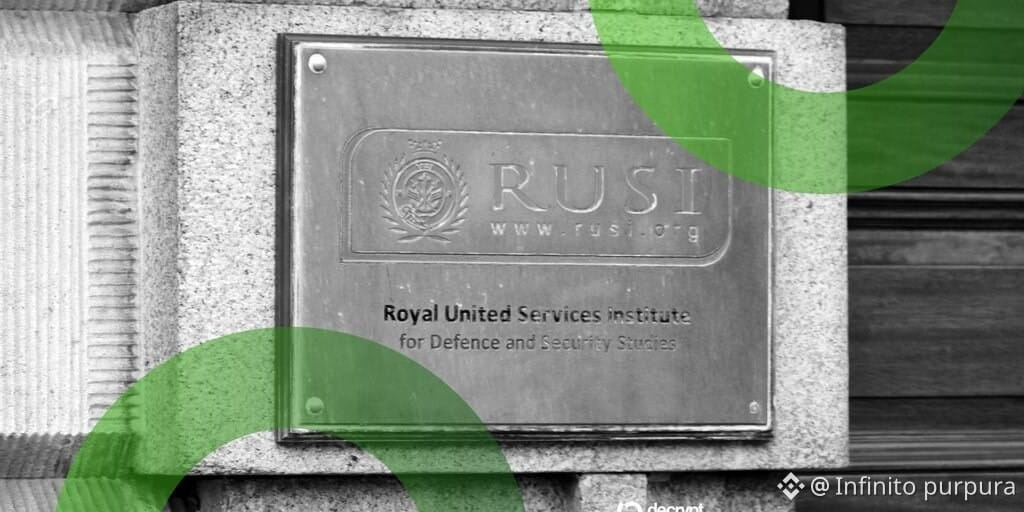
The UK is sitting on a powder keg over crypto money laundering! A RUSI report warns of a “material risk” ahead of the Financial Action Task Force’s (FATF) crucial assessment in June 2027.
Ironically, the UK’s entire crypto regulatory framework will only take effect in October 2027—four months after the FATF’s assessment. This “deadly” timing makes it difficult for the UK to demonstrate that its rules work effectively in practice.
The core problem is not a lack of laws, but enforcement capacity. Authorities lack the resources to detect and prosecute crypto money-laundering crimes. This could push the riskiest activities, such as informal brokerage, beyond the FCA’s oversight.
A poor FATF assessment would deal a heavy blow to the UK’s financial reputation and send compliance costs soaring. Although the UK may not be placed on the grey list immediately, its financial credibility would still be damaged. This is a wake-up call about the risks facing the country’s entire financial system.
Could these delays and resource shortages hinder crypto’s progress in one of the world’s biggest financial centers?
#Crypto #UKCrypto #FATF

🚨 Crypto money laundering emerges as a key risk for the UK ahead of FATF review
A group of experts from RUSI warns that crypto poses a material risk to the UK ahead of the FATF assessment in 2027. The full new regulations will come into force in October 2027, but assessors will arrive in June and could identify gaps in implementation, especially in OTC brokers and stablecoins such as USDT. The report highlights the need to strengthen the resources of the financial intelligence unit and law enforcement’s capacity to prevent the regulated sector from pushing risk beyond the regulator’s reach.
$USDT
#CriptoRegulacion #FATF #MoneyLaundering
128

·
--
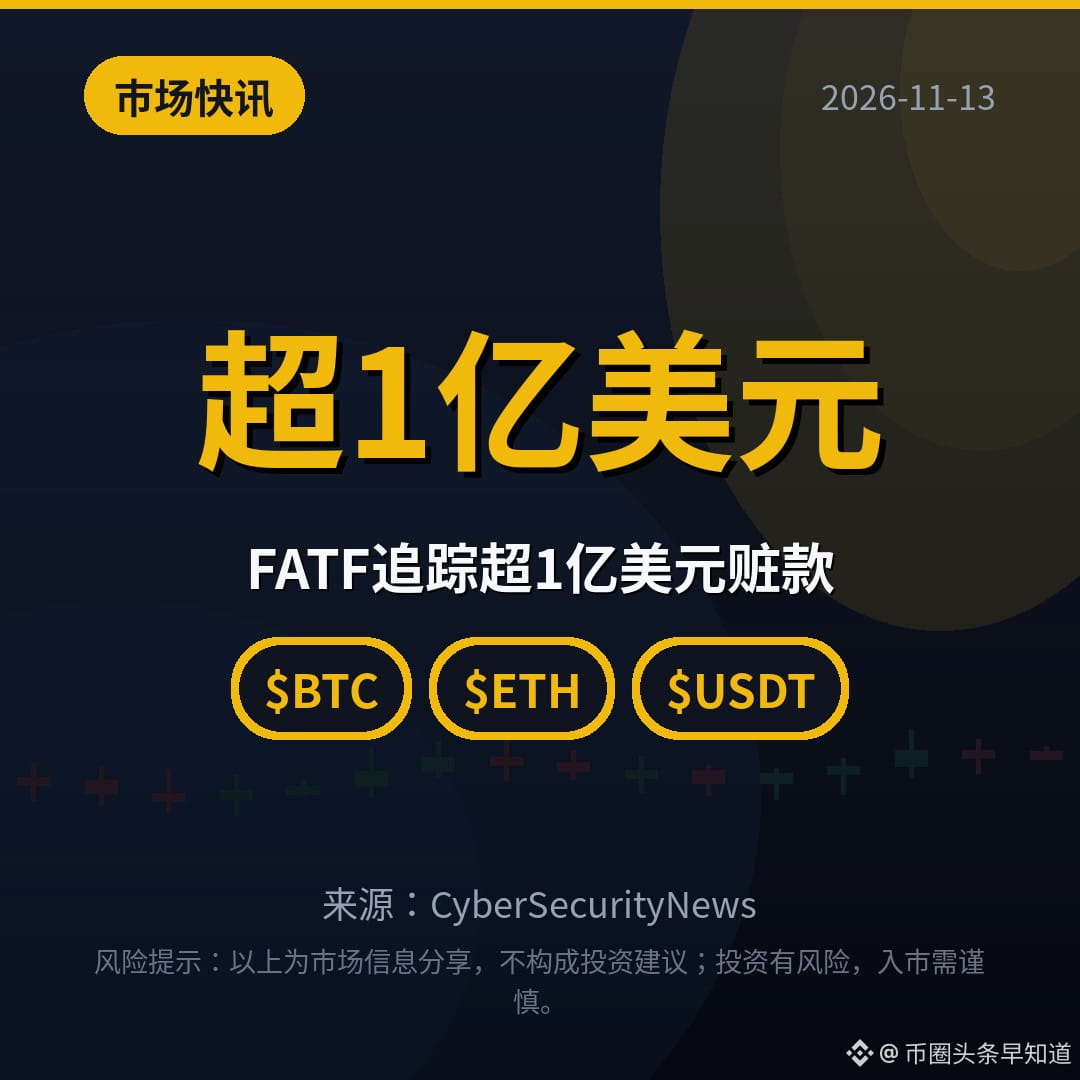
【Market Update】FATF: Over $100 million in illicit proceeds flowed into scam compound wallets
FATF report exposes money-laundering chain at scam compounds: On-chain tracing tracked over $100 million in victim funds flowing into clusters of compound wallets. Annual losses total tens of billions of dollars, with victims across more than 100 jurisdictions; compounds run their own OTC desks to launder money, and funds can be transferred out in 2 minutes. The 24–72 hours after a case is reported are critical for freezing funds. What do you check first when you receive a “high-yield” offer? Let’s discuss.
$BTC $ETH $USDT
#币安广场 #FATF #Anti-Fraud
(Source: CyberSecurityNews)
⚠️Risk Warning: The above is shared for market information purposes only and does not constitute investment advice. Investing involves risks; please exercise caution.

18

·
--

Article
FATF calls out scam centers: one wallet cluster received over $100 million, and the centers even have their own currency exchange desksOn November 5, the global anti-money laundering body FATF released a report titled (Disrupting the End-to-End Flow of Illicit Funds Linked to Scam Centers). The report included a striking figure: a cluster of wallets associated with one scam center received more than $100 million in victim funds. On-chain analysis traced the money through a laundering network and ultimately to cash-out points.
FATF describes a scam center as an integrated criminal enterprise. Its report is based on nearly 120 cases spanning more than 60 jurisdictions, with scam centers or related activities found across Africa, Europe, the Americas, and Asia. FATF estimates that these scams cost people billions of dollars a year worldwide, with victims in more than 100 jurisdictions. The figures may seem distant, but the chain that receives the money ultimately ends up on everyone’s phone.
FATF calls out scam centers: one wallet cluster received over $100 million, and the centers even have their own currency exchange desks
On November 5, the global anti-money laundering body FATF released a report titled (Disrupting the End-to-End Flow of Illicit Funds Linked to Scam Centers). The report included a striking figure: a cluster of wallets associated with one scam center received more than $100 million in victim funds. On-chain analysis traced the money through a laundering network and ultimately to cash-out points.
FATF describes a scam center as an integrated criminal enterprise. Its report is based on nearly 120 cases spanning more than 60 jurisdictions, with scam centers or related activities found across Africa, Europe, the Americas, and Asia. FATF estimates that these scams cost people billions of dollars a year worldwide, with victims in more than 100 jurisdictions. The figures may seem distant, but the chain that receives the money ultimately ends up on everyone’s phone.
FATF describes a scam center as an integrated criminal enterprise. Its report is based on nearly 120 cases spanning more than 60 jurisdictions, with scam centers or related activities found across Africa, Europe, the Americas, and Asia. FATF estimates that these scams cost people billions of dollars a year worldwide, with victims in more than 100 jurisdictions. The figures may seem distant, but the chain that receives the money ultimately ends up on everyone’s phone.
7


🤔 Which crypto hubs will feel the heat as the FATF steps up its money‑laundering watch? The regulator says it’s reviewing several jurisdictions—though it won’t reveal names yet. Findings are slated for June 2027, so the crypto scene has time to adapt, but uncertainty remains about which regions face stricter rules. 🌍💡
Not financial advice.
#CryptoCompliance #FATF #Regulation #Write2Earn
Not financial advice.
#CryptoCompliance #FATF #Regulation #Write2Earn
658

FATF reviews anti-money laundering controls at crypto hubs
- FATF is reviewing crypto hubs for anti-money laundering compliance
- The jurisdictions under review have not yet been announced
- Preliminary results on compliance with crypto standards are expected in June 2027
#BinanceSquare #CryptoNews #FATF #Regulation
$btc $eth
#vlikevn Titanbot
Source: CoinTelegraph
168

⚖️ FATF and Global Crypto Regulation: Global Watchdog Continues to Push for AML Standards
On July 4, 2026, the FATF's ongoing push for global crypto regulation remains a key theme. Progress on AML enforcement continues but unevenly across the 138 countries that are members of the task force.
The implications are significant for exchanges and DeFi platforms operating across borders. Tighter KYC/AML requirements may impact privacy-focused assets differently than transparent ones.
For now, Bitcoin $BTC at $62,612 continues to trade on its own fundamentals, suggesting markets have largely priced in continued regulatory tightening.
📌 Key Takeaway:
Global AML enforcement is the steady drumbeat of crypto regulation. Compliant projects will thrive; privacy-first ones face an uphill battle.
#FATF #AML #CryptoRegulation
#BinanceAlphaAlert
35
📜 Regulation 101: Understanding the Travel Rule
On June 30, 2026, Australia's Travel Rule takes effect July 1, joining 40+ countries implementing FATF Recommendation 16. The Travel Rule requires crypto exchanges to share sender and recipient information for transactions above a threshold — similar to traditional banking requirements.
For everyday users, this means exchanges may require additional verification for certain transfers. The goal is to prevent money laundering and illicit finance. Privacy-focused alternatives like decentralized exchanges and privacy coins may become more relevant as Travel Rule adoption grows.
📌 Key Takeaway:
The Travel Rule brings crypto closer to traditional banking compliance — a step toward mainstream adoption that also raises important privacy considerations.
#FATF #TravelRule #CryptoRegulation
#BinanceAlphaAlert
81

·
--
What really has my eyes glued is the regulatory grey area around Ghost Orders.
In 2026, FATF and various regulatory bodies are ramping up scrutiny on privacy-enhancing tech, cross-chain transactions, and privacy protocols are all on the radar. Ghost Orders utilizes MPC to fragment transactions into up to 500 temporary wallets, and it’s designed with compliance in mind, claiming "external privacy, internal auditability."
But personally, I think there’s often a gap between the tech design and the actual enforcement by regulators. Just because a protocol claims to be compliant doesn’t mean the regulators will see it that way. Especially now that the EU's MiCA and the US are speeding up legislative processes, the legal classification of privacy tech is still up in the air.
This isn't to say Ghost Orders definitely has issues. It’s just that this uncertainty is the toughest variable to estimate when I look at Genius Terminal right now.
@GeniusOfficial $GENIUS #genius #DeFiRiskManagement #FATF
4
2
89
📋 FATF Progress: Crypto AML Compliance Has Stalled
On June 29, 2026, only 40 of 138 countries enforce AML standards for crypto — the same as last year. Travel Rule implementation is slow. The gap between compliant and non-compliant jurisdictions widens. For exchanges in regulated markets, compliance is a competitive advantage. Non-compliant jurisdictions risk being cut off from the global banking system as enforcement ramps up.
📌 Key Takeaway:
FATF compliance stalled — the divide between regulated and unregulated crypto markets continues to widen.
#FATF #AML
#BinanceAlphaAlert
38
📌 FATF AML Standards: Only 40 of 138 Countries Enforce Crypto Rules
On July 1, 2026, the global regulatory landscape remains fragmented — only 40 out of 138 countries enforce anti-money laundering standards for digital assets, according to FATF. This gap leaves significant room for illicit flows.
The lack of uniform enforcement creates challenges for compliant exchanges which must navigate a patchwork of regulations. For the industry, clearer global standards would benefit legitimate projects while curbing bad actors and attracting investment.
📌 Key Takeaway:
Only 40 of 138 countries enforce AML standards for crypto — the regulatory gap creates both challenges and opportunities for compliant platforms.
#FATF #AML #CryptoRegulation
#BinanceAlphaAlert
47
⚖️ FATF AML Standards: Only 40 Countries Enforce Crypto Rules
On July 6, 2026, data shows that only 40 of 138 countries enforce anti-money laundering standards for digital assets as recommended by the FATF. This leaves a significant regulatory gap.
Bitcoin $BTC at $63,208 with a market cap of $1.27T continues to operate globally despite varying compliance levels.
Improved AML enforcement could reduce illicit use of crypto while potentially increasing institutional adoption through clearer compliance pathways.
📌 Key Takeaway:
FATF compliance gaps present both risks and opportunities. Countries that implement clear AML frameworks may attract more institutional capital.
#AML #FATF
#BinanceAlphaAlert
31
📋 Global Standards: Travel Rule Adoption Accelerates Worldwide
On June 30, 2026, with Australia's Travel Rule taking effect July 1, momentum is building for global adoption of FATF Recommendation 16. Over 40 countries now require VASPs to share transaction data, up from just a handful in 2023.
The standardization benefits compliant businesses by creating clear operating frameworks. However, it also raises privacy concerns — the tension between regulatory transparency and pseudonymity remains crypto's defining policy debate.
📌 Key Takeaway:
The Travel Rule's rapid global adoption signals crypto's irreversible integration into regulated finance — privacy-preserving compliance solutions will be highly valuable.
#FATF #TravelRule #CryptoRegulation
#BinanceAlphaAlert
11
🌍 FATF and Crypto: Global Anti-Money Laundering Standards Evolve
On June 28, 2026, the Financial Action Task Force continues shaping global crypto regulation. Only a minority of countries enforce AML standards for digital assets.
The FATF Travel Rule is being adopted unevenly. Exchanges implementing robust KYC/AML protocols position themselves for long-term compliance.
📌 Key Takeaway:
Global AML standards for crypto are tightening — platforms investing in compliance today will have a competitive advantage.
#FATF #AML #CryptoRegulation
#BinanceAlphaAlert
16
FATF pushes for faster AML enforcement for crypto as stablecoin-related criminals rise
- The FATF global task force says criminal networks are using stablecoins and developing their own tokens to avoid having assets frozen.
- Countries are struggling to enforce anti-money laundering (AML) rules for cryptocurrencies.
- FATF calls for stronger, faster AML enforcement in the crypto sector.
#FATF #AML #Stablecoin #CryptoNews #BinanceSquare
$btc $eth
vlikevn Titanbot
Source: CoinTelegraph
102

·
--
🚨 BREAKING: FATF has issued a major warning on crypto regulation.
Weak AML enforcement and poor oversight are allowing criminals to launder billions through digital assets, offshore exchanges, and some stablecoins.
While 83% of countries have adopted crypto Travel Rule laws, only ~40% are actively enforcing them.
⚠️ What happens next?
• Stricter KYC requirements
• Tougher compliance for exchanges
• Increased scrutiny on cross-border transfers
• More regulation for stablecoins and DeFi
This isn't a ban on crypto. It's a push to close the loopholes that criminals exploit and make the industry safer for institutional adoption.
Bullish or Bearish for crypto? 👇
#Bitcoin #Crypto #FATF #Blockchain #Binance #DeFi #Stablecoins #AML #BTC #CryptoNews
$BTC
{spot}(BTCUSDT)
🚨 BREAKING: FATF has issued a major warning on crypto regulation.
Weak AML enforcement and poor oversight are allowing criminals to launder billions through digital assets, offshore exchanges, and some stablecoins.
While 83% of countries have adopted crypto Travel Rule laws, only ~40% are actively enforcing them.
⚠️ What happens next?
• Stricter KYC requirements
• Tougher compliance for exchanges
• Increased scrutiny on cross-border transfers
• More regulation for stablecoins and DeFi
This isn't a ban on crypto. It's a push to close the loopholes that criminals exploit and make the industry safer for institutional adoption.
Bullish or Bearish for crypto? 👇
#Bitcoin #Crypto #FATF #Blockchain #Binance #DeFi #Stablecoins #AML #BTC #CryptoNews
$BTC
20
South Korea Proposes Expanding Travel Rule for Small Crypto Transactions
- The Financial Intelligence Unit (FIU) of South Korea is calling for an expansion of the Financial Action Task Force (FATF) Travel Rule.
- This proposal aims to include small value cryptocurrency transactions, which are currently not monitored.
- The goal is to address cross-border money laundering risks and the lack of consistency in global anti-money laundering (AML) enforcement.
- This move comes amid FATF negotiations, highlighting South Korea's commitment to enhancing crypto market oversight.
#BinanceSquare #CryptoNews #FATF #TravelRule #AML SouthKorea TravelRule
$btc $eth
vlikevn Titanbot
Source: CoinTelegraph
108

Almost every country still hasn’t touched DeFi—and the FATF has just warned that it will completely ban platforms that refuse to comply. This isn’t a rumor anymore.
The FATF points out that DeFi isn’t truly decentralized: there are still development teams, and major liquidity providers hold control. That’s why they call on countries to implement AML/CFT requirements; otherwise, they will be “shut out” entirely.
Immediately, UNI, AAVE, and CRV dipped slightly. Market sentiment worsened, but in my view this is a double-edged sword. With a clear regulatory framework, DeFi could grow more sustainably. But in the short term, this is a shock.
Advice: don’t FOMO into bottom-fishing DeFi before you know each project’s direction. Track the moves of major protocols—who is willing to do KYC, who is digging in. As for the rest, do your own research and manage risk.
#DeFi #Pháplý #Crypto #FATF
199

Thailand proposes $148k daily stable coin depositThailand’s Securities and Exchange Commission (SEC) officially proposed a draft framework capping daily stablecoin deposits and withdrawals at 5 million baht (approx. $148,000–$149,000 USD) per customer at each regulated digital asset business operator.
Core Provisions of the SEC Draft Proposal
Independent Deposit & Withdrawal Caps:Limit: 5 million Baht (~$148,000 USD) for deposits and 5 million Baht for withdrawals per day per customer.The caps are calculated separately per licensed platform (e.g., a trader can deposit $148k and withdraw $148k daily per operator).Ban on Third-Party Wallet Transfers:Regulated exchanges and brokers will be prohibited from accepting or sending stablecoins to/from third-party wallets.Customers must strictly interact with verified self-custody wallets or accounts that belong to them.Strict Travel Rule & Wallet Verification:Exchanges must profile customers and use blockchain analytics tools to screen for high-risk wallets.Transfers between a customer's own accounts across SEC-regulated operators in Thailand will be exempt from the $148k cap, provided both operators comply with the Financial Action Task Force (FATF) Travel Rule.Exemptions:The limit does not apply to licensed operators' own business/treasury operations, Bank of Thailand-approved stablecoin payment use cases, or designated market makers providing liquidity for stablecoin/Baht pairs.
Timeline & Next Steps
Public Consultation: The SEC's draft notification is open for public comments through November 26, 2026.Implementation: Following the review of feedback from industry stakeholders and crypto exchanges, the commission will establish a final enforcement date.
#FATF #SECInvestigation #BinanceSquareTalks #SupportCreators
Thailand proposes $148k daily stable coin deposit
Thailand’s Securities and Exchange Commission (SEC) officially proposed a draft framework capping daily stablecoin deposits and withdrawals at 5 million baht (approx. $148,000–$149,000 USD) per customer at each regulated digital asset business operator.
Core Provisions of the SEC Draft Proposal
Independent Deposit & Withdrawal Caps:Limit: 5 million Baht (~$148,000 USD) for deposits and 5 million Baht for withdrawals per day per customer.The caps are calculated separately per licensed platform (e.g., a trader can deposit $148k and withdraw $148k daily per operator).Ban on Third-Party Wallet Transfers:Regulated exchanges and brokers will be prohibited from accepting or sending stablecoins to/from third-party wallets.Customers must strictly interact with verified self-custody wallets or accounts that belong to them.Strict Travel Rule & Wallet Verification:Exchanges must profile customers and use blockchain analytics tools to screen for high-risk wallets.Transfers between a customer's own accounts across SEC-regulated operators in Thailand will be exempt from the $148k cap, provided both operators comply with the Financial Action Task Force (FATF) Travel Rule.Exemptions:The limit does not apply to licensed operators' own business/treasury operations, Bank of Thailand-approved stablecoin payment use cases, or designated market makers providing liquidity for stablecoin/Baht pairs.
Timeline & Next Steps
Public Consultation: The SEC's draft notification is open for public comments through November 26, 2026.Implementation: Following the review of feedback from industry stakeholders and crypto exchanges, the commission will establish a final enforcement date.
#FATF #SECInvestigation #BinanceSquareTalks #SupportCreators
10
Log in to explore more content
Join global crypto users on Binance Square
⚡️ Get latest and useful information about crypto.
💬 Trusted by the world’s largest crypto exchange.
👍 Discover real insights from verified creators.
Email / Phone number
Trending Topics
1
#XRPDropsToTwoYearLowNear87Cents
7,260 views
154 Discussing
2
#BitcoinFallsBelow$57KToTwoYearLow
4,316 views
31 Discussing
3
#NvidiaLoses$2.7TrillionInMonthAndAHalf
1,011 views
43 Discussing
4
#CanBTCReboundAfterFallingBelow60K?
539,018 views
2,311 Discussing
5
#GlobalStocksFaceLongestLosingStreakSince2023
185,273 views
1,592 Discussing
6
#BlackRockIBITPostsRecord$541MSingleDayOutflow
14,271 views
56 Discussing
7
#AnthropicPlungesTowardIPOPriceonDay2
91,463 views
913 Discussing
8
#TwentyOneCapitalAdds172.25BTC
38,142 views
434 Discussing
9
#HKBillWouldExcludeTokenizedDepositsFromVirtualAssets
3,460 views
43 Discussing
10
#BNBDropsBelow540USDTWith8.46%DailyDecline
53,057 views
472 Discussing