
#orca
orca
3.6M views
10,648 Discussing
Hot
Latest

·
--
Bullish
$ORCA sitting right at the top of the gainers board today and honestly, I’m not surprised. Already punched my entry in and just letting the momentum do the heavy lifting now.
While the rest of the market is hesitating, Solana DEX plays are quietly stealing the spotlight. Holding strong and watching how high this leg can run. Who else caught this move early? 👀📈
#ORCA
$ORCA sitting right at the top of the gainers board today and honestly, I’m not surprised. Already punched my entry in and just letting the momentum do the heavy lifting now.
While the rest of the market is hesitating, Solana DEX plays are quietly stealing the spotlight. Holding strong and watching how high this leg can run. Who else caught this move early? 👀📈
#ORCA
While the rest of the market is hesitating, Solana DEX plays are quietly stealing the spotlight. Holding strong and watching how high this leg can run. Who else caught this move early? 👀📈
#ORCA
192

·
--
$ORCA reclaims $1.20, and I’m calling $1.35 next. If it loses $1.20, this setup is dead and I’m wrong.
That’s the bet. 🐳
Price is $1.18 after an 11.43% 24h push, with $5.95M volume running 11.2x the 20d average. RSI 57 says momentum has room, while price still sits under the 20d and 50d MAs. Shorts paying -0.129% funding is squeeze fuel, but $ETH needs to stop dragging the market lower. ⚡
I’d watch $1.20, not chase the candle. Does ORCA hold $1.20 or reject it? 🔥
#ORCA #Crypto
$ORCA reclaims $1.20, and I’m calling $1.35 next. If it loses $1.20, this setup is dead and I’m wrong.
That’s the bet. 🐳
Price is $1.18 after an 11.43% 24h push, with $5.95M volume running 11.2x the 20d average. RSI 57 says momentum has room, while price still sits under the 20d and 50d MAs. Shorts paying -0.129% funding is squeeze fuel, but $ETH needs to stop dragging the market lower. ⚡
I’d watch $1.20, not chase the candle. Does ORCA hold $1.20 or reject it? 🔥
#ORCA #Crypto
That’s the bet. 🐳
Price is $1.18 after an 11.43% 24h push, with $5.95M volume running 11.2x the 20d average. RSI 57 says momentum has room, while price still sits under the 20d and 50d MAs. Shorts paying -0.129% funding is squeeze fuel, but $ETH needs to stop dragging the market lower. ⚡
I’d watch $1.20, not chase the candle. Does ORCA hold $1.20 or reject it? 🔥
#ORCA #Crypto
138

·
--
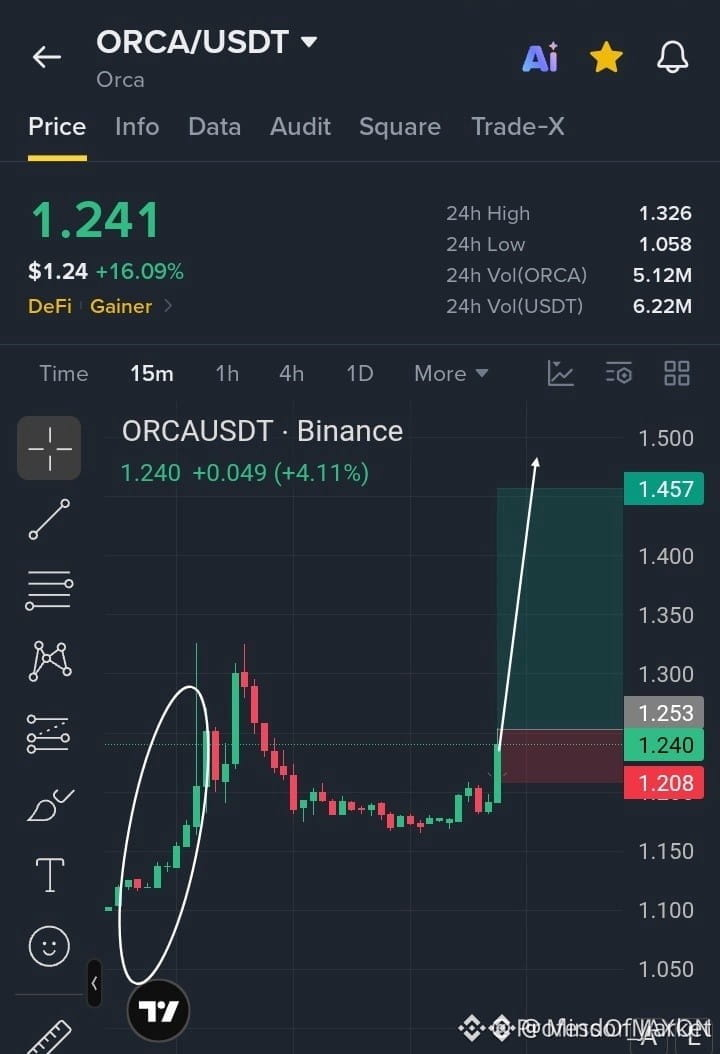
🚨 $ORCA CLEARS RANGE RESISTANCE WITH AGGRESSIVE EXPANSION VOLUME 💥
Entry: 1.230 - 1.245 ⚡
Target: 1.457 🚀
Stop Loss: 1.208 ⚠️
Institutional order flow on $ORCA has flipped aggressively bullish as buyers absorb overhead supply following a clean range breakout. 📊 The impulsive expansion candle confirms smart money intent to clear resting liquidity pools above previous consolidation highs. ⚡
As long as structural support at the local demand cluster holds firm, price discovery toward upper resistance remains favored. 💡 Are you entering on this initial retest of the breakout zone or waiting for structural confirmation? 👇
⚠️ Not financial advice. Always manage your risk. 🛡️
🏷️ #ORCA #LongSetup #MarketStructure #Breakout #Crypto
🔥 🦈
🚨 $ORCA CLEARS RANGE RESISTANCE WITH AGGRESSIVE EXPANSION VOLUME 💥
Entry: 1.230 - 1.245 ⚡
Target: 1.457 🚀
Stop Loss: 1.208 ⚠️
Institutional order flow on $ORCA has flipped aggressively bullish as buyers absorb overhead supply following a clean range breakout. 📊 The impulsive expansion candle confirms smart money intent to clear resting liquidity pools above previous consolidation highs. ⚡
As long as structural support at the local demand cluster holds firm, price discovery toward upper resistance remains favored. 💡 Are you entering on this initial retest of the breakout zone or waiting for structural confirmation? 👇
⚠️ Not financial advice. Always manage your risk. 🛡️
🏷️ #ORCA #LongSetup #MarketStructure #Breakout #Crypto
🔥 🦈
Entry: 1.230 - 1.245 ⚡
Target: 1.457 🚀
Stop Loss: 1.208 ⚠️
Institutional order flow on $ORCA has flipped aggressively bullish as buyers absorb overhead supply following a clean range breakout. 📊 The impulsive expansion candle confirms smart money intent to clear resting liquidity pools above previous consolidation highs. ⚡
As long as structural support at the local demand cluster holds firm, price discovery toward upper resistance remains favored. 💡 Are you entering on this initial retest of the breakout zone or waiting for structural confirmation? 👇
⚠️ Not financial advice. Always manage your risk. 🛡️
🏷️ #ORCA #LongSetup #MarketStructure #Breakout #Crypto
🔥 🦈
2

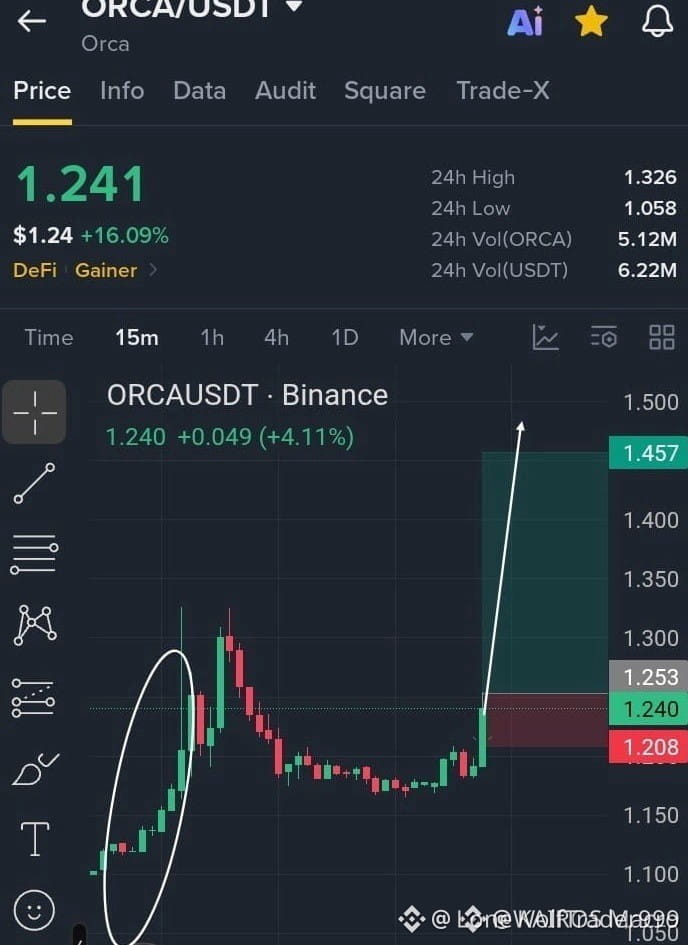
🚨 $ORCA SHATTERS RANGE RESISTANCE AS BUYERS IGNITE A MASSIVE MOMENTUM BREAKOUT! 🚀
Entry: 1.230 - 1.245 ⚡
Target: 1.300, 1.360, 1.457 🚀
Stop Loss: 1.208 ⚠️
That impulsive green candle slicing through 1.25 is a masterclass in range expansion after a grueling accumulation phase. 📊 Order flow shifted instantly as aggressive bids swallowed every lingering ask on the order book. ⚡
We are positioning right inside the reaction zone to ride this velocity higher while keeping risk strictly defined below local structural support. 💡 Are you already riding this breakout wave or waiting for a deeper retest? 👇
⚠️ Not financial advice. Always manage your risk. 🛡️
🏷️ #ORCA #LongSetup #Breakout #Crypto
🔥 💎
🚨 $ORCA SHATTERS RANGE RESISTANCE AS BUYERS IGNITE A MASSIVE MOMENTUM BREAKOUT! 🚀
Entry: 1.230 - 1.245 ⚡
Target: 1.300, 1.360, 1.457 🚀
Stop Loss: 1.208 ⚠️
That impulsive green candle slicing through 1.25 is a masterclass in range expansion after a grueling accumulation phase. 📊 Order flow shifted instantly as aggressive bids swallowed every lingering ask on the order book. ⚡
We are positioning right inside the reaction zone to ride this velocity higher while keeping risk strictly defined below local structural support. 💡 Are you already riding this breakout wave or waiting for a deeper retest? 👇
⚠️ Not financial advice. Always manage your risk. 🛡️
🏷️ #ORCA #LongSetup #Breakout #Crypto
🔥 💎
Entry: 1.230 - 1.245 ⚡
Target: 1.300, 1.360, 1.457 🚀
Stop Loss: 1.208 ⚠️
That impulsive green candle slicing through 1.25 is a masterclass in range expansion after a grueling accumulation phase. 📊 Order flow shifted instantly as aggressive bids swallowed every lingering ask on the order book. ⚡
We are positioning right inside the reaction zone to ride this velocity higher while keeping risk strictly defined below local structural support. 💡 Are you already riding this breakout wave or waiting for a deeper retest? 👇
⚠️ Not financial advice. Always manage your risk. 🛡️
🏷️ #ORCA #LongSetup #Breakout #Crypto
🔥 💎

·
--
$ORCA has one level that matters today at $1.3260
Price sits 11.3 percent below that high right now
A clean break opens up momentum while a hard rejection sends it drifting back down toward the $1.0580 floor
Open $ORCA and set an alert at that level
Break or reject? 👀
#ORCA #PriceAction
$ORCA has one level that matters today at $1.3260
Price sits 11.3 percent below that high right now
A clean break opens up momentum while a hard rejection sends it drifting back down toward the $1.0580 floor
Open $ORCA and set an alert at that level
Break or reject? 👀
#ORCA #PriceAction
Price sits 11.3 percent below that high right now
A clean break opens up momentum while a hard rejection sends it drifting back down toward the $1.0580 floor
Open $ORCA and set an alert at that level
Break or reject? 👀
#ORCA #PriceAction

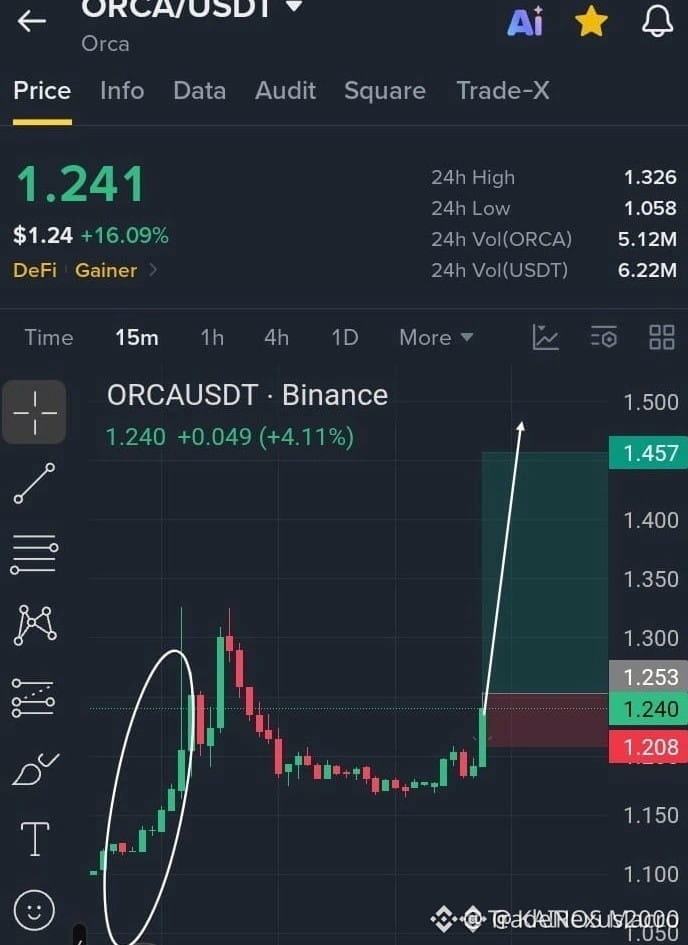
🚨 $ORCA BREAKS KEY ACCUMULATION RANGE WITH IMPULSIVE VOLUME EXPANSION! 💥
Entry: 1.230 to 1.245 ⚡
Target: 1.457 🚀
Stop Loss: 1.208 ⚠️
Institutional order flow just flipped this multi-week consolidation zone, absorbing overhead liquidity with aggressive buy-side pressure. 📊 The expansion past 1.25 signals a clear shift in market structure as smart money steps in to defend the structural lows. 💡
Managing risk through this volatility requires respecting invalidation levels while riding the momentum ignition. 🌊 Are you positioning alongside this breakout or waiting for a minor retest of the range highs? 👇
⚠️ Not financial advice. Always manage your risk. 🛡️
🏷️ #ORCA #LongSetup #SmartMoney #Breakout #Crypto
🔥 💎
🚨 $ORCA BREAKS KEY ACCUMULATION RANGE WITH IMPULSIVE VOLUME EXPANSION! 💥
Entry: 1.230 to 1.245 ⚡
Target: 1.457 🚀
Stop Loss: 1.208 ⚠️
Institutional order flow just flipped this multi-week consolidation zone, absorbing overhead liquidity with aggressive buy-side pressure. 📊 The expansion past 1.25 signals a clear shift in market structure as smart money steps in to defend the structural lows. 💡
Managing risk through this volatility requires respecting invalidation levels while riding the momentum ignition. 🌊 Are you positioning alongside this breakout or waiting for a minor retest of the range highs? 👇
⚠️ Not financial advice. Always manage your risk. 🛡️
🏷️ #ORCA #LongSetup #SmartMoney #Breakout #Crypto
🔥 💎
Entry: 1.230 to 1.245 ⚡
Target: 1.457 🚀
Stop Loss: 1.208 ⚠️
Institutional order flow just flipped this multi-week consolidation zone, absorbing overhead liquidity with aggressive buy-side pressure. 📊 The expansion past 1.25 signals a clear shift in market structure as smart money steps in to defend the structural lows. 💡
Managing risk through this volatility requires respecting invalidation levels while riding the momentum ignition. 🌊 Are you positioning alongside this breakout or waiting for a minor retest of the range highs? 👇
⚠️ Not financial advice. Always manage your risk. 🛡️
🏷️ #ORCA #LongSetup #SmartMoney #Breakout #Crypto
🔥 💎
12

·
--
Bullish
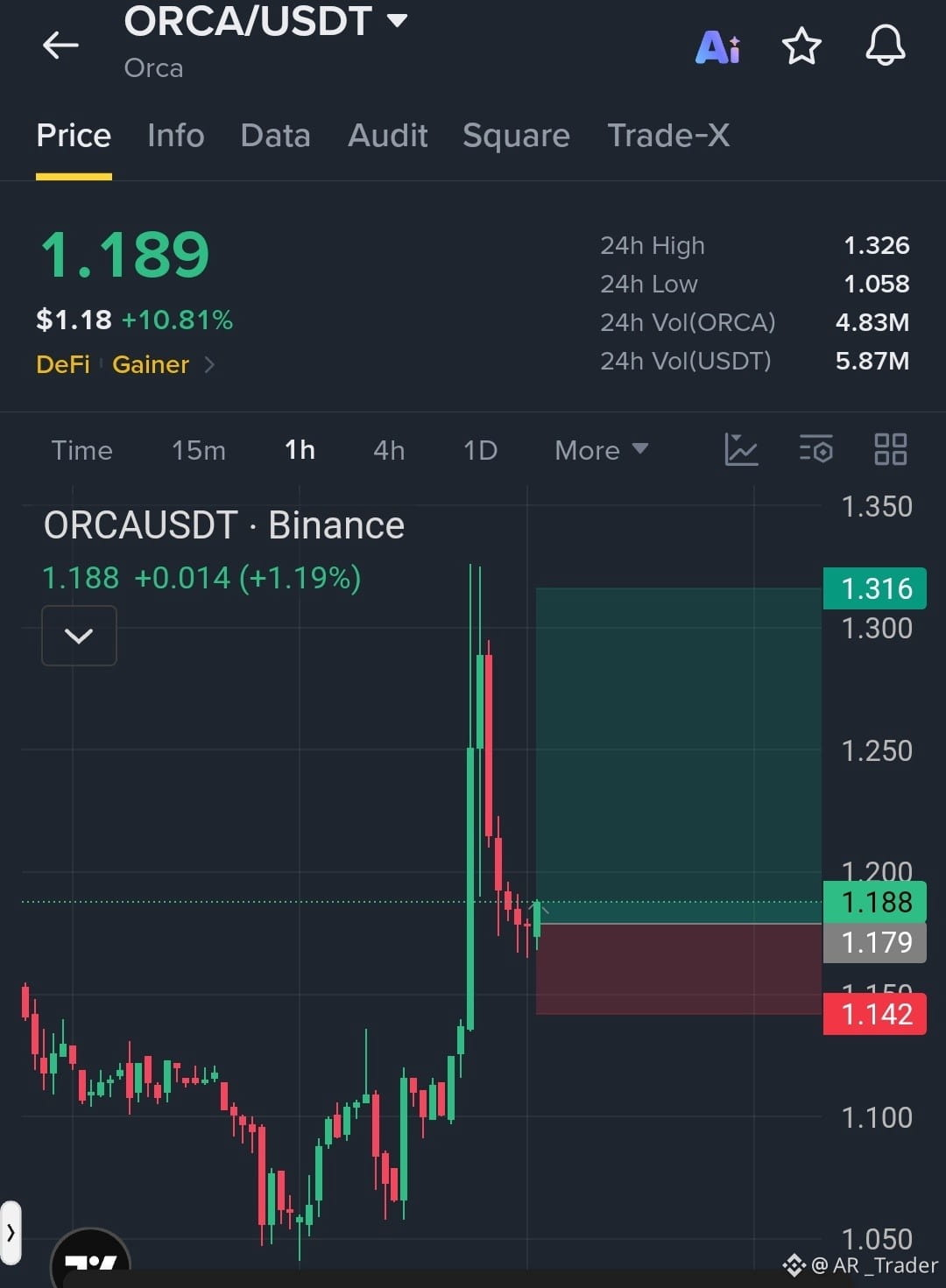
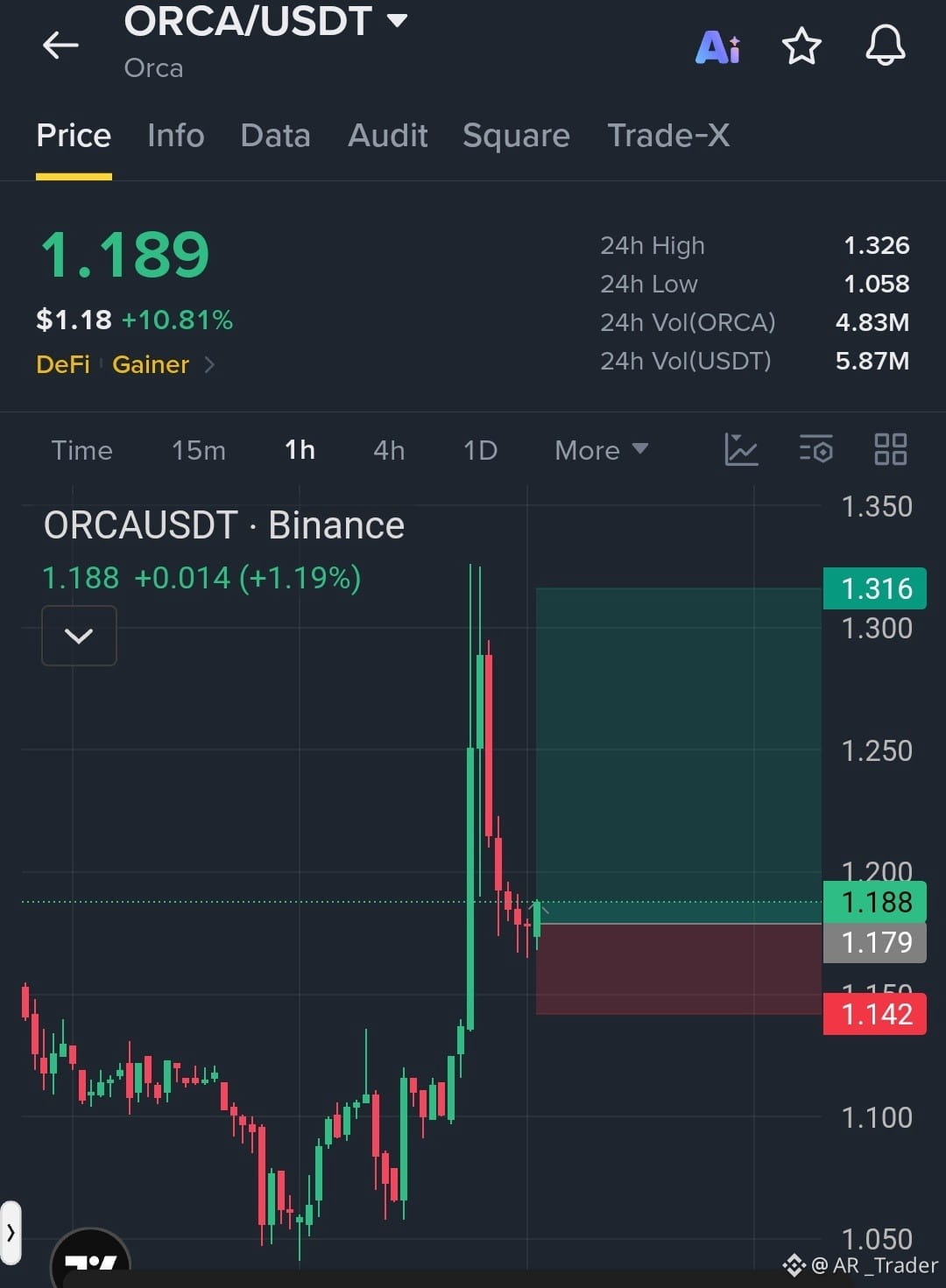
$ORCA /USDT Bulls Are Holding the Recovery Zone, Setting Up for Another Push Toward $1.316
Trade Setup: LONG
Entry Zone: $1.179 – $1.188
TP1: $1.225
TP2: $1.270
TP3: $1.316
SL: $1.142
#ORCA has delivered a strong bullish breakout and is now consolidating above the $1.179 support zone. If buyers maintain this level, another upward move toward the next resistance targets could follow$ORCA
{future}(ORCAUSDT)
.
Manage risk carefully and wait for confirmation before entering.
$ORCA /USDT Bulls Are Holding the Recovery Zone, Setting Up for Another Push Toward $1.316
Trade Setup: LONG
Entry Zone: $1.179 – $1.188
TP1: $1.225
TP2: $1.270
TP3: $1.316
SL: $1.142
#ORCA has delivered a strong bullish breakout and is now consolidating above the $1.179 support zone. If buyers maintain this level, another upward move toward the next resistance targets could follow$ORCA
.
Manage risk carefully and wait for confirmation before entering.
Trade Setup: LONG
Entry Zone: $1.179 – $1.188
TP1: $1.225
TP2: $1.270
TP3: $1.316
SL: $1.142
#ORCA has delivered a strong bullish breakout and is now consolidating above the $1.179 support zone. If buyers maintain this level, another upward move toward the next resistance targets could follow$ORCA
.
Manage risk carefully and wait for confirmation before entering.
32

·
--
$ORCA
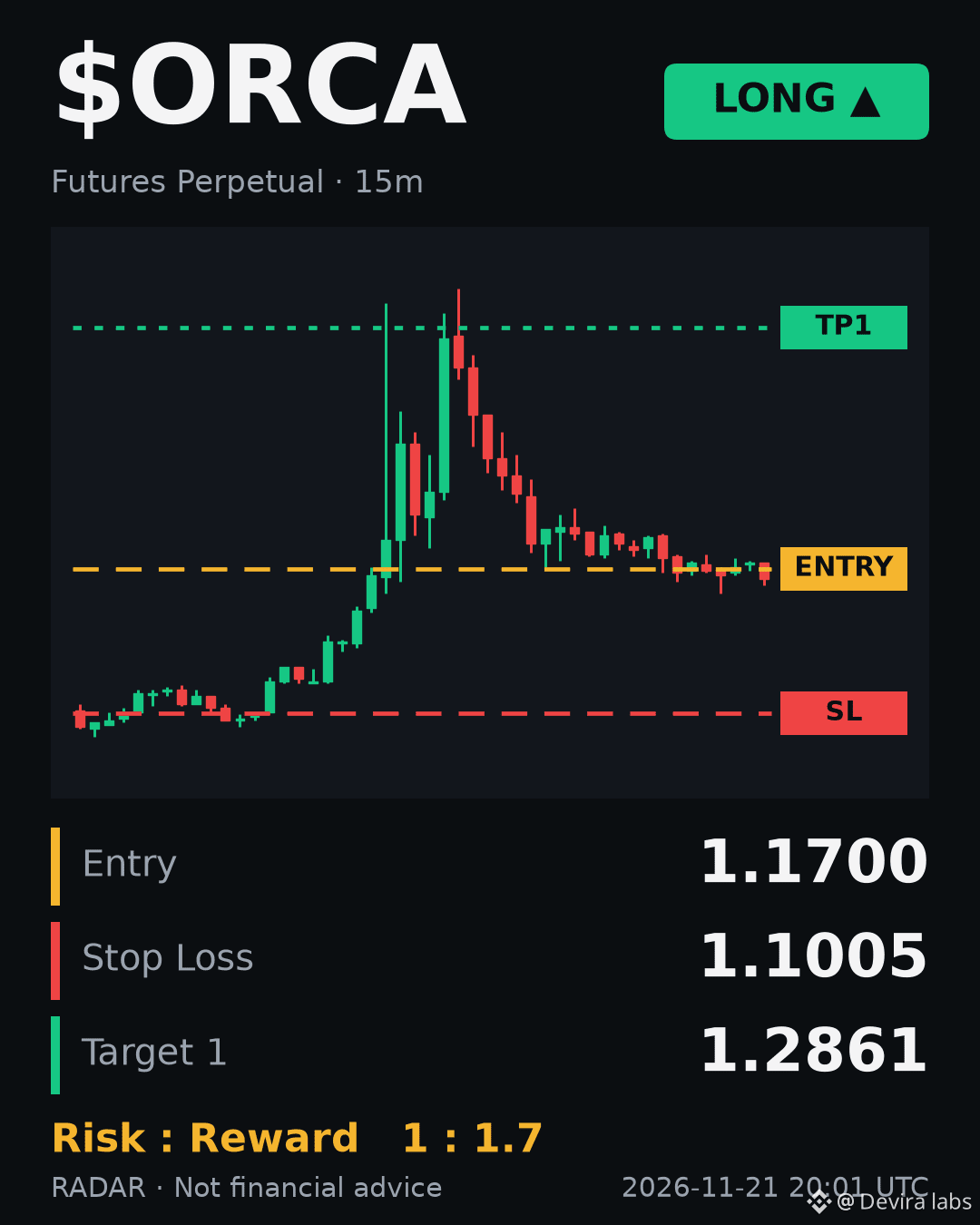
Multiple indicators are showing strong alignment for ORCA, suggesting buyers may look to establish control from current levels.
The technical setup leans constructive for upside continuation, though price action continues to operate within a broader consolidation.
Entry: 1.17
SL: 1.10046429
TP: 1.28612464
R:R: 1:1.67
Risk:
• Range market conditions could limit upside potential.
Can ORCA push past range resistance, or will sellers cap this move?
This is my personal trading plan, not financial advice. Risk management comes first.
#RADAR #Crypto #ORCA
$ORCA
Multiple indicators are showing strong alignment for ORCA, suggesting buyers may look to establish control from current levels.
The technical setup leans constructive for upside continuation, though price action continues to operate within a broader consolidation.
Entry: 1.17
SL: 1.10046429
TP: 1.28612464
R:R: 1:1.67
Risk:
• Range market conditions could limit upside potential.
Can ORCA push past range resistance, or will sellers cap this move?
This is my personal trading plan, not financial advice. Risk management comes first.
#RADAR #Crypto #ORCA
Multiple indicators are showing strong alignment for ORCA, suggesting buyers may look to establish control from current levels.
The technical setup leans constructive for upside continuation, though price action continues to operate within a broader consolidation.
Entry: 1.17
SL: 1.10046429
TP: 1.28612464
R:R: 1:1.67
Risk:
• Range market conditions could limit upside potential.
Can ORCA push past range resistance, or will sellers cap this move?
This is my personal trading plan, not financial advice. Risk management comes first.
#RADAR #Crypto #ORCA


🐋 $ORCA /USDT — 🔴 SHORT · Conf 70%
━━━━━━━━━━━━━━
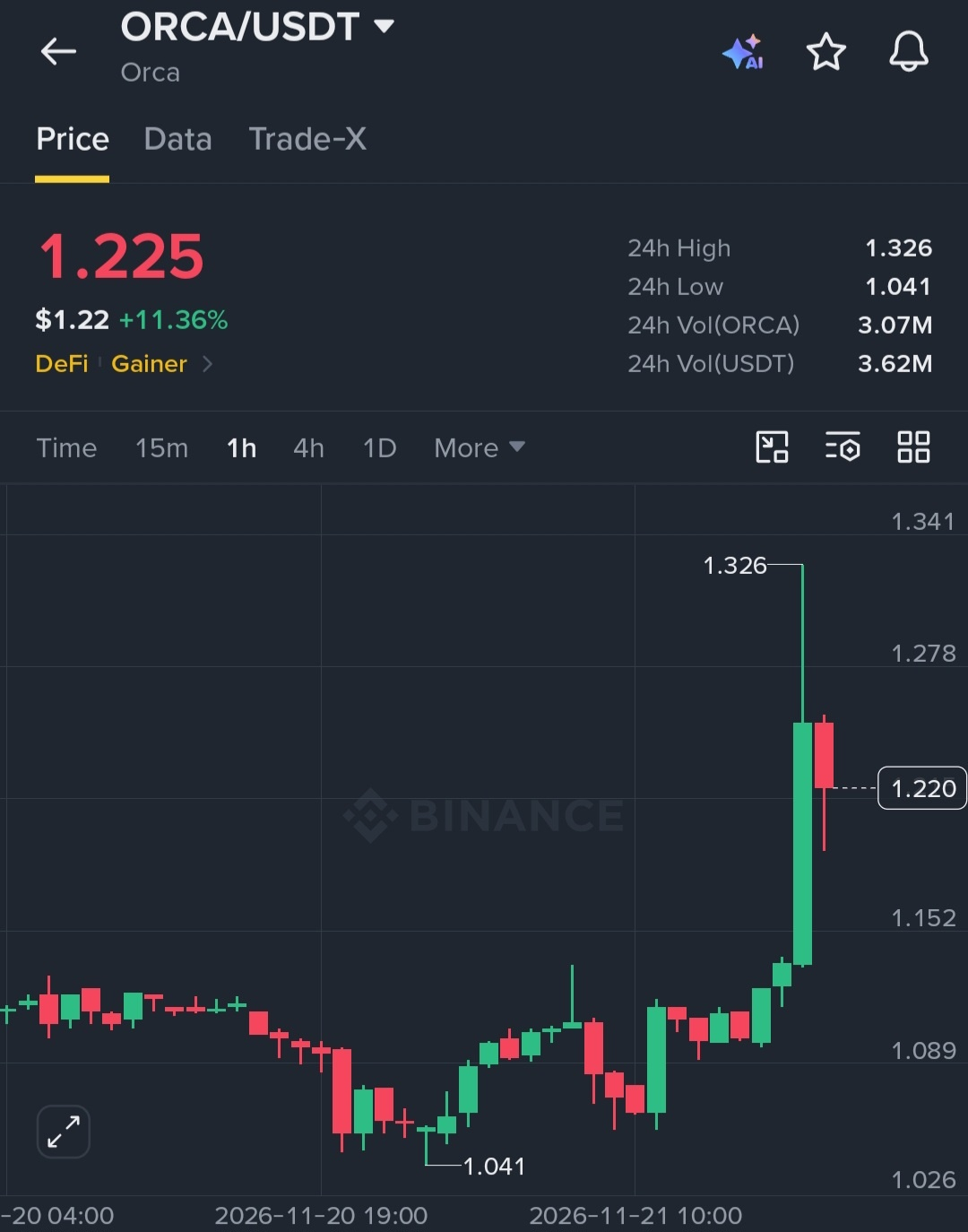
📍 Entry: 1.221 – 1.229
🛑 SL: 1.315
🎯 TP1: 1.164
✅ TP2: 1.115
🏆 TP3: 1.041
━━━━━━━━━━━━━━
🔎 RSI is near 67 after a vertical 1H candle to 1.326 that the next candle already rejected (mixed: 1H and 4H are up, 1D is down).
🧠 $ORCA : Orca is a concentrated-liquidity DEX on Solana where LPs pick the price range their capital works in; risk is that fee income depends on Solana trading volume and competition from other DEXs.
💬 Do concentrated-liquidity LPs on Solana actually out-earn passive holders after rebalancing costs?
⚠️ Not financial advice. Manage your risk.
#ORCA #Orcathewhale #SOL #Dex #OrcaToTheMoon
{future}(ORCAUSDT)
🐋 $ORCA /USDT — 🔴 SHORT · Conf 70%
━━━━━━━━━━━━━━
📍 Entry: 1.221 – 1.229
🛑 SL: 1.315
🎯 TP1: 1.164
✅ TP2: 1.115
🏆 TP3: 1.041
━━━━━━━━━━━━━━
🔎 RSI is near 67 after a vertical 1H candle to 1.326 that the next candle already rejected (mixed: 1H and 4H are up, 1D is down).
🧠 $ORCA : Orca is a concentrated-liquidity DEX on Solana where LPs pick the price range their capital works in; risk is that fee income depends on Solana trading volume and competition from other DEXs.
💬 Do concentrated-liquidity LPs on Solana actually out-earn passive holders after rebalancing costs?
⚠️ Not financial advice. Manage your risk.
#ORCA #Orcathewhale #SOL #Dex #OrcaToTheMoon
━━━━━━━━━━━━━━
📍 Entry: 1.221 – 1.229
🛑 SL: 1.315
🎯 TP1: 1.164
✅ TP2: 1.115
🏆 TP3: 1.041
━━━━━━━━━━━━━━
🔎 RSI is near 67 after a vertical 1H candle to 1.326 that the next candle already rejected (mixed: 1H and 4H are up, 1D is down).
🧠 $ORCA : Orca is a concentrated-liquidity DEX on Solana where LPs pick the price range their capital works in; risk is that fee income depends on Solana trading volume and competition from other DEXs.
💬 Do concentrated-liquidity LPs on Solana actually out-earn passive holders after rebalancing costs?
⚠️ Not financial advice. Manage your risk.
#ORCA #Orcathewhale #SOL #Dex #OrcaToTheMoon

1
323
·
--
$ORCA volume is 13.0x its weekly average and most people are reading it wrong
Look at the $ORCA 24h volume sitting at 5.7M dollars while the 7 day average is barely a fraction of that
Price is up 10.7 percent right now trading at $1.1930 inside a 24h range between $1.0410 and $1.3260
Divide that daily volume by the weekly average and you get 13.0x backing this exact move
Low volume moves fade because nobody cares but massive volume means real money just entered the order book
Check this ratio yourself by opening any chart and comparing the 24h volume column against the simple moving average of volume
Never trust a price pump unless the volume number matches the ambition of the candle
What is your minimum volume multiplier before you even look at a chart
#ORCA #TradingTips
$ORCA volume is 13.0x its weekly average and most people are reading it wrong
Look at the $ORCA 24h volume sitting at 5.7M dollars while the 7 day average is barely a fraction of that
Price is up 10.7 percent right now trading at $1.1930 inside a 24h range between $1.0410 and $1.3260
Divide that daily volume by the weekly average and you get 13.0x backing this exact move
Low volume moves fade because nobody cares but massive volume means real money just entered the order book
Check this ratio yourself by opening any chart and comparing the 24h volume column against the simple moving average of volume
Never trust a price pump unless the volume number matches the ambition of the candle
What is your minimum volume multiplier before you even look at a chart
#ORCA #TradingTips
Look at the $ORCA 24h volume sitting at 5.7M dollars while the 7 day average is barely a fraction of that
Price is up 10.7 percent right now trading at $1.1930 inside a 24h range between $1.0410 and $1.3260
Divide that daily volume by the weekly average and you get 13.0x backing this exact move
Low volume moves fade because nobody cares but massive volume means real money just entered the order book
Check this ratio yourself by opening any chart and comparing the 24h volume column against the simple moving average of volume
Never trust a price pump unless the volume number matches the ambition of the candle
What is your minimum volume multiplier before you even look at a chart
#ORCA #TradingTips
2

·
--
$ORCA +11.21% | $BARD +10.96% | $ENSO +10.28%
#ORCA at $1.20 up 11.21% on $5.7M volume. Its claim as the most user‑friendly DEX on Solana seems to be resonating.
#BARD at $0.0982 up 10.96% with $7.1M traded. Lombard’s on‑chain Bitcoin capital markets angle is gaining traction.
#ENSO at $0.4720 up 10.28% on $7.4M volume. The steady climb suggests fresh interest despite overall market calm.
The clustered double‑digit gains and solid volumes could hint at a short‑term risk‑on swing in Solana‑centric assets.
#Write2Earn #Binance
$ORCA +11.21% | $BARD +10.96% | $ENSO +10.28%
#ORCA at $1.20 up 11.21% on $5.7M volume. Its claim as the most user‑friendly DEX on Solana seems to be resonating.
#BARD at $0.0982 up 10.96% with $7.1M traded. Lombard’s on‑chain Bitcoin capital markets angle is gaining traction.
#ENSO at $0.4720 up 10.28% on $7.4M volume. The steady climb suggests fresh interest despite overall market calm.
The clustered double‑digit gains and solid volumes could hint at a short‑term risk‑on swing in Solana‑centric assets.
#Write2Earn #Binance
#ORCA at $1.20 up 11.21% on $5.7M volume. Its claim as the most user‑friendly DEX on Solana seems to be resonating.
#BARD at $0.0982 up 10.96% with $7.1M traded. Lombard’s on‑chain Bitcoin capital markets angle is gaining traction.
#ENSO at $0.4720 up 10.28% on $7.4M volume. The steady climb suggests fresh interest despite overall market calm.
The clustered double‑digit gains and solid volumes could hint at a short‑term risk‑on swing in Solana‑centric assets.
#Write2Earn #Binance
8

$ORCA is reaching an active decision zone where momentum can expand quickly.
$ORCA is still trading with strength, and dip buyers keep defending the latest breakout area.
Setup LONG $ORCA (max 10x)
🎯 Entry: 1.18 - 1.189
🛑 SL: 1.055
✅ TP1: 1.201
✅ TP2: 1.217
✅ TP3: 1.234
• Fresh 24h volatility is creating a cleaner setup
• Relative volume is keeping this chart active on watchlists
Do you prefer the breakout on $ORCA, or the retest entry?
Trade $ORCA here 👇
#ORCA #MarketStructure #TradingSetup
$ORCA is reaching an active decision zone where momentum can expand quickly.
$ORCA is still trading with strength, and dip buyers keep defending the latest breakout area.
Setup LONG $ORCA (max 10x)
🎯 Entry: 1.18 - 1.189
🛑 SL: 1.055
✅ TP1: 1.201
✅ TP2: 1.217
✅ TP3: 1.234
• Fresh 24h volatility is creating a cleaner setup
• Relative volume is keeping this chart active on watchlists
Do you prefer the breakout on $ORCA , or the retest entry?
Trade $ORCA here 👇
#ORCA #MarketStructure #TradingSetup
$ORCA is still trading with strength, and dip buyers keep defending the latest breakout area.
Setup LONG $ORCA (max 10x)
🎯 Entry: 1.18 - 1.189
🛑 SL: 1.055
✅ TP1: 1.201
✅ TP2: 1.217
✅ TP3: 1.234
• Fresh 24h volatility is creating a cleaner setup
• Relative volume is keeping this chart active on watchlists
Do you prefer the breakout on $ORCA , or the retest entry?
Trade $ORCA here 👇
#ORCA #MarketStructure #TradingSetup
1


Article
🚀 Altcoin Radar: RARE, USUAL & ORCA Catching Heavy Volume{future}(ORCAUSDT)
{future}(RAREUSDT)
{future}(USUALUSDT)
Capital rotation across mid- and small-cap tokens is accelerating as traders hunt high-momentum setups across NFT infrastructure, decentralized stablecoins, and Solana DEX ecosystems. While broader market liquidity remains selective, three distinct tickers are standing out with surging 24-hour trading activity and clear technical battlegrounds:
SuperRare ($RARE ): Leading the speculative turnover in NFT infrastructure, RARE is pulling in over $80M–$88M in 24-hour trading volume while holding steady around the $0.0152 mark. That massive volume-to-market-cap ratio highlights aggressive intraday order-book participation as momentum traders rotate back into high-beta digital art and creator tokens.
Usual ($USUAL ): Carving out steady accumulation within the decentralized stablecoin and RWA yield narrative, USUAL is trading near $0.0109 (up roughly +3.6% on the day) backed by $31M in 24-hour volume. As yield-bearing stablecoin protocols like USD0 continue attracting on-chain liquidity, USUAL’s controlled volume profile points to sustained buyer interest around structural support.
Orca ($ORCA ): Acting as a primary liquidity barometer for Solana DeFi, ORCA is trading around $1.18 on roughly $45M in daily volume as on-chain decentralized exchange activity picks up speed. Holding firm above key intraday support keeps bullish continuation setups firmly in play if Solana ecosystem volume remains elevated.
With liquidity expanding sharply across all three charts, breakout volatility and rapid intraday swings are front and center—making patience at key support zones and disciplined risk management essential.
Which of these three—RARE, USUAL, or ORCA—is on your watchlist today? Drop your key levels and targets below! 👇
#LearnWithLedgerLumina #ORCA #usual #RARE #defi
Disclaimer: This market update is for informational purposes only and does not constitute financial or investment advice. Always DYOR and manage risk responsibly.
🚀 Altcoin Radar: RARE, USUAL & ORCA Catching Heavy Volume
Capital rotation across mid- and small-cap tokens is accelerating as traders hunt high-momentum setups across NFT infrastructure, decentralized stablecoins, and Solana DEX ecosystems. While broader market liquidity remains selective, three distinct tickers are standing out with surging 24-hour trading activity and clear technical battlegrounds:
SuperRare ($RARE ): Leading the speculative turnover in NFT infrastructure, RARE is pulling in over $80M–$88M in 24-hour trading volume while holding steady around the $0.0152 mark. That massive volume-to-market-cap ratio highlights aggressive intraday order-book participation as momentum traders rotate back into high-beta digital art and creator tokens.
Usual ($USUAL ): Carving out steady accumulation within the decentralized stablecoin and RWA yield narrative, USUAL is trading near $0.0109 (up roughly +3.6% on the day) backed by $31M in 24-hour volume. As yield-bearing stablecoin protocols like USD0 continue attracting on-chain liquidity, USUAL’s controlled volume profile points to sustained buyer interest around structural support.
Orca ($ORCA ): Acting as a primary liquidity barometer for Solana DeFi, ORCA is trading around $1.18 on roughly $45M in daily volume as on-chain decentralized exchange activity picks up speed. Holding firm above key intraday support keeps bullish continuation setups firmly in play if Solana ecosystem volume remains elevated.
With liquidity expanding sharply across all three charts, breakout volatility and rapid intraday swings are front and center—making patience at key support zones and disciplined risk management essential.
Which of these three—RARE, USUAL, or ORCA—is on your watchlist today? Drop your key levels and targets below! 👇
#LearnWithLedgerLumina #ORCA #usual #RARE #defi
Disclaimer: This market update is for informational purposes only and does not constitute financial or investment advice. Always DYOR and manage risk responsibly.
SuperRare ($RARE ): Leading the speculative turnover in NFT infrastructure, RARE is pulling in over $80M–$88M in 24-hour trading volume while holding steady around the $0.0152 mark. That massive volume-to-market-cap ratio highlights aggressive intraday order-book participation as momentum traders rotate back into high-beta digital art and creator tokens.
Usual ($USUAL ): Carving out steady accumulation within the decentralized stablecoin and RWA yield narrative, USUAL is trading near $0.0109 (up roughly +3.6% on the day) backed by $31M in 24-hour volume. As yield-bearing stablecoin protocols like USD0 continue attracting on-chain liquidity, USUAL’s controlled volume profile points to sustained buyer interest around structural support.
Orca ($ORCA ): Acting as a primary liquidity barometer for Solana DeFi, ORCA is trading around $1.18 on roughly $45M in daily volume as on-chain decentralized exchange activity picks up speed. Holding firm above key intraday support keeps bullish continuation setups firmly in play if Solana ecosystem volume remains elevated.
With liquidity expanding sharply across all three charts, breakout volatility and rapid intraday swings are front and center—making patience at key support zones and disciplined risk management essential.
Which of these three—RARE, USUAL, or ORCA—is on your watchlist today? Drop your key levels and targets below! 👇
#LearnWithLedgerLumina #ORCA #usual #RARE #defi
Disclaimer: This market update is for informational purposes only and does not constitute financial or investment advice. Always DYOR and manage risk responsibly.
2
283

·
--
Orca Surge: $ORCA Swims Into New Waters 🐋
Price action – $ORCA is trading at $1.2210 on Binance Spot (ORCA/USDT), up 16.07% over the past 24 hours. Volume sits around $5.2 M, and sentiment remains neutral as the rally lacks a catalyst.
Key levels – Immediate support is anchored near $1.10, a floor that held during the last corrective dip. The next resistance cluster lies between $1.33‑$1.38, where sellers previously stepped in. The mid‑range pivot sits at roughly $1.25, acting as a potential swing point if buying pressure wanes.
Outlook – The analyst view stays cautious: the 16% jump appears stretched relative to fundamentals. A pullback toward the $1.10 support zone is likely if profit‑taking intensifies. Keep an eye on volume and order‑flow for signs of a reversal before considering any upside bias.
#Altcoin #CryptoAnalysis #Orca
Orca Surge: $ORCA Swims Into New Waters 🐋
Price action – $ORCA is trading at $1.2210 on Binance Spot (ORCA/USDT), up 16.07% over the past 24 hours. Volume sits around $5.2 M, and sentiment remains neutral as the rally lacks a catalyst.
Key levels – Immediate support is anchored near $1.10, a floor that held during the last corrective dip. The next resistance cluster lies between $1.33‑$1.38, where sellers previously stepped in. The mid‑range pivot sits at roughly $1.25, acting as a potential swing point if buying pressure wanes.
Outlook – The analyst view stays cautious: the 16% jump appears stretched relative to fundamentals. A pullback toward the $1.10 support zone is likely if profit‑taking intensifies. Keep an eye on volume and order‑flow for signs of a reversal before considering any upside bias.
#Altcoin #CryptoAnalysis #Orca
Price action – $ORCA is trading at $1.2210 on Binance Spot (ORCA/USDT), up 16.07% over the past 24 hours. Volume sits around $5.2 M, and sentiment remains neutral as the rally lacks a catalyst.
Key levels – Immediate support is anchored near $1.10, a floor that held during the last corrective dip. The next resistance cluster lies between $1.33‑$1.38, where sellers previously stepped in. The mid‑range pivot sits at roughly $1.25, acting as a potential swing point if buying pressure wanes.
Outlook – The analyst view stays cautious: the 16% jump appears stretched relative to fundamentals. A pullback toward the $1.10 support zone is likely if profit‑taking intensifies. Keep an eye on volume and order‑flow for signs of a reversal before considering any upside bias.
#Altcoin #CryptoAnalysis #Orca
2

·
--
Bearish
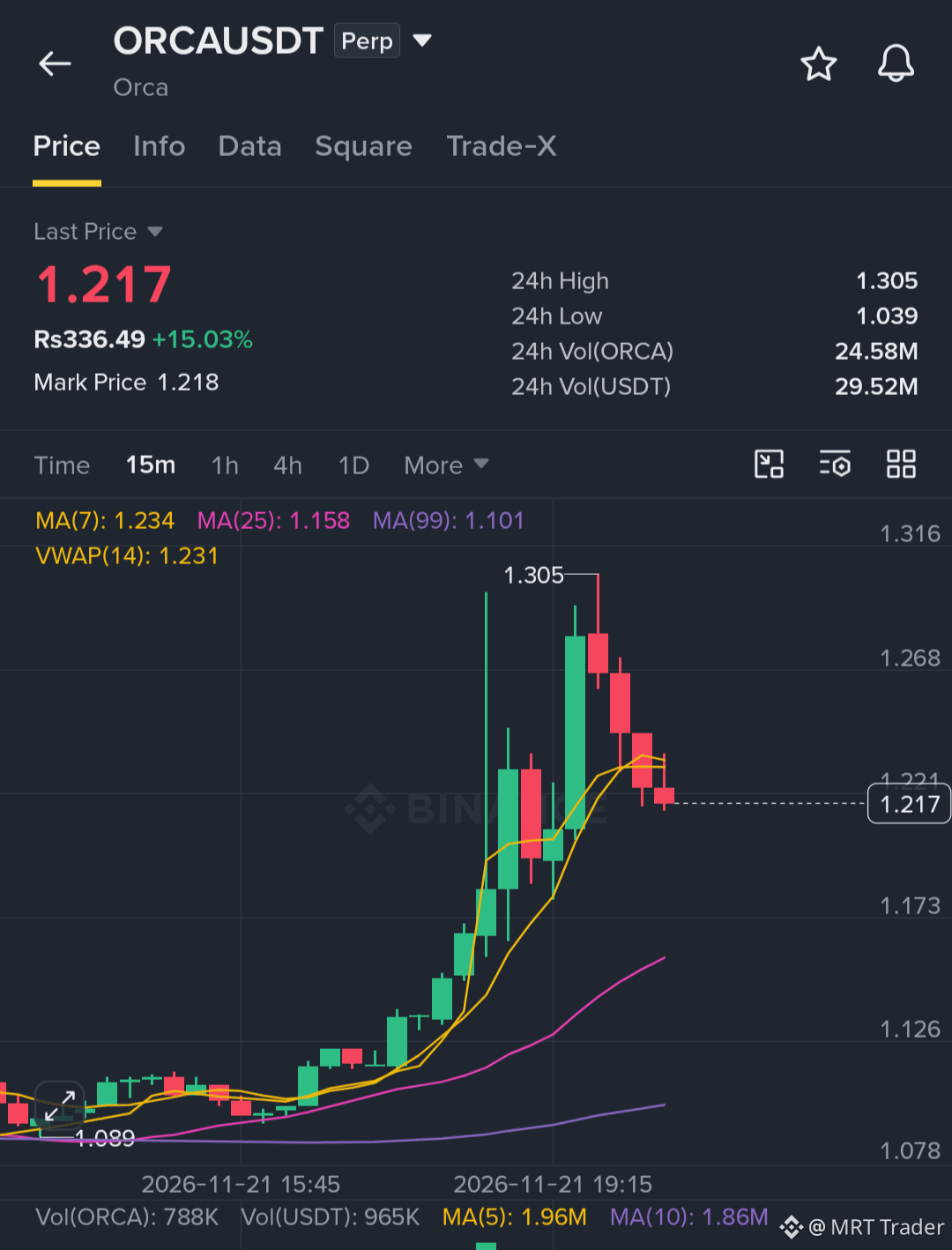
$ORCA is pulling back from the highs after a sharp run, and this zone near the short-term MAs could be where buyers step back in. 👀
Key Level
🟢 Bullish above $1.262
Trade Setup (Long)
🟢 Entry Zone: $1.185 – $1.222
🎯 Targets: $1.262 / $1.308 / $1.355
⛔ Stop Loss: $1.138
Hold your strength, consider entering on pullbacks, and always manage your risk.
Click here to buy now 👉 $ORCA
{future}(ORCAUSDT)
#ORCA #CanBTCReboundAfterFallingBelow60K?
$ORCA is pulling back from the highs after a sharp run, and this zone near the short-term MAs could be where buyers step back in. 👀
Key Level
🟢 Bullish above $1.262
Trade Setup (Long)
🟢 Entry Zone: $1.185 – $1.222
🎯 Targets: $1.262 / $1.308 / $1.355
⛔ Stop Loss: $1.138
Hold your strength, consider entering on pullbacks, and always manage your risk.
Click here to buy now 👉 $ORCA
#ORCA #CanBTCReboundAfterFallingBelow60K?
Key Level
🟢 Bullish above $1.262
Trade Setup (Long)
🟢 Entry Zone: $1.185 – $1.222
🎯 Targets: $1.262 / $1.308 / $1.355
⛔ Stop Loss: $1.138
Hold your strength, consider entering on pullbacks, and always manage your risk.
Click here to buy now 👉 $ORCA
#ORCA #CanBTCReboundAfterFallingBelow60K?
1
10

·
--
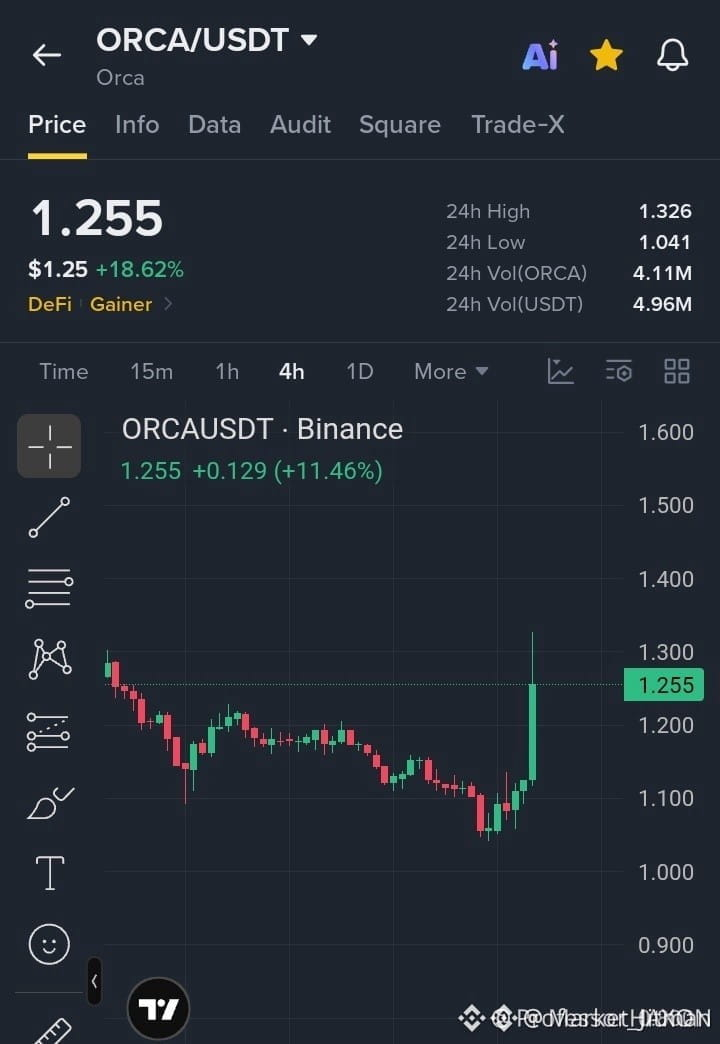
⚡ $ORCA BULLS SHATTER LOCAL RESISTANCE AS MOMENTUM SURGES TOWARD NEW HIGHS 🚀
Entry: $1.235 - $1.255 ⚡
Target: $1.300 / $1.360 / $1.420 🚀
Stop Loss: $1.195 ⚠️
Sellers tried to anchor the price near the $1.05 floor, but aggressive buyers stepped in and flipped the script with relentless volume expansion. 📊
The breakout above the consolidation range signals a clear shift in market control, opening a clean runway toward upper resistance clusters. ⚡
Are you positioning for the continuation move or waiting for a deeper retest of support? 👇
⚠️ Not financial advice. Always manage your risk. 🛡️
🏷️ #ORCA #Breakout #Crypto #LongSetup #Trading
🔥 💎
⚡ $ORCA BULLS SHATTER LOCAL RESISTANCE AS MOMENTUM SURGES TOWARD NEW HIGHS 🚀
Entry: $1.235 - $1.255 ⚡
Target: $1.300 / $1.360 / $1.420 🚀
Stop Loss: $1.195 ⚠️
Sellers tried to anchor the price near the $1.05 floor, but aggressive buyers stepped in and flipped the script with relentless volume expansion. 📊
The breakout above the consolidation range signals a clear shift in market control, opening a clean runway toward upper resistance clusters. ⚡
Are you positioning for the continuation move or waiting for a deeper retest of support? 👇
⚠️ Not financial advice. Always manage your risk. 🛡️
🏷️ #ORCA #Breakout #Crypto #LongSetup #Trading
🔥 💎
Entry: $1.235 - $1.255 ⚡
Target: $1.300 / $1.360 / $1.420 🚀
Stop Loss: $1.195 ⚠️
Sellers tried to anchor the price near the $1.05 floor, but aggressive buyers stepped in and flipped the script with relentless volume expansion. 📊
The breakout above the consolidation range signals a clear shift in market control, opening a clean runway toward upper resistance clusters. ⚡
Are you positioning for the continuation move or waiting for a deeper retest of support? 👇
⚠️ Not financial advice. Always manage your risk. 🛡️
🏷️ #ORCA #Breakout #Crypto #LongSetup #Trading
🔥 💎
2

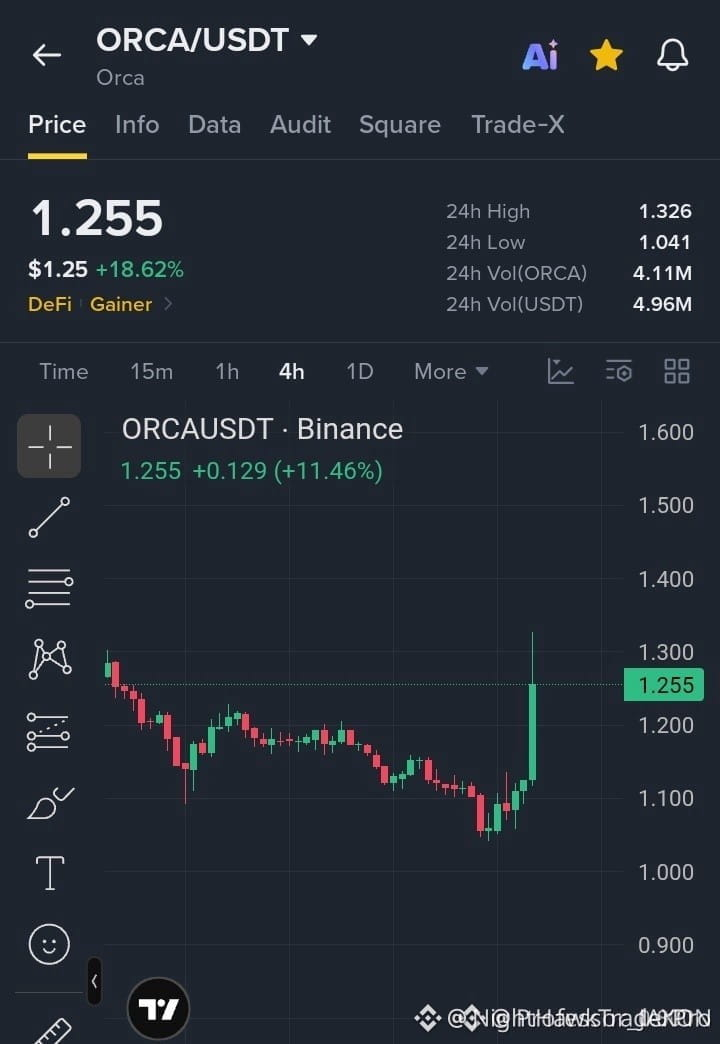
🚨 $ORCA BULLS CLAIM THE RANGE HIGH AS MOMENTUM EXPANDS RAPIDLY! 💥
Entry: 1.235 - 1.255 ⚡
Target: 1.420 🚀
Stop Loss: 1.195 ⚠️
After reclaiming the 1.05 institutional demand zone, buyers stepped in with aggressive order flow to invalidate previous overhead resistance. 📊 Volume profiles confirm strong structural accumulation underneath the breakout level as liquidity shifts firmly toward higher timeframes. 💡
Sustained acceptance above 1.25 opens a clean structural path toward upper liquidity pools without significant order book friction. ⚡ Are you positioning inside the current retest zone or waiting for confirmation higher? 👇
⚠️ Not financial advice. Always manage your risk. 🛡️
🏷️ #ORCA #LongSetup #Breakout #Crypto
🔥 💎
🚨 $ORCA BULLS CLAIM THE RANGE HIGH AS MOMENTUM EXPANDS RAPIDLY! 💥
Entry: 1.235 - 1.255 ⚡
Target: 1.420 🚀
Stop Loss: 1.195 ⚠️
After reclaiming the 1.05 institutional demand zone, buyers stepped in with aggressive order flow to invalidate previous overhead resistance. 📊 Volume profiles confirm strong structural accumulation underneath the breakout level as liquidity shifts firmly toward higher timeframes. 💡
Sustained acceptance above 1.25 opens a clean structural path toward upper liquidity pools without significant order book friction. ⚡ Are you positioning inside the current retest zone or waiting for confirmation higher? 👇
⚠️ Not financial advice. Always manage your risk. 🛡️
🏷️ #ORCA #LongSetup #Breakout #Crypto
🔥 💎
Entry: 1.235 - 1.255 ⚡
Target: 1.420 🚀
Stop Loss: 1.195 ⚠️
After reclaiming the 1.05 institutional demand zone, buyers stepped in with aggressive order flow to invalidate previous overhead resistance. 📊 Volume profiles confirm strong structural accumulation underneath the breakout level as liquidity shifts firmly toward higher timeframes. 💡
Sustained acceptance above 1.25 opens a clean structural path toward upper liquidity pools without significant order book friction. ⚡ Are you positioning inside the current retest zone or waiting for confirmation higher? 👇
⚠️ Not financial advice. Always manage your risk. 🛡️
🏷️ #ORCA #LongSetup #Breakout #Crypto
🔥 💎
34

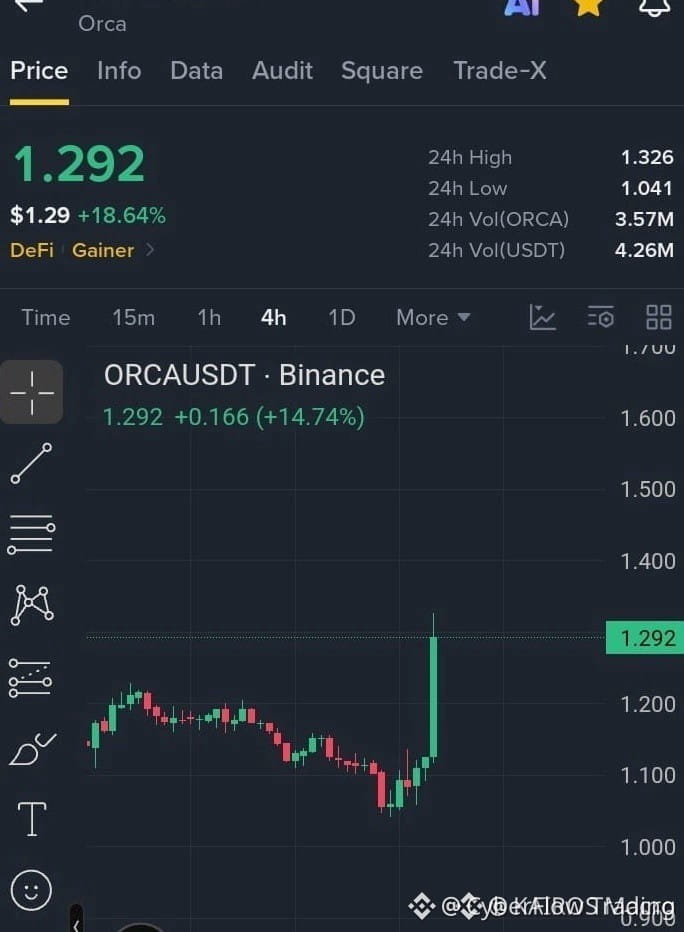
🚀 $ORCA BREAKING OUT WITH FEROCIOUS MOMENTUM AFTER CLEAN BOUNCE! 💥
Entry: 1.250 - 1.275 ⚡
Target: 1.450 🚀
Stop Loss: 1.205 ⚠️
That sharp rejection at 1.05 acted as an aggressive spring-loading mechanism for bulls, clearing out late shorts before the 4H impulse candle flipped the local market structure. Order flow shows institutional bids stacking neatly as volume surges across the board.
Handling the chop around these local highs takes discipline, but the structural shift favors continuation toward higher liquidity pools. 📊 Momentum indicators are resetting cleanly while buyers fiercely defend every minor retest. ⚡
💬 Are you riding this $ORCA expansion wave or waiting for a deeper pullback? 👇
⚠️ Not financial advice. Always manage your risk. 🛡️
🏷️ #ORCA #LongSetup #Breakout #Crypto
🔥 💎
🚀 $ORCA BREAKING OUT WITH FEROCIOUS MOMENTUM AFTER CLEAN BOUNCE! 💥
Entry: 1.250 - 1.275 ⚡
Target: 1.450 🚀
Stop Loss: 1.205 ⚠️
That sharp rejection at 1.05 acted as an aggressive spring-loading mechanism for bulls, clearing out late shorts before the 4H impulse candle flipped the local market structure. Order flow shows institutional bids stacking neatly as volume surges across the board.
Handling the chop around these local highs takes discipline, but the structural shift favors continuation toward higher liquidity pools. 📊 Momentum indicators are resetting cleanly while buyers fiercely defend every minor retest. ⚡
💬 Are you riding this $ORCA expansion wave or waiting for a deeper pullback? 👇
⚠️ Not financial advice. Always manage your risk. 🛡️
🏷️ #ORCA #LongSetup #Breakout #Crypto
🔥 💎
Entry: 1.250 - 1.275 ⚡
Target: 1.450 🚀
Stop Loss: 1.205 ⚠️
That sharp rejection at 1.05 acted as an aggressive spring-loading mechanism for bulls, clearing out late shorts before the 4H impulse candle flipped the local market structure. Order flow shows institutional bids stacking neatly as volume surges across the board.
Handling the chop around these local highs takes discipline, but the structural shift favors continuation toward higher liquidity pools. 📊 Momentum indicators are resetting cleanly while buyers fiercely defend every minor retest. ⚡
💬 Are you riding this $ORCA expansion wave or waiting for a deeper pullback? 👇
⚠️ Not financial advice. Always manage your risk. 🛡️
🏷️ #ORCA #LongSetup #Breakout #Crypto
🔥 💎
3

·
--
Article
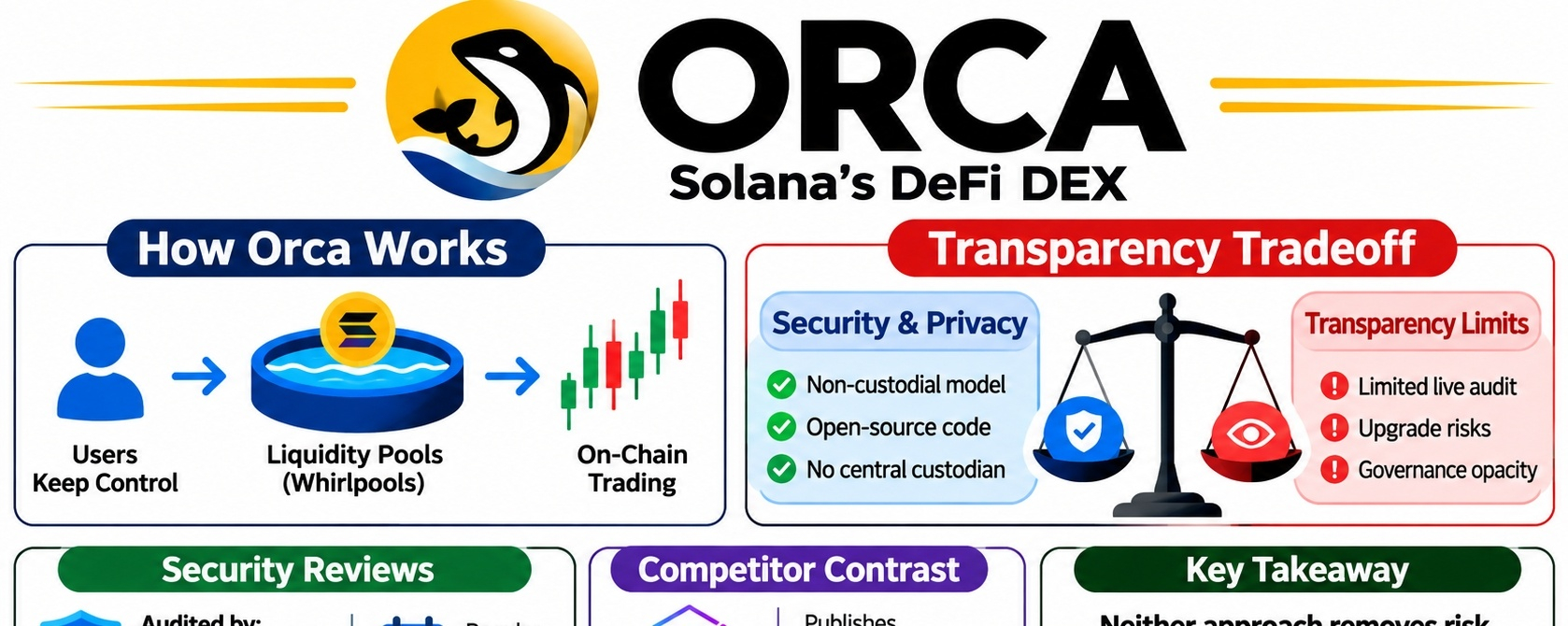
Orca is a non-custodial Solana DEX, meaning users retain control of theirOrca is a non-custodial Solana DEX, meaning users retain control of their assets while trades execute through smart contracts. But there is an important transparency tradeoff: public code does not mean every operational decision is independently visible. That's not an oversight. It's a stated design choice.
Orca prioritises permissionless trading and open-source infrastructure. This reduces reliance on traditional custodians, but holders still need to trust smart-contract execution, upgrade controls and governance decisions. The missing piece is continuous independent verification of every operational change.
Holders can inspect on-chain transactions, liquidity pools and publicly available Whirlpools code. Orca's smart contracts have been reviewed by named security firms, including Kudelski Security, Neodyme, OtterSec and Sec3. These are code audits, not continuous audits of live operations. Outsiders cannot treat past audit reports as proof that every future upgrade is risk-free.
Raydium offers a useful comparison. It also exposes on-chain liquidity and publishes independent security reviews, including work by Halborn and Sec3. Both models provide public scrutiny, but neither removes the risks of upgrade permissions and smart-contract vulnerabilities.
Neither approach removes counterparty risk. Orca reduces traditional custody dependence but leaves users exposed to protocol and governance risks. Its trust model leans on public code, on-chain execution and independent security reviews.
Which risk worries you more — trusting visible smart-contract infrastructure, or trusting the people and permissions behind protocol
upgrades? #Orca $ORCA
Orca is a non-custodial Solana DEX, meaning users retain control of their
Orca is a non-custodial Solana DEX, meaning users retain control of their assets while trades execute through smart contracts. But there is an important transparency tradeoff: public code does not mean every operational decision is independently visible. That's not an oversight. It's a stated design choice.
Orca prioritises permissionless trading and open-source infrastructure. This reduces reliance on traditional custodians, but holders still need to trust smart-contract execution, upgrade controls and governance decisions. The missing piece is continuous independent verification of every operational change.
Holders can inspect on-chain transactions, liquidity pools and publicly available Whirlpools code. Orca's smart contracts have been reviewed by named security firms, including Kudelski Security, Neodyme, OtterSec and Sec3. These are code audits, not continuous audits of live operations. Outsiders cannot treat past audit reports as proof that every future upgrade is risk-free.
Raydium offers a useful comparison. It also exposes on-chain liquidity and publishes independent security reviews, including work by Halborn and Sec3. Both models provide public scrutiny, but neither removes the risks of upgrade permissions and smart-contract vulnerabilities.
Neither approach removes counterparty risk. Orca reduces traditional custody dependence but leaves users exposed to protocol and governance risks. Its trust model leans on public code, on-chain execution and independent security reviews.
Which risk worries you more — trusting visible smart-contract infrastructure, or trusting the people and permissions behind protocol
upgrades? #Orca $ORCA
Orca prioritises permissionless trading and open-source infrastructure. This reduces reliance on traditional custodians, but holders still need to trust smart-contract execution, upgrade controls and governance decisions. The missing piece is continuous independent verification of every operational change.
Holders can inspect on-chain transactions, liquidity pools and publicly available Whirlpools code. Orca's smart contracts have been reviewed by named security firms, including Kudelski Security, Neodyme, OtterSec and Sec3. These are code audits, not continuous audits of live operations. Outsiders cannot treat past audit reports as proof that every future upgrade is risk-free.
Raydium offers a useful comparison. It also exposes on-chain liquidity and publishes independent security reviews, including work by Halborn and Sec3. Both models provide public scrutiny, but neither removes the risks of upgrade permissions and smart-contract vulnerabilities.
Neither approach removes counterparty risk. Orca reduces traditional custody dependence but leaves users exposed to protocol and governance risks. Its trust model leans on public code, on-chain execution and independent security reviews.
Which risk worries you more — trusting visible smart-contract infrastructure, or trusting the people and permissions behind protocol
upgrades? #Orca $ORCA
1
134
·
--
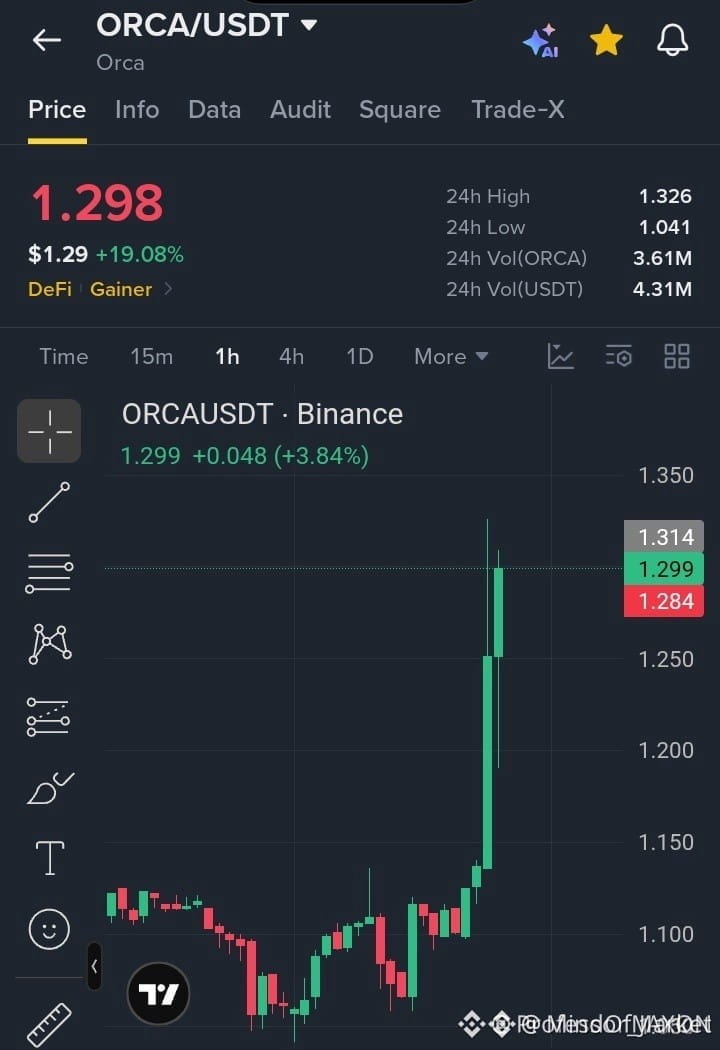
$ORCA BREAKS KEY RESISTANCE WITH INSTITUTIONAL MOMENTUM IGNITING A FRESH RALLY 🚀 🔥
Entry: 1.285 - 1.300 ⚡
Target: 1.350 🚀
Stop Loss: 1.250 ⚠️
$ORCA is carving out a clean structural expansion following an aggressive sweep above local resistance. Consecutive impulse candles reflect aggressive buy-side participation absorbing lingering supply near the 1.284 baseline. 📊
Order flow shows strong accumulation as price consolidates right above the structural pivot, setting up an efficient path toward untapped liquidity overhead. ⚡
Are you positioning inside the current retest zone, or waiting for structural confirmation higher? 👇
⚠️ Not financial advice. Always manage your risk. 🛡️
🏷️ #ORCA #LongSetup #Breakout #Crypto
🔥 💎
$ORCA BREAKS KEY RESISTANCE WITH INSTITUTIONAL MOMENTUM IGNITING A FRESH RALLY 🚀 🔥
Entry: 1.285 - 1.300 ⚡
Target: 1.350 🚀
Stop Loss: 1.250 ⚠️
$ORCA is carving out a clean structural expansion following an aggressive sweep above local resistance. Consecutive impulse candles reflect aggressive buy-side participation absorbing lingering supply near the 1.284 baseline. 📊
Order flow shows strong accumulation as price consolidates right above the structural pivot, setting up an efficient path toward untapped liquidity overhead. ⚡
Are you positioning inside the current retest zone, or waiting for structural confirmation higher? 👇
⚠️ Not financial advice. Always manage your risk. 🛡️
🏷️ #ORCA #LongSetup #Breakout #Crypto
🔥 💎
Entry: 1.285 - 1.300 ⚡
Target: 1.350 🚀
Stop Loss: 1.250 ⚠️
$ORCA is carving out a clean structural expansion following an aggressive sweep above local resistance. Consecutive impulse candles reflect aggressive buy-side participation absorbing lingering supply near the 1.284 baseline. 📊
Order flow shows strong accumulation as price consolidates right above the structural pivot, setting up an efficient path toward untapped liquidity overhead. ⚡
Are you positioning inside the current retest zone, or waiting for structural confirmation higher? 👇
⚠️ Not financial advice. Always manage your risk. 🛡️
🏷️ #ORCA #LongSetup #Breakout #Crypto
🔥 💎
28
Log in to explore more content
Join global crypto users on Binance Square
⚡️ Get latest and useful information about crypto.
💬 Trusted by the world’s largest crypto exchange.
👍 Discover real insights from verified creators.
Email / Phone number
Trending Topics
1
#NvidiaLoses$2.7TrillionInMonthAndAHalf
16,477 views
113 Discussing
2
#CanBTCReboundAfterFallingBelow60K?
732,977 views
2,924 Discussing
3
#GlobalStocksFaceLongestLosingStreakSince2023
265,205 views
1,963 Discussing
4
#BlackRockIBITPostsRecord$541MSingleDayOutflow
30,570 views
88 Discussing
5
#AnthropicPlungesTowardIPOPriceonDay2
134,831 views
1,189 Discussing
6
#TwentyOneCapitalAdds172.25BTC
61,462 views
647 Discussing
7
#HKBillWouldExcludeTokenizedDepositsFromVirtualAssets
7,591 views
50 Discussing
8
#BNBDropsBelow540USDTWith8.46%DailyDecline
74,156 views
636 Discussing
9
#HKBillProposesHK$100KFineForUnauthorizedCryptoTitles
2,490 views
22 Discussing
10
#BitMineFaces$10.1BUnrealizedETHLoss
5,188 views
28 Discussing