
#primus
primus
2,047 views
12 Discussing
Hot
Latest

·
--
When running a raffle for X, there’s actually another step after the winners list is published.
In the past, you had to first collect wallet addresses via direct messages, then paste each 0x back into the table. If someone replied two days late, that payment had to be tracked separately.
When I was looking through Primus’s payment example, I found that the X account on the winners list was already enough to reserve the prize money.
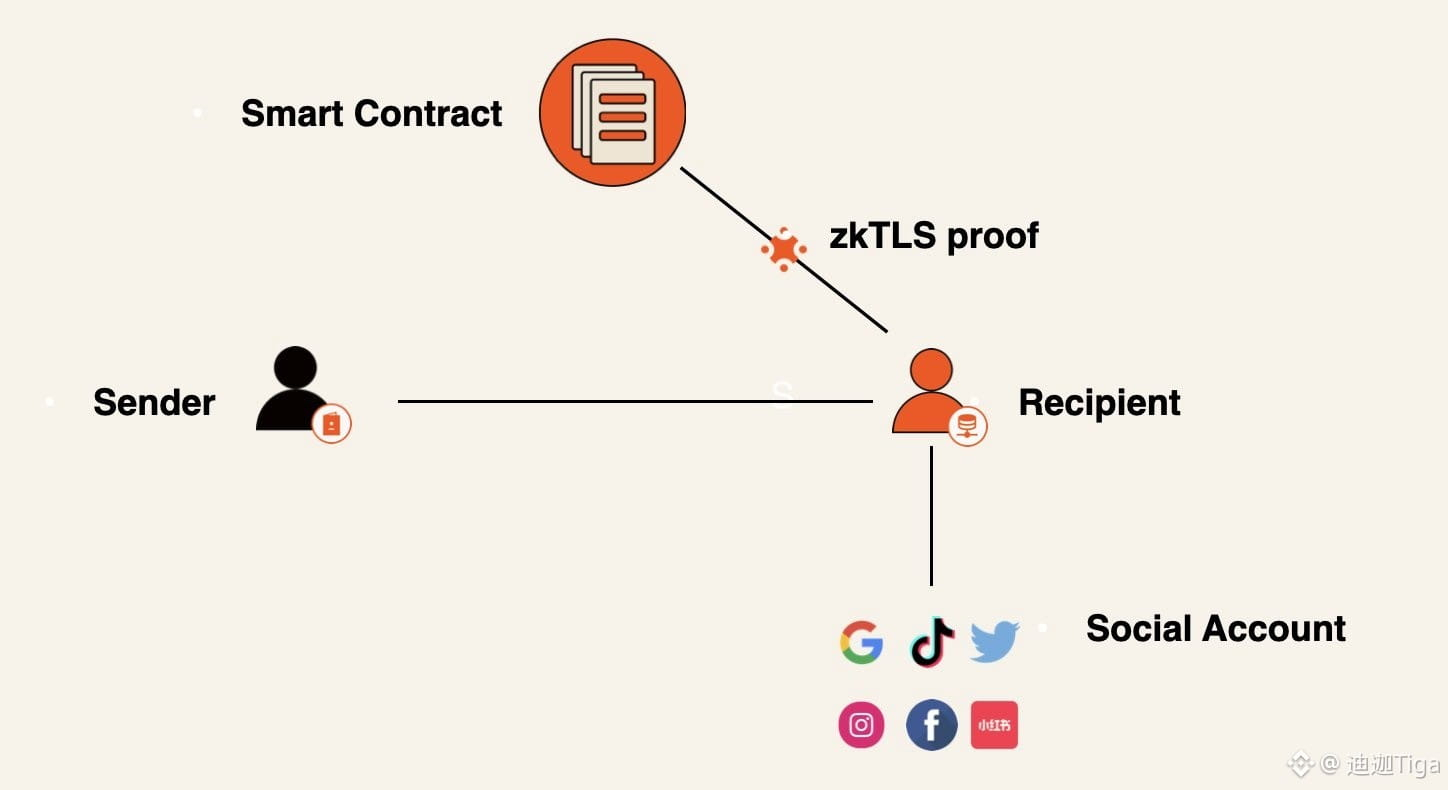
For example, if ten people win in one round of a raffle and each gets 50 USDC, this example lets the organizer deposit the prize money into a contract first, with each share reserved for one X account on the list.
When the winner comes to claim it, they connect their wallet and use zkTLS to prove they can control that account. Once the contract verifies it, the prize goes into the wallet they connected.
I also checked what happens to unclaimed prize money. The example in the Primus Fund SDK gives a 30-day period; if someone still hasn’t claimed it by then, the payer can initiate a refund and send the money back to the original wallet.
If I were using this for an event, I’d include the claim deadline when announcing the winners. Once the prize is deposited into the contract, I’d mark it as pending claim; only after it actually reaches the winner’s wallet would I mark it as paid. At the end of the month, when reconciling the books, it would be clear at a glance who claimed what, which payments were still pending, and which ones had already been refunded.
#Primus #zkTLS #USDC #On-chain payment
120
·
--
I make cutout animations, and it’s pretty common to rerun a shot three or four times.
If a character’s walk looks off, I redo it.
If one shot doesn’t connect with the next, I redo it again.
By the time I publish the finished video, the tool’s backend may have accumulated a dozen or more clips.
A few days ago, someone shared that they used Primus’s Proof of Creation to verify the number of creations in their CapCut account.
Rerunning the same shot several times adds to the backend records, but the finished video you publish is often still just one video. So when you look at creation records, the number of generations and the final output aren’t the same thing.
#Primus #ProofOfCreation #纸片动画 #Proof of Creation

61
·
--
When I wrote about Unitas last time, I was focused on where the protocol keeps the money. This time, let’s look at it from the perspective of the people saving.
Suppose a team uses a public wallet to deposit 300,000 U into an on-chain treasury.
As long as people know who owns the wallet, they can open its transaction history and see how much it deposited and how much it later withdrew from its position.
For people managing funds, these activities are effectively always in plain view.
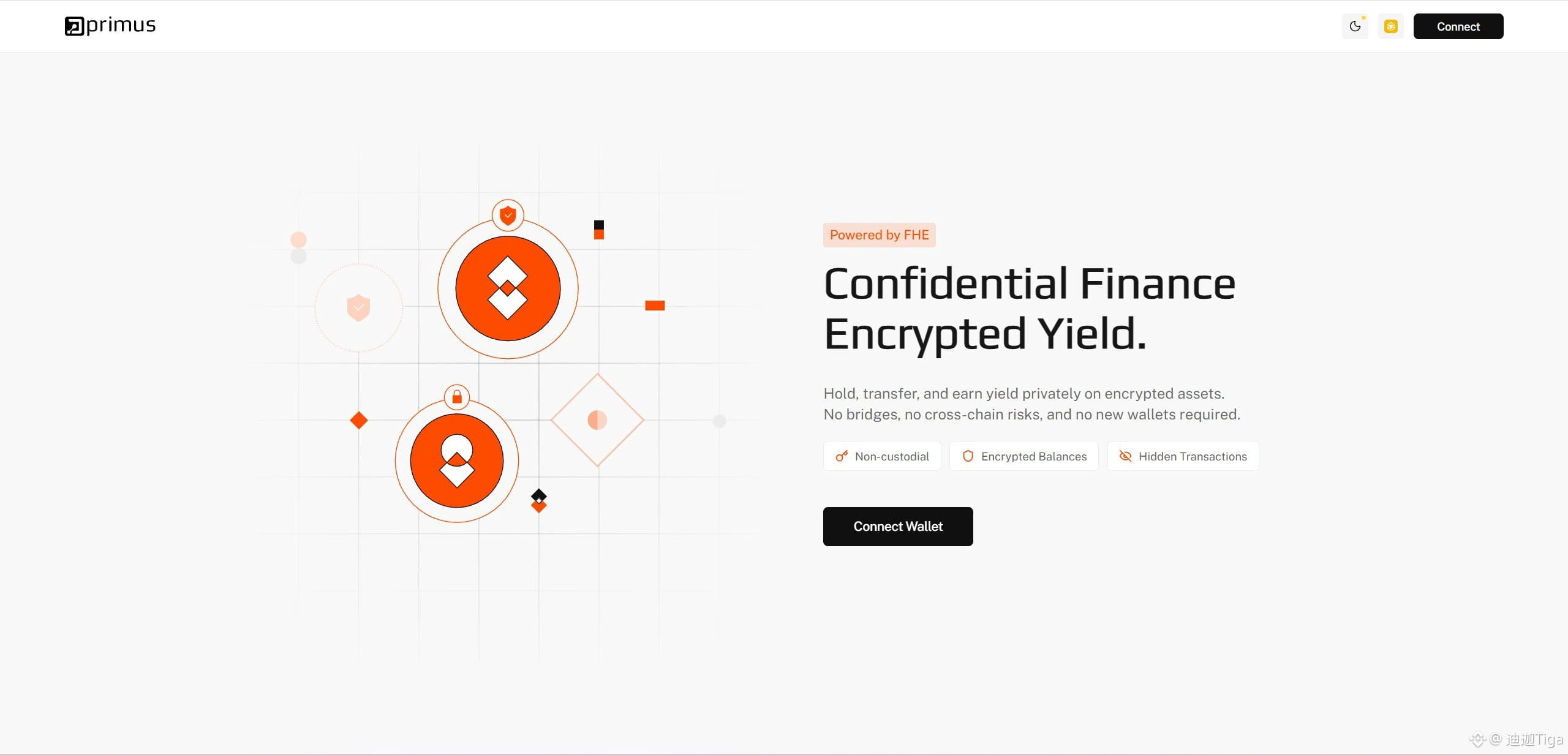
What Primus does on BNB Chain is encrypt on-chain balances and transfer amounts, so when depositing and transferring, you don’t have to expose the exact figures on the public ledger.
#Primus #BNBChain #链上隐私 #FHE
327

·
--
Primus @primus_labs Kaito Season 2 ends tomorrow
Don't worry~ Don't stress~ There's still Season 3~
Here's a practical question:
When someone needs to verify your information, how much do you actually need to hand over?
Take proof of assets, for example.
Screenshots aren't necessarily trustworthy, but handing over your entire account information just to prove a balance is just as unreasonable.
I mentioned this use case when I wrote about Primus before.
zkTLS aims to make data on websites verifiable, while also supporting selective disclosure.
Just because someone needs to verify a certain condition doesn't mean they should get all your data.
The team also recently mentioned that privacy should be built in from the start, rather than patched up after something goes wrong.
What we should really be more concerned about is:
What was exposed during the verification process?
Who can see this data?
Which information doesn't actually need to be made public?
Isn't that right?
Now, consider the partnership between Primus and Cournot.
Bringing verifiable web evidence into prediction markets makes this much more concrete than simply talking about “trustworthy data.”
When a dispute arises in a prediction market,
where the grounds for a decision come from, and whether they can be independently verified,
are already very practical concerns.
#Primus @KaitoAI #zkTLS
55
·
--
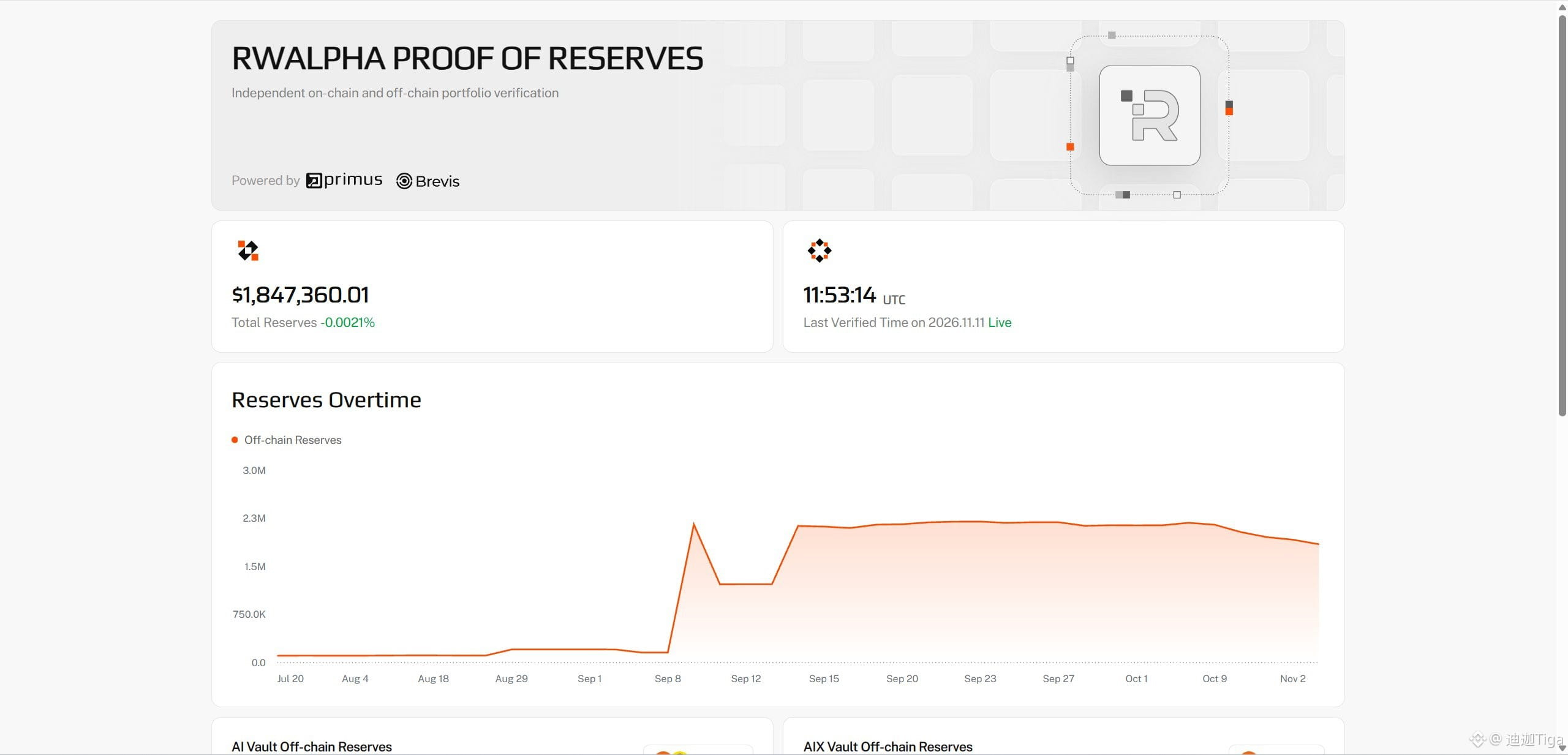
Taking another look at Primus’s reserves dashboard three weeks later, one change in USDu stands out:
The amount by which reserves exceed supply has shrunk from about $1.3 million to $60,000.
From October 26 to November 18, both supply and reserves fell by roughly 20%. Reserves declined a little faster, bringing the coverage ratio down from 102.47% to 100.14%.
The share held off-chain barely moved, from 14.7% to 13.8%.
If you focus only on this ratio, as last time, it’s easy to miss what’s going on. We’ll need to keep looking at the details to find out why the gap narrowed.
Another thing worth clicking through to check is the verification date.
About 70% of XGLD’s reserves are held off-chain, with a verification record dated the 18th. RWAlpha’s reserves, worth about $1.85 million, are entirely off-chain. The overview says “Live,” but its most recent verification was on the 11th.
The figures in the same overview aren’t necessarily verified on the same day.
Primus displays off-chain reserves alongside verification dates.
Next time, I’ll continue tracking USDu’s reserve buffer and whether RWAlpha has updated its verification. These two things are more worth following than how much the total has increased.
#Primus #USDu #储备证明 #RWA
1
77
·
--
For an on-chain transfer, people don’t need to know who you are.
They only need your wallet address
to follow your transaction history and see how your balance changes and where your funds go
and even figure out your habits
This is already a problem for ordinary users
and even more so for institutions managing large sums of money
@primus_labs’ recent technical updates have focused on exactly this issue
On November 13, Primus shared technical progress on AutoHoG
The core goal is to improve the computational efficiency of FHE (Fully Homomorphic Encryption)
FHE allows data to be computed on without being decrypted
Under traditional approaches, processing a single 64-bit operation
may require breaking it down into thousands of logic gates
and performing extensive Bootstrapping
Computational cost has long been an obstacle to real-world adoption
AutoHoG’s approach is to automatically design custom gates with multiple inputs and outputs
combining subcircuits that can be merged into a single computation
and reducing redundant Bootstrapping
The results reported by the team:
8 consumer-grade RTX 5090 GPUs
A latency of about 90ms for 64-bit confidential transfers
Throughput of over 210 TPS
Integer operations guarantee byte-for-byte identical results across different nodes
On-chain finance can’t just run a computation on a single machine and call it a day
Multiple nodes must agree on the execution results
If privacy computing affects verification and consensus
it will be difficult to make it part of financial infrastructure
Other parts of Primus’s strategy:
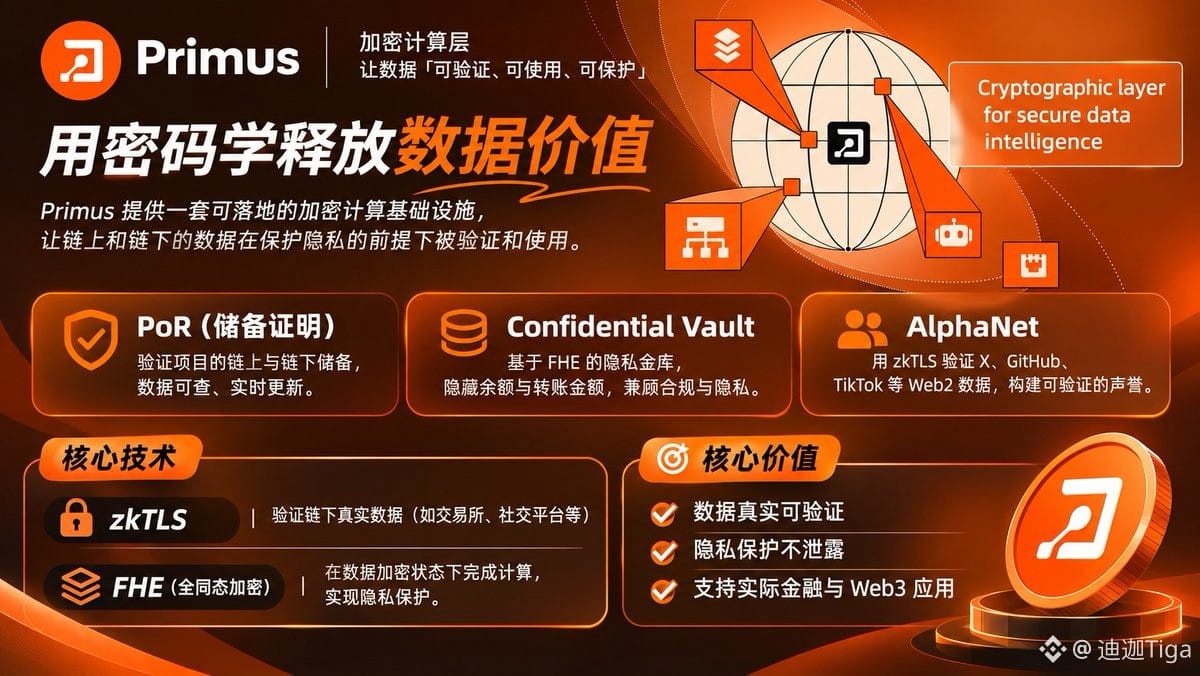
zkTLS verifies off-chain data
FHE enables computation on encrypted data
Confidential Finance brings privacy capabilities to transfers and yield scenarios
What Primus is working toward:
Sensitive data shouldn’t have to be exposed to everyone
while preserving its verifiability and usefulness
The team also put it very directly:
Privacy shouldn’t come after the damage. It should be there from the start.
Privacy shouldn’t be something we try to fix only after damage has been done
These words carry real weight in on-chain finance
especially for institutional funds, private credit, and on-chain asset management
Privacy isn’t decoration
It’s an important condition for bringing more traditional financial players on-chain
The 90ms and 210 TPS figures are technical test results published by the team
More validation is needed before large-scale real-world deployment
Primus is no longer just discussing the concept of privacy
It is tackling the computational efficiency of FHE
and working to bring it into real financial applications
#Primus @primus_labs #FHE
194
·
--
What Primus is doing with Cournot Protocol this time is pretty practical.
Prediction markets ultimately need to reach a resolution.
On-chain data is relatively straightforward; the tricky part is that a lot of real-world data lives on websites, in APIs, and behind account dashboards.
You can’t rely on screenshots to decide who wins in the end.
Cournot now uses Primus’s zkTLS to first verify whether this data comes from the original website or API, then uses the verified results to make a decision.
There’s no need to make all the raw data public, either.
The same goes for private credit and RWA.
A lot of the information is already off-chain, but the blockchain still needs to know whether it’s genuine.
zkTLS used to sound pretty technical.
Now it’s finally starting to do things ordinary people can understand.
#Primus #zkTLS #预测市场 #Cournot #RWA
74

·
--
Verified
In prediction markets, people care most about the odds. But what ultimately determines who gets the money is how the outcome is judged.
The collaboration between Primus and Cournot Protocol points to one key idea: handle evidence sources and outcome judgments separately.
Primus uses zkTLS to help verify whether webpage or API data comes from its claimed source, while reducing unnecessary disclosure of private information. Cournot, meanwhile, interprets evidence according to market rules and provides a judgment process that can be reviewed.
For example:
Will a certain product launch before the end of the month?
Does a launch announcement count? What if it’s available only in some regions? Does a beta version qualify?
Even if you have a genuine announcement from the official website, you can’t skip these definitions and settle the market. Conversely, no matter how fluently AI explains its reasoning, if it cites a forged webpage or outdated material, its conclusion is just as unreliable.
Verify where the evidence comes from, then check whether it supports the settlement conclusion. If a dispute arises, participants can at least trace the specific sources and steps behind the judgment, rather than simply accept a “YES / NO.”
At the same time, the limits need to be clear: zkTLS can verify a source, but that doesn’t mean the source is always correct; reviewable reasoning doesn’t mean a judgment can never be wrong. Time windows, evidence completeness, and ambiguous rules still need to be addressed.
An application may need to verify a financial condition without needing to make all of a user’s underlying records public. This is a direction worth exploring, but it shouldn’t be treated as a mature, proven solution prematurely.
What I’d most like to see next are real settlement cases: how conflicts in evidence are handled, how users can challenge outcomes, and whether verification costs can support more small-scale, long-tail markets.
This article is for analysis only and does not constitute investment advice. DYOR
#Primus #Cournot #zkTLS
1
1.9k

·
--
@primus_labs What’s worth paying attention to this time isn’t just the airdrop.
It’s the way they’re starting to turn “real-world off-chain activity” into verifiable on-chain reputation.
Trading platforms, AI tools, and social media accounts could all become sources of reputation data.
Combined with @KaitoAI’s creator campaign, the whole process is clear:
Verify existing accounts, build your reputation, and then take part in the rankings with original content.
Here are three things to do first:
Complete verification for eligible accounts.
Check the rules for how XP, reputation scores, and campaign rankings are calculated.
Take part in the creator campaign, but don’t mass-copy content just to earn points.
Whether Season 2 will launch a token and how rewards will ultimately be distributed should be confirmed through official announcements.
What’s truly worth building isn’t just points, but verifiable usage history and a consistent track record of creating content.
#Primus
3
·
--
It’s getting easier to place orders with AI Agents, but if one says a trade has gone through, would you just take its word for it?
One angle worth watching with Primus Labs is its effort to make Agents’ execution results verifiable.
For example, you ask an Agent to buy an asset. In the end, it gives you a text description or a screenshot. That may show what it claims to have done, but it may not be enough to verify what actually happened. And when execution takes place in off-chain systems such as exchanges, on-chain records alone aren’t enough either.
Primus’s zkTLS approach generates verifiable credentials for data from websites or APIs. This lets applications check where the data came from and whether it meets agreed conditions, while minimizing unnecessary disclosure. The team has listed verifiable AI Agent execution as an application scenario.
More concretely, Primus has publicly released tools such as Binance Verifiable Skills, which bring some Binance API calls into a zkTLS verification workflow. The repository also includes integration guides for credential generation, local verification, and on-chain verification.
This points to a more practical way to use Agents: after carrying out a task, they return the result along with a credential that can be independently checked. Customers don’t have to rely solely on the Agent’s own explanation; other programs can verify it too.
Of course, the limits should be clear: proving what an API returned doesn’t prove that a trading strategy was sound, nor does it guarantee a profit. You still need to check which account the credential refers to, when it was issued, which fields it covers, and whether it covers the entire task.
To see whether these tools can be adopted in real-world business, watch how costly verification is, how easily developers can integrate them, and whether errors and failures are recorded.
As Agents begin handling money and business tasks on people’s behalf, the ability to verify what they’ve done will directly affect how much authority people are willing to give them.
This article is for analysis only and does not constitute investment advice. DYOR
#Primus #zkTLS #AIAgent
68
·
--
Unitas’s latest PoR has been updated again.
USDu Supply is now around $47.55M, Reserves are $50.38M, and the Backing Ratio is 1.0595.
Looking at the numbers, the reserves seem sufficient. 105.95% certainly looks like a lot, but you shouldn’t treat it as an audit report.
It’s important to understand the distinction: Primus verifies the data and APIs provided by the project, but doesn’t conduct an independent audit on its behalf or provide financial assurance.
PoR is useful, of course, but you need to know exactly what it verifies. At least now, Unitas’s on-chain and off-chain data, along with the update times, are all visible right on the page. Showing on-chain and off-chain reserves separately is much clearer than simply saying “100% backed.”
#Unitas #USDu #Primus #PoR #stablecoin
49
Log in to explore more content
Join global crypto users on Binance Square
⚡️ Get latest and useful information about crypto.
💬 Trusted by the world’s largest crypto exchange.
👍 Discover real insights from verified creators.
Email / Phone number
Trending Topics
1
#WillMarketsStageAThanksgivingReliefRally?
7,281 views
182 Discussing
2
#BessentSoftensStanceOnHuang’sNvidiaReturn
5,333 views
112 Discussing
3
#MuskWarnsOfAICashCrunch
6,059 views
108 Discussing
4
#SouthKoreaToTightenOversightOfCryptoTransfersAbroad
3 views
3 Discussing
5
#RussiaAllowsExchangesToOfferCryptoTrading
321 views
35 Discussing
6
#UKToBarCryptoExchangesFromMakingMarketsOnTheirOwnPlatforms
123 views
10 Discussing
7
#UKTreasurySignsCryptoMarketMakingExemptionRules
1,284 views
63 Discussing
8
#BTCReboundsAbove$60KAmidWhaleDipBuying
118,168 views
437 Discussing
9
#SolanaSets2027RoadmapToDoubleComputeCapacity
102,975 views
1,338 Discussing
10
#CaliforniaNvidiaProbeExaminesPotentialCriminalViolations
29,092 views
186 Discussing