
#pump
pump
12.6M views
41,055 Discussing
Hot
Latest

·
--
Partly True
🔥 $PUMP : PUMP.FUN'S OCTOBER FEES HIT A NEW RECORD!
Pump.fun is expanding beyond its original Solana launchpad:
- $175M in fees: October 2026 reportedly set a monthly record.
- EVM wallet support: Users can now import their own EVM wallets into the app.
- More networks: Trading support expanded to Sei, Avalanche, Optimism and Unichain.
- Buyback and burn: Pump.fun's official dashboard reports over $500M in cumulative buybacks and burns.
Can platform growth keep up with its expanding ecosystem?
$PUMP
{future}(PUMPUSDT)
.
.
.
#pump #PumpFun #Crypto
Not financial advice. DYOR.
🔥 $PUMP : PUMP.FUN'S OCTOBER FEES HIT A NEW RECORD!
Pump.fun is expanding beyond its original Solana launchpad:
- $175M in fees: October 2026 reportedly set a monthly record.
- EVM wallet support: Users can now import their own EVM wallets into the app.
- More networks: Trading support expanded to Sei, Avalanche, Optimism and Unichain.
- Buyback and burn: Pump.fun's official dashboard reports over $500M in cumulative buybacks and burns.
Can platform growth keep up with its expanding ecosystem?
$PUMP
.
.
.
#pump #PumpFun #Crypto
Not financial advice. DYOR.
2
963

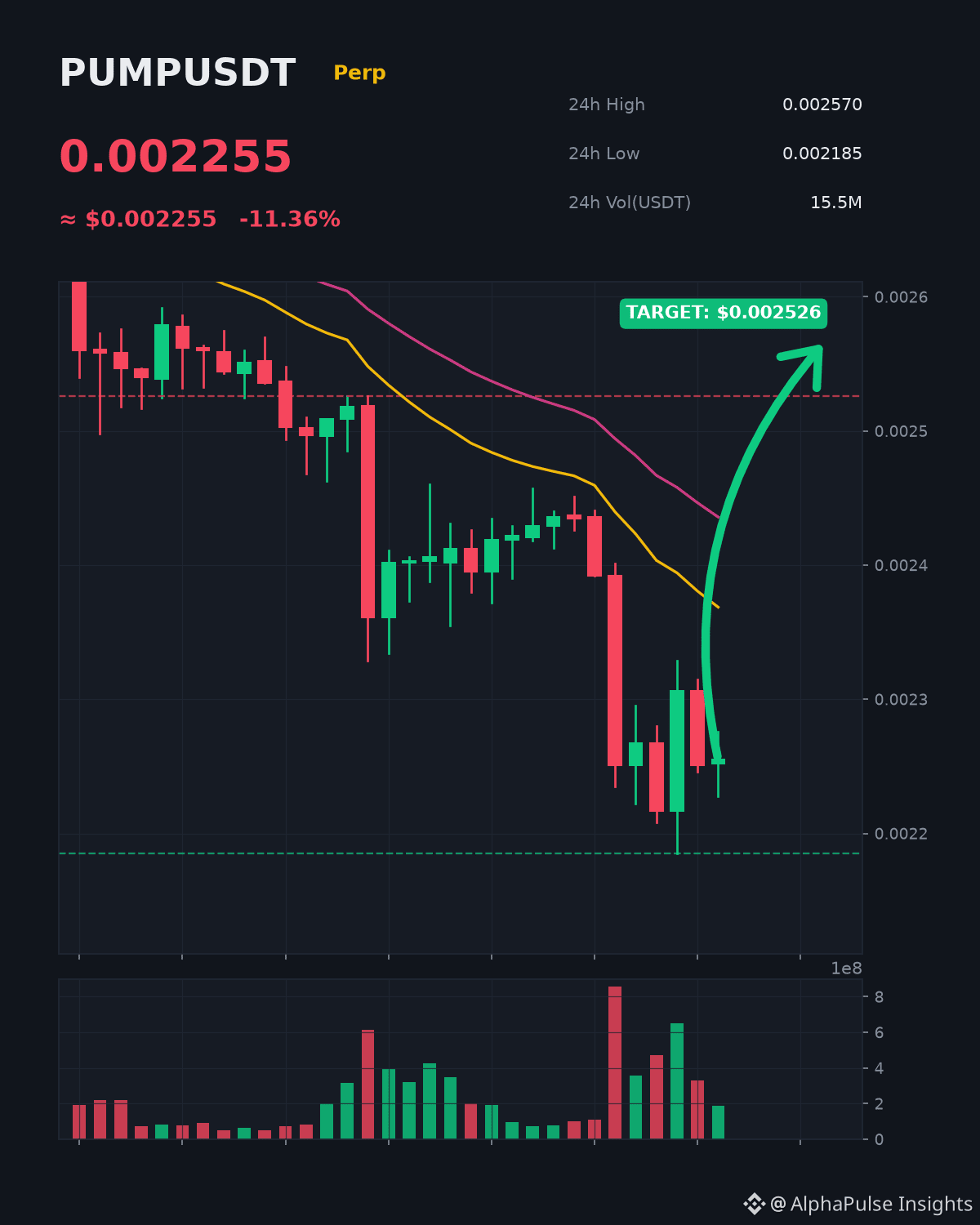
Retail over-leveraged longs hit $PUMP at $0.002255, igniting a potential short squeeze. Price wicked down to $0.002185, but a strong recovery maintains bullish bias, targeting resistance at $0.002526. Will the short sellers panic and close? Or will the bulls push through? $0.002526 next?
$PUMP $BNB $ETH #PUMP #Write2Earn #BinanceSquare
$PUMP $BNB $ETH #PUMP #Write2Earn #BinanceSquare
61

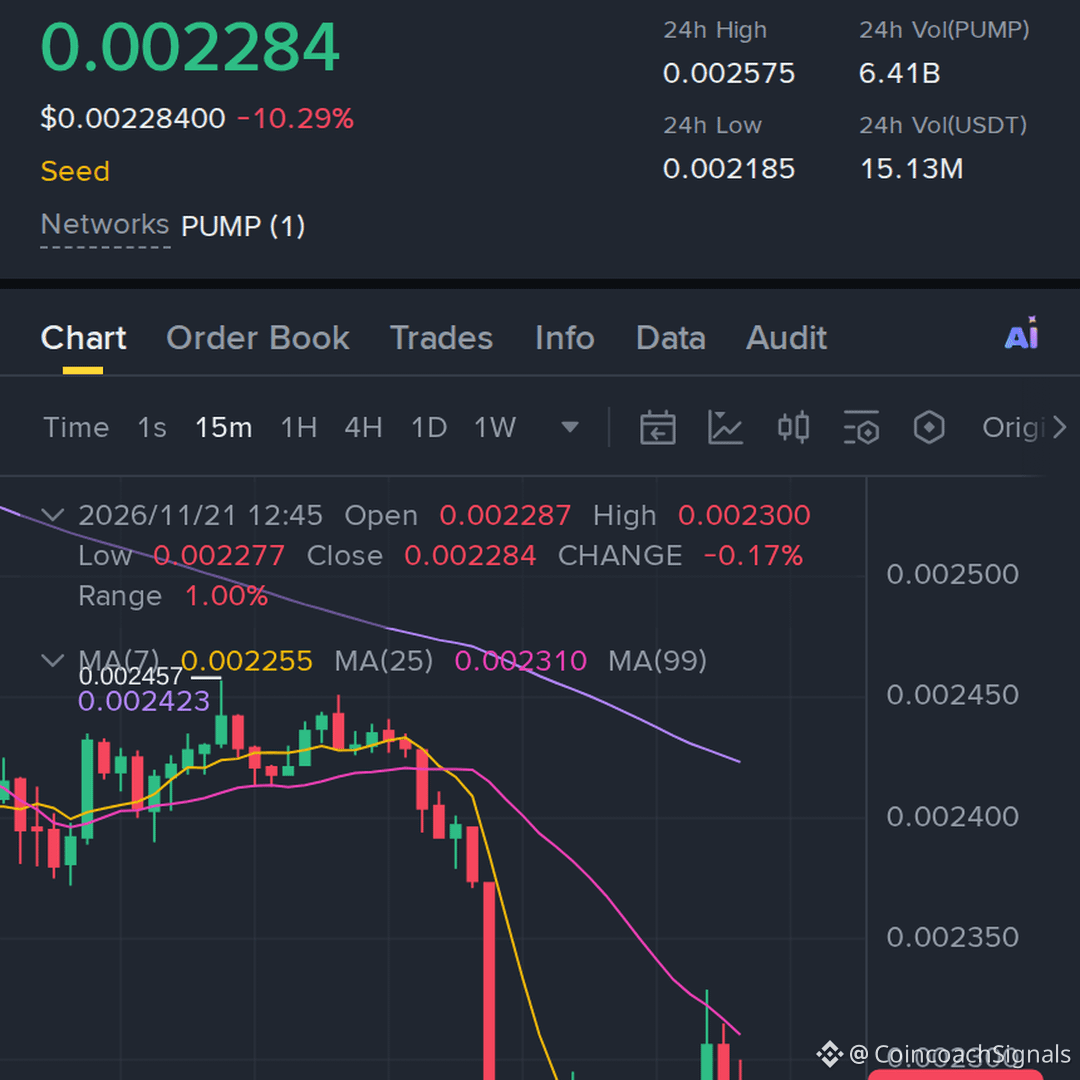


$PUMP: When Every Alert Feels Like an Emergency
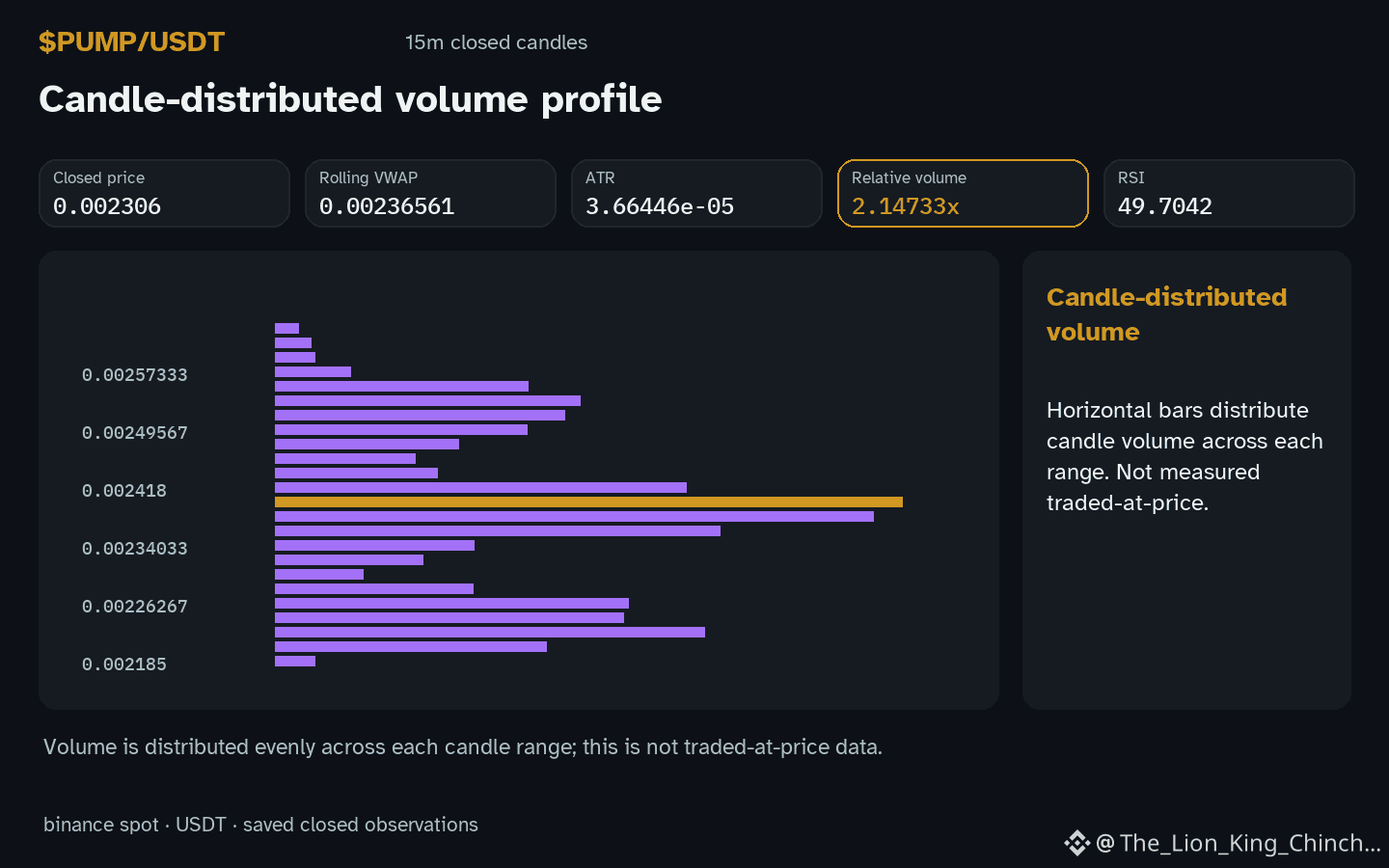
The ticker $PUMP shows an hourly up move while relative volume sits at 2.15x baseline. This spike in alerts can trigger a cascade of attention shifts, creating a subtle stress response that some traders label as cortisol spikes.
A common assumption is that more alerts mean clearer signals, but the brain often treats each ping as an urgent cue, anchoring attention on the most recent notification. This anchoring can inflate perceived importance of the current price move and suppress the evaluation of earlier context.
The counterexample appears when a trader receives a burst of alerts yet the hourly RSI reads 49.7 and the price change remains modest at 4.01443%. In that scenario the heightened alert load may lead to regret if the trader acts quickly and the move reverses, illustrating loss aversion.
What could change the reading is a future candle that shows a stable or declining volume while the price holds near the local support level 0.002185. Such evidence would weaken the hypothesis that the alert surge alone drives decision bias.
Practical self‑check: before acting on a fresh alert, pause, note the current relative volume and RSI, then ask whether the impulse aligns with a longer‑term pattern or merely reflects a momentary attention spike. This brief audit helps separate genuine market signals from the noise of notification overload.
Probabilistic market research, not a recommendation or guaranteed return.
Process or outcome: which are you judging?
#PUMP #TradingPsychology #CryptoLearning
$PUMP : When Every Alert Feels Like an Emergency
The ticker $PUMP shows an hourly up move while relative volume sits at 2.15x baseline. This spike in alerts can trigger a cascade of attention shifts, creating a subtle stress response that some traders label as cortisol spikes.
A common assumption is that more alerts mean clearer signals, but the brain often treats each ping as an urgent cue, anchoring attention on the most recent notification. This anchoring can inflate perceived importance of the current price move and suppress the evaluation of earlier context.
The counterexample appears when a trader receives a burst of alerts yet the hourly RSI reads 49.7 and the price change remains modest at 4.01443%. In that scenario the heightened alert load may lead to regret if the trader acts quickly and the move reverses, illustrating loss aversion.
What could change the reading is a future candle that shows a stable or declining volume while the price holds near the local support level 0.002185. Such evidence would weaken the hypothesis that the alert surge alone drives decision bias.
Practical self‑check: before acting on a fresh alert, pause, note the current relative volume and RSI, then ask whether the impulse aligns with a longer‑term pattern or merely reflects a momentary attention spike. This brief audit helps separate genuine market signals from the noise of notification overload.
Probabilistic market research, not a recommendation or guaranteed return.
Process or outcome: which are you judging?
#PUMP #TradingPsychology #CryptoLearning
60

🚨 PUMP (Pump.fun): Is a Recovery Coming, or Is More Pressure Ahead?
PUMP is at an important point in the market, and the next move could be interesting.
📊 Market Overview
PUMP has recently faced selling pressure, showing that buyers still need to prove their strength.
🔍 What Could Happen Next?
🟢 Bullish Scenario:
If buying volume increases and PUMP regains important price levels, a recovery could develop.
🔴 Bearish Scenario:
If selling pressure continues, PUMP could face another decline before finding stability.
⚡ What I'm Watching:
• Trading volume
• Bitcoin's market direction
• Pump.fun ecosystem growth
• Token buyback activity
• Overall market sentiment
💡 My Take:
PUMP has an interesting ecosystem, but strong fundamentals and a recovery in price are two different things. Confirmation from the market is important.
🔥 THE BIG QUESTION:
Is PUMP preparing for its next recovery, or should investors remain cautious?
👇 Share your analysis in the comments!
#PUMP #PumpFun #CryptoAnalysis #Altcoins #BinanceSquare

225

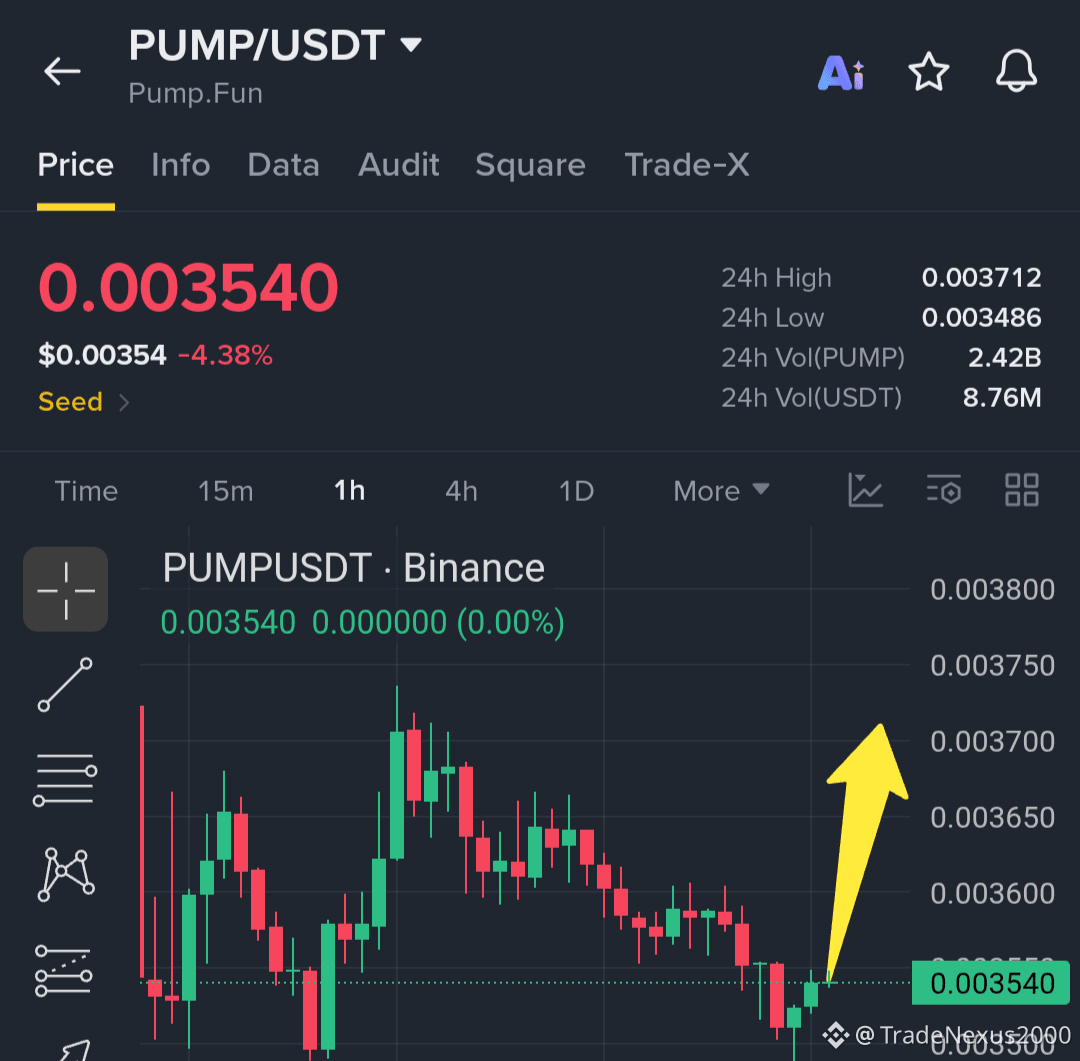
🦈 $PUMP DEFENDING KEY LIQUIDITY AT THE DAILY LOWS AROUND 0.003486! ⚡
Entry: 0.003540 ⚡
Institutional order flow on a major exchange is leaving a clean footprint as $PUMP holds firm right above the recent 0.003486 liquidity sweep. 🌊 This localized accumulation shows smart money absorbing supply while retail panic subsides near local range lows. 📊
Market structure on the lower timeframes indicates a potential mitigation block being tested right around 0.003540. 💡 Are you anticipating a sharp expansion phase once this passive liquidity is fully vacuumed? 👇
⚠️ Not financial advice. Always manage your risk. 🛡️
🏷️ #PUMP #SmartMoney #LiquiditySweep #OrderBlock #Crypto
🦈 ⚖️
5


·
--
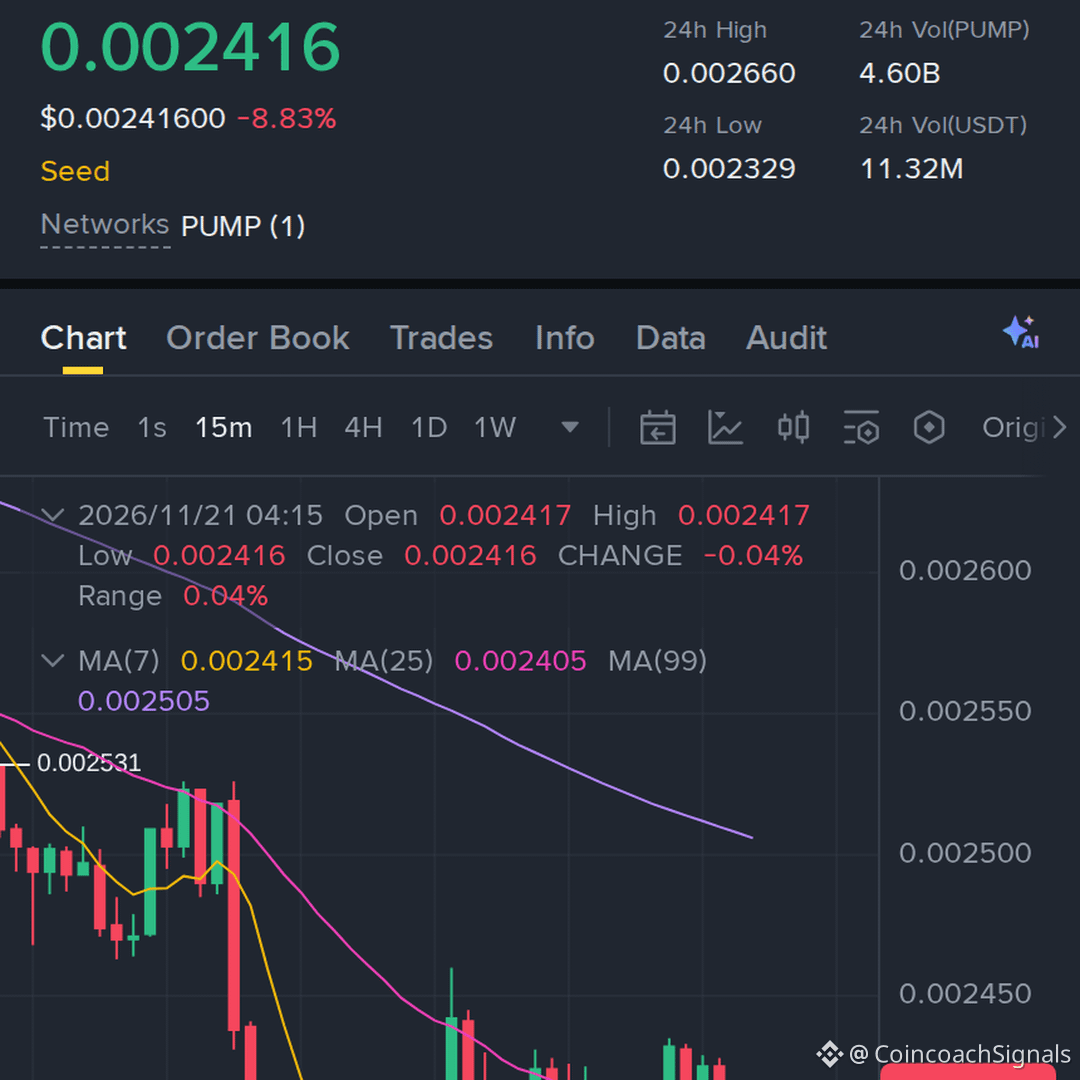
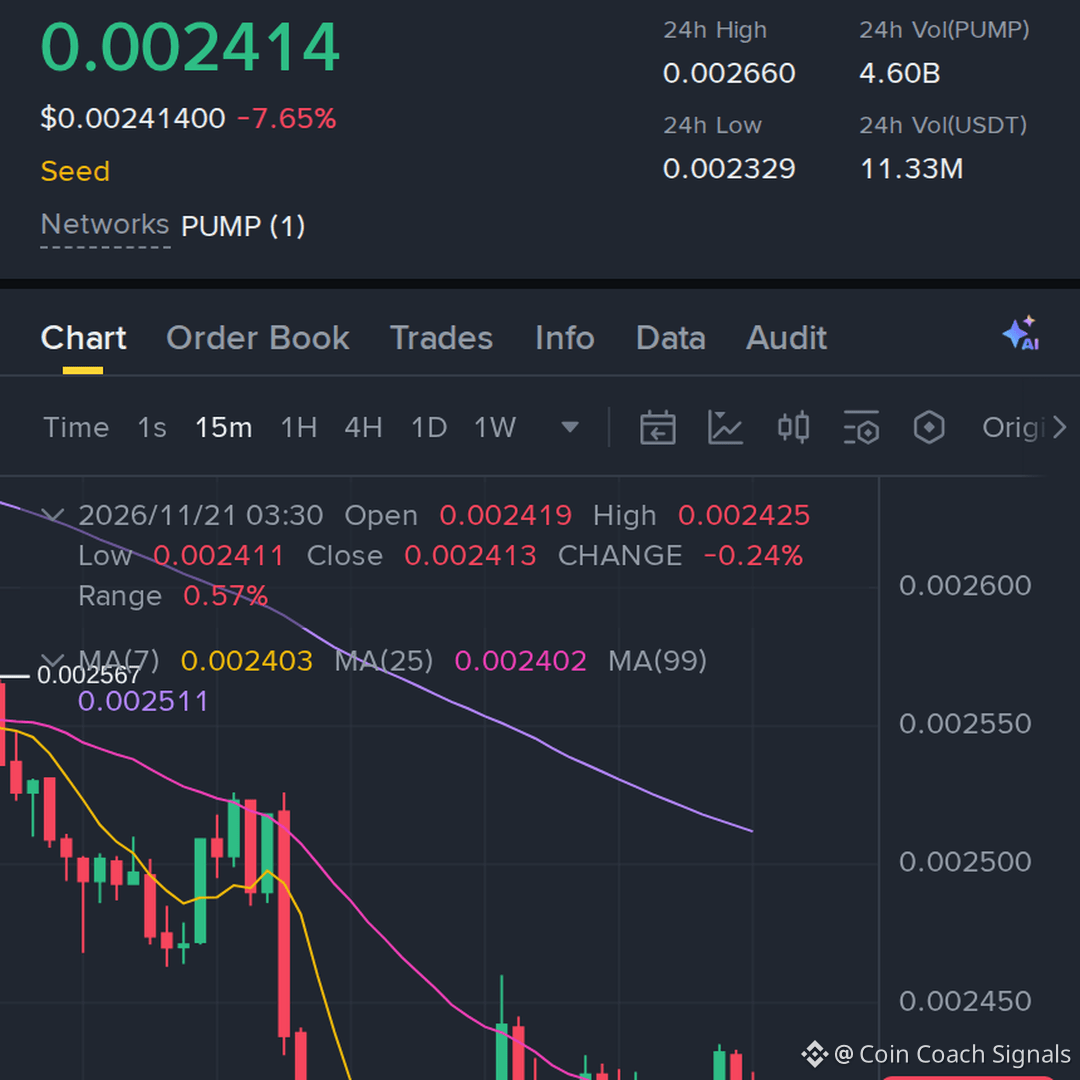
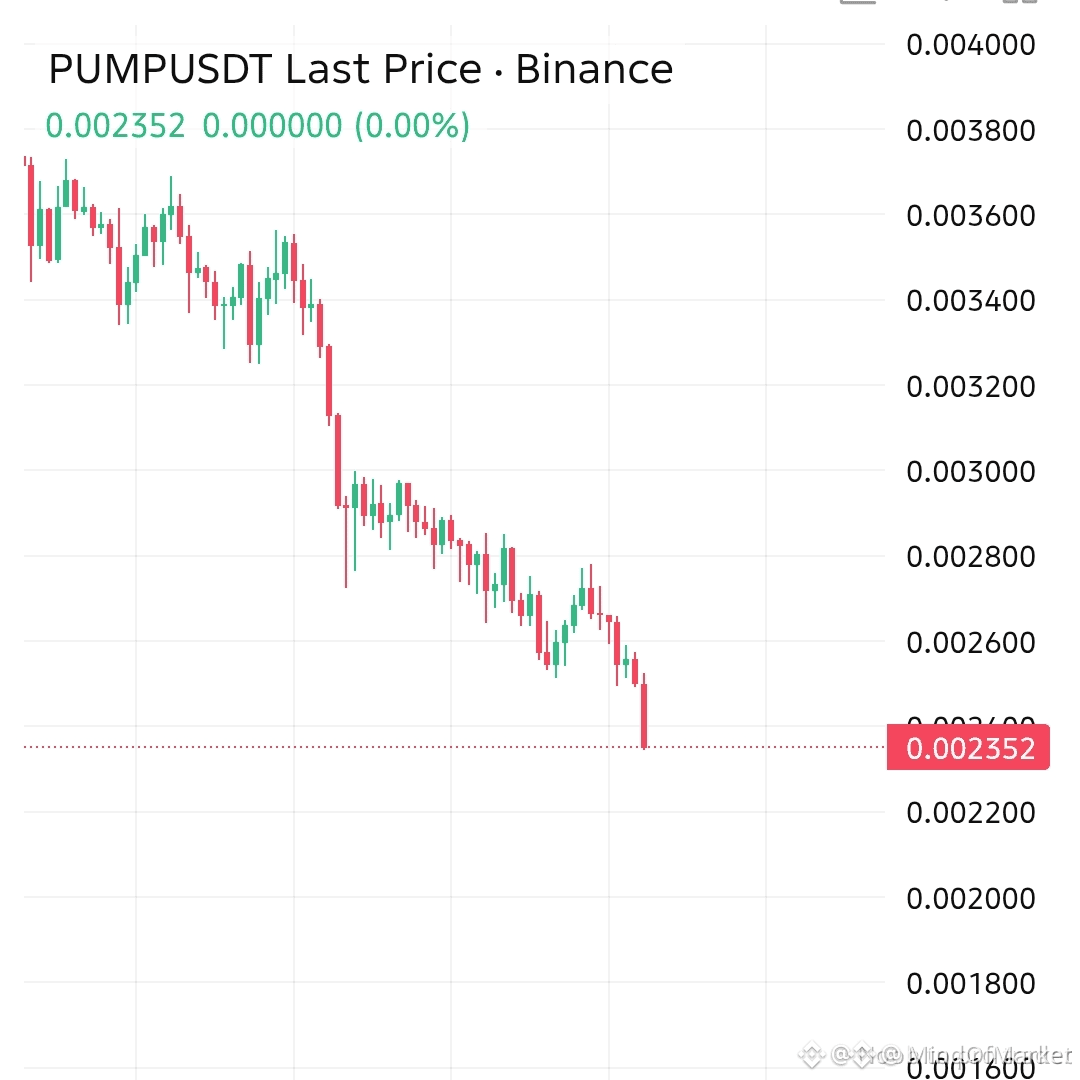
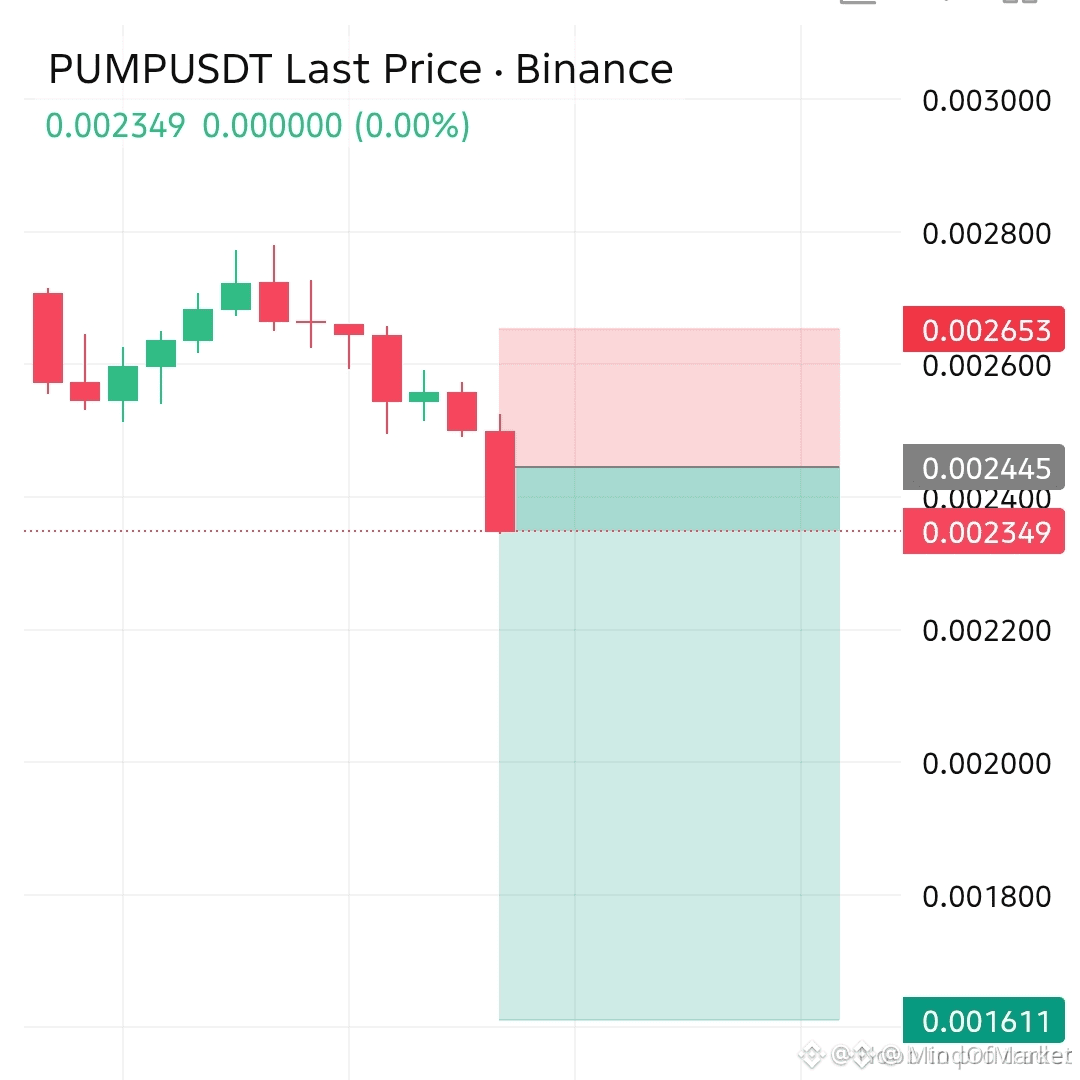
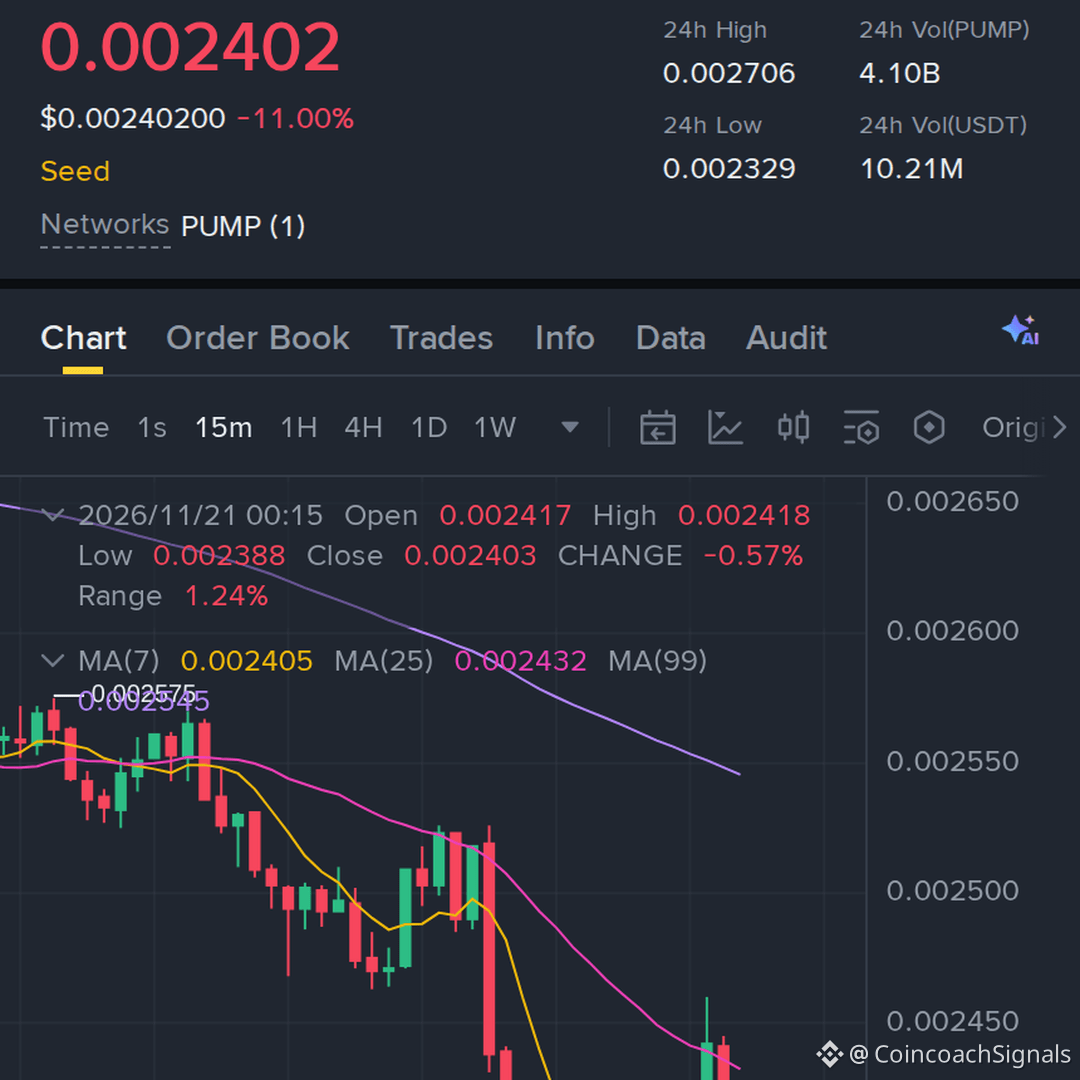
🚨 $PUMP DISTRIBUTION PHASE ACCELERATES AS SMART MONEY OFFERS INTO LIQUIDITY 📉
Entry: 0.002445 ⚡
Target: 0.001611 🎯
Stop Loss: 0.002653 ⚠️
📌 Structural distribution is currently playing out as passive bids fail to absorb aggressive institutional supply. 📊 Order flow shows persistent heavy selling pressure draining lower liquidity pools without a single genuine defense block forming.
💡 The failure to reclaim higher value areas confirms institutional exhaustion on the buying side, leaving the path of least resistance wide open toward deeper inefficiency zones. 💬 Are you positioned for the continuation of this markdown phase or waiting for a relief bounce? 👇
⚠️ Not financial advice. Always manage your risk. 🛡️
🏷️ #PUMP #ShortSetup #SmartMoney #MarketStructure #Crypto
📊 📉
15

·
--
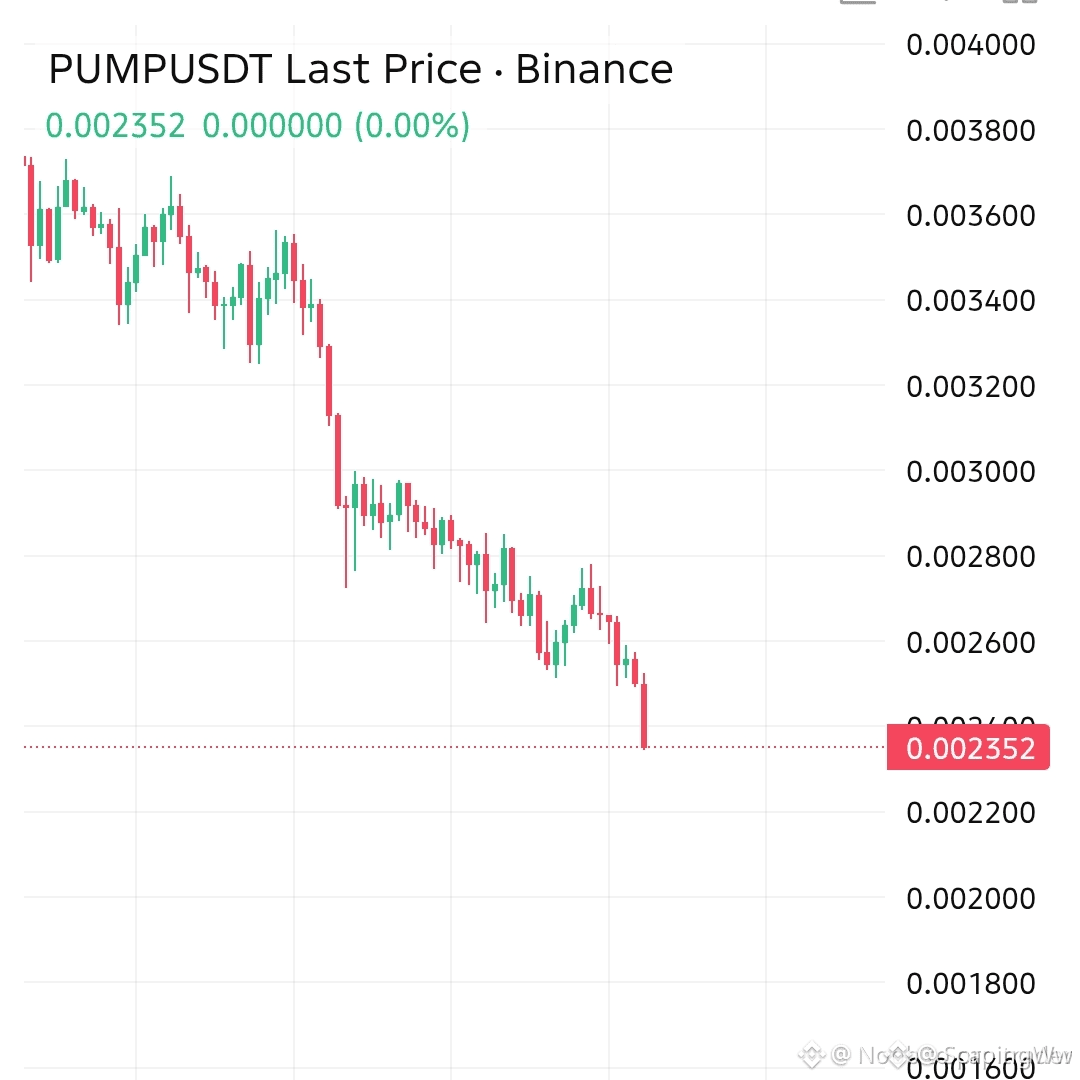
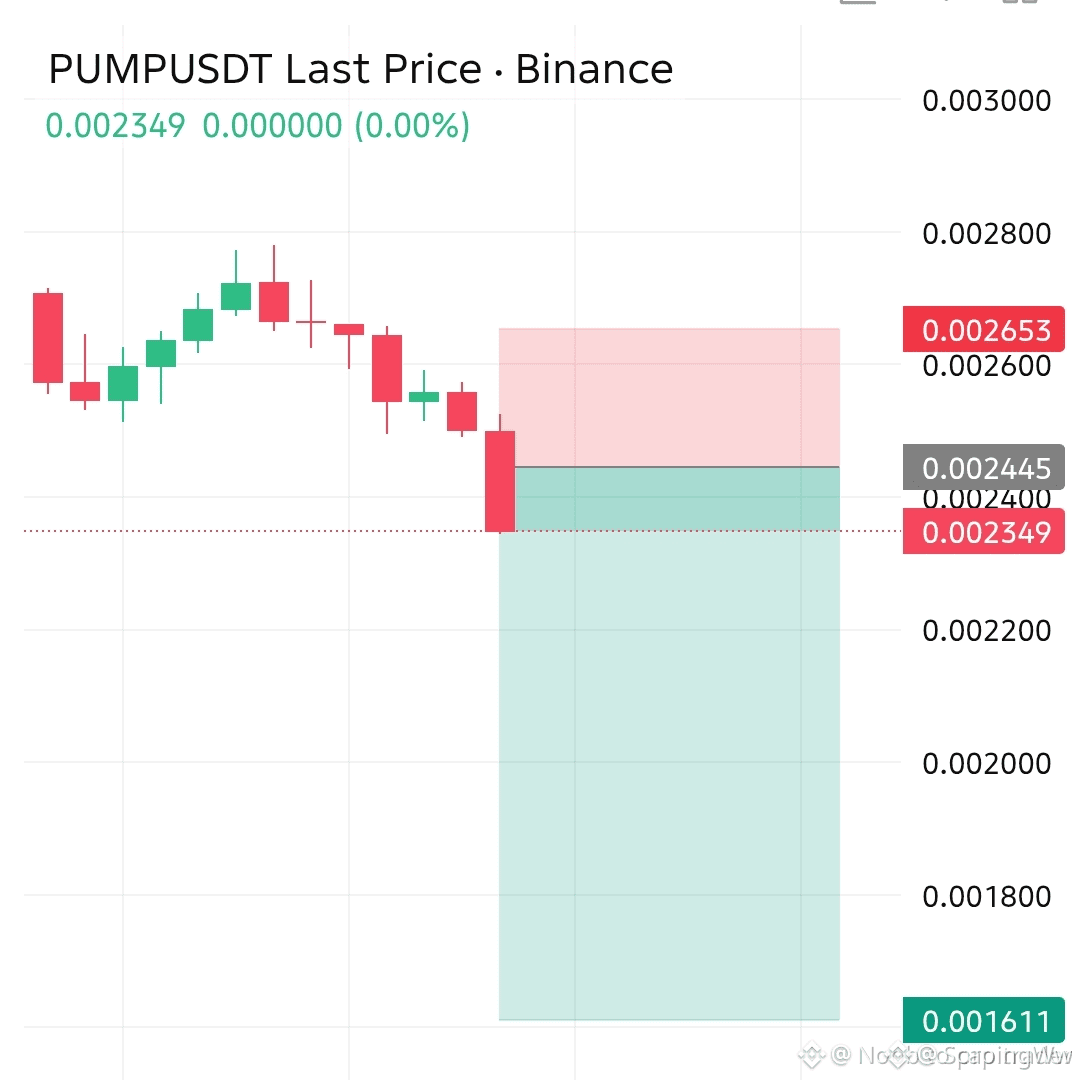
🚨 $PUMP IS BLEEDING SLOWLY AS SELLERS FLIP THE ORDER BOOK UPSIDE DOWN! 🩸
Entry: 0.002445 ⚡
Target: 0.001611 🎯
Stop Loss: 0.002653 🛑
Irony in crypto names is a brutal teacher when order flow shifts to distribution. Bears have methodically built a wall at overhead resistance, suffocating any remaining momentum. 📉
Volume profile on the lower timeframes shows passive absorption by sellers while retail attempts to catch a falling knife. This slow bleed often accelerates once structural support snaps under pressure. 🦈
Are you positioning alongside the institutional outflow or waiting for a dead cat bounce? 👇
⚠️ Not financial advice. Always manage your risk. 🛡️
🏷️ #PUMP #ShortSetup #Bearish #Crypto
📉 🦈
21

·
--
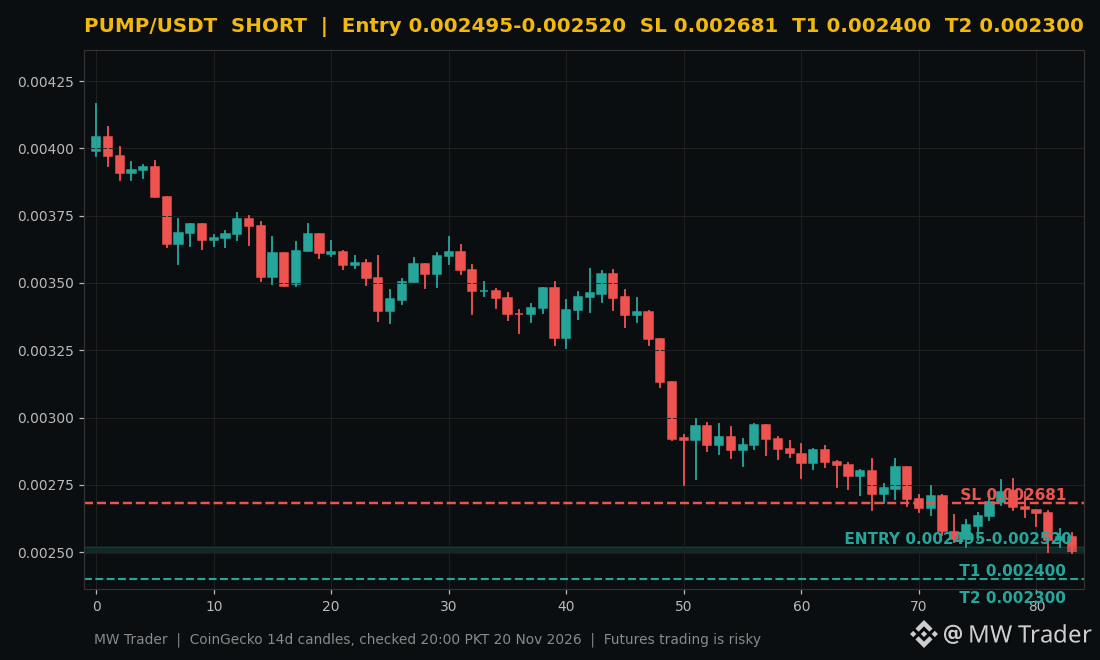
$PUMP #PUMP 📉 Pump.fun is down 7.93 percent today, the memecoin launchpad is bleeding again, and I am shorting it.
Direction: SHORT 🔴
Entry zone: 0.002495 to 0.002520
Stop loss: 0.002681
Target 1: 0.002400
Target 2: 0.002300
Pump.fun is trading near $0.002507 after losing 7.93 percent in 24 hours, according to CoinGecko, and the live price sits right inside my entry zone of 0.002495 to 0.002520. I last posted PUMP on November 19, and the setup has genuinely changed, the coin is making fresh lows while Bitcoin sits under $62,000 and speculative coins bleed faster than the majors in a risk off market. My plan is short the zone, stop above $0.002681, take the first profit at $0.002400, with $0.002300 as the second target. 📉
Would you short PUMP here, or wait for a bounce back to $0.002681 first? 🤔
Futures trading is risky, trade small, manage risk, do your own research. ⚠️
Follow for more trades.
#Pumpfun #Crypto #FuturesTrading #TradingSignals
5
·
--
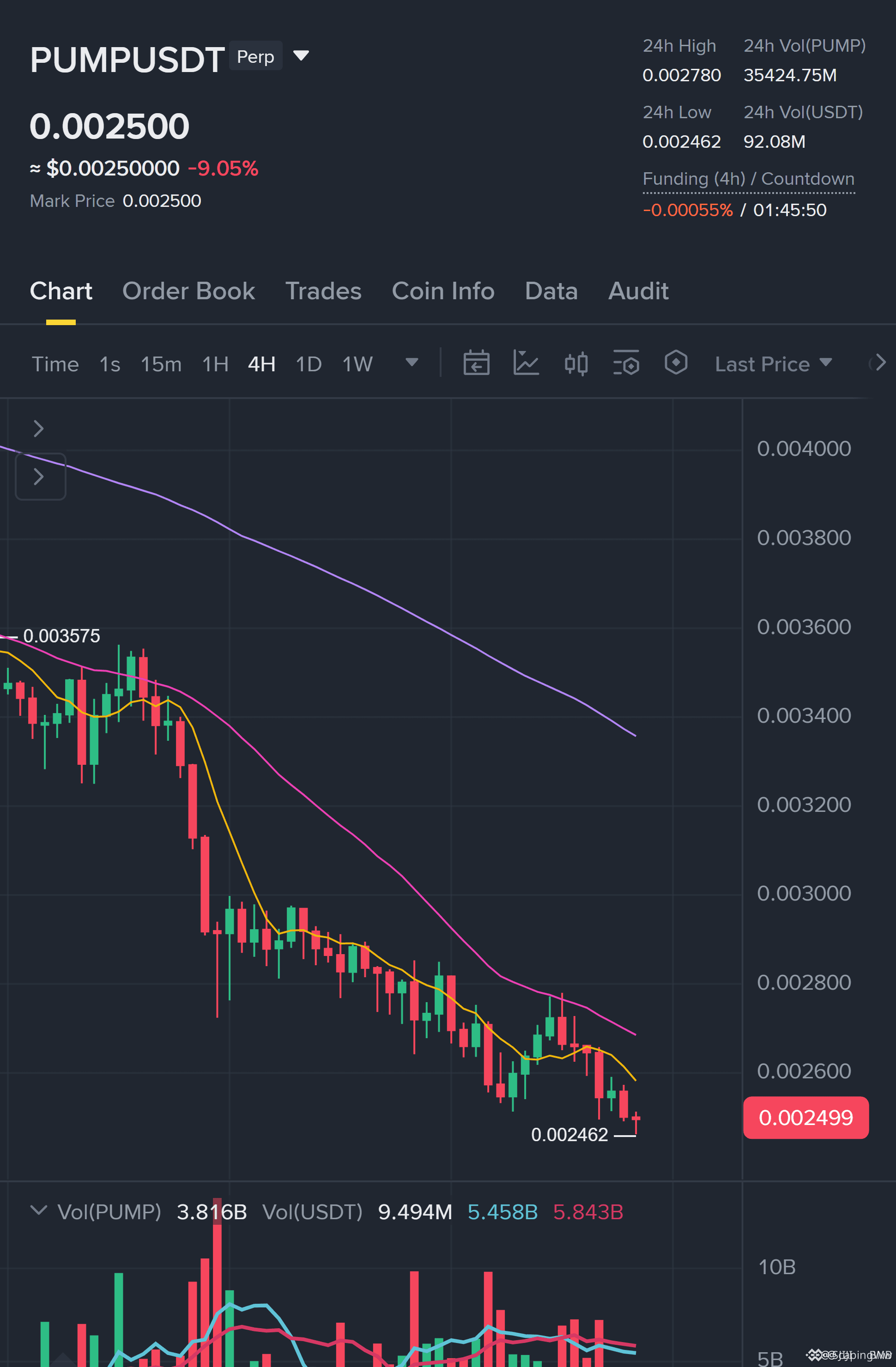
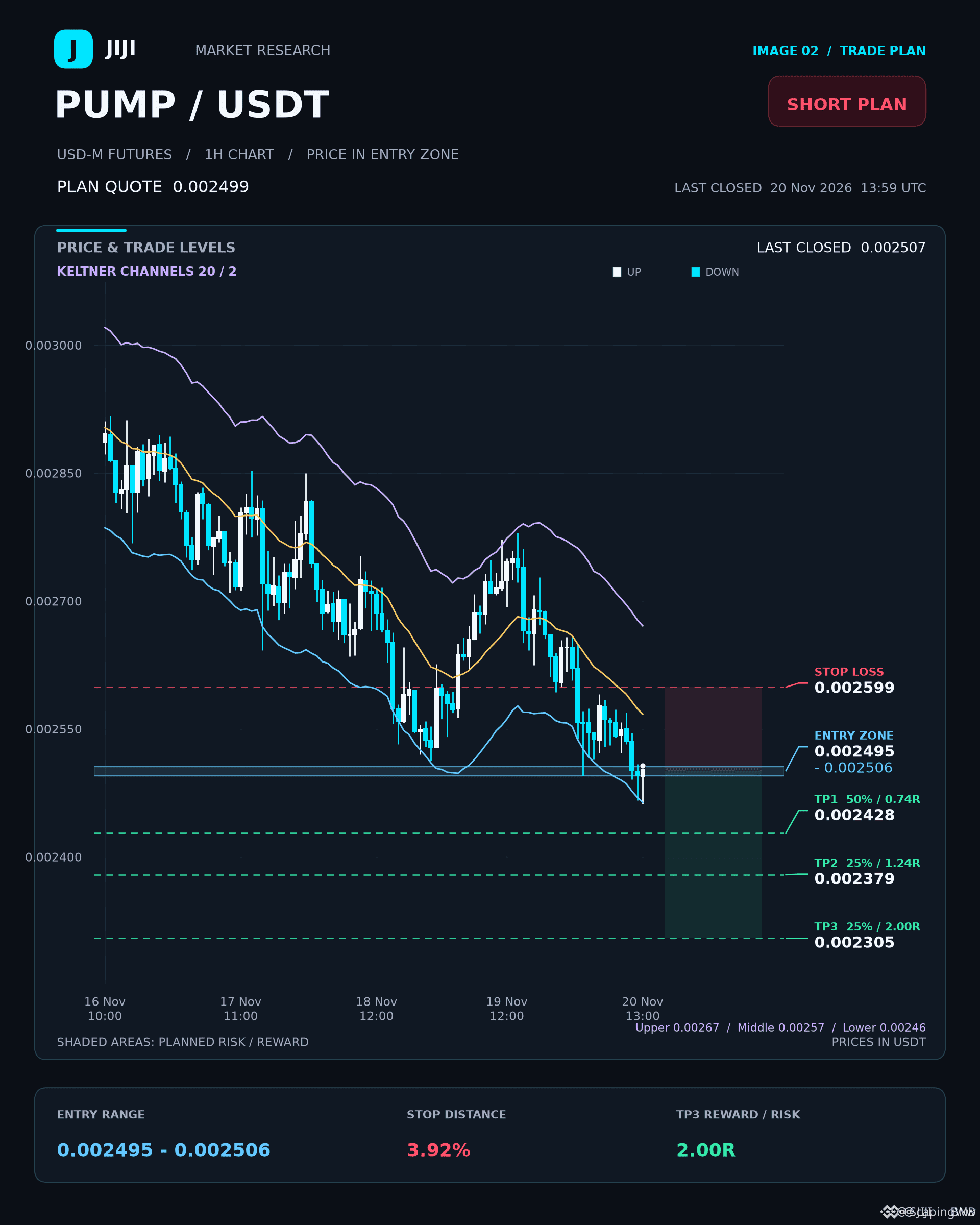
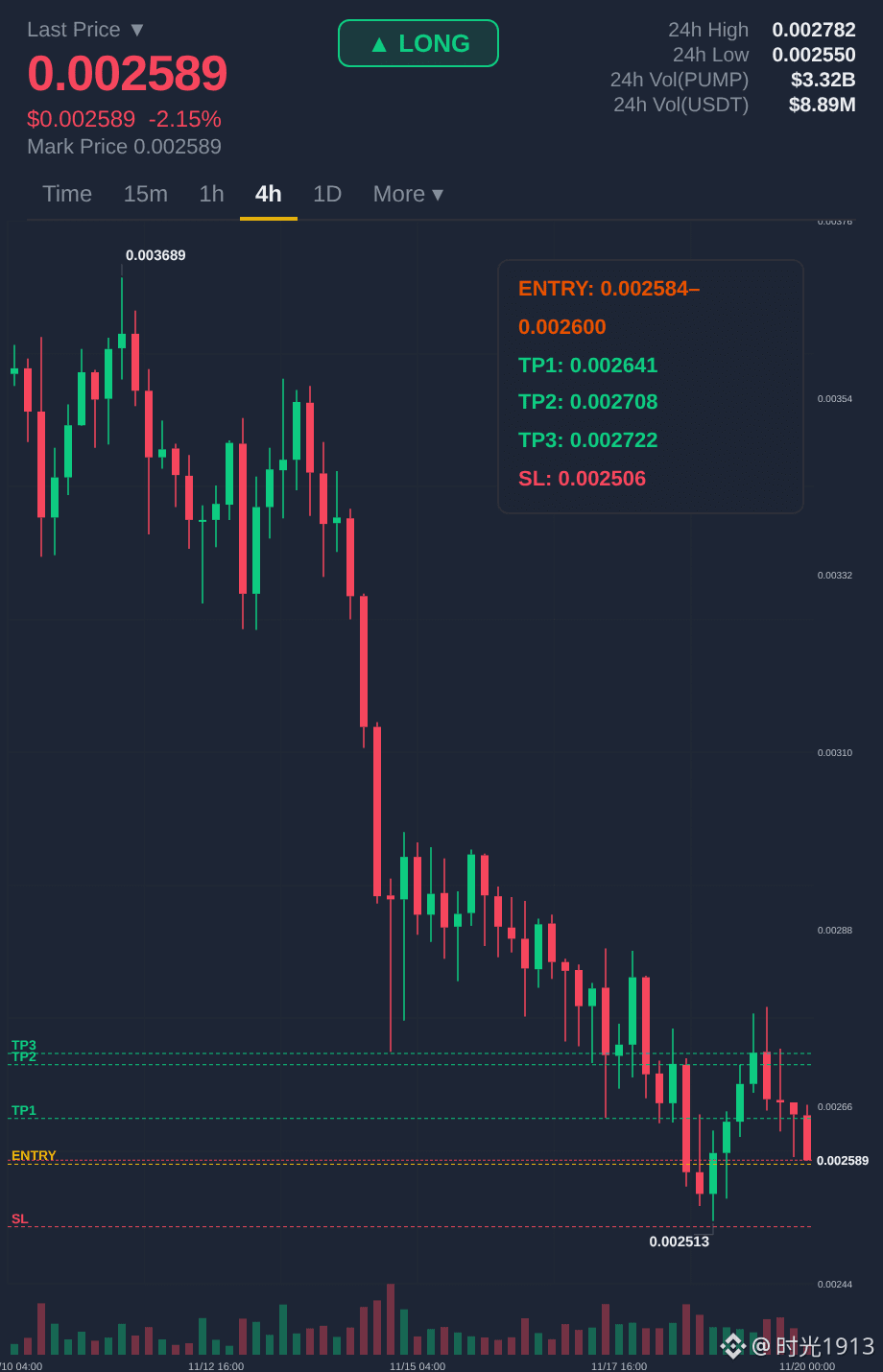
🔴 $PUMP FACING HEAVY SELLER WALL AS 4H STRUCTURE ROLLS OVER 📉
Entry: 0.002495 - 0.002506 ⚡
Target: 0.002379 🚀
Stop Loss: 0.002599 ⚠️
Sellers are aggressively defending the upper resistance band while momentum indicators confirm fading buyer strength across the lower timeframes. 📊
The closed 4h structure heavily favors downside continuation once this distribution zone cleanly breaks and selling volume steps in. ⚡
Are you positioning early inside this supply zone for the liquidity drop down to support, or waiting for a confirmed breakdown candle? 👇
⚠️ Not financial advice. Always manage your risk. 🛡️
🏷️ #PUMP #ShortSetup #Crypto #Bearish #OrderBlock
🐻 📉
16
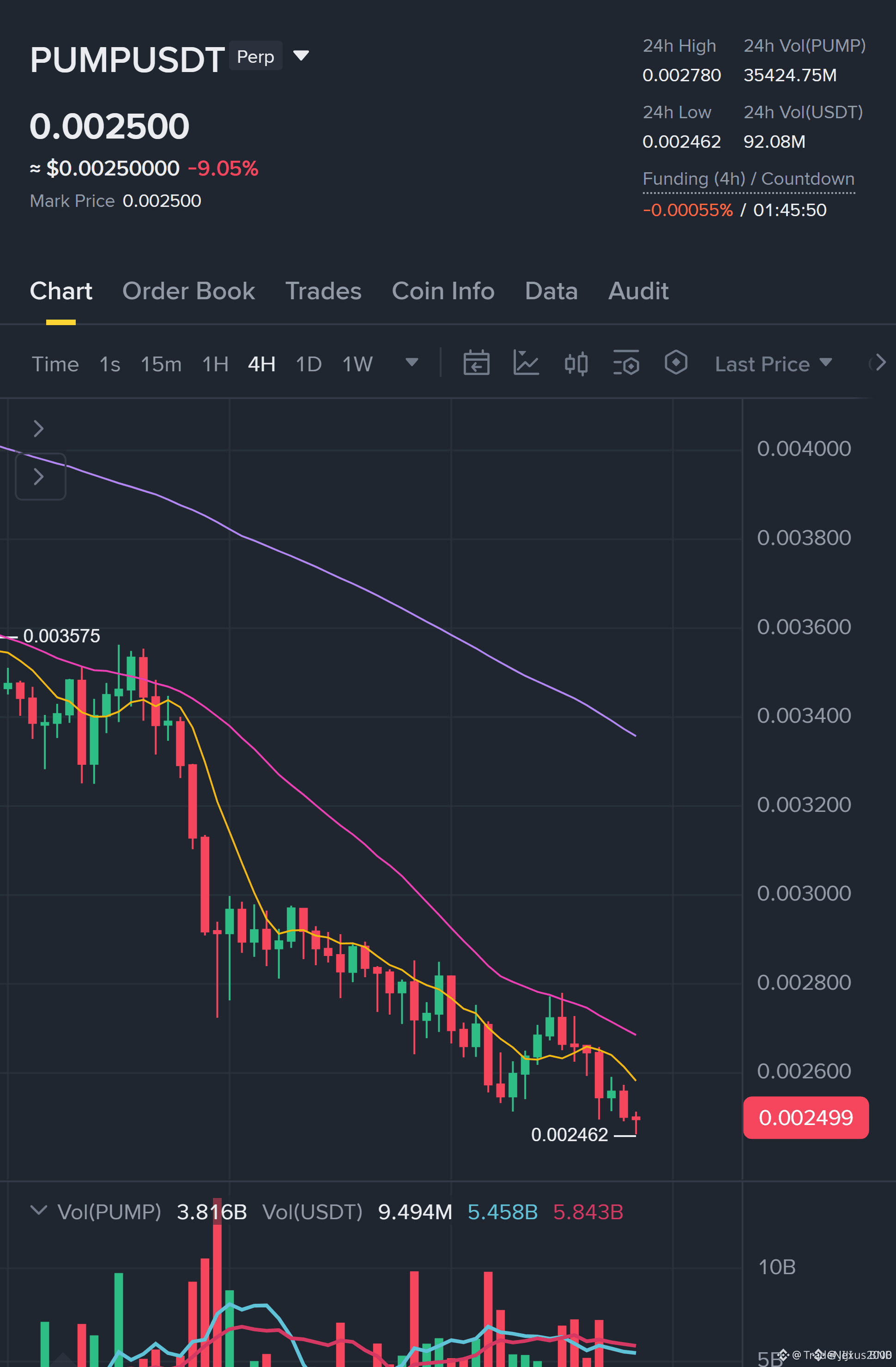
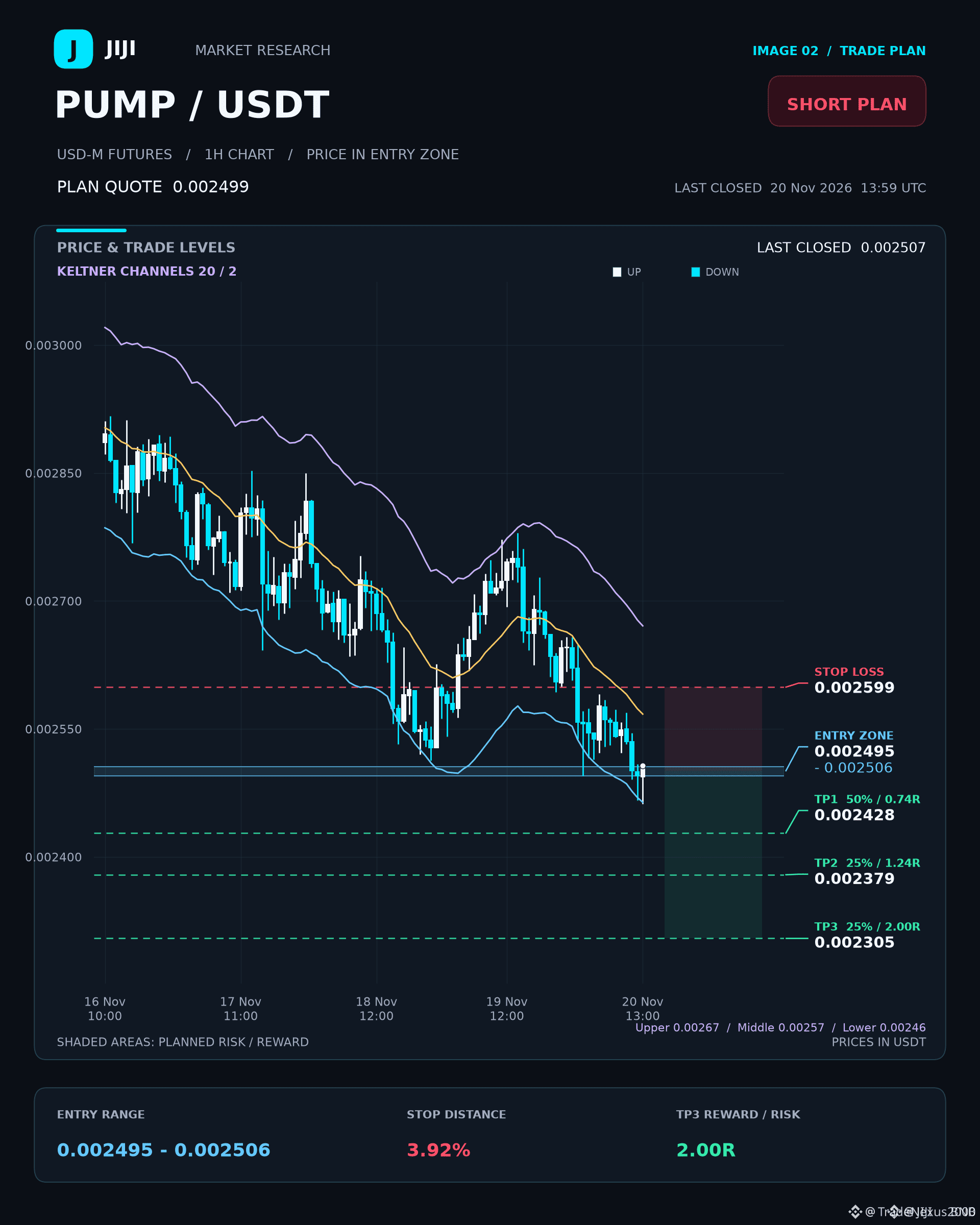
🔴 $PUMP NEARING DISTRIBUTION AS 4H EMA STRUCTURE CEMENTS BEARISH CONTINUATION! 📉
Entry: 0.002495 - 0.002506 ⚡
Target: 0.002428 🚀
Stop Loss: 0.002599 ⚠️
Smart money distribution is evident as the 4h EMA structure firmly favors downside continuation following the recent liquidity sweep into our premium zone. 📊
We are currently stalking a lower timeframe confirmation on the 15m candle close before committing capital to this short thesis. ⚡
Invalidation sits safely above the local swing high, offering a clean structured risk profile across multiple profit targets. 💡 Are you scaling in on this rejection or waiting for deeper sweep confirmation? 👇
⚠️ Not financial advice. Always manage your risk. 🛡️
🏷️ #PUMP #ShortSetup #CryptoFutures #MarketStructure
📉 🦈
27

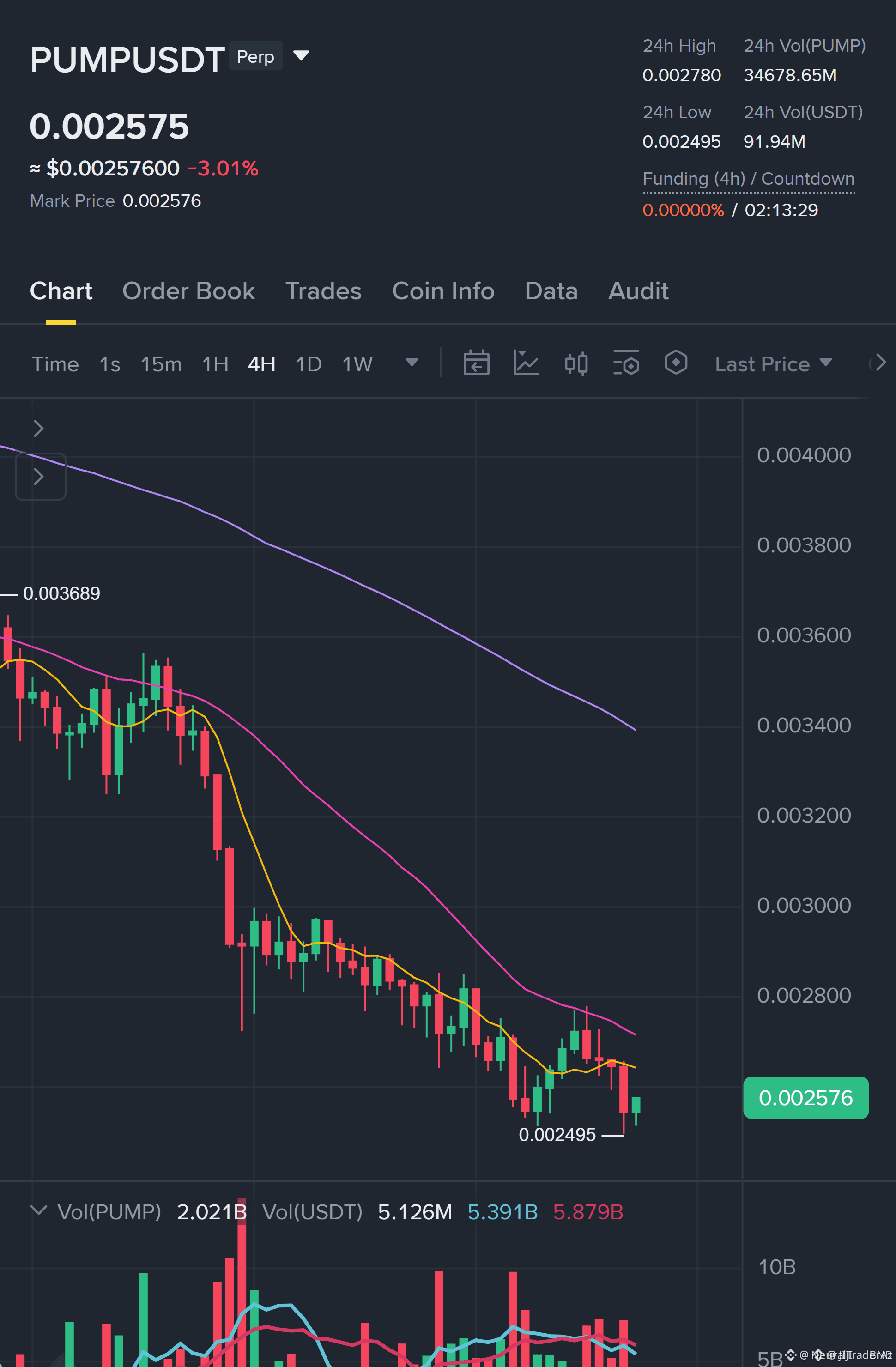
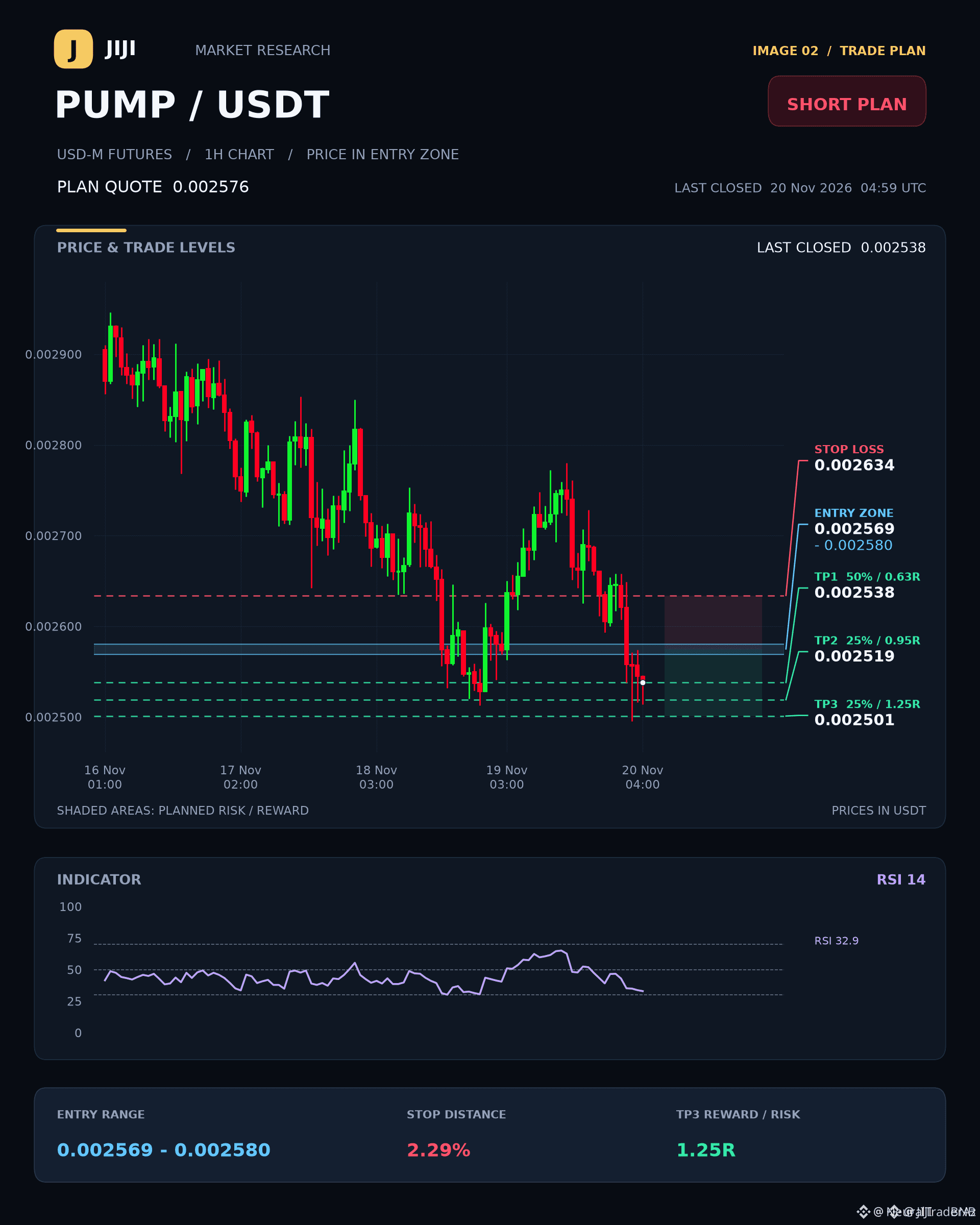
🚨 $PUMP NEARING ENTRY ZONE AS 4H BEARISH STRUCTURE PRESSURES LOWER! 📉
Entry: 0.002569 ⚡
Target: 0.002501 🚀
Stop Loss: 0.002634 ⚠️
The 4h moving average stack remains decisively bearish, aligning with a 1h RSI print of 32.9 to validate downside momentum. 📊 Directional indicators show selling pressure building, though a nearby 1h support cluster at 0.002532 warrants caution before deeper extensions. ⚡
Institutional order flow favors continuation toward our lower structural targets once the 15m candle confirmation locks in. 🔍 Are you positioning for the breakdown or waiting for a retest of higher liquidity? 👇
⚠️ Not financial advice. Always manage your risk. 🛡️
🏷️ #PUMP #ShortSetup #CryptoFutures #TechnicalAnalysis
🦈 📉
10

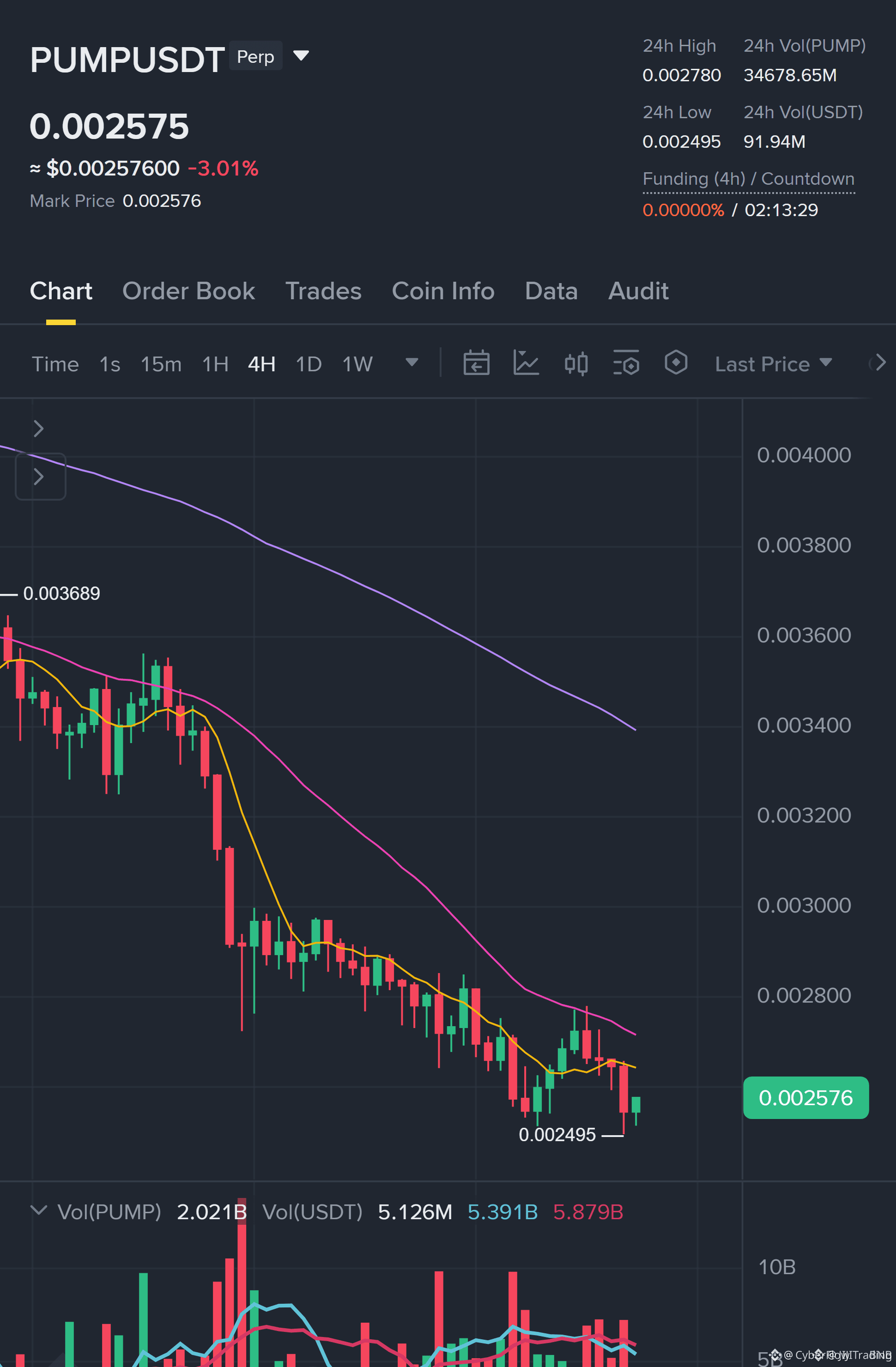
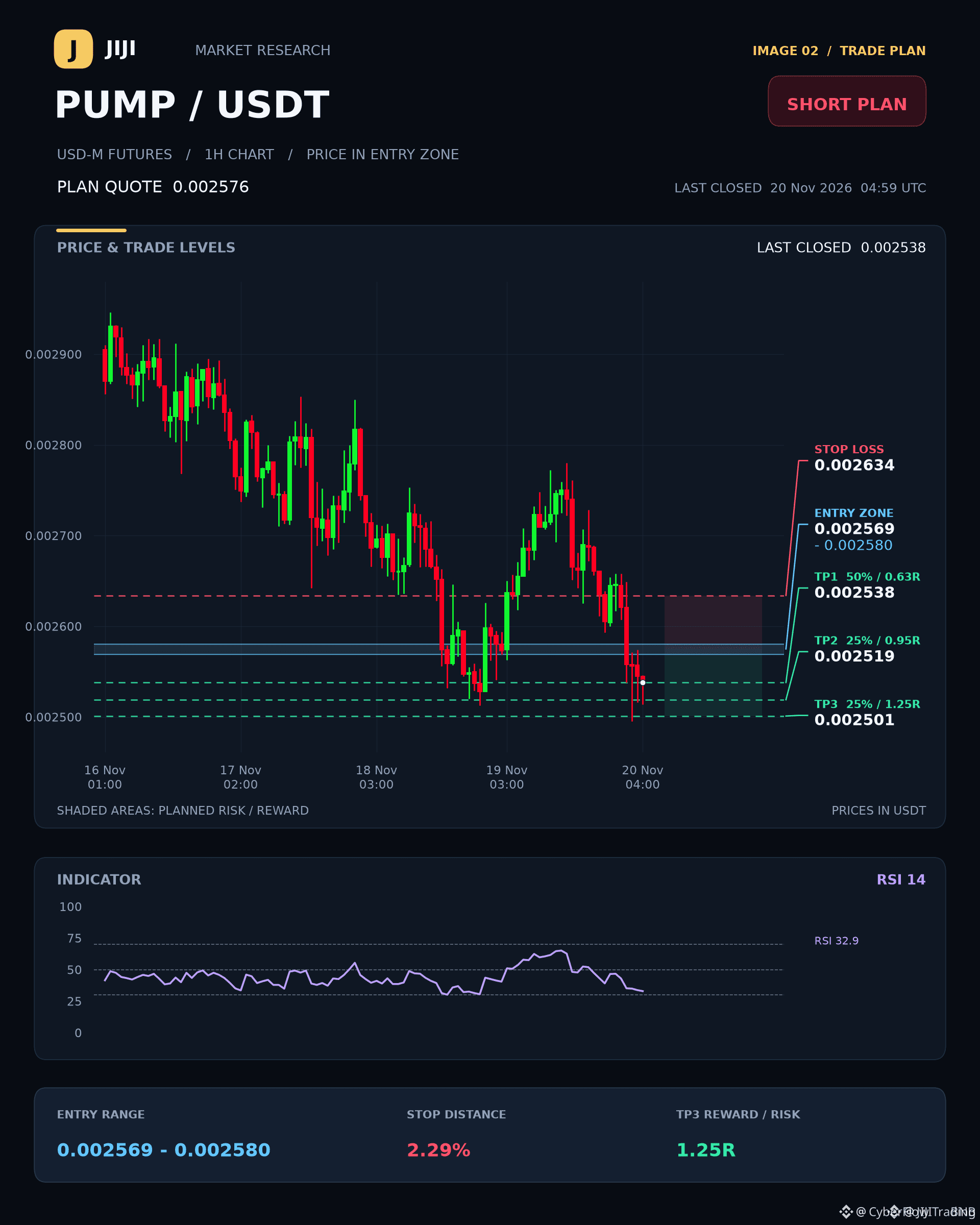
🐻 $PUMP BEARS PRESSING HARD AS THE 4H EMA STACK SLIPS LOWER! 📉
Entry: 0.002569 - 0.00258 ⚡
Target: 0.002538, 0.002519, 0.002501 🚀
Stop Loss: 0.002634 ⚠️
Sellers are firmly in control here with a heavy bearish EMA stack across the four-hour chart while momentum builds downward pressure. 📊 The one-hour relative strength index sitting near 33 confirms steady distribution without an oversold bounce just yet.
Price action is sliding right into our zone as directional indicators favor continuation toward lower targets. ⚡ Watch out for potential friction around the nearby support level, but the path of least resistance points south.
💬 Are you riding this downside momentum down to the final target or locking in profits early? 👇
⚠️ Not financial advice. Always manage your risk. 🛡️
🏷️ #PUMP #ShortSetup #CryptoFutures #Bearish #Trading
🔥 📉
16


·
--
$PUMP +3.01% | $ERA +2.58% | $RAY +2.22%
#PUMP nudged up to $0.00263300, gaining +3.01% on $8.8 M of volume.
#ERA climbed to $0.0716, up +2.58% with $2.1 M traded. The Caldera rollup platform aims to boost scaling and bridge rollups on Ethereum.
#RAY rose to $1.42, advancing +2.22% on $1.6 M of volume.
📌 Keep an eye on whether the modest volume uplift can sustain these price nudges across the trio.
#Write2Earn #Binance
45
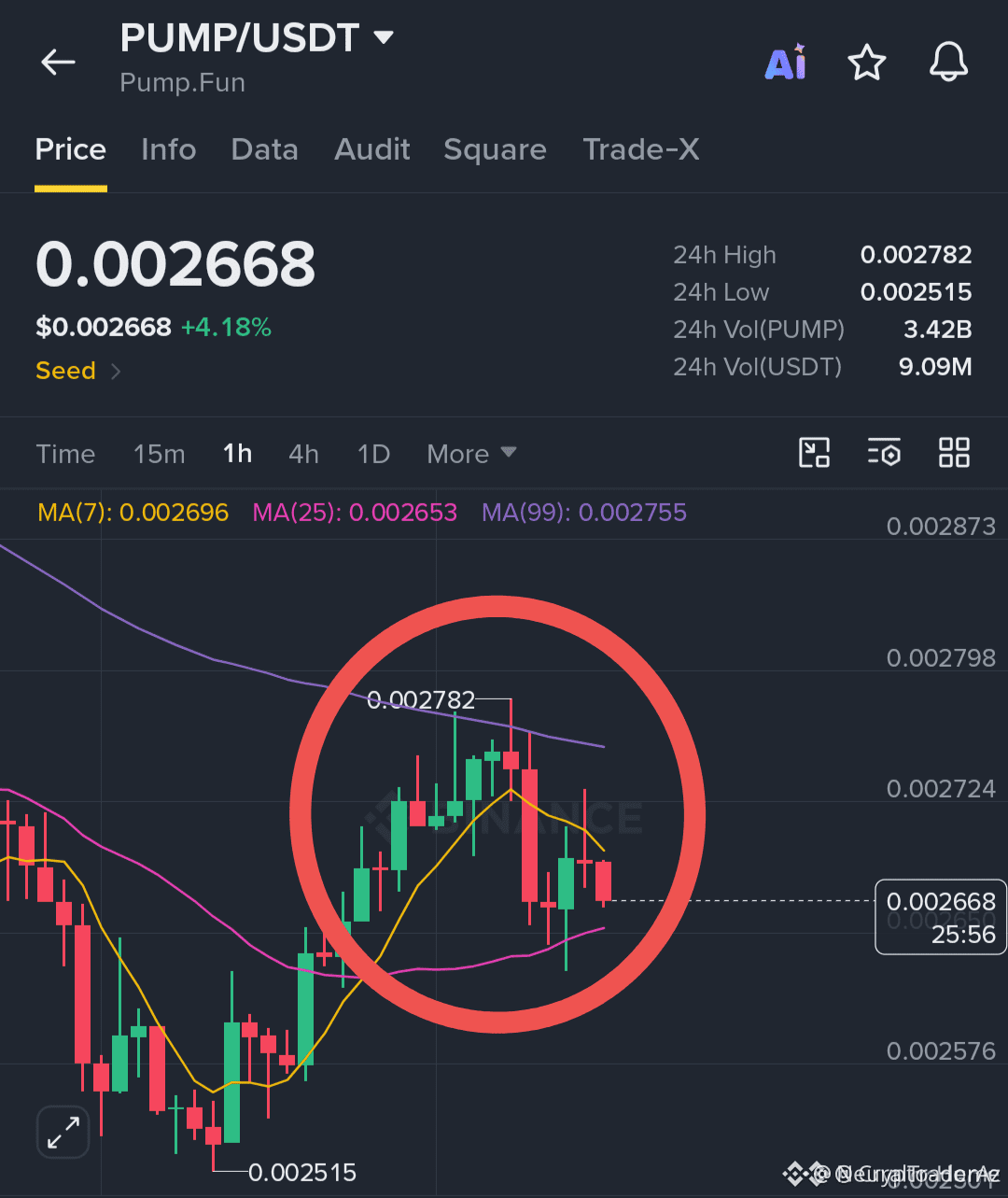
🦈 $PUMP TESTING CRITICAL MOVING AVERAGE SUPPORT AFTER SWEEPING LOCAL LIQUIDITY! ⚡
Entry: 0.002668 ⚡
Target: 0.002782 🚀
Smart money is currently measuring order flow as $PUMP prints a 4.18% 24-hour gain backed by $9.09M in volume. 📊 Price recently swept the 0.002782 resistance before a healthy cool-off back into the 1-hour moving average. ⚡
This institutional retest of moving average support will determine if buyers can sustain momentum or if a deeper sweep is required. 💡 Are bulls going to defend this structural pivot here or bleed back into lower liquidity? 👇
⚠️ Not financial advice. Always manage your risk. 🛡️
🏷️ #PUMP #MovingAverage #Crypto #TechnicalAnalysis #SmartMoney
🦈 ⚖️
7
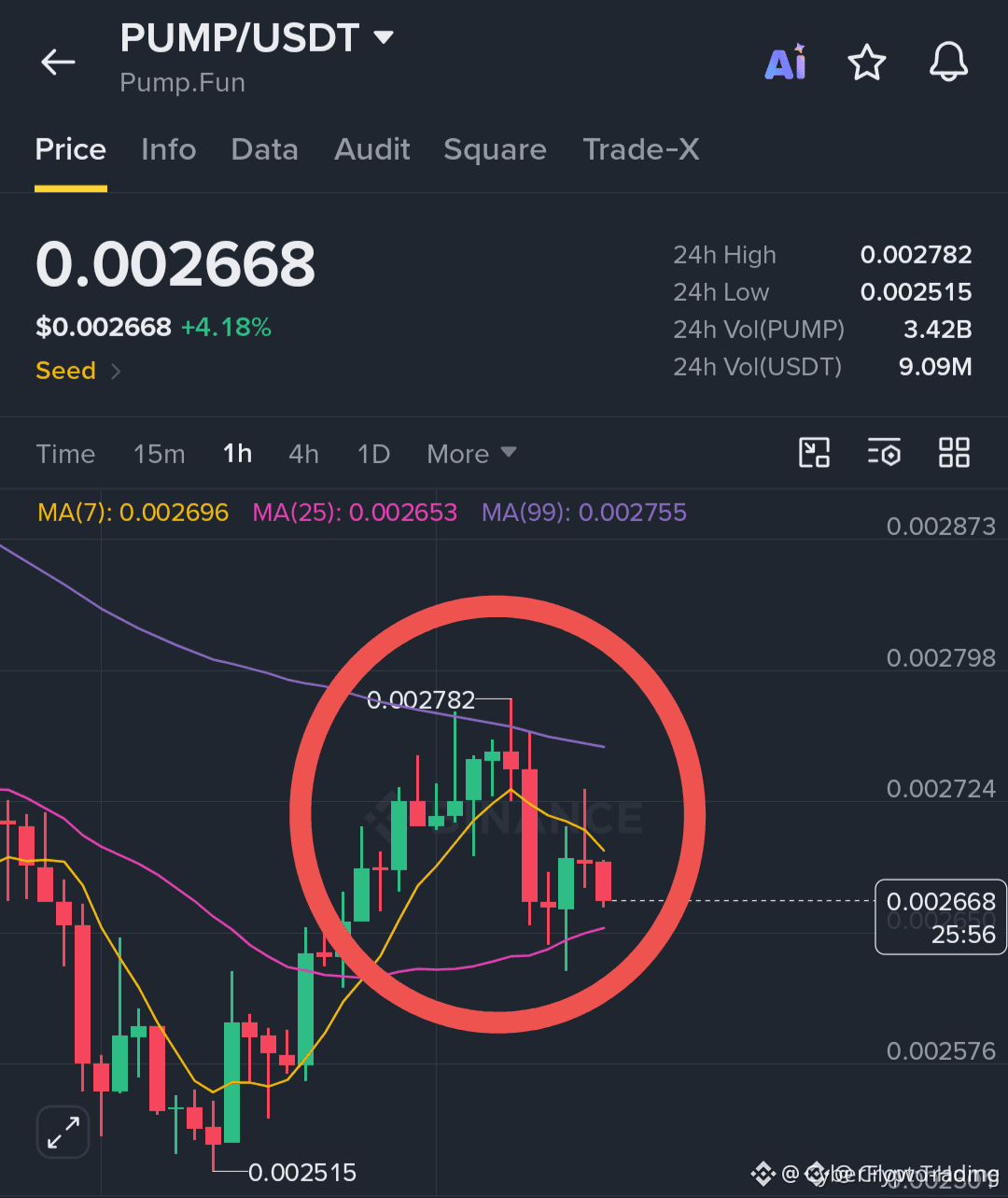
🚨 $PUMP COOLED OFF AT RESISTANCE AND NOW TESTS MOVING AVERAGE SUPPORT! ⚡
Entry: 0.002668 ⚡
Target: 0.002782 🚀
Buyers are aggressively defending the 1h moving average after that swift rejection from local highs, keeping the tape buoyant on solid volume flow. 📊 Momentum is coiling tight as capital absorbs the pullback without breaking stride. ⚡
This structure hints at a clean continuation once the order book clears out lingering supply near the highs. 🔍 💬 Are you bidding this moving average test here or waiting for a confirmed breakout above resistance? 👇
⚠️ Not financial advice. Always manage your risk. 🛡️
🏷️ #PUMP #Altcoin #Crypto #Trading #Breakout
🔥 💎
23
Log in to explore more content
Join global crypto users on Binance Square
⚡️ Get latest and useful information about crypto.
💬 Trusted by the world’s largest crypto exchange.
👍 Discover real insights from verified creators.
Email / Phone number
Trending Topics
1
#CanBTCReboundAfterFallingBelow60K?
365,279 views
1,540 Discussing
2
#GlobalStocksFaceLongestLosingStreakSince2023
122,357 views
1,092 Discussing
3
#BlackRockIBITPostsRecord$541MSingleDayOutflow
692 views
17 Discussing
4
#AnthropicPlungesTowardIPOPriceonDay2
58,891 views
593 Discussing
5
#TwentyOneCapitalAdds172.25BTC
11,483 views
161 Discussing
6
#HKBillWouldExcludeTokenizedDepositsFromVirtualAssets
972 views
14 Discussing
7
#BNBDropsBelow540USDTWith8.46%DailyDecline
32,204 views
273 Discussing
8
#HKBillProposesHK$100KFineForUnauthorizedCryptoTitles
1,056 views
14 Discussing
9
#BitMineFaces$10.1BUnrealizedETHLoss
2,007 views
18 Discussing
10
#StrategyReports$35BNetReserves
1,983 views
18 Discussing