
#samsungexplorespotentialusadrlisting
samsungexplorespotentialusadrlisting
83,483 views
569 Discussing
Hot
Latest

·
--
Bearish
#samsungexplorespotentialusadrlisting
🚨 SAMSUNG ADR RUMOR DENIED: SELL THE HYPE?
🇰🇷 Rumors of a Samsung U.S. ADR listing boosted market excitement, but Samsung has officially denied any plans for a Wall Street listing.
❌ No U.S. ADR under review
✅ AI chip demand remains strong
⚠️ Hype-driven rally loses momentum
With the ADR catalyst ruled out, short-term bullish momentum may weaken until a new positive trigger emerges.
📊 Trading View: SELL into short-term hype or WAIT. Avoid chasing rumor-driven moves until a confirmed bullish catalyst appears.
"CLICK HERE 👇👇👇TO TRADE"
$CL $SKHYNIX $SAMSUNG
#Samsung #stockmarket
{future}(SAMSUNGUSDT)
{future}(SKHYNIXUSDT)
{future}(CLUSDT)
#samsungexplorespotentialusadrlisting
🚨 SAMSUNG ADR RUMOR DENIED: SELL THE HYPE?
🇰🇷 Rumors of a Samsung U.S. ADR listing boosted market excitement, but Samsung has officially denied any plans for a Wall Street listing.
❌ No U.S. ADR under review
✅ AI chip demand remains strong
⚠️ Hype-driven rally loses momentum
With the ADR catalyst ruled out, short-term bullish momentum may weaken until a new positive trigger emerges.
📊 Trading View: SELL into short-term hype or WAIT. Avoid chasing rumor-driven moves until a confirmed bullish catalyst appears.
"CLICK HERE 👇👇👇TO TRADE"
$CL $SKHYNIX $SAMSUNG
#Samsung #stockmarket
1
1
1.3k

·
--
#SamsungExploresPotentialUSADRListing
Samsung Could Be Preparing for a Bigger Global Move!
Rumors about a potential U.S. ADR listing have caught the market's attention. If it happens, Samsung could gain broader access to U.S. investors and increase its global market visibility.
While nothing is confirmed yet, this is the kind of development that traders and investors will be watching closely.
Big companies don't make big moves without a reason.
What's your take? Would a U.S. ADR listing be bullish for Samsung? 👇
#Samsung #Stocks #Investing #CryptoNewss
140

·
--
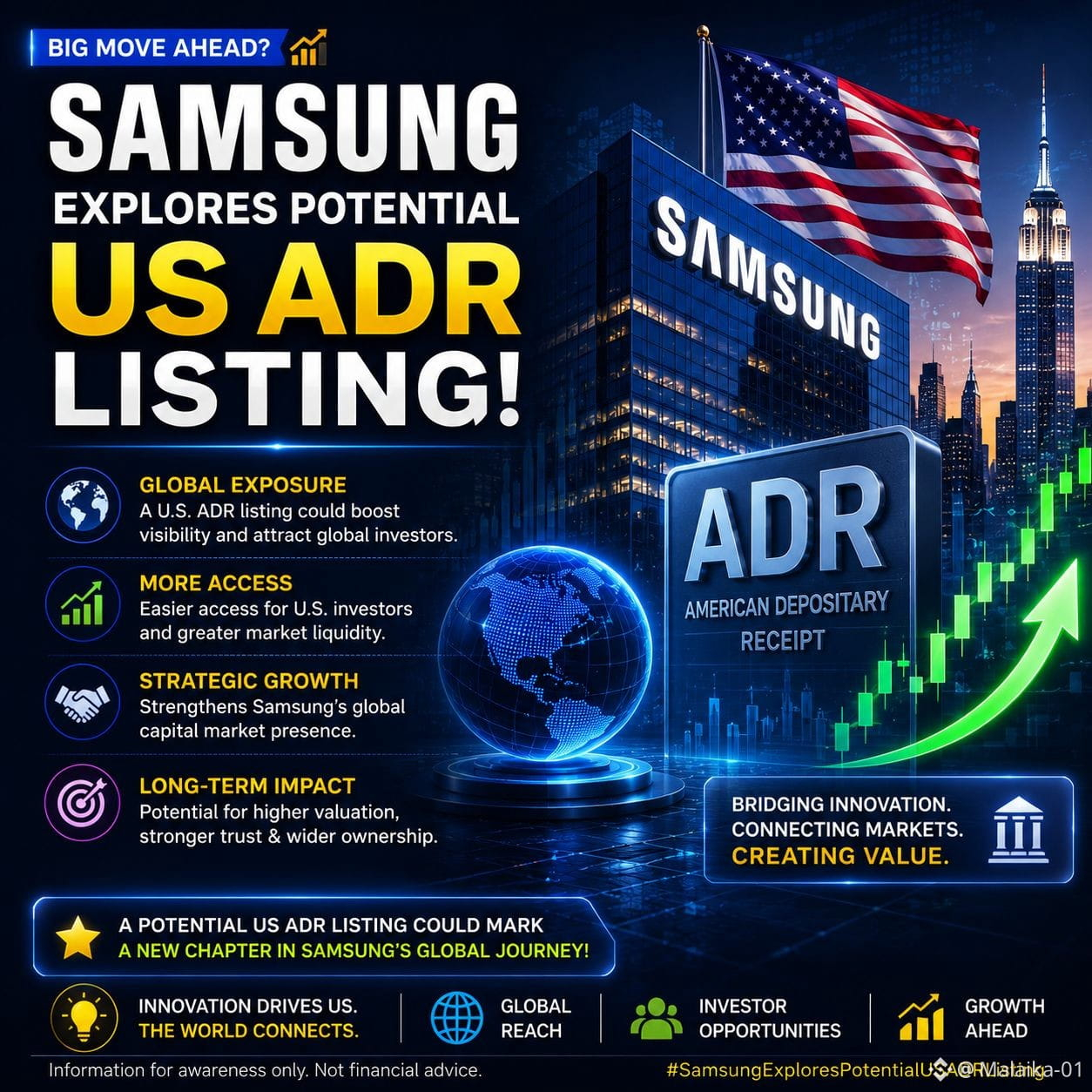
#SamsungExploresPotentialUSADRListing is sparking discussion across global financial markets.
A potential U.S. ADR listing could make Samsung shares more accessible to international investors and broaden its global market presence. If the move materializes, it may improve liquidity and strengthen investor participation while increasing worldwide visibility. Markets will be watching closely for any official announcements and their impact on Samsung's long-term strategy. Could this be the next major step in Samsung's global expansion? 🚀🌍
A potential U.S. ADR listing could make Samsung shares more accessible to international investors and broaden its global market presence. If the move materializes, it may improve liquidity and strengthen investor participation while increasing worldwide visibility. Markets will be watching closely for any official announcements and their impact on Samsung's long-term strategy. Could this be the next major step in Samsung's global expansion? 🚀🌍
69

·
--
Bearish
#samsungexplorespotentialusadrlisting
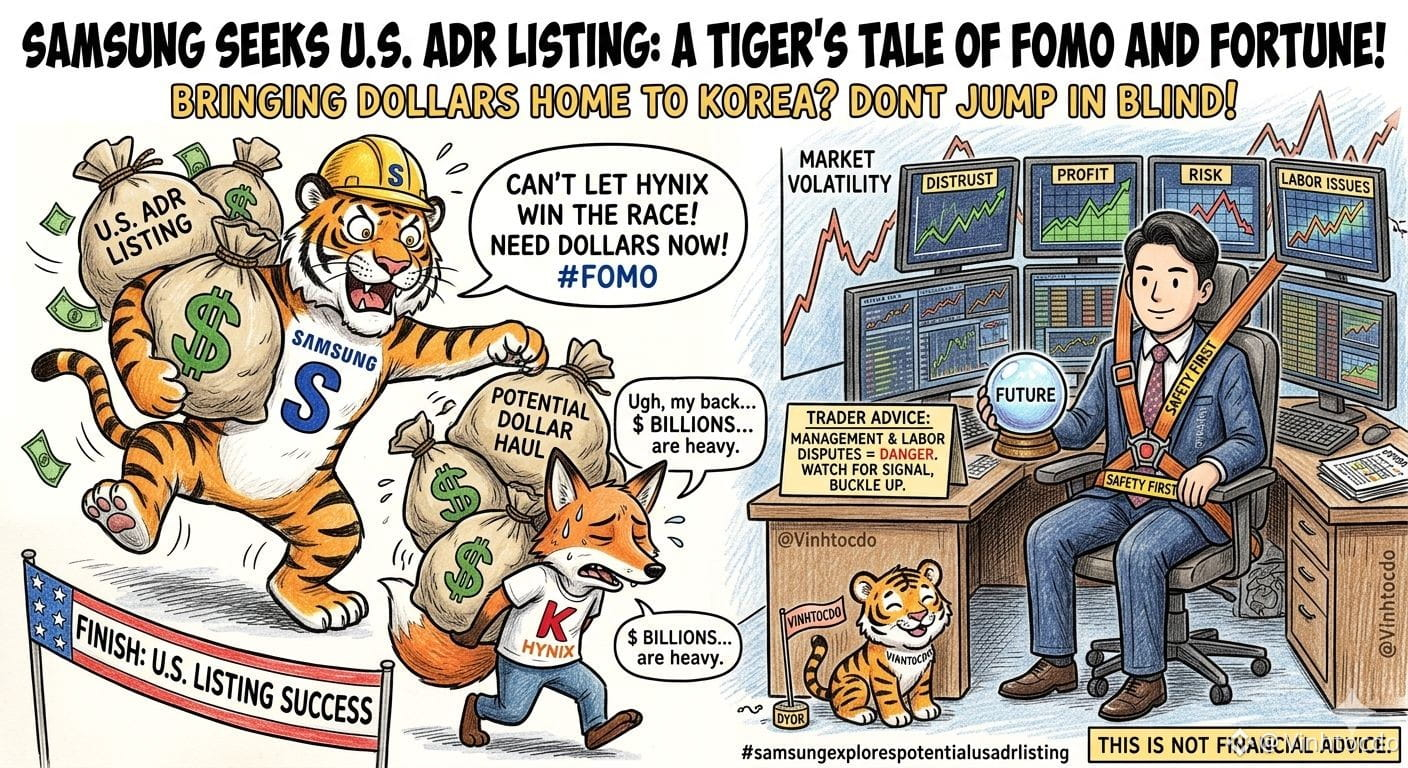
🚀 Watch the long-standing rival SK Hynix rake in billions of USD by listing in the US—how can Samsung, the “big brother,” possibly take the heat! Rumors are swirling that Samsung is in talks with a host of banks to issue ADRs in the US, preparing to bring bags of dollars back home. Market cap just crossed the 1,000 billion USD mark—if this succeeds, it’s truly like a tiger growing wings!
What should traders do? This news is still in its early stages, and it’s also entangled in complicated union disputes, so don’t rush into FOMO. Manage your capital tightly, keep your seatbelt fastened, and wait for clear signals!
Use the code VINHTOCDO for good luck and to weather the storm!
This is not financial advice.
#Samsung #ADRListing #USstock #VINHTOCDO
$SAMSUNG
{future}(SAMSUNGUSDT)
$NVDAB
{spot}(NVDABUSDT)
$SKHYB
{spot}(SKHYBUSDT)
#samsungexplorespotentialusadrlisting
🚀 Watch the long-standing rival SK Hynix rake in billions of USD by listing in the US—how can Samsung, the “big brother,” possibly take the heat! Rumors are swirling that Samsung is in talks with a host of banks to issue ADRs in the US, preparing to bring bags of dollars back home. Market cap just crossed the 1,000 billion USD mark—if this succeeds, it’s truly like a tiger growing wings!
What should traders do? This news is still in its early stages, and it’s also entangled in complicated union disputes, so don’t rush into FOMO. Manage your capital tightly, keep your seatbelt fastened, and wait for clear signals!
Use the code VINHTOCDO for good luck and to weather the storm!
This is not financial advice.
#Samsung #ADRListing #USstock #VINHTOCDO
$SAMSUNG
$NVDAB
$SKHYB
1
189

·
--
Bullish
#SamsungExploresPotentialUSADRListing
🚨 Samsung Responds to U.S. ADR Rumors
Samsung has dismissed recent speculation surrounding a potential U.S. ADR listing, confirming that no such plan is currently under consideration. The clarification has eased the excitement that had been building in the market.
🔹 The company has no active plans to pursue a U.S. ADR listing
🔹 Strong AI chip demand continues to support Samsung's long-term outlook
🔹 Without a new catalyst, the recent rumor-driven momentum could lose steam
📈 Market Outlook:
While Samsung's long-term growth prospects remain supported by the AI semiconductor boom, traders may want to avoid reacting to unverified headlines. Waiting for confirmed developments or stronger technical signals could offer a more favorable risk-reward setup than chasing speculation.
👇 CLICK HERE TO START TRADING
2
324

·
--
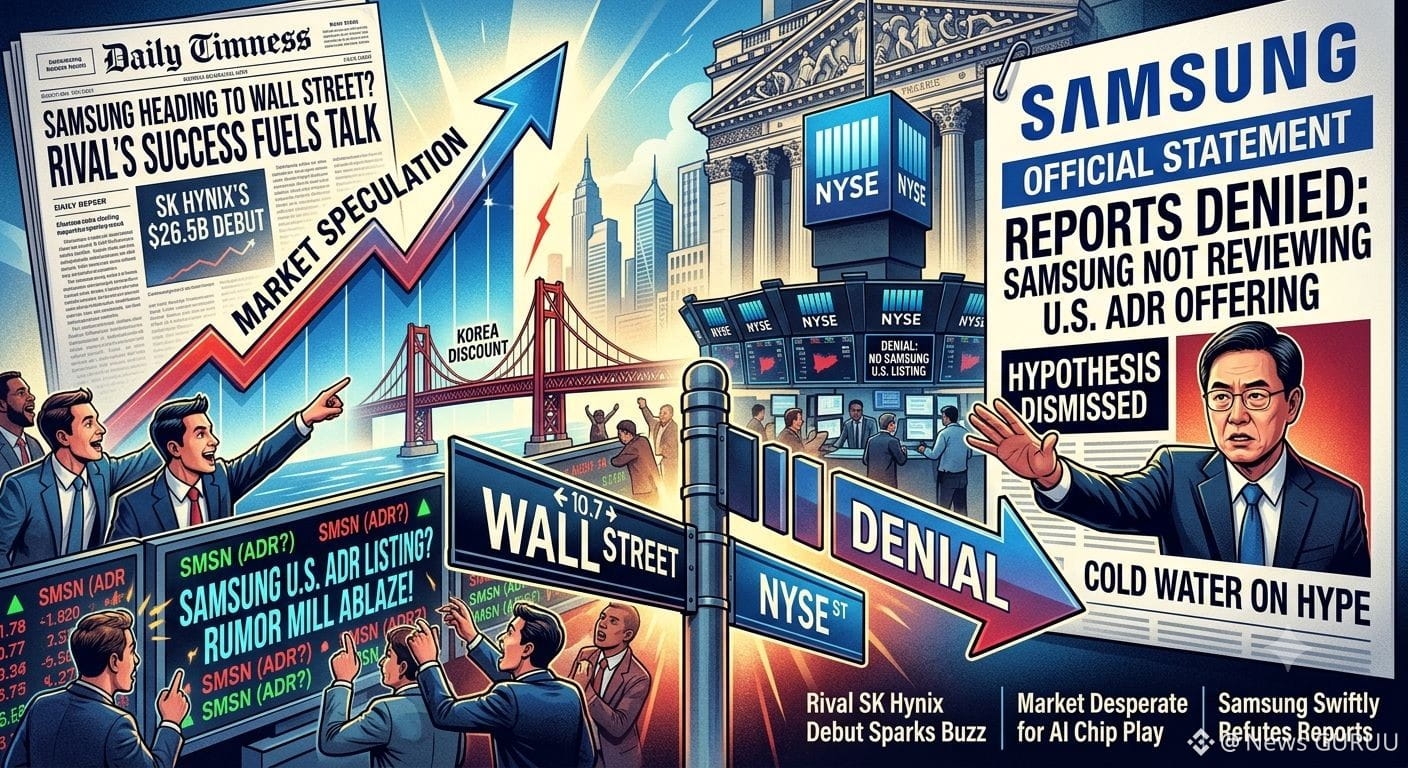
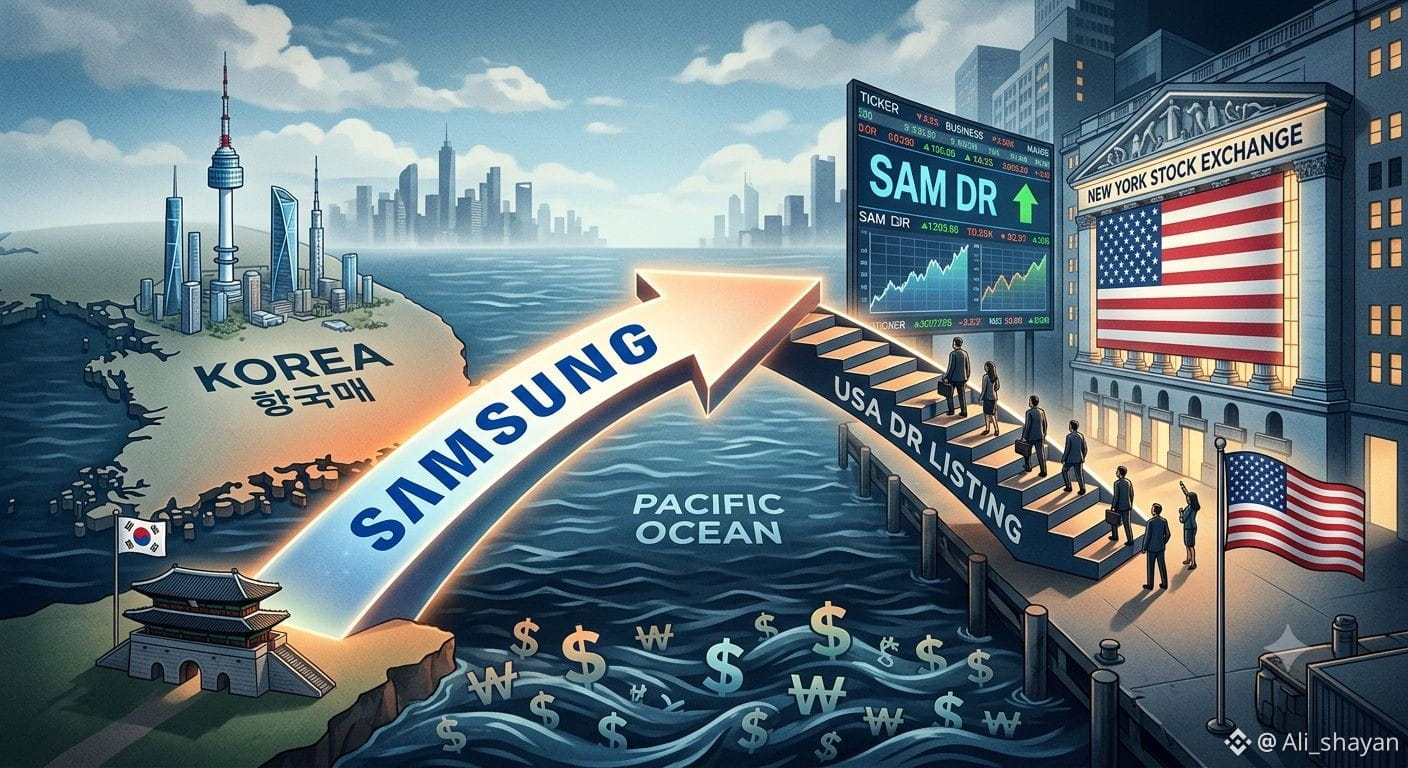
#SamsungExploresPotentialUSADRListing Is Samsung really heading to Wall Street, or was it just a rumor?
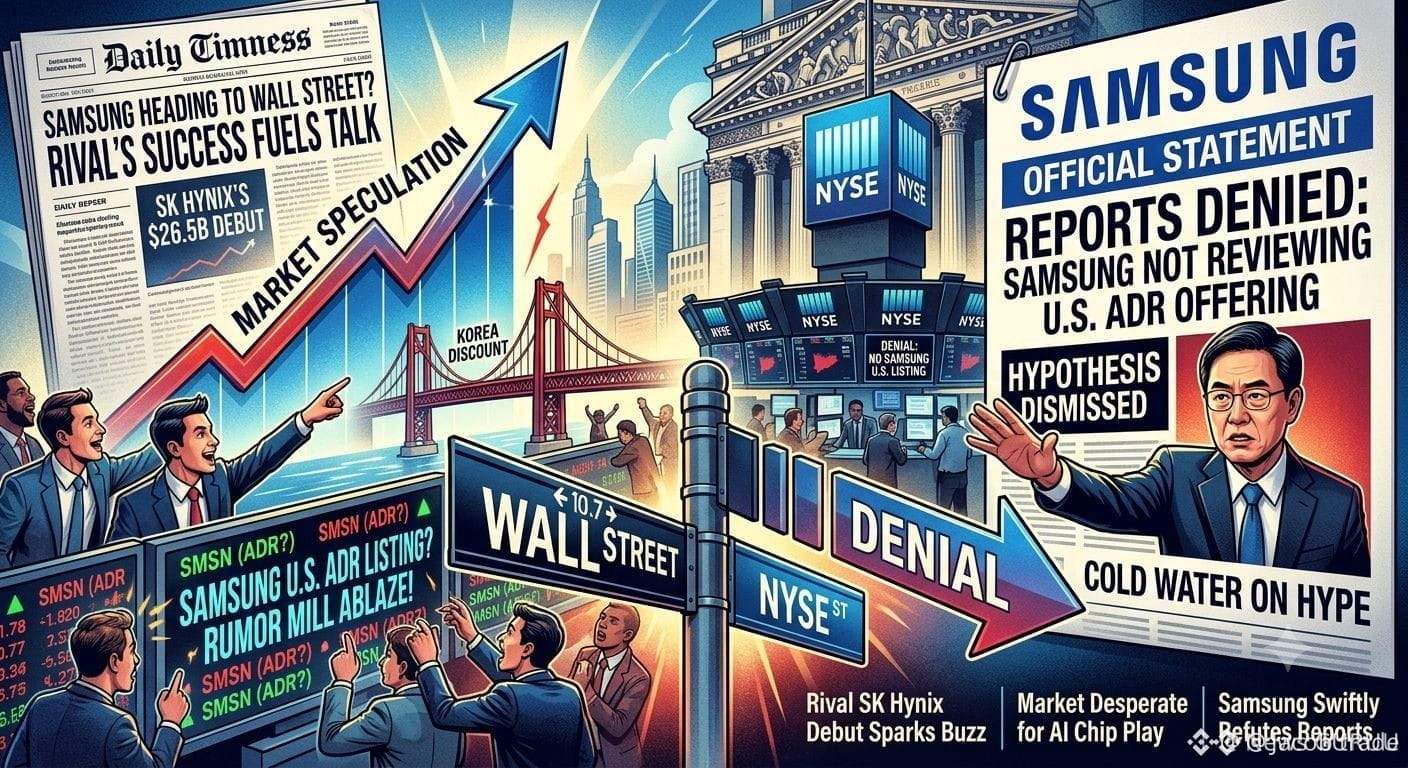
Rumors caught fire today after reports claimed Samsung was exploring a massive U.S. ADR (American Depositary Receipt) listing. The speculation was fueled by rival SK Hynix’s blockbuster Nasdaq debut last week, which raised $26.5 billion in the largest-ever foreign U.S. listing. Naturally, investors immediately started wondering if Samsung would make a similar play to bridge the persistent "Korea discount" and tap into massive U.S. capital pools hungry for AI chip plays.
However, Samsung quickly poured cold water on the hype, officially denying the reports and stating they are not reviewing a U.S. ADR offering.
Whether it was just early-stage bank pitches leaking or actual internal deliberations being quickly shut down, the buzz shows just how desperate the market is to get direct U.S. trading access to Samsung’s massive semiconductor business.
Do you think a U.S. listing is eventually inevitable for Samsung, or are they better off staying domestic? Let’s discuss below!
CLICK BELOW TO TRADE 👇🏻 $CL $ETH $BTC
{spot}(BTCUSDT)
{spot}(ETHUSDT)
{future}(CLUSDT)
#SamsungExploresPotentialUSADRListing Is Samsung really heading to Wall Street, or was it just a rumor?
Rumors caught fire today after reports claimed Samsung was exploring a massive U.S. ADR (American Depositary Receipt) listing. The speculation was fueled by rival SK Hynix’s blockbuster Nasdaq debut last week, which raised $26.5 billion in the largest-ever foreign U.S. listing. Naturally, investors immediately started wondering if Samsung would make a similar play to bridge the persistent "Korea discount" and tap into massive U.S. capital pools hungry for AI chip plays.
However, Samsung quickly poured cold water on the hype, officially denying the reports and stating they are not reviewing a U.S. ADR offering.
Whether it was just early-stage bank pitches leaking or actual internal deliberations being quickly shut down, the buzz shows just how desperate the market is to get direct U.S. trading access to Samsung’s massive semiconductor business.
Do you think a U.S. listing is eventually inevitable for Samsung, or are they better off staying domestic? Let’s discuss below!
CLICK BELOW TO TRADE 👇🏻 $CL $ETH $BTC
227

·
--
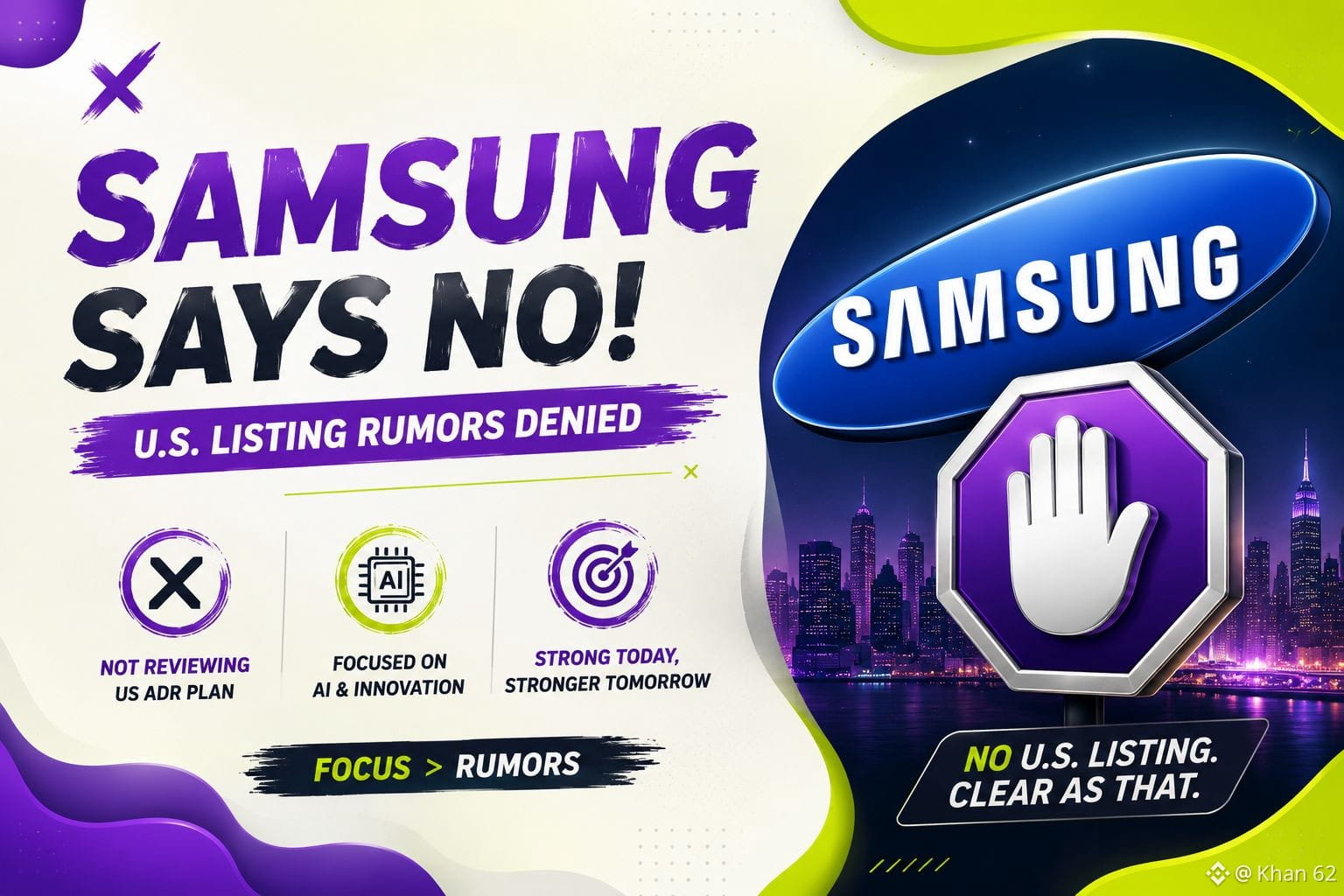
#samsungexplorespotentialusadrlisting 🚨 Samsung Stops U.S. Listing Rumors!
🌕 Traders thought Samsung might do what SK Hynix did and list on Wall Street. The company put a stop to those ideas.
🍋Samsung said it is not thinking about listing its shares in the U.S. Through an ADR. This was a rumor that started after SK Hynix had an U.S. Debut.
🍋The demand for memory chips, for AI is still high. Samsung seems to be sticking with its plan instead of listing in the U.S.
💬 Do you think Samsung should list in the U.S. One day?. Is it better for them to stay in Korea?
#stocks #Khan62 #AI #BinanceSquare
$SAMSUNG $SKHYNIX $SKHY
{future}(SKHYUSDT)
{future}(SKHYNIXUSDT)
{future}(SAMSUNGUSDT)
#samsungexplorespotentialusadrlisting 🚨 Samsung Stops U.S. Listing Rumors!
🌕 Traders thought Samsung might do what SK Hynix did and list on Wall Street. The company put a stop to those ideas.
🍋Samsung said it is not thinking about listing its shares in the U.S. Through an ADR. This was a rumor that started after SK Hynix had an U.S. Debut.
🍋The demand for memory chips, for AI is still high. Samsung seems to be sticking with its plan instead of listing in the U.S.
💬 Do you think Samsung should list in the U.S. One day?. Is it better for them to stay in Korea?
#stocks #Khan62 #AI #BinanceSquare
$SAMSUNG $SKHYNIX $SKHY
1
2.9k

#samsungexplorespotentialusadrlisting
🚨 Samsung shuts down speculation about ADRs in the U.S.
Market excitement faded after Samsung clarified that it is not considering an ADR listing in the U.S., putting an end to recent Wall Street rumors.
🔹 No plans for a U.S. ADR at this time
🔹 Ongoing demand for AI semiconductors continues to provide long-term support
🔹 The rumor-driven surge could cool down without a new catalyst
📈 Market outlook:
The long-term AI story remains intact, but traders should be careful when buying unconfirmed news. Waiting for a confirmed bullish catalyst or stronger technical confirmation may be a smarter approach than chasing short-term enthusiasm.
👇 CLICK HERE TO START TRADING
$SOL
$SAMSUNG
$ENA

3
12.2k

·
--
#SamsungExploresPotentialUSADRListing
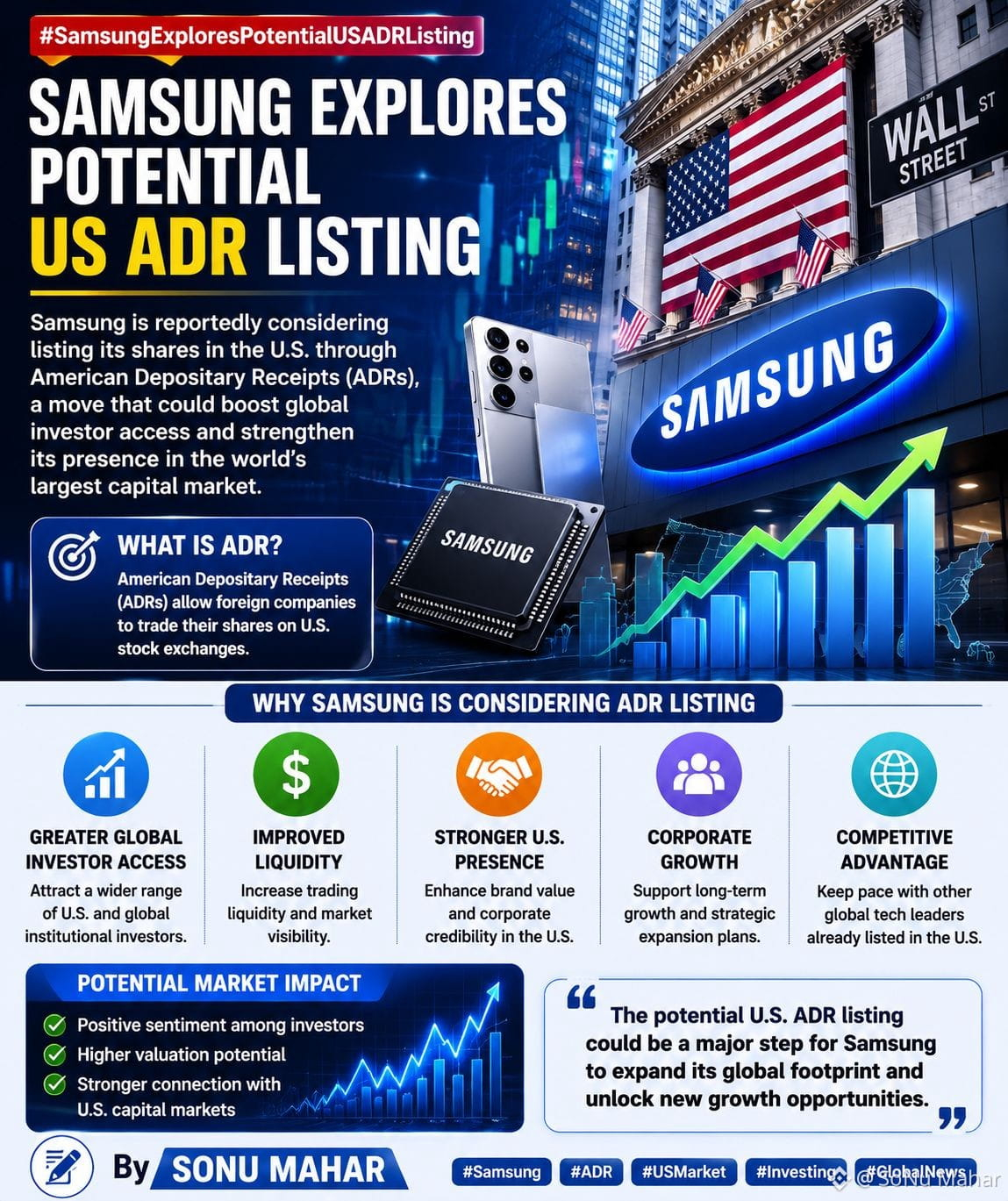
Samsung Electronics is reportedly exploring the possibility of listing American Depositary Receipts (ADRs) in the United States, a move that could significantly expand its access to global investors and strengthen its presence in the world's largest capital market.
An ADR listing would allow U.S. investors to trade Samsung shares more easily on American stock exchanges without purchasing the company's shares directly from the South Korean market. This could improve liquidity, broaden the company's shareholder base, and increase its visibility among institutional and retail investors.
The potential listing reflects Samsung's ongoing efforts to enhance shareholder value and strengthen its position as a global technology leader. By gaining greater exposure to U.S. financial markets, the company could attract additional investment while reinforcing its reputation among international investors.
Analysts believe a U.S. ADR listing could improve trading activity and potentially support Samsung's market valuation over the long term. It would also align Samsung with several major multinational companies that already maintain ADR programs to increase access to global capital.
Although no final decision has been announced, the report has generated strong interest among investors, who view the move as a positive step toward expanding Samsung's international market presence. Market participants will closely watch for any official confirmation from the company.
If approved, the ADR listing could become an important milestone in Samsung's global growth strategy, providing greater flexibility for investors while strengthening the company's connection with U.S. capital markets.#Samsung #NVDAB #MSFTBUSDT
{spot}(MSFTBUSDT)
{spot}(NVDABUSDT)
{future}(SAMSUNGUSDT)
Written by: Sonu Mahar
#SamsungExploresPotentialUSADRListing
Samsung Electronics is reportedly exploring the possibility of listing American Depositary Receipts (ADRs) in the United States, a move that could significantly expand its access to global investors and strengthen its presence in the world's largest capital market.
An ADR listing would allow U.S. investors to trade Samsung shares more easily on American stock exchanges without purchasing the company's shares directly from the South Korean market. This could improve liquidity, broaden the company's shareholder base, and increase its visibility among institutional and retail investors.
The potential listing reflects Samsung's ongoing efforts to enhance shareholder value and strengthen its position as a global technology leader. By gaining greater exposure to U.S. financial markets, the company could attract additional investment while reinforcing its reputation among international investors.
Analysts believe a U.S. ADR listing could improve trading activity and potentially support Samsung's market valuation over the long term. It would also align Samsung with several major multinational companies that already maintain ADR programs to increase access to global capital.
Although no final decision has been announced, the report has generated strong interest among investors, who view the move as a positive step toward expanding Samsung's international market presence. Market participants will closely watch for any official confirmation from the company.
If approved, the ADR listing could become an important milestone in Samsung's global growth strategy, providing greater flexibility for investors while strengthening the company's connection with U.S. capital markets.#Samsung #NVDAB #MSFTBUSDT
Written by: Sonu Mahar
62

Partly True
🏢 Samsung is reportedly exploring a potential U.S. ADR listing.
If it happens, the move could increase visibility among U.S. investors and improve access to one of Asia's largest technology companies.
While this is a traditional finance story, markets are becoming increasingly connected. Investors often watch whether developments in major tech companies influence sentiment toward innovation-focused assets like $BTC, $ETH, and AI-related ecosystems.
#samsungexplorespotentialusadrlisting
1
1
2k

#samsungexplorespotentialusadrlisting
🚨 Samsung Shuts Down U.S. ADR Speculation
Market excitement faded after Samsung clarified that it is not considering a U.S. ADR listing, putting recent Wall Street rumors to rest.
🔹 No plans for a U.S. ADR at this time
🔹 AI semiconductor demand continues to provide long-term support
🔹 The rumor-driven rally may cool without a fresh catalyst
📈 Market Outlook:
The long-term AI story remains intact, but traders should be cautious about buying into unconfirmed news. Waiting for a confirmed bullish catalyst or stronger technical confirmation may be the smarter approach than chasing short-term hype.
👇 CLICK HERE TO START TRADING
$CL
{future}(CLUSDT)
$SKHYNIX
{future}(SKHYNIXUSDT)
$SAMSUNG
{future}(SAMSUNGUSDT)
#samsungexplorespotentialusadrlisting
🚨 Samsung Shuts Down U.S. ADR Speculation
Market excitement faded after Samsung clarified that it is not considering a U.S. ADR listing, putting recent Wall Street rumors to rest.
🔹 No plans for a U.S. ADR at this time
🔹 AI semiconductor demand continues to provide long-term support
🔹 The rumor-driven rally may cool without a fresh catalyst
📈 Market Outlook:
The long-term AI story remains intact, but traders should be cautious about buying into unconfirmed news. Waiting for a confirmed bullish catalyst or stronger technical confirmation may be the smarter approach than chasing short-term hype.
👇 CLICK HERE TO START TRADING
$CL
$SKHYNIX
$SAMSUNG

1
1
1.3k
·
--
#samsungexplorespotentialusadrlisting
🚨 SAMSUNG ADR RUMOR DENIED: SELL THE HYPE?
🇰🇷 Rumors about a potential ADR (American Depositary Receipt) listing for Samsung in the United States boosted market enthusiasm, but Samsung has officially denied any plan to list on Wall Street.
❌ No U.S. ADR under review
✅ Demand for AI chips remains strong
⚠️ The increase driven by “hype” is losing momentum
Once the ADR catalyst is ruled out, the upward momentum in the short term could weaken until a new positive trigger appears.
📊 Trading View: SELL the “hype” in the short term or WAIT. Avoid chasing moves driven by rumors until a confirmed bullish catalyst has emerged.
"CLICK HERE 👇👇👇 TO TRADE"
$EVAA $SKHYNIX $SAMSUNG
#Samsung #stockmarket #BinanceSquare #BinanceTurns9
8
13.9k

·
--
Bullish
Samsung is considering expanding its presence in the U.S. markets
Samsung is considering the possibility of listing American Depositary Receipts (ADRs), a step that could give the company broader access to investors in the United States, while enhancing the stock’s liquidity and presence in the world’s largest financial market.
Despite the news sparking interest in the markets, Samsung quickly denied that there is an approved plan to list ADRs, confirming that what has been reported does not reflect an official decision.
If the company were to take this step in the future, it could represent an important development that strengthens its global position and increases interest from international investors, especially amid intensifying competition in the semiconductor and artificial intelligence sector.
{future}(SAMSUNGUSDT)
#SamsungExploresPotentialUSADRListing
Samsung is considering expanding its presence in the U.S. markets
Samsung is considering the possibility of listing American Depositary Receipts (ADRs), a step that could give the company broader access to investors in the United States, while enhancing the stock’s liquidity and presence in the world’s largest financial market.
Despite the news sparking interest in the markets, Samsung quickly denied that there is an approved plan to list ADRs, confirming that what has been reported does not reflect an official decision.
If the company were to take this step in the future, it could represent an important development that strengthens its global position and increases interest from international investors, especially amid intensifying competition in the semiconductor and artificial intelligence sector.
#SamsungExploresPotentialUSADRListing
1
5
466
Great companies don't stop looking for new opportunities—even after becoming global leaders.
Samsung exploring a potential U.S. ADR listing is a reminder that growth often comes from expanding your reach, not staying comfortable.
The same mindset applies across financial markets. Whether someone follows $BTC, $BNB, or traditional equities, continuous learning and adapting can matter more than chasing every headline.
💬 What's more important for long-term success: innovation or consistency?
#samsungexplorespotentialusadrlisting
1
1
1k
📢 Big question: Does a U.S. ADR listing really change a company's long-term value, or does it mainly improve investor access?
Samsung is reportedly exploring a potential ADR listing, sparking discussions about global capital markets.
Meanwhile, digital assets like $BTC and $ETH already trade around the clock across borders without relying on traditional stock exchanges.
💬 Which model do you think represents the future of global investing—traditional cross-listings or borderless blockchain-based markets?
#samsungexplorespotentialusadrlisting
70

·
--
Article
Newton Protocol’s Developer Push: Open Innovation or Controlled Access?Newton Protocol is presenting itself as a place where developers can build safer automated tools for onchain finance. The project gives developers ways to create transaction rules, connect outside data and control what automated systems are allowed to do with digital assets. That creates real opportunities, particularly for people working on security, compliance and financial automation. The bigger question is how much freedom developers actually have once they enter Newton’s ecosystem.
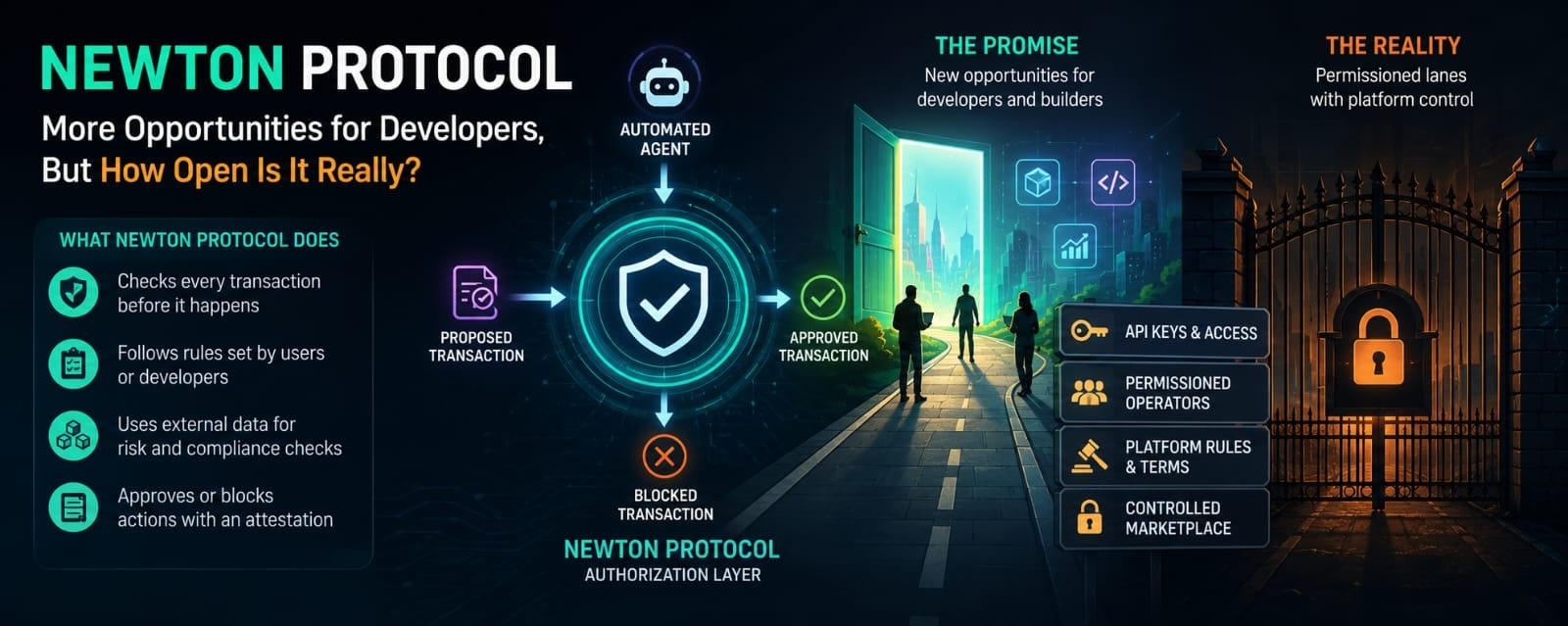
At the center of Newton Protocol is an authorization system. Before a transaction reaches the blockchain, Newton can check whether it follows a set of approved rules. A user might allow an automated program to trade tokens, manage a vault or move funds, but only under certain conditions. The program could be blocked from spending above a fixed amount, interacting with an unknown contract or sending money to an unapproved wallet.
This kind of protection is becoming more useful as automated software gains greater control over financial accounts. Giving a program permission to move money creates risks that ordinary chat tools do not have. A wrong answer may be annoying, but a wrong transaction can lead to an immediate loss.
Newton Protocol tries to reduce that danger by separating the program making the decision from the system approving the final action. Even if an automated tool decides that a trade or transfer should happen, Newton can reject it when the action breaks the account owner’s rules.
The idea is practical. Automated financial tools should not be trusted to supervise themselves. If the same system chooses a transaction and decides whether that transaction is safe, one failure can affect both parts of the process. Newton adds another checkpoint before funds move.
That is where the project’s strongest value can be found. It is not simply helping developers create agents that act independently. It is helping them build systems that act within clear limits.
Developers can use Newton Protocol to write policies for different situations. A company might want to stop transfers above a certain value. A vault manager could allow funds to interact only with a selected group of protocols. A payment service might require additional checks before sending money to a new address. A trading application could pause activity when market conditions become unusually unstable.
These rules can be combined with outside information. A transaction may be checked against market prices, wallet-risk data, identity records or security services. Developers can also create their own data connections when existing options do not meet their needs.
That gives Newton Protocol a meaningful role in the development of onchain financial products. Not every useful developer tool needs to be a new trading strategy or consumer application. Some of the most valuable work may happen in the background, where developers create better controls, cleaner data connections and more accurate transaction policies.
The project could be especially useful for businesses that want to use blockchain systems without giving up the safeguards they already rely on. A financial company may be interested in onchain markets but unwilling to let an automated program move funds without spending limits. A payment provider may need to block suspicious transfers. An organization managing a treasury may want every transaction to follow an internal approval policy.
Newton Protocol gives developers a way to build those protections directly into the transaction process.
The opportunity is real, but it is more specific than some of the wider claims surrounding the project. Newton is often described as an ecosystem where developers will be able to build, publish and earn from automated services. That vision suggests a broad marketplace filled with independent products.
The current system is more focused on transaction authorization.
Developers can already work with Newton’s policies, contracts, software tools and data connections. The larger marketplace, where many independent builders could publish services and compete for users, is still a developing part of the project.
That difference should not be ignored. Building infrastructure for a future marketplace is not the same as operating a mature marketplace today.
A working developer market needs more than tools and documentation. It needs active customers, clear pricing, open access and visible demand. Developers must be able to publish products, reach users and understand how the platform decides which services receive attention.
Newton Protocol has laid some of the technical foundation, but the wider economic system around that foundation remains less proven.
The project has made parts of its technology publicly available. Developers can examine code, test the software and understand how different pieces of the system operate. Public documentation also makes it easier for outside builders to explore the platform without relying only on promotional statements.
That openness matters. It shows that Newton Protocol is offering more than a concept.
Still, public code does not automatically make the whole project permissionless.
A developer may be able to inspect the software while still depending on Newton’s dashboard, gateway, account system or access keys. The project can set rules for those services, limit how they are used and change the conditions attached to them.
For experienced developers, there may be ways to interact more directly with the contracts and avoid some of Newton’s hosted tools. Most builders will probably follow the official development path because it is easier, faster and better documented.
That gives Newton Protocol influence over how developers enter the ecosystem.
This is not unusual. Many technology platforms provide public tools while keeping control over important services. Developers can build products, but the platform still decides how access works, how usage is limited and what happens when someone breaks its rules.
The concern is not that Newton has rules. Any project handling financial transactions needs security standards. The concern is how much control remains in the hands of the project as the ecosystem grows.
Newton Protocol also depends on operators that evaluate transactions against the required policies. The long-term idea is that several independent operators will check proposed actions and agree on whether they should be approved.
At the moment, the operator system remains permissioned.
That may be reasonable during an early stage. Transaction authorization is sensitive. A faulty operator could block a valid payment or approve something harmful. Newton may want to introduce operators carefully before opening the network more widely.
The important issue is what happens later.
Developers need to know how someone becomes an operator, what conditions must be met and who has the authority to remove one. They also need to understand how many operators are active and how much control the Newton team has over the network.
These questions affect every product built on top of the protocol. A developer may create an excellent policy, but that policy still depends on the operators responsible for evaluating it.
If access to the operator network remains limited to approved participants, Newton Protocol may offer decentralised technology without fully open participation.
The same issue will apply to Newton’s planned marketplace.
A marketplace can give developers a valuable route to customers, but it can also become another point of control. The final result will depend on how Newton handles publishing, pricing, rankings and access.
Can any developer list a product, or will listings need approval? Will developers choose their own prices? Can Newton remove services from the marketplace? Will some projects receive better placement because they have a closer relationship with the foundation? Can outside applications access the marketplace, or will users need to go through Newton’s official interface?
These decisions will tell developers more than general promises about openness.
A large marketplace is not always an open one. Thousands of products can exist inside a system where one organization still controls discovery, access and removal.
Newton Protocol could increase the number of people building onchain automation while also creating new permissioned lanes for them to follow. Those two outcomes are not opposites. They can happen together.
The project’s likely early users may also shape the kind of innovation that grows around it.
Newton Protocol appears well suited to vault managers, financial platforms, payment services and organizations that need strict control over digital assets. These users are likely to care about spending limits, approved contracts, identity checks, transaction records and risk screening.
Developers who build those services may find strong opportunities inside the ecosystem.
Builders interested in systems with fewer restrictions may find the project less flexible. Newton Protocol is designed to help account owners decide what automated tools are allowed to do. It is not designed to remove all controls from onchain activity.
That does not make the project uncreative or unhelpful. It simply means Newton has a clear direction.
The project is likely to attract developers working on safe automation rather than completely open automation. It may grow around the needs of institutions and businesses that want access to blockchain markets without losing control over their funds.
That could become a large and useful market.
It may also mean that the most successful products inside Newton will be those that fit the requirements of larger financial users. Compliance tools, wallet-risk checks and transaction limits could receive more attention than experimental services with no obvious institutional customer.
Every platform is shaped by the people who use it and pay for it. Newton Protocol will probably be no different.
To prove that it is truly expanding innovation, Newton will need to show that independent developers can succeed without private support from the project.
A builder should be able to study the documentation, create a policy, test it and move it into real use through a clear public process. Third-party data providers should be able to compete with the services already connected to the platform. Independent websites should be able to display and use Newton-based products.
The process for becoming an operator should also become easier to understand. Fees should be predictable, and developers should know what rights they have if the project changes its rules.
Most importantly, Newton Protocol needs real products built by people outside its immediate circle. Demonstrations and foundation-supported projects can show that the technology works, but they do not prove that the ecosystem is open.
Independent development is a stronger test.
A healthy platform allows people to build things that the original team did not expect. It gives developers room to experiment, disagree and create products that do not follow the same pattern.
If every successful Newton application looks similar and serves the same group of users, the project may become active without producing much variety.
Newton Protocol is solving a genuine problem. Automated systems need limits before they can be trusted with valuable assets. Users need protection from faulty instructions, manipulated data and unexpected actions. Developers need tools that can stop a dangerous transaction before it reaches the blockchain.
Newton’s authorization layer could provide that protection.
The project should still be careful about describing control as openness. A system that gives users more control over automated software can also give the platform more control over developers.
The difference will depend on who sets the rules, who enforces them and how easy it is to build without asking for special permission.
Newton Protocol has created useful tools and opened several paths for developers. Its policy system, public code, data connections and transaction controls offer practical ways to build safer financial applications.
What the project has not yet proved is that those paths lead to a truly open developer economy.
For now, Newton Protocol is expanding the space for controlled onchain automation. That is a meaningful achievement, but it is not the same as removing barriers.
The project may be opening more doors for developers. It is still deciding who receives the keys and how far those doors are allowed to open.
#BinanceTurns9 #SamsungExploresPotentialUSADRListing #JapanKoreaStocksCloseUpDespiteSeoulSelloff #SanDiskSharesSlide12.63% #Newt @NewtonProtocol
$NEWT
{spot}(NEWTUSDT)
$LAB
{future}(LABUSDT)
$LAVA
{alpha}(421610x11e969e9b3f89cb16d686a03cd8508c9fc0361af)
Newton Protocol’s Developer Push: Open Innovation or Controlled Access?
Newton Protocol is presenting itself as a place where developers can build safer automated tools for onchain finance. The project gives developers ways to create transaction rules, connect outside data and control what automated systems are allowed to do with digital assets. That creates real opportunities, particularly for people working on security, compliance and financial automation. The bigger question is how much freedom developers actually have once they enter Newton’s ecosystem.
At the center of Newton Protocol is an authorization system. Before a transaction reaches the blockchain, Newton can check whether it follows a set of approved rules. A user might allow an automated program to trade tokens, manage a vault or move funds, but only under certain conditions. The program could be blocked from spending above a fixed amount, interacting with an unknown contract or sending money to an unapproved wallet.
This kind of protection is becoming more useful as automated software gains greater control over financial accounts. Giving a program permission to move money creates risks that ordinary chat tools do not have. A wrong answer may be annoying, but a wrong transaction can lead to an immediate loss.
Newton Protocol tries to reduce that danger by separating the program making the decision from the system approving the final action. Even if an automated tool decides that a trade or transfer should happen, Newton can reject it when the action breaks the account owner’s rules.
The idea is practical. Automated financial tools should not be trusted to supervise themselves. If the same system chooses a transaction and decides whether that transaction is safe, one failure can affect both parts of the process. Newton adds another checkpoint before funds move.
That is where the project’s strongest value can be found. It is not simply helping developers create agents that act independently. It is helping them build systems that act within clear limits.
Developers can use Newton Protocol to write policies for different situations. A company might want to stop transfers above a certain value. A vault manager could allow funds to interact only with a selected group of protocols. A payment service might require additional checks before sending money to a new address. A trading application could pause activity when market conditions become unusually unstable.
These rules can be combined with outside information. A transaction may be checked against market prices, wallet-risk data, identity records or security services. Developers can also create their own data connections when existing options do not meet their needs.
That gives Newton Protocol a meaningful role in the development of onchain financial products. Not every useful developer tool needs to be a new trading strategy or consumer application. Some of the most valuable work may happen in the background, where developers create better controls, cleaner data connections and more accurate transaction policies.
The project could be especially useful for businesses that want to use blockchain systems without giving up the safeguards they already rely on. A financial company may be interested in onchain markets but unwilling to let an automated program move funds without spending limits. A payment provider may need to block suspicious transfers. An organization managing a treasury may want every transaction to follow an internal approval policy.
Newton Protocol gives developers a way to build those protections directly into the transaction process.
The opportunity is real, but it is more specific than some of the wider claims surrounding the project. Newton is often described as an ecosystem where developers will be able to build, publish and earn from automated services. That vision suggests a broad marketplace filled with independent products.
The current system is more focused on transaction authorization.
Developers can already work with Newton’s policies, contracts, software tools and data connections. The larger marketplace, where many independent builders could publish services and compete for users, is still a developing part of the project.
That difference should not be ignored. Building infrastructure for a future marketplace is not the same as operating a mature marketplace today.
A working developer market needs more than tools and documentation. It needs active customers, clear pricing, open access and visible demand. Developers must be able to publish products, reach users and understand how the platform decides which services receive attention.
Newton Protocol has laid some of the technical foundation, but the wider economic system around that foundation remains less proven.
The project has made parts of its technology publicly available. Developers can examine code, test the software and understand how different pieces of the system operate. Public documentation also makes it easier for outside builders to explore the platform without relying only on promotional statements.
That openness matters. It shows that Newton Protocol is offering more than a concept.
Still, public code does not automatically make the whole project permissionless.
A developer may be able to inspect the software while still depending on Newton’s dashboard, gateway, account system or access keys. The project can set rules for those services, limit how they are used and change the conditions attached to them.
For experienced developers, there may be ways to interact more directly with the contracts and avoid some of Newton’s hosted tools. Most builders will probably follow the official development path because it is easier, faster and better documented.
That gives Newton Protocol influence over how developers enter the ecosystem.
This is not unusual. Many technology platforms provide public tools while keeping control over important services. Developers can build products, but the platform still decides how access works, how usage is limited and what happens when someone breaks its rules.
The concern is not that Newton has rules. Any project handling financial transactions needs security standards. The concern is how much control remains in the hands of the project as the ecosystem grows.
Newton Protocol also depends on operators that evaluate transactions against the required policies. The long-term idea is that several independent operators will check proposed actions and agree on whether they should be approved.
At the moment, the operator system remains permissioned.
That may be reasonable during an early stage. Transaction authorization is sensitive. A faulty operator could block a valid payment or approve something harmful. Newton may want to introduce operators carefully before opening the network more widely.
The important issue is what happens later.
Developers need to know how someone becomes an operator, what conditions must be met and who has the authority to remove one. They also need to understand how many operators are active and how much control the Newton team has over the network.
These questions affect every product built on top of the protocol. A developer may create an excellent policy, but that policy still depends on the operators responsible for evaluating it.
If access to the operator network remains limited to approved participants, Newton Protocol may offer decentralised technology without fully open participation.
The same issue will apply to Newton’s planned marketplace.
A marketplace can give developers a valuable route to customers, but it can also become another point of control. The final result will depend on how Newton handles publishing, pricing, rankings and access.
Can any developer list a product, or will listings need approval? Will developers choose their own prices? Can Newton remove services from the marketplace? Will some projects receive better placement because they have a closer relationship with the foundation? Can outside applications access the marketplace, or will users need to go through Newton’s official interface?
These decisions will tell developers more than general promises about openness.
A large marketplace is not always an open one. Thousands of products can exist inside a system where one organization still controls discovery, access and removal.
Newton Protocol could increase the number of people building onchain automation while also creating new permissioned lanes for them to follow. Those two outcomes are not opposites. They can happen together.
The project’s likely early users may also shape the kind of innovation that grows around it.
Newton Protocol appears well suited to vault managers, financial platforms, payment services and organizations that need strict control over digital assets. These users are likely to care about spending limits, approved contracts, identity checks, transaction records and risk screening.
Developers who build those services may find strong opportunities inside the ecosystem.
Builders interested in systems with fewer restrictions may find the project less flexible. Newton Protocol is designed to help account owners decide what automated tools are allowed to do. It is not designed to remove all controls from onchain activity.
That does not make the project uncreative or unhelpful. It simply means Newton has a clear direction.
The project is likely to attract developers working on safe automation rather than completely open automation. It may grow around the needs of institutions and businesses that want access to blockchain markets without losing control over their funds.
That could become a large and useful market.
It may also mean that the most successful products inside Newton will be those that fit the requirements of larger financial users. Compliance tools, wallet-risk checks and transaction limits could receive more attention than experimental services with no obvious institutional customer.
Every platform is shaped by the people who use it and pay for it. Newton Protocol will probably be no different.
To prove that it is truly expanding innovation, Newton will need to show that independent developers can succeed without private support from the project.
A builder should be able to study the documentation, create a policy, test it and move it into real use through a clear public process. Third-party data providers should be able to compete with the services already connected to the platform. Independent websites should be able to display and use Newton-based products.
The process for becoming an operator should also become easier to understand. Fees should be predictable, and developers should know what rights they have if the project changes its rules.
Most importantly, Newton Protocol needs real products built by people outside its immediate circle. Demonstrations and foundation-supported projects can show that the technology works, but they do not prove that the ecosystem is open.
Independent development is a stronger test.
A healthy platform allows people to build things that the original team did not expect. It gives developers room to experiment, disagree and create products that do not follow the same pattern.
If every successful Newton application looks similar and serves the same group of users, the project may become active without producing much variety.
Newton Protocol is solving a genuine problem. Automated systems need limits before they can be trusted with valuable assets. Users need protection from faulty instructions, manipulated data and unexpected actions. Developers need tools that can stop a dangerous transaction before it reaches the blockchain.
Newton’s authorization layer could provide that protection.
The project should still be careful about describing control as openness. A system that gives users more control over automated software can also give the platform more control over developers.
The difference will depend on who sets the rules, who enforces them and how easy it is to build without asking for special permission.
Newton Protocol has created useful tools and opened several paths for developers. Its policy system, public code, data connections and transaction controls offer practical ways to build safer financial applications.
What the project has not yet proved is that those paths lead to a truly open developer economy.
For now, Newton Protocol is expanding the space for controlled onchain automation. That is a meaningful achievement, but it is not the same as removing barriers.
The project may be opening more doors for developers. It is still deciding who receives the keys and how far those doors are allowed to open.
#BinanceTurns9 #SamsungExploresPotentialUSADRListing #JapanKoreaStocksCloseUpDespiteSeoulSelloff #SanDiskSharesSlide12.63% #Newt @NewtonProtocol
$NEWT
$LAB
$LAVA
5
6
207

·
--
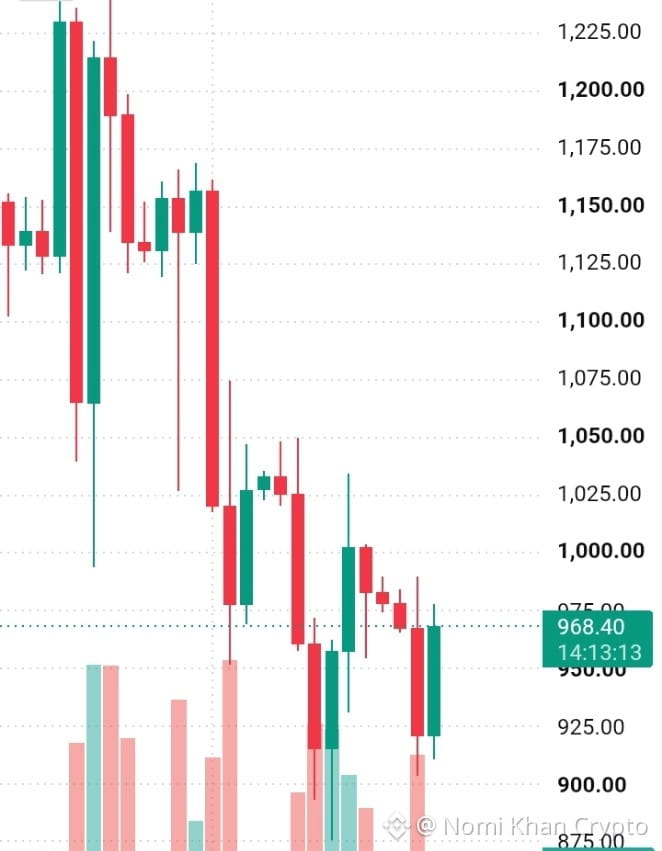
📉 MU/USDT Short Setup | July 14, 2026
MU/USDT is showing signs of weakening after failing to maintain bullish momentum. Price is facing resistance near the recent high, while sellers are gradually gaining control. If the current support breaks, a deeper pullback could follow.
$MU
{future}(MUUSDT)
🔹 Bias: Bearish (Short)
🎯 Targets: -3% to -7%
🛑 Stop Loss: Above the recent swing high
⚠️ Confirmation: Wait for a candle close below key support before entering.
Trade with proper risk management and avoid overleveraging. Always wait for confirmation before opening a position.
#MU #USDT #Crypto #SamsungExploresPotentialUSADRListing
📉 MU/USDT Short Setup | July 14, 2026
MU/USDT is showing signs of weakening after failing to maintain bullish momentum. Price is facing resistance near the recent high, while sellers are gradually gaining control. If the current support breaks, a deeper pullback could follow.
$MU
🔹 Bias: Bearish (Short)
🎯 Targets: -3% to -7%
🛑 Stop Loss: Above the recent swing high
⚠️ Confirmation: Wait for a candle close below key support before entering.
Trade with proper risk management and avoid overleveraging. Always wait for confirmation before opening a position.
#MU #USDT #Crypto #SamsungExploresPotentialUSADRListing
50

·
--
Bullish
$BEE surged +49%! Bulls are pushing hard after a strong breakout.
💚 Support: $0.043 – $0.045
🔴 Resistance: $0.050 – $0.055
🎯 Next Target: $0.060 – $0.065
📈 Holding above support keeps the bullish trend intact.
{alpha}(560xdb6f1f098b55e36b036603c8e54663a8d907d6e1)
#BinanceTurns9 #SilverDown52%FromJanuaryRecordHigh #SilverDown52%FromJanuaryRecordHigh #KospiStagesVShapedIntradayRebound #SamsungExploresPotentialUSADRListing
$BEE surged +49%! Bulls are pushing hard after a strong breakout.
💚 Support: $0.043 – $0.045
🔴 Resistance: $0.050 – $0.055
🎯 Next Target: $0.060 – $0.065
📈 Holding above support keeps the bullish trend intact.
#BinanceTurns9 #SilverDown52%FromJanuaryRecordHigh #SilverDown52%FromJanuaryRecordHigh #KospiStagesVShapedIntradayRebound #SamsungExploresPotentialUSADRListing
113

·
--
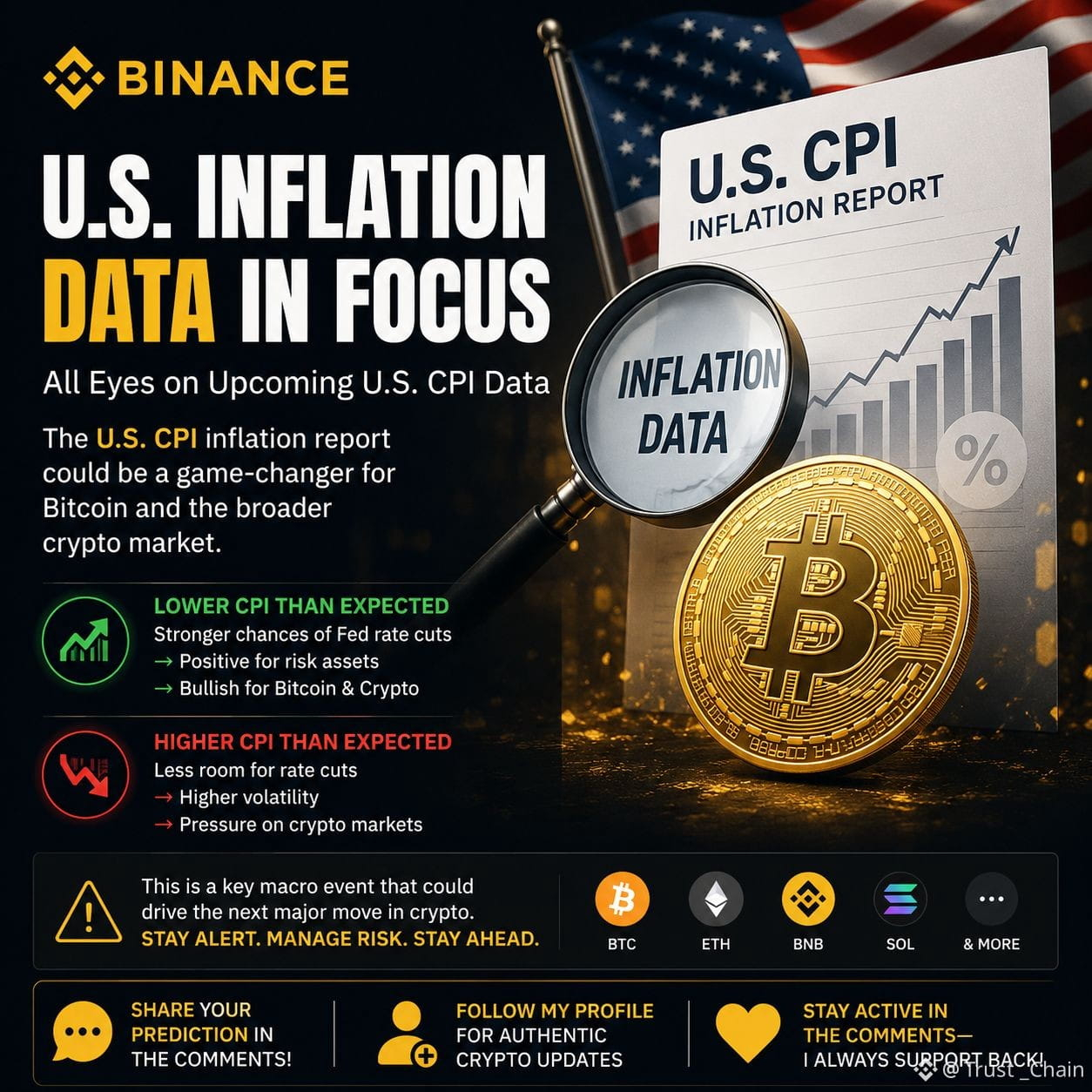
🚨 All Eyes on U.S. CPI! 🇺🇸📊
The next major move in crypto may not come from Bitcoin—it could come from the latest U.S. CPI inflation report.
🔥 A lower-than-expected CPI could strengthen expectations of Fed rate cuts, potentially fueling a bullish rally across BTC, ETH, and the broader crypto market.
⚠️ On the other hand, hotter-than-expected inflation may increase volatility and put short-term pressure on risk assets.
This is one of the key macro events every crypto trader should be watching. Stay alert, manage your risk, and be ready for increased market volatility.
📈 Will CPI ignite the next Bitcoin breakout or trigger another market shake-up?
👇 Share your prediction in the comments!
❤️ Follow my profile for authentic crypto updates.
💬 Stay active in the comments—I always support back! 🚀
✨▪️Trust Chain ▪️✨
$SXT
{future}(SXTUSDT)
$HEI
{future}(HEIUSDT)
$CVX
{future}(CVXUSDT)
#BinanceTurns9 #JapanKoreaStocksCloseUpDespiteSeoulSelloff #MicronFallsNearly14%InAMonth #SamsungExploresPotentialUSADRListing #USMemoryStocksRisePremarket
🚨 All Eyes on U.S. CPI! 🇺🇸📊
The next major move in crypto may not come from Bitcoin—it could come from the latest U.S. CPI inflation report.
🔥 A lower-than-expected CPI could strengthen expectations of Fed rate cuts, potentially fueling a bullish rally across BTC, ETH, and the broader crypto market.
⚠️ On the other hand, hotter-than-expected inflation may increase volatility and put short-term pressure on risk assets.
This is one of the key macro events every crypto trader should be watching. Stay alert, manage your risk, and be ready for increased market volatility.
📈 Will CPI ignite the next Bitcoin breakout or trigger another market shake-up?
👇 Share your prediction in the comments!
❤️ Follow my profile for authentic crypto updates.
💬 Stay active in the comments—I always support back! 🚀
✨▪️Trust Chain ▪️✨
$SXT
$HEI
$CVX
#BinanceTurns9 #JapanKoreaStocksCloseUpDespiteSeoulSelloff #MicronFallsNearly14%InAMonth #SamsungExploresPotentialUSADRListing #USMemoryStocksRisePremarket
84
Log in to explore more content
Join global crypto users on Binance Square
⚡️ Get latest and useful information about crypto.
💬 Trusted by the world’s largest crypto exchange.
👍 Discover real insights from verified creators.
Email / Phone number
Trending Topics
1
#WillMarketsStageAThanksgivingReliefRally?
12,009 views
250 Discussing
2
#BessentSoftensStanceOnHuang’sNvidiaReturn
8,902 views
170 Discussing
3
#EvolveAtBinanceBlockchainWeek
131 views
27 Discussing
4
#MuskWarnsOfAICashCrunch
9,370 views
155 Discussing
5
#SouthKoreaToTightenOversightOfCryptoTransfersAbroad
253 views
9 Discussing
6
#RussiaAllowsExchangesToOfferCryptoTrading
1,789 views
74 Discussing
7
#UKToBarCryptoExchangesFromMakingMarketsOnTheirOwnPlatforms
241 views
12 Discussing
8
#UKTreasurySignsCryptoMarketMakingExemptionRules
1,931 views
79 Discussing
9
#BTCReboundsAbove$60KAmidWhaleDipBuying
122,759 views
439 Discussing
10
#SolanaSets2027RoadmapToDoubleComputeCapacity
107,910 views
1,371 Discussing