stockmarket

4M views
12,336 Discussing
Farzanahameed01
·
--
Bearish
#willmarketsstageaholidayweekreliefrally ASIA'S DARK MONDAY: WHEN THE AI STORM WIPES OUT “OPPA”! 📉😱 Asian markets today were split between winners and losers after Wall Street's late-week crash! South Korea was left in tears as the KOSPI plunged 3.31%, with giants Samsung and SK Hynix deep in the red amid fears of an AI bubble. Taiwan (+2.35%), on the other hand, sprang back like a coil as chip stocks recovered, while Japan successfully “sat out the storm” thanks to a public holiday! 🎌 So, what will Wall Street look like tonight? Futures are glowing green (+2% to +3%), signaling a technical rebound that may ease nerves, but it does not necessarily mean the market has bottomed. What should learners do? Absolutely avoid FOMO, reduce leverage to a safe level, hold on tight to your cash, and wait for clear confirmation before jumping aboard! 🚢 Do you think Wall Street will bounce tonight, or fall again? Tell me below 👇 📚 This is for learning and sharing only. This is not financial advice. I do not trade. $NVDA - In focus on AI bubble fear, very shaky on this news. $SNDK - Chip stocks moving fast, eyes on it now. $BLESS - Moving fast on market news, be extra careful. ✨ 𝐅𝐀𝐑𝐙𝐀𝐍𝐀 𝐇𝐀𝐌𝐄𝐄𝐃 𝐎𝐅𝐅𝐈𝐂𝐈𝐀𝐋 • 🦋 #StockMarket #WallStreet #AICrypto #Trading #MarketUpdate {future}(NVDAUSDT) {future}(SNDKUSDT) {future}(BLESSUSDT)
#willmarketsstageaholidayweekreliefrally

ASIA'S DARK MONDAY: WHEN THE AI STORM WIPES OUT “OPPA”! 📉😱

Asian markets today were split between winners and losers after Wall Street's late-week crash! South Korea was left in tears as the KOSPI plunged 3.31%, with giants Samsung and SK Hynix deep in the red amid fears of an AI bubble. Taiwan (+2.35%), on the other hand, sprang back like a coil as chip stocks recovered, while Japan successfully “sat out the storm” thanks to a public holiday! 🎌

So, what will Wall Street look like tonight? Futures are glowing green (+2% to +3%), signaling a technical rebound that may ease nerves, but it does not necessarily mean the market has bottomed.

What should learners do? Absolutely avoid FOMO, reduce leverage to a safe level, hold on tight to your cash, and wait for clear confirmation before jumping aboard! 🚢

Do you think Wall Street will bounce tonight, or fall again? Tell me below 👇

📚 This is for learning and sharing only. This is not financial advice. I do not trade.

$NVDA - In focus on AI bubble fear, very shaky on this news.
$SNDK - Chip stocks moving fast, eyes on it now.
$BLESS - Moving fast on market news, be extra careful.

✨ 𝐅𝐀𝐑𝐙𝐀𝐍𝐀 𝐇𝐀𝐌𝐄𝐄𝐃 𝐎𝐅𝐅𝐈𝐂𝐈𝐀𝐋 • 🦋
#StockMarket #WallStreet #AICrypto #Trading #MarketUpdate
·
--
Bullish
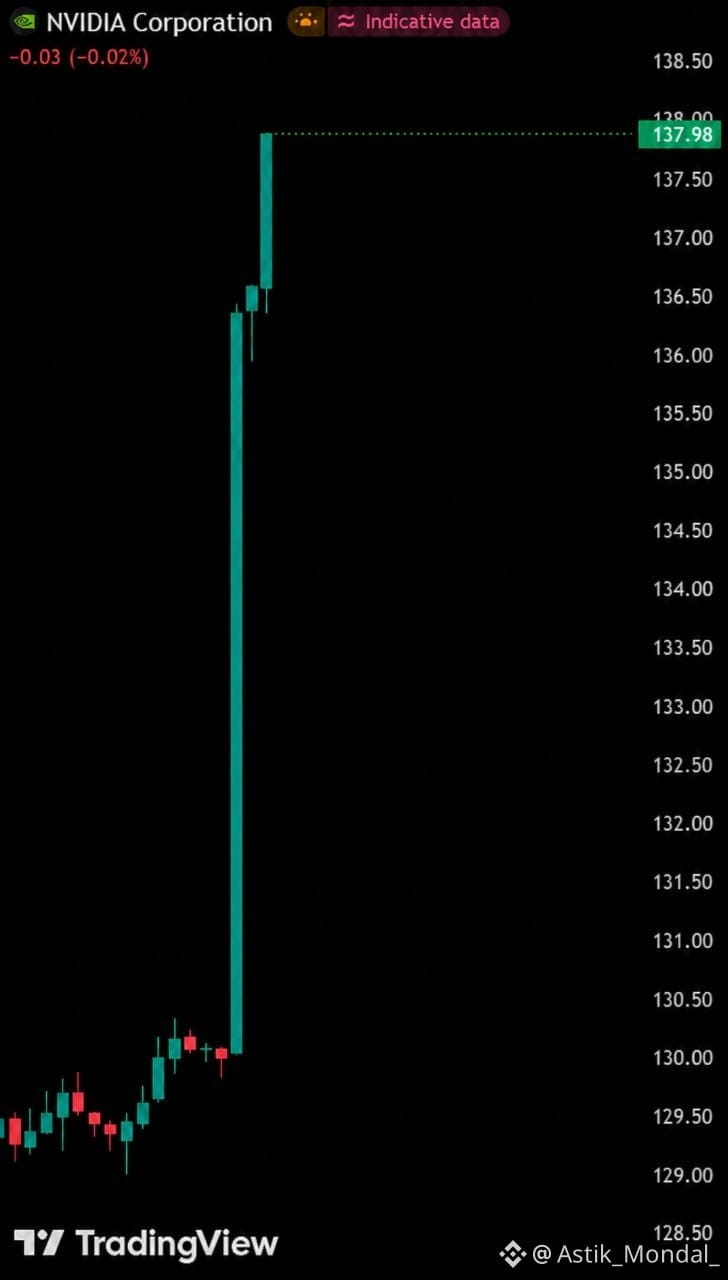
🚨 BREAKING: NVIDIA $NVDA IS ROARING BACK! 🔥 After suffering its biggest single-day crash in over a year, NVIDIA is now SURGING +8.8% in premarket trading. The stock is back above $136 after Friday's brutal -14% sell-off. Here's where things get WILD: If this rally holds through the opening bell, NVIDIA could add more than $260 BILLION in market value in a single session. That would push its market capitalization back toward $3.3 TRILLION. But there's a bigger picture investors cannot ignore. Despite this massive rebound, NVDA remains: 🔻 48% below its all-time high. 🔻 35% lower since Jensen Huang's reported resignation. This is a massive volatility battle. Is this the beginning of a major NVIDIA recovery, or just a temporary relief rally after a brutal sell-off? WATCH NVDA. The next move could send shockwaves across the entire AI and semiconductor sector. #NVIDIA #NVDA #StockMarket #AI #WallStreet
🚨 BREAKING: NVIDIA $NVDA IS ROARING BACK! 🔥
After suffering its biggest single-day crash in over a year, NVIDIA is now SURGING +8.8% in premarket trading.
The stock is back above $136 after Friday's brutal -14% sell-off.
Here's where things get WILD:
If this rally holds through the opening bell, NVIDIA could add more than $260 BILLION in market value in a single session.
That would push its market capitalization back toward $3.3 TRILLION.
But there's a bigger picture investors cannot ignore.
Despite this massive rebound, NVDA remains:
🔻 48% below its all-time high.
🔻 35% lower since Jensen Huang's reported resignation.
This is a massive volatility battle.
Is this the beginning of a major NVIDIA recovery, or just a temporary relief rally after a brutal sell-off?
WATCH NVDA. The next move could send shockwaves across the entire AI and semiconductor sector.
#NVIDIA #NVDA #StockMarket #AI #WallStreet
INDIAN STOCK MARKET CLOSING UPDATE Indian equity markets closed lower on Monday with both Sensex and Nifty ending in the red. ⚠️ Selling pressure across major sectors kept investors cautious and weighed on market sentiment. 👀 Investors now watch for the next market direction. Stay updated: livemint.com/market #stockmarket #Sensex #WillMarketsStageAThanksgivingReliefRally?
INDIAN STOCK MARKET CLOSING UPDATE

Indian equity markets closed lower on Monday with both Sensex and Nifty ending in the red.

⚠️ Selling pressure across major sectors kept investors cautious and weighed on market sentiment.

👀 Investors now watch for the next market direction.

Stay updated: livemint.com/market

#stockmarket #Sensex #WillMarketsStageAThanksgivingReliefRally?
·
--
Bullish
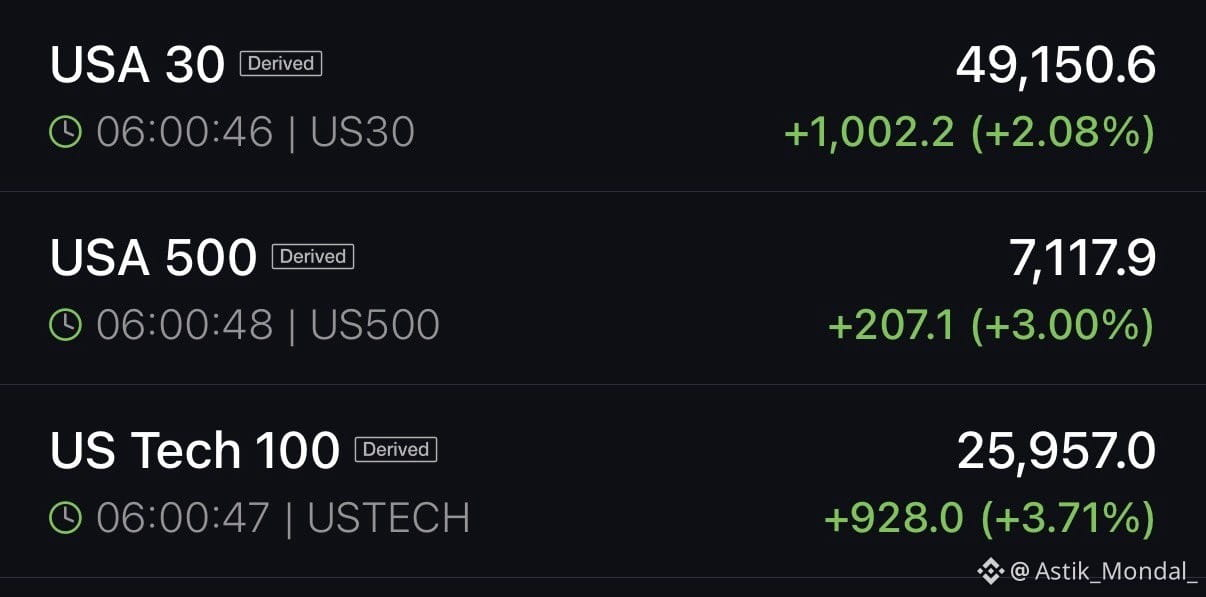
🚨 BREAKING: US STOCK FUTURES ARE EXPLODING HIGHER! 🚀 Wall Street is witnessing a massive premarket rebound as dip buyers aggressively rotate back into technology and semiconductor stocks. Look at these moves: 🇺🇸 Dow Jones Futures: +2.08% 📈 S&P 500 Futures: +3.00% 🔥 Nasdaq 100 Futures: +3.71% The Nasdaq 100 is now approaching a potential +4% surge, putting it on track for its biggest daily gain since May 2025. What's driving the move? Dip buyers are stepping back in, with chip stocks leading the recovery as investors hunt for opportunities after the recent sell-off. But here's what matters next: Can this buying pressure sustain through the regular trading session? Watch semiconductor stocks, NVIDIA, Treasury yields and market breadth. A massive rebound is underway, but is this a genuine trend reversal or simply a relief rally? #Nasdaq #SP500 #DowJones #NVDA #StockMarket
🚨 BREAKING: US STOCK FUTURES ARE EXPLODING HIGHER! 🚀
Wall Street is witnessing a massive premarket rebound as dip buyers aggressively rotate back into technology and semiconductor stocks.
Look at these moves:
🇺🇸 Dow Jones Futures: +2.08%
📈 S&P 500 Futures: +3.00%
🔥 Nasdaq 100 Futures: +3.71%
The Nasdaq 100 is now approaching a potential +4% surge, putting it on track for its biggest daily gain since May 2025.
What's driving the move?
Dip buyers are stepping back in, with chip stocks leading the recovery as investors hunt for opportunities after the recent sell-off.
But here's what matters next:
Can this buying pressure sustain through the regular trading session?
Watch semiconductor stocks, NVIDIA, Treasury yields and market breadth.
A massive rebound is underway, but is this a genuine trend reversal or simply a relief rally?
#Nasdaq #SP500 #DowJones #NVDA #StockMarket
#WillMarketsStageAThanksgivingReliefRally? Can Wall Street Recover During Thanksgiving Week? All Eyes on a Potential Relief Rally After seven consecutive sessions of losses, global markets are entering Thanksgiving week with investors searching for signs of a recovery. The recent sell-off has pushed the S&P 500 around 11.6% below its October record, officially entering correction territory. Technology and semiconductor stocks have faced particularly heavy pressure as concerns grow over AI spending and future profitability. There is, however, a possible shift in sentiment. US stock futures have rebounded sharply, raising hopes of a relief rally as investors look for buying opportunities. But three factors could determine what happens next: - US PCE inflation: Wednesday's report could reshape expectations for the Fed's December decision. - AI sentiment: Investors need stronger confidence in AI spending and future returns. - Market liquidity: Thanksgiving's shortened trading week could amplify price swings. My Take: A relief rally is possible, but one positive session cannot erase seven days of selling. I would watch market breadth, Treasury yields and the PCE numbers before treating this as a genuine trend reversal. Will buyers step in before Thanksgiving, or will selling pressure return? #StockMarket #FederalReserve #CryptoMarket
#WillMarketsStageAThanksgivingReliefRally?

Can Wall Street Recover During Thanksgiving Week? All Eyes on a Potential Relief Rally

After seven consecutive sessions of losses, global markets are entering Thanksgiving week with investors searching for signs of a recovery.

The recent sell-off has pushed the S&P 500 around 11.6% below its October record, officially entering correction territory. Technology and semiconductor stocks have faced particularly heavy pressure as concerns grow over AI spending and future profitability.

There is, however, a possible shift in sentiment. US stock futures have rebounded sharply, raising hopes of a relief rally as investors look for buying opportunities.

But three factors could determine what happens next:

- US PCE inflation: Wednesday's report could reshape expectations for the Fed's December decision.
- AI sentiment: Investors need stronger confidence in AI spending and future returns.
- Market liquidity: Thanksgiving's shortened trading week could amplify price swings.

My Take: A relief rally is possible, but one positive session cannot erase seven days of selling. I would watch market breadth, Treasury yields and the PCE numbers before treating this as a genuine trend reversal.

Will buyers step in before Thanksgiving, or will selling pressure return?

#StockMarket #FederalReserve #CryptoMarket
·
--
Bullish
🚨 WILL MARKETS STAGE A THANKSGIVING RELIEF RALLY? Markets are entering Thanksgiving week after a difficult period of selling. The S&P 500 is officially in correction territory, while technology stocks and Bitcoin are facing pressure. But could a recovery be coming? Here are 3 things to watch: 📊 1. US Inflation Data: Wednesday's PCE report could influence the Federal Reserve's next move. 📈 2. Market Recovery: Oversold conditions could create an opportunity for a short-term relief rally. ₿ 3. Bitcoin Momentum: $BTC needs stronger buying pressure to support a wider crypto-market recovery. My View: A Thanksgiving relief rally is possible, but investors should not confuse a temporary bounce with a confirmed market reversal. What do you think? 🟢 Bullish – Markets will recover. 🔴 Bearish – Selling pressure will continue. #bitcoin #BTC #CryptoMarketAlert #StockMarket #Thanksgiving {spot}(BTCUSDT) {spot}(BNBUSDT) {spot}(ETHUSDT)
🚨 WILL MARKETS STAGE A THANKSGIVING RELIEF RALLY?

Markets are entering Thanksgiving week after a difficult period of selling. The S&P 500 is officially in correction territory, while technology stocks and Bitcoin are facing pressure.

But could a recovery be coming?

Here are 3 things to watch:

📊 1. US Inflation Data: Wednesday's PCE report could influence the Federal Reserve's next move.

📈 2. Market Recovery: Oversold conditions could create an opportunity for a short-term relief rally.

₿ 3. Bitcoin Momentum: $BTC needs stronger buying pressure to support a wider crypto-market recovery.

My View: A Thanksgiving relief rally is possible, but investors should not confuse a temporary bounce with a confirmed market reversal.

What do you think?

🟢 Bullish – Markets will recover.

🔴 Bearish – Selling pressure will continue.

#bitcoin #BTC #CryptoMarketAlert #StockMarket #Thanksgiving
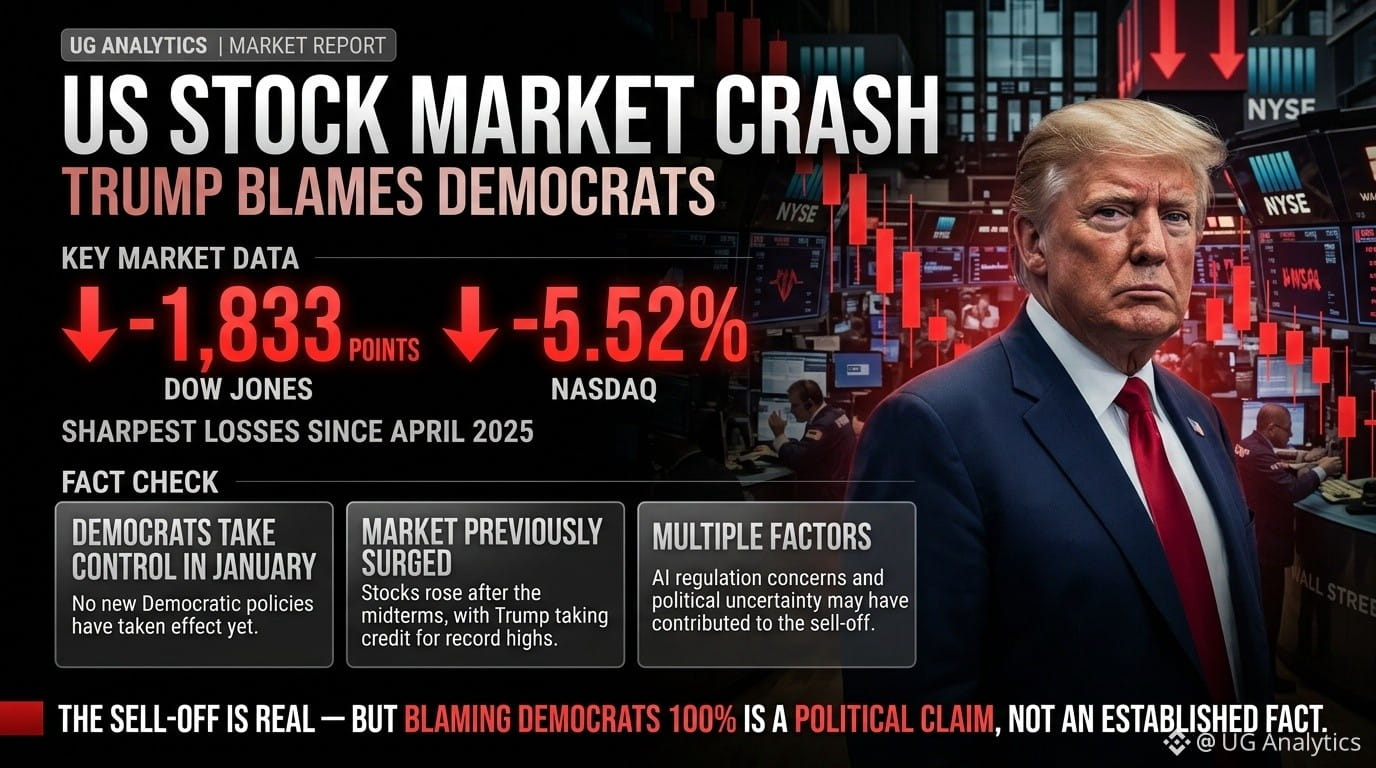
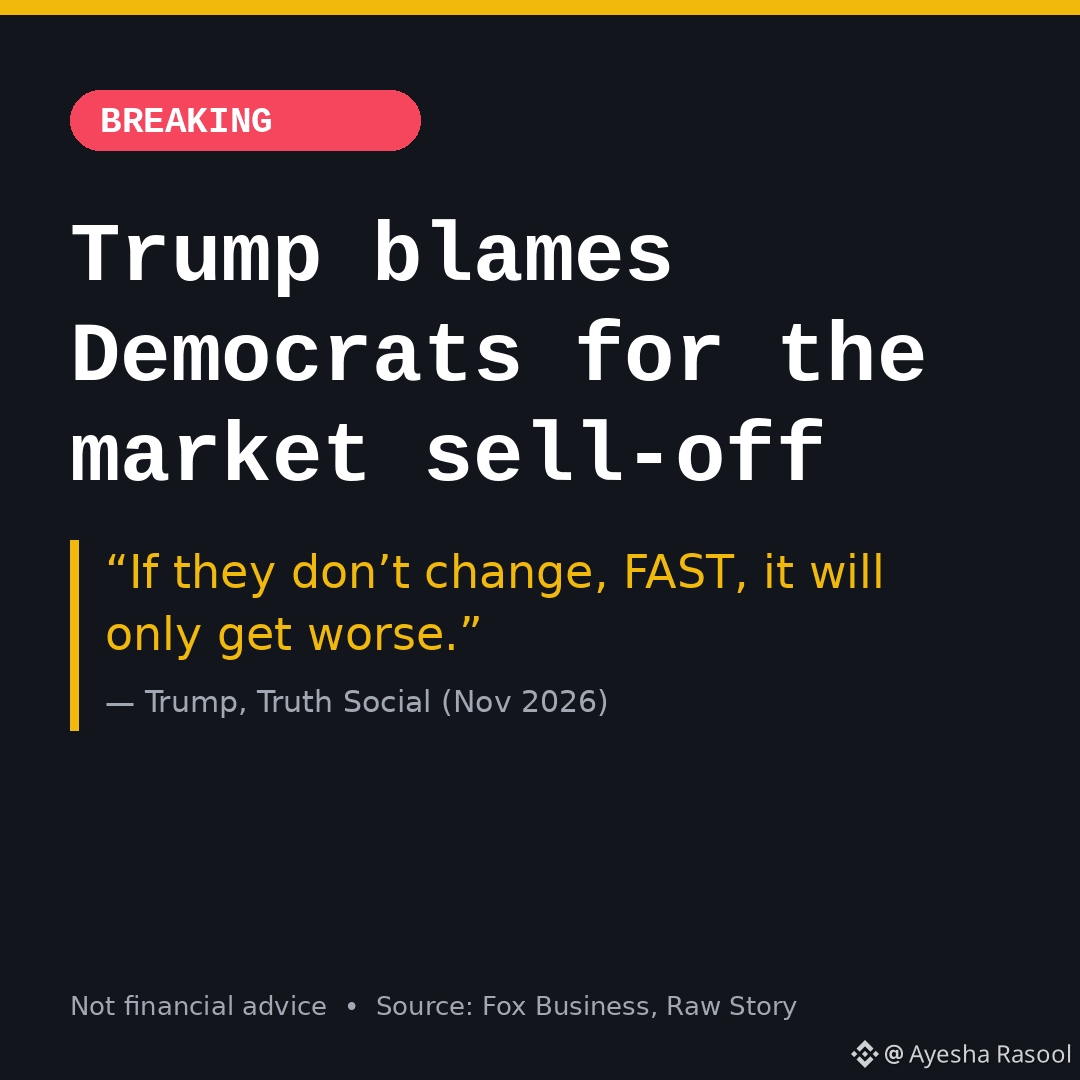
US Stock Market Crash: Trump Blames Democrats 📉 Wall Street took a heavy hit the Thursday after the midterms. The Dow fell 1,833 points and the Nasdaq dropped 5.52%, the sharpest losses since April 2025, as investors weighed AI regulation concerns. 🗣️ Trump posted on Truth Social that the market crashed because Democrats had a big Tuesday. He later warned that things will only get worse if Democrats don't change their policies fast. 🔍 The facts: • Democrats don't take control of Congress until January, so no new policy has taken effect yet. • Stocks surged the day after the midterms, and Trump claimed credit for a record high. • Market drops rarely have a single cause. AI regulation fears and the election results may be connected, but no one can say exactly how much each contributed. 📌 Bottom line: The sell-off is real, but "100% because of Democrats" is a political claim, not an established fact. #StockMarket #trump #Nasdaq #USPolitics
US Stock Market Crash: Trump Blames Democrats

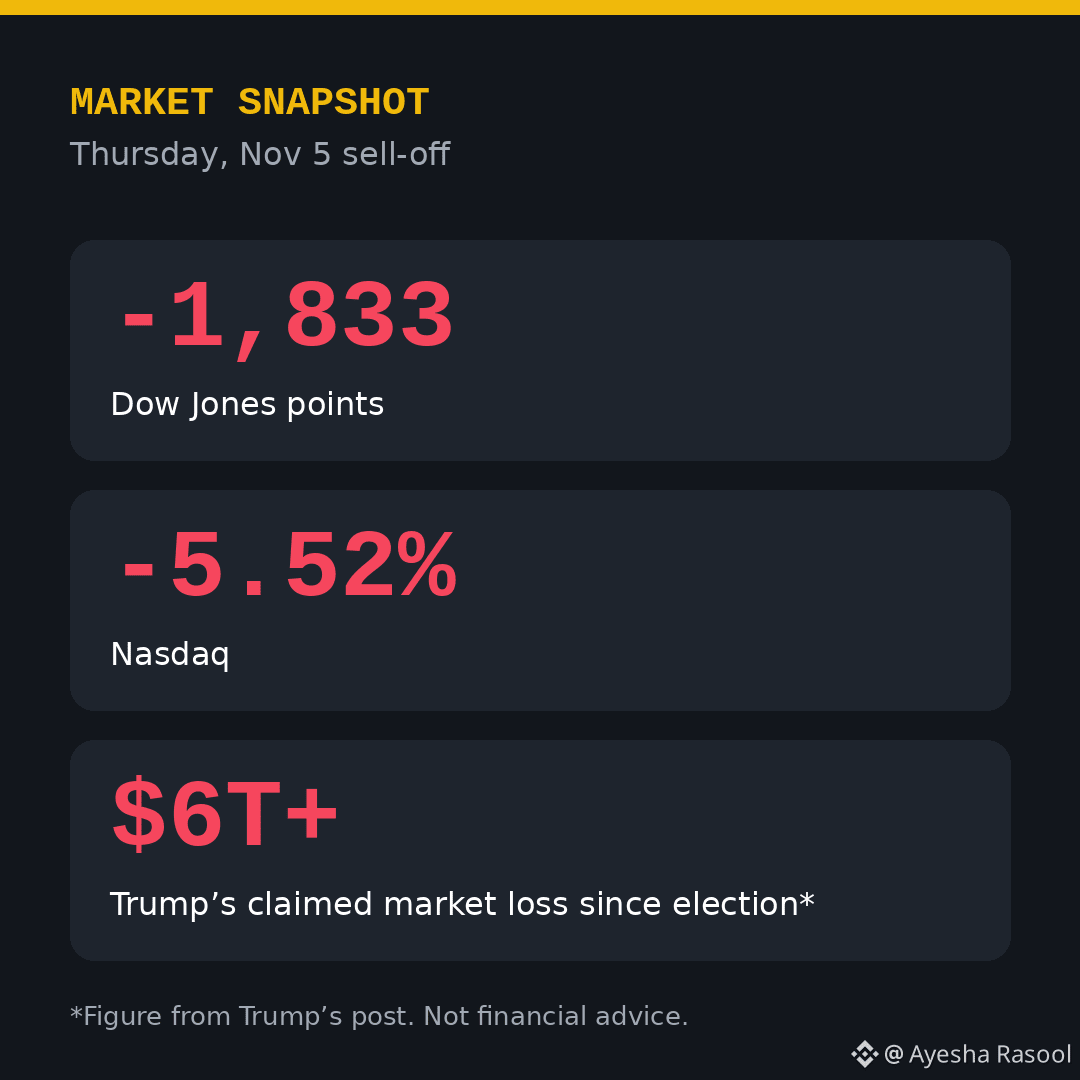
📉 Wall Street took a heavy hit the Thursday after the midterms. The Dow fell 1,833 points and the Nasdaq dropped 5.52%, the sharpest losses since April 2025, as investors weighed AI regulation concerns.

🗣️ Trump posted on Truth Social that the market crashed because Democrats had a big Tuesday. He later warned that things will only get worse if Democrats don't change their policies fast.

🔍 The facts:

• Democrats don't take control of Congress until January, so no new policy has taken effect yet.
• Stocks surged the day after the midterms, and Trump claimed credit for a record high.
• Market drops rarely have a single cause. AI regulation fears and the election results may be connected, but no one can say exactly how much each contributed.

📌 Bottom line: The sell-off is real, but "100% because of Democrats" is a political claim, not an established fact.

#StockMarket #trump #Nasdaq #USPolitics
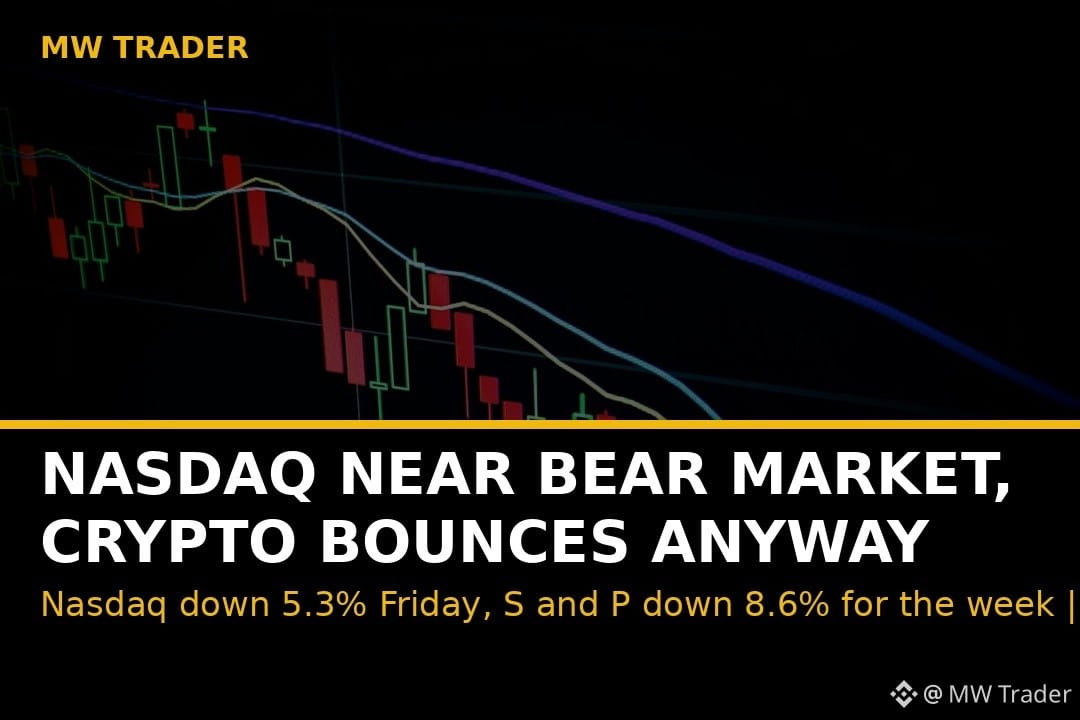
The Nasdaq is near bear market territory, and crypto bounced anyway. 📉 BigGo reports the Nasdaq fell another 5.3 percent on Friday and sits close to 20 percent below its October peak, putting it near bear market territory, while the S and P 500 dropped 8.6 percent for the week. Bitcoin clawed back about 11 percent over the weekend, from a fresh cycle low near $55,110 on Coinbase to roughly $61,034, even as traditional risk assets kept selling off. My view is that crypto bouncing while stocks fall is the most interesting split of this whole selloff, because it breaks the story that Bitcoin only follows the Nasdaq down. 📊 Is Bitcoin finally decoupling from stocks, or does it follow the Nasdaq down again this week? 🤔 Source: BigGo. Futures trading is risky, trade small and manage risk. ⚠️ Follow for more trades. #Crypto #Bitcoin #FuturesTrading #TradingSignals #StockMarket
The Nasdaq is near bear market territory, and crypto bounced anyway. 📉

BigGo reports the Nasdaq fell another 5.3 percent on Friday and sits close to 20 percent below its October peak, putting it near bear market territory, while the S and P 500 dropped 8.6 percent for the week. Bitcoin clawed back about 11 percent over the weekend, from a fresh cycle low near $55,110 on Coinbase to roughly $61,034, even as traditional risk assets kept selling off. My view is that crypto bouncing while stocks fall is the most interesting split of this whole selloff, because it breaks the story that Bitcoin only follows the Nasdaq down. 📊

Is Bitcoin finally decoupling from stocks, or does it follow the Nasdaq down again this week? 🤔

Source: BigGo.
Futures trading is risky, trade small and manage risk. ⚠️
Follow for more trades.
#Crypto #Bitcoin #FuturesTrading #TradingSignals #StockMarket
U.S. stock futures rebound after AI sell-off 📈 In early Asian trading on November 23, Nasdaq-100 futures rose about 2.7%, while S&P 500 futures gained around 2%. 📉 The rebound follows a roughly 10% weekly decline in the Nasdaq Composite, its biggest since March 2020. The S&P 500 and Dow also fell more than 10% from their record closing highs. 🌏 Asian chip stocks remained under pressure. South Korea’s Kospi fell more than 3% in early trading, with Samsung Electronics and SK Hynix both lower. 🔎 When Wall Street opens at 14:30 UTC, the focus will be on whether chip stocks can sustain the rebound and buying spreads to other sectors. 📅 U.S. October PCE inflation data is due at 13:30 UTC on November 25, ahead of Thanksgiving. #StockMarket $NVDAB
U.S. stock futures rebound after AI sell-off

📈 In early Asian trading on November 23, Nasdaq-100 futures rose about 2.7%, while S&P 500 futures gained around 2%.

📉 The rebound follows a roughly 10% weekly decline in the Nasdaq Composite, its biggest since March 2020. The S&P 500 and Dow also fell more than 10% from their record closing highs.

🌏 Asian chip stocks remained under pressure. South Korea’s Kospi fell more than 3% in early trading, with Samsung Electronics and SK Hynix both lower.

🔎 When Wall Street opens at 14:30 UTC, the focus will be on whether chip stocks can sustain the rebound and buying spreads to other sectors.

📅 U.S. October PCE inflation data is due at 13:30 UTC on November 25, ahead of Thanksgiving.

#StockMarket $NVDAB
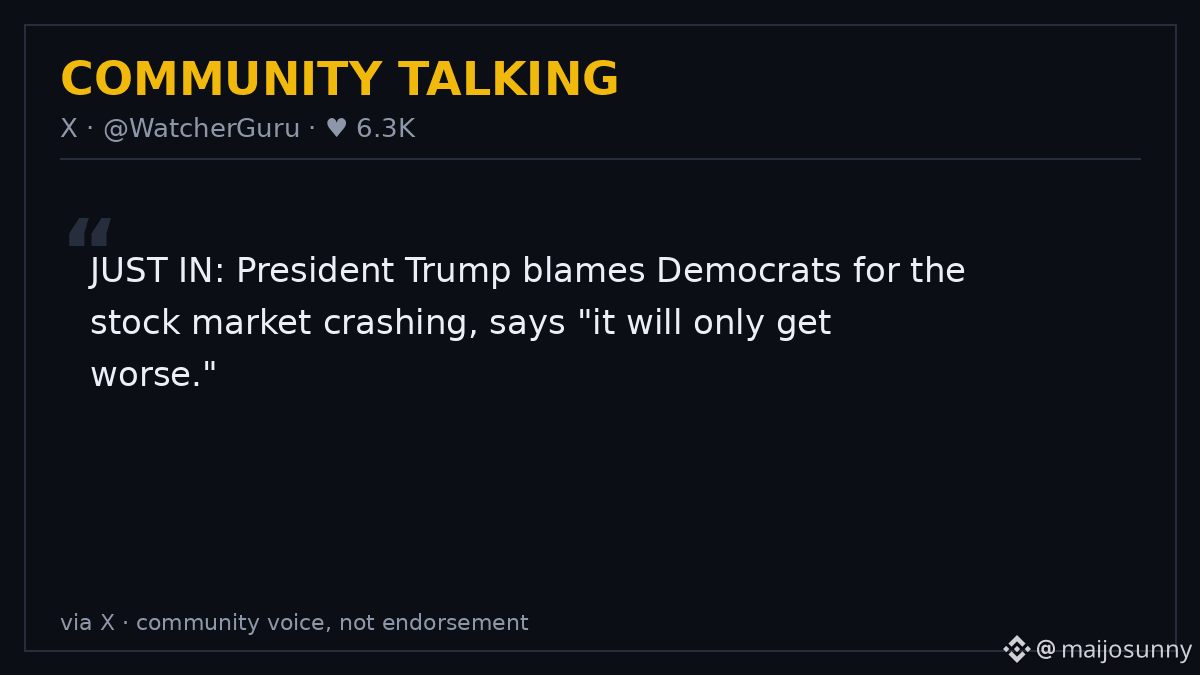
Traders are sharing Trump's post blaming Democrats for the market crash (6.2K likes). The tape disagrees. S&P 500: -9.3% in a week. VIX 35.9. 10Y at 5.04%, a 50bp December hike now floated. $BTC bounced off its $55K two-year low to $60,800, but Fear & Greed is stuck at 11, lowest since February. Why it matters: crypto is trading the rates shock, not crypto news. BTC's five biggest moves in 30 days were all down days, all with equities. Blame isn't a catalyst. Monday's open is. Does BTC hold $60K, or do equities drag it down? 👇 Not financial advice. DYOR. #crypto #Bitcoin #StockMarket
Traders are sharing Trump's post blaming Democrats for the market crash (6.2K likes). The tape disagrees.

S&P 500: -9.3% in a week. VIX 35.9. 10Y at 5.04%, a 50bp December hike now floated. $BTC bounced off its $55K two-year low to $60,800, but Fear & Greed is stuck at 11, lowest since February.

Why it matters: crypto is trading the rates shock, not crypto news. BTC's five biggest moves in 30 days were all down days, all with equities.

Blame isn't a catalyst. Monday's open is.

Does BTC hold $60K, or do equities drag it down? 👇

Not financial advice. DYOR.
#crypto #Bitcoin #StockMarket
DopamineGLOBAL:
blame isnt a catalyst, monday open decides
·
--
Bearish
🚨 TRUMP: "IT WILL ONLY GET WORSE" 🇺🇸📉 Trump just blamed Democrats for the market bloodbath. 💥 Dow: -1,833 pts in one day 💥 Nasdaq: -5.52% 💥 Trump claims $6T+ wiped out His warning: change course FAST or it gets worse. Reality check: Democrats don't take Congress until January. 👀 Wall Street is rattled. So where does crypto go from here? 🟢 Safe haven 🔴 Gets dragged down Vote in the comments 👇 #Bitcoin #Crypto #StockMarket #Trump #BinanceSquare Not financial advice. DYOR.
🚨 TRUMP: "IT WILL ONLY GET WORSE" 🇺🇸📉
Trump just blamed Democrats for the market bloodbath.
💥 Dow: -1,833 pts in one day
💥 Nasdaq: -5.52%
💥 Trump claims $6T+ wiped out
His warning: change course FAST or it gets worse.
Reality check: Democrats don't take Congress until January. 👀
Wall Street is rattled. So where does crypto go from here?
🟢 Safe haven
🔴 Gets dragged down

Vote in the comments 👇

#Bitcoin #Crypto #StockMarket #Trump #BinanceSquare

Not financial advice. DYOR.
Verified
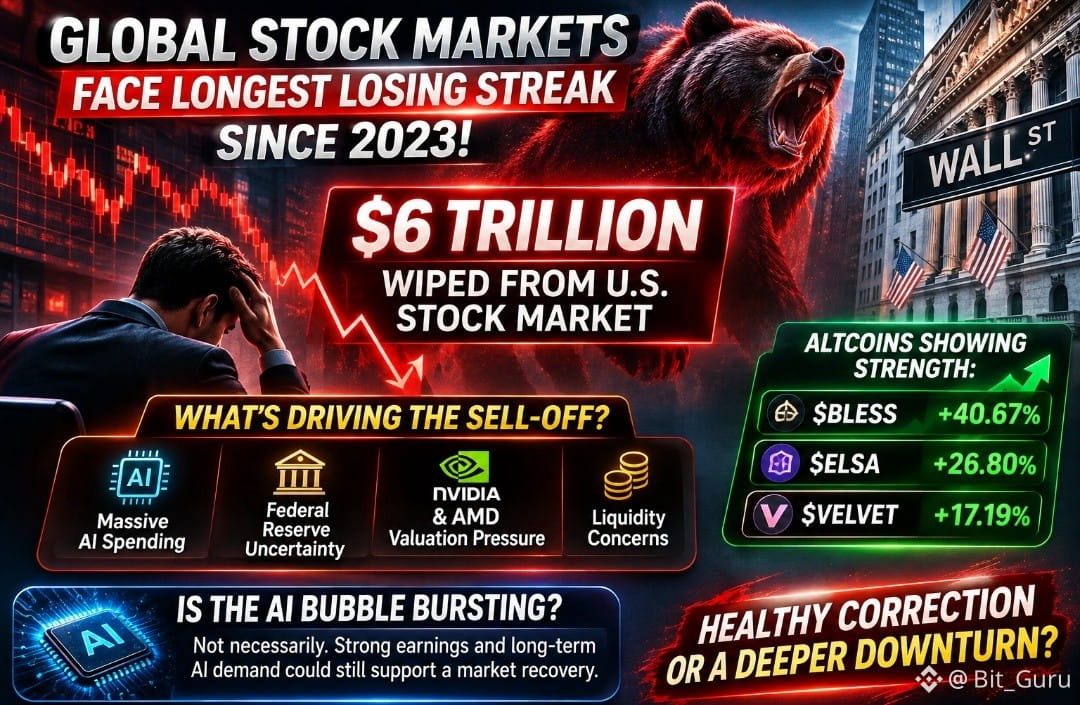
🚨 GLOBAL STOCK MARKETS FACE THEIR LONGEST LOSING STREAK SINCE 2023! Nearly $6 trillion in U.S. stock market value has reportedly disappeared as investors reduce exposure to risky assets. 📉 What's Driving the Sell-Off? 🔹 Massive AI infrastructure spending raises profitability concerns. 🔹 Federal Reserve uncertainty keeps investors cautious. 🔹 NVIDIA and AMD face growing valuation pressure. 🔹 Liquidity concerns are adding to market volatility. 🤖 IS THE AI BUBBLE BURSTING? Not necessarily. Strong corporate earnings and long-term AI demand could support a recovery, but investors are becoming more selective. 🔥 ALTCOINS SHOWING STRENGTH: 🟢 $BLESS +40.67% 🟢 $ELSA +26.80% 🟢 $VELVET +17.19% ⚠️ Is this a healthy correction before the next rally, or the beginning of a deeper market downturn? #StockMarket #Bitcoin #Crypto #AI #GlobalMarkets $BTC {spot}(BTCUSDT)
🚨 GLOBAL STOCK MARKETS FACE THEIR LONGEST LOSING STREAK SINCE 2023!

Nearly $6 trillion in U.S. stock market value has reportedly disappeared as investors reduce exposure to risky assets.

📉 What's Driving the Sell-Off? 🔹 Massive AI infrastructure spending raises profitability concerns. 🔹 Federal Reserve uncertainty keeps investors cautious. 🔹 NVIDIA and AMD face growing valuation pressure. 🔹 Liquidity concerns are adding to market volatility.

🤖 IS THE AI BUBBLE BURSTING?

Not necessarily. Strong corporate earnings and long-term AI demand could support a recovery, but investors are becoming more selective.

🔥 ALTCOINS SHOWING STRENGTH: 🟢 $BLESS +40.67% 🟢 $ELSA +26.80% 🟢 $VELVET +17.19%

⚠️ Is this a healthy correction before the next rally, or the beginning of a deeper market downturn?

#StockMarket #Bitcoin #Crypto #AI #GlobalMarkets $BTC
#AnthropicPlungesTowardIPOPriceonDay2 Anthropic Shares Face Pressure on Day 2! Anthropic's stock is reportedly sliding toward its IPO price just one day after its market debut, raising questions about investor demand and the sustainability of its initial valuation. The decline highlights how quickly market sentiment can shift, even for major AI companies. Investors are now watching whether the stock can stabilize or face further selling pressure. Is this a temporary correction or an early warning for AI IPO valuations? #IPO #AIStocks #stockmarket #AnthropicPlungesTowardIPOPriceonDay2
#AnthropicPlungesTowardIPOPriceonDay2

Anthropic Shares Face Pressure on Day 2!

Anthropic's stock is reportedly sliding toward its IPO price just one day after its market debut, raising questions about investor demand and the sustainability of its initial valuation.

The decline highlights how quickly market sentiment can shift, even for major AI companies. Investors are now watching whether the stock can stabilize or face further selling pressure.

Is this a temporary correction or an early warning for AI IPO valuations?

#IPO #AIStocks #stockmarket #AnthropicPlungesTowardIPOPriceonDay2
·
--
Verified
Article
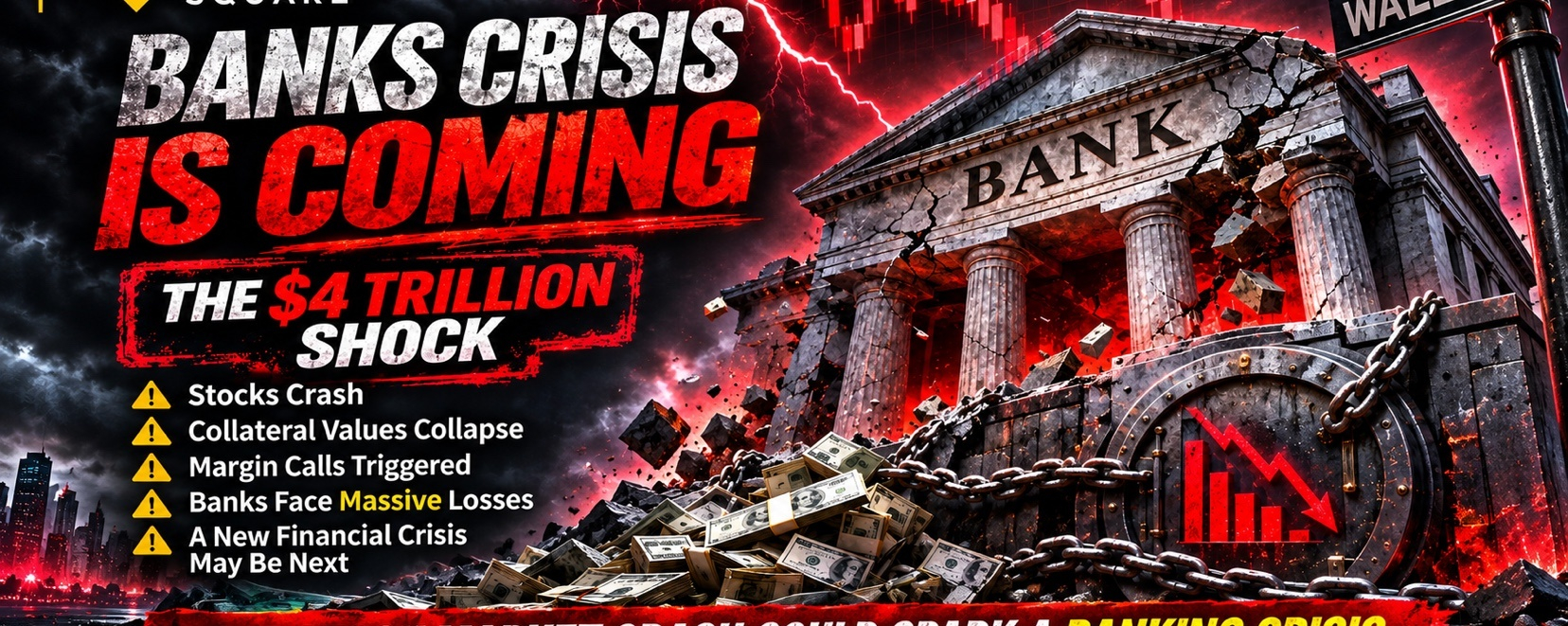
THE BANKING CRISIS MAY BE NEXT: WHEN THE STOCK MARKET CRASHES, THE BANKS MAY BE LEFT HOLDING THE BAG🚨 The market has just suffered a brutal shock. But the most dangerous part of a stock-market collapse may not be the losses investors see on their screens—it may be the loans sitting quietly on bank balance sheets, secured by assets whose value is suddenly disappearing. A brutal market selloff can become something far more dangerous when the financial system is built on leverage. The hidden mechanism: collateral is falling, but the debt remains One of the most dangerous lending structures in a bull market is securities-backed lending. Investors borrow money from banks and financial institutions using their stock portfolios as collateral. It works beautifully while markets rise. Investors can access liquidity without selling their shares, while lenders collect interest and believe they are protected by collateral. But what happens when the collateral suddenly loses 20%, 30%, or even 40% of its value? The debt doesn’t disappear. Banks may demand additional collateral. Borrowers may be forced to sell assets. If they cannot meet margin calls, lenders may liquidate their portfolios—often at precisely the worst possible moment. The chain reaction is frighteningly simple: 📉 Stock prices fall ➡️ Collateral values decline ➡️ Margin calls arrive ➡️ Borrowers sell assets ➡️ Selling pressure increases ➡️ Markets fall further ➡️ More margin calls follow This is how a market correction can potentially turn into a financial feedback loop. The banks are increasingly connected to this risk This is not merely theoretical. Recent Federal Reserve analysis has highlighted the growing importance of less-traditional lending, including securities-based lending and lending to nonbank financial institutions, among major U.S. banks. These lending activities create additional channels through which financial stress can spread. The danger is not that every loan will default. The danger is that a rapidly falling market can transform loans that appeared safe yesterday into loans requiring urgent collateral protection today. Banks don’t need to be holding worthless loans for a crisis to begin. They need exposure to borrowers, funds, and counterparties that suddenly require liquidity at the same time. The warning signs were already documented The Federal Reserve’s financial stability assessments have highlighted vulnerabilities including: • Elevated asset valuations • Financial-sector leverage • Hedge-fund leverage • Funding vulnerabilities • Potential forced asset sales during periods of stress Excessive leverage can force institutions to sell assets, reduce lending, or cut risk precisely when the broader economy needs liquidity. The question is not whether these risks exist. The question is what happens when several of them are activated simultaneously. The $4 trillion shock may be the beginning—not the end A market capitalization loss of trillions of dollars does not mean the same amount of physical cash vanished from the financial system. But the collapse in valuations matters enormously when those assets are being used as collateral. The bigger the decline, the smaller the collateral cushion. The smaller the collateral cushion, the greater the chance of margin calls. The greater the margin calls, the greater the forced selling. And the greater the forced selling, the deeper the market decline can become. This is how a stock-market crash can potentially become a credit crisis. The question everyone should be asking The question isn’t simply: “How much did the stock market lose?” The question is: “How much debt was built on top of the assets that just lost their value—and who is holding that debt?” If borrowers begin receiving margin calls at scale, if private funds are forced to liquidate assets, if banks begin tightening lending to protect their balance sheets, and if liquidity disappears from markets investors previously considered safe, the consequences could extend far beyond a technology-stock correction. A stock-market crash can be absorbed. A credit contraction is much harder to absorb. And a credit contraction combined with falling collateral values, leverage, forced selling, and deteriorating confidence can become the type of financial event that spreads faster than regulators can respond. The market has already delivered the shock. The question now is whether the financial system can absorb it. We are not declaring that a banking crisis is guaranteed. But the vulnerabilities are real, and the interaction between leverage, collateral, liquidity, and falling asset prices deserves serious attention. The danger may not be visible in today’s headlines. It may be buried in collateral agreements, lending books, margin requirements, and balance sheets that appear perfectly healthy—until the collateral stops being worth what everyone thought it was. The next financial crisis, if one develops, may not begin with a bank run. It may begin with a margin call. #BankingCrisis #FinancialMarkets #StockMarket Sources and evidence Reuters — The snowballing selloff in global markets⁠ Federal Reserve Bank of St. Louis — Major banks increase exposure to less-traditional lending⁠ Federal Reserve — Estimating securities-based loans outstanding⁠ Federal Reserve — November 2026 Financial Stability Report⁠ Wall Street Journal — November 21 market selloff reporting⁠

THE BANKING CRISIS MAY BE NEXT: WHEN THE STOCK MARKET CRASHES, THE BANKS MAY BE LEFT HOLDING THE BAG

🚨
The market has just suffered a brutal shock. But the most dangerous part of a stock-market collapse may not be the losses investors see on their screens—it may be the loans sitting quietly on bank balance sheets, secured by assets whose value is suddenly disappearing.
A brutal market selloff can become something far more dangerous when the financial system is built on leverage.
The hidden mechanism: collateral is falling, but the debt remains
One of the most dangerous lending structures in a bull market is securities-backed lending.
Investors borrow money from banks and financial institutions using their stock portfolios as collateral. It works beautifully while markets rise. Investors can access liquidity without selling their shares, while lenders collect interest and believe they are protected by collateral.
But what happens when the collateral suddenly loses 20%, 30%, or even 40% of its value?
The debt doesn’t disappear.
Banks may demand additional collateral. Borrowers may be forced to sell assets. If they cannot meet margin calls, lenders may liquidate their portfolios—often at precisely the worst possible moment.
The chain reaction is frighteningly simple:
📉 Stock prices fall
➡️ Collateral values decline
➡️ Margin calls arrive
➡️ Borrowers sell assets
➡️ Selling pressure increases
➡️ Markets fall further
➡️ More margin calls follow
This is how a market correction can potentially turn into a financial feedback loop.
The banks are increasingly connected to this risk
This is not merely theoretical.
Recent Federal Reserve analysis has highlighted the growing importance of less-traditional lending, including securities-based lending and lending to nonbank financial institutions, among major U.S. banks.
These lending activities create additional channels through which financial stress can spread.
The danger is not that every loan will default.
The danger is that a rapidly falling market can transform loans that appeared safe yesterday into loans requiring urgent collateral protection today.
Banks don’t need to be holding worthless loans for a crisis to begin. They need exposure to borrowers, funds, and counterparties that suddenly require liquidity at the same time.
The warning signs were already documented
The Federal Reserve’s financial stability assessments have highlighted vulnerabilities including:
• Elevated asset valuations
• Financial-sector leverage
• Hedge-fund leverage
• Funding vulnerabilities
• Potential forced asset sales during periods of stress
Excessive leverage can force institutions to sell assets, reduce lending, or cut risk precisely when the broader economy needs liquidity.
The question is not whether these risks exist.
The question is what happens when several of them are activated simultaneously.
The $4 trillion shock may be the beginning—not the end
A market capitalization loss of trillions of dollars does not mean the same amount of physical cash vanished from the financial system.
But the collapse in valuations matters enormously when those assets are being used as collateral.
The bigger the decline, the smaller the collateral cushion.
The smaller the collateral cushion, the greater the chance of margin calls.
The greater the margin calls, the greater the forced selling.
And the greater the forced selling, the deeper the market decline can become.
This is how a stock-market crash can potentially become a credit crisis.
The question everyone should be asking
The question isn’t simply:
“How much did the stock market lose?”
The question is:
“How much debt was built on top of the assets that just lost their value—and who is holding that debt?”
If borrowers begin receiving margin calls at scale, if private funds are forced to liquidate assets, if banks begin tightening lending to protect their balance sheets, and if liquidity disappears from markets investors previously considered safe, the consequences could extend far beyond a technology-stock correction.
A stock-market crash can be absorbed.
A credit contraction is much harder to absorb.
And a credit contraction combined with falling collateral values, leverage, forced selling, and deteriorating confidence can become the type of financial event that spreads faster than regulators can respond.
The market has already delivered the shock. The question now is whether the financial system can absorb it.
We are not declaring that a banking crisis is guaranteed. But the vulnerabilities are real, and the interaction between leverage, collateral, liquidity, and falling asset prices deserves serious attention.
The danger may not be visible in today’s headlines.
It may be buried in collateral agreements, lending books, margin requirements, and balance sheets that appear perfectly healthy—until the collateral stops being worth what everyone thought it was.
The next financial crisis, if one develops, may not begin with a bank run. It may begin with a margin call.
#BankingCrisis #FinancialMarkets #StockMarket
Sources and evidence
Reuters — The snowballing selloff in global markets⁠
Federal Reserve Bank of St. Louis — Major banks increase exposure to less-traditional lending⁠
Federal Reserve — Estimating securities-based loans outstanding⁠
Federal Reserve — November 2026 Financial Stability Report⁠
Wall Street Journal — November 21 market selloff reporting⁠
Saifulislam848:
Quantum-resistant security is an important long-term discussion for blockchain developers.
A falling stock doesn't always mean a company is failing. AMD dropped 11% following allegations about its China-related business. But the report also acknowledged that the available evidence doesn't prove a crime. This is why investors should separate allegations, confirmed facts and market reactions. Don't let panic make your decisions. $AMDB #InvestorAwareness #stockmarket #tradingpsychology
A falling stock doesn't always mean a company is failing.

AMD dropped 11% following allegations about its China-related business.

But the report also acknowledged that the available evidence doesn't prove a crime.

This is why investors should separate allegations, confirmed facts and market reactions.

Don't let panic make your decisions.

$AMDB #InvestorAwareness #stockmarket #tradingpsychology
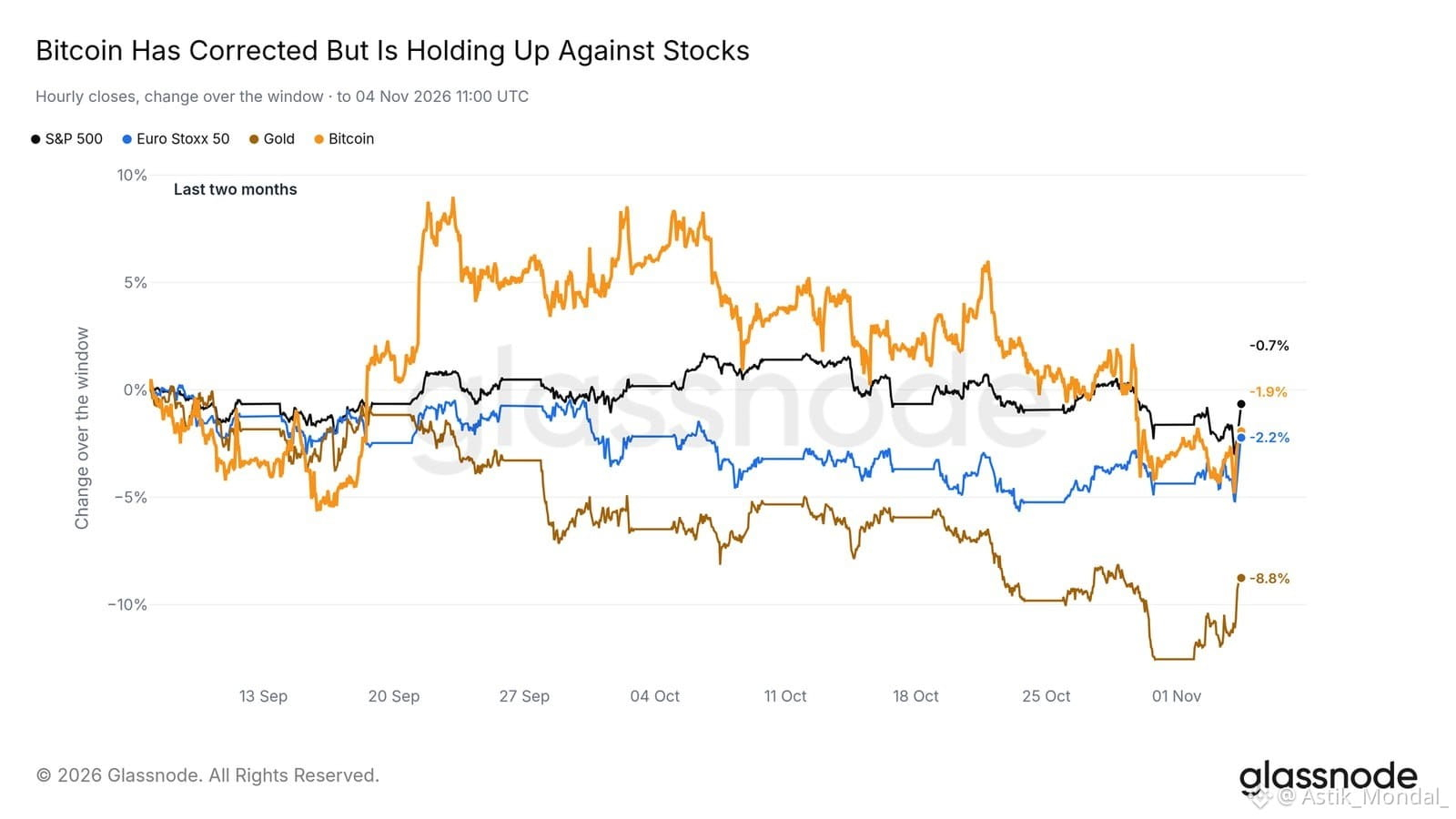
🚨 BITCOIN IS HOLDING STRONG WHILE STOCKS AND GOLD STRUGGLE! Bitcoin has corrected nearly 2% over the past two months. But here's what the market is missing: BTC is showing surprising resilience compared to traditional assets. 📊 Two-month performance: 🟠 Bitcoin: -1.9% ⚫ S&P 500: -0.7% 🔵 Euro Stoxx 50: -2.2% 🟤 Gold: -8.8% Bitcoin surged ahead of stocks in early October, then gave back much of those gains during the correction. But there's a bigger signal here. Despite the volatility, Bitcoin has managed to hold up against traditional financial markets. Gold has fallen significantly harder. European stocks are also underperforming Bitcoin. The key takeaway: Bitcoin isn't just surviving this correction. It's demonstrating relative strength while traditional assets face pressure. If this resilience continues, BTC could be positioning itself for its next major move. The real question is: Is Bitcoin quietly preparing for its next breakout? #Bitcoin #BTC #Crypto #Gold #StockMarket $BTC $XAU
🚨 BITCOIN IS HOLDING STRONG WHILE STOCKS AND GOLD STRUGGLE!
Bitcoin has corrected nearly 2% over the past two months.
But here's what the market is missing:
BTC is showing surprising resilience compared to traditional assets.
📊 Two-month performance:
🟠 Bitcoin: -1.9%
⚫ S&P 500: -0.7%
🔵 Euro Stoxx 50: -2.2%
🟤 Gold: -8.8%
Bitcoin surged ahead of stocks in early October, then gave back much of those gains during the correction.
But there's a bigger signal here.
Despite the volatility, Bitcoin has managed to hold up against traditional financial markets.
Gold has fallen significantly harder.
European stocks are also underperforming Bitcoin.
The key takeaway:
Bitcoin isn't just surviving this correction. It's demonstrating relative strength while traditional assets face pressure.
If this resilience continues, BTC could be positioning itself for its next major move.
The real question is: Is Bitcoin quietly preparing for its next breakout?
#Bitcoin #BTC #Crypto #Gold #StockMarket $BTC $XAU
Felipe Brayner:
Leitura interessante da força relativa em relação ao ouro e às ações europeias, mas vale a pena olhar também para o contexto de liquidez e correlação com o S&P 500 (-0,7%). Manter-se perto do equilíbrio numa janela de dois meses mostra resistência, mas o próximo grande movimento vai depender de confirmar se há entrada real de liquidez ou apenas rotação de curto prazo. Como vês os níveis de suporte agora?SIGA ME 🇧🇷!
Tech IPOs Are Changing the Future of the Stock Market! SpaceX and Anthropic are attracting huge attention in the financial world with their major IPO plans. These companies are showing how quickly the technology industry is growing$SANTOS However, their IPO processes are not simple. Strict rules, careful financial planning, and limited information sharing are making these deals more complex$SPACE With AI and space technology gaining attention, investors are closely watching what happens next$SPACE {alpha}(560x87acfa3fd7a6e0d48677d070644d76905c2bdc00) Could tech companies lead the next big stock market trend? #TechIPO #SpaceX #Anthropic #StockMarket #AI
Tech IPOs Are Changing the Future of the Stock Market!

SpaceX and Anthropic are attracting huge attention in the financial world with their major IPO plans. These companies are showing how quickly the technology industry is growing$SANTOS

However, their IPO processes are not simple. Strict rules, careful financial planning, and limited information sharing are making these deals more complex$SPACE

With AI and space technology gaining attention, investors are closely watching what happens next$SPACE


Could tech companies lead the next big stock market trend?

#TechIPO #SpaceX #Anthropic #StockMarket #AI
#GlobalStocksFaceLongestLosingStreakSince2023 7 DAYS OF RED. GLOBAL MARKETS ARE UNDER PRESSURE! 📉 Is the AI boom starting to crack? Global stocks have recorded their longest losing streak since September 2023! But here's what's making investors nervous: 🤖 AI FEARS: Investors are questioning whether massive AI investments can deliver enough profits. 📉 GLOBAL SELLOFF: The MSCI All Country World Index has fallen for 7 consecutive sessions. 💰 RISING RATE CONCERNS: Higher borrowing costs are putting pressure on risky assets. 🛡️ FLIGHT TO SAFETY: Investors are turning towards safer assets amid uncertainty. 🔥 THE BIG QUESTION: Are we witnessing the beginning of a deeper global correction, or is this a rare opportunity to buy quality stocks at discounted prices? My view: Don't panic, but don't blindly buy the dip either. Watch valuations, earnings, interest rates, and market breadth. $BTC {spot}(BTCUSDT) $ETH {spot}(ETHUSDT) $BNB {spot}(BNBUSDT) 👇 What would you do right now? 🐂 BUY THE DIP 🐻 STAY OUT ⏳ WAIT FOR CONFIRMATION #GlobalMarkets #StockMarket #AIStocks





#GlobalStocksFaceLongestLosingStreakSince2023
7 DAYS OF RED. GLOBAL MARKETS ARE UNDER PRESSURE! 📉

Is the AI boom starting to crack?

Global stocks have recorded their longest losing streak since September 2023!

But here's what's making investors nervous:

🤖 AI FEARS: Investors are questioning whether massive AI investments can deliver enough profits.

📉 GLOBAL SELLOFF: The MSCI All Country World Index has fallen for 7 consecutive sessions.

💰 RISING RATE CONCERNS: Higher borrowing costs are putting pressure on risky assets.

🛡️ FLIGHT TO SAFETY: Investors are turning towards safer assets amid uncertainty.

🔥 THE BIG QUESTION:

Are we witnessing the beginning of a deeper global correction, or is this a rare opportunity to buy quality stocks at discounted prices?

My view: Don't panic, but don't blindly buy the dip either. Watch valuations, earnings, interest rates, and market breadth.
$BTC

$ETH


$BNB


👇 What would you do right now?

🐂 BUY THE DIP 🐻 STAY OUT ⏳ WAIT FOR CONFIRMATION

#GlobalMarkets #StockMarket #AIStocks
Bitcoin Up or Down on November 22?

Bitcoin Up or Down on November 22?

99%Up1%Down
Volume $166,254.66
🚨 HISTORY SHOWS HOW BRUTAL THE STOCK MARKET CAN BE! 📉 The S&P 500 has experienced several major crashes throughout history, but the recovery timelines have been dramatically different. 📊 FIVE MAJOR MARKET DRAWDOWNS: 🔴 2000: −49% | 7 years to recover 🔴 2008: −57% | 5.5 years to recover 🔴 2020: −34% | 5 months to recover 🔴 2022: −25% | 2 years to recover 🔴 2025: −19% | Approximately 3 months to recover One important lesson stands out: markets can recover, but the time required is never the same. Some downturns take months to overcome, while others leave investors waiting for years. The real question isn't just how far markets can fall, but how long it takes for confidence to return. History doesn't repeat exactly, but it always gives investors something to study. 👀 #BreakingNews #CryptoNews #CryptoMarketUpdate #StockMarket #MarketHistory $LAB {future}(LABUSDT) $BNB {spot}(BNBUSDT) $BTC {spot}(BTCUSDT)
🚨 HISTORY SHOWS HOW BRUTAL THE STOCK MARKET CAN BE! 📉

The S&P 500 has experienced several major crashes throughout history, but the recovery timelines have been dramatically different.

📊 FIVE MAJOR MARKET DRAWDOWNS:

🔴 2000: −49% | 7 years to recover
🔴 2008: −57% | 5.5 years to recover
🔴 2020: −34% | 5 months to recover
🔴 2022: −25% | 2 years to recover
🔴 2025: −19% | Approximately 3 months to recover

One important lesson stands out: markets can recover, but the time required is never the same.

Some downturns take months to overcome, while others leave investors waiting for years.

The real question isn't just how far markets can fall, but how long it takes for confidence to return.

History doesn't repeat exactly, but it always gives investors something to study. 👀

#BreakingNews #CryptoNews #CryptoMarketUpdate #StockMarket #MarketHistory

$LAB
$BNB
$BTC
Log in to explore more content
Join global crypto users on Binance Square
⚡️ Get latest and useful information about crypto.
💬 Trusted by the world’s largest crypto exchange.
👍 Discover real insights from verified creators.
Email / Phone number