
#stockmarket
stockmarket
4M views
12,221 Discussing
Hot
Latest

·
--
Verified
Article
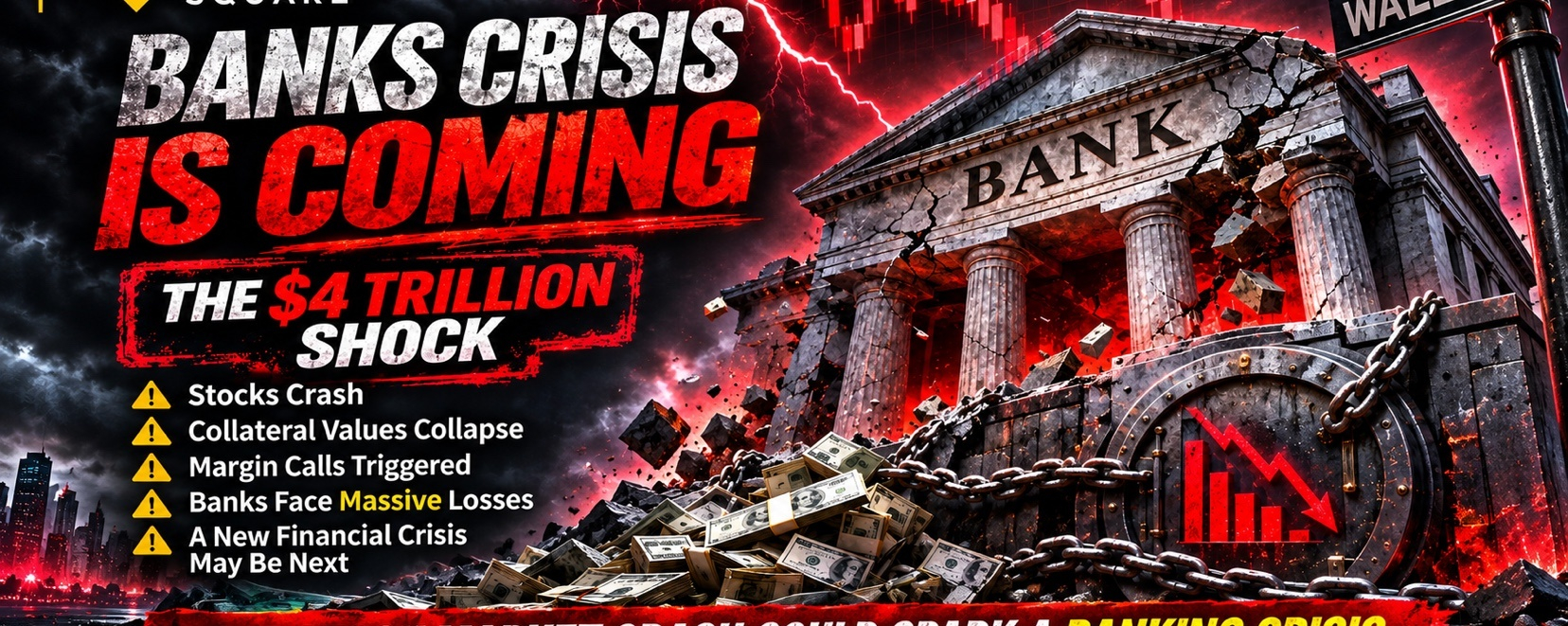
THE BANKING CRISIS MAY BE NEXT: WHEN THE STOCK MARKET CRASHES, THE BANKS MAY BE LEFT HOLDING THE BAG🚨
The market has just suffered a brutal shock. But the most dangerous part of a stock-market collapse may not be the losses investors see on their screens—it may be the loans sitting quietly on bank balance sheets, secured by assets whose value is suddenly disappearing.
A brutal market selloff can become something far more dangerous when the financial system is built on leverage.
The hidden mechanism: collateral is falling, but the debt remains
One of the most dangerous lending structures in a bull market is securities-backed lending.
Investors borrow money from banks and financial institutions using their stock portfolios as collateral. It works beautifully while markets rise. Investors can access liquidity without selling their shares, while lenders collect interest and believe they are protected by collateral.
But what happens when the collateral suddenly loses 20%, 30%, or even 40% of its value?
The debt doesn’t disappear.
Banks may demand additional collateral. Borrowers may be forced to sell assets. If they cannot meet margin calls, lenders may liquidate their portfolios—often at precisely the worst possible moment.
The chain reaction is frighteningly simple:
📉 Stock prices fall
➡️ Collateral values decline
➡️ Margin calls arrive
➡️ Borrowers sell assets
➡️ Selling pressure increases
➡️ Markets fall further
➡️ More margin calls follow
This is how a market correction can potentially turn into a financial feedback loop.
The banks are increasingly connected to this risk
This is not merely theoretical.
Recent Federal Reserve analysis has highlighted the growing importance of less-traditional lending, including securities-based lending and lending to nonbank financial institutions, among major U.S. banks.
These lending activities create additional channels through which financial stress can spread.
The danger is not that every loan will default.
The danger is that a rapidly falling market can transform loans that appeared safe yesterday into loans requiring urgent collateral protection today.
Banks don’t need to be holding worthless loans for a crisis to begin. They need exposure to borrowers, funds, and counterparties that suddenly require liquidity at the same time.
The warning signs were already documented
The Federal Reserve’s financial stability assessments have highlighted vulnerabilities including:
• Elevated asset valuations
• Financial-sector leverage
• Hedge-fund leverage
• Funding vulnerabilities
• Potential forced asset sales during periods of stress
Excessive leverage can force institutions to sell assets, reduce lending, or cut risk precisely when the broader economy needs liquidity.
The question is not whether these risks exist.
The question is what happens when several of them are activated simultaneously.
The $4 trillion shock may be the beginning—not the end
A market capitalization loss of trillions of dollars does not mean the same amount of physical cash vanished from the financial system.
But the collapse in valuations matters enormously when those assets are being used as collateral.
The bigger the decline, the smaller the collateral cushion.
The smaller the collateral cushion, the greater the chance of margin calls.
The greater the margin calls, the greater the forced selling.
And the greater the forced selling, the deeper the market decline can become.
This is how a stock-market crash can potentially become a credit crisis.
The question everyone should be asking
The question isn’t simply:
“How much did the stock market lose?”
The question is:
“How much debt was built on top of the assets that just lost their value—and who is holding that debt?”
If borrowers begin receiving margin calls at scale, if private funds are forced to liquidate assets, if banks begin tightening lending to protect their balance sheets, and if liquidity disappears from markets investors previously considered safe, the consequences could extend far beyond a technology-stock correction.
A stock-market crash can be absorbed.
A credit contraction is much harder to absorb.
And a credit contraction combined with falling collateral values, leverage, forced selling, and deteriorating confidence can become the type of financial event that spreads faster than regulators can respond.
The market has already delivered the shock. The question now is whether the financial system can absorb it.
We are not declaring that a banking crisis is guaranteed. But the vulnerabilities are real, and the interaction between leverage, collateral, liquidity, and falling asset prices deserves serious attention.
The danger may not be visible in today’s headlines.
It may be buried in collateral agreements, lending books, margin requirements, and balance sheets that appear perfectly healthy—until the collateral stops being worth what everyone thought it was.
The next financial crisis, if one develops, may not begin with a bank run. It may begin with a margin call.
#BankingCrisis #FinancialMarkets #StockMarket
Sources and evidence
Reuters — The snowballing selloff in global markets
Federal Reserve Bank of St. Louis — Major banks increase exposure to less-traditional lending
Federal Reserve — Estimating securities-based loans outstanding
Federal Reserve — November 2026 Financial Stability Report
Wall Street Journal — November 21 market selloff reporting
THE BANKING CRISIS MAY BE NEXT: WHEN THE STOCK MARKET CRASHES, THE BANKS MAY BE LEFT HOLDING THE BAG
🚨
The market has just suffered a brutal shock. But the most dangerous part of a stock-market collapse may not be the losses investors see on their screens—it may be the loans sitting quietly on bank balance sheets, secured by assets whose value is suddenly disappearing.
A brutal market selloff can become something far more dangerous when the financial system is built on leverage.
The hidden mechanism: collateral is falling, but the debt remains
One of the most dangerous lending structures in a bull market is securities-backed lending.
Investors borrow money from banks and financial institutions using their stock portfolios as collateral. It works beautifully while markets rise. Investors can access liquidity without selling their shares, while lenders collect interest and believe they are protected by collateral.
But what happens when the collateral suddenly loses 20%, 30%, or even 40% of its value?
The debt doesn’t disappear.
Banks may demand additional collateral. Borrowers may be forced to sell assets. If they cannot meet margin calls, lenders may liquidate their portfolios—often at precisely the worst possible moment.
The chain reaction is frighteningly simple:
📉 Stock prices fall
➡️ Collateral values decline
➡️ Margin calls arrive
➡️ Borrowers sell assets
➡️ Selling pressure increases
➡️ Markets fall further
➡️ More margin calls follow
This is how a market correction can potentially turn into a financial feedback loop.
The banks are increasingly connected to this risk
This is not merely theoretical.
Recent Federal Reserve analysis has highlighted the growing importance of less-traditional lending, including securities-based lending and lending to nonbank financial institutions, among major U.S. banks.
These lending activities create additional channels through which financial stress can spread.
The danger is not that every loan will default.
The danger is that a rapidly falling market can transform loans that appeared safe yesterday into loans requiring urgent collateral protection today.
Banks don’t need to be holding worthless loans for a crisis to begin. They need exposure to borrowers, funds, and counterparties that suddenly require liquidity at the same time.
The warning signs were already documented
The Federal Reserve’s financial stability assessments have highlighted vulnerabilities including:
• Elevated asset valuations
• Financial-sector leverage
• Hedge-fund leverage
• Funding vulnerabilities
• Potential forced asset sales during periods of stress
Excessive leverage can force institutions to sell assets, reduce lending, or cut risk precisely when the broader economy needs liquidity.
The question is not whether these risks exist.
The question is what happens when several of them are activated simultaneously.
The $4 trillion shock may be the beginning—not the end
A market capitalization loss of trillions of dollars does not mean the same amount of physical cash vanished from the financial system.
But the collapse in valuations matters enormously when those assets are being used as collateral.
The bigger the decline, the smaller the collateral cushion.
The smaller the collateral cushion, the greater the chance of margin calls.
The greater the margin calls, the greater the forced selling.
And the greater the forced selling, the deeper the market decline can become.
This is how a stock-market crash can potentially become a credit crisis.
The question everyone should be asking
The question isn’t simply:
“How much did the stock market lose?”
The question is:
“How much debt was built on top of the assets that just lost their value—and who is holding that debt?”
If borrowers begin receiving margin calls at scale, if private funds are forced to liquidate assets, if banks begin tightening lending to protect their balance sheets, and if liquidity disappears from markets investors previously considered safe, the consequences could extend far beyond a technology-stock correction.
A stock-market crash can be absorbed.
A credit contraction is much harder to absorb.
And a credit contraction combined with falling collateral values, leverage, forced selling, and deteriorating confidence can become the type of financial event that spreads faster than regulators can respond.
The market has already delivered the shock. The question now is whether the financial system can absorb it.
We are not declaring that a banking crisis is guaranteed. But the vulnerabilities are real, and the interaction between leverage, collateral, liquidity, and falling asset prices deserves serious attention.
The danger may not be visible in today’s headlines.
It may be buried in collateral agreements, lending books, margin requirements, and balance sheets that appear perfectly healthy—until the collateral stops being worth what everyone thought it was.
The next financial crisis, if one develops, may not begin with a bank run. It may begin with a margin call.
#BankingCrisis #FinancialMarkets #StockMarket
Sources and evidence
Reuters — The snowballing selloff in global markets
Federal Reserve Bank of St. Louis — Major banks increase exposure to less-traditional lending
Federal Reserve — Estimating securities-based loans outstanding
Federal Reserve — November 2026 Financial Stability Report
Wall Street Journal — November 21 market selloff reporting
1
1
1.2k


·
--
Partly True
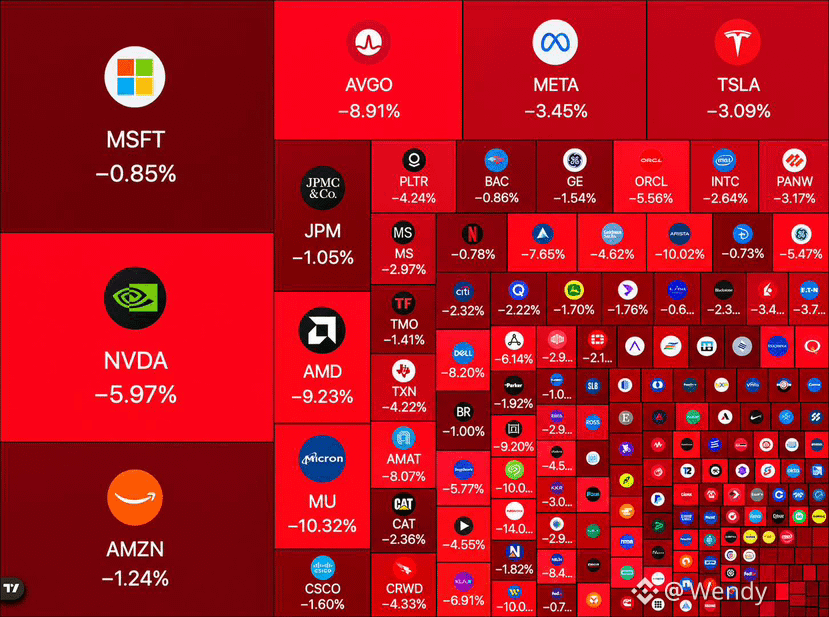
🚨 WALL STREET BLOODBATH! TECH STOCKS ARE GETTING CRUSHED!
A sea of red across the U.S. stock market as major technology stocks plunge.
🔴 $MUU : -10.32%
🔴 $AMD : -9.23%
🔴 $AVGO: -8.91%
🔴 $NVDA : -5.97%
🔴 $META: -3.45%
🔴 $TSLA: -3.09%
Reports claim nearly $1 TRILLION in market value has been erased in just 60 minutes.
Selling pressure is hitting semiconductor stocks especially hard.
Is this a temporary shakeout or the start of a deeper correction? 👀
#StockMarket #WallStreet #NvidiaBoardReportedlySplitOverHuang’sReturn
{future}(NVDAUSDT)
🚨 WALL STREET BLOODBATH! TECH STOCKS ARE GETTING CRUSHED!
A sea of red across the U.S. stock market as major technology stocks plunge.
🔴 $MUU : -10.32%
🔴 $AMD : -9.23%
🔴 $AVGO: -8.91%
🔴 $NVDA : -5.97%
🔴 $META: -3.45%
🔴 $TSLA: -3.09%
Reports claim nearly $1 TRILLION in market value has been erased in just 60 minutes.
Selling pressure is hitting semiconductor stocks especially hard.
Is this a temporary shakeout or the start of a deeper correction? 👀
#StockMarket #WallStreet #NvidiaBoardReportedlySplitOverHuang’sReturn
OrionWB:
Giờ vẫn đỏ như xôi gấc 🗿
5
15
10k

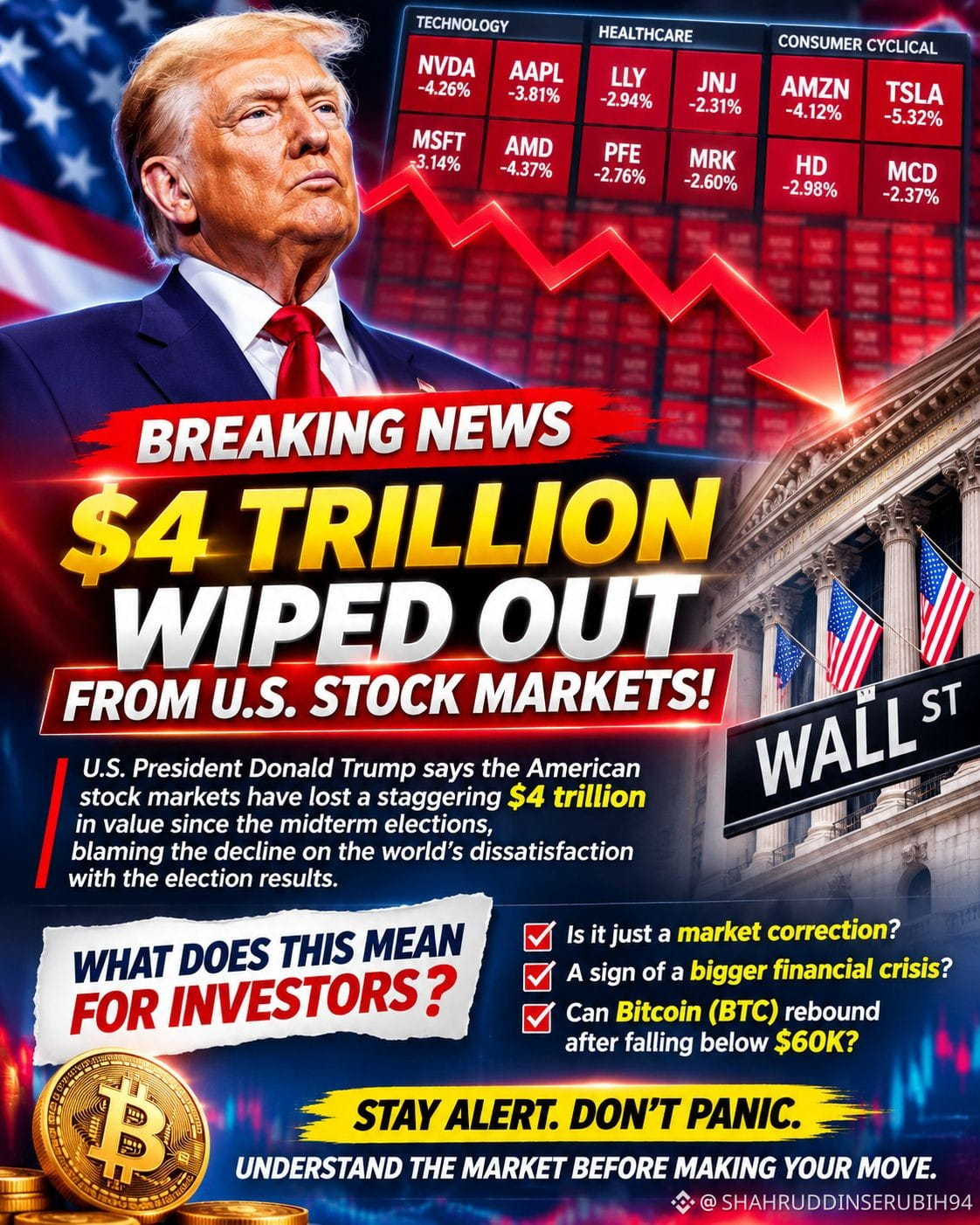
$4 TRILLION WIPEOUT IN THE U.S. STOCK MARKET! WHAT IS REALLY HAPPENING?** 😱
Trump has finally spoken! The massive market decline is raising serious questions among global investors.
Is this just a market correction… or a warning sign of a much bigger financial crisis?
📉 Stocks are falling.
⚠️ Investors are getting nervous.
₿ Will Bitcoin crash further or is a major rebound coming?
**Stay alert. Don't panic. Understand the market before making your move.**
#Bitcoin $SOL $GOOGL.US $BTC #CryptoMarketAlert #TRUMP #USStocks #NVIDIA #StockMarket
137

·
--
Bitcoin did not crash alone, Wall Street dragged it down. 📰
Bitcoinist reports the selloff was part of a broad rout in risk assets, with the Nasdaq Composite losing 5.3 percent on Friday while Nvidia sank nearly 14 percent. Reuters pointed to weeks of concern about the profitability of massive AI infrastructure spending, rising borrowing costs, regulatory risks, and Nvidia chief Jensen Huang's departure. Traders now see a 97.9 percent chance of a rate hike on December 9, which is the opposite of what risk assets want to hear. My view is that crypto is trading like a tech stock right now, so the next move depends as much on the Nasdaq open as on any Bitcoin chart, and I watch both before I trade. 📊
Does Bitcoin follow the Nasdaq up on Monday, or does it break away on its own? 🤔
Source: Bitcoinist, Reuters.
Futures trading is risky, trade small and manage risk. ⚠️
Follow for more trades.
#Crypto #Bitcoin #FuturesTrading #TradingSignals #StockMarket

🚨 $TSLA LIQUIDITY FLUSH: INSTITUTIONAL RE-PRICING OR A DEEP VALUE ACCUMULATION ZONE? 🦈
Institutional order flow is undergoing a severe stress test as $TSLA sheds liquidity following structural political shifts and strategic pivots toward robotaxis. This sharp re-pricing sweeps previous retail interest, creating deep inefficiencies across the macro framework. 📊
Smart money capital is likely monitoring whether this multi-billion dollar drawdown exhausts seller momentum or triggers a deeper structural retrace before any range reclaim. 💡
💬 Are you treating this capital flush as a strategic value entry or waiting for confirmation of a structural base? 👇
⚠️ Not financial advice. Always manage your risk. 🛡️
🏷️ #TSLA #StockMarket #Investing #MarketStructure
🦈 ⚡

16

·
--
Bullish
Verified
#stockmarket 🌍 #PositiveMindsGlobalResults
BINANCE SQUARE | INVEST • LEARN • GROW • TOGETHER
📉 THE SUDDEN REVERSAL IN THE STOCK MARKET — AND WHAT COMES NEXT
Wall Street's powerful rally has suddenly turned into a serious market test. Investors are reassessing AI valuations, technology spending, earnings expectations, inflation risks and the Federal Reserve's next move.
The S&P 500 and Dow are facing correction territory, while the Nasdaq is under pressure as investors question whether AI growth expectations have moved too far ahead of reality. Even strong corporate earnings are no longer enough to guarantee rising stock prices.
🔎 WHAT IS DRIVING THE REVERSAL?
🤖 AI valuation pressure: Investors are questioning whether massive AI investments can deliver returns quickly enough.
📉 Profit-taking: Investors are locking in profits after an extended rally.
🏦 Interest-rate uncertainty: Inflation concerns could keep monetary policy tighter for longer.
💰 Capital rotation: Money is shifting toward defensive sectors as risk appetite weakens.
⚠️ Market confidence: Fear is spreading beyond technology into broader equities.
📊 WHAT COMES NEXT?
🟢 Bullish scenario: Inflation cools, yields stabilize, AI stocks find support, and buyers return—triggering a relief rally.
🔴 Bearish scenario: Valuations continue compressing, bond yields remain elevated, and further selling pushes major indices toward deeper corrections.
🌍 THE BIGGER PICTURE
This may not mean the end of the bull market—but it could mark a transition from buying every dip to demanding real earnings, cash flow, sustainable growth and reasonable valuations.
The next market direction may depend less on AI promises and more on whether billions of dollars in AI investment can translate into measurable profits.
Stay alert. Protect capital. Watch the data—not the hype.
Market analysis, not financial advice. DYOR.
#StockMarket #WallStreet #NASDAQ #AI #NVIDIA #FederalReserve #GlobalMarkets #PositiveMindsGlobalResults #BinanceSquare

120

·
--
Bullish
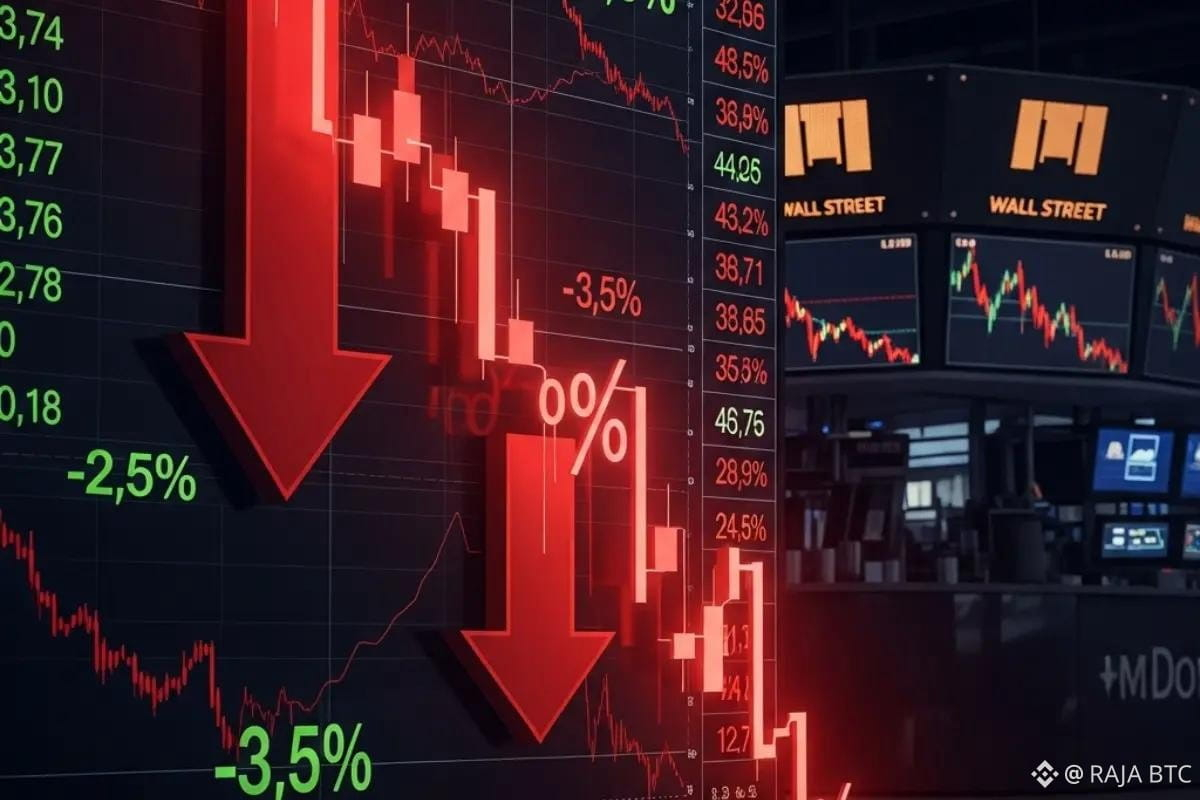
🚨 GLOBAL STOCKS FACE A MASSIVE SELLOFF!
Technology shares are leading market losses as investors worry about valuations, borrowing costs and corporate profits.
Will crypto follow stocks or move independently?
#StockMarket #Bitcoin #GlobalMarkets #CryptoNews #RajaBTC
$BTC $ETH $BNB
{spot}(BNBUSDT)
🚨 GLOBAL STOCKS FACE A MASSIVE SELLOFF!
Technology shares are leading market losses as investors worry about valuations, borrowing costs and corporate profits.
Will crypto follow stocks or move independently?
#StockMarket #Bitcoin #GlobalMarkets #CryptoNews #RajaBTC
$BTC $ETH $BNB
Technology shares are leading market losses as investors worry about valuations, borrowing costs and corporate profits.
Will crypto follow stocks or move independently?
#StockMarket #Bitcoin #GlobalMarkets #CryptoNews #RajaBTC
$BTC $ETH $BNB
50

STOCK MARKET ALERT: BEWARE OF FAKE INVESTMENT GROUPS!
A message circulating online is promoting an emergency market analysis and inviting investors to join a supposedly free stock trading group.
📌 Stocks Mentioned:
$PMTR | $EUDA | $OKTA | $PHR | $RDWR
⚠️ Red Flags:
- Urgent "last chance" invitation.
- Free stock tips used to attract investors.
- Unverified market predictions.
- External links directing users to unknown websites.
🔐 Investor Safety Tips:
- Verify stock information independently.
- Never share brokerage login details.
- Avoid depositing money into unfamiliar platforms.
- Don't trust guaranteed returns or insider tips.
📊 Remember: Protecting your capital is more important than chasing the next market opportunity.
Stay informed. Stay cautious. Trade responsibly.
#Binance #StockMarket #CryptoSecurity #Investing
1

·
--
The S&P 500 fell for six straight sessions through Thursday, its longest losing streak in two and a half years.
Friday made it worse: S&P 500 -3.7%, Nasdaq -5.3%.
The VIX jumped to about 36.
Crypto is not acting like a hedge right now
. It's moving with stocks.
Do you still call BTC digital gold?
Click here to Trade 👇️
$BTC
{spot}(BTCUSDT)
$SNDK
{future}(SNDKUSDT)
$SNDKB
{spot}(SNDKBUSDT)
#bitcoin
#StockMarket
#globalstocksfacelongestlosingstreaksince2023
The S&P 500 fell for six straight sessions through Thursday, its longest losing streak in two and a half years.
Friday made it worse: S&P 500 -3.7%, Nasdaq -5.3%.
The VIX jumped to about 36.
Crypto is not acting like a hedge right now
. It's moving with stocks.
Do you still call BTC digital gold?
Click here to Trade 👇️
$BTC
$SNDK
$SNDKB
#bitcoin
#StockMarket
#globalstocksfacelongestlosingstreaksince2023
Friday made it worse: S&P 500 -3.7%, Nasdaq -5.3%.
The VIX jumped to about 36.
Crypto is not acting like a hedge right now
. It's moving with stocks.
Do you still call BTC digital gold?
Click here to Trade 👇️
$BTC
$SNDK
$SNDKB
#bitcoin
#StockMarket
#globalstocksfacelongestlosingstreaksince2023
1
350
TATA MOTORS STOCK CRASHES NEAR 63% FROM ITS PEAK!
Tata Motors Passenger Vehicles shares faced another major sell-off, falling 8.7% on Monday.
🔥 Key Highlights:
- 📉 Shares dropped 8.7% on November 16.
- 💰 Stock closed around ₹262.40.
- 📊 The decline follows a sharp earnings setback.
- 🚗 Jaguar Land Rover cut its FY27 operating margin outlook to 2–3%.
- ⚠️ Weak demand in China and rising competition are adding pressure.
📌 Why it matters: Tata Motors reported a ₹5,531 crore consolidated quarterly loss, while concerns over JLR's profitability continue to weigh on investor confidence.
The stock's decline highlights the risks facing even major automotive companies.
Is this a temporary correction or a longer-term turnaround challenge?
#TataMotors #StockMarket #IndiaStocks
80

·
--
🚨 Is the AI bubble finally bursting, or is Wall Street creating another buying opportunity?
US stocks have lost around $6 trillion in just 45 days, and the sell-off is hitting almost everything — tech stocks, gold and crypto.
But here's what caught my attention 👀
Despite the market panic, corporate earnings are still looking strong.
📊 S&P 500 earnings per share grew 31.9% YoY in Q3.
📊 Companies have beaten earnings expectations for 13 consecutive quarters.
📉 Nvidia $NVDA is trading at around 9x forward earnings, according to the report.
High interest rates, AI regulation concerns and massive AI spending are making investors nervous.
But what if the market is being too pessimistic?
If sentiment improves and liquidity returns, we could see a strong buy-the-dip rally in tech stocks.
The big question is: Are investors selling the top, or missing an opportunity to buy the fear? 🤔
#AI #NVDA #StockMarket #Crypto #Bitcoin
Life is Race
·
--
$DGB Claim A Big Gift here 🎁🎁🎁🎁🎁🧧🧧🧧🧧🧧✅✅✅✅✅✅✅
321

·
--
Bearish
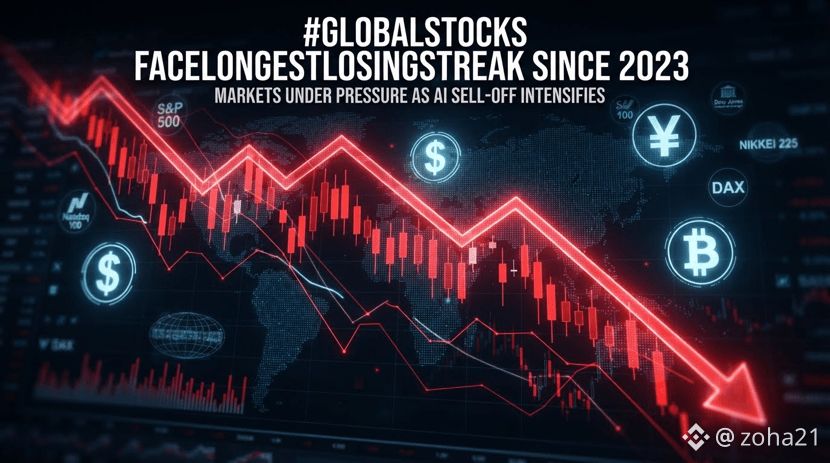
#GlobalStocksFaceLongestLosingStreakSince2023
📊 The Global Slide
• 7 Straight Losses: The MSCI All Country World Index fell for a seventh consecutive session, marking its longest losing run since September 2023.
• Wall Street Correction: The S&P 500 and Dow Jones entered correction territory (down over 10% from their peaks), while the Nasdaq plunged 5.3% on Friday to erase its 2026 gains.
• Asia & Europe Hit Hard: Asia-Pacific equities suffered their worst week since March 2020 (with Japan's Nikkei and South Korea's Kospi each dropping over 5%), and Europe’s Stoxx 600 slid 1.5%.
🤖 Why the Sell-Off?
• AI Trade Unraveling: Investors are questioning whether massive AI infrastructure spending will deliver sustainable profits. Even Anthropic’s record-breaking IPO failed to calm the market, with its shares tumbling roughly 9% on day two.
• Rate & Macro Jitters: Expectations of higher interest rates and rising credit-risk gauges have pushed investors out of risky tech stocks and into safe havens like U.S. Treasuries and the dollar.
#StockMarket #Investing
$EUR $JPY.ETF $AUD
{future}(BTCUSDT)
#GlobalStocksFaceLongestLosingStreakSince2023
📊 The Global Slide
• 7 Straight Losses: The MSCI All Country World Index fell for a seventh consecutive session, marking its longest losing run since September 2023.
• Wall Street Correction: The S&P 500 and Dow Jones entered correction territory (down over 10% from their peaks), while the Nasdaq plunged 5.3% on Friday to erase its 2026 gains.
• Asia & Europe Hit Hard: Asia-Pacific equities suffered their worst week since March 2020 (with Japan's Nikkei and South Korea's Kospi each dropping over 5%), and Europe’s Stoxx 600 slid 1.5%.
🤖 Why the Sell-Off?
• AI Trade Unraveling: Investors are questioning whether massive AI infrastructure spending will deliver sustainable profits. Even Anthropic’s record-breaking IPO failed to calm the market, with its shares tumbling roughly 9% on day two.
• Rate & Macro Jitters: Expectations of higher interest rates and rising credit-risk gauges have pushed investors out of risky tech stocks and into safe havens like U.S. Treasuries and the dollar.
#StockMarket #Investing
$EUR $JPY.ETF $AUD
1
79

·
--
Bearish
Verified
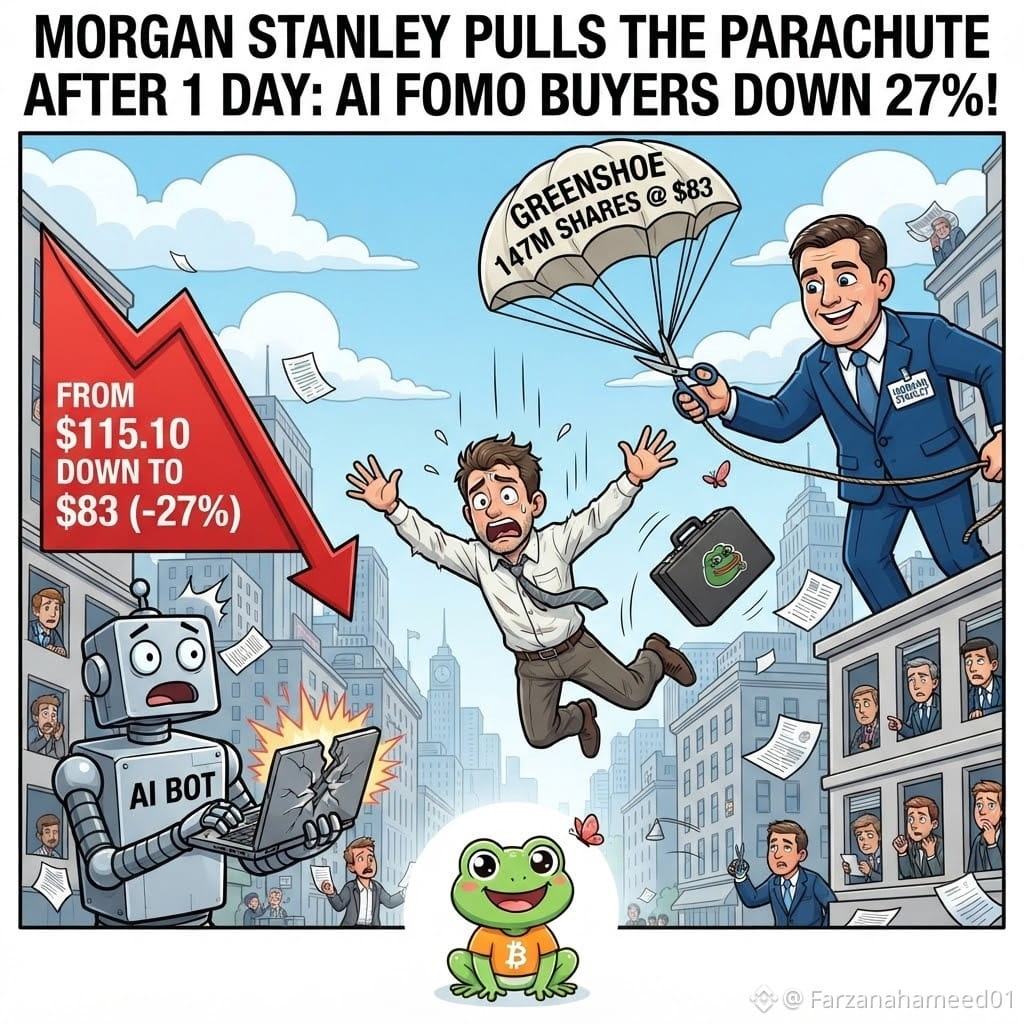
MORGAN STANLEY “PULLS BACK” ONE DAY AFTER ANTHROPIC IPO: AI PEAK BUYERS ARE DOWN 27%! 😱
#morganstanleyendsanthropicstocksupportafteroneday
Whoa, what happened? It’s only been one day since it went public, and Morgan Stanley ends Anthropic stock support after one day has already blown up?!
What exactly happened?
👉 This wasn’t a scam involving price manipulation. Morgan Stanley has just completed its green shoe option (buying up all 147 million shares at $83), officially ending its price-stabilization mechanism and removing an important “wall” of support for the stock.
👉 Those who FOMO-bought at the peak of $115.10 on Thursday are now down 27%, with the price falling close to the $83 IPO price.
💡What should learners do?
The AI wave on Wall Street is cooling down—watch out in case it spreads to AI tokens! Avoid FOMO-buying at the peak on news, manage leverage carefully, and wait for prices to stabilize.
A hype IPO is not a safe trade. Always check, always verify, and keep learning about risk management.
This is for learning and sharing only.
⚠️ This is not financial advice.
$ANT - Watch for pressure as AI hype cools down, strong.
$EVAA - Watch for swings with AI tokens, strong.
$BTC - Watch for risk-off mood on stock market fear, strong.
✨ 𝐅𝐀𝐑𝐙𝐀𝐍𝐀 𝐇𝐀𝐌𝐄𝐄𝐃 𝐎𝐅𝐅𝐈𝐂𝐈𝐀𝐋 • 🦋
#Anthropic #CryptoNews #StockMarket #TradingTips
{future}(ANTUSDT)
{future}(EVAAUSDT)
{future}(BTCUSDT)
MORGAN STANLEY “PULLS BACK” ONE DAY AFTER ANTHROPIC IPO: AI PEAK BUYERS ARE DOWN 27%! 😱
#morganstanleyendsanthropicstocksupportafteroneday
Whoa, what happened? It’s only been one day since it went public, and Morgan Stanley ends Anthropic stock support after one day has already blown up?!
What exactly happened?
👉 This wasn’t a scam involving price manipulation. Morgan Stanley has just completed its green shoe option (buying up all 147 million shares at $83), officially ending its price-stabilization mechanism and removing an important “wall” of support for the stock.
👉 Those who FOMO-bought at the peak of $115.10 on Thursday are now down 27%, with the price falling close to the $83 IPO price.
💡What should learners do?
The AI wave on Wall Street is cooling down—watch out in case it spreads to AI tokens! Avoid FOMO-buying at the peak on news, manage leverage carefully, and wait for prices to stabilize.
A hype IPO is not a safe trade. Always check, always verify, and keep learning about risk management.
This is for learning and sharing only.
⚠️ This is not financial advice.
$ANT - Watch for pressure as AI hype cools down, strong.
$EVAA - Watch for swings with AI tokens, strong.
$BTC - Watch for risk-off mood on stock market fear, strong.
✨ 𝐅𝐀𝐑𝐙𝐀𝐍𝐀 𝐇𝐀𝐌𝐄𝐄𝐃 𝐎𝐅𝐅𝐈𝐂𝐈𝐀𝐋 • 🦋
#Anthropic #CryptoNews #StockMarket #TradingTips
6
1k

·
--
Bullish
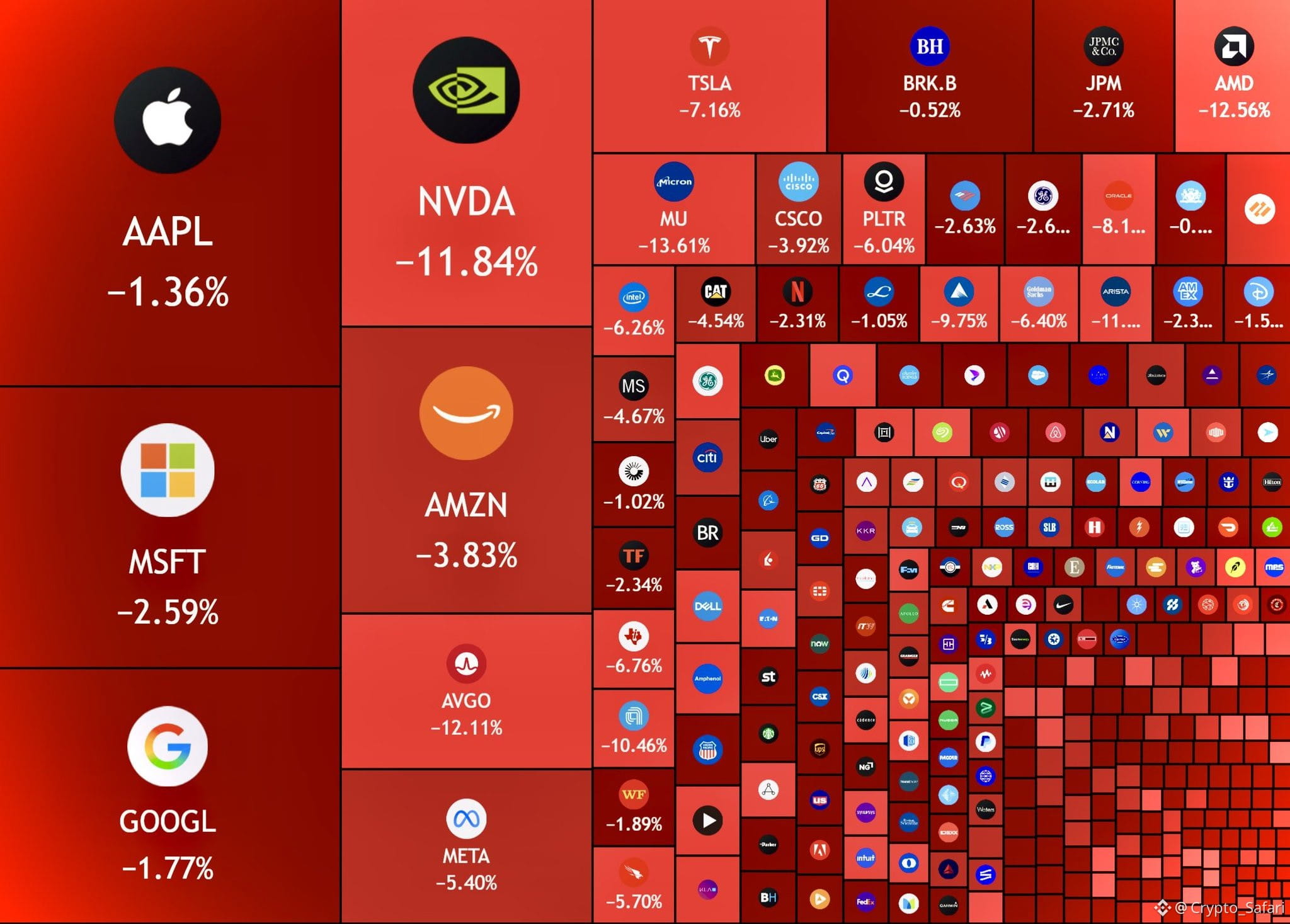
🚨 🇺🇸 WALL STREET IN MASSIVE SELL-OFF!
The US stock market has suffered a staggering loss:
🔴 $2.5 TRILLION wiped out in a single trading session.
📉 $8.9 TRILLION in losses over the past 45 days.
Investors are increasingly worried about:
- AI bubble fears
- Rising interest rates
- Massive tech stock sell-offs
- Growing uncertainty in financial markets
⚠️ The market sell-off is raising concerns about a deeper correction.
Is this the beginning of a major financial crisis, or a buying opportunity?
#StockMarket #WallStreet #USA #MarketCrash #Bitcoin #CryptoNews #Trading
$BNB $ETH $BTC
195
·
--
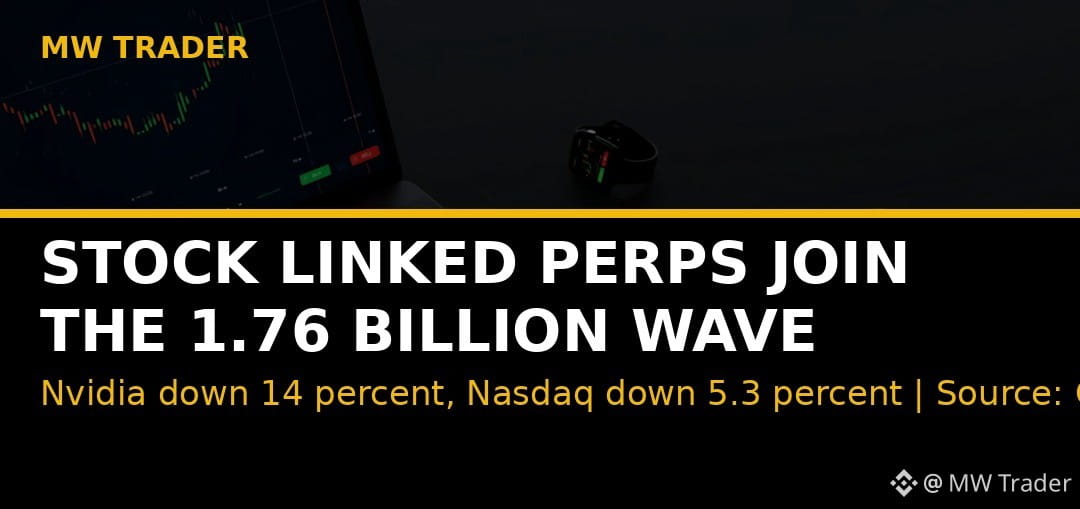
This crash is not crypto only. Nvidia and SanDisk bets just joined a $1.76 billion liquidation wave. 📉
Crypto liquidations reached about $1.76 billion in the 24 hours ending November 21, as Bitcoin and Ether fell alongside stock linked bets on crypto platforms, according to CoinStats. Bitcoin accounted for about $711 million and Ether roughly $411 million, and the tally included about $36 million in SOXL liquidations and close to $28 million each for SanDisk and Nvidia linked contracts. The stock backdrop was severe too, the Associated Press reported the S and P 500 fell 3.7 percent, the Nasdaq Composite dropped 5.3 percent, and Nvidia closed down 14 percent on Friday. My view is that crypto is trading as a tech stock right now, so a crypto only bounce will not hold while Nasdaq keeps falling. 📰
If stocks keep falling on Monday, does Bitcoin follow them down, or does crypto finally decouple? 🤔
Source: CoinStats, Associated Press.
Futures trading is risky, trade small and manage risk. ⚠️
Follow for more trades.
#Crypto #Bitcoin #FuturesTrading #TradingSignals #StockMarket
1


Article
Global Stock Market Crash: Why Is Bitcoin Falling with Stocks?🌍 Seven consecutive days of stock market losses, an AI-driven selloff and rising market fear are shaking global investors. Is Bitcoin facing another major risk as Wall Street struggles?
Something interesting is happening across global financial markets, and Bitcoin investors should be paying attention.
Stock markets are under pressure, technology shares are taking a beating, and the growing concerns surrounding AI investments are beginning to affect investor confidence.
But here's the bigger question:
If global stocks continue falling, how much further could Bitcoin be dragged down?
Let's look at what's happening and why it matters for crypto.
📉 1. Global Markets Are Facing a Difficult Week
According to the figures in the original Bloomberg report, the MSCI All Country World Index recorded seven consecutive days of losses on Friday.
That's its longest losing streak since September 2023.
Asia has been hit particularly hard, with the MSCI Asia Pacific Index heading towards its worst weekly performance since March 2020.
Some of the biggest market declines included:
🇹🇼 Taiwan: Down 6.2%🇰🇷 South Korea: Down 5.2%🇯🇵 Japan: Down 5.1%SoftBank: Fell approximately 15% in a single day.
These aren't small movements. When major markets fall together, it tells us that investors are becoming increasingly cautious.
🤖 2. The AI Investment Boom Is Facing a Reality Check
One of the biggest reasons behind the current pressure is the changing mood around artificial intelligence investments.
For months, AI-related companies attracted enormous investor attention.
But now, investors are asking a more difficult question:
Will the billions being invested in AI infrastructure actually generate the profits expected?
Concerns about borrowing costs, expensive valuations and the time needed to generate returns are putting pressure on technology stocks.
The Nasdaq 100 has also fallen to its lowest closing level since April, while chipmakers have extended their decline to approximately 35% from their June peak.
This doesn't necessarily mean the AI industry is finished.
It may simply mean investors are reassessing how much they are willing to pay for future growth.
🌏 3. The Pressure Is Spreading Beyond Technology
The weakness isn't limited to a handful of AI companies.
The MSCI Emerging Markets Index is now more than 20% below its June high, placing it in bear-market territory.
Meanwhile, the VIX, often called Wall Street's fear gauge, climbed above 28 and approached 30.
Why should we care?
Because when volatility increases, investors often become less comfortable holding risky assets.
And that's where Bitcoin enters the picture.
₿ 4. Why Is Bitcoin Falling Alongside Stocks?
Bitcoin is often discussed as an independent asset, but its price behavior during periods of market stress can tell a different story.
When investors reduce exposure to risky investments, Bitcoin can experience selling pressure alongside technology stocks and other growth-sensitive assets.
In the latest market decline, Bitcoin also moved lower.
This is important because it suggests that BTC is behaving more like a risk asset than a safe haven during this particular selloff.
If global markets recover, Bitcoin could benefit from improving investor confidence.
But if selling continues, crypto may struggle to find its footing.
💵 5. Not Every Safe-Haven Asset Is Providing Protection
Another interesting development is where investors are moving their money.
Demand for US Treasuries and the dollar increased, while gold also declined by approximately 2.6%–3%.
This shows that market behaviors aren't always straightforward.
Even assets traditionally associated with safety can experience selling pressure during periods of uncertainty.
For Bitcoin investors, the important point is that there is currently no guarantee that money leaving stocks will automatically move into crypto.
🏦 6. The Federal Reserve Could Be the Next Major Test
The Federal Reserve's December 8–9 meeting is another important event to watch.
Expectations of a December rate hike are adding to concerns about borrowing costs and financial conditions.
Higher interest rates can make riskier investments less attractive, particularly when investors are already worried about valuations.
A stronger US dollar and rising yields could therefore create additional pressure for both technology stocks and Bitcoin.
The market will be watching closely for signals about the Fed's next move.
⚠️ 7. What Could Happen Next?
There are two broad scenarios worth considering.
Scenario 1: Global Markets Stabilize
If the stock market selloff begins to ease, investor confidence could gradually improve.
Technology stocks may find support, volatility could decline, and Bitcoin could get some breathing room.
Scenario 2: Selling Pressure Continues
If global markets remain weak, further declines could trigger margin calls and forced selling across different asset classes.
Bitcoin deserves particular attention because crypto markets remain open during weekends, even when traditional stock exchanges are closed.
That means BTC can react to changing sentiment before Asian and US markets reopen.
👀 Three Things I'm Watching Next
Rather than reacting to every market headline, I'd focus on three important signals:
1. The Global Stock Market
Does the MSCI All Country World Index finally break its seven-day losing streak?
2. The Nasdaq 100
Can technology stocks stabilize, or will selling pressure continue?
3. The VIX Fear Gauge
Does volatility fall below 28, or does market anxiety increase further?
These three indicators could help us understand whether the current selloff is losing momentum or developing into something bigger.
💡 My Takeaway
What concerns me most isn't simply that stocks are falling.
It's the growing connection between technology valuations, global investor confidence and cryptocurrency prices.
Bitcoin may have its own market cycles, but that doesn't make it immune to wider financial pressure.
For now, I wouldn't assume that every dip is a buying opportunity or that a stock market recovery will immediately send BTC higher.
I'd rather watch how traditional markets behave when trading resumes and whether investor confidence starts returning.
Sometimes, understanding what's happening outside crypto is just as important as watching the Bitcoin chart itself.
💬 Let's Discuss
I have two questions for the community:
📊 If you could watch only ONE indicator right now, would you choose the Nasdaq 100 or the VIX?
₿ And when global stocks eventually recover, do you believe Bitcoin will follow them higher, or could crypto take a different direction?
Share your thoughts below. I'd genuinely like to hear how you're reading this market. 👇
⚠️ Disclaimer: This post is for informational and educational purposes only and does not constitute financial advice. Cryptocurrency and financial markets involve significant risk. Always conduct your own research before making investment decisions.
#BinanceSquare #Bitcoin #StockMarket #CryptoMarket #AIStocks
{spot}(BTCUSDT)
{spot}(ETHUSDT)
Global Stock Market Crash: Why Is Bitcoin Falling with Stocks?
🌍 Seven consecutive days of stock market losses, an AI-driven selloff and rising market fear are shaking global investors. Is Bitcoin facing another major risk as Wall Street struggles?
Something interesting is happening across global financial markets, and Bitcoin investors should be paying attention.
Stock markets are under pressure, technology shares are taking a beating, and the growing concerns surrounding AI investments are beginning to affect investor confidence.
But here's the bigger question:
If global stocks continue falling, how much further could Bitcoin be dragged down?
Let's look at what's happening and why it matters for crypto.
📉 1. Global Markets Are Facing a Difficult Week
According to the figures in the original Bloomberg report, the MSCI All Country World Index recorded seven consecutive days of losses on Friday.
That's its longest losing streak since September 2023.
Asia has been hit particularly hard, with the MSCI Asia Pacific Index heading towards its worst weekly performance since March 2020.
Some of the biggest market declines included:
🇹🇼 Taiwan: Down 6.2%🇰🇷 South Korea: Down 5.2%🇯🇵 Japan: Down 5.1%SoftBank: Fell approximately 15% in a single day.
These aren't small movements. When major markets fall together, it tells us that investors are becoming increasingly cautious.
🤖 2. The AI Investment Boom Is Facing a Reality Check
One of the biggest reasons behind the current pressure is the changing mood around artificial intelligence investments.
For months, AI-related companies attracted enormous investor attention.
But now, investors are asking a more difficult question:
Will the billions being invested in AI infrastructure actually generate the profits expected?
Concerns about borrowing costs, expensive valuations and the time needed to generate returns are putting pressure on technology stocks.
The Nasdaq 100 has also fallen to its lowest closing level since April, while chipmakers have extended their decline to approximately 35% from their June peak.
This doesn't necessarily mean the AI industry is finished.
It may simply mean investors are reassessing how much they are willing to pay for future growth.
🌏 3. The Pressure Is Spreading Beyond Technology
The weakness isn't limited to a handful of AI companies.
The MSCI Emerging Markets Index is now more than 20% below its June high, placing it in bear-market territory.
Meanwhile, the VIX, often called Wall Street's fear gauge, climbed above 28 and approached 30.
Why should we care?
Because when volatility increases, investors often become less comfortable holding risky assets.
And that's where Bitcoin enters the picture.
₿ 4. Why Is Bitcoin Falling Alongside Stocks?
Bitcoin is often discussed as an independent asset, but its price behavior during periods of market stress can tell a different story.
When investors reduce exposure to risky investments, Bitcoin can experience selling pressure alongside technology stocks and other growth-sensitive assets.
In the latest market decline, Bitcoin also moved lower.
This is important because it suggests that BTC is behaving more like a risk asset than a safe haven during this particular selloff.
If global markets recover, Bitcoin could benefit from improving investor confidence.
But if selling continues, crypto may struggle to find its footing.
💵 5. Not Every Safe-Haven Asset Is Providing Protection
Another interesting development is where investors are moving their money.
Demand for US Treasuries and the dollar increased, while gold also declined by approximately 2.6%–3%.
This shows that market behaviors aren't always straightforward.
Even assets traditionally associated with safety can experience selling pressure during periods of uncertainty.
For Bitcoin investors, the important point is that there is currently no guarantee that money leaving stocks will automatically move into crypto.
🏦 6. The Federal Reserve Could Be the Next Major Test
The Federal Reserve's December 8–9 meeting is another important event to watch.
Expectations of a December rate hike are adding to concerns about borrowing costs and financial conditions.
Higher interest rates can make riskier investments less attractive, particularly when investors are already worried about valuations.
A stronger US dollar and rising yields could therefore create additional pressure for both technology stocks and Bitcoin.
The market will be watching closely for signals about the Fed's next move.
⚠️ 7. What Could Happen Next?
There are two broad scenarios worth considering.
Scenario 1: Global Markets Stabilize
If the stock market selloff begins to ease, investor confidence could gradually improve.
Technology stocks may find support, volatility could decline, and Bitcoin could get some breathing room.
Scenario 2: Selling Pressure Continues
If global markets remain weak, further declines could trigger margin calls and forced selling across different asset classes.
Bitcoin deserves particular attention because crypto markets remain open during weekends, even when traditional stock exchanges are closed.
That means BTC can react to changing sentiment before Asian and US markets reopen.
👀 Three Things I'm Watching Next
Rather than reacting to every market headline, I'd focus on three important signals:
1. The Global Stock Market
Does the MSCI All Country World Index finally break its seven-day losing streak?
2. The Nasdaq 100
Can technology stocks stabilize, or will selling pressure continue?
3. The VIX Fear Gauge
Does volatility fall below 28, or does market anxiety increase further?
These three indicators could help us understand whether the current selloff is losing momentum or developing into something bigger.
💡 My Takeaway
What concerns me most isn't simply that stocks are falling.
It's the growing connection between technology valuations, global investor confidence and cryptocurrency prices.
Bitcoin may have its own market cycles, but that doesn't make it immune to wider financial pressure.
For now, I wouldn't assume that every dip is a buying opportunity or that a stock market recovery will immediately send BTC higher.
I'd rather watch how traditional markets behave when trading resumes and whether investor confidence starts returning.
Sometimes, understanding what's happening outside crypto is just as important as watching the Bitcoin chart itself.
💬 Let's Discuss
I have two questions for the community:
📊 If you could watch only ONE indicator right now, would you choose the Nasdaq 100 or the VIX?
₿ And when global stocks eventually recover, do you believe Bitcoin will follow them higher, or could crypto take a different direction?
Share your thoughts below. I'd genuinely like to hear how you're reading this market. 👇
⚠️ Disclaimer: This post is for informational and educational purposes only and does not constitute financial advice. Cryptocurrency and financial markets involve significant risk. Always conduct your own research before making investment decisions.
#BinanceSquare #Bitcoin #StockMarket #CryptoMarket #AIStocks
1
1
209

·
--
🚨 ANTHROPIC'S BIG IPO, BUT THE MARKET WENT RED!
Anthropic made a historic Wall Street debut, raising massive capital.
But just one day later, its shares dropped sharply, while Nvidia, AMD and other tech stocks also faced heavy selling.
A successful IPO couldn't save the broader market.
Is AI hype losing momentum?
#Anthropic #AI #NVIDIA #stockmarket
204

·
--
Verified
🚨 NVIDIA SHARES PLUNGE 12% AS TECH STOCKS FACE ANOTHER WAVE OF SELLING!
$NVDA is reportedly heading for its seventh consecutive weekly decline, its longest losing streak since the 2008 financial crisis.
The latest reports also point to a staggering $2.5 trillion decline in market value.
If confirmed, this would mark one of the most significant drawdowns for the AI chip giant.
The selloff raises a bigger question about investor confidence in AI-related stocks, especially as crypto and other risk assets remain under pressure.
Is this a buying opportunity for Nvidia, or is the AI trade losing momentum?
#Nvidia #StockMarket
{future}(NVDAUSDT)
🚨 NVIDIA SHARES PLUNGE 12% AS TECH STOCKS FACE ANOTHER WAVE OF SELLING!
$NVDA is reportedly heading for its seventh consecutive weekly decline, its longest losing streak since the 2008 financial crisis.
The latest reports also point to a staggering $2.5 trillion decline in market value.
If confirmed, this would mark one of the most significant drawdowns for the AI chip giant.
The selloff raises a bigger question about investor confidence in AI-related stocks, especially as crypto and other risk assets remain under pressure.
Is this a buying opportunity for Nvidia, or is the AI trade losing momentum?
#Nvidia #StockMarket
1
2.3k

#GlobalStocksFaceLongestLosingStreakSince2023
The global stock selloff has a deeper
Here's the detail that deserves attention: Bloomberg reported that emerging-market equities had extended their decline to approximately 20% from their June peak, approaching the technical bear-market threshold.
That's a very different picture from simply counting consecutive red sessions.
The IMF's November 20 Global Markets Monitor provides another useful comparison. Over the previous seven days, the Nikkei 225 declined 8%, the MSCI Emerging Markets index lost 7%, and the Euro Stoxx 50 fell 6%. The S&P 500 was down 5%.
These figures show that the pressure isn't confined to one technology-heavy market. Different regions are experiencing substantial weakness simultaneously.
I initially looked at the AI investment unwind as the main story. But the regional performance data changes the perspective: this is also becoming a broader global risk-repricing event.
That distinction matters for crypto markets too. When investors reduce exposure across multiple risk-sensitive markets, digital assets can face additional pressure. It doesn't establish that stocks directly cause crypto declines, but the shared risk environment deserves attention.
The next metric worth watching is whether emerging-market weakness stabilizes alongside US equities, or whether the stronger dollar and tighter financial conditions deepen the divergence.
#GlobalMarkets #StockMarket #CryptoMarkets
VERIFY BEFORE POSTING:
* Seven consecutive losing sessions: MSCI All Country World Index, reported November 20, 2026. SWI swissinfo.ch +1
* Approximately 20% emerging-market decline: From the June peak, as reported by Bloomberg on November 20. Verify the latest closing level before publication. SWI swissinfo.ch
* Seven-day index declines: Nikkei 225 (-8%), MSCI Emerging Markets (-7%), Euro Stoxx 50 (-6%), S&P 500 (-5%), according to the IMF November 20 monitor. imfconnect.org
A final check against your latest Binance campaign requirements would help before publishing.
73

·
--
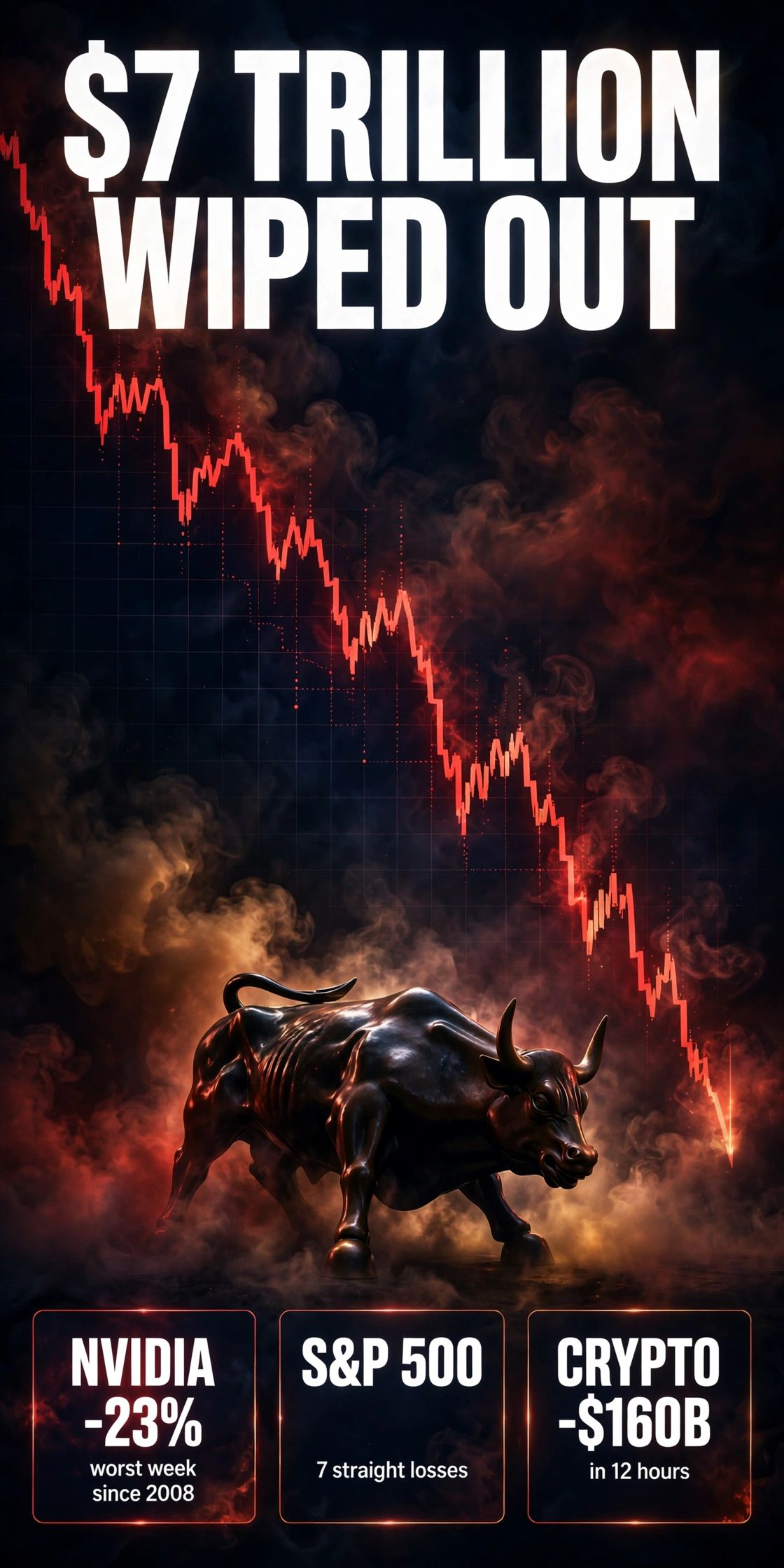
💥 $7 TRILLION gone in one week — Wall Street's worst bloodbath in years
US stocks erased ~$7T in market value this week, one of the largest weekly losses ever.
Nvidia crashed 23% — its worst week since October 2008. The S&P 500 closed below 7,000, its 7th straight loss.
Crypto is caught in the blast: total market cap down 4.9% to $2.11T, BTC now ~$55,800 after breaking its bear-market floor, and ~$2.4B in longs liquidated in 24h. Fear & Greed sits at 12 — Extreme Fear. 👀
When stocks bleed this hard, crypto rarely escapes.
Not financial advice.
#Bitcoin $BTC #Nvidia #StockMarket
42
Log in to explore more content
Join global crypto users on Binance Square
⚡️ Get latest and useful information about crypto.
💬 Trusted by the world’s largest crypto exchange.
👍 Discover real insights from verified creators.
Email / Phone number
Trending Topics
1
#NvidiaLoses$2.7TrillionInMonthAndAHalf
18,046 views
115 Discussing
2
#CanBTCReboundAfterFallingBelow60K?
746,379 views
2,953 Discussing
3
#GlobalStocksFaceLongestLosingStreakSince2023
272,226 views
1,978 Discussing
4
#BlackRockIBITPostsRecord$541MSingleDayOutflow
31,652 views
88 Discussing
5
#AnthropicPlungesTowardIPOPriceonDay2
138,889 views
1,201 Discussing
6
#TwentyOneCapitalAdds172.25BTC
62,863 views
653 Discussing
7
#HKBillWouldExcludeTokenizedDepositsFromVirtualAssets
7,889 views
50 Discussing
8
#BNBDropsBelow540USDTWith8.46%DailyDecline
75,572 views
647 Discussing
9
#HKBillProposesHK$100KFineForUnauthorizedCryptoTitles
2,541 views
22 Discussing
10
#BitMineFaces$10.1BUnrealizedETHLoss
5,348 views
28 Discussing