
#binancesquare
binancesquare
200.3M views
1M Discussing
Hot
Latest

Article
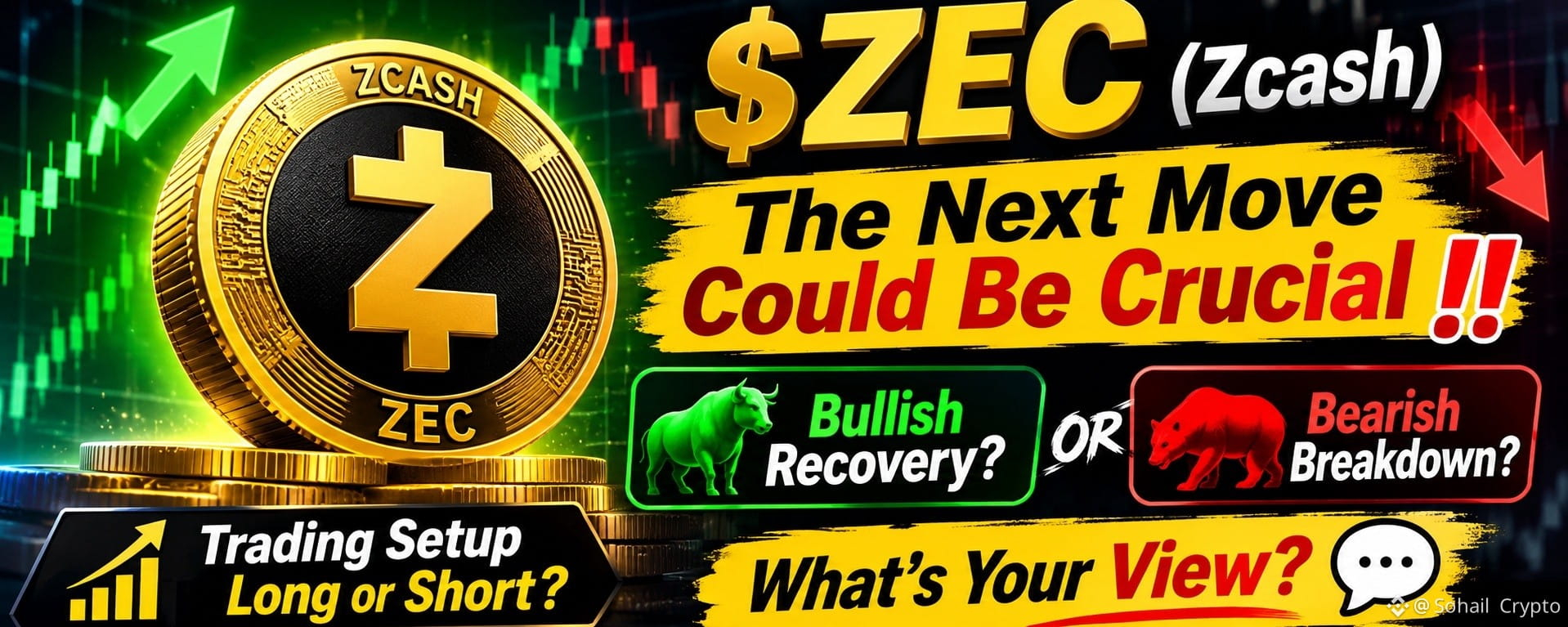
$ZEC (Zcash): The Next Move Could Be Crucial 👀ZEC is facing a critical moment after a sharp market correction. Traders are watching closely to see whether buyers can step in and create a meaningful recovery, or if selling pressure continues.
The opportunity is not in guessing the bottom — it’s in waiting for confirmation.
🟢 Bullish Scenario: A strong recovery with volume could bring buyers back and open the door for a relief bounce.
🔴 Bearish Scenario: If support fails to hold, further downside pressure may follow.
Trading Setup • Long: Only after a confirmed reclaim with strong volume. • Short: If support breaks and selling volume increases. • Risk: Avoid chasing sudden moves.
The next move could reward patience more than prediction.
What’s your view on ZEC — recovery from here, or another leg down? 👇
⚠️ Trading Disclaimer: This is for educational purposes only, not financial advice. Always do your own research and manage risk before trading.
#ZEC
{spot}(ZECUSDT)
#Crypto #BinanceSquare
$ZEC (Zcash): The Next Move Could Be Crucial 👀
ZEC is facing a critical moment after a sharp market correction. Traders are watching closely to see whether buyers can step in and create a meaningful recovery, or if selling pressure continues.
The opportunity is not in guessing the bottom — it’s in waiting for confirmation.
🟢 Bullish Scenario: A strong recovery with volume could bring buyers back and open the door for a relief bounce.
🔴 Bearish Scenario: If support fails to hold, further downside pressure may follow.
Trading Setup • Long: Only after a confirmed reclaim with strong volume. • Short: If support breaks and selling volume increases. • Risk: Avoid chasing sudden moves.
The next move could reward patience more than prediction.
What’s your view on ZEC — recovery from here, or another leg down? 👇
⚠️ Trading Disclaimer: This is for educational purposes only, not financial advice. Always do your own research and manage risk before trading.
#ZEC
#Crypto #BinanceSquare
354

·
--
Bearish
$XRP HOLDERS
🤔 DON'T FOCUS ONLY ON THE PRICE‼️
😲 The biggest mistake in crypto is making decisions based on emotions instead of understanding the market.
✴️ Before making any move on $XRP, keep these 4 important signals in mind:
🐋 Whale Activity: Monitor large transactions, but remember that transfers don't always mean buying or selling.
📊 Trading Volume: Increasing volume can support a price move, but direction matters.
🛡️ Key Support: Watch whether buyers are defending important price levels.
🚀 Breakout Confirmation: Don't trust every green candle. Wait for a strong close above resistance with supporting volume.
$XRP
{spot}(XRPUSDT)
⚠️ Remember: A sudden pump doesn't guarantee a long-term rally, and a temporary dip doesn't automatically mean the project is finished.
🧠 Smart investors focus on risk management, research, and patience not FOMO.
What do you think? Is $XRP preparing for a stronger recovery, or does the market need more confirmation?
#XRP #Ripple #CryptoEducation #BinanceSquare
$XRP HOLDERS
🤔 DON'T FOCUS ONLY ON THE PRICE‼️
😲 The biggest mistake in crypto is making decisions based on emotions instead of understanding the market.
✴️ Before making any move on $XRP , keep these 4 important signals in mind:
🐋 Whale Activity: Monitor large transactions, but remember that transfers don't always mean buying or selling.
📊 Trading Volume: Increasing volume can support a price move, but direction matters.
🛡️ Key Support: Watch whether buyers are defending important price levels.
🚀 Breakout Confirmation: Don't trust every green candle. Wait for a strong close above resistance with supporting volume.
$XRP
⚠️ Remember: A sudden pump doesn't guarantee a long-term rally, and a temporary dip doesn't automatically mean the project is finished.
🧠 Smart investors focus on risk management, research, and patience not FOMO.
What do you think? Is $XRP preparing for a stronger recovery, or does the market need more confirmation?
#XRP #Ripple #CryptoEducation #BinanceSquare
1
451

BTC just crashed below $56,000. The bloodbath is real. 🩸
The market just handed out a massive liquidation event. Here is the brutal reality before you click buy:
{future}(BTCUSDT)
🔴 $BTC ($55.8K)**: The floor just caved in. Billions in longs got wiped.
🔴 $SOL ($65): The crowded boat just sank. Longs are getting destroyed.
{future}(SOLUSDT)
{future}(ETHUSDT)
This is extreme fear at its peak. Do not try to catch this falling knife with high leverage.
What is the play right now? 🤔
Drop your targets below! 👇
$ETH #BinanceSquare #crypto #FuturesTrading
BTC just crashed below $56,000. The bloodbath is real. 🩸
The market just handed out a massive liquidation event. Here is the brutal reality before you click buy:
🔴 $BTC ($55.8K)**: The floor just caved in. Billions in longs got wiped.
🔴 $SOL ($65): The crowded boat just sank. Longs are getting destroyed.
This is extreme fear at its peak. Do not try to catch this falling knife with high leverage.
What is the play right now? 🤔
Drop your targets below! 👇
$ETH #BinanceSquare #crypto #FuturesTrading
🟢 Buying the blood 🩸
🔴 Waiting for lower 📉
8 min(s) left
3
2
2.1k

·
--
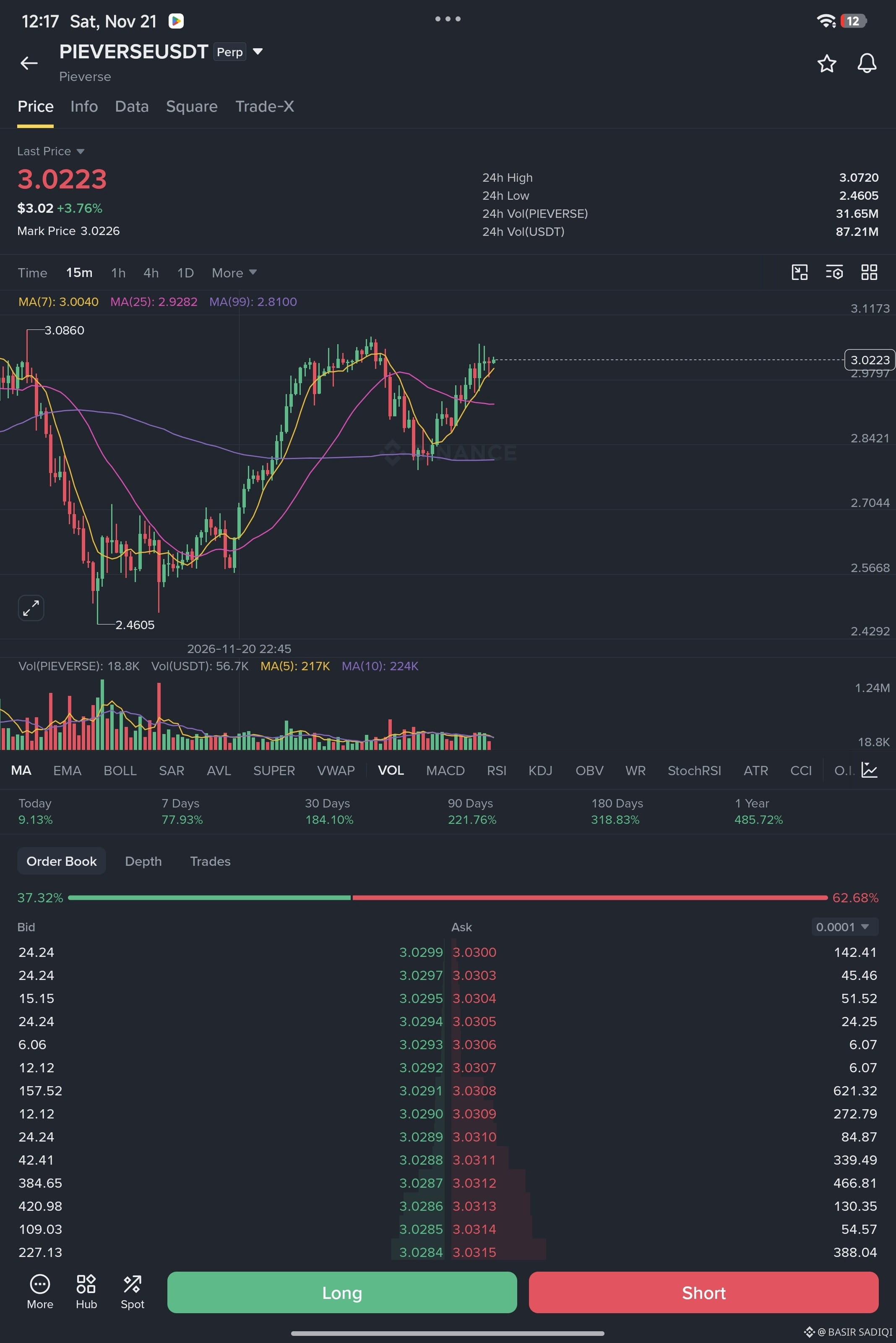
🌐 Could $PIEVERSE be one to watch?
🌐 $PIEVERSE
I'm curious to see how this project grows and what new developments are coming. The next chapter could be interesting! 👀
#PIEVERSE #Crypto #BinanceSquare
🌐 Could $PIEVERSE be one to watch?
🌐 $PIEVERSE
I'm curious to see how this project grows and what new developments are coming. The next chapter could be interesting! 👀
#PIEVERSE #Crypto #BinanceSquare
🌐 $PIEVERSE
I'm curious to see how this project grows and what new developments are coming. The next chapter could be interesting! 👀
#PIEVERSE #Crypto #BinanceSquare
1
5
466

·
--
Bullish
WATCH — $HYPE
{spot}(HYPEUSDT)
Dropped hard from 66 to 55.8 and still stuck below key MAs, so bears are in control.
55.8 is the line to watch. Bounce or breakdown from here?
#HYPE #BinanceSquare
WATCH — $HYPE
Dropped hard from 66 to 55.8 and still stuck below key MAs, so bears are in control.
55.8 is the line to watch. Bounce or breakdown from here?
#HYPE #BinanceSquare
Dropped hard from 66 to 55.8 and still stuck below key MAs, so bears are in control.
55.8 is the line to watch. Bounce or breakdown from here?
#HYPE #BinanceSquare
1
409
·
--
$KERNEL is on my watchlist $KERNEL
$KERNEL
I'm keeping an eye on its market activity. Let's see what happens next!
#KERNEL #Crypto #BinanceSquare
$KERNEL is on my watchlist $KERNEL
$KERNEL
I'm keeping an eye on its market activity. Let's see what happens next!
#KERNEL #Crypto #BinanceSquare
$KERNEL
I'm keeping an eye on its market activity. Let's see what happens next!
#KERNEL #Crypto #BinanceSquare

KYFKON:
🌟 SUBHAN ALLAH 🌟 JAZAK ALLAH 🌟
1
10
379

·
--
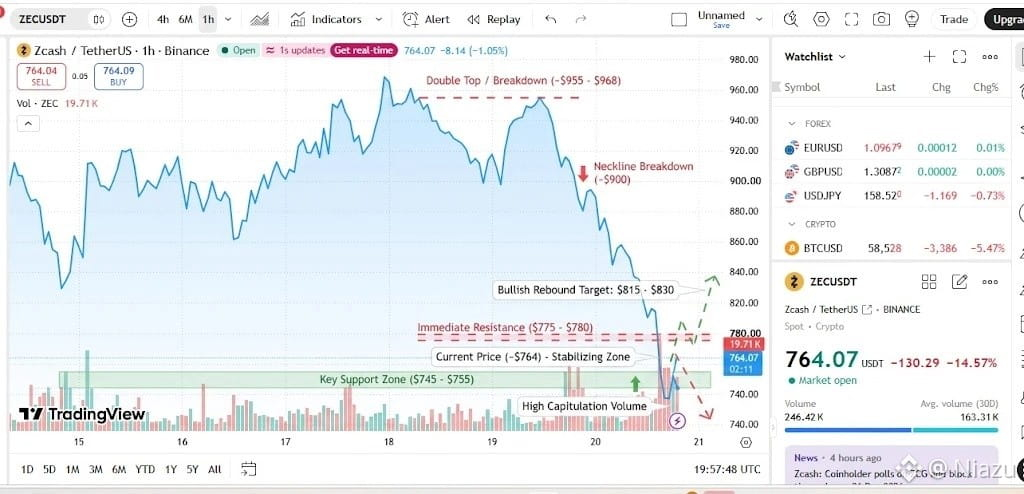
$ZEC — POST-FLUSH BOUNCE: CAN BUYERS HOLD $750?
ZEC/USDT is around $764, down 14.57% on the day. After a double-top breakdown from $955 and a sharp flush toward $745–$750, price is attempting to stabilize while BTC remains weak.
My trading map
- Bullish scenario: Buyers defend $750–$755 as a higher low, then break above $775–$780 with expanding green volume. A successful retest could target $815–$830.
- Bearish scenario: A 1H close below $755 with rising red volume, followed by a failed retest, could open a second test of $745–$750. Losing $745 may extend toward $720.
- Invalidation: A 1H close below $745 confirms another bearish leg; reclaiming $830 would be needed to challenge the broader bearish structure.
My take
This is a post-capitulation relief bounce, not a confirmed reversal. The green absorption near $750 is constructive, but follow-through is still fragile and BTC weakness remains a major risk.
I’m not chasing a long in the middle of the $745–$775 chop or shorting directly into the capitulation low. I need a clean 1H higher low above $750 and a break/retest of $775, or a confirmed breakdown and retest below $745.
Any setup must offer at least 1.5R to the next meaningful level after fees and slippage.
Levels are approximate—confirm with candlesticks.
Status: watchlist
$ZEC #Zcash #CryptoTrading #BinanceSquare
Sidra Sami:
Any chances to bounce back to 1600 in future?
2
1
1.2k

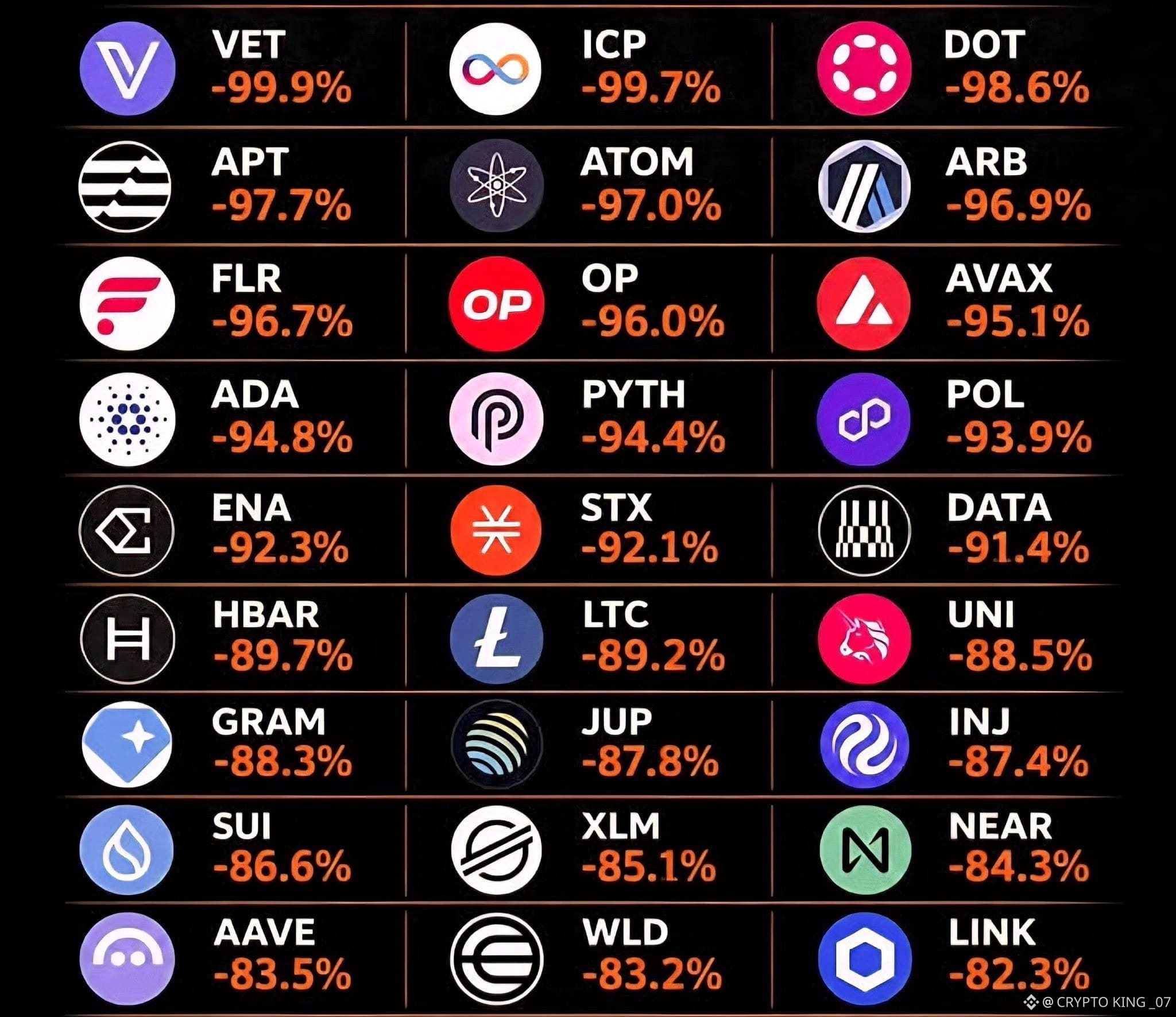
🚨 Many altcoins are facing a serious reality check. Some projects have lost momentum, investor confidence, and long-term strength. 🩸
Coins like $AVAX , $GRAM , $SOL , $ APT, and others could struggle even more in the coming years. Not every altcoin will survive the next market cycle. Choose wisely and don't blindly hold every coin! ⚠️
#crypto #altcoins #CanBTCReboundAfterFallingBelow60K? #BinanceSquare
Coins like $AVAX , $GRAM , $SOL , $ APT, and others could struggle even more in the coming years. Not every altcoin will survive the next market cycle. Choose wisely and don't blindly hold every coin! ⚠️
#crypto #altcoins #CanBTCReboundAfterFallingBelow60K? #BinanceSquare
135
·
--
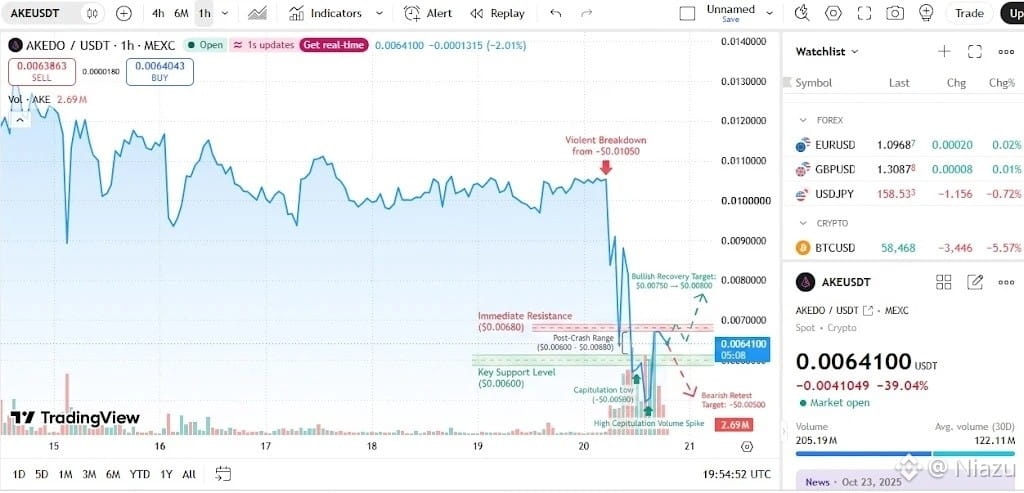
$AKE — POST-CRASH BOUNCE: CAN BUYERS HOLD $0.0060?
AKEDO/USDT is around $0.006410, down 39.04% on the day. After a violent breakdown from $0.01050 to $0.00500, price bounced sharply and is now trying to build a base between $0.0060 and $0.0068.
My trading map
- Bullish scenario: Buyers defend $0.0060 as a higher low, then break above $0.00680 with expanding green volume. A successful retest could target $0.00750–$0.00800.
- Bearish scenario: A 1H close below $0.0060 with rising red volume, followed by a failed retest, could open a second test of the $0.0050 capitulation low.
- Invalidation: Losing $0.0050 on a 1H closing basis puts price into uncharted downside territory.
My take
This is an extreme post-capitulation chart with very high volatility, wide spreads, and major overhead supply. I’m not chasing the bounce in the middle of the range.
I need a confirmed 1H higher low above $0.0060 and a clean break/retest of $0.00680 before considering a long. For a short, I need a rejected retest of $0.00680 with a structural stop above it.
Any setup must offer at least 1.5R to the next meaningful level after fees and slippage. Size down—liquidity risk is high.
Levels are approximate—confirm with candlesticks.
Status: watchlist
💬 Will AKE hold $0.0060, or retest $0.0050? Drop your view below 👇
$AKE #AKEDO #Altcoins #CryptoTrading #BinanceSquare
692

·
--
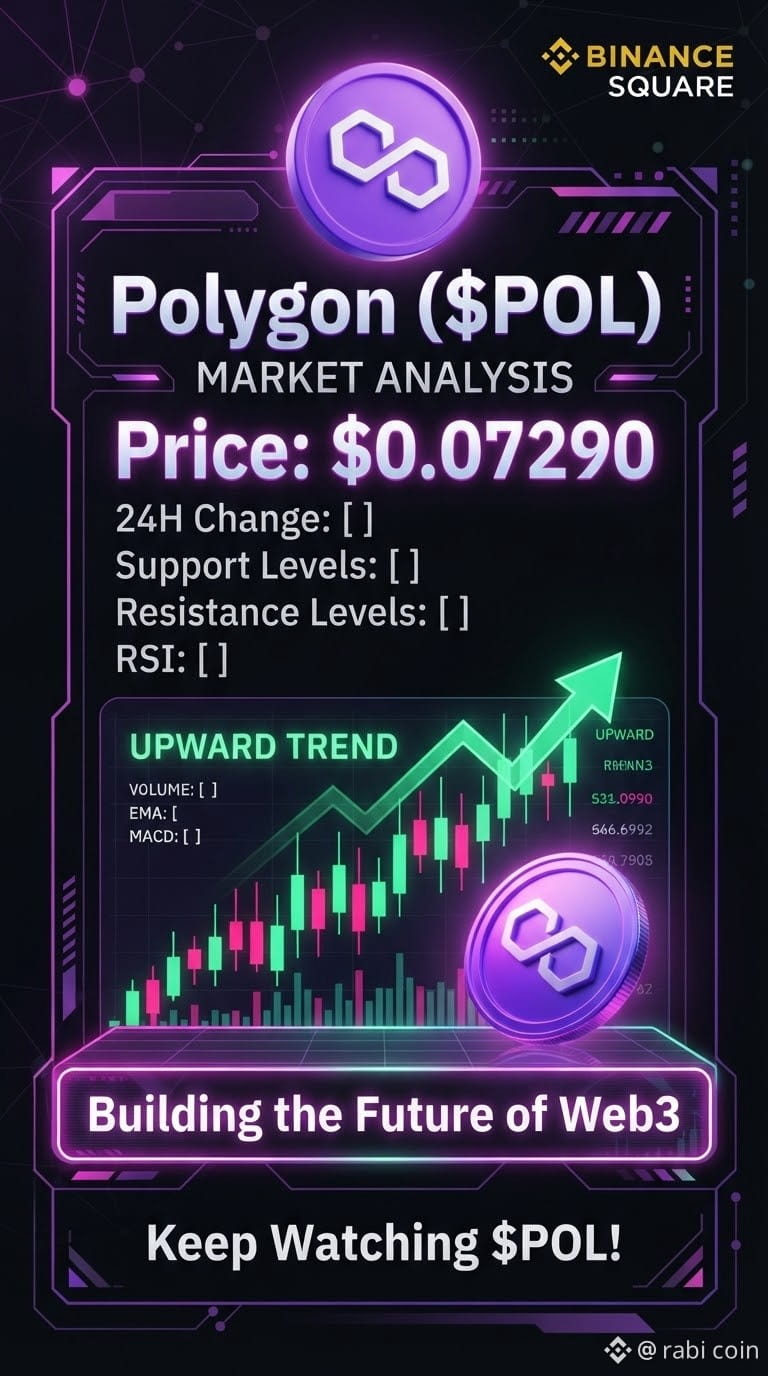
$POL Is Under Pressure – Is This the Right Time to Buy?
Polygon (POL) is facing selling pressure as the broader crypto market continues to struggle.
Latest Market Update:
🔹 Current Price: $0.07627
🔹 24H Change: -4.34%
🔹 7-Day Change: -9.89%
🔹 Market Cap: Around $810 Million
Important Price Levels:
🟢 Support: $0.0741
🔴 Resistance: $0.0766
🔴 Next Resistance: $0.0795
My Trading Strategy:
POL is showing weak momentum, with its daily RSI around 34. I don't see a confirmed bullish reversal yet.
My approach:
• Avoid rushing into a buy.
• Watch how price reacts near $0.0741.
• A daily close above $0.0766 could improve the recovery outlook.
• If support breaks, further downside is possible.
So, should you buy POL now?
For me, waiting for confirmation looks safer than entering blindly. Long-term investors may consider gradual accumulation according to their risk tolerance.
What is your opinion? Is POL preparing for a recovery or another drop? 👀
$POL #Polygon #CryptoTrading #Altcoins #BinanceSquare
103
·
--
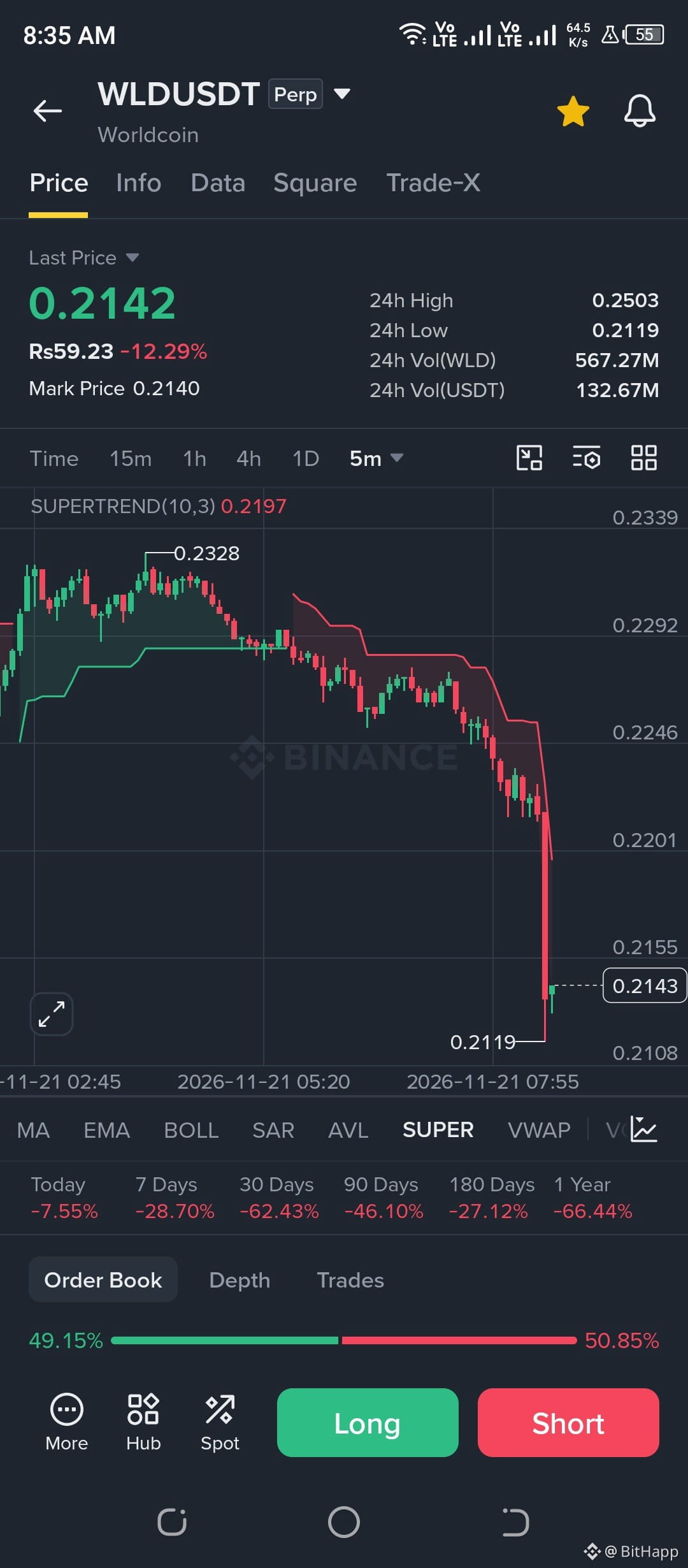
🚨 WLD/USDT — Sudden Crash!
$WLD just suffered a sharp sell-off, dropping to $0.2142 after losing key support levels. Selling pressure remains strong, and volatility is extremely high.
⚠️ Don't rush into buying the dip. Wait for stabilization and confirmation.
Capital protection comes first.
#WLD #Crypto #BinanceSquare
$WLD just suffered a sharp sell-off, dropping to $0.2142 after losing key support levels. Selling pressure remains strong, and volatility is extremely high.
⚠️ Don't rush into buying the dip. Wait for stabilization and confirmation.
Capital protection comes first.
#WLD #Crypto #BinanceSquare
4
127

·
--
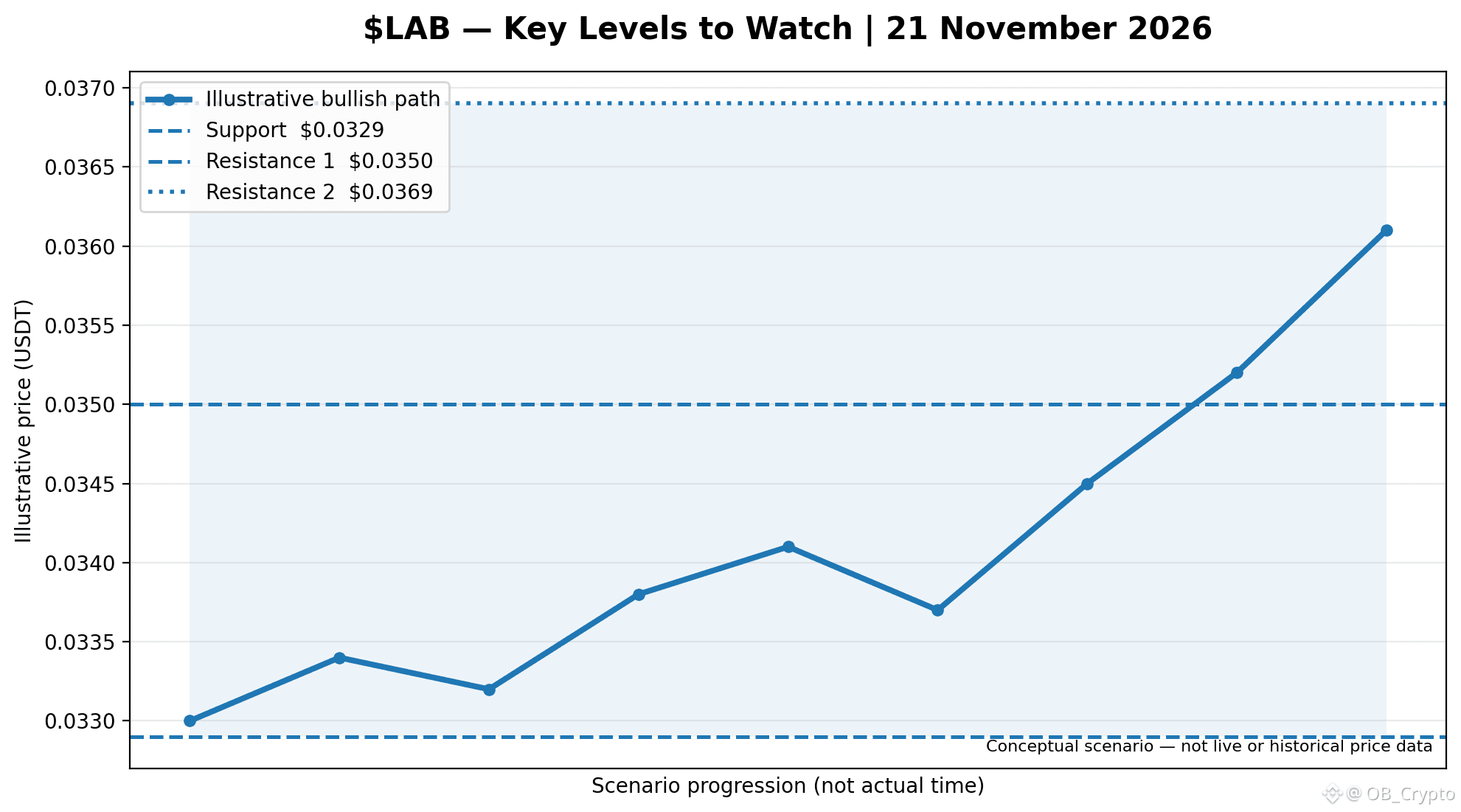
🚨 $LAB – Key Levels to Watch
{alpha}(560x7ec43cf65f1663f820427c62a5780b8f2e25593a)
$LAB is testing an important support zone near $0.0329.
📈 Bullish: A breakout above $0.0350 could push price toward $0.0369.
📉 Bearish: Losing $0.0329 may trigger further downside.
🎯 Watch volume and wait for confirmation before entering.
💬 Can $LAB make a strong comeback?
⚠️ DYOR. Manage your risk.
#Labs #CryptoAnalysis #ALTCOİNS #BinanceSquare
🚨 $LAB – Key Levels to Watch
$LAB is testing an important support zone near $0.0329.
📈 Bullish: A breakout above $0.0350 could push price toward $0.0369.
📉 Bearish: Losing $0.0329 may trigger further downside.
🎯 Watch volume and wait for confirmation before entering.
💬 Can $LAB make a strong comeback?
⚠️ DYOR. Manage your risk.
#Labs #CryptoAnalysis #ALTCOİNS #BinanceSquare
1
1.1k
·
--
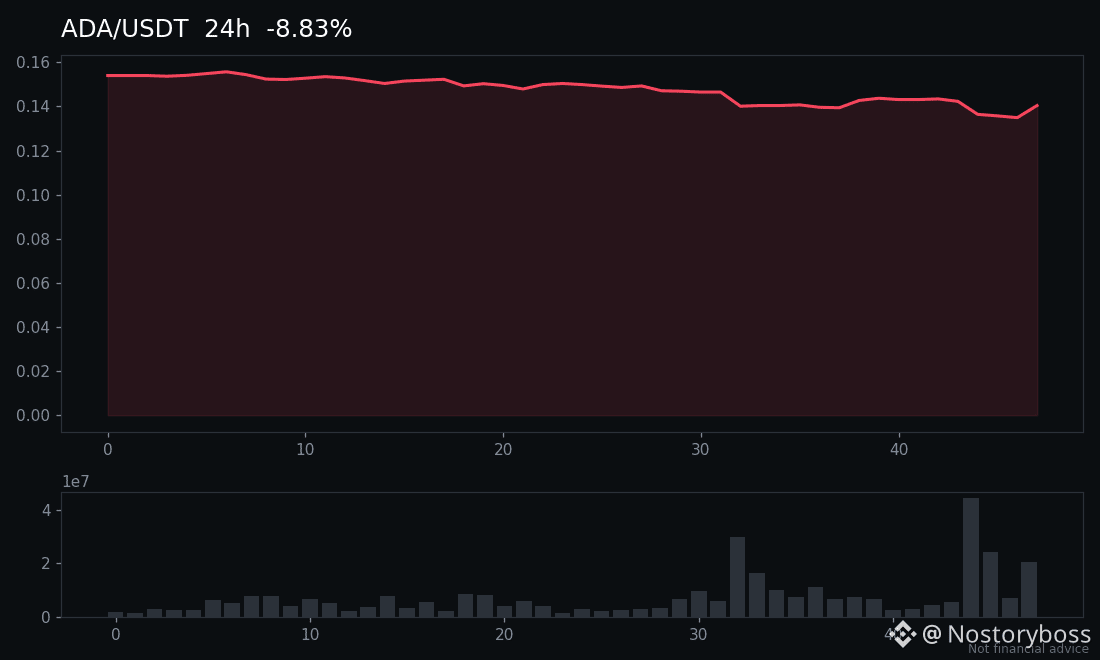
Seven years building in Web3 has taught me that a 6.5% red day on $ADA says more about the market's mood than the chain itself. Over $34m in volume, price sitting near $0.14, and the same lesson repeats: the builders who kept shipping through 2019's quiet months are the ones still standing. Cardano's ecosystem keeps moving whether the chart is green or not. #Cardano #Crypto #BinanceSquare
Not financial advice.
Not financial advice.
118

·
--

Article
Monero (XMR): The Future of Financial Privacy — What's Coming in 2027?Monero (XMR) remains one of the most recognized privacy-focused cryptocurrencies in the digital asset industry.
While many blockchain networks make transaction information publicly visible, Monero takes a different approach by protecting the financial privacy of its users by default.
Its technology is designed to conceal transaction senders, recipients, and transferred amounts while still allowing the network to verify transactions.
As digital finance continues to evolve, privacy and financial security are becoming increasingly important.
In 2026, Monero developers are working on several major improvements, including FCMP++, Carrot, and the development of a new Rust-based node implementation called Cuprate.
These initiatives could represent an important step in Monero's evolution toward 2027.
1. Understanding Monero (XMR)
Monero is a decentralized cryptocurrency launched in 2014.
Its primary objective is to provide private, secure, and censorship-resistant digital payments.
Unlike transparent blockchains, Monero makes transaction privacy the default rather than an optional feature.
Its native cryptocurrency, XMR, is used for:
Private digital payments.Peer-to-peer value transfers.Network transaction fees.Supporting decentralized financial activity.Payments between individuals and businesses.
Monero uses Proof of Work consensus and the RandomX mining algorithm, which is designed to make mining more accessible using general-purpose computer hardware.
2. Monero's Privacy Technology
Monero uses several cryptographic technologies to protect transaction information.
A. Ring Signatures
Ring signatures help conceal the real sender among a group of possible transaction signers.
B. Stealth Addresses
Stealth addresses generate unique destination addresses for individual transactions, helping protect the recipient's public address.
C. Ring Confidential Transactions (RingCT)
RingCT hides transaction amounts while allowing the network to verify that transactions are valid.
D. Dandelion++
This transaction propagation mechanism helps make it more difficult to identify the original source of a transaction through network observation.
Together, these technologies provide Monero with its distinctive privacy architecture.
3. FCMP++: Monero's Biggest Upcoming Privacy Upgrade
One of the most important developments is Full-Chain Membership Proofs (FCMP++).
This upgrade is designed to replace Monero's current ring-based membership proofs with a system that can use the entire blockchain's output set as the anonymity set.
The potential benefits include:
A significantly larger anonymity set.Stronger sender privacy.Improved transaction privacy architecture.Greater flexibility for future cryptographic improvements.
As of November 2026, FCMP++ is undergoing public testing through its beta stressnet.
The latest beta stressnet v3.1 was released on October 26, 2026, following fixes identified during testing.
Importantly, FCMP++ is not yet active on Monero Mainnet, and no official activation date has been announced.
This is a major development to watch in 2027, but security reviews, audits, and network testing must be completed before deployment.
4. Carrot: Improving Monero's Address Privacy
Another important project is Carrot.
Carrot is a proposed addressing protocol designed to improve Monero's privacy and wallet functionality.
Its development is closely connected to the broader FCMP++ upgrade.
Potential improvements include:
More flexible address structures.Better privacy protections.Improved wallet functionality.Greater flexibility for future cryptographic development.
Carrot is still under development and should not be considered a fully deployed Mainnet feature.
Its successful implementation could strengthen Monero's privacy infrastructure.
5. Cuprate: A New Rust-Based Monero Node
Monero's development community is also working on Cuprate.
Cuprate is an alternative implementation of Monero's node software written in Rust.
Why is this important?
A blockchain ecosystem can benefit from having multiple independent node implementations instead of depending entirely on a single software codebase.
Cuprate aims to improve:
Software diversity.Node performance.Maintainability.Network resilience.Developer accessibility.
In the long term, alternative node implementations could help strengthen Monero's infrastructure and reduce dependence on a single implementation.
6. Monero's Network-Level Privacy Improvements
Another development worth watching is improved transaction propagation privacy.
On November 13, 2026, a proposal was introduced to improve the handling of transactions received through Tor and I2P.
The proposed mechanism introduces randomized delays before transactions are relayed through the public network.
Its purpose is to make it more difficult for observers to correlate the timing of a private-network transaction with its appearance on the public Monero network.
As of November 2026, the proposal remains under review.
If implemented, it could provide another layer of protection for users who rely on Tor and I2P.
7. What Is Monero Planning for 2027?
Several important development areas could shape Monero's future.
A. FCMP++ Deployment
The most anticipated development is the potential activation of FCMP++ following successful testing, auditing, and community consensus.
B. Carrot Integration
Developers are continuing work on addressing technology intended to improve privacy and wallet functionality.
C. Seraphis Development
Seraphis is a proposed next-generation transaction protocol that aims to provide greater flexibility and improved privacy functionality.
It remains a longer-term research and development initiative.
D. Cuprate Expansion
The Rust-based node implementation could continue improving and expanding its capabilities.
E. Quantum-Related Research
Developers are exploring cryptographic approaches that could help protect Monero against potential future quantum-computing threats.
These are development directions rather than guaranteed release dates.
8. Monero Tokenomics: Understanding XMR Supply
Unlike Bitcoin, which has a strict maximum supply of 21 million coins, Monero uses a tail emission model.
After its main emission schedule reached the tail-emission phase in 2022, Monero began issuing a permanent block reward of approximately 0.6 XMR per block.
This mechanism is designed to provide miners with a continuing incentive to secure the network.
The main objectives include:
Maintaining long-term mining incentives.Supporting network security.Reducing dependence on transaction fees alone.Providing predictable ongoing issuance.
This creates a different monetary model from Bitcoin's fixed maximum supply.
9. Challenges Monero Must Overcome
Despite its technological strengths, Monero faces several challenges.
Regulatory Pressure: Privacy-focused cryptocurrencies face additional scrutiny in some jurisdictions.
Exchange Accessibility: Some centralized exchanges have restricted or removed XMR trading due to regulatory and compliance considerations.
Technical Complexity: Advanced cryptographic upgrades require extensive testing and security audits.
Mining Decentralization: Maintaining accessible mining infrastructure remains important for network security.
Competition: Other privacy-focused projects are also developing advanced cryptographic technologies.
Monero's ability to address these challenges will be important for its long-term sustainability.
Final Thoughts: Monero Is Defending the Future of Financial Privacy
Monero represents an important philosophy in the cryptocurrency industry: financial privacy should be a fundamental part of digital money.
Its ongoing development demonstrates that the project is not standing still.
FCMP++, Carrot, Cuprate, and continued privacy research could introduce significant improvements to the Monero ecosystem over the coming years.
Looking toward 2027, the most important milestone to watch is the potential transition of FCMP++ from public testing toward Mainnet readiness.
If these developments are successfully implemented, Monero could strengthen its position as one of the leading privacy-focused cryptocurrencies.
The future of XMR will depend on technological innovation, security, decentralization, and continued community participation.
XMR — Privacy. Security. Digital Freedom.
AMCx | Exploring the Future of Crypto.
#Monero #XMR #Privacy #Blockchain #Crypto #FCMP #FCMPPlusPlus #Decentralization #Web3 #BinanceSquare #AMCx $XMR
{future}(XMRUSDT)
Monero (XMR): The Future of Financial Privacy — What's Coming in 2027?
Monero (XMR) remains one of the most recognized privacy-focused cryptocurrencies in the digital asset industry.
While many blockchain networks make transaction information publicly visible, Monero takes a different approach by protecting the financial privacy of its users by default.
Its technology is designed to conceal transaction senders, recipients, and transferred amounts while still allowing the network to verify transactions.
As digital finance continues to evolve, privacy and financial security are becoming increasingly important.
In 2026, Monero developers are working on several major improvements, including FCMP++, Carrot, and the development of a new Rust-based node implementation called Cuprate.
These initiatives could represent an important step in Monero's evolution toward 2027.
1. Understanding Monero (XMR)
Monero is a decentralized cryptocurrency launched in 2014.
Its primary objective is to provide private, secure, and censorship-resistant digital payments.
Unlike transparent blockchains, Monero makes transaction privacy the default rather than an optional feature.
Its native cryptocurrency, XMR, is used for:
Private digital payments.Peer-to-peer value transfers.Network transaction fees.Supporting decentralized financial activity.Payments between individuals and businesses.
Monero uses Proof of Work consensus and the RandomX mining algorithm, which is designed to make mining more accessible using general-purpose computer hardware.
2. Monero's Privacy Technology
Monero uses several cryptographic technologies to protect transaction information.
A. Ring Signatures
Ring signatures help conceal the real sender among a group of possible transaction signers.
B. Stealth Addresses
Stealth addresses generate unique destination addresses for individual transactions, helping protect the recipient's public address.
C. Ring Confidential Transactions (RingCT)
RingCT hides transaction amounts while allowing the network to verify that transactions are valid.
D. Dandelion++
This transaction propagation mechanism helps make it more difficult to identify the original source of a transaction through network observation.
Together, these technologies provide Monero with its distinctive privacy architecture.
3. FCMP++: Monero's Biggest Upcoming Privacy Upgrade
One of the most important developments is Full-Chain Membership Proofs (FCMP++).
This upgrade is designed to replace Monero's current ring-based membership proofs with a system that can use the entire blockchain's output set as the anonymity set.
The potential benefits include:
A significantly larger anonymity set.Stronger sender privacy.Improved transaction privacy architecture.Greater flexibility for future cryptographic improvements.
As of November 2026, FCMP++ is undergoing public testing through its beta stressnet.
The latest beta stressnet v3.1 was released on October 26, 2026, following fixes identified during testing.
Importantly, FCMP++ is not yet active on Monero Mainnet, and no official activation date has been announced.
This is a major development to watch in 2027, but security reviews, audits, and network testing must be completed before deployment.
4. Carrot: Improving Monero's Address Privacy
Another important project is Carrot.
Carrot is a proposed addressing protocol designed to improve Monero's privacy and wallet functionality.
Its development is closely connected to the broader FCMP++ upgrade.
Potential improvements include:
More flexible address structures.Better privacy protections.Improved wallet functionality.Greater flexibility for future cryptographic development.
Carrot is still under development and should not be considered a fully deployed Mainnet feature.
Its successful implementation could strengthen Monero's privacy infrastructure.
5. Cuprate: A New Rust-Based Monero Node
Monero's development community is also working on Cuprate.
Cuprate is an alternative implementation of Monero's node software written in Rust.
Why is this important?
A blockchain ecosystem can benefit from having multiple independent node implementations instead of depending entirely on a single software codebase.
Cuprate aims to improve:
Software diversity.Node performance.Maintainability.Network resilience.Developer accessibility.
In the long term, alternative node implementations could help strengthen Monero's infrastructure and reduce dependence on a single implementation.
6. Monero's Network-Level Privacy Improvements
Another development worth watching is improved transaction propagation privacy.
On November 13, 2026, a proposal was introduced to improve the handling of transactions received through Tor and I2P.
The proposed mechanism introduces randomized delays before transactions are relayed through the public network.
Its purpose is to make it more difficult for observers to correlate the timing of a private-network transaction with its appearance on the public Monero network.
As of November 2026, the proposal remains under review.
If implemented, it could provide another layer of protection for users who rely on Tor and I2P.
7. What Is Monero Planning for 2027?
Several important development areas could shape Monero's future.
A. FCMP++ Deployment
The most anticipated development is the potential activation of FCMP++ following successful testing, auditing, and community consensus.
B. Carrot Integration
Developers are continuing work on addressing technology intended to improve privacy and wallet functionality.
C. Seraphis Development
Seraphis is a proposed next-generation transaction protocol that aims to provide greater flexibility and improved privacy functionality.
It remains a longer-term research and development initiative.
D. Cuprate Expansion
The Rust-based node implementation could continue improving and expanding its capabilities.
E. Quantum-Related Research
Developers are exploring cryptographic approaches that could help protect Monero against potential future quantum-computing threats.
These are development directions rather than guaranteed release dates.
8. Monero Tokenomics: Understanding XMR Supply
Unlike Bitcoin, which has a strict maximum supply of 21 million coins, Monero uses a tail emission model.
After its main emission schedule reached the tail-emission phase in 2022, Monero began issuing a permanent block reward of approximately 0.6 XMR per block.
This mechanism is designed to provide miners with a continuing incentive to secure the network.
The main objectives include:
Maintaining long-term mining incentives.Supporting network security.Reducing dependence on transaction fees alone.Providing predictable ongoing issuance.
This creates a different monetary model from Bitcoin's fixed maximum supply.
9. Challenges Monero Must Overcome
Despite its technological strengths, Monero faces several challenges.
Regulatory Pressure: Privacy-focused cryptocurrencies face additional scrutiny in some jurisdictions.
Exchange Accessibility: Some centralized exchanges have restricted or removed XMR trading due to regulatory and compliance considerations.
Technical Complexity: Advanced cryptographic upgrades require extensive testing and security audits.
Mining Decentralization: Maintaining accessible mining infrastructure remains important for network security.
Competition: Other privacy-focused projects are also developing advanced cryptographic technologies.
Monero's ability to address these challenges will be important for its long-term sustainability.
Final Thoughts: Monero Is Defending the Future of Financial Privacy
Monero represents an important philosophy in the cryptocurrency industry: financial privacy should be a fundamental part of digital money.
Its ongoing development demonstrates that the project is not standing still.
FCMP++, Carrot, Cuprate, and continued privacy research could introduce significant improvements to the Monero ecosystem over the coming years.
Looking toward 2027, the most important milestone to watch is the potential transition of FCMP++ from public testing toward Mainnet readiness.
If these developments are successfully implemented, Monero could strengthen its position as one of the leading privacy-focused cryptocurrencies.
The future of XMR will depend on technological innovation, security, decentralization, and continued community participation.
XMR — Privacy. Security. Digital Freedom.
AMCx | Exploring the Future of Crypto.
#Monero #XMR #Privacy #Blockchain #Crypto #FCMP #FCMPPlusPlus #Decentralization #Web3 #BinanceSquare #AMCx $XMR
1
156
·
--
Bullish
DIP BUY? — $TRUMP
{spot}(TRUMPUSDT)
🟢 LONG
Entry: $0.815 – $0.825
TP1: $0.850 | TP2: $0.880
SL: $0.790
S: $0.800 | R: $0.859
Ready for a bounce?
#TRUMP #BinanceSquare #SpotTrading
DIP BUY? — $TRUMP
🟢 LONG
Entry: $0.815 – $0.825
TP1: $0.850 | TP2: $0.880
SL: $0.790
S: $0.800 | R: $0.859
Ready for a bounce?
#TRUMP #BinanceSquare #SpotTrading
🟢 LONG
Entry: $0.815 – $0.825
TP1: $0.850 | TP2: $0.880
SL: $0.790
S: $0.800 | R: $0.859
Ready for a bounce?
#TRUMP #BinanceSquare #SpotTrading
200

·
--
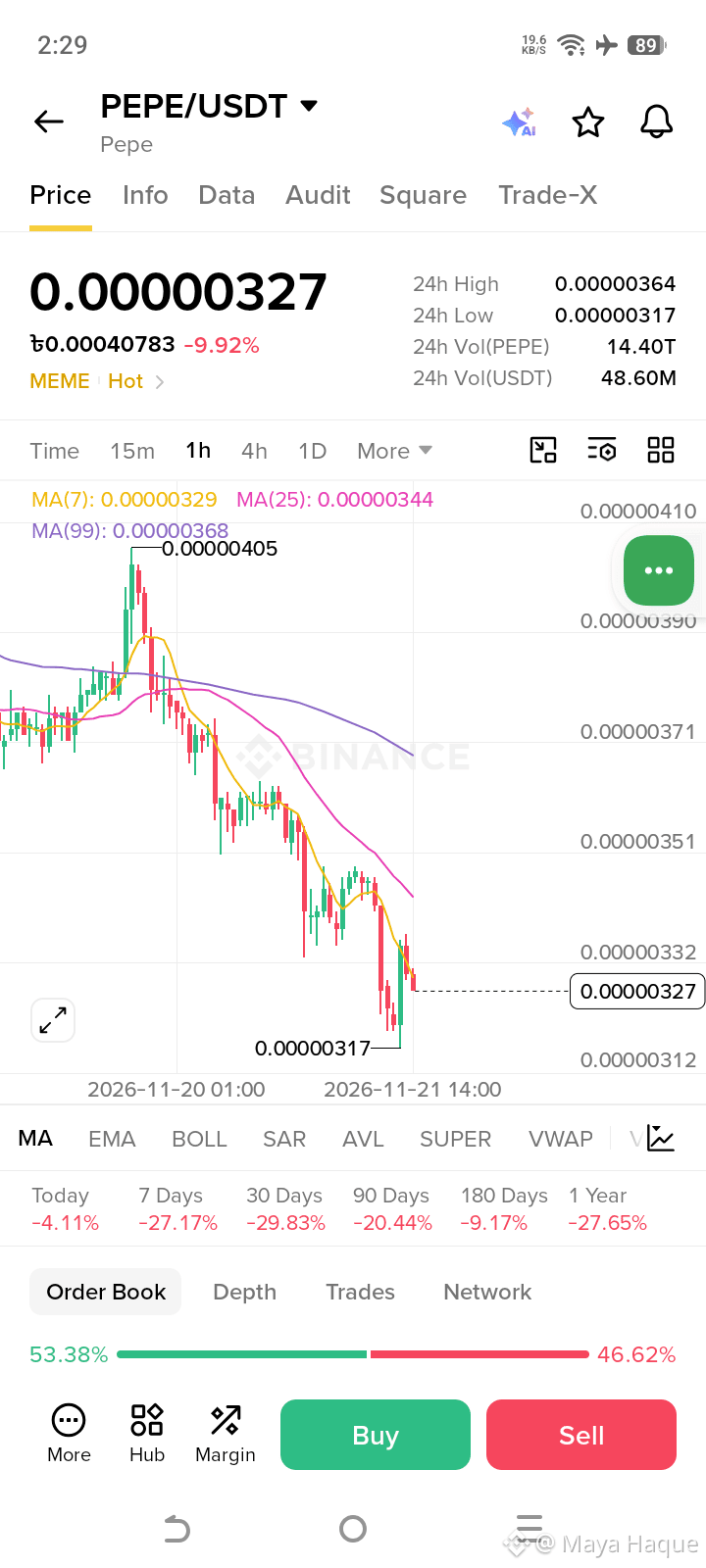
🐸 $PEPE Buying Opportunity? 🚀
PEPE has dropped nearly 10% in the last 24 hours, bringing its price down to around $0.00000327.
Could this dip be an opportunity for buyers looking to enter at a lower price?
📊 My watch levels:
- Potential support: $0.00000317
- Current price: $0.00000327
- Resistance: $0.00000344
I'm watching #PEPE closely for a possible recovery. However, confirmation of a bullish reversal is important before making any move.
💬 Are you buying this dip or waiting for further confirmation?
{spot}(PEPEUSDT)
#PEPE #BinanceSquare #Crypto #BuyTheDip
🐸 $PEPE Buying Opportunity? 🚀
PEPE has dropped nearly 10% in the last 24 hours, bringing its price down to around $0.00000327.
Could this dip be an opportunity for buyers looking to enter at a lower price?
📊 My watch levels:
- Potential support: $0.00000317
- Current price: $0.00000327
- Resistance: $0.00000344
I'm watching #PEPE closely for a possible recovery. However, confirmation of a bullish reversal is important before making any move.
💬 Are you buying this dip or waiting for further confirmation?
#PEPE #BinanceSquare #Crypto #BuyTheDip

2
111

$BTC Under Heavy Selling Pressure – Is $56,000 the Next Target or Are We Near a Rebound?
Bitcoin is showing significant weakness, currently trading around $57,020, down more than 8% in the last 24 hours.
Looking at the 1-hour chart, the bearish momentum is becoming stronger. BTC has broken below several important moving averages, with MA(7) at $58,661, MA(25) at $60,231 and MA(99) at $62,823. The Supertrend is also indicating a bearish market structure.
Another interesting signal is the order book, where sell-side pressure is around 76.26%, compared with only 23.74% on the buy side.
Key levels to watch:
- Immediate support: $56,800
- Next support: $56,000–$55,000
- First resistance: $58,000–$58,700
- Stronger resistance: $60,000–$60,200
My observation:
If BTC fails to hold the $56,800 support, further downside toward $55,000 cannot be ruled out. However, after such a sharp decline, a technical relief bounce is also possible.
For a meaningful recovery, BTC needs to reclaim $58,700 and eventually break above $60,000 with strong buying volume.
At this moment, the trend remains bearish, and catching a falling market can be risky.
What do you think? Is Bitcoin preparing for another leg down toward $55K, or could this be the beginning of a strong recovery?
#BTC #CryptoMarket #BinanceSquare #BTCUSDT
81
·
--
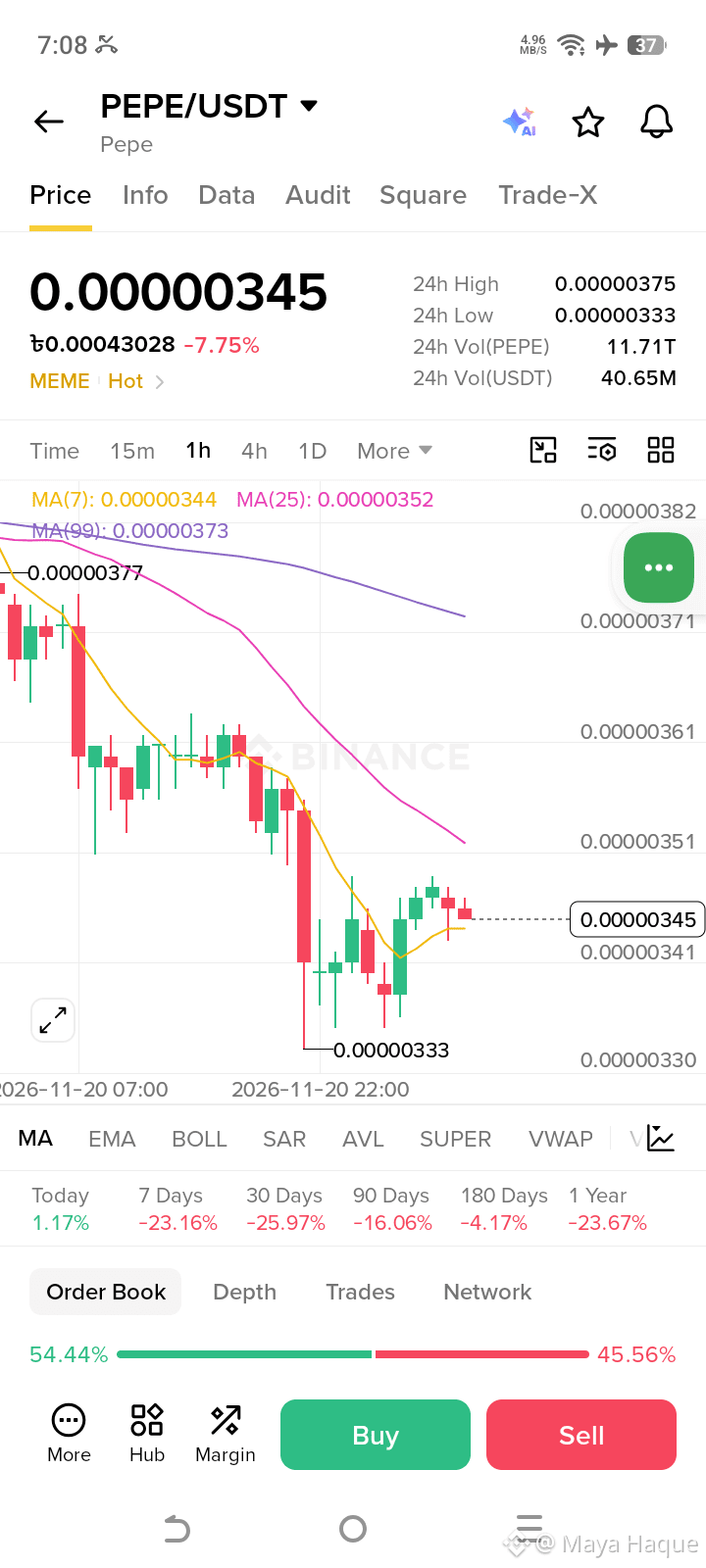
🐸 $PEPE /USDT – More Dip or Reversal? 📉
$PEPE is slowly moving downward, currently trading at $0.00000345 (-7.75%).
🔴 Support: $0.00000341 – $0.00000333 🟢 Resistance: $0.00000352 – $0.00000373
A breakdown below support could bring more downside, while a breakout above resistance may trigger a recovery. 🚀
What’s next for PEPE? More dip or a bullish reversal? 👀
{spot}(PEPEUSDT)
#PEPE #CryptoAnalysis #BinanceSquare
🐸 $PEPE /USDT – More Dip or Reversal? 📉
$PEPE is slowly moving downward, currently trading at $0.00000345 (-7.75%).
🔴 Support: $0.00000341 – $0.00000333 🟢 Resistance: $0.00000352 – $0.00000373
A breakdown below support could bring more downside, while a breakout above resistance may trigger a recovery. 🚀
What’s next for PEPE? More dip or a bullish reversal? 👀
#PEPE #CryptoAnalysis #BinanceSquare

Digital World Shine:
Maya good
4
6
480
·
--
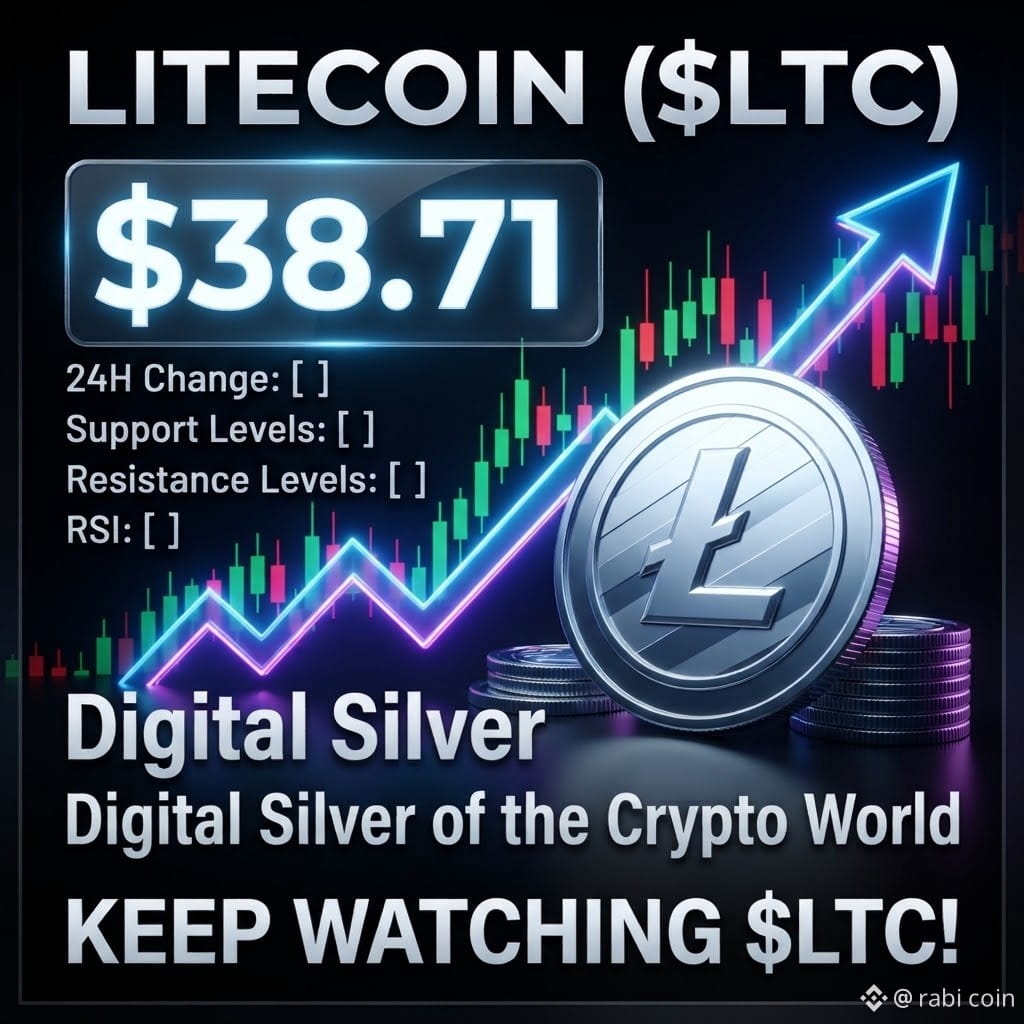
🚨 $LTC Is Near a Critical Support Zone – Buy or Wait?
Litecoin is facing strong selling pressure, and the current market situation deserves attention.
Latest Market Update:
🔹 Current Price: Around $40.50
🔹 24H Change: Around -4%
🔹 Daily RSI: 23.7 (Oversold)
🔹 Market Trend: Bearish
Important Price Levels:
Support: $38.66
Next Support: $37.85
Resistance: $41.23Next Resistance: $43.28
Why Is Litecoin Worth Watching?
🔹 Faster transaction confirmation than Bitcoin
🔹 Relatively low transaction fees
🔹 Established blockchain network
🔹 Useful for everyday crypto payments
My Strategy: BUY or WAIT?
I would prefer WAIT for now.
The RSI is in oversold territory, which means a relief bounce is possible, but it doesn't confirm a market bottom.
A daily close above $41.23 could be an early recovery signal. However, losing $39.66 may expose LTC to further downside.
📌 Don't rush into a trade. Watch the support level and manage your risk.
What do you think? Can Litecoin recover, or will we see another drop?
$LTC #Litecoin #CryptoTrading #Altcoins #BinanceSquare
{spot}(LTCUSDT)
🚨 $LTC Is Near a Critical Support Zone – Buy or Wait?
Litecoin is facing strong selling pressure, and the current market situation deserves attention.
Latest Market Update:
🔹 Current Price: Around $40.50
🔹 24H Change: Around -4%
🔹 Daily RSI: 23.7 (Oversold)
🔹 Market Trend: Bearish
Important Price Levels:
Support: $38.66
Next Support: $37.85
Resistance: $41.23Next Resistance: $43.28
Why Is Litecoin Worth Watching?
🔹 Faster transaction confirmation than Bitcoin
🔹 Relatively low transaction fees
🔹 Established blockchain network
🔹 Useful for everyday crypto payments
My Strategy: BUY or WAIT?
I would prefer WAIT for now.
The RSI is in oversold territory, which means a relief bounce is possible, but it doesn't confirm a market bottom.
A daily close above $41.23 could be an early recovery signal. However, losing $39.66 may expose LTC to further downside.
📌 Don't rush into a trade. Watch the support level and manage your risk.
What do you think? Can Litecoin recover, or will we see another drop?
$LTC #Litecoin #CryptoTrading #Altcoins #BinanceSquare
106
Log in to explore more content
Join global crypto users on Binance Square
⚡️ Get latest and useful information about crypto.
💬 Trusted by the world’s largest crypto exchange.
👍 Discover real insights from verified creators.
Email / Phone number
Trending Topics
1
#CanBTCReboundAfterFallingBelow60K?
355,715 views
1,482 Discussing
2
#GlobalStocksFaceLongestLosingStreakSince2023
115,684 views
1,050 Discussing
3
#BlackRockIBITPostsRecord$541MSingleDayOutflow
551 views
14 Discussing
4
#AnthropicPlungesTowardIPOPriceonDay2
56,610 views
564 Discussing
5
#TwentyOneCapitalAdds172.25BTC
8,795 views
138 Discussing
6
#HKBillWouldExcludeTokenizedDepositsFromVirtualAssets
766 views
13 Discussing
7
#BNBDropsBelow540USDTWith8.46%DailyDecline
30,205 views
247 Discussing
8
#HKBillProposesHK$100KFineForUnauthorizedCryptoTitles
999 views
14 Discussing
9
#BitMineFaces$10.1BUnrealizedETHLoss
1,955 views
18 Discussing
10
#StrategyReports$35BNetReserves
1,814 views
17 Discussing