
#apac
apac
36,894 views
66 Discussing
Hot
Latest

Regulatory requirements for stablecoin busines payment/ licensing in key APAC markets like SingaporeRegulatory requirements for stablecoin business payments and licensing in the Asia-Pacific (APAC) region have matured significantly, shifting away from generic crypto rules into tailored, institutional-grade compliance frameworks.
In key trade hubs like Singapore, regulatory compliance is bifurcated into two distinct operational layers: stablecoin issuance and Digital Payment Token (DPT) intermediary services (such as payment processing, exchange, and transfer services).
1. Singapore (MAS Framework & Licensing)
Singapore, under the Monetary Authority of Singapore (MAS), provides one of the clearest operational blueprints for stablecoin-backed cross-border payments via the Payment Services Act (PSA) and the Financial Services and Markets Act (FSMA).
Intermediary & Processing Licensing (SPI / MPI):Businesses or payment service providers handling stablecoin conversions, payouts, or wallet-to-fiat routing for third parties must secure a license under the PSA:Standard Payment Institution (SPI): For lower-volume operations (under S$3 million monthly average for DPT transactions).Major Payment Institution (MPI): Required for high-volume cross-border processors and institutional payment gateways exceeding S$3 million monthly. MPI applicants face rigorous base capital requirements (typically S$250,000) and stringent governance audits.Stablecoin Issuer Standards (Single-Currency Stablecoin Framework): If an entity mints or issues stablecoins anchored to the Singapore Dollar (SGD) or G10 currencies:100% Reserve Backing: Reserves must be held in ultra-low risk, segregated liquid assets equal to at least 100% of the par value at all times.Par Value Redemption: Issuers must guarantee redemption back to fiat at par value within five business days of a request.Independent Attestations: Monthly reserve asset audits must be publicly attested and submitted directly to MAS.Yield Restrictions: Strict prohibitions against offering direct interest or financial yield to retail holders on single-currency stablecoins.
2. Regional Landscape Across Other Key APAC Markets
Other major financial gateways in the region have established synchronized guardrails to govern corporate stablecoin utility:
Hong Kong: Governed by the Stablecoins Ordinance, requiring formal issuer licensing (such as minimum capital reserves of HK$25M and high-quality liquid asset backing) to legally issue or market stablecoin services.Japan: Operates under the revised Payment Services Act, classifying electronic payment instruments tightly under type-specific licenses, restricting issuance primarily to licensed banks, registered transfer agents, and trust companies.South Korea & Taiwan: Enforcing comprehensive legal frameworks (such as Digital Asset Basic Acts and the Virtual Asset Service Act) that mandate heavy trust-reserve backing, dual financial supervisory approvals, and strict institutional reporting for cross-border digital settlement.
3. Core Compliance Obligations for Businesses Using Stablecoin Rails
For enterprises leveraging stablecoin rails for international B2B payouts, compliance goes beyond holding a license—it requires rigorous operational controls:
Mandatory Travel Rule Integration: Cross-border stablecoin transfers must transmit verified originator and beneficiary identity data alongside the transaction hash to satisfy local Anti-Money Laundering (AML) and Countering the Financing of Terrorism (CFT) mandates.Counterparty KYB (Know Your Business): Payment operators must verify that payout destinations and corporate recipients possess legitimate local licensing or clear exempt statuses to avoid aiding unlicensed money transmission.Wallet Screening & Transaction Monitoring: Real-time screening tools (such as Elliptic or TRM Labs) are baseline expectations to ensure stablecoins do not route through sanctioned wallets, mixing services, or high-risk darknet jurisdictions.
#APAC #sol #ETHETFsApproved
Regulatory requirements for stablecoin busines payment/ licensing in key APAC markets like Singapore
Regulatory requirements for stablecoin business payments and licensing in the Asia-Pacific (APAC) region have matured significantly, shifting away from generic crypto rules into tailored, institutional-grade compliance frameworks.
In key trade hubs like Singapore, regulatory compliance is bifurcated into two distinct operational layers: stablecoin issuance and Digital Payment Token (DPT) intermediary services (such as payment processing, exchange, and transfer services).
1. Singapore (MAS Framework & Licensing)
Singapore, under the Monetary Authority of Singapore (MAS), provides one of the clearest operational blueprints for stablecoin-backed cross-border payments via the Payment Services Act (PSA) and the Financial Services and Markets Act (FSMA).
Intermediary & Processing Licensing (SPI / MPI):Businesses or payment service providers handling stablecoin conversions, payouts, or wallet-to-fiat routing for third parties must secure a license under the PSA:Standard Payment Institution (SPI): For lower-volume operations (under S$3 million monthly average for DPT transactions).Major Payment Institution (MPI): Required for high-volume cross-border processors and institutional payment gateways exceeding S$3 million monthly. MPI applicants face rigorous base capital requirements (typically S$250,000) and stringent governance audits.Stablecoin Issuer Standards (Single-Currency Stablecoin Framework): If an entity mints or issues stablecoins anchored to the Singapore Dollar (SGD) or G10 currencies:100% Reserve Backing: Reserves must be held in ultra-low risk, segregated liquid assets equal to at least 100% of the par value at all times.Par Value Redemption: Issuers must guarantee redemption back to fiat at par value within five business days of a request.Independent Attestations: Monthly reserve asset audits must be publicly attested and submitted directly to MAS.Yield Restrictions: Strict prohibitions against offering direct interest or financial yield to retail holders on single-currency stablecoins.
2. Regional Landscape Across Other Key APAC Markets
Other major financial gateways in the region have established synchronized guardrails to govern corporate stablecoin utility:
Hong Kong: Governed by the Stablecoins Ordinance, requiring formal issuer licensing (such as minimum capital reserves of HK$25M and high-quality liquid asset backing) to legally issue or market stablecoin services.Japan: Operates under the revised Payment Services Act, classifying electronic payment instruments tightly under type-specific licenses, restricting issuance primarily to licensed banks, registered transfer agents, and trust companies.South Korea & Taiwan: Enforcing comprehensive legal frameworks (such as Digital Asset Basic Acts and the Virtual Asset Service Act) that mandate heavy trust-reserve backing, dual financial supervisory approvals, and strict institutional reporting for cross-border digital settlement.
3. Core Compliance Obligations for Businesses Using Stablecoin Rails
For enterprises leveraging stablecoin rails for international B2B payouts, compliance goes beyond holding a license—it requires rigorous operational controls:
Mandatory Travel Rule Integration: Cross-border stablecoin transfers must transmit verified originator and beneficiary identity data alongside the transaction hash to satisfy local Anti-Money Laundering (AML) and Countering the Financing of Terrorism (CFT) mandates.Counterparty KYB (Know Your Business): Payment operators must verify that payout destinations and corporate recipients possess legitimate local licensing or clear exempt statuses to avoid aiding unlicensed money transmission.Wallet Screening & Transaction Monitoring: Real-time screening tools (such as Elliptic or TRM Labs) are baseline expectations to ensure stablecoins do not route through sanctioned wallets, mixing services, or high-risk darknet jurisdictions.
#APAC #sol #ETHETFsApproved
3

·
--
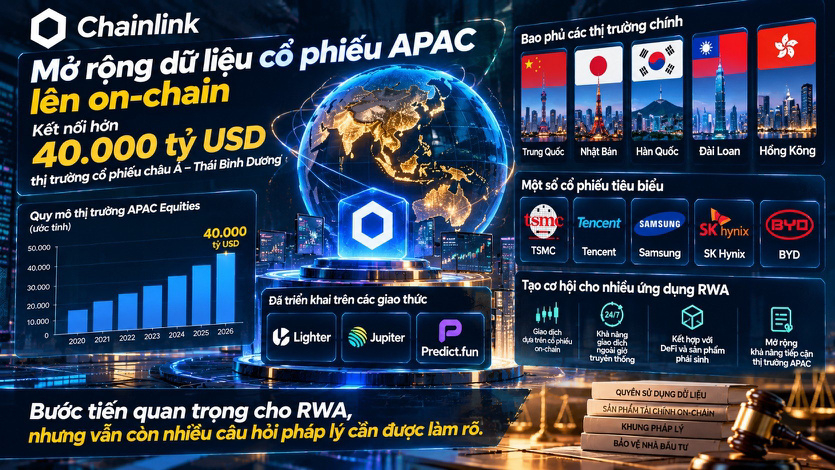
Chainlink has expanded its APAC stock data coverage, spanning markets worth over $40 trillion in China, Japan, South Korea, Taiwan, and Hong Kong.
The data includes major companies such as TSMC, Tencent, Samsung, and BYD, and has been deployed on Lighter, Jupiter, and Predict.fun.
Key takeaway: on-chain protocols now have more data to build trading products tied to Asian stocks, including outside traditional trading hours.
However, on-chain price data does not mean ownership of the underlying stocks. Legal issues and data usage rights still need to be clarified.
Do you think this development will drive RWA growth or create additional regulatory challenges?
#apac
1
96

·
--
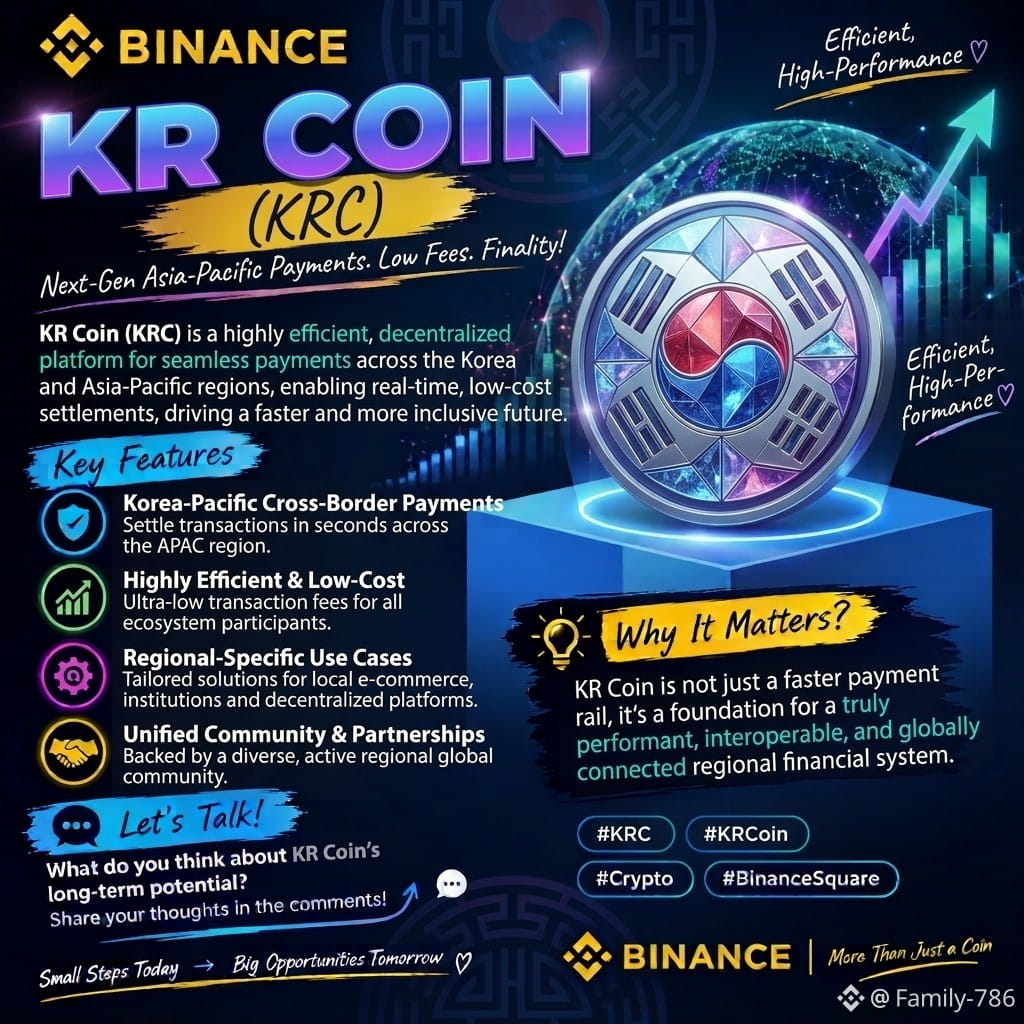
🚀 Binance Coin Spotlight: KR Coin (KRC) 🚀
Next-Gen Asia-Pacific payments with ultra-low fees and high-speed finality! KR Coin (KRC) is driving a faster and more inclusive regional financial future.
💡 Why KR Coin Matters
KR Coin is not just a faster payment rail, it's a foundation for a truly performant, interoperable, and globally connected regional financial system..
✨ Key Highlights:
Korea-Pacific Cross-Border Payments: Settle transactions in seconds across the APAC region.
Highly Efficient & Low-Cost: Ultra-low transaction fees for all ecosystem participants.
Regional-Specific Use Cases: Tailored solutions for local e-commerce, institutions, and decentralized platforms.
What do you think about KR Coin's long-term potential? Share your thoughts in the comments below! 👇💬
#KRC #KRCoin #Crypto #BinanceSquare #CryptoTrading #Blockchain #APAC $KR.US
KRUS+1.59%
70

·
--
Article
Ripple & SettleMint Team Up to Give APAC Banks a Digital Asset Power‑UpRipple and SettleMint have joined forces to provide a single custody and tokenization platform for Asia‑Pacific financial institutions, expanding Ripple’s reach in the region and giving banks a ready‑made bridge to the digital‑asset economy.
The deal means that banks across Japan, Singapore, Hong Kong, Australia and beyond can now lock, move and tokenise assets on a platform built on Ripple’s XRP Ledger, while leveraging SettleMint’s secure custody infrastructure. The partnership is a strategic move to accelerate institutional adoption of digital assets in a market that’s hungry for faster settlement, lower costs and regulatory compliance.
**Alpha**
By bundling custody with tokenisation, Ripple is tackling two pain points that have kept banks wary of crypto: security and regulatory clarity. SettleMint’s custodial vaults are built to meet the highest standards, while the XRP Ledger’s consensus mechanism offers near‑instant settlement, cutting the typical 2‑3 day lag of traditional cross‑border payments. #Ripple #SettleMint #APAC #CryptoCustody
**Punchline Insight**
Think of it as giving banks a “digital asset Swiss Army knife.” They get a secure vault, instant settlement, and the ability to create tokenised derivatives all in one go. The real kicker? The partnership could push the APAC region to the forefront of the global crypto economy, turning banks from passive observers into active participants.
**Engagement Bait**
If you’re a bank exec in APAC, how will you leverage this new platform to beat the competition? Drop your thoughts below and let’s see who’s ready to jump on the XRP train!
Ripple & SettleMint Team Up to Give APAC Banks a Digital Asset Power‑Up
Ripple and SettleMint have joined forces to provide a single custody and tokenization platform for Asia‑Pacific financial institutions, expanding Ripple’s reach in the region and giving banks a ready‑made bridge to the digital‑asset economy.
The deal means that banks across Japan, Singapore, Hong Kong, Australia and beyond can now lock, move and tokenise assets on a platform built on Ripple’s XRP Ledger, while leveraging SettleMint’s secure custody infrastructure. The partnership is a strategic move to accelerate institutional adoption of digital assets in a market that’s hungry for faster settlement, lower costs and regulatory compliance.
**Alpha**
By bundling custody with tokenisation, Ripple is tackling two pain points that have kept banks wary of crypto: security and regulatory clarity. SettleMint’s custodial vaults are built to meet the highest standards, while the XRP Ledger’s consensus mechanism offers near‑instant settlement, cutting the typical 2‑3 day lag of traditional cross‑border payments. #Ripple #SettleMint #APAC #CryptoCustody
**Punchline Insight**
Think of it as giving banks a “digital asset Swiss Army knife.” They get a secure vault, instant settlement, and the ability to create tokenised derivatives all in one go. The real kicker? The partnership could push the APAC region to the forefront of the global crypto economy, turning banks from passive observers into active participants.
**Engagement Bait**
If you’re a bank exec in APAC, how will you leverage this new platform to beat the competition? Drop your thoughts below and let’s see who’s ready to jump on the XRP train!
20

·
--
Asia-Pacific stock index fluctuations today, traditional financial markets and crypto markets are closely intertwined. Stock market trends often predict the direction of capital flows; watch APAC market developments to seize investment opportunities. #股市 #亚太市场
Asia-Pacific stock indices fluctuating today. Traditional financial markets and crypto space are closely connected. Stock market trends often hint at capital flow. Keep an eye on APAC market dynamics to seize investment opportunities. #StockMarket #APAC
$BTC $ETH
Asia-Pacific stock indices fluctuating today. Traditional financial markets and crypto space are closely connected. Stock market trends often hint at capital flow. Keep an eye on APAC market dynamics to seize investment opportunities. #StockMarket #APAC
$BTC $ETH
268

·
--
Most traders think the APAC crypto market is all about centralized exchanges like Binance and Huobi. But a new signal suggests that's about to change.
As reported by The Block, TurboFlow, a decentralized prediction market platform, has secured a $6 million seed round led by Pantera Capital. This is the largest seed funding in the APAC crypto space yet, and a strong vote of confidence in the region's growth potential.
THE SIGNAL:
#TurboFlow $6M seed funding from Pantera Capital #PanteraCapital led rounds #APAC growth
THE INTERPRETATION:
This massive funding round signals that TurboFlow, which offers prediction markets and perpetual futures, is set to become the Kalshi of APAC. As Asian users turn away from centralized exchanges, decentralized platforms like TurboFlow and Polymarket will increasingly take the reins.
THE WATCH LIST:
#TurboFlow listing on Binance? Follow the project's roadmap to get an early heads-up on exchange listings.
Will TurboFlow's decentralized approach disrupt the traditional APAC exchange landscape? Will you be early-migrating to this new wave of decentralized platforms? It's time to pay close attention and find out.
45

🚨 $BTC APAC LIQUIDITY SURGES AS REGIONAL ACCUMULATION DEFENDS KEY DEMAND! 💥
Celebrating Vietnam National Day as APAC liquidity flows show strong institutional footprint across key consolidation zones. 🌊 Smart money continues absorbing sell-side pressure, defending critical structure while market participants across the region step up volume. 📊
Inefficiency fills on the lower timeframes are getting absorbed instantly, pointing to strong underlying demand off major demand blocks. 💡 With regional engagement reaching high momentum, order book depth signals structural readiness for the next directional expansion. 💬 How are you positioning your portfolio as APAC liquidity dominates this session? 👇
⚠️ Not financial advice. Always manage your risk. 🛡️
🏷️ #BTC #MarketStructure #Crypto #APAC
🔥 💎
20

·
--
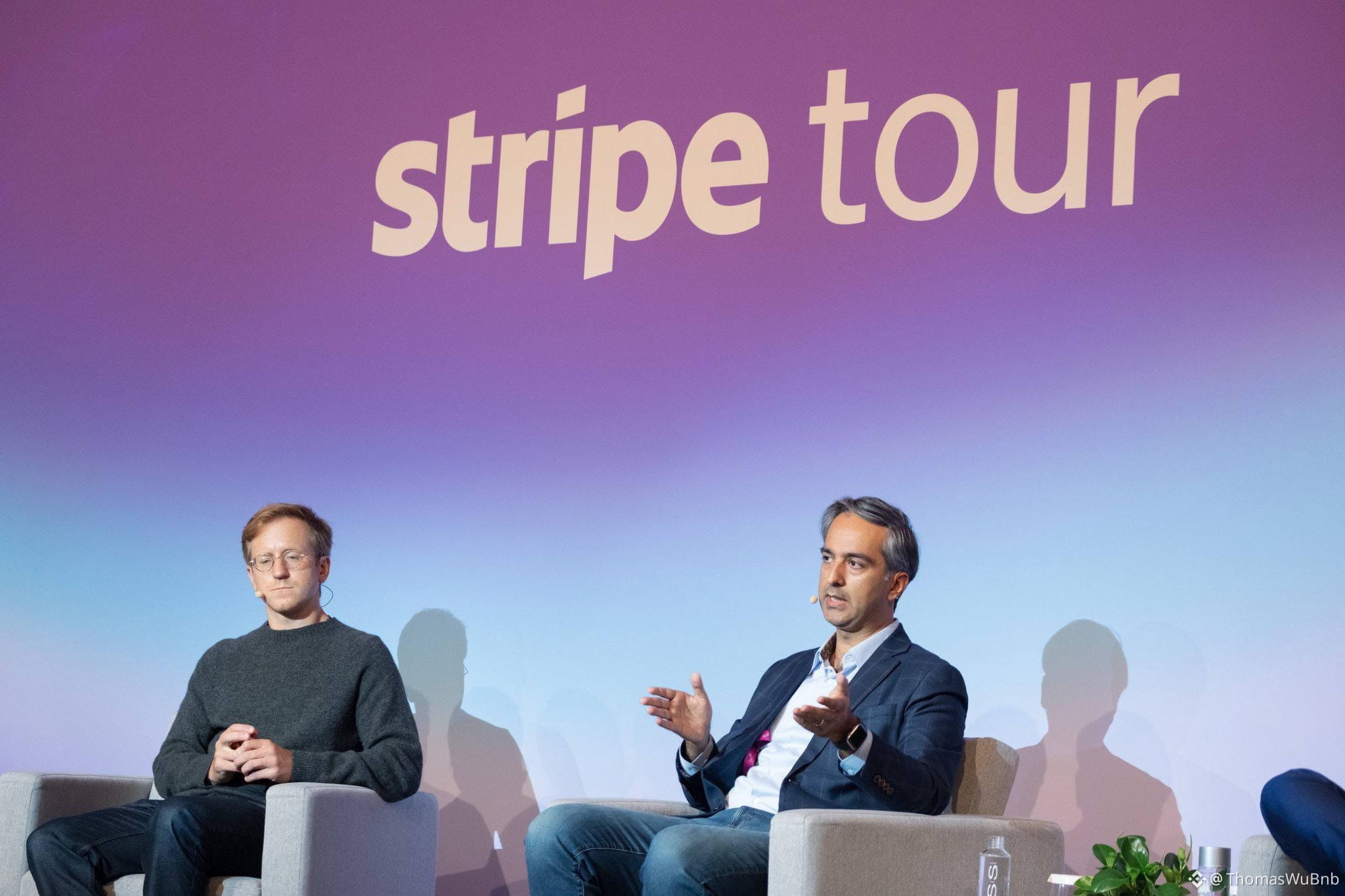
APAC is where stablecoins are scaling fastest.
At Stripe Tour Singapore, Hassan Ahmed, our Country Director, joined leaders from Bridge, Stri[e and Laters.com to discuss how stablecoins are becoming critical infrastructure for global commerce.
Asia accounted for 60% of stablecoin payments last year, putting APAC in a unique position to drive adoption across diverse currencies, jurisdictions, payment systems and markets.
Thanks to Stripe for a fantastic event and for creating space to explore the future of payments, revenue models and more.
#stablecoin #APAC #Singapore

12
11.8k

The crypto adoption index highlights the APAC region as responsible for half of the global market, while exchange Bitget records a loss of US$351 million. In addition, OpenAI is said to have failed to mention that agents hacked the Australian government, raising security concerns.
#APAC #Bitget #Hack #CryptoSecurity #BinanceSquare
Read more: https://cointelegraph.com/magazine/asia-dominates-crypto-adoption-index-bitgets-356m-hack-asia-express?utm_source=rss_feed&utm_medium=rss&utm_campaign=rss_partner_inbound
#APAC #Bitget #Hack #CryptoSecurity #BinanceSquare
Read more: https://cointelegraph.com/magazine/asia-dominates-crypto-adoption-index-bitgets-356m-hack-asia-express?utm_source=rss_feed&utm_medium=rss&utm_campaign=rss_partner_inbound
97

·
--
#VisaPlansStablecoinPrefundingForAPAC
CrossBorderPayments
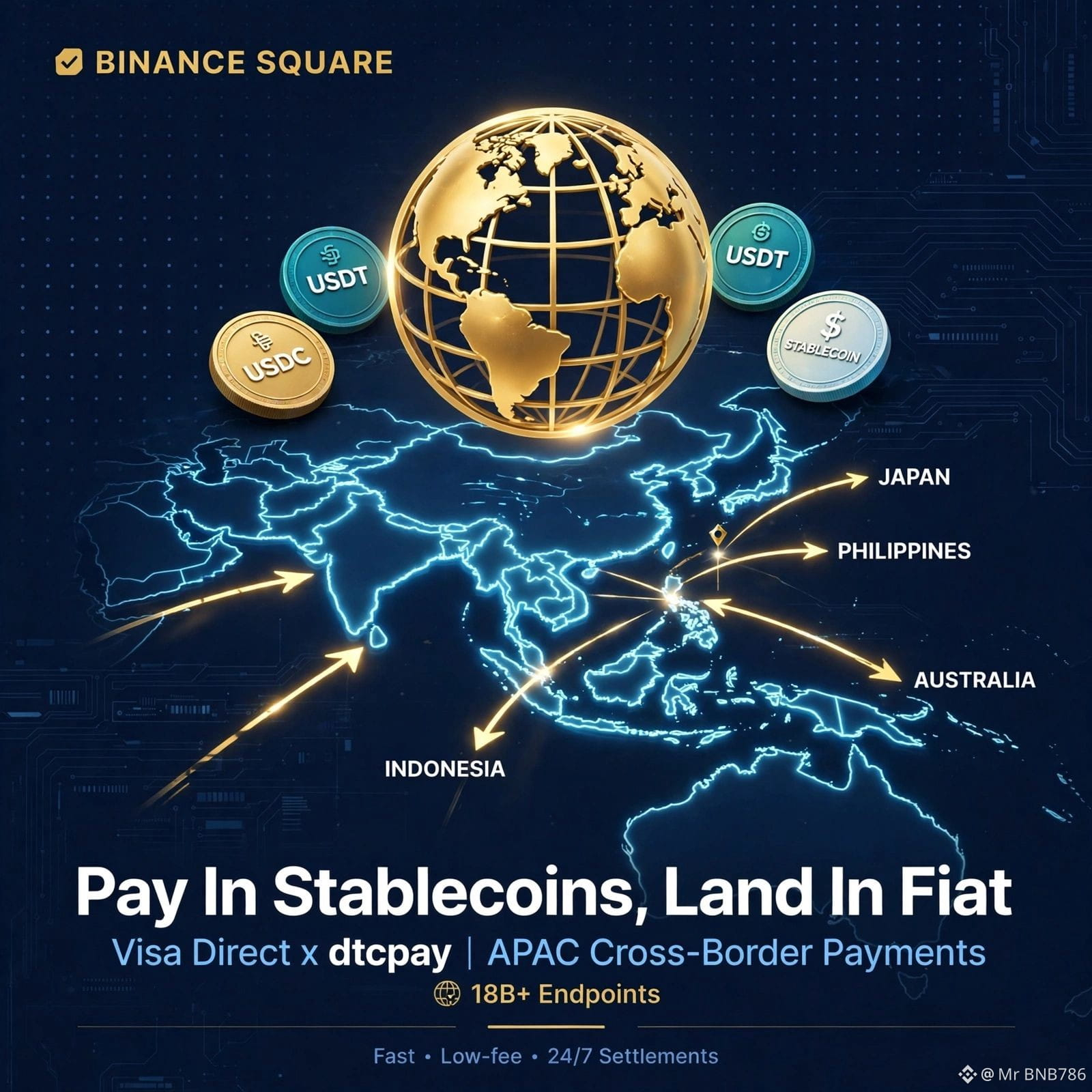
💸 Pay In Stablecoins, Land In Fiat: Visa Direct Hits APAC
Visa just made a big move at the Singapore FinTech Festival! Eligible Asia-Pacific clients can now fund cross-border payouts with stablecoins through Visa Direct, while recipients still receive local fiat.
The pilot is with Singapore-based licensed firm dtcpay, with Triple-A handling conversion, settlement, and compliance.
Why it matters:
- No need to lock huge fiat in advance for prefunding
- Funding outside banking hours / 24/7 flexibility
- Access to Visa Direct's 18B+ endpoints
- APAC already accounts for around 1/3 of global cross-border flows
This already went live in the US in Oct 2026 with Inyo Global using USDC. Now it's APAC's turn.
Do you think stablecoins are the future of cross-border payments, or will fiat rails still dominate?
#Visa #Stablecoin #USDC #USDT #VisaDirect #CryptoNews #APAC
99

·
--
🚨 $SOL SECURES HK STRATEGIC ENTERPRISE SLOT, POWERING APAC INFRA 🚀
The Hong Kong Office for Attracting Strategic Enterprises just added $SOL as the sole blockchain infrastructure player in its 2026 cohort, placing it alongside pharma giants. 🦈 This institutional nod signals smart‑money confidence that the network will become a core liquidity hub for APAC token flows. 📊
With a second Pacific Backbone node launching in Hong Kong, the firm cements a bi‑city validator lattice that mirrors Tokyo, tightening supply‑side resilience and opening fresh token‑on‑ramp pathways. 🌏⚡ Market pricing already reflects this upside, trading at a premium P/S multiple. 💬 How will this foothold reshape the regional crypto capital hierarchy? 👇
⚠️ Not financial advice. Always manage your risk. 🛡️
🏷️ #SOL #StrategicEnterprise #APAC #CryptoInfrastructure #LongSetup
🔥 💎
14

·
--
🚨 INSTITUTIONAL APAC CAPITAL FLOODGATES OPEN AS $CHIP LEADS REGIONAL INFRASTRUCTURE EXPANSION! 💥
Institutional digital-asset infrastructure in Asia-Pacific is experiencing an explosive surge as major custodians report institutional client bases tripling and Singapore trading volumes climbing over 100% year-over-year. 📊 Smart money positioning is accelerating behind the scenes while regional demand for institutional-grade liquidity hits all-time highs.
🌊 Capital is aggressively migrating toward prime infrastructure rails, establishing a massive foundation for the next macro expansion cycle. 💡 As heavyweight institutions secure regional footholds, liquidity pools are deepening rapidly across $CHIP , $MUBARAK , and $MARSCOIN .
💬 Are you positioning ahead of this massive institutional capital tide or waiting for the breakout confirmation? 👇
⚠️ Not financial advice. Always manage your risk. 🛡️
🏷️ #CHIP #Institutional #Crypto #APAC #CryptoNews
🔥 💎

268

🤝 Joint initiative: EPAA and HSBC spearhead the development of automated payments in Asia
EPAA and HSBC launched a joint working group in the Asia-Pacific region to focus on smart and AI-enabled automated payments. The group aims to set standards for accountability, identity, and interoperability of autonomous intelligent systems in the payments sector, paving the way for a future of financial innovation.
━━━━━━━━━━━━━━
📊 Impact: 📈 High
🏷️ OTHER
#AI #Payments #Fintech #APAC #HSBC
🔗 Source: https://cryptobriefing.com/epaa-hsbc-agentic-payments-working-group/
9
🚨 SOUTH KOREA PETITION HITS 50K SIGNATURES DERAILING CRYPTO TAX TIMELINE FOR $CVC ! ⚡
Institutional capital tracks regulatory clarity above all else. 💡 South Korea crossing the 50,000 signature threshold forces parliament to review a two-year crypto tax delay, shifting macro liquidity expectations across Asian trading desks.
While critics highlight potential fiscal revenue delays, smart money sees this policy window as prime accumulation terrain for assets like $CVC , $T , and $BR . 🔍 A delayed tax framework preserves capital velocity and prevents regional liquidity drain before the next structural expansion.
💬 Will this regulatory pivot unlock the next wave of institutional inflows across APAC market structures? 👇
⚠️ Not financial advice. Always manage your risk. 🛡️
🏷️ #CVC #MarketStructure #CryptoTaxation #APAC #Altcoins
🎯 🦈

242
Log in to explore more content
Join global crypto users on Binance Square
⚡️ Get latest and useful information about crypto.
💬 Trusted by the world’s largest crypto exchange.
👍 Discover real insights from verified creators.
Email / Phone number
Trending Topics
1
#NvidiaLoses$2.7TrillionInMonthAndAHalf
7,372 views
83 Discussing
2
#CanBTCReboundAfterFallingBelow60K?
632,944 views
2,683 Discussing
3
#GlobalStocksFaceLongestLosingStreakSince2023
223,671 views
1,845 Discussing
4
#BlackRockIBITPostsRecord$541MSingleDayOutflow
22,604 views
67 Discussing
5
#AnthropicPlungesTowardIPOPriceonDay2
111,174 views
1,095 Discussing
6
#TwentyOneCapitalAdds172.25BTC
47,763 views
575 Discussing
7
#HKBillWouldExcludeTokenizedDepositsFromVirtualAssets
5,423 views
48 Discussing
8
#BNBDropsBelow540USDTWith8.46%DailyDecline
63,262 views
574 Discussing
9
#HKBillProposesHK$100KFineForUnauthorizedCryptoTitles
2,119 views
21 Discussing
10
#BitMineFaces$10.1BUnrealizedETHLoss
4,366 views
25 Discussing