
#criptoclarove
criptoclarove
921 views
8 Discussing
Hot
Latest

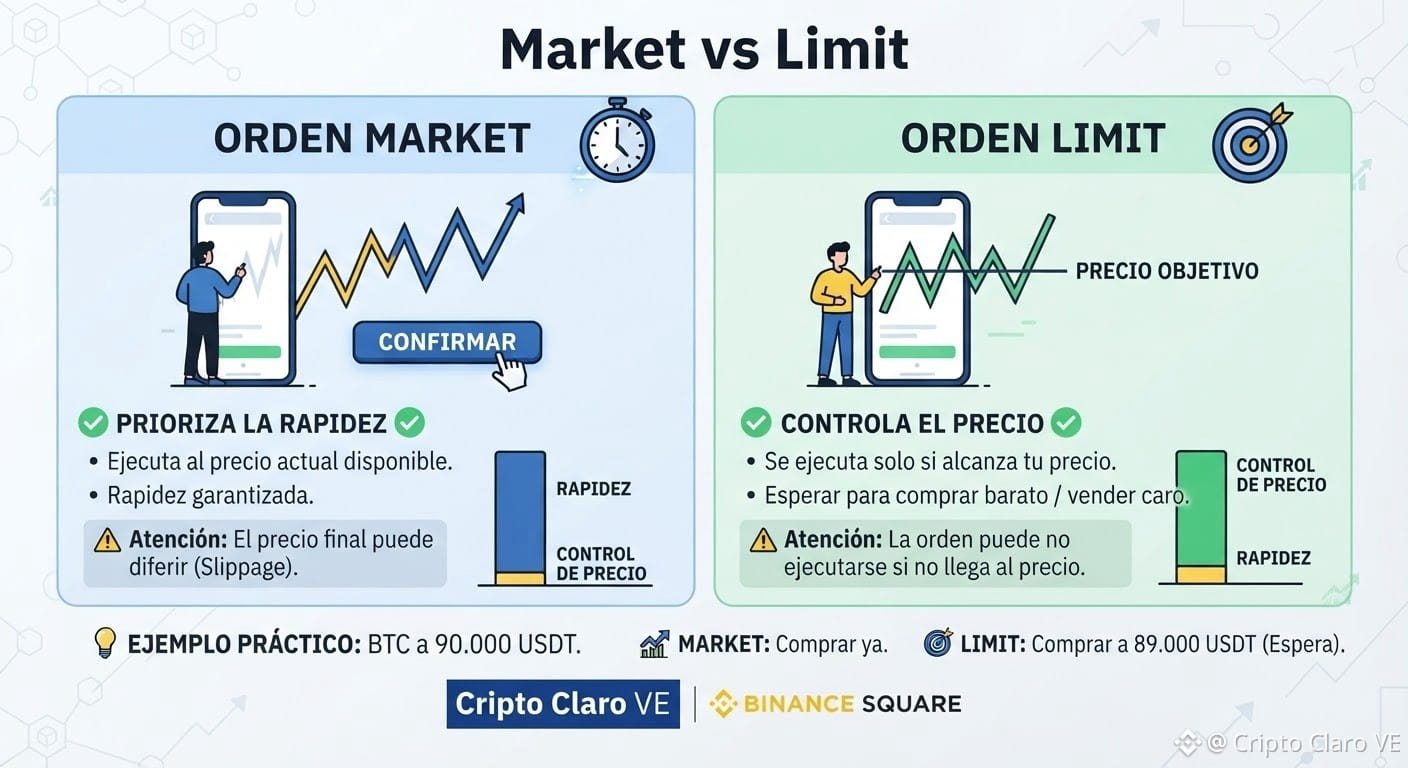
📉 Market or Limit? Learn how to choose an order type before buying or selling cryptocurrencies.
When you trade on Binance Spot, it’s not enough to choose which cryptocurrency to buy or sell: you also need to know how the available orders work.
Two of the most common are Market and Limit. Here are their key differences:
🔹 1. Market order: speed comes first
It executes your buy or sell at the best price available in the order book at that moment. It’s useful when you want to execute quickly and don’t require an exact price.
⚠️ Keep in mind: The final price may differ from what you see on screen. During volatile periods or when liquidity is low, slippage may occur.
🔹 2. Limit order: you set the price
It lets you set the price at which you want to trade: the maximum price you’re willing to pay when buying, or the minimum you’ll accept when selling. It’s useful when you have a target price and don’t need immediate execution.
⚠️ Keep in mind: Your order may remain pending if there isn’t enough liquidity on the other side or if the market doesn’t reach your price level; the price touching your limit doesn’t guarantee that the entire order will be filled.
💡 Example: If the asset is trading at 90,000 USDT, a Market order prioritizes entering immediately at the best available price, while with a Limit order at 89,000 USDT, you wait for offers to become available at that price or better.
📌 In summary: Market prioritizes speed of execution; Limit gives you control over the price. Neither guarantees a profitable trade on its own: it all depends on your goal and market conditions.
📚 Knowing your tools well is an essential part of learning to trade.
Which do you use more: Market or Limit, and why? 👇
#CriptoClaroVE #BinanceSquare #BinanceSpot #trading #EducaciónCripto
98
🛡️ You can get the market direction right and still lose money if you don’t know how to manage your risk.
In the crypto world, spotting an opportunity isn’t enough: you also need to decide how much you’re willing to lose before opening a trade.
If you’re just starting out, these three principles can help you build better habits:
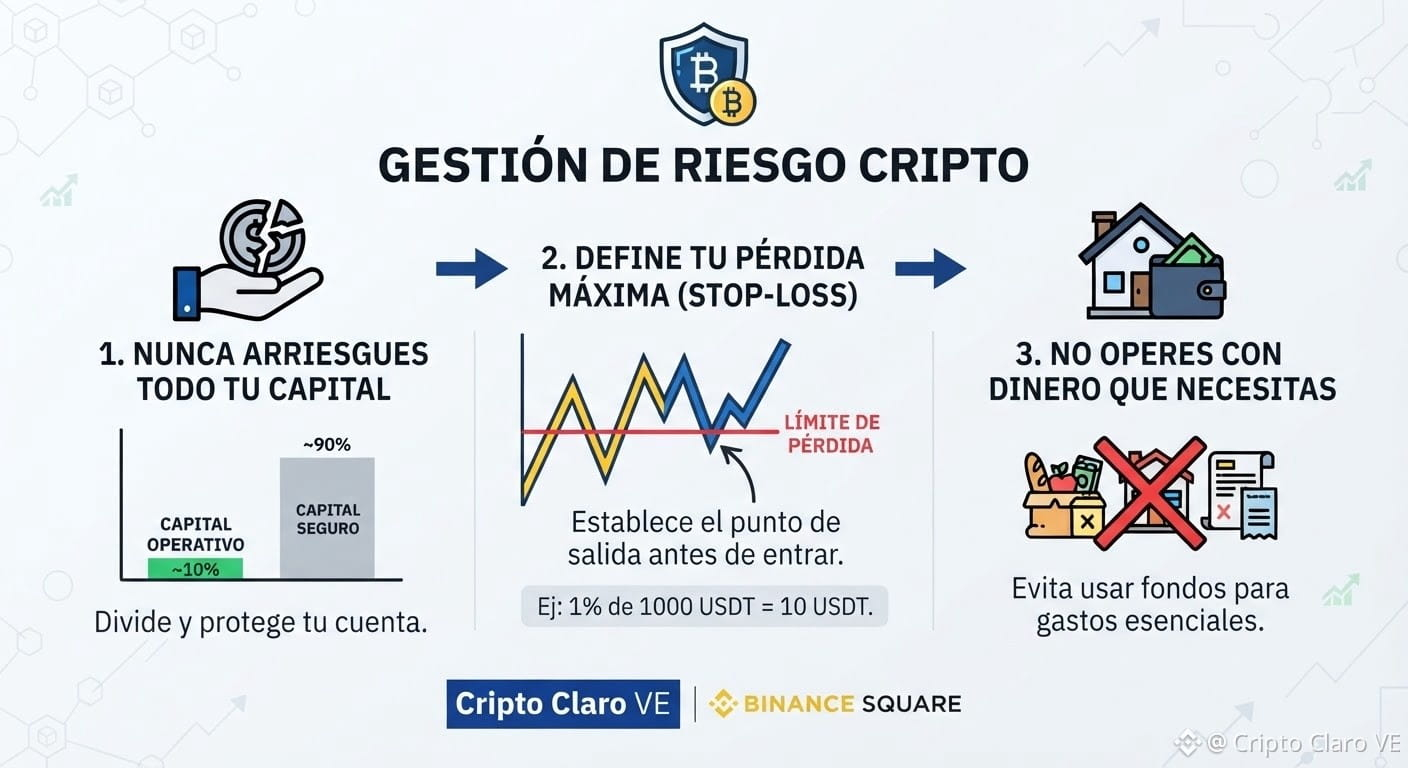
🔹 1. Don’t risk all your capital on a single trade
Putting your entire balance into one entry exposes your account to a major hit if the market turns against you. Spreading out your risk and avoiding oversized positions lets you absorb normal losses without putting the rest of your capital at risk.
🔹 2. Set your maximum loss before entering a trade
Before opening a position, be clear about how much capital you’ll commit, how much you’re willing to risk, and at what level you’d exit if the outlook turns unfavorable. Tools like Stop-Loss orders can help limit losses, although they don’t guarantee execution at the exact price you set.
💡 Example: If you have 1,000 USDT and decide to risk 1% on a trade, your planned loss is 10 USDT.
🔹 3. Don’t trade with money you need
Avoid using funds intended for food, housing, debt payments, or emergencies. Trading under financial pressure in a volatile market often leads to impulsive decisions.
📌 Remember: Managing risk doesn’t mean eliminating losses; it means avoiding a bad decision that takes you out of the game before you’ve had a chance to learn.
📚 Before looking for profits, learn to protect your capital.
What’s the hardest thing when starting out: controlling your emotions, sticking to a Stop-Loss, or avoiding excessive risk? 👇
#CriptoClaroVE #BinanceSquare #trading #EducaciónCripto #CriptoVenezuela
219
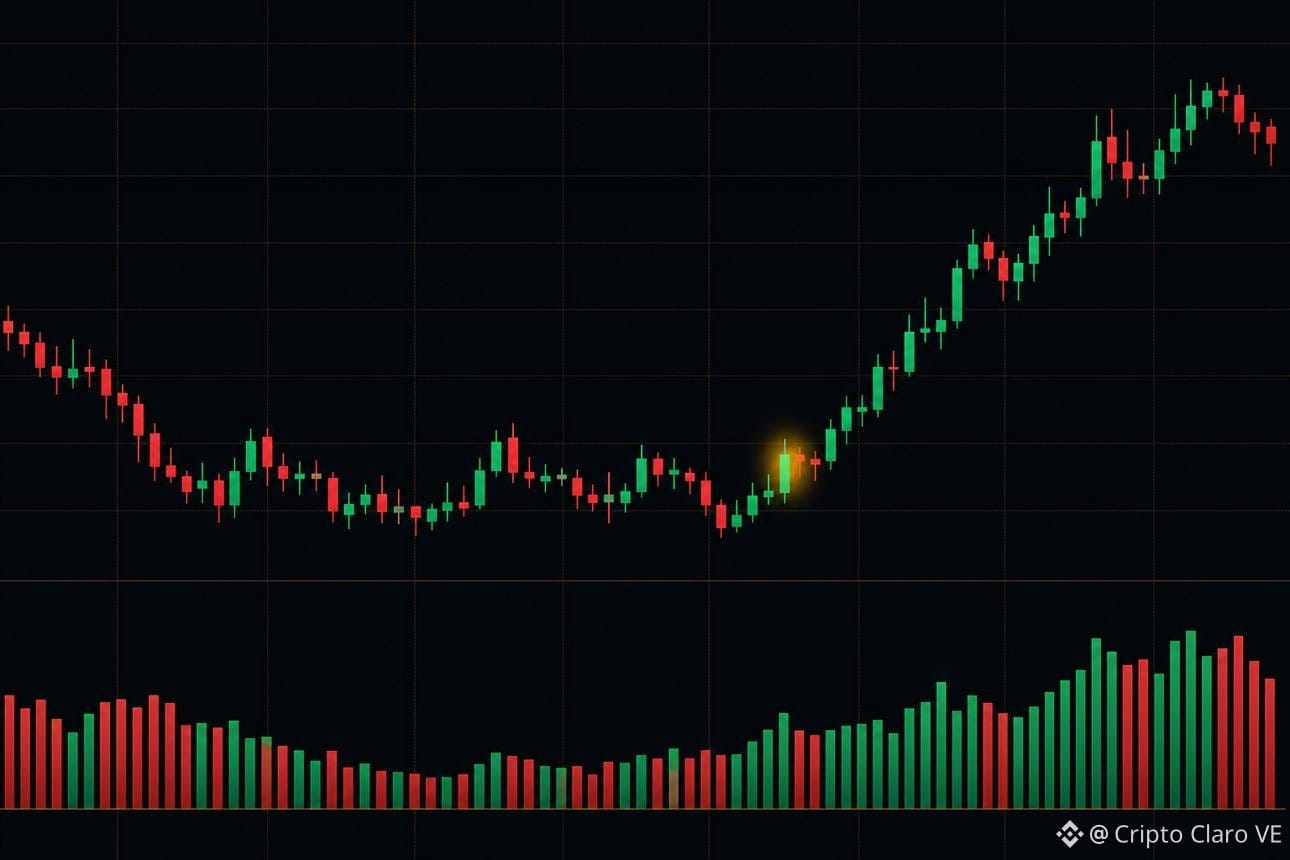
📊 Is a cryptocurrency rising in price? That doesn’t necessarily mean there’s strong demand behind the move.
Looking at price alone gives you an incomplete picture. To get a better read on the market, it helps to look at three factors: price, volume, and liquidity.
🔹 1. Price and volume: they don’t tell the same story
Price indicates the reference value at a given moment; volume shows how much has been traded over a specific period.
📈 Rising price + increasing volume: often reflects greater participation in the move.
📉 Rising price + decreasing volume: may signal weaker support or fading momentum.
Volume provides context, but doesn’t guarantee that a trend will continue.
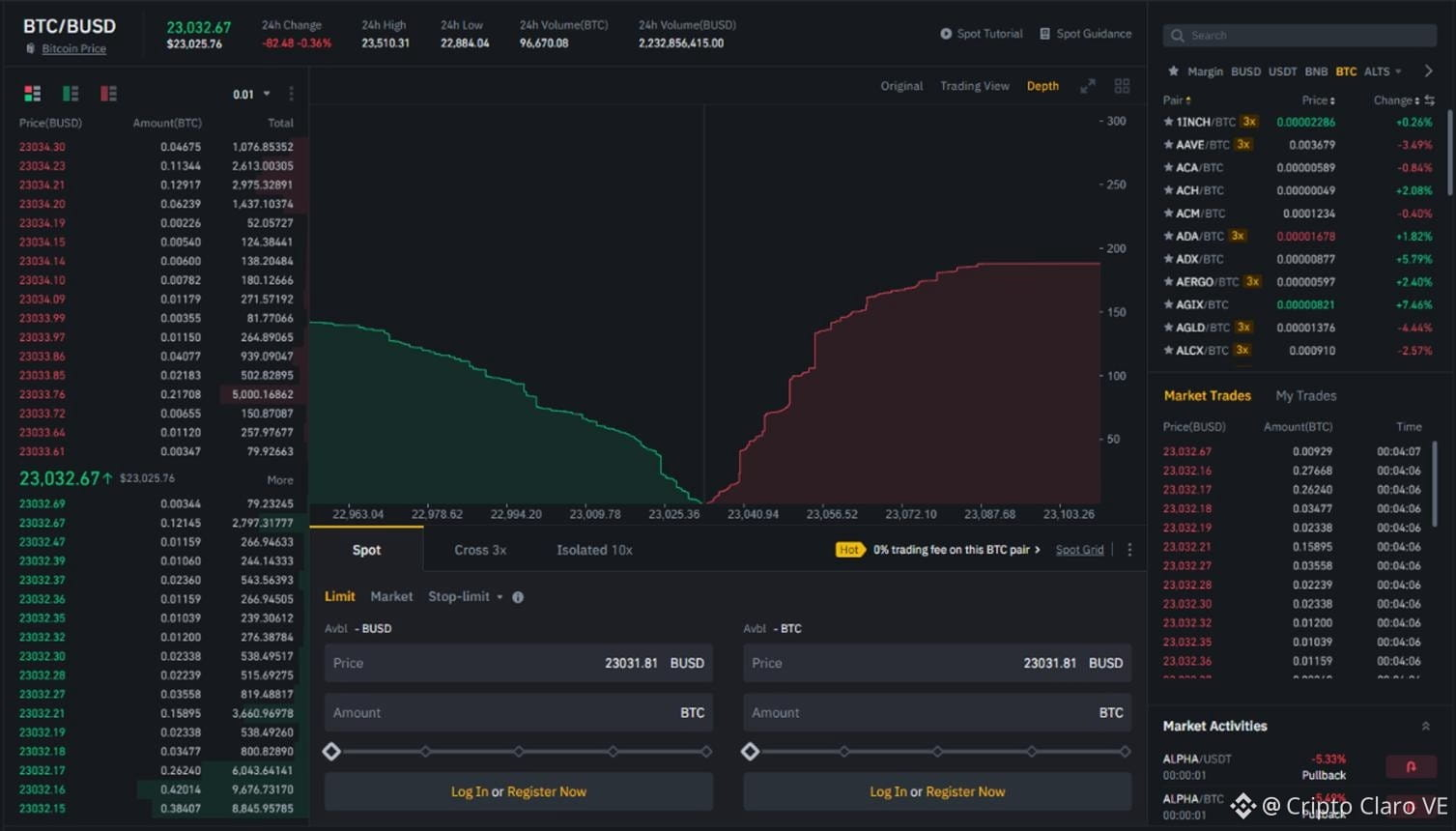
🔹 2. Liquidity: how easy it is to enter or exit
It measures how easily a trade can be executed without sharply moving the price. It’s worth paying attention to:
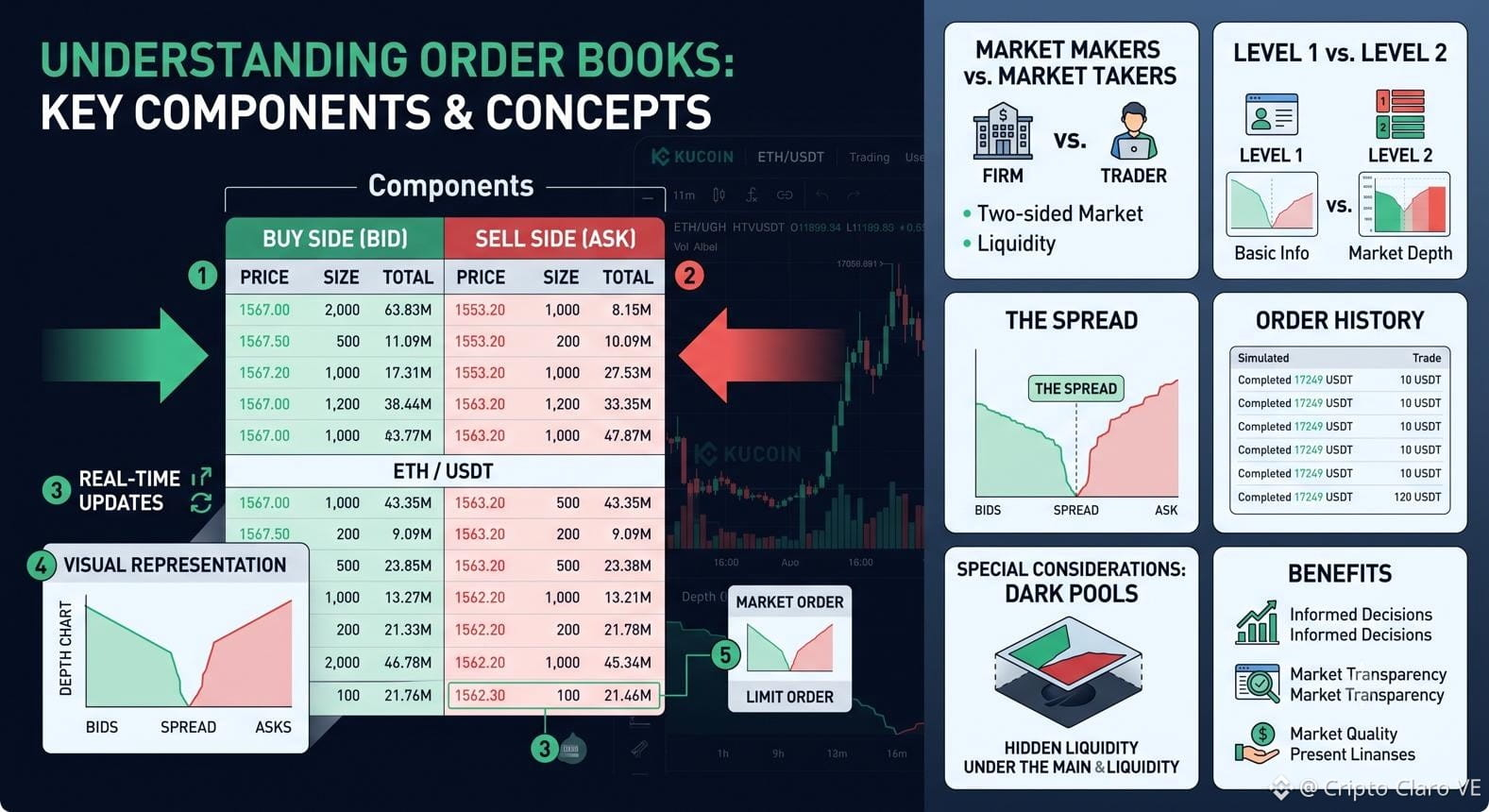
Spread: the difference between the best buy price and the best sell price.
Market depth: orders available at different price levels.
Market impact: how much the price may move when your order is executed.
Low liquidity means a greater risk of slippage or difficulty exiting without affecting the price.
🔹 3. Assess the full context
Don’t analyze a rise or fall in isolation. Compare periods, check liquidity, and observe how the market responds before drawing conclusions.
💡 In short: price tells you what it’s worth; volume, how much activity there is; and liquidity, how easily you can trade without distorting the price.
What do you check first when analyzing a cryptocurrency: price, volume, or liquidity? 👇
#CriptoClaroVE #BinanceSquare #EducaciónCripto #AnalisisCripto #CriptoVenezuela
85
Did you buy USDT on Binance P2P and it doesn’t appear in your Spot wallet?
Don’t worry! Your funds are most likely in another Binance internal wallet; it doesn’t mean you’ve lost your money.
📚 First, let’s get to know the two main wallets:
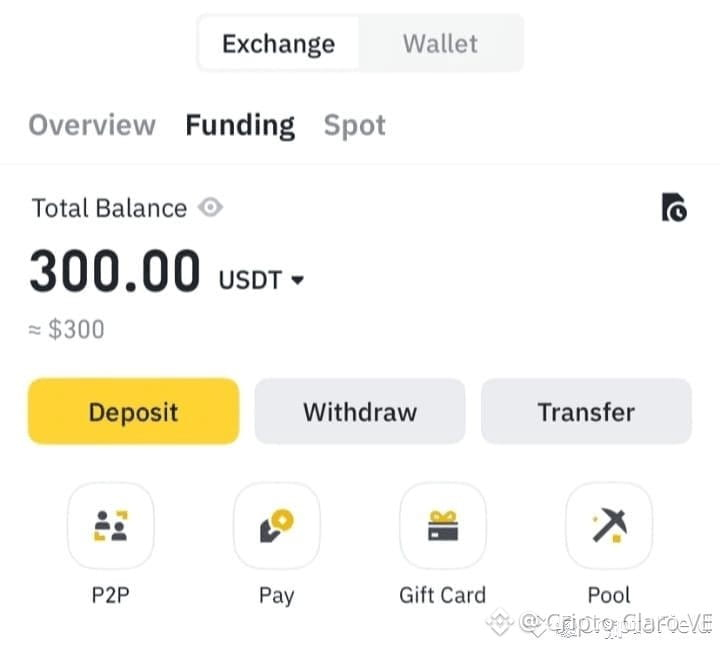
🔹 1. Funding Wallet: It’s designed for transactions such as Binance P2P, Binance Pay, and payment features. When you buy $USDT on P2P, your funds usually arrive here.
🔹 2. Spot Wallet: This is the main wallet for trading on the Spot market, buying, selling, or exchanging cryptocurrencies.
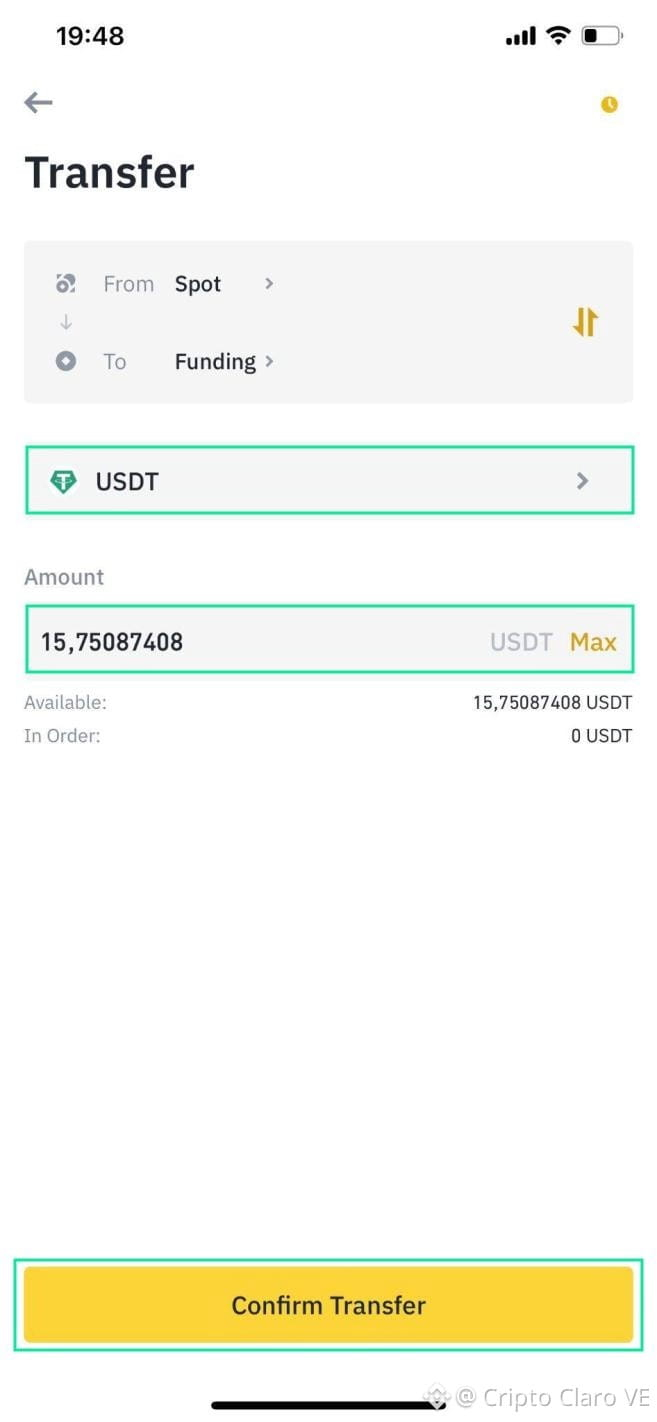
💡 How do you transfer your USDT from Funding to Spot?
1️⃣ Go to the Assets (or Portfolio) section in Binance.
2️⃣ Tap Transfer.
3️⃣ Under From, select Funding.
4️⃣ Under To, choose Spot.
5️⃣ Select USDT, enter the amount, and confirm.
That’s it! Your balance will be available in your Spot wallet.
📌 Key point: Internal transfers between your own Binance wallets are free and instant. You don’t need to make a withdrawal or use a blockchain network to move your funds.
⚠️ Remember: If you can’t find a transaction, check your transaction history and the different wallets first before making another transaction.
📖 Understanding how your funds move is also part of financial education.
Did you already know about this difference between Funding and Spot, or did it happen to you when you were starting out? 👇
#CriptoClaroVE #BinanceSquare #BinanceP2P #USDT #EducacionCripto
104
💡 What are stablecoins, and how are they different from Bitcoin?
If you're just getting started in the world of cryptocurrencies, understanding this difference is essential to learning how to use digital assets.
🔹 Stablecoins ($USDT and $USDC )
These are digital assets designed to maintain a relatively stable value. Many aim to maintain a 1:1 peg to the US dollar.
They are mainly used to make payments and transfers, trade on exchanges, and maintain exposure to the dollar's value within the crypto ecosystem.
🔹 Bitcoin ($BTC)
It is a decentralized digital asset whose price depends mainly on market supply and demand.
Unlike stablecoins, Bitcoin is not designed to maintain a fixed price. Its price can rise or fall considerably over short periods.
📌 The key difference:
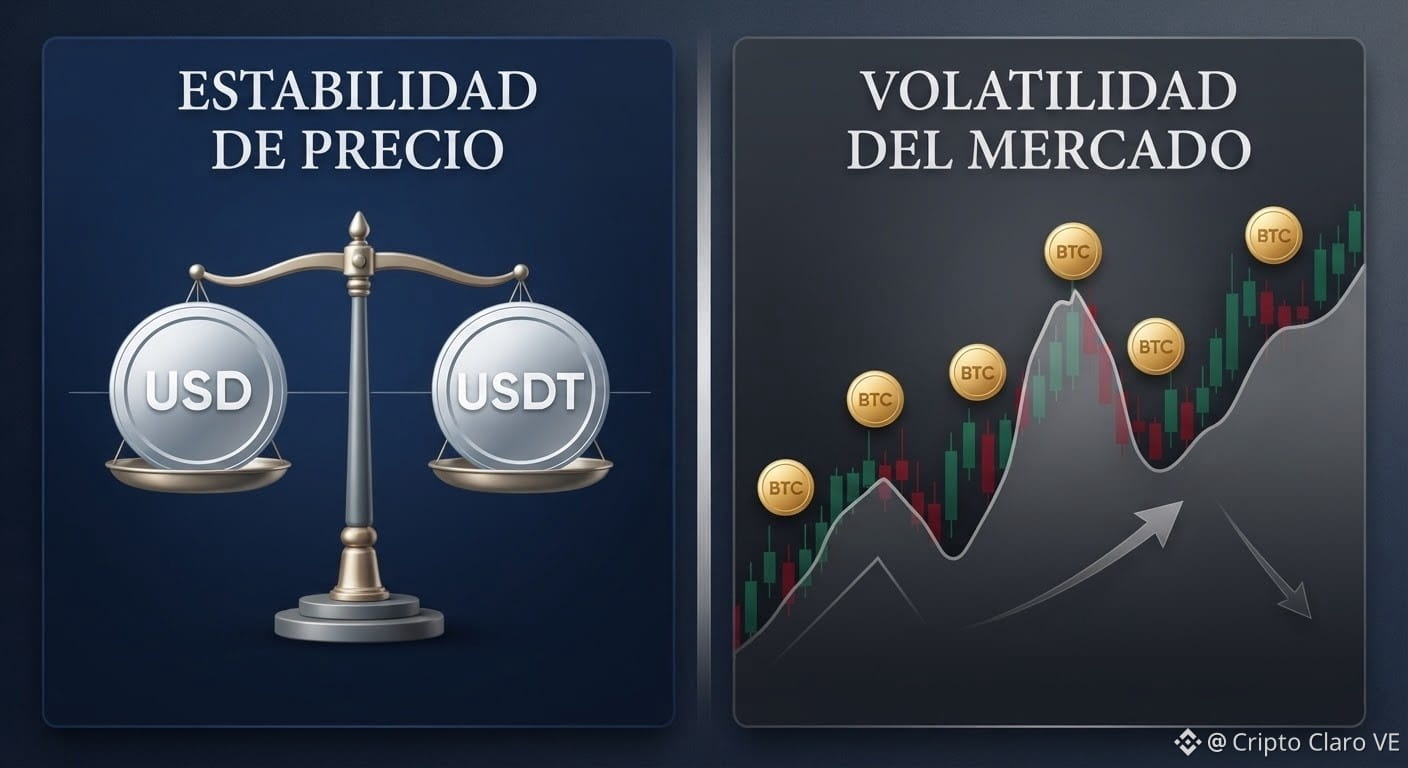
Stablecoins aim to maintain price stability, while $BTC BTC has a variable price and is exposed to market volatility.
⚠️ Important: Stablecoins are not risk-free either. They can lose their peg to the dollar and are exposed to risks related to their reserves, issuers, regulation, and technology.
📚 Learning before investing is the first step toward making better decisions in the crypto world.
👇 Which do you use most often: USDT, USDC, or BTC?
#CriptoClaroVE #BinanceSquare #Bitcoin #USDT #USDC
💡 What are stablecoins, and how are they different from Bitcoin?
If you're just getting started in the world of cryptocurrencies, understanding this difference is essential to learning how to use digital assets.
🔹 Stablecoins ($USDT and $USDC )
These are digital assets designed to maintain a relatively stable value. Many aim to maintain a 1:1 peg to the US dollar.
They are mainly used to make payments and transfers, trade on exchanges, and maintain exposure to the dollar's value within the crypto ecosystem.
🔹 Bitcoin ($BTC )
It is a decentralized digital asset whose price depends mainly on market supply and demand.
Unlike stablecoins, Bitcoin is not designed to maintain a fixed price. Its price can rise or fall considerably over short periods.
📌 The key difference:
Stablecoins aim to maintain price stability, while $BTC BTC has a variable price and is exposed to market volatility.
⚠️ Important: Stablecoins are not risk-free either. They can lose their peg to the dollar and are exposed to risks related to their reserves, issuers, regulation, and technology.
📚 Learning before investing is the first step toward making better decisions in the crypto world.
👇 Which do you use most often: USDT, USDC, or BTC?
#CriptoClaroVE #BinanceSquare #Bitcoin #USDT #USDC
87
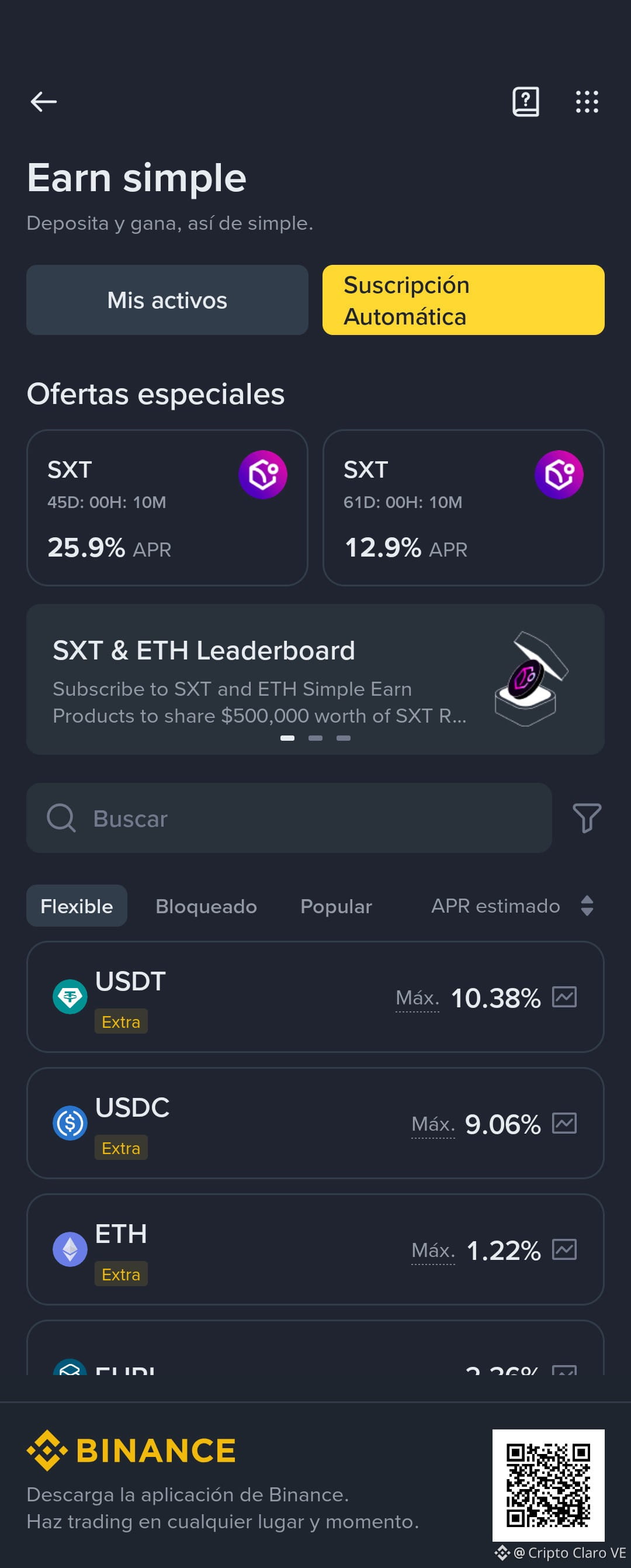
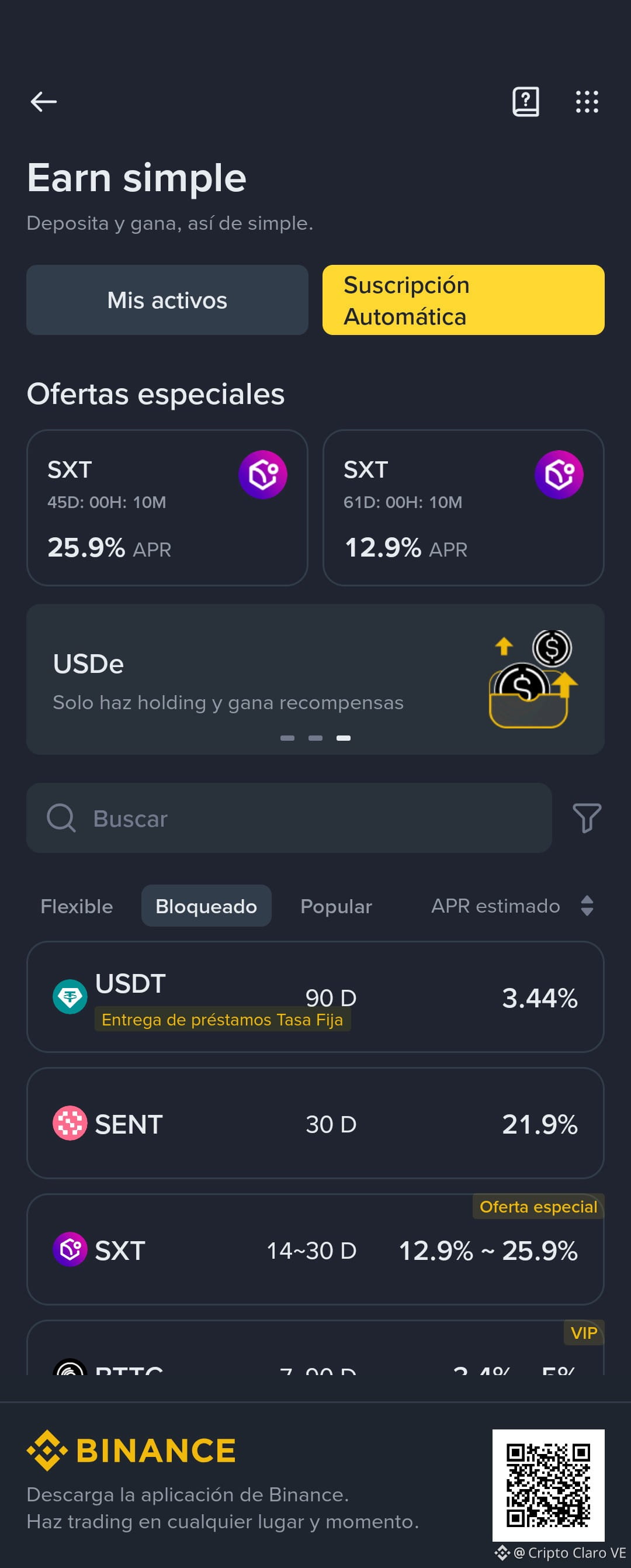
💰 Do you have $USDT saved on Binance and want to learn how to earn rewards without locking them up for a fixed term?
Introducing Simple Earn Flexible, a Binance tool that lets you subscribe to selected crypto assets and earn rewards on them.
🔹 How does it work? You deposit your $USDT into a Flexible product and start earning rewards based on the current terms.
🔹 Why is it flexible? You can request a redemption without waiting for a fixed term, although processing limits or delays may apply.
🔹 How much can you earn? The APR is variable and may change depending on market conditions. It does not represent a guaranteed return.
⚠️ Remember: your assets remain exposed to risks associated with the platform and the crypto ecosystem.
📲 Explore Simple Earn on Binance, review the terms, and learn before investing.
Had you heard of this tool?
#CriptoClaroVE #BinanceSquare #SimpleEarn #USDT #EducaciónCripto
1.4k
Log in to explore more content
Join global crypto users on Binance Square
⚡️ Get latest and useful information about crypto.
💬 Trusted by the world’s largest crypto exchange.
👍 Discover real insights from verified creators.
Email / Phone number
Trending Topics
1
#WillMarketsStageAThanksgivingReliefRally?
36,468 views
670 Discussing
2
#WillOctCorePCEShiftFedHikeExpectations?
2,496 views
86 Discussing
3
#BessentSoftensStanceOnHuang’sNvidiaReturn
24,011 views
462 Discussing
4
#EvolveAtBinanceBlockchainWeek
26,264 views
310 Discussing
5
#MuskWarnsOfAICashCrunch
21,681 views
344 Discussing
6
#ChinaKoreaTaiwanPrepareStockRescuesAheadOfMonday
339 views
10 Discussing
7
#SouthKoreaToTightenOversightOfCryptoTransfersAbroad
2,177 views
39 Discussing
8
#TrumpToGive18KGoldWatchesToTopFourTRUMPHolders
38 views
5 Discussing
9
#RussiaAllowsExchangesToOfferCryptoTrading
15,064 views
195 Discussing
10
#UKToBarCryptoExchangesFromMakingMarketsOnTheirOwnPlatforms
710 views
23 Discussing