
#cryptosecurity
cryptosecurity
9.5M views
16,238 Discussing
Hot
Latest

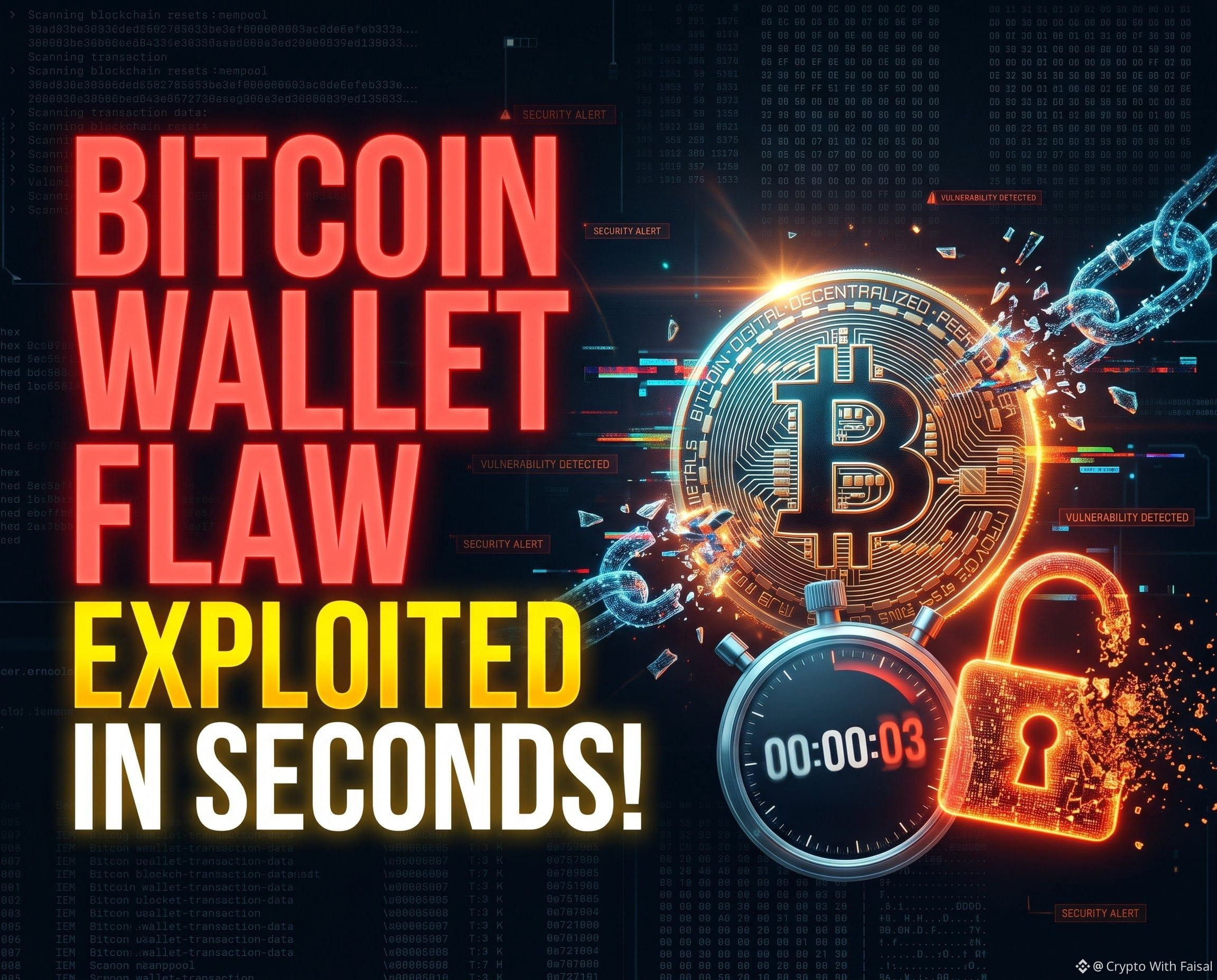
🚨 One reused signature number can empty a Bitcoin wallet in seconds.
Fresh research from the University of Liège (Vincent Jacquot & Benoît Donnet) proves automated bots are scanning the mempool 24/7 for weak wallet signatures.
Here is what their experiment uncovered:
• The Flaw: Under ECDSA signing, every transaction needs a unique random number (a nonce). When faulty or outdated wallet software reuses that number, anyone watching the blockchain can calculate the private key.
• The Speed: Researchers funded bait wallets with a few dollars and intentionally reused a nonce. Within seconds, competing bots spotted the error and raced to drain the funds.
• The Scale: Scanning six blockchains revealed 3,620 exposed keys (3,278 on Bitcoin alone)—linked to addresses that once held roughly $106M at peak prices.
Trader’s Takeaway:
Bitcoin’s protocol isn’t broken, but legacy wallet code still is. Stick to reputable, updated wallets using deterministic signing (RFC 6979) and never reuse old, unmaintained software for self-custody.
Are you still using any legacy wallets from previous cycles? Drop your setup below 👇
$BTC $ETH $EVAA
{future}(EVAAUSDT)
{future}(BTCUSDT)
{future}(ETHUSDT)
#bitcoinwalletsignatureflawexploitablewithinseconds
#CryptoSecurity #BitcoinWallet #SelfCustody
🚨 One reused signature number can empty a Bitcoin wallet in seconds.
Fresh research from the University of Liège (Vincent Jacquot & Benoît Donnet) proves automated bots are scanning the mempool 24/7 for weak wallet signatures.
Here is what their experiment uncovered:
• The Flaw: Under ECDSA signing, every transaction needs a unique random number (a nonce). When faulty or outdated wallet software reuses that number, anyone watching the blockchain can calculate the private key.
• The Speed: Researchers funded bait wallets with a few dollars and intentionally reused a nonce. Within seconds, competing bots spotted the error and raced to drain the funds.
• The Scale: Scanning six blockchains revealed 3,620 exposed keys (3,278 on Bitcoin alone)—linked to addresses that once held roughly $106M at peak prices.
Trader’s Takeaway:
Bitcoin’s protocol isn’t broken, but legacy wallet code still is. Stick to reputable, updated wallets using deterministic signing (RFC 6979) and never reuse old, unmaintained software for self-custody.
Are you still using any legacy wallets from previous cycles? Drop your setup below 👇
$BTC $ETH $EVAA
#bitcoinwalletsignatureflawexploitablewithinseconds
#CryptoSecurity #BitcoinWallet #SelfCustody
9
14.8k
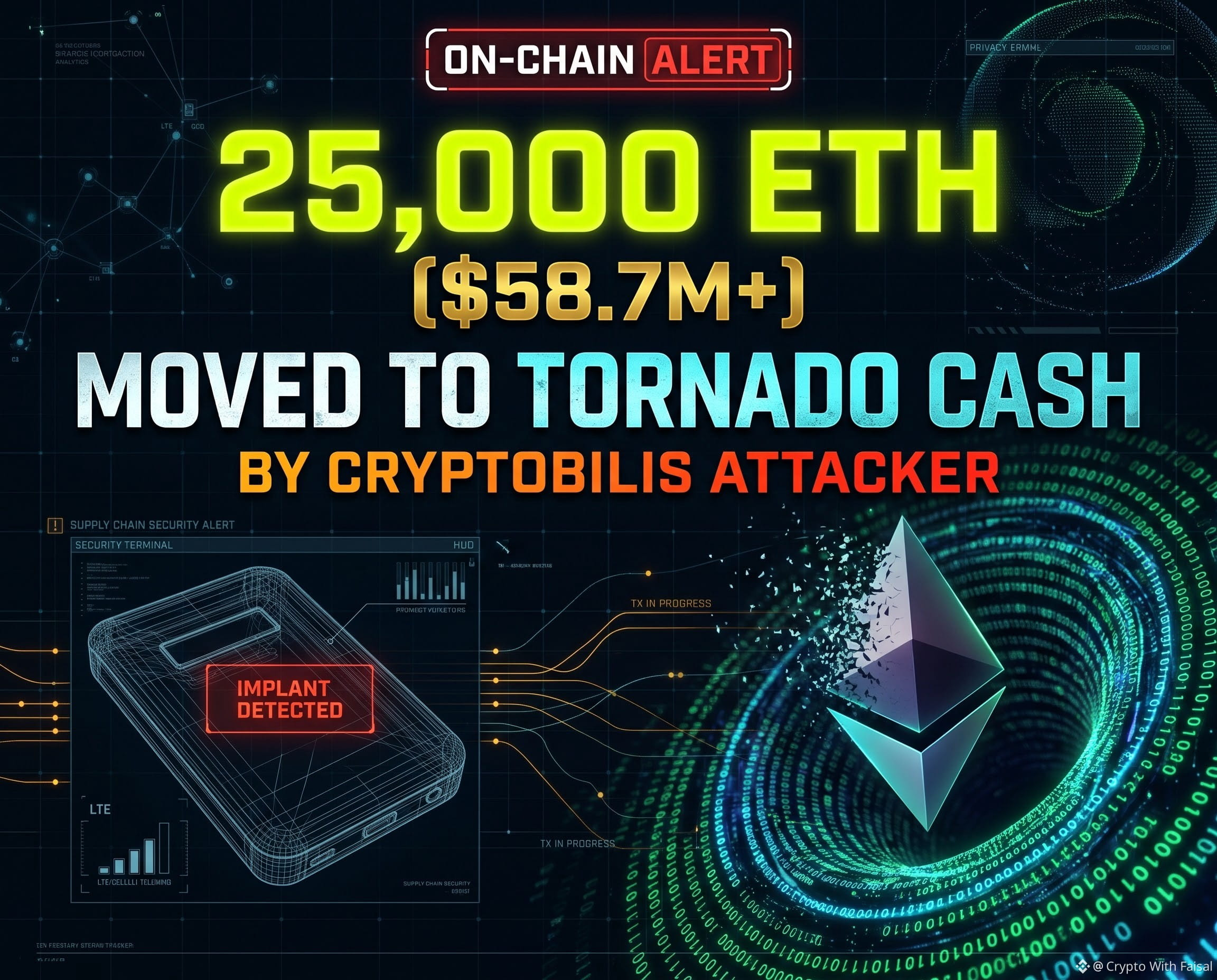
🚨 Over 25,000 ETH ($58.74M) from the CryptoBilis Ledger breach has now been funneled into Tornado Cash, according to Arkham Intelligence.
While traders watch short-term volatility, on-chain trackers just flagged a major laundering milestone from one of 2026's largest supply-chain exploits.
📊 Verified On-Chain Breakdown:
• Laundered: 25,017.31 ETH (~$58.74M) routed into Tornado Cash
• Total Stolen: $95.35M drained across 1,486 Ledger addresses
• Attack Vector: Physical LTE implants hidden inside tampered Ledger devices sold via reseller CryptoBilis
• Frozen Funds: $10M in USDT blacklisted by Tether on Tron
🛡️ Trader & Custody Takeaway:
Your keys are only as safe as your supply chain. Never buy hardware wallets from third-party resellers—order direct from official manufacturers and verify device authenticity before moving size.
Do you strictly buy direct from manufacturers, or rely on multi-sig setups for cold storage? Drop your take below 👇
$BTC $ETH $EVAA
{future}(EVAAUSDT)
{future}(BTCUSDT)
{future}(ETHUSDT)
#cryptobilisattackermoves25000ethtotornadocash #CryptoSecurity #OnChainData #Ethereum
🚨 Over 25,000 ETH ($58.74M) from the CryptoBilis Ledger breach has now been funneled into Tornado Cash, according to Arkham Intelligence.
While traders watch short-term volatility, on-chain trackers just flagged a major laundering milestone from one of 2026's largest supply-chain exploits.
📊 Verified On-Chain Breakdown:
• Laundered: 25,017.31 ETH (~$58.74M) routed into Tornado Cash
• Total Stolen: $95.35M drained across 1,486 Ledger addresses
• Attack Vector: Physical LTE implants hidden inside tampered Ledger devices sold via reseller CryptoBilis
• Frozen Funds: $10M in USDT blacklisted by Tether on Tron
🛡️ Trader & Custody Takeaway:
Your keys are only as safe as your supply chain. Never buy hardware wallets from third-party resellers—order direct from official manufacturers and verify device authenticity before moving size.
Do you strictly buy direct from manufacturers, or rely on multi-sig setups for cold storage? Drop your take below 👇
$BTC $ETH $EVAA
#cryptobilisattackermoves25000ethtotornadocash #CryptoSecurity #OnChainData #Ethereum
4.6k

·
--
Bearish
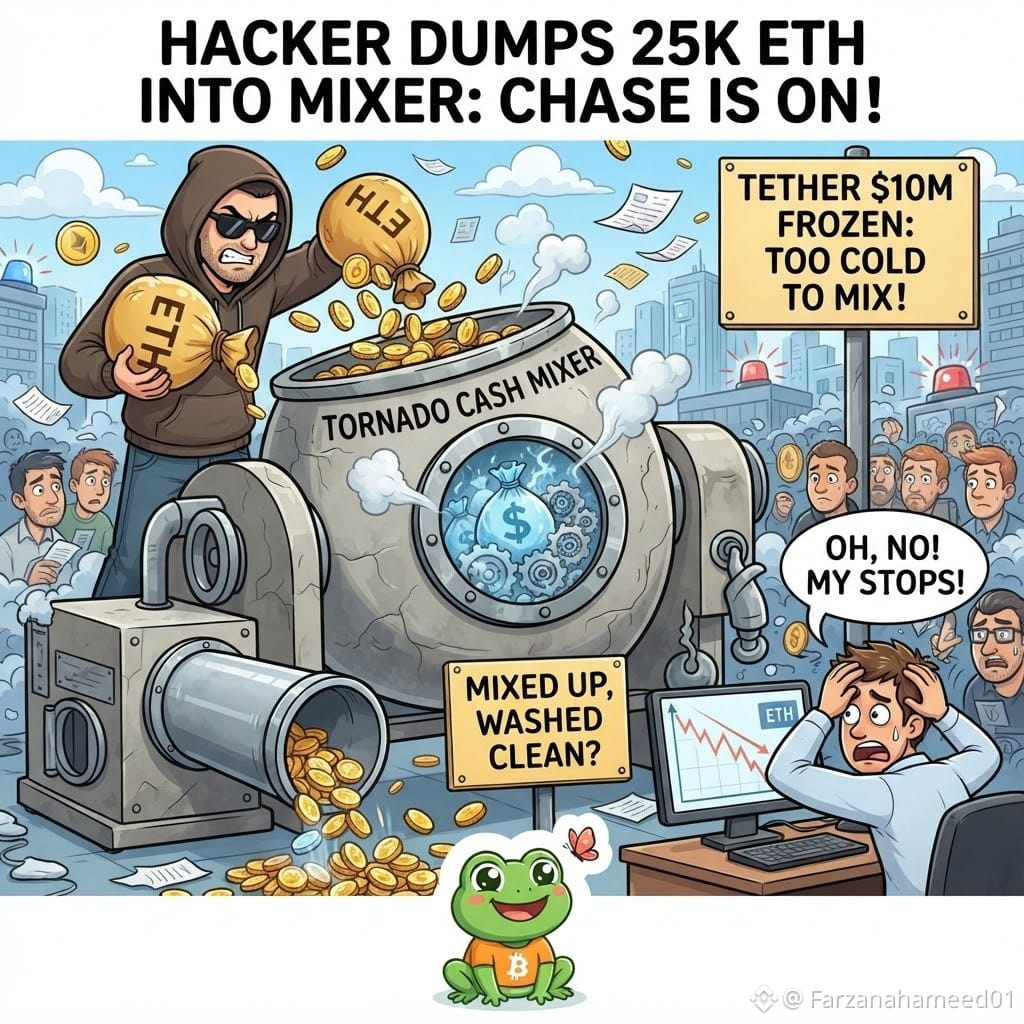
CRYPTOBILIS HACKER LAUNDERS 25,000 ETH THROUGH A MIXER: THE SAME OLD MONEY-LAUNDERING SONG! 😱
After seeing Tether freeze $10 million, the hacker quickly changed course!
#cryptobilisattackermoves25000ethtotornadocash
Breaking news shows that 25,000 ETH (∼$58.74 million) from the $95.35 million hack involving 1,486 Ledger wallets has been sent to Tornado Cash.
Quick analysis:
👉 The hacker is using a “mixer” to erase traces and prepare to dump, which could put short-term psychological pressure on ETH and trigger sell-offs.
👉 The remaining assets have been completely withdrawn from the old wallets, and the on-chain chase is getting increasingly intense.
💡What should learners do?
Check and immediately revoke any permissions granted to unfamiliar wallets! Avoid FOMO-buying the ETH dip when bad news breaks, and stick to your stop-loss discipline.
A hack news is not a buying signal. Always check, always verify, and keep learning about wallet security.
⚠️This is for learning and sharing only. This is not financial advice.
$ETH - Watch for pressure as hacker moves coins to mixer, strong.
$BTC - Watch for fear spreading in market, strong.
$EVAA - Watch for swings on hack news, strong.
✨ 𝐅𝐀𝐑𝐙𝐀𝐍𝐀 𝐇𝐀𝐌𝐄𝐄𝐃 𝐎𝐅𝐅𝐈𝐂𝐈𝐀𝐋 • 🦋
#Ethereum #CryptoNews #TornadoCash #CryptoSecurity
6
672
·
--
An AI-powered code scanner helped catch a Bitcoin Core bug that could freeze a node for more than 12 seconds at a time.
On November 20, 2026, Bitcoin Core disclosed CVE-2026-117348, rated medium severity, and released fixes in versions 30.5 and 31.3 (version 32.1 already carried the fix from October 27). An attacker could send an orphan transaction with thousands of missing parents, then repeat its ID up to 50,000 times in a single announcement. Each such message stalled the node for over a dozen seconds, and during that time it processed no blocks or transactions from other peers.
The flaw was first reported on July 8, 2026 by an automated LLM scan from Project Loupe at Spiral. Versions 29.0 through 31.2 are affected, and the end-of-life 29.x line will not get a patch, so anyone running $BTC nodes may want to check their version.
#Bitcoin #BitcoinCore #CryptoSecurity
DYOR. Not financial advice.

37

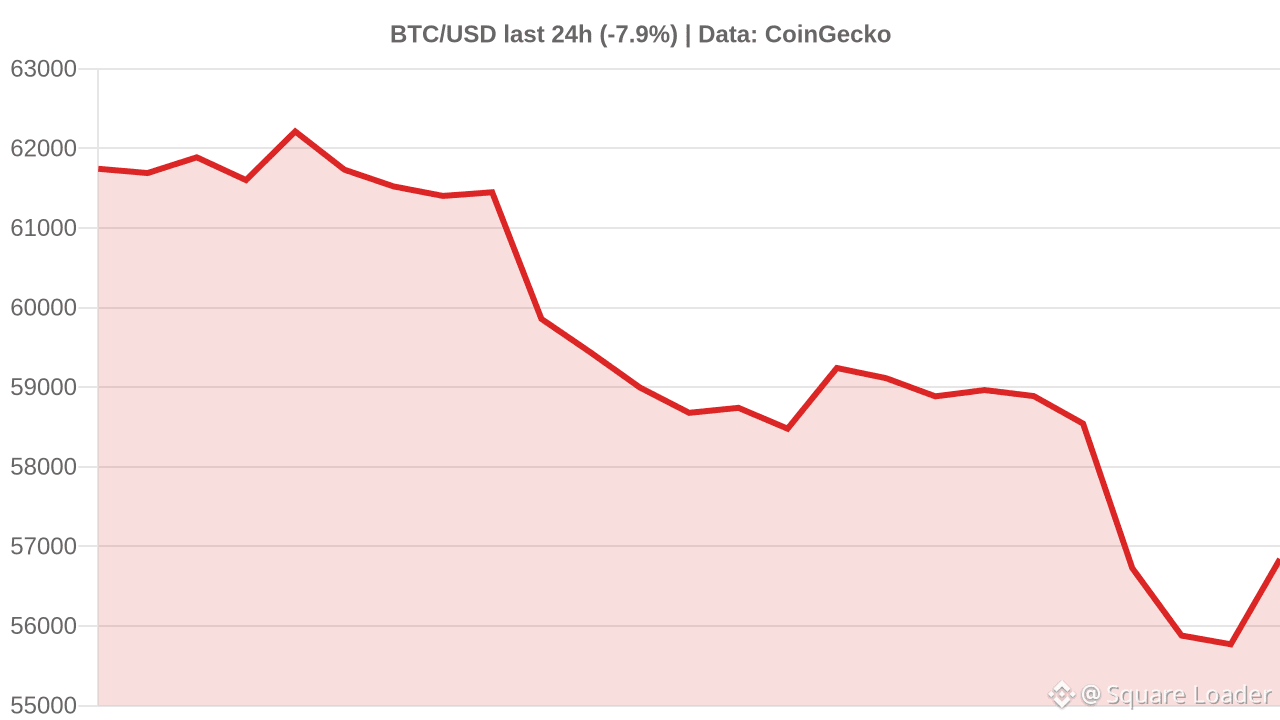
Bitcoin’s resilience is once again in the spotlight. Recent reports highlight a potential bug identified by AI agents, which could have allowed nodes to be stalled by flooding them with a specific ID. Thankfully, the Bitcoin Core team has already deployed the necessary patches. With BTC currently trading at $56840.91, down 7.9% in the last 24 hours, this event serves as a stark reminder that even the most robust networks require constant vigilance and code evolution. $BTC #Bitcoin #CryptoSecurity #Blockchain
Bitcoin’s resilience is once again in the spotlight. Recent reports highlight a potential bug identified by AI agents, which could have allowed nodes to be stalled by flooding them with a specific ID. Thankfully, the Bitcoin Core team has already deployed the necessary patches. With BTC currently trading at $56840.91, down 7.9% in the last 24 hours, this event serves as a stark reminder that even the most robust networks require constant vigilance and code evolution. $BTC #Bitcoin #CryptoSecurity #Blockchain
39
Another day, another brutal reminder that wrapped tokens are ticking time bombs. Wagyu's XMR1 just crashed 99% after a massive exploit drained millions from the deployer account, netting hackers $13.5 million. While the project blames a compromised web host, this incident highlights the immense counterparty risk of holding wrapped assets instead of native coins. True decentralization means never trusting a bridge or third-party custodian with your keys. Stay safe out there. $XMR #CryptoSecurity #Monero #Altcoins
Another day, another brutal reminder that wrapped tokens are ticking time bombs. Wagyu's XMR1 just crashed 99% after a massive exploit drained millions from the deployer account, netting hackers $13.5 million. While the project blames a compromised web host, this incident highlights the immense counterparty risk of holding wrapped assets instead of native coins. True decentralization means never trusting a bridge or third-party custodian with your keys. Stay safe out there. $XMR #CryptoSecurity #Monero #Altcoins
27

Wrapped Monero Token Drops 99.8% After $13.5M Security Breach
Suspicious sales of wrapped Monero triggered a 99.8% crash, as the operator confirmed a security breach and pledged reimbursements. Traders should verify wallet security to avoid losses. Always confirm wallet security after token exploit reports.
Source: Cointelegraph · 05:07 UTC
AI illustration
#cryptosecurity #blockchainsecurity #digitalsafety #crypto

34

·
--
🔐 Crypto Security in 2026: Protect Your Digital Assets!
Cryptocurrency offers exciting opportunities, but security should always come first. 🚀
Here are 5 essential rules every crypto beginner should follow:
1️⃣ Use strong and unique passwords. 2️⃣ Enable Two-Factor Authentication (2FA). 3️⃣ Never share your wallet's seed phrase. 4️⃣ Always verify crypto website URLs. 5️⃣ Research before investing in any cryptocurrency.
⚠️ Remember: No legitimate support team needs your seed phrase or private keys.
💡 Your first priority should be protecting your crypto, not chasing profits.
Let's build a safer and smarter crypto community together!
👇 Question: What is the most important crypto security rule according to you?
#CryptoSecurity #bitcoin #Binance #Web3
63
The recent Fluidkey breach proves that self-custody alone isn't a silver bullet. Even when private keys remain securely on user devices, systemic vulnerabilities in protocol logic can still drain funds across multiple chains. As cross-chain activity grows, security audits must evolve beyond just key management to focus heavily on interaction flows. Developers need to prioritize rigorous validation layers to protect users from these sophisticated exploit vectors. #CryptoSecurity #Web3 #SelfCustody
The recent Fluidkey breach proves that self-custody alone isn't a silver bullet. Even when private keys remain securely on user devices, systemic vulnerabilities in protocol logic can still drain funds across multiple chains. As cross-chain activity grows, security audits must evolve beyond just key management to focus heavily on interaction flows. Developers need to prioritize rigorous validation layers to protect users from these sophisticated exploit vectors. #CryptoSecurity #Web3 #SelfCustody

·
--
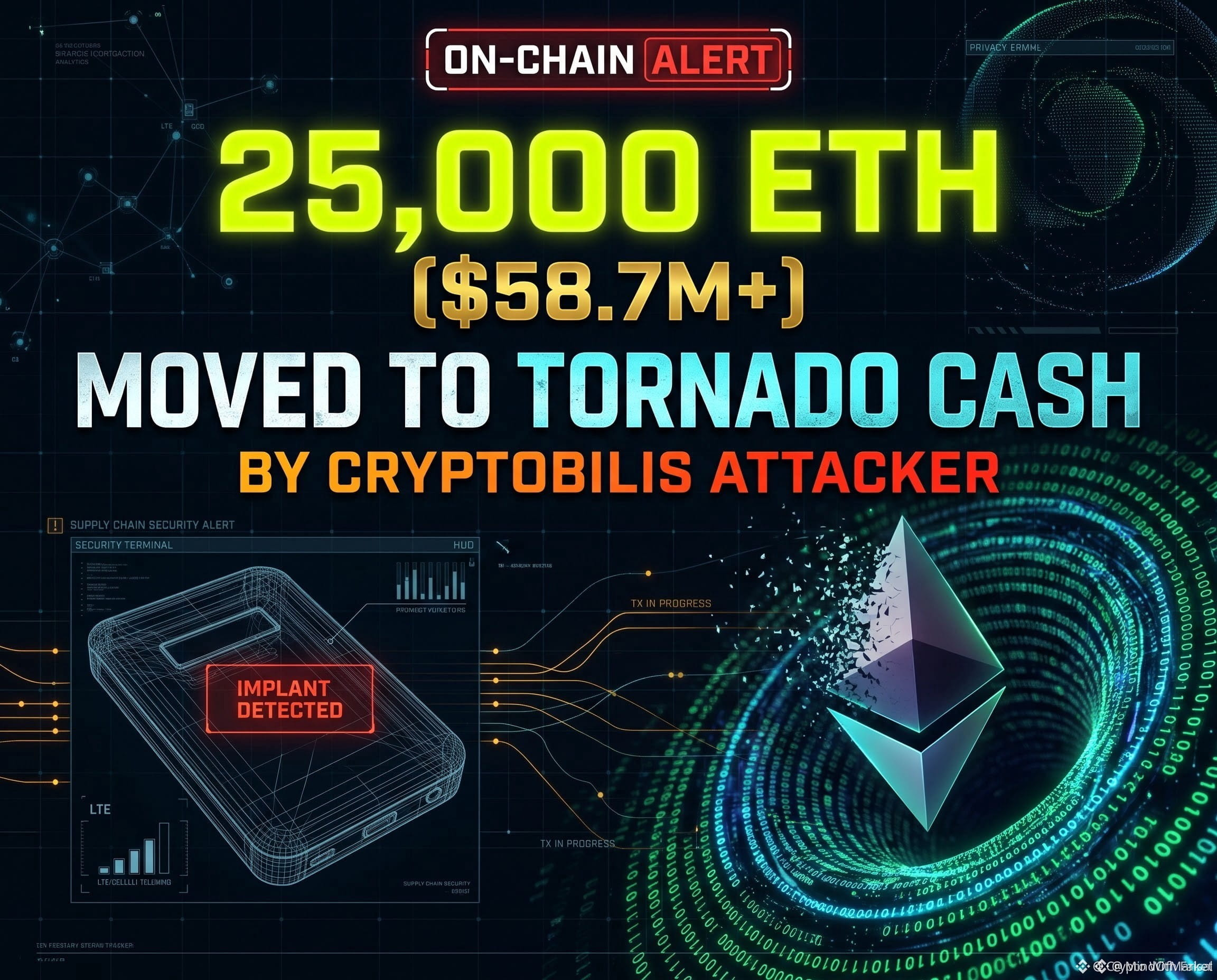
🦈 25,000 $ETH REDISTRIBUTED ACROSS PRIVACY POOLS FOLLOWING MAJOR SUPPLY CHAIN COMPROMISE 🚨
On-chain intelligence reveals a staggering capital migration stemming from historical hardware vulnerabilities, with institutional tracking highlighting significant volume hitting privacy protocols. 📊 This massive distribution event underscores why supply chain integrity remains an absolute cornerstone for cold storage security. ⚡
When physical vectors are compromised at the manufacturing tier, even sophisticated participants face latent custody exposure. 💡 Do you source your cold storage exclusively from primary manufacturers, or do you deploy multi-sig frameworks to neutralize single-point risk? 💬
⚠️ Not financial advice. Always manage your risk. 🛡️
🏷️ #ETH #OnChainData #CryptoSecurity #SmartMoney
🦈 🔒
7

🚨 $BTC VULNERABILITY EXPOSES MILLIONS IN LIQUIDITY AS NONCE REUSE LEAKS DERIVATIONS! ⚠️
Entry: 58,600 ⚡
Recent cryptographic research highlights a critical structural flaw across major blockchain networks, where recurring signature derivation flaws expose vulnerable accounts to automated liquidity sweeps within seconds. 📊 Institutional custody standards demand absolute cryptographic hygiene, especially as $BTC defends the 58,600 structural demand zone amid broader market friction. ⚡ Are you auditing your cold storage derivation paths and signature protocols to ensure institutional-grade security? 🤔
⚠️ Not financial advice. Always manage your risk. 🛡️
🏷️ #BTC #CryptoSecurity #MarketStructure #OrderFlow
🔥 💎

3
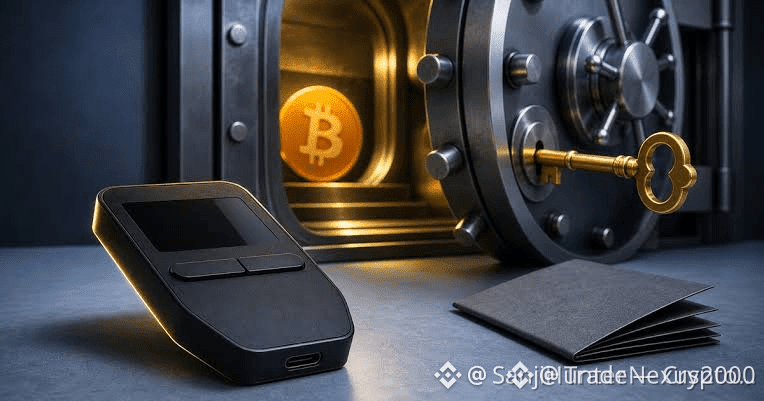
🚨 SUPPLY CHAIN INTEGRITY IS THE ULTIMATE TEST FOR $BTC SELF-CUSTODY! 🔒
True institutional security extends far beyond the software layer into the physical distribution pipeline. Recent revelations regarding compromised hardware units underscore that supply chain vectors remain a primary attack surface for unsuspecting participants. 🔍
Owning your cryptographic keys means little if the vault itself was intercepted and mirrored before arrival. Sourcing directly from verified manufacturers is no longer an optional procedure—it is the baseline defense for safeguarding long-term capital accumulation. 🛡️
💡 Are you auditing the origin of your cold storage devices, or are you assuming your supply chain is bulletproof? 🤔
⚠️ Not financial advice. Always manage your risk. 🛡️
🏷️ #BTC #CryptoSecurity #SelfCustody #Ledger
🔒 ⚡
4

·
--

Article
WHEN A HACK BECOMES A TEST OF TRUSTHow a Major Crypto Security Crisis Could Strengthen the Foundations of the Digital Economy
NEXUS ATLAS | Digital Finance & Institutional Resilience
November 21, 2026
A major security breach is one of the most serious tests any financial institution can face. It exposes weaknesses, disrupts operations and challenges the confidence of customers and investors.
But the breach itself is only part of the story.
What matters just as much is what happens afterward: whether the institution can contain the damage, protect customers, trace the stolen assets, cooperate with authorities and demonstrate that its financial and operational systems can withstand an extraordinary shock.
The October 29 security incident involving Binance offers a significant case study in how the digital asset industry responds when its infrastructure is tested at scale.
It also raises a broader question: Could an effective response to a major crypto security crisis ultimately strengthen confidence in the digital economy?
The answer is potentially yes — but only if the response is measurable, independently scrutinized and supported by evidence.
1. The scale of the incident
On October 29, 2026, Binance experienced a major security incident involving approximately $6.3 billion in digital assets, according to the exchange’s disclosures.
Two days later, the FBI publicly attributed the theft of more than $6 billion in virtual assets from Binance to North Korean cyber actors it identifies as TraderTraitor.
This attribution is an official U.S. government assessment, not simply an industry theory.
The scale of the incident matters. A loss of this magnitude tests more than cybersecurity. It tests liquidity management, internal controls, crisis communication, cooperation between private companies and the ability of law enforcement to respond to financial crime across borders.
Sources: FBI — North Korea Responsible for $6 Billion+ Binance Attack, October 31 | Associated Press — Binance security incident coverage
2. The response became a second test
Binance stated that it would absorb the financial impact rather than pass the losses on to customers.
In its November 4 update, the company reported that approximately 98% of the affected assets had been replenished and that it had set aside more than 100% of the assets required to cover the losses.
Then, in a November 20 disclosure, Binance said that 100% of the affected token assets had been replaced using its own resources, with the replacement completed by November 13.
These are important developments. But precision matters: these figures are reported by Binance. They should not be presented as independently audited findings unless an independent verification is published.
There is also a distinction that deserves attention: replacing customer assets and recovering the stolen assets are two separate processes.
The first addresses the financial exposure of customers. The second concerns tracing, freezing and legally recovering assets from the attackers or other wallets connected to the theft.
A company can cover its customers’ losses while the stolen assets remain unrecovered.
Sources: [Binance — November 4 recovery update](https://www.binance.com/en/square/post/384674399709556) | [Binance — How Binance Is Built to Absorb Extreme Events, November 20](https://www.binance.com/en/blog/community/2389609752772696140)
3. Blockchain transparency meets legal enforcement
One of the most consequential aspects of this incident is the cooperation between blockchain intelligence, digital asset businesses and public authorities.
On November 12, the U.S. Department of Justice announced that collective efforts by the U.S. government and private-sector partners had resulted in the freezing of more than $2.7 billion in stolen Binance-related digital assets.
The Department also said it had obtained court authorization to seize or restrain more than $1.2 billion of that amount.
Separately, Binance reported that approximately $2.85 billion had been frozen or intercepted.
These figures should not be added together. They describe overlapping efforts and different reporting points, not separate pools of recovered money.
On November 18, Binance announced that it had obtained a court order through the Abu Dhabi Global Market (ADGM) Courts to support the recovery process.
Reuters reported that the order required 18 cryptocurrency-related companies to maintain freezes on identified assets while proceedings continued. Reuters also reported that the companies named were not accused of wrongdoing.
This is an important development because it demonstrates how blockchain investigations can move beyond identifying suspicious transactions and into formal legal processes.
However, a frozen asset is not necessarily a recovered asset. A court order supporting recovery does not, by itself, establish that the funds have been returned or that ownership proceedings are complete.
That distinction is essential when evaluating the actual success of the response.
Sources: U.S. Department of Justice — November 12 announcement | Reuters — November 18 report on the ADGM court order | [Binance — ADGM court order announcement](https://www.binance.com/en/blog/community/4100322350300314528)
4. The real significance of blockchain traceability
Public blockchains provide a feature that traditional financial investigations do not always have in the same form: transactions can be examined on a public ledger, allowing investigators to follow the movement of funds between addresses.
But transparency should not be confused with automatic identification.
A blockchain address does not necessarily reveal the real-world identity of its controller. Funds can move through exchanges, bridges, mixers and multiple wallets, making attribution and recovery complex.
The incident also illustrates that different digital assets have different control structures.
Certain centrally issued stablecoins can include mechanisms that allow their issuers to freeze specific addresses under their policies and applicable legal processes. Bitcoin, by contrast, has no central issuer with the authority to freeze an arbitrary address at the protocol level.
This difference matters. The ability to trace an asset, the ability to restrict its movement and the legal authority to seize or return it are three distinct capabilities.
The Financial Action Task Force has discussed issuer-level blocking and freezing capabilities in its work on stablecoins and unhosted wallets.
Source: FATF — Targeted Report on Stablecoins and Unhosted Wallets
5. Transparency must go beyond promises
The crisis also brings renewed attention to Proof of Reserves.
Proof of Reserves can help users verify whether reported assets cover specified customer balances at a particular snapshot in time. It is a useful transparency mechanism, especially when users can independently verify the underlying proof.
But it should not be mistaken for a complete financial audit.
A reserve snapshot does not, on its own, establish every aspect of an institution’s financial health. It does not automatically prove overall solvency, the quality and liquidity of every asset, the absence of all liabilities, or the legal segregation of customer funds.
The distinction is important: proof that certain assets are present is not the same as proof that an entire institution is financially sound under every possible scenario.
For the industry, the next step should be stronger and more comprehensive standards: transparent liabilities, independent assurance, clear custody arrangements, robust operational controls and meaningful disclosure when failures occur.
6. Could this strengthen confidence in digital finance?
A successful response to a security crisis can demonstrate that digital asset infrastructure is capable of responding to serious threats.
It can show that companies can absorb losses, that blockchain intelligence can support investigations, that issuers and service providers can coordinate with law enforcement, and that legal systems can pursue assets across borders.
But there is an important difference between demonstrating resilience and proving that investor confidence has increased.
To establish a genuine improvement in market-wide confidence, we would need to examine independent indicators: customer retention, exchange activity, capital flows, institutional participation, custody demand and investor sentiment over time.
Without that evidence, it would be premature to claim that this incident has already strengthened confidence across the entire digital asset market.
The more defensible conclusion is that the response has demonstrated capabilities that could contribute to greater confidence — provided those capabilities are sustained, independently examined and translated into stronger industry-wide standards.
7. The bigger lesson for the digital economy
The future of digital finance will not be determined solely by transaction speed, technological innovation or market capitalization.
It will also depend on how institutions behave when their systems fail.
The industry needs more than promises of security. It needs verifiable safeguards, transparent reporting, credible recovery procedures, accountable leadership and cooperation with regulators and law enforcement.
No financial system is immune to attacks. Traditional banking has experienced fraud, cyber incidents and institutional failures for decades. The relevant question is not whether risk can be eliminated, but whether it can be managed, contained and addressed with accountability.
The Binance incident is not proof that the digital asset industry has solved its security challenges. Nor does one company’s response establish that every platform has comparable resilience.
But it offers a useful test case for a more mature digital financial system — one in which technological transparency, institutional responsibility and legal accountability work together.
The strongest foundation for trust is not the promise that nothing will go wrong. It is the demonstrated ability to respond when something does.
NEXUS ATLAS
Researching the forces shaping digital assets, financial infrastructure, and the global economy.
SOURCES & RESEARCH REFERENCES
Primary and official sources
FBI — Official attribution of the October 29 theft to TraderTraitor, October 31, 2026.
U.S. Department of Justice — Official statement on freezing more than $2.7 billion and court-authorized seizure or restraint of more than $1.2 billion, November 12, 2026.
Binance — Security incident recovery updates, November 4 and November 20, 2026.
Binance — Announcement of the ADGM court order, November 18, 2026.
Financial Action Task Force (FATF) — Research on stablecoins, unhosted wallets and issuer-level controls.
Independent reporting
6. Reuters — Reporting on the ADGM court order and the 18 companies required to maintain asset freezes, November 18, 2026.
7. Associated Press — Independent reporting on the initial security incident and its estimated scale.
Editorial note: Figures attributed to Binance are identified as company disclosures. Figures attributed to the U.S. Department of Justice and FBI are official government statements. Reuters and Associated Press provide independent reporting. Frozen, intercepted, restrained, seized and recovered assets are not interchangeable terms.
#Write2Earn #BinanceSquare #CryptoSecurity #DigitalFinance #Binance
{spot}(BNBUSDT)
WHEN A HACK BECOMES A TEST OF TRUST
How a Major Crypto Security Crisis Could Strengthen the Foundations of the Digital Economy
NEXUS ATLAS | Digital Finance & Institutional Resilience
November 21, 2026
A major security breach is one of the most serious tests any financial institution can face. It exposes weaknesses, disrupts operations and challenges the confidence of customers and investors.
But the breach itself is only part of the story.
What matters just as much is what happens afterward: whether the institution can contain the damage, protect customers, trace the stolen assets, cooperate with authorities and demonstrate that its financial and operational systems can withstand an extraordinary shock.
The October 29 security incident involving Binance offers a significant case study in how the digital asset industry responds when its infrastructure is tested at scale.
It also raises a broader question: Could an effective response to a major crypto security crisis ultimately strengthen confidence in the digital economy?
The answer is potentially yes — but only if the response is measurable, independently scrutinized and supported by evidence.
1. The scale of the incident
On October 29, 2026, Binance experienced a major security incident involving approximately $6.3 billion in digital assets, according to the exchange’s disclosures.
Two days later, the FBI publicly attributed the theft of more than $6 billion in virtual assets from Binance to North Korean cyber actors it identifies as TraderTraitor.
This attribution is an official U.S. government assessment, not simply an industry theory.
The scale of the incident matters. A loss of this magnitude tests more than cybersecurity. It tests liquidity management, internal controls, crisis communication, cooperation between private companies and the ability of law enforcement to respond to financial crime across borders.
Sources: FBI — North Korea Responsible for $6 Billion+ Binance Attack, October 31 | Associated Press — Binance security incident coverage
2. The response became a second test
Binance stated that it would absorb the financial impact rather than pass the losses on to customers.
In its November 4 update, the company reported that approximately 98% of the affected assets had been replenished and that it had set aside more than 100% of the assets required to cover the losses.
Then, in a November 20 disclosure, Binance said that 100% of the affected token assets had been replaced using its own resources, with the replacement completed by November 13.
These are important developments. But precision matters: these figures are reported by Binance. They should not be presented as independently audited findings unless an independent verification is published.
There is also a distinction that deserves attention: replacing customer assets and recovering the stolen assets are two separate processes.
The first addresses the financial exposure of customers. The second concerns tracing, freezing and legally recovering assets from the attackers or other wallets connected to the theft.
A company can cover its customers’ losses while the stolen assets remain unrecovered.
Sources: Binance — November 4 recovery update | Binance — How Binance Is Built to Absorb Extreme Events, November 20
3. Blockchain transparency meets legal enforcement
One of the most consequential aspects of this incident is the cooperation between blockchain intelligence, digital asset businesses and public authorities.
On November 12, the U.S. Department of Justice announced that collective efforts by the U.S. government and private-sector partners had resulted in the freezing of more than $2.7 billion in stolen Binance-related digital assets.
The Department also said it had obtained court authorization to seize or restrain more than $1.2 billion of that amount.
Separately, Binance reported that approximately $2.85 billion had been frozen or intercepted.
These figures should not be added together. They describe overlapping efforts and different reporting points, not separate pools of recovered money.
On November 18, Binance announced that it had obtained a court order through the Abu Dhabi Global Market (ADGM) Courts to support the recovery process.
Reuters reported that the order required 18 cryptocurrency-related companies to maintain freezes on identified assets while proceedings continued. Reuters also reported that the companies named were not accused of wrongdoing.
This is an important development because it demonstrates how blockchain investigations can move beyond identifying suspicious transactions and into formal legal processes.
However, a frozen asset is not necessarily a recovered asset. A court order supporting recovery does not, by itself, establish that the funds have been returned or that ownership proceedings are complete.
That distinction is essential when evaluating the actual success of the response.
Sources: U.S. Department of Justice — November 12 announcement | Reuters — November 18 report on the ADGM court order | Binance — ADGM court order announcement
4. The real significance of blockchain traceability
Public blockchains provide a feature that traditional financial investigations do not always have in the same form: transactions can be examined on a public ledger, allowing investigators to follow the movement of funds between addresses.
But transparency should not be confused with automatic identification.
A blockchain address does not necessarily reveal the real-world identity of its controller. Funds can move through exchanges, bridges, mixers and multiple wallets, making attribution and recovery complex.
The incident also illustrates that different digital assets have different control structures.
Certain centrally issued stablecoins can include mechanisms that allow their issuers to freeze specific addresses under their policies and applicable legal processes. Bitcoin, by contrast, has no central issuer with the authority to freeze an arbitrary address at the protocol level.
This difference matters. The ability to trace an asset, the ability to restrict its movement and the legal authority to seize or return it are three distinct capabilities.
The Financial Action Task Force has discussed issuer-level blocking and freezing capabilities in its work on stablecoins and unhosted wallets.
Source: FATF — Targeted Report on Stablecoins and Unhosted Wallets
5. Transparency must go beyond promises
The crisis also brings renewed attention to Proof of Reserves.
Proof of Reserves can help users verify whether reported assets cover specified customer balances at a particular snapshot in time. It is a useful transparency mechanism, especially when users can independently verify the underlying proof.
But it should not be mistaken for a complete financial audit.
A reserve snapshot does not, on its own, establish every aspect of an institution’s financial health. It does not automatically prove overall solvency, the quality and liquidity of every asset, the absence of all liabilities, or the legal segregation of customer funds.
The distinction is important: proof that certain assets are present is not the same as proof that an entire institution is financially sound under every possible scenario.
For the industry, the next step should be stronger and more comprehensive standards: transparent liabilities, independent assurance, clear custody arrangements, robust operational controls and meaningful disclosure when failures occur.
6. Could this strengthen confidence in digital finance?
A successful response to a security crisis can demonstrate that digital asset infrastructure is capable of responding to serious threats.
It can show that companies can absorb losses, that blockchain intelligence can support investigations, that issuers and service providers can coordinate with law enforcement, and that legal systems can pursue assets across borders.
But there is an important difference between demonstrating resilience and proving that investor confidence has increased.
To establish a genuine improvement in market-wide confidence, we would need to examine independent indicators: customer retention, exchange activity, capital flows, institutional participation, custody demand and investor sentiment over time.
Without that evidence, it would be premature to claim that this incident has already strengthened confidence across the entire digital asset market.
The more defensible conclusion is that the response has demonstrated capabilities that could contribute to greater confidence — provided those capabilities are sustained, independently examined and translated into stronger industry-wide standards.
7. The bigger lesson for the digital economy
The future of digital finance will not be determined solely by transaction speed, technological innovation or market capitalization.
It will also depend on how institutions behave when their systems fail.
The industry needs more than promises of security. It needs verifiable safeguards, transparent reporting, credible recovery procedures, accountable leadership and cooperation with regulators and law enforcement.
No financial system is immune to attacks. Traditional banking has experienced fraud, cyber incidents and institutional failures for decades. The relevant question is not whether risk can be eliminated, but whether it can be managed, contained and addressed with accountability.
The Binance incident is not proof that the digital asset industry has solved its security challenges. Nor does one company’s response establish that every platform has comparable resilience.
But it offers a useful test case for a more mature digital financial system — one in which technological transparency, institutional responsibility and legal accountability work together.
The strongest foundation for trust is not the promise that nothing will go wrong. It is the demonstrated ability to respond when something does.
NEXUS ATLAS
Researching the forces shaping digital assets, financial infrastructure, and the global economy.
SOURCES & RESEARCH REFERENCES
Primary and official sources
FBI — Official attribution of the October 29 theft to TraderTraitor, October 31, 2026.
U.S. Department of Justice — Official statement on freezing more than $2.7 billion and court-authorized seizure or restraint of more than $1.2 billion, November 12, 2026.
Binance — Security incident recovery updates, November 4 and November 20, 2026.
Binance — Announcement of the ADGM court order, November 18, 2026.
Financial Action Task Force (FATF) — Research on stablecoins, unhosted wallets and issuer-level controls.
Independent reporting
6. Reuters — Reporting on the ADGM court order and the 18 companies required to maintain asset freezes, November 18, 2026.
7. Associated Press — Independent reporting on the initial security incident and its estimated scale.
Editorial note: Figures attributed to Binance are identified as company disclosures. Figures attributed to the U.S. Department of Justice and FBI are official government statements. Reuters and Associated Press provide independent reporting. Frozen, intercepted, restrained, seized and recovered assets are not interchangeable terms.
#Write2Earn #BinanceSquare #CryptoSecurity #DigitalFinance #Binance
40
Privacy assets face a harsh reminder of bridge risks as wrapped Monero plunges 99.8% following a massive $13.5 million exploit. While the team promises user reimbursements, this incident highlights the persistent vulnerabilities tied to cross-chain wrapping mechanisms. Traders must remain vigilant about liquidity pools and smart contract safety when moving private tokens across public chains. $XMR #Monero #CryptoSecurity #DeFi
Privacy assets face a harsh reminder of bridge risks as wrapped Monero plunges 99.8% following a massive $13.5 million exploit. While the team promises user reimbursements, this incident highlights the persistent vulnerabilities tied to cross-chain wrapping mechanisms. Traders must remain vigilant about liquidity pools and smart contract safety when moving private tokens across public chains. $XMR #Monero #CryptoSecurity #DeFi
40
Security analytics firm Elliptic reports a massive surge in coinjoin activity tied to past exchange exploits, with millions in bitcoin currently being routed through privacy tools. Interestingly, most of these tainted funds remain unliquidated, sitting stagnant while obfuscation efforts ramp up. This highlights the ongoing cat-and-mouse game between illicit actors attempting to mask asset trails and blockchain intelligence firms tracking every single movement across the ledger in real time. $BTC #CryptoSecurity #BlockchainAnalysis #Privacy
Security analytics firm Elliptic reports a massive surge in coinjoin activity tied to past exchange exploits, with millions in bitcoin currently being routed through privacy tools. Interestingly, most of these tainted funds remain unliquidated, sitting stagnant while obfuscation efforts ramp up. This highlights the ongoing cat-and-mouse game between illicit actors attempting to mask asset trails and blockchain intelligence firms tracking every single movement across the ledger in real time. $BTC #CryptoSecurity #BlockchainAnalysis #Privacy
50

·
--
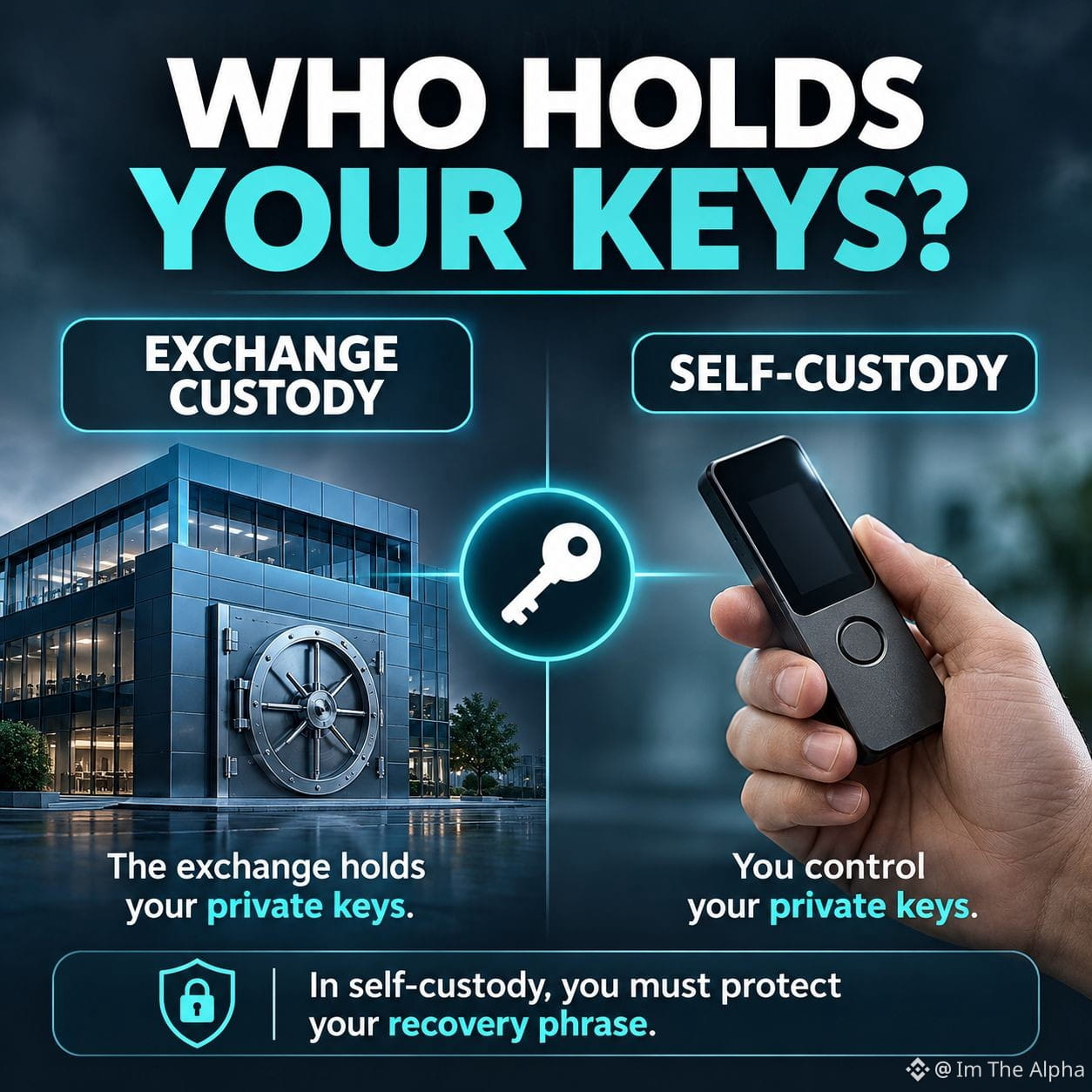
🔐 WHO REALLY CONTROLS YOUR CRYPTO?
There are two common ways to hold crypto:
1️⃣ Exchange Custody
The exchange controls the private keys on your behalf.
It's convenient for trading and account recovery, but you depend on the platform.
2️⃣ Self-Custody
You control your own private keys through a wallet. You get more direct control, but losing your recovery phrase can mean permanently losing access.
💡 Remember:
• Exchange account = convenience.
• Self-custody = personal responsibility.
• Never share your seed phrase with anyone.
• Keep your recovery phrase offline and secure.
Smart crypto users understand both options before choosing.
📊 Where do you prefer to keep your long-term crypto?
A) Exchange
B) Self-custody wallet
C) Both
D) Still learning
#CryptoEducation #CryptoSecurity #Web3 $BTC $ETH $BNB
1
85

PROTECT YOUR CRYPTO WALLET 🔐
Your crypto security should always come first.
Never share your wallet recovery phrase with anybody.
Avoid suspicious links. Use strong passwords. Enable two-factor authentication where available. Double-check wallet addresses before sending funds.
Remember, one careless click can cost you money.
Protect your assets!
#CryptoSecurity #BinanceSquare #CryptoTips
1


·
--
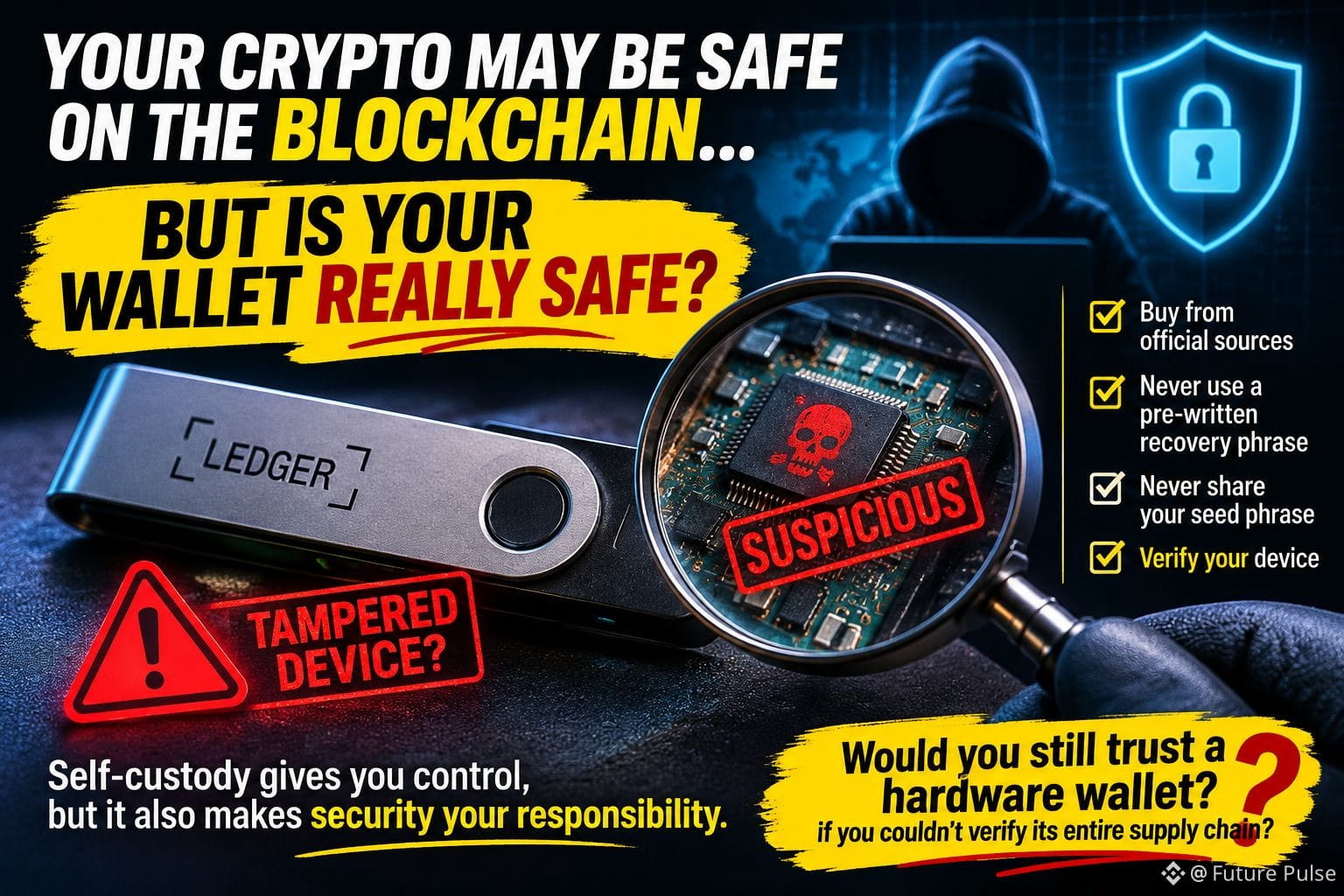
🚨 YOUR CRYPTO MAY BE SAFE ON THE BLOCKCHAIN… BUT IS YOUR WALLET REALLY SAFE?
A hardware wallet is supposed to be your last line of defense against crypto theft. But what happens when the device itself becomes the weak point?
Recent reports about potentially tampered hardware wallets have raised an important question about crypto security.
Many investors focus on choosing the right wallet, but overlook something equally important: Where did the device come from, and can you trust its supply chain?
Remember:
🔐 Always purchase hardware wallets from official sources.
🔐 Never use a pre-written recovery phrase.
🔐 Never share your seed phrase with anyone.
🔐 Verify your device before transferring significant funds.
Self-custody gives you control over your assets, but it also makes security your responsibility.
Here's the real question:
Would you still trust a hardware wallet if you couldn't verify its entire supply chain?
$EVAA
{future}(EVAAUSDT)
$MMT
{future}(MMTUSDT)
$ONE
{future}(ONEUSDT)
#CryptoSecurity
#Ledger
#SelfCustody
#BinanceSquare
#crypto
🚨 YOUR CRYPTO MAY BE SAFE ON THE BLOCKCHAIN… BUT IS YOUR WALLET REALLY SAFE?
A hardware wallet is supposed to be your last line of defense against crypto theft. But what happens when the device itself becomes the weak point?
Recent reports about potentially tampered hardware wallets have raised an important question about crypto security.
Many investors focus on choosing the right wallet, but overlook something equally important: Where did the device come from, and can you trust its supply chain?
Remember:
🔐 Always purchase hardware wallets from official sources.
🔐 Never use a pre-written recovery phrase.
🔐 Never share your seed phrase with anyone.
🔐 Verify your device before transferring significant funds.
Self-custody gives you control over your assets, but it also makes security your responsibility.
Here's the real question:
Would you still trust a hardware wallet if you couldn't verify its entire supply chain?
$EVAA
$MMT
$ONE
#CryptoSecurity
#Ledger
#SelfCustody
#BinanceSquare
#crypto
2
1.4k

·
--
Essential Security Habits for Every Crypto Beginner 🔐
Starting out in crypto is exciting, but building strong security habits from day one is just as important as learning how to trade. Many beginners focus only on entries and profits while overlooking basic account protection.
Here are 3 simple habits to keep your account safer:
Enable Strong 2FA: Never rely on just a password. Set up two-factor authentication using an authenticator app or passkey so unauthorized logins are much harder.
Double-Check Links & Domains: Always access your account through official apps or verified bookmarks. Avoid clicking random links in DMs or unverified comments.
Keep Recovery Info Private: Never share your login codes, verification alerts, or recovery details with anyone—even someone claiming to offer support or special perks.
Small security habits today can save you from major headaches later.
Which of these habits do you think beginners ignore the most? Share your thoughts below! 👇
#CryptoSecurity #CryptoBeginners #tradingtips #AccountSafety #BinanceSquare
4

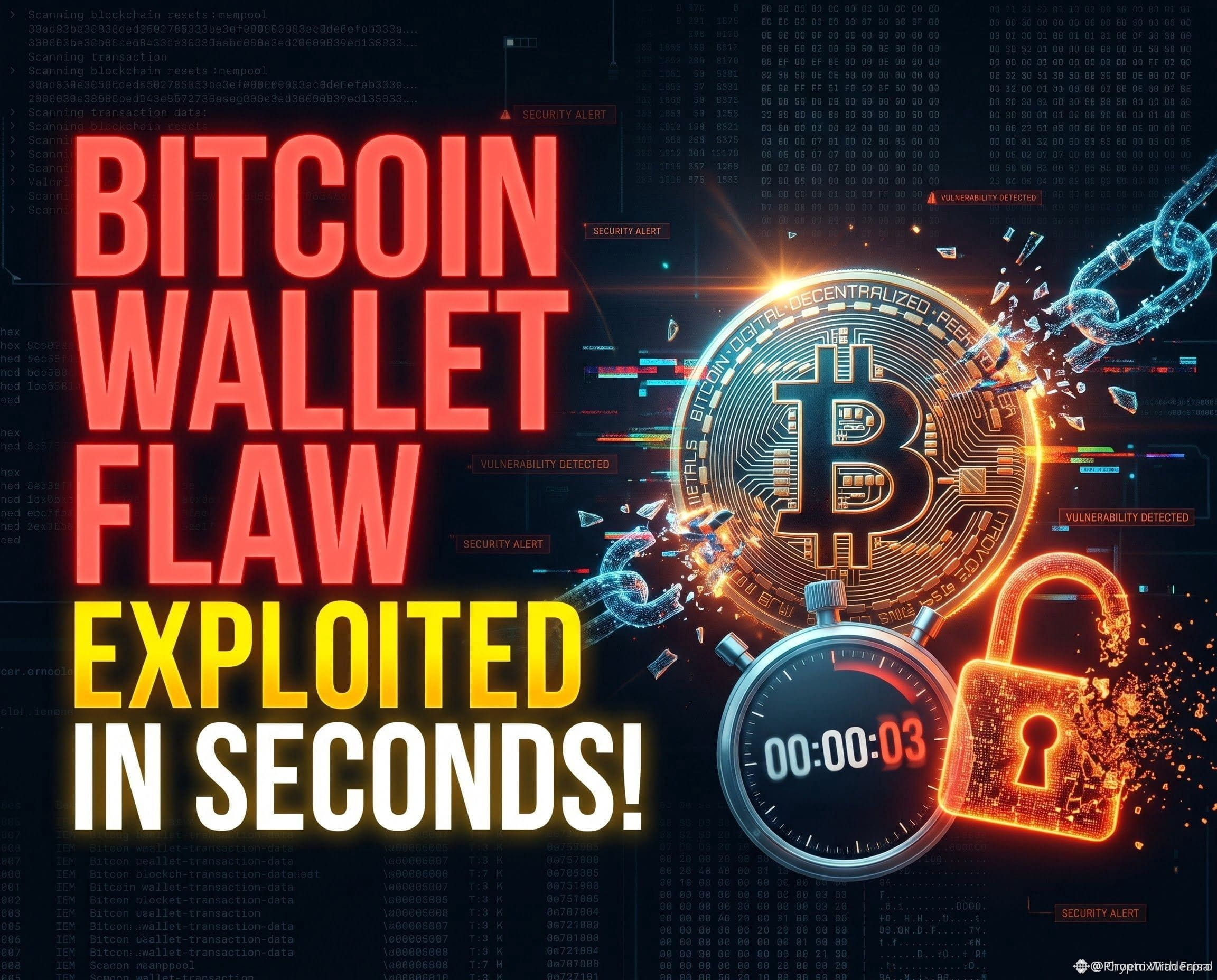
🚨 ONE FLAWED SIGNATURE ON $BTC CAN DRAIN YOUR WALLET IN SECONDS! 💥
Fresh blockchain research proves automated mempool bots are hunting down faulty ECDSA signatures 24/7. When legacy wallet software reuses a single random nonce, mathematical algorithms instantly calculate your and wipe balances clean. 📊
This is not about protocol failure, but outdated client-side architecture leaving self-custody exposed. Over three thousand vulnerable addresses on $BTC alone have already been flagged from past cycle software. ⚡
Are you certain your long-term storage is running deterministic signing or are you leaving an old vault unlocked? 🤔
⚠️ Not financial advice. Always manage your risk. 🛡️
🏷️ #BTC #CryptoSecurity #SelfCustody #Bitcoin
🔥 💎
8
Log in to explore more content
Join global crypto users on Binance Square
⚡️ Get latest and useful information about crypto.
💬 Trusted by the world’s largest crypto exchange.
👍 Discover real insights from verified creators.
Email / Phone number
Trending Topics
1
#CanBTCReboundAfterFallingBelow60K?
350,985 views
1,470 Discussing
2
#GlobalStocksFaceLongestLosingStreakSince2023
115,684 views
1,050 Discussing
3
#BlackRockIBITPostsRecord$541MSingleDayOutflow
551 views
14 Discussing
4
#AnthropicPlungesTowardIPOPriceonDay2
55,987 views
562 Discussing
5
#TwentyOneCapitalAdds172.25BTC
8,795 views
138 Discussing
6
#HKBillWouldExcludeTokenizedDepositsFromVirtualAssets
766 views
13 Discussing
7
#BNBDropsBelow540USDTWith8.46%DailyDecline
29,675 views
245 Discussing
8
#HKBillProposesHK$100KFineForUnauthorizedCryptoTitles
999 views
14 Discussing
9
#BitMineFaces$10.1BUnrealizedETHLoss
1,955 views
18 Discussing
10
#StrategyReports$35BNetReserves
1,814 views
17 Discussing